Politics
Why Trump’s War In Iran Is Set To Make Us All Worse Off

Donald Trump’s war in Iran is set to have a trickle-down effect on prices around the world – meaning we could all end up worse off as a result.
The US president caused international chaos after he decided to work with Israel to launch strikes against Iran more than a week ago.
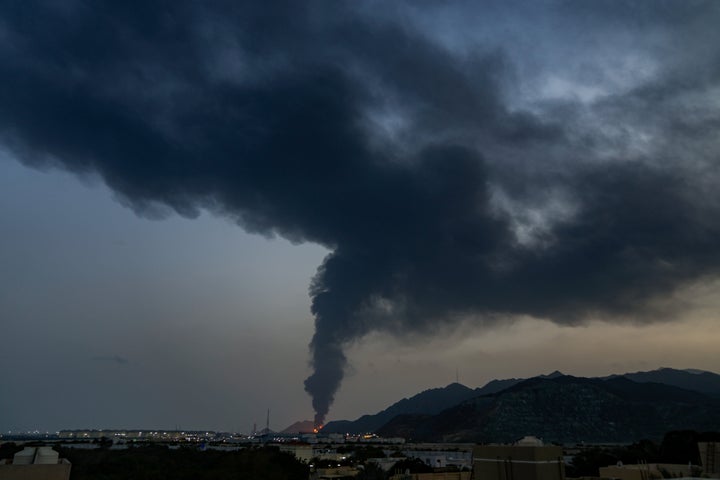
In retaliation, Tehran released missiles and drones on the neighbouring Gulf countries which are home to various US military bases.
It also effectively closed the Straits of Hormuz – the narrow stretch of water between the Persian Gulf and Gulf of Oman – by attacking the ships which travel through it.
About 20 million barrels of oil moves through the strait each day. That’s around a fifth of the world’s supply.
With the oil industry under threat, the global energy market is on unsteady ground – meaning everyone’s pockets are about to be hit.
Here’s what you need to know.
Petrol Prices Set To Go Up
The disruption in the Middle East is already sending the cost of Brent crude oil up.
It exceeded $105 (£78) a barrel on Monday, which is its highest price point in almost two years.
Gas has not increased in price this quickly since Russia invaded Ukraine in 2022, a time when the west tried to rapidly wean itself off Moscow’s cheap oil exports.
Higher wholesale energy prices result in higher prices at the petrol pumps.
The average cost of a litre of unleaded petrol was at 137.51p on Monday, while diesel cost 150.97p, according to the automotive services RAC – but both prices are expected to rise.
However, motorists have been urged not to panic-buy as this could be short-lived.
RAC’s head of policy Simon Williams told The Times: “We really shouldn’t see a shock jump in prices because wholesale fuel costs have only been rising gradually.
“Even though the price of Brent crude has risen, the impact of this shouldn’t be felt for more than a week.”
Still, he predicted that unleaded would reach an average of 140p in the next week or so while diesel may go up to 160p.
Meanwhile, the Petrol Retailers Association has already written to chancellor Rachel Reeves requesting she drops plans to hike fuel duty later this year.
Trump – who is a multi-billionaire – has tried to downplay the impact of rising oil prices.
He wrote on TruthSocial: “Short term oil prices, which will drop rapidly when the destruction of the Iran nuclear threat is over, is a very small price to pay for USA, and World, Safety and Peace.”
Energy Bills Expected To Rise
Changes in the oil market will hit energy bills too, as so many businesses and households are reliant on fossil fuels.
Wholesale gas prices in the UK have already increased by as much as 50% after Qatar stopped producing liquified natural gas as a result of the conflict.
The UK is more reliant on gas than many of its European allies though it has been moving towards renewable energy since the Ukraine invasion.
It produces less than half of the gas it needs and imports the rest, meaning UK bills will still be impacted.
The good news is these higher wholesale costs will not trickle down to household budgets until July.
Energy regulator Ofgem controls how much companies can charge customers who are on standard variable tariffs for each unit of gas and electricity with a new amount every three months.
The cap has already been confirmed for April to June – £1,641 per year, for homes which use both oil and gas.
However, the investment firm Stifel has warned that European wholesale gas prices could triple if the Strait of Hormuz closes for more than six weeks.
That would take the cap to £2,500 a year.

Interest Rates Expected To Go Up
Approximately 1.2 million borrowers will have their fixed mortgage deals end between now and September, meaning they will be looking to take out a new agreement with the bank.
Mortgage rates were declining and the Bank of England was expected to cut its base rate of interest from 3.75%.
But, the conflict in the Middle East means rates are now likely to go up.
Since Trump first initiated attacks on Iran, swap rates – the rate of interest lenders pay to institutions in return for fixed funding – went up by 0.2 percentage points.
That’s a cost which is likely to be passed onto homeowners.
For savers, a hike in interest rates is normally a positive as it means they get more returns on their savings.
The stock market has stumbled in recent days but investing usually helps to defy the impact of high inflation rates.
Yet, the FTSE 100 – the Financial Times Stock Exchange 100 Index – fell nearly 200 points at one point on Monday, though it has already slightly improved.
Overall Economic Impact
Prominent economist Paul Johnson told Times Radio that the Iran war will likely take “at least half a point off growth” within the economy this year, if the conflict continues.
He said: “That doesn’t sound like much, but that is quite a lot.
“That’s going to create problems for the public finances, and it’s going to make us all worse off.”
He added: “If energy prices are up, the UK and other countries dependent on energy will just be worse off, at least for the period that they’re higher.”
Johnson said the damage could be quite reduced if the war concludes quickly – but if it doesn’t, we could be in for “another couple of slightly miserable years.”
Prime minister Keir Starmer also warned on Monday “that the longer this goes on, the more likely the potential for an impact on our economy, impact into the lives and households of everybody and every business”.
Even before the Iran war, the UK economy was already looking rather sluggish at the end of last year, with GDP going up by 0.1% between October and December.
Labour has been promising to improve the UK’s economic growth and address the rising cost of living for years.
But, the longer the conflict goes on, the worse it looks for the government’s plan to implement real change.