
Politics
Wings Over Scotland | A Dumber Nation

In politics, readers, evil and stupidity aren’t the same thing.

But nor are they exclusive.
Before we ask you to consider which of the terms applies to the Scottish Government led by John Swinney, we’d like you to read this letter sent to Wings by the auntie of two women imprisoned in Scottish jails.
“I have two nieces who have had to share prison space with men. I used to visit niece 1 in Saughton in Edinburgh and Greenock where men were housed, including Paris Green, Melissa Young and Alex Stewart. She got released in 2024 but then her sister (niece 2) was imprisoned and I would visit her in Polmont (Scotland closed Saughton for women and sent them all to Polmont in Falkirk (although Alex remains in Greenock). She was released last week. Both nieces gave testimony to FWS in their current court case against Scot Gov.
The first time I visited my niece in Saughton in Edinburgh I was wearing my WOMEN DON’T HAVE PENISES sweater. I had no idea she was sharing the estate with men. My sweater was something I would wear around town on a daily basis. As I was in the waiting area with other visitors, a guard told me I would need to take my sweater off if I wanted to visit my niece.
I asked him where is the lie in stating women don’t have penises. He told me, ‘that’s a matter of opinion’. I turned to the room and asked, ‘hands up, all the women here who have penises’. They all laughed, but I still had to take my top off in order to go visit my niece. That’s when I realised she was sharing the estate with men.
She told me of Melissa Young (Google him). He has had the operation, but my niece said his room was always ‘stinking’. Presumably because of the vinegar douche he needs to use, and because of the fact that the intestine is used to replicate a vagina.
She also said that he made the female inmates perform humiliation rituals in order to access his codeine tablets. He would make one woman, Mary, suck on his breasts, and my niece said he would show people his ‘vagina’ at every opportunity. He also battered a woman, and it was the woman who got sent to a different prison so that he wouldn’t be inconvenienced.
Paris Green would walk around with stretchy leggings on, showcasing his penis. Both he and Melissa have been guilty of assaulting prison guards (google it). Paris Green also entered niece 2’s cell and started stroking her hips. This was ten years ago (my nieces have had a very violent and abusive upbringing and have been in the system since the ages of 15).
Both of my nieces are caught in a cycle of poverty, crime and addiction. When this happened, years ago, it was the case that trans prisoners had to sit at the door of their cell. They were not allowed to mingle freely because the prison recognised that they were a risk. But when the ‘screw’ wasn’t looking, Paris made her way into my niece’s room and started stroking her.
In Greenock, in order to take a shower, females have to go through Nyomi Fee who killed her child. Inmates are given jobs, and it’s Nyomi’s job to hand out towels. Nyomi is in love with Alex the trans man. My niece hates a ‘beast’ and so she would wipe herself down in her room rather than have to go through a man, Alex, in order to get a towel. Alex and Nyomi are inseperable. Nyomi was in charge of distributing towels for women to enter the communal shower area.
Niece 2 is a lesbian, and in Greenock it is communal showering. I imagine most women don’t want to see a man in their washing area, but for lesbians it is particularly relevant.
The prison guards do not allow lesbian relationships. My niece’s lover was also in jail and they separated the two of them by putting them in different jails, but with Alex and Nyomi the guards allow them to freely interact with each other. My niece said the guards would often hang out in their rooms, laughing it up with the both of them.
Laws changed and most of the women were put in Polmont. Alex stayed at Greenock. My niece said Paris was always on a ‘rule’ (locked in his room) because he was always flashing his cock to the guards and the women. She also said that he is a very tall man, and can look over the cubicle when women are showering. She also said that she had to sit in the waiting area with him when waiting for a doctor’s appointment, unsupervised.
Both nieces were battered and abused by their father, but niece 1 went on to have a relationship with an abusive man who would hit her and handcuff her naked to a radiator. In her own words he ‘kicked babies out of me’. She miscarried twice because of the severity of the beatings he gave her. And yet Scot Gov are putting her in an estate with men guilty of the most violent crimes.
Lastly, there is a woman who is living as a man in Polmont. She has had top surgery and takes testosterone and has a beard and looks like a man. When she was charged, she was sent to a man’s prison. But when she got there they discovered she is a biological female and so they returned her to a women’s prison.
Women’s prisons are a dumping ground for the gender confused. If men who think they are women are allowed to be in the female estate, why can’t women who think they are men be housed in the men’s estate?”
Readers will doubtless already have their own opinions about the merits or otherwise of the Scottish Government’s apparent desperation to ensure that men like those described above continue to be housed among vulnerable women. But we’d also like you consider something else.
Because even if you think that putting violent men in women’s prisons is a simply super idea, you must be aware that the majority of Scots do not.

And so even if you agreed with the policy, you would presumably still be able to understand that there was a less moronic way to try to achieve it than the one the Scottish Government is currently pursuing.
Because the government’s core argument in the case heard at the Court Of Session last week is that it HAS to continue to allow the Scottish Prison Service to flout the Supreme Court ruling in the For Women Scotland case, because if it doesn’t it might find itself sued by a hypothetical transwoman who murdered or raped someone and then found himself locked up in a men’s jail.
Such a man, the Scottish Government’s counsel argued last week, might kill himself in such circumstances, which a great many people might consider no great tragedy but which would apparently upset the government sorely.
The First Minister was therefore faced with a choice between two options:
OPTION 1
– continue to house male prisoners in the female estate if they say they’re women.
– spend a bucketload of public money fighting for that position in court against For Women Scotland, causing the vast majority of the Scottish electorate to think you’re a bunch of scumbags who have lost their minds.
OPTION 2
– obey the Supreme Court ruling and immediately ban all males from women’s prisons.
– wait and see if at some point in the future, a transwoman prisoner assigned to a male prison did indeed bring a court case about it. (If they don’t, problem solved and it didn’t cost you a penny!)
– fight that case in the court, arguing for the Supreme Court ruling, with the backing of the vast majority of the Scottish electorate.
And here’s the thing, readers – it makes no difference to the eventual outcome. Whichever side you fight, the court will make the decision.
If you choose Option 1, almost everyone thinks you’re sewage whether you win or lose. If you choose Option 2, you win either way – you get all the benefits of taking the position that voters want you to take, and if you lose and the court rules in favour of the murderers, you’ve got someone else to blame it on.
(And if that’s the outcome you secretly want, you can always choose an idiot for your KC and send him in to throw it.)
Try as we might, even assuming the worst of motivations, we can think of no sane or sensible reason for doing as the Scottish Government has done and choosing Option 1. It’s not only evil, it’s also political suicide. The level of staggeringly obvious stupidity it requires stretches the bounds of credibility even for an administration as packed full of utter boneheads as this one.
Option 1 guarantees wasting yet more taxpayers’ money, enraging voters and getting terrible headlines in the months immediately preceding a general election. Option 2 not only gets you a lot more support, but it almost certainly kicks the issue down the road beyond the election where it can’t do you nearly as much hard.
Literally the ONLY halfway-logical explanation we can think of for what they’ve done is if the First Minister wants to make absolutely sure he doesn’t win a majority in May. And the reasons he doesn’t are rather easier to discern.
Making sure Swinney doesn’t have to try to secure independence in the next five years is just the latest in a long list of reasons why the SNP are willing to throw women under the bus, and subject people like our reader’s nieces to the grotesque suffering they’ve been made to endure at the hands of the state.

We don’t know about you, folks, but it makes us sick to our stomachs.



Italian port authorities and dockworkers have intercepted multiple shipments of raw materials and precision components heading for the weapon factories of the genocidal “Israeli” state.
The Boycott, Divestment, Sanctions (BDS) movement reported that three of four Indian shipments of military-grade steel were detained and placed under investigation in Italy.
This specialised steel is essential for the production of 155mm artillery shells, which are manufactured by the “Israeli” company IMI Systems, (formerly known as Israel Military Industries), a subsidiary of Elbit Systems, the Israeli occupation’s largest private defence contractor.

A BDS investigation identified approximately 600 tonnes of this steel, which was being transported from India to “Israel” via the Mediterranean using 23 Mediterranean Shipping Company (MSC) vessels.
These 155mm artillery shells have been used extensively by the Israeli occupation in its genocide in Gaza and were used by “Israel” in early March when it attacked the Southern Lebanese town of Yohmor with white phosphorus — a crime under international law.
According to BDS, there is enough steel in these shipments to produce up to 13,000 artillery shells.
Israel’s military-grade steel seized
The blockade intensified after 13 tonnes of weapon components were seized at the Italian port of Ravenna. These precision-machined cannon parts were produced by the Italian firm, Valforge, and heading for IMI Systems. However, investigators found the cargo did not have the mandatory “dual-use” export licences required by Italian law, which strictly prohibits the export or transit of military material to countries involved in armed conflict without explicit government authorisation.
The physical enforcement of this blockade is being led by the Italian trade unions, Collettivo Autonomo Lavoratori Portuali (CALP) and the Unione Sindacale di Base (USB). They have implemented a “Friday for Peace” schedule where, every week, workers refuse to service vessels flagged as carrying cargo for “Israel”.
The focus of their actions are on the Israeli-owned ZIM shipping line and MSC vessels like the MSC Vega and MSC Danit. These ships have faced protests and docking complications in Italy, Greece, and Spain, leading to the rerouting of several to other ports.
A national petition launched by BDS Italy, calling for a comprehensive military embargo and stricter checks on containers at Italian ports and airports, has so far gathered more than 10,000 signatures. The demand is based on Article 11 of the Italian Constitution, which “repudiate[s] war as an instrument of offence”.
Under Italian Law 185/1990, shipping companies and their directors face severe criminal and financial penalties for transporting restricted military goods without a valid licence. Individual directors can face between two and six years in prison, while corporate fines can reach up to 5% of global annual turnover.
Featured image via the Canary

Production on the upcoming TV adaptation of Tomb Raider is currently on hold after its leading star Sophie Turner suffered an injury.
A spokesperson for the production company Amazon MGM Studio confirmed on Monday that the former Game Of Thrones actor had “recently experienced a minor injury” leading to production being “briefly paused to allow her time to recover” on a precautionary basis.
“We look forward to resuming production as soon as possible,” they added.
Sophie previously enthused: “I am thrilled beyond measure to be playing Lara Croft. She’s such an iconic character, who means so much to so many – and I am giving everything I’ve got.”
Tomb Raider’s heroine Lara Croft has previously been played on the big screen by Oscar winners Angelina Jolie and Alicia Vikander, with Hayley Atwell also lending her voice to the character in a Netflix animated series.
Of her predecessors, Sophie added last year: “They’re massive shoes to fill, following in the steps of Angelina and Alicia with their powerhouse performances, but with Phoebe at the helm, we (and Lara) are all in very safe hands. I can’t wait for you all to see what we have cooking.”
Phoebe also beamed: “It’s not very often you get to make a show of this scale with a character you grew up loving.
“Everyone on board is wildly passionate about Lara and are all as outrageous, brave, and hilarious as she is. Get your artifacts out… Croft is coming…”
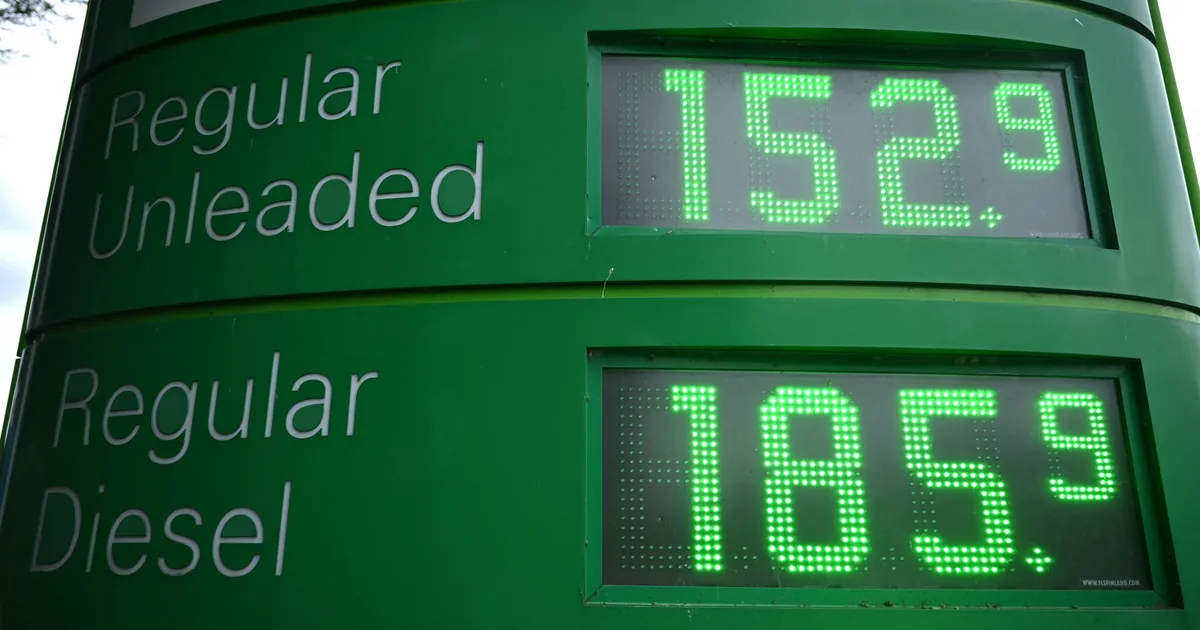
The UK could be on the cusp of an energy crisis comparable to the chaos seen in the 1970s, according to a former deputy governor of the Bank of England.
Iran continues to restrict the number of oil tankers which can travel through the major shipping lane, the Strait of Hormuz, in retaliation against the US-Israel strikes from last month.
As the conflict continues, the global economy is facing a period of uncertainty – and energy bills are expected to rise, pushing up the cost of living.
The government is considering supporting some energy bills for targeted households once the current energy price cap lifts in July.
As fears grow over what lies ahead, former deputy governor of the Bank of England, Sir Howard Davies, suggested it was “probably right” to compare the current era to the crises we saw in the 1970s.
World oil prices soared at the time, triggered by the 1973 Arab-Israeli war. The price of an oil barrel then quadrupled in a matter of months.
Arab oil-producing countries only ended their oil embargo against western nations after intense negotiations, though another crisis emerged in 1979 in the wake of the Iranian Revolution.
Davies compared that worldwide energy crisis to the current situation.
“In this case it could well be that supplies from the Middle East are constrained for some time and therefore we may have to live with a higher oil price – perhaps not $150, but certainly higher than $60 it was when we started,” Davies told BBC Radio 4′s Today.
“That requires a plan to increase alternatives and also to reduce consumption because it also looks like we may have a long term reduction in supply.”
Brent crude oil hit $116 per barrel on Monday morning.
Keir Starmer tried to prevent any panic buying from the public when speaking to the media on Monday.
The PM said the advice from the energy sector chiefs is “normal use, no need to do anything other than what’s normal”.
He added: “Obviously, we are bearing down on energy costs. The single most important thing we could do is de-escalate to get the Strait of Hormuz open.
“That’s why I’m putting so much effort into that aspect.”
A Downing Street spokesperson also said: “It’s obviously a serious conflict as the prime minister and the chancellor have said and they’ve been very clear that the impact of disruption to shipping and to the Strait of Hormuz is having an impact here in the UK, and households up and down the UK.”
He said the government’s focus is on working with international partners to de-escalate the situation and reopen the Strait.
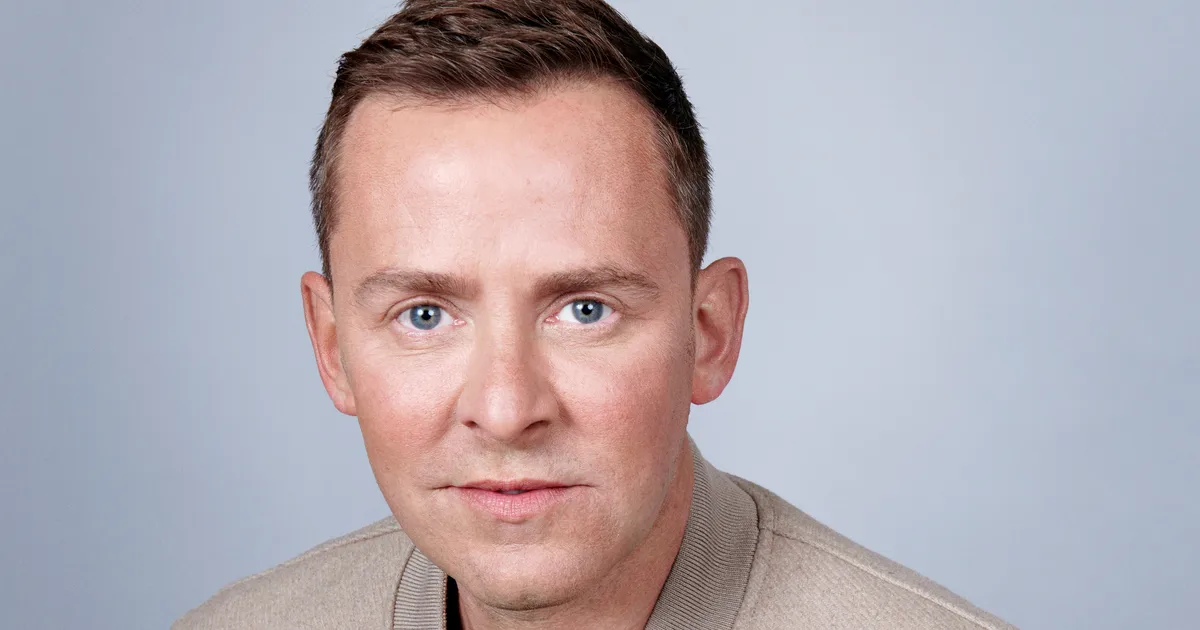
Scott Mills has been axed from his role on the BBC Radio 2 breakfast show due to allegations relating to his behaviour.
Gary Davies has been sitting in for Scott on his usual Radio 2 slot since Tuesday 24 March, with the usual host signing off his previous day’s show by telling his listeners he’d be “back tomorrow”.
BBC News subsequently confirmed on Monday morning that the presenter would not be returning, following what it described as “allegations about his personal conduct”.
“While we do not comment on matters relating to individuals we can confirm Scott Mills is no longer contracted and has left the BBC,” a spokesperson said.
Last year, Scott took over as the host of Radio 2′s flagship breakfast show from outgoing host Zoe Ball.
Before his sudden exit, he had worked with the BBC for almost 30 years, joining the corporation in 1998 as a presenter on Radio 1.
He remained with Radio 1 for more than a decade, before making the jump to BBC Radio 5 Live in 2019 and Radio 2 in 2022, initially taking over Steve Wright’s afternoon slot before being instated as the station’s breakfast show’s host.
In addition to his work on BBC Radio, he has served as the UK’s commentator during the semi-finals of the Eurovision Song Contest for a number of years, currently sharing the role with fellow broadcaster Rylan Clark.
Back in 2024, he and his now-husband Sam Vaughan took part in the second season of Celebrity Race Across The World, going on to win the show.
With the regular series of Race Across The World due to return to our screens next month, BBC News noted that Scott had been due to present a companion podcast to accompany the show prior to him parting ways with the broadcaster.
He has also competed on Strictly Come Dancing, finishing in 11th place alongside professional partner Joanne Clifton back in 2014.
Scott also fronted a one-off documentary for the broadcaster in 2011, titled The World’s Worst Place to Be Gay?.
GP Dr Dominic Greyer previously shared that strength training, good sleep, reducing inflammation, maintaining your “metabolic flexibility,” and enjoying life (in moderation) separates those who age well from those who don’t.
And a new paper, which focused on the short-lived African turqioise killifish, aimed to work out how different behaviours appeared to affect their ageing trajectories.
The fish, which were partly chosen because they shared “key biological features with longer-lived species like humans, including a complex brain”, shared the same genes and were raised in similar environments.
Researchers found that by midlife (for the fish, 70-100 days), fish that lived longer were already behaving differently from those that died sooner.
Study leader Claire Bedbrook said, “Behavioural changes pretty early on in life are telling us about future health and future lifespan”.
What were the differences?
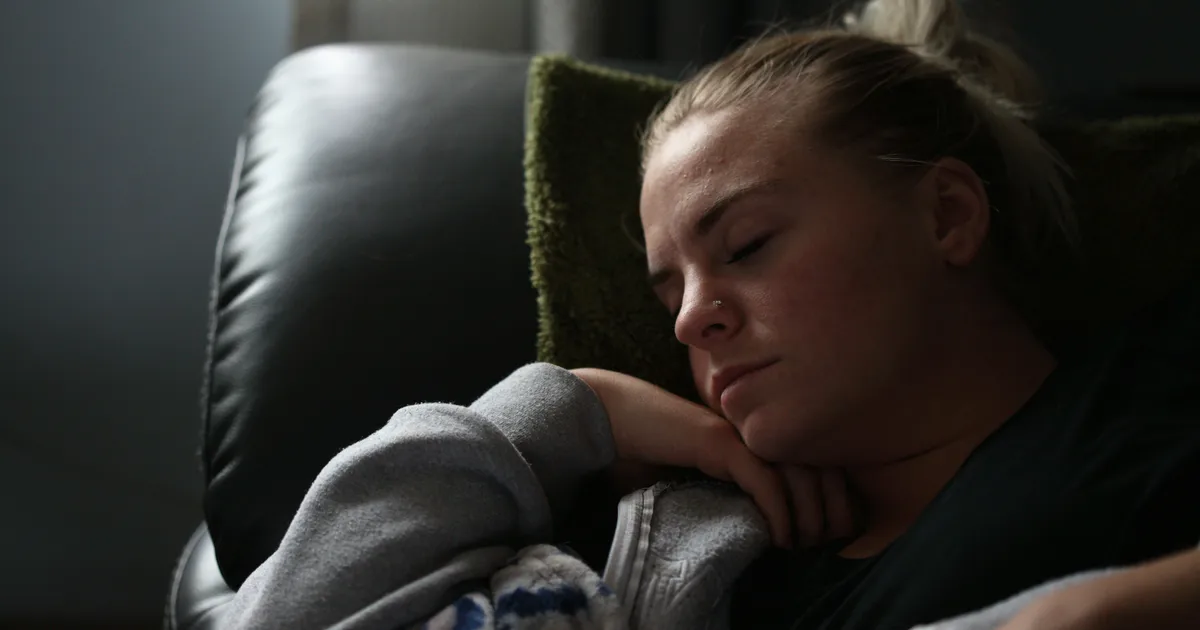
In this study, one of the biggest factors was sleep. Fish that had longer lives mostly slept at night, while those with shorter lifespans slept both at night and during the day.
Incidentally, longer naps, more disorganised nap times, and a higher percentage of naps taken at noon and in the early afternoon have been linked to increased mortality risk among humans.
But activity mattered too.
Fish who swam harder and faster were likelier to live longer, “a measure of spontaneous movement that has been linked to longevity in other species as well”.
And fish that lived longer were more active in the daylight as well. A separate human study found that those who did the majority of their physical activity between 11am and 5pm, or mixed throughout the day, had a lower cardiovascular and all-cause mortality risk than those who moved mostly in the early morning or at night.
Ageing seemed to happen in stages
The researchers noticed that ageing seemed to occur in two to six stages rather than gradually.
“We expected ageing to be a slow, gradual process,” Bedbrook said.
“Instead, animals stay stable for long periods and then transition very quickly into a new stage. Seeing this staged architecture appear from continuous behaviour alone was one of the most exciting discoveries.”
Similar patterns have recently been noted in humans.
Researchers hope this will benefit humans
In an editor’s summary, senior editor at the journal Science, Mattia Maroso, said: “These results might lead to better understanding of the ageing process in other vertebrates, including humans”.
And speaking to Stanford Reports, study leader Ravi Nath said, “Behaviour turns out to be an incredibly sensitive readout of ageing… You can look at two animals of the same chronological age and see from their behaviour alone that they’re ageing very differently”.
The other study leader, Claire Bedbrook, shared, “We now have the tools to map ageing continuously in a vertebrate… With the rise of wearables and long-term tracking in humans, I’m excited to see whether the same principles – early predictors, staged ageing, divergent trajectories – hold true in people”.
We think The Scotsman might have gotten a bit confused and/or carried away when it came to putting the clocks forward at the weekend. At 6am on Sunday morning they tweeted this:

But the link was a 404. We checked the print edition of Scotland On Sunday but there was nothing there. Finally, though, the article has shown up in today’s paper and on the website, and to be honest, readers, we still think it must be some sort of mistake, because it’s two days early for April 1st.
And this is too batshit crazy to explain any other way.

Fortunately it’s the end of the month and time for our latest election analysis piece, so let’s pick our way through the madness. Heaven knows we could all do with the laugh.
“Labour believes it has identified a route to forming the next Scottish government by flipping a dozen constituencies from the SNP and relying on a strong Reform performance on the regional list to deprive John Swinney’s party of the keys to Bute House.
Anas Sarwar’s team believe that in battlegrounds across the Central Belt, where constituencies can be framed as a straight fight between Labour and the SNP, turning 11 or 12 seats red would create three large party blocks, with an assumption Labour would be the only party able to form a government with the help of Reform.”
Good lord, where to even start? The first thing to note is that given all current polling figures, any constituency gains by Labour would be all but guaranteed to be wiped out by a corresponding loss of list seats, so the entire premise of this strategy is demented from the start.
If you look at the last 10 polls, Sarwar’s party is sitting on anywhere from 12% to 19% of the list vote, which ought to be good for 2-3 list seats per region, but if they picked up a few constituencies across the Central Belt that’d be slashed into single figures.
The definition of “Central Belt” is a matter of interpretation, but by any reasonable measure includes at least five regions and possibly six. West Scotland includes areas that anyone would class “Central Belt” – Clydebank, Milngavie, Strathkelvin, Eastwood.

Obviously Edinburgh And Lothians East counts.

Same goes for Central Scotland (clue’s in the name!) And Lothians West.

Ditto for Glasgow.

Mid Scotland And Fife is probably the most debatable, but Dunfermline, Cowdenbeath and Kirkcaldy are hardly in the Highlands and are areas Labour has traditionally been strong in and will at least fancy a shot at. And remember, even picking up a single seat in (say) Kirkcaldy would be enough to halve Labour’s list vote for the whole region.

There can’t be much debate about South Scotland either, unless you’re going to seriously try to dispute that Hamilton and East Kilbride are in the Central Belt.

(Wikipedia defines it as including large swathes of Fife and the Borders.)

So even if Labour picked up “11 or 12” constituencies due to their concentrated vote – and that’s a very, very big ask unless their polling dramatically improves – the likely impact on their total seat count would be zero, because they’d lose the same number on the list.
“The claim is they would have a “moral mandate” to govern, but in order to stand a chance of forming the next government, Labour needs the polls to tighten dramatically to around four or five points. Currently, Labour trails the SNP by around 18 points – meaning Mr Sarwar’s campaign will need to bring forward something extraordinary to move the dial on public opinion in the coming weeks.“
No kidding. But even that understates the magnitude of the problem. Labour’s current constituency-vote polling (again on the last 10 polls, covering the whole of 2026) ranges from 12% to 20%, so to close an 18-point gap they’d need to almost DOUBLE it in the next five weeks, and if you think there’s the tiniest chance of that happening then please contact us at once to take advantage of a fantastic offer we’re currently running on magic beans.
(Labour still haven’t managed to identify a single meaningful policy difference between themselves and the SNP, as Wings has been pointing out for the last three years and which the Scottish mainstream media has finally noticed.)

To be honest, after this arrant nonsense the rest of the Scotsman article is just padding and waffle to fill out the page.
“Labour’s potential route to Bute House would rely on unionist parties, including Reform, to vote in Mr Sarwar as first minister following May’s election, with Labour attempting to govern as a small minority administration.”
Even the most outlandish arithmetical scenario by which Sarwar could win a vote to become FM would require the support not just of Reform but also the Tories, Lib Dems and Greens. Let’s all just pause for a moment and ponder that five-party coalition including Malcolm Offord, Alex Cole-Hamilton and Ross Greer, shall we?
(I asked Grok to visualise it. Yikes.)

But the paper clutches at one last straw.
“One potential scenario, seen by The Scotsman, forecasts that if Labour can take four of the six Glasgow constituencies, the SNP would not be fully supplemented for the losses on the regional list due to the strength of the anticipated Reform vote.
The scenario suggests that instead of the SNP picking up three regional list seats for Glasgow, Reform would come first as the highest performing party that has not won a constituency, with it likely four seats would then be split evenly between Labour and the SNP – with Reform picking up a second regional MSP.”
So even in the miraculous event of Labour picking up FOUR seats in Glasgow (where the SNP’s average majority is around 8,000), the supercoalition would only make a net gain of two, with Labour somehow getting TWO list seats despite their list vote having been divided by FIVE, which would currently put it on something like 3%.
(Which of course is nowhere even REMOTELY close to enough for a SINGLE list seat, let alone two. If they won four constituencies they’d need to be on around 40% of the list vote to have a chance of ONE list seat. They’ve achieved that exactly once in Scottish Parliament history, in 1999.)
The only tiny theoretical chance for the Unionist parties to oust the SNP on anything like current polling is if Reform (the only opposition party who are reasonably strong across the country, not just in pockets of concentrated support) win a lot of constituencies, clearing the others to sweep up on the list. But that’s stupendously unlikely, because no other party is going to knock doors and tell people to vote for Reform. Labour trying to somehow achieve it by picking up a few seats in Glasgow is just suicidally stupid.
So, y’know, wow. We have every sympathy with the press in having to find stuff to write about over the next five wretched weeks and attempt to create some sort of jeopardy as to who’s going to win this election, but if this – “What if Labour suddenly DOUBLED their vote?” – is how crazy they’re getting when it’s still March, we dread to imagine what sort of desperate insanity we’re going to be reading by the start of May.
You probably already know that strength training and calcium can help to keep your bones healthy and strong as you age.
But some factors – like getting enough vitamin D, which helps to absorb calcium, and avoiding smoking, which raises your risk of osteoporosis and is linked to a 30-40% higher risk of broken hips – are less obvious.
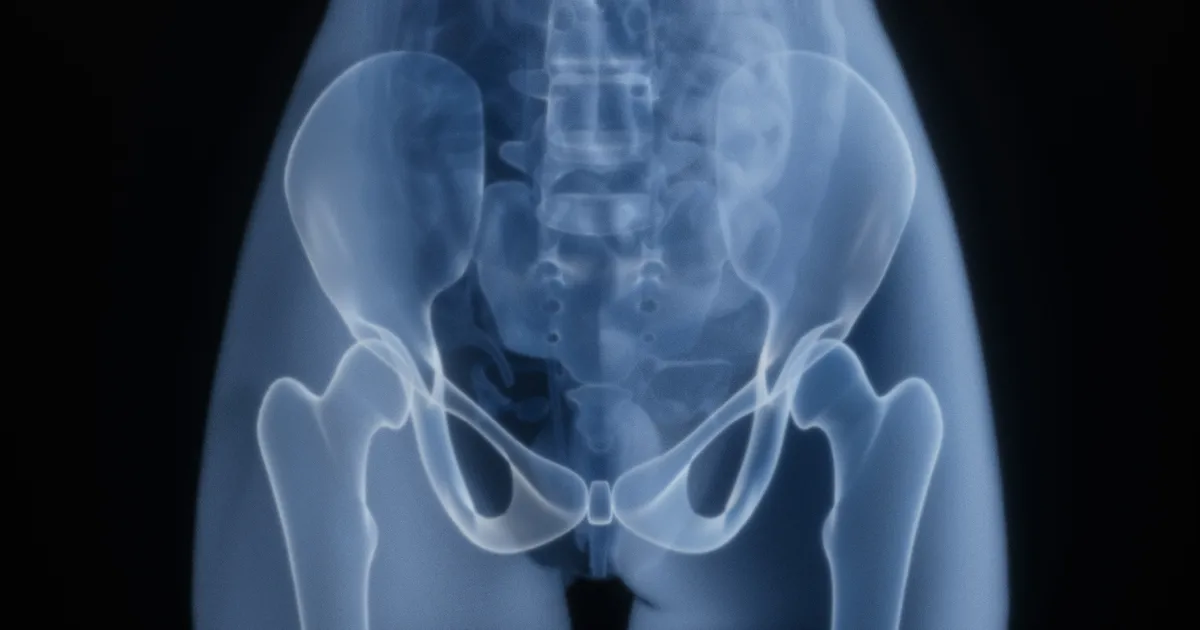
And in one study, prunes, which are high in anti-inflammatory polyphenols and calcium-balancing vitamin K, appeared to preserve bone density and strength at weight-bearing parts of the hip for post-menopausal women.
What did the research show?
The researchers followed a group of 235 postmenopausal women, who are at greater risk of bone loss, over a year.
They told one group to eat 50g (about five to six prunes) a day during the trial, and another group to eat 100g a day. A third group didn’t eat any prunes at all.
Though both prune levels were beneficial, the first group (50g) were more likely to stick to the habit, which meant they tended to get better results.
Professor Mary Jane De Souza, the study’s lead author, said: “Consuming five to six prunes a day for 12 months resulted in preservation of bone at the hip, a finding that was observable at six months and persisted through month 12.”
Postmenopausal women who didn’t consume any prunes saw a 1.1% bone loss in the same time period, while for those in the study, it stayed the same.
That benefit could lead to fewer bone breaks.
It could have benefits for bone quality, too
The same group of women were part of another study looking at how prunes seemed to affect the structure and estimated strength of their tibia.
“This is the first randomised controlled trial to look at three-dimensional bone outcomes with respect to bone structure, geometry and estimated strength,” Professor De Souza said.
“In our study, we saw that daily prune consumption impacted factors related to fracture risk. That’s clinically invaluable.”
She added that prunes may help to reduce the risk of osteoporosis, but more research is needed.
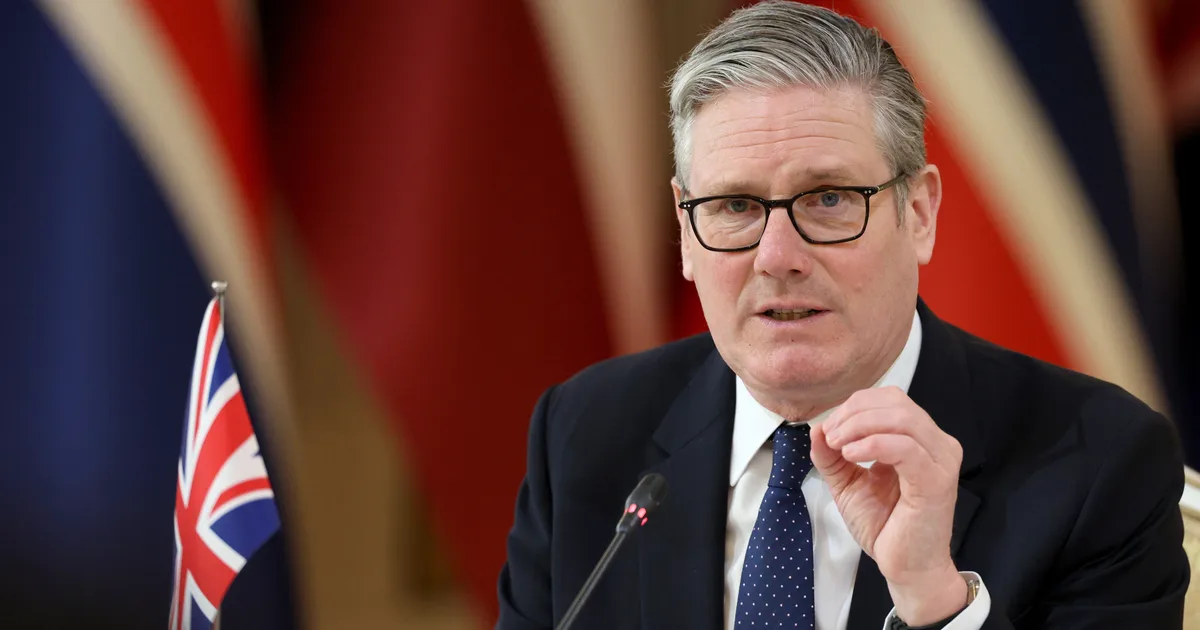
Keir Starmer has taken an indirect jab at Donald Trump while launching Labour’s local elections campaign.
Despite spending the first year of the president’s second term bending over backwards for Trump, the prime minister is now celebrating the distance between himself and the White House after it chose to bomb Iran.
Starmer has permitted US troops to use military bases for defensive and limited strikes on Iran, but refused to let American soldiers use the same sites for pre-emptive attacks.
Some fear that Iran may not differentiate between granting permission for defensive and offensive strikes.
But, Trump has continually slammed the UK government repeatedly for not immediately assisting him with his operation in the Middle East.
Despite this strain in the “special relationship”, the PM even made his distance from the White House a selling point
Without directly mentioning Trump, Starmer claimed he would stand by his values “whatever the pressure and whoever it’s coming from”.
Speaking from Wolverhampton, he said: “People look at their screens and they’re worried when they see explosions, infrastructure blown up, the rhetoric that goes with it, worried about whether this is going to escalate even further.
“And therefore it’s really important that I reiterate where I stand and where this government stands, because this is not our war and we are not going to be dragged into it.
“Yes, of course we will defend British lives and British interests in the region. We’ll stand by our allies in the Gulf region, but we’re not going to get dragged in.
“That’s my values, that’s my principles, and that’s what we’ve applied to our decisions, whatever the pressure and whoever it’s coming from.”


3 min read
Keir Starmer has reiterated that the conflict in Iran is “not our war” and the UK is “not going to be dragged into it” as the government tries to protect households from the economic impact of the conflict.
Speaking on Monday, the Prime Minister said that he knew the war in the Middle East, triggered by US and Israeli attacks on Iran, was “causing huge concern” for the public.
“Therefore, it’s really important that I reiterate where I stand and where this government stands, because this is not our war and we are not going to be dragged into it,” he said.
Starmer has granted the US permission to use UK bases for what he describes as defensive strikes on Tehran. However, he has refused to commit Britain to deeper involvement, leading to repeated public criticism from US President Donald Trump.
Later on Monday, the PM will host a Downing Street round table with senior leaders from the energy, shipping, financial and insurance sectors, alongside the UK’s Commander Maritime Operations, who will set out the security picture in the Strait of Hormuz and the Middle East.
Iranian threats to attack ships travelling through the Strait of Hormuz, which is one of the most important trade routes in the world, have led to a spike in oil and gas prices since the conflict began.
Petrol prices in the UK have already been affected by the war, and the government is expected to announce financial support for households most exposed to rising energy bills.
However, there is now growing alarm over the impact on food prices, with fertiliser, crucial to food production, being impacted by the closure of the Strait of Hormuz.
Starmer was speaking to reporters at the launch of Labour’s local elections campaign in Wolverhampton.
The party is expected to face a bruising set of results when elections take place in English councils, Scotland and Wales on 7 May.
The PM has sought to make the Iran war a dividing line with his rivals, saying Tory leader Kemi Badenoch and Reform UK leader Nigel Farage wanted to go “straight in with both feet into the war without thinking through the consequences”.
“It’s terrible judgement because taking your country to war is the single most important decision a prime minister can ever take.
“And if they had been in government, we would be in a war with no plan.”
Starmer, whose own leadership could come under pressure if Labour’s performance in May is as bad as many in the party fear, pointed to what the government was doing to protect households from cost-of-living pressures worsened by the Iran war.
The PM has indicated that he wants to take a targeted approach to protecting people from soaring energy bills.
Last week, he told MPs he was “acutely aware” of how much it cost the taxpayer when former prime minister Liz Truss gave blanket energy bill support in response to Russia’s invasion of Ukraine.
Starmer also said this morning that he would chair another Cobra meeting on Tuesday to discuss the economic impact of the war.
However, he insisted that the advice to motorists is that there was “no need to do anything other than what is normal” amid warnings about fuel shortages.
On Sunday, Education Secretary Bridget Phillipson told Sky News that drivers should “fill up as normal” and insisted that the government was “well prepared” for disruption.
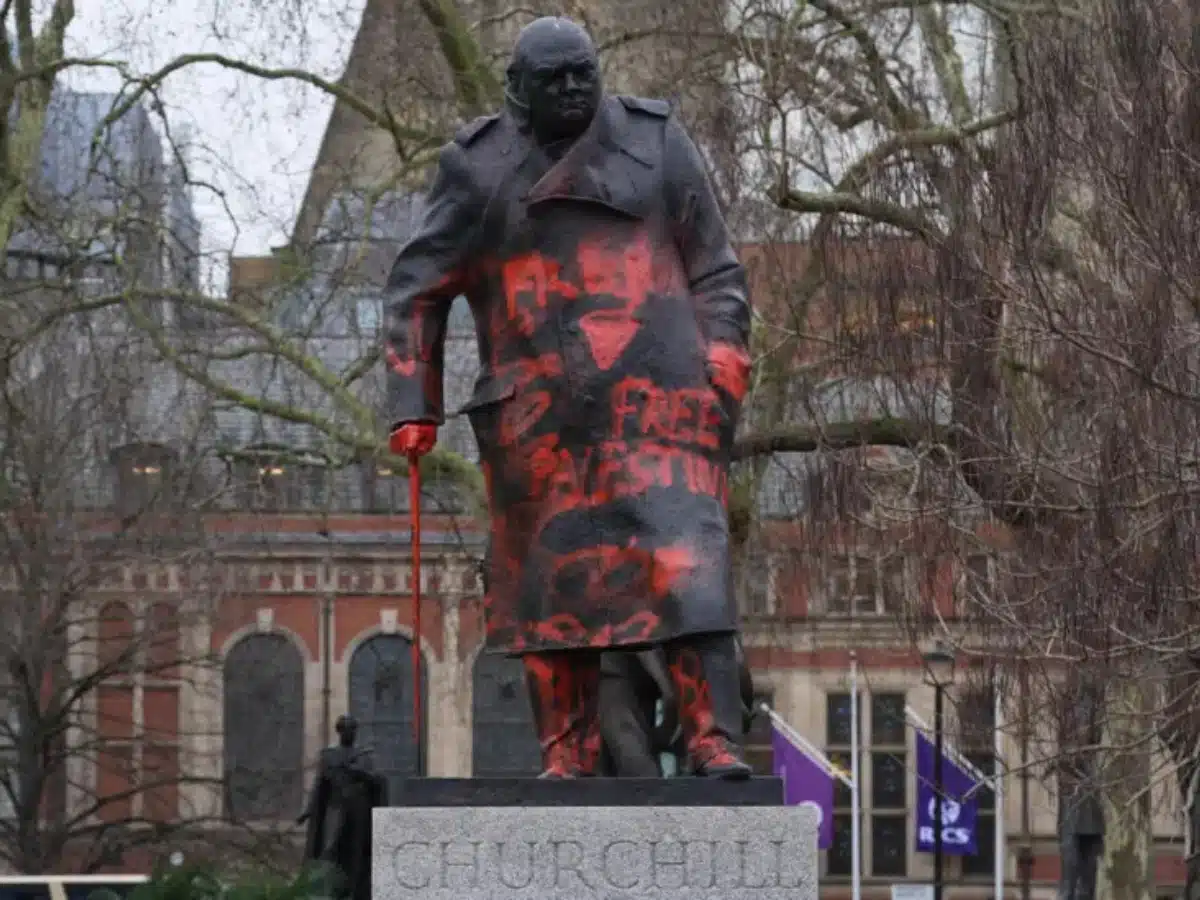
Dutch national Olax Outis from campaign group Free The Filton 24 Netherlands (NL) will appear at Southwark Crown Court on Monday 30 March after a month in prison without trial.
Olax Outis in court
Olax has been held in a UK prison for a month for allegedly defacing the Winston Churchill statue in Parliament Square with finger paint – a crime which in his home country would be considered a misdemeanor at most.
He has denied criminal damage, while the prosecution claimed that the finger paint caused £11,970 in damage to the statue.
Olax painted messages such as “NEVER AGAIN IS NOW”, “STOP THE GENICIDE”, “FREE PALESTINE”, “ZIONIST WAR CRIMINAL” and “GLOBALISE THE INTIFADA!” in the bronze Churchill statue on February 27, was arrested and has remained in custody since.
The conditions of the UK prisons have been described by Olax as “grim”. He reported that some days he receives insufficient food, there are cockroaches in the cells and he is regularly moved around, making it incredibly difficult to keep in touch with his family abroad.
Silence
Today Olax will appear before Southwark Crown Court for his plea hearing where he will find out whether he will be released on bail, granted permanent release, or remain in custody for his peaceful resistance against complicity in the extermination of the Palestinian people.
His solitary action was the first by Free the Filton 24 NL outside the Netherlands. Since its inception, the group has stood in solidarity with the British resistance against the genocide in Palestine. The governments of both the Netherlands and the UK refuse to condemn the Palestinian genocide and are complicit through passive and active support for Israel.
The governments of the UK and the Netherlands remain silent regarding the arrest and disproportionate incarceration of Olax. Aside from automated email replies, there has been no response following emails and letters to the relevant ministries on Olax’ behalf.
Featured image via the Canary

CalMac ferry chaos leaves Scots islanders unable to return home for Easter ‘for first time in 20 years’

‘Fertiliser costs mean I’m better off not planting,’ says farmer

How Hong Kong Is Turning Tokenized Bonds Into Real Market Infrastructure


-
 NewsBeat5 days ago
Manchester United reach agreement with Casemiro over contract clause amid transfer speculation
-

 News Videos5 days ago
Parliament publishes latest register of MPs’ financial interests
-

 NewsBeat3 days ago
The Story hosts event on Durham’s historic registers
-

 Business4 days ago
Instagram, YouTube Found Responsible for Teen’s Mental Health Struggle in Historic Ruling
-
 NewsBeat5 days ago
Tesco is selling new Cadbury Dairy Milk bar and people can’t wait to try it
-

 Tech7 days ago
Samsung will soon let you control smart home devices from your car’s dashboard
-
 Entertainment2 days ago
Lana Del Rey Celebrates Her Husband’s 51st Birthday In New Post
-

 Fashion6 days ago
Does It Matter What You Wear When You’re Laid Off and Looking?
-

 Business6 days ago
More women enter wealth management, but few in advisory roles: study
-
 NewsBeat7 days ago
Colombian military plane with 110 soldiers onboard crashes following takeoff
-

 Politics7 days ago
How Media Platforms Balance Performance and Accessibility in Image Delivery
-

 NewsBeat6 days ago
Entrepreneurs Forum survey reveals optimism in North East
-
 NewsBeat6 days ago
NASA Artemis II Astronauts enter 14-Day quarantine as moon rocket reaches launchpad
-

 Business6 days ago
Late-paying firms face multimillion-pound fines under new crackdown
-
 Tech4 days ago
Intercom’s new post-trained Fin Apex 1.0 beats GPT-5.4 and Claude Sonnet 4.6 at customer service resolutions
-

 Crypto World6 days ago
BTC gives up $70,000 level as markets mull higher interest rates
-

 Sports5 days ago
Fantasy Baseball Week 1 Preview: Top sleeper hitters for both five- and 12-day period led by Munetaka Murakami
-

 Tech5 days ago
US FCC Prohibits Approval Of New Foreign-Made Consumer Routers
-

 Fashion6 days ago
Coffee Break: Korean Skincare Set
-

 Tech6 days ago
Embedding compliance in AI adoption
You must be logged in to post a comment Login