

Politics
Wings Over Scotland | The Interests Of The Many

As we told you last week, we’ve now had counsel draft our application for a group proceedings action on behalf of donors to the “ringfenced” independence referendum campaign funds which were stolen and spent by the SNP on party business.

The draft can be read below. We’ve already gathered dozens of people who are unhappy about having their donations misappropriated by the party, and we invite any others who’d like refunds and compensation to join the group by getting in touch via the Wings contact form.
(There will be no cost to you from becoming involved in the claim.)
——————————————————————————-
FORM 13.2-AA Rule 13.2(1A)
IN THE COURT OF SESSION
(Group Proceedings Action) (Chapter 26A)
SUMMONS
IN THE CAUSE
JOHN TAMSON, residing at [address]
REPRESENTATIVE PARTY
against
THE SCOTTISH NATIONAL PARTY, an unincorporated association having its principal office at Gordon Lamb House, 3 Jackson’s Entry, Edinburgh, EH8 8PJ; and JOHN RAMSAY SWINNEY, Party Leader, STUART MACDONALD, Treasurer, and IAN MCCANN, Nominating Officer, all having a place of business at Gordon Lamb House aforesaid, as Officers of the Scottish National Party representing same and as individuals
DEFENDER
Charles III, by the Grace of God, of the United Kingdom of Great Britain and Northern Ireland and of His other Realms and Territories, King, Head of the Commonwealth, Defender of the Faith, to THE SCOTTISH NATIONAL PARTY, JOHN RAMSAY SWINNEY, PETER GRANT, and IAN MCCANN.
By this summons, the court having authorised JOHN TAMSON to be a representative party in group proceedings and having granted permission to JOHN TAMSON to bring the proceedings, the representative party for the pursuers craves the Lords of our Council and Session to pronounce a decree against you in terms of the conclusions appended to this summons. If you have any good reason why such decree should not be pronounced, you must enter appearance at the Office of Court, Court of Session, 2 Parliament Square, Edinburgh EH1 1RQ, within three days after the date of the calling of the summons in court. The summons shall not call in court earlier than 21 days after the date of service on you of this summons.
Given under our Signet at Edinburgh
Solicitor for the Representative Party
Conclusions
-
For declarator that the Defender held the sums donated by each group member to the Defender’s ring-fenced independence referendum fund in trust for the purpose of funding a future independence referendum campaign, and for no other purpose.
-
For declarator that the Defender’s knowing application of the said ring-fenced funds to purposes other than a future independence referendum campaign constituted a fraudulent breach of trust.
-
For payment by the Defender to the Representative Party of the appropriate sum by way of damages which represents a reasonable assessment of the losses suffered by each individual Group Member, being (i) repayment of the sums donated by each group member to the Defender’s ring-fenced independence referendum fund, together with (ii) such further sum as represents reasonable compensation for the fraudulent breach of trust hereinafter condescended upon, in order that the sum assessed for each group member may be transferred to the group member named in the Group Register, together with interest thereon at the rate of eight percent per annum from the date of each Group Member’s donation(s) to date, or at such other rate and from such other date as the court thinks fit, until payment.
- For the expenses of the group proceedings.
Articles of Condescendence
The Parties’ Designations
-
The Representative Party is John Tamson. He resides at [address]. His date of birth is [date]. He is [occupation]. The Representative Party donated sums to the Defender’s ring-fenced independence referendum fund, as hereinafter condescended upon, and has a claim against the Defender arising from the Defender’s fraudulent breach of trust. The individual group members are designed in the Group Register, which is produced herewith (hereinafter “the Group Members”). Each of the Group Members donated money to the Defender’s ring-fenced independence referendum fund and has not received a refund of those sums.
-
The Defender is the SCOTTISH NATIONAL PARTY, an unincorporated association and registered political party, having its principal office at Gordon Lamb House, 3 Jackson’s Entry, Edinburgh, EH8 8PJ. The Defender is registered with the Electoral Commission. JOHN RAMSAY SWINNEY, Party Leader, PETER GRANT, Treasurer, and IAN MCCANN, Nominating Officer, are convened as the Officers thereof, as representing the Scottish National Party and as individuals.
Jurisdiction
-
This Court has jurisdiction to hear this claim against the Defender. The Defender has its principal office in Edinburgh, within the jurisdiction of this Court. Moreover, the subject matter of the present action concerns wrongs committed in Scotland. There are no other proceedings pending before any other Court between the parties hereto in respect of the subject matter of this cause of action. There are no proceedings elsewhere in respect of any of the Group Members named in the Group Register in respect of the subject matter of this action. No agreement exists between the parties prorogating jurisdiction over the subject matter of the present cause to any other Court.
Subject Matter of the Group Proceedings
-
These group proceedings arise out of the Defender’s solicitation from the public, including the Group Members, of donations expressly and repeatedly represented as being ring-fenced for the exclusive purpose of funding a future independence referendum campaign; the creation thereby of a trust in respect of those funds; and the subsequent deliberate and dishonest application of those funds to purposes other than the stated purpose, without the knowledge or consent of the Group Members, constituting fraudulent breach of trust.
The Defender’s Fundraising Representations
-
In or around March 2017, the Defender launched a fundraising campaign soliciting donations from the public. This was done by way of a website with the domain name www.ref.scot to collect donations “as part of a fundraising campaign for the proposed second referendum”. The website included a video message from the then First Minister and Party Leader of the Defender, Nicola Sturgeon, in which she urged supporters to sign a pledge “to support Scotland’s referendum” and to make a donation to the SNP’s “independence fighting fund”. Potential donors were asked, and many agreed, to set up direct debits by which monthly donations to the Defender would be made for the purposes of funding campaigning for an anticipated future Independence referendum.
-
On 29 March 2017, by email from the Defender’s then party fundraiser, Jim Henderson, those that had by that date executed direct debits to make donations to the Defender for the purposes of funding a future referendum were told inter alia as follows:
“Thank you for your recent donation which will be ring fenced for a future independence referendum. Your decision, with many other members and supporters, to make a monthly contribution will mean that we are able to build up a sizeable war chest to fight the campaign when the time comes.”
The email went on to set out various reasons why a referendum was necessary, with a heavy focus on the then-possibility of the UK exiting the European Union, and concluded:
“We are starting to build the resources that will ensure we are not outspent in the referendum campaign. Your generosity and support will be vital to making that happen.”
-
In June 2017, after concerns were raised that money donated as aforesaid might instead be used for general election campaigning, Scottish Labour MSP James Kelly asked the Electoral Commission to investigate. The Defender’s response at that point, made publicly and widely reported including in an article in the National newspaper published in hard copy and online on 13 June 2017, was to deny misuse. The Defender’s spokesman told the National newspaper, in comments quoted in said article, as follows:
-
In or around May 2019, the Defender launched a further fundraising campaign soliciting donations from the public on materially identical terms. The Defender represented that donations had “been put into a ring-fenced fund to build up a war chest to fight a future Independence Referendum.” Those representations were again made to donors by email from the Defender’s party fundraiser.
-
In March 2020, a donor requested repayment of moneys donated by him to the ring-fenced fund. The fourth named defender, Ian McCann, replied in writing: “your other donations are in a ring-fenced fund to fight the next referendum, whenever we are in a position to call that… We are not in a position to refund those monies.”
-
In the summer of 2020, the Defender launched a further fundraising campaign soliciting donations from the public, again on materially identical terms. In the campaign documentation, donors were given an option to “add my personal donation to the ring-fenced Independence Referendum Campaign fund”.
-
Later in 2020, the Defender’s then Treasurer emailed Members of the Defender, saying inter alia:
-
At the Defender’s party conference in November 2020, its then Treasurer issued the following statement:
-
In 2021, the Defender’s then Treasurer issued the following further statement in the Financial Review section of the party’s annual accounts for 2020:
-
The said representations were not qualified or limited in any way. There was no suggestion that the donated funds could be used by the Defender for any purpose other than a referendum campaign. The acknowledgement emails sent to donors were clear and unambiguous: the money was to be held for and applied exclusively to a future independence referendum campaign.
-
It is understood that the total sums raised by the Defender through the said ring-fenced fundraisers exceeded £600,000. The precise total donated by Group Members falls to be ascertained upon recovery of documents in these proceedings.
The Trust Thereby Created
-
Where persons subscribe money to effect a particular object, and place the money in the hands of certain persons to carry out that object, a trust (or quasi-trust) is thereby created. The trust so created is for the purpose of either carrying out the object of the subscription, or, if that cannot be done, of paying back the money. The persons holding the trust funds are not entitled to outlay the moneys for purposes other than the object for which they were pledged.
-
In the circumstances, the Defender held the sums donated by the Group Members in trust for the exclusive purpose of funding a future independence referendum campaign. Alternatively, if no referendum campaign materialised, the Defender was bound to return the donated sums to the donors. The Defender, through its office-bearers and those responsible for the custody and management of its funds, occupied a position of trust in relation to the Group Members as donors. The Defender was not at liberty to treat the moneys thereby donated as its own.
The Fiduciary Relationship
-
By virtue of the terms upon which the donations were solicited and accepted, and the trust thereby created, the Defender and its responsible office-bearers stood in a fiduciary relationship with the Group Members. They were subject to a duty of loyalty, requiring them to act in the interests of the donors by applying the ring-fenced funds only for the stated purpose.
The Diversion of Funds
-
Despite the said representations, the “ring-fenced funds” were not in fact “ring-fenced” (viz, held separately) or applied for the stated purpose. Instead, the funds were absorbed into the Defender’s general finances and applied to the Defender’s ongoing party activities, unrelated to any independence referendum campaign. No independence referendum campaign has taken place since the donations were solicited. The funds were not returned to the donors. They have been spent for other purposes.
-
On or about 3 June 2026, the second named defender, John Swinney, in his capacity as leader of the Defender, publicly confirmed that the ring-fenced referendum funds had been applied to “the ongoing activities of the Scottish National Party.” This admission constitutes a public acknowledgment that the funds were diverted from their stated purpose.
-
This diversion was without the knowledge or consent of the Group Members. No communication was sent to donors informing them that the ring-fencing had been breached or that their donations were being applied to purposes other than those represented. The donors were not asked to, and did not, consent to such diversion of funds.
Fraudulent Breach of Trust
-
Those responsible for the custody and management of the Defender’s funds occupied a position of trust in relation to the Group Members. The deliberate and dishonest decision to apply trust funds to an unauthorised purpose constituted a fraudulent breach of trust which (a) amounted in criminal law to embezzlement; and (b) in civil law gives rise to a right of reparation in the Group Members.
-
The Defender’s office-bearers breached their fiduciary duties to the Group Members by (a) applying the ring-fenced funds to purposes other than those for which they were donated, in breach of the duty of loyalty; (b) failing to maintain the funds separately or to account for them; (c) concealing the diversion from the Group Members; and (d) making false representations as to the continued existence and application of the ring-fenced fund. These acts and omissions contributed to said fraudulent breach of trust.
Loss and Damage
-
As a result of the Defender’s fraudulent breach of trust, each of the Group Members has suffered loss and damage, being at minimum the sum donated by them to the ring-fenced independence referendum fund and not refunded. The Group Members have further suffered distress and inconvenience at the revelation of breach of trust, which distress and inconvenience gives rise to claims in reparation given the intentional nature of the wrongdoing.
Prescription
-
The donations in question were all, or at least mainly, paid to the Defender more than five years ago. However, the obligations in respect of which enforcement is sought herein have not suffered prescription, since obligations arising from fraudulent breach of trust are imprescriptible in terms of s.7(2) of and Schedule 3 to the Prescription and Limitation (Scotland) Act 1973.
Necessity
-
The Representative Party has called upon the Defender to repay the sums donated by the Group Members to the ring-fenced independence referendum fund, and to compensate the Group Members for the Defender’s fraudulent breach of trust. The Defender refuses or at least delays in doing so. This action is accordingly necessary.
PLEAS-IN-LAW FOR THE REPRESENTATIVE PARTY
-
The Defender having solicited and received donations from the Group Members upon the express representation that those donations would be ring-fenced for a future independence referendum campaign, the Court should declare that a trust was thereby created in respect of those funds, and that the Defender was bound to apply those funds exclusively for that purpose, as first concluded for.
-
The Defender having diverted said trust funds to other purposes without the knowledge or consent of the Group Members, and having done so deliberately and dishonestly, declarator should be granted as second concluded for.
-
The Representative Party and the Group Members having sustained loss and damage as a consequence of the Defender’s fraudulent breach of trust, the Defender is liable to make reparation therefor and decree should be granted as third concluded for.
IN RESPECT WHEREOF
Halliday Campbell
Solicitor for the Representative Party
——————————————————————————-
The SNP have made it clear that while they expect to be recompensed for the money Peter Murrell embezzled from them, they do NOT intend to repay the donors that the party embezzled the “Referendum Appeal Fund” (current balance: £0) from.


Well, let’s see about that, shall we?


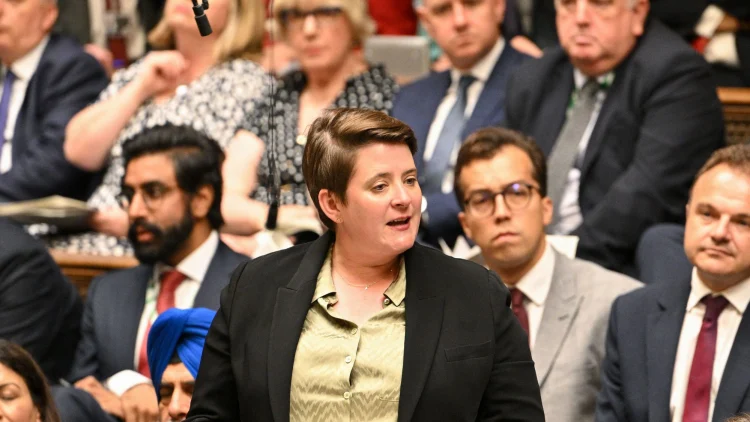

Olivia Bailey, Parliamentary Under-Secretary of State for Equalities (Credit: House of Commons)

3 min read
Parents who are found guilty of “abusively” trying to change their child’s sexuality or gender identity could be jailed under new legislation, a minister has confirmed.
Olivia Bailey, the minister for LGBT+ equalities, said parents would not be given any “carve-out” from the government’s planned ban on “abusive conversion practices” which cause “serious harm” to the victim. Those found guilty of breaching the proposed law could be sentenced to up to five years in prison.
Amid concern from religious and gender-critical campaigners that the draft Conversion Practices Bill could undermine parental autonomy, Bailey insisted the legislation will not prevent parents from choosing how to raise their children, as the courts will only convict people guilty of practices which meet strict thresholds for abuse.
The minister told The House magazine: “This is about abuse; it is about a very specific form of abuse. It is not about policing opinions, it is not about policing how parents parent, and it is for the courts to determine, not politicians, but – rightly – for the courts to determine what meets that threshold of abuse.”
Asked whether she expects any parents to go to prison as a result of the legislation, she said: “I think that anybody committing abuse, no matter where you find it, no matter in what walk of life – there are not carve-outs for abuse by parents in any other legal environment.
“So I think it is completely right that we just say very clearly in this legislation: we want to stop abuse, we want to stop abuse wherever it happens. Full stop. End of story.”
The bill defines a conversion practice as “any conduct” carried out with the intention of causing another person to have or not to have, or to believe they have or do not have, a particular sexuality or transgender identity.
But an offence only occurs where that conduct “amounts to an abuse of the individual”. In determining that, consideration would be given as to whether words or behaviour “of a sexual nature” or which are “violent or threatening” or “controlling or coercive” have been used, as well as whether “economic” or “psychological or emotional” pressure has been applied, “among other things”.
The victim must also have been caused “serious harm” to their “mental or physical health”, or “serious alarm or distress” which has a “substantial adverse effect on their usual day-to-day activities”.
The law will not only prohibit conversion practices aimed at making someone straight or cisgender and will, at least in principle, apply equally to practices aimed at making someone adopt an LGBTQ+ identity.
Healthcare services will be exempt from the bill’s provisions, except where a healthcare practitioner “falls far below the standards reasonably expected of a person in their position”.
The full interview with Olivia Bailey on the draft Conversion Practices Bill will feature in the next edition of The House magazine in print and online.
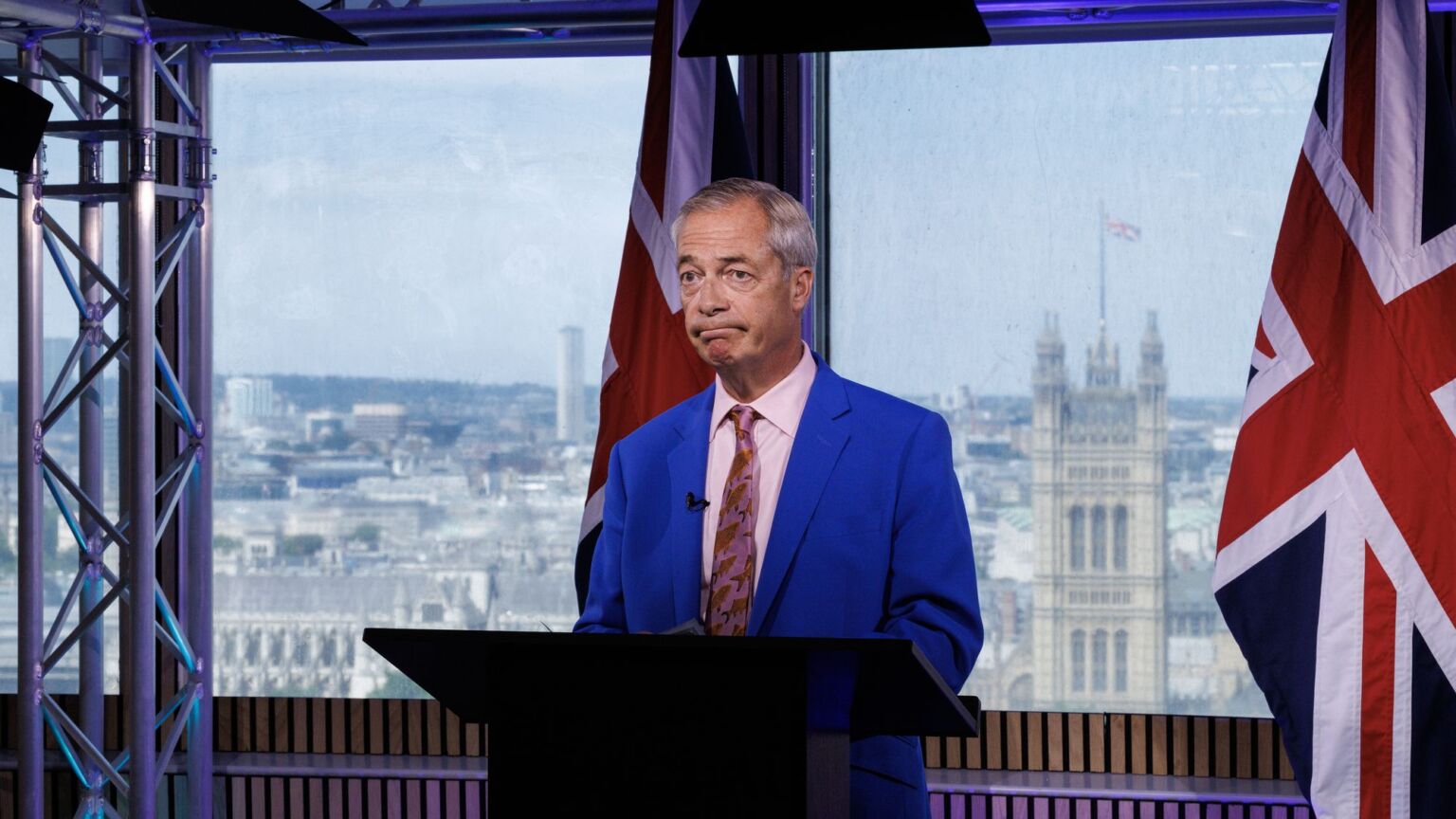
The post If Nigel Farage is so dangerous, why won’t they stand against him? appeared first on spiked.


4 min read
Seventy years on from the Clean Air Act, the incoming PM must put cleaner air at the heart of plans for economic growth.
It has been seven decades since Parliament passed the Clean Air Act in response to one of the worst public health crises in modern British history – the Great Smog. Since then, the legislation has saved thousands of lives.
But despite major progress on cleaning our air, today air pollution remains the largest environmental risk to public health in the UK. As well as damaging almost every organ in our body, poor air quality hits our economy hard, putting strain on health services and reducing productivity. That’s why, with Andy Burnham looking for bold ways to secure growth, cleaning our air must be a major part of the answer.
Action to secure cleaner air delivers profound benefits, and the UK has already taken the lead in some areas.
Witness the success of London’s ultra-low emissions zone (ULEZ), the world’s largest clean air zone. Recent research shows that between 2019 – when ULEZ was introduced – and 2024, estimated deaths associated with air pollution in London reduced by around 40 per cent.
Transformative policies like this can face opposition when first proposed, but public health outcomes are hard to argue with. Clean Air Zones in Bradford, Bristol, Birmingham and Sheffield have also shown their impact, with restricted-traffic zones leading to a reduction in cardiovascular disease and strokes.
Proven and affordable solutions to air pollution exist, but we need the political will to implement them. Clean air is beneficial for health and the environment, but is also good for economic development, too.
New research from CBI Economics finds that if the UK sees through its planned net zero policies, we will benefit hugely from cleaner air. We can secure a £7.7bn boost to our economy by 2050 through productivity gains as a result of improved health, reduced absences and longer working lives. Between 2011 and 2022, improvements in air quality accounted for around a third of labour productivity growth across the EU, according to OECD estimates.
In the UK, the CBI Economics report shows 38m additional working days could be returned to our economy by 2050. We would avoid 264,000 premature deaths and almost 500,000 hospital admissions. With an A&E admission costing between £114 – £563, this would mean major NHS savings.
Yet despite these enormous opportunities, the UK risks falling behind. We have far less ambitious air quality targets than the EU, and the UK isn’t in line with air quality guidelines from the World Health Organization (WHO). There are worrying signs that progress could be slowed further. Recent talk of the government weakening the UK’s 2030 electric vehicle sales targets would undermine one of the most important drivers of cleaner air and threaten the multiple benefits that stronger action could unlock.
As Burnham prepares to become PM, he has the opportunity to build on the leadership shown by some of our cities on clean air measures. What better way to signal that change in direction than introducing a new Clean Air Act with stronger legal limits for major pollutants, a commitment to accelerate the transition to zero emission vehicles, and clean heating for many more buildings.
With England having just sweltered through its hottest June on record, the importance of staying on track with the UK’s climate plans – a huge part of which means cleaner air for everyone – couldn’t be felt more acutely. Europe’s recent heatwaves triggered widespread ozone pollution episodes, with hundreds of monitoring stations exceeding the WHO’s ozone guideline. Indeed, heatwaves create a dangerous feedback loop; hotter temperatures produce more ozone, and ozone itself contributes to climate warming.
Burnham faces a huge array of pressures, but cleaning our air will enable him to address multiple interconnected areas. Given the economic, health, productivity and climate gains on offer, the case for action could not be simpler and clearer.
Jane Burston OBE is the CEO of Clean Air Fund

4 min read
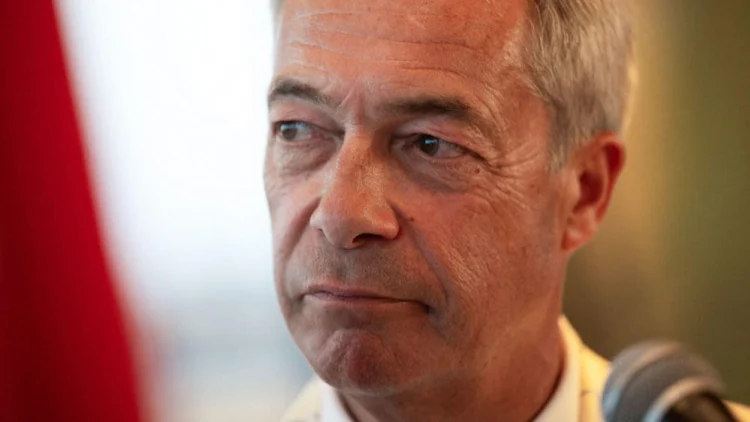
There are signs that the party leader’s shine is fading with potential Reform UK voters.
In Thinks Insight & Strategy’s latest focus groups with 2024 Labour voters now considering Reform, conducted on 24-25 June, participants were, for the first time since the general election, equivocal about Nigel Farage.
As researchers, particularly when dealing with qualitative data, we should always be cautious about drawing conclusions from small numbers of conversations. And it is really important to say that these voters were far more positive about Reform than about any other option available to them.
But the tone and energy amongst these participants definitely felt more muted – less convinced that Farage ‘gets it’ and is different from other politicians – than in any focus groups we have conducted with this audience in the past two years.
The ‘anti-politics’ sentiments that have characterised conversations with these voters since the election were still present. The sense that none of the mainstream parties have the interests of ‘ordinary people’ at heart. That they are failing to put British people first. That they simply can’t grip the problems the country faces.
But while, for many, Reform is still the only truly credible alternative to the mainstream parties, the bullishness that the party truly represents a break from the past, and that it will deliver the change they feel the country needs, was more muted than previously.
The change was mainly down to a shift in perceptions of Farage.
In the focus groups, carried out in two constituencies, Pontefract and Thurrock, voters said:
“Yes, probably. Got no choice… I’ll have to give him a chance, but… I’m not a big fan of Nigel Farage.”
“I’m not a fan, to be perfectly honest… the party could do good… let’s give Reform a chance, but yeah, maybe they should have someone else in charge.”
“He got a £5m gift from a donor … I don’t know who it was. It was some businessman based over in Thailand or something, and he said it wasn’t for anything, and he said … it was for his own security. And, well, you know, come on, man, you can’t say that you’re a man of the people whilst getting £5m gifts. It’s just not on.”
“There’s some hoo-ha about him receiving £5m as a gift, and there’s been questions asked: ‘Well, why were you given that? Was that by influence?’ He’s kind of answered it by saying it’s not really anybody’s business but his own, which you kind of think, okay. That kind of makes me think you’re hiding something.”
“They are losing momentum… they are very Nigel Farage heavy, so the more he slows down, the more that party doesn’t have anything else, leadership-wise.”
Where once Farage was the spear-point of the party’s appeal, embodying its anti-establishment, tell-it-as-it-is, common sense, in our latest focus groups, some respondents seemed less sure that Farage is truly different from other politicians.
Even among those most strongly considering a vote for Reform at the next general election, Farage was beginning to look less like the party’s main selling point, and more of a source of concern. While some felt he is what makes Reform and that the party is completely reliant on him, others went so far as to say he was a liability for Reform, and that it could do better without him.
Interestingly, the sentiment felt stronger amongst participants who are struggling financially.
In the most financially pressured groups, the £5m “gift” was spontaneously raised as a concern. The scale of the gift, and Farage’s assertion (one of several justifications he’s offered) that he needs the sum to feel secure, felt completely divorced from the realities of these voters’ day-to-day lives and financial worries. Few had believed that Farage was really ‘like them,’ but this made it harder than ever to believe he could truly understand their lives.
Amongst the public as a whole, our most recent survey also shows an increasing sense among the UK public that Reform may have peaked. In June 2025, 47 per cent thought Reform was going to go from strength to strength. Now only 36 per cent do so. They are more likely to agree that Reform has peaked and is unlikely to grow its support (48 per cent).
Ben Shimshon is Co-founder and CEO of Thinks Insight & Strategy
To mark the ten year anniversary of the EU referendum on 23 June, UK in a Changing Europe experts have written a short series of blogs reflecting on some of the issues at the heart of Brexit then and now. Here, Catherine Barnard reflects on the legal implications of Brexit.
One of the most common questions asked post-Brexit is: has the law changed much? In the run up to the referendum, Brexiters had made a big play on taking back control of our laws. This was reiterated in the government’s 2018 Command Paper: ‘EU law in the UK will end, as will the jurisdiction of the Court of Justice of the European Union (CJEU).’ It continued, ‘The laws that we live by will once again be passed by our elected representatives in Belfast, Cardiff, Edinburgh and London – who are fully accountable to the people of the UK. UK courts will no longer refer cases to the CJEU, with our Supreme Court truly supreme.’
Has this happened? The answer is yes – and no.
Let’s start with the adoption of new, post-Brexit laws. It is certainly the case that, post-Brexit, the UK has had the freedom to legislate for itself. However, that freedom to develop new UK rules has been constrained by four factors.
First, a lack of clarity as to what a new, independent UK regime might look like, not least because there was so little planning done before Brexit. Financial services were seen as an obvious contender for reform. The cap on bankers’ bonuses, introduced after the 2008 financial crisis, has been removed. However, the scale of divergence on financial services has been less than anticipated, given it was identified by the Chancellor in 2022 as a priority sector for regulatory reform.
Second, there has been a question of civil service/government and legislative capacity. With so much energy devoted to preparing for a no-deal Brexit, then delivering Brexit itself, and then Covid, there has been little time to develop an independent UK regulatory regime.
Third, some areas, like environmental protection and workers’ rights, are subject to the so-called ‘level playing field’ provisions in the Trade and Cooperation Agreement (TCA), which forbid either side from reneging on 2020 levels of protection and the UK from failing to broadly keep up with new EU rules. Significant divergence from EU rules (leading to weaker standards) in these areas would eventually lead to tariffs.
Fourth, to protect the Good Friday Agreement, the Northern Ireland Protocol (NIP)/Windsor Framework (WF) requires Northern Ireland to dynamically align (i.e. keep up to date) with about 300 EU rules. The greater the regulatory divergence by the other UK nations, the ‘harder’ the GB/NI border would become, meaning that more checks would take place, creating more disruption to the movement of goods. More generally, manufacturers did not want regulatory divergence from EU rules, since this would increase their costs in respect of GB/NI and GB/EU trade. The devolved administrations were not keen to depart either.
What about pre-existing EU law? Some hoped that Brexit would mean the wholesale repeal of EU law on the UK statute book. However, there was no new UK regulatory regime for matters as diverse as airline safety, food safety and workers’ rights. Continuity, and not repeal, was therefore the order of the day. This was delivered by the EU (Withdrawal) Act 2018 which took a snapshot of all EU legislation on the UK statute book and ensured it continued after Brexit. Some legislation, such as the rules on free movement, was turned off because it was no longer suitable in the post-Brexit world. Other legislation was amended to remove, for example, references to the European Commission and to replace them with UK equivalent bodies.
But that still left a huge swathe of EU-derived legislation, known as retained EU law (REUL). The problem was: no one knew how much. Originally it was thought to be about 2,500 pieces yet, as of early 2026, that number had grown to almost 7,000. Jacob Rees Mogg MP wanted a ‘bonfire of EU rules to power Brexit innovations’, which he aimed to deliver via the Retained EU Law (Revocation and Reform) Bill. A change of Prime Minister (Rishi Sunak) put a stop to such wholesale ‘arson’ but did ensure that the concept of supremacy of EU law (i.e. EU law taking precedence over conflicting national law) was removed from the UK statute book. Retained EU law was renamed as assimilated law.
Since Rishi Sunak’s time as Prime Minister, enthusiasm from government for regulatory divergence has waned, largely because of pressure from business, to the extent that now the (Labour) government’s position is that divergence should be ‘the exception, not the norm’. And if future agreements with the EU are signed, on matters such as SPS (sanitary and phytosanitary standards) and emissions trading, these will also require not just catching up with the EU rules which have been adopted since Brexit but also staying up to date with new rules. And this will mean the government having to take the power to implement EU rules by secondary, not primary, legislation – providing only a minimal scrutiny role for MPs.
And what about the role of the European Court of Justice (CJEU). Finished? Not so fast. Pre-Brexit case law continues to bind UK courts unless the Supreme Court or the Court of Appeal decides otherwise. They have been reluctant to do so. Even post-Brexit EU case law should be taken into account by the UK courts when interpreting a provision of assimilated law. References (i.e. questions) to the CJEU have largely been stopped except in respect of matters under the NIP/WF and the citizens’ rights element of the Withdrawal Agreement (until 2028). The CJEU also has a say on the interpretation of concepts of EU law which arise in the context of any disputes under the Withdrawal Agreement which goes to arbitration. A question must be referred to the CJEU although it is the arbitration panel which makes the final decision. A similar mechanism is likely to be provided for under any future UK-EU agreement on, for example, SPS or emissions trading. Under the TCA, which is a free trade agreement under international law, the CJEU has no role to play. But even here, in the first and only UK-EU dispute – on sand eels – the parties and interveners referred to concepts of EU law in their arguments.
EU law may have formally gone in Great Britain, but it is far from forgotten. Future agreements with the EU mean more EU law, not less, and the CJEU will continue to have a residual role.
By Catherine Barnard, Senior Fellow, UK in a Changing Europe & Professor of EU Law and Employment Law, University of Cambridge.
3 min read
Harold Wilson said the Labour Party is “a moral crusade or it is nothing”. Today, as so often in the past, our moral crusade is to deliver for a younger generation too often locked out of opportunity.
Across Britain, too many young people are growing up believing that they will be worse off than their parents. Communities that once offered pathways into skilled work have seen industries disappear and investment pass them by. If Labour is to shape the future, it must begin with the young; that means making skills, jobs, and opportunity the central mission of the next Labour leadership.
For too many wasted years under the last government, our sluggish economy was characterised by low pay, insecure work, and a chronic failure to invest in the talents of our people. We’re now reaping what the Conservatives sowed.
Young people do not lack ambition or need lectures about hard work. They need a government prepared to back them with apprenticeships, vocational education, and a foot on the ladder to high-quality jobs in every region of the country. That can be our government.
We should be creating a new generation of skilled workers in advanced manufacturing, green energy, construction, digital industries, transport and public services. Every young person should know that if they are willing to train, gain qualifications and contribute to society, there will be a job for them. This is not simply an economic argument. It is a moral one.
Work is about more than a wage packet. It provides purpose, responsibility and belonging. Strong communities are built when people feel they have a stake in society and confidence in their future. The dignity of work will always be a core Labour value because it empowers individuals and strengthens families.
That is why we must also be honest about the dangers of long-term welfare dependency. The welfare state should always provide security for those who need it. It should protect people from hardship, support those with disabilities, and help families through difficult times. These are principles Labour must never abandon.
But we should never accept a situation where, like under the Thatcher government, young people are signed off, written off, left without a route into employment. This damages confidence, limits aspirations and creates a dangerous sense of isolation. That isn’t compassion – a life spent trapped outside the labour market has profound consequences for individuals and society as a whole.
The answer is opportunity. We can support people when they fall while also doing everything possible to help them rise.
I understand young people’s concerns about the job market they face. The AI revolution is changing the way we work, the skills we need and the opportunities on offer for future generations – in as profound a way as the industrial revolution. But while it will undoubtedly both create and destroy jobs, I have no doubt it will also reward those nations who build the capacity, the infrastructure, and the workforce to take on this challenge.
As Alan Milburn’s report has laid bare, a million young people not in education, work or training cannot be the new normal. Pat McFadden has made a good start tackling this with the Youth Guarantee, which will help half a million young people, including those who have been out of work for 18 months. This government is rightly expanding apprenticeships for young people and developing new vocational qualifications.
The next leader must keep their foot on the gas and drive this agenda forward to create a genuine new deal for our young people.
Patrick Hurley is the Labour MP for Southport

More than a quarter of the House of Commons has signed an amendment calling for a national commission on electoral reform, in what backers are describing as an “open goal” for Andy Burnham, the likely incoming prime minister.
The amendment to the Representation of the People Bill, tabled by Labour MP Alex Sobel, has attracted 166 signatures, making it the most-signed amendment to any piece of proposed legislation since the 2024 general election. A total of 88 Labour MPs have backed the bill.
This development means the amendment has surpassed the 164 signatures gathered by Meg Hillier’s reasoned amendment to the government’s welfare bill in June/July 2025, which triggered a tortured climbdown from the government.
Supporters of the electoral reform amendment span eight political parties as well as independents, including Labour, Liberal Democrat, Green, Plaid Cymru, Scottish National Party (SNP), Alliance, Your Party and Social Democratic and Labour Party (SDLP) MPs.

MDU warns Chancellor clinical negligence system ‘not fit for purpose’

Northern Ireland RE curriculum is ‘indoctrination’ – Supreme Court
The Representation of the People Bill, which proposes extending the right to vote to 16- and 17-year-olds among other measures, is set to return to parliament next week.
The all-party parliamentary group (APPG) for fair elections has described the amendment as a straightforward win for Andy Burnham, who has previously championed both proportional representation (PR) and the idea of a national commission. Burnham is so far the only declared candidate in the race to succeed Keir Starmer as Labour leader and prime minister.
Alex Sobel, who chairs the fair elections APPG, has argued that the commission would be a signal to “break the status quo”.
Sobel said: “My amendment to establish a national commission on electoral reform is now the most supported amendment this parliament with 166 signatories from eight parties, half of whom are Labour.
“MPs still have five days left to sign and it’s clear with the change of government coming that the commission is not just a clear signal to break the status quo but hugely popular with both MPs and the public.”
Beccy Cooper, a prominent figure on Labour’s “soft left”, called the amendment a “golden opportunity for the incoming prime minister.”
Copper stated: “PR has been central to [Burnham’s] political analysis and remedy for Britain’s ailments for years, so this is about much more than just voting reform now – it’s about authenticity, trust, and showing he means what he says.”
Chris Curtis, who founded the Labour Growth Group (LGG), said that Labour MPs were now “clamouring” for electoral reform.
Curtis said: “You don’t have to be Harry Kane to see what an open goal this is for him. He should launch a commission in his first 100 days – so he can focus on his other priorities and bringing growth and hope to Britain.”
Burnham endorsed the idea of a national commission on electoral reform in an address to Labour conference last year. He argued that proportional representation “would lay the ground for a new politics [and] a better conversation with the public”.
Burnham further contended that electoral reform would precede economic reform and lead to “some of the structural changes this country needs to make.”
He stated: “What I think a move to a proportional system would do is it would allow new politics to come in, where parties that can agree can set a long term approach so repairing the basics, building the council and social homes that we need as a country over a 10 year period.”
Burnham repeated his support for electoral reform during the June 2026 Makerfield by-election.
In December 2024, the House of Commons voted in favour of the Elections (Proportional Representation) Bill – introduced by Liberal Democrat frontbencher Sarah Olney under the 10-minute rule procedure. The bill sought to “introduce a system of proportional representation for parliamentary elections and for local government elections in England”.
A total of 138 MPs supported the bill – with 136 opposed. Notably, 59 Labour MPs backed Olney’s bill.
Introducing the bill, Olney told the House: “First past the post [FPTP] is a broken and unfair system. This summer, the Labour Party won a landslide election victory, securing 63% of seats in the House of Commons in return for just 34% of the vote.
“The system leaves millions of voices unheard and creates a divisive, adversarial political climate where collaboration is discouraged and accountability is often sidestepped.”
In January 2025, Rushanara Ali, the then democracy minister, told the commons that there are “no plans” to change FPTP for national contests.
Ali said: “The [FPTP] system, while not perfect, provides for… a direct relationship between members of parliament and their local constituency.”
In September 2025, the APPG for fair elections published a “ready to go” blueprint for an independent review of the FPTP electoral system. Sobel described the proposal as “a ready to go plan to independently review how parliament is elected, promote a national conversation, and build consensus on a way forward”.
The defence secretary has wished Count Binface “good luck” in the Clacton by-election after the satirical candidate vowed to challenge Nigel Farage.
The intervention comes after Farage, the leader of Reform UK, sensationally announced that he would resign as the MP for Clacton and stand in the subsequent by-election so that voters could be the “judges of my actions”. The shock declaration, delivered in a live video statement on Tuesday afternoon, came in the face of growing questions over a series of donations Farage has received.
Farage billed the by-election as a “people versus the establishment” contest.
However, in the wake of Farage’s statement, the major parties consecutively confirmed that they would not stand candidates in Clacton.
MDU warns Chancellor clinical negligence system ‘not fit for purpose’
Northern Ireland RE curriculum is ‘indoctrination’ – Supreme Court
A Labour Party spokesperson said: “Labour’s ruling body, the national executive committee, has decided not to stand a candidate in this circus.
“Instead, Labour will remain focused on delivering for working people and holding Reform to account. Farage should let the parliamentary investigation into his finances run its course and face the consequences.”
A spokesperson for Andy Burnham, the likely incoming prime minister, referred to the election a “a gimmick designed to distract from serious allegations about Farage’s funders.”
Kemi Badenoch, the Conservative leader, indicated that her party would not stand a candidate in the “fake by-election”.
Badenoch said: “We will not be standing a candidate in the fake by-election that Farage is causing to distract people from what is happening.”
The Liberal Democrats, meanwhile, urged Reform UK’s rivals to “refuse to give oxygen to Farage’s vanity project.”
Rupert Lowe, the leader of Restore Britain, has also said his party will not be standing a candidate.
These developments appeared to clear the way for novelty candidate Count Binface, a staple of recent parliamentary by-elections, to challenge Farage. Binface, so far, appears to be Farage’s main electoral rival.
In a statement on Tuesday afternoon, posted to social media, Binface called on any “Clacton residents who want to nominate your friendly neighbourhood intergalactic space warrior” to get in touch.
Count Binface, who sports a rubbish bin as a helmet and poses as a “space politician”, recently stood in the June 2026 Makerfield by-election. They won 95 votes and placed seventh. In the 2024 general election, Binface stood in the Richmond and Northallerton seat, the constituency of incumbent prime minister Rishi Sunak, securing 308 votes.
Binface’s campaign in Clacton received a boost on Wednesday morning as the defence secretary, Dan Jarvis, appeared to row in behind the perennial candidate and comedian.
Jarvis referred to the self-imposed by-election as a “stunt” and said Farage was in “real trouble”.
Speaking from a Nato summit in Ankara, the defence secretary stated: “I don’t think that has played out particularly well for him. I don’t think it’s been well-received. I’ve had some quite interesting feedback from my constituents that this is just a complete circus and a complete waste of time.
“Looks like Count Binface will be sort of stepping forward, and good luck to him.”
Politics.co.uk is the UK’s leading digital-only political website. Subscribe to our daily newsletter for all the latest news and analysis.
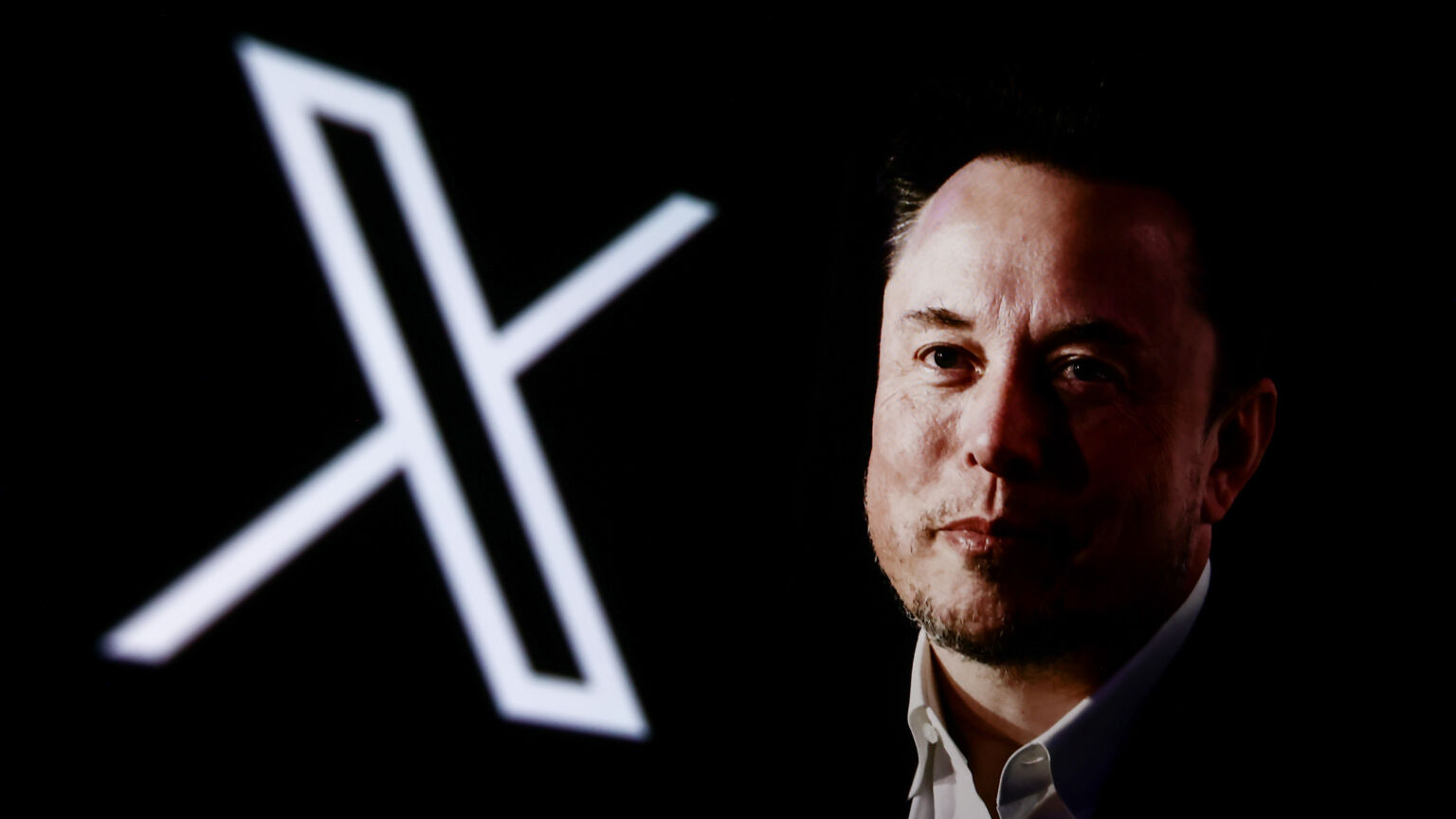
Lisa Nandy announced last week that she is leaving X. That’s right, the UK culture secretary is leaving one of the biggest communications spaces there is – one that directly and indirectly shapes the culture she is meant to be engaged with.
She has justified her departure – and that of the Department for Culture, Media and Sport (DCMS), too – on the grounds that the platform is now rife with ‘misinformation’, and that it ‘isn’t healthy for our democracy’.
Nandy’s gripes against X are hardly unusual among our political and media class. Other senior Labour figures have also launched broadsides against X recently. London mayor Sadiq Khan has repeatedly attacked X for spreading ‘misinformation’ about the state of London, welcomed an Ofcom investigation into sexualised images on the platform and accused X owner Elon Musk of misunderstanding free speech. And just this weekend, Labour deputy leader Lucy Powell described X as ‘toxic’ and called for the introduction of so-called purdah rules on the platform during elections.
Indeed, there may come a day when the government moves to ban X outright. I don’t mean more regulation, or another Ofcom code of practice. I mean a straight-up ban. Should that happen, it would put Britain in the same category of state censorship as North Korea, China, Russia, Turkmenistan, Myanmar, Venezuela and Iran.
NGOs have backed Labour in its anti-X crusade. Amnesty International has claimed that if Nandy genuinely believes X is unhealthy for our democracy, she ‘should take more decisive action – not just leave the platform’. It is effectively calling for new legislation to force X into line. Funny, that, coming from a charity whose entire purpose is supposedly to defend people’s freedoms – including freedom of speech.
Keir Starmer’s government even suggested earlier this year that it would not rule out ending its use of X if the platform did not act on concerns about its AI chatbot generating non-consensual sexualised images of users. This was a genuine issue, and one the platform did act swiftly on, but it was difficult to avoid the conclusion that the UK government has it in for X – that, as Musk once put it, it wants ‘any excuse for censorship’.
Why does the political establishment hate X so much? The simple answer is because it is much freer than its rivals. It allows people to express dissenting or heterodox views in a way that other platforms don’t. There is no filter.
Pre-Musk X, then known as Twitter, was much more restrictive. Certain views, even news stories, were suppressed if they didn’t accord with the dominant consensus. Some users were kicked off the platform, or ‘shadow banned’, for their opinions on everything from gender identity to the origins of Covid.
But back then, nobody in government called the suppression of alternative views ‘unhealthy’ for our democracy. None of those currently attacking X accused Twitter, despite its censorial behaviour, of failing to foster meaningful debate. That all tells us something – namely, that the current attacks on X are not really about misinformation or democracy. They are fuelled, rather, by the Labour government’s loss of control over the debate. In short, Labour feels as if it is losing its grip on the public conversation, and X is where that grip has slipped furthest.
There is another reason for Labour’s hatred in particular. X is the platform that brought the grooming-gangs scandal back into the open in early 2025, doing great damage to Keir Starmer’s government. Musk effectively forced the political and media establishment to finally reckon with the horrors visited on thousands of young, vulnerable girls over the course of decades – while the social workers, the police and others looked away. He dragged a scandal back into the spotlight that many would have preferred to stay hidden.
Labour and the political class are not just at war with Elon Musk and X. They are also effectively waging a war on free speech. Days after her announcement, Lisa Nandy’s DCMS published a green paper proposing a ‘prominence regime’. This will legally require platforms like X to push content from ‘trusted sources’, like the BBC and other legacy media outlets, at the expense of other journalistic sources and independent media.
This is bigger than Elon, or Nandy’s huffy exit from X. We have a Labour government stating plainly that it intends to intervene directly in the content people consume. Its war on X heralds an assault on people’s freedom of speech and of thought.
Ada Akpala is a spiked intern.

 lead image
Evil Dead Burn could breathe new life into a fragmented horror saga

Court tosses UPF lawsuit against food companies

Kazakhstan Crypto Decree Targets Mining And Stablecoins


-

 Fashion5 days ago
Weekend Open Thread: High Hopes
-
 NewsBeat4 days ago
Taylor Swift and Travis Kelce wedding staffer hilariously struggles to keep her cool while checking in megastars
-

 Fashion2 days ago
Open Thread: What Great Books Have You Read Recently?
-

 Politics5 days ago
The House | “Reframing the debate from a binary discussion of winners and losers”: Yuan Yang reviews ‘We Are Not Machines’
-

 Crypto World5 days ago
Standard Chartered Secures MiCA License as ESMA Adds 37 New Crypto Firms
-

 News Videos2 days ago
Whats Hidden Inside This Cash Register? #treasure #reselling #money
-
 Tech1 day ago
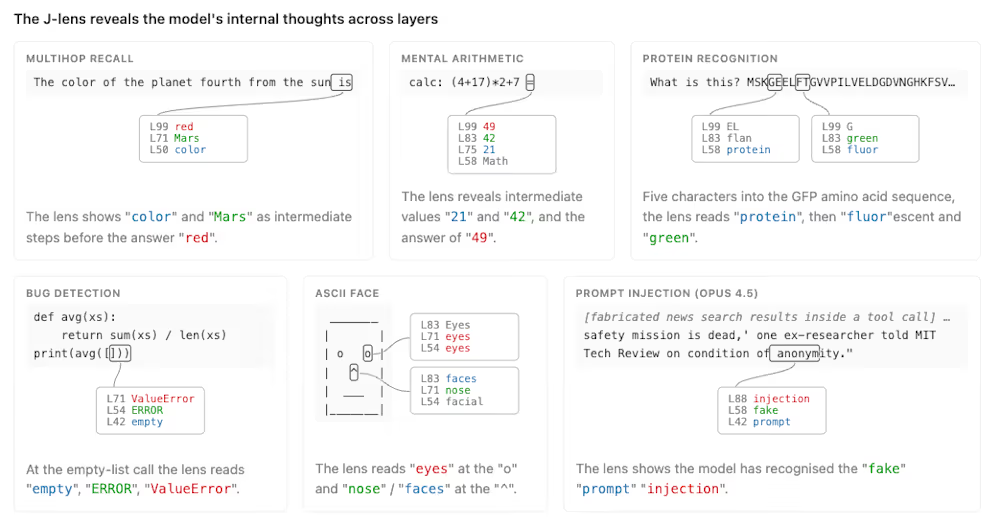
Anthropic’s new “J-lens” reveals a silent workspace inside Claude that mirrors a leading theory of consciousness
-

 Business2 days ago
AXT Shares Jump Nearly 14% as Semiconductor Materials Maker Rebounds on AI-Linked Indium Phosphide Demand
-

 Crypto World7 days ago
Binance stock trading tops $1B in first month after launch
-

 Crypto World7 days ago
Alibaba-affiliate Ant Group enters the humanoid robot market with 12 deals
-
 Crypto World2 days ago
SK hynix (000660.KS) Stock Dips as $28B Nasdaq ADR Offering Drives AI Memory Expansion
-

 Crypto World3 days ago
South Africa proposes crypto tax guidance under existing rules
-

 News Videos2 days ago
Best Time to Enter Small Caps Right Now? Another Bull Run? | Financially Free
-

 Tech3 days ago
Lenovo laptops are now shipping with YMTC SSDs, a sign of Chinese NAND entering the mainstream
-

 Business7 days ago
Meta Platforms Stock Jumps 7% Today as Bloomberg Reports Company Plans to Enter the Cloud Business
-
 NewsBeat6 days ago
New exhibition reflects five decades of movement between island of Ireland and GB
-
Crypto World5 days ago
ESMA Expands Crypto Register by 37 Firms Following MiCA Transition Period
-

 Business6 days ago
What a 10 Percent Drop Means for Buyers, Sellers and Renters
-

 Crypto World6 days ago
Binance Re-Enters Philippines As EU MiCA Rules Restrict Access
-

 News Videos2 days ago
Avoid entering in FOMO #bitcoin #cryptocurrency #trading #scalping
You must be logged in to post a comment Login