
Politics
Wisconsin Democrats’ governor primary is an all-out fight over electability


KENOSHA, Wisconsin — The progressive movement’s midterms march has arrived in Wisconsin, where a democratic socialist is forcing establishment Democrats to mount an all-out, last-ditch effort to stop her.
State Rep. Francesca Hong is the front-runner to become the Democratic gubernatorial nominee, fueled by a populist campaign tapping into voters’ cost of living concerns. David Crowley, the Milwaukee County Executive backed by outgoing Gov. Tony Evers, has emerged as the top candidate trying to cut off Hong’s bid.
Ahead of Tuesday’s primary, electability was top of mind for voters and both candidates as they raced to prove they could build the widest, strongest coalition against presumptive Republican nominee Tom Tiffany.
Crowley and Evers have been barnstorming the swing state over the past week, warning a vote for Hong risks losing the governor’s mansion in November to Tiffany, a hard-right member of the House Freedom Caucus backed by President Donald Trump.
“You know, it’s the only time that I know that the governor — Tony Evers — the Republican Governors Association and Turning Point USA have ever been on the same page: in thinking that Francesca Hong is the best candidate to lose this race,” Crowley said in an interview at a local tavern in Sheboygan on Friday.


Hong rejects those warnings. Speaking to voters at events across the state, Hong argues Democratic voters are fed up with the establishment ahead of November — and that she can appeal to a wide array of Democrats, Republicans and people who don’t feel represented by either party.
“We have to take this moment, a movement moment, and be bold with transformative change, and build the actual big tent that we can and we must be as Democrats,” Hong told a crowd of about 50 people gathered at a senior community center in deep-red Siren.
Hong, a 37-year-old former chef and single mother who represents the bluest district in the state assembly, has charted a remarkably rapid rise in a purple state that Trump won by just shy of 30,000 votes in 2024. She launched her campaign as a long shot, with far less name recognition than other Democrats in the race like Lt. Gov. Sara Rodriguez and former Lt. Gov. Mandela Barnes. Both of them have since dropped out. And despite being at a consistent fundraising disadvantage — Hong still has not put out a single television ad — the progressive has maintained wide leads in public polling.
But Hong’s campaign has also faced intense scrutiny over a string of controversial past social media posts, including advocating for defunding the police and railing against Thanksgiving. She was later slammed for being unable to give a straightforward answer to CNN about whether she would “cancel Thanksgiving.”
Following those missteps, Hong’s team has clamped down on her interactions with both local and national media at campaign events in the final stretch. She has also moderated some of her past positions in public remarks, emphasizing repeatedly that she is “serious about public safety” and even attempting to eschew some of her anti-establishment ties.
On Wednesday, she reversed herself on Thanksgiving, telling POLITICO that it was, in fact, her favorite holiday. And asked by POLITICO on Saturday if she had any regrets about her past, she told reporters at a campaign stop in Sheboygan that she had learned from her tweets.

“I had some hot takes, some bad takes on Twitter, but when you’re a business owner running a restaurant during Covid, trying to pay bills as a student, you’re putting feelings out there into the world,” Hong said. “But I’ve evolved, I’ve learned. I think it’s more dishonest not to learn.”
Hong has leaned heavily into affordability policies, including raising the state’s minimum wage from $7.25 to $20, progressive taxation and a statewide one-year moratorium on data center construction — a salient issue in Wisconsin, where several local governments have already voted on moratoriums.
“While many of our supporters or other folks have framed us as anti-establishment, what we are for is working-class people,” she told POLITICO. “It’s not so much being anti-establishment as it is ensuring that we’re listening to voters who are demanding change.”
But many Democrats in the state worry her ideology — including the old social media posts hawking far-left talking points — will be a political risk in a battleground general election.
Pro-Republican PACs, including one associated with the Republican Governors Association, have spent millions of dollars to boost Hong in the primary so they can face who they perceive to be a weaker candidate in November.
Kyle Kilbourn, a Democrat who unsuccessfully ran against Tiffany for his House seat in 2024, said he still had not decided who to support in the primary because of concerns about “electability statewide.”
“The last several elections have been very very close, by one or two percentage points, and so it matters,” he told POLITICO while attending a Hong event at a brewery in Rhinelander.
Even some of Hong’s supporters are anxious.
“It’s always going to be a concern,” Jan Stroman, who attended an event in River Falls, said when asked if Hong could win against Tiffany.
Robert LaGesse, 74, said at an event in far-north Superior on Friday he was voting for Hong — but admitted Hong’s tweets about abolishing the police “sounds like a foolish statement that could hurt her big time.”

At the same event, a young Hong campaign volunteer asked her about those social media posts.“I’m not going to abolish the police as governor,” Hong responded. “I cannot and I will not defund the police.” She was asked a similar version of the same question at nearly every other event last week.
Some supporters also fear that Hong will face racist and sexist backlash as an Asian American woman. Wisconsin has never elected a governor who is not a white man.
“There’s a lot of sexism yet in our country,” Tim Freiss, 60 — a Hong supporter who previously voted for both Bush presidencies — said in an interview outside his home in Green Bay.
“Honestly, what I’m worried about is her race, because our state is very racist,” another Hong supporter, Heidi Meyer, 48, said as Hong canvassed her neighborhood in Appleton.


Democratic officials in the Badger State are determined to unify after the primary, but many are deeply concerned Hong isn’t running the disciplined campaign required to defeat a Trump-backed Republican in Wisconsin.
The messy race has also deeply divided Democrats in the state. Hong’s allies bristle at Evers’ campaign against her, using his resources — including his own communications staff — to boost Crowley. Evers defeated Republican then-Gov. Scott Walker in 2018 by deploying his brand of more moderate Democratic policies to win over independents and limit deep losses in rural areas. But he decided not to run for a rare third term as governor.
Evers on Friday would not commit to endorsing or campaigning with Hong should she win — though Democrats expect he’ll have to.
“I want to have a chance to take a breath, and once that’s in a position, we’ll see,” Evers said in an interview as he walked with Crowley from a Hmong family-owned bakery in Sheboygan to the corner tavern packed with supporters.
Crowley, asked if he would campaign for Hong this fall if she wins the nomination, shot back with a smile: “Ask her that too.” But he quickly added: “I want to be very clear: I’m not in this race running against any of my opponents. I’m running for the votes of Wisconsinites, and if they don’t choose me to be the nominee, my job is to make sure that it’s blue no matter who.”

Asked Saturday if she would endorse and campaign with Crowley if he wins on Tuesday, Hong replied with one word: “Yes.”
Hong has admitted the democratic socialist label comes with baggage — “I can’t say I always love it for me,” she said at a restaurant in River Falls — but she also rejected the notion that her campaign is undisciplined and noted that establishment Democrats had consistently underestimated her bid. She hopes to work with Democrats across the ideological spectrum in the sprint toward November.
“We’re a serious campaign that has built a movement and turned out new voters, folks who are voting for the first time,” Hong said. “We’re a serious campaign that knows how to win, but we’re also serious about working as a coalition and making sure that we collaborate and coordinate with the people that we need to to make sure we defeat Tom Tiffany in the fall.”
Crowley has charted a more moderate path than Hong’s blistering democratic socialism. In an interview, he argued the party needs “someone who’s not just going to fight back, but also who can sit at the negotiating table and be able to work with folks who want to deliver for those that we represent.” He also ruled out the data center moratorium popular with a wide swath of voters that Hong is running on and using to pull in some pockets of rural support: “So, the way I hear that question is that we’re going to preempt local communities from not being able to focus on their own economic development,” Crowley said.
There are signs that Crowley is making some gains. But he’s still 20 percentage points behind Hong in the latest polling.
“Crowley is closing the gap, but it’s likely too little, too late,” said one longtime Wisconsin Democratic strategist, who was granted anonymity to candidly discuss the governor’s pick.

Crowley’s team argues that Wisconsin polling is likely off just as it was in Michigan, where Abdul El-Sayed clinched the Democratic Senate nomination last week by a tighter than expected margin. But the signs of Hong’s strength are evident across the state, beyond just her stronghold of Madison. The first voter Crowley greeted at his opening Sheboygan stop Friday, Paige Gerber, said in an interview later she had already voted early for Hong.
Supporters at the Crowley event later in the day were well aware of his standing. Voter after voter in interviews with POLITICO expressed alarm that their party was poised to pick Hong, a losing horse in their view.
Retirees in “radicalized by basic decency” T-shirts sipped on beer and cheered when Evers walked through the door with Crowley, alongside local IBEW union workers and teachers. “Tony! Tony!” chants eventually rang through the bar.
A Crowley staffer at one point tried to start a “David! David!” cheer. But it never caught on.
Tyler Katzenberger contributed to this report.

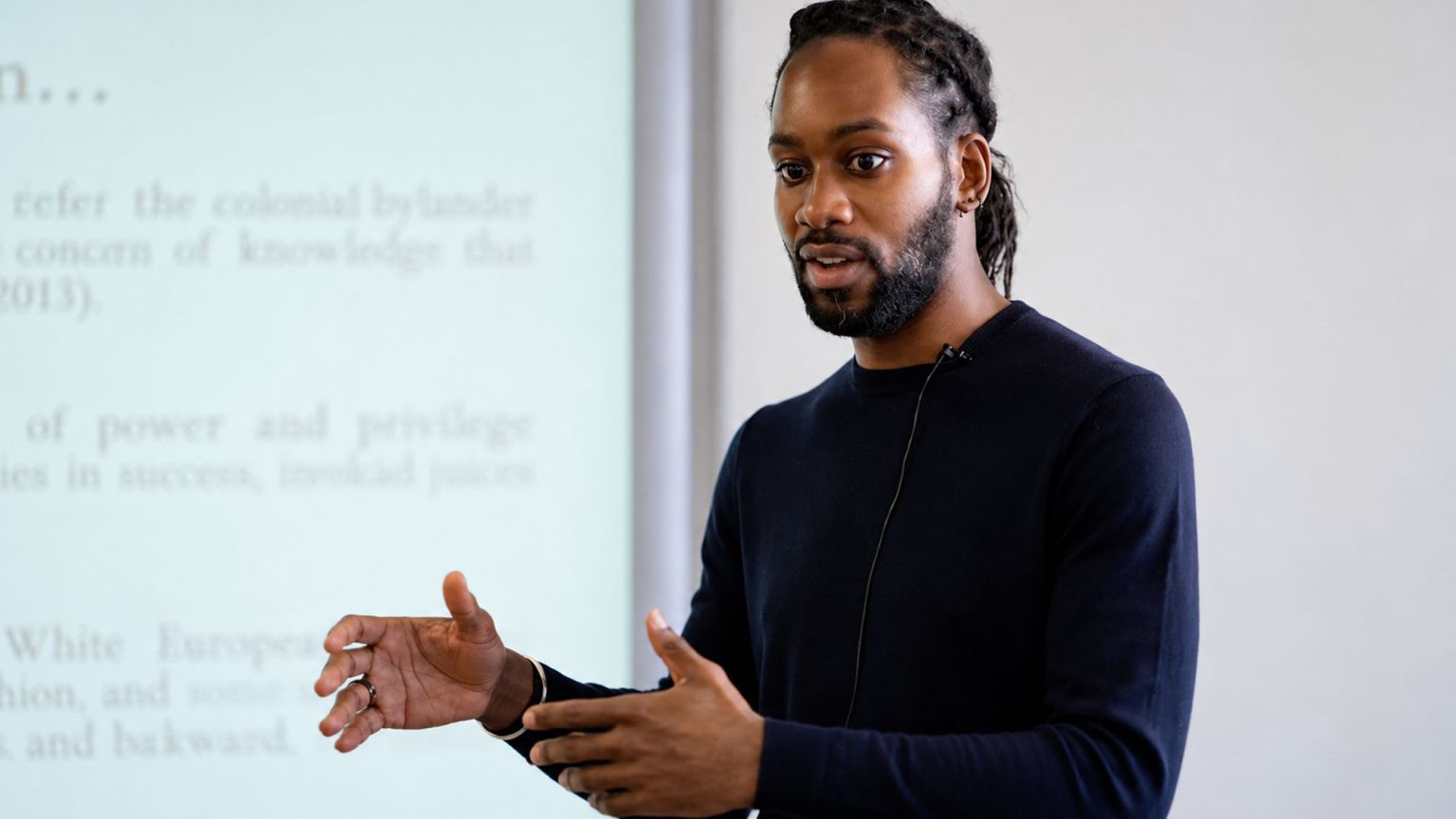
Sociology, as both a discipline and a subject, has long been questioned and ridiculed by sections of academia and the media. ‘It isn’t a real science’ is the common response when I tell people I am a sociologist.
So during what are already horrendous times for those working in higher education, the last thing sociologists needed – a month before term starts and, more importantly, before clearing – was a scandal that undermines higher education and helps delegitimise the whole subject of sociology. Unfortunately, that is precisely what has happened in the shape of the Jason Arday affair.
The now ex-sociology professor has been the star of Britain’s so-called silly season, when parliament closes and news reporters look elsewhere for stories. As many will now know, Arday has been accused of plagiarism, fabricating data and creating a seemingly Walter Mitty-esque backstory – one featuring incredible feats and jaw-dropping triumphs over adversity. And up until this week, he was the professor of sociology of education at the University of Cambridge – a prestigious position at one of the most prestigious universities in the world.
The Arday fiasco has unfortunately fuelled the widespread mockery of the discipline in which he found it all too easy to ‘excel’. So, as a sociologist with an undergraduate degree, a master’s in social-science research methods and a PhD in sociology, I feel the need to defend the subject I love and reclaim respect for the sociologist.
I want to reassure students currently preparing to start, or re-start, their studies in September that sociology is far from a ‘Mickey Mouse’ subject – this despite the damage done by university HR departments forcing through dense, complicated yet inane statements about equality, diversity and inclusion, and by some social scientists themselves.
Sociology matters because it reveals how power works and moves through society. It questions what appears to be ‘normal’, especially when the practices, views and activities ‘normalised’ cause harm. Social scientists have changed and challenged the worldviews of millions of people – their work has done a tremendous amount of good.
If we go back to British sociology in the 1950s and 1960s, we find Family and Kinship in East London, a research project by Peter Willmott and Michael Young, the father of Toby Young of the Free Speech Union. Fondly called ‘FAKINEL’ by the working-class East Enders whose lives it examined, the study followed families from bombed-out post-war Bethnal Green as they embarked on their new lives on council estates in Essex.
The research was groundbreaking because it showed that family ties and networks were crucial to working-class people. It argued powerfully that a sense of community needed to be built into the modern council estates appearing across the country during the mass council-house-building programmes of the mid 20th century. It is a message and a sentiment we still need to remember today.
Another important contribution came in the form of the Affluent Worker studies, carried out in Luton in the 1960s and undertaken by academics concerned with class in Britain. Their research in Luton’s car-manufacturing plants showed that some working-class people held relatively well-paid and skilled jobs. This made them ‘affluent’, insofar as they could buy homes, cars and consumer goods, a marked difference from other sections of the working class and from earlier generations.
Why was this important? Because it told the story of how work can offer working-class people dignity and a real chance to escape poverty. Although the study is almost 60 years old, I believe its message about the importance of work remains vital.
Then there is Paul Willis’s 1977 study, Learning to Labour. It used ethnography, another research method now being lambasted because of the ridiculous rise of Arday, some of whose papers are based on something called ‘auto-ethnography’ – which boils down to writing from one’s own experience.
Nevertheless, Willis’s research still resonates today. He found that working-class lads in schools in working-class areas were being taught and trained specifically for manual work. The academic side of education was denied to them because it was (wrongly) assumed that it would be wasted on them. This work seems particularly resonant right now given our new Labour prime minister and education secretary recently floated the idea that it would be better for working-class sections of society to focus on a more practical, less academic education leading to apprenticeships. Willis’s work shows how easily we can step back into the old class tropes – that some of us are not suited to academia, and that education is therefore wasted on us.
I know this to be untrue from first-hand experience. I am a working-class woman. I worked for many years in factories, grew up and lived on council estates, and I can also read and critique high academic theory.
So, in light of the Jason Arday affair, I ask the public to look beyond the stupidity and Marie Antoinette-like practices of elite universities, and remember what the discipline of sociology can achieve when practised properly.
I also make a plea to my fellow academics: stop allowing this to happen. Stop allowing academic institutions to make appointments and pursue policies that denigrate everything we do. We need to go back to first principles. We need to forget the identity politics, the DEI quotas and the tick-boxes, and support and fund what we do best – deepening knowledge of what is really happening in society and arguing why that matters.
Lisa McKenzie is a working-class academic.
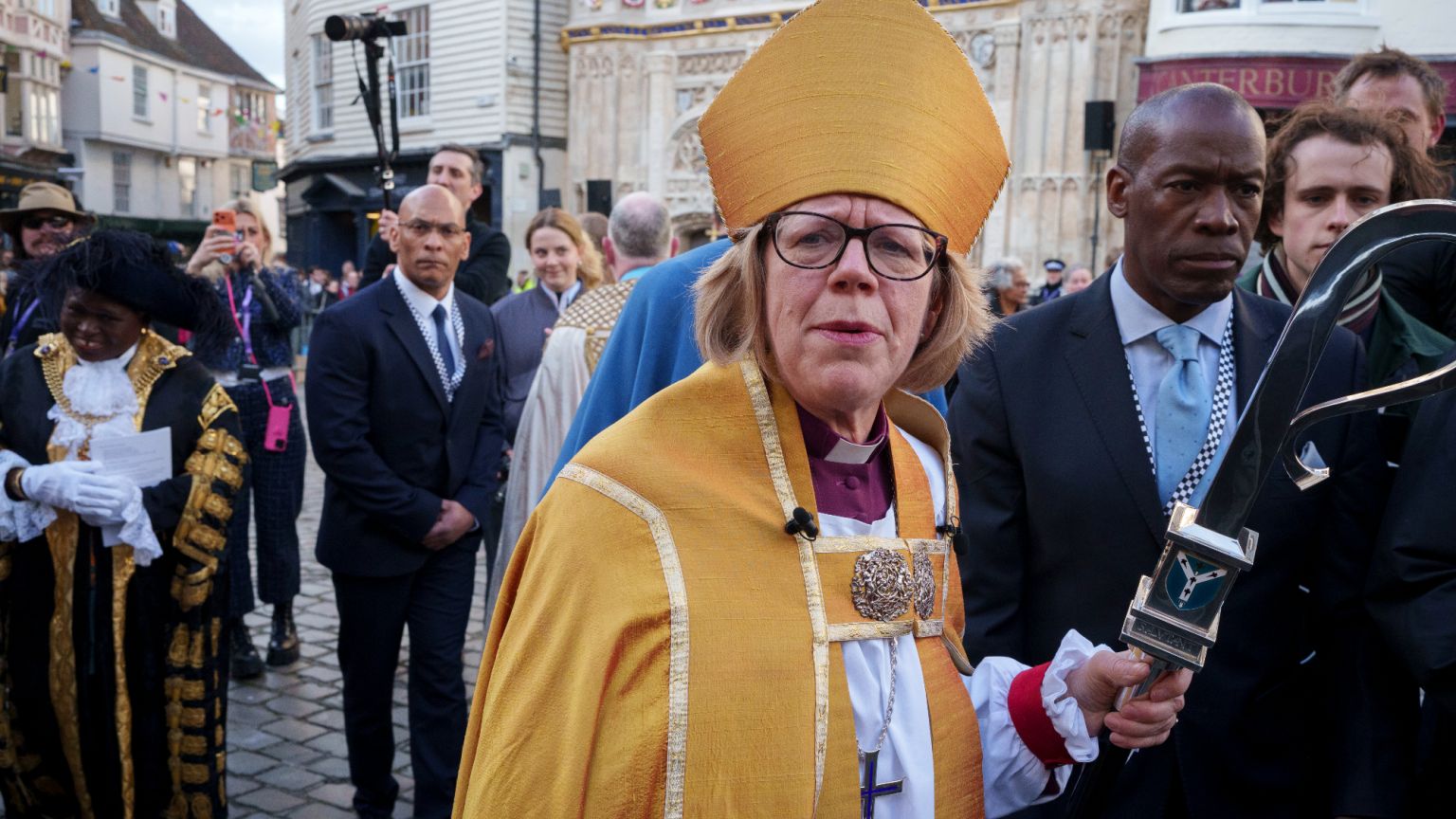
You can see why the Church of England thought ‘Project Spire’ would be a good name for its multi-million-pound ‘reparations’ scheme. Yet if Archbishop of Canterbury Sarah Mullally or her predecessor Justin Welby had read William Golding’s The Spire, this might have given them reason to reconsider.
Golding’s story of Dean Jocelin, a man consumed with an obsessive determination to build an enormous cathedral spire despite the building lacking adequate foundations, makes for an unfortunate analogy. Ignoring all warnings, Jocelin’s mad vanity project consumes vast resources and ultimately brings ruin and suffering to himself and others.
Had the current or past Archbishop of Canterbury paused to reflect on this precautionary tale of grand moral vision detached from reality, they might not have embarked on their foolhardy ‘Project Spire’, which will result in the Church of England giving up £100million for its role in the transatlantic slave trade.
I am not a member of the Church of England, and yet as someone who spends ever more time in church and is probably on a slow and steady path to Christian worship, I have an interest in this scheme.
Nothing in Project Spire appeals to me or what I want from church. It is not only intellectually lazy and ethically dubious, it is also – on a practical level – ruinous. Quite literally. We have parish churches, in desperate need of roof and other repairs, that will lose out on funding support because random Ghanaians or Cameroonians who never experienced the harms of slavery are somehow judged to be deserving of a windfall. And while the church insists Project Spire will not reduce parish funding because it comes from a separate endowment, the reality is that the £100million used for reparations cannot be used to support ministry or preserve church buildings.
Indeed, there is a cruel irony in the name given to this project when it will have the effect of reducing central church support for the repair of spires. Like that of St Mary the Virgin in Bottesford in Leicestershire – its celebrated 212-foot medieval spire is one of the finest in England and is suffering from structural issues and deteriorating stonework.
What I find interesting is what motivates all this. Who is Project Spire for? Are there millions of Nigerian Christians putting pressure on the church over this stuff, or is it driven by Mullally herself? What good does it do? We all know the slave trade was wrong – we also know Christians like William Wilberforce and the Clapham Sect were at the forefront of ending it, often at great expense to themselves. It was the Royal Navy’s West Africa Squadron that patrolled the seas to supress the slave trade after Britain had led the way in abolishing it in 1807. Indeed, parish churches up and down the country sent petitions to parliament calling for abolition long before the legislation was passed.
Who does it benefit to go on about the historic slave trade? If it is being done with an eye to the congregations of the future, it is a remarkably short-sighted ploy. Having spent considerable time in West Africa, where Mullally made a trip this week, I am convinced that obsessions over the distant past preoccupy the minds of ordinary people in Africa far less than they do self-flagellating white liberals in the developed world.
I suspect the motivations are not even as pragmatic as filling the pews. Instead, as so often with the woke shibboleths of our age, I suspect the call for reparations comes from a mix of guilt, partial historical knowledge and weakness in the face of shouty activist groups.
This despite the powerful moral case made by Nigel Biggar, regius professor emeritus of moral theology at Oxford University, who has pointed out that we can accept the grave evil that slavery represented, without concluding that this imposes on us a duty to pay reparations. After all, so much time has now passed and Britain has already expended significant resources abolishing slavery. It would also be extraordinarily difficult to identify the victims or beneficiaries today, and, most important of all, Brits today should not bear moral guilt simply because of the possible actions of some of their ancestors.
Or what of the arguments of distinguished historians like Robert Tombs? He has persuasively shown that the reparations argument is flawed on historical grounds, pointing that Queen Anne’s Bounty investments in the South Sea Company are not obviously linked to the slave trade.
Speaking of keeping true to history, in meeting the King of the Ashanti in Ghana last Wednesday, one would have hoped Mullally would have been reminded of the role the Ashanti Kingdom played in the transatlantic slave trade during the 18th and early 19th centuries, and which became an important source of the Kingdom’s wealth and military power. Most historians reject the idea that the trade was simply imposed by Europeans, instead recognising that it was a commercial system in which African states and merchants exercised agency as did European slave buyers.
But the argument against reparations need not rely only on the fact that the historical case is disputed, or on Christian morality’s position against assigning inherited guilt. Nor even on the question of what the law allows, when the Church Commissioners’ endowment is held for statutory purposes, such as supporting the ministry of the church and parish life, rather than for international money transfers. There is also the simple fact that this crusade risks politicising and disunifying the church. Instead of uniting worshippers around the Christian faith, a church that allows itself to become a vehicle for contemporary political causes undermines its moral authority and alienates ordinary churchgoers.
Mullally may be more interested in reparations than repairs. But she should ditch the progressive crusades, and focus on fixing some church roofs.
Ameer Kotecha is CEO of the Centre for Government Reform. He was formerly a senior diplomat, serving as the head of the British consulate in Russia from 2023 to 2025.

spiked is funded by readers like you. Only 0.1% of regular readers currently support us. If just 1% did, we could grow our team and step up the fight for free speech and democracy.
Become a spiked supporter and enjoy unlimited, ad-free access, bonus content and exclusive events – while helping to keep independent journalism alive.
Politics
‘Israel’ isolates Palestinian prisoners from outside world, renewing ban on visits from their family, and ICRC


The Palestinian Prisoners’ Club (PPC) has condemned the Israeli occupation’s renewal of an order barring families from visiting Palestinian prisoners. It says the measure is part of a wider policy of isolating detainees and shielding prison authorities from scrutiny.
No oversight or accountability for Israeli occupation’s crimes against Palestinian prisoners
The order was announced by illegal settler, war criminal, and so-called Israeli national security minister Itamar Ben-Gvir. And it is a continuation of policies that have cut prisoners off from the outside world. According to the Club, the restrictions have created conditions in which torture, starvation, medical neglect and other abuses can continue with very little or no oversight or accountability.
The renewal came shortly after “Israel’s” Supreme Court ruled the continued denial of access to prisoners by the International Committee of the Red Cross (ICRC) to be unlawful. But, despite the ruling, “Israeli” occupation authorities have continued to block ICRC visits. The PPC claims the measures reflect a broader policy of isolating prisoners from the outside world. They also limit any independent scrutiny of their treatment.
The continued barring of family, and ICRC visits, should be seen as part of a wider set of punitive measures, which have intensified since the start of “Israel’s” genocide in Gaza. Palestinian prisoners continue facing systematic torture, starvation, humiliation, deliberate medical neglect, sexual violence, enforced disappearance. And the PPC describes these human rights violations as “slow killing” of Palestinians.
‘Israel’s’ violations of international law
Conditions inside the prisons have deteriorated to unprecedented levels since October 2023. “Israeli” prisons and detention centres have now become major arenas for serious abuses against Palestinians, and the spread of infectious diseases.
Representatives of the PPC have held meetings with ICRC teams in the occupied West Bank. They say a more public and active response is needed from the ICRC. The PPC has called on the organisation to publicly set out the obstacles preventing it from accessing prisoners, and to take steps proportionate to the scale of the situation inside the prisons.
By cutting prisoners off from their families, and preventing the ICRC from visiting them, the Israeli occupation is violating international humanitarian law, the Geneva Conventions and other protections which should be given to prisoners and detainees, the Club said.
But the ban on family and ICRC visits now form part of a wider system of abuses against Palestinian prisoners rather than being isolated violations of their rights. This is because of the continued international inaction leading to a climate of impunity.
The PPC is calling for urgent international action to end the isolation of prisoners, and restore family visits. Protection needs to be ensured, and those “Israelis” responsible for abuses must be held accountable through international justice mechanisms.
23,000 Palestinian prisoners from West Bank and Jerusalem arrested since October 2023
Arrests are one of the main tools of Israeli aggression used against Palestinians. The Palestinian Prisoner’s Society (PPS) recorded 630 arrests during July alone. And as of 4 August 2026, the total number arrested in the West Bank and Jerusalem, since October 2023, is more than 23,000.
The number of Palestinian prisoners in the occupation’s jails has increased by more than 80 percent since October 2023. There are now 9,400 Palestinian political prisoners in Israeli occupation prisons. This figure includes 92 women and 370 children. The PPS says 3,198 are held without charge or trial, under what is known as “administrative detention.” Here, the detainee is not informed of the allegations against them, and the evidence presented in court is kept secret.
In December 2025, Human Rights organisation, Defense for Children International (DCIP) stated that 51 percent of the 351 minors in “Israeli” prisons, were being held under administrative detention. This is the highest number and the highest proportion on record since DCIP began monitoring the figures in 2008.
Katz has cancelled administrative detention orders against illegal West Bank settlers
During a recent Likud campaign event in Ariel settlement Israel Katz boasted about ending administrative detention for illegal Jewish settlers. As so-called defense minister, Katz is the only person permitted to sign administrative detention orders.
He said:
I cancelled on my own initiative, all administrative detention orders against settlers in the West Bank.
He claimed he did not agree with “Israelis” being held under administrative detention because it allows Israeli occupation authorities to detain them:
Without a trial, without representation, without information and without [granting them any] rights.
But when it came to Palestinians, Katz argued:
Every incident of violence in Judea and Samaria [the occupied West Bank] was processed as terrorist activity. Therefore, they could hold people without a trial, without charges, without evidence, and without rights – handling and interrogating them just like terrorists.
The crowd applauded Katz, when he said:
I called the head of the Shin Bet at the time and informed him that this [policy] was canceled….But which administrative detention orders do I sign — and many of them? I sign [administrative detention orders for] incidents of Palestinian terror.
The Israeli occupation is also detaining 1,358 additional prisoners from Gaza, classified as “unlawful combatants,” without charge or trial.
It uses detention not only as a security measure, but as a means of coercion, punishment and political control. The evidence points to a system in which the protection of basic legal rights is applied selectively. This then leaves Palestinian detainees exposed to measures that would be condemned when used against others.
Featured image via the Canary
By Charlie Jaay

The Israeli prime minister said his country’s troops will not withdraw from the region until Hamas has “genuinely” disarmed.
His comments are a major blow for Trump’s hopes of ending the conflict.
The US president’s Board of Peace announced last month it had reached an agreement for the “complete disarmament” of Hamas and other armed groups in Gaza.
But Hamas said that was contingent on Israel ending “all forms of aggression” and withdrawing its forces from Gaza.
Speaking on Sunday, Netanyahu said: “Israel rejects the 15-point document.”
“The Israel Defense Forces will not carry out any withdrawal until the dismantling of Hamas and its weapons,” he said.
“And when I say dismantling Hamas and its weapons, that means heavy weaponry, less heavy weaponry and smaller arms. All weaponry.
“We’re talking about a true dismantling and not a fictitious dismantling.”
Trump first announced his peace plan for Gaza last September.
Listen to Commons People, the podcast that makes politics easy. Every week, Kevin Schofield and Kate Nicholson unpack the week’s biggest stories to keep you informed. Join us for straightforward analysis of what’s going on at Westminster.

The TV presenter said the Reform UK leader hasn’t properly thought through the policy, dubbed “Operation Fortress”.
Under the plan unveiled last week, the Royal Navy would intercept the boats and return the asylum seekers on board to where they came from in “the largest military operation in the English Channel since World War Two”.
Farage said the plan did not break international law because they would be carrying out a “humanitarian” mission.
However, the French government has already dismissed the plan, while a former Navy officer dubbed it “a crock of shit”.
In his Sunday Times column, Clarkson joined the chorus of opposition to the Reform proposal.
He said: “Most commentators have focused on the political problems of such a plan.
“They point out, with some justification, that if the British prime minister orders a Royal Navy warship to steam into a French port and deposit a couple of hundred Somalians on the quay, the French government and indeed the United Nations might have something to say about it.
“Others have explained that we don’t really have enough ships to mount such an operation. And they also have a point because when Cyprus came under attack recently, it took a whole week to mobilise a defensive flotilla, which, to our national shame, comprised exactly one ship.
“However, there’s another, even bigger problem with Nigel’s Send ’em Packing plan which is: it’s impossible.”
The Clarkson’s Farm and Top Gear star went on: “How, in the name of all that’s holy, does double-breasted Nige think it would be possible for a large warship to come alongside a much smaller dinghy, which is something it must do if the captain wishes to attach a tow rope?”
He said in 1997, the captain of an Italian warship was jailed after it collided with an Albanian vessel, leading to the death of 81 people, including several children.
“This is what Nige hasn’t considered,” Clarkson said. “How do you stop a boat that doesn’t want to be stopped?
“And how do you order a Royal Navy captain to do something which in all probability will cause him to spend several years in the Scrubs.”
He added: “It is of course politically colourful to conjure up the image of sleek British warships defending the realm. This sort of thing appeals to the Tommy Robinsonites.
“But if you really want to stem the flow, and I suspect most people do, you have to park the (imaginary) destroyers and use your noddle. Do that and you’ll quickly work out that to stop them coming here, you’ve got to stop them wanting to come here.
“You’ve got to make the UK less appealing than where they are now, which is France. This shouldn’t be too hard.”
A Reform UK source told HuffPost UK: “I trust the senior veterans who endorsed our plan a little more than Jeremy Clarkson.”
Listen to Commons People, the podcast that makes politics easy. Every week, Kevin Schofield and Kate Nicholson unpack the week’s biggest stories to keep you informed. Join us for straightforward analysis of what’s going on at Westminster.

Your fridge is the one appliance in your home that never gets a day off. It hums along 24 hours a day, holds your groceries at a safe temperature and just sits in the kitchen, which is probably why most of us never think about it until the milk goes warm.
But the small things you do every day, from how you pack your refrigerator to where you put your leftovers, can have a real effect on the appliance’s longevity.
According to Ian Palmer-Smith, an appliance repair expert at Domestic & General, the average refrigerator should last about 10 to 15 years, but that number can drop to “eight or nine years if you don’t follow best practices”.
The good news is that almost all of those best practices are simple, and several of the worst habits that negatively impact fridges are easy to break.
We asked three repairmen about the mistakes they most often see when it comes to fridge upkeep and what to do instead.

Andrii Zorii via Getty Images
Mistake #1: Not cleaning the condenser coil
The repairmen agreed on one thing: the part of your fridge most likely to fail is the one you’ve probably never looked at.
“The biggest driver of fridge breakdowns is the condenser coil, where the gas gets condensed and forms refrigerant,” Palmer-Spring explained. It’s a metal grid that, depending on the model, sits at the back of the unit, underneath it or, on some high-end refrigerators, up top. Because it’s tucked out of sight, it collects dust, grease and pet hair, and that buildup keeps it from doing its job.
“That stops the coil from dissipating heat, so the motor ends up overheating,” Palmer-Spring said. “The inside of the fridge might not feel hot, but the motor is overheating.”
Tony Andrade, service manager at Abt Electronics, described the same chain reaction: a dirty condenser “makes the compressor work harder and can cause it to overheat. Once it reaches a certain temperature, it may shut down and cool inefficiently.”
The fix: Clean the area and don’t crowd it. Andrade recommends cleaning the condenser every six months if you have pets and roughly once a year if you don’t.
Palmer-Spring suggests pulling the fridge out every winter and going over the coil with a handheld vacuum, also giving the appliance room to breathe in the first place: people “often place the appliance right up against a wall or in a tight space,” which traps heat and starts the whole problem.
Mistake #2: Overpacking the fridge
We’ve all crammed a fridge to the brim before a holiday, and the repairmen say that’s fine every once in a while for a night or two. The trouble starts when it becomes your everyday default.
“Overpacking a fridge … makes the cooling system work harder, leads to uneven temperatures and can cause the compressor to work much harder,” Palmer-Spring said. The issue isn’t just weight but airflow. Cold air needs room to move, and a wall of groceries blocks that from happening.
Andrade explained that overstuffing “doesn’t affect the condenser itself, but it does affect air circulation inside the unit. If you accidentally block the vents where the cold air comes out, the refrigerator won’t cool properly, and you’ll end up with uneven temperatures.”
The fix: Use the eyeball test. “If you can’t see any space inside, it’s overloaded,” Palmer-Spring said. “It’s a simple visual exercise: if I can’t see space, it’s too full.”
Keep the vents, especially the one up top, clear and treat a packed-to-capacity fridge as a one-night dinner party situation, not a permanent state.
Mistake #3: Opening the door too often
The problem with this one is moisture. Every time the door opens, warm room air rushes in to meet the cold. “If you’re constantly opening the fridge just to see what’s inside, moisture can build up because the 70-degree air in your home is entering a 37-degree refrigerator,” said Dennis Godynuk, a fridge repairman and owner of Comfort Appliance Repair TN.
Repeated openings also undo the cooling cycle: he tells customers a fridge can take four to six hours to cool down properly and “people often keep opening the door to check on it, which resets the cooling process.”

AndreyPopov via Getty Images
To be clear, some level of constant use is completely fine. “If you’re cooking and leave the fridge open for a minute, then close it and don’t open it again for 20 minutes, that’s generally not an issue,” Godynuk said. The damage comes from rapid, repeated openings, seven or eight times in an hour, which can leave the interior panels “very wet,” with water potentially dripping down into technical components.
The fix: Grab everything you need in one trip and resist the urge to keep “checking.” After a repair or a big restock, give the fridge a few uninterrupted hours to recover its temperature.
Mistake #4: Putting hot food straight in
Hot food releases steam, and steam is just moisture in disguise.
“If you’ve just finished cooking something, like noodles, and they’re still very hot when you put them in the fridge, they’ll release steam and create immediate moisture inside the unit,” Godynuk said. He sees the fallout regularly. “Customers call us saying their refrigerator stopped cooling, and we find that moisture has become trapped in a fan motor or cooling components,” he said.
Because those components run near freezing, trapped moisture can ice over, making the fridge louder or stopping it from cooling altogether.
It’s also a strain on the hardest-working part of the machine, the compressor (clearly, the most important part of the fridge). “Putting hot food in the fridge also puts pressure on the compressor,” Palmer-Spring said. “If you’re doing it continually, it’s not a good habit.”
The fix: Let food cool to room temperature before it goes in. An occasional warm container won’t doom your appliance, but as a daily routine it adds up.
Mistake #5: Setting the wrong temperature
A fridge that’s set too cold or too warm is constantly fighting itself, and that effort shortens its life. “A lot of people set their fridges either too warm or too cold,” Palmer-Spring said. “If it’s too cold or too warm, the fridge has to work harder, which reduces its lifespan.”
So what’s the sweet spot? Godynuk recommends keeping your refrigerator between 36 and 39 degrees Fahrenheit. He cautions against drifting higher even though regulations technically allow it. Some fridges let you set temperatures as high as 42 degrees, and because units cool to a set point and then float within a range. “If it’s set to 42 degrees, the temperature may rise to 44 degrees before the cooling cycle starts again,” Godynuk said. For him, that’s “too close for comfort,” so he warns against going below 36, since “32 is freezing.” (In the UK, Palmer-Spring noted, the commonly cited range runs about 3 to 5 degrees Celsius.)
The fix: Set your fridge temperature to the high 30s.
Mistake #6: Neglecting the door seal
That rubber gasket running around the door keeps cold air in and outside air out. But when the seal falls off or isn’t cleaned properly, the appliance may become damaged.
“Often it isn’t cleaned enough or harsh cleaning products cause it to deteriorate,” Palmer-Spring said. “If the seal is damaged, outside air can get in and create moisture.”
Andrade described the knock-on effect of a door that no longer shuts tightly: the unit simply can’t keep up. With cold air escaping, he said, the fridge “will run longer and more frequently,” forced to overwork to make up the difference.
The fix: Clean the seal with mild soap every six months and skip the harsh cleaners that break it down. Check it now and then for cracks or gaps and replace it if it’s no longer sealing snugly.
None of these common mistakes require much effort to undo, and considering that a refrigerator is built to run for well over a decade if you let it, you should try your best to avoid these issues.
As Palmer-Spring put it: “Most fridges can have a long lifespan as long as they have proper airflow, are cleaned regularly and you’re not putting unnecessary stress on the compressor or other components.”
Politics
‘Reporter’ celebrates mass surveillance, showing exactly why we shouldn’t have billionaires


Fanatically pro-‘Israel’ rag The Free Press has embarrassed itself again, this time by singing the praises of a US mass surveillance camera system. In a recent report, stenographer-playing-the-role-of-journalist Maya Sulkin sings the praises of the Flock technology.
The system is a network of over 100,000 licence plate reading cameras across the US that send the data they collect back to authorities, who can then precisely track the movement of millions of Americans. What The Free Press didn’t disclose is that they and Flock share a mutual investor — Andreessen Horowitz, a company founded by billionaires Marc Andreessen and Ben Horowitz.
This was pointed out by an actual journalist, Adam Johnson, who correctly labelled Sulkin’s piece as a “straight up infomercial“. In it, she describes people’s rational fear of ubiquitous cameras as a “panic”. She then goes on to scold the citizens taking action against the cameras. These include people who have sliced the devices in half with an electric saw, and rammed them with trucks.
The Free Press — “Infomercial” masquerades as journalism
She concludes by reassuring viewers that Flock is a wonderful, crime-crushing miracle that we should all celebrate. Her final line is:
To be blunt, they’re not interested in you unless you’re a kidnapper, a thief, or someone who intends to do harm.
This is reminiscent of former Google CEO Eric Schmidt’s famous line, in which he said:
If you have something that you don’t want anyone to know, maybe you shouldn’t be doing it in the first place.
He said this to encourage everyone to hand over their data to Google. It ignores the basic principle that essentially all humans value privacy as a basic right, even if they’re doing nothing ‘wrong’. As far as we know, Schmidt has not offered up his browsing history for all the rest of us to see.
Similarly, Mark Zuckerberg was eager to inform us that “privacy [is] no longer a social norm“, and so we should let Facebook hoover up all our personal info. Like Schmidt, Zuckerberg wasn’t inclined to practice what he preached. To secure his own privacy, he bought up houses surrounding his own, to create an additional buffer between him and the rest of the world.
Now The Free Press, a vessel of other billionaires, is telling us not to fear the latest form of mass spying, one that unites corporate and state interests.
Flock system shared info with ICE terrorists
Chad Marlow of the American Civil Liberties Union (ACLU) told Democracy Now:
So, basically, automatic license plate readers or ALPRs are cameras that take a picture of every single car that goes by it. Not just the cars that are suspected of criminality or have done something wrong, but every single car. They record the information about the car, including where it is and when it was there.
Then they put it into a database – and this is where it gets really scary – because now you have pictures of every innocent person who drives by in a database that is kept for a month or more and shared throughout the nation with all of Flock’s law enforcement customers and in fact, even internationally with people associated with Flock.
He continued:
Flock always says it doesn’t sell data, but Flock saying it doesn’t sell data is like Ford Motor Company saying it doesn’t sell steering wheels. Yes, I understand the larger product is cars, and it’s monitoring vehicles, but it’s that data that is part of the Flock product just like a steering wheel is part of Ford Motor Company’s car product. [The] more information it can collect and the more it can share, the more value that their product [has].
404 Media showed that Flock shared data with terrorist gang ICE, Trump’s racist paramilitary outfit that has been smashing rights and murdering people across the US.
This latest attempt to manufacture consent is a stark illustration of why billionaires simply shouldn’t exist. They construct mass surveillance systems because it’s profitable, and it enables them to gain more power relative to the average person. They then use the tech to aid authoritarian regimes like that of Trump. Finally, they utilise their vast resources to buy up media companies, and try to tell us all this is simply in our best interests.
This level of information asymmetry between citizen and state is never in our interests. However, it’s ultimately the wealth asymmetry that precedes it that is the greatest danger we face.
Featured image via DailyCamera

Ask people to describe the youngest child in a family and you’ll likely hear some version of the same story. They’re spoiled, carefree, the favourite, the fun one – the kid who got away with everything while the older siblings paved the way for them. It’s one of the most persistent ideas in pop psychology.
But actual youngest siblings – and the therapists who work with them – say it’s also one of the most wrong.
“I think the biggest myth people push back on is the idea that youngest children have it easy,” Caitlyn Oscarson, a licensed marriage and family therapist, told HuffPost. “I don’t think many youngest children find that to be true, and the research doesn’t really support that idea either.”
This stereotype of a spoiled child who has an easier life isn’t just inaccurate but also harmful, shaping how families treat their youngest members and how those kids come to see themselves as adults.
“Many clients who push back against stereotypes do it more commonly with the one that they are spoiled or the favoured one,” said licensed clinical marriage and family therapist Robin Hamilton. “They hate that, because they typically do not feel that way, even though others in the family might feel jealous and see it that way.”
Indeed, the reality is far more complicated.
“Some youngest siblings may get more freedom, have fewer responsibilities and grow up with less strict versions of their parents,” Oscarson said. “But they also might feel underestimated and have their experiences minimised.”
Youngest siblings may also feel the burden of their older siblings’ resentment, absorbing blame for a family dynamic they had no say in creating. Chloë Bean, a licensed marriage and family therapist, pointed to the notion that the youngest is the “baby” who is inherently spoiled and gets all the attention
“This backfires because they spend their lives trying to prove they’re not immature or coddled, which creates pressure that can chip away at self-confidence,” she explained.
Meanwhile, many youngest siblings actually describe feeling more overlooked than overindulged. With more freedom can also come an assumption that they don’t need as much guidance or emotional support.
The myth of the favoured youngest child who has everything easy also brings a notion of an inherently fun, easygoing sibling who doesn’t take things too seriously.
“One of the biggest myths I hear challenged in therapy is the idea that youngest siblings have it ‘easy’ simply because they’re seen as the carefree, fun or favorite child,” said Priya Tahim, a licensed professional counsellor and the founder of Kaur Counseling.
“While that may be true for some families, it’s far from a universal experience. Many youngest siblings share that being labelled as ‘the baby’ often comes with having their emotions dismissed, their opinions minimised, or their independence questioned well into adulthood.”
Some also express feeling a sense of pressure to maintain that easygoing, humorous role because that’s what their family expects of them.
“I see youngest siblings who grew up believing they had to be the ‘easy’ one or the lighthearted one, because the family already had its hands full,” Bean said.
For many, that status as “the fun one” is more of a survival strategy than a personality. And Altheresa Clark, a licensed clinical social worker and founder of Inspire4Purpose, emphasised that being the life of the party in the family doesn’t mean there aren’t deeper underlying feelings and issues.
“Many youngest siblings have learned to use humour or an easygoing personality as a way to keep peace within the family, even while privately struggling with anxiety, self-doubt or feeling misunderstood,” she explained.

Catherine Delahaye via Getty Images
“Some youngest siblings genuinely do present as the ‘fun’ and carefree one, but that doesn’t mean they aren’t carrying emotional weight,” Tahim echoed. “In therapy, we often explore whether that identity is an authentic part of who they are or a role they learned to play within their family. Humour, spontaneity and being the easygoing sibling can become ways of maintaining harmony, avoiding conflict or making sure they’re liked and accepted.”
The pressure to be easygoing can also lead to youngest children who struggle with naming and expressing their emotions – all while catering to the family members’ feelings.
“There’s a hyper-awareness of others’ emotions,” said Mabel Yiu, a licensed marriage and family therapist and founder of the Women’s Therapy Institute. “Having less power in the household teaches kids to read the people above them as a survival skill. This often shows up as people pleasing in adulthood, and the work is turning that emotional awareness back toward their own needs.”
In the context of therapy, recognising this dynamic becomes the starting point for something more meaningful.
“In therapy, the goal is learning to trust that you’re allowed to take up space, have needs and be respected as you are, not because you out-performed everyone’s low expectations,” Bean said. “Youngest siblings I work with are working toward being taken seriously without going into their usual pattern of over-functioning. So much of their identity was built around being the easy one or proving they’re not the baby in the room.”
Setting boundaries, maintaining those limits and asserting needs without guilt or apology are huge steps for youngest siblings who spent years making themselves small to keep the peace.
There is also grief work in untangling their true identity from the role that was assigned to them by virtue of birth order. All of this points to a broader truth that therapists are quick to emphasize: Birth order is only one piece of a much larger picture, and it’s a less powerful one than most people assume.
“Birth order can certainly influence family dynamics, but it should never be viewed as the sole explanation for someone’s personality or emotional experiences,” Clark said.
“Factors such as parenting style, family stress, culture, age gaps between siblings and significant life events often have an even greater impact. The most important takeaway is that every individual’s experience is unique, and therapy focuses on understanding how those experiences shaped the person rather than assuming their birth order tells the whole story.”
The research bears that out as well.
“When you dive into the research on this topic, what you’ll find is that birth order is far less predictive of adult personality than it is widely believed to be,” said Natalie Moore, a licensed marriage and family therapist. “It is actually the more intricate family roles, dynamics and different parental treatment that have a far greater impact on how someone behaves, relates to others and copes as an adult.”
In her practice, she asks clients questions about the specific role they occupied in their family – what was expected of them, how they were treated, how they fit into an established system – and how those dynamics might still be present in their adult interactions today.
“I think anecdotally we all have ideas about common traits of firstborn, middle and youngest children, but the research doesn’t often back those ideas up,” Oscarson said. “There is also no major difference in rates of issues like anxiety and depression among birth orders, which are often major reasons people seek therapy in the first place.”
That doesn’t mean it’s not worth considering birth order when setting goals and exploring oneself in therapy. After all, birth order is a fascinating topic that can shape many of our experiences.
“Birth order can offer a helpful framework for understanding family dynamics, but it should never be used to define someone’s personality or predict their mental health,” Tahim said. “Two youngest siblings can grow up in completely different households and have vastly different experiences depending on parenting styles, family stressors, culture, attachment and temperament.”
Ultimately, the work is less about birth order and more about understanding the specific story you were handed. Then you can decide which parts of it still serve you and which don’t.
“The goal isn’t to change who you are,” Tahim noted. “It’s to create enough awareness to decide which parts of your story you want to carry forward and which parts you’re ready to rewrite.”
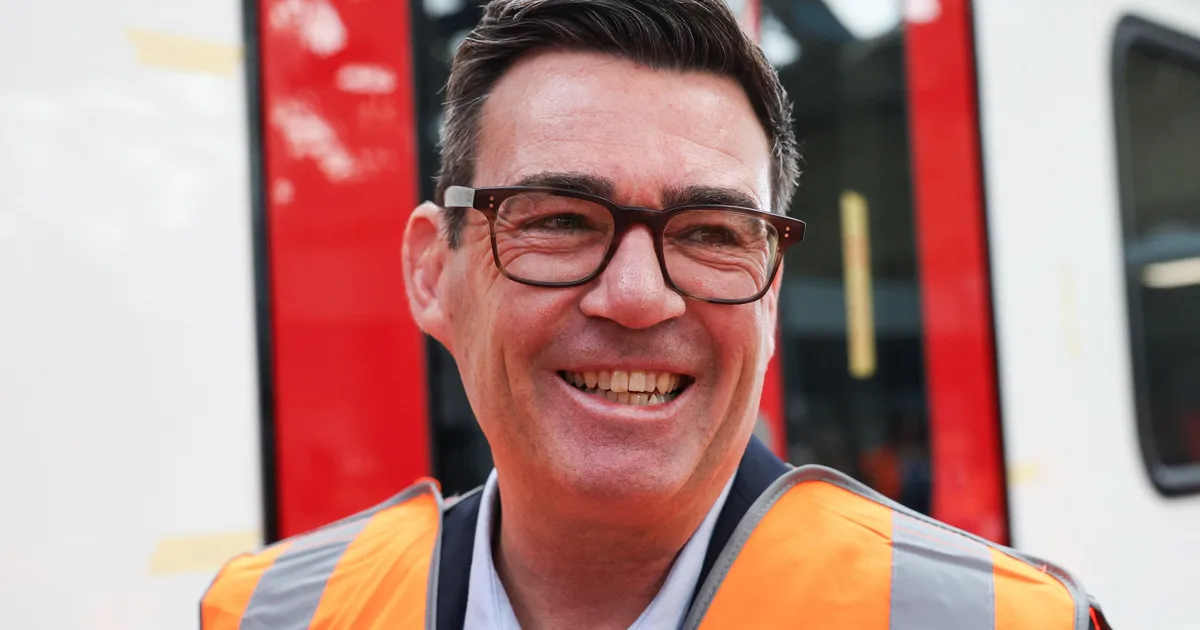
Labour has increased its lead over Reform UK as a new poll confirmed a surge of support under new prime minister Andy Burnham.
A poll of polls compiled by Election Maps UK put Labour on 25.6%, with Reform on 24.3%.
It is a far cry from the start of the year, when Reform led Labour by 10 points.
Both parties were neck-and-neck on July 24, but since then a succession of polls have put Labour in the lead.
The latest, released by Ipsos UK on Sunday, shows Labour has leapfrogged Reform since June.
It put Burnham’s party on 28%, a four-point jump since two months ago.
Over the same period, support for Reform has dropped from 26% to 25%.
The reversal in both parties’ fortunes has coincided with Burnham replacing Keir Starmer as PM last month.
Meanwhile, Reform leader Nigel Farage has been at the centre of controversy over a £5 million gift he received from the Thailand-based crypto billionaire Christopher Harborne and did not declare.
Parliment’s standards commissioner launched an investigation, but that was put on hold when Farage resigned as MP for Clacton to trigger a “people versus the establishment” by-election in the seat.
He is expected to be re-elected when that takes place on Thursday, although his only serious rival is Count Binface after Labour, the Tories, the Lib Dems and Restore Britain all refused to put up candidates.
Listen to Commons People, the podcast that makes politics easy. Every week, Kevin Schofield and Kate Nicholson unpack the week’s biggest stories to keep you informed. Join us for straightforward analysis of what’s going on at Westminster.

TV Channels and Livestreaming for Sunday’s Friendly

A $13.5 Billion Berkshire Hathaway Mystery: What Is Greg Abel Buying Beyond Alphabet?

Morgan Freeman Makes Unexpected Career Move


![CRITICAL: It’s Slowly Slipping Away For Bitcoin Bulls! [Downside Target]](https://wordupnews.com/wp-content/uploads/2026/08/1786294276_maxresdefault-80x80.jpg)
-

 Fashion2 days ago
Frugal Friday’s Workwear Report: Cap-Sleeve Pointelle Crewneck Sweater
-

 Fashion2 days ago
Weekend Open Thread: Mattifying Sunscreen
-

 Business7 days ago
DTCR: Deleveraging And A Hedge Fund Collapse Point To A Possible AI Bottom
-

 Sports4 days ago
Jordan Coyle & Cordiamo take Laya Arena Stakes at RDS
-

 News Videos1 day ago
Can Astrology Help Find Gold and Silver Trends? A Financial Astrology Guide
-

 Crypto World6 days ago
US Tech Stocks See Largest 5-Week Inflow in History: Can Nasdaq Break Its Downtrend?
-
 Business4 days ago
US stocks: Dow closes at record on Mideast optimism; SpaceX, AMD drag Nasdaq
-

 Politics3 days ago
Reform UK And Greens Sink To Lowest Favourability Ratings To Date
-

 Business5 days ago
Nvidia Stock Climbs 2.5% as Chip Sector Rally Builds Ahead of AMD Earnings, Nvidia’s Own Report Looms
-

 Tech7 days ago
OpenAI teases Astra, its next major AI model, after it solves 10 long-standing math problems
-

 Crypto World5 days ago
Polymarket targets $20 billion valuation as competition heats up in prediction market sector
-

 Tech5 days ago
OpenAI, Anthropic AI agents targeted real people and systems in cyber tests
-

 Business4 days ago
Supply chain issues impact Ingredion
-

 News Videos7 days ago
#crypto #cryptocurrency #cryptonews #cuet2026 #ceuta
-

 Business7 days ago
Myspace owners announce plans to relaunch the once-popular platform
-

 News Videos7 days ago
Crypto.com Partners with UFC for UFC 331 Event
-
 Crypto World5 days ago
CLARITY Act Senate Vote Locked In, But 60-Vote Hurdle Looms Large
-

 News Videos7 days ago
Huge SPINS!! (for me) #slots #casino #gambling #money #jackpot
-

 Tech2 days ago
Rinn Pharma & Biopharma to join NordicPharmaTrain network
-

 News Videos7 days ago
#xrp #xrpripple #xrparmy #xrpnews #bitcoin #btc #crypto #cryptocurrency #blockchain #viral
You must be logged in to post a comment Login