

Politics
Workers must defend their right to private opinions

Britain is stumbling into a free-speech disaster. Three months ago, the Adam Smith Institute gatecrashed the news with a carefully-drafted Free Speech Bill which would have put into our law something like the American First Amendment, aimed at stopping the government limiting your right to speak your mind except in very limited cases. No political party has taken this up yet, but there is hope – are you listening, Kemi and Nigel, since you could be on to a winner?
The problem hasn’t gone away. Last week, an important private members’ bill on a related subject slid quietly into the House of Lords, courtesy of Tory peer Lord Moynihan. The Regulated Professions (Freedom of Speech) Bill aims to protect professionals from attempts by any professional regulator to penalise them for ‘off-duty expressive conduct’ – that is, anything they say outside the actual practice of their profession.
The bill is uncompromising. The only exceptions to protected speech are threats of violence, threats of harm relating to professional duties, serious sexual offences or actual conviction for an offence which directly affects the ability to practise the profession, or carries imprisonment. That’s it. Offensiveness, inconsistency with policies of a professional governing body, and allegedly bringing a profession into disrepute are specifically made inadmissible grounds. Where protections apply, regulators are barred from imposing penalties, disadvantages, compulsory training, or any other coercive measures.
This matters big-time. It’s all very well to say that the general law allows you to speak your mind, but that doesn’t mean very much if an employer can sack you for expressing a view they happen to disagree with. And it’s easy to forget that it isn’t a matter of just a few people. Lawyers, doctors, accountants, financial professionals, architects, chartered surveyors, chemists, physiotherapists, nurses, teachers, social workers – the list of those who have to watch carefully what they say because the regulator might come down on them if they step out of line is a long one.
Furthermore, regulators can use these powers fairly drastically. Alleged Islamophobia, racism and sexism expressed online, or simply matters seen as offensive or contrary to a profession’s ‘values’, are common grounds for people being hit with severe professional penalties or being drummed out entirely. The basis varies, but it’s often a fairly open-ended rule that they must not bring their profession into disrepute, or affect the respect the public has for members of it.
This should worry us. It is obviously bad for the professionals themselves. With professional sanctions, it’s not merely a matter of losing a job, but livelihood: even if you find someone somewhere else who knows your views and is happy to give you a job, they’re not allowed to employ you.
Take the Manchester teacher who, in a series of social media posts in 2023 and 2024, suggested using the Royal Navy to prevent illegal immigration. ‘Just get rid of the lot of them, if they hate this country so much they should fuck off’, he said in a separate post. This is a perfectly lawful view to hold. Yet three months ago, he was barred from every classroom in the country, for the rest of his life.
It’s also bad for the professions. It is perverse to assume that respect for a profession increases in proportion to its suppression of opinions that the great and the good don’t like. The inexorable effect of the present regime is that with the legally backed weeding out of the shocking, the eccentric and the maverick, we will end up with monochrome, boring people whose chief skill is not offending anyone.
That’s why we need to support Lord Moynihan’s bill. Unlike many private members’ bills, it is principled, well-drafted, and entirely practical. Indeed, there is history behind it. Three years ago, lawyers in the socially conservative Canadian province of Alberta objected to their regulator’s imposition of compulsory training in so-called indigenous cultural competency. Sensing the public mood, the provincial parliament last December passed the Regulated Professions Neutrality Act. The terms of this entirely wholesome law, which seems to have been successful, inspired the present bill – in many cases, its wording is the same.
As a private member’s bill, we have to admit that the chances of it getting anywhere are almost nil. Not only would it need either overwhelming support from peers or government support (which it doesn’t have), the Blob and its Labour allies will see it as poisonous.
But that’s not the point. The more people know about it, and the more publicity it gets, the bigger the marker it will put down. Brexit and scepticism over international law were once supposedly cranks’ ideas, but one is now reality and the other official policy of two opposition parties, the Conservatives and Reform UK. It’s time we did the same for a muscular approach to the right of free speech. The Regulated Professions (Freedom of Speech) Bill is an ideal start. The more noise people make about it now, the better.
Andrew Tettenborn is a professor of commercial law and a former Cambridge admissions officer.

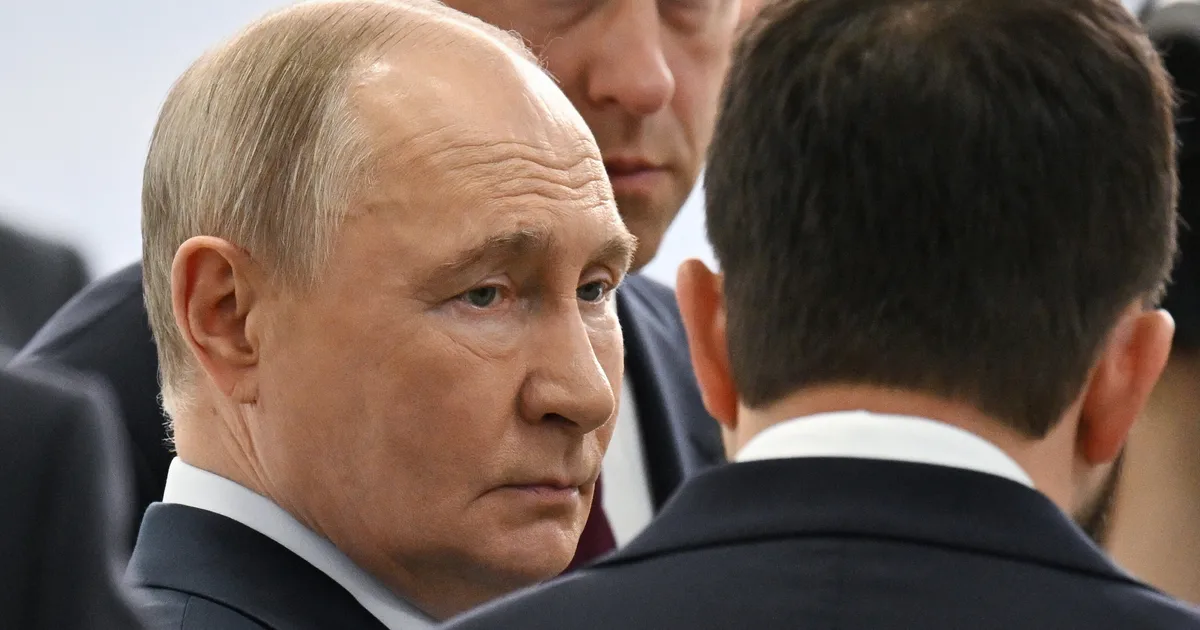
Vladimir Putin has been mocked after trying and failing to fully seize Ukraine’s Donbas region “15 times”.
The Donbas, made up of the Donetsk and Luhansk oblasts to the east of Ukraine, has been mostly under Russian occupation since Putin launched his illegal invasion in 2022.
But the Kremlin has struggled to establish full control over the last 10% of the region – despite repeated attempts.
It comes as Putin’s grip on power is said to be weakening, especially as long-range drone strikes from Ukraine rock the everyday lives of the general Russian public.
His Ukrainian counterpart, Volodymyr Zelenskyy, was quick to call attention to Putin’s failures on Monday.
“Since the start of the full-scale war, the Russian army has been given as many as 15 deadlines for capturing our Donetsk region,” Zelenskyy said in his nightly online address.
“Russia’s political leadership remains obsessed with Donbas. They have entertained this delusion – that they would fully capture Donbas – 15 times already.”
He claimed Putin has set multiple deadlines for his troops to capture the region but instead has endured more than 1.5 million casualties.
“In 2022, the deadlines were 31 March, then 9 May, 1 June, 15 September, and 31 December,” the Ukrainian president said.
“In 2023, Putin set two more deadlines for capturing Donbas: 1 March, and then, when that failed again, they moved it to 31 December. In 2024, there were again two such deadlines.”
Zelenskyy claimed Putin wanted to show US president Donald Trump – who has been trying, unsuccessfully, to end the conflict – that Ukraine would “supposedly fall”.
But he continued: “If Russia does not end its war, they will have to move this deadline again as well.
“If Putin wants to sacrifice another million of his soldiers to keep smashing against this wall, then the million Russians who have not yet been mobilised into the Russian army and are arguing in gas lines should think about what awaits them next.”
Away from the Donbas, Russia has captured all of the Luhansk region and a large proportion of Zaporizhzhia and Kherson.
Together with the Crimea peninsula, which has been occupied since 2014, Putin holds around a fifth of Ukraine’s sovereign territory.
But Ukraine seems to hold the cards on the warfront at the moment.
Even Trump, typically sympathetic to Russia, has acknowledged: “Zelenskyy is doing pretty well. No matter how you look at it, he’s holding his own at least.”
Listen to Commons People, the podcast that makes politics easy. Every week, Kevin Schofield and Kate Nicholson unpack the week’s biggest stories to keep you informed. Join us for straightforward analysis of what’s going on at Westminster.

You might think that lifespans are getting longer and longer, but some experts think they’ve peaked. (In fact, UK life expectancies have dipped since the pandemic.)
And according to a new paper published in Nature Ageing, people born between 1950 and 1954 are experiencing slower biological ageing than later generations.
Speaking to Oncology Central, assistant porfessor Yin Cao, who co-authored the study, said: “Biological ageing isn’t just about the number of birthdays you’ve had — it reflects wear and tear happening inside the body at a cellular and molecular level. This can include changes that affect how cells and tissues function, such as chronic inflammation, weakening of the immune system and damage building up in cells over time.
“Our findings suggest that some younger adults may be experiencing these biological changes earlier than expected, and that this could be linked to the rising rates of cancers seen in younger generations.”
It comes after the BMJ Oncology found a “global surge in cancers among the under 50s over past three decades”.
This paper found that the bigger the gap between someone’s chronological age (years) and biological age, the higher the cancer risk.
What might that mean?
This research used data from the UK Biobank, a long-standing project in which almost half a million participants have agreed to make their health data available to researchers, and the US’ National Institutes of Health’s (NIH) All of Us Research Program.
It involved information from over 154,000 UK young adults and more than 10,000 US participants.
Researchers worked out people’s biological age according to their systemic (whole-body) and organ-specific aging. They did this by looking at things like blood biochemistry markers and the levels of different kinds of proteins linked to certain organs.
Then, they compared participants’ biological ages to their chronological ones.
They found that people from the UK between 1965 and 1974 “had systemic aging that was 23% of one standard deviation higher compared with those born between 1950 and 1954”.
And those born between 1990 and 1999 “had systemic aging that was 92% of one standard deviation higher compared with those born between 1965 and 1969”.
Basically, that means older people’s biological ages seem closer to their chronological age.
That may matter because in this study, the faster biological ageing seen among younger groups was linked to 8% increased risk of early-onset cancers, particularly lung, gastrointestinal and uterine cancers.
And those with the most advanced biological ageing had a 15% higher risk compared to those with the least cellular wear and tear.
Researchers hope they can help spot cancers earlier
“If we can identify younger people with the highest cancer risk when they are still healthy, we can focus on prevention and early-detection strategies for the individuals who will benefit most from early interventions”, Cao told The University of Washington’s WashU Medicine.
Dr David Scott, director of Cancer Grand Challenges – which was involved with the research – added, “Right now, we don’t have a definitive answer to what’s driving the rise of early-onset cancers around the world, but studies like this are helping us piece together the bigger picture, showing that cancer may be influenced not just by changes inside individual cells, but by wider changes happening across the body as a whole.”
Politics
The House | The social media ban for under-16s is a sticking plaster, not a solution to online harms

(PA Images/Alamy)

3 min read
Our children are exposed to serious harms online, driven in large part by social media companies looking to maximise their profits.
This status quo isn’t acceptable, and my committee has repeatedly called for stronger action to protect UK users, particularly children. I was glad to see Keir Starmer’s government finally taking long overdue steps to tackle the risks children face online, after successive governments have failed to act.
However, a ban on under 16-year-olds using social media won’t be enough to protect them from the spiralling spread of misinformation and other harmful content on our screens.
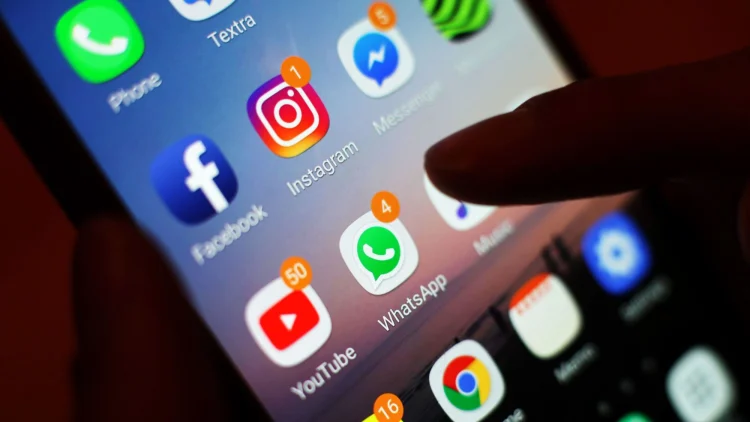
Part of this has to do with the fact a ban would be difficult to enforce and easily circumnavigated. Evidence from a similar ban in Australia shows that young people can and do use workarounds such as VPNs. New platforms and services will likely emerge to fill gaps left by restrictions, while generative AI tools and messaging apps like WhatsApp fall outside the scope of the ban.
More fundamentally, this approach treats the symptoms rather than the cause. Restricting access for some users won’t fix a flawed and dangerous product – it’s not enough to simply block some people from using social media. Instead, wider steps are needed to make it safer for everyone. Unless the government tackles the drivers behind the viral online spread of harmful content, any ban will amount to little more than a sticking plaster.
At the heart of the problem is the algorithmic amplification of harmful content. Social media recommender algorithms promote highly engaging material, regardless of its accuracy or safety. The business models of social media companies incentivise and encourage as much engagement as possible, even when this is driven by misleading or dangerous content.
In 2025, my committee warned that the Online Safety Act wasn’t up to scratch because it didn’t protect users from this core issue around algorithmic amplification. We set out clear, practical recommendations to strengthen the online safety regime – most of which were rejected by the government. A year on, it’s clear that the situation isn’t improving. Recent violence and unrest, including events in Belfast, show the real-world consequences of unchecked false and harmful content online.
If the government is serious about protecting children from online harms, it must take decisive action now and revisit my committee’s recommendations.
At present, the government is operating without comprehensive and accurate information about how social media recommender algorithms work
Social media companies should be held accountable for the viral spread of harmful content on their platforms. There must be clear duties in place to ensure they deprioritise content which fact-checkers have found to be false. There should also be tougher regulation to combat the underlying business models that incentivise the viral spread of legal but harmful content.
At present, the government is operating without comprehensive and accurate information about how social media recommender algorithms work. A lack of transparency from companies has meant we don’t have the data we need to fully understand and address the problem. It’s essential that the government commissions independent research into this, without which it will be difficult to develop effective regulation.
Finally, regulating technology alone is not sufficient. Our online safety regime should be grounded in clear principles like freedom of expression and transparency, which will remain sound in the face of future technological developments.
Starmer’s government was right to act, but a ban alone won’t resolve the deeper issues at play. To truly make the online world safer for our children, and for society as a whole, we must confront the root causes of online harms – not just limit access to them.
Chi Onwurah is Labour MP for Newcastle upon Tyne Central & West, and chair of the Science, Innovation and Technology Select Committee

More people are living with eye conditions than ever. Ensuring people can access expert treatment quickly isn’t just good healthcare – it’s smart policy
What’s the impact on individuals and their families?
“Sight loss can change everything,” says Karen Croker, NHS Relationships and Contracting Director at Newmedica, a leading provider of NHS ophthalmology services. “It can mean loss of independence, difficulty staying in work, and increased isolation.”
What’s the impact on the NHS?
Karen continues: “Ophthalmology is already one of the NHS’ busiest specialities, accounting for nearly 10 per cent of the entire waiting list. Delays to NHS follow-up care remain a key risk, particularly for conditions like glaucoma and age-related macular degeneration (AMD), where regular monitoring is essential to protect sight.
“The impact doesn’t stop there. Sight loss increases the risk of slips and falls. It adds pressure on families, social care and wider NHS services. The challenge is clear – but so is the opportunity to do things differently.”
What about the postcode lottery?
“Access to care still varies depending on where people live,” she explains. “Many MPs and peers will recognise cases where patients can access treatment in one area, but not in a neighbouring one. For patients, this can mean longer waits, fewer options – and avoidable deterioration in their sight. Reducing unwarranted variation is an opportunity to improve outcomes.”
Is this a systemic challenge?
Praising NHS colleagues, Karen adds: “NHS teams work tirelessly for patients every day. But rising demand and demographic change mean the system needs support to keep pace. The solution isn’t one organisation working harder – it’s better collaboration.
“With Parliament, the NHS and independent providers working together, there is an opportunity to expand capacity, improve access and deliver better, more consistent outcomes for patients.”
Is patient choice part of the solution?
“Absolutely,” concludes Karen. “Giving patients a real choice over where they receive secondary eye care helps them access services that meet their needs. It also encourages services to be more responsive, helping the system adapt to demand while maintaining high standards of quality and safety.
“Choice, used well, is a practical lever for improving both experience and outcomes.”
Find out more about Newmedica at www.newmedica.co.uk.
A parliamentary invitation – new report launch
15 July | 2.30pm – 5.30pm | Thames Pavilion, HoC
To support this conversation, you’re invited to the parliamentary launch of a new report commissioned by Newmedica. The report explores how ophthalmology services are commissioned across England –and how those decisions shape patient demand, access, outcomes and waiting times. It highlights the importance of aligning services with real patient need and reducing regional variation.
The event will bring together MPs, peers and clinicians to share practical solutions and discuss what better care could look like in communities such as yours. There’s also a chance to experience a driving simulator, demonstrating vision with and without cataracts – including a light-hearted hazard perception challenge with a live leaderboard.
To attend, please RSVP to [email protected] or attend on the day with a valid parliamentary pass.
To arrange a constituency briefing or visit, contact Newmedica’s Public Affairs & Engagement Team via the same email.
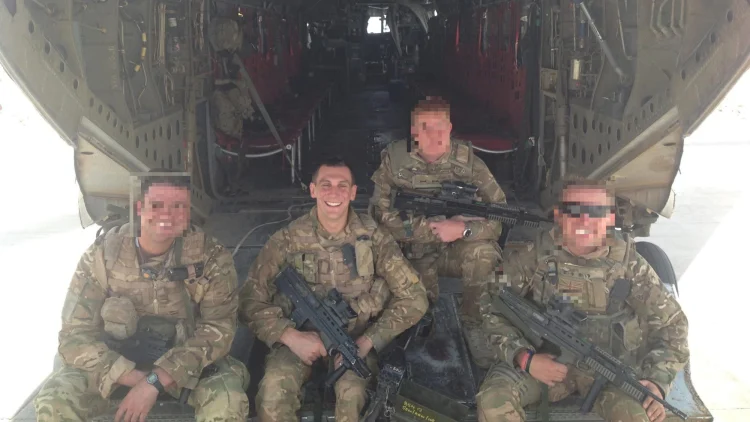

Charlie Lockyear during deployment. Faces have been blurred for anonymity

Charlie Lockyear, Business Development Director – Defence
| Serco
As defence technology reshapes modern warfare, success will rely on a defence enterprise able to integrate it quickly, build the right skills and deliver capability at pace
Armed Forces Day is, above all, a chance to recognise the people who serve and those who have served. For me, it is a moment to reflect on the commitment, resilience, sense of duty and sacrifice that come with military life. After six tours of Afghanistan, I know how much that experience can shape you. Long after you leave, it stays with you in how you think, how you work and how you see the world.
Leaving the armed forces is a big change. You step away from a role, a rhythm and a community that have shaped who you are, but you carry a huge amount with you. Service leaves you with skills and instincts that stay valuable wherever you go – resilience, teamwork, leadership, and the ability to stay calm and focused when things get tough. The key is finding somewhere to move onto where those qualities still drive purpose.
I have found that at Serco. My experience in service shapes how I approach my work every day and the contribution I make to Serco’s defence business. Having deployed on operations, I understand what matters when it comes to keeping our service men and women safe. But the way we can do that, and the way that we fight is changing rapidly.
I spent my career flying helicopters, and while they’ll always have a place in protecting the nation and people who serve, there are new ways to increase our mass and capability. Autonomous systems, drones and software-led capability are no longer on the margins – they are now central to the future of modern warfare. These systems will play a key role in removing service men and women from the firing line, but they still rely on the defence enterprise deploying the right skills, in the right place at the right time to use them effectively.
That fundamentally changes what you need from the workforce. It is not about replacing people, but about evolving the roles around them: remote operators, cyber specialists and engineers who can bring together complex, tech-enabled systems and make decisions quickly.
For me, that is one of the most exciting parts of working in defence today. Autonomy has moved beyond experimentation and into real-world adoption, creating new opportunities to build capability differently. The challenge now is integrating it at pace and making it usable in practice. The 55m-long uncrewed surface vessel, Defiant USX-1, designed and developed by Serco for DARPA in the US, is conducting extended autonomous operations at sea, demonstrating how rapidly maritime autonomy is moving into real-world use. That, in turn, means rethinking procurement, regulation, training and the skills we need across the defence workforce.
It is also about valuing the experience of those who have served while helping shape what comes next. Armed Forces Day is about recognition, but it is also about looking ahead. I think those of us with lived experience of service have an important part to play in making sure the future of defence is strong, practical and ready for what is coming.
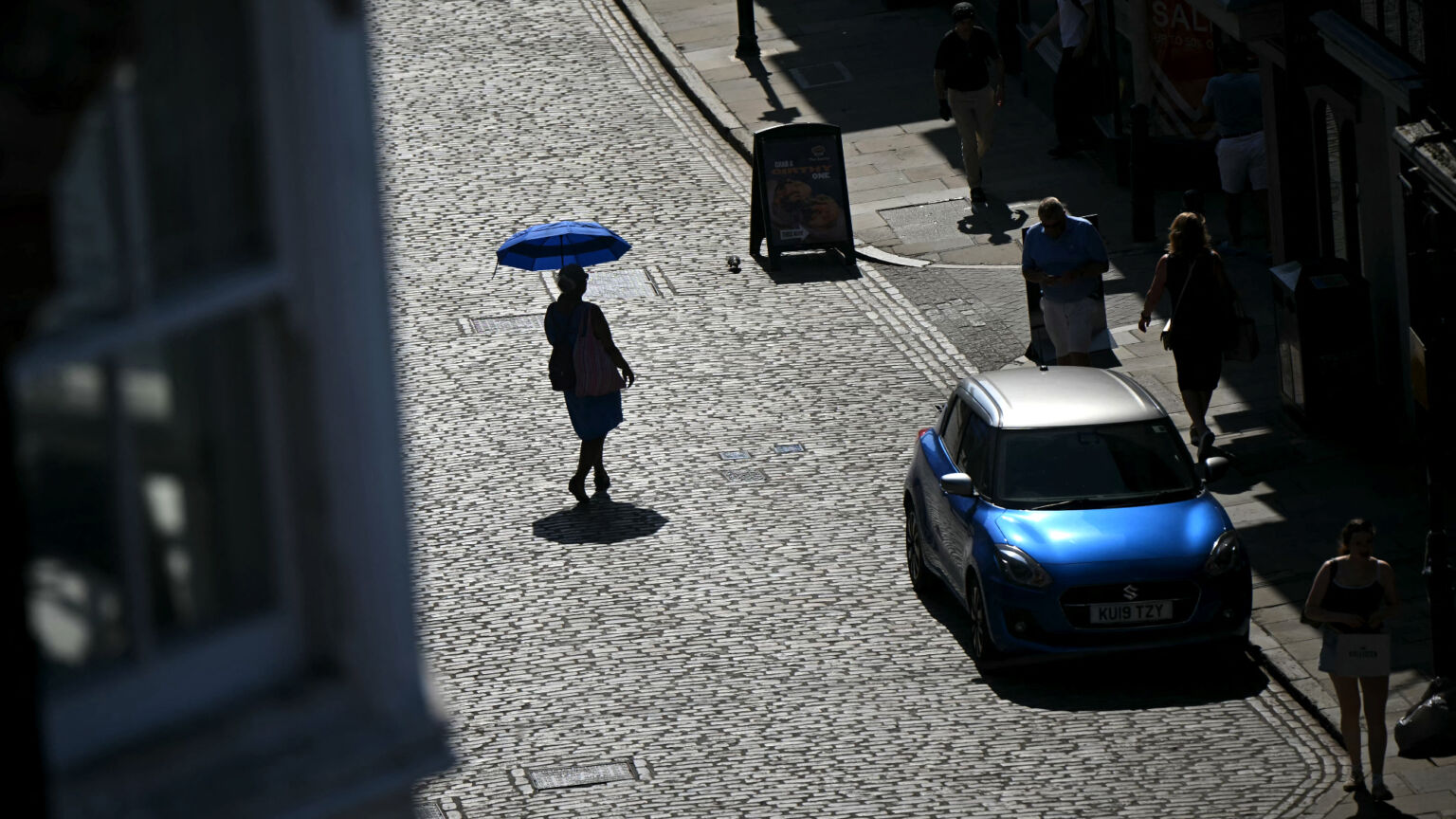
Hundreds of school closures across England and Wales, train companies advising people not to travel, and businesses encouraging staff to work from home. Remind you of anything? It’s the Covid playbook, which is rapidly becoming the ‘new normal’ for how our supposedly advanced society responds to an unusual and difficult event. And given that in seasonal Britain, the weather can often be unpredictable and aggravating, the playbook now has plenty of opportunities for an airing.
The Covid playbook is not about taking sensible precautions to deal with challenging situations. Very hot weather, like that we experienced last week, is uncomfortable for many and dangerous for some. We might need to adapt some of our daily practices, and some infrastructure will struggle to cope. All this has happened in heatwaves past, too.
But since Covid, the response to both hot and cold weather – like the response to the occasional outbreaks of infectious disease – has followed a predictable formula. That is, a problem is quickly turned into a drama with dire warnings of a crisis. This is far worse for our collective health than a few days of intense sunshine.
The first step in the playbook is to exaggerate what’s new. With Covid, the clear danger posed by the emergence of a novel and highly infectious coronavirus was quickly escalated into the idea that a respiratory infection pandemic was itself ‘unprecedented’: something that made little sense, given the continual comparisons with the ‘Spanish flu’ pandemic of 1918-20. But because the Covid pandemic was seen to be unprecedented, this apparently justified the implementation of extraordinary and untested containment methods, from population-wide lockdowns to business closures and bizarre social-distancing rules and paraphernalia. The authorities didn’t draw on historical experience but on present-day panic. Those in power presumed that our society could not cope with this challenge, so we had better stop functioning as a society and send everyone home.
In the present heatwave, we’ve heard a lot about the Met Office issuing a rare ‘extreme heat warning’, and we’ve been treated to daily graphics of the regions under a red or amber blob. What we hear less is that extreme heat warnings were only introduced in the UK in July 2021, and one was issued as recently as 2022. We also find ourselves beset by severe weather warnings during the winter months, accompanied by the same demands: work from home, don’t travel, close the schools. This is another feature of the Covid playbook – the invention of a new metric designed to frame the current problem as more severe than anything that has happened to date.
The problem is not necessarily that these metrics are false – UK summer temperatures may well be higher than in the past, and Covid was very infectious. It’s that these techniques are used to simplify a complex situation and to promote measures that are fundamentally anti-social. Take the closure of schools and advice to stay at home and avoid travelling. Each of these decisions can make pragmatic sense on their own terms. We know that sweaty kids in overheated classrooms are unlikely to learn a great deal, and that it’s a bad time to be stuck in a traffic jam on the M1. But since Covid, the implementation of such measures has become uniform and routine, with little consideration of the knock-on effects for certain sections of society and for social life as a whole.
As we know from the pandemic, working and studying from home might be fine for those with particular jobs and nice airy houses – not so much for families crammed into stuffy city apartments with limited technology. The debate about whether WFH is good or bad for productivity is ongoing, but most of us know that in Britain today, very little seems to be getting done at the best of times. Whenever we have some adverse weather, we immediately enter a doom loop – employees are either encouraged to WFH or they demand the right to WFH, and even those who want to come into work may find themselves prevented from doing so because their kid’s school might close or the transport might break down. Air-conditioned trains, offices and cafes find themselves half empty, while families swelter in their over-insulated homes driving each other insane. Make it make sense!
There are some exceptions to this anti-social approach. In London, a ‘cool map’ has been produced to inform people about public spaces with shade and air-con. In Paris, as the authorities are trying to cope by banning alcohol in public places, residents are taking matters into their own hands by jumping into the canal. Still, it’s striking how these practical social measures for dealing with a heatwave have come to seem like a deviant afterthought, as if what people really should be doing is sweating it out alone, glued to their phones for news about when it all might end.
Predictably, the media has made itself into the story here. Rather than simply report on the facts about the weather and official advice that might be given, media outlets – particularly those ‘trusted’ sources such as the BBC, to which Keir Starmer wants to give an algorithmic boost to counter ‘disinformation’ – immediately create a cycle of competitive escalation. Right from the get-go, a suggestion of adverse weather leads to breathless reporting about what’s been closed, who’s died, who’s struggling to cope, where there’s a shortage of water, where public transport has gone down. And it’s all interspersed with inane bits of advice about ‘how to protect yourself’ and smug mini-commentaries about climate change.
All this contributes to the anti-social effect. Who, reading about disaster everywhere all at once, is inclined to schlep to the office or force their kids into school? It’s utterly sensationalist and irresponsible, and surely makes people feel worse than they would if they were just left to get on with working out how best to cool down and keep going with their lives.
For all the excitable protestations about unprecedented events, the Covid playbook is a response to a more mundane and depressing trend. While ordinary people are not trusted to make sensible decisions about their own health and wellbeing, social institutions and public infrastructure casually withdraw from their collective responsibilities.
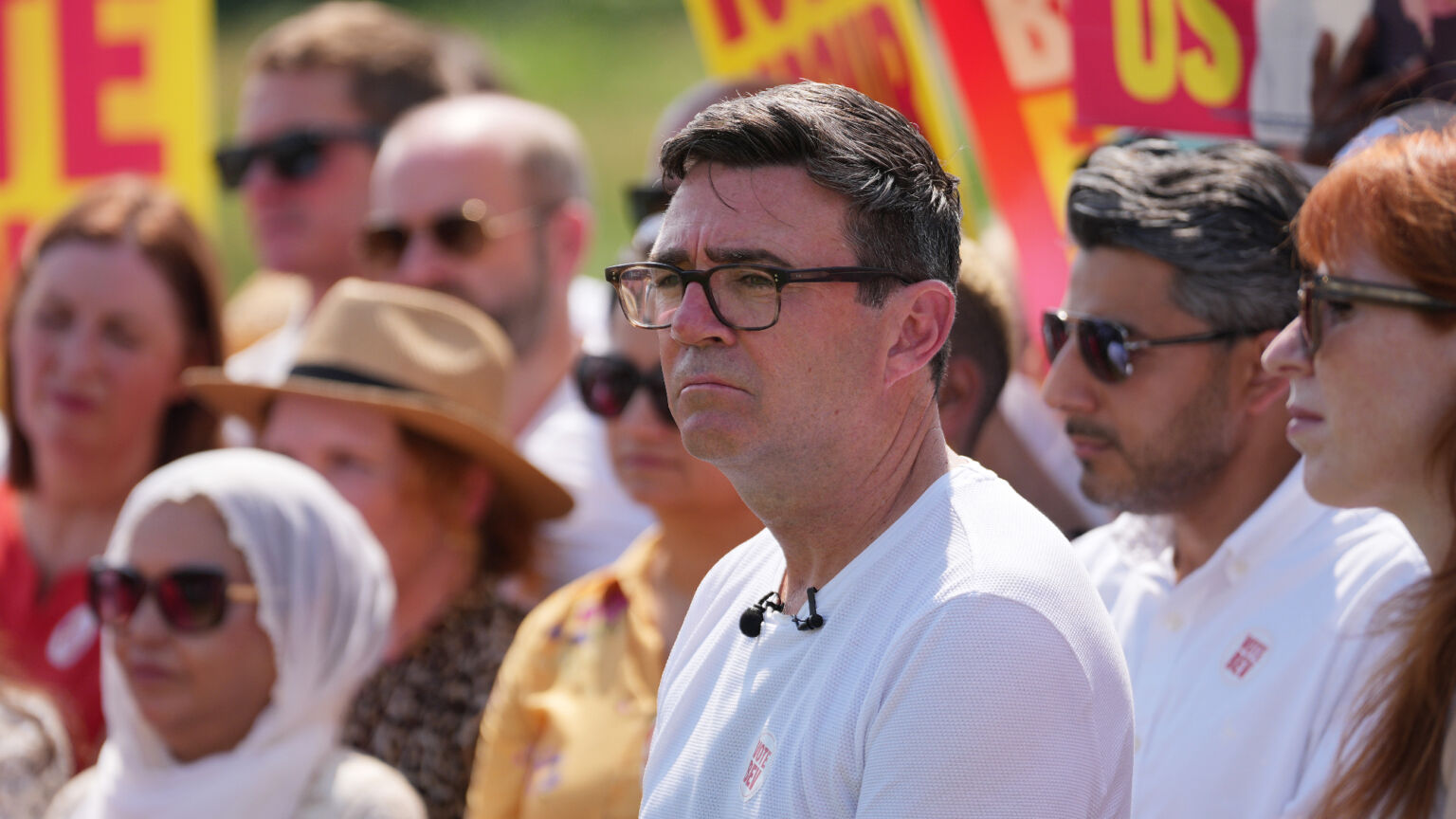
I really want the north of England to win. I’ve spent much of my life – including a stint as mayor of Middlesbrough between 2019 and 2023 – in the communities Westminster has abandoned. Which brings us to Andy Burnham and his plans, vaguely outlined in today’s ‘big’ policy speech, to devolve power throughout the UK, and even establish a ‘No10 North’ in Manchester.
I like Andy. He’s intelligent, a natural communicator and, most of all, he just seems like a good lad. After today’s speech, he’ll tour the country selling a fairytale about the growth he’s created as mayor of Greater Manchester. His grand thesis, dubbed ‘Manchesterism’, is that if you hand power and bags of cash to metro mayors, the North will magically boom.
There’s just one problem. It is absolute, total nonsense. Andy’s getting drunk on his own PR. If he continues to drink it and rolls out these devolution plans, the working class will suffer. Just as they have in Greater Manchester.
Burnham’s Manchesterism is just the latest iteration of age-old yearnings and dreams. Talk of rebalancing the North-South gap has been around since the Special Areas (Development and Improvement) Act of 1934. Yet so far, nothing has worked. Ninety years of political speeches have left us with the exact same maps and the exact same disappointment.
Burnham will no doubt claim over the coming weeks that Greater Manchester’s economy has grown by over three per cent a year during his mayorship, beating the national average. He boasts about this one a lot, as though it’s the result of mayoral genius.
But at best, it’s grossly misleading. The Greater Manchester economy did grow more than some places. This wasn’t because of Burnham’s economic nous. It is because Greater Manchester’s population has exploded over the past few years. Indeed, in the period since Burnham took charge in 2017, Greater Manchester’s population increased by over 250,000
Much of this growth has been driven by intensive international migration and high birth rates among these migrant communities. In less than a decade, Burnham’s patch essentially bolted on a whole new city the size of Southampton. That’s where much of his magical ‘growth’ comes from. It is demographic stuffing.
Another core source of the population explosion is the general ballooning of student numbers. Many of the city’s shiny new skyscrapers are actually 20- to 35-storey student blocks, built to cope with the 120,000 students crammed into the city centre. This isn’t high-quality economic regeneration.
Of course, there has been some genuine economic progress in Greater Manchester. It’s happened over 20 to 30 years, and some of it has been on his watch. But Burnham, and the mid-2010s regional devolution programme that created the metro mayors, aren’t responsible for this economic growth. The boom started long before Burnham became mayor in 2017. It is part of a global phenomenon of urban renaissance and big-city living. It’s happening across the world.
In fact, other British cities are doing just as well as Manchester. Despite lacking a slick PR machine and a metro mayor. The Glasgow city region is outperforming Manchester on certain key metrics. The Bristol city region also shows up the myth of Manchesterism. Despite the West of England metro mayor holding a fraction of Burnham’s devolved power, the Bristol area holds its own against Manchester’s ‘miracle’.
So, two city regions, without the Burnham sparkle, equalling Manchester’s achievement. The theory that growth requires massive PR and heavy devolution doesn’t hold up.
And look at the underlying stories that the Burnham PR machine keeps quiet about. Child poverty in Greater Manchester has skyrocketed during his mayoralty, far above the national average. Local wages have stagnated, stuck below the national average, and unemployment has risen. Similarly, Greater Manchester’s colossal homelessness crisis hasn’t improved at all. Visitors are quickly horrified by the sheer scale of rough sleeping and begging that confronts them.
I am from Middlesbrough, and I want to see England’s northern towns and cities thrive. I want everywhere else to thrive, too. But Manchesterism is clearly not the answer for the working class of the north or anywhere else.
Burnham has hastily manufactured this devolution crusade to create a veneer of purpose. It’s a very shallow start for our de facto prime minister.
Andy Preston was mayor of Middlesbrough from 2019 until 2023.
Politics
Politics Home | Lib Dems “Appalled” After Party Lifts Suspension From Peer Under Investigation For Sexual Harassment Claims

4 min read
Exclusive: A senior Liberal Democrat has told PoliticsHome that they and their colleagues are “astonished” and “pissed off” after news emerged that Lord Chris Rennard has had the whip restored while an investigation into claims he sexually harassed female members is still ongoing.
In February, Rennard, the party’s former director of campaigns and elections and chief executive, was suspended by the party after it launched a fresh investigation into allegations that the peer had sexually harassed four women.
He faced allegations of sexual harassment dating back to 2013 from four women.
An investigation at the time concluded the accounts were “broadly credible” but could not be proved beyond reasonable doubt. The inquiry by Alistair Webster QC, published in 2014, found that the evidence suggested that Lord Rennard’s behaviour had “caused distress to a number of women”. An investigation by the Metropolitan Police around the same time found there was “insufficient evidence” to prosecute the peer.
Rennard was suspended from the party in 2014 over comments he made in the media and on social media regarding the party’s handling of the complaints.
This suspension was lifted, but in February, Rennard was suspended from the Liberal Democrats once again, after the party said that it had “received legal advice” that the 2014 inquiry into the allegations “was flawed in several respects”.
Rennard has refuted the allegations, saying that he “never acted inappropriately and would certainly not want to cause anyone any embarrassment.” He went on to say: “If ever I have hurt, embarrassed or upset anyone, then it would never have been my intention and, of course, I regret that they may have felt any hurt, embarrassment or upset.”
Private Eye recently reported that Rennard had had the whip reinstated at the end of May, with a Lib Dem spokesperson telling the magazine: “The party’s independent complaints process took the decision to lift Chris Rennard’s suspension while their investigation is ongoing.”
Commenting on the whip being restored to Rennard, a senior Lib Dem source told PoliticsHome: “We’re all astonished and pretty pissed off that somehow for some unknown reason [Rennard’s] membership has been reinstated before the matter has been resolved. We just don’t understand that. It’s right that the process is independent, but it’s deeply frustrating.
“Other colleagues are annoyed too. It’s nonsensical. If there’s still an investigation, why would you reinstate someone’s membership?“
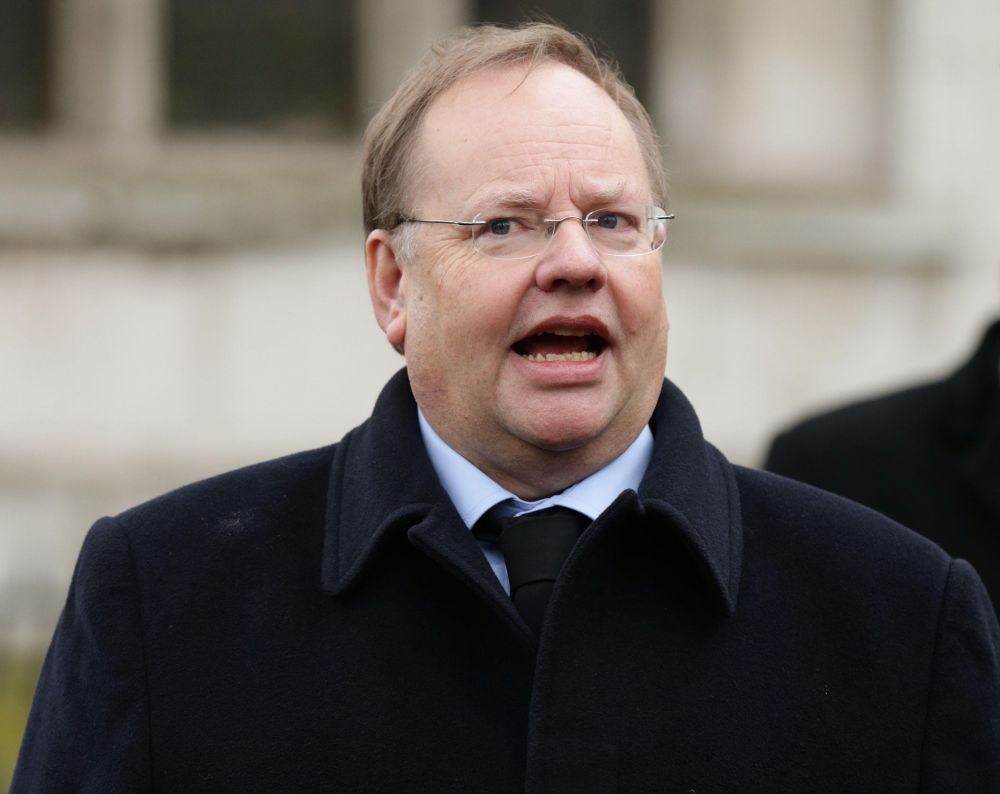
In February of this year, a Lib Dem spokesperson said that the party’s leader Ed Davey believed “Rennard should not be a member of the House of Lords” and “that it should be made easier for peers to be expelled from the Lords for serious misconduct”.
Another Lib Dem source told PoliticsHome that they were “appalled” at the reinstatement of Lord Rennard “before due process was completed”.
The source added: “I am incandescent that we have done this… we are trying to ‘manage the optics’ rather than protect our members.” The source added that if there was a legal reason that Rennard had to be reinstated, then the party should have been open about it.
“This reinstatement has been brushed under the carpet like these accusations were for so many years until our accusations about Peter Mandelson forced us to finally confront them.”
The source added that Rennard would now be allowed to “attend party functions and conferences before the process is complete and risk, if any, is quantified. This is an appalling state of affairs and made worse that the party hoped that no one would notice.”
Earlier this month, Lib Dem MP Cameron Thomas had the party whip suspended after he was arrested on suspicion of assault and controlling and coercive behaviour. Thomas denies all the allegations against him.
A spokesperson for the Liberal Democrats told PoliticsHome: “The party’s independent complaints process took the decision to lift Chris Rennard’s suspension while their investigation is ongoing. We will make further comment when this process has concluded.”
Lord Rennard was contacted for comment.
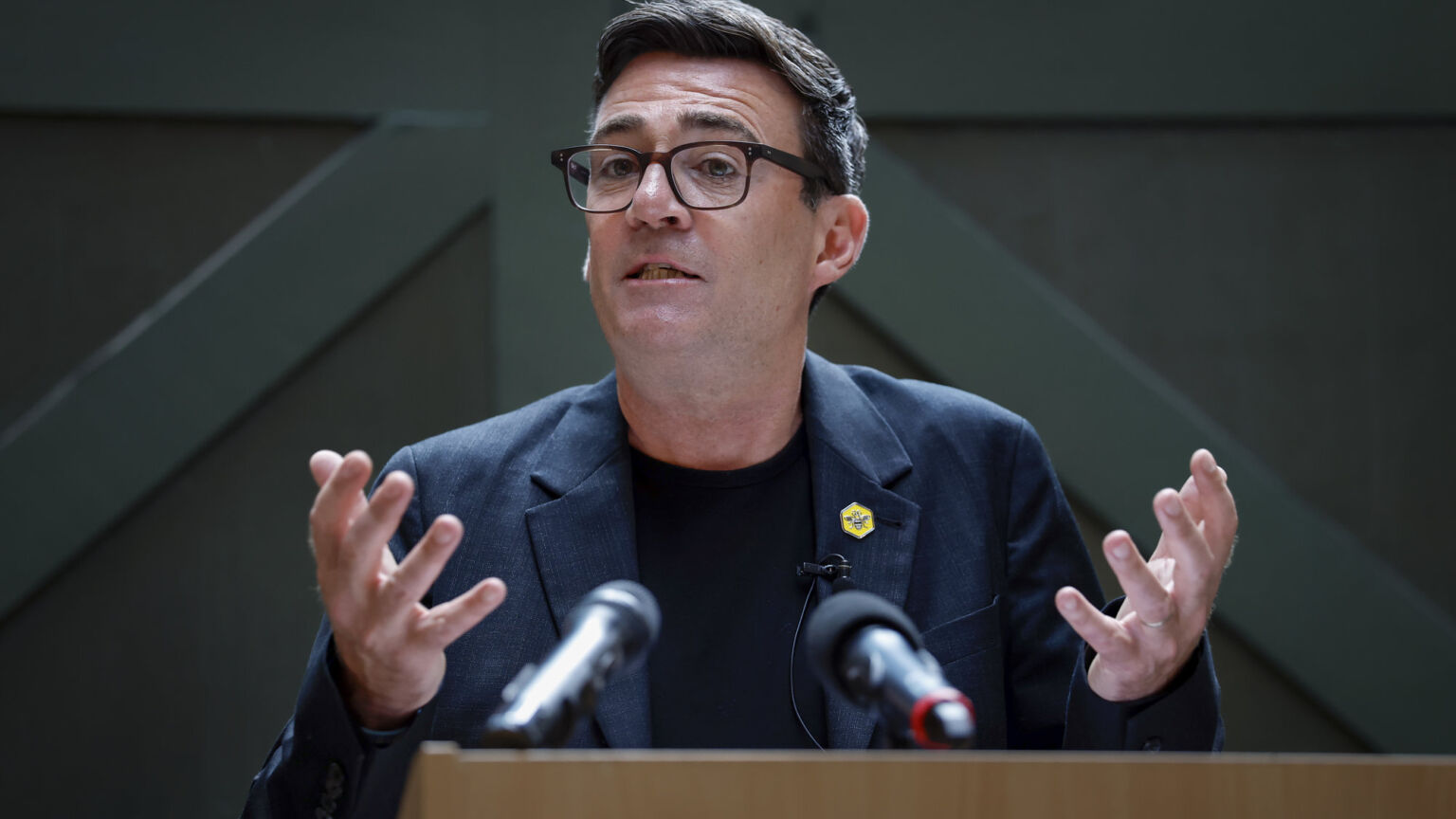
I always chuckle when media snobs say the little people are easy prey for demagogic trickery. Because no one is more likely to pant over a slick politician and his polished-turd slogans than these Oxbridge types. Witness their schoolgirl swooning over Andy Burnham this morning as he fluttered his famous eyelashes and spelt out his vision for a better, fairer Britain. His speech was a carousel of cliches, feelgood slogans, microwaved Blairism and what passes for leftism in the posher coffee houses of Manchester, and yet they lapped it up, all goggle-eyed and weak-kneed. I’m so embarrassed for them.
It was Burnham’s first major policy speech since he launched his bid to usurp Sir Keir and become PM. It’s been rolling news all day. As I write this my TV screen is split between a gurning Burnham getting a standing ovation from his assembled acolytes and a flushed Beth Rigby giving her ‘analysis’ (TLDR: it was fab, fab, fab). Reading the BBC’s coverage, you’d be forgiven for thinking it was a ‘fight them on the beaches’ moment for our knackered nation. His speech was ‘bold’ and ‘affectionate’ and best of all there was no ‘adverse reaction in the markets’. In fact, the Beeb gushed, there was a ‘small positive one’. Capitalism has spoken! King Andy may ascend to the throne!
They all need to turn up the air-con and cool down. His speech was deathlessly platitudinous. It was full of those technocrat-era cliches that evaporate upon the merest investigation. ‘Place first, not party first.’ ‘Problem solving, not point scoring.’ ‘Long term, not short term.’ Up not down, sun not rain, forwards not backwards. Starmer himself was a master of such fag-packet Boomerish bromides. ‘Look forward, not back’, he was fond of saying, leaving the rest of us wondering: look forward to what? Infinity ‘asylum seekers’ and more sly sabotaging of Brexit?
Under Starmer – and both Tory and Labour PMs before him – such PowerPoint drivel was a stand-in for actual policy. Will it be the same under Prime Minister Burnham? Everyone likes a bit of ‘problem-solving’, but what problems? Our broken borders? The cult of welfarism that indulges young people’s fever dreams about suffering from ADHD? Our refusal to frack for gas in order that we might appease the gods of weather and hold back ‘global boiling’? Will those problems be solved? I won’t hold my breath, especially if Net Zero nutter Ed Miliband becomes Burnham’s chancellor.
Even the more substantive-sounding parts of Burnham’s speech raise more questions than answers. His key focus was on restructuring public life. He desires nothing less than the ‘biggest rebalancing of power our country has seen’. I don’t know, the 17th-century revolutionaries who got shot of the king and abolished the Lords might have something to say about that. In Burnham’s ‘rewired Britain’, there will be oodles more devolution, meaning we will ‘take the power out of the centre’, he said, and disperse it across these isles. There’ll even be a ‘No10 North’ – a PM’s seat of power in Manchester to show that London isn’t the be-all and end-all of Blighty.
This is a continuation of the Blairite project of devolving ‘power’ to the nations and the regions. It sounds enticing – who wouldn’t want to loosen the political stranglehold of the SW1 wankerati? – but it is an illusion. Far from democratising the kingdom, the ironically top-down enforcement of devolution always ends up empowering the lanyard classes. Power is sold off not to everyday people but to the officious and the sharp-elbowed and the thirsty guzzlers of the Kool-Aid of woke. Look at Scotland, where the gift of Blairite semi-autonomy birthed not a new, democratic nation but a Tartan tinpot regime run by corrupt twats who put money in their banks and rapists in women’s prisons.
Far from ‘rebalancing power’, as Burnham dreams, devolution merely disperses it, and that can make it harder for we the people to hold the powerful to account. Power becomes more veiled, not more visible. There are untold problems of unearned power in 21st-century Britain. The imperious, bloated civil service is a law unto itself, frequently scuppering the democratic dreams of the electorate. Binding global treaties prevent us from behaving like a sovereign state and removing undesirables from our territories. Judges hubristically override policies drawn up by those we elect. The House of Lords remains a medieval pox on our liberties, elevating the ‘wisdom’ of the unaccountable over the wishes of the people. Anyone serious about ‘rewiring Britain’ would be addressing all of that, not empowering yet another Pride lanyard priggish they / them to become a micro-mayor of some northern town.
It seems Burnham wants to follow up his ‘Manchesterism’ – which no one can actually define – with Leicesterism, Sheffieldism, Glasgowism… breakaway mini-regimes that would further concentrate power in the hands of the credentialled classes. The result would not be a ‘rewired Britain’ but a fractured Britain, overseen by a thousand woke fiefdoms. Have you ever wondered why the graduate classes squeal with glee over devolution even as they wring their hands over the ‘low-information’ masses and our dumb votes for Brexit, Boris and all the rest? It’s because they know devolution empowers people like them, not riff-raff like us.
Burnham has a ‘10-year plan’ for Britain. Strewth. Even Stalin only went for a five-year plan. Upon whose authority will he ‘rewire Britain’? He won a vote in Makerfield, not the United Kingdom. Fancy talking about ‘rebalancing power’ even as you sweep to power in a coup that would make Pinochet blush. But the liberal media couldn’t give a toss about any of that. They’ve gone all mawkish for King Andy. They follow him around like tragic ducklings. They gasp with juvenile wonderment when he says ‘Long term, not short term’. They’ve succumbed to his cult and we know why: they pray he’ll hold back the tide of populism. Imagine bigging yourself up as a warrior for the democratisation of Britain when really you’re motored by a blind terror of the democratic anger of the masses. The arrogance. The duplicity. That’s Burnhamism.
Brendan O’Neill is spiked’s chief political writer and host of the spiked podcast, The Brendan O’Neill Show. Subscribe to the podcast here. His latest book – After the Pogrom: 7 October, Israel and the Crisis of Civilisation – is available to order on Amazon UK and Amazon US now. And find Brendan on Instagram: @burntoakboy.
The post ‘Without a border, we’re not a country’ appeared first on spiked.

WhatsApp to let people chat with usernames – how to reserve one

Nasdaq-100: Price Concentrates Within the Market Profile Zone

Putin Mocked After 15 Failed Attempts To Seize Particular Ukrainian Region


-
 Sports7 days ago
Two goals and an assist by sheer aura: Cristiano Ronaldo just entered the World Cup chat
-

 Fashion4 days ago
Weekend Open Thread: Staud – Corporette.com
-

 Politics4 days ago
The House | Manchesterism won’t survive the painful trade-offs unless it gets citizens on board
-

 Politics4 days ago
Potential 2028er World Cup attendee leaderboard
-

 News Videos2 days ago
MAJOR BITCOIN & MARKET UPDATE!!!! (MUST WATCH ASAP!!!)
-

 Business4 days ago
Asia stock markets slide as tech shares slump
-

 Tech5 days ago
A Look At A Gaggle Of Transputer Boards
-

 Crypto World6 days ago
Securitize Wraps Roubini's SEC-Registered ETF as Dubai VARA Digital Security
-
Crypto World6 days ago
Bitcoin (BTC) Dips Below $62K, Ethereum (ETH) Plunges 6% Daily: Market Watch
-
 Crypto World5 days ago
Dell (DELL) Shares Tumble Over 5% Following Analyst Downgrade to Hold
-

 Crypto World3 days ago
Coinbase, Circle Deepen Crypto Stock Losses Despite Resilient S&P 500
-
Business6 days ago
Entergy settles forward sale agreements, raises $672 million in cash proceeds
-

 Crypto World3 days ago
Kraken's xStocks Opens Bending Spoons IPO Registration to EEA Retail
-

 Sports4 days ago
FIH Pro League: India defeat Pakistan 7-1, register biggest win of campaign | Other Sports News
-

 Crypto World4 days ago
Bitcoin Sparks $600M Hourly Liquidations With $65,000 Set To Become Resistance
-

 Tech2 days ago
Bluekit phishing kit adopts browser-in-the-middle for login theft
-

 Tech3 days ago
Russian hackers now target Signal backup recovery keys
-
 Crypto World4 days ago
Hyperliquid Named on Singapore MAS Investor Alert Register
-

 Crypto World4 days ago
RTX holders must register wallets before token distribution begins
-

 Crypto World5 days ago
Ripple and SBI launch RLUSD in Japan after JFSA approval
You must be logged in to post a comment Login