
Politics
Wuthering Heights: 11 Biggest Differences Between The Film And Book

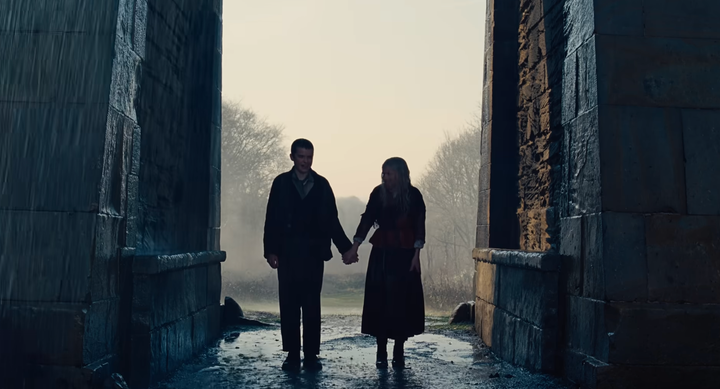
Emerald Fennell’s film version of Wuthering Heights is, to say the very least, not your grandma’s version of Emily Brontë’s gothic masterpiece.
Although many Brontë purists have been less than pleased with the way the movie has chopped and changed the iconic source novel, Emerald has spoken in defence of her adaptation on several occasions, insisting she was trying to make “something that was my response and interpretation to that book and to the feeling of it”.
In fact, that’s why she made the decision to show the film’s title in quotation marks and other promotional materials, including its title card.
But just how much of the original novel is left in the recent big-screen adaptation of Wuthering Heights?
Here are 11 major differences between the two…
Emerald Fennell’s decision to depict Heathcliff as white faced backlash before filming had even begun
The topic that generated the most discussion long before Wuthering Heights hit cinemas was around Heathcliff’s ethnicity and background.
As soon as Jacob Elordi was cast in the role, people criticised Emerald for “whitewashing” the character, who is described in the novel as a “dark-skinned gypsy” and a “little Lascar”, a term used to refer to sailors from India, South East Asia, Africa and the Middle East.
Mr Earnshaw says he found Heathcliff at Liverpool docks, a location historically associated with the Transatlantic slave trade. Some scholars even believe that the author was using Heathcliff to comment on the Liverpool slave trade.
Academics have long felt that the ambiguity of Heathcliff’s ethnicity and mysterious family background adds to the story, particularly with regard to how he is treated by Cathy’s family.
Elsie Michie, a professor of English at Louisiana State University, told The New York Times that “the dynamics of this novel are about otherness in various ways, and that otherness is in Heathcliff”. By making Healthcliff and Cathy the same ethnicity, Emerald’s film relies on class differences to create a rift between the lovers.
Asked about removing the character’s ethnic background and casting a white actor to play him,
Emerald previously claimed: “Everyone who loves this book has such a personal connection to it, and so you can only kind of ever make the movie that you sort of imagined yourself when you read it.”
She also explained that, when casting Jacob, she was less concerned with the text and more with her own memories of reading the book.
″[He] looked exactly like the illustration of Heathcliff on the first book that I read,” she added during an earlier interview.
Emerald Fennell’s Wuthering Heights film only covers the first half of the novel, and misses out on the second generation of the Earnshaws and Lintons
Emerald Fennell’s Wuthering Heights very specifically focuses on the relationship between Cathy and Heathcliff, but fans of the Gothic novel will know this is only one part of a bigger story.
Brontë’s Wuthering Heights is less a romance and more a supernatural warning about intergenerational trauma. Emerald has chosen not to include these elements, instead turning Cathy and Heathcliff into tragic lovers frolicking on the moors.
This latest adaptation covers only the first half of the book, ending the story just after Cathy’s death. In the latter half of the novel, a bereft Heathcliff dedicates his life to torturing those around him, including Cathy’s daughter, and the son he and Isabella later have.
“The thing for me is that you can’t adapt a book as dense and complicated and difficult as this book,” Emerald told Fandango in January regarding the charges.
Emerald’s film is far from the first adaptation of Wuthering Heights to omit the second part of the novel, which scholars believe completely reframes the story’s message.
“You lose that sense of a cycle of violence,” said the curator at the Brontë Parsonage Museum, Murray Tremellen, to Time when explaining why failing to adapt the second part of the book waters down the story.
Eliminating the second generation of Lintons and Earnshaws and Heathcliff’s treatment of them from the story “allows you to ignore that who he is persecuting are the innocent,” lecturer Sam Hirst told Time.
“You can’t think of it as a love story if you actually honestly portray that part of the story,” because “what his love actually looks like is this horrifying toxic nightmare of a thing,” Hirst added.
Emerald Fennell’s Wuthering Heights gets rid of the narrator, completing erasing the Lockwood character
Emerald Fennell’s film adaptation of Wuthering Heights fundamentally alters the novel’s structure, shifting the point of view from Lockwood and Nelly to a more linear narrative.
The book is told through second-hand accounts, after Mr Lockwood moves into Thrushcross Grange and wants to learn more about the mysterious Heathcliff who lives nearby. He speaks to Nelly, who recounts the story of Heathcliff’s romance with Cathy and the impact it has had on the two households.
Mr Lockwood does not appear in the recent film at all, removing the outsider’s perspective that the book gives readers.
Emerald even joked to BuzzFeed: “Let’s be honest, no one misses him.”
Cathy’s ghost haunts the moors in Brontë’s Wuthering Heights
Because Emerald ends her film just after Cathy’s death, the book’s supernatural elements are also removed from the newest spin on Wuthering Heights.
In the novel’s opening chapters, before Nelly starts telling the story, a ghostly apparition of Cathy appears to Lockwood, demanding to be let in through the window.
Heathcliff claims to be haunted throughout Brontë’s novel, with villagers claiming at the end that they see him and Cathy’s ghost on the moor together.
Cathy and Heathcliff are much younger in the book than they are in the Wuthering Heights film
Margot Robbie and Jacob Elordi’s casting as Cathy and Heathcliff initially raised eyebrows because both are almost double the age of their characters in the book.
In the novel, Cathy is six when she meets Heathcliff, while in the film, the younger versions of the characters are played by teenagers Charlotte Mellington and Owen Cooper.
As the characters grow, 34-year-old Margot takes over as Cathy, with 27-year-old Jacob portraying the adult Heathcliff.
In the book, meanwhile, Cathy is 12 when she meets Edgar, 17 when she weds him and 18 when she dies.
Although Heathcliff’s backstory and age are more mysterious, it’s generally accepted that he is slightly older than Cathy.
The book suggests that he leaves Cathy and Wuthering Heights aged 16 and returns three years later, rather than the five described in the film.
It’s worth pointing out that the film does address the aging up of the characters, with Nelly referring to Cathy as a “spinster” in one scene.

The character of Hindley Earnshaw has also been completely erased from Emerald Fennell’s Wuthering Heights film
In the Emerald Fennell film, it’s established early on that Cathy’s brother (also called Heathcliff) is dead, and that she has no other siblings. By contrast, in the book, Cathy has a malicious and violent older brother, Hindley Earnshaw.
Hindley is one of the main antagonists of the novel, abusing Heathcliff and exploiting him after their father’s death. It’s often considered that this abuse is what turns Heathcliff into a toxic, manipulative adult.
When Mr Earnshaw dies, Hindley becomes the master of the household, forcing Heathcliff into servitude. In the latter half of the book, Heathcliff gets revenge by abusing Hindley’s son and forcing him to become his servant.
Emerald told BuzzFeed that she saw Hindley as little more than a “narrative tool” that Brontë “doesn’t really extend any grace to”, which she found difficult to incorporate into her script.
“You can have an outright villain in a novel. You can have somebody who,
like, tries to throw a baby off a banister,” she said. “But for me, I’m always looking for the kind of tension in characters where you do have sympathy, always, no matter how reprehensible they are.”
In Hindley’s absence, Mr Earnshaw becomes the villain in Emerald Fennell’s Wuthering Heights

Martin Clunes plays Cathy’s father, Mr Earnshaw, as an alcoholic brute, though his character is much kinder in Brontë’s source material.
In the novel, he has goodwill for Heathcliff, arguably favouring him above his own children. Some fans of the book have gone as far as speculating that this close bond is intended to suggest that Heathcliff is his illegitimate son.
In Emerald Fennell’s film, Mr Earnshaw and Hindley have been merged together, the result being “a sort of father character who was at once loving, charismatic, generous, and on the other side, cruel, malevolent, capricious”.
The director told BuzzFeed: “It was about kind of looking at where Cathy and Heathcliff have kind of what they’ve learned, what behaviour they’ve learned, how they’ve learned to manage things, how they’ve survived up to a point.”
Nelly’s supposed villainous traits are enhanced in the new Wuthering Heights film – although Emerald Fennell doesn’t want you to call her that
Compared to the original novel, Emerald’s take on the story depicts Hong Chau’s Nelly as less of a nurse or housekeeper, and more of a companion figure for Cathy.
As one of the narrators in the book, she clearly has disdain for Heathcliff, but in the film, her role is much more opportunistic. In the absence of Hindley, Nelly becomes something of a villain in Cathy’s life – although some Brontë fans would suggest Nelly has always been a low-key “bad guy”.
In the big-screen adaptation, Nelly encourages Cathy to accept Edgar’s marriage proposal, burns Heathcliff’s letters to her (in the book, she burns the correspondence between Heathcliff’s son and Cathy’s daughter instead) and ignores Cathy’s health complications, dismissing them as a childish tantrum.
When Cathy takes to her bed in grief over Heathcliff’s wedding to Isabella, Nelly also ignores the state of her health, which ultimately leads to the sepsis that causes Cathy’s death.
During her BuzzFeed interview, Emerald explained that she was inspired to change Nelly’s character by scholars who believed Nelly was the true villain of Wuthering Heights.
“I think we all can relate to that person,” she claimed. “When you’re the sensible one and you’re the one who can see that something is a terrible idea, and you’re the one, perhaps in Nelly’s case, who doesn’t have as much power to affect the things around her.”
She added: “I get why she does the things she does. Because looking at what’s happened, what is happening and then happens afterwards.”

While Nelly might be the villain of the story, it was important to the filmmaker that Hong’s character be given her “moment of grace at the end” where she realises that her dismissal of Cathy’s feelings ultimately contributed to her death.
Edgar and Isabella Linton have a totally different relationship in the film compared to the Wuthering Heights movie
In Brontë’s work, Cathy’s husband Edgar Linton is the biological brother of Isabella (played by Alison Oliver), but in the film she is introduced as his “ward”, an orphaned minor who is placed under his guardianship.
The Linton parents are also nowhere to be seen in the new movie, despite appearing in the novel, with Edgar acting as the master of Thrushcross Grange.
Crucially, Emerald’s film also removes the romance from Edgar and Cathy’s relationship. While in both the book and movie, Cathy is motivated by class and money, the film removes any notion that she is in love with the man she married.
Isabella Linton’s marriage to Heathcliff in the new Wuthering Heights film is nothing like the book
The version of Isabella we see in Emerald Fennell’s film is almost unrecognisable compared to her literary counterpart.
While she has always been portrayed as a delicate and immature character, Emerald brings out the more quirky aspects of Isabella in the latest adaptation.
Both the book and film iterations of Isabella are obsessed with Heathcliff, but in the book, she is less aware that she’s being manipulated by him. Film Isabella, on the other hand, is much more calculating, and appears aware that Heathcliff is using her to make Cathy jealous.
In the novel, she genuinely loves Heathcliff and regrets their union when he starts abusing her – even going as far as killing her dog – resulting in her trying to flee their home when pregnant with their son.
Speaking to Entertainment Weekly, Jacob claimed that the provocative scene in the movie, in which Isabella is depicted on all fours in a dog collar taking commands from her husband was the director’s way of “taking the killing of the dog and these really dark parts of the novel and putting them into this scene”.

In the same interview, Emerald said she felt it was important to acknowledge that Isabella winked at Nelly to indicate consent.
The filmmaker pointed out that the dialogue in this sequence is almost the same as the novel.
She said: “That scene in the book, I think that’s the reason why [Wuthering Heights] was eviscerated when it came out because I think it was just so shocking to people. Because there’s so much in what happens there that is… very, very complicated. Very transgressive – even for now, it’s shocking.
“And, obviously, I visually added some things to that scene, but [the dialogue] is almost all Brontë.”
Of course, one major difference between the novel Wuthering Heights and Emerald Fennell’s film is those sex scenes
Emerald is definitely not a director who shies away from sex or nudity. While Wuthering Heights is, in many ways, tamer than Saltburn, her adaptation was still much racier than the source material.
Brontë’s book portrays Cathy and Heathcliff as having a deeply romantic – albeit tortured – relationship, but they only kiss once in the novel, and it’s never explicitly stated that they have sex.
In the movie, though, there is a whole montage dedicated to the couple’s sex life.
“Wuthering Heights is an extremely sexy book,” Emerald said during a recent appearance on the podcast Happy Sad Confused. “It’s so sexy. Lots of people argue about that, lots of people feel that it is not a sexy book at all. I believe it is a very sexy book, I felt it was a very sexy book.
“But, you know, nothing [sexy] happens [in the book]. So that’s the other side of things. But, you know, it’s interesting, the perception of something, and the thing itself, are so different.”
Jacob has also insisted the movie’s sex scenes were “entirely in the spirit of the novel.”
“Any image that comes from Emerald’s head is inspired by that depravity and love and obsession,” the Euphoria actor told USA Today. “They’re all in the language of what Brontë was driving at with this book, so it was never really a shock or a reach.”
Cathy’s death is very different in the book in comparison to the film
One of the biggest artistic liberties Emerald Fennell takes with her adaptation is its ending.
In the novel, Cathy dies shortly after giving birth to her daughter (also called Cathy), Emerald’s film shows the character dying of sepsis after miscarrying.
The director told Entertainment Tonight that she made this change because she wanted to expand the circular nature of the text.
“It begins where it ends and ends where it begins. And that’s the thing about love, and it’s the thing about the book, right?” she said. “It’s that it’s forever and it’s cyclical, and so there’s no stop – even when there’s a terrible, sad, tragic stop, it’s not really a stop – because that’s what the book feels so much about. It’s about the depths of human feeling and how it exists in a profound way, not just a physical one.”
Unlike in the book, Heathcliff does not visit Cathy before her death in the film, but in a fever-induced state, she imagines his younger self speaking to her.
Emerald added that in Bronte’s novel there are “about three different meetings and three different speeches”, so her rewritten version of events was her way of “consolidating that”.
“And so what I did was I brought a lot of the love forward, and a lot of those really important conversations forward, to give them some time so that it didn’t just happen at the end,” she offered.
Wuthering Heights is in cinemas now.


As a child, Ariana Godoy couldn’t stop reading. Whatever her hands could reach, her eyes would devour, including grown-up titles she’d sneak off her mother’s bookshelf — and a rather bloody Grimm’s edition of Cinderella. But as she entered adolescence, reading material became scarce. “I lived in a small town in Venezuela, so I really couldn’t afford books,” she says.
One morning, Godoy typed “free books online” into her search engine and found Wattpad, a reading and publishing platform. With the click of a link, she changed the course of her life. Less than a year later, she launched her career as a self-published storyteller who would become an internationally acclaimed Spanish-language novelist with countless translated works and film adaptations on Netflix and Prime Video. Back then, though, Godoy just wanted to read.
In 2009, sexy vampire stories reigned. And Godoy sank her teeth into every salacious entry she could find. Almost immediately, she noticed these writers were just people — ordinary users without publishing contracts, sharing their stories with readers. So she started posting her own. “I felt really safe to do so,” says Godoy. “I thought, ‘If they can do it, I can do it.’”
Her first posts were vampire stories, then she transitioned to YA romance. As she posted, she formed deep, interactive connections with her readers.
“It was so much fun,” says Godoy. “You have all these comments and all this feedback … There is this loyalty when they are part of the process that’s really cool.”
After gaining a dedicated readership all on her own, Godoy received a DM from a publisher at Grupo Planeta, one of the leading global publishing groups for Spanish-speaking writers. It had to be a scam, she thought.
“You never get a publisher in your DMs,” says Godoy. “That’s not how it goes.”
But on that particular day, that’s exactly how it went. Through Wattpad, Godoy signed with Planeta, which led to a relationship with Penguin Random House, where she has flourished as a top-selling author, releasing nearly a dozen titles through those partnerships to date.
In nearly every writer’s life comes a moment when self-disclosure bleeds onto the page. For Godoy, that moment arrived in 2016. One year after moving to Raleigh, North Carolina and six years after her father’s death, she began drafting Sigue Mi Voz (Follow My Voice). At the time, she had no idea how deeply the story of her protagonist, young Klara Rodriguez, would resonate with readers — or lead to the release of a feature-length love story at the intersection of mental illness and young adulthood.
After her father died, Godoy experienced acute, physical manifestations of anxiety in the form of panic attacks. She lived with agoraphobia, and, like Klara, struggled to step outside her house. And though her family adored her and wanted to heal her pain, they lacked a clear understanding of Godoy’s individual response to the trauma of sudden loss, and the type of care she needed throughout her recovery process. And even Godoy wasn’t sure what was happening to her.
“I had no idea,” she says. “Anxiety — what is that? … Growing up in a Latino household, there’s the culture of, ‘Oh, you’re depressed? Go and sweep something. Go and clean up. Go move. Go out and you’ll be fine.’ Depression? There was nothing like that.”
And so, she wrote Sigue Mi Voz to reach readers who might be experiencing similar responses to trauma, to give them the clarity and the clinical language she never had.
“It was more about finding those Arianas that were out there that had no idea, especially in the Latino community, what a panic attack looked like, what it felt like,” says Godoy. “You feel like you are going to die. I ended up in the emergency room so many times with no answers, with a clean bill of health. So as I was writing, I was like, ‘OK, this is the book that I would have liked to have when I was going through my process.’”
Klara’s voice moves the story. She’s an endearing narrator with a tendency to share her every thought, at times through a frenetic stream of consciousness — a character choice Godoy felt would convey both her earnest nature and her anxiety.
“She’s constantly overanalysing, overthinking,” says Godoy. “I think that’s something that happens a lot with anxiety. It still happens with me. I’ve been in therapy for over 10 years, and I still think 10 weeks ahead. For this detail, I think it’s a little more of myself in her [laughs].”
She also speaks frankly yet self-consciously about suicidal ideation, which in prevalent among young people but difficult to track and prevent. Writing so intimately — so vulnerably — through Klara, Godoy gives a powerful agency to those living with mental illness, a voice that speaks to countless young people at a time when Spanish-speaking voices are being forced silent.
And with more than 2 million online followers and 850 million reads, that voice is loud, and it is resonant. Godoy stays in contact with many early readers. Her novels are still available for free on Wattpad, and she encourages aspiring writers to explore different pathways to publication.
Her most powerful advice to them? Keep writing.
“Art is always part of the resistance,” she said. “Books and images, anything that can be an escape and represent, in this case, Latino voices like Klara’s, is inherently part of the resistance.”
Help and support:
- Mind, open Monday to Friday, 9am-6pm on 0300 123 3393.
- Samaritans offers a listening service which is open 24 hours a day, on 116 123 (UK and ROI – this number is FREE to call and will not appear on your phone bill).
- CALM (the Campaign Against Living Miserably) offer a helpline open 5pm-midnight, 365 days a year, on 0800 58 58 58, and a webchat service.
- The Mix is a free support service for people under 25. Call 0808 808 4994 or email help@themix.org.uk
- Rethink Mental Illness offers practical help through its advice line which can be reached on 0808 801 0525 (Monday to Friday 10am-4pm). More info can be found on rethink.org.
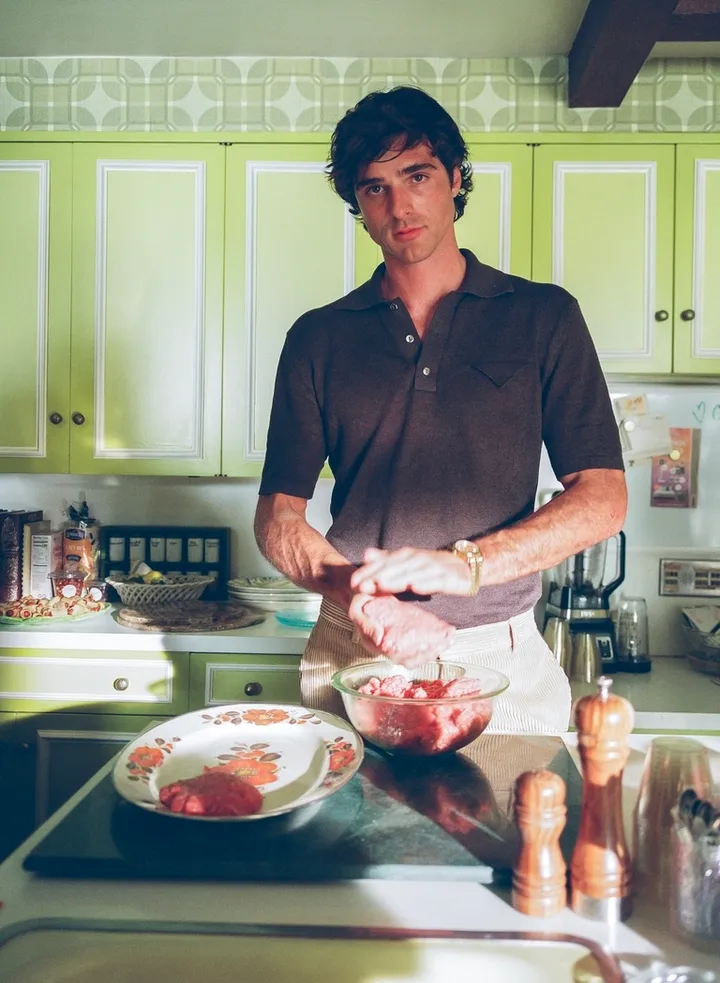
After keeping fans waiting for more than four years, Euphoria is finally back for its third (and, quite probably, final) outing.
Unfortunately, the majority of critics are saying that the new episodes have not exactly been worth the wait.
Because of the delay between seasons, creator Sam Levinson took the decision to age up his teenage characters, with season three reintroducing the usual gang – played by returning stars Zendaya, Jacob Elordi, Sydney Sweeney, Hunter Schafer et al – as young adults.
However, early reviews have said that the show loses its footing in this change, and while there’s been praise for the cast’s performances, critics are not convinced by Euphoria’s new direction – with some even going as far as saying that the new episodes indulge the show’s worst tendencies.
With that in mind, here’s a selection of what critics are saying about Euphoria season three so far…
“The show has lost its zeitgeisty edge. Euphoria has become a series with very little to say, none of it very audacious or compelling.”
“A show which was once blackly funny is now humourless torture porn […] Euphoria season three is grim TV that seems hellbent on rattling us for the sake of it. If its cast seemed desperate to get it over and done with, well, now we know why.”

“Euphoria may still have the gloss, budget and star power of prestige TV, but it’s no longer enough to disguise what increasingly feels like the misogynistic fantasies of a creepy old man.”
“In a first season that emerged at a more progressive moment for pop culture, it took an equal-opportunity approach to exploitation. Now that sexism is in again, its default to the hetero male gaze is unmistakable.”
“As Euphoria’s creator, writer, and director, Sam Levinson wants to craft a show about the pervasiveness of fentanyl, the dangers of addiction, and the lawlessness of the American West. Instead, what he’s made — yet again — is a cannily shot phantasmagoria that’s as beautifully lit as it is emotionally hollow.”
“Euphoria always skewed nihilistic, so none of these ideas are out of place in what may be its last season. But Levinson’s series was never this spiritually hollow, and it was always more active, insistent, and ambitious.”

“The first three episodes of season three (out of an eventual eight) do feel like Euphoria: bombastic, stylish and able to offset grandiosity with sly, cutting humor. What they don’t feel like is tethered to the grounding ballast that kept the first two seasons on the rails even at their most over-the-top.”
“The transfer across to the world of adulthood quite simply [falls] short. Not only has the show lost its way: it’s become a bizarre parody of its former self […] Zendaya’s performance, revealing Rue’s struggles, is a shining light in this disappointing return.”
“There’s a great show lurking in here somewhere. So much of Rue’s journey proves it. Yet Euphoria keeps smothering that greatness with something far grosser, and that’s something no amount of reinvention can hide.”
“Television’s Mount Rushmore of antiheroes and antiheroines is crowded, and if Zendaya’s Rue isn’t carved into the primary peak, she’s somewhere immediately adjacent. But the series as a whole?
“Attention-demanding things that played as extreme and terrifying when they were happening to teenagers simply become ‘things’ when the protagonists are in their 20s; heightened ideas that played as gloriously melodramatic and precariously edgy expressed through high-schoolers barely count as ‘ideas’ when run through a 20-something prism.”
“It is testament to how well-rounded the world of Euphoria is that these new episodes feel true to their characters and an accurate continuation of the saga. Levinson’s spectacular misfire on The Idol shouldn’t detract from his ability to construct tense, witty and morally knotty plots. Against those scripts, his actors (who reports suggest had been lukewarm on a return to the show) appear to be having great fun.”
“Dazzling […] This is Euphoria with a much wider canvas. Before, it was a slickly stylish Instagram-friendly tale of various teenagers from a middle-class suburb in Los Angeles doing irresponsible things. Now they are in their 20s and the terrifying expanse of adult life symbolised by the dusty desert lies ahead.”
Euphoria returns on 13 April on Sky, Now and HBO Max, with new episodes every Monday.
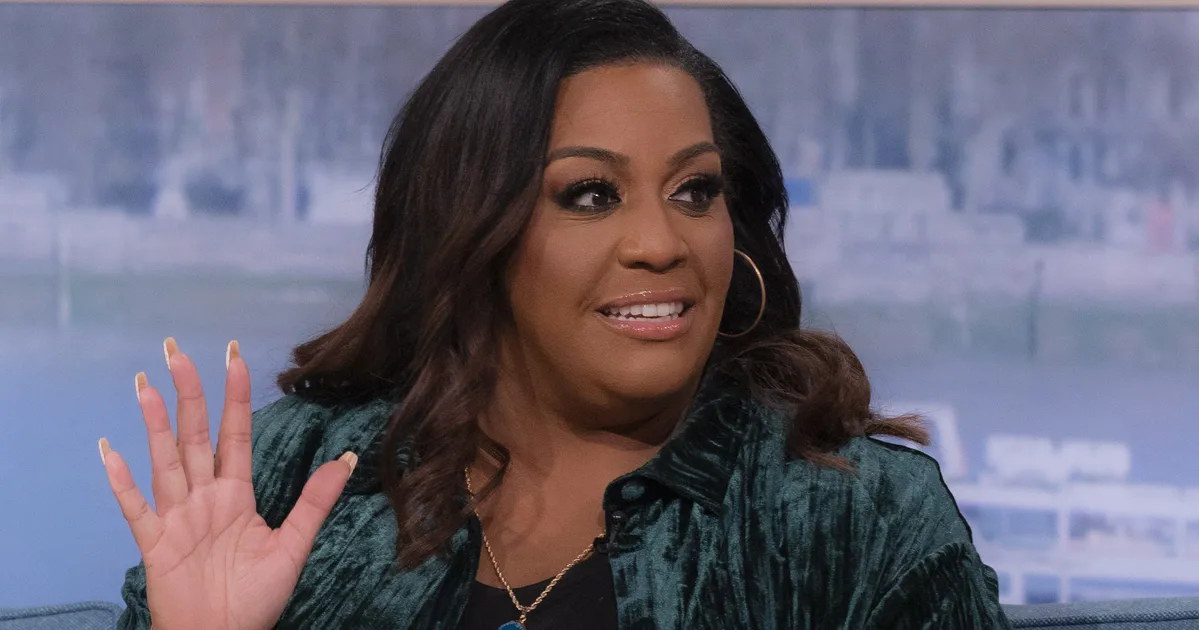
However, it seems she may have spoken too soon.
Reacting to headlines claiming she’d “turned down” an offer to host Strictly, she told Metro: “Do you think I would turn down Strictly if Strictly came along? Who would turn down Strictly! They’d be absolutely crazy.”
She claimed: “I was trying to back them off because ultimately everyone keeps putting my name in the mix and they’re ruining my chances of even getting on to Strictly, d’you know what I mean?”
“You all need to stop talking about it because I need to get in,” Alison added, before insisting: “I’m not too busy, I’m fitter than I’ve ever been before. I can do Strictly. I can do it all.”
After confirming last week that she’d been approached about hosting Strictly, Alison explained to Radio Times: “I’m so busy, babes, that I’m not sure it’s going to happen. It’s unrealistic. I’m so happy they considered me but, like Traitors, I can’t do it because everything clashes.
“I would have loved to have done it – anybody that gets it, they’re going to land the perfect job. But I’m so happy with everything I’ve got. What would I drop, to do Strictly?”
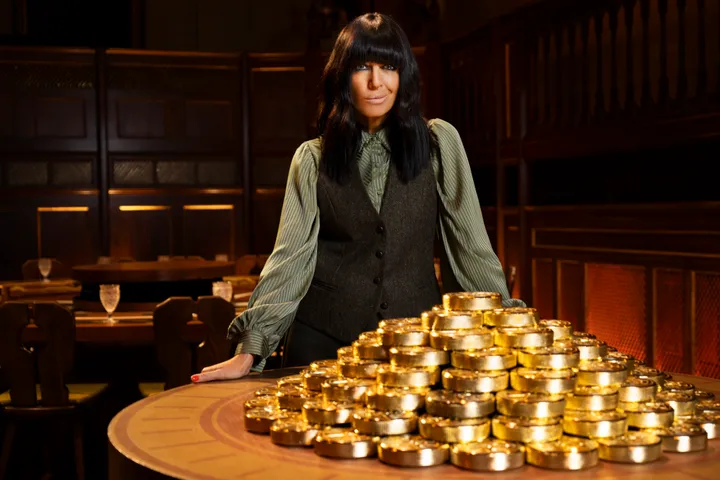
As rumours continue to swirl about which stars will be on the line-up for this year’s season of The Celebrity Traitors, there’s one name that we can now confidently rule out.
Over the weekend, former Doctor Who star Peter Capaldi made an appearance on Laura Kuenssberg’s flagship BBC politics show, during which the subject of Celebrity Traitors came up in the conversation.
The Oscar winner then shared that he’d been approached about putting in a stint in the iconic castle, but turned it down.
Explaining his reasons for not wanting to compete on Celebrity Traitors, Peter said the show “propels” its contestants “into the public eye” and to a “level of fame” and “exposure” that he’s personally not comfortable with.
“It’s like doing my music things,” Peter noted, referring to his recent pivot from acting to music. “It’s very difficult for people in that business to understand that you want to keep it small.
“People keep saying to me, ‘why don’t you do a bigger tour?’, or ‘why don’t you do a bigger release?’, or ‘why don’t you promote this more?’. I’m not doing it to be famous.”

BBC/Studio Lambert/Cody Burridge
Filming on the second season of Celebrity Traitors is due to get underway imminently, before the star-studded reality show returns to our screens in the autumn.
A number of names reported to be in the running for the show’s first iteration, including Bob Mortimer, Daisy May Cooper and Danny Dyer, are now heavily rumoured to be following in Alan Carr’s footsteps, with the likes of Ruth Jones, Cheryl Tweedy, Michael Sheen and Amol Rajan also tipped to be on the follow-up season’s line-up.
Meanwhile, Alison Hammond recently claimed that she was too booked and busy to do the show after rumours about her involvement.
The Traitors will also return for its fifth season in early 2026, with the BBC recently renewing both the main show and its celebrity counterpart until at least 2030.
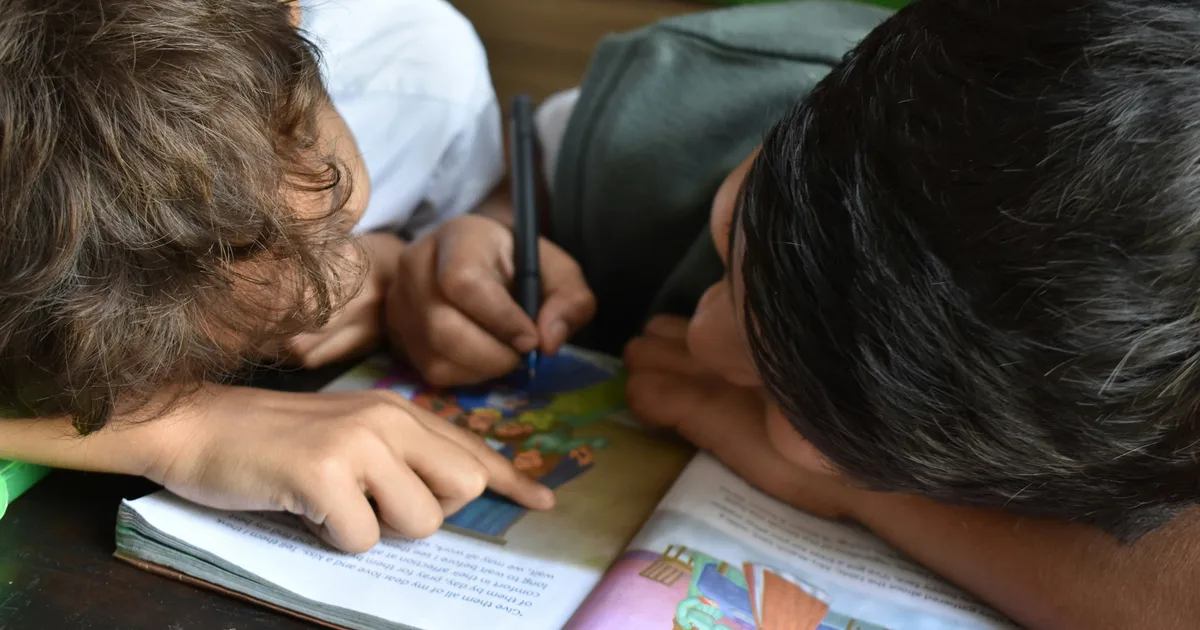
Anyone who watched Louis Theroux’s Inside The Manosphere will be aware that misogynistic content is rife online. Yet these views haven’t just appeared out of nowhere, they’ve been around for years – and social media has amplified it thanks to rage-fuelled algorithms.
Nearly 70% of boys aged 11-14 years old have been exposed to misogynistic content online, according to Ofcom.
After Netflix’s much-lauded series Adolescence shone a spotlight on misogyny among school children last year (and introduced many parents to terms like red pill and manosphere), teachers told HuffPost UK misogynistic comments are commonplace, even from primary school-age boys.
Just this week, one Birmingham-based teacher, who wished to remain anonymous, told Birmingham Live a six-year-old pupil had “said he wasn’t going to get his fruit at snack time and one of the girls would have to go and get the fruit for him”.
The teacher noted misogynistic views are being “trickled down” to younger children through older siblings who are consuming this content online.
When the six-year-old was pulled up on his comments, he said his older brother had been “watching the videos”.
Research by the University of York found most primary and secondary school teachers are “extremely concerned” about the influence of the manosphere – a collection of websites and forums that typically promote masculinity, some of which amplify misogynistic views – on children and young people.
One-quarter of teachers referenced male pupils discussing misogynistic influencers or misogynistic movements from the internet, such as incels.
Educator Rebecca Leigh previously told us she’s noticed “a rise in misogyny” among students – some as young as 11 or 12.
Unison, the UK’s largest union, said a major issue currently affecting schools is the rise in sexist behaviour and language, and sexual harassment – noting it’s being fuelled by explicit content online, as well as on mobile phones.
Childhood is a critical stage of development, and children are “highly impressionable” and particularly vulnerable to extreme views, family psychotherapist Fiona Yassin told HuffPost UK.
“The internet is a hotbed for extremism and misinformation and early research around the impact of the ‘manosphere’ on children is incredibly alarming,”
But parents, carers and anyone working with children can play a role in shaping how youngsters view women.
Regardless of whether you believe your child is exhibiting these behaviours or consuming harmful content online, conversations about misogyny and the treatment of women are incredibly important.
And given all the data, it’s never been more pressing.
In the lexicon of modern warfare, ‘connectivity’ is a target. In 2026, the Israeli Air Force has turned this concept into a grim reality along the banks of the Litani River in southern Lebanon. Through a terrorizing and systematic campaign of infrastructure destruction, the southern third of Lebanon is being physically detached from the rest of the sovereign state.
Isolating southern Lebanon
Every bridge, from the historic stone arches to modern highway spans, has been reduced to rubble, creating a ‘de facto’ island of the south. While Israel claims this as a tactical necessity to ‘freeze the movement’ of resistance groups, the sheer permanence of the destruction suggests a deeper metamorphosis.
By severing the veins that connect Beirut to the south, the Israeli military is performing a geopolitical amputation, turning a 170km waterway into a moat of isolation. As the concrete falls, a haunting question arises: Is Israel simply clearing a path for victory, or is it permanently carving a new map into the Lebanese landscape?
The Litani River
For readers unfamiliar with the geography of the Levant, the Litani River is the most significant waterway in Lebanon, flowing entirely within its borders for roughly 170 kilometers. Originating in the fertile Bekaa Valley in the east, it winds south before making a sharp, westward turn toward the Mediterranean Sea, just north of the city of Tyre.
This ‘elbow’ in the river creates a natural geographic line that sits approximately 20-to-30 kilometers north of the Palestinian border. Because of this strategic position, the Litani has long served as a geopolitical yardstick: it is the boundary line established by the United Nations in 2006 to separate Israeli occupational forces from Lebanon, and its waters remain a vital, yet contested, artery for the country’s agricultural heartland and hydroelectric power. In the context of conflict, to cross the Litani is to enter the most volatile ‘buffer zone’ in the Middle East.
Israel wants to implement its plan of re-occupying southern Lebanon, as its officials have stated since the announcement of the UN 1701 decree. While the Lebanese government in Beirut remains trapped in a state of diplomatic paralysis, unable to ‘bridge’ even its own internal political divides, the Litani is being transformed from a Lebanese river into a hard, unilateral frontier.
We are on the verge of witnessing the birth of a new border, written not in ink, but in broken rebar and isolation.
The ultimate ‘red line’
For Israel, the Litani River represents the ultimate ‘red line’ where military strategy meets geography.
Historically viewed as a potential water source, the Litani’s primary importance in 2026 is as a permanent security buffer. By pushing Lebanese armed forces north of this 170km line, Israel seeks to create a so-called ‘sterile zone’ that extends its occupation north of the Palestinian lands and protect its mercenaries from short-range missiles and anti-tank fire.
The systematic destruction of the river’s bridges serves a dual purpose: it creates a tactical ‘moat’ that asphyxiates southern supply lines and serves as a geopolitical tool to physically decouple the region from Beirut.
The Litani River is a ghost that has long dictated the rhythm of Lebanese-Israeli warfare, serving as a recurring milestone for invasion and withdrawal. In 1978, the IOF launched Operation Litani, a clear signal that Israel viewed the river as an ‘acceptable boundary’ for Lebanese sovereignty. This fixation was codified further in 1982 and again in 2006 through UN Resolution 1701, which attempted to turn the river into a diplomatic shield by mandating it as a zone ‘free of non-state armed groups’, as per the UN.
However, these historical attempts at ‘cleansing’ the area south of the river have never achieved permanence. Instead, the Litani has become a cyclical graveyard of diplomacy; every time the “ghost” is supposedly laid to rest by a ceasefire, the failure to address the underlying territorial tension ensures that the river eventually rises again as the frontline of a new, more destructive generation of conflict.
A state of agonizing paradox
The Lebanese state in 2026 exists in a state of agonizing paradox: it’s trying to push to assert its sovereignty as demanded by the US and Israel, only to have the physical means of doing so systematically dismantled. While the government officially banned Hezbollah’s military activity in March and moved to deploy the Lebanese Armed Forces (LAF) southward – only to retreat later, once Israel moved its troops northward – the severed bridges of the Litani have turned these mandates into hollow gestures.
Beirut is effectively presiding over a ‘truncated’ nation, where the southern third of the country has become a logistical island. Despite a flurry of diplomatic protests to the UN and desperate attempts by the Ministry of Public Works to patch together temporary crossings, the government remains paralyzed. It is unable to defend its borders, reconnect its people, stand by its resistance forces, or prevent the Litani from hardening into a permanent, unilateral frontier that ignores the state’s very existence.
The destruction of the Litani bridges may well be the final act in transforming a temporary military ‘moat’ into a permanent, unilateral frontier. If these crossings are not restored, the ‘amputation’ of southern Lebanon risks becoming a settled geographic reality, echoing the “Gaza-fication” of the borderlands where separation is enforced by rubble and isolation.
This is no longer just a battle over security zones; it is the physical redrawing of the Levant’s map. As the smoke clears in 2026, the haunting question remains whether the Litani will ever again be a Lebanese river, or if it has been successfully rebranded as a hard, impassable limit – a ghost that has finally stopped haunting the conflict and started defining the peace.
Featured image via Associated Press
Politics
Neurodivergent Job Interviews: Why AuDHD Talent Is Being Filtered Out Of The Hiring Market”
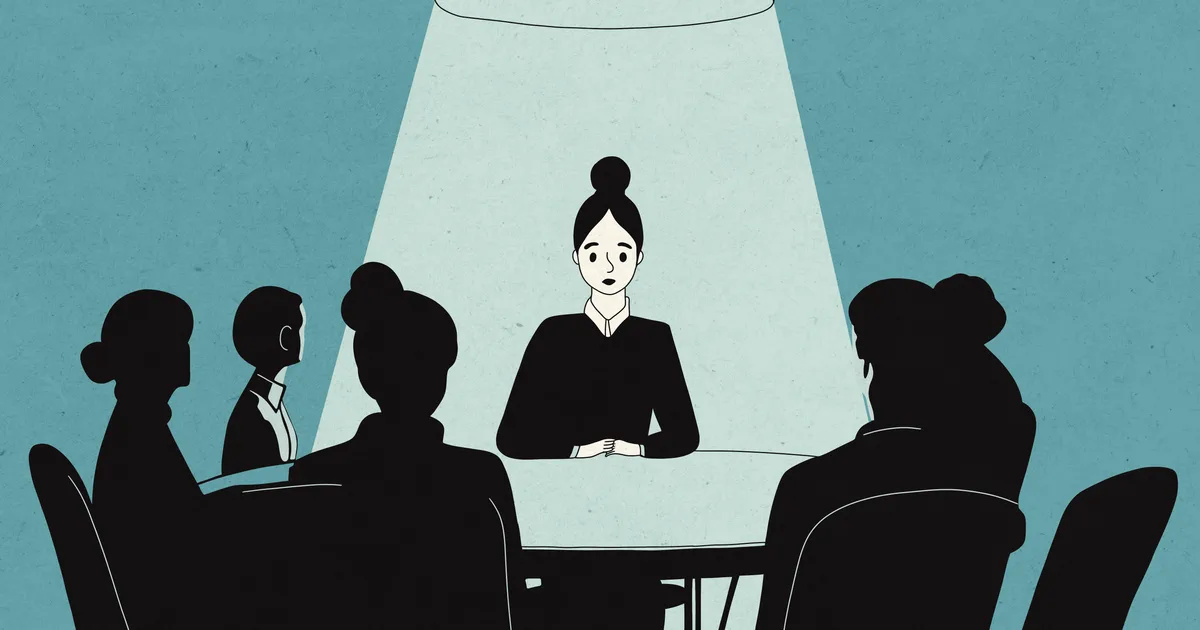
Since last July, Edward James Herath, a brand and strategic comms consultant, has taken part in more than 120 job interviews. The feedback is often the same: he’s “too direct,” “too honest,” “abrupt,” or “confrontational.”
Herath, 39, who is diagnosed with autism and ADHD (AuDHD), believes his literal and questioning demeanor is costing him jobs.
He finds interviews particularly difficult because of their “indirect, passive-aggressive, and theatrical communication style,” he tells HuffPost UK. He believes they measure how he performs under pressure rather than his ability to do the job, and his real self – someone who cares deeply about his relationships and career – doesn’t come across.
“There’s a strong emphasis on reading between the lines and softening language,” he says. For someone who values clarity, that’s a difficult tone to strike.
Hearth is by no means alone in this struggle. Research suggests neurodivergence is widely seen as a barrier to employment. A 2024 Zurich survey of 1,000 neurodivergent adults in the UK found more than half believed recruitment processes were designed to filter them out, while over a third said interviews had triggered panic. A 2025 UK survey also found that 40% of young people believe being neurodivergent was a hindrance in the hiring market.
The consequences are significant for employers, says Sharawn Tipton, Chief People Officer at Greenhouse. She says traditional hiring often favours similarity over talent, despite evidence that diverse teams perform better. Neurodivergence, she says, is “no different than height or personality.”
“When you think about neurodiversity, it’s really around understanding that the mind works differently for everyone,” she says. “Different ways of thinking and communicating are things that help companies innovate faster.”
Job interviews are a game, but the rules aren’t clear for everyone
Christal Castagnozzi, a psychologist with ADHD and autism who specialises in neurodivergence, says traditional interviews prioritise skills like eye contact and quick verbal responses. Executive functions like memory and processing speed are suddenly tested too.
“Neurodivergent folks will struggle in all of these areas, especially when we are put on the spot,” she says. “You’re literally being judged while standing in front of someone. That’s a neurodivergent person’s worst nightmare.”
For many, interviews become less about competence and more about navigating unwritten social rules, according to Elise Minkin, a neurodivergent career coach. She tells HuffPost UK that interviews can feel like “a game” where not everyone knows how to play.
“There’s this kind of secret code that a lot of neurodivergent people feel like they were never told,” she says.
Even common questions, such as why someone wants the job, can cause trouble.
“Obviously for a paycheque,” she says. That’s the true answer – and one which someone with neurodivergence would be inclined to say. “But of course it’s not what the interviewer wants to hear,” she added.
Office environments are not always comfortable spaces for neurodivergent people. Those with autism may struggle to concentrate under harsh fluorescent lighting. Flickering or humming lighting can also be distracting and even sometimes painful.
The location may also affect performance. Some candidates may communicate better over Zoom, where they can make notes, comfortably take more time to answer questions, or use a sensory fidget tool off-screen, which have been shown to help reduce anxiety and increase concentration for people with ADHD and autism.
Without flexibility, neurodivergent candidates “can’t always show up as their best self,” Minkin says.
Many neurodivergent candidates face the difficult decision over whether to disclose their condition up front. Tipton recommends those who want to do this to ask to be connected with anyone at the company who can offer support, such as an employee resource group (ERG).
“You can ask the company, what do you do?” she says. “Because interviewing is a two-way street, and you want to make sure you’re going to an environment where you’re going to thrive and the company is going to be able to support you.”
Those who don’t may result to masking, which is a term for suppressing natural behaviours to appear more socially typical.
“I’m not at all a fan of masking,” Austin says, citing its mental and physical toll. But she acknowledges the decision is personal.
Castagnozzi believes the responsibility should not fall on candidates at all, and adjustments should be built into hiring by default.
“This should just be a best practice,” she says. “Even someone that is not neurodivergent, or does not know that they are neurodivergent just yet, may benefit from accommodations, especially during a stressful time.”
Conversations are brewing on social media
Under the Equality Act 2010, employers in the UK must make reasonable adjustments for disabled applicants. Similar protections exist in the US and Canada.
But reasonable adjustments are often applied inconsistently or denied altogether. Many neurodivergent people are speaking publicly about their experiences, sharing frustrations and finding solidarity.
Darcie, who has autism and ADHD, shares her experiences with her 14,000 TikTok followers. She says that receiving interview questions 15 minutes in advance is a reasonable adjustment that helps her organise her thoughts.
In a TikTok posted in January, she described a recent interview where an employer initially agreed to provide the questions. But when she arrived, they backtracked, which undermined her confidence.
In the comments, viewers shared their own thoughts, with many agreeing that the way the company behaved was a “red flag.” Some urged Darcie to take the employer to court for discrimination, noting that reasonable adjustments are a legal requirement.
“This is really bad,” one said. “Definitely report this if you can.”
Viewers who also had ADHD and autism said they often made the same requests to potential employers, with mixed results.
“There really should be no excuse for employers not to do this when requested,” one viewer wrote. “For most jobs it shouldn’t be based on how quickly you can answer on the spot anyway.”
Some employers worry adjustments provide an unfair advantage. But Kristin Austin, VP of Culture and Community Health at Rewriting the Code, disagrees, arguing they actually improve fairness.
“If the goal is truly for people to show up at their best, why would you not give them those resources?” she says. “Are you evaluating my ability to think under pressure, or my ability to do the job?”
Software engineer Shea Belsky has experienced hiring from both sides. He says neurodivergent job-seeking experiences vary widely, making it difficult to generalise. Sometimes he has had a good experience, and sometimes he hasn’t. But meaningful change, he adds, must come from company culture, and that’s something he always strives to be a part of.
“It has to be baked into an organisation’s DNA,” he says. “We want people to feel like they can come and be their authentic selves.”
For Herath, and many others, the hope is to be assessed on their ability rather than arbitrary, performative skills. Until hiring models evolve more broadly, interviews may continue to filter out the very talent that can make a difference.

If you had to compare one living person to Jesus Christ, it would not be Donald Trump.
You might actually say Trump is the polar opposite of Christ – a sort of ‘anti-Christ’, if you will.
One person who disagrees, however, is the man himself:

Good lord
Jesus was famous for kicking the money lenders out of the temple. Donald Trump is famous for not paying back money he owes. These are not the same thing.
Lest we forget, Jesus said:
It is easier for a camel to go through the eye of a needle than for a rich man to enter the kingdom of God
To be fair to him, Trump might actually believe with this, because he said the following in October 2025:
I don’t think there’s anything going to get me in heaven. I think I’m not maybe heaven-bound. I’m not sure I’m going to be able to make heaven.
The benefit of knowing your eternal soul is damned is that you don’t have to worry about being a good person. This frees Trump to commit clearly sinful acts like waging war and depicting himself as the Christ.
While the warmongering president may made his peace with evil, however, many of his supporters have not:
Truth Social is revolting on Trump, BIGLY! I have never seen it this bad! It goes on and on! pic.twitter.com/cjOT74KihT
— Knoxie (@KnoxieLuv) April 13, 2026
Among those criticising Trump is former loyalist Marjorie Taylor Greene, who said:
It’s more than blasphemy.
It’s an Antichrist spirit.
Commentator Harry Sisson, meanwhile, suggested that Trump appears to be healing an old friend of his:
Trump is now posting AI images of himself as Jesus Christ healing, what appears to be, a young Jeffrey Epstein. pic.twitter.com/zG2OQKbP9s
— Harry Sisson (@harryjsisson) April 13, 2026
Another thing people are noting is that the image Trump shared seems to be more demonic than the original:
Turns out the original photo was posted by @NickAdamsinUSA but someone in the Trump camp decided it would be wise to alter it to add a demon and repost. 👀
Credit to: @mend_alyn for the find! pic.twitter.com/oMQExSN2Qq
— Based Millennial Mommy 🇺🇸 (@MaRy_JaNe1209) April 13, 2026
Did Team Trump alter the image?
Or did the demon simply manifest as a result of the image’s proximity to Trump?
Trump VS the Pope
As many have pointed out, Trump’s latest deadly sin came after he tangoed with the current Pope. In recent weeks, Pope Leo has been putting out fire like the following:
War divides; hope unites. Arrogance tramples upon others; love lifts up. Idolatry blinds us; the living God enlightens. All it takes is a little faith, a mere “crumb” of faith, in order to face this dramatic hour in history together — as humanity and alongside humanity. #Peace
‘Idolatry’, by the way, is when a person worships things like money, fame, or hotel chains over God.
Hard to guess who he might be referring to there.
He doesn’t believe in building libraries or museums, only hotels.
That should be his epitaph, signed off by him.
A rare non-lie from Trump. https://t.co/4aqxsoGMTL
— Mehdi Hasan (@mehdirhasan) March 31, 2026
Hundreds of millions of people throughout the world are immersed in extreme poverty. Yet, disproportionate wealth remains in the hands of a few. It is an unjust scenario, in the face of which we cannot fail to question ourselves and commit to change things. There is no lack of resources at the root of disparities, but the need to address solvable problems related to a more equitable distribution of wealth, to be achieved with moral sense and honesty.
According to convicted criminal Donald, the Pope has been critical of Western wars because he “likes crime”:
He’s attacking the Pope.
He. Is. Attacking. The. Pope. https://t.co/DbveAIyBhw— Jo (@JoJoFromJerz) April 13, 2026
And, the president also said all of the following, which you’re free to read if you have a spare ten minutes and don’t respect your own time:
This will end well.
Some genius in Trumpland decided, “Hey, the best thing we can do now is to go to war with the Holy Father.” pic.twitter.com/zYG3IuNivB
— Rick Wilson (@TheRickWilson) April 13, 2026
Of course, Trump has form when it comes to attacking Popes/the concept of basic human decency:
I just remembered Trump posted this after Francis died. pic.twitter.com/FLcGziYs0a
— Jeet Heer (@HeerJeet) April 13, 2026
Pope Leo has now responded, saying:
I don’t think that the message of the Gospel is meant to be abused in the way that some people are doing.
I will continue to speak out loudly against war, looking to promote peace, promoting dialogue and multilateral relationships among the states to look for just solutions to problems.
This sicko really loves crime, doesn’t he?
The Pope isn’t the only religious figure who’s been critical of the American president’s blatant wickedness either:
Trump’s post comes after @60Minutes aired interview with three American cardinals https://t.co/xVGHSeG8eD
— David Shepardson (@davidshepardson) April 13, 2026
End times
As one commenter noted, it does feel like we’re living through the end times:
The Book of Revelation really made all this sound like it was going to be more poetic and less stupid. https://t.co/wZenwg0aos
— one dozen rats at a keyboard (@PanasonicDX4500) April 13, 2026
This isn’t for nothing.
The US evangelicals who support Trump and Israel do so because they think they’re going to usher in the end of the world. This is why they support endless hostilities and expansionism in the Middle East.
As we reported on 21 February:
Many American evangelicals support Israel, but not because they like Israelis. In actuality, they think the creation of Israel is a signifier that the end times are approaching, and that Israel will trigger the Rapture.
If you’re unfamiliar with the term, the ‘Rapture’ is the time when God calls his faithful back to heaven. Said ‘faithful’ will not include the Jewish men and women who live in Israel, even if they do play an instrumental role in jump starting the Armageddon.
We’re not facing down the end of the world because it was foretold; we’re facing it down because wealthy freaks believe it was foretold.
Trump may not be the literal anti-Christ, but that isn’t stopping his donors from positioning him to perform the same function.
Featured image via Donald Trump
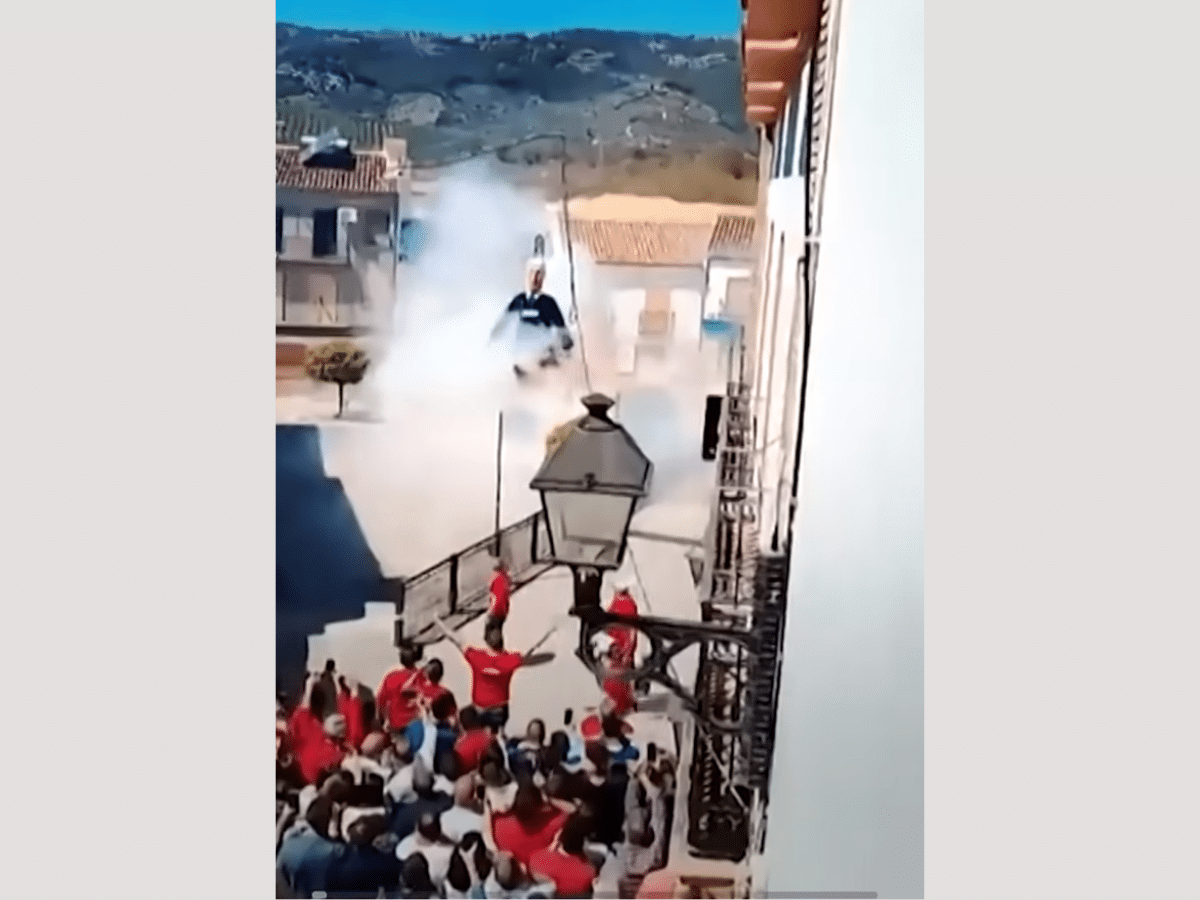
Israel is having a petulant hissy fit about Spain. Again. The occupation regime has cried that a Spanish village’s decision to use an effigy of genocidal war criminal Benjamin Netanyahu in its traditional Easter ceremony is – you’ve guessed it – antisemitic.
The Israeli government – never one to shy away from displays of arrogance – has “summoned” a Spanish embassy official for a “reprimand”. The issue? The small Málaga town of El Burgo used an effigy of Benjamin Netanyahu for its traditional “burning of Judas” festival.
All too typically, the Israeli government ranted on X that the decision of one pueblo in an autonomous region of Andalusia was the fault of Spanish PM Pedro Sánchez – because he has criticised Israel’s genocide in Gaza, said mean things about Israeli war criminals and dared to say Spain will not support Israel’s illegal war on Iran:
The appalling antisemitic hatred on display here is a direct result of @sanchezcastejon government’s systemic incitement.
And even now, the Spanish government remains silent.
The Spanish chargé d’affaires was summoned for a reprimand. pic.twitter.com/2Bguhs7Ce8— Israel Foreign Ministry (@IsraelMFA) April 11, 2026
Israel having another tantrum
Sánchez’s government was having none of such nonsense. In a public statement, it said that it rejected the “insidious accusation” and pointed out the measures it has taken to protect and support Spain’s tens of thousands of Sephardi Jews.
On Easter Sunday, 5 April, El Burgo’s townspeople burned a 7m-tall effigy of Netanyahu, filled with around 14kg of gunpowder. Many would say that this is the least Netanyahu deserves after Israel’s slaughter of hundreds of thousands of innocent Palestinians, his and Donald Trump’s illegal war on Iran and his attacks on Lebanon, Syria and the occupied West Bank.
Every year, the town selects someone they consider to represent evil as the template for the effigy of Judas. The town’s council said this year’s choice was an expression of the people’s rejection of war and genocide. Last year, Netanyahu’s poodle Donald Trump was selected.
Unsurprisingly, Spain is right, Israel is wrong. Rejecting and opposing evil is not antisemitic. In 2015, the Sussex town of Lewes selected then-PM David Cameron to burn as Guy Fawkes on the UK’s ‘Bonfire night’, a festival with deeply anti-Catholic origins. Of course, suggesting that rejecting evil is antisemitic is, itself, antisemitic. That’s hardly surprising either, considering the deeply antisemitic nature of Zionism and its propaganda.
Featured image via YouTube screenshot/Al Jazeera
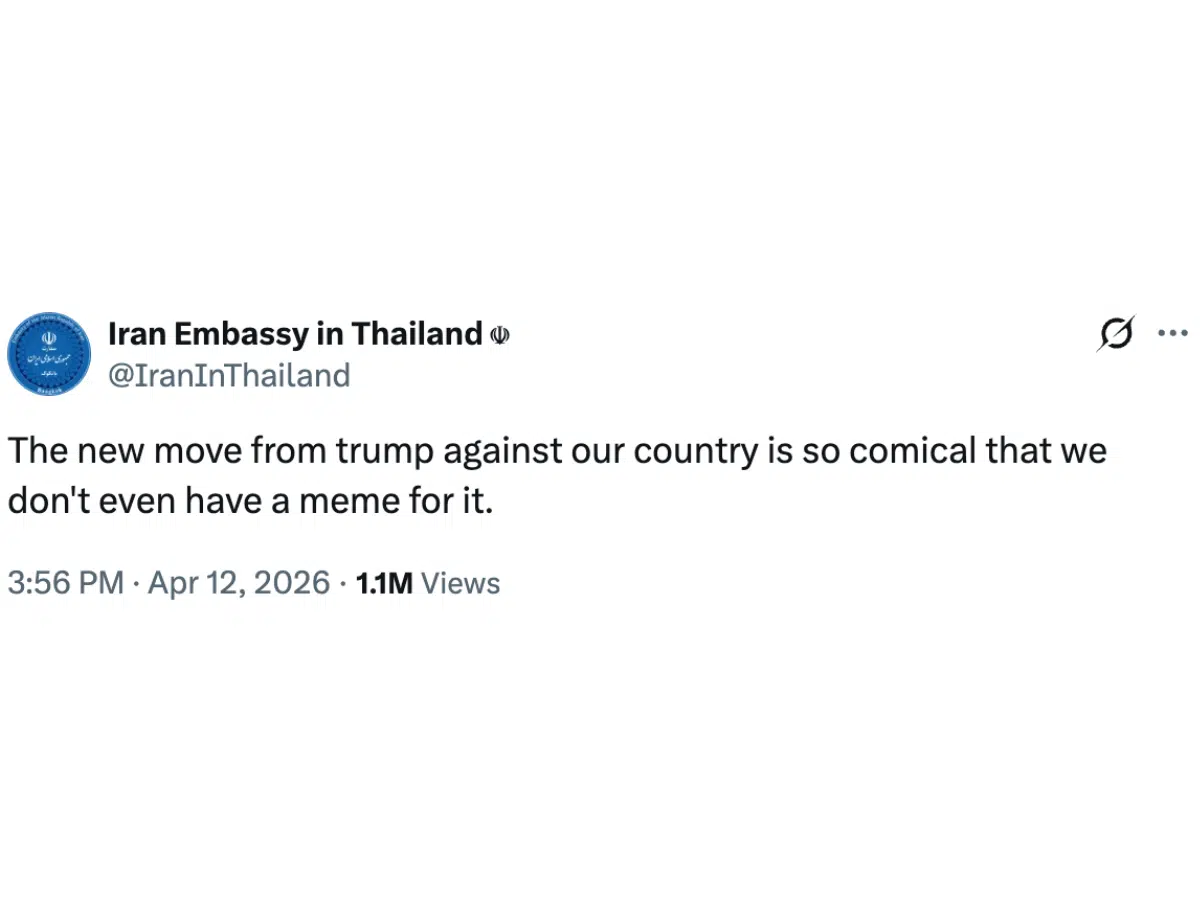
Iran are mocking Donald Trump’s claim he is planning to impose a blockade on ships leaving or entering the Strait of Hormuz if Iran doesn’t give up its own control of who can pass along its coastline. Trump made the threat after his ‘three stooges’ team of amateur negotiators failed to bluster Iran’s diplomats into accepting the US’s demands for capitulation in talks in Pakistan.
The Iranian embassy in Thailand, for example, referred to Iran’s total victory in the online propaganda war and its hugely viral ‘Lego’ style videos. The embassy’s X account said Trump’s plan is “so comical we don’t even have a meme for it”:
The new move from trump against our country is so comical that we don’t even have a meme for it.
— Iran Embassy in Thailand ☫ (@IranInThailand) April 12, 2026
Iran’s embassy in Zimbabwe chipped in with a reminder who’s really in charge of Trump’s administration:
True peace requires confronting the shadows governing the White House. pic.twitter.com/tf5nd9kTUW
— Iran Embassy in Zimbabwe (@IRANinZIMBABWE) April 12, 2026
China and Russia have free access to the Strait because they have supported Iran rather than those waging criminal war against it. Trump may well be ridiculous enough to think he can get away with attacking their ships trying to go about their lawful business – but he would soon get an education in reality.
Toxic clown says what?
Featured image via X

Top 7 quantum AI stock trading bot free tools for beginners in 2026 to earn passive income

This Venezuelan Novelist Built Her Literary Empire Online

Villa confirmed for World Sevens London Tournament


-

 Politics3 days ago
US brings back mandatory military draft registration
-

 Fashion3 days ago
Weekend Open Thread: Veronica Beard
-
 Sports3 days ago
Man United discover Nico Schlotterbeck transfer fee as defender reaches Dortmund agreement
-

 Tech6 days ago
How Long Can You Drive With Expired Registration? What Florida Law Says
-

 Politics20 hours ago
World Cup exit makes Italy enter crisis mode
-

 Crypto World4 days ago
Canary Capital Files SEC Registration for PEPE ETF
-

 Business3 days ago
Tesla Model Y Tops China Auto Sales in March 2026 With 39,827 Registrations, Beating Cheaper EVs and Gas Cars
-

 Politics3 days ago
Malcolm In The Middle OG Turned Down ‘Buckets Of Money’ To Appear In Reboot
-

 Fashion6 days ago
Let’s Discuss: DEI in 2026
-

 Crypto World5 days ago
Bitcoin recovers as US and Iran Agree a Ceasefire Deal
-
 NewsBeat13 hours ago
Pep Guardiola and Gary Neville agree over Arsenal title problem that benefits Man City
-

 Business3 days ago
OpenAI Halts Stargate UK Data Centre Project Over Energy Costs and Copyright Row
-

 Business2 days ago
Ireland Fuel Protests Enter Day 5 as Blockades Spark Shortages and Government Prepares Support Package
-

 Politics3 days ago
LBC Presenter Mocks Trump Over Iran War Failures
-

 Crypto World2 days ago
Federal judge blocks Arizona from bringing criminal charges against Kalshi
-

 Tech4 days ago
A version of Windows 10 released a decade ago is now eligible for additional security patches
-
 NewsBeat1 day ago
JD Vance announces ‘no agreement’ with Iran over nuclear weapons fear
-

 Business2 days ago
IMF retains floor for precautionary balances at SDR 20 billion
-
Sports2 days ago
1st-Round WR Enters Vikings Mock Draft Orbit
-
 Entertainment4 days ago
Alfred Hitchcock’s 10 Most Suspenseful Masterpieces, Ranked
You must be logged in to post a comment Login