
Politics
Zack Polanski says Farage is ‘running scared’ of him

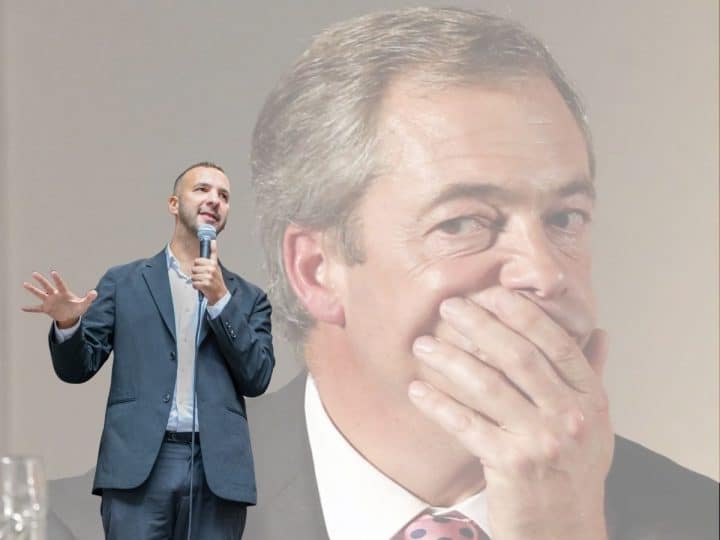

On Wednesday 29 April, Nigel Farage spoke to the BBC. During the course of this interview, the interviewer asked Farage why he wasn’t talking to Green Party leader Zack Polanski. The Reform leader responded in predictably evasive fashion, prompting the following from Polanski:
Nigel Farage asked on BBC news this morning if he'd debate with me.
Says he's too busy with the local elections & it will just be a "big row."
I've been asking him for months. Someone's running scared? Vote Green.
— Zack Polanski (@ZackPolanski) April 29, 2026
Zack Polanski — ‘someone running scared’
As Zack Polanski said, Farage has been ducking Polanski for some time. This is what Rose Cocker reported for the Canary on 4 February:
Reform leader Nigel Farage is running scared of Green leader Zack Polanski. And, in the run-up to the Gorton and Denton by-election, the clash between the two parties could well be a sign of things to come in the British political landscape.
Of course, Farage is refusing a challenge to a face-to-face debate with Polanski. After all, the far-right figurehead is far batter at manufacturing glib soundbites than he is at answering probing questions.
The Gorton & Denton by-election was widely seen as a pivotal moment in the history of British politics. Labour looked set to lose a safeseat that they’d held for decades, with the winner likely to be Reform UK or the Green Party. The winner would no doubt pick up considerable momentum, with the runner-up losing some of their sparkle.
In other words, any serious leader would have bent over backwards to secure a head-to-head debate.
Nigel Farage, meanwhile, responded like this:
"I generally find that if you pick a fight with a chimney sweep you get covered in soot, so I might just leave that alone"
"But he's got a fan club – all the heroin smokers and everything" pic.twitter.com/e5F6H80eV4
— Politics UK (@PolitlcsUK) February 3, 2026
 WATCH: Nigel Farage rejects Zack Polanski's request for a one-to-one debate
Absolute shitbag behaviour.
His fear of Polanski goes back further too, as we reported in January:
On 9 January, Green Party leader Zack Polanski challenged Reform Nigel Farage to a one-to-one debate. As you’d expect, Farage immediately accepted the offer, as he was keen to defend his well thought-out political ethos to an engaged audience.
Oh wait, that’s wrong isn’t it; we meant to say he completely blanked Polanski and went silent:
Has anyone seen Nigel Farage in the last 20 hours? — Harry Eccles (@Heccles94) January 10, 2026
 https://t.co/qpoAFwtNHK
If you’re wondering why Farage is ducking Polanski, it’s because unlike Reform, the Green Party has actually identified who’s at fault for the problems this country faces:
Unlike Labour, we are serious about ending Rip Off Britain. That must mean measures like rent controls.
We aren't afraid to take on vested interests.
And we won't hesitate in taking practical action to reduce the cost of living. https://t.co/DXktDWDCil
— Zack Polanski (@ZackPolanski) April 29, 2026
Smear and loathing
In other Farage news, Novara reported on 29 April:
Nigel Farage visited a social housing estate in Wales by helicopter, but pretended he had driven.
A Merthyr Tydfil resident told Novara Media that when the Reform leader visited the town as part of his general election campaign, he “landed in the next valley over so that nobody knew he’d come by helicopter”.
“This isn’t what people in Merthyr travel by,” she added.
While I was in Merthyr I had the most extraordinary conversation: while visiting south Wales Farage had allegedly come by helicopter – but then drove from the next valley, where the chopper was – to obscure how he travels.
Reform are welcome to correct! pic.twitter.com/yhckwYeBWO
— Aaron Bastani (@AaronBastani) April 29, 2026
Novara’s Bastani also had this to say on the smears being deployed against Polanski and the Green Party:
.@AaronBastani: "It's a bit like with Zack Polanski isn't it, all the antisemites are joining the party led by the Jewish guy, can't you see it? No I can't actually, you're crazy" pic.twitter.com/1RDtYoUTlY
— Saul Staniforth (@SaulStaniforth) April 28, 2026
It’s right to call these smears out — not least because the Green Party does sometimes back down to them.
We saw this in the past with the suspension of would-be candidates; we’ve seen it recently with the suspension of anti-Zionist Jewish activist Tony Greenstein, and with the stitch up around the ‘Zionism is Racism’ motion. At the same time, the party is making more of an effort to stand behind candidates smeared by the establishment, and that’s a positive development.
Standing up to Reform, Labour, and the billionaires is good, but you have to stand rigid. The second you show signs of buckling at the knees, the establishment will have you on the ground in an instant.
Polanski has mostly been steadfast on these issues, which is why Farage knows he’s going to struggle against him in a debate.
Featured image via Barold
By Willem Moore



Chelsea winger Mykhailo Mudryk has been dealt a severe blow after being handed a four-year ban from football for breaching the FA’s anti-doping regulations.
According to reports, the maximum penalty was handed down to the 25-year-old after a banned substance was found in his sample, whilst Mudryk maintains his innocence and denies the charges against him.
The case dates back to November 2024, when the player played his last official match, before subsequently receiving notification of an abnormal result in a routine doping test. In June 2025, he was formally charged with breaching the regulations, leading to the current sanction.
In an escalatory move, Mudryk lodged a formal appeal with the Court of Arbitration for Sport, which confirmed in a statement that it had received the appeal on 25 February 2026, noting that the case remains at the stage of exchanging written submissions, in preparation for setting a date for the hearing.
Findings revealed that the substance detected in the sample was meldonium, a medical drug used to treat heart conditions and improve blood flow; however, it has been included on the World Anti-Doping Agency’s list of prohibited substances since 2016, due to its potential impact on physical performance.
The FA’s disciplinary system is based on the principle of “strict liability”, which holds the player fully responsible for any banned substance detected in his system, regardless of intent or knowledge. This means that the defence in such cases relies primarily on presenting mitigating factors that may influence the length of the sanction.
Pending the outcome of the appeal, Mudryk continues to train individually, at Chelsea, away from competitive action in an attempt to maintain his fitness, whilst his footballing future remains in the balance pending CAS’s forthcoming decision.
Featured image via TalkChelsea
By Alaa Shamali
Politics
Financial funding and disciplinary sanctions: FIFA adopts unprecedented rules for the 2026 World Cup
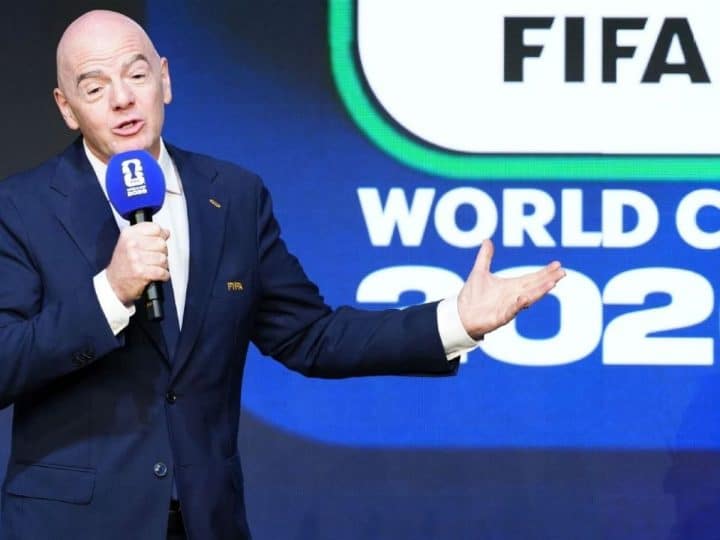

In a series of decisions reflecting the major changes expected for the 2026 World Cup, the FIFA Council has approved a package of financial and organisational amendments, the most notable of which include an increase in financial distributions, updates to certain on-pitch regulations, and an adjustment to the yellow card system to align with the tournament’s new format.
These decisions were taken during the FIFA Council meeting held ahead of the 76th FIFA Congress in Vancouver, Canada — one of the host cities for the 2026 World Cup — 44 days before the tournament kicks off.
According to a FIFA statement, a copy of which was obtained by a the Canary correspondent, the meeting saw the adoption of a package of financial and organisational amendments affecting the largest tournament in World Cup history in terms of the number of teams and matches.
FIFA — record financial increase
On the financial front, the FIFA Council approved an increase in the total prize money allocated to the 48 participating teams to $871 million, a 15% rise compared to previous editions, driven by the tournament’s growing commercial success.
The increase included raising preparation allowances from $1.5 million to $2.5 million per team, and increasing qualification bonuses from $9 million to $10 million, as well as the allocation of more than $16 million in additional contributions to cover the costs of national team delegations and boost ticket allocations, whilst emphasising that the remainder of the proceeds will be reinvested in the global development of football through member associations.
On-pitch disciplinary changes
In terms of the rules, FIFA has approved the implementation of new amendments during the tournament, which will penalise players who cover their mouths whilst speaking to opponents during confrontations.
Penalties will be imposed on players who leave the pitch immediately in protest at the referee’s decisions, as part of a drive to enhance transparency and discipline on the pitch.
Revision of the yellow card system
The Council has also approved an amendment to the yellow card system in line with the increased number of matches in the expanded tournament, whereby yellow cards will be reset after the group stage and then reset again following the quarter-finals, thereby limiting the impact of accumulated cards on players’ participation in the decisive stages of the competition.
Featured image via the Canary
By Alaa Shamali
Politics
Only 22% of Brits think US sees UK as closest ally. This is a chance to remove American bases.


Only a minority of Brits think the US sees the UK as its closest ally. And with president Donald Trump’s regular attacks on the UK’s admittedly pitiful government, it is easy to see why. It is high time we reformed the so-called ‘special relationship’ — and removing US bases could be a major step.
There are currently around 10,000 American troops based in Britain across 13 US-controlled bases.
A YouGov poll on 29 April found:
Only 22% of Britons think the US government still sees the UK as its closest national ally.
Only 22% of Britons think the US government still sees the UK as its closest national ally, with leaks revealing that the British ambassador has said that Israel is probably the only country with a "special relationship" with the US
Link in replies pic.twitter.com/xPU38qAPms
— YouGov (@YouGov) April 29, 2026
As YouGov pointed out, the finding comes after:
leaks revealing that the British ambassador has said that Israel is probably the only country with a “special relationship” with the US.
Now it’s harder to know if those polled are sad or happy about this shift, but there’s definitely a wide recognition that the US-UK relationship has changed a lot lately. And it might be an opportunity to fight back against a political establishment which follows the US around like a poodle.
The ‘Yanks out’ cohort
There is definitely a constituency for removing bases. And it has only been handed more ammunition by Keir Starmer’s decision to drag the UK into the Israel-American attack on Iran. Defence secretary John Healey described the bases as “invaluable” to the US war effort on 11 April.
Former Labour leader Jeremy Corbyn — a longtime critic of US basing — tabled a motion against the bases on 4 March. It argued for more oversight by MPs.
The (very wordy) title was:
Bill to require parliamentary approval for the deployment of UK armed forces and military equipment for armed conflict; to require parliamentary approval for the granting of permission by Ministers for use of UK military bases and equipment by other nations for armed conflict; to require the withdrawal of that permission in circumstances where parliamentary approval is not granted; to provide for certain exemptions from these requirements; to make provision for retrospective parliamentary approval in certain circumstances; and for connected purposes.
But as with many things, the space once dominated by Corbyn has been hijacked by Green leader Zack Polanski…
Polanski wants the US bases out
Polanski told the Guardian podcast on 20 January at a time when the US is becoming increasingly aggressive. Donald Trump had already kidnapped Venezuela’s president Nicolas Maduro that month and was threatening to annex Greenland.
The Green leader said the UK’s security should not be subject to Trump’s mood:
I think it’s pretty worrying that we’ve allowed ourselves to become so reliant on American interests, and that a lot of this depends on if Donald Trump is in a good mood or not.
He called for a full review into US military presence on UK soil:
We should be reviewing US bases on UK soil, and actually looking at a genuine strategic defence review.
Your Party MP Zarah Sultana also said US bases should be “kicked out” on 1 March in response to the unprovoked attack on Iran:
Kick them out. https://t.co/nlBqs3YyUo
— Zarah Sultana MP (@zarahsultana) March 1, 2026
Sultana also laid out her position on the (for now) US-dominated NATO alliance in October 2025:
NATO isn’t about “peace” or “security”. It’s an imperialist war machine. Just look at Afghanistan and Libya.
Arms dealers profit while our NHS collapses, public services crumble and millions of children grow up in poverty.
We must withdraw from NATO immediately. People don’t…
— Zarah Sultana MP (@zarahsultana) October 28, 2025
The UK public have abandoned the idea the US sees the UK as a close ally, though politics of why aren’t clear. Nevertheless, figures like Sultana, Corbyn and Polanski should use this window to offer a different vision. And it’s well past time someone told voters what a post-American Britain would look like.
Featured image via the Canary
By Joe Glenton
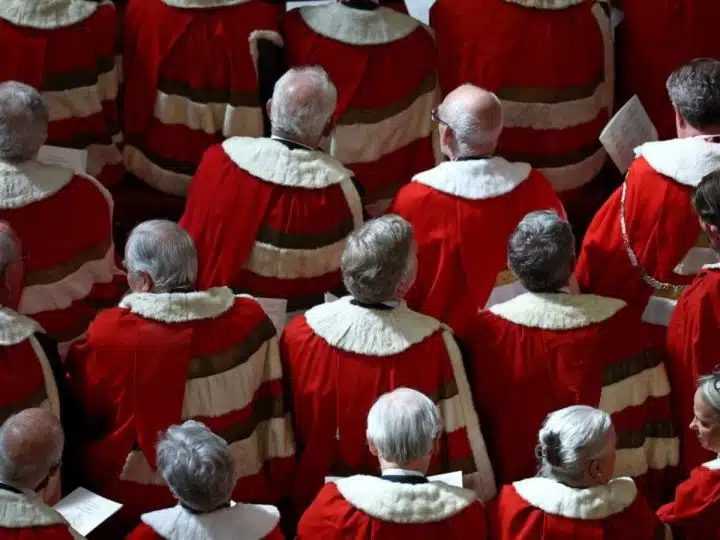

This week marked the end of hereditary peerage in the UK. But while Keir Starmer’s Lords reform bill might have put a minuscule dent in unaccountable power in Britain, the country still belongs to the wealthy.
Not that the move wasn’t popular…
As YouGov reminds us, a majority of Brits have been opposed to people inheriting peerages for years:
Today will mark the final day for hereditary peers in the House of Lords – our polling in 2024 found that 62% of Britons agreed that the Lords should not continue to have places for hereditary peers
Link in replies pic.twitter.com/vPSaLRxSCC
— YouGov (@YouGov) April 29, 2026
You can dip back into YouGov’s full 2024 study here. It describes the current system pretty accurately as:
Britain’s ‘upper’ legislative chamber that counts bishops, aristocrats who inherit their position, and people appointed largely on the wishes of the prime minister as members.
The aristocrats mentioned here are the ones whose time has come — the rest of these appointees are still in the Lords.
And YouGov found:
An entirely elected House of Lords is by a clear margin the most popular option among Labour voters (68% support), Lib Dems (65%) and Reform UK voters (54%). Conservatives are instead most supportive of a part-elected, part-appointed body, which half of Tory voters (50%) are in favour of, but they still marginally prefer an entirely elected chamber (41%) to the status quo (35%).
The speaker of the upper house, lord Forsyth, praised the last 88 peers who’d inherited their titles at an event on Monday 27 April. He said they had shown:
a willingness to act with “conscience rather than convenience.
The Telegraph wrote his comments up as:
an implicit criticism of the Prime Minister’s decision to remove the last 88 hereditary peers from the Lords chamber.
And, case in point, the billionaire-owned Telegraph isn’t a bad place to start in our quest to understand the hard limits of British democracy.
Privately owned media
Nobody with a democratic pulse will be sad to see the back of the thousand-year-old tradition of hereditary peers. But Britain’s problem with democracy is far bigger than that.
As the Media Reform Coalition pointed out in a 2025 report:
Just three companies – DMG Media, News UK and Reach – control 90% of UK national newspaper circulation.
They argued:
We need urgent action to break up the corporate juggernauts and global Big Tech cartels that dominate the UK media.
The essential principle that significant media power should be met with substantial public responsibilities has been diluted and ignored by successive generations of political decision-makers, with ever deeper and compounding consequences for the needs and interests of the British public.
And here is the key passage:
It is long past time for comprehensive public intervention to address the impact of media concentration on British democracy.
But the issue doesn’t end there… here are just a few pressing examples of how democracy doesn’t apply to the powerful.
Lobbying for influence
Lobbying by private and state interests is another way in which the wealthy and powerful trample over democracy. Transparency International has reported that:
UK citizens currently have little opportunity to understand who is lobbying whom, how, for what purpose and with what funds.
They warned that:
much of the problem is with rules governing politicians and officials. For instance, all elected legislators in the UK are allowed to receive personal payment in return for providing advice to lobbyists. In practice, lawmakers across the mainland UK are permitted to retain conflicts of interest so long as they are declared.
And, just to circle back to peerages, the group said:
At the extreme of using money for influence in the UK, major party donors can be offered positions in the legislature itself through appointment to the House of Lords.
While some lobbying is ethical and right, there are loopholes big enough to fly a jumbo jet through. For more on dark money in British politics, you can dip into the work of Democracy for Sale.
UK — dictatorship of the foreign policy
Another field in which unelected generals, officials and arms firms have more say than you is foreign policy. The current war in Iran being just one current example. For all intents and purposes, the UK is a dictatorship when it comes to issues of war and empire.
Support for Israel, US bases in the UK, defence deals, the roll-out of AI death firm Palantir in the military and NHS — the list goes on…
Perhaps the most important example of the last quarter century might be the Iraq war. Reporter Peter Oborne broke part of the problem of the British system in relation to that war down in his 2016 book ‘Not the Chilcot Report’.
He said (free PDF here):
The Iraq invasion damaged the core institutions of the British state. This in turn has led to basic questions about the British system of government itself.
He then wrote of the “pre-modern” nature of British democracy:
According to the textbooks the British state is a constitutional monarchy. This bland formula conceals the fact that the British state contains pre-modern elements, which enable a great deal of government to be carried out in secret.
Parliament had wrested away power from the monarchy over the centuries. But the precise nature of these powers has never been codified, as it would in a country with a written constitution.
“In practice”, he argued:
this means that the executive branch of government inherited very significant residual powers from the monarchy.
And, “as a consequence”:
there has always been an unresolved contradiction between an essentially medieval system of government and Britain’s democratic tradition as it evolved over the last two hundred years.
Adding:
Prior to Iraq this contradiction had rarely become a live political issue – the British governing elite had hitherto been assumed to be honest, decent and disposed to act in the national interest.
British ‘democracy’ is still a mere 200-year-old fledgling, like most modern liberal ‘traditions’. The unaccountable power of the rich and privileged is much older and far more entrenched. Getting rid of 88 aristocratic peers isn’t a bad thing. But in an era of growing authoritarianism — not least Starmer’s own — we still have to fight for a world where lawmakers — and private interests — are properly accountable to the popular will.
Featured image via the Canary
By Joe Glenton
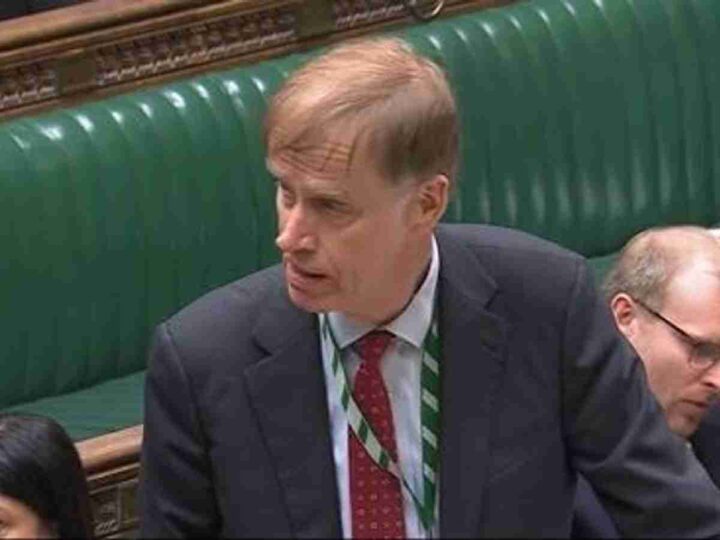

A Department for Work and Pensions (DWP) minister has refused to rule out scrapping the health element of Universal Credit for young disabled people under the age of 22.
Instead, minister of state for social security and disability Stephen Timms seemed to hint the government may already be treating it like it’s a foregone conclusion that it needs to implement the benefit cut.
DWP Universal Credit cut for under 22s: plans could still be afoot
In March 2025, then DWP boss Liz Kendall announced the plan as part of its sweeping £5bn programme in welfare cuts.
Specifically, the government floated the proposal that people under the age of 22 would no longer be eligible for the limited capability for work related activity (LCWRA) part of Universal Credit (UC).
This would have meant the DWP would strip young disabled people of £416.19 every month. Across a year, this would have resulted in a total £4,994.28 loss in the health benefit.
Of course, the DWP assesses claimants as LCWRA if they are too sick to work. Given this, there’s no conceivably justifiable reason why a disabled person under 22 should be any less eligible for this.
And plenty of respondents to the government’s own consultation published in October spelled this out in no uncertain terms. More than 3,300 people told the DWP that social security support:
should be based on need, not age.
Campaigners like Disabled People Against Cuts (DPAC) have previously lambasted the cut. The group has particularly highlighted its impact on disabled students and their future job prospects.
In November, DWP secretary Pat McFadden confirmed that the government had not yet decided whether to take its proposal forward. He told parliament that the department wouldn’t be making any firm decisions until after Alan Milburn publishes his review into young people and unemployment this “summer”.
The DWP commissioned Milburn to carry out the “independent investigation”. It aim is to explore why young people are not in employment, education, or training (so-called NEET).
Now however, Timms has kicked the can down the road further – and refused to rule out the callous cut.
Already decided? That seems likely
Speaking to parliament on Tuesday 28 April, Timms responded to a question on the plans from Labour MP Ben Coleman.
He told parliament that:
There is an urgent need to address the big rise in the number of young people not in work, education or training that took place before the last general election. We think that better support might help young people more than extra cash. Alan Milburn’s review on the NEET problem more broadly will report in September; we will wait until then to decide whether to delay access to the universal credit health element until the age of 22. If we did do that, there would need to be exceptions.
The first notable part of Timms’ reply is that he made the decision to couch his answer in the context of the supposed “big rise” in the number of young people not in work, studying, or training. That was likely a deliberate move – because straight away Timms’ was seeking to justify the government’s vile proposal.
The next part of his answer reinforces that the DWP seems to be putting the cart before the horse.
If the government is already beginning from the position that employment schemes are better than welfare, then it goes some way to confirming fears that the Milburn review will be another monumental stitch-up. It’s the DWP playbook in a nutshell. That is: manipulating disabled people’s input to back up the conclusions it has already made.
And obviously, that “summer” publication date has now morphed into “September”.
Milburn review: gearing up to manipulate results to the DWP’s advantage
And of course, this was another problem with Timms’ response more generally. Put simply, the fact that the fate of the health element for disabled people under 22 rests on the shoulders of Blairite former health secretary Alan Milburn.
As the Canary’s Rachel Charlton-Dailey pointed out, in 2024, Milburn:
authored a report which wanted disabled people to be pushed into work. The report called for the government to cut benefits except for those with “severe disabilities”. This was, of course, adopted as part of the Universal Credit Act last summer.
The same report also called for the DWP to sink its claws further into the NHS. This had the obvious aim to kick chronically ill and disabled people off their benefits and coerce them into work.
Disability News Service (DNS) noted how Milburn’s review specifically – and exclusively – targets young disabled claimants.
Timms also already tried to soften the blow with talk of “exceptions”. As such, this also hinted at a DWP that’s hell-bent on ramming through the vicious cut in one way or another.
DWP doing its usual: wrecking disabled people’s lives
To three separate written questions, Timms was similarly evasive on the DWP’s plans for the proposal.
Labour MP and a leading rebel against the benefit cuts Neil Duncan-Jordan and DUP MP Jim Shannon and probed the government on impact assessments.
Timms’ answers made apparent it hasn’t done any for the possible benefit cut. He also didn’t commit to carrying any out once the government has decided its plans.
Once again, he merely pointed to Milburn’s upcoming review. Of course, if it does introduce this, it will likely need to do an impact assessment. However, it’s probable it will be little more than a tick-box exercise. Because ultimately, the DWP will have already made up its mind.
What’s clear is that the government hasn’t given up on wrecking young disabled people’s lives just yet. Flashy-sounding youth employment schemes putting them at the mercy of profiteering corporations for paltry wages won’t level the playing field for young disabled people. And cutting financial support to young disabled claimants who can’t work to force them into these low-paying jobs is a one-way ticket to destroying their futures.
This Labour government neither wants to admit that, nor cares.
Featured image via the Canary


The EU has warned that it is ready to sanction anyone in Israel who is “aiding and abetting” the trade of Ukrainian grain, which Russia stole.
The shipment of stolen grain arrived in Haifa on a Panama-flagged vessel. It is allegedly carrying over 6,200 tonnes of wheat and 19,000 tonnes of barley. However, the ship is yet to unload.
The European Union has warned Israel that it is ready to impose sanctions on those aiding and abetting the trade of Ukrainian grain stolen by Russia in the occupied territories, after a new ship loaded with the cereal arrived in the port of Haifa.https://t.co/tW6oNoCM8k pic.twitter.com/eRSsQyXLNm
— euronews (@euronews) April 28, 2026
Importantly, though, the EU has ignored all of Israel’s war crimes for years. It has refused to sanction Israel over the illegal attacks and mass murder of Palestinians, Iranians, and Lebanese people.
The EU may sanction Israel over a boatload of grain that was allegedly stolen from Ukraine, but it won’t sanction Israel over the mass murder of Palestinian children. https://t.co/X0gqq1N0BF
— Dimitri Lascaris (@dimitrilascaris) April 28, 2026
EU Silence is complicity
It says a lot about the collective values of Western countries when the hard red line is stolen grain.
But even Ukraine has been a staunch supporter of Israel — until this point.
Now, Volodymyr Zelenskyy, the Ukrainian President, has urged Israel to turn the Russian vessel away. He said his government would start preparing “relevant sanctions”, in coordination with Europeans, against those:
attempting to profit from this criminal scheme.
The EU has already sanctioned several Russians over the theft of Ukrainian grain. Additionally, in 2024, it agreed to put tariffs on grain products from both Russia and Belarus in response to the thefts.
However, EU-level sanctions require unanimity among the 27 member states. Of course, when it comes to Israel, some EU countries, such as Germany and Italy, refuse to stand up to the genocidal terrorist state.
In response to the stolen grain arriving in Haifa, Ukraine’s foreign minister said Kyiv had summoned Israel’s ambassador.
The hard red line?
Occupation, colonisation and apartheid were not enough for the EU to take action against Israel.
So let’s get this right: apartheid Israel can commit genocide, bomb, kill, torture, starve, start wars, collectively punish, dehumanise Palestinians — war crime after war crime — and the European Union supports it all the way. But buy food from Russia, and they threaten to come… https://t.co/GwGMydJseo
— Martin L. Zinn (@MartinLZinn) April 29, 2026
Neither was a United Nations (UN) commission, which ruled that the settler-colonial state was committing genocide against Palestinians.
The EU today: “A genocide is ok but we draw the line at buying grain from Russia” https://t.co/fmxxT1JXIL
— Arnaud Bertrand (@RnaudBertrand) April 29, 2026
Or the evidence from Human Rights Watch, which verified that Israel had used White Phosphorous — an incendiary weapon that is illegal to deploy in civilian areas — over residential areas in both Southern Lebanon and Gaza.
Israel Deploys Banned White Phosphorus Bombs on Civilian Areas in South Lebanon
Israel has dropped white phosphorus munitions on civilian-populated areas in Al-Tiri, South Lebanon, in a move condemned as a violation of international law. pic.twitter.com/scW7l36raq
— Tasnim News Agency (@Tasnimnews_EN) April 26, 2026
And the ruling that Israel is deliberately depriving Gaza of food and water.
WOW! @EUCouncil finally grows a spine and threatens to sanction Israel (not for killing thousands of Palestinians, bombing Gaza to stone age, displacing and starving entire population, raping detainees etc) but for trading with Russia for some “stolen” Ukrainian grains. https://t.co/Nv5vAFcPWd
— Nusaybah (@hate_stopper) April 28, 2026
Yet the EU wants to take a stand now, over some stolen grain.
EU priorities on full display
Ready to threaten sanctions on Israel over stolen Ukrainian grain arriving in Haifa…
But months of devastation in Gaza? Total silence.
The selective outrage says it all.
Hypocrisy level: maximum.https://t.co/rnUbbFLfBN
— Sheikh Waqas Akram (@SheikhWaqqas) April 29, 2026
Does the EU really place more value on stolen grain than the lives of people in West Asia?
Decades of apartheid, ethnic cleansing and oppression and 2.5 years of genocide, war crimes and starvation weren’t enough for the EU to even issue a statement of concern.
One Russian vessel carrying grain: https://t.co/7gVB8CR38s
— Amir (@AmirAminiMD) April 28, 2026
Of course, we should now expect Israel to accuse both the EU and Ukraine of being antisemitic. And who knows, maybe the grain was also promised to Israel 3000 years ago?
Hypocrisy
In what world is it okay for the EU to greenlight Israel’s genocide but then draw the line at buying stolen grain?
The decisions by the EU are nothing short of racist.
How Palestinian lands, resources and lives stolen & annihilated by Israel?
Ultimately, Europe considers Ukrainians as human beings with rights, projecting on them an extension of itself. Palestinians are “the other”: for
they do not have the right to be protected by intl law. https://t.co/hAOcUftSYF
— Tara Riva (@tara_riva) April 29, 2026
The long and short of it is, nearly 95% of Ukrainians are white, unlike the majority of Palestinians, who are Arab.
When Russia launched its illegal invasion of Ukraine, the majority of European countries opened their doors to Ukrainian refugees.
However, Palestinians do not get the same treatment.
Both situations involve a colonial power. However, the West reacts completely differently when it’s Israel murdering brown people.
EU ready to sanction Israel on account of Ukraine, not Gaza… White lives matter more! https://t.co/NRxcmK8j9x
— Anckarström, Esq.
(@ibnkafka) April 28, 2026


Of course, the EU should sanction Israel. But it should have done that years ago.
It should not take grain being stolen by another violent and expansive country, which happens to also be a threat to Europe, for the EU to think about putting its foot down.
The EU should be prioritising human rights and international law. Instead, it places less importance on the lives of people in West Asia than it does on a boatload of grain.
Human rights are human rights — no matter the colour of someone’s skin, their religion, or where they were born.
Feature image via Al Jazeera English/YouTube
By HG
Politics
River Plate sets a new attendance record: 105 sold-out matches and 8 million fans at the Monumental


River Plate continue to cement one of the most remarkable fan phenomena in modern football, having reached 105 consecutive sold-out matches at the Monumental, a figure described as one of the longest-running in the world in terms of consistent attendance, according to reports by Football Ground Guide and Revista Deporte Mas.
Over 85,000 fans per match
River Plate’s home matches have become a fixture of consistent attendance, with an average of over 85,000 spectators per match – a figure repeated once again in the ‘Superclásico’ against Boca Juniors, according to Football Ground Guide.
This attendance figure reflects not just an exceptional match, but a consistent pattern of full capacity, following the expansion that increased the capacity of ‘El Monumental’ to over 85,000 seats, making it one of the world’s most consistently full stadiums.
River Plate — 8 million fans in 4 years
According to data published by Revista Deporte Mas, the total attendance for River Plate’s home matches since 2022 has surpassed the 8 million mark.
This figure reflects a sustained, uninterrupted level of match attendance, rather than merely seasonal peaks.
The Superclásico .. The pinnacle of the spectator experience
The Superclásico clash against Boca Juniors epitomised this phenomenon, with the stands completely full and the atmosphere reaching an exceptional level of fan engagement, in a match considered one of the most intense, well-attended and influential in world football, according to Football Ground Guide.
River Plate’s figures reveal that the club does not merely achieve high attendance figures, but creates a consistent pattern of full capacity, with the Monumental stadium becoming a venue where empty seats are unheard of.
Featured image via the Canary
By Alaa Shamali
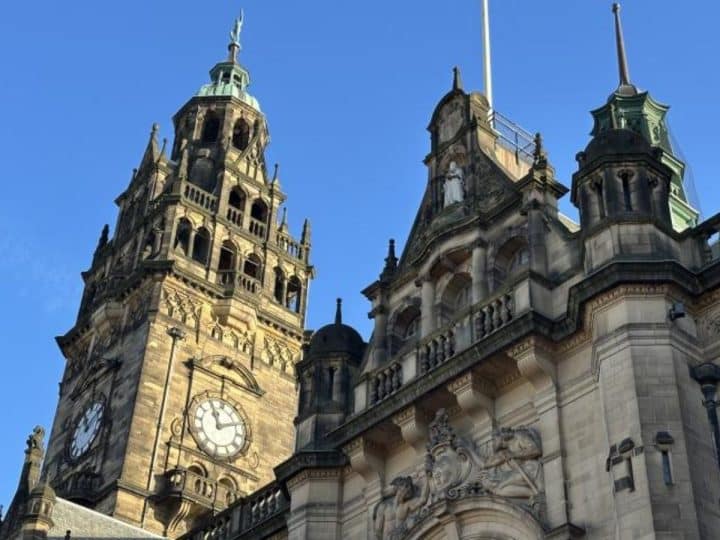

Beginning on 23 April, around 1,000 school workers across Sheffield began to receive equal pay settlements from the city council.
The payouts follow a sustained campaign from unions GMB, Unite and Unison. They recognise years of systematically underpaid work in roles which have historically been dominated by women.
The unions first highlighted the injustice to the council back in September 2023. The council then announced that it had reached a landmark agreement on pay redress in September 2025. At the time, it stated that:
The agreement will see more than 3,600 employees in the Council in around 260 roles receive a redress payment to address the historical equal pay issues. The total offers to these employees are estimated to cost around £36m. The payments to eligible employees will be funded by reserves.
The Sheffield Role Review Programme
However, on 28 April 2026, Sheffield Council told local news outlet The Star that it’s carrying out the repayment work in stages. As such, it’s currently contacting only the staff in community-maintained schools.
As such, around 1,000 workers across 38 schools recieved their repayment offers on 23 and 24 April. The council stated that the number of recipients is lower than last year’s estimate because:
Schools that have not yet completed the data assurance process or have recently converted to an academy will be included later this year, once that work is finalised.
Community-maintained schools are being treated separately from other council services, because the process needed to be tailored to work for schools.
All of the institutions fell under the remit of the Sheffield Role Review Programme, which examined payment levels in jobs with a historic majority of women staff members.
The affected jobs include teaching assistants and office workers, but not teachers themselves. Likewise, the programme reviewed all roles in the schools, regardless of whether the unions submitted a claim relating to them.
George Ayre, Unison’s organiser for the region, said:
This will affect a significant number of low-paid support staff at community schools.
It’s the result of a lengthy negotiation process to help workers who’ve experienced pay inequality.
The union will continue to deal with pay injustice wherever it occurs.
‘A real and tangible difference’
The payments will be backdated to 2018, and are set to include pension top-ups. As such, some employees could be looking at five-figure offers, in redress for 8 years of underpayment.
All being well, the money should be with the workers — 90% of whom are women — by the summer. However, the money will still be subject to national insurance and tax contributions.
GMB characterised the milestone as a “significant moment in the ongoing process” of righting historic inequalities under the council. Peter Davies, head of the union’s Regional Equal Pay Unit, said:
This week marks a powerful moment for working people in Sheffield.
For many of these workers, this money will make a real and tangible difference to their lives.
This progress reflects the collective work between GMB and Sheffield City Council to address historic inequalities.
We need to ensure that pay injustice is never again something council employees in Sheffield are forced to experience.
The process of redressing the sexist pay imbalance will be a long one, and the unions will need to be vigilant that all of the workers receive their payments in full.
However, and for now, the first wave of offers marks the culmination of years of negotiation, and a significant victory for the workers and their hard-working representatives.
Featured image via the Canary
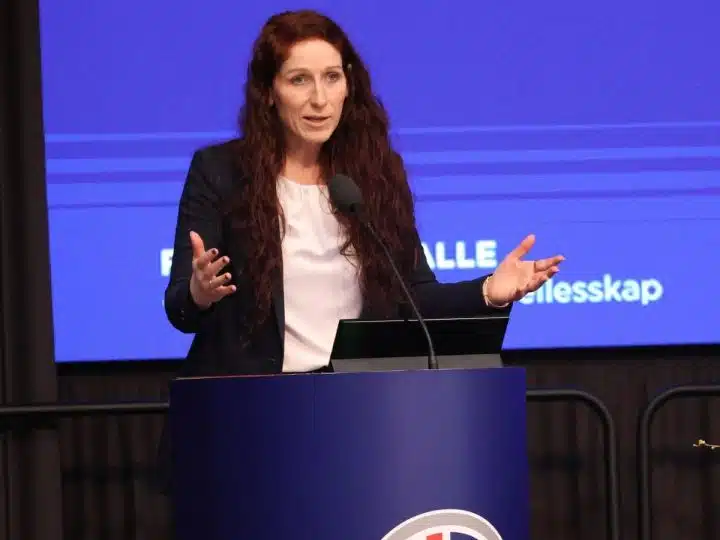

Criticism within European football circles of FIFA has intensified after the president of the Norwegian Football Association, Liz Klavenes, called for the cancellation of the ‘Peace Prize’ introduced by FIFA, which was awarded to US President Donald Trump, arguing that the move constitutes a clear breach of the principle of political neutrality.
Klavénes, who also sits on the Executive Committee of the Union of European Football Associations (UEFA), confirmed that she would raise this issue during the FIFA Congress, stressing the need for world football’s governing body to maintain a “distance” from political leaders.
FIFA ethics complaint and mounting pressure
In a notable escalation, Klavenis announced her support for an ethics complaint filed against FIFA President Gianni Infantino, over his role in awarding the trophy, amid accusations of breaching neutrality rules.
According to The Athletic, the complaint — filed by the human rights organisation Fair Square — alleges that Infantino politically promoted a public figure whilst in office, as well as awarding a politically charged prize without a clear institutional process and bypassing official structures within FIFA, including the Congress.
These findings suggest a possible breach of FIFA’s Code of Ethics, which requires its officials to maintain complete neutrality regarding political matters.
In November, FIFA announced the creation of a “Peace Prize” with the aim — according to its statement — of “honouring individuals who have performed exceptional acts to promote peace and unite peoples around the world”, without obtaining prior approval from the FIFA Council.
On 6 December, during the World Cup draw ceremony held in Washington DC, Infantino presented the award to Trump, in a move that sparked widespread controversy within sporting and political circles.
Fears of the politicisation of the game
Klavinis believes that introducing politically charged awards into the global football system threatens the independence of the game, stressing that such initiatives must be carried out within clear institutional frameworks and free from personalisation or political agendas.
She also stressed that FIFA’s credibility is linked to the extent of its commitment to the principles of transparency and governance, particularly in light of increasing international scrutiny of its decisions.
This crisis comes within a broader context of criticism directed at Infantino’s administration, which faces repeated accusations of closeness to political figures, raising questions about the international federation’s impartiality.
This issue is becoming increasingly sensitive as the 2026 World Cup in the United States, Canada and Mexico approaches, placing the relationship between politics and football under the microscope.
Featured image via UEFA
By Alaa Shamali


The trial of three young Ukrainian men facing arson charges for allegedly setting fire to property belonging to Keir Starmer is underway. The prosecution is attempting to paint a picture of Russian involvement in the attacks. Allegedly, a Russian-speaker known as ‘El Money’ paid the men to set the fires and they accepted, even though Ukraine was already at war with Russia.
Not only is the issue of motive for a Russian paying Ukrainians to target a UK PM helping Ukraine not being addressed, prosecution barrister Duncan Atkinson has told the jury that it’s none of their business:
It is no part of your considerations to decide who ‘El Money’ is and what reason he might have had to co-ordinate the actions of these defendants against these properties and this car associated with the prime minister.
The court has heard that police extracted data from the defendants’ phones and searched it by key terms, contacts and locations. But although the information was put into a timeline for the case, Atkinson said that the timeline might not match exact timings of the events. He told jurors that the information extracted includes “images and video of the three locations” of the arson attacks.
The defendants were also said to have used the Telegram encrypted messaging app, which “in many cases” meant police could only recover half of the conversations because of automatic or manual deletions.
Starmer’s property that was attacked included a RAV4 car, a house in Ellington Street managed by a company of which Starmer had been a director and shareholder and a house in Countess Road that he still owns. Allegedly, the accused bought supplies from B&Q for the attacks.
All three deny the charges.
Featured image via the Canary
By Skwawkbox

Arsenal, Atletico Madrid share draw after penalty drama in Champions League semi-final

NYT Strands hints and answers for Thursday, April 30 (game #788)

Amazon beats quarterly cloud growth estimates on strong AI demand; AWS revenue jumps 28%

Manchester United reach agreement with Casemiro over contract clause amid transfer speculation

US brings back mandatory military draft registration

Steven Gerrard disagrees with Gary Neville over ‘shock’ Chelsea and Arsenal claim | Football


-

 Tech2 days ago
Register Renaming | Hackaday
-

 Fashion5 days ago
Weekend Open Thread – Corporette.com
-
 Crypto World4 days ago
Hyperliquid $HYPE Rally Builds Momentum as AI Sector Enters Prove-It Phase
-

 Business6 days ago
Patterson-UTI Energy, Inc. (PTEN) Q1 2026 Earnings Call Transcript
-
 Sports3 days ago
IPL 2026: Ruturaj Gaikwad registers slowest fifty of the season, enters all-time unwanted list | Cricket News
-

 Politics2 days ago
Drax board avoid their own AGM, accused of greenwashing & environmental racism
-

 NewsBeat4 days ago
LK Bennett closes all stores after entering administration
-

 Crypto World6 days ago
Michael Saylor says BTC winter is over. Market analyst disagrees, says bitcoin was in a pullback
-
 Sports7 days ago
Tim Bradley names the current best in the world: “Better than Inoue and Usyk”
-

 Fashion1 day ago
Kylie Jenner’s KHY Enters a New Era with ‘Born in LA’
-
Entertainment7 days ago
Michael B. Jordan and Austin Butler's “Miami Vice” movie will bring the action back to the '80s
-
 Entertainment4 days ago
Mariah Carey Slams Deposition Claims In Brother’s Lawsuit
-
Business7 days ago
Altimmune prices $225 million public offering at $3 per share
-
Entertainment7 days ago
Russell Brand Had Sex With 16 Year Old When He Was 30
-
Crypto World6 days ago
Is Algorand One of the Few Quantum-Resistant Blockchains? Here’s What the Data Shows
-

 Business1 day ago
Most Commercial Energy Audits Miss the Real Losses
-
 NewsBeat6 days ago
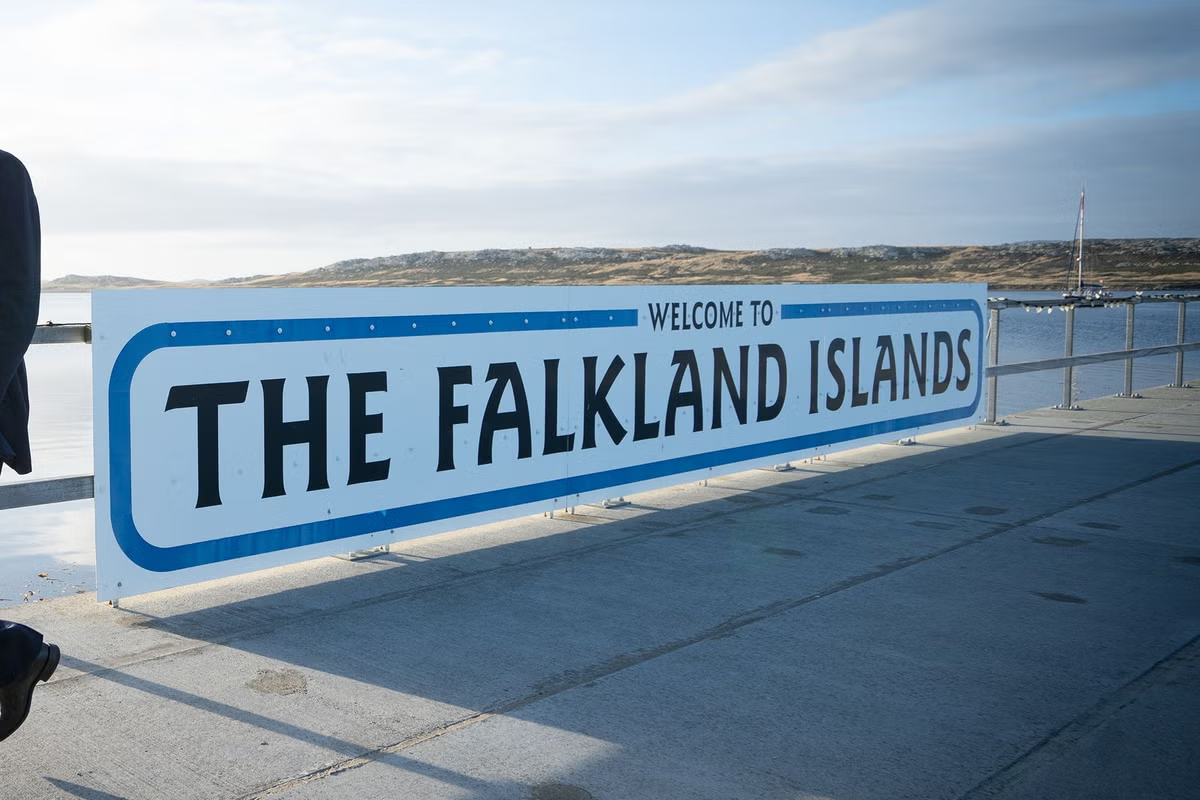
Trump threatens to review UK’s claim to Falkland Islands and punish Nato allies over Iran war disagreement
-

 Business7 days ago
SL Green Realty: Dividend Cut And Record Leasing Fuel Their Potential Recovery
-

 Sports6 days ago
2026 NFL Draft tonight: Time, TV channel, where to watch, order
-

 Tech2 days ago
Images of Samsung’s rumored smart glasses have leaked
You must be logged in to post a comment Login