Foldable smartphones have matured dramatically by April 2026, shedding much of their early bulk and fragility to become practical daily drivers with improved durability, battery life and multitasking capabilities. Leading models from Samsung, Google, Motorola and others now compete closely with traditional flagships while offering the unique appeal of a compact device that unfolds into a mini-tablet or stylish flip form factor.
Industry analysts and reviewers from outlets including PCMag, PhoneArena, ZDNet and Wirecutter highlight a clear top tier based on hands-on testing, real-world performance and value. While availability varies by region — with some Chinese brands like Honor and Oppo offering exceptional hardware but limited U.S. support — the following five stand out as the best foldable phones currently on the market.
Samsung Galaxy Z Fold 7
1. Samsung Galaxy Z Fold 7 — Best Overall Book-Style Foldable
Samsung’s Galaxy Z Fold 7 earns frequent nods as the top foldable for most users thanks to its ultra-slim profile, premium build and polished software experience. Measuring just over 8mm thick when closed and weighing around 215 grams, it feels remarkably close to a conventional flagship yet unfolds into an expansive 8-inch inner display ideal for productivity, media consumption and split-screen multitasking.
The device features a bright 6.5-inch cover screen with 120Hz refresh rate, allowing full app functionality without unfolding. Powered by the Snapdragon 8 Elite for Galaxy processor, it delivers smooth performance across demanding tasks. Cameras have seen meaningful upgrades, with a standout 200-megapixel main sensor producing sharp, vibrant photos that rival non-foldable competitors.
Advertisement
Reviewers praise the refined hinge, improved crease visibility and long software support extending years into the future. Drawbacks include a premium price tag often starting near $1,900 and average battery life that may require midday top-ups for heavy users. Still, its ecosystem integration with Galaxy Watch, Buds and DeX mode makes it a compelling choice for Samsung loyalists and power users alike.
2. Google Pixel 10 Pro Fold — Best for Durability and Cameras
Google’s Pixel 10 Pro Fold stands out for its rugged construction and photography prowess. It boasts a full IP68 dust and water resistance rating — a rarity among foldables — along with enhanced hinge durability and drop protection on the main display. At roughly 258 grams, it feels more substantial than Samsung’s offering but rewards owners with reliable all-day performance.
The Tensor G5 chipset powers intuitive AI features, including real-time call translation, audio magic eraser and Gemini Live integration. Cameras shine with computational photography that delivers natural colors and excellent low-light results, making it a favorite for content creators. The 6.3-inch cover screen and large inner display support seamless multitasking with clean Android 16 software.
Advertisement
Battery life impresses in testing, often outlasting slimmer rivals. Pricing starts around $1,800, positioning it as a strong value for those prioritizing longevity and photography over the absolute thinnest design. Limitations include slightly warmer performance under sustained loads compared to Snapdragon-equipped devices.
3. Motorola Razr Ultra (2025/60 Ultra) — Best Flip-Style Foldable
For users seeking pocketable convenience with flair, the Motorola Razr Ultra delivers one of the most stylish and functional clamshell experiences. Its vertical fold design snaps shut into a compact square, while the generous external display supports full apps, notifications and even quick camera previews.
Equipped with strong battery life that frequently tops competitor flip models, the Razr Ultra handles daily tasks efficiently on its Snapdragon processor. The inner 7-inch display offers smooth 120Hz visuals, and the overall build feels premium with thoughtful details like a titanium hinge option in select variants. Cameras perform adequately for casual use, though they trail book-style models in versatility.
Advertisement
Reviewers highlight its fun factor and practicality for one-handed operation. Starting prices often land in the mid-$1,000 range, making it more accessible than premium book-style foldables. Potential downsides include a smaller unfolded screen compared to tablet-style devices and occasional software quirks in the Motorola skin.
4. Samsung Galaxy Z Flip 7 — Best Compact Flip for Everyday Use
Samsung’s Galaxy Z Flip 7 refines the flip formula with a larger 4.1-inch edge-to-edge cover screen that finally enables meaningful interaction without unfolding. The 6.9-inch inner display provides ample space when needed, while the overall design remains slim and lightweight for easy pocket carry.
Battery improvements help it last through a full day for moderate users, and the Exynos 2500 or Snapdragon variant (depending on region) ensures snappy performance. New DeX support on the Flip adds desktop-like productivity when connected to external displays. Cameras remain solid for social media and quick shots, with the main 50-megapixel sensor delivering reliable results.
Advertisement
Priced starting around $1,100, it offers strong value within the Samsung ecosystem. Critics note it can overheat during intensive multitasking and that battery claims sometimes exceed real-world endurance. Its stylish appeal and improved cover screen functionality make it a top pick for fashion-conscious users or those transitioning from traditional bar phones.
5. Honor Magic V5 — Best Ultra-Thin Alternative for Multitasking
The Honor Magic V5 earns acclaim for its exceptionally slim design, measuring under 9mm folded and around 4.4mm unfolded in some configurations. It targets users who want a near-nonexistent crease and premium feel without Samsung’s ecosystem lock-in.
Featuring a large inner display and capable outer screen, it excels at multitasking with smooth software optimizations. The Snapdragon 8 Elite processor paired with generous RAM handles heavy workloads, while a sizable silicon-carbon battery supports fast charging and extended use. Cameras offer competitive performance, particularly in daylight scenarios.
Advertisement
Availability may require importing in some markets, and software updates could lag behind Google or Samsung. Still, its combination of thinness, battery capacity and vibrant displays positions it as a compelling choice for enthusiasts seeking cutting-edge hardware at potentially competitive pricing.
Buying Considerations in 2026
Foldable phones now address many early criticisms: creases are subtler, hinges more robust and repair programs more widespread. Most top models promise four to seven years of software support, reducing obsolescence concerns. Battery technology has advanced, though heavy multitasking or camera use still drains power faster than slab phones.
Prices remain elevated, with book-style models often exceeding $1,800 and flips starting above $1,000. Trade-in deals, carrier promotions and installment plans can ease the cost. Buyers should consider ecosystem preferences — Samsung for seamless integration, Google for pure Android and AI, Motorola for flip charm.
Advertisement
Durability has improved markedly, but users should invest in quality cases and screen protectors. Coverage for accidental damage varies by manufacturer and carrier.
Regional factors matter: U.S. buyers enjoy broad carrier support for Samsung, Google and Motorola models, while international shoppers may access superior specs from Honor, Oppo, Vivo or Huawei at lower prices, albeit with potential Google service limitations on some devices.
The Future of Foldables
As 2026 progresses, expectations include further refinements such as even lighter builds, under-display cameras that eliminate notches and possible trifold designs from Samsung and others reaching wider markets. Apple’s rumored foldable iPhone could reshape the segment later in the year or in 2027.
Advertisement
For now, the market offers something for nearly every preference: productivity powerhouses, stylish compacts and durable all-rounders. Early adopters who hesitated in previous years will find 2026 models far more refined and reliable.
Consumers weighing a purchase should evaluate their primary needs — screen size for work, portability for travel or camera quality for photography — and test devices in-store when possible. With rapid iteration, waiting for carrier deals or next-generation hints may also pay off.
Foldables represent more than a novelty in 2026; they deliver genuine utility that enhances how many people work, create and consume content on the go. Whether opting for the versatile Galaxy Z Fold 7, the rugged Pixel 10 Pro Fold or a fun flip like the Razr Ultra, buyers are investing in devices that continue to evolve the smartphone experience.
Project will be formed from three metal steel storage containers
Chris Gee and Local Democracy Reporter
16:00, 21 Apr 2026
Temporary blocks have been installed at the site to house visiting monks
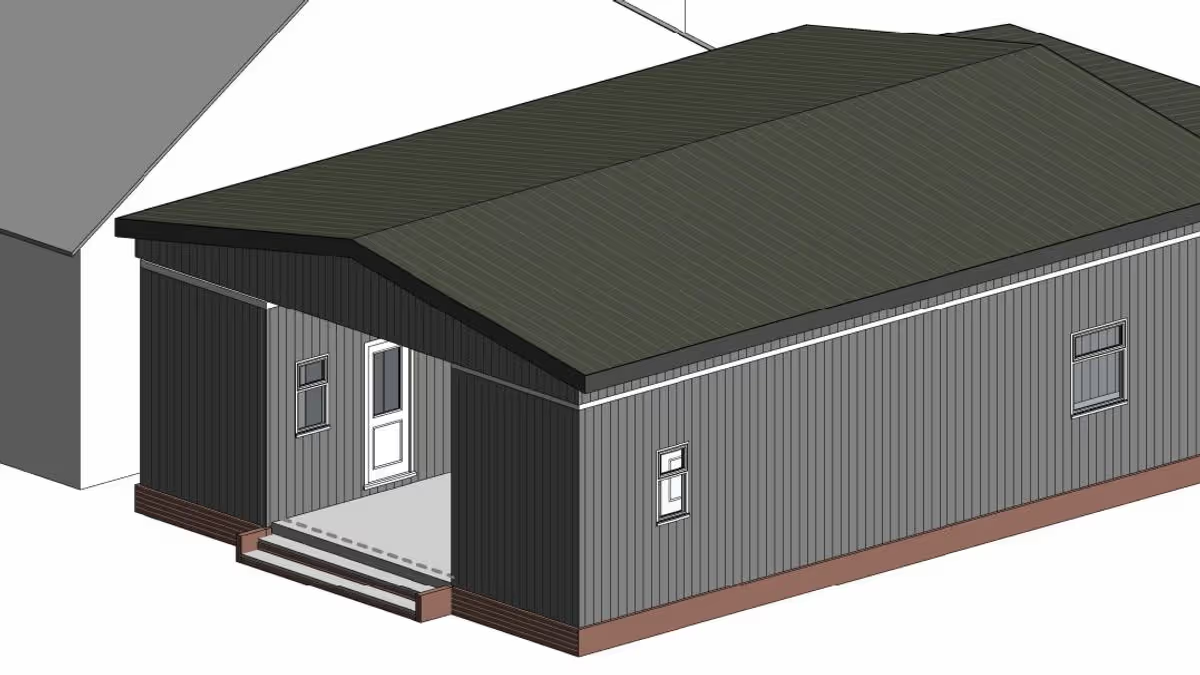
Plans have been submitted for blocks to house monks at a Thai Buddhist temple on the outskirts of Bolton. The Wat Sriratanaram temple and monastery, Moss Lane, Kearsley, was created in 2016 at the former clubhouse of Manor Golf Club.
Advertisement
Recently submitted, retrospective plans published by Bolton council, seek to formalise the erection of ‘temporary monk accommodation, including people visiting from Thailand’.
A design and access statement, published in support of the plans, said: “The proposal will provide temporary overnight accommodation for up to 12 monks at any one time.
“The accommodation has been formed from the conversion of three metal steel storage containers which have been linked together in a u-shape to form basic overnight accommodation for visiting monks including showers and toilets.
“The buildings are situated on a raised plinth with doors and windows cut out of the steel to form openings.”
Advertisement
The supporting documents said the building is single storey formed from metal storage containers with a central communal area.
Five separate sleeping areas and six separate toilets and five shower units are provided in the building.
In 2016, permission was granted to use the golf club as a Buddhist temple with four monks residing at the property on a full time basis.
The plans also included an indoor meditation and ceremony area.
Advertisement
The application states that the development use is consistent with the land being in the green belt.
The Bolton monastery was created in 2016
The supporting statement, produced by Ashall Town Planning said: “The proposal which is to provide basic overnight monk accommodation including people visiting from Thailand, ancillary to the existing Wat Sriratanaram temple is considered to conform with relevant planning policies.
“While an unusual form of development, no material harm is caused to the general surrounding area.”
Bolton council will make a decision on the plans in the coming weeks.
Advertisement
To find all the planning applications, traffic diversions, road layout changes, alcohol licence applications and more in your community, visit the Public Notices Portal.
Rachel Reeves has tightened the squeeze on renewable energy generators, raising the windfall tax on wind and solar producers from 45 per cent to 55 per cent in a move the Chancellor insists will stop the sector “cashing in” on the latest Middle East oil and gas shock.
The increase to the electricity generators levy (EGL), announced on Tuesday, has been timed to land alongside a sweeping set of power market reforms from Ed Miliband, the Energy Secretary, designed to “break the link” between volatile gas prices and the cost of electricity paid by households and businesses.
For Britain’s small and medium-sized employers, still nursing the scars of the 2022 energy crisis, the stakes could scarcely be higher. Industry figures, however, have been quick to brand the package a “sham”, warning it risks locking consumers and businesses into higher bills for decades and chilling the investment climate for renewables just as ministers are trying to court record capital inflows.
Under the existing system, many wind and solar farms still sell power on the wholesale market while drawing a top-up subsidy through the legacy renewables obligation (RO) scheme. The Treasury’s new design offers a carrot alongside the stick: generators who voluntarily switch to fixed-price contracts for difference (CfDs) will be exempt from the higher levy.
Ministers argue this will decouple renewables revenues from wholesale electricity prices, which are still set by the most expensive marginal plant on the system — almost invariably gas. Under the current merit-order pricing, even when the vast majority of power is coming from wind or solar, all generators are paid the gas-set price whenever a gas plant is called on.
Advertisement
“Hardworking British families and businesses should not bear the brunt of global gas price shocks while electricity generators are making exceptional profits,” Ms Reeves said. She added that moving generators onto CfDs, combined with the 55 per cent levy, would “offer households and businesses stronger protection against future energy shocks”.
But the numbers lay bare why the voluntary switch may prove a hard sell. An RO certificate is currently worth £69.34. An onshore wind farm under the RO receives one certificate per megawatt hour (MWh) generated, on top of the wholesale price. At 5pm on Monday, with wholesale prices at £99 per MWh, that produced a total return of £168.43 per MWh. Offshore wind, which earns up to 1.9 certificates per MWh, could have banked as much as £230.75 per MWh at the same moment.
One senior energy industry source warned that handing such generators fresh 20-year CfDs on top of their existing RO entitlements amounted to a “double subsidy”, and could keep consumer bills elevated well beyond the RO’s planned 2027-to-2037 phase-out.
Dale Vince, the green energy entrepreneur and Labour donor, went further. “The Government are not breaking the link. I’m very disappointed with that,” he said. “Something real has to be done because we’re in the second energy crisis of this decade.”
Advertisement
Kathryn Porter, the independent energy analyst, cautioned that the levy could also hasten the retirement of Britain’s ageing nuclear fleet, which falls within the windfall tax’s scope. “The whole thing is a mess. This entire plan might end up smoothing costs at a higher level than they are now,” she said.
Tara Singh, chief executive of RenewableUK, struck a more diplomatic note, saying the industry supported weakening the gas-electricity link and would “work constructively” with officials. But she warned that investor confidence was on the line. “At a time when ministers are hoping to attract record levels of investment into renewables, uncertainty over changes to taxation needs to be clarified immediately so it does not drive up the cost of investment.”
Ministers also signalled they would tackle the rising sums paid to wind farms to switch off when grid capacity is constrained, a cost ultimately borne by bill-payers, including the nation’s 5.5 million SMEs.
For Mr Miliband, the wider message is a political one. “As we face the second fossil fuel shock in less than five years, the lesson for our country is clear,” he said. “The era of fossil fuel security is over, and the era of clean energy security must come of age.”
Advertisement
The Government will now consult on the detail of the market overhaul. For British business owners watching their energy bills with nervous eyes, the question is no longer whether reform is needed, but whether Ms Reeves and Mr Miliband have hit on the right formula, or merely swapped one distortion for another.
Jamie Young
Jamie is Senior Reporter at Business Matters, bringing over a decade of experience in UK SME business reporting.
Jamie holds a degree in Business Administration and regularly participates in industry conferences and workshops.
When not reporting on the latest business developments, Jamie is passionate about mentoring up-and-coming journalists and entrepreneurs to inspire the next generation of business leaders.
The retailer looks set to beat market expectations when it publishes preliminary results later this year
Gear4Music says it has made progress with a growth strategy.(Image: Birmingham Post and Mail)
Online instrument shop Gear4Music has hailed “excellent” trading as reports a 30% surge in sales.
The York-based retailer saw total sales rise 30% in the year to the end of March, with pre-tax profits up £9.7m from £1.6m the year before. The year-end trading update has beaten market expectations for the London Stock Exchange-listed firm.
Bosses there said the strong revenue growth has continued into the 2027 financial year with a new warehouse lease agreed that will expand capacity for the UK’s largest online seller of guitars, keyboards and other musical equipment.
Andrew Wass, Gear4Music executive chair, pointed to strong revenue growth in the final quarter of the 2026 financial year and credited a new growth strategy announced in June 2024 as the driver.
Advertisement
He added: “We also note that, despite £3.6m of deposits paid in Q4 FY26 in relation to the fit-out of our new UK warehouse, net bank debt has reduced for a fourth consecutive year to £5m. The lease for the new UK warehouse completed as scheduled on April 1, 2026, with fit-out works now underway and progressing on schedule and within budget.
“The new facility will provide the additional capacity and efficiency required to support future UK growth, and as previously reported the total fit-out costs for FY27 are expected to be £10.2m.
“During Q4 FY26, we successfully delivered several significant new technical development projects, including the launch of an AI-based inventory forecasting and purchasing platform, a digital promotions centre enabling more targeted customer incentives, and a website AI chatbot providing product information and advice.
“These developments are already supporting further growth. As previously announced, revenue growth accelerated from mid-March 2025 and notwithstanding more challenging year-on-year comparatives, strong revenue growth has continued into April 2026.
Advertisement
“Whilst it remains early in the financial year and the board has not yet made any changes to FY27 forecasts, it remains confident that the business will build on the substantial financial progress achieved in FY26. Trading in FY27 to date is in line with consensus market expectations.”
Splits in key political parties Shiv Sena and NCP have made the battle for the 48 Lok Sabha seats in Maharashtra more interesting, besides the focus on traditional issues like unemployment and farmer suicides. Lok Sabha polls in Maharashtra will be held in five phases on April 19, April 26, May 7, May 13 and May 20. Counting of votes will be held on June 4.
The BJP-Shiv Sena won 41 of the 48 seats in the 2019 polls, but the Sena has split since and a vast majority of the Bal Thackeray-founded party is now allied with the BJP. The Nationalist Congress Party also split as well with Ajit Pawar joining the ruling alliance in the state, led by Eknath Shinde. In the 2019 Lok Sabha polls, the BJP emerged the top party with 23 seats, followed by the undivided Sena with 18. The undivided NCP had emerged victorious on four seats, the Congress one, while the AIMIM and an Independent accounted for the remaining two.
A total of 9.2 crore persons, including more than 50,000 centenarians, are eligible to exercise their franchise in the ensuing Lok Sabha elections in Maharashtra, an increase of 34 lakh from 2019. Here is how the political landscape in various regions of Maharashtra looks like ahead of the ensuing Lok Sabha elections.
Konkan: The coastal region of the state includes Mumbai, the country’s commercial capital with six highly urbanised Lok Sabha seats, where issues include woes related to transportation, housing and jobs. The BJP-Sena had won 12 of the 13 seats in the region in 2019. While the Shiv Sena (UBT) could attract some sympathy post the split, other issues all parties will have to contend with are plans to construct a massive refinery and nuclear power plant in Ratnagiri area and a mega port in Vadhavan near Dahanu in Palghar.
Western Maharashtra: One of the most developed regions in the state, it is home to industrial cities with information technology hubs as well as sugar mills, ethanol plants and agri-rich rurban (land on the edge of a town or city, on which new housing and businesses are being built) pockets. The region receives ample rainfall but unequal distribution of water among various areas has been a traditional bone of contention. The split in the NCP, a strong contender in the region, and the Shiv Sena means the upcoming polls will ensure focus on candidates as much as party ideology due to fresh realignments. In the 209 polls, the BJP won five seats, while the Shiv Sena and the Sharad Pawar-founded Nationalist Congress Party won three each from this region.
Advertisement
Live Events
North Maharashtra: This region is among the country’s top sources of grapes and onions, making it a hotbed for discontent in connection to changes in export-import policies for farm produce. Inadequate or unseasonal rainfall is another bugbear that can change the discourse. The region has a significant population of tribals and backward segments. In the 2019 polls, the BJP-Shiv Sena won all six seats in the region. Marathwada: The region is infamous for lack of adequate rainfall, which has left it under-developed when compared to other parts of Maharashtra, leading to unemployment woes. Unseasonal rains and crop loss are annual phenomena, resulting in sharp surges of discontent among farmers. Apart from the industrial hub of Chhatrapati Sambhajinagar (formerly Aurangabad), the rest of the region is rural and lacks basic amenities. Speedy highway construction has boosted transportation. In 2019, the BJP won four Lok Sabha seats, followed by three for its ally Shiv Sena.
The Aurangabad seat was won by the Asaduddin Owaisi-led AIMIM. Maratha quota activist Manoj Jarange hails from Marathwada and has a following in the region as was seen during many of his protests in the last few months. Vidarbha: Blessed with abundant natural resources and forests, the region in the eastern part of the state, however, has been in limelight for farmer suicides.
Left Wing Extremism is also a problem in some parts, mainly in Gadchiroli. There are also problems of human-wildlife conflicts in districts like Chandrapur, home to a sizable number of tigers. Soybean and cotton produce not fetching good returns could lead to agricultural distress in the region.
Moreover, several MP’s from the area were those who retained their seats, which means they may face anti-incumbency in the 2024 Lok Sabha polls. Of the 11 Lok Sabha seats in Vidarbha, the BJP won five, Shiv Sena three, while Congress and an Independent emerged victorious on one seat each in the last elections.
The North East firm has acquired Par 59, set up four years ago in a joint venture with footballer Gareth Bale
15:02, 21 Apr 2026Updated 15:07, 21 Apr 2026
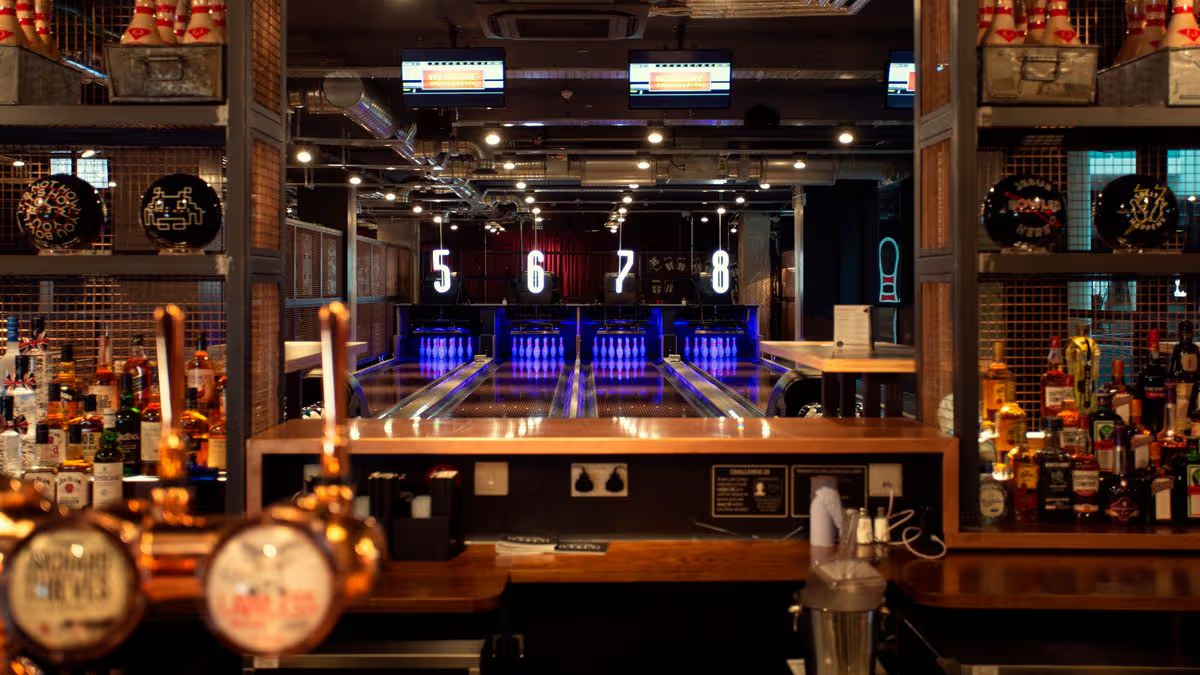
A Lane7 bar showing a number of bowling lanes. (Image: Lane7)
Boutique bowling alley firm Lane7 has expanded with the acquisition of sites in Cardiff and Bristol.
The North East-based group, which already has sites across the country, has acquired mini golf, darts and shuffleboard business Par 59 in an undisclosed deal. Lane7 will close the Cardiff venue for refurbishment, before reopening under its own brand, while the Bristol premises will continue to trade as Par 59.
Advertisement
It was formed as a partnership between Elevens Group, co-owned by football star Gareth Bale and Jamie Humphrys, and Depot, launching in March 2022. It added the mini golf, food and drink concept to Cardiff city centre where it helped repurpose the long-vacant St Mary Street site before growing further with the addition of the upstairs ‘Shuffles’ bar space in 2023.
It also expanded into Bristol, on Millennium Promenade. Announcing the move, Elevens Group said it will now focus on other opportunities and continue to run its Elevens Bar & Grill on Castle Street, while Depot will continue its investment in Cardiff’s live music and events scene through its 2,000-capacity venue, plus events staged through Depot Live at Cardiff Castle and Blackweir Fields.
Jamie Humphrys, co-owner of Elevens Group, said: “Par 59 has been a brilliant part of Cardiff’s hospitality scene over the last few years, and we’re incredibly proud of what was created there in partnership with Depot. From day one, the aim was to bring something fun, high-quality and genuinely exciting into the city centre, and it’s been fantastic to see so many people come through the doors and enjoy it with us.
Par59’S Cardiff venue.(Image: Par59)
“I’d like to thank everyone involved in the venue – including Gareth, the staff and customers – and everyone who supported Par 59 along the way. We’re proud of what the brand achieved, and this felt like the right time to hand it on.”
Advertisement
Nick Saunders, founder of Depot said: “Together with Elevens Group, we built a brand with real momentum in Cardiff and Bristol, but the opportunity to sell came at the right time for all parties. For Depot, it allows us to stay focused on the areas where we see the biggest opportunity for growth and impact, particularly live music, major events and large-scale experiences in Cardiff. We remain hugely ambitious about what we’re building, and proud of the role Par 59 has played in that wider story.”
Gavin Hughes, managing director of Lane7 Group, said: “Par 59 is a strong business with two well-established sites, and we’re pleased to be taking it forward in Bristol whilst expanding our Lane7 brand in Cardiff. We believe our differentiated positioning puts us in a strong position to continue making the most of opportunities like these, which we expect to continue over the next 24 months as the market matures and consolidates further.”
Last summer, Darlington-based Lane7 opened two sites in Newcastle, in the former Lofts and Hustle bar and nightclub at The Gate, as well as ML7, at Monument Mall. It launched its first bowling alley in Newcastle in 2013, on St James’ Boulevard and has since expanded across the UK with 13 other sites in cities including, Liverpool, Bristol, Edinburgh, Manchester and Sheffield.
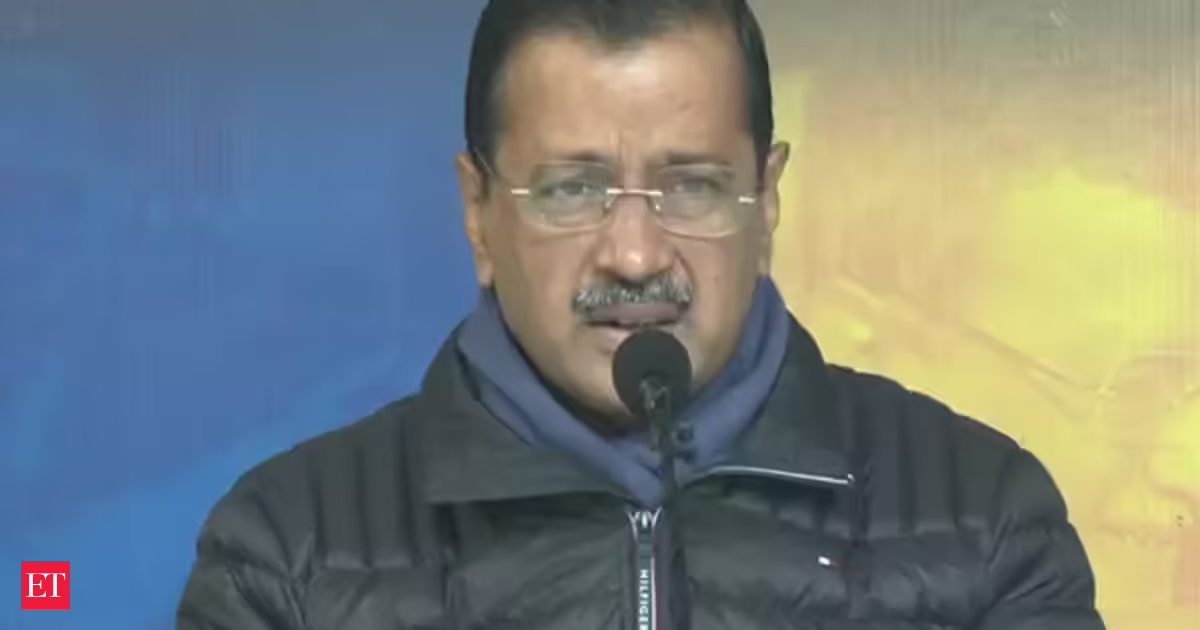
New Delhi: The BJP on Sunday accused AAP supremo Arvind Kejriwal of orchestrating hoax calls to mislead voters across constituencies, including the New Delhi constituency, claiming that their were “cancelled” by the BJP. Addressing a press conference, BJP MP Parvesh Verma played an audio recording of one such call, in which a person was heard saying, “Your vote has been cut by the BJP. AAP will ensure you get your vote back,” and urged the receiver to support the Aam Aadmi Party.
“Hoax calls are being made to the public, saying that BJP will end all AAP schemes. This is a blatant lie,” he said.
He also wondered how “confidential voter data” was accessed by the party.
“Other than the Election Commission of India, this data is not provided to anyone. How did Kejriwal get the voters’ contact list? This must be inspected,” Verma said.
The BJP’s New Delhi candidate for the Assembly election also alleged the AAP of distributing Rs 500 wrapped in a calendar in the slum areas. He claimed three people were arrested in this regard.
Advertisement
Live Events
There was no immediate reaction from the AAP on the allegations, nor from Delhi Police. He said he has filed a complaint with the Election Commission and his party demands an investigation into the matter. BJP leader and party spokesperson Sudhanshu Trivedi, who was also present at the press conference, welcomed the US Supreme Court’s decision to extradite to India Tahawwur Rana, an accused in the 2008 Mumbai terror attacks.
“Under Modi’s leadership, the government remains committed to fighting terrorism. The decision to hand over Tahawwur Rana to India is a welcome one for all of us,” Trivedi said.
Trivedi accused the AAP and Congress of supporting activities that indirectly shield terrorism.
“Atishi’s parents were among those seeking a ‘shama yajna’ (forgiveness ritual) for Afzal Guru,” he alleged, referring to the mastermind of the 2001 Parliament attack.



























































You must be logged in to post a comment Login