
Business
Lok Sabha election 2024: Maharashtra get interesting after splits in Shiv Sena, NCP


The BJP-Shiv Sena won 41 of the 48 seats in the 2019 polls, but the Sena has split since and a vast majority of the Bal Thackeray-founded party is now allied with the BJP. The Nationalist Congress Party also split as well with Ajit Pawar joining the ruling alliance in the state, led by Eknath Shinde. In the 2019 Lok Sabha polls, the BJP emerged the top party with 23 seats, followed by the undivided Sena with 18. The undivided NCP had emerged victorious on four seats, the Congress one, while the AIMIM and an Independent accounted for the remaining two.
A total of 9.2 crore persons, including more than 50,000 centenarians, are eligible to exercise their franchise in the ensuing Lok Sabha elections in Maharashtra, an increase of 34 lakh from 2019. Here is how the political landscape in various regions of Maharashtra looks like ahead of the ensuing Lok Sabha elections.
Konkan: The coastal region of the state includes Mumbai, the country’s commercial capital with six highly urbanised Lok Sabha seats, where issues include woes related to transportation, housing and jobs. The BJP-Sena had won 12 of the 13 seats in the region in 2019. While the Shiv Sena (UBT) could attract some sympathy post the split, other issues all parties will have to contend with are plans to construct a massive refinery and nuclear power plant in Ratnagiri area and a mega port in Vadhavan near Dahanu in Palghar.
Western Maharashtra: One of the most developed regions in the state, it is home to industrial cities with information technology hubs as well as sugar mills, ethanol plants and agri-rich rurban (land on the edge of a town or city, on which new housing and businesses are being built) pockets. The region receives ample rainfall but unequal distribution of water among various areas has been a traditional bone of contention. The split in the NCP, a strong contender in the region, and the Shiv Sena means the upcoming polls will ensure focus on candidates as much as party ideology due to fresh realignments. In the 209 polls, the BJP won five seats, while the Shiv Sena and the Sharad Pawar-founded Nationalist Congress Party won three each from this region.

North Maharashtra: This region is among the country’s top sources of grapes and onions, making it a hotbed for discontent in connection to changes in export-import policies for farm produce. Inadequate or unseasonal rainfall is another bugbear that can change the discourse. The region has a significant population of tribals and backward segments. In the 2019 polls, the BJP-Shiv Sena won all six seats in the region.
Marathwada: The region is infamous for lack of adequate rainfall, which has left it under-developed when compared to other parts of Maharashtra, leading to unemployment woes. Unseasonal rains and crop loss are annual phenomena, resulting in sharp surges of discontent among farmers. Apart from the industrial hub of Chhatrapati Sambhajinagar (formerly Aurangabad), the rest of the region is rural and lacks basic amenities. Speedy highway construction has boosted transportation. In 2019, the BJP won four Lok Sabha seats, followed by three for its ally Shiv Sena.
The Aurangabad seat was won by the Asaduddin Owaisi-led AIMIM. Maratha quota activist Manoj Jarange hails from Marathwada and has a following in the region as was seen during many of his protests in the last few months. Vidarbha: Blessed with abundant natural resources and forests, the region in the eastern part of the state, however, has been in limelight for farmer suicides.
Left Wing Extremism is also a problem in some parts, mainly in Gadchiroli. There are also problems of human-wildlife conflicts in districts like Chandrapur, home to a sizable number of tigers. Soybean and cotton produce not fetching good returns could lead to agricultural distress in the region.
Moreover, several MP’s from the area were those who retained their seats, which means they may face anti-incumbency in the 2024 Lok Sabha polls. Of the 11 Lok Sabha seats in Vidarbha, the BJP won five, Shiv Sena three, while Congress and an Independent emerged victorious on one seat each in the last elections.



JR Research is an opportunistic investor. I was recognized by TipRanks as a Top Analyst, and also by Seeking Alpha as a “Top Analyst To Follow” for Technology, Software, and Internet, as well as for Growth and GARP. I identify attractive risk/reward opportunities supported by robust price action to potentially generate alpha well above the S&P 500. My picks have consistently demonstrated market outperformance over time. My approach combines timely and sharp price action analysis with fundamentals as my foundation. I also tend to avoid overhyped and overvalued stocks while capitalizing on battered stocks with significant upside recovery possibilities. I run the investing group Ultimate Growth Investing which specializes in identifying high-potential opportunities across various sectors. My main ideas revolve around stocks with strong growth potential, and also well-beaten contrarian plays. I designed the group for investors seeking to capitalize on growth stocks with solid fundamentals, robust buying momentum, and appealing turnaround plays to generate alpha consistently. Learn more
Analyst’s Disclosure: I/we have a beneficial long position in the shares of NOW, IGV, NVDA, PLTR, CRM, MSFT either through stock ownership, options, or other derivatives. I wrote this article myself, and it expresses my own opinions. I am not receiving compensation for it (other than from Seeking Alpha). I have no business relationship with any company whose stock is mentioned in this article.
Seeking Alpha’s Disclosure: Past performance is no guarantee of future results. No recommendation or advice is being given as to whether any investment is suitable for a particular investor. Any views or opinions expressed above may not reflect those of Seeking Alpha as a whole. Seeking Alpha is not a licensed securities dealer, broker or US investment adviser or investment bank. Our analysts are third party authors that include both professional investors and individual investors who may not be licensed or certified by any institute or regulatory body.
Business
How Does This $40.3 Million Birwood Heights Financing Arrangement Benefit Marcus & Millichap’s (MMI)

Marcus & Millichap’s (NYSE:MMI) capital markets arm, IPA Capital Markets, secured a financing arrangement amounting to $40.3 million for Birwood Heights. Based in San Antonio, Texas, this 312-unit apartment complex is comprised of one-, two-, and three-bedroom apartments, and offers various shared amenities such as fitness studio, lounges, outdoor grilling, and resort-style pool. The residences contain attractive features including stainless steel appliances, granite countertops, kitchen islands, and more.

Brian A Jackson/Shutterstock.com
Non-Recourse Bridge Loan for Sunbelt Multifamily Property
With an initial term of three years, this non-recourse bridge financing arrangement carries a 6.45% stabilized debt yield. The underlying proceeds result in an 80% stabilized loan-to-value ratio, which appear to be on the high side. However, it is worth noting that the arrangement was finalized after drawing six fixed-rate and nine floating-rate quotes from lenders. This points to a robust lender demand for modern multifamily units across the Sunbelt region.
Birwood Heights sits near Loop 1604 and Northwest Military Highway, giving residents quick access to Interstate 10 and the North East Independent School District. Its closeness to USAA’s headquarters, South Texas Medical Center, and The University of Texas at San Antonio, along with shopping hubs such as The Rim and The Shops at La Cantera, adds to its draw within a well-established employment zone.
Refinancing Risk and CRE Market Pressures Cloud the Outlook
The three-year bridge structure does create refinancing risk for the borrower once the initial term expires. However, Marcus & Millichap itself is not the borrower and therefore does not carry this financing obligation.
Market factors that can come into play include an oversupply of multifamily properties, which could bring down rents, occupancy rates, as well as liquidity for such commercial real estate projects. Broader economic indicators could also affect the overall borrowing costs, lender appetite, and dynamics of the real estate private credit markets.
Another consideration for investors is the management’s views during the recent second quarter results, where it pointed to wider bid-ask spreads among buyers and sellers. For the remainder of the year, it anticipates persistent challenges related to price discovery within the market.
Institutional Sentiment
Institutional interest tracked across 1,000+ hedge funds by Insider Monkey shows stagnant exposure to the stock. According to the second quarter 13F filing data, total number of hedge funds that held positions in the stock was 20, same as in the previous quarter. Short interest sits at 2.80%, which indicates low amount of institutional skepticism around Marcus & Millichap.

California AG Rob Bonta leads a push to block a potential merger between Paramount and Warner Bros. Discovery. Charlie Gasparino analyzes the regulatory battle, while actor Mark Ruffalo urges officials to stop the deal.
Start spreadin’ the news… they’re leavin’ today… Wait, that’s about New York.
And maybe they’re not leaving. Paramount has been threatening to leave Los Angeles and California for a few months now. Leaving would take one of Hollywood’s “Big Five” studios out of the city, out of the state, but not out of anyone’s mind. Discussions appear to be ongoing within the studio, as FOX Business recently reported.
Paramount and Warner Bros. have been trying to merge their operations, and they have faced pushback from state and local authorities. California sued to stop it. In the midst of that, the studio is reportedly looking at other options, playing the field, flirting with Austin, Texas, and looking for office space in Nashville, Tennessee.
PARAMOUNT MUM, BUT LA OFFICIALS ON NOTICE AS RUMORS OF MOVE FROM CALIFORNIA TO NASHVILLE SWIRL

Paramount and Warner Bros. have been trying to merge their operations, and they have faced pushback from state and local authorities in California. (Mario Tama/Getty Images)
It’s not an idle threat. Long-running talent show “American Idol” has already made the move. The ABC revival announced recently that it’s ditching Tinsel Town for Atlanta. This will change its most iconic line – “You’re going to Hollywood!” But it also changes the tax situation of everyone involved, for the better. “You’re going to Atlanta!” doesn’t have the ring that the former line had, but give it time.
PARAMOUNT’S CALIFORNIA FUTURE IN DOUBT AMID ESCALATING LEGAL FIGHT
Star after star has left Hollywood over the past few years. This is by no means an exhaustive list, but “American Idol” alum and first winner Kelly Clarkson left Hollywood and took her daytime talk show with her. Jason Eisenberg left for Indiana. Others include Glenn Powell (Texas), Harrison Ford (Montana), Matthew McConaughey (Texas), Ty Burrell (Utah), Jessica Biel and Justin Timberlake (Tennessee and Montana), and Dean Cain (Nevada) are just a sample of the stars who’ve decided California taxes and policies aren’t worth the hassle.
TV’s Superman fired powerful parting shots at what he called the “land of ridiculousness” on his way out.
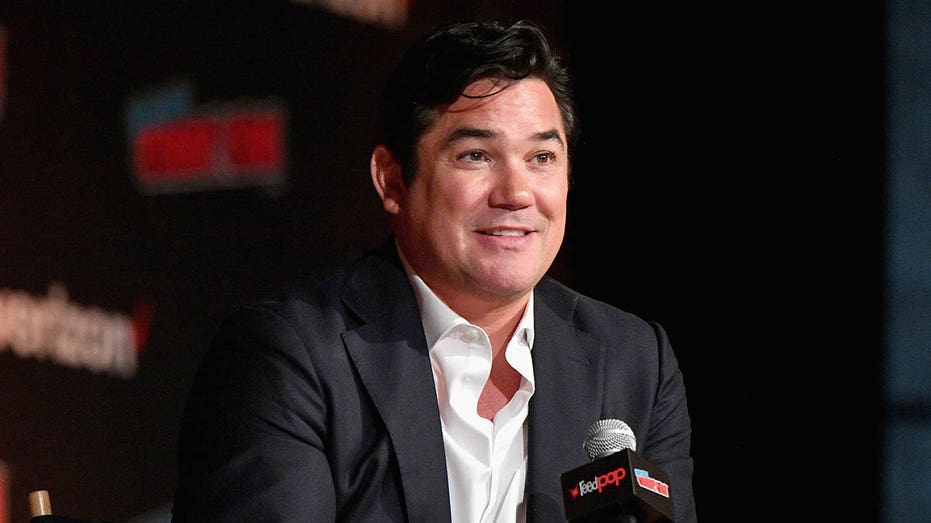
Dean Cain left California for neighboring Nevada. (Photo by Dia Dipasupil/Getty Images for New York Comic Con)
“The policies are just terrible. The fiscal policies, the soft-on-crime policies, the homelessness policies,” Cain said in June 2023. “The things that our leaders in California have been doing have driven out anybody who can really afford to get out. People are flocking out of there in droves.”
Up to now, it’s just been stars and individual productions leaving Hollywood.
Paramount leaving would change the story entirely. Double that if the Warner merger goes through.
Hollywood’s Big Five are, currently, Disney, Universal, Warner, Sony and Paramount. The group would be reduced to either four or three depending on how things shake out. Either way, it’s a disaster for what is the world’s entertainment production capital. For now.
There is a pattern in most of the stars’ moves that would be replicated if Paramount moves to either of its most rumored destinations – Tennessee or Texas.

The Nashville, Tennessee, skyline with Broadway at sunset. (iStock)
I SAW THE MOVIE THAT WARNER TRIED TO DELETE: ‘COYOTE VS. ACME’
They’re red states. With red state policies of lower taxation and regulatory burdens. They’re red states that tend not to let their cities burn while the mayor is out of the country, too. And then (probably) reelect that mayor.
California, New York and Illinois have become very good at driving Americans and businesses away and to red states, mostly Florida and Texas. Tennessee is in the game now, and while Georgia has gone purple, its production incentives should make California green with envy.
| Ticker | Security | Last | Change | Change % |
|---|---|---|---|---|
| PSKY | PARAMOUNT SKYDANCE CORP. | 10.21 | -0.41 | -3.86% |
Texas already has the Silicon Prairie and Y’all Street and has been chopping away at its high property taxes. Florida has the beaches and sunshine and a sound taxation policy. Georgia and Tennessee have willing workforces and leadership hungry to bring in high-profile industries.
“Go West young man!” drove the ambitious toward California in the Gold Rush days, but it doesn’t mean anything in the century of Zoom, AI and easy mobility. The Volume, the revolutionary digital stage used to shoot “The Mandalorian” TV series, means California’s weather matters a whole lot less. If people can’t get their legislatures to lower taxes, they’ll find a state that will.
CLICK HERE TO GET FOX BUSINESS ON THE GO
California’s current tax collectors would just confiscate most of the gold anyway.
Paramount reportedly has yet to decide whether it’s moving or not. It may be able to wrangle some concessions out of the state and city and give them a reprieve. But the proverbial writing is on the wall, and it’s increasingly being written hundreds of miles away from Hollywood.

I am Gen Alpha. I have more than 16 years of investment experience, and an MBA in Finance. I focus on stocks that are more defensive in nature, with a medium- to long-term horizon. I provide high-yield, dividend growth investment ideas in the investing group iREIT®+HOYA Capital. The group helps investors achieve dependable monthly income, portfolio diversification, and inflation hedging. It provides investment research on REITs, ETFs, closed-end funds, preferreds, and dividend champions across asset classes. It offers income-focused portfolios targeting dividend yields up to 10%. Learn more.
Analyst’s Disclosure: I/we have a beneficial long position in the shares of PLD either through stock ownership, options, or other derivatives. I wrote this article myself, and it expresses my own opinions. I am not receiving compensation for it (other than from Seeking Alpha). I have no business relationship with any company whose stock is mentioned in this article.
I am not an investment advisor. This article is for informational purposes and does not constitute as financial advice. Readers are encouraged and expected to perform due diligence and draw their own conclusions prior to making any investment decisions.
Seeking Alpha’s Disclosure: Past performance is no guarantee of future results. No recommendation or advice is being given as to whether any investment is suitable for a particular investor. Any views or opinions expressed above may not reflect those of Seeking Alpha as a whole. Seeking Alpha is not a licensed securities dealer, broker or US investment adviser or investment bank. Our analysts are third party authors that include both professional investors and individual investors who may not be licensed or certified by any institute or regulatory body.


I spent 30 years in the institutional trenches as a trader, analyst, and portfolio manager, eventually running the equity trading desk at Northern Trust in Chicago. Those decades shaped my approach: stay disciplined, trust the data, and keep emotion out of the way. Since 2009, when I began publishing my stock selections, my portfolio has delivered solid long term results—compounding in the mid teens annually through 2025. Today I manage a 15-20 stock model portfolio where I select stocks that score highly for Quality, Growth, Momentum, Value, and Risk. I use a rules-based framework that helps me build high performing portfolios. My work focuses on systematic thinking, behavioral awareness, and evidence over opinion. For my market outlook and model portfolio updates, visit zeninvestor.org. .
Analyst’s Disclosure: I/we have a beneficial long position in the shares of NVDA, AVGO, GOOGL either through stock ownership, options, or other derivatives. I wrote this article myself, and it expresses my own opinions. I am not receiving compensation for it (other than from Seeking Alpha). I have no business relationship with any company whose stock is mentioned in this article.
Seeking Alpha’s Disclosure: Past performance is no guarantee of future results. No recommendation or advice is being given as to whether any investment is suitable for a particular investor. Any views or opinions expressed above may not reflect those of Seeking Alpha as a whole. Seeking Alpha is not a licensed securities dealer, broker or US investment adviser or investment bank. Our analysts are third party authors that include both professional investors and individual investors who may not be licensed or certified by any institute or regulatory body.

If I Could Only Buy 2 Investments While The Fed Hikes Rates

Fidelity’s mission is to strengthen the financial well-being of our customers and deliver better outcomes for the clients and businesses it serves. With assets under administration of $12.6 trillion, including discretionary assets of $4.9 trillion as of December 31, 2023, Fidelity focuses on meeting the unique needs of a broad and growing customer base. Privately held for 77 years, Fidelity employs more than 74,000 associates with its headquarters in Boston and a global presence spanning nine countries across North America, Europe, Asia and Australia. Note: This account is not managed or monitored by Fidelity, and any messages sent via Seeking Alpha will not receive a response. For inquiries or communication, please use Fidelity’s official channels.


Independent Equity Researcher exploring global market opportunities
Analyst’s Disclosure: I/we have no stock, option or similar derivative position in any of the companies mentioned, and no plans to initiate any such positions within the next 72 hours. I wrote this article myself, and it expresses my own opinions. I am not receiving compensation for it (other than from Seeking Alpha). I have no business relationship with any company whose stock is mentioned in this article.
Seeking Alpha’s Disclosure: Past performance is no guarantee of future results. No recommendation or advice is being given as to whether any investment is suitable for a particular investor. Any views or opinions expressed above may not reflect those of Seeking Alpha as a whole. Seeking Alpha is not a licensed securities dealer, broker or US investment adviser or investment bank. Our analysts are third party authors that include both professional investors and individual investors who may not be licensed or certified by any institute or regulatory body.
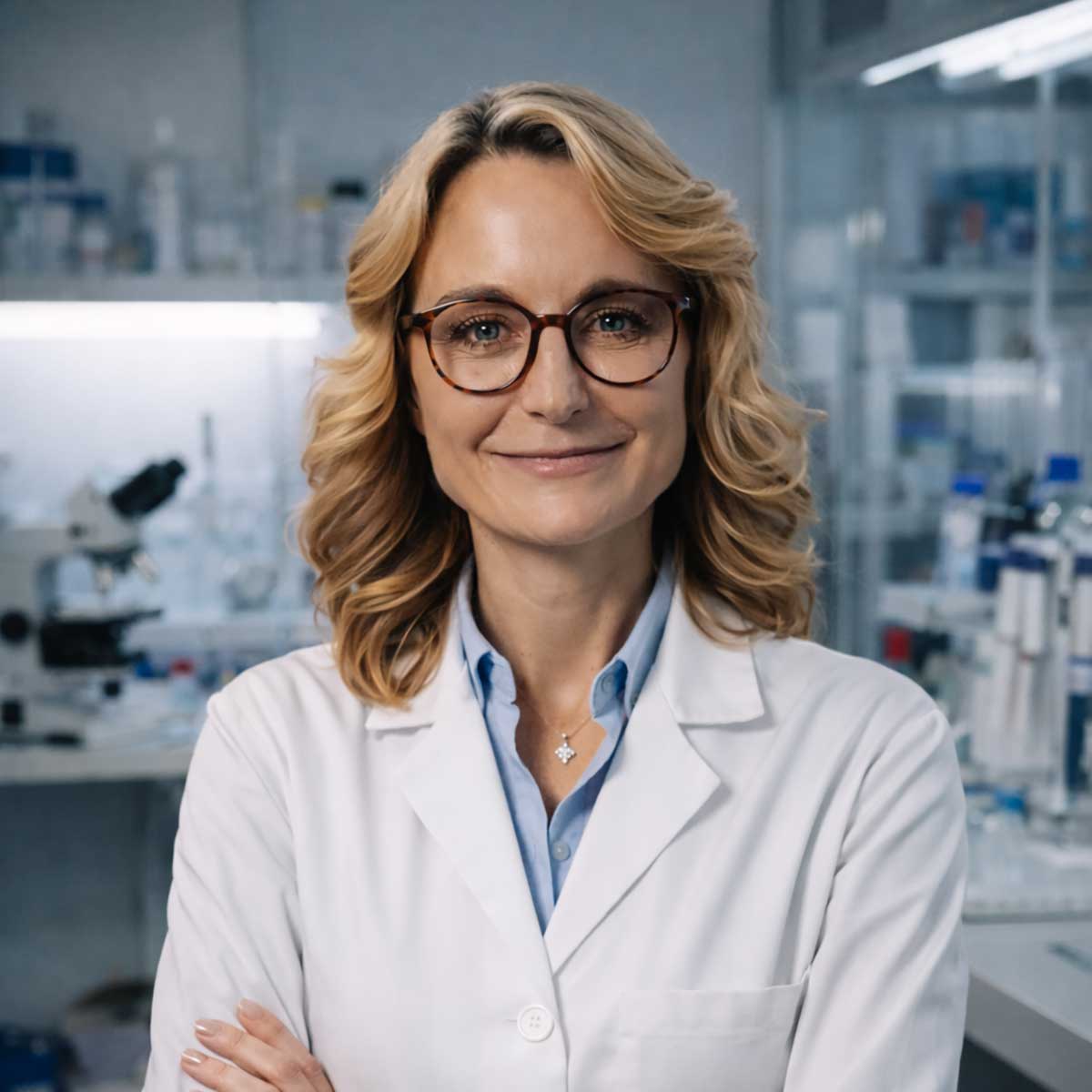
Melissa Snover founded Rem3dy Health in 2019 and built it around Nourished, a seven-layer gummy vitamin stack 3D-printed to order at a plant in Birmingham.
The business has sold more than 53 million units, sells through Boots, Holland and Barrett and more than 12,000 European pharmacies, and raised £14m in June at an £84m valuation. She tells Business Matters how it started on an airport floor.
What do you currently do at Nourished?
I am the founder and CEO of Rem3dy Health, the company behind Nourished. My role has evolved enormously since I founded the business in 2019. In the early days I was involved in almost everything, from experimenting with formulations and working hands-on with our 3D printers to packing orders, troubleshooting production challenges and speaking directly with our earliest customers. Like many founders, I did whatever needed to be done to turn the idea into a working business.
Today my role is much more focused on setting our vision, building the right team and deciding where we take our technology next. I lead all our investment activity and work closely with our teams and partners to establish the strategic relationships that support our growth.
Nourished combines nutrition, technology and advanced manufacturing to create products in ways that simply were not possible before. We developed our own patented 3D-printing technology that allows us to manufacture personalised and precision nutrition at scale. The Birmingham site can produce 500,000 units a day, and we hold 21 patents across the technology and the formulations.
A significant part of my time is now dedicated to innovation, product development and international expansion, taking technology developed and manufactured here in Birmingham into major markets around the world.
What was the inspiration behind your business?
Nourished was born from a very personal frustration. I have been passionate about nutrition for most of my life and, like many people, I used to travel with a huge collection of vitamins and supplements.
In 2019, while travelling extensively, I accidentally spilled them all over an airport floor. As I knelt there picking them up, I remember thinking: why am I still doing this? Why can the nutrients I actually need not be combined into one convenient product?
Having previously founded a 3D-printed food business, I realised that additive manufacturing could provide the answer, allowing multiple active ingredients to be combined in a single, personalised format. That moment set in motion an extensive period of research and development. We brought together expertise in nutrition, formulation, engineering and advanced manufacturing to develop our proprietary technology and turn the original idea into a commercially scalable product.
That slightly chaotic moment on an airport floor ultimately became the inspiration for Nourished.
You raised £14m in June. What is it for?
The round valued the business at £84m and was led by Suntory, Apollo Hospitals, Estrella Galicia and UPSA, with Future Planet Capital Regional also investing. It is our largest single raise, on top of roughly £19m raised previously. The money takes us into the United States, the Middle East and North Africa, and India, and into personalised pet health.
Securing this funding marks a major milestone for us. Following a year of significant transformation and against one of the toughest fundraising environments in recent years, we are now in a strong position to scale globally.
It was not an easy market to raise in. UK equity investment reached £14.4bn in the first half of 2026 according to Barclays and Beauhurst, but 70 per cent of that went to London. Building a manufacturing-led business in the Midlands means you have to be that much more convincing.
Who do you admire?
I admire people who are willing to challenge assumptions that everyone else has simply accepted. That applies not only to entrepreneurs, but also to scientists, engineers and inventors, people who look at something that has been done the same way for decades and have the curiosity to ask why.
I particularly admire founders who have the courage to create an entirely new category rather than simply improving what already exists. That is incredibly difficult, because you are not only building a product or a business; you also have to help people understand why something they have never encountered before should exist.
I have also developed an enormous admiration for leaders who build exceptional teams around them. As a founder, there comes a point when success is no longer about having all the answers yourself.
Looking back, is there anything you would have done differently?
I would have learned to say no much earlier. In the early stages of building Nourished, I saw potential in so many different directions. There was often a fear that saying no to an opportunity might mean missing the one partnership, product idea or market that could transform the business.
Over time I have learned that focus is one of the most valuable resources a growing company has. Every time you say yes to something, you are inevitably committing your team’s time, capital, manufacturing capacity and leadership energy, resources that can no longer be directed elsewhere.
I am still excited by new ideas, but the question is no longer simply, could this be a good opportunity? It is, is this the right opportunity for the company we are building?
What defines your way of doing business?
Curiosity, speed and a fairly well-developed resistance to being told that something cannot be done.
There has been a consistent thread through the businesses I have created. In 2010 I launched the world’s first vegan gummy brand; in 2015 the world’s first truly personalised 3D printer for food; and in 2019 the world’s first truly personalised nutrient gummy with Nourished. Each began by identifying where customers were being asked to compromise and finding a better solution.
I believe in moving quickly, testing ideas in the real world and learning from the results. I am very comfortable changing my mind when the evidence shows that I am wrong. What I find much harder to accept is being told that something cannot be done simply because nobody has done it before.
But innovation must have a purpose. Technology for technology’s sake does not interest me. The best innovation solves a genuine human problem and makes something meaningfully better, simpler or more accessible. We won a King’s Award for Enterprise in Innovation in 2023 and were named Femtech Company of the Year at the Health Tech World Awards in 2025, and both of those matter because of what sits behind them rather than the badge itself.
What advice would you give to someone starting out?
Start before you feel ready, because you will rarely feel completely ready. One of the biggest misconceptions about entrepreneurship is that successful founders knew exactly what they were doing at the beginning. Most did not, and I certainly did not.
You do not need to have every answer, but you do need to be resilient, remain curious and properly understand the problem you are trying to solve. Get something into the hands of customers as quickly as you reasonably can, listen carefully and keep improving. That does not mean acting on every individual opinion, but it does mean taking customer feedback seriously. Ultimately it is the customer, not the founder, who decides whether a solution has value.
Do not be frightened of failure. Every failure gives you useful information: it eliminates one option, sharpens your thinking and takes you a step closer to the right solution. The entrepreneurs who succeed are not the ones who never get anything wrong, because they do not exist. They are the ones who learn quickly, adapt and refuse to give up.
Finally, surround yourself with people who are better than you. It also prevents you from becoming the greatest constraint on your own company’s growth.

Columbia Dividend Opportunity Fund Q2 2026 Commentary

Marvel’s Most Important Sci-Fi Reboot Is Officially Leaving Netflix

What Do Financial Analysts Actually Do? #career

Star Trek’s Gerrit Graham dies surrounded by family as tributes pour in




-

 Fashion1 day ago
Weekend Open Thread: Talbots – Corporette.com
-

 Tech6 days ago
The Latest Weird Thing to Play Doom Is the Mapped-Out Brain of a Fruit Fly
-

 Crypto World5 days ago
Kraken Lets xStocks Holders Earn Yield Through DeFi
-

 Crypto World5 days ago
Revolut Attackers Warn of Ongoing Daily Customer Data Leaks
-

 Crypto World4 days ago
What Is the Status of the U.S.-Iran Peace Talks? Here's What Both Sides Are Saying
-

 Crypto World3 days ago
US Charges Robinhood Engineers Over Crypto Listing Trades
-

 Crypto World5 days ago
Elon Musk Drops a Bombshell: Grok 5 Could Be the AGI Breakthrough
-
 NewsBeat20 hours ago
Trump says US has reached an agreement to take permanent control of Greenland’s security
-

 Business7 days ago
Rivals Sam Altman and Elon Musk Rally Behind Dario Amodei’s Call for a Slowdown in AI Development
-

 Crypto World4 days ago
Robinhood engineers charged over $50K crypto scheme
-

 Crypto World6 days ago
New Tesla Roadster Uses SpaceX Tech. Will It Impact the Stock Price?
-
 NewsBeat5 days ago
‘Sick conspiracy’: Trump says only guardrails AI needs is ‘a strong and smart (High IQ!) president’ in all-caps rant
-

 Crypto World4 days ago
NVIDIA Analysis: Attempted Rising Wedge Breakout Amid Pressure on the AI Sector
-
Business5 days ago
SK Hynix ADRs Fall More Than 6% as Memory Rally Breaks on Fears of Slower AI Spending
-

 Crypto World18 hours ago
Bitcoin price breaks channel as RSI climbs to 63
-

 Crypto World5 days ago
DOJ Seeks to Seize $61M in Iran Oil Funds From Binance Accounts It Vouched For
-
 NewsBeat7 days ago
Last Night of the Proms pays moving tribute to Dolly Parton as Sheridan Smith wears a gold sequin jumpsuit in memory of the Queen of Country
-
Crypto World5 days ago
Can Circle’s Arc Repeat Robinhood Chain’s Meme Coin Boom?
-

 Crypto World6 days ago
Goldman Sachs backs 25bp Fed hike after CPI
-

 Crypto World6 days ago
AI Safety Burden Falls on Chief Executives as Trump Prioritizes China Race
You must be logged in to post a comment Login