There’s no question Ohio State’sArvell Reese is one of the best overall players in this draft class. They don’t make many athletes with the size (6-foot-4, 241 pounds), speed (4.47-second 40-yard dash) and positional versatility Reese brings. He finished 2025 with 6.5 sacks and 69 total tackles.
However, the history of players with similar versatility traits isn’t exactly encouraging in the NFL. Isaiah Simmons is on his third team in six seasons, Zaven Collins hasn’t found his footing in Arizona, and plenty of others have struggled to fit at the next level.
While I think Reese is different from those players — there’s a difference between “positionless” and “versatile” — there are still questions about where he plays in the NFL.
Advertisement
More importantly, there’s the financial angle. The fifth-year options and franchise tags for EDGE and off-ball linebacker are the same, but the highest-paid EDGE (Micah Parsons) makes $46.5 million per year — more than the top two off-ball linebackers (Fred Warner and Roquan Smith) combined. Even average EDGE rushers carry more value financially, so if Reese wants to cash in, playing on the edge could be the way to go.
But does that best align with what he does on the field? Let’s dive into the film.
Advertisement
Reese’s power pops immediately on the edge
The first thing that stands out when Reese lines up on the edge is how violent he is with his hands. Players who walk down from off-ball linebacker typically don’t play as heavy-handed as Reese does. He packs serious power into his punches as both a run defender and pass rusher, generating a ton of force for someone who would be considered undersized on the edge.
You can’t block him with a tight end — he’ll obliterate them in the run game. He forklifts players on the edge, using strong pad level to close gaps and funnel backs into traffic. This Illinois tight end stood no chance, getting manhandled into the very gap the running back was attacking.
Watch the Miami tight end’s head snap back on contact. There’s playing with force, and then there’s what Reese showed in his final year at Ohio State. He wrecks the rep with pure power.
This rep against Penn State’s left tackle isn’t perfect, but the force jumps out. His head is down on contact, but his body angle is excellent. He’s in position to stack and shed because he’s attacking with leverage, generating force through his body into the tackle’s chest so he can make a play.
Advertisement
His pass-rush upside is both exciting — and incomplete
Where the rubber really meets the road is Reese’s potential as a pass rusher. Despite being undersized, he generates serious power. You’d expect an off-ball linebacker moving to the edge to win with speed and bend, but Reese’s go-to is converting speed to power and running through tackles.
This is what you would call getting dunked on in the football world:
Here, he faces fellow draft prospect Markel Bell (6-foot-9, 346 pounds) and still turns him with power, prying open the outside corner. The ball comes out before he arrives, but it’s a strong rep that shows what he can already do as a pass rusher.
Again, Reese displaces Illinois’ right tackle with power, knocking him off his feet. It’s not a perfect rep or finish, but it highlights how much force he generates in a 241-pound frame.
Advertisement
Reese also showcases the ability to counter with speed. His pass-rush repertoire is still limited, but the flashes of bend and acceleration are reminiscent of top NFL rushers. Ohio State even schemed one-on-one opportunities, where he would do this to opposing tackles:
While he gets the sack on that rep, another better illustrates his upside. He sells the bull rush, then dips around the outside shoulder and flattens to the quarterback. That’s the kind of nuance he needs to build on.
The issue right now is consistency. He doesn’t have many reliable counters, which makes sense given his background as an off-ball linebacker who also drops into coverage. If he transitions full-time to the edge, his development as a pass rusher may take time.
He could improve by using his hands more actively — swiping at tackles to create cleaner rush paths and turn more pass rush reps into pressures. Against Wisconsin, for example, the tackle sets to cut off the edge. Reese needs to either club the outside hand or counter inside, but he does neither and loses the rep. A more detailed pass-rush plan will be key going up against NFL tackles.
Advertisement
Another area for growth is stringing moves together when his initial rush stalls. That will come with reps and coaching. The upside is clear, but right now he’s a better run defender than pass rusher off the edge.
Reese might be more polished off the ball right now
As an off-ball linebacker, Reese’s violent hands and fluidity really stand out. Even in a defense loaded with megazord athletes, he consistently pops on tape. He simply puts guys on their butts when they try to block him. His explosiveness moving downhill is a delight to watch, and his hand placement and ability to forklift defenders immediately jump off the tape. Just ask this Penn State tight end:
OUCH. His ability to generate force allows him to lift blockers out of the way and stay square to the line of scrimmage while working through traffic. He’s comfortable operating in tight spaces and consistently finds the ball.
One rep against Michigan highlights his instincts. The Buckeyes are in a five-man front, with Reese aligned as the stack linebacker. The defensive lineman in front of him plays his primary gap with the ability to fall back into his secondary, and Reese has to mirror that from depth to keep everyone on a string. He fits into the primary gap, then recognizes the running back bounce to the secondary as the tight end tries to get hands on him. Reese slips underneath the block and closes to make the stop — a great example of his high-level processing and movement ability.
Advertisement
In the passing game, his ceiling is also high — especially as a blitzer. His power translates immediately, as shown when he drives a Texas right tackle back and forces Arch Manning out of the pocket.
Reese is a mismatch against running backs in pass protection and can be used as a penetrator on pass-rush games, using his size and speed to collide with offensive linemen and free up rushers. You can also design looks for him to play iso ball against RBs, where he can crush the pocket.
The main area for improvement off the ball is his spatial awareness in coverage. He has the range and athleticism, but his recognition once receivers enter his zone can improve. He recorded just two pass deflections in his career, rarely getting his hands on the football. Better angles could help — like on a near-play against Wisconsin that could have been an interception.
That said, there are reps where he shows potential. Against Penn State running a Dagger concept, he drops as the middle defender in Cover 2, carries the vertical route, then sinks to disrupt the dig and force a checkdown. That’s the upside.
Advertisement
The biggest question: Where does Reese actually fit in the NFL?
So what is Reese at the next level — linebacker or EDGE? The answer is both. He’s a true hybrid, but not in a way that leaves him without a position. He can be a skeleton key who answers many questions for a modern defense, allowing it to shift fronts and personnel without substituting. Think about what the Eagles do with Zack Baun and Jihaad Campbell — players with the size to play on the edge and the movement skills to stack without being liabilities in coverage. That kind of true versatility is becoming increasingly valuable in the NFL.
If you’re asking where he makes the most immediate impact, it’s probably as an off-ball linebacker. His coverage still needs refinement, but as a run defender and blitzer, he already fits what modern defenses want.
Still, he shouldn’t be boxed in. Let him dictate fronts and structures — that’s how he blossoms into the centerpiece of a modern NFL defense.
The Kansas City Chiefs had an underwhelming 2025 season as they missed the playoffs for the first time in more than a decade. Their season got worse after quarterback Patrick Mahomes’ ACL injury.
Mahomes suffered a season-ending ACL tear in the Week 15 clash against the nfl/los-angeles-chargers” target=”_blank” rel=”noopener noreferrer” data-is-sponsored=”false”>Los Angeles Chargers. The Pro Bowl quarterback, who is eyeing a Week 1 return for the 2026 season, shared a clip of himself throwing the ball in rehab on his Instagram story.
Thanks for the submission!
Advertisement
“Day by day! Felt great being able to throw the ball around today,” Mahomes wrote.
•
Advertisement
Looking to predict NFL playoff Scenarios? Try our NFL Playoff Predictor for real-time simulations and stay ahead of the game!
NFL fans reacted to Mahomes starting to throw after just 100 days of recovery.
Advertisement
“Going to be a great backup to Fields.”
Going to be a great backup to Fields
“Good. We want him nice and healthy for bills chiefs week 1, it wouldn’t feel right to beat the chiefs without him there.”
Good. We want him nice and healthy for bills chiefs week 1, it wouldn’t feel right to beat the chiefs without him there.
“Great for him. Let me know when 350lb linemen are chasing and tackling him.”
Great for him. Let me know when 350lb linemen are chasing and tackling him.
“Literally 0 drive off the left leg. Absolutely pointless even practicing like this, all you’re going to do is ingrain bad habits. It’s good for an instagram video though I guess.”
Literally 0 drive off the left leg. Absolutely pointless even practicing like this, all you’re going to do is ingrain bad habits. It’s good for an instagram video though I guess.
Advertisement
“He does NOT want Fields to start next season 😂”
@MySportsUpdate He does NOT want Fields to start next season 😂
While Mahomes continues on his road to recovery, the Chiefs traded for ex-New York Jets quarterback Justin Fields last week. The five-year veteran is the Chiefs’ insurance if Mahomes fails to recover in time for the 2026 season.
Texas Tech dominated the Big 12 last year and didn’t lose a game when Behron Morton started in conference play.
Can the Red Raiders play at that level again in 2026?
On today’s episode of Locked On College Football, I discuss a recent Executive Order to try to assure the long-term stability of the Army-Navy Football Game.
Is the solution simpler than we think?
Advertisement
UCLA fired DeShaun Foster last year and has brought in former JMU Head Coach Bob Chesney to move the program forward.
His 2026 schedule might allow for just that.
05:25 Red Raiders’ Tough Road Games 08:26 Texas Tech Challenge Expectations 14:34 Army-Navy Game Timing Debate 18:48 Rivalry Weekend Debate 26:44 Chesney’s Challenging Start 27:28 UCLA’s Season Outlook Analyzed
Minnesota Vikings safety Harrison Smith (22) speaks during a postgame interview on the field, addressing the media following a matchup against Detroit on Dec. 25, 2025, at U.S. Bank Stadium in Minneapolis after another late-season NFC North contest. Mandatory Credit: Jeffrey Becker-Imagn Images.
Harrison Smith is technically a free agent, and according to a Chicago Bears-themed website, he might be interested in Ben Johnson’s team for his final season.
Chicago can dream, but Smith’s real choice still looks much narrower.
There’s no earthly reason for Smith to sign with the Bears, but Ernesto Cova at Da Windy City claims the idea is on the table.
Advertisement
Smith to CHI Just Isn’t Realistic
This theory could’ve been left in Drafts.
Minnesota Vikings safety Harrison Smith (22) walks onto the field before kickoff, taking in the moment ahead of a road matchup against New York on Dec. 21, 2025, at MetLife Stadium in East Rutherford as the veteran prepared for another late-season contest. Mandatory Credit: Yannick Peterhans/USA TODAY NETWORK-Imagn Images.
DaWindyCity.com: Why Not Harrison Smith to CHI?
As the saying goes, “There’s a take for everything,” and that was in play Tuesday when Cova suggested Smith to Chicago.
He explained, “The Bears should make a run at Harrison Smith. Smith is still a free agent, and the Bears could certainly use some help at strong safety. Given Smith’s age, he’s obviously not going to be a long-term solution at the position. That said, the Bears’ Super Bowl window is wide open right now, and he’s the type of proven veteran who can help this young team push through in the second year of the Ben Johnson era.”
Advertisement
“The Chicago Bears already lured a former divisional rival to the Windy City. And even though the addition of WR Kalif Raymond may not be as impactful, bolstering the team while hurting an NFC North rival is a double win. Now, GM Ryan Poles might repeat that approach, this time to bolster the defense with a Minnesota Vikings star.”
The sixth-time Pro Bowler has never even remotely hinted that he’d place elsewhere, making the Bears’ theory all the more ludicrous.
Smith’s Choice Is Binary: Return to Vikings or Retirement from NFL
The issue at hand for Smith is not to re-sign with the Vikings or to explore another team. If he wanted that outcome, he could’ve explored that scenario five or six years ago.
Advertisement
In the 2026 offseason, Smith’s self-admitted decision is between retiring and coming back for Year No. 15 in Minnesota. Hell, just in case, the Vikings and the team’s fans held a faux retirement ceremony for him at U.S. Bank Stadium in January when Minnesota chipped off the Detroit Lions to end the season.
Since then, longtime Vikings like Adam Thielen and C.J. Ham have called it quits. He has not. Smith will choose between Year No. 15 and retirement in the very near future.
Minnesota Vikings safety Harrison Smith (22) goes through pregame warmups, getting loose ahead of the season opener against Tampa Bay on Sep. 10, 2023, at U.S. Bank Stadium in Minneapolis as Minnesota prepared to begin its regular-season schedule. Mandatory Credit: Brad Rempel-USA TODAY Sports.
Zone Coverage‘s Chris Schad noted on Smith this week, “Getting Harrison Smith back to the Vikings defense would be a boost in an offseason that has been about improving the team without the splashy, ill-fated signings that headlined free agency a year ago. Still, even if Smith returns, he won’t be the ultimate solution for a safety room that needs help.”
The Bears’ Defensive Overhaul
Why would the Bears want Smith? Well, they’ve been busy overhauling their defense. In free agency, Chicago has lost these players:
Advertisement
Andrew Billings (DL) CHI → ARI
Jaquan Brisker (S) CHI → PIT
Kevin Byard (S) CHI → NE
Tremaine Edmunds (LB) CHI → NYG
Chauncey Gardner-Johnson (S) CHI → BUF
Jonathan Owens (S) CHI → IND
Dominique Robinson (ED) CHI → HOU
Nahshon Wright (CB) CHI → NYJ
And the newcomers + re-signings:
Coby Bryant (S) SEA → CHI
Neville Gallimore (DL) IND → CHI
Elijah Hicks (CB) CHI → CHI
Jaylon Jones (S) CHI → CHI
James Lynch (DL) TEN → CHI
Cam Lewis (CB) BUF → CHI
Jack Sanborn (LB) DAL → CHI
Kentavius Street (DL) ATL → CHI
Smith would evidently play situational between Bryant and Jones — or so goes the theory.
All Signs Point to a Return to MIN for Smith
Smith’s indecision likely speaks volumes if you think about it for a moment. Players nearing retirement usually sound ready to hang up their cleats, and back in January, Smith sounded like he was on the verge of retiring, saying he was “leaning one way” without elaborating. Vikings fans even treated Week 18 as a potential farewell.
Minnesota Vikings free safety Harrison Smith (22) reacts after making an interception, celebrating the defensive play during second-half action against Washington on Dec. 7, 2025, at U.S. Bank Stadium in Minneapolis as the Vikings built momentum late in the game. Mandatory Credit: Brad Rempel-Imagn Images.
Now in March, he hasn’t closed the door on returning. A source told VikingsTerritory in February that Smith is “50/50” on returning, adding that he “has a hard time walking away.”
That tracks with Smith’s strong finish to the 2025 season. After battling an early-season ailment, he rebounded and recorded a couple of interceptions. Timing may also be a factor. The Vikings are suddenly looking like contenders again. With Kyler Murray now in the building, Super Bowl aspirations are resurfacing. For a player like Smith, retiring right before Minnesota makes a serious title run would be painstaking.
The prospect of the Vikings winning a championship the season after he retires would be criminal. One thing’s for sure: Smith won’t be joining the Bears. A delusional take.
MLB Opening Day 2026 has arrived for two teams as the San Francisco Giants host the New York Yankees in a standalone matchup on Wednesday evening. New York is coming off a 94-68 campaign in 2025. The Yankees lost in the divisional round to the Blue Jays. The Giants, meanwhile, went 81-81 and missed the MLB playoffs last year. San Francisco hired Tony Vitello from the University of Tennessee to be its new manager in 2026. Max Fried will be the Opening Day starter for the Yankees, while Logan Webb will be on the hill for the Giants.
New users can claim a special offer by signing up for DraftKings Sportsbook. Visit our DraftKings promo code review right now to see their latest offers and get started.
The SportsLine Projection Model simulates every MLB game 10,000 times. It was a profitable 35-29 on top-rated MLB money-line picks last season. It also excelled making home run prop picks in 2025, returning nearly 30 units of profit. Anybody following its MLB betting picks at sportsbooks and on betting sites could have seen strong returns.
New to sports betting? Visit our FanDuel promo code review right now to see their latest offers and get started.
Top Yankees vs. Giants predictions
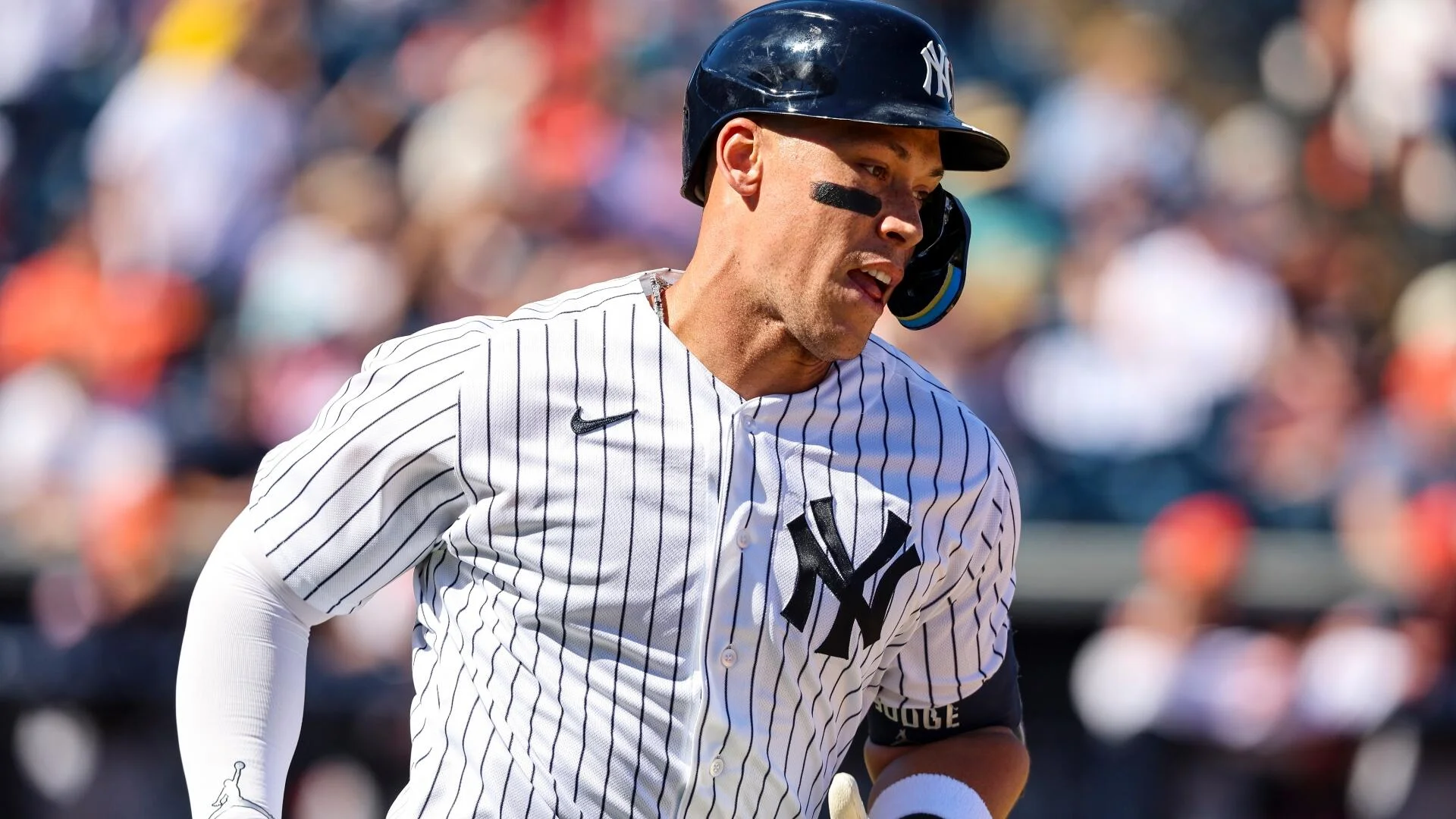
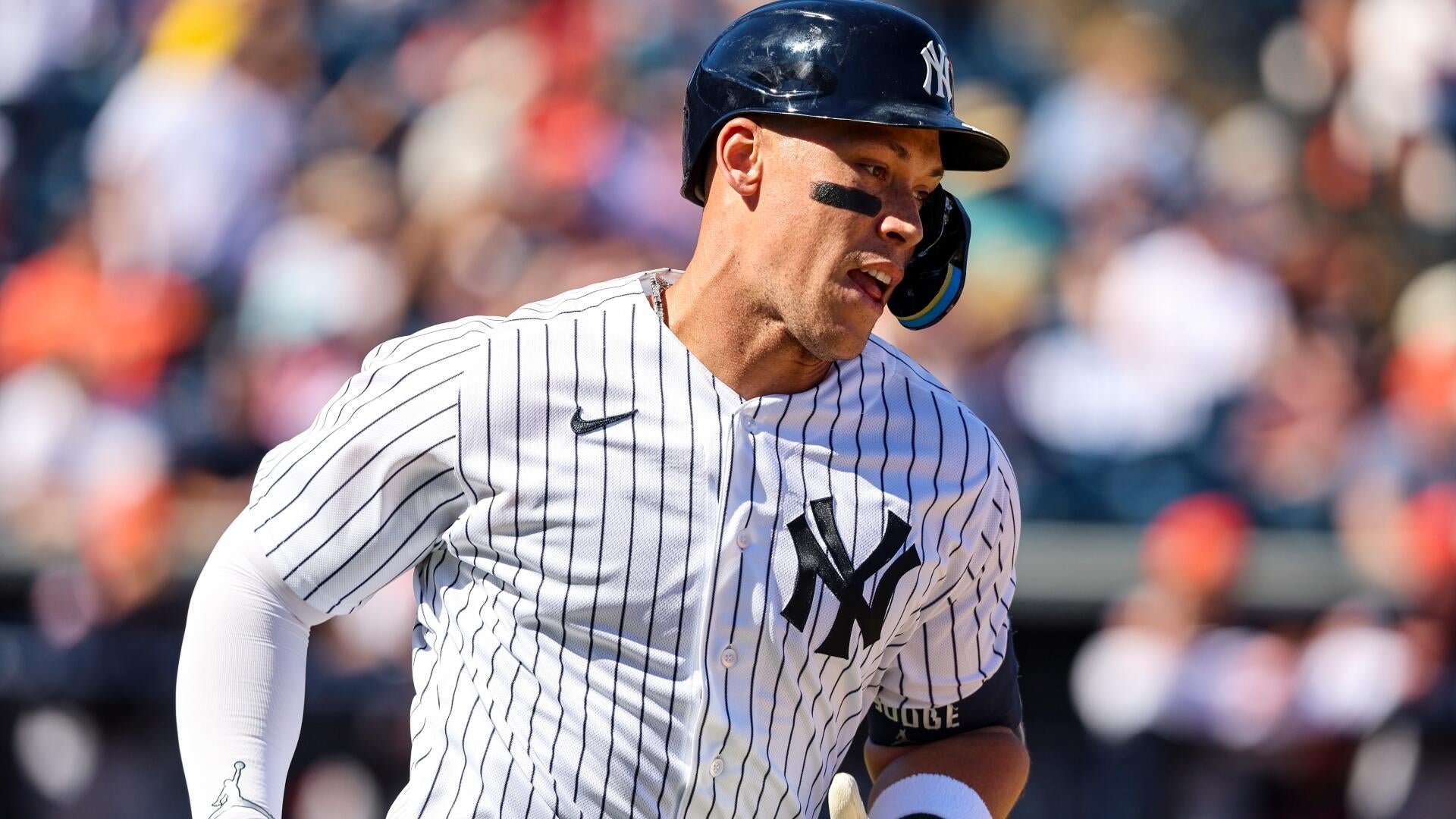
After 10,000 simulations of Giants vs. Yankees, the model is going Over 7 combined runs. New York had the best offense in baseball last year, averaging 5.19 runs per game. Most of the top producers are back, including Aaron Judge, Jazz Chisholm Jr., Cody Bellinger and Trent Grisham. The Giants, meanwhile, ranked 17th in runs scored last year. They hope the addition of contact specialist Luis Arraez into the leadoff spot helps balance a lineup with some power bats such as Rafael Devers, Willy Adames and Matt Chapman.
Advertisement
SportsLine’s model projects more than 1.5 total bases for Judge, Chisholm and Ben Rice for the Yankees. The Giants, meanwhile, are projected to get around 1.5 total bases from Adames and Heliot Ramos. The model projects 9.1 combined runs as the Over hits in 63% of simulations. Get the Giants vs. Yankees money-line pick at SportsLine.
How to make Giants vs. Yankees picks
After simulating every pitch of Yankees vs. Giants 10,000 times, the model also says one side of the money line has all the value. You can get that pick at SportsLine.
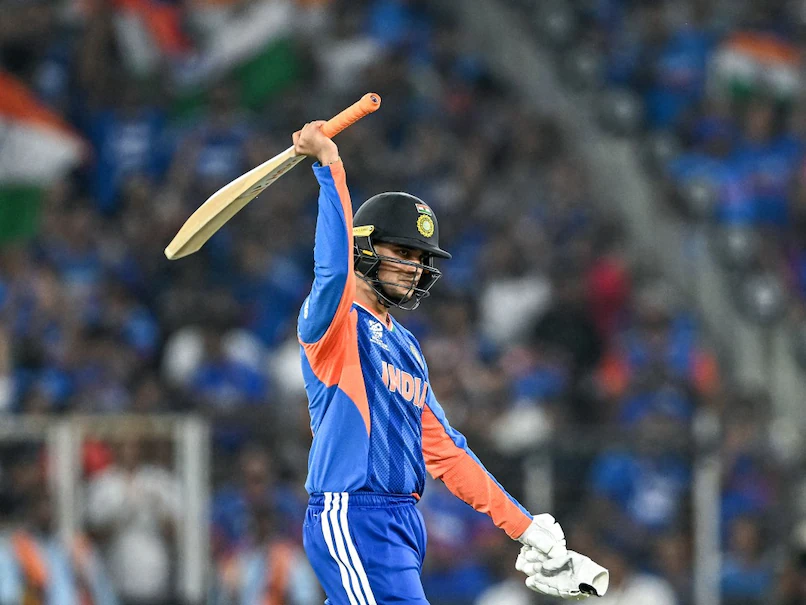
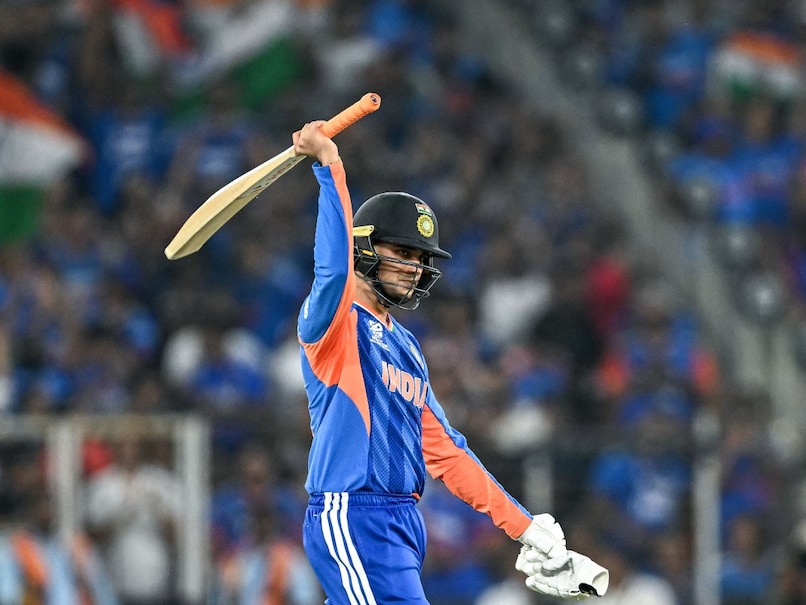
Though Abhishek Sharma slammed a fiery 21-ball 52 in the final of the T20 World Cup 2026, former India player Yograj Singh is not happy with the opener. Yograj’s son Yuvraj is a mentor to Abhishek as well as Shubman Gill. However, Yograj said that Abhishek’s focus was not entirely on cricket and added that he had to play defensively too sometimes. “It would take him another age to go closer to Yuvraj Singh. The whole universe works on discipline. That’s how cricketers should work. Where are cricketers going wrong? Parties, girls, money, shooting all the time,” Yograj said in an interview to InsideSport.
Yograj went on to say that he was “disgusted” with Abhishek Sharma. Yograj claimed he had even messaged Abhishek. World No. 1 T20I batter Abhishek scored 141 in eight matches at the T20 World Cup. He scored two half-centuries but was also out for 0 thrice.
“I’m very disgusted with him (Sharma). There are times when I drop him messages – don’t take this game for granted. He will always say ‘yes sir’. There is something called a single, a double and a boundary. Every time you cannot hit the ball in the air. You cannot keep hitting sixes and entertaining the crowd. You will fail,” Yograj said.
Advertisement
He even took the name of Shubman Gill.
“You fail because your mind is somewhere else. What is happening to Shubman Gill, Abhishek? The failure comes only when your mind is diverted somewhere else. That is what is happening with Abhishek. The guy walks around doing reels, that isn’t his job. He should bloody well go to bed at 9 PM and wake up at 5 AM and play a thousand balls,” Yograj added.
Also, Ravichandran Ashwin‘s statement that Arjun Tendulkar would not get a chance in Lucknow Super Giants’ playing XI was not taken well by Yograj. He had briefly coached Arjun in the past.
“He is talking bullshit. This guy Ashwin, whoever he is. He should know what to talk about somebody. Somebody’s sitting on the television and talking, ‘Oh, he can’t do this, he can’t do that.’ Arey tum kya ho bhai (Who are you? What are you)?” Yograj said on InsideSport.
Advertisement
“When cricketers talk like this… He is Sachin Tendulkar‘s son, that is a different story. When he was here, I told Yuvi that all of you are concentrating on the wrong thing regarding Arjun Tendulkar. He is not a bowler; he had a spine problem, and his hands come down from 45 degrees. When he was here, I was talking to him. I told his coach as well when he was with the Goa team. When he (Arjun) was batting, this guy was hitting sixes and boundaries. I told the coach, ‘What the hell are you people doing? If you can’t do it, send him to me’,” he added.
The Sweet 16 matchup between Arizona and Arkansas is one of the most highly anticipated games of the round.
John Calipari is a legendary coach, and the Razorbacks are on a roll after winning the SEC Tournament.
The spread (Arizona -8.5) is questionable after the Wildcats struggled down the stretch against Utah State. The game could potentially come down to the final few possessions.
Here’s my preview for the matchup.
Advertisement
No. 4 Arkansas vs No. 1 Arizona
Thursday, March 26 6:45 pm PT, CBS San Jose, CA
This game is the ultimate test for Tommy Lloyd.
Is he the coach that he thinks he is? Or is he a perennial March Madness bust that’s never able to get past the Sweet 16?
What happens in this game is massive for Lloyd’s reputation and for Arizona basketball as a whole.
Arkansas has one of the top offenses in the country.
Advertisement
John Calipari’s team is No. 2 nationally in points per game, No. 2 in fast break points, No. 11 in three-point percentage, and No. 10 in field goal percentage.
The Razorbacks run a faster pace than the Wildcats and turn the ball over less.
Read that again: a high-scoring, fast-paced offense that doesn’t turn the ball over. That’s a scary combination.
Arkansas guard Darius Acuff Jr. vs. High Point | CBS Sports
Arizona can’t commit turnovers against an elite offense like that. Nor can the Cats allow Arkansas to have second-chance opportunities.
If they do, the season could end in the Sweet 16.
Advertisement
So, how do the Wildcats win?
Defense and rebounding.
Lloyd’s team is No. 6 nationally in field goal percentage defense and No. 3 overall in rebound margin. The Cats must dominate the glass and contest every shot.
Any defensive breakdowns along the perimeter will be converted into scores.
Advertisement
Lloyd’s players must be on point with their switching when Calipari inevitably runs the high pick-and-roll action that the Wildcats have struggled to defend at times.
Darius Acuff Jr. and Meleek Thomas take the lion’s share of the shots for the Hogs. The duo leads the scoring for Arkansas, checking in at 6-foot-3 and 6-foot-5, respectively.
Arizona guard Brayden Burries vs. Utah State | The Daily Wildcat
It sounds like a defensive job that’s right up the alley of Ivan Kharchenkov, Brayden Burries, and Jaden Bradley. Staying out of foul trouble could be critical.
But the X-Factor might be the battle between Trevon Brazile and Koa Peat.
The players are mirror images of each other, except Brazile is a senior and slightly taller. Whichever plays better is likely to lead his team to a win.
Advertisement
Yet, putting aside the individual matchups, Arizona must be efficient when it has the ball.
Fortunately, Arkansas is not a good defensive team.
The Razorbacks allow 80.3 points per game, which would put them 14th in the Big 12. That’s below the likes of Utah and Colorado.
They also don’t rebound the ball very well, either. The Hogs snag 36.3 per game, which would put them 10th in the Big 12.
Advertisement
If the Wildcats limit turnovers, rebound effectively, and defend the three, a trip to the Elite 8 could become a reality.
Miller covers College Basketball and College Football as well as Formula 1 racing as a Senior Writer and Assistant Editor for SuperWest Sports.
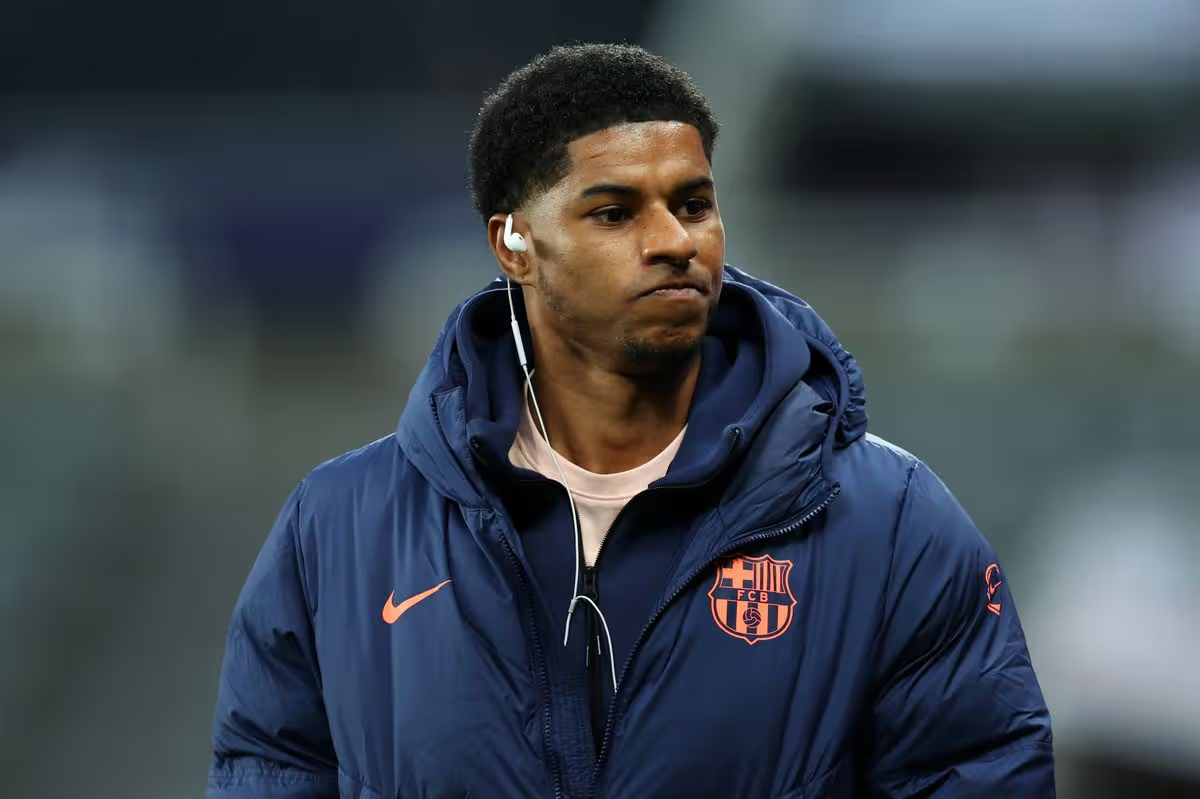
Marcus Rashford faces an uncertain future away from Manchester United with Barcelona reportedly looking at other potential transfer targets
Benfica star Andreas Schjelderup has addressed rumours of a potential move to Barcelona amid uncertainty around Marcus Rashford’s future at the Camp Nou. Rashford is currently spending the season on loan with the La Liga giants from Manchester United and has appeared likely to leave Old Trafford on a permanent basis in the summer.
Rashford is enjoying an impressive season with Barcelona this term, scoring 10 goals across all competitions and helping guide the Spanish giants to the top of the La Liga standings and the Champions League quarter-finals.
Advertisement
Last summer saw Rashford express a desire to leave United, which eventually led to the England international securing a loan move to Barcelona, which includes an option to make the deal permanent for £26million (€30million).
Despite recent reports suggesting that Barcelona would exercise the option and sign Rashford permanently, there has been some fresh doubt cast over the potential deal.
Spanish news outlet Marca has reported that Barca sporting director Deco is assessing potential alternatives to signing Rashford this summer, with several players being identified.
Advertisement
One such player is Schjelderup, with the Benfica star addressing the rumours in a recent interview with Norwegian TV channel TV2.
He appeared to be delighted to be linked with Barcelona. “The truth is I didn’t know anything about this, but if it were true, it would be fantastic,” Schjelderup admitted.
Schjelderup, 21, has scored seven goals across all competitions for Benfica this season and primarily plays on the left wing, the same position Rashford has for Barcelona this term.
To add to the speculation, Barca boss Hansi Flick recently cast doubt over the club’s plans to sign Rashford on a permanent deal from United.
“We need everyone until the end, and we don’t know what will happen after that,” Flick said last week. “There’s time. There’s a World Cup.
“I believe in my players. Cancelo, Rashford… they give us quality. And the rest, too. We’ll talk at the end and see what happens. Now is not the time to say ‘I want this one, I don’t want that one.’ Anything can happen.”
Barcelona president Joan Laporta, who was recently re-elected at the club’s election, has previously admitted that the club would like Rashford to remain at the Camp Nou beyond this season.
Advertisement
“Marcus is performing very well with assists and goals, and Cancelo, on the other hand, is doing very well,” Laporta told RAC1.
“He has become a key player due to the injuries of both full-backs. We will try, in Barca’s interest, to ensure that Marcus can continue.”
England’s 2026 World Cup kits
This article contains affiliate links, we will receive a commission on any sales we generate from it. Learn more
England and Nike have launched the new home, away and goalkeeper kits to be worn at this summer’s FIFA World Cup. You can get free delivery on all orders with the code: ENGFREEDEL
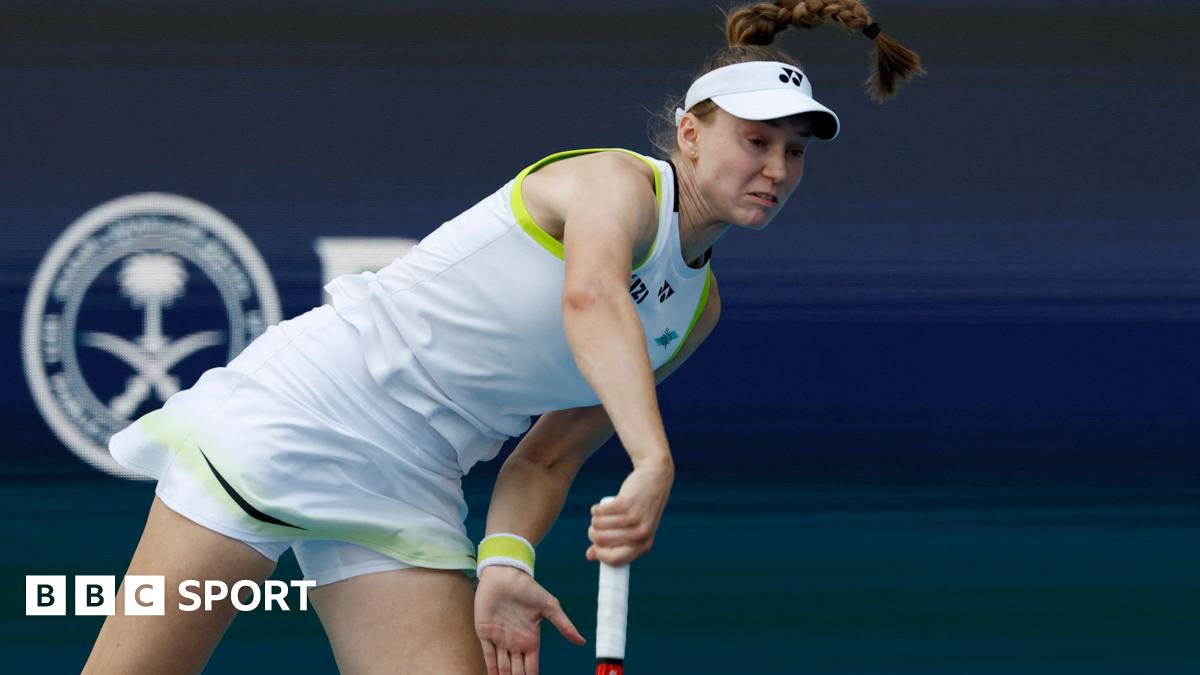
Elena Rybakina beat Jessica Pegula for a fifth straight time to move into the Miami Open semi-finals, winning 2-6 6-3 6-4.
Australian Open champion Rybakina was the losing finalist in Miami in both 2023 and 2024, while her American opponent was runner-up in last year’s competition.
Pegula, 32, took a 4-0 lead on her way to the first set, but Rybakina rallied and hit 15 aces and saved eight of 10 break points to come through.
She will face either world number one Aryna Sabalenka in a rematch of the Australian Open final, or the unseeded American Hailey Baptiste in the last four.
Advertisement
“It’s always very difficult playing Jessica,” said Rybakina, 26.
“She started playing well, and I was rushing and frustrated, but I’m happy that I managed to bounce back and turn it around in the second set.”
American fourth seed Coco Gauff and Karolina Muchova of the Czech Republic play in the other semi-final on Thursday.
If Gauff reaches the final, she will overtake former world number one Iga Swiatek to move third in the WTA rankings next week.
“Rocky” is a good name for a caddie and an excellent description for the lie where my errant drive has settled.
It’s midday, midwinter on the edge of the Mojave. The sky is cobalt blue. The grass is emerald green. And everything beyond the fairway of the short par 4 I’m playing is stone-hard and black as night.
Once it was molten. Millions of years ago, volcanoes belched magma from the belly of the earth, spilling rivers of fire across what we now call southwest Utah — flows that cooled into the black lava fields that ring the desert city of St. George today. They make for arresting scenery and an awful place to miss.
My ball has come to rest in the ebony rubble, where little but a scuffed wedge or a sprained ankle awaits. Even Rocky Price, my look-on-the-bright-side looper, sees no point in trying to advance it.
Advertisement
“Drop one,” he says. “You can still get up and down for par.” Or blunder on to double bogey.
On the plus side, the blemish on my scorecard is outshined by the beauty of the setting. Not just the jagged, inky lava underfoot but the multicolored canvas all around. In the near distance, ruddy Red Mountain shows its blushing face, backed by the white-dusted peaks of Snow Canyon, their sharp lines cutting the horizon.
It’s golf inside a geology textbook, and if the scenery looks familiar that’s no coincidence. You may have seen it last fall, when Black Desert Resort staged the Bank of Utah Championship, which debuted in 2024 as the first PGA Tour stop in Utah in more than 60 years. A coming-out party of sorts for Black Desert, the final golf course design completed by the late Tom Weiskopf, the event also signaled something broader: St. George’s growing presence in the game.
The 3rd hole at Dixie Red Hills in St. George, Utah.
Brian Oar
Advertisement
THE CITY WAS ALREADY on the map for other reasons. Situated near the Arizona border, a two-hour drive from Las Vegas and at the gateway to Zion National Park, St. George has long been known as a magnet for two groups: outdoor recreationists and retirees. The young and restless come for the adrenaline, the silver-haired show up to slow things down. Golf happens to appeal to both. But in a region that marks time by reading lines on ancient rocks, the sport is a relatively recent arrival.
St. George got its first course in 1965, a seven-hole layout that came into being as a roadside temptation. The idea was to get travelers to stop rather than barrel straight through toward the Strip. Dixie Red Hills soon expanded to nine holes but retained its quirky traits, etched through sandstone outcrops at a city-owned facility where the dress code today leans toward denim and the clientele skews AARP. It’s one of 14 courses within a 20-mile radius in Washington County, ranging from high-end resorts and pedigreed daily-fee layouts to modest munis, all spread across a landscape shaped by forces far greater than a dozer.
Rocky fits neatly into the region’s arc of change. Born and raised in northern Utah, one of 13 kids, he moved with his wife to St. George eight years ago, drawn by warmer weather and cleaner air. Year-round golf was part of the pull too, but Rocky didn’t get out as often as he liked. He was in his 50s and had worked more than half his life as a banker when a health scare prompted him to press refresh. That was in 2023. Fifteen months later, he left Wells Fargo. Six months after that, he started looping at Black Desert.
The transition suits him. He has lost weight, shed his wristwatch and let his hair grow, tying it back in a ponytail.
Advertisement
“I love my new office,” he tells me as we move to the next tee. “You can’t beat the views, and it’s so much more relaxed.”
In migrating from north to south, Rocky followed a path blazed more than 150 years earlier by travelers with very different motivations. In 1861, 309 families set off from Salt Lake City, answering a call from the religious leader Brigham Young to settle this sun-scorched corner of Utah. The Civil War had erupted and Young envisioned a cotton-growing settlement in a friendly climate — a Mormon answer to the Confederacy’s stranglehold on the textile trade. His grand plan earned St. George the nickname “Utah’s Dixie,” a moniker that hasn’t aged especially well, though a bold letter D still sits on a hillside overlooking the city, looking like a radically shortened version of the Hollywood sign.
Young had a penchant for prophecies. One was a promise that St. George would become a “city of spires.” That vision was realized in the late 1800s with the construction of a temple and tabernacle, both built from rock quarried from the same slopes that flank Dixie Red Hills today.
What Young couldn’t have foreseen was everything else. In downtown St. George, the city has designated an 11-block historic district that blends contemporary commerce with trips in the wayback machine. On and around Main Street, pioneer-era buildings share blocks with art galleries, farm-to-table bistros and boutiques selling $150 overalls. A jailhouse built in the late 1800s out of black lava rock now houses an ice cream shop. At Thomas Judd’s General Store — the oldest continuously operating business in town — you can get a throwback soda from a fountain and a grape-studded chicken salad sandwich served on a croissant.
Advertisement
St. George is a Mormon town, but it’s not a dry town. On a late-day stroll through the historic district, I have my pick of watering holes, their taps flowing with local craft beers, their wine lists stocked with homegrown petite sirah and cabernet sauvignon. The hills here are alive with many things. I hadn’t known that vineyards were among them.
In the area? Stop at Thomas Judd’s General Store.
Getty Images
Brigham Young’s winter home still stands downtown as well, preserved as a museum. A brochure for a self-guided walking tour refers to its original inhabitant as “St. George’s first snowbird.” It’s an apt description for a man whose seasonal retreats from Salt Lake City’s bitter cold presaged the exodus of cold-climate transplants who have since flocked here, trading ice storms for tee times. St. George has swelled to accommodate them. A population that stood at 5,000 in the 1950s now tops 100,000. What was once considered an inhospitable patch of desert — too hot, too remote, too austere — is now one of the fastest-growing metro areas in the country, with a real estate market to match. The key, it turned out, wasn’t cotton. It was recreation.
Of the area’s outdoor sports, golf is the biggest economic engine. Momentum behind it surged in the 1990s, when courses like Sky Mountain — with its postcard views of Zion — and Entrada arrived in quick succession. The latter, a private club originally designed by Johnny Miller and later renovated by David McLay Kidd, boosted the area’s bona fides. Coral Canyon followed, its holes flanked by arroyos and rock walls that blaze orange in afternoon light. Other headliners have taken shape more recently, including Copper Rock, now a stop on the Epson Tour and host of the 2024 and 2025 LPGA Legends Championship. But the course that first gave St. George a national golf profile was Sand Hollow, a John Fought and Andy Staples design that opened in 2008 alongside a state park of the same name. It has since become a fixture on Top 100 lists (including GOLF’s Top 100 You Can Play in the U.S.) and the star of countless photo spreads and Instagram posts.
Advertisement
IT’S EASY TO SEE WHY influencers love Sand Hollow. A massive red rock outcrop looms beside the pro shop and the first tee, which tumbles downhill, a gentle warm-up for what’s ahead. The front nine is the mellower half, with big, sweeping fairways and plenty of red rock scenery but also houses framing the holes. The back nine, by contrast, is entirely undeveloped, which underscores the drama of its arresting holes. Greens nestle into red rock amphitheaters. Fairways curl along sheer bluffs, dizzying drops that make me think of Wile E. Coyote crashing-landing in a cloud of dust.
Rocky’s with me for this round — not carrying my bag but playing alongside. He golfs every chance he gets. He also seems to know everyone we see: the head pro, the superintendent, the guy filling divots on the 14th tee. As we make our way up the final hole, we bump into a foursome unloading their bags. The group includes Gifford Nielsen, former quarterback for the Houston Oilers who went on to a career as a broadcaster and to a leadership role in the Church of Latter-day Saints. I don’t recognize him but Rocky does. The two embrace. Of course, they’re friends.
Like Rocky, Nielsen has roots farther north in Utah but now calls St. George home. “I’ve played a lot of desert golf around the southwest area, but this is just different,” he tells me later. “You don’t get scenery like this in Scottsdale or Palm Springs.”
There are other ways to experience the landscape: on foot, by bike, or from the basket of a hot-air balloon. You can rappel into slot canyons, kayak rivers and reservoirs, or do what any sensible person does when confronted with miles of dunes and granted access to an ATV.
Advertisement
“How’s this for a course to play on?” Jason Reeves asks me. It’s early morning, in teeth-chattering cold that’s typical of winter in the desert, where it takes a few hours for the sun to do its work. We’re on Sand Mountain, and Reeves is my guide with Mad Moose Tours for a two-hour tour on a vast expanse that could pass for planet Tatooine. The sand glows burnt ocher in the early light. Alien rock formations rise from the dunes.
Hole Nos. 17 and 2 at Coral Canyon in Washington, Utah.
Brian Oar
Reeves is an off-road guy in all seasons, a ski instructor who also races ATVs. Time was when he did a lot of motorbike racing too, until a bad collision recast his relationship with speed.
“There’s a saying in off-roading,” he says, patting the roll bar of his Polaris. “With age comes a cage.”
Advertisement
I’m happy to have that protection on our tour, which pivots from pedal-to-the-metal runs along snaking rutted paths to slow rock-crawling climbs over terraced sandstone, up slopes I’m certain will be too steep to summit, through channels in the rock that look too narrow to pass.
It’s exhilarating. But nothing we traverse compares to what lies 30 minutes north. The entrance to Zion National Park is there, and on a clear winter afternoon I drive a scenic route into the canyon, retracing in reverse the patient work of the Virgin River, which, over epochs, carved these sheer, soaring walls and still courses along the canyon floor. Without summer’s crowds, Zion’s grandeur only grows, along with the sense of perspective it imparts. How small we are in the big picture, how silly it is to fret about our score.
It’s a thought that lingers the next morning when I tee it up at Dixie Red Hills. It’s a modest operation — $27 for nine holes — and the price is only part of its popularity. There’s also its winning personality: classic muni golf, unfussy and authentic. No bag drop, no starter, just a pro shop P.A. system to announce the next group. Tee times get snatched up as soon as they’re released.
I’m paired with a couple of old pals, Sid and Jerry, both in blue jeans, both of the Greatest Generation. Sid wears a bucket hat that reads “Been there, done that, can’t remember.” What I won’t forget is the 7-wood he smacks from 68 yards to birdie range on a par 3 that plays over a dry riverbed. I tip my own non-bucket hat in tribute.
Advertisement
Back at Black Desert, the landscape commands a different kind of respect. A tournament-level test that accommodates resort play with an assortment of tees, the course was built with the brute force of dynamite blasts in places but also with artful choreography. The routing works through the compass to showcase the panoramas, bringing lava fields and ridges into play in ways both scenic and strategic.
I’ve read enough about the place to pick up some facts. I’m aware, for instance, that Snow Canyon State Park, just across the road, was where portions of Butch Cassidy and the Sundance Kid were filmed. I’ve also learned that Jay Don Blake, a St. George native who spent years on the PGA Tour — remember the Sansabelts and the ’70s ’stache? — practices regularly on property. He was given a special exemption into the Utah Championship. He missed the cut but made a lot of people’s day.
Black Desert is big-time golf, and ownership has talked of adding more of it on nearby reservation land. But for now the course is all that I can handle.
It’s late afternoon as our round winds down, the sun painting the landscape in shades of rust and amber. Rocky and I are moving up the 18th fairway. He’s reflecting on his new life and the liberating feeling of being unburdened of what used to weigh him down. I realize I’m doing something of the same—not dwelling on the double at the 2nd or the three-putt on the 10th, or…why take inventory? I’m pushing forward, soaking up the splendor. Out here, where Rocky has found his reset and the landscape puts poor shots in proper context, the only reason to look back is to enjoy the view.
Barcelona took control of their Women’s Champions League quarter-final with an impressive, dominant away first-leg victory at Spanish rivals Real Madrid.











 UCLA fired DeShaun Foster last year and has brought in former JMU Head Coach Bob Chesney to move the program forward.






 No. 4 Arkansas vs No. 1 Arizona



;)
;)



































You must be logged in to post a comment Login