Connect with us
DAPA Banner

Sports

As RCB, RR become billion-dollar teams, can franchise economics keep up? | Business

Published

on


For years, owning a sports team sat somewhere between indulgence and identity. It signalled wealth, access, sometimes legacy, but it did not, in the traditional disciplined financial sense, signal an asset class.


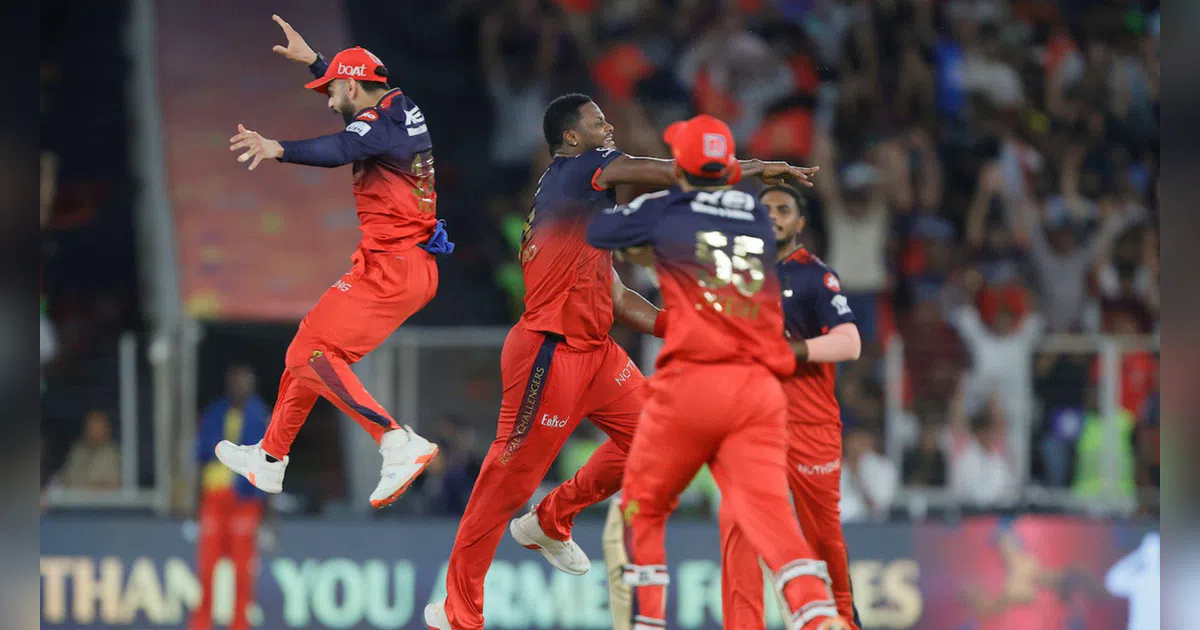
On March 24, Rajasthan Royals (RR) was sold at a valuation of $1.6 billion (around ₹15,032 crore), backed by global investors. On the same day, another deal pushed valuations even higher with a definitive agreement to acquire 100 per cent of Royal Challengers Bengaluru (RCB) from United Spirits at $1.78 billion (about ₹16,660 crore).


At the league level, the IPL’s overall business value has climbed to about $18.5 billion in 2025, while its 2023-27 media rights cycle fetched roughly $6.2 billion, among the richest deals in global sport.

Advertisement


The question is sharper now: are these valuations backed by financial fundamentals, or driven by scarcity and expectation?


Why private equity is investing in sports globally


Advertisement


The answer perhaps lies in how media economics has changed. Most content today is fragmented and consumed on demand. However, live sport remains one of the few formats that consistently delivers mass, real-time audiences and that predictability keeps advertiser demand intact.


And the IPL illustrates this clearly. The 2025 season crossed 1 billion unique viewers across TV and digital platforms. The final between RCB and Punjab Kings drew 169 million TV viewers, surpassing the 166 million viewership of the 2021 India-Pakistan T20 World Cup match. On digital, JioHotstar recorded 892 million video views, a peak concurrency of 55 million, and 16.74 billion minutes of watch-time for the final alone.


Advertisement


“Investors today are not buying a conventional sports team; they are acquiring a hybrid asset combining media rights, brand equity, and long-term monetisation optionality,” said Sourav Choudhary, managing director at Raghunath Capital.


There are only so many premium sports franchises globally, and leagues tightly control expansion. As more capital chases a fixed pool of assets, valuations rise.


Advertisement


This has already played out across football, Formula One and US sports leagues. The IPL fits this global template, but with an added advantage: centralised revenues.


Broadcast and central sponsorship income are pooled and distributed across franchises, providing predictable baseline earnings. “While central revenue pools provide some visibility on cash flows, this is not yet a mature yield-generating asset. It is best understood as a media-led platform with embedded brand upside,” Choudhary said.


Advertisement


What makes IPL teams attractive to investors


Even within global sport, the IPL stands out for scale and structure. It routinely draws over a billion viewers, while its per-match revenues rank just behind the NFL. And the most important lure to the league is in how the revenues are organised.


The BCCI centralises key income streams, primarily media rights and sponsorships, retains 50 per cent, and distributes the rest across franchises. This ensures a stable base.

Advertisement


The latest media cycle translates into $50-55 million annually per franchise from central pools, before local revenues are added.


That base has lifted average team revenues to ₹300-400 crore annually, with central distributions forming the largest share. Additional income comes from sponsorships, ticketing, hospitality and licensing. And beyond current revenues, investors are betting on expansion.

Advertisement


“Three structural shifts have altered the investment case — the sharp escalation in media rights values, the expansion of digital distribution, and a more mature franchise model with clearer revenue sharing,” Choudhary said.


Together, these have turned the IPL into a scalable, institutionally investable platform.

Advertisement


The bull case: scarcity, scale and long-term upside


The recent Rajasthan Royals and Royal Challengers Bengaluru deals reflect a clear investment logic that scarcity comes first. There are only 10 IPL teams, and entry is tightly controlled. Additionally, any opportunity to buy into a franchise is rare, and that alone supports premium pricing.


Advertisement


Then follows the scale part of IPL. “Digital distribution has expanded reach significantly, bringing in younger and more geographically diverse audiences,” Choudhary noted. The IPL sits at the centre of that ecosystem, commanding premium ad rates and consistent demand.


And what builds on this expanding reach is the monetisation potential. Investors see room in direct fan engagement, global expansion and brand licensing.


Advertisement


“At implied valuations of $1-1.5 billion per franchise, investors are pricing in multi-year compounding. A key assumption is continued growth in media rights, with expectations of double-digit expansion in future cycles. There is also a belief that franchises will evolve into global sports brands, extending into other leagues and geographies,” Choudhary said.


In other words, current prices reflect what the IPL could become, not what it is today, he added.


Advertisement


IPL valuation concerns: do the numbers justify the hype?


However, the challenge emerges when expectations meet financial reality. Top IPL teams are now valued at $1.5-2 billion, while annual revenues remain a fraction of that, typically in the low hundreds of crores. This creates valuation multiples that are difficult to justify using conventional metrics.


“The most critical risk lies in a potential plateau in media rights growth, which forms the backbone of franchise valuations. Any moderation in bidding intensity could directly impact perceived value,” Choudhary noted.

Advertisement


There is another potential risk of valuation inflation, as increasing pools of capital chase a limited number of assets, he said, adding that any disruption involving the BCCI could also affect investor confidence.


The result is a market where pricing reflects future potential as much as present earnings.

Advertisement


The bear case: risks beneath the surface


And the investment thesis is not without fault lines. A Brand Finance report in December last year estimated the IPL’s brand value at $9.6 billion in 2025, down 20 per cent from $12 billion a year earlier, citing geopolitical risks, a reminder that momentum is not linear.


Advertisement


Media rights remain the biggest variable. The last cycle jumped to ₹48,390 crore from ₹16,347 crore (2018–22), but any slowdown feeds directly into franchise revenues.


Sponsorships, the second pillar, are cyclical. Advertising spends tend to contract in weaker economic conditions.


Advertisement


Revenue concentration adds further risk. A large share of income comes from central distributions, tying franchises to league-level decisions. Within sponsorships, the skew is evident: in 2025-26, total team sponsorship revenue crossed ₹1,000 crore, with nearly 45 per cent coming from Mumbai Indians, RCB and Chennai Super Kings.


Lower-tier franchises are attempting to close the gap through diversification. Gujarat Titans has built a 1 million-plus fan app. Lucknow Super Giants generates ₹20–30 crore annually through e-commerce merchandising. Punjab Kings earns ₹10–15 crore from overseas academies. Non-matchday venue monetisation is also being explored.


Advertisement


These efforts can add 10-20 per cent to local revenues and target 15-25 per cent growth, but remain incremental relative to central income.


“Evolving consumption patterns — particularly the shift towards short-form and non-sport digital content — could dilute long-term audience engagement. Investors must contend with limited control, as key economic levers such as media rights remain centrally managed,” Choudhary said.


Advertisement


What are the exit risks for investors


For private equity, exit risk is the final constraint. At elevated valuations, the buyer universe narrows, complicating returns.


“Exit pathways in sports are evolving and differ from traditional private equity models. One route is a strategic sale to global media companies, technology platforms, or large family offices seeking trophy assets. Another is a secondary transaction, where larger funds acquire stakes from early investors,” Choudhary said.

Advertisement


How cricket and PE investments will play out in the long run


IPL teams are no longer being valued as cricket franchises. They are being treated as financial assets, and the attraction is clear: scarcity, scale, media relevance and brand power.

Advertisement


“The durability of this thesis will hinge on whether growth in media rights and fan engagement can keep pace with already elevated valuations,” Choudhary said.

Source link

Advertisement
Continue Reading
Click to comment

You must be logged in to post a comment Login

Leave a Reply

Sports

NBA’s eligibility rule comes under fire

Published

on

NEWYou can now listen to Fox News articles!

The National Basketball Players Association (NBPA) called on the league to make a change to its 65-game eligibility rule for players to be considered for awards.

NBA players who fail to play 65 games are not considered for the league’s top honors, like NBA MVP. The union pointed to Detroit Pistons star Cade Cunningham, who emerged as an MVP candidate this season but may not be considered for the award if he misses more time. He’s currently sidelined with a collapsed lung.

CLICK HERE FOR MORE SPORTS COVERAGE ON FOXNEWS.COM

Advertisement
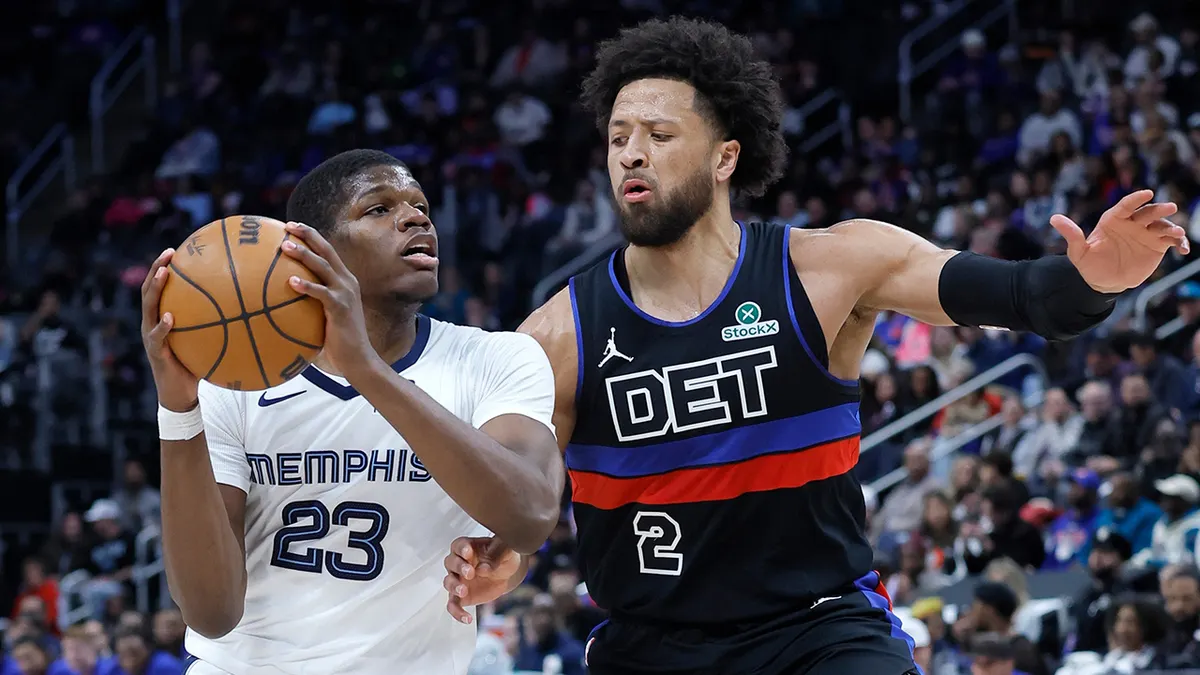
Cade Cunningham defends against a Grizzlies player

Memphis Grizzlies forward Cedric Coward (23) drives against Detroit Pistons guard Cade Cunningham (2) during the first half of an NBA basketball game Friday, March 13, 2026, in Detroit. (AP Photo/Duane Burleson)

“Cade Cunningham’s potential ineligibility for postseason awards after a career-defining season is a clear indictment of the 65-game rule and yet another example of why it must be abolished or reformed to create an exception for significant injuries,” the union said. “Since its implementation, far too many deserving players have been unfairly disqualified from end-of-season honors by this arbitrary and overly rigid quota.”

Los Angeles Lakers’ LeBron James, Milwaukee Bucks’ Giannis Antetokounmpo and Golden State Warriors’ Stephen Curry have missed too much time to be considered for the All-NBA teams.

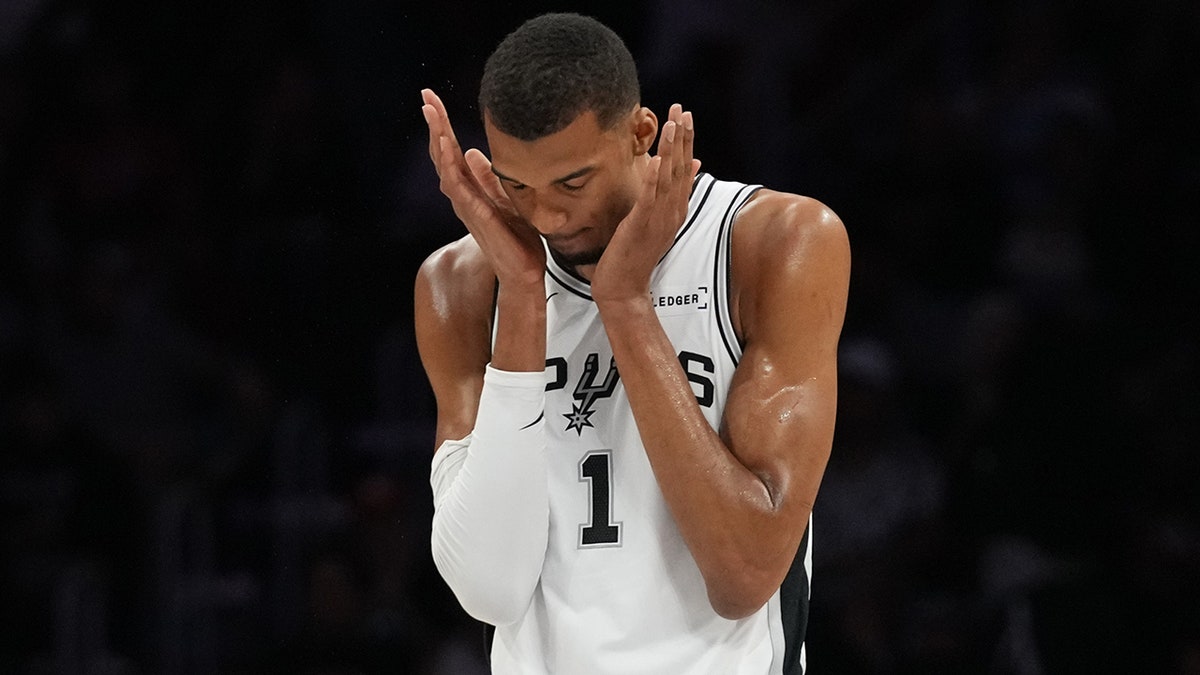
Injuries have also plagued San Antonio Spurs’ Victor Wembanyama and Denver Nuggets’ Nikola Jokic this season. Each player is in line for the MVP but are nearing ineligibility.

Cleveland Cavaliers star Donovan Mitchell said he understood the rule but there were too many other factors at play.

Advertisement
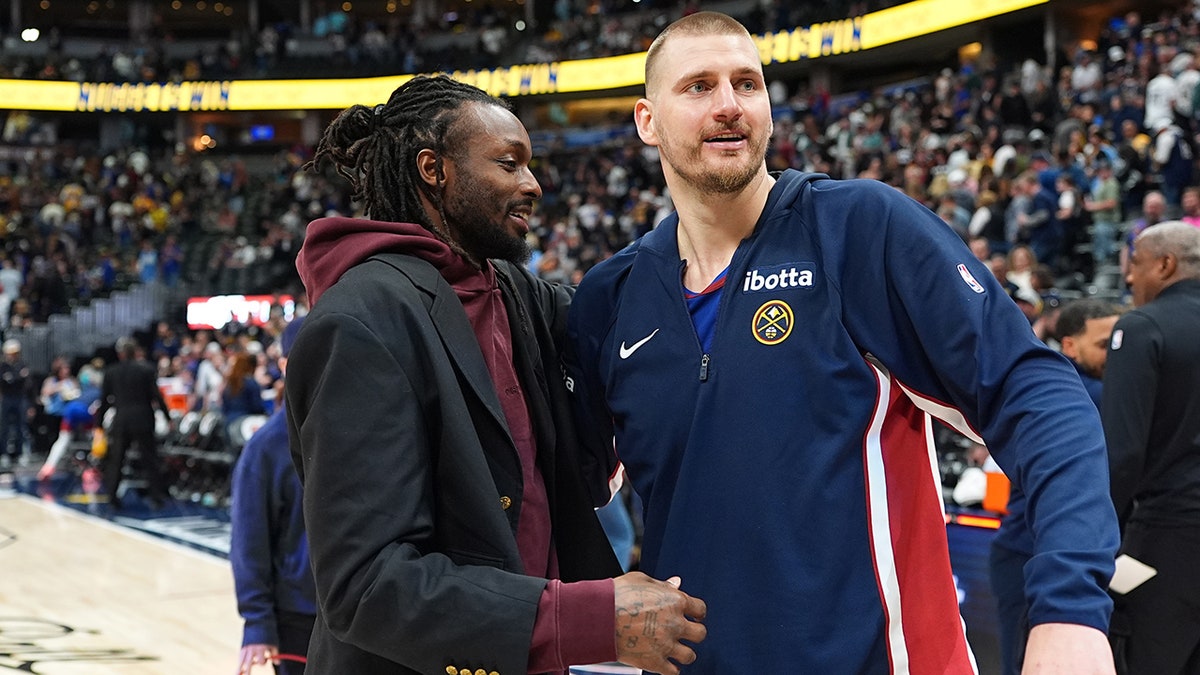
Nikola Jokic greets a player

Portland Trail Blazers forward Jerami Grant, left, greets Denver Nuggets center Nikola Jokic after an NBA basketball game Sunday, March 22, 2026, in Denver. (AP Photo/David Zalubowski)

VICTOR WEMBANYAMA BUILDS MVP CASE AS SPURS CLINCH DIVISION, END PLAYOFF DROUGHT

“It’s for the right reasons, but it’s tough,” Mitchell said over the weekend. “We get paid money to be out there, but there’s certain things you can’t control. It’s not like guys are resting and missing these games. These are legitimate injuries, so it’s something to look at for sure because there’s no way certain guys should be in this scenario.”

Kevin Durant suggested in 2024 he was indifferent about the rule.

“I just want guys healthy and on the court too. I guess that’s what the solution is try to get guys to stay on the court,” he said at the time. “It’s just something we’ve got to deal with. I won’t say I love it, or I hate it either, but it’s just something we’ve got to deal with.”

Advertisement
Victor Wembanyama on the court

San Antonio Spurs forward Victor Wembanyama (1) walks on the court during the first half of an NBA basketball game against the Miami Heat, Monday, March 23, 2026, in Miami. (AP Photo/Lynne Sladky)

CLICK HERE TO DOWNLOAD THE FOX NEWS APP

The rule was put in place in October in hopes of curbing load management and put an emphasis on the regular season. The rule may also impact whether players would receive a supermax contract in the future.

The Associated Press contributed to this report.

Follow Fox News Digital’s sports coverage on X and subscribe to the Fox News Sports Huddle newsletter.

Advertisement

Source link

Advertisement
Continue Reading

Sports

IPL vs NFL, NBA and EPL: How India’s T20 powerhouse stacks up globally | Business

Published

on

The recent surge in franchise valuations, with Royal Challengers Bengaluru (RCB) being sold to a global consortium led by Aryaman Vikram Birla of the Aditya Birla Group for $1.78 billion (about ₹16,600 crore) and Rajasthan Royals sold to a consortium led by US-based tech entrepreneur Kal Somani at around $1.63 billion (about ₹15,300 crore), has once again pushed the Indian Premier League (IPL) into the global spotlight. The RCB deal, involving investors such as the Aditya Birla Group, the Times of India Group and Blackstone, and the Rajasthan Royals deal, which includes investors linked to the Walmart and Ford families, highlight how IPL franchises are increasingly being treated as premium global sports assets, drawing strong private equity interest. 

  
What began in 2008 as a domestic T20 competition has evolved into one of the most commercially powerful sporting properties in the world. Backed by record-breaking media rights, strong advertiser demand and unmatched audience reach, the IPL is now frequently compared with global heavyweights such as the National Football League (NFL), the English Premier League (EPL) and the National Basketball Association (NBA).


But where does it stand when compared with the NFL, EPL or NBA?

Advertisement


Is IPL among the world’s biggest sports leagues by revenue?


In absolute terms, the IPL still trails the world’s biggest leagues by a significant margin. The NFL remains the undisputed leader, generating over $20 billion annually, according to Statista data. The EPL reported revenues of £6 billion ($7.5 billion) for the 2022–23 season, while the NBA generates between $10–12 billion annually.


“Revenue-wise, the IPL is the smallest. The NFL is around $18–20 billion, the NBA $10–12 billion, the EPL around $8 billion, and the IPL is roughly $3.5–4 billion,” said Prashant Joglekar, lead sports business analyst at SportsBiznet. “It is the youngest kid on the block.”


Advertisement


He added that direct comparisons can be misleading.


“We should not get into this trap right now. These properties have different legacies and were built for different purposes. The EPL operates within a football system that dates back to 1888. It is not fair to compare a 150-year-old legacy with the IPL,” Joglekar said.


Advertisement


But total revenue alone does not capture the IPL’s unique strength.


Why IPL punches above its weight in global sports


Unlike most global leagues that run for several months, the IPL operates within a tightly packed two-month window, yet delivers extraordinary audience numbers and commercial returns within this limited timeframe.


The 2023 IPL season recorded over 449 million TV viewers, while digital viewership on JioCinema hit record highs.

Advertisement


This compressed format creates a distinct economic dynamic.


“If you look at the number of matches, the NFL has over 270 games, the NBA more than 1,200, and the EPL 380. The IPL has just 74 matches squeezed into two months,” Joglekar said. “If per-match revenue intensity is considered, the IPL is at the top. It is more efficient and more intense.”

Advertisement


Few leagues compress as much economic value into such a short window as the IPL. 


Media rights and broadcast power drive IPL’s rise 


At the heart of the IPL’s economic engine lies its media rights deal. The 2023–27 cycle fetched ₹48,390 crore ($6.2 billion), making it one of the most valuable sports media deals globally.


Advertisement


This translates into a per-match value of roughly $13–15 million, placing the IPL among the top leagues globally in terms of match-level monetisation.


The IPL’s twin revenue streams, the broadcast on Star Sports and the digital streaming on JioCinema, have further broadened audience reach and improved monetisation efficiency.


Advertisement


The format itself plays a key role in this commercial strength.


“Cricket, especially T20, is designed for brands. After every over, there is a break where ads can be inserted. Strategic time-outs and innings breaks create multiple commercial slots,” Joglekar said. “This gives it a structural advantage over sports like football, which has continuous play.”


Advertisement


This is why IPL teams are increasingly viewed less as conventional cricket clubs and more as scarce media-linked assets.


But Joglekar also flagged a constraint. The broadcasting market has consolidated, mainly under JioHotstar, making it harder to assume a sharp rise in rights values in the next cycle. 


Franchise valuations: Catching up with global giants? 


Recent transactions suggest IPL franchises are rapidly closing the gap with global peers. Rajasthan Royals were valued at over $1.63 billion in a recent deal, while Royal Challengers Bengaluru is valued at $1.78 billion.

Advertisement


In comparison, the average NFL franchise is worth $5.1 billion, while top EPL clubs such as Manchester United exceed $6 billion.


Joglekar believes the valuations are backed by strong fundamentals.

Advertisement


“There is a 600–700 million strong cricket fan base in India, and it is increasingly middle-class and consumption-driven,” he said. “This creates strong monetisation opportunities across media rights, sponsorships and fan engagement.”



He also pointed to structural strengths.

Advertisement


“One key factor is India’s strong domestic cricket ecosystem, which continuously produces talent. That is something many other leagues struggle with,” he said.


At the same time, scarcity plays a role.

Advertisement


“Sport is one of the few live human experiences left. There is a scarcity premium, and investors, both domestic and global, are willing to pay for it,” he added. 


What makes IPL different from global leagues? 


The IPL’s structure sets it apart from traditional leagues. While the NFL, NBA and EPL are season-long competitions embedded in sporting calendars, the IPL operates more like a high-impact annual event.


Advertisement


“In terms of media and entertainment, the IPL closely follows global properties. Like the NFL has the Super Bowl halftime show, the IPL has high-impact opening ceremonies and finals entertainment,” Joglekar said.


Few countries have built a sports property of this scale in such a short time.


Advertisement


“In simple terms, if the NFL is a season and the EPL is a calendar, the IPL is an event, and that changes everything.” 


Can IPL become a top-tier global league?


The IPL’s growth trajectory remains strong, driven by India’s expanding digital economy and rising advertiser interest.


Its model is already being replicated globally, from Australia’s Big Bash League to South Africa’s SA20 and leagues in the United States and the Caribbean.

Advertisement


“The IPL model is already being replicated in multiple markets. Investors are building multi-league ownership structures across countries,” Joglekar said.


However, challenges remain.

Advertisement


“There is pressure to expand the number of teams. If the season extends from two months to four or five months, it could dilute brand value, sponsorship intensity and audience engagement,” he warned.


Still, the broader trajectory is clear.

Advertisement


“Today, the IPL is no longer just a domestic league. It is a global sports property, and we are already seeing global investors coming in,” Joglekar said.


The IPL may not yet be the world’s biggest league, but it is already one of its most powerful, and arguably its most efficient.

Advertisement

Source link

Continue Reading

Sports

“Get ready NFL” – Fans react as j-hope eyes Super Bowl stage; Kany Diabaté demands BTS 2027 invite

Published

on

On March 25, BTS’ j-hope featured in a gwang series interview uploaded on YouTube. During the segment, the host Kany Diabaté asked him about a dream stage. The K-pop idol, in reply, mentioned the Super Bowl. He wondered out loud what performing there would feel like. Diabaté, building on the answer, addressed the NFL directly.

“Super bowl people! NFL whatever, you have to call BTS call them for the next one 2027,” she stated.

In response, Hobi acknowledged it, saying it felt as if the host was speaking for him, which, in that moment, “feels nice.” Fans are reacting to this brief exchange.

Advertisement

“Get ready NFL,” an X user commented.

Fans are tagging the official NFL account on X, asking them to make it happen.

@NFL @JAYZclassicBars you hear this? make it real pls

Meanwhile, others believe it’s sooner than expected, with many saying it could be a “spoiler” as well.

bts at super bowl might be more closer than we think it is OMG

Advertisement

AND BANGTANBOWL IS HAPPENING

istg if this is a spoiler.


BTS Super Bowl talk linked to past NFL moments

In 2022, Min Yoongi addressed the idea of a Super Bowl stage on Weverse. He noted that performing there would be something to consider, yet the final call depends on an official invitation.

“Do I want to perform at the Super Bowl next year? I’d like to, but we’ll have to be invited… We can’t do it just because we want to,” yoongi stated.

At the same time, his sports involvement appears more defined elsewhere. He has attended several NBA games, and in 2023, he was introduced as an NBA ambassador. Alongside that, he has spoken about preferring underdog teams, including the Portland Trail Blazers, while also mentioning Damian Lillard as a player he follows.

Advertisement

Meanwhile, a separate moment connected BTS to an NFL setting earlier on. In October 2022, j-hope shared a birthday post for Park Jimin, which included a photo taken inside the locker room of the Las Vegas Raiders. The image, as a result, circulated widely across fan spaces, drawing attention to the group’s presence in a venue typically associated with professional football.

The photo, in turn, traced back to BTS’ Las Vegas stop during the Permission to Dance On Stage tour earlier that year. The group held four sold-out shows at Allegiant Stadium, which serves as the Raiders’ home ground. During those dates, the stadium shifted from a football venue to a concert setting, hosting large audiences each night. In the shared frame, Jimin was seated near a locker, with a Raiders jersey placed behind him.


BTS recently released ARIRANG and is currently promoting the album. A documentary will be released next, followed by their world tour starting in April.