

Sports
Bipartisan college sports bill with antitrust protection, salary cap for players set to be introduced in days

DESTIN, Fla. — The bill is finally coming.
After years of dead ends, a bipartisan bill on college sports from Sens. Ted Cruz, R-Texas, and ranking member Maria Cantwell, D-Wash., is expected to be introduced within days, sources familiar with the legislation told CBS Sports on Tuesday night. Language for the bill is being finalized and is now moving through the standard pre-introduction process.
The bill is expected to carry the prize college sports leaders have chased for the better part of a decade: a limited antitrust exemption regarding player eligibility and transfer rules — the legal shield that would let the industry write its own rules and enforce them without being challenged in the court system by players seeking additional years on the playing fields and courts.
What else is in the bill has largely remained a mystery, frustrating university leaders who previously backed the since-withdrawn SCORE Act, which also promised antitrust protection. As with any bipartisan bill, compromises were part of the process in drafting the Cantwell-Cruz bill, and what did and didn’t make it into the upcoming legislation is paramount to the power players.
What is known among those leaders is that the bill will address player movement in the transfer portal and eligibility windows, legally limiting player movement to as few as one transfer per career. The NCAA is close to adopting an age-based eligibility model that would allow players to compete in up to five seasons.
Getting salaries under control
Sources familiar with the upcoming bill told CBS Sports that the upcoming bill would also impose a hard, enforceable salary cap on players.
Schools began sharing a portion of their revenues with players because of the House v. NCAA settlement a year ago, but outside NIL deals, including those affiliated with booster collectives and multimedia rights holders, have allowed universities to circumvent the system and supplement players’ salaries outside the $20.5 million that schools are permitted to share with players.
Additionally, the College Sports Commission, which is tasked with policing those deals, has come under fire from athletic directors after similar NIL deals were flagged in the system. The CSC recently won an arbitration hearing involving contracts for 18 Nebraska football players that it deemed were tied to an “associated entity,” blocking the players from deals totaling more than $1 million. Athletic directors have voiced concerns about rival schools circumventing the rules. Booster and third-party money have been routed around the system, resulting in paydays that balloon beyond those of the revenue-sharing program.
The bill would not kill name, image and likeness money, sources said. Legitimate, true-market NIL deals would face no cap at all. What it would kill is the workaround with multimedia rights holders and other associated entities.
Asking for help
Texas A&M athletic director Trev Alberts, who helped build the College Sports Commission as a member of its implementation committee, put the stakes plainly. Schools agreed to the rules, which clarified NIL deals tied to a “valid business purpose,” and yet several have rebelled against the system.
“We’ve got a simple choice to make,” Alberts said Tuesday. “Do we want to be governed or not? And we are sending a very strong message that college athletics refuses to be governed.”
President Donald Trump’s executive order earlier this year also drew a line between fraudulent NIL schemes and a safe harbor for deals struck at fair market value.
Perhaps the most controversial language in the bill is the expected introduction of media rights pooling, sources told CBS Sports. The bill would allow schools and conferences to combine their broadcast inventory and sell it together. It’s the same concept Cantwell has pushed since March, when she and Sen. Eric Schmitt, R-Mo., released a discussion draft of the College Sports Competitive Act. Backers have estimated that pooled rights could generate more than $9 billion in new revenue, with guardrails meant to keep schools from cutting scholarships in women’s and Olympic sports.
Cantwell’s draft provided schools with the option to be included in pooling rights, rather than being forced to participate.
Concern over pay for coaches
One question hangs over the draft: coaches’ pay. Earlier this month, a presidential committee circulated a draft of ideas for discussion that would place a cap on coaches’ salaries, which have ballooned over the last decade, with 13 major football coaches set to be paid at least $10 million next season. A person familiar with the drafting was unsure whether a provision addressing coaching salaries made the introduced version, but said lawmakers “will try to get it in markup if it didn’t.” Schmitt has named “skyrocketing coaching contracts” among the forces breaking the model.
The big question lingering over college athletics is the unknown. What’s in the bill that athletic directors and conference commissioners are not expecting?
SEC commissioner Greg Sankey said he has been briefed on the Senate talks. Speaking Tuesday on the second day of the SEC’s spring meetings, Sankey declined to characterize what’s inside. Asked how informed he was, he answered in two words.
“I’m informed,” he said.
Will the bill pass?
Several conference and university leaders signed a letter endorsing the upcoming bill last week without having seen the final draft. Leaders who signed the commissioners from the ACC and Big 12, two of the four largest conferences in college sports. Noticeably absent were the signatures of Sankey and Big Ten commissioner Tony Petitti.
“I was asked a week and a half ago to sign on to support a bill I haven’t seen. I think that’s an enormously bad way to take a position,” Sankey said. “It would be important to learn what might be identified.”
Last week, for the second time in under a year, House leadership pulled the NCAA-backed SCORE Act before a floor vote — this time after the Congressional Black Caucus came out against the bill, which would have granted the NCAA its own antitrust protections. Sankey said he “spoke candidly” with the SEC’s athletic directors and coaches about the collapse.
The Cruz-Cantwell effort has a better chance to reach the president’s desk.
Obstacles still face the bill, including committee hearings typically tied to the slow-moving legislative process. A tightening calendar is the primary pressure. Trump’s April 3 executive order set an Aug. 1 deadline for new national rules and threatened federal funding for schools that don’t fall in line. Sankey called it “well-purposed to try to motivate people towards solutions in that period of time.”
The Senate’s summer recess begins in August, and legislators will be in campaign mode for the midterm elections when they return to Washington, D.C. If momentum stalls on the bill before August, there is pessimism that it will be introduced for a vote.
Sankey and other commissioners have cautioned what could happen if federal legislation fails to cross the finish line. He said Tuesday that the absence of federal legislation “creates more fracturing because conferences will have to make decisions.”
Big Ten and SEC leaders have discussed self-governance and the creation of new bylaws to police the ever-changing world of college athletics on the conference level. Those rules would likely differ from conference to conference, setting the stage for more concerns about competitive inequality.

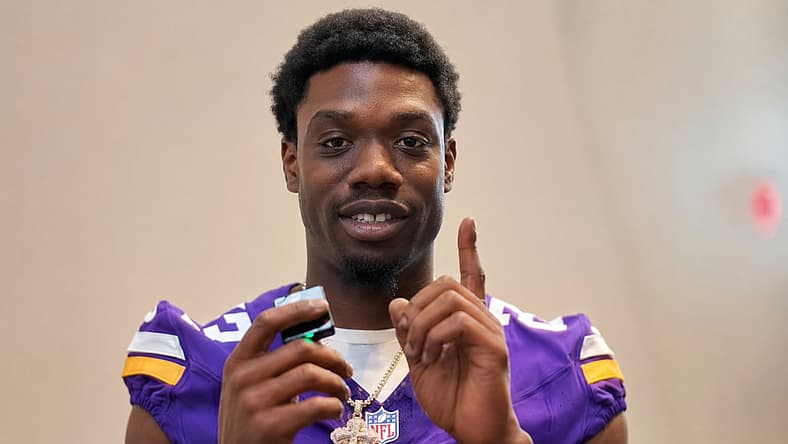
The Minnesota Vikings experienced a rough season from veteran cornerback Jeff Okudah in 2025, so much so that the club put its foot down in free agency and signed James Pierre, a 29-year-0ld from the Pittsburgh Steelers.
And don’t look now, but Pierre is somehow the top “breakout” candidate for the Vikings, according to ESPN.
Pierre’s 2025 Coverage Surge Makes the Case Credible

Ben Solak: Vikings Breakout Player Is Pierre
Pierre isn’t young, but Solak didn’t care, picking the veteran corner as his breakout prediction: “The Vikings like to rotate cornerbacks on cheap contracts, as coordinator Brian Flores’ zone-heavy and blitz-happy approach requires fewer snaps of prolonged man coverage than most other defenses.”
“This offseason, they snagged Pierre in free agency after he made some strong spot starts with the Steelers. Pierre had only 219 coverage snaps last season, but his passer rating allowed of 49.8 was second only to Jamel Dean among cornerbacks last season. (Dean, ironically, is who the Steelers signed in free agency).”
The Vikings added defensive passing game coordinator Gerald Alexander from the Steelers this offseason, and he just brought Pierre with him. That’s how that worked.
Solak continued, “It’s worth noting that Fabian Moreau was third in passer rating allowed at 50.5 in Flores’ defense. But the Vikings still elected to cycle Moreau out for Pierre, who was coached by Flores and passing game coordinator Gerald Alexander during their time in Pittsburgh.”
“That’s a clear sign they trust him more — and might ask for more man coverage accordingly.”
It probably wouldn’t be the worst idea in the world to re-sign Moreau, who remains a free agent.
Is 30 Years Old an Appropriate Breakout Time?
Pierre will turn 30 three days after the Vikings’ Week 1 showdown with the Green Bay Packers. While it’s fine and dandy to forecast a big season and breakout party for anyone, it’s a little odd to do it for a soon-to-be 30-year-old. Generally speaking, younger players get the ‘breakout’ adjective.
For example, Dalvin Cook, who hasn’t played in the NFL since 2024, is 30. His career is over. He’s not much older than Pierre. Solak is forecasting an emergence from someone not far off Cook’s age, and Cook feels all the way retired.
If one agrees with the Pierre assessment, the saying “better late than never” comes to mind.
All the Power to Him
Listen, you can’t knock Pierre for possibly busting out in Year No. 7. He should, in fact, be applauded if he brings Solak’s prediction to life.

Pierre’s 2025 season marked a huge improvement, particularly given his limited playing time. Despite appearing in only 377 snaps and starting 5 games, he still managed to record 30 tackles. His coverage statistics were exceptionally strong. Pierre allowed a mere 42.9% completion rate on 35 targets, surrendering only 130 yards and no touchdowns. Quarterbacks targeting him posted a dismal 41.4 passer rating, which is unholy good.
Pro Football Focus also recognized his stellar play, assigning him an 86.2 overall grade — the highest of his career. Even more impressive was his 88.9 coverage grade. Additionally, he secured an interception and broke up nine passes.
However, his season wasn’t without its weaknesses; his run defense proved to be a liability. A 45.9 tackling grade was poor, and six missed tackles resulted in a 16.2% miss rate.
Nonetheless, in the grand scheme, Pierre transformed from a depth piece on the roster to a legitimate defensive contributor in a single season. For a Vikings secondary seeking affordable cornerback depth, his 2025 breakout is precisely the kind of fit that made sense for the Vikings in March, who sought value-based free agents.
Our Kyle Joudry noted on Pierre last month, “Watching him on the field means seeing an easy mover who isn’t afraid to blanket a receiver. He’s a long guy who can lean on a receiver in the same way a power forward in basketball drapes himself over somebody trying to back toward the rim.”
“Gotta assume, folks, that receivers don’t love going against James Pierre.”
Other Breakout Candidates
Of course, Pierre isn’t the only Vikings player capable of breaking out in 2026. Other candidates could include:
- Charles Demmings | CB
- Tai Felton | WR
- Tyrion Ingram-Dawkins | DT
- Donovan Jackson | LG
- Dallas Turner | OLB
- Jay Ward | S

Dallas Turner especially makes sense as an option to take off in his full-time starting role now that Jonathan Greenard plays for the Philadelphia Eagles.
Most productive cornerbacks can play well into their 30s. We shall see if Pierre follows suit.



AAMI Park will play host to Sunday’s
Round 19 NRL game between Melbourne Storm and
Gold Coast Titans. The game kicks off at 6:15 pm with Melbourne Storm heading into the game as favourites with the bookmakers. Continue reading for our in-depth preview of the Melbourne Storm vs.
Gold Coast Titans
game and give you our free tips and bets.
When: Sunday July 12, 2026 at 6:15 pm
Where: AAMI Park
Bet 💰: Bet On This Match HERE
Melbourne Storm vs Gold Coast Titans Odds
Melbourne Storm vs Gold Coast Titans Preview
Melbourne will be eager to respond after a disappointing defeat to Manly when it hosts Gold Coast in the final match of the round. The Storm welcomes back several key players, including Jahrome Hughes and Nick Meaney, while Cameron Munster and Harry Grant have also been named to back up after Origin. Gold Coast has shown flashes of promise throughout the season but continues to struggle for consistency, particularly away from home. Melbourne has dominated this fixture over the past decade and boasts an imposing record at AAMI Park against the Titans. With a near full-strength squad returning, the Storm looks well placed to bounce back.
First Try Scorer
Melbourne Storm vs Gold Coast Titans Teams
Storm team: 1. Sualauvi Faalogo 2. William Warbrick 3. Jack Howarth 4. Nick Meaney 5. Manaia Waitere 6. Cameron Munster 7. Jahrome Hughes 8. Stefano Utoikamanu 9. Harry Grant 10. Josh King 11. Cooper Clarke 12. Alec MacDonald 13. Trent Loiero 14. Tyran Wishart 15. Joe Chan 16. Jack Hetherington 17. Josiah Pahulu 18. Oryn Keeley 19. Trent Toelau 20. Davvy Moale 21. Siulagi Tuimalatu-Brown 22. Gabriel Satrick 23. Hayden Watson
Titans team: 1. Keano Kini 2. Dean Ieremia 3. Jojo Fifita 4. AJ Brimson 5. Phillip Sami 6. Jayden Campbell 7. Zane Harrison 8. Moeaki Fotuaika 9. Oliver Pascoe 10. Tino Fa’asuamaleaui 11. Arama Hau 12. Beau Fermor 13. Chris Randall 14. Kurtis Morrin 15. Josh Patston 16. Klese Haas 17. Cooper Bai 18. Sam Verrills 19. Jaylan de Groot 20. Jett Liu 21. Lachlan Ilias 22. Sialetili Faeamani
Sports
‘It’s a tradition at this point’: Linda Noskova, Karolina Muchova script all-Czech Wimbledon final for new generation | Tennis News


Czech women’s tennis is set to celebrate another historic chapter at Wimbledon as two of its brightest new stars, Linda Noskova and Karolina Muchova, booked places in an all-Czech women’s singles final, ensuring the All England Club will crown yet another champion from the nation’s remarkable production line.The blockbuster showdown guarantees a third Czech women’s singles champion in four years, following Marketa Vondrousova’s triumph in 2023 and Barbora Krejcikova’s title run in 2024, underlining the country’s enduring dominance on grass.Noskova, 21, defeated Ukraine’s Marta Kostyuk 6-4, 6-4, while ninth seed Muchova survived a breathtaking battle against Coco Gauff 6-2, 1-6, 7-6 (10) after an unforgettable deciding-set super tiebreak.
A legacy built by champions, carried by a new generation
For Noskova, reaching the Wimbledon final carries a deeper emotional significance. The young Czech revealed that watching compatriot Petra Kvitova lift the Wimbledon trophy in 2011 was the moment that introduced her to tennis.“That is maybe one of the first moments when I realised that such a sport as tennis exists,” Noskova said after making her Centre Court debut.Now, she hopes her own journey will inspire another generation of Czech youngsters.“It’s a tradition at this point,” she said with a smile, referring to her country’s extraordinary success at Wimbledon.The Czech connection with the All England Club stretches back decades. Martina Navratilova‘s record nine Wimbledon singles titles laid the foundation, Jana Novotna captured the crown in 1998, while Krejcikova famously thanked Novotna after winning last year, saying the late champion had encouraged her to pursue professional tennis.Muchova believes that constant exposure to successful compatriots has fuelled Czech excellence.“We have a great history of Czech tennis,” she said. “When I was younger, looking up to the girls who were maybe five years older than I was, you could see them doing so well. So it gave me the belief that I can as well do it.”Watching from Centre Court was Navratilova herself, who expects another memorable Czech celebration.“I can relax and just enjoy, because we’re going to have another Czech winner,” Navratilova said. “Czech women are certainly pulling their weight at Wimbledon. This is crazy good.”Noskova also offered her own explanation for why Czech players thrive on grass.“We are very creative,” she said. “Grass allows us to use every side of tennis — serve and volley in the old days, slices and volleys in this new era. We have all these sides that grass allows us, and it’s showing.”
Muchova survives Gauff thriller
Muchova’s route to the final was anything but straightforward.The Czech star squandered a match point before eventually edging Gauff in a dramatic super tiebreak that featured momentum swings, breathtaking rallies and a spectacular full-stretch diving forehand volley reminiscent of Boris Becker’s famous Wimbledon exploits.“It was such a big fight,” Muchova said. “It was a roller coaster.”Reflecting on the nerve-racking finish, she added: “You’re up and down in 10 seconds. You have a match point, then match point down. It’s no time to think, but very nerve-wracking. I’m really kind of shaking and trying to sink it in.”Gauff was left ruing a missed opportunity after netting a forehand drop shot on her first match point.“The bounce kind of caught me off guard. I just panicked a little bit,” the American admitted.Calling it “a learning experience,” Gauff added: “Every great champion has this happen in their career. Maybe this is something I need to be on their level.”
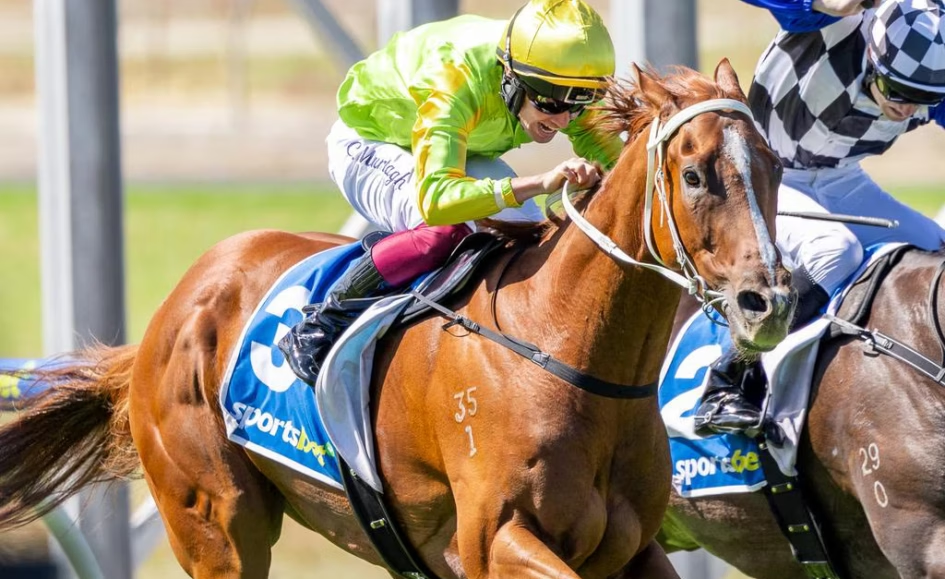
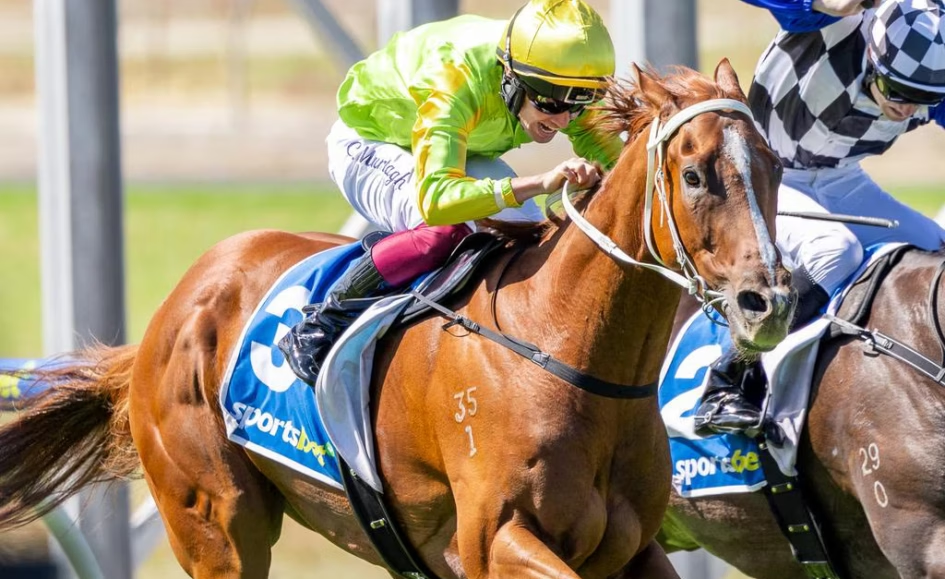
A lack of suitable races in his home state has prompted Murray Bridge-based trainer Darryl Hewitt to seek opportunities in Caulfield with two of his gallopers.
The consistent Sir Now is headed for the Group 3 Sir John Monash Stakes (1100m) this Saturday, while Snoopy Now will contest the Sportsbet Same Race Multi Handicap (1700m) carrying topweight.
Hewitt stated that interstate travel was necessitated, particularly for Sir Now, who has been carrying significant weights in races within his home state.
Sir Now, a winner of nine of his 24 starts with eight placings and over $400,000 in prize money, had been assigned weights of up to 65kg in recent outings before the claim of apprentice Alysha Warren.
“He can’t race here because there’s no races for him,” Hewitt commented.
“He’s running around 65 kilos on his back, but he’s been pretty honest all the way through.”
“Ideally you would stay in your own backyard as he’s been pretty competitive, but he deserves a chance over there.”
“The track is going to be a soft five or six come Saturday, but he can handle heavy going, if it goes that way, and he comes down four-and-a-half or five kilos on his last run.”
Punters have shown support for Sir Now, with his odds shortening from $15 to $6.50 in early betting.
Hewitt is no stranger to Victorian racing, having been based out of Benalla approximately 20 years ago with a small number of horses – Merlot Now and Sparkling Now – who were similar types to the two horses competing at Caulfield on Saturday.
Merlot Now outgrew the Adelaide racing scene due to his rating, a situation Hewitt noted is currently happening again with Sir Now.
This will be Sir Now’s second trip to Melbourne, having previously finished fifth at Flemington over 1000m on VRC Oaks Day.
“They came home pretty quick that day and we went over thinking it was going to be a wet track and it ended up being a Good 3, and he finished not far behind Rey Magnerio.”
“He won’t disgrace himself over there on Saturday.”
Senior rider Connor Murtagh will replace Warren for Saturday’s race.
Stablemate Snoopy Now is coming off a recent win in a benchmark 78 race and will be ridden by the in-form apprentice Jackson Radley.
Hewitt expressed concerns about Snoopy Now facing Melbourne opposition given the weight the horse is assigned to carry.
“It’s like the SANFL over here, against the AFL over there, and we’re getting rated the same,” Hewitt remarked.
“He’s taking an 85 rating over there against other 85 rated horses that are racing against better quality week in, week out.”
Check out the latest Australian betting sites for a wide range of racing betting markets.
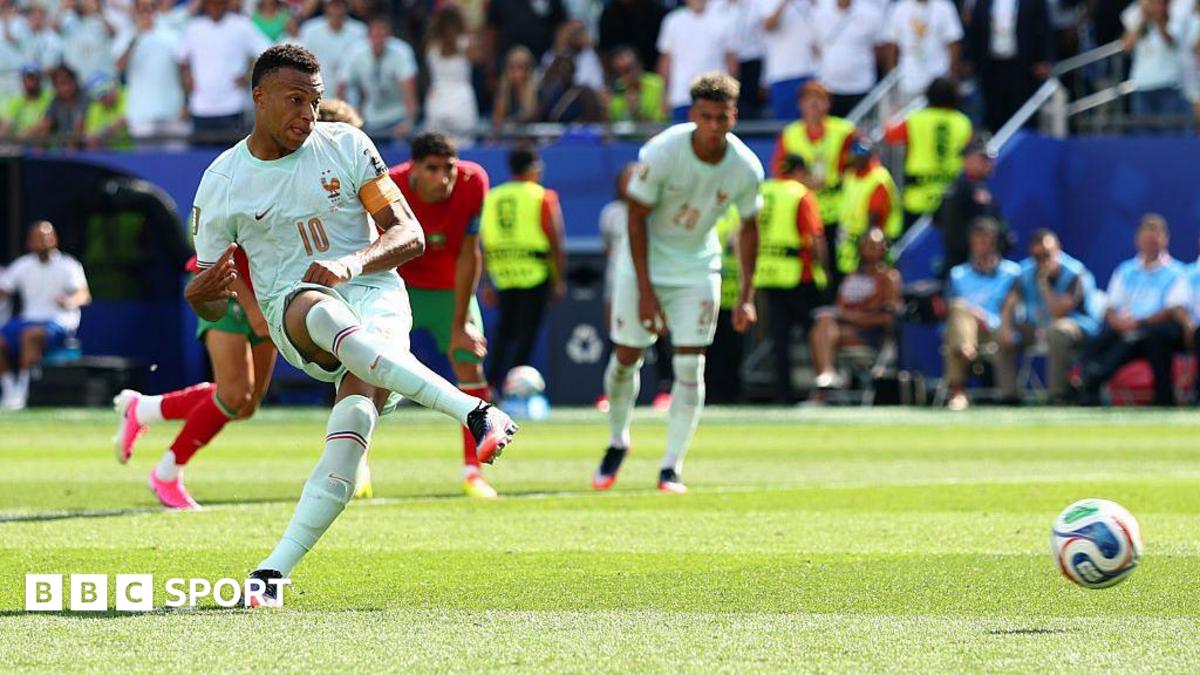
Whether or not France’s World Cup campaign ends with a third world title, few will remember Kylian Mbappe’s penalty miss in their quarter-final victory over Morocco.
The match in Foxborough was goalless when Mbappe was fouled by Noussair Mazraoui. The France captain stuttered in his run up, looked up at goalkeeper Yassine Bounou, and saw his tame penalty easily saved.
Mbappe made amends on the hour mark when his sensational curling effort broke a stubborn Morocco defence, before Ousmane Dembele doubled France’s lead six minutes later to secure a 2-0 win.
But his earlier blunder, uncharacteristic for the joint-top scorer in this tournament, begs the question: Is it time players stopped with the ‘stuttering’ penalty kicks?
In the list of things football traditionalists hate about the modern game, stuttering run ups are high up alongside players wearing gloves with short sleeve shirts, diving, and of course the video assistant referee (VAR).
There is no strict definition of a stutter, but under Fifa rules, a player is allowed to stop or feint during the run-up as long as they don’t do it directly before kicking the ball.
It’s nothing new – John Aldridge, Mexico legend Hugo Sanchez and Pele all used the stutter to gain an advantage – but it can backfire spectacularly if the goalkeeper doesn’t commit to diving early.
Mbappe joins Bruno Guimaraes, Jorgen Strand Larsen, Lionel Messi and Harry Kane (though he was able to retake his penalty against Croatia, which he scored without having a stutter in his approach) in missing penalties after stuttering in the run-up.
Of the 26 ‘stutter’ penalties taken during this World Cup – penalty shootouts included – 11 have not been scored, which leads to a conversion rate of 57%.
“This stuttering penalty seems to be the one. The goalkeepers seem to have got a march on it now,” said Ian Wright on ITV.
Marko Arnautovic, Raul Jimenez, Neymar, Mbappe, Cristiano Ronalo, Yoane Wissa and Kai Havertz have used the technique successfully.
Meanwhile, 24 of the 35 ‘non-stutter’ penalties taken have been scored, a conversion rate of 68%.
In general, this has been a poor World Cup for players looking to convert from 12 yards.
A total of 30% of non-shootout penalties have been missed this summer, the second most of any World Cup since records began in 1966.
When shootout penalties are added to the equation, then the miss rate rises to 35%, the highest of any World Cup since 1966.
“There is an arms race going on. It is definitely harder to score a penalty now. The reason being, the goalkeepers are bigger now, more athletic,” former Scotland winger Pat Nevin said on BBC Radio 5 Live.
“If your keeper goes the right way, you must hit the side netting with pace, even then it still might be saved.
“A very good penalty is no longer a certainty, so you have to re-think it. I need to make sure he goes the wrong way, hence the stutter, you try to send them the wrong way.
“Of course the goalkeepers have the data, they know what everybody does, there is no hiding what you prefer because it shows up. There is a constant running battle to figure out how you get the advantage.
“Mbappe knows what his advantage is: preparation. He has a set up [placing the ball before taking the penalty], he went through it twice today but problem is that he had to go through it three times, and the third time [he missed].”

Six months into 2026 and the PGA Tour season is nearly over as we approach the final major of the season next week.
The year has been a great one for equipment, and that’s led to some volatility in the bags of the game’s best players. Some moves have been more consequential than others.
While changes last month like Bryson DeChambeau’s prototype TaylorMade driver and Jordan Spieth’s near putter switch stole headlines, others had lasting impacts — and two even led to major titles.
There’s still plenty of golf left this season, but take a look at some of the biggest gear switches of 2026 so far.
Rory McIlroy dabbles with cavity backs
Rory McIlroy kicked off the year strong by gaming a set of TaylorMade P7CB cavity-back irons both at TGL and his first DP World Tour starts of the season in the Middle East.
Just a month earlier at the Australian Open, McIlroy first forayed into the cavity-back long irons, the first non-blades he’s played in competition, and liked them so much he switched to the rest of the set by the weekend.
That set was still in the bag for his first TGL matches and again at the Dubai Invitational.
“If there’s help to be had, I’ll definitely take it,” McIlroy said after an opening-round 66 in Dubai in early January. “And even in Dubai at the end of last year, I hit a couple of 5-irons that I mis-struck slightly, and instead of it maybe coming up five or seven yards short, it was coming up more like 10 to 15 yards short.”
But while the early results were promising, the new cavity-back irons didn’t stick, and he was back in his custom RORS Protos by his first statestide start at Pebble Beach.
He revealed the rationale didn’t necessarily have anything to do with performance, but rather his familarity with what his blades did versus the cavity backs.
“So whatever way the weight of the head was or whether it was the blade length,” McIlroy said in February, “I’d make swings that I feel like I’d make with my blades that would be a very neutral ball flight, and then with the cavity backs, they would just like start to tail off to the right.
BEST-IN CLASS FEEL

Using Tour feedback and modal analysis we’ve strategically designed mass placement for best in class feel. Crafted using Compact Grain Forging and 2000 tons of pressure to deliver the purest feeling 1025 soft carbon steel possible.
PRECISE CONTROL
Precise milled face and grooves combined with a constant CG the P•7CB is designed to deliver an optimal launch and spin combination for the ultimate control and precision.
CONSISTENCY
Created to maximize accuracy and consistency. The P•7CB optimized perimeter weighting and co-forged tungsten designed to deliver a beautiful blend of stability and workability.
COMPACT TOUR SHAPING
Every aspect of shaping in this iron was intended to meet the needs of discerning ball strikers. A compact blade length and thin topline create a confident, clean look in the playing position while the sole camber and progressive bounce profile provide consistent turf interaction.
View Product
ALSO AVAILABLE AT: PGA Tour Superstore, TaylorMade
“It made me feel like I could fully release like my iron shots, which is great in theory and great in practice, but then once you get on the course with a card in your hand, for so many years I’m used to feeling that like held-off position through impact, and then to go from that to trying to release it, it just was a different feel, especially under pressure or in the heat of competition,” he said. “Just didn’t feel as familiar as I wanted it to.”
Ultimately, McIlroy was gaming the RORS Protos when he won his second straight Green Jacket in April, but he seemed like he left the door open on using a cavity back iron in the future.
We’ll stay tuned on that one.
Wyndham Clark finds ‘the one’
It’s rare that a gear free agent falls in love with a club so much that they end up signing with the company that makes it, but that was a match made in heaven for Wyndham Clark and Ping’s Scottsdale TEC Ally Blue Onset putter.
Clark, newly a free agent to begin the year, started playing putter and driver roulette at the beginning of the season, trying five drivers in as many weeks to start the year and then moving on to putters.
He later joked that he was “dating” a lot of golf clubs as he explored options.
It even got to the point where Clark showed up to the Players Championship with a putter he bought at his home club’s pro shop.
But ever since Houston, he’s stuck with Ping’s Scottsdale TEC Ally Blue Onset putter and later moved to a new counterbalanced build of the head. Since then, his putting stats have returned to the all-world level that saw him win three times in nine months, including his first U.S. Open.

View Product
ALSO AVAILABLE AT: PGA TOUR Superstore
Clark and Ping formalized their relationship on Wednesday of the U.S. Open week, and that deal couldn’t have been timed better as Clark won his second U.S. Open title, cementing his comeback and giving a ton of publicity for their new putter line.
McLaren debuts with big Justin Rose splash
McLaren Golf launched with much pomp and circumstance at the end of April, but no move was flashier than the announcement that Justin Rose was coming on board as both an ambassador and an investor.
Rose had won twice in the past eight months and finished top-3 at the Masters for the second straight year. At 45, Rose could have easily continued on his free agent ways, but instead he’s gone all in with the super car maker’s new venture into golf equipment.
The former World No. 1 debuted a combo set of McLaren’s Series 1 and Series 3 irons that utilize Metal Injection Molding technology at the Cadillac Championship.
“McLaren Golf has been something that’s been on the back burner for a good number of months,” Rose said at his pre-tournament press conference that week, his first comments after the announcement. “Obviously, to launch a brand out of the ground obviously has been going for a lot longer than a year. It’s something I’ve been involved with from the outset, really helping the engineering team, really testing the very first editions of the club. So yeah, I’ve been kind of working with the project for well over a year, probably.”
A Tour blade with the feel you expect and the forgiveness you don’t.

Series1 is a modern Tour blade, engineered through Metal Injection Molding. It delivers a level of forgiveness traditional forging can’t achieve, while maintaining the feel and workability often lost in cast designs.
The result is performance without compromise – a blade for elite players who demand more from their irons.
View Product
Since his debut in Miami, Rose has continued to make tweaks to his iron setup and teased that more clubs are coming down the road.
In his past five events, Rose has finished outside the top-25 just once.
The author welcomes your comments at Jack.Hirsh@golf.com.
Want to find the best clubs for your game in 2026? Find a club-fitting location near you at True Spec Golf.
“>
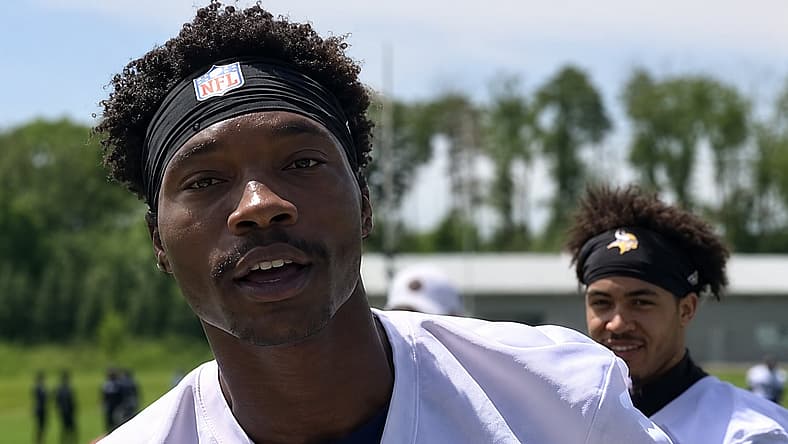
The Minnesota Vikings welcomed about 35 new players this offseason, and before the regular season, which is about nine weeks away, you should get to know the name Charles Demmings.
The 5th-Round cornerback is turning heads in Vikings circles and leaguewide, so much so that SI.com identified him as an overlooked steal heading into training camp.
Brian Flores Has the Ideal Room for Demmings to Develop

Justin Melo: You Cannot Overlook Demmings
Melo of SI.com sized up one overlooked rookie from each position, with Demmings getting the nod at cornerback.
“Charles Demmings became the first Stephen F. Austin player in Senior Bowl history. He was outstanding in Mobile, proving he could compete with wide receivers from bigger programs. He’s foot 6-foot-1 with terrific length (32-inch arms) and a competitive streak with incredible toughness and desire,” Melo wrote.
“Demmings wants to play press-man coverage and possesses the feet and mirroring skills necessary to thrive in man-to-man looks.”
How’d Demmings land with the Vikings? Well, last summer, Minnesota sent quarterback Sam Howell to the Philadelphia Eagles in a deal involving a 5th-Round pick. That turned out to be Demmings when it was all said and done.
A Perfect CB Room to Shine
Are the Vikings’ current cornerbacks good? Yes — but not stellar. The group is headlined by Byron Murphy Jr., who reached the Pro Bowl in 2024, Isaiah Rodgers, one of the fastest players in the NFL, and newcomer James Pierre, who fired up an 86.8 Pro Football Focus grade with the Pittsburgh Steelers in 2025.
Those three form a solid cornerback unit and one that defensive coordinator Brian Flores will unleash successfully. Yet, for a hungry rookie like Demmings, the pecking order is not insurmountable. In fact, Demmings is one injury away from showtime, and because of his age and upside, could grab a CB1, CB2, or CB3 job and make it his own.
The Vikings are also wildly overdue to connect on an organically drafted cornerback. The last productive ones were Xavier Rhodes in 2013, Trae Waynes in 2015, and Mackensie Alexander in 2016. A guy like Demmings could end the madness.
The Scouting Report
Here’s how NFL.com’s Lance Zierlein scouted Demmings earlier this year: “Demmings is capable of mixing into a variety of coverages but is at his best starting from a press look. He has the hips/feet to match route breaks and the speed to stay with routes as they unfold.”
“His recognition and instincts are average from off coverages and he can be a step slow to drive on throws in front of him. While Demmings lacks ideal play strength and is not a firm tackler, his ball skills and man-cover consistency could land him a roster spot as a future CB4 with gunner potential.”
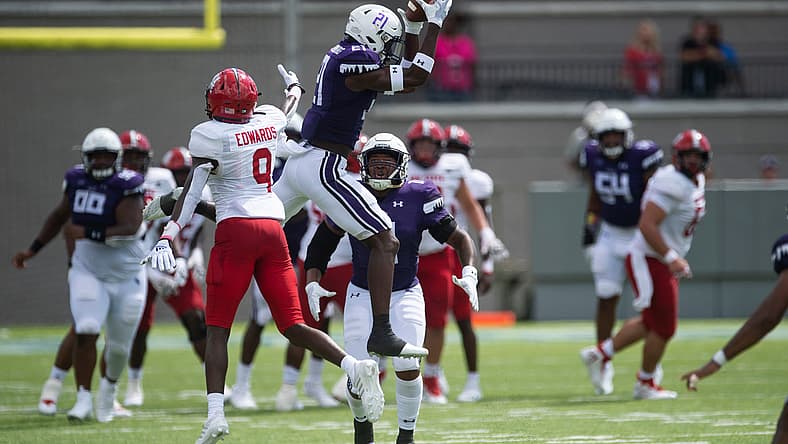
For comparisons, Tampa Bay Buccaneers CB Zyon McCollum is arguably the best for Demmings. Both entered the league as long, explosive FCS corners with exceptional testing numbers and a proven ability to make plays on the ball. McCollum took some time to develop into a solid NFL starter. Demmings could follow a similar path, beginning on special teams before earning an opportunity to play outside corner for Minnesota.
Demmings could also reasonably be compared to Paulson Adebo and Alontae Taylor.
Not the First Bit of Hype
After the draft, former NFLer Louis Riddick name-dropped Demmings as an undercover rookie who could bust out.
The Athletic‘s Dane Brugler also noted on Demmings, “Day 3 pick who could surprise: Charles Demmings, CB, Stephen F. Austin. Aside from Demmings always being a great quote, he leaves everything he has on the field. With his cover athleticism and mental toughness, Demmings was a worthy bet in the fifth round, and he landed with a team that needed cornerback depth.”
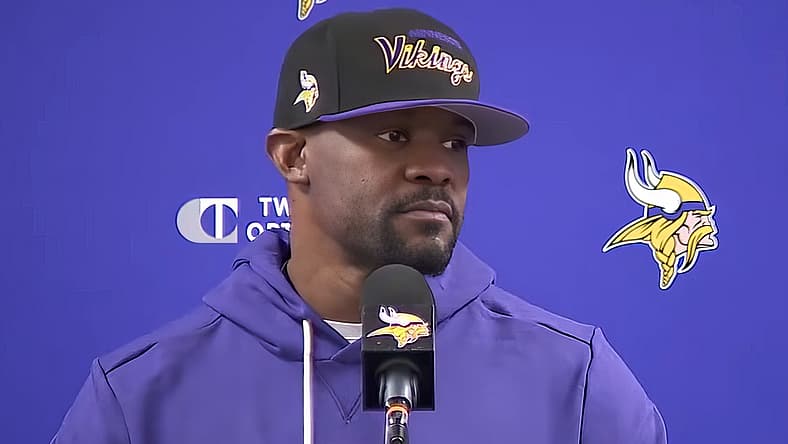
So, if you’re keeping score of the Demmings hype train at home, that’s Louis Riddick, Dane Brugler, and Justin Melo.
Our Brevan Bane even declared a couple of weeks ago: “Charles Demmings is the future CB1 of the Vikings. I fully expect Demmings to be the CB4 behind Murphy Jr., Rodgers Sr., and Pierre. This means that Demmings would get a decent little amount of reps on the field. There will also likely be reps for Demmings on special teams as a gunner.”
“Demmings has all the tools to become a starter one day, and Minnesota got him in the fifth round. Sure, it’s a long shot to predict something as crazy as this, but I don’t think it’s that crazy. When you do this job, you have to choose your hills, and this seems like a nice one to die on.”
Demmings turned 23 in April.

France booked their place in the FIFA World Cup 2026 semifinals with a composed 2-0 victory over Morocco, overcoming a resilient first-half display from the Atlas Lions before Kylian Mbappe and Ousmane Dembele produced the decisive moments after the break.
The reigning runners-up had to work much harder than the final scoreline suggests. Morocco frustrated Didier Deschamps’ side for long periods, thanks largely to an inspired performance from goalkeeper Yassine Bounou, who repeatedly denied the French attack in the opening 45 minutes.
With the win, France reached the World Cup semifinals for a third consecutive edition and will now face Spain/Belgium for a place in the final.
Bono keeps Morocco alive in a dramatic first half
France dominated possession from the opening whistle and nearly broke the deadlock within minutes. Mbappe tested Bounou from distance before Dayot Upamecano was denied from the resulting corner as the Moroccan goalkeeper produced two stunning saves in quick succession.
Morocco continued to absorb pressure before France were awarded a penalty midway through the first half after Mbappe was brought down inside the area. However, Bounou once again came to his side’s rescue, diving to his left to keep out the French captain’s effort after a lengthy VAR delay before the spot kick was taken.
Mbappe makes amends with trademark brilliance
France finally found the breakthrough in the 60th minute and it came from the player Morocco had worked tirelessly to contain.
Picking up possession on the edge of the box, Mbappe shifted the ball onto his stronger foot before curling an unstoppable strike into the top corner, leaving Bounou with no chance despite another otherwise outstanding display.
The goal was Mbappe’s eighth of the tournament and further strengthened his challenge for the Golden Boot while once again underlining his reputation as a big-game player.
Dembele seals the result
Morocco attempted to respond but struggled to create clear-cut opportunities against France’s disciplined defensive structure.
Five minutes after Mbappe’s opener, Ousmane Dembele effectively ended the contest. The winger collected possession just outside the box before drilling a low effort into the bottom corner to double France’s advantage.
Didier Deschamps later withdrew Mbappe with around 15 minutes remaining after the forward signalled some discomfort, although he appeared in good spirits on the bench and joined his teammates’ celebrations after full-time.
France eye another World Cup final
The victory reinforced France’s status as one of the tournament favourites. While Morocco once again demonstrated its defensive organisation and resilience, the individual quality of France’s frontline ultimately proved decisive.
Les Bleus have now reached the last four of three consecutive World Cups and remain firmly on course for another appearance in the final.
For Morocco, the defeat ends another memorable campaign, while France moves one step closer to lifting a third World Cup title.
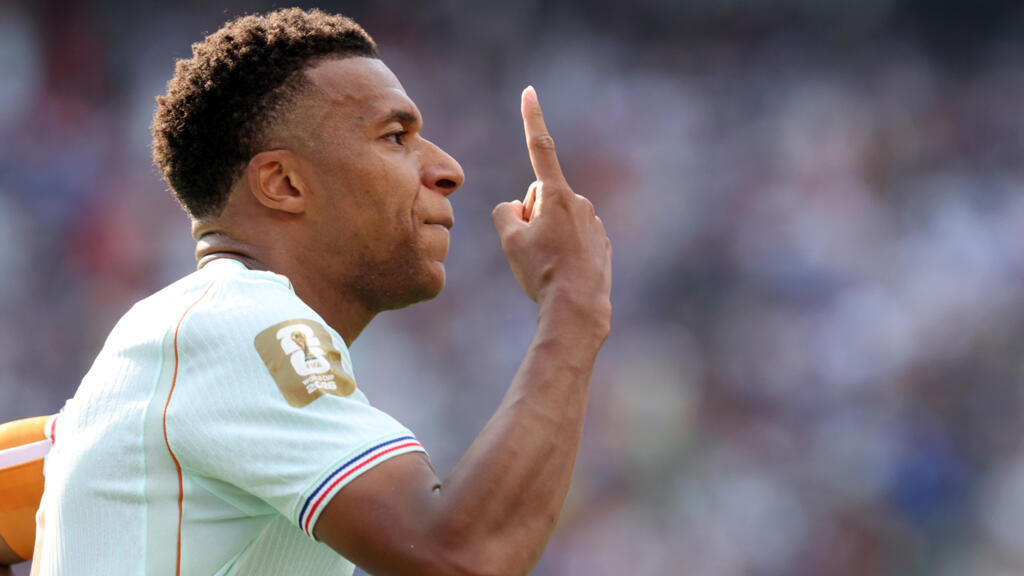

France defeated Morocco 2-0 in a hard-fought quarter-final encounter, with Mbappé opening the scoring after initially missing a penalty in the first half.
Mbappe curled in his eighth goal of the tournament on 60 minutes before Dembele doubled Les Bleus‘ lead six minutes later to settle a clinical victory at the Gillette Stadium outside Boston.
The win sends the 2018 champions into a last-four showdown against either Spain or Belgium in Arlington, Texas on Tuesday.
The Atlas Lions had been tipped to pose a serious threat to France’s hopes of reaching a third consecutive World Cup final.
Read moreWorld Cup 2026: Argentina pull off stunning comeback as Egypt protest refereeing
But Didier Deschamps‘ men were always in control against a limited Morocco side who failed to register a single shot on goal until an 83rd minute free-kick by Azzedine Ounahi was parried away by France goalkeeper Mike Maignan.
France though struggled to find a breakthrough, and missed the opportunity to take the lead on 28 minutes when Mbappe saw a penalty saved by Morocco goalkeeper Yassine Bounou.
Mbappe had won the penalty after being brought down by Noussair Mazraoui but was forced to wait several minutes before being allowed to take the kick after a protracted VAR check.
Resilient Bounou
Morocco managed to hold out to half-time but it was always only a matter of time before France’s relentless pressure paid off.
The breakthrough came on the hour mark, with Mbappe bending a brilliant right-foot shot past a resilient Bounou from the edge of the area.
Paris Saint-Germain star Dembele made the game safe in the 66th minute, striding forward menacingly from midfield before steering a low finish into the bottom corner.
Watch more‘Kylian, forgive us’: How the World Cup turned Mbappé’s reputation around
France now await the winner of Friday’s quarter-final in Los Angeles between European champions Spain and Belgium.
Spain, who have not conceded a single goal so far, eliminated Cristiano Ronaldo‘s Portugal in the last 16 and will fancy their chances of overcoming Belgium, who thrashed United States 4-1 to reach the last eight.
(FRANCE 24 with AFP)

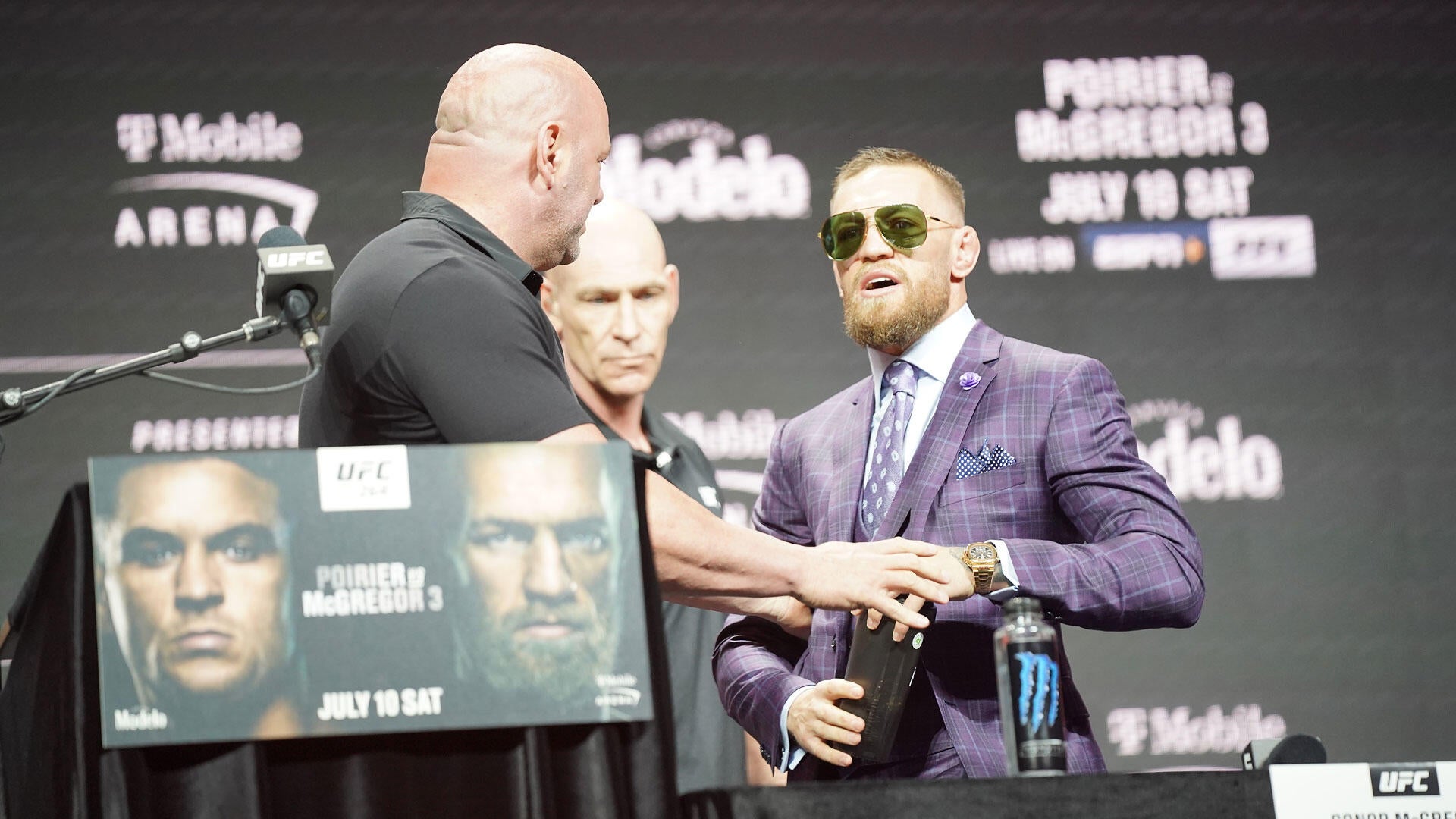
UFC 329 is fast approaching, but before the fighters walk to the Octagon, they will take part in a final pre-event press conference on Thursday night. The fighters, including headliners Conor McGregor and Max Holloway, will trade final verbal barbs before weighing in on Friday and fighting on Saturday.
The UFC 329 fight card is the headline attraction for UFC’s annual “International Fight Week,” which historically features massive headline fights. UFC is delivering on that history with the bout between two of the promotion’s biggest stars in Holloway and McGregor. McGregor will be fighting for the first time since snapping his leg against Dustin Poirier in their trilogy in 2021, while Holloway is looking to rebound from losing the symbolic “BMF” title to Charles Oliveira in his last outing. This bout also takes place at welterweight, McGregor’s third fight at the weight and Holloway’s debut at 170 pounds.
Sign up for Paramount+ and watch UFC 329 live for no additional fee — every UFC numbered event and UFC Fight Night is included with your subscription! Plans start as low as $8.99/month or $89.99/year!
The two previously fought in 2013, with McGregor taking a clear decision victory before both men went on to become icons and legends of the sport.
“The Notorious” Conor McGregor — career in focus
The annual International Fight Week set up has plenty to offer for fans of MMA this weekend. Look no further than the co-main event where Paddy Pimblett looks to bounce back against Benoit Saint Denis. Pimblett suffered his first UFC defeat in January at the hands of Justin Gaethje for the interim lightweight crown. Now, that loss has aged great as Gaethje took the full title off of Ilia Topuria in June. He’ll need everything he can muster against Saint Denis, a top-five contender who himself has bounced back from a pair of 2024 defeats to rip off four straight wins.
A McGregor press conference is always an occasion, with the Irishman never hesitating to drop a quote, many of which have become longstanding MMA memes, so you won’t want to miss this one.
Get in on the action for UFC 329 with our new UFC Pick’em game on the CBS Sports App. Pick your fights and compete to win $5000, picks close this Saturday at 7 p.m. ET
Where to watch the UFC 329 press conference
Date: July 9
Location: T-Mobile Arena — Las Vegas
Start time: 10 p.m. ET
Watch live: Paramount+ (subscribe now for as low as $8.99 per month), UFC Fight Pass and YouTube)

Enovix Stock Combines Margin Of Safety With Long-Term Growth Potential(NASDAQ:ENVX)

Bitcoin ETFs Face $2.7B Sell-Off as $85M Net Outflows Grow

General Hospital: Carly & Valentin’s Explosive Romance – What Happens Next?


-

 Fashion6 days ago
Weekend Open Thread: High Hopes
-
 NewsBeat5 days ago
Taylor Swift and Travis Kelce wedding staffer hilariously struggles to keep her cool while checking in megastars
-

 Crypto World6 days ago
Standard Chartered Secures MiCA License as ESMA Adds 37 New Crypto Firms
-

 Fashion3 days ago
Open Thread: What Great Books Have You Read Recently?
-

 Politics7 days ago
The House | “Reframing the debate from a binary discussion of winners and losers”: Yuan Yang reviews ‘We Are Not Machines’
-

 Fashion17 hours ago
Loro Piana Fall 2026 Enters Houston’s Art Scene
-

 News Videos3 days ago
Whats Hidden Inside This Cash Register? #treasure #reselling #money
-
 Tech3 days ago
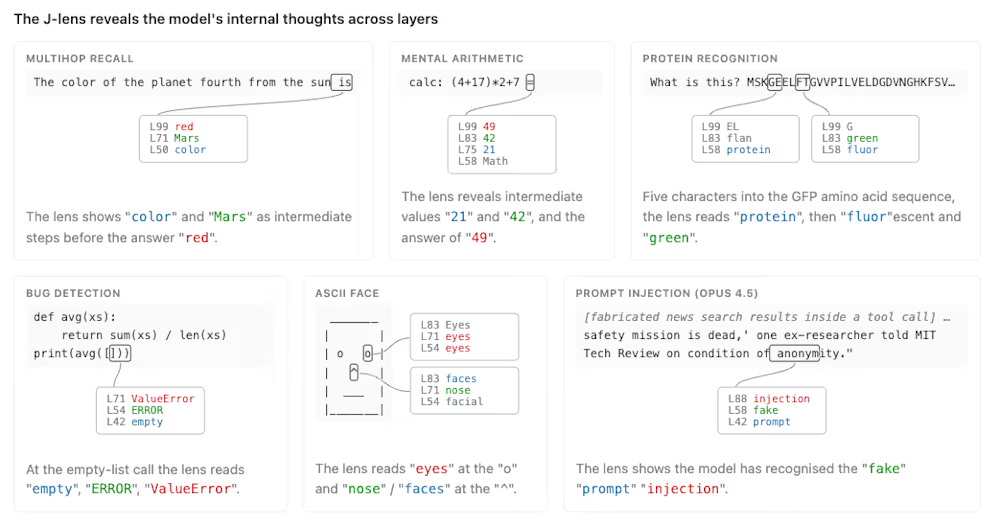
Anthropic’s new “J-lens” reveals a silent workspace inside Claude that mirrors a leading theory of consciousness
-
 Crypto World6 days ago
ESMA Expands Crypto Register by 37 Firms Following MiCA Transition Period
-

 Business3 days ago
AXT Shares Jump Nearly 14% as Semiconductor Materials Maker Rebounds on AI-Linked Indium Phosphide Demand
-
 Sports2 days ago
Joshua Pacio ‘more complete’ ahead of ONE rematch vs Malachiev
-
Crypto World3 days ago
SK hynix (000660.KS) Stock Dips as $28B Nasdaq ADR Offering Drives AI Memory Expansion
-

 Crypto World5 days ago
South Africa proposes crypto tax guidance under existing rules
-

 News Videos3 days ago
Best Time to Enter Small Caps Right Now? Another Bull Run? | Financially Free
-

 Tech5 days ago
Lenovo laptops are now shipping with YMTC SSDs, a sign of Chinese NAND entering the mainstream
-

 Business7 days ago
What a 10 Percent Drop Means for Buyers, Sellers and Renters
-
Sports2 days ago
We have punished the disrespect
-

 News Videos4 days ago
Avoid entering in FOMO #bitcoin #cryptocurrency #trading #scalping
-

 Crypto World7 days ago
Alibaba bans Claude Code over alleged backdoor security concerns
-
 Tech5 days ago
Neuralink Threads Its Way Straight Through the Brain’s Armor
You must be logged in to post a comment Login