Connect with us
DAPA Banner
DAPA Coin
DAPA
COIN PAYMENT ASSET
PRIVACY · BLOCKDAG · HOMOMORPHIC ENCRYPTION · RUST
ElGamal Encrypted MINE DAPA
🚫 GENESIS SOLD OUT
DAPAPAY COMING

Business

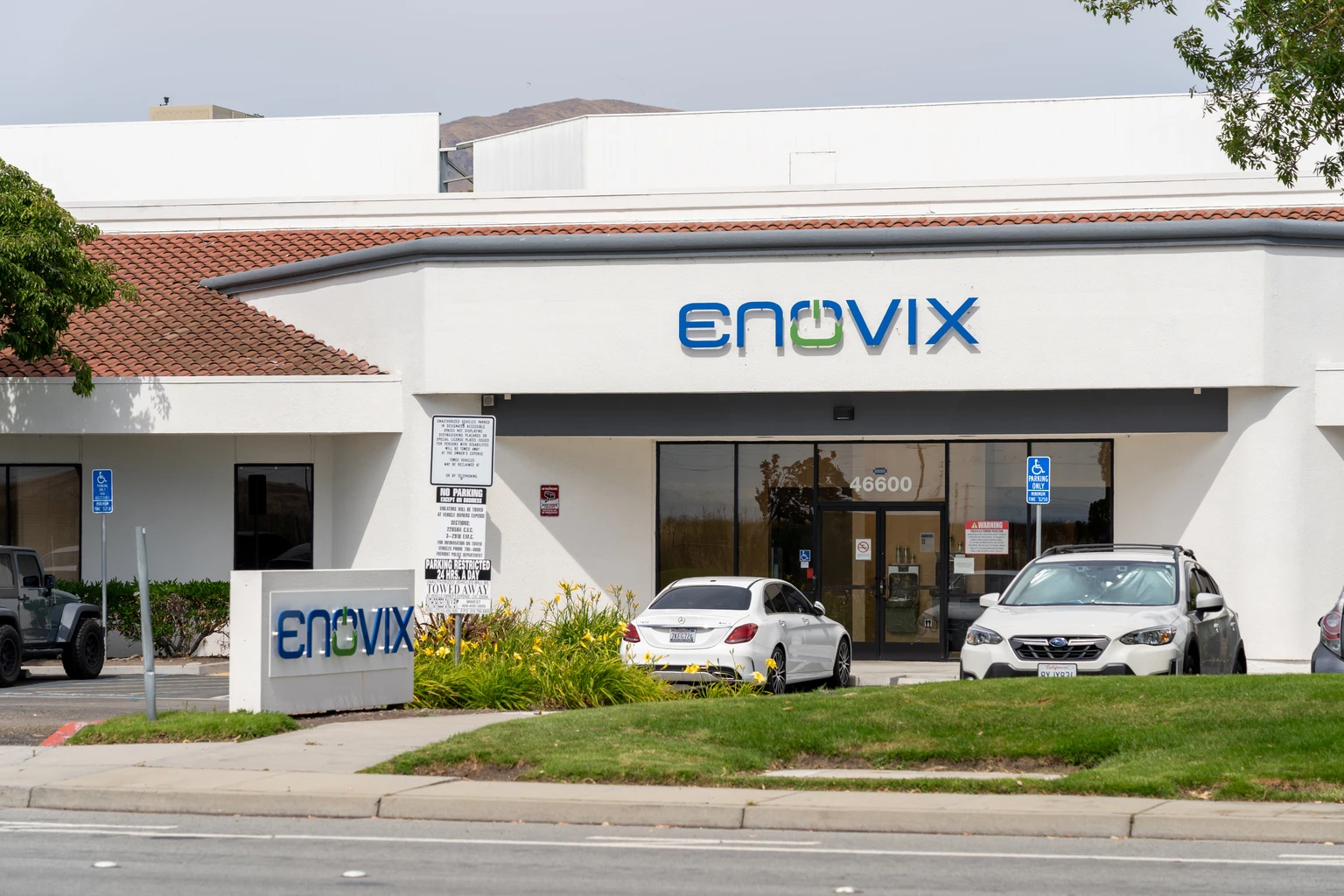
Enovix Stock Combines Margin Of Safety With Long-Term Growth Potential(NASDAQ:ENVX)

Published

on

Enovix Stock Combines Margin Of Safety With Long-Term Growth Potential(NASDAQ:ENVX)

This article was written by

Kirk Spano’s Margin of Safety Investing helps you make more profits and income with less risk. “MoSI” has been built to help level the playing field so that Main Street, you, can beat Wall Street. Margin of Safety Investing includes stock focus lists, ETF asset allocation, option selling for income, trade alerts, active chat and Kirk Spano’s award winning macro analysis. Join Us Today.

Analyst’s Disclosure: I/we have a beneficial long position in the shares of ENVX either through stock ownership, options, or other derivatives. I wrote this article myself, and it expresses my own opinions. I am not receiving compensation for it (other than from Seeking Alpha). I have no business relationship with any company whose stock is mentioned in this article.

I own a Registered Investment Advisor, however, publish separately for self-directed investors. Please read all the related disclaimers and terms at BluemoundAM.com

Advertisement

Seeking Alpha’s Disclosure: Past performance is no guarantee of future results. No recommendation or advice is being given as to whether any investment is suitable for a particular investor. Any views or opinions expressed above may not reflect those of Seeking Alpha as a whole. Seeking Alpha is not a licensed securities dealer, broker or US investment adviser or investment bank. Our analysts are third party authors that include both professional investors and individual investors who may not be licensed or certified by any institute or regulatory body.

Continue Reading
Click to comment

You must be logged in to post a comment Login

Leave a Reply

Business

China awards two village boys, one studied by lamplight to power a third of world’s EVs, the other cracked English in two months to give fighter jets x-ray vision

Published

on

China awards two village boys, one studied by lamplight to power a third of world's EVs, the other cracked English in two months to give fighter jets x-ray vision
A scientist who spent his childhood without electricity and a farm boy who taught himself English in two months have won China‘s highest science honour, as per Chinese media reports. President Xi Jinping handed Chen Liquan and Ben De their State Pre-eminent Science and Technology Award for 2025 at a ceremony inside Beijing’s Great Hall of the People on Wednesday. Chen built the country’s first lithium battery. Ben gave Chinese fighter jets the radar vision to spot enemy aircraft from far beyond the pilot’s own eyesight.

The double honour lands at a moment when Beijing wants to be self-sufficient in both everyday technology and defence hardware. Xi used the ceremony to tell scientists that the country’s upcoming five-year plan will be a make-or-break window for turning China into a genuine tech powerhouse. One laureate spent his career powering electric cars. The other spent his powering fighter jets. Between them, they sum up exactly the kind of self-reliance Xi was talking about.

Light At The End Of The Exam Hall

Chen Liquan was born in 1940 in a hilly corner of Nanchong in Sichuan province, in a home lit only by oil lamps. He didn’t see an electric bulb switched on until the day he sat his high-school entrance exam. That single moment stuck with him. He decided then that he wanted to spend his life working with power, so that light and convenience wouldn’t be a rare event for other children the way it had been for him.

He went on to study physics at the University of Science and Technology of China, graduating in 1964, and joined the Institute of Physics at the Chinese Academy of Sciences in Beijing.

Advertisement

A Chance Conversation In Germany

The real turning point came in 1976, when Chen was sent to the Max Planck Institute in Germany as a visiting researcher. A German scientist mentioned to him, almost in passing, that a material called lithium nitride had unusual properties. As Chen later recalled him saying, “In the future, it could be used to make batteries and even cars.”
That line changed the direction of Chen’s career. China was, at the time, in the middle of an oil crisis that had exposed how dangerously dependent the country was on imported energy. Chen decided lithium batteries were the strategic bet worth making. He formally gave up his existing research into crystal materials and asked to switch fields entirely, into an area, solid-state ionics, that barely existed in China at the time.

Building A Battery Industry From Nothing

Chen returned to China in 1978 with no equipment, no trained staff and no local expertise to draw on. He and his team worked such long hours that they finished a project scheduled to take a year in just five months. Two years later, in 1980, he opened the country’s first solid-state ionics laboratory. Solid-state ionics and lithium battery research went on to feature in three separate five-year national research plans, a sign of how seriously the government eventually took the field he had opened up almost single-handedly.

By 1998, his team had built China’s first pilot production line for lithium-ion batteries using entirely home-grown technology, equipment and raw material, the breakthrough that let the country move from lab research to mass manufacturing. He was also the first scientist anywhere to propose a workable design for nano-silicon anode material, a component now produced at a scale of ten thousand tonnes a year. Several of the patents his team developed broke monopolies that foreign companies had held on key battery components.

Chen didn’t just build technology, he built an industry around it, pushing universities and companies to work together, a shift that helped battery giant CATL, now the world’s largest EV battery maker, get off the ground. By 2014, China had become the world’s biggest producer of lithium batteries. In 2023, a solid-state battery system his team had spent years developing went into mass-produced vehicles, making China the first country to put solid-state batteries on the road commercially.

Advertisement

The Farm Boy Who Taught Himself English In Eight Weeks

Ben De’s story starts a long way from a physics lab. Born in 1938 to a farming family in Jilin province in China’s northeast, he was accepted into the electrical engineering department at Harbin Institute of Technology at just 19. After graduating, he was posted to a research institute in Nanjing that would go on to become the birthplace of China’s entire radar industry.

In the mid-1960s, with Cold War tensions running high, China badly needed its own long-range radar system to watch for incoming missiles. Ben joined the programme with nothing to work from, no textbooks, no prior Chinese research, nothing. So he taught himself English from scratch, purely so he could read foreign technical papers, and reportedly managed it in about two months.

The radar system he helped build, known by the code name 7010, was a genuinely massive undertaking, thousands of equipment Cabinets connected by more than a thousand kilometres of cable. Ben and a colleague made seven separate expeditions into remote mountain terrain to get it built, each trip lasting more than six months. When it was finished, China became only the third country in the world to master large-scale phased-array radar.

Giving Fighter Jets Their “Eyes”

His next challenge was even tougher: building a radar that could let Chinese fighter jets detect and track enemy aircraft flying below them, a capability that only a handful of countries had cracked by the 1980s. Starting in 1979, Ben ran more than a hundred research projects and worked through nearly a hundred separate technical roadblocks.

Advertisement

As per Chinese mouthpiece Global Times, he also insisted on flying on every single test flight in person, to check the data himself. That decision nearly cost him his life twice, once during an engine failure, once during a landing-gear malfunction. Asked about it later, he brushed the danger aside: “I never thought about being afraid.” Once airborne, he said, all that mattered to him were the test readings.

In 1989, China’s first home-built airborne pulse-Doppler radar cleared its final evaluation, making the country one of only a few in the world with the technology. Chinese fighter pilots finally had what engineers liked to call “eagle eyes” — the ability to spot a target long before the target could spot them.

Both Are Still Working at 80

Neither scientist has slowed down. Ben was elected to the Chinese Academy of Engineering in 2001 and has since moved into space-based surveillance radar and microwave photonics, areas he continues to guide younger researchers through. Chen, now 86, remains focused on pushing solid-state battery technology further, still chasing the same problem that first caught his attention in a German lab nearly fifty years ago, how to store more power, more safely, in something small enough to fit in your hand.

Advertisement
Continue Reading

Business

Information Services Group, Inc. (III) Discusses Technology Industry Trends, AI Investment Surge and Hyperscaler Growth – Slideshow

Published

on

OneWater Marine Inc. (ONEW) Q1 2026 Earnings Call Transcript

Information Services Group, Inc. (III) Discusses Technology Industry Trends, AI Investment Surge and Hyperscaler Growth – Slideshow

Continue Reading

Business

Blake Osgood Built a Career by Reading the Land

Published

on

Blake Osgood Built a Career by Reading the Land

Blake Osgood did not take a straight road into land restoration. His path moved through small towns, military communities, emergency medical services, project management, defense contracting, and ranching. Each step gave him a different way to look at work, risk, planning, and responsibility.

Today, as the owner of Ozgood Land Restoration, Osgood brings those lessons back to the land. His business focuses on removing invasive plant species and restoring property to a healthier state. That may mean better pasture. It may mean improved wildlife habitat. It may mean giving a neglected piece of Ozark land a second life.

“I have always believed the land will tell you what it needs,” Osgood says. “You just have to slow down enough to see it.”

Who Is Blake Osgood?

Osgood was born in Presque Isle, Maine. His early life included time in Mainz, Germany, then Fort Drum, New York, before moving back to Maine. At age 13, he moved to West Plains, Missouri.

That move changed the direction of his life. The Ozarks became home.

Advertisement

The region gave him more than a place to live. It shaped the way he saw nature, work, and community. Rolling hills, pastureland, hardwood forests, and open ground became part of his daily world.

“When I got to the Ozarks, something about it stayed with me,” he says. “This is the kind of place where you notice the seasons. You notice what grows, what changes, and what needs attention.”

How His Career Built His Leadership Style

Before starting Ozgood Land Restoration, Osgood built a career around projects and problem-solving.

From 2006 to 2013, he worked for Air Evac EMS as a Senior Project Manager. That role taught him how to manage moving parts, solve problems under pressure, and think ahead.

Advertisement

He also earned his Executive MBA from Walden University in 2016.

Those experiences gave him a business background that is uncommon in land restoration. He understands planning, timelines, logistics, and accountability.

“In project management, you learn fast that small problems can become big problems if you ignore them,” Osgood says. “Land is the same way. One invasive plant can turn into a much bigger issue if you do not deal with it early.”

Why Blake Osgood Started Ozgood Land Restoration

The idea for Ozgood Land Restoration grew from Osgood’s life as a rancher.

Advertisement

He raises cattle, sheep, chickens, and goats. That means he spends a lot of time watching the land closely. He sees how pasture health affects livestock. He sees how invasive plants spread. He sees how quickly good ground can become hard to use when it is not managed.

For Osgood, restoration is not just about clearing brush. It is about bringing land back into balance.

“Anyone can knock down brush,” he says. “The real question is what happens after that. Is the land healthier? Can native plants come back? Can livestock or wildlife use it better? That is what matters.”

This mindset became the foundation of his business. Ozgood Land Restoration helps landowners reclaim property overtaken by invasive species or neglect. The goal is not to erase the character of the land. The goal is to restore its value, function, and beauty.

Advertisement

What Makes Land Restoration Different From Land Clearing?

A key part of Osgood’s message is the difference between clearing land and restoring it.

Land clearing is often focused on removal. Restoration is focused on recovery.

That difference matters. In the Ozarks, invasive species can crowd out native plants, reduce forage, limit wildlife habitat, and make land harder to manage. If the root problem is not addressed, the same issues often return.

“Restoration takes patience,” Osgood says. “You have to understand what is growing, why it is spreading, and what the land should look like after the work is done.”

Advertisement

His ranching background gives him a practical view of those problems. He looks at land through the eyes of someone who depends on it. He knows that healthy soil, healthy forage, and healthy ecosystems are connected.

A Leader Focused on Stewardship

Osgood’s leadership style is grounded in stewardship. He does not describe land as something to control. He talks about it as something to care for.

That view reflects his personal interests, too. Outside of work, he plays music and spends time ranching. Both require rhythm, patience, and attention. Those same traits show up in how he approaches restoration.

“You cannot rush good work,” he says. “Whether you are working cattle, playing music, or restoring a property, you have to pay attention to timing.”

Advertisement

For landowners, that kind of thinking can be valuable. Many people buy acreage because they love the idea of open space, wildlife, pasture, or privacy. But they may not know what to do when invasive species take over, or a property becomes too overgrown to enjoy.

Osgood sees his role as both a service provider and an educator.

“A lot of people know they have a problem, but they do not always know what they are looking at,” he says. “Part of my job is helping them understand what is happening on their land.”

The Bigger Opportunity in the Ozarks

The demand for thoughtful land management is growing as more people buy rural property, manage livestock, or look for ways to improve habitat. In the Ozarks, where natural beauty is a major part of the region’s identity, restoration carries both practical and environmental importance.

Advertisement

Osgood’s career gives him a unique position in that space. He brings the discipline of a project manager, the independence of a business owner, and the lived experience of a rancher.

His work is not only about removing what does not belong. It is about helping what does belong come back.

“When a property starts to recover, you can feel the difference,” Osgood says. “The land opens up. Native growth has a chance. Wildlife returns. That is the reward.”

For Blake Osgood, Ozgood Land Restoration is more than a business. It is the next chapter in a career built around responsibility, problem-solving, and a deep respect for the land he now calls home.

Advertisement

Continue Reading

Business

Mortgage rates hold steady near 6.49% as housing affordability improves

Published

on

Homeownership decline is hitting every age group, new data shows

Mortgage rates moved slightly higher this week but have remained relatively steady in recent weeks, mortgage buyer Freddie Mac said on Thursday.

Freddie Mac’s latest Primary Mortgage Market Survey, released Thursday, showed the average interest rate on the benchmark 30-year fixed mortgage rose to 6.49%, up from last week’s reading of 6.43%.

Advertisement

The average rate on a 30-year fixed-rate mortgage was 6.72% a year ago.

HOUSING AFFORDABILITY TO IMPROVE AS HOME PRICE GROWTH COOLS, REALTOR.COM FORECASTS

Missouri homes in background of 'for sale' sign

Mortgage rates ticked slightly higher over the last week, Freddie Mac reported. (Brett Coomer/Houston Chronicle via Getty Images)

“The 30-year fixed-rate mortgage averaged 6.49% this week,” said Freddie Mac chief economist Sam Khater.

“Mortgage rates have not changed much recently, but economic growth and housing affordability continue to improve for homebuyers as they shop for homes in today’s market,” Khater added.

Advertisement

The average rate on a 15-year fixed mortgage also moved slightly higher to 5.82%. That’s an increase from 5.79% last week, though it remains below the average rate of 5.86% from a year ago.

RECORD DECLINE IN HOME ASKING PRICES OFFERS BUYERS AN AFFORDABILITY BOOST

Mortgage rates are affected by several factors, including the Federal Reserve and geopolitics. Although mortgage rates aren’t directly affected by the Fed’s interest rate decisions, they closely track the 10-year Treasury yield. The 10-year yield hovered around 4.5% as of Thursday afternoon.

The latest mortgage data comes as conditions in the housing market have improved somewhat for buyers, many of whom have been on the sidelines as tight inventory has supported higher home prices and mortgage rates have held relatively steady.

Advertisement

Realtor.com this week released a midyear update to its 2026 housing market forecast that estimates home price growth will slow to 1.2% this year, a rate that’s slower than the original forecast for the year and is below the current pace of inflation. That means home prices would be effectively declining in real, inflation-adjusted terms.

GOVERNMENT REGULATIONS ADD NEARLY $132K TO COST OF NEW HOME, BUILDERS SAY

Single family home under construction

Would-be homebuyers have seen some improvements in affordability this year. (Getty Images)

“Against a backdrop of both familiar and new challenges, the economy has proved resilient. As a result, the first half of 2026 delivered stability more than momentum in the housing market,” said Realtor.com senior economist Danielle Hale.

“The housing market is inching forward as sellers reset expectations, price growth cools, and buyers gain more negotiating power,” Hale said. “Looking ahead, we expect momentum to build through the second half of the year as more sidelined buyers and sellers find terms that will work for both sides.”

Advertisement

GET FOX BUSINESS ON THE GO BY CLICKING HERE

Mortgage rates are projected to hold steady at 6.3%, the same level they were at when 2025 ended, as a resurgence of inflation caused by the Iran war undercut the prospects of interest cuts in the first of the year that could’ve helped mortgage rates decline.

Continue Reading

Business

FDA issues Class II recall for Lupin steroid eye drops after material found

Published

on

FDA issues Class II recall for Lupin steroid eye drops after material found

More than 2.5 million bottles of a prescription steroid eye medication are being recalled nationwide after the Food and Drug Administration classified the action as a Class II recall over concerns about foreign material found in the product.

Lupin Pharmaceuticals Inc. voluntarily recalled 2,530,182 bottles of prednisolone acetate ophthalmic suspension USP, 1%, after the presence of a foreign substance was identified in certain lots, according to an FDA enforcement report.

Advertisement

The affected prescription eye drops were manufactured by Lupin Limited in Pithampur, India, and distributed nationwide. The recall includes 5 mL, 10 mL and 15 mL bottles sold under National Drug Codes 70748-332-02, 70748-332-03 and 70748-332-04.

KIA ISSUES NEW RECALL OF 460,000 VEHICLES AFTER PREVIOUS FIX TO FIRE RISK FAILED

three unlabled eyedrop bottles

Three generic eye drop bottles are shown in this illustration. The FDA classified a nationwide recall of more than 2.5 million bottles of prescription steroid eye drops as a Class II recall. (Getty Images / Getty Images)

The FDA classified the recall as a Class II recall on June 30. According to the agency, a Class II recall is issued when use of a product may cause temporary or medically reversible adverse health consequences or when the probability of serious adverse health consequences is considered remote. Class I recalls involve products that could cause serious injury or death, while Class III recalls involve products that are unlikely to cause adverse health consequences.

The recall covers dozens of lot numbers with expiration dates beginning in July 2026 and extending beyond October 2026. According to the FDA, the products were distributed nationwide. Consumers and healthcare providers can compare affected lot numbers with the FDA’s published enforcement report to determine whether their medication is included in the recall.

Advertisement

Prednisolone acetate ophthalmic suspension is a prescription corticosteroid eye drop used to treat inflammation after eye surgery, eye injuries and certain inflammatory eye conditions.

MORE THAN 1.7M GRILL BRUSHES RECALLED OVER BRISTLE HAZARD, RISK OF ‘SERIOUS INTERNAL INJURIES’

eye drops

A man administers eye drops in this illustration. Lupin Pharmaceuticals has recalled more than 2.5 million bottles of prescription steroid eye drops after foreign material was found in certain lots. (Getty Images / Getty Images)

Patients who believe they have an affected bottle should contact a pharmacist or healthcare provider to determine whether the medication is included in the recall and discuss replacement medication or other treatment options. Patients should not stop using a prescribed medication without consulting a healthcare provider.

FDA HQ sign in Maryland

A sign for the Food And Drug Administration outside the headquarters on July 20, 2020, in White Oak, Md. (Sarah Silbiger/Getty Images / Getty Images)

CLICK HERE TO GET FOX BUSINESS ON THE GO

Advertisement

Lupin initiated the recall June 4 and notified customers by letter. The FDA said no press release has been issued for the recall, which remains ongoing.

FOX Business has reached out to Lupin for additional information, including the nature of the foreign material found in the recalled products, whether any adverse events have been reported and what guidance the company is providing to patients. The company had not responded by publication time.

Continue Reading

Business

Politics And The Markets 07/10/26

Published

on

OneWater Marine Inc. (ONEW) Q1 2026 Earnings Call Transcript

This is the forum for daily political discussion on Seeking Alpha. A new version is published every market day.

Please don’t leave political comments on other articles or posts on the site.

The comments below are not regulated with the same rigor as the rest of the site, and this is an ‘enter at your own risk’ area as discussion can get very heated. If you can’t stand the heat… you know what they say…

More on Today’s Markets:

Advertisement

Moderation Guidelines:

We remove comments under the following categories:

  • Personal attacks on another user account
  • Anti-Vaxxer or covid related misinformation
  • Stereotyping, prejudiced or racist language about individuals or the topic under discussion.
  • Inciting violence messages, encouraging hate groups and political violence.

Regardless of which side of the political divide you find yourself, please be courteous and don’t direct abuse at other users.

For any issue with regards to comments please email us at : moderation@seekingalpha.com.

Seeking Alpha’s Disclosure: Past performance is no guarantee of future results. No recommendation or advice is being given as to whether any investment is suitable for a particular investor. Any views or opinions expressed above may not reflect those of Seeking Alpha as a whole. Seeking Alpha is not a licensed securities dealer, broker or US investment adviser or investment bank. Our analysts are third party authors that include both professional investors and individual investors who may not be licensed or certified by any institute or regulatory body.

Advertisement
Continue Reading

Business

Tarik Skubal Domino, Mets Selling and Giants’ Logan Webb Staying Put

Published

on

Tarik Skubal

With the MLB trade deadline set for August 3 at 6 p.m. Eastern time, the sport’s rumor mill has shifted into high gear as contending teams look to add reinforcements and struggling clubs weigh how aggressively to sell off veteran talent. Here is a roundup of five of the most notable trade storylines currently circulating around the league.

1. Tarik Skubal remains the deadline’s biggest domino

Detroit Tigers ace and reigning Cy Young winner Tarik Skubal continues to headline trade speculation as free agency looms for the left-hander. Skubal reminded the league of his ceiling with a dominant recent start against the New York Yankees, striking out nine batters without a walk while allowing just two runs, one earned, over six innings, his best outing since undergoing left elbow surgery in May. According to FanSided, the Los Angeles Dodgers are considered a logical fit for Skubal, though the Yankees, Atlanta Braves and Milwaukee Brewers have also been mentioned as teams that could pursue a package to keep him away from Los Angeles. Skubal isn’t Detroit’s only starter drawing interest, as right-hander Casey Mize, the 2018 No. 1 overall pick, has also generated buzz after striking out 10 Yankees over seven scoreless, one-hit innings in a recent outing.

2. Mets appear headed toward a broader sell-off

Advertisement

The New York Mets, sitting 15 games under .500 and ranked among the five worst teams in baseball over the past calendar year, have already made one notable move this summer, trading left-hander David Peterson to the Chicago Cubs for first base prospect Cole Mathis. According to MLB Trade Rumors, the Mets said that deal did not represent the start of a broader sell-off, but the team has gone just 2-5 since completing the trade, and with limited high-end trade chips remaining on the roster, further moves before the deadline appear increasingly likely. Owner Steve Cohen has said he has no plans to overhaul the front office despite the disappointing season, which already resulted in a managerial change earlier this year.

3. Giants signal Logan Webb isn’t going anywhere, but others could move

San Francisco Giants president of baseball operations Buster Posey firmly shut down speculation about trading ace Logan Webb, giving a direct “no” when asked about the possibility, according to the San Francisco Standard. Webb is signed affordably through 2028. Despite that declaration, Posey said the team will “leave all options on the table” at the deadline for other players. The Athletic has reported that the Giants, sitting well out of playoff position at 32-46 with a run differential of negative 51, fifth-worst in the sport, are open to moving their other highest-paid players, including Willy Adames, Matt Chapman, Rafael Devers and Jung Hoo Lee. Chapman and Devers have both improved considerably in recent weeks, while Lee is having a strong overall season, complicating the calculus for a team that FanGraphs currently projects to have just a 1.9 percent chance of reaching the playoffs.

4. Twins deny any plans to trade Byron Buxton

Advertisement

Speculation surrounding Minnesota Twins outfielder Byron Buxton has circulated throughout the early trade season, but both the team and the player have pushed back firmly against the rumors. Twins general manager Jeremy Zoll told reporters, including The Athletic, “We have no plans to trade Byron Buxton.” Buxton addressed the speculation himself as well, saying, “I ain’t said nothing about leaving, nor will I.” Despite those denials, Buxton’s name is expected to remain part of the broader trade conversation given his performance and contract situation as the deadline approaches.

5. Angels appear likely to stay buyers rather than sell

The Los Angeles Angels have continued to signal they do not intend to rebuild at this year’s deadline, despite external speculation connecting several of their players to potential trades. President of baseball operations John Mozeliak told The Athletic’s Ken Rosenthal that the team has the resources to remain competitive, saying, “No. I don’t think in this market you need to do that. This team has resources. Now it’s just making sure we deploy them correctly.” Left-hander Reid Detmers, who turned 27 on July 8 and is controllable through 2028, has been viewed as a significant trade asset given his recent dominant stretch, a 2.42 ERA with 51 strikeouts over his past seven starts. Right-hander José Soriano and outfielder Jo Adell have also drawn trade interest, though earlier reporting from USA Today’s Bob Nightengale indicated that Angels owner Arte Moreno did not want to trade any of the three players, a stance that predates the club’s recent front-office change and appears consistent with Mozeliak’s more recent comments about the team’s direction.

Beyond these five storylines, several other situations remain in motion around the league. The Tampa Bay Rays have emerged as one of the summer’s biggest surprises, entering July atop the American League East with the sport’s longest active winning streak at five games following a sweep of the Arizona Diamondbacks. The Pittsburgh Pirates, meanwhile, face mounting pressure to turn their season around quickly or risk an uncomfortable set of deadline conversations about their long-term direction. Reliever Aroldis Chapman has emerged as one of the most likely Boston Red Sox players to be moved, given the demand for bullpen help across the league, while the Baltimore Orioles could look to sell low on left-hander Trevor Rogers’ expiring contract as his season winds down.

Advertisement

With the amateur draft scheduled for July 11 and 12 expected to shift front-office attention back toward the trade market immediately afterward, league executives anticipate that the pace of significant trades will accelerate considerably in the weeks following the draft, as contenders finalize their targets and rebuilding clubs determine which veterans they are willing to move before the August 3 deadline arrives.

Continue Reading

Business

NVDW ETF: Hedge Your Nvidia Position With This Cash Generator (BATS:NVDW)

Published

on

Cash Is King, A Quick Look At 3 Cash ETFs For 2026

This article was written by

I have been a keen student of the markets for several years now. I love studying how companies grow over time, what value they deliver to their stakeholders, and projecting long-term value as an investment opportunity. I work as a content professional for a software company, but my passion is capital markets.

Analyst’s Disclosure: I/we have no stock, option or similar derivative position in any of the companies mentioned, and no plans to initiate any such positions within the next 72 hours. I wrote this article myself, and it expresses my own opinions. I am not receiving compensation for it (other than from Seeking Alpha). I have no business relationship with any company whose stock is mentioned in this article.

Seeking Alpha’s Disclosure: Past performance is no guarantee of future results. No recommendation or advice is being given as to whether any investment is suitable for a particular investor. Any views or opinions expressed above may not reflect those of Seeking Alpha as a whole. Seeking Alpha is not a licensed securities dealer, broker or US investment adviser or investment bank. Our analysts are third party authors that include both professional investors and individual investors who may not be licensed or certified by any institute or regulatory body.

Advertisement
Continue Reading

Business

Over 2.5 Million Bottles of Prednisolone Eye Drops Recalled Nationwide Over Foreign Substance Concern

Published

on

eye-g3ba8aa194_1280

More than 2.5 million bottles of a widely used prescription eye drop medication have been recalled nationwide after the manufacturer identified the potential presence of a foreign substance in the product, according to the U.S. Food and Drug Administration.

The recall affects Prednisolone Acetate Ophthalmic Suspension, USP, 1%, manufactured by Lupin Limited at a facility in Pithampur, India, and distributed in the United States by Lupin Pharmaceuticals Inc. According to the FDA’s enforcement report, the recall covers a total of 2,530,182 bottles across three package sizes: 5-milliliter bottles with NDC 70748-332-02, 10-milliliter bottles with NDC 70748-332-03, and 15-milliliter bottles with NDC 70748-332-04. The recall, designated D-0655-2026, spans dozens of individual lot numbers with expiration dates ranging from July 2026 through March 2028.

Prednisolone acetate is a corticosteroid eye drop commonly prescribed to manage inflammation, redness, itching and swelling associated with eye infections and other inflammatory conditions. According to a description of the medication from the Mayo Clinic, prednisolone is a steroid medicine used to relieve symptoms caused by eye infections and related conditions, and it is available only with a doctor’s prescription.

Lupin Pharmaceuticals initiated the voluntary recall on June 4, 2026, though the FDA did not formally classify the action as a Class II recall until June 30. Under the FDA’s classification system, a Class II recall indicates that use of or exposure to the affected product may cause temporary or medically reversible adverse health consequences, a designation less severe than a Class I recall, which involves products that could cause serious harm or death, but more serious than a Class III recall, which applies to products unlikely to cause any adverse health consequences.

Advertisement

The recall notice does not specify additional details about the nature of the foreign substance identified in the affected bottles, and the FDA’s enforcement report had not published further specifics as of the most recent update. Lupin Limited received FDA approval for its prednisolone acetate ophthalmic suspension in August 2024, and the company maintains a broad portfolio of generic pharmaceutical products, including several other ophthalmic medications. According to Optometry Advisor, the company’s other recent ophthalmic-related FDA approvals include a ranibizumab biosimilar marketed as Ranluspec, a generic version of the allergy eye drop Pataday, and a generic version of the glaucoma medication Alphagan P.

Patients currently using prednisolone acetate ophthalmic suspension are advised to check the specific National Drug Code, lot number and expiration date printed on their prescription bottle against the information listed in the FDA’s enforcement report to determine whether their medication is affected. Individuals who discover they have an affected bottle are encouraged to contact their prescribing ophthalmologist, optometrist, pharmacist or other healthcare provider for further guidance on how to proceed, rather than discontinuing use of the medication without professional advice, given that abruptly stopping certain steroid eye treatments can carry its own risks depending on the underlying condition being treated.

This recall comes on the heels of a separate, smaller recall affecting a different prednisolone-based eye medication. In late May, AbbVie Inc. issued a voluntary recall of its Pred Mild eye drops, a product manufactured in France, due to what the company described as failed stability specifications that could affect the drug’s effectiveness and shelf life over time. That recall, classified by the FDA as a Class III action given its lower health risk profile, affected a considerably smaller batch of 2,736 bottles across two lot numbers, both with an expiration date of August 2026.

The Lupin recall adds to a broader pattern of pharmaceutical recalls the FDA has processed in recent weeks across a range of prescription medications. According to MedShadow Foundation, other recent recalls have included the heart medication Corlanor, the parathyroid disorder treatment Sensipar, the antipsychotic medication aripiprazole, the antidepressant duloxetine, the attention-deficit medication Focalin XR, the anti-seizure drug lacosamide, and nicotine transdermal patches, among others. Most of those recalls, like the prednisolone acetate action, were classified as Class II recalls, with the notable exceptions of the nicotine patch and Pred Mild recalls, both of which received the less severe Class III classification.

Advertisement

Nexstar’s WPIX, which first reported on the recall, said it reached out to Lupin Pharmaceuticals Inc. for comment but did not receive an immediate response. As of this report, the company has not issued additional public statements detailing the specific nature of the foreign substance found in the affected bottles beyond what has been disclosed in the formal FDA recall notice.

Consumers concerned about whether their specific prescription is affected by the recall can check their bottle’s National Drug Code and lot number against the FDA’s publicly available enforcement report database. The agency maintains detailed listings of all active drug recalls, including the specific lot numbers, expiration dates and distribution details associated with each action, allowing patients and pharmacists to verify whether a particular bottle falls within the scope of the recall.

Given the significant scale of the recall, spanning more than 2.5 million individual bottles distributed across the country, healthcare providers have generally recommended that patients using prednisolone acetate ophthalmic suspension take a proactive approach to checking their medication rather than waiting for direct notification, since recall communications do not always reach every individual patient promptly through standard pharmacy channels. Patients who are unsure whether their eye drops are affected, or who do not have easy access to the packaging information needed to verify the lot number, are encouraged to contact the pharmacy where the prescription was filled for assistance confirming whether their specific product falls within the recall’s scope.

As the recall continues to be processed through the pharmaceutical supply chain, the FDA is expected to continue monitoring the situation and may release additional details about the underlying cause of the contamination as more information becomes available from Lupin Pharmaceuticals and its manufacturing facility in India.

Advertisement
Continue Reading

Business

Australia confirms H5N1 bird flu case in Australian seabird for first time

Published

on


Australia confirms H5N1 bird flu case in Australian seabird for first time

Continue Reading

Trending

Copyright © 2025