





Connect with us

Business

Betting Firms See $500M Funding Surge

Published

on

Crypto betting is quickly becoming the go-to choice for anyone tired of the hassle and restrictions of traditional gambling. Gone are the days of slow bank transfers, high fees, and dealing with middlemen.

Months ago, half a billion dollars flowed into crypto betting startups through new investment rounds.

Behind these platforms: blockchain fused with online gambling mechanics draws serious interest. User counts climb, transaction speeds improve – founders point to real shifts underway.

Venture Capital Moves Toward Digital Betting

Half a billion dollars flowed into cryptocurrency gambling startups lately, and platforms such as 1xbet Ireland have also expanded their casino online presence by exploring faster digital payment options. Of that sum, three big investors made up close to sixty percent, showing how strongly the casino online sector continues to attract capital.

Each agreement typically involved about twenty-five million dollars, twenty times over. These backers show interest mainly in services using blockchains to handle wagers. Out in the open, every bet lands on shared records. Real-time checking lets people follow payments as they happen.

One reason these platforms gain ground? Fees take a steep drop compared to old methods. While standard networks pull out 3 percent each time, digital currency moves it under Quick movement catches interest too. Withdrawals on certain sites wrap up in under ten minutes. Meanwhile, standard methods can stretch into a forty-eight-hour wait.

Advertisement

What’s Fueling the Rise in Tech Investments

When picking crypto betting sites, investors look at straightforward signs of how well they perform. Evidence points to a close link between financial backing and day-to-day reliability. What pushes success includes:

  • Every bet shows up clear as day on public blockchains. Transparency built right into the ledger keeps it that way.
  • Smart contracts automate payouts within seconds.
  • Funds for digital protection now take up one-fifth of running expenses.
  • Most wagers come through smartphone applications. Around seven out of ten are placed that way.
  • Processing systems handle one million bets per hour.

Expanding markets and growing user base

Fresh sign-ups at crypto gambling platforms have grown two times over. More than three million people log in each month on big sites now. Bets using cryptocurrency topped two billion dollars lately. Adults under thirty like paying with digital money more often. Moving funds in and out feels easier thanks to wallet apps. More than fifteen digital currencies work across platforms, offering room to move.

Sports and gaming events pull attention from marketers, drawing steady interest. Engagement jumps thirty percent where live wagering runs active. Odds shifting by the second keep players involved more deeply. Even with fast expansion, income strategies stay level and measured. Betting odds are designed so the operator earns a steady profit. Over time, randomness favors the business side of the game.

Staying Safe While Playing Games That Change Quickly

Most sites include features meant for safer play. Wins are never guaranteed, just possible. A built-in advantage stays with the house constantly. Putting boundaries on funds spent is one way players manage risk. Fun should stay fun, nothing more. After a while, alerts pop up to let players know they have been playing long stretches.

Talking with support staff can help clarify better ways to handle gaming routines. Looking at straightforward logs helps people see exactly where money goes. Setting boundaries keeps accounts from tipping into risky zones. Start smart by deciding limits ahead of time. When spending does not spiral, fun holds steady.

Advertisement

Financial Trends and Sector Clues

Growth keeps building in online betting areas. Crypto sites are expected to rise by more than ten percent. Money flowing into startups shows belief in future gains. Big investors watch potential buys with sharp attention. The scene might shift if deals go through.

Now comes the time when working together pushes products faster. Because numbers talk, choices follow what data shows. Watching how users act helps shape better predictions. Getting it right more often keeps things running smoother. When big moments happen, steady money flows help hold everything in place.

Behind the scenes, backers are watching steady growth in users and backbone strength. Companies using crypto for wagers aren’t startups anymore – they’re wide open, full throttle. Fresh ideas mix steadily with careful control of dangers here. As growth moves forward, clear rules and honest actions stay at the center by design.

Advertisement

Continue Reading
Click to comment

Leave a Reply

Your email address will not be published. Required fields are marked *

Business

Dharshini David: Don't be fooled – taxes are still set to rise

Published

on

Dharshini David: Don't be fooled - taxes are still set to rise

There are measures, announced ahead of the chancellor’s Spring Statement, yet to take effect.

Continue Reading

Business

Japanese homebuilders go on a U.S. shopping spree

Published

on

Japanese homebuilders go on a U.S. shopping spree

Continue Reading

Business

V8 Energy adds sugar-free beverages

Published

on

V8 Energy adds sugar-free beverages

The beverages are available in three fruity flavors. 

Continue Reading

Business

(VIDEO) McDonald’s CEO Chris Kempczinski Mocked Online Over Awkward Big Arch Burger Taste Test

Published

on

McDonald’s CEO Chris Kempczinski

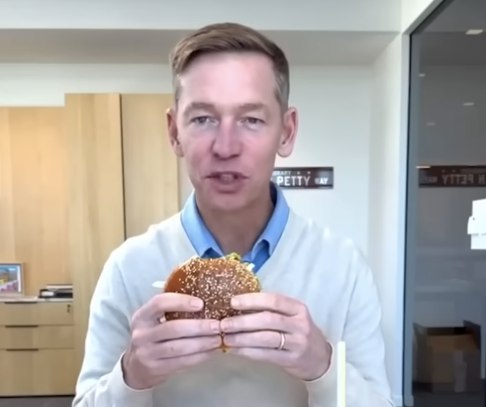
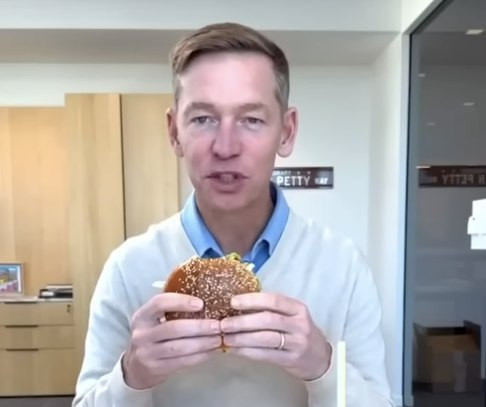
McDonald’s Corp. CEO Chris Kempczinski found himself the unwitting star of a viral social media moment after a promotional video of him taste-testing the chain’s new Big Arch burger drew widespread ridicule, with commenters mocking his hesitant bite, stiff delivery and apparent discomfort while praising his own “product.”

McDonald’s CEO Chris Kempczinski

The clip, originally posted to Kempczinski’s Instagram (@chrisk_mcd) in late February 2026, exploded in popularity over the weekend of March 1-2, amassing tens of thousands of views, shares and comments across platforms including Instagram, X, Reddit and TikTok. In the roughly 30-second reel, Kempczinski introduces the oversized burger — featuring two quarter-pound beef patties, extra cheese, crispy onions and a special sauce — as a limited-time U.S. launch item debuting March 3.

“I love this product. It is so good,” he says, tapping the wrapped burger gently before unwrapping it. “I’m going to do a tasting right now, but I’m going to eat this for my lunch, just so you know.” He then takes what many viewers described as a tiny, cautious nibble — barely denting the massive sandwich — before holding it toward the camera to “prove” the bite. “There’s so much going on with this,” he adds, followed by effusive praise: “It’s distinctively McDonald’s … delicious.”

Social media users pounced on the awkwardness. One widely shared comment read, “Man’s aura screams kale salad,” implying the polished executive seemed more at home with health food than fast-food indulgence. Others called the performance “robotic,” “disingenuous” and “the most unnatural thing I’ve ever seen.” Comments included: “He looks like he’s never eaten a burger before,” “That was the smallest first bite I’ve ever seen,” and “We need to see less CEOs doing normal stuff. I don’t like it.”

The phrase “product” — repeated multiple times instead of “burger” — fueled further mockery, with parodies likening it to a corporate infomercial for shampoo or industrial cleaner. “What a delicious product my fellow humans,” one sarcastic reply quipped. Some suggested Kempczinski appeared “visibly disgusted” or “panicked” when confronting the burger’s size, comparing his nibble to “Squidward trying a Krabby Patty.”

Advertisement

The Big Arch, tested previously in Portugal, Germany and Canada, features double the beef of a standard Quarter Pounder with Cheese, plus American and cheddar cheeses, pickles, onions, lettuce and a signature sauce on a sesame seed bun. Priced around $8-$9 depending on location, it aims to compete in the premium burger segment amid competition from chains like Shake Shack and Smashburger.

McDonald’s has not commented directly on the viral backlash, though the company promoted the launch heavily on its channels, emphasizing the burger’s hearty appeal for “big appetites.” Kempczinski, who became CEO in 2019 and chairman in 2024, has focused on value menus, digital sales and menu innovation during his tenure, including the return of fan favorites and healthier options.

The incident echoes past executive gaffes that backfired on social media. Critics argue such forced “relatable” content often highlights disconnects between corporate leadership and everyday consumers. “He’s trying too hard to sell something he clearly doesn’t eat,” one Reddit user wrote in a thread with thousands of upvotes. Others defended Kempczinski, noting the pressure of on-camera performances and suggesting the small bite was pragmatic given the burger’s size.

The video’s timing coincides with the Big Arch’s nationwide U.S. rollout on March 3, 2026, with McDonald’s hoping to drive traffic amid economic pressures on fast-food spending. The chain has faced scrutiny over prices and portion sizes in recent years, prompting value-focused promotions like the $5 Meal Deal.

Advertisement

Online reaction remained polarized as of March 4. Supporters praised Kempczinski’s transparency in sharing behind-the-scenes content, while detractors used the clip to question brand authenticity. Memes proliferated, superimposing kale salads or salads over Kempczinski’s face or dubbing his voice with lines like “This product is so healthy.”

The episode highlights the double-edged sword of executive social media presence in 2026. While intended to humanize leaders and build excitement, unpolished moments can amplify criticism in an era of instant, viral judgment.

McDonald’s stock (NYSE: MCD) showed minimal movement amid broader market volatility from geopolitical events, closing slightly lower on March 3. Analysts view the Big Arch as a potential traffic driver, though execution and consumer reception remain key.

For now, the CEO’s taste test has become an unintended masterclass in online roasting — proving even the head of the world’s largest fast-food chain can’t escape the internet’s sharp eye when a burger bite goes awry.

Advertisement

Continue Reading

Business

That’s It rolls out fiber-focused products

Published

on

That’s It rolls out fiber-focused products

New innovations include fruit-based granola and a fiber bar. 

Continue Reading

Business

Veracyte at Raymond James Conference: Strong Growth and Future Plans

Published

on


Veracyte at Raymond James Conference: Strong Growth and Future Plans

Continue Reading

Business

Spring Statement 2026: Budget watchdog downgrades growth forecast for 2026 as Rachel Reeves defends Government’s plan

Published

on

Business Live

Chancellor speaks against backdrop of Middle East war

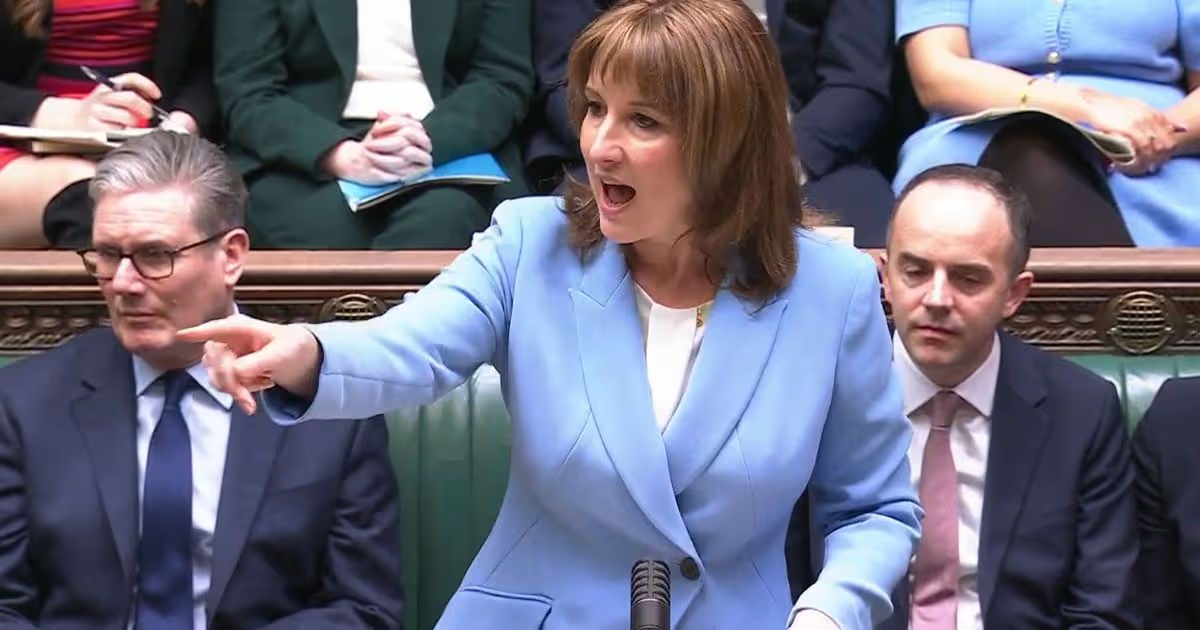
Screen grab of Chancellor of the Exchequer Rachel Reeves delivers her spring statement to MPs in the House of Commons

Chancellor of the Exchequer Rachel Reeves delivers her spring statement to MPs in the House of Commons(Image: House of Commons/UK Parliament/PA Wire)

Chancellor Rachel Reeves has used her Spring Statement to insist she had the “right economic plan” for the UK despite the budget watchdog cutting its growth forecast for this year.

The Office for Budget Responsibility indicated gross domestic product will increase by 1.1% in 2026, down from the 1.4% it forecast in November. But the watchdog upgraded its forecasts for 2027 and 2028 from 1.5% to 1.6%.

Advertisement

Speaking in the House of Commons against a backdrop of conflict in the Middle East, Ms Reeves said: “This Government has the right economic plan for our country, a plan that is even more important in a world that in the last few days has become yet more uncertain.”

She added: “The new forecasts from the Office for Budget Responsibility confirm that our plan is the right one – inflation is down, borrowing is down, living standards are up and the economy is growing.”

The Chancellor told the Commons: “With the unfolding conflict in Iran and the Middle East, it is incumbent on me and on this Government to chart a course through that uncertainty, to secure our economy against shocks and protect families from the turbulence that we see beyond our borders.”

She added: “I want to reassure this House that I am in regular contact with the governor of the Bank of England (Andrew Bailey), with my international counterparts and with key affected industries, including our maritime sector, and tomorrow, I will meet with our North Sea industry leaders to discuss the implications that they face and work with them to manage this uncertain period.

Advertisement

“In an increasingly dangerous world, I am proud to be the Chancellor that is delivering the biggest uplift in defence spending since the Cold War, with £650 million committed in January to upgrade our typhoon fighter jets, a new Royal Navy frigate launched from Rosyth last week, and just yesterday, our £1 billion helicopter deal with Leonardo.

“I am in no doubt about Britain’s ability to navigate the challenges we face.

“The plan that I have been driving forward since the election is the right one – stability in our public finances, investment in our infrastructure including our Armed Forces, and reform for Britain’s economy.”

The Chancellor told MPs her Labour Government has “restored economic stability”, as she pledged to leave families “better off”.

Advertisement

She said: “Stability is the single most important precondition for economic growth, that is why we have committed to a single major fiscal event each year, limiting major policy changes to the budget and giving businesses and households the certainty they need.

“Today, the new forecasts from the Office for Budget Responsibility confirm that our plan is the right one: inflation is down, borrowing is down, living standards are up, and the economy is growing.

“This Government has restored economic stability. The previous government let inflation skyrocket to over 11%, stoked interest rates to 15-year highs, and delivered the first Parliament on record where people were poorer at the end than they were at the start.

“I recognise the impact that had on families. We promised change at the election, and I understand the responsibility on me to deliver that change. I know that the question people will ask themselves at the next general election is this: are me and my family better off? I am determined that the answer will be yes.”

Advertisement

READ MORE: Exporters pivot away from America and look to Europe and Asia as Chancellor urged to support UK growthREAD MORE: Why new £1bn Leonardo deal means Yeovil will be a global helicopter centre for years to come

The Office for Budget Responsibility has “adjusted the profile of GDP so that it grows slightly slower in 2026 and faster in 2027 and 2028”, growing by 1.1% in 2026, 1.6% in 2027 and 2028, and 1.5% in 2029 and 2030, Rachel Reeves said.

She added: “Last year, we demonstrated the resilience of Britain’s economy in the face of global headwinds, with the fastest growth of any G7 country in Europe.

“Today, the Office for Budget Responsibility has updated its growth forecasts, including reflecting lower net migration – average growth across the forecast period is largely unchanged, while the OBR has adjusted the profile of GDP so that it grows slightly slower in 2026, and faster in 2027 and 2028.

Advertisement

“GDP is forecast to grow by 1.1% in 2026, 1.6% in both 2027 and 2028, and 1.5% in both 2029 and 2030. And GDP per capita is set to grow more than was expected in the autumn, with growth of 5.6% over the Parliament, after falling under the Tories in the last Parliament.

“And by the next election, after accounting for inflation, people are forecast to be over £1,000 a year better off.”

Unemployment is set to peak later this year and then drop, the Chancellor said. She told the Commons: “I know that the economy is not yet working for everyone and that the deep economic scars left by the party opposite (the Conservatives) and their mates in Reform are still blighting the lives of too many people.

READ MORE: CBI Survey: Private sector set to decline but City bucks trendREAD MORE: Wetherspoons boss Tim Martin warns minimum wage is lowering living standards

Advertisement

“In today’s forecasts, unemployment is set to peak later this year and then fall in every year of the forecast period, ending the forecast period at 4.1%, lower than it was at the start of the Parliament, but young people in particular are still suffering from the aftermath of years of Tory mismanagement.

“In the last five years of the previous government, the number of young people not in education, employment or training (Neet) increased by 113,000, the number of inactive people reached record highs under their government, and over the last decade, apprenticeship starts by young people fell by 40%.

“This Government will not leave an entire generation of young people behind – we are already taking action with additional investment to reform apprenticeships to prioritise young people, and through the £820 million youth guarantee, providing young people with employment support and the guaranteed job.

“And in the coming weeks, I will set out more reforms to undo the Tory legacy of neglect and give young people the support and the opportunity that they deserve.”

Advertisement

Borrowing is set to reduce by “nearly £18 billion compared to the autumn”, with public sector net borrowing expected to fall from 4.3% this year to 3.6% next year, before hitting 1.8% in 2029-30, Rachel Reeves said.

The Chancellor said: “In their forecasts today, the Office for Budget Responsibility show that we are set to reduce borrowing by nearly £18 billion compared to the autumn.

“This year we are set to borrow less than the G7 average, something the Tories never achieved in fourteen years. The forecast today shows that Public Sector Net Borrowing is set to fall from 4.3% this year, to 3.6% next year, then 2.9%, 2.5%, and 1.8% in 2029-30.”

Meanwhile, the Chancellor said she has “confidence” the Government can outperform economic forecasts, as she warned “progress” was opposed by her rivals in the Conservatives, Reform UK, the Liberal Democrats and the Green Party.

Advertisement

READ MORE: British Business Bank commits £60m to NorthEdge investment fundREAD MORE: Pub landlord’s plea for support turns into UK-wide movement

She said: “In the face of global uncertainty, we beat the forecast last year. In the year ahead, the choices that we are making give me confidence that we will beat them again.

“And in the year ahead, more of the choices that we have already made will come into effect – discounts on business energy costs, trade deals with India, the US and the EU, reforms to back our entrepreneurs, investments in our infrastructure, skills funding for further education and more planning reforms.

“Progress – opposed by the Conservatives, opposed by Reform, opposed by the Liberal Democrats, and opposed by the Green Party too, because it is Labour, and only Labour, that has the right plan for our country.

Advertisement

“Our plan for growth is grounded in a profound rejection of the failed economic dogmas of the past, the trickle-down, trickle-out thinking that produced ever diminishing returns for working people.”

Rachel Reeves pledged to rebuild Britain’s credibility, as she told the Commons “if we stick to our plan” there could be an additional £15 billion a year “for the priorities of working people”.

The Chancellor said “headroom against the stability rule in 2029-30 has increased from £21.7 billion to £23.6 billion, with headroom against the investment rule also higher at £27.1 billion and debt is set to be lower in every year of the forecast compared to the autumn”.

She added: “I have never accepted that we have to choose between social justice and fiscal responsibility because there is nothing progressive, nothing Labour, about spending over £100 billion a year – that’s one in every £10 of public money – on servicing debt racked up by the Tories.

Advertisement

“After their disastrous mini-budget, our debt interest rates soared towards the highest in the G7, and since my budget, while average yields have risen for the rest of the G7, yields on UK Government debt have fallen. The Tories squandered Britain’s credibility and my plan is rebuilding it.

“Already, we are expected to spend £3 billion a year less on debt interest by the end of the Parliament than was forecast in the autumn.

“And if we stay the course and stick to our plan, and our debt interest rates return to the G7 average, we will have £15 billion a year more for the priorities of working people and to make working people better off: that is the prize on offer, that is the prize within our grasp.”
Advertisement
Continue Reading

Business

Versant (VSNT) debut earnings report shows digital growth

Published

on

Versant (VSNT) debut earnings report shows digital growth

Versant Media Group, the newly minted spinout of TV networks and digital assets from Comcast, released its first earnings report Tuesday. 

The company reported full-year revenue of roughly $6.69 billion for 2025, down 5% from the prior year. Versant is reporting a breakdown of its earnings from its final year under the ownership of Comcast’s NBCUniversal. 

Versant’s linear distribution revenue fell 5.4% to $4.1 billion, and advertising revenue declined almost 9% to $1.58 billion. 

Net income attributable to Versant was $930 million, and the company reported $2.18 billion in stand-alone adjusted earnings before interest, taxes, depreciation and amortization. 

Advertisement

For the quarter ended Dec. 31, Versant’s total revenue was down nearly 7% from a year earlier to $1.61 billion, according to a Securities and Exchange filing on Tuesday. Specifically, linear distribution revenue was down almost 6% to $997 million and ad revenue declined 9% to $370 million, while platforms revenue was roughly flat at $202 million.

Stand-alone adjusted EBITDA for the quarter was $521 million, down 19% from the same period last year.

The company’s board also declared a 37.5 cents per share quarterly dividend, which represents an annualized dividend of $1.50 per share, and authorized a $1 billion share repurchase program. Due to its low debt load and high-margin business, Versant executives have said they plan to return value to shareholders. 

“Returning capital to shareholders remains a top priority for us, alongside disciplined investing to support long-term growth,” said Versant COO and CFO Anand Kini during the company’s earnings call on Tuesday.

Advertisement

Versant marked its first day as a standalone company earlier this year, and started trading on the Nasdaq in early January. However, Versant’s management had been working throughout 2025 on the separation of the assets from Comcast. 

The company is made up of a portfolio of pay TV networks including CNBC, MS Now, USA Network, Golf Channel, Syfy, E! And Oxygen, as well as digital properties such as Fandango, Rotten Tomatoes, GolfNow and Sports Engine. 

The traditional TV business, while still profitable, has seen continued losses over the years across all media companies as viewers exit the bundle for streaming alternatives. 

More than 80% of Versant’s revenue leans on the pay TV business, but its executives have told Wall Street that 2026 will be a year of transition for its business model. The company aims to eventually reach 50% of its revenue from digital, platform, subscription, ad-supported and transactional businesses. 

Advertisement

On Tuesday, Versant reported that its non-pay TV revenue reached 19% of total revenue in 2025, with roughly $826 million in platforms revenue. Versant’s platform business — mostly made up of Fandango, GolfNow, Sports Engine and some of the already launched direct-to-consumer businesses — was the only revenue segment to grow revenue year over year. 

In the next three to five years, Versant is looking to increase that share of revenue to 33%, with the goal of getting “closer to 50%,” CEO Mark Lazarus said during the earnings call.

Versant considers its growth drivers in that unit to include MS Now’s upcoming direct-to-consumer product, CNBC Pro and a new retail investor product for the brand, and the launch of the ad-supported Fandango at Home service in 2026. 

“We’re going to continue to report, of course, kind of good visibility in the platforms revenue line, which we think provides a good, meaningful indicator of how that business is scaling,” Kini said.

Advertisement

Disclosure: Versant is the parent company of CNBC.

Continue Reading

Business

(VIDEO) Joan Lunden Recalls Early Career Boss Propositioning Her, Then Punishing Rejection in New Memoir

Published

on

Joan Lunden

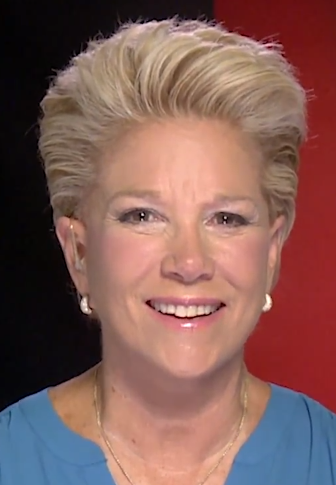
Veteran broadcast journalist Joan Lunden has detailed in her forthcoming memoir how an early television boss propositioned her, then retaliated professionally when she rejected his advances, illustrating persistent challenges women faced in the industry during her formative years.

Joan Lunden
Joan Lunden

In “JOAN: Life Beyond the Script,” set for release March 3, 2026, Lunden recounts the incident from the beginning of her career, before her rise to fame as co-host of ABC’s “Good Morning America” from 1980 to 1997. The former anchor, now 75, describes how one superior made an explicit pass at her, which she firmly declined.

According to excerpts published by People magazine on March 3, the executive responded by undermining her work. “He began to kill my stories,” Lunden writes, explaining that the boss started rejecting her pitches and assignments, effectively sidelining her contributions as a form of punishment for turning him down.

The revelation comes amid Lunden’s broader reflections on sexism, ageism and professional obstacles in television news. She has previously spoken about being pushed out of “GMA” at age 47 in 1997 — a move she has described as tied to a preference for younger talent, despite her strong performance and viewer loyalty. “I was 47 years old. That’s not old. They don’t push men out because they’re 47,” she told Yahoo Life in a 2022 interview.

Lunden’s memoir, her 11th book, offers a candid look at her life beyond the camera, including motherhood, breast cancer survival — she was diagnosed in 2014 and became an advocate — and reinvention in later years. She balances professional triumphs with personal challenges, emphasizing resilience and the evolution of workplace dynamics for women.

Advertisement

The anecdote about the early boss aligns with longstanding accounts of gender-based misconduct in media. Lunden does not name the individual in the published excerpts, and details remain limited to the professional consequences she faced. The story surfaced publicly through People and AOL on March 3, coinciding with the book’s launch and promotional interviews.

Lunden began her career in local news before joining ABC, where she became a household name interviewing presidents, celebrities and newsmakers. Her tenure on “GMA” helped define morning television, blending hard news with lifestyle segments and earning her multiple Daytime Emmy nominations.

In recent years, Lunden has focused on health advocacy, authoring books on wellness and aging, and maintaining an active presence through podcasts, speaking engagements and social media. She frequently discusses empowerment, particularly for women navigating career and family demands. Her daughter Jamie Hess has joined her on platforms like “The Gratitudeology Podcast” to explore family dynamics and personal growth.

The memoir arrives at a time when discussions of workplace harassment remain prominent, years after the #MeToo movement exposed systemic issues across industries, including entertainment and journalism. Lunden’s account adds to voices from her era highlighting unequal treatment and retaliation risks for women rejecting unwanted advances.

Advertisement

Promotional coverage emphasizes Lunden’s optimism and forward focus. In a Woman’s World cover story tied to the book’s release, she reflected on balancing early “GMA” hours with raising seven children, noting how her young daughters would come downstairs to “kiss the TV screen” in the mornings as a way of connecting with her on-air presence.

Lunden has expressed no interest in returning to daily broadcasting, instead embracing reinvention through writing, wellness initiatives and family. She has spoken positively about modern workplace improvements for women while acknowledging progress remains uneven.

The book’s release includes upcoming events, such as a March 10, 2026, appearance at The Temple Emanu-El Streicker Cultural Center in New York, where Lunden will discuss her career barriers and life lessons with moderator Molly Jong-Fast.

As Lunden promotes “JOAN: Life Beyond the Script,” the early-career story serves as a poignant reminder of the personal costs some women paid for professional ambition in male-dominated fields. Her willingness to share it underscores a commitment to transparency and support for future generations in media.

Advertisement

Lunden continues to inspire through advocacy and storytelling, proving that influence extends far beyond any single role or network.

Watch Video

Continue Reading

Business

Reeves says her plan is working as growth forecast cut for this year

Published

on

Reeves says her plan is working as growth forecast cut for this year

The forecasts were made before the conflict in the Middle East broke out

Continue Reading

Trending

Copyright © 2025