I’ve been trying to hold down the fort on being a blade putter user for a long time now, and I’m still holding out hope, but a few months ago during my first-ever putting lesson with Stephen Sweeney, I was convinced to give the mallet a real “college try.” Turns out, it’s been a game changer. Let’s dive into some of the facts and I’ll explain why the mallet is in my bag, but the trusty blade still sneaks in.
Within the first three minutes of the video, you’ll hear me state “yeah, well, blades are better” as Sweeney introduces our topic of the day, but writing this now four months later, a custom TaylorMade Spider Tour X has been in my bag ever since.
My custom blacked-out TaylorMade Spider Tour X
Jake Morrow / GOLF
I am in love with the Toulon Golf Chicago shape. It’s an old design from the team when they were still a part of the Odyssey family, but I’ve also been fortunate enough to have a prototype of an upcoming small-batch release from the company. I have used the Chicago shape — a slightly wider (but not quite a double-wide) blade with a well-pronounced top line and very simple bumpers — for the better part of the past five years in one form or another. I actually have four of them all built up almost identically to one another because I love the putter that much.
Advertisement
Rory McIlroy lines up a putt with his TaylorMade Spider Tour X.
Getty Images
Over the past couple years, the TaylorMade Spider has taken off in popularity mainly because of its success on Tour in the hands of Rory McIlroy, Scottie Scheffler, Tommy Fleetwood, Ben Griffin, Bobby Mac and many others. That Spider takeover has also increased the mallet usage on Tour as pros with other club contracts fight to find something that’s going to give them a larger benefit on the putting surface. Personally, I don’t see the trend being the benefits of mallets so much as I see it being the benefit of the Spider’s Pure Roll insert, but that’s a story for another time.
All that being said, Sweeney and I decided to find a way to test the results, and as you can see in the video, they weren’t exactly black and white.
Is there going to be a massive performance difference between a well-fit blade putter and a well-fit mallet putter? Probably not. However, there is a greater opportunity for the mallet to end up in the bag because of what the size of the platform gives you.
Advertisement
Michael Thorbjornsen’s winning Spider Tour. He happens to be a student of Sweeney.
Jack Hirsh / GOLF
With a mallet putter being larger in size, it allows the manufacturers to experiment with it more. They can add different types of alignment that don’t physically fit onto a blade-style shape. They can also throw weight into different places to create drastic changes in feel for a player without having to lose that same alignment real estate. Mallets just create a better opportunity to tune them for exactly what a player needs. That’s the true benefit of them.
There’s also something to be said for the forgiveness that a mallet creates as they are typically back-weighted, but the performance implications of that are still with the jury. While it’s mathematically a higher MOI design in a general scope compared to a blade offering, players don’t really miss their putter that far off-center so it’s hard to judge that actual implications of the higher MOI on performance. What really matters is can you aim the putter and can you get it back to square more easily.
With a mallet, those answers are typically going to be yes for a player, but it’s not a hard and fast rule. That’s why I still bring my Toulon Chicago with me every now and then. But the key to this is in something I mentioned earlier — the differences will shrink with well-fit equipment.
Advertisement
I know I aim my Toulon Chicago as well as I do the TaylorMade Spider Tour X. I’ve proven it at home and out on the course. I’ve also recently been putting with a new TaylorMade Spider Tour X that has the milled insert to actually feel more like my Toulon Chicago. The differences are nitpicky. It really comes down to which one I feel like I’m going to like on a certain day.
TORCHED PVD FINISH The durable PVD coating creates a beautiful high-quality finish. THIN WALL UNDERCUT CONSTRUCTION We’ve engineered a super stable structure by removing excess weight to create high MOI and legendary Spider performance. CG LOCATION PROGRESSION Each Spider Torched model features different CG locations for optimal putter fitting. HYBRAR ECHO® DAMPENER HYBRAR is behind the face to dampen unwanted vibrations, delivering premium sound and feel on every putt with the best possible sensation.
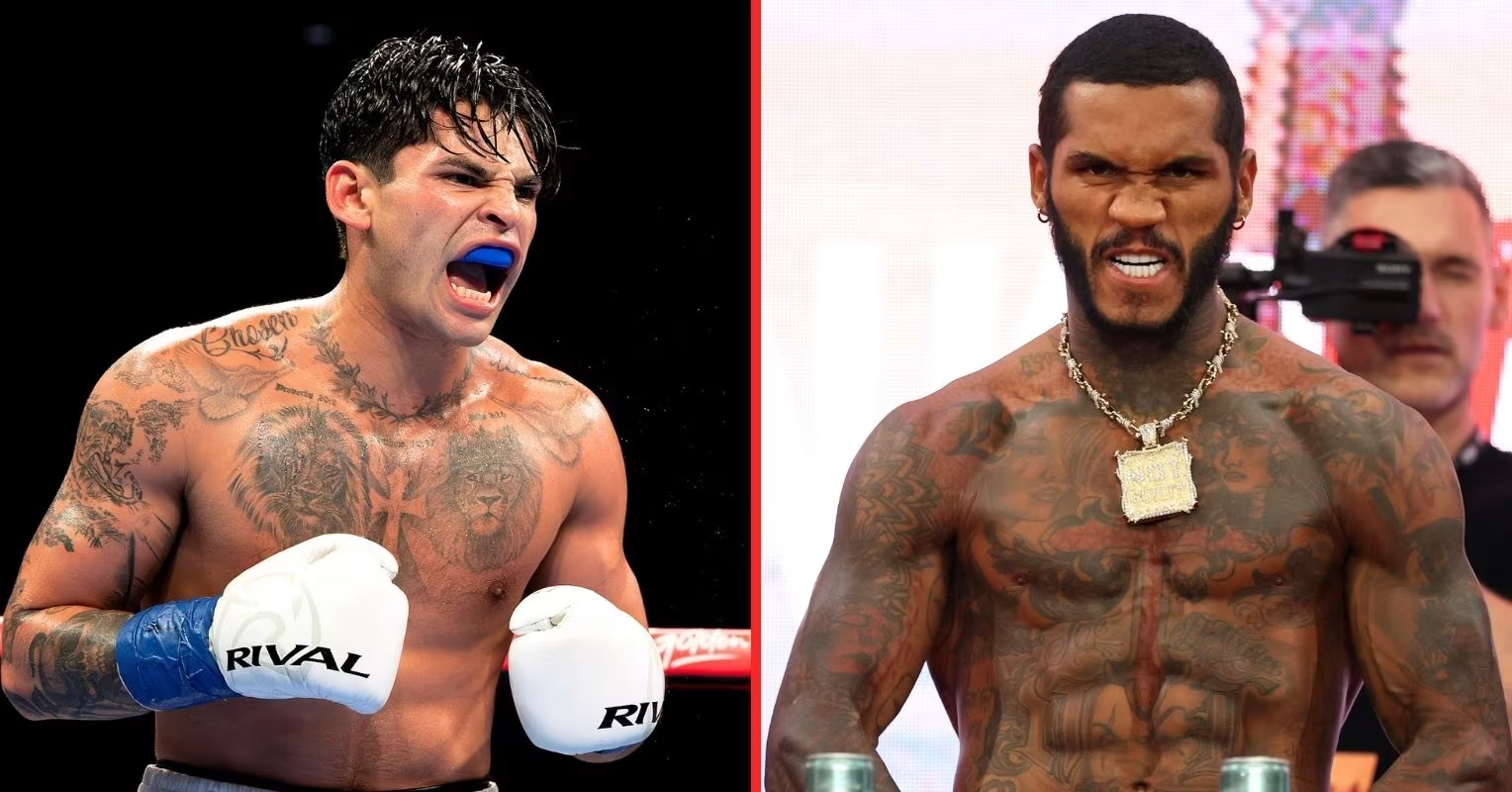
Ryan Garcia will defend his WBC welterweight world title against Conor Benn next weekend, but the Californian believes that an undefeated legend is helping to train his opponent ahead of the fight.
In a clip captured by The Ariel Helwani Show, Garcia revealed that he is aware that Crawford is currently helping Benn prepare for the contest, but believes that the assistance of ‘Bud’ will be of little use.
“You notice what they all have in common? They all sound bitter and hateful. Nothing good comes out of that, ever. They are all obviously bitter. I don’t really care what they think, at the end of the day, they can’t fight for Conor Benn, at all. They can’t punch for him.
“I know that Crawford is at Conor Benn’s gym, trying to give him every technique that he can give him, that s**t ain’t gonna help because I feel like I would beat your a**, so what are you gonna teach him?”
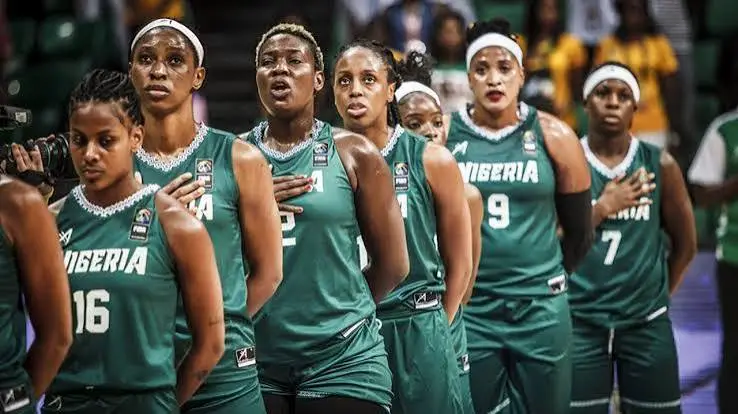
South Korea defeat D’Tigress 99-81 in World Cup Opener
Nigeria’s D’Tigress opened their 2026 FIBA Women’s Basketball World Cup campaign with a 99-81 defeat to South Korea.
South Korea pulled away in the fourth quarter, outscoring Nigeria 31-19 to secure the victory. The Koreans had 26 assists and forced 18 turnovers as they took control.
Nigeria had the advantage on the boards, grabbing 41 rebounds to South Korea’s 36, but struggled to contain their opponents’ offense.
Advertisement
Jihyun Park led South Korea’s impressive performance, while Nigeria’s Amy Okonkwo led the scoring for the D’Tigress. Murjanatu Musa also produced a double-double for Nigeria.
The defeat gives Nigeria a difficult start to the tournament, but the D’Tigress will have little time to dwell on it as they face Hungary on Saturday, September 5, at 12:15 p.m. WAT.
The D’Tigress acknowledged the disappointing start but remained focused on the next game, posting: “Not the start we wanted, but it’s only the first game. We go again tomorrow against Hungary.”
The press room at Fenway Park filled with the kind of optimism that comes with believing you got something right.
It was so soon into a young career. Just eight games to be exact.
But Craig Breslow sat behind a microphone, Red Sox team president Sam Kennedy to his right. Between them was Kristian Campbell, 22 years old, staring ahead toward a future the Red Sox believed had already begun.
Boston just signed him to an eight-year, $60 million extension.
Advertisement
“Here we are today sharing a massively significant moment for this organization,” Breslow said on April 5, 2025.
The Red Sox announced Kristian Campbell’s $60 million contract on April 5, 2025.
Getty Images
This wasn’t merely a celebration of Campbell. It was also a validation of a player-development philosophy the Red Sox had increasingly embraced.
Near the end of Chaim Bloom’s tenure as top executive in 2023, the Red Sox began incorporating principles developed by Driveline Baseball, a private player-development company that uses biomechanics, technology and data to identify ways players can move more efficiently and, ultimately, perform better.
Led by Paul Toboni, then the Red Sox vice president of amateur scouting and player development and now the Nationals‘ president of baseball operations, Boston began incorporating Driveline’s principles into its developmental system. That meant altering a hitter’s swing path to produce more balls in the air, particularly to the pull side. It meant increasing bat speed and improving how efficiently the body generates and transfers that speed.
Advertisement
Campbell was the system. He was the example. More than other top Red Sox prospects Marcelo Mayer or Roman Anthony, Campbell allowed the organization to flex what player development could look like when viewed through the lens of data.
Through Driveline.
Mayer and Anthony were the better bets. Campbell, a fourth-round pick out of Georgia Tech in 2023, was different. Boston could point to what he had been, what its development apparatus identified and, ultimately, what it helped create.
“What he was was a good player who made himself a great player because of his work ethic, diligence, open-mindedness and attitude,” Breslow said at that press conference 17 months ago. “In many ways, he is a prime example of what’s possible when great scouting meets great development around a player who prioritizes maximizing his potential.”
Advertisement
That’s not how the story played out, though.
Fast forward to June 2026, more than a year since Campbell had last stepped onto a big-league diamond. The seat behind a microphone and a slew of reporters at Fenway Park had been replaced by a dusty wooden bench in Worcester, Mass., and an audience of one reporter.
Campbell’s major-league career has not lived up to the promise. He hit .301 with a .902 OPS and four homers in his first 29 MLB games. Then he stopped hitting.
Campbell followed that up with a .159 batting average and a woeful .465 OPS in his final 38 games before being exiled to the minors. He’s been in Triple-A Worcester since June 21, 2025.
Advertisement
MLB pitchers found holes. They adjusted. Campbell struggled to adjust back. One source suggested Campbell’s former teammate Alex Bregman played a role in tinkering Campbell’s swing. Bregman, a three-time All-Star now with the Cubs, was a mentor for Campbell during his time in Boston. Bregman possesses a wealth of hitting knowledge but is also known as the ultimate tinkerer, and some believed that Campbell began tinkering too much himself and changing his swing for the worse.
Another evaluator, however, scoffed at that: “Bregman didn’t hurt Campbell. Sinkers did.”
When the Red Sox demoted Campbell, the club tasked John Soteropulos, a former Driveline hitting trainer and now the hitting coach for the major-league club, with helping Campbell find his way back. But Campbell never returned to his dominant form, and one source said he felt even more confused at times. He hit a modest .273 with a .799 OPS and eight homers in Triple-A to close out 2025.
Campbell’s roller-coaster career is a prime example of a belief in the industry: If Driveline wants to take credit for players’ ascents, it better take ownership of the struggles, too. And Campbell is hardly the only test case. Across baseball, the rise of modern, data-driven player development has produced success stories. It has saved careers. It has also frustrated players and disrupted growth. Its influence has, rightfully, become deeply embedded in the game. But the approach has sometimes shut out or quieted coaches and players who weren’t fully on board. The question is no longer whether Driveline and the movement it helped popularize have changed hitting in recent years. It’s what the game has gained, and may have lost in the process.
Advertisement
In Campbell’s case, the scouting report eventually outdueled the system, and for the first time in his rapid climb through professional baseball, the player who worked tirelessly, perhaps too tirelessly, to maximize his potential was searching for answers.
“Some of the stuff I ran into recently, or even last year when I was in the majors, was more just different pitch types I haven’t seen before,” Campbell said earlier this summer.
Campbell’s rise was emblematic of both his talent and the developmental system that helped shape him. But to understand how Campbell became the player the Red Sox believed was worth $60 million, one must first understand the philosophy that helped unlock him.
Among a seemingly endless collection of beige buildings in Scottsdale, Ariz., sits one of Driveline Baseball’s training facilities. From the outside, there is little reason to suspect that within this nondescript commercial complex is an operation that has had an outsized influence on Major League Baseball’s front offices and player development systems.
Advertisement
Driveline was founded in 2007, and for years, its influence was felt primarily on the pitching side. Driveline developed a proven track record of increasing velocity while teaching pitchers to throw their best stuff in the strike zone.
Driveline’s rise was led by founder Kyle Boddy, whose unconventional path into baseball included professional gambling, blackjack card counting and online poker. Boddy never played or coached professionally. He didn’t play in college, either, dropping out of Baldwin Wallace University before bouncing through jobs in tech and data science and eventually launching Driveline.
To many in baseball, the idea that someone with Boddy’s résumé could challenge the infrastructure that stood before him drew skepticism. But decision-makers eventually looked beyond it and delved into the biomechanics and data at the heart of his system.
“If we had any sort of lasting influence or whatever was first, I think it was just player development, data-driven player development,” Boddy said. “We did it the best. I still think we do it the best.” Boddy served as a special advisor for the Red Sox from 2024 until this June and has also worked for the Reds. He hopes to one day run a team as its general manager.
Advertisement
Kyle Boddy founded Driveline in 2007. He has worked for the Reds and Red Sox in recent years.
Imagn Images
At its core, Driveline is built around the idea that skillsets and, ultimately, production, can be improved through technology, biomechanics and training methodology. After seeing results with pitchers, Driveline began applying those principles to hitters, too. The company believed that bat speed, launch angle at the point of contact and body positioning were among the tools that could be measured and improved to create a more productive hitter.
Inside the facility, exposed wires connected to high-speed cameras provide instant feedback on a hitter’s swing. Sensors attached to bats detail how the barrel moves through the zone. On this spring day, a group of independent league players trained alongside former big-leaguer Rowdy Tellez, who was preparing to play for Mexico in the World Baseball Classic.
Three training bats rested inside the cage, their barrels colored green, red and blue, all meant to help hitters increase bat speed and barrel control.
The green one was barrel-loaded, 20% heavier than a player’s normal bat, with the additional weight concentrated near the barrel. The added weight forces hitters to use more of their bodies throughout the load and into the swing, rather than simply throwing their hands at the ball. The red bat was also 20% heavier, but with the additional weight concentrated near the hands, helping hitters who fire too quickly keep the barrel through the hitting zone longer. Finally, the blue bat was 20% lighter than a player’s game bat, allowing hitters to move it faster through the zone and become accustomed to generating greater bat speed under control.
Advertisement
“We don’t want to live in a world where the hitter has to have perfect timing all the time,” Driveline hitting coordinator Jacob Hirsh said.
The approach initially did wonders for Campbell. It’s worked great for Toboni’s new team in 2026, too.
When Toboni arrived in Washington as the Nationals’ new head of baseball operations leading into this season, he helped modernize the organization’s biomechanics and data systems, areas that had lagged under former president of baseball operations Mike Rizzo.
Under Toboni, the team overhauled its hitting staff, hiring lead hitting coach Matt Borgschulte, who served as the Twins‘ hitting coach the year prior, alongside assistants Andrew Aydt and Shawn O’Malley. Both Borgschulte and O’Malley came from traditional baseball backgrounds. Aydt’s path was less traditional: he worked at Driveline from 2018 through 2025 after playing Division II baseball at McKendree University in Illinois.
Advertisement
And Aydt wasn’t the only Driveline connection. Toboni also hired Travis Fitta, a Driveline employee from 2023 to 2026, as the club’s Triple-A assistant hitting coach (Fitta has since left to become the hitting coach at Grand Canyon University).
The team has faded in the wild-card race, but through Aug. 25, the Nationals led the majors in home runs (184) and runs scored (695) and were third in OPS (.756). A year ago, the club owned a .693 OPS, a mark that ranked 24th in baseball.
Nats star James Wood, prior to and oblique strain that sidelined him for nearly all of August, took even greater strides, batting .265/.393/.535 with a .928 OPS and 30 homers. CJ Abrams has put together his best season yet, emerging as one of the top-hitting infielders in baseball while batting .267/.343/.502 with a 130 OPS+ and 29 homers.
Two players Washington moved this season took more unexpected strides. Infielder Curtis Mead, who was traded to the Red Sox prior to the deadline, and Luis Garcia Jr., who was traded to the Yankees at the deadline, are the breakout examples. Mead enjoyed an impressive year in Washington, totaling a career-high 18 homers with an .852 OPS in 87 games with Washington. Garcia Jr. was magnificent for the Nationals, also setting a career high in homers (23) while posting a .560 slugging percentage.
Advertisement
Home Runs
193
2nd
OPS
Advertisement
.754
3rd
SLG
.429
2nd
Runs
735
Advertisement
2nd
There are plenty of examples outside of Washington, too, including the Cardinals‘ Jordan Walker. Earlier in his MLB career, the 24-year-old outfielder hit the ball hard but too often on the ground, combining for a 47.6% ground-ball rate across parts of his first three seasons in the majors.
Last offseason, Walker went to Driveline, where the technology helped provide information that he and St. Louis hitting coach Brant Brown could use to shape his swing. The data showed that Walker’s back hip collapsed, causing him to drift toward the ball. Brown identified another issue: Walker’s elbow and barrel would get behind his torso, making it difficult for him to get his best swing off.
Using that information, Brown and Walker worked toward a solution. They implemented a slight dip in Walker’s load, helping him produce better results in the air while still allowing him to get to the pull side when needed.
Advertisement
The shift in approach and setup, including standing taller at the plate, helped Walker ascend to stardom this year, hitting .289 and winning the Home Run Derby in July. His ground-ball rate has dropped to around 41%, while his average exit velocity has remained roughly in line with years past at 92 mph.
Jordan Walker’s breakout 2026 season includes a Home Run Derby victory in Philadelphia.
Getty Images
The results with both Washington and Walker show what can happen when the data and the communication of that information are aligned.
“Any success we’re having this year is largely due to the talent, open-mindedness and work ethic of our players,” Toboni said. “No single person has it all figured out, and that’s a big part of what makes us go.”
The 2026 Nats offense shows what can go right for a team that embraces data-driven coaching. But elsewhere in the DMV, the approach hasn’t seen sustained success.
Advertisement
The modern hitting philosophy in baseball, heavily influenced by Driveline, has increasingly centered on a simple ideal: hit the ball in the air to the pull side, and do it with elite bat speed.
“Every qualified hitting coach understands the importance of moving the bat fast and getting the ball in the air to the pull side,” said one National League executive.
The numbers explain the appeal. Since 2022, balls hit in the air to the pull side have produced a whopping .477 batting average and 1.694 slugging percentage.
“There’s a huge emphasis on elevating the ball in the air to the pull side from a third-party standpoint,” said Diamondbacks assistant general manager Mike Fitzgerald. Since 2023, Arizona’s .747 OPS ranks fourth in baseball. “I think, objectively, that is where most slug exists. But, like, organizational philosophy has been, if you sell out to that, that’s going to come at a cost. And so let’s just make sure we understand what that cost is.”
Advertisement
That cost is where the conversation becomes more complicated. There’s nuance, Fitzgerald added. Pulling the ball in the air with authority produces undeniable results. But doing so requires the barrel to work farther out in front, which can sacrifice plate coverage. Selling out for the pull side can reap enormous rewards. The question is how many hitters can actually do it consistently without compromising other parts of their game.
“It’s dumb,” said first-year Orioles first baseman Pete Alonso, who is closing in on 300 career home runs in his eighth MLB season. “Organizations now are huge on fixed outcomes. Everyone wants a homer. But there are so many at-bats where doubles are great. Hits are great. Walks are great. Homers are just happy accidents. Why am I gonna just waste all of my at-bats trying to hit something I’m gonna do 1% of the time from all the pitches I see?”
The Orioles offer a case study in what can happen when that pursuit becomes an organizational philosophy.
In fact, Baltimore delved so deep into pull-side power in the air that one time, for example, a veteran player working his way back to the big leagues showed up to the minor-league ballpark with a batting tee, and it caught the coaching staff off guard.
Advertisement
“We haven’t seen one of those in a while,” one of the coaches said.
The thinking is this: Hitting off a tee, something that used to be routine, has become a hindrance because it doesn’t help hitters train to launch the baseball in the air. It could possibly create a steep swing.
“All they want to do is slug to the pull side,” said one former player of the O’s.
For a time, Baltimore was confident it had all the tools to make it work.
Advertisement
Just a few years ago, the Orioles were heralded as baseball’s golden group. They combined to win 192 games in 2023 and 2024, finishing with baseball’s fourth-best offense two years ago. Gunnar Henderson was already a superstar. Jackson Holliday was the No. 1 prospect in baseball. Colton Cowser finished second in Rookie of the Year voting in 2024. Heston Kjerstad projected as a cornerstone, middle-of-the-order bat. Top draft pick Adley Rutschman was the pillar behind the plate.
Henderson regressed over the last two seasons. Holliday hasn’t panned out. Cowser, hitting .215 this season, took a step back, too. Kjerstad, out all year with a hamstring strain, is a career .218 hitter. Rutschman was traded to the Red Sox at the deadline.
“Why haven’t any of their players developed?” asked one former member of the organization.
Some players who have played for Baltimore believe the offensive approach, and its one-size-fits-all nature, has played a role.
Advertisement
Back in Boston’s organization, the need to swing faster and pull the ball had trickled down to hitters who already possessed those traits. Take James Tibbs III. Tibbs, who came to Boston from San Francisco as part of the Rafael Devers trade last summer, immediately joined the organization’s Double-A affiliate. Once he got into Boston’s system, the team shifted his focus to just pulling the ball.
But there was a problem: Tibbs was already a pull hitter with exceptional bat speed.
“They had him using all these weighted bats in practice,” one person said. Having a hitter move too fast can disrupt timing, and it can lead to more swings and misses.
The outfielder was reluctant to embrace the training philosophy, and after just a month and a half in the organization (while hitting .207 with one home run in 30 games), Tibbs was traded at the 2025 deadline, this time to the Dodgers.
Advertisement
The Dodgers, who have one of the best player development track records in the game, had a simple approach for Tibbs: Let him use the entire field. With the Red Sox, the emphasis involved increasing his exit velocity, but his swing became too rotational. As a result, he was pulling off the ball and wasn’t making consistent enough contact. Using the whole field allowed him to stay inside the ball longer while still being able to turn on pitches when he needed to.
Tibbs is enjoying a breakout year at the plate, batting .293/.415/.542 with a .957 OPS and 27 homers for Triple-A Oklahoma City.
Seated at the top of that WooSox bench in June was a broken player. Campbell was searching, trying to find the swing that helped carve him into one of the premier players in the minor leagues and vault him into the conversation as a future pillar of a historic franchise.
He was hitting just .212 in Triple-A. His slugging percentage was .284 in nearly 300 plate appearances.
Advertisement
The Red Sox weren’t playing well at the time, having just dropped a series to the lowly Rockies in Colorado. Worcester wasn’t where Campbell was supposed to be. He has kicked himself because of that. Surely, he wasn’t supposed to be batting seventh in Worcester. He went 0 for 3 with three punch outs later that evening, sinking his batting average .209.
But what really sunk Campbell? He lost his feel.
He had the bat speed. (“It’s stupid bat speed,” one player said.) He had the exit velocity to go with it. But the ground ball was his enemy. He had to change his approach so the reality became less grounders and more balls in the air.
Campbell spent the prior three years architecting his swing at Driveline, using a training philosophy said to be on the cutting edge of the sport. But there’s no data model, no swing change, no biomechanical engineering that can fully account for the human.
Advertisement
Campbell got used to the launch. Used to thinking — and that’s important, thinking — about swinging up, until suddenly that became his norm. Balls above his hands turned into swings and misses. Balls at the belt turned into pop-ups.
And, as one source with knowledge of Campbell’s situation put it, the Red Sox hitting brass lacked answers for him as he continued to struggle. A possible solution they did have was one they told Campbell to ditch long ago: Go back to your college swing.
“He’s kind of a handsy hitter,” said Johnny Reina, a Driveline alumnus and the current hitting coach for Triple-A Worcester. “He’s a super athletic dude. So I think the main thing was trying to get him back to feeling like more athletic and free-moving instead of, like he said, he felt a little robotic.”
In college, Campbell, because of his quick hands, could wait as long as possible and shoot the ball the other way. But here’s the issue: He spent the hours, days and years that followed unlearning that. The feel was gone.
Advertisement
And as a result, he was left on an island, trying to rediscover it in Triple-A.
“They take credit for the players they help,” said one player, “but what about the ones they f— up?”
Anonymous MLB player
One of the gripes with Driveline philosophies from some in the game has always been: Sure, you can get me there. But when I struggle, can you get me back?
“They take credit for the players they help,” said one player, “but what about the ones they f— up?”
Advertisement
“I think that’s a real thing,” said Boddy when made aware of the aforementioned player’s grievance. “I think if you’re gonna take credit for anybody, you gotta you gotta be willing to take the downfall for those others, you know. And so there, it’s definitely true. I think you got to encompass it all.”
On the back fields of a spring training facility in February stood a player frustrated with the game around him. With how deeply Driveline infiltrated a sport he believed had become too influenced by its philosophies. He played for myriad data-driven teams over the course of his career, but he carried a message for one club:
“F— the Red Sox,” the veteran MLB hitter said. He considered attaching his name to that quote, but decided against it because of his impending free agency.
Later in the year, one prominent National League player was asked about Driveline and its influence in the sport.
Advertisement
He smirked and said, “Nah, I’m not touching that.”
Throughout the reporting for this story, both players and coaches were reluctant to go on the record with anything that could be perceived as challenging Driveline’s philosophies. The reasoning wasn’t difficult to understand. In a sport where those philosophies have become increasingly embedded in player development, there’s a feeling that speaking out against it could potentially make someone less employable or suggest they lack buy-in.
The Billy Beane Moneyball era in Oakland began changing the way front offices thought 25 years ago. It also changed the profile of who could be viewed as the next great baseball executive. Baseball became more insulated and elite, increasingly turning to predominantly white, data-driven minds from prestigious schools to fill general manager and president of baseball operations roles. According to ESPN, Ivy League representation among baseball’s top decision-makers stood at just 3% in 2001. By 2020, that number climbed to 43%.
Now, a similar shift has taken place on the coaching side. According to Boddy, at least 70 to 80 former Driveline employees now work across professional baseball. The Phillies recently promoted Dan Aucoin to assistant general manager of research and information. Guardians minor-league hitting coach Mike Snow joined the organization this year, and the Twins hired Double-A hitting coach Andrew Cresci in 2025. All three came through Driveline.
Advertisement
And more and more organizations are employing data-forward swing coaches in major-league dugouts. The Red Sox did so by promoting Soteropulos — who played at Cal Berkeley but whose coaching experience came primarily through Driveline — to lead hitting coach following the firing of manager Alex Cora and much of his staff in April.
Soteropulos isn’t the only example within the organization. Over the last eight or nine years, Reina’s coaching background included stops at Antonelli Baseball, a youth training and travel baseball academy in the greater Boston area, and Driveline. Following his time at Driveline, Reina was hired as an assistant hitting coach for the Red Sox’s Double-A affiliate in 2024. He was promoted to Triple-A hitting coach this year.
The Red Sox’s biggest rival is seeing the same shift take place.
“There was a period of time in development, I think, in the game, whether it was Driveline (or other places) in some cases, they were doing things better than pro clubs were doing,” Yankees general manager Brian Cashman said. “Pro clubs started figuring that out, and then they started hiring their people and bringing them in, like, ‘Hey, teach us what you’re doing.’”
Advertisement
The shift unsettled some hitting coaches across the sport who lack a Driveline background. They understand data and how to apply it, but feel as though they are increasingly being cast aside. They point to a distinction between a hitting coach, who evaluates a hitter’s swing within the context of how pitchers attack him, and a swing coach, whose expertise is more focused on the movement of the swing itself, often using data to identify inefficiencies and potential adjustments.
Traditionally, much of a swing coach’s work takes place in the cage, removed from the immediacy of game action. Hitting coaches carry a different load. They are responsible for the quick decisions, the in-game adjustments and everything that comes with navigating a hitter through a season. They are part therapist, part savant.
“How many swing coaches do you see caddying on the golf course with guys?” one National League hitting coach said. “A caddy is in the shit with them. They’re reading the game. Reading the course.”
In the wake of something new, the pendulum can swing heavily in one direction. It takes time to blend.
Advertisement
Certainly, there are those around the industry who view Driveline as great marketers. But perhaps the game is slowly beginning to find some balance. And that includes Driveline.
When Caleb Durbin was first traded to the Red Sox from the Brewers, the organization wanted him to pull the ball more. The adjustment sent him into a spiral, as he hit .152 over his first 52 games. Durbin, however, took it upon himself to work with an independent hitting group, Gradum GSwing, roughly 30 minutes outside Boston.
“I think it just helped open up the whole field,” Durbin said. “So I was able to cover more pitches. Was able to cover the outside part of the plate better and cover the breaking balls better.”
Since June, Durbin is hitting.289/.369/.444, with 11 home runs and 11 doubles in 82 games.
Advertisement
Statcast
The Red Sox, meanwhile, have been the best offense in baseball for much of the second half, largely playing to their strengths: bat-to-ball skills, taking their hits and using the entire field. It’s a departure from much of what the organization publicly and privately emphasized over the previous two-plus years, and perhaps evidence of some malleability. Since the break, the Red Sox rank second in OPS and slugging despite ranking 21st in hard-hit percentage and tied for 21st in bat speed.
“Our beliefs are constantly evolving as we update our information and identify trends in the industry,” Breslow said. “However, what I don’t anticipate changing is the framework of working backwards from what the best version of each individual player looks like, and then adjusting training and approach in order to achieve that.”
Boston isn’t alone. The Rays and Brewers, both atop their divisions, have been on the cutting edge of a more speed-driven approach, one built around athleticism and high contact rates. The Brewers’ ground-ball rate (48.5%) is six points higher than the MLB average, and their pulled ball percentage (34.7%) is nearly five points lower than the average.
The next evolution of hitting isn’t another extreme swing of the pendulum and a refusal to move from it.
Advertisement
It’s finding the blend.
As for Campbell, he’s still in Triple-A. There’s been progress. But with the Red Sox turning their season around and likely punching their ticket to October, he doesn’t appear to have a path back to the majors this year.
Currently, according to Reina, Campbell has figured it out again. He’s attacked pitch mixes through the club’s Trajekt machine and raised his hands in his setup. Earlier in the season, Campbell held them lower. His timing suffered.
“I don’t think you can speak enough on Kristian’s character,” Reina said. “Just as a person, I think that first and foremost allows him to show up day after day, whether it’s good, bad, or indifferent. He tries to be a good teammate every day. That’s important to him.”
Advertisement
He’s still just 24. Success doesn’t always arrive swiftly. Sometimes, it requires endurance.
Campbell has endured. And the results are beginning to come back. He hit .308/.433/.497 with five home runs and 30 walks in 44 games between June 25 and Aug. 30. He homered twice Sunday.
Nonetheless, Campbell is a reminder that there’s a cap to how much some hitters should be engineered.
And on that June day in the WooSox dugout, he appeared light but dejected. He still smiled. He still laughed. But the weight of still trying to live up to the expectations that came with his contract was palpable.
Advertisement
At the end of the conversation, Campbell rose from the WooSox bench, walked through the cluttered hallway that led to the clubhouse. A reminder of just how removed he was from the big leagues.
Yet even on an island, trying to rediscover the swing he crafted as a kid while shedding parts of the one built under the exposed cables, the one that helped get him here, there was still a glimmer of confidence that shone through.
Because there’s a person behind the swing.
A ballplayer.
Advertisement
He made a sharp right toward his locker and offered one final thought.
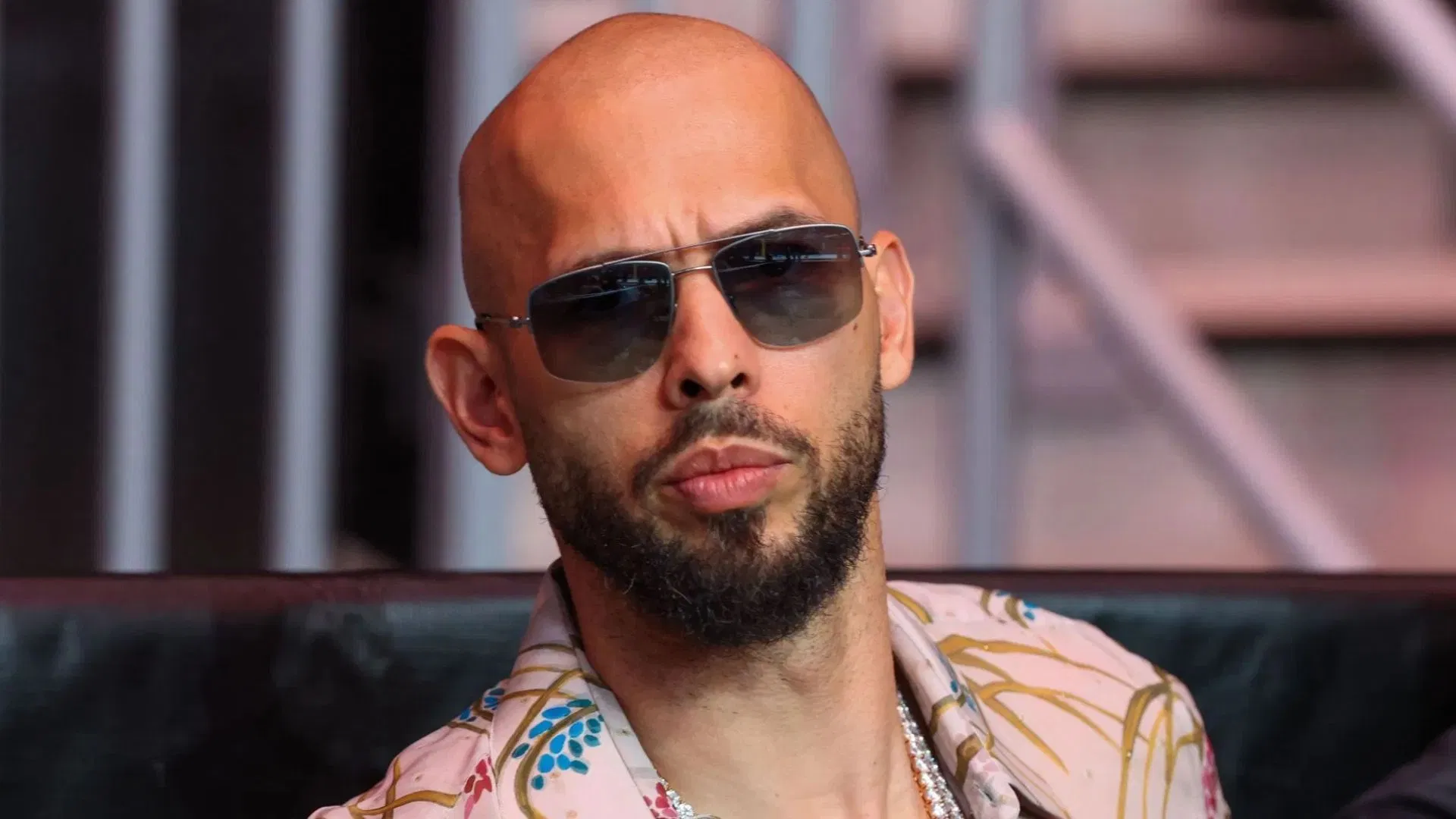
On September 4, 2026, businessman and social media influencer Andrew Tate was formally indicted on four allegations. His brother, Tristan Tate, was indicted for complicity in the alleged offenses. This comes as a major update, considering the new indictment comes after their earlier case ran into procedural problems. Notably, the Romanian investigation against the Tates began in December 2022.
Now, nearly four years later, Romania’s anti-organized crime prosecutors, DIICOT, indicted Andrew Tate on the following allegations:
Trafficking of minors
Sex with a minor
Money laundering
Witness tampering
It should be pointed out that an indictment is not a conviction. It means prosecutors believe they have sufficient grounds to send the case forward for judicial examination. The brothers remain presumed innocent unless convicted.
Advertisement
In December 2023, the initial 2022 investigation against Tristan and Andrew Tate led to a formal indictment in an earlier case involving allegations including human trafficking and rape.
However, in December 2024, the Bucharest Court of Appeal returned the indictment to prosecutors because of multiple legal and procedural irregularities. Essentially, the court found problems with the way prosecutors had constructed or handled the case and sent it back to DIICOT for further work.
Andrew Tate currently being held in the United States
The timing of the Romanian indictment is significant because Andrew and Tristan are currently being held in the United States. In July 2026, the brothers were arrested in Miami following a request from the United Kingdom for their extradition.
The British case is separate from this Romanian prosecution. In the UK, Andrew faces allegations including rape and trafficking-related offenses, while the brothers contest extradition and deny wrongdoing.
Advertisement
According to a report from Sky News, the Tates’ lawyer, Eugen Vidineac, claims that the brothers “continue to reject the allegations”:
“We will examine every aspect of (the indictment) with the same level of scrutiny, and we will challenge any evidential, procedural or legal deficiencies through the appropriate judicial process. Our clients continue to reject the allegations against them.”
In January 2026, Andrew Tate said he’d potentially “go to jail,” while claiming his life has been “destroyed.”
Westlife have been confirmed as the headline performers for Katie Taylor’s historic farewell fight at Croke Park on Saturday night.
The Irish group will perform a special live set as part of an extraordinary occasion that will bring Taylor’s professional boxing career to an end in front of a packed Croke Park.
The Bray fighter faces undefeated French challenger Flora Pili in the main event on Saturday, 5 September, with the contest forming the centrepiece of a major celebration of Taylor’s career and contribution to Irish sport.
Taylor v Pili: Key Details
Date: Saturday, 5 September 2026
Venue: Croke Park, Dublin
Event begins: 4pm
Main card: From 7pm
Expected main-event ring walks: Approximately 10pm
Live coverage: RTÉ and DAZN
Advertisement
Westlife return to Croke Park
Westlife are no strangers to performing at GAA headquarters, having previously sold out the Dublin venue on several occasions. Their appearance adds another major Irish element to a night already expected to rank among the country’s most memorable sporting events.
The performance will take place before Taylor makes the final ring walk of her career. Promoters Matchroom Boxing have described the event as a celebration of the Olympic champion’s extraordinary journey from Bray Boxing Club to the biggest stages in world boxing.
Taylor will defend her WBA, IBF and WBO super-lightweight titles, as well as her Ring Magazine championship. The vacant WBC belt will also be on the line, giving the 40-year-old the opportunity to finish her career as the undisputed champion at 140lbs.
One final challenge
Flora Pili arrives in Dublin with an unbeaten professional record and the chance to produce one of the biggest shocks in the history of women’s boxing.
Advertisement
The French challenger has acknowledged that she will enter the contest as the underdog, but she has made it clear that she has not travelled to Ireland simply to play a supporting role in Taylor’s farewell.
Taylor, meanwhile, has promised to deliver a performance worthy of the occasion. Her only professional defeat came against Chantelle Cameron in Dublin in May 2023, a result she reversed six months later to become an undisputed champion in a second weight division.
A landmark night for Irish sport
A Croke Park fight had long been regarded as the final missing piece of Taylor’s remarkable career. She won Olympic gold in London in 2012 before turning professional four years later and helping to transform the standing of women’s boxing around the world.
Her contests with Amanda Serrano broke new ground, including their historic meeting at Madison Square Garden in 2022. Taylor defeated Serrano three times during a rivalry that brought unprecedented attention to the women’s professional game.
Advertisement
Saturday will now offer Taylor the homecoming that Irish supporters have awaited for years. With Westlife performing and four world titles at stake, the stage is set for an emotional conclusion to one of Ireland’s greatest sporting careers.
Katie Taylor v Flora Pili takes place at Croke Park on Saturday, 5 September, with live coverage available on RTÉ and DAZN.
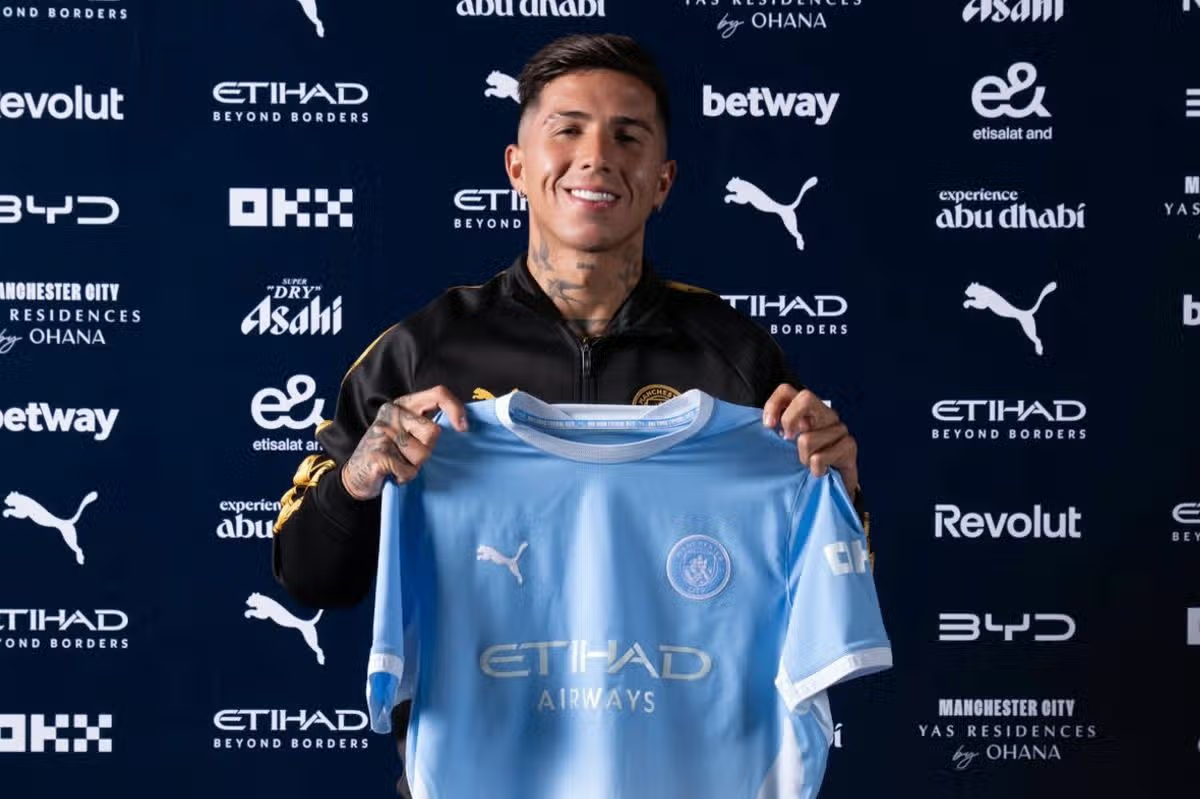
Manchester City manager Enzo Maresca spoke about club record signing Enzo Fernandez, who he knows well from their Chelsea days
Enzo Maresca said Manchester City players were itching to know that Enzo Fernandez was signing as he welcomes a ‘winner’ to the Manchester City dressing room. The Blues killed any suggestion they would sign the Chelsea star at the beginning of the transfer window but sealed a £125million deal on its final day to complete a record summer of ins and outs.
Fernandez will form part of a new-look midfielder at the Etihad where more than £300m has been spent on three players in Fernandez, Elliot Anderson and Ayyoub Bouaddi. City rejected the opportunity to pay slightly lower for Fernandez earlier in the window, but did manage to bring down Chelsea’s £135m asking price in the final hours as they finally delivered the club-record signing.
Advertisement
Knowing that Rodri and Bernardo Silva would be leaving this summer, Maresca had his eyes on Fernandez for a long time – especially given the player had made it clear he was open to leaving Chelsea. The pair enjoyed success together at Stamford Bridge and the manager did not hesitate when asked why they had signed him.
“I know Enzo quite well. I know what he can bring to the team. He’s a winner, has a winner’s mentality. He knows how to win – World Cup, Club World Cup. The main thing is that, again, he’s a winner,” he said.
“He’s a winner and when you belong to a squad and another winner arrives they are always happy. I can promise you that in the last four or five days, four or five players in the squad were asking if he was coming or not because they want him to be with us. It’s very important that he is with us and we are 100 per cent happy with that.”
Advertisement
Fernandez could make his debut as soon as Saturday’s game with Coventry at the Etihad, but will not be part of the captaincy group for the season after Maresca added Marc Guehi and Gianluigi Donnarumma to the leadership group instead. Matheus Nunes is also expected to return to the squad after missing the trip to Palace but Jeremy Doku remains sidelined.
Content cannot be displayed without consent
Whether you’re the inviter or the invited, your goal for a day at the club is simple: seamlessness.
Here are 14 pieces of etiquette for the next time you head to a private club, whether you are a host or a guest.
If you are the host …
1. Email or text the guest a link to the club with directions, policies, etc., highlighting anything unusual.
2. Pick a specific time and place to meet to minimize any guest anxiety or bumbling around.
Advertisement
3. Consider covering all expenses for the day — or make explicit what tips the guest may cover, how and how much.
4. Let the public-facing club staff know your guest’s name and ETA, so greetings can be personalized.
5. Have a handful of interesting (but not braggy) club facts or historical anecdotes at the ready.
6. Be generous with putt concessions!
Advertisement
7. Ask the guest if they’re at all pressed for time post-round. If so, call the restaurant and have them start preparing the meal to eliminate a 19th hole wait.
If you are a guest …
1. Arrive on time or a touch early (but not, like, the day before).
2. Always err on the side of formality. Tuck in your shirt and take off your cap in the clubhouse.
3. To the fullest extent possible, put away the cell phone. Be present.
Advertisement
4. Your pace of play (brisk) is important, while your quality of play isn’t.
5. You are a reflection of your host, so … fix divots and ball marks, be polite to staff and tip generously in cash wherever possible.
6. Keep any and all critiques to yourself.
7. An effusive post-round thank-you, replete with a compliment or two about the club, should be followed with a written note … and an invite to your club, or to dinner, or however you can best reciprocate.
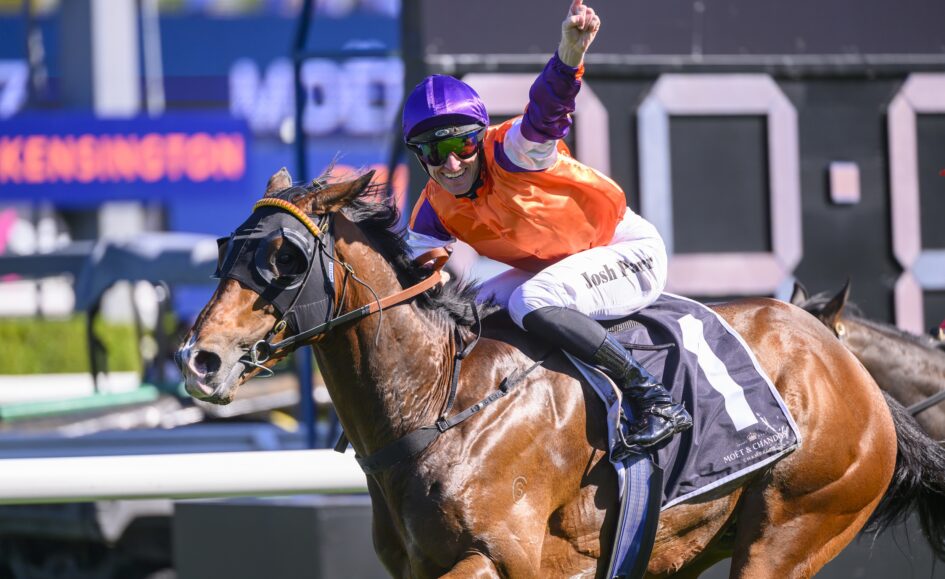
John Thompson is pleased to be initiating El Castello’s latest racing campaign with a clean slate, holding quiet optimism that the Group 1 winner still has more to offer on the track.
It has been a trying period for those involved with the five-year-old, who announced himself among the elite horses of his generation with a victory in the 2024 Spring Champion Stakes (2000m) and a fifth placing in the 2024 Victoria Derby (2500m).
Unable to consistently fulfil his early potential as a colt, he was gelded during his last preparation, but the procedure did not yield an immediate positive outcome in his sole subsequent start.
Now, after a period of recuperation in the paddock, Thompson reports that El Castello is exhibiting promising signs that he is keen to race again.
Advertisement
“He was gelded in work and for mine, it never works and didn’t,” Thompson said. “But being spelled, he was put out in a big paddock with three or four other horses and allowed to just be a horse and get back to nature. He’s come back, and his attitude is so much better. He’s just a normal horse now. His trials have been good. A couple of top jockeys have ridden him in the trials and at trackwork and all three have said he feels like he’s in great shape and ready to go.”
El Castello makes his comeback in a highly competitive renewal of the Tramway Stakes (1400m) at Randwick on Saturday, a race featuring seven Group 1 winners among the eight runners.
Thompson expects the 1400-metre distance to be below El Castello’s best but is eager to see a strong performance that confirms the horse’s recent favourable showings in training.
“I think he needs to get to a mile, 2000 myself,” he stated. “The 1400 will be too short. He’s fresh and he normally runs well fresh, but I just want to see him run well and he’ll improve off the back of it.”
Advertisement
Thompson is anticipating a significant improvement from Screen Icon in the Furious Stakes (1200m), following her effort where she raced handy to the speed before tiring when midfield in the Silver Shadow Stakes (1200m) first-up.
He mentioned that the filly will be ridden with more restraint by new jockey Nash Rawiller this weekend, allowing her a chance to finish the race strongly.
“I want her ridden a bit quieter,” Thompson said. “She’s got a good draw for once on Saturday so she’s going to get a lot better run. It should set up well for her, and we’ll know where we’re at.”
With the Tramway Stakes just around the corner, punters might want to check out Australian betting sites for the latest racing odds.
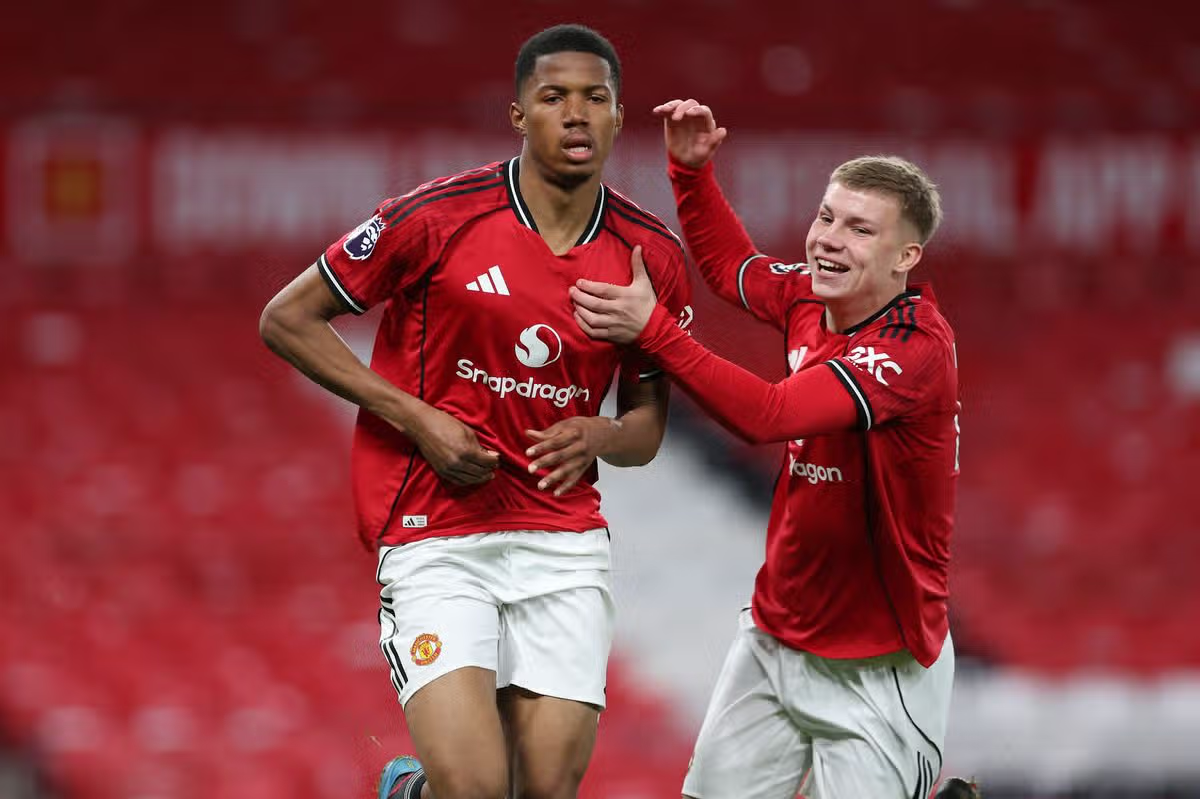
Stoke City have confirmed the signing of Manchester United youth striker Louie Bradbury, with the 17-year-old penning a two-year professional contract with the Potters
Manchester United youth striker Louie Bradbury has joined Stoke City on a permanent basis. The 17-year-old will join the Championship side on a two-year-deal after penning a professional deal, with an option in the club’s favour for the 2028/29 campaign.
Bradbury, who has also represented Wales at youth level, spent four years at United and has turned out for their Under-21s side, netting ten times in 26 outings, with two coming against West Brom and Derby last term. The teenager becomes the latest departure from the youth ranks after Gabriele Biancheri left the club to to join Austrian second division side FC Wacker Innsbruck.
Advertisement
This season he has featured for the Under-18s and scored in a 3-0 victory over Everton, days before his move to the Potters. The striker also played for Wales Under-19s this summer, which included substitute outings against Denmark and Spain.
A statement on the official Man United website read: “Academy forward Louie Bradbury has agreed a move to Championship side Stoke City, subject to registration. The Shrewsbury-born striker signed for United at Under-14s level and earned his scholarship with the club in 2025.
“He made five appearances for the Under-18s during the 2024/25 season, debuting for Adam Lawrence’s side as a late substitute in the FA Youth Cup fourth-round. Last season he scored eight Under-18 Premier League goals and also registered at Premier League 2 level.
Advertisement
“Everyone at Manchester United wishes Louie all the best with his next stage of his career.”
Stoke academy director Jack Higgins told the club website: “We are delighted to bring Louie to the club, adding to the crop of exciting strikers we have within the U18s and U21s.
“Louie joins us at a good age to continue his development and thrive in our environment after some brilliant experiences with Manchester United during the past few years.
Advertisement
“As with all players we recruit, a lot of work goes into gaining the necessary information from playing style to each individual’s background, as well as their technical and physical capabilities, and I must say a huge well done to Andrew Frost (Head of Academy Recruitment) and Muheez Muyi-Opaleye (Academy Recruitment Coordinator) for their work in recruiting Louie.”
United saw full-back Habeeb Ogunneye and winger James Scanlon depart for Arsenal during the summer transfer window.
Their efforts to sign Leicester City star Louis Page were in vain with the talented teenager remaining with the League One side after the two clubs failed to agree a deal.
Essential 26/27 Sky Sports Bundle for the new season
Advertisement
This article contains affiliate links, we will receive a commission on any sales we generate from it. Learn more
Sky’s Essential TV and Sky Sports bundle includes at least 215 live Premier League clashes across the 2026/27 season, with more than 1,500 games from the EFL and beyond, plus F1, golf and darts.
This introductory offer saves £384 compared to the standard price, with every package also providing 100 regular channels alongside free Netflix and discovery+ subscriptions.
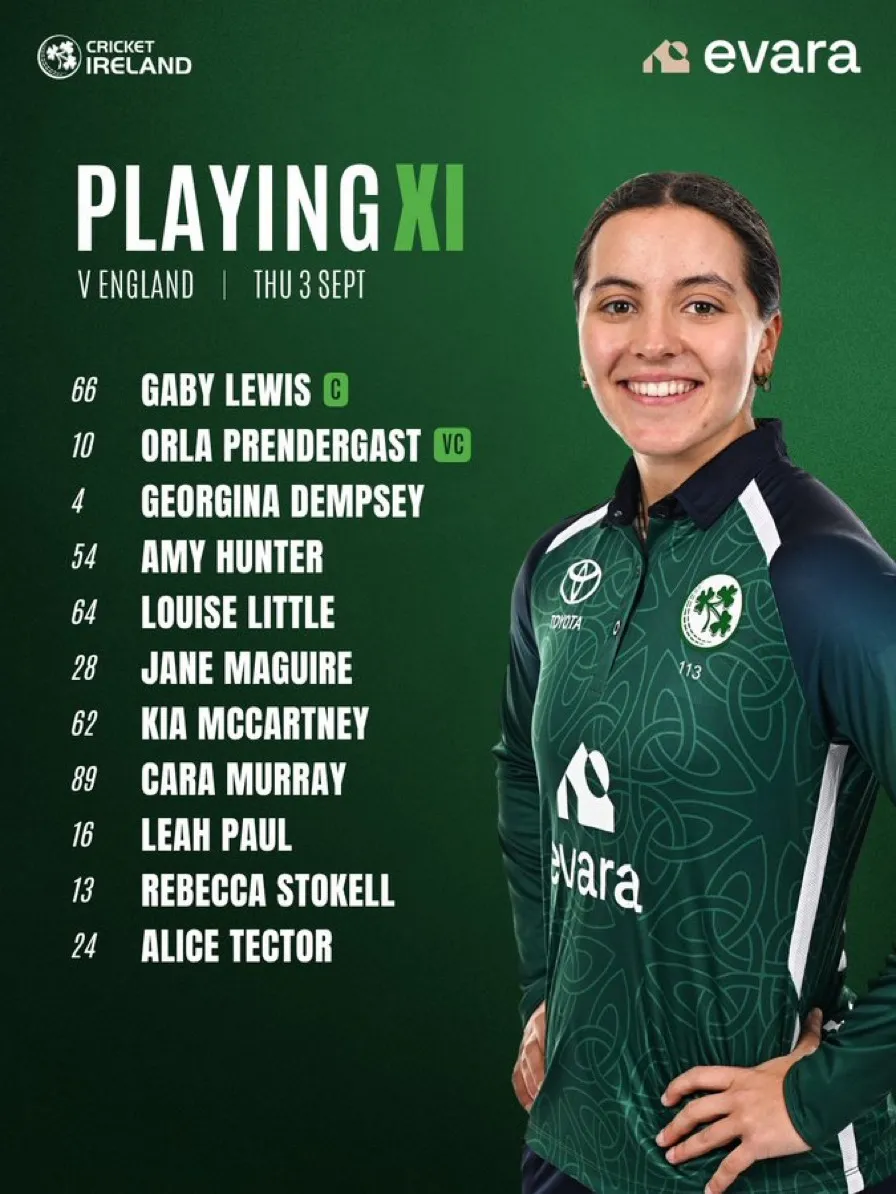
Amy Hunter struck a determined 64, but Ireland were beaten by six wickets as England secured the ODI series with a game to spare.
Ireland suffered a six-wicket defeat against England in the second women’s one-day international at Derby after a damaging late collapse left the visitors defending a total of just 165.
Hunter was the outstanding performer for Ireland, making 64 as she attempted to hold the innings together against an England attack led by Issy Wong.
Match Summary
Ireland: 165 all out from 47 overs
England: 166-4 from 23 overs
Result: England won by six wickets
Player of the Match: Issy Wong
Advertisement
Ireland lose control after promising position
Ireland had reached 140-4 and appeared capable of setting England a considerably more demanding target. However, the final six wickets fell for only 25 runs as Wong tore through the lower order.
The England seamer finished with career-best figures of 5-33, including the important wickets of Ireland captain Gaby Lewis and top scorer Hunter.
Hunter’s innings ended when she found deep midwicket shortly after moving into the sixties. Her dismissal left Ireland with little time to rebuild, and the innings was completed at 165 after 47 overs.
England race to victory
Ireland created a few early openings during the reply, but England quickly took control of the required run rate.
Advertisement
Maia Bouchier made 45 before Dani Gibson and Freya Kemp completed the chase. Gibson finished unbeaten on 36, with Kemp 29 not out, as England reached their target with 27 overs remaining.
The result gives England an unassailable 2-0 advantage in the three-match series. Ireland will now look to finish the tour positively when the teams meet in the final ODI at Worcester on Sunday.
Next match: England Women v Ireland Women, third ODI, Sunday 6 September at Worcester.


;)
;)
;)



















































You must be logged in to post a comment Login