Garland is in the final year of a five-year deal that’s worth $4.95 million annually. There is no salary retention by the Canucks in the trade.
“Conor is a versatile player who brings great energy to the lineup every night and we couldn’t be more excited to welcome he and his family to Columbus, said general manager Don Waddell in a statement.
“He has tremendous character, plays a reliable two-way game and will be an important part of our club now and in the future.”
Sportsnet and bet365
At bet365, you can watch thousands of live games, build your own bet, and can even make a bet while the game’s still being played. 19+. Play responsibly. Ontario only.
Michigan won at Iowa 71-68 on Thursday while Michigan State beat Rutgers 91-87. Both games were closer than they were supposed to be, at least relative to the point speed. But the favorites still prevailed in each, setting up a showdown in Sunday’s regular-season finale between the Wolverines and Spartans that should be great.
Will it decide the Big Ten title? No.
Michigan is 28-2 overall and 18-1 in the Big Ten. Michigan State is alone in second in the conference standings — but three games back. So the Wolverines are already the outright champs, and they’ll get a No. 1 seed in the NCAA Tournament on Selection Sunday, in part, because of it.
It’s unlikely, of course, unless Florida, UConn and Houston all lose again at some point before the bracket is set, because if any of them win-out, the one that does will likely be the fourth No. 1 seed. And if all three win-out, reasonable minds can disagree on which one would or should get the fourth No. 1 seed, but, most agree, under that set of circumstances, it would be either Florida, UConn or Houston. So, definitely, those three seem to be in the so-called drivers’ seats, if you will.
Advertisement
But what if they all lose again between now and when the bracket is set, which is obviously possible and, in some cases, likely? And what if Michigan State wins-out while they all lose again between now and when the bracket is set? Because if Florida, UConn and Houston all lose again before the bracket is set, and if Michigan State wins-out, Michigan State would then enter the Selection Show with a 29-5 record that would (probably) feature 12 Quadrant-1 wins and just one defeat outside of the first quadrant, and if Florida, UConn and Houston all take another loss between now and when the bracket is set, what I believe is that Tom Izzo should then be coaching a No. 1 seed in the NCAA Tournament for what would be the fifth time in his Naismith Memorial Hall of Fame career, again, provided his Spartans turn their current five-game winning streak into a nine-game winning streak over the next 10 days.
But let’s not get ahead of ourselves.
Michigan remains No. 2 in Friday morning’s updated CBS Sports Top 25 And 1 daily college basketball rankings, where Duke remains No. 1 for the 13th consecutive day.
Michigan State is No. 7.
Advertisement
Again, Michigan State-Michigan is set for Sunday at 4:30 p.m. ET.
If putting is a nemesis for you, it’s possible you just haven’t found the right flatstick for your game.
After all, the quest for the perfect putter is what ultimately drove Sam Hahn to create L.A.B. Golf. Hahn had finally found his perfect weapon on the greens — the Directed Force putter — but the head fell off after two weeks of use. After receiving a replacement and a call of apology from the putter’s inventor, Bill Presse IV, Hahn and some of his family members bought out Presse’s partners to found L.A.B. Golf.
L.A.B. Golf has since built upon the Directed Force’s legacy, making its name with “zero-torque” putter models, in which the head of the putter is balanced to the lie angle of the shaft, aligning the center of gravity with the shaft and grip. As Hahn explained to GOLF’s Josh Sens in a recent feature, “With every other putter, I was fighting to keep it square. And now I realized my job was just to let it stay square.”
Advertisement
J.J. Spaun helped put L.A.B. Golf on the map last year when he won the U.S. Open at Oakmont using a L.A.B. Golf DF3 putter. L.A.B. Golf’s newest model, the DF3i, incorporates everything L.A.B. Golf customers love about the DF3 along with one notable addition: a stainless steel insert.
So now, with the DF3i, golfers can enjoy putting with an ultra-forgiving club that stays effortlessly square on its own coupled with a faster, firmer feel at impact. Sound like something that can benefit your game? Order your custom L.A.B. Golf putter now by clicking the link below!
As a four-year member of Columbia’s inaugural class of female varsity golfers, Jessica can out-birdie everyone on the masthead. She can out-hustle them in the office, too, where she’s primarily responsible for producing both print and online features, and overseeing major special projects, such as GOLF’s inaugural Style Issue, which debuted in February 2018. Her original interview series, “A Round With,” debuted in November of 2015, and appeared in both in the magazine and in video form on GOLF.com.
The Big 12 was a one-bid Playoff league last year, with BYU getting left out despite a stellar 11-2 season.
Do they need to level up their non-conference scheduling?
On today’s episode of Locked On College Football, Spencer McLaughlin and ‘The Portal’ podcast host Brian Smith discuss Mississippi’s NIL decision to make it a tax-free ordeal.
Will that shift recruiting for the Rebels and Bulldogs in the SEC? Virginia Tech hiring James Franklin makes for one of the most fascinating teams that isn’t likely to contend in 2026.
The Hokies face a rather daunting schedule in his first year.
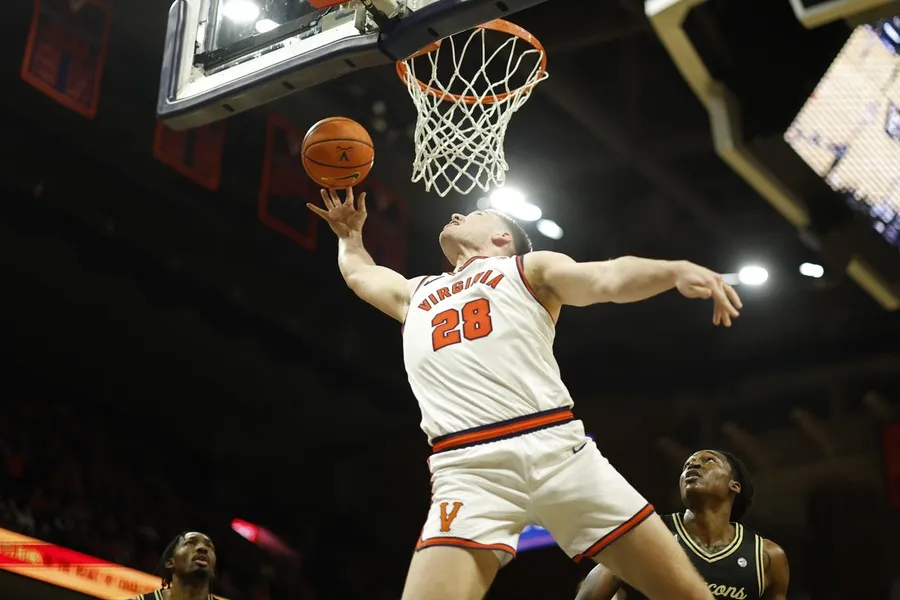
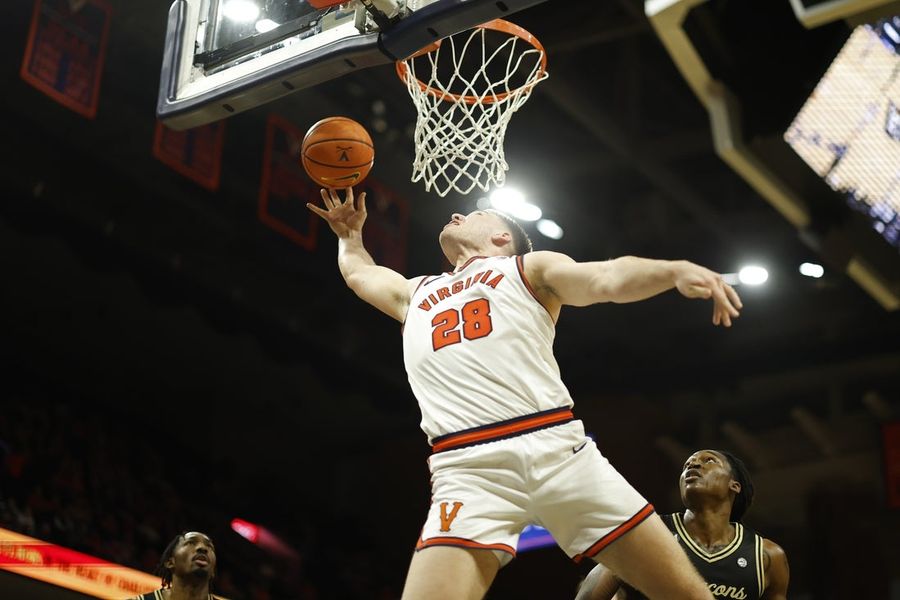
Mar 3, 2026; Charlottesville, Virginia, USA; Virginia Cavaliers forward Thijs de Ridder (28) shoots the ball as Wake Forest Demon Deacons guard Mekhi Mason (8) looks on in the second half at John Paul Jones Arena. Mandatory Credit: Geoff Burke-Imagn Images
No. 13 Virginia will face a couple of mental hurdles when it wraps up a successful Atlantic Coast Conference regular season Saturday at home against Virginia Tech in Charlottesville, Va.
First, there’s a risk of complacency. The Cavaliers (26-4, 14-3) have already clinched the No. 2 seed and a double-bye in next week’s ACC tournament in Charlotte, N.C. They are also a lock for the NCAA Tournament.
Second, the emotional support from the crowd may be somewhat limited with Virginia students on spring break for this rematch with the rival Hokies (19-11, 8-9).
“We’re certainly going to have to be ready to go,” Cavaliers coach Ryan Odom said. “I hate that it falls on spring break. … (It) doesn’t make a lot of sense to me, but it is what it is. Nobody’s fault, just the way it fell, and we’re going to make the most of it. So, we need as many Virginia fans in here as we can get.”
Despite the potential pitfalls, the Cavaliers are a clear favorite to finish on a high note. They have won 10 of their last 11 games and are 15-1 at home this season.
Advertisement
The Hokies are 3-6 in road games and 2-3 against Top 25 opponents. One of those wins was a 95-85, triple-overtime thriller against then-No. 21 Virginia on New Year’s Eve in Blacksburg, Va., giving Virginia Tech a chance to sweep its fiercest rivals for the first time since the 2010-11 season.
“We look forward to getting down there,” Hokies coach Mike Young said of making the 150-mile trip to Virginia. “Love that arena. Good friends down there, should be a whale of a college basketball game. We look forward to being a part of it.”
Virginia followed up its 26-point loss at No. 1 Duke last weekend with a wire-to-wire 75-70 home win against Wake Forest on Tuesday night.
Advertisement
“(Coach Odom) had a great speech after the game (at Duke) and the next day at practice he told us to look forward,” center Johann Grunloh said. “We still had unfinished business in conference, and we put a focus on that. It was not easy, but we found a good way to leave it behind.”
Thijs De Ridder led five players in double figures with 16 points against the Demon Deacons and the Cavaliers made 10 3-pointers, their 19th game this season with double-digit long-range buckets.
Ben Hammond scored a career-high 30 points to lead the Hokies over the Cavaliers in the first meeting, which featured 17 ties and 20 lead changes.
Hammond scored 11 points in Tuesday night’s 72-63 home win against Boston College. Tobi Lawal scored 16 of his team-high 20 points in the second half.
Advertisement
Unlike its Commonwealth counterparts in Charlottesville, the Hokies likely need a big win Saturday and a run in the conference tourney to make the NCAA Tournament.
“We need to go down to Charlottesville and play a really good ballgame, that would help. They’re really good,” Young said. “We got to go to Charlotte, we got to play good basketball. We got to keep going. Yeah, I think about it a lot.”
While Scottie Scheffler and Rory McIlroy are duking it out for $4 million at the Arnold Palmer Invitational, another PGA Tour event is going down this week. And that tournament features a major storyline of its own: John Daly II’s PGA Tour debut.
Daly got off to a great start on Day 1. But unlike many of his pro golf peers, who often work out and hit balls after playing on Tour, Daly the younger had a very different plan for his post-round routine, as he shared Thursday evening.
John Daly II shines in Tour debut at Puerto Rico Open… then shares unique post-round routine
While he’s still an amateur and starring as a senior on the University of Arkansas golf team, Daly is no stranger to golf fans.
And while his current amateur ranking is 54th, Daly has shown flashes of greatness outside of the PNC. At the 2025 U.S. Amateur at the Olympic Club, Daly reached the quarterfinals.
But this week at the Puerto Rico Open, he’s competing with Tour pros in an official event for the first time. Considering all of that, Thursday’s opening round couldn’t have gone much better.
Daly shot a two-under 70 in Round 1 at Grand Reserve Golf Club. The soon-to-be pro sounded like a veteran when discussing his play in a brief on-camera interview following his round.
“It was good. Got off to a good start, made a nice birdie on 1. Solid up-and-down on 2, made about a 20-footer for par, which is nice, settled me in,” Daly said. “And then just hit some good shots. Feel like I left a few out there, but I made it up with just a couple good saves and nice chip-in on 16.”
Daly even sounded a little like his famous dad when talking about his playing partner Neal Shipley.
“It was fun. I love Neal, it was awesome. First time meeting him yesterday. He’s a good dude and I enjoyed playing with him a lot,” Daly said.
Advertisement
Another similarity between Daly II and Daly I? Neither are afraid to do things their own way. Daly II proved that with his closing remarks Thursday evening.
When asked what he planned to work on after his round to keep his positive momentum going, Daly II admitted that instead of practicing or lifting, he was going to take advantage of one of Puerto Rico’s greatest resources: the beach.
“I would say I’d go hit balls, but I’m a little tired, so I’m just probably going to go to the beach and probably do absolutely nothing for the rest of the day,” Daly II said with a laugh.
Francis Ngannou has been released by PFL after just one fight for the promotion.
The former UFC heavyweight champion joined PFL in January 2023 and won his debut bout against Renan Ferreira in October 2024, where he was crowned the inaugural PFL Super Fights heavyweight champion.
That would prove his only outing for the company, however, with Ngannou and PFL now parting ways.
“The Professional Fighters League has made the decision to part ways with Francis Ngannou,” read a PFL statement.
“We have great respect for Francis as both an athlete and a person, and we wish him success in the next chapter of his combat sports career.
Advertisement
“The PFL remains focused on recruiting and signing the best athletes in the sport while continuing to deliver world-class competition for fans around the globe.”
Ngannou had warned in December that his contract with PFL was approaching its end, saying the company “have to give me a fight”.
The Cameroonian, who defeated Stipe Miocic in 2021 to become UFC champion, leaves PFL with an 18-3 record in professional MMA, with 12 of his wins coming via knockout.
He ventured into boxing during his time under contract with PFL, being edged out on the scorecards by Tyson Fury in October 2023 before being slept by Anthony Joshua six months later.
Advertisement
He had flirted with further boxing bouts, suggesting a bout with fellow knockout artist Deontay Wilder, while a crossover match with Jake Paul had been rumoured before being shot down by Ngannou.
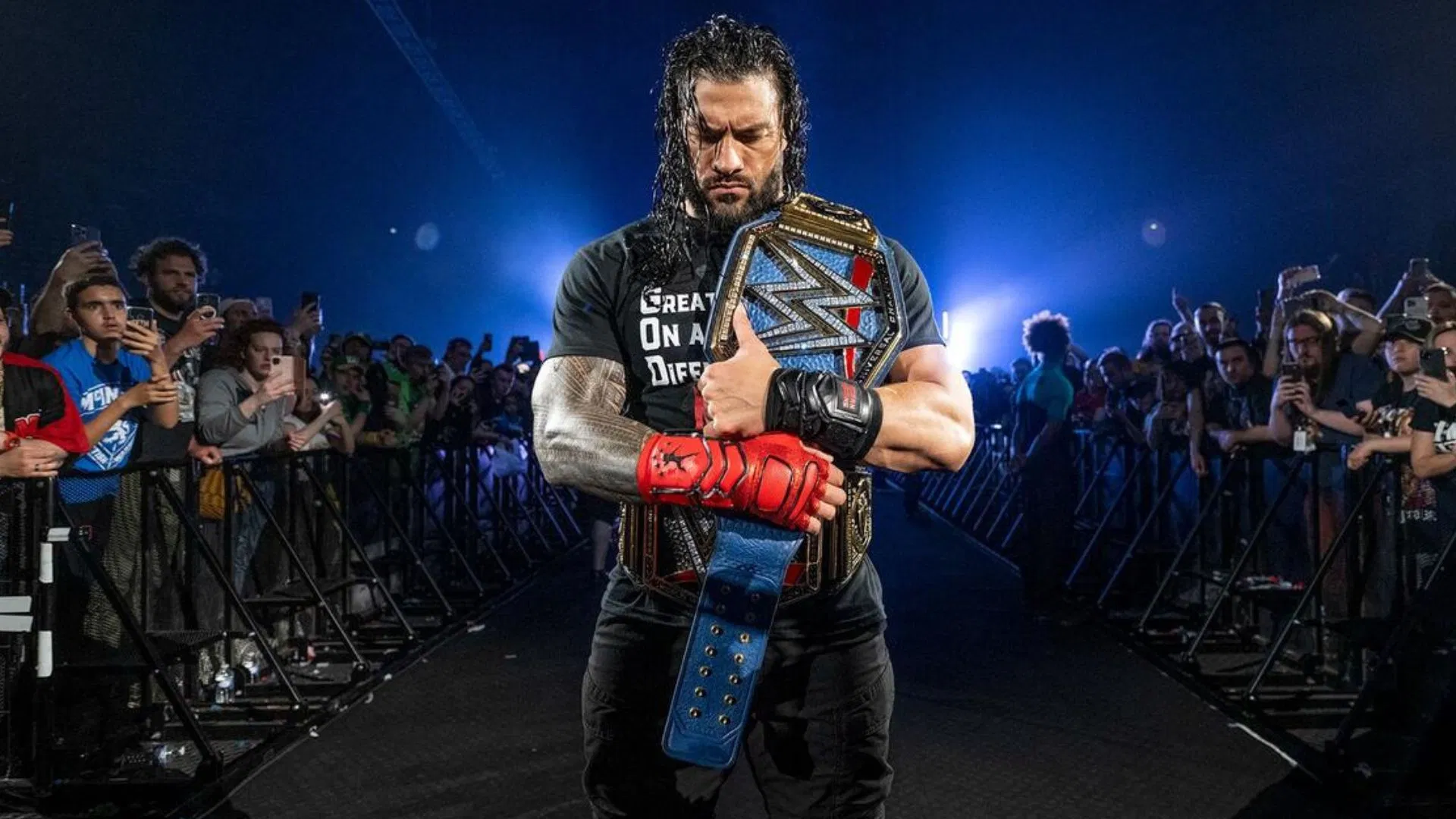
Roman Reigns changed the industry with his work in WWE as The Tribal Chief under the old regime. However, there was a time when Reigns was called The Big Dog, and a veteran recently stated that he wasn’t allowed to be the best version of himself.
For years, fans weren’t behind Roman Reigns and his Big Dog moniker on WWE’s main roster. While the audience voiced their concerns, the management was fully behind making Reigns the biggest star in the company and the face of the Stamford-based promotion.
Thanks for the submission!
Advertisement
It didn’t happen the way the management wanted, but The Tribal Chief became a driving force in the industry when he returned in 2020. In an appearance on Six Feet Under with The Undertaker, Michael Hayes addressed the former Universal Champion’s run.
Advertisement
The WWE legend spoke highly of the 40-year-old megastar and claimed he’s old school and has an edge to him. Moreover, he revealed that Reigns always wanted to be The Tribal Chief, but he wasn’t allowed. It was only later that he spoke for himself, referring to the change Roman Reigns made when he returned in 2020.
“You know I’ve had Roman’s matches for years, and he’s one of the ones that has the old school in him. He could’ve gone through the riot. He’s got an edge to him. Well, yeah, it did take a while. He always wanted to be that Tribal Chief. He just wasn’t allowed to be. You know what I mean? He didn’t know how to speak up for himself at the time, but he’s doing okay,” Hayes said.
WWE confirms Roman Reigns’ WrestleMania 42 match
Earlier this year, Roman Reigns returned to the promotion and won the Men’s Royal Rumble match in Riyadh. The Original Tribal Chief wasted no time and confronted CM Punk. After a heated promo, Reigns picked Punk and the World Heavyweight Championship for the event in Nevada.
Recently, Triple H confirmed in a post on X that Roman Reigns and CM Punk will headline WrestleMania 42. Last year, the two stars and Seth Rollins closed the first night of WrestleMania. It’ll be interesting to see if the former Men’s Grand Slam Champion captures the World Heavyweight Championship.
If you use quotes from the article, please credit Six Feet Under and provide an H/T to Sportskeeda Wrestling for the transcription.
Unquestionably, the techies and engineers who design the game’s newest equipment are fully fit to do the job — and, with each new club, to deliver dazzle to your own game. But some gearheads like to go in a very different direction, because disruption isn’t merely about breaking things. It’s about being radically better.
The golf equipment industry is loaded with big brains and lofty diplomas. Ballistics PhDs from aerospace. Engine designers from automotive. Materials scientists from advanced manufacturing. They make up a vast army of eggheads, pouring their expertise into a game governed by conformance rules and rooted in tradition.
Innovation happens constantly, though not always as dramatically or regularly as advertisements suggest. Golfers crave the next breakthrough. Manufacturers promise it with every product cycle.
Advertisement
But genuinely disruptive ideas are rare. They don’t arrive on schedule and can’t be conjured by a marketing blitz. On the face of it, they seem to appear out of nowhere, like a hole in one, but they spring from tireless effort, a tolerance for risk and a willingness to question what others accept as settled.
Innovators like Aretera co-founder Alex Dee, whose story you can read below, didn’t just contribute to groundbreaking products — they challenged assumptions about how gear should be designed, built and sold.
***
ALEX DEE’S OFFICE is everywhere and nowhere.
Advertisement
Some days, it’s the beach. Others, it’s his bedroom. On this sunny Southern California afternoon, Dee is talking shop over Vietnamese noodles in a Carlsbad food court — a far cry from the corporate confines he occupied for a quarter century at one of golf’s most influential shaft makers.
Dressed in jeans and an untucked shirt, Dee, 55, gives off the air of San Diego surfer meets Silicon Valley entrepreneur, with the focused intensity of an engineer and the laid-back ease of a guy who lives blocks from the ocean. For most of his professional life, Dee worked out of Fujikura’s Carlsbad satellite office, where he helped make the company a market leader in shaft design. His fingerprints were all over Ventus, the stiff-tipped shaft that dominated after first appearing on the PGA Tour in 2018.
Ventus was groundbreaking. But it also hinted at an industry-wide outlook that, over time, increasingly clashed with Dee’s own views.
“I always felt that when people in the industry talked about increased stability, it was associated with added stiffness,” he says. “The two were treated as synonymous.”
Advertisement
Proper design, Dee says, requires equal parts technical skill and artistic craft. He often goes through a hundred iterations before the right shaft design reveals itself.
That’s not how Dee saw it. In his view, a shaft could be both supple and precise. Responsive and reliable. Playable at no cost to accuracy. As an engineer, he believed there was always more to learn, more ground to break. He’d also started sensing how success could calcify into orthodoxy, discouraging the very experimentation that produced it.
He wanted to keep pushing. He wasn’t certain he could do that where he was.
By then, he was also watching his kids navigate high school with a fearlessness that made him reconsider his own choices. Dee’s son and daughter were both embracing risks in their social and academic lives.
“In most families, it’s the parents who are role models for the kids,” Dee says. “In my case, it was the opposite. They were both taking big swings. They inspired me to want to take one too.”
Advertisement
In 2023, Dee left Fujikura. In theory, he was retired.
In practice, he was waiting for the right idea. It came from Michel de Fontaine, a longtime friend and former classmate from UC San Diego who’d gone on to a career in start-ups. In college, the two were just as likely to be bouncing volleyballs on the beach as burying their noses in books. They’d often joked about doing something together — a coffee shop, maybe a taco stand. This time, de Fontaine was serious. They should start a shaft company.
The pair brought in two other golf industry veterans: Chris Elson for sales, Bill Stiles to handle customer relations. All four pooled their savings and founded Aretera, a name drawn from the Greek arete, for the pursuit of sustained excellence.
“I like to describe our team as three guys with nearly 100 years of combined industry experience, and one sensible person,” Dee says.
One thing they all found sensible was not having a formal headquarters. No brick-and-mortar space. Just four friends working toward a common goal, free of bureaucracies and hierarchies.
Advertisement
Alex Dee showcases Aretera’s shafts.
Bradley Meinz
Dee has always played golf but never a lot of it. Even with more latitude in his schedule now, he’s more often on his laptop than on the links, propelled by a straightforward but subversive thesis: Stability and stiffness aren’t the same. To prove it, he has turned to a proprietary carbon fabric and applied it with uncommon precision, oriented at a 45-degree angle to resist torque and placed in the shaft’s internal layers. The rest of the shaft stays free to flex and respond. Maximum effect. Minimal intrusion.
If that sounds like marketing speak, it’s not Dee’s lingo. He’s a numbers guy to the core, allergic to claims that can’t be measured.
When Aretera launched, it had no Tour presence, advertising budget or endorsement deals. Just four reputations and a first-of-its-kind design. That turned out to be enough. Clubmakers and fitters embraced Aretera. Within a year, the company had released the EC1, built for players with smooth tempos. A second line, the AO2, arrived this winter for more aggressive swings.
There are less than 100 days to go until the Women’s T20 World Cup, and England, the hosts, have been stuck in limbo. Next week’s training camp in Abu Dhabi was hastily cancelled over the weekend when Iran began bombing the UAE after US-Israel strikes. The ECB has been searching for alternative venues – not ideal for a team who have not been in the same room, let alone played together, for five months.
On Friday the ECB confirmed a new plan to head to South Africa, for intra-squad games in Pretoria to sharpen their skills and lay claim to spots in the line-up.
It is an unusual approach. England were the only major nation not to play in a bilateral series over the winter, and the squad have been scattered all over the world since reaching the semi-finals of the ODI World Cup in India last October.
Some joined ECB skills camps in Oman and South Africa, which offered a break from chillier days bowling in tents at the National Cricket Performance Centre in Loughborough. Meanwhile 15 English players, including most of the ECB’s centrally contracted stars, played in Australia’s Big Bash League, and a handful went on to play in the more lucrative Women’s Premier League in India.
The long time apart may be no bad thing for England, giving players a chance to repair after the intensity of a World Cup. But the lack of competitive action is also a symptom of modern cricket’s economics: international fixtures do not generate the income and interest of franchise leagues, where players can make double or treble the money of their central contract salary in just a few weeks.
Advertisement
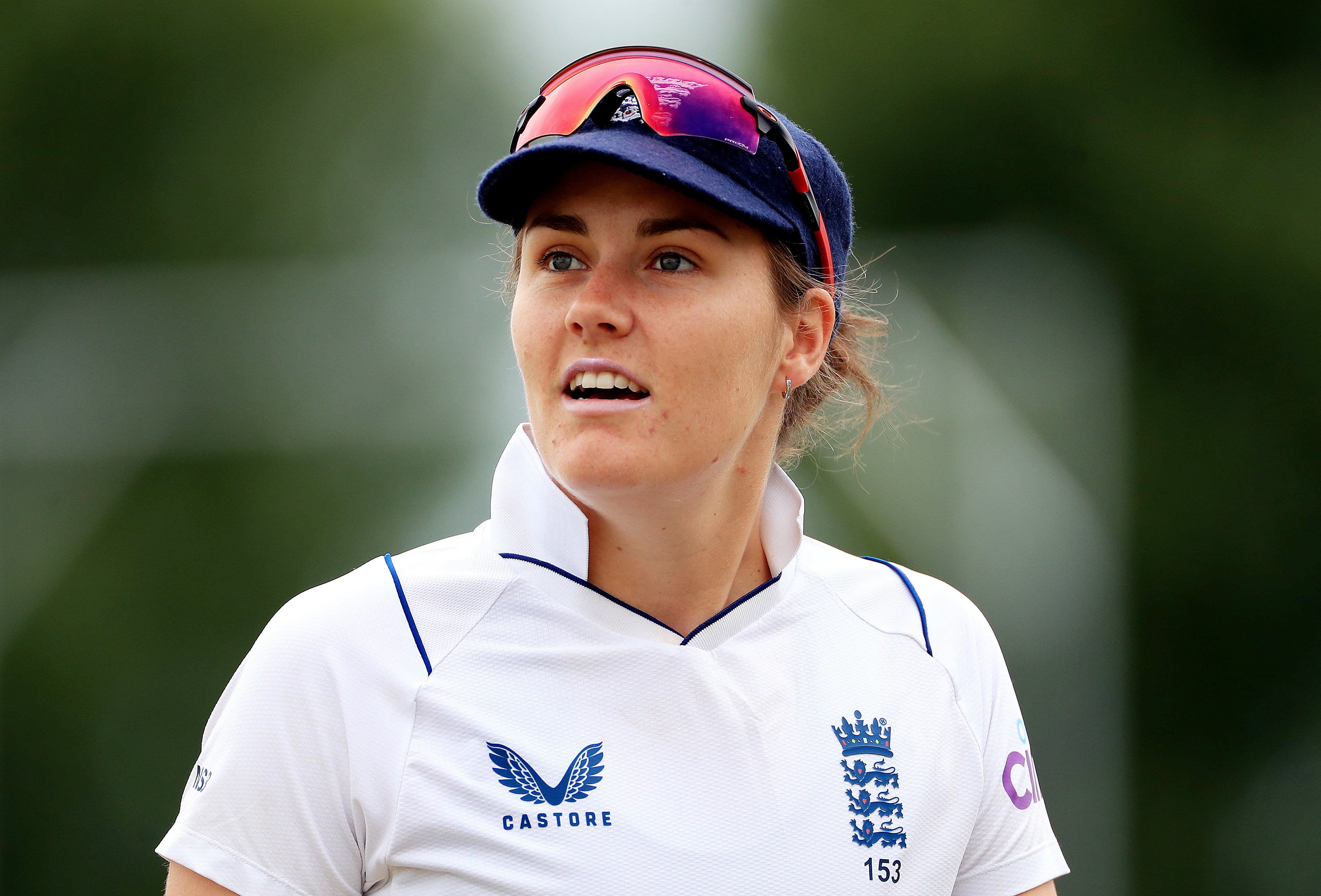
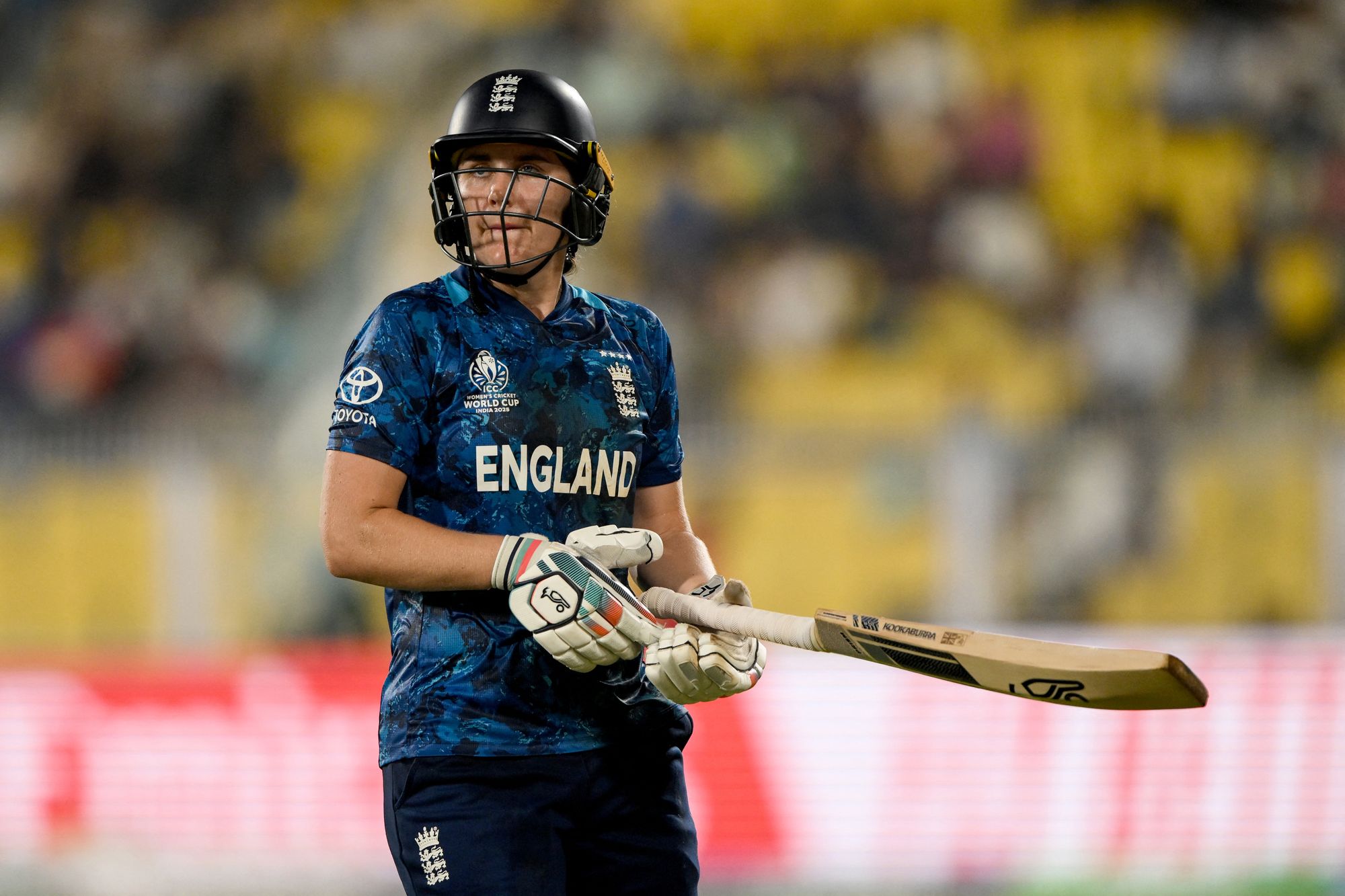
The England captain, Nat Sciver-Brunt, racked up more than 300 runs playing for the Mumbai Indians. “We’ve had five months between international duties, which is pretty unusual,” she says, “but I think it will probably become a bit more common now with the windows for franchise cricket.”
Nat Sciver-Brunt is waiting to find out England’s new schedule (Bradley Collyer/PA) (PA Wire)
Sciver-Brunt is speaking inside one of the changing rooms at Edgbaston on a drizzly March morning, having entered the room with a shiver after some on-pitch media duties. It has been nearly a year since she took on the captaincy and she seems comfortable in her new skin as the figurehead of the team, despite the expectations that come with the role – England have won all four Women’s World Cups staged at home (1973, 1993, 2009 and 2017).
“So, no pressure for me,” she laughs.
Advertisement
Are England ready to win another home World Cup? It was only a year ago that they were bageled by Australia in the Ashes, a defeat so damaging it brought down the hierarchy. Head coach Jon Lewis was sacked and Heather Watson lost the captaincy after nine years.
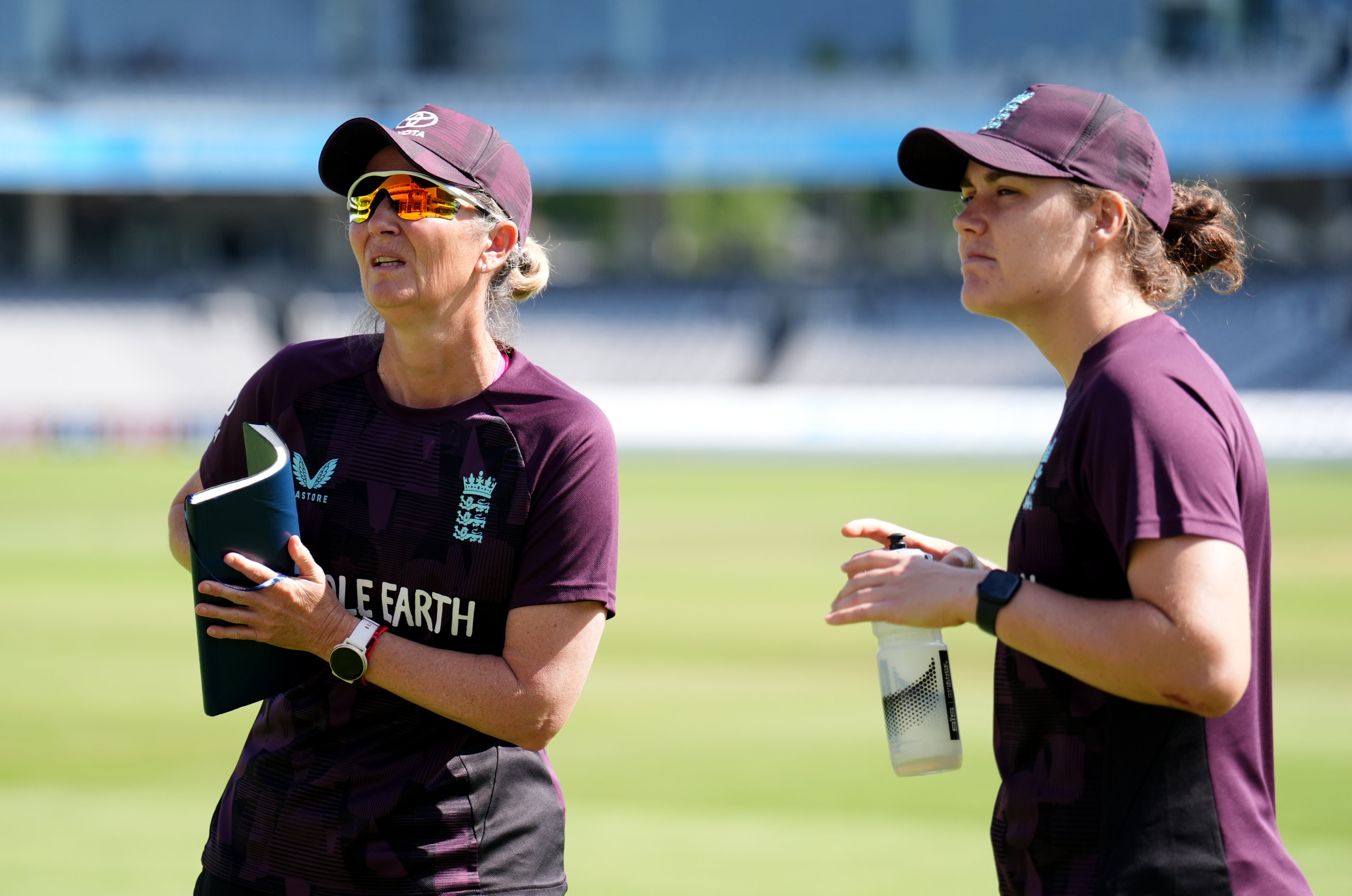
In came Charlotte Edwards and new skipper Sciver-Brunt. Edwards naturally commanded respect given her playing career and success coaching T20 franchise teams, and she set about raising standards in the field and in the gym. She also shifted the team’s culture by delivering some blunt post-match debriefs.
“I think the openness that we have as a group, and honesty in reviews, that was something I really saw a change in our team [over the past 12 months],” says Sciver-Brunt. “Hopefully we can take that a step further and be more comfortable being uncomfortable with each other.”
Advertisement
England head coach Charlotte Edwards and captain Nat Sciver-Brunt are the new duo in charge (John Walton/PA) (PA Wire)
England have the raw ingredients: batting power in Sophia Dunkley and former captain Knight at the top of the order, the pace of Issy Wong, a world-class spinner in Sophie Ecclestone. There is perhaps an overreliance on Sciver-Brunt’s all-round skills, but this England side have a promising blend of battle-hardened experience and bright-eyed talent.
There have been green shoots since the Ashes, winning an ODI and T20 series against West Indies last summer before losing a competitive series with India. Then came that deep World Cup run, beating India in the league stage when an unburdened Knight scored a century, although ultimately England were well beaten in the semi-finals.
Sciver-Brunt is as experienced as almost any player in the world but is still learning the art of captaincy, and she took plenty from her first World Cup in charge – in particular, that long tournaments are a marathon, not a sprint. “You don’t have to be your best right at the start,” she says. “Obviously, you need to win a few games to get to the knockout stages, but you might not win every game by 10 wickets. You might scrape a few games by three or four wickets. But trying to be your best when it really matters is important.”
England have fixtures against New Zealand and India in May, but this period in Pretoria will be crucial before the county game swings into action next month.
Advertisement
Sciver-Brunt will be crucial to any English success this summer (AFP via Getty Images)
England open the T20 World Cup against Sri Lanka here at Edgbaston on 12 June, before games against Ireland, Scotland, and New Zealand. The group should be easily navigable, but there is the sense that this might be the most competitive tournament yet. India are the ODI world champions, New Zealand are the defending T20 champions, England have home advantage and Australia are Australia. South Africa and the West Indies are improving, too.
Yet Sciver-Brunt knows this is a rare opportunity. It will likely be her only home World Cup, in any format, as England captain, and it offers the chance to write fresh history and leave a lasting mark on the game, just as England’s rugby and football teams did last year. Again – no pressure, then.
“As a fan, I was captured by what they [Lionesses and Red Roses] were doing. And yes, they both went on to win, and obviously that helps. But I think creating that chance to build a new fanbase is also a brilliant opportunity … What a chance we have to grow the game in England. And, as players, to experience that home crowd feeling and the energy that gives you. It’s going to be a really special time.”
Advertisement
One moment in England’s sporting history is even more inspiring to Sciver-Brunt. She was part of that extraordinary 2017 World Cup final which ended with Knight lifting the trophy, a game which undoubtedly fuelled the wave of talent now coming through England’s ranks. When they finally come together as a group this month, after time apart and uncertainty over recent days, Sciver-Brunt knows who she will be seeking out for advice in her quest to reach the final at Lord’s on 5 July.
“That was really early on in Heather’s captaincy career as well so I’ll certainly be drawing on her experience, what made that so special from a captain’s point of view, and how she dealt with all that. That will be one of my first coffees, whenever we get together.”
Get your tickets to see the ICC Women’s T20 World Cup here.
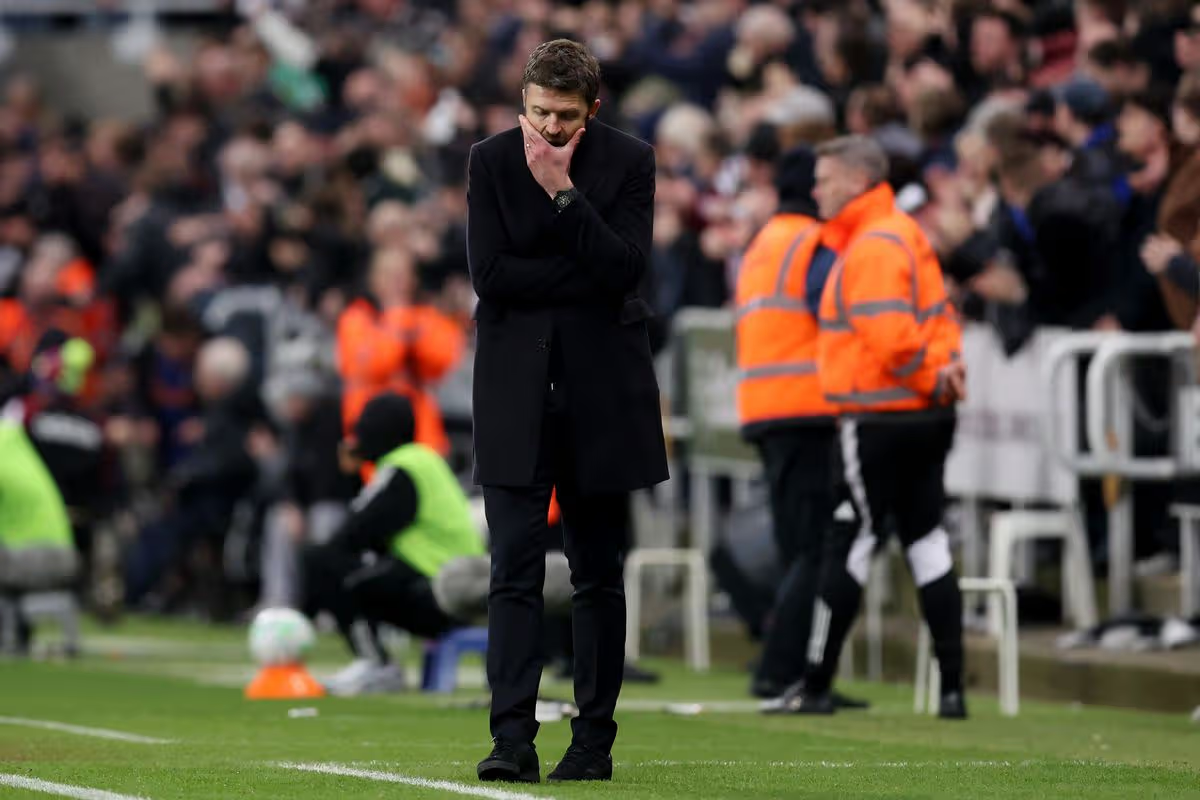
Michael Carrick still has an impressive record as Man Utd head coach this season but it is becoming increasingly difficult for teams to stand out.
Paul Scholes didn’t phrase it particularly well and he missed the bigger issue, but he had a point. Manchester United haven’t been great in the last four games.
But they certainly haven’t been as bad as Scholes made out and seven points from a possible 12 in a run that includes away games at West Ham, Everton and Newcastle isn’t exactly disastrous.
Advertisement
The former United midfielder also picked the wrong target for his criticism. He put the blame on Carrick for United’s struggles, and the problem for Carrick is that others might be reaching for the simplistic conclusion as well.
But that is an issue that goes well beyond the current United head coach. So his side hasn’t been great in the last four games. Which Premier League team has?
Get MEN Premium now for just £1 HERE – or get involved in our United WhatsApp group by clicking HERE. You can also join our United Facebook page by clicking HERE and don’t miss out on our brilliant selection of newsletters HERE.
City and Arsenal have managed 10 points from the last four games, but for City that includes a home draw against Nottingham Forest and scrappy, battling wins against Leeds and Newcastle United. Arsenal drew with Wolves four games ago, won a set-piece bore against Chelsea and have just been criticised for their approach in edging past Brighton.
Advertisement
Liverpool have won three of the last four, but have just lost to Wolves and stole three points from the City Ground against Forest. In short, nobody is playing particularly well this season.
Ruud Gullit said this week he had stopped watching football because he no longer enjoys it and it’s no surprise it was a Premier League game that tipped him over the edge – Arsenal’s win against Chelsea.
The farcical battle for set-piece supremacy this season has dominated headlines recently, but that is only one chapter of a wider story. Every Premier League game has become a battle of duels, with man-to-man marking turning games into 10 individual battles. Win six of them and your chances of winning the game will be stronger.
That makes it difficult for any team to stand out in the Premier League. That only two of the 20 teams are outperforming their xG this season suggests chance creation has been low, and working openings and space from open play has been difficult. United aren’t alone in finding that difficult.
Advertisement
Too many matches are either being decided by set-pieces or are a war of attrition for 75 to 80 minutes, before players get tired and fresh substitutes influence the game, with space eventually opening up.
United’s recent lack of width is a fair criticism, but the games at West Ham, Everton and Newcastle were notable for a lack of space. United scored when they were throwing men forward at the London Stadium, from a rare counter-attack at the Hill Dickinson and from a set-piece at St James’ Park.
This isn’t an issue solely related to them and to Carrick. There is an argument that they deserve more credit than they got for winning an ugly game at Everton. They had one chance to show their quality, and they delivered with a brilliant move for Benjamin Sesko’s goal.
There are questions Carrick has to answer and he will be under pressure to find some answers against Aston Villa, but it takes a partner to dance, and not many teams in the Premier League this season are keen to tango.
Advertisement
Instead, games are becoming a mess of bodies and battles, of stoppages and set-pieces. It feels a bit unfair to be too critical of United, when no team in the league is looking like a slick footballing machine this season.
But this is the reality of Carrick’s situation. He has a limited timeframe in which to impress enough to get the job long-term. Even after defeat to Newcastle, he is still in plenty of credit, and if he can win enough games to finish third, that should be enough.
Some will want to look for someone who might deliver a more inspiring style, such as Luis Enrique or Julian Nagelsmann. But they are benefitting from not having to coach in the Premier League this season. Carrick is, and even if his team wins scrappy games, he should probably get more credit for that.





;)




 Will that shift recruiting for the Rebels and Bulldogs in the SEC? Virginia Tech hiring James Franklin makes for one of the most fascinating teams that isn’t likely to contend in 2026.

;)




;)