It’s the dawn of a new era in Formula One, with sweeping rules changes for the 2026 season that could set a hard reset for the field.
• The cars are slightly slimmer.
• Active aerodynamics will allow drivers to toggle between corner mode and straight mode, essentially replacing the drag reduction system (DRS) that could only be activated under certain conditions, with something available at more points along the track, and for all drivers on every lap.
• Battery management — when to harvest, and when to deploy overtake or boost mode for extra power — will also be crucial.
On top of these changes, Cadillac has joined as an 11th constructor while Sauber has completed its transformation into Audi’s factory team. Red Bull and sibling team Racing Bulls are now using their own in-house power units through a partnership with Ford, as Honda has now linked up with Aston Martin. Alpine has also joined the likes of McLaren and Williams as Mercedes customers.
There wasn’t a free-agent frenzy during the off-season, although there are a few notable moves. Familiar faces Valtteri Bottas and Sergio Perez have rejoined the grid with Cadillac. Isack Hajdar earned a promotion from Racing Bulls to Red Bull, with Yuki Tsunoda sticking around as a reserve driver. Filling Hajdar’s old seat at Racing Bulls is Arvid Lindblad, who is the lone rookie to start the season.
Will all of this lead to a change of the guard or a shuffling of the deck? Pre-season testing saw the usual suspects at the top of the speed charts, but we will not know the pecking order for sure until the lights go out for this weekend’s Australian Grand Prix (late Saturday or early Sunday, depending on your time zone).
Here are some storylines to follow as the season gets underway in Melbourne.
Does Mercedes have the new car to beat?
George Russell and Kimi Antonelli were among the fastest in pre-season testing and logged the most miles. Although they struggled with their practice starts compared to Ferrari, they can overcome that with performance and reliability.
While McLaren has two No. 1s potentially stealing points from each other, Russell is the clear top driver at Mercedes, for now at least. Antonelli is moving into his sophomore season, so don’t be surprised if he begins to make a bigger push. The 19-year-old had consistency issues during his rookie year, but he scored his maiden podium at the Canadian GP and added another third-place finish in Las Vegas.
It wouldn’t be the first time Mercedes has been the big winner from rule changes. They absolutely nailed the configurations for 2014, leading to eight straight constructors’ championships and seven drivers’ titles. There was also 2009 when Mercedes-powered Brawn GP swept both titles, with Jenson Button winning six of the first seven races and holding on through the second half of the year.
Can McLaren repeat as champions?
McLaren is looking to keep the good times rolling. Lando Norris became the first McLaren driver to win the drivers’ title since 2008, and the team repeated as constructors’ champion for the first time since 1991.
McLaren’s reign could be short with the new regulations hitting the refresh button. Until we actually see how each team performs in a race setting, McLaren is still the king until proven otherwise. If Mercedes is earning rave reviews for its power unit, its No. 1 customer will certainly reap the benefits.
Although Norris was crowned champion, teammate Oscar Piastri led the points for a chunk of the season before slipping to third by the end of the year. McLaren was unwilling to choose a favourite, opting to let the drivers settle things on the track — “papaya rules” — even if it would have cost them the drivers’ championship.
Norris and Piastri are back on even ground, with a new season and a clean slate in the standings. Expect “papaya rules” to remain in place unless one of them gives McLaren boss Zak Brown and team principal Andrea Stella a reason to change their minds.
Will Red Bull return to the top?
Max Verstappen came oh so close to clinching a fifth consecutive drivers’ championship last season, winning the final three races and closing within two points of snatching the title from Norris.
Verstappen has been outspoken about his dislike of the new car, likening it to “Formula E on steroids.” It’s not like Verstappen hasn’t overcome challenges before. He called his car a monster in previous years and tamed that beast. He’ll be fine. It’s his new teammate Hadjar who you might have to be worried about.
The second Red Bull car is more cursed than starting in net for the Edmonton Oilers, with Pierre Gasly, Alex Albon, Sergio Perez, Liam Lawson and Tsunoda all falling out of favour. Hadjar now steps up after a promising rookie season with sibling team Racing Bulls, finishing 12th in the standings and scoring a podium finish at the Dutch GP.
Red Bull finished third in the constructors’ championship last season, with Verstappen accounting for 93.3 per cent of the team’s points. Sure, he accumulated more points than Ferrari’s Charles Leclerc and Lewis Hamilton combined, but to overcome McLaren and Mercedes, he can’t do it alone and needs Hadjar’s help.
Is this the year for Ferrari?
The hope that next season will be the season for Ferrari is always strong, even though the team hasn’t won the constructors’ title since 2008 or the drivers’ title since Kimi Raikkonen in 2007.
The start of a new era also brings extra optimism, but think back to 2022 when Ferrari looked like the team to beat out of the gate with Leclerc winning two of the first three races. That was before Red Bull found its wings and absolutely dominated, leaving Ferrari in the dust as they failed to keep pace.
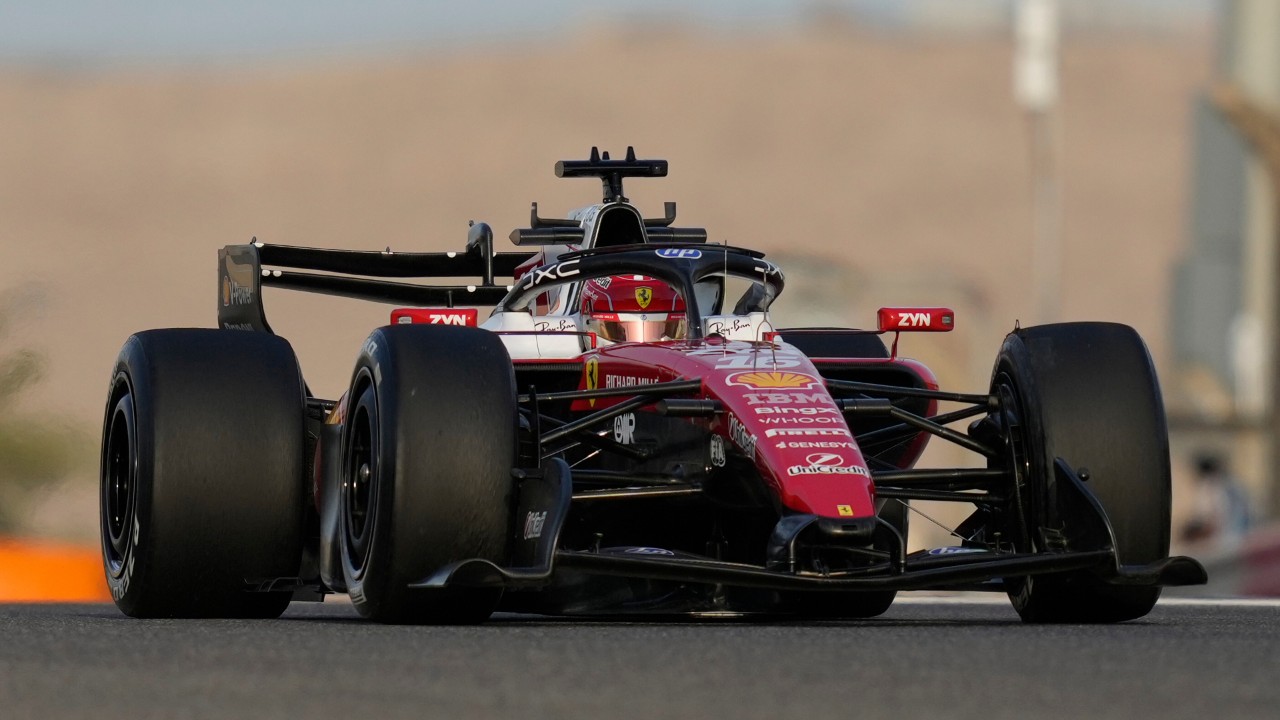
Leclerc topped the charts to finish pre-season testing in Bahrain, and Ferrari’s practice starts were drawing attention, so maybe there is ground for hope this time. Just forgive us if we’re a little sceptical.
Questions also continue to surround Hamilton after the winningest driver in F1 history went winless during his first season with Ferrari. Hamilton didn’t even place on the podium once. Sure, Hamilton was victorious during the sprint in China, but the team’s double disqualification after the actual race overshadowed that result. Hamilton finished sixth in the standings, 86 points behind his teammate Leclerc and only six points ahead of Antonelli, his successor at Mercedes.
The irony of F1 is that your teammate is also your greatest rival. They’re the ones in equal machinery and your closest comparable. Hamilton outscored Leclerc only three times (out of 24 GPs) last season. That wouldn’t be so bad if they were first and second in the standings, but they were fifth and sixth.
It’s the year of the horse in the Chinese zodiac, but will 2026 be the year of the prancing horse?
What’s going on with Aston Martin?
Canadian billionaire Lawrence Stroll has made his intentions clear since acquiring Aston Martin to turn the team into a powerhouse. Stroll has spared no expense, bringing in the legendary Adrian Newey, who was responsible for designing championship-winning cars at Williams, McLaren and Red Bull, funding a new wind tunnel and switching from being a Mercedes customer to essentially a Honda factory team as the lone outfit on the grid with their power units.
The first sign of trouble came in pre-season testing when driver Lance Stroll told formula1.com that their car was “four seconds off the top teams, four-and-a-half seconds” and teammate Fernando Alonso added they were “a little bit on the back foot.”
As bad as that was, it’s actually way worse. Newey told reporters ahead of the Australian GP that Alonso said he will not be able to do more than 25 laps without risking nerve damage, with Stroll putting that number at 15. That’s not good for business, or for anyone, when not only do your drivers think they will not be able to finish the race, but your car could cause permanent injury.
“That vibration (from Honda’s power unit) into the chassis is causing a few reliability problems,” Newey said. “Mirrors falling off the car, tail lights falling off, that sort of thing, which we are having to address. But the much more significant problem with that is that that vibration is transmitted ultimately into the driver’s fingers.”
We should have seen this coming. The last time Alonso drove a Honda-powered car was with McLaren in the mid-2010s. The “McHonda” was a complete failure, one that the two-time world champ dubbed in an infamous on-track outburst as a “GP2 engine,” comparing it to the feeder series. Alonso’s teammates during those years were Stoffel Vandoorne (Aston Martin’s current reserve driver) and Jenson Button (who was recently hired as a team ambassador). The F1 stars are aligned.
The 44-year-old Alonso deserves better as he enters his 23rd season in F1. To put that in perspective, roughly one-third of the grid — Piastri, Antonelli, Oliver Bearman, Gabriel Bortoleto, Franco Colapinto, Hadjar, Lawson and Lindblad — weren’t born yet when Alonso made his F1 debut. More mind-blowing: Lindblad wasn’t even alive when Alonso won his last world title.
What are the expectations for Cadillac?
Here comes a new challenger: Cadillac enters the field as the first new F1 team since Haas in 2016. Expectations should be cautiously optimistic.
Cadillac is completely fresh, so think of them like an expansion franchise. It’s going to take time and growing pains before they get up to speed (pardon the pun). What does help is they’ll be using Ferrari power units for the near future rather than their own out-of-the-box contraption – although that also depends on the reliability of Ferrari’s power units. The team plans to deploy its own power unit by 2029.
Cadillac will start with veteran drivers Bottas and Perez — both proven winners with their past teams. Neither raced in F1 last year and may have something to prove. Keep in mind, Perez struggled during his final year at Red Bull, while Bottas failed to score a single point with Sauber in 2024.
The first goal should be not finishing last (which might not be difficult given Aston Martin’s current status), and then take it from there.











































You must be logged in to post a comment Login