



Connect with us

Business

Betting Firms See $500M Funding Surge

Published

on

Crypto betting is quickly becoming the go-to choice for anyone tired of the hassle and restrictions of traditional gambling. Gone are the days of slow bank transfers, high fees, and dealing with middlemen.

Months ago, half a billion dollars flowed into crypto betting startups through new investment rounds.

Behind these platforms: blockchain fused with online gambling mechanics draws serious interest. User counts climb, transaction speeds improve – founders point to real shifts underway.

Venture Capital Moves Toward Digital Betting

Half a billion dollars flowed into cryptocurrency gambling startups lately, and platforms such as 1xbet Ireland have also expanded their casino online presence by exploring faster digital payment options. Of that sum, three big investors made up close to sixty percent, showing how strongly the casino online sector continues to attract capital.

Each agreement typically involved about twenty-five million dollars, twenty times over. These backers show interest mainly in services using blockchains to handle wagers. Out in the open, every bet lands on shared records. Real-time checking lets people follow payments as they happen.

One reason these platforms gain ground? Fees take a steep drop compared to old methods. While standard networks pull out 3 percent each time, digital currency moves it under Quick movement catches interest too. Withdrawals on certain sites wrap up in under ten minutes. Meanwhile, standard methods can stretch into a forty-eight-hour wait.

Advertisement

What’s Fueling the Rise in Tech Investments

When picking crypto betting sites, investors look at straightforward signs of how well they perform. Evidence points to a close link between financial backing and day-to-day reliability. What pushes success includes:

  • Every bet shows up clear as day on public blockchains. Transparency built right into the ledger keeps it that way.
  • Smart contracts automate payouts within seconds.
  • Funds for digital protection now take up one-fifth of running expenses.
  • Most wagers come through smartphone applications. Around seven out of ten are placed that way.
  • Processing systems handle one million bets per hour.

Expanding markets and growing user base

Fresh sign-ups at crypto gambling platforms have grown two times over. More than three million people log in each month on big sites now. Bets using cryptocurrency topped two billion dollars lately. Adults under thirty like paying with digital money more often. Moving funds in and out feels easier thanks to wallet apps. More than fifteen digital currencies work across platforms, offering room to move.

Sports and gaming events pull attention from marketers, drawing steady interest. Engagement jumps thirty percent where live wagering runs active. Odds shifting by the second keep players involved more deeply. Even with fast expansion, income strategies stay level and measured. Betting odds are designed so the operator earns a steady profit. Over time, randomness favors the business side of the game.

Staying Safe While Playing Games That Change Quickly

Most sites include features meant for safer play. Wins are never guaranteed, just possible. A built-in advantage stays with the house constantly. Putting boundaries on funds spent is one way players manage risk. Fun should stay fun, nothing more. After a while, alerts pop up to let players know they have been playing long stretches.

Talking with support staff can help clarify better ways to handle gaming routines. Looking at straightforward logs helps people see exactly where money goes. Setting boundaries keeps accounts from tipping into risky zones. Start smart by deciding limits ahead of time. When spending does not spiral, fun holds steady.

Advertisement

Financial Trends and Sector Clues

Growth keeps building in online betting areas. Crypto sites are expected to rise by more than ten percent. Money flowing into startups shows belief in future gains. Big investors watch potential buys with sharp attention. The scene might shift if deals go through.

Now comes the time when working together pushes products faster. Because numbers talk, choices follow what data shows. Watching how users act helps shape better predictions. Getting it right more often keeps things running smoother. When big moments happen, steady money flows help hold everything in place.

Behind the scenes, backers are watching steady growth in users and backbone strength. Companies using crypto for wagers aren’t startups anymore – they’re wide open, full throttle. Fresh ideas mix steadily with careful control of dangers here. As growth moves forward, clear rules and honest actions stay at the center by design.

Advertisement

Continue Reading
Click to comment

Leave a Reply

Your email address will not be published. Required fields are marked *

Business

PB Fintech: Goldman Sachs, Tata Mutual Fund buy stake in Rs 695 crore block deal

Published

on

PB Fintech: Goldman Sachs, Tata Mutual Fund buy stake in Rs 695 crore block deal
Shares of PB Fintech, the parent company of Policybazaar, saw large block deals worth about Rs 695 crore on Friday, with Goldman Sachs, mutual funds and foreign institutional investors picking up shares from an existing investor.

According to exchange data, Tencent Cloud Europe BV offloaded 48.40 lakh shares of PB Fintech at a price of Rs 1,435 per share, translating into a total deal value of about Rs 695 crore. Tencent Cloud Europe owned about 96.8 lakh shares or 2.09% in the company at the end of December quarter.

The shares were absorbed by a mix of domestic and global institutional investors through multiple block trades on the NSE. Among the key buyers was Goldman Sachs Bank Europe SE, which purchased 7.01 lakh shares, while another 5.64 lakh shares were bought through Goldman Sachs Bank Europe SE via offshore derivative instruments. Together, the two transactions represent a purchase of about Rs 182 crore at the block deal price.

Other prominent buyers included DSP Mutual Fund, Mirae Asset Mutual Fund, Tata Mutual Fund, and several foreign institutional investors such as Societe Generale through ODI structures and funds managed by Schroders.

Advertisement

Multiple schemes of Mirae Asset Mutual Fund participated in the transaction, collectively purchasing several tranches of PB Fintech shares in the block window. Tata Mutual Fund also acquired over 3.4 lakh shares across two trades, while Schroder-managed funds picked up more than 6 lakh shares combined.


The block deal suggests continued institutional interest in PB Fintech despite periodic stake sales by early investors and strategic shareholders.
PB Fintech operates the digital insurance marketplace Policybazaar and credit marketplace Paisabazaar, which allows users to compare and purchase financial products such as insurance policies and loans online.The company has grown into one of India’s largest online insurance distribution platforms, connecting consumers with insurance providers through a digital marketplace model. Over the years, PB Fintech has expanded its product offerings and strengthened its presence in the broader fintech ecosystem.

Continue Reading

Business

Huge 528-bed purple ‘carbuncle’ could be taken down and rebuilt

Published

on

Huge 528-bed purple ‘carbuncle’ could be taken down and rebuilt

Work stopped on Penryn student block four years ago

The purple Studytel block in Penryn, which is now in a state of disrepair

The purple Studytel block in Penryn is now in a state of disrepair (Image: Lee Trewhela / LDRS)

Exactly four years after work stopped on what has been described locally as the ‘Kernick Carbuncle’, there could be good news for Penryn residents who are sick of seeing the empty purple block containing 528 student flats. The building has never been used, has attracted anti-social behaviour and is falling apart.

The developer of the Studytel building on Kernick Industrial Estate on the outskirts of the town has revealed that there could be much-anticipated movement on completing the works, eight years after Cornwall Council granted planning permission for the apartment block.

A spokesperson said that the developer is “currently progressing the necessary surveys and planning work to ensure the safest and most appropriate way forward to complete the works. As part of that process, a range of options are being considered, which includes partial or full deconstruction.

“No final decision has been implemented on site and the priority is to minimise disruption locally and to keep stakeholders updated as matters progress.”

Advertisement

They said there will be further details once the programme and approach are confirmed.

Cllr Dean Evans (Green Party, Penryn) told us: “The latest I’ve been told is they are planning to dismantle it and rebuild. They are finalising plans and making sure they have got all the permissions in place.

“They’ve been on site recently and they’ve cleared all the spoiled material from the old football field at the back of the building and put a new fence up, which the developer says is evidence of their intention to proceed.

“We want a conclusion and completion – it couldn’t just stay there like that. I’ve been pressing who I can to get some movement on it. We want to get it finished and used, and we want the football field back in community use too.”

Advertisement

Following a suspected arson attack at the site last September, Falmouth’s Labour MP Jayne Kirkham said: “Penryn Town Council and local residents have been tirelessly campaigning for action but very little has happened for three years.

“We need definitive action – to make the site safe, take it down or finish the build. I will be meeting with the building’s owner’s representative again and working with the councils to get the action local residents need and deserve.”

The huge purple building was abandoned four years ago without anyone ever living in its 528 units. Sondica, the company behind Studytel, says that work was halted due to the contractor going bust and that the huge block’s entire frame will now have to be replaced due to new changes in building regulations.

Permission was granted for the student accommodation block by Cornwall Council’s planning department in 2018. Isle of Man-based Sondica contracted Caledonian Modular Ltd to build the £40m project. However, the construction company went into administration and work stopped on the ‘purple cube’ in March 2022.

Advertisement

There seems to have been little if anything done to the building since then and it has fallen into a shocking state of disrepair. A public football field at the rear of the building was supposed to have been returned to community use, but hasn’t.

The empty purple Studytel building in Penryn

The empty purple Studytel building, Penryn(Image: Local Democracy Reporting Service)

Following last year’s fire, neighbouring resident James Clewett told us: “Hopefully this will create some impetus to actually return the field to the community. We have been pushing hard for a couple of years now to have the field put back as a football pitch. It was only rented as a depot for six months. That was five years ago, it’s time to give it back. The whole situation is a mess.

“My neighbours and I are desperate. Living next door to an increasingly derelict mess, that is attracting the worst kind of human behaviour, is becoming a genuine burden that we’re all carrying. I want to scream that from the rooftops – please give us our community back!”

Residents of the Trevance estate, which looks on to the back of what has been dubbed locally as the ‘Kernick Carbuncle’, also told us they’d had enough after high winds brought insulation and purple pieces of cladding flying into their gardens.

Advertisement

One neighbour, who didn’t want to be named, said: “It’s disgusting – everybody here thinks it’s the biggest eyesore going. We all believe it should come down down as it’s basically falling apart.

“As well as the fact that the football field at the back was supposed to have been returned to the community and hasn’t been, there are 528 units which have been empty for years, which could have been used by students or used to help during the housing crisis.

“We’re all fed up to the back teeth with it. We have to open our curtains every morning and see that. We can complain to the council all we like about it, but we feel ignored.”

To find all the planning applications, traffic diversions, road layout changes, alcohol licence applications and more in your community, visit the Public Notices Portal.

Advertisement
Continue Reading

Business

Mark McGowan, Mike Baird see dream being realised

Published

on

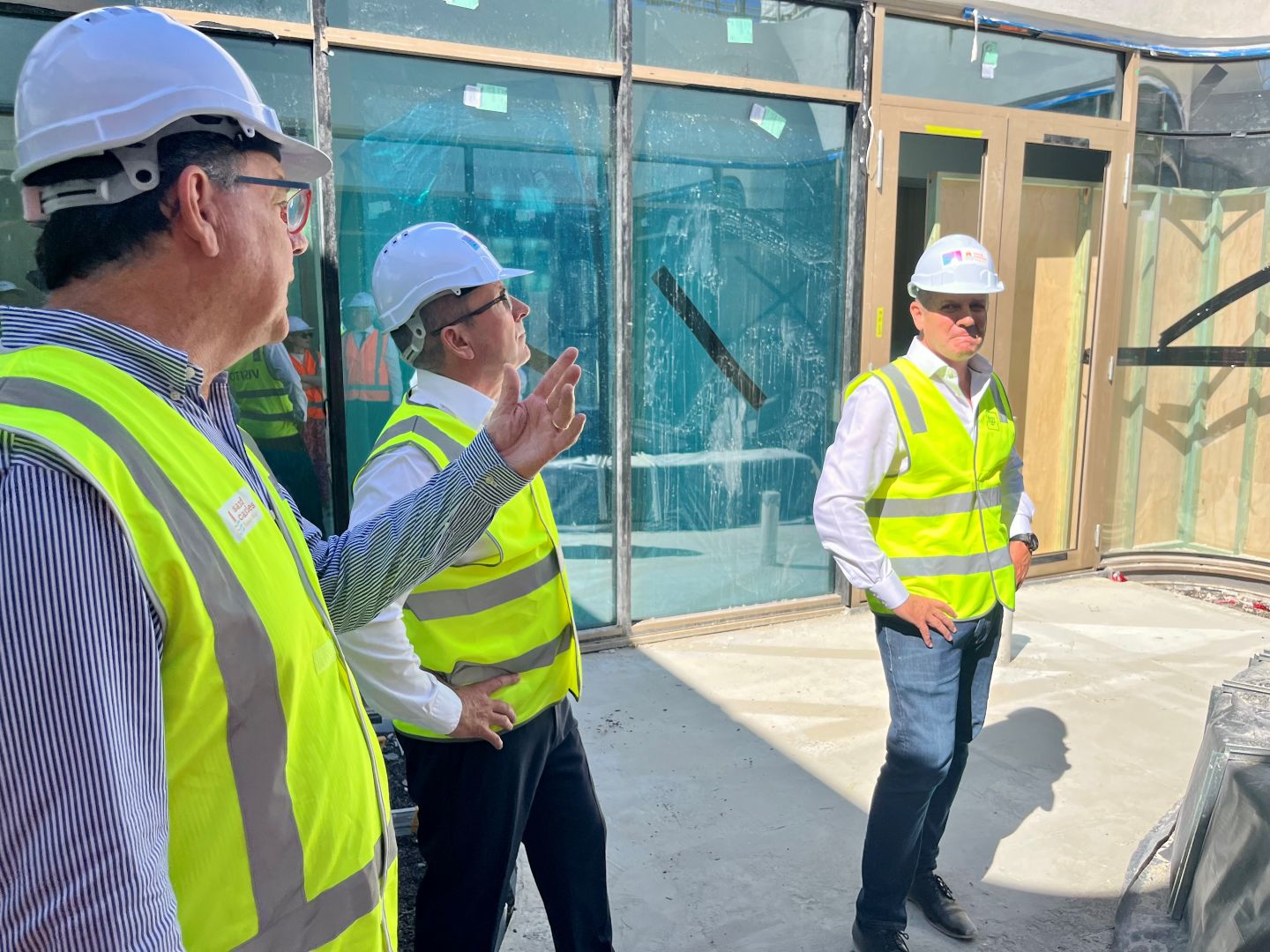
Mark McGowan, Mike Baird see dream being realised

Two of the key players in the development of a children’s hospice in Swanbourne, former premiers Mark McGowan and Mike Baird, have toured the construction site for the first time.

Continue Reading

Business

Toyota, Hyundai, Chinese expected to be most impacted by Iran war

Published

on

Toyota, Hyundai, Chinese expected to be most impacted by Iran war

Toyota Motor Corp. vehicles bound for shipment at the Port of Nagoya in Tokai, Aichi Prefecture, Japan, on Tuesday, April 29, 2025.

Toru Hanai | Bloomberg | Getty Images

DETROIT — Toyota Motor, Hyundai Motor and Chinese automakers such as Chery face the most potential impact of non-domestic automakers from the U.S.-Israel war with Iran, according to an analysis by Bernstein.

Advertisement

Those international automakers account for roughly a third of sales in the Middle East, according to the report, led by Toyota at 17%, Hyundai at 10% and Chery at 5%. In Iran specifically, Bernstein reports Iranian automakers Iran Khodro and SAIPA lead, followed by Chery with a 6% market share.

Other Chinese carmakers also are expected to be impacted, as the Middle East has become a growing destination for Chinese auto exports. Bernstein, citing China export data, said the region accounted for about 17% of China’s passenger vehicle exports in 2025.

The Bernstein report notes that while sales in the region will be impacted, the closing of the Strait of Hormuz, which links the Persian Gulf to the Gulf of Oman and the Indian Ocean, and rising oil prices will have ripple effects across the global automotive industry.

“Closure of the Strait of Hormuz adds 10-14 days to transit times,” Bernstein analyst Eunice Lee said in a Wednesday investor note, adding “a prolonged conflict and closure of the strait would hurt sales, increase logistics costs, and delay deliveries.”

Advertisement
Julian Emanuel: Gasoline near $4 a gallon becomes an economic tipping point

Roughly 20 million barrels of crude oil travel through the strait every day, according to consulting firm AlixPartners. It’s also a “critical passage” for vehicle and parts shipments to the Middle East, Bernstein noted.

Bernstein said any effect on Japanese automakers “appears limited for now, but close monitoring of developments is still required.” It also said, of the European automakers, Chrysler and Jeep parent Stellantis “seems to have the largest exposure in light of its overall issues.”

“The impact of rising gasoline pump prices is already being seen in Stellantis’ 11% stock price slump since its close last Friday – making so sharp a pivot to gas guzzling HEMI V8 engines and writing off its electrification efforts seems particularly inauspiciously timed at the moment,” Lee wrote.

U.S. crude oil prices on Thursday topped $80 per barrel, and retail gasoline prices in the U.S. have jumped nearly 27 cents since last week to $3.25 per gallon on average, according to the motorist group AAA.

Stellantis this week said it is “closely monitoring developments across the affected countries,” noting it’s “not yet possible to fully assess the potential impact on local operations.”

Advertisement

Toyota, Hyundai and Chery did not immediately respond for requests for comment.

Continue Reading

Business

Truist reiterates Buy on Camden Property Trust stock, $118 target

Published

on


Truist reiterates Buy on Camden Property Trust stock, $118 target

Continue Reading

Business

Craig-Hallum raises Marvell stock price target on data center growth

Published

on


Craig-Hallum raises Marvell stock price target on data center growth

Continue Reading

Business

How Major Sporting Events Like Cheltenham Festival Impact The UK Economy

Published

on

How Major Sporting Events Like Cheltenham Festival Impact The UK Economy

Every year, major sporting events capture national attention. Stadiums fill, viewing figures rise, and social media feeds become saturated with highlights and commentary. But beyond the excitement, there is a bigger question worth asking.

What do these events actually do for the UK economy?

Cheltenham is a prime example. While it is known for world-class racing, its influence stretches far beyond the track. From hospitality and retail to technology and media, the ripple effects are significant and measurable.

The Local Economic Surge

The most direct effect is financial to host towns and cities.

Hotels often operate at near full capacity during the festival. Restaurants stay open later to meet increased demand. Local shops increase their stock in anticipation of higher foot traffic. Transport services and taxis are at their maximum capacity.

Advertisement

For many independent businesses, festival week represents a significant share of their annual income. Some businesses even structure their annual plans around these peak periods.

This surge in activity can help sustain businesses through quieter months. Visitors who discover the area during major events often return later for leisure or business.

Regulated Betting As An Economic Driver

The effect of Cheltenham on the UK economy is greatly connected with the regulated bets. The amount of betting on licensed sites increases dramatically during the Festival.

This growth is improving the turnover of operators and generating revenue for the government in the form of betting duties and taxation. It aids employment in trading teams, compliance divisions, payment providers, and technology services.

Advertisement

Reliable, UK-regulated betting sites play a key role in this ecosystem. As race week approaches, many adults choose to engage through approved operators, often taking advantage of Cheltenham free bets within strict regulatory guidelines.

These incentives help drive participation on licensed platforms rather than unregulated markets, keeping economic activity within the UK system.

The Digital And Technology Effect

Of course, modern sporting events rely heavily on technology.

Live streaming platforms must handle large numbers of simultaneous users. Cybersecurity teams monitor systems for potential vulnerabilities. Faster connectivity also supports the growth of online commerce. Cloud infrastructure can scale quickly to handle peak traffic.

Advertisement

Search engines announce that they have had great growth in queries about events. Real-time activities are peaking on social media. Brands take advantage of such moments to test programs and gauge the reaction of the audience.

To a great extent, sport has turned into a digital resilience test. Companies that anticipate such a rush usually have worthwhile performance lessons. The ones that do not necessarily threaten downtime or a damaged reputation.

Employment And Skills Opportunities

Festival week has seen a boom in visitor numbers and business. Clearly, it provides temporary employment, which has a direct impact on the local economy by injecting money in the form of wages.

These jobs include:

Advertisement
  • Stewards
  • Hospitality and bar staff
  • Event operations coordinators
  • Security and crowd control officers
  • Cleaning and ground maintenance crews
  • Transport marshals and shuttle drivers

For students and part-time workers, these positions provide flexible income. For others, they offer hands-on experience in fast-paced operational environments.

Infrastructure Investment With Lasting Value

The major events hosting lead to the improvements of infrastructure that directly boost the economy of the location.

These may include:

  • Improved public transport links
  • Road network enhancements
  • Broadband and mobile connectivity upgrades
  • Expanded safety and crowd management systems

This kind of improvement enhances productivity, attracts investment, and business growth even after the event has been held. Light-speed connection enhances online trade, and improved transportation minimizes the expenses and promotes all-year-round tourism.

Hosting a high-profile event in other instances speeds up the investment decision-making process, giving rise to investment that provides a long-term economic benefit.

Responsible Business And Consumer Awareness

The regulatory frameworks in the UK are still changing to make consumer protection central to them. The language of marketing has also become more restrained, with words that are aimed at information as opposed to empty promises.

Advertisement

This wider change portrays a changing expectation. Businesses in the UK are coming out to be evaluated based not only on profitability but also on ethical behavior and transparency.

The issue of opportunity versus responsibility is now a thing of the business environment.

Conclusion: A Blueprint For Economic Momentum

Major sporting events demonstrate how culture and commerce intersect.

They create concentrated economic activity. They stimulate digital innovation. They encourage infrastructure investment. They generate employment opportunities.

Advertisement

For business leaders, the takeaway is clear. Preparation matters. Data analysis matters. Strategic timing matters. When managed effectively, sporting events become more than entertainment. They become catalysts for growth.

As the UK continues to adapt to economic pressures and technological change, understanding how to harness the momentum of major events could offer a valuable competitive edge.

The real question is not whether events like Cheltenham drive economic impact. The real question is how effectively businesses and regions position themselves to capture that opportunity.

Advertisement

Continue Reading

Business

Why Physical Office Strategy is the New Competitive Edge

Published

on

Fintech has really changed the way we deal with cash, into an era when digital wallets, instant loans, and banking access are all within a few taps.

In the digital age, we spend a massive amount of time talking about the “cloud,” remote workflows, and virtual collaboration. We obsess over the software that keeps our teams connected.

However, for those of us who still maintain physical headquarters, retail spaces, or industrial hubs, there’s a physical reality that often goes unaddressed. The environment we build around our people is a silent partner in our success or failure.

But have you ever walked into an office and felt your energy drain before you even sat down? Honestly, we’ve all been there. It’s that subtle, heavy feeling of a space that just wasn’t designed for humans.

As we move through 2026, the traditional cubicle farm feels like a relic of a distant past. Business leaders are beginning to understand that the “vibe” of an office isn’t just about aesthetic preference. It’s about biological and psychological needs. When a space feels cramped, dark, or disjointed, the people inside it reflect that energy. Conversely, a space designed with flow and human comfort in mind can act as a catalyst for innovation.

So, how much of your team’s output is being stifled by the very walls around them?

Advertisement

The Psychology of Transitions

Most of us don’t think about the physical transitions in our workday. We move from the car to the lobby, the desk to the breakroom, and the meeting room to the private booth. Each of these movements is a mental transition. If the path is cluttered or the environment is harsh, that transition is jarring.

Smart business management is about reducing friction. In a physical sense, this means creating intuitive layouts. It means ensuring that when someone moves from a high-energy collaborative session to a moment of private reflection, the architecture supports that shift. This is where the details matter. From the height of the ceilings to the durability of the materials used in the most high-traffic areas, every choice is a message to your team about how much you value their daily experience.

And that’s the point. It’s about respecting the workday.

Investing in Infrastructure That Lasts

When a business grows, the temptation is often to find the fastest, cheapest way to fill a space. We saw this in the “fast furniture” trend that dominated the last decade. But we’re seeing a correction now. Leaders are looking for longevity. They want materials that can withstand the rigors of a busy workforce while maintaining professional dignity.

Advertisement

This focus on quality is particularly important in the areas of a building that are most used. Whether you’re looking at modular office walls or specialized facility components, the source of your materials defines the lifespan of your renovation. Many project managers find that working with specialists like onepointpartitions.com allows them to maintain a high standard of durability without sacrificing the modern look that today’s talent expects. It’s about finding that balance between rugged utility and high-end design.

But what happens when you prioritize the upfront cost over the long-term culture? Usually, you end up paying for it in turnover.

The Impact of Private Spaces in a Collaborative World

The “open office” experiment had some wins but also major losses. We learned the hard way that humans need walls. We need boundaries. While collaboration is the lifeblood of a creative company, deep work requires silence and a lack of visual distraction.

The future of office design is hybrid. This doesn’t just mean working from home; it means having a hybrid physical space. It means having areas where the energy is palpable and areas where the world is shut out. Designing these “quiet zones” requires a deep understanding of acoustics and spatial psychology.

Advertisement

If you give a team member a place where they can truly focus without feeling like they’re on display, their output changes. It becomes more thoughtful and less reactive. We all need a little room to breathe.

Sustainability as a Business Asset

In 2026, sustainability is no longer a “nice to have” feature. It is a core metric of business health. Clients, employees, and investors are all looking at the physical footprint of the companies they support. A building that’s energy-efficient and built with sustainable materials is future-proof.

This extends to the way we renovate. Instead of tearing everything down and starting over, we’re seeing a rise in modularity. Being able to reconfigure a space without sending tons of drywall to a landfill is a massive advantage. It allows a business to stay agile. As the team grows or the business model shifts, the walls can literally move with the vision.

It’s the hum of the laptop at midnight in a building that breathes with you.

Advertisement

The ROI of Employee Wellness

At the end of the day, a business is its people. If those people are stressed, tired, and frustrated by their physical surroundings, no amount of high-tech software will save the culture. Investing in the physical environment is an investment in retention.

When a team member walks into a facility that feels clean, intentional, and well-maintained, they feel respected. They feel like the company’s invested in their day-to-day comfort. You know, it’s those small things—the quality of the lighting, the privacy of the facilities—that tell the real story of a company’s values. This leads to higher engagement and a more positive brand reputation.

Final Thoughts on Spatial Strategy

Rethinking your physical space is a daunting task, but it’s one of the most rewarding moves a business leader can make. It forces you to look at how your team actually works rather than how you think they should. It requires a blend of practical logistics and creative vision.

When you prioritize the human element of your architecture, everything else falls into place. Space becomes a tool rather than a hurdle. As we look toward the future of work, the winners will be the companies that treat their physical headquarters as a living, breathing part of their strategy.

Advertisement

Let’s make it happen.

Advertisement
Continue Reading

Business

Form 8K First United Corporation For: 6 March

Published

on


Form 8K First United Corporation For: 6 March

Continue Reading

Business

Form 8K Entergy Mississippi LLC For: 6 March

Published

on


Form 8K Entergy Mississippi LLC For: 6 March

Continue Reading

Trending

Copyright © 2025