This article was originally published in a 2025 issue of GOLF Magazine.
WHAT’S YOUR BIGGEST WEAKNESS?
It’s my last question of the day for Ludvig Åberg and likely the least original. We’re sitting in the grill room in the clubhouse at TPC Sawgrass in Ponte Vedra Beach, Fla., home course of the PGA Tour and home to its most talented young star, who has recently relocated to Northeast Florida.
I’ve spent much of the day shadowing Åberg, the 25-year-old Swede and World No. 5, watching him hit balls and take photos, first for his clothing sponsor, Adidas, and then for GOLF, while peppering him with questions in between. We’re still weeks away from Åberg winning the biggest title of his young career, a statement, come-from-behind victory at this year’s Genesis Invitational that proved his competitive fire and calm under pressure. But now that our time together is running out, it occurs to me that I’m missing a key insight into Åberg, a requirement to make any character compelling: his flaw.
Advertisement
Åberg can’t think of one.
I offer suggestions. Bad temper. Sweet tooth. Trash TV habit. “I mean, I think we all have weaknesses,” he says, charitably but unconvincingly. The rest of us, maybe, I counter. Then there’s a long, drawn-out silence.
It’s a credit to Åberg (pronounced Oh-berg) that he considers the question earnestly. He lingers so long in thought that I have time to gaze out the window, catch a glimpse of roof tile, come to the realization that this place—this red-domed, 80,000-square-foot Mediterranean-style behemoth of a clubhouse charging $800 green fees to play the island-green golf course—is the polar opposite of the minimalist golfing culture in which Åberg learned the game. But he’s adaptable. His game travels, from small-town Sweden to Lubbock to Augusta and beyond. That’s among his many strengths. As for a weakness?
“Yeah, that’s a great question,” he says.
Advertisement
IF IT FEELS LIKE ÅBERG IS STILL NEW on the scene, that’s because he is. Two years ago at this time, he was still a student at Texas Tech. Let’s get specific: In May 2023, he won the NCAA Norman Regional in his penultimate college start and just three months later won the Omega European Masters in just his second DP World Tour event as a pro. The DP win doubled as audition; the very next week he was selected for the European Ryder Cup team, a bold but inspired choice by captain Luke Donald. It would mark the first time someone had suited up for a Ryder Cup before he’d competed in a major.
“I think he’s a generational player,” Donald explained at the time. “If he wasn’t going to play this one, he was going to play the next eight Ryder Cups. That’s how good I think he is.”
That Ryder Cup week at Marco Simone, just outside of Rome, was Åberg’s introduction to a curious golfing public. Who was this six-foot-three Swede with the athletic move and air of mystery? He hit it far. He hit it close. And he didn’t say any more than he had to. Most of the American team had never seen him play, never mind tried to beat him, but on Saturday morning he delivered a performance to remember. Åberg and Viktor Hovland were put up against the American A-squad of Scottie Scheffler and Brooks Koepka. Less than two hours later, the Team U.S.A. stars walked off the course bewildered, having been handed a 9-and-7 beatdown, the widest margin in Ryder Cup history.
“Ludvig’s a stud,” said Hovland. “He doesn’t miss a shot.”
Advertisement
Åberg headed stateside after a victorious Ryder Cup debut and stayed hot through the end of the 2023 PGA Tour season. He finished T2 in Mississippi, T13 in Vegas and T10 in Mexico before winning the final event on the schedule, the RSM Classic, with a preposterous 61-61 weekend. It was a fitting capstone to a wild debut. “I still pinch myself in the morning when I wake up to realize that this is what I do for a job,” Åberg said at the post-tournament presser. “It’s been so much fun.”
He started 2024 where he’d left off: top 10 at Torrey Pines, runner-up at Pebble, top 10 at the Players. By the time Åberg arrived at the Masters, a course hostile to first-timers, there were only 10 players in the field with shorter odds. By week’s end? He’d beaten everybody except Scheffler. It was the best result by a Masters rookie since 1979. And it left the golf world with two questions: Who is this guy and where did he come from?
Ludvig Åberg at TPC Sawgrass.
Chris McEniry
Chris McEniry
BACK AT SAWGRASS, Åberg says that it’s impossible to tackle the first question without answering the second. The where and the who are intertwined. He’s the product of a specific system, of a specific coach, of a specific school and school of thought—even if it seems counterintuitive that one of the best golfers in the world grew up in a cold-weather country.
“Don’t go in the winter,” he warns, when asked to describe his native Sweden. “It’s cold. It’s dark. Nobody wants to leave their house.”
Advertisement
But in the summer? Here, Åberg sounds ready to join the tourism bureau.
“It’s a beautiful country,” he says. “It doesn’t get too hot, like certain parts of America. It’s just so nice. We have daylight ’til midnight, and everyone’s barbecuing and hanging outside. And because there’s only a few weeks a year where it’s actually nice outside, everyone takes full advantage.”
Åberg was born on Halloween in 1999 in Eslov, a town of 20,000 in southeast Sweden, which he describes with a loving shrug—when he was a kid, it was voted the most boring city in Sweden. No matter—it had plenty of room for handball and soccer, and it was home to Eslovs Golfklubb, where his dad teed it up and eventually Ludvig did too.
He describes Swedes as pleasant if standoffish. “They’re very nice, very kind, but they’re also very private. You wouldn’t see people just, like, randomly talking on a bus.”
Advertisement
Is he that way? “Deep down I am,” he says. “But I’ve gotten a little less that way as the years pass.”
Still, he found community in a golf culture he describes as open, accessible and rather un-American. “I think we have one private club in all of Sweden,” he says. “Golf is a lot cheaper than it is [in the U.S.], so there’s a lot more availability. You don’t necessarily have to belong to a club; you can show up with your friends and pay and still go play. There’s a culture of playing and of walking. We don’t really do carts at all. And I’d say, in general, there’s less of a drinking culture in Sweden. Over here, it’s a lot more cocktails while you play.”
Everything in moderation. That’s a theme.
Åberg’s father, Johan, who sells parts for construction vehicles, was the family’s resident golf nut, but his mother, Mia, a paralegal, spotted her son’s talent and drive early on. When other six- and seven-year-olds were goofing off at early clinics, Ludvig was focused on the task at hand. But, in the years that followed, no one in his life turned any one dial too far.
Advertisement
He played several other sports; soccer was his favorite. But he loved golf and got good at it. To their credit, he says, Sweden’s high school golf academies view multisport athletes favorably.
“You [develop] more coordination from multiple sports,” Åberg says. “Also, there’s the team aspect. When you’re 10, being in a locker room after you’ve lost is a pretty big lesson to learn.”
That partly explains how a tall, lanky, athletic, teenage Åberg was accepted at Filbornaskolan, a sports academy and boarding school in the coastal city of Helsingborg. And that, he says, is when everything began to change.
Ludvig Åberg at TPC Sawgrass.
Chris McEniry
Advertisement
THE WEEK BEFORE ÅBERG MADE his Ryder Cup debut, five other Swedes represented Team Europe at the Solheim Cup. Åberg knew the two highest-ranked players, Maja Stark and Linn Grant, well. They were in his eight-person class at Filbornaskolan. That’s right—three of the eight, future PGA and LPGA tour stars.
How is that possible? Hans Larsson is the man to ask. He’s been coaching golf at the school for more than two decades and oversees a program that has produced more than its share of pros. The school is selective across the board; in the golf program, a typical year will feature eight total players, four male and four female, chosen from close to 100 applicants. What makes the staff ’s approach different, Larsson says, is its big-picture approach. That’s why Åberg calls Larsson a “performance coach” rather than a swing coach. And that’s why, nearly a decade after they first met, Larsson remains his close confidant.
“We’re not just telling them, ‘This is what you should do,’ ” Larsson, phoning from Sweden, says of his students. “We’re obsessed with ‘This is why you should do it.’ I think that relates to all parts of life: nutrition, training, body movement, golf skills.” By Åberg’s recall, their program “didn’t really do high school tournaments.” That’s unthinkable to the American sporting mind; we crown national champions from age six, and the very idea of competitive junior golf conjures images of stressed-out teens grinding for life-or-death pars. But despite running an elite golf program, Larsson’s focus is rarely on cutthroat competition.
“Our kids compete at an early age,” he says, “but we try to focus on what you can learn through competing rather than just the lowest score. The Swedish system, both at our school and on the national team, is quite focused on educating and getting the players a base of knowledge in order to perform at the next level.”
Advertisement
Larsson has seen enough cautionary tales to fear the alternative. Kids who specialize early do get results early, he says—but then they often burn out faster, quit earlier, get injured more frequently or hit a ceiling.
“I would never tell them to stop playing another sport they love [to focus on] only golf, because I don’t think that’s good in any way,” he says. “I think it’s good [that they] do a lot of different things to prepare their mind and body. That’s better for your system in the long run, even if you don’t get the results as early.”
When Åberg arrived on campus at Filbornaskolan, his talent stood out. He just wasn’t particularly keen on practice. It’s not that he was anti-practice. He just didn’t really know how. But once Larsson pointed him in the correct direction, the train left the station full steam ahead. Turns out that Åberg had a superpower, and it wasn’t his swing speed. It was his ability to absorb information and commit wholeheartedly to a plan of action.
“We did this impact drill,” Larsson recalls, “and for the next two years, every time he hit a shot he did that drill. His current backswing drill he has done for four years, every swing. The things he does he has committed to over time. A lot of kids would try something, they’d go play, they might not play well and then they’d abandon that exercise. If there’s good reason to believe in it, Ludvig sticks to it.”
Advertisement
Åberg makes it sound like a natural progression. Once Larsson taught him how to practice, he implemented the regimen the way a computer might install a software update.
“I think I’ve always been disciplined,” he says. “I just didn’t know any better. And obviously that made me quite a bit better pretty quickly.”
Ludvig Åberg at TPC Sawgrass.
Chris McEniry
ONE WORD COMES UP AGAIN AND AGAIN as Åberg explains his approach: simple. Sometimes simple is Åberg obsessing over his fundamentals: the ball position, the grip, the setup. His swing hasn’t changed much in the decade he’s worked with Larsson. But mastering the little stuff goes a long way. When something is off, it’s usually a little thing. A simple thing.
Advertisement
Sometimes simple is Åberg describing things that, to mere mortals, are not simple at all. How does he go from hitting a baby fade to hitting one dead straight? “I like to keep it very simple, so it’s all just tweaks in my setup,” he says.
Other things become simple because Åberg takes action; he simplifies things for his future self. For instance, he and his caddie, Joe Skovron, meet two hours before every tee time to go over pin locations, wind and strategy.
“It just simplifies things,” Åberg says, “because when we do get to the golf course, it’s like, ‘No, this is what we said we were going to do.’ It takes away all these emotional decisions you make during a round.” Still sitting in the Sawgrass clubhouse, he gestures in the direction of Pete Dye’s Stadium Course.
“I know when I get to 12, I’m going to hit driver and I’m going to go for it,” he says, “and that just makes things easier, instead of standing on the tee box like, ‘Should I hit 4-iron?’”
Advertisement
In Åberg’s syntax, simple is synonymous with the clearest course of action. It makes the thinking the rest of us do look messy by comparison. Åberg’s swing looks simple too. That doesn’t mean you could easily adopt either as your own.
“No matter what I do today, I’m going to do the same thing tomorrow,” he says. “So, no matter if I win or I don’t win today, I’m still going to go out tomorrow and do the same thing.”
Einstein famously said that the definition of genius is taking the complex and making it simple—and he’d never even seen Ludvig Åberg hit a long iron.
THE EASY WAY OUT IS TO DISMISS ÅBERG as some kind of robotic cyborg. Some of his peers already have. But spend time with him on the range and you’ll see a creative mind at work, not a bot. He speaks with reverence about the nine-window drill he and Larsson have fine-tuned for years, a drill that requires hitting literally every kind of shot—with every club.
Advertisement
“I’ve been doing it with a 7-wood lately,” he says.
How do you even hit a low 7-wood? “Exactly,” he says, flashing his increasingly familiar, subtle grin.
Åberg still prefers playing to practicing, but at every step of the journey he has chosen to love the process. The thing he loves most about the game?
“That’s a massive question,” he says, before delivering his most expansive answer of the day.
Advertisement
“It’s so simple, but it’s so hard. It’s logical, but it’s hard. And you’re never going to be finished. You’re never going to figure it out. You can think you are, and maybe you think you’ve come a long way, but there’s so much more to learn. There’s always a better score out there, or a better shot. And trying to figure that out is what excites me. On a good day, you can come out to practice and there’s just so much you can do, y’know? It’s never, ‘Oh, I’m done with that.’ That’s what excites me.”
Given his penchant for strategic thinking, his low-key but unmistakable romanticism about the game and last year’s runner-up finish at the Masters, it’s no surprise that, as Åberg stares down his 2025 season, Georgia is on his mind. After all, beneath its luminously green exterior, Augusta National has a throwback minimalism at its core. The place is simple done right.
“There’s a lot of differences between Augusta and a normal tournament, but one thing is just so simple: the scoreboards,” Åberg says, referring to ANGC’s iconic, manually operated leaderboards. He remembers walking down No. 10 last year, when, in a dramatic moment in the final round, the leader- board changed, sending the gallery of patrons into a frenzy.
“I thought that was the coolest thing,” he says. “Nobody’s on their phone [getting] updated. It’s almost like you’re traveling back in time.”
Advertisement
AT LONG LAST, ÅBERG COMES UP WITH A FLAW.
“I used to be really poor at time management,” he says. “Double-booked every day, supposed to be in three places at the same time. I think I’ve gotten to practice that a lot more.”
Is it really a flaw if he’s already figured it out? Probably not, but at least it’s something. Besides, it’s a skill he’ll need to keep perfecting, like his setup or shot shapes of his 7-wood.
The messy, complex world is only going to want more of Ludvig Åberg.
Advertisement
Dylan Dethier welcomes your comments at dylan_dethier@golf.com.
NEW DELHI: Who wants to sit on the bench and watch teammates take the field? Who doesn’t want to see his name on the team sheet? It can be frustrating for any player. But Kuldeep Yadav handled it with remarkable calm.Whether it was carrying drinks, relaying the coach’s messages, bringing out bats, or applauding teammates with a smile, Kuldeep stayed fully involved with the team despite not being in the playing XI.In the recently-concluded T20 World Cup, where India lifted the title after defeating New Zealand in the final, teams often opted for spin-heavy combinations. Kuldeep was expected to play a bigger role, but that didn’t materialise.
Watch
Sameer Rizvi on batting approach: simple mindset, big impact for DC
India played eight matches in the tournament, including the final, but Kuldeep featured in just one game — the high-profile clash against Pakistan. He bowled three overs, conceded 14 runs and picked up one wicket.After that, he did not get another opportunity in the playing XI.Ahead of the IPL 2026 clash between Delhi Capitals and Mumbai Indians, Kuldeep spoke about dealing with the challenge of being benched.“Preparation becomes crucial, especially when you’re not getting games. I made sure there was no gap in my preparation so that whenever an opportunity came, I was ready,” Kuldeep told reporters ahead of the DC vs MI clash in New Delhi.“Even if you’re not playing, being with the team, attending practice sessions, and maintaining that match-ready mindset is important. Whether you play or not, your approach should always be that you’re ready for the next game,” he added.“Confidence comes from preparation. If your training and routines are in place, you will naturally feel confident, even though a bit of nervousness is always there,” Kuldeep said.Kuldeep also highlighted the importance of planning against batters.“Planning against batters is constant; you assess where they want to score and how they might approach you. With new batters, it becomes more challenging, but overall, preparation is what builds confidence,” he added.The 31-year-old is now eager to make his mark in IPL 2026.In Delhi Capitals’ opening match against Lucknow Super Giants, Kuldeep delivered a solid performance, picking up two wickets for 31 runs in four overs. He dismissed Mitchell Marsh and Mukul Choudhary in that game.He will now be up against Mumbai Indians in the upcoming clash.Kuldeep stressed the importance of sticking to one’s strengths, especially in the T20 format.“It’s very important for spinners to hold on to their strengths. Whenever batters put you under pressure, you tend to forget your strength. You look for a safer option to get out of that situation,” Kuldeep said.“If you are an attacking spinner, don’t let that go. Because that is your identity, and if you are doing that work for the team, taking wickets, there can be nothing better than that. Your mindset should be attacking,” he added.“Young spinners think that these are high-scoring matches and runs will be hit. Yes, you will be hit for runs because this is the T20 format. But you have to plan accordingly and be ready. It is not necessary that in four overs you will concede 40-45 runs. If there is a player who dominates, then it happens, or the wicket is very good for batting,” he said.
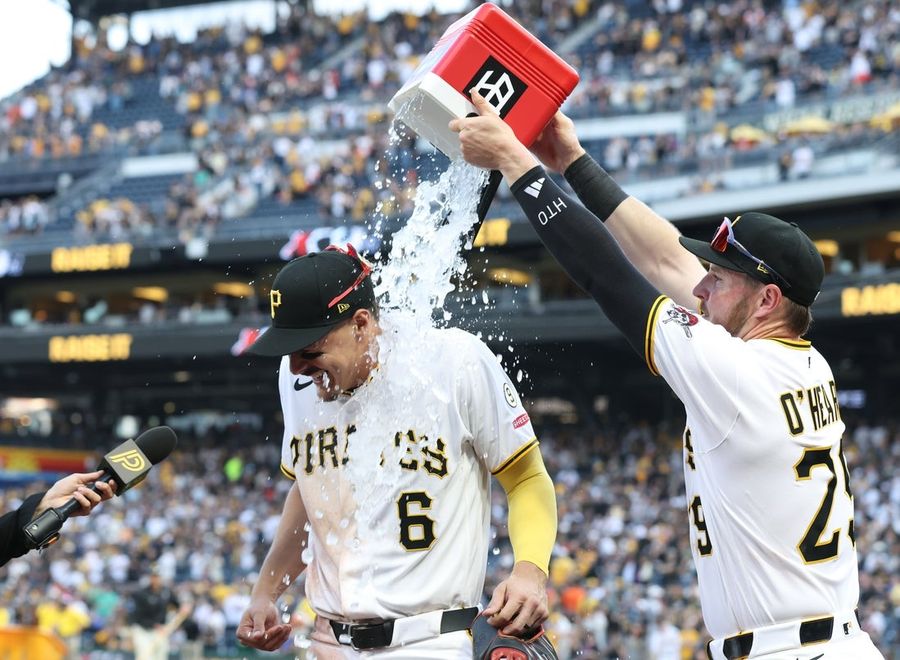
Apr 3, 2026; Pittsburgh, Pennsylvania, USA; Pittsburgh Pirates left fielder Ryan O’Hearn (29) dumps water on Konnor Griffin (6) after Griffin made his major league debut with an RBI double against the Baltimore Orioles at PNC Park. Mandatory Credit: Charles LeClaire-Imagn Images
Konnor Griffin, baseball’s No. 1 prospect, doubled and drove in a run in his major league debut, propelling the host Pittsburgh Pirates to a 5-4 win over the Baltimore Orioles in their home opener on Friday.
Griffin, 19, recorded his first major league hit and RBI and scored his first career run during a four-run second inning for Pittsburgh, which won its third in a row and moved above the .500 mark for the first time since Aug. 4, 2024.
Griffin roped his double into the left-center gap off Orioles starter Kyle Bradish (0-2) on his first career at-bat to drive in Ryan O’Hearn. Griffin came around to score when Jared Triolo, who led the Pirates with two hits, singled to right field. Griffin walked his second time up in the fourth and went 1-for-3 with a strikeout.
Griffin became the first teenage position player to appear in a big-league game since Juan Soto in 2018 and the first Pirate since Aramis Ramirez in 1998. Bradish gave up four runs on six hits in four innings. In six innings, Pirates starter Mitch Keller (1-0) allowed two runs on six hits.
Dodgers 13, Nationals 6
Advertisement
Shohei Ohtani hit his first home run after a slow start and added four RBIs as Los Angeles unleashed a stagnant offense for a victory in Washington’s home opener.
Kyle Tucker, Mookie Betts, Freddie Freeman and Andy Pages hit home runs and added two RBIs each in the Dodgers’ first road game of the season. Emmet Sheehan (1-0) went 5 2/3 innings, allowing four runs on seven hits.
Nationals right-hander Miles Mikolas (0-2) surrendered 11 runs on 11 hits across 4 1/3 innings. CJ Abrams hit a home run and drove in four runs for Washington, which dropped its third straight after a 3-1 start.
Yankees 8, Marlins 2
Advertisement
Aaron Judge hit a home run in his first Yankee Stadium at-bat of the season and drove in three runs as New York, in its home opener, downed Miami.
Ben Rice added a home run and a two-run double for the Yankees, who improved to 6-1. Will Warren (1-0) allowed two runs, on solo homers by Xavier Edwards and Owen Caissie, among four hits in 5 2/3 innings.
Marlins starter Eury Perez (0-1) allowed four runs on two hits in four innings, issuing a career-worst six walks. Miami had just one at-bat with a runner in scoring position.
Red Sox 5, Padres 2
Advertisement
Willson Contreras and Marcelo Mayer both homered in the sixth inning, propelling Boston to a home-opening win over San Diego.
Boston banged out nine hits and received a solid six-inning start from Sonny Gray (1-0) en route to breaking a five-game losing skid. Mayer highlighted his 2-for-2 day with a two-out, two-run homer to cap Boston’s three-run sixth. He also hit a leadoff double and scored the opening run in the third.
Gavin Sheets went 2-for-3 with an RBI and run for the Padres. Boston College grad Michael King (0-1) allowed four runs in a 5 2/3-inning start.
Tigers 4, Cardinals 0
Advertisement
Framber Valdez pitched six scoreless innings, Dillon Dingler blasted a two-run homer and Detroit blanked St. Louis in its home opener.
Valdez (1-0), one of the top free agent signings of the offseason, allowed three hits and two walks while striking out five. Riley Greene had two hits, a run and an RBI while Javier Baez added two hits and an RBI.
Michael McGreevy (0-1) gave up three runs on seven hits in 4 2/3 innings. The Cardinals, who had won four of their first six games, were held to five hits.
Mariners 3, Angels 1 (10 innings)
Advertisement
Cole Young broke a scoreless tie with a 10th-inning triple as Seattle spoiled Los Angeles’ home opener with a win in Anaheim, Calif.
Josh Naylor added a two-run single off Brent Suter (0-1). Four Mariners pitchers — Bryan Woo, Matt Brash, Andres Munoz and Gabe Speier — combined on a one-hitter. Munoz (1-1) struck out the side in the ninth to earn the victory. Speier worked the 10th for the save, giving up a sacrifice fly to Jorge Soler.
Woo and the Angels’ Reid Detmers were locked in a pitchers’ duel into the seventh inning. Woo went seven innings, giving up one hit with one walk and six strikeouts, while Detmers allowed three hits in 6 2/3 innings, with four walks and four strikeouts.
Braves 2, Diamondbacks 0
Advertisement
Ozzie Albies and Matt Olson hit back-to-back homers off Paul Sewald to break a scoreless tie in the ninth inning, and Atlanta beat Arizona in Phoenix.
Albies, leading off the inning, put the Braves ahead by depositing an 0-1 fastball from Sewald (0-1) over the right field wall. Olson followed three pitches later with a 426-foot blast to left-center. Robert Suarez (1-0) pitched a perfect eighth and Raisel Iglesias retired the D-backs in order in the ninth for his first save.
Atlanta out-hit Arizona 6-2 in a game that featured a pitchers’ duel between the Braves’ Grant Holmes and the Diamondbacks’ Eduardo Rodriguez. Holmes allowed one hit over six scoreless innings, while Rodriguez gave up four hits over seven shutout innings.
Advertisement
Phillies 10, Rockies 1
Brandon Marsh hit a three-run home run and Trea Turner had two hits in a seven-run first inning as Philadelphia routed Colorado in the Rockies’ home opener at Denver.
Bryce Harper homered and doubled, Kyle Schwarber also went deep and Turner finished with three hits. Aaron Nola (1-0) allowed just one run over 6 1/3 innings and struck out nine as the Phillies earned their third victory in a row.
Rockies starter Michael Lorenzen (0-1) gave up nine runs on 12 hits over three innings.
Advertisement
Reds 5, Rangers 3
Tyler Stephenson belted a two-run homer in the ninth inning, helping Cincinnati spoil Texas’ home opener with a victory in Arlington, Texas.
Spencer Steer launched a two-run homer in the second and had a double to lead off the ninth. Stephenson then deposited a 3-2 sinker from Chris Martin (1-1) over the wall in right-center to give the Reds a 5-3 lead. Texas’ Danny Jansen ripped a two-run double and Wyatt Langford added an RBI double.
Stephenson’s first homer of the season made a winner out of Tony Santillan (1-0), who retired the side in order in the eighth, and Emilio Pagan secured his second save. Cincinnati’s Elly De La Cruz homered to lead off the sixth.
Advertisement
White Sox 5, Blue Jays 4 (10 innings)
Tristan Peters knocked in the winning run with a two-out single as Chicago prevailed in its home opener, defeating Toronto.
After the Blue Jays took a lead in the top of the 10th on an error by Miguel Vargas, the White Sox won the game with two runs in the bottom of the inning in part because of an error by replacement catcher Tyler Heineman.
Sean Burke allowed one run on four hits over six innings for Chicago. Former White Sox pitcher Dylan Cease allowed three runs (two earned) on five hits over 4 1/3 innings for Toronto.
Advertisement
Guardians 4, Cubs 1
Rookie Chase DeLauter belted a two-run, two-out homer off Hunter Harvey in the seventh inning, three batters after Gabriel Arias hit a go-ahead solo shot, as Cleveland beat visiting Chicago.
DeLauter, who singled home Cleveland’s first run in the fifth to knot the score, tied Shea Langeliers of the Athletics for the major league lead with five home runs. He went 3-for-4 in his initial regular season home game, having made his debut in the 2025 postseason.
Connor Brogdon (2-0) earned the win with a perfect seventh, while Cade Smith worked a scoreless ninth for his second save. Pete Crow-Armstrong and Miguel Amaya had back-to-back doubles in the third, giving Chicago a 1-0 lead. Cubs starter Cade Horton was forced to leave in the second with right forearm discomfort and will go on the injured list.
Advertisement
Twins 10, Rays 4
Tristan Gray belted his first career grand slam and drove in five runs, and Minnesota pulled away for a win over Tampa Bay in Minneapolis.
Gray’s blast highlighted a seven-run seventh inning for the Twins, who won their home opener after playing their first six games on the road. Josh Bell and Royce Lewis drove in two runs apiece.
Nick Fortes doubled and drove in two runs to lead Tampa Bay at the plate. Junior Caminero and Ben Williamson tallied two hits apiece.
Advertisement
Athletics 11, Astros 4
Lawrence Butler went 3-for-5 with a homer and four RBIs and Max Muncy finished 3-for-4 with a blast and drove in three as the Athletics rolled over Houston in the home opener at West Sacramento, Calif.
Tyler Soderstrom had two hits and two RBIs and Jack Wilson also had two hits as the Athletics posted 13 hits. All 11 A’s runs scored with two outs. Jeffrey Springs (1-0) gave up one run and two hits in six innings.
Yainer Diaz and Nick Allen had two hits apiece for the Astros, who had a five-game winning streak halted. Cristian Javier (0-1) allowed six runs on six hits and five walks in 3 2/3 innings.
Advertisement
Mets 10, Giants 3
Francisco Alvarez belted two home runs, Marcus Semien hit the first for his new team and New York overcame the loss of Juan Soto to post a victory over host San Francisco.
Nolan McLean (1-0) combined with four relievers on a five-hitter for the Mets, who snapped a three-game losing streak. Soto left due to right calf tightness after being forced out at home plate during New York’s two-run first inning.
Bichette and Semien had RBI hits in the first off Giants starter Tyler Mahle (0-2), allowing McLean to pitch with a lead during his entire 5 1/3-inning stint. Mahle was pulled after five innings, having allowed five runs and eight hits. Luis Arraez and Willy Adames each had an RBI hit for San Francisco.
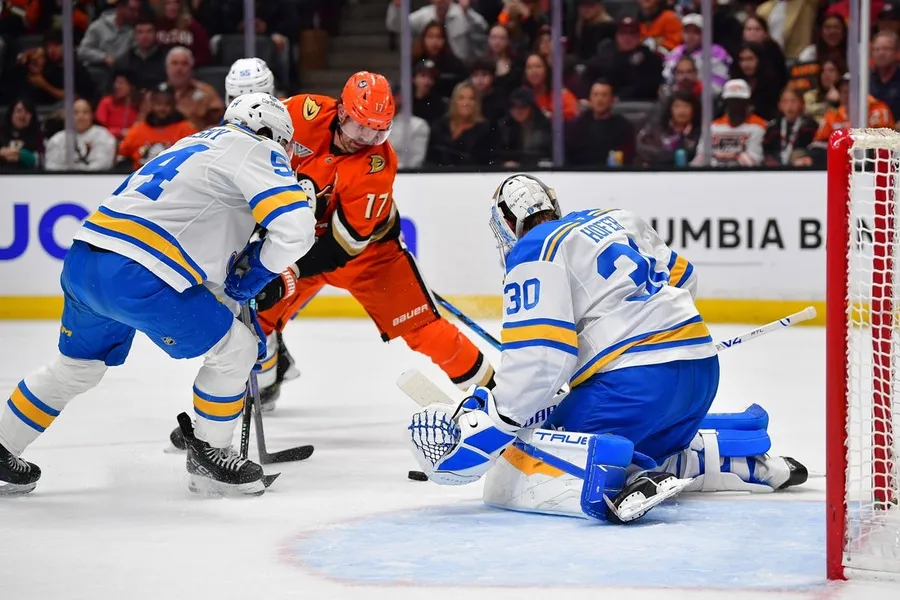
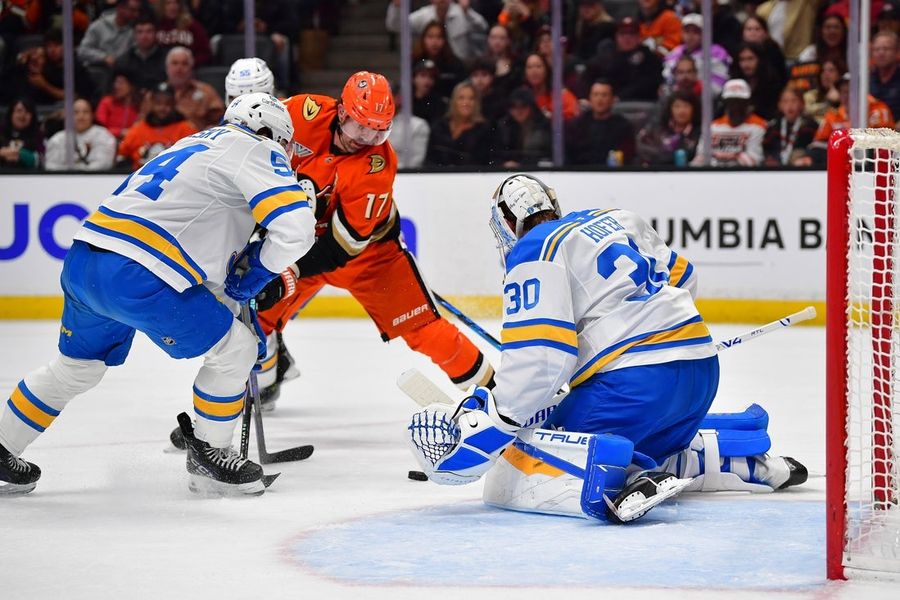
Apr 3, 2026; Anaheim, California, USA; St. Louis Blues right wing Dalibor Dvorsky (54) helps goaltender Joel Hofer (30) defend the goal against Anaheim Ducks left wing Alex Killorn (17) during the second period at Honda Center. Mandatory Credit: Gary A. Vasquez-Imagn Images
Robert Thomas scored once in a three-point game and Dylan Holloway tallied twice to lead visiting St. Louis to a 6-2 victory over the Anaheim Ducks on Friday, keeping the Blues’ slim playoff hopes alive.
Pius Suter and Colton Parayko both scored once and added an assist for the Blues (32-31-12, 76 points), who are three points outside of a playoff spot with seven games remaining.
St. Louis’ Jonatan Berggren also scored, Jake Neighbours and Philip Broberg both collected a pair of assists, and goaltender Joel Hofer made 25 saves.
Ryan Poehling collected one goal and one assist and Jeffrey Viel tallied once for the Ducks (41-30-5, 87 points), who lost their hold on the top spot in the Pacific Division. The Edmonton Oilers also have 87 points, but they hold the tiebreaker edge.
Goalie Lukas Dostal stopped 23 shots for Anaheim, which is winless in four games (0-3-1).
Advertisement
Berggren’s goal late in the first period sent the Blues off to victory. With the score tied 2-2, Berggren set up in the slot after a glaring turnover and buried the chance with 76 seconds remaining in the back-and-forth opening frame.
Suter made it a 4-2 game with a tap-in tally set up by Neighbours and Tyler Tucker at 3:08 of the second period.
Parayko extended the Blues’ lead at 16:50 of the middle frame by converting a wrist shot from the top of the right circle for his second goal of the season.
Advertisement
Holloway added a power-play goal, ripping home a one-timer from the right circle set up by Thomas’ pass 82 seconds into the third period for his second of the game to make it a 6-2 score.
Before that, the clubs were in a see-saw affair. The Ducks received a sought-after quick start when Poehling opened the scoring at 1:51 by redirecting Mason MacTavish’s long shot.
Thomas responded to tie the clash at 5:24, chipping a shot from in tight upon being sprung on a breakaway by Broberg. With his assist, Broberg extended his point streak to a career-best seven games.
Holloway put the Blues ahead just past the midway point of the opening frame, finding the mark from the top of the right circle for the power-play goal.
Advertisement
Then it was Anaheim’s turn to erase a deficit, tying the clash when Viel redirected Poehling’s cross-ice pass at 16:01 of the frame.
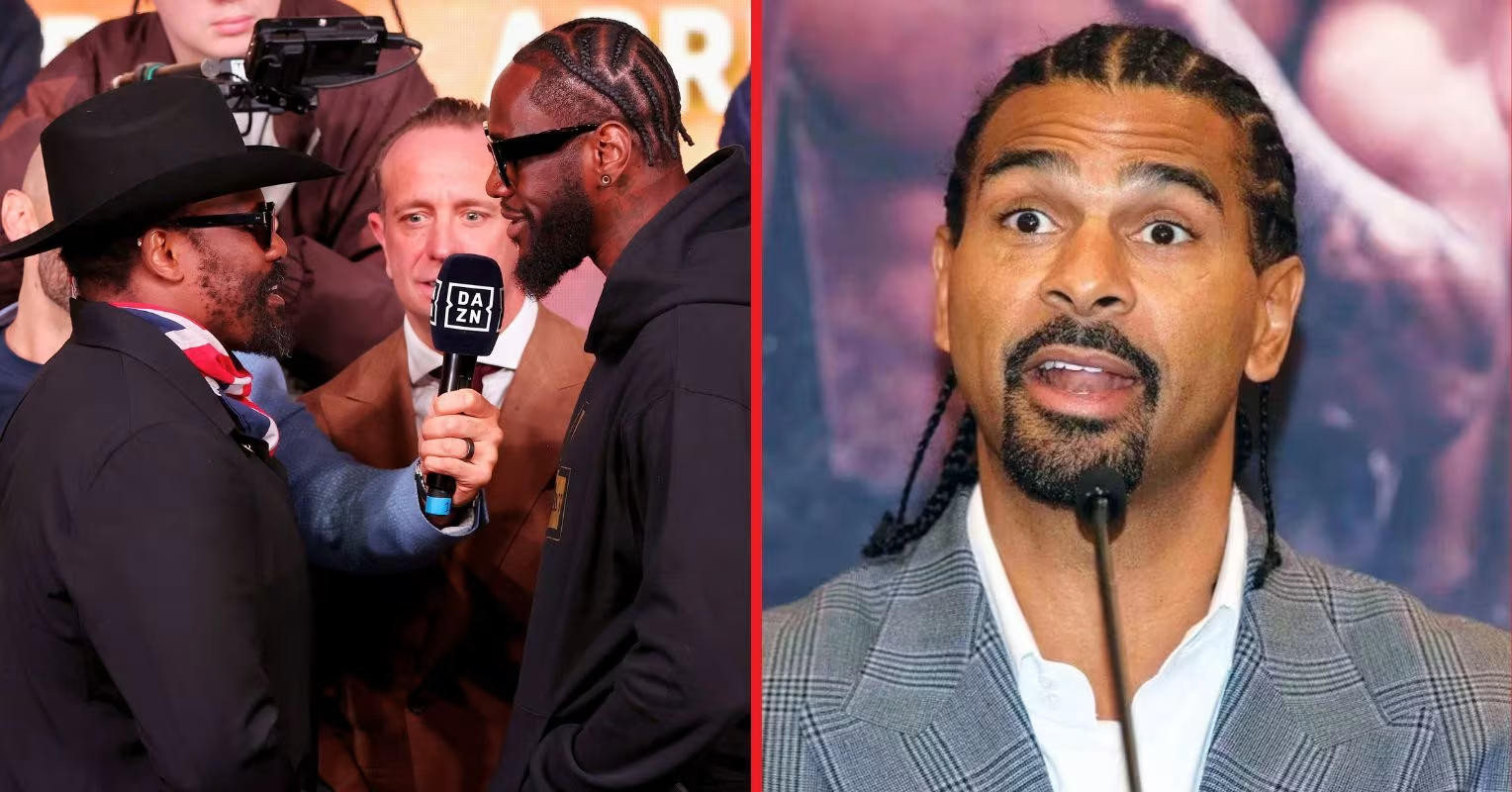
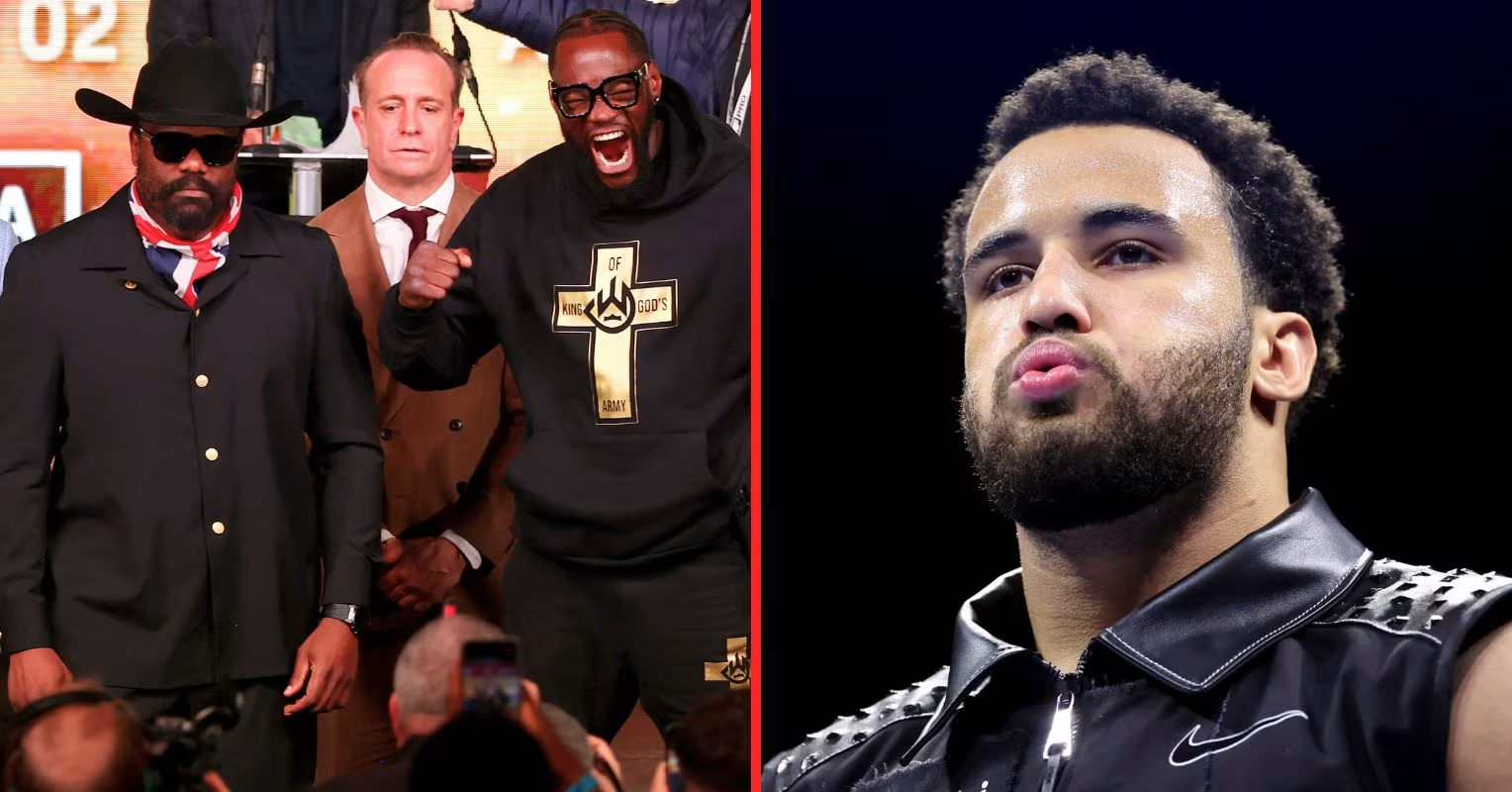
Derek Chisora takes on Deontay Wilder on Saturday, and two-division world champion and former Chisora rival David Haye has laid out his prediction for the O2 Arena scrap.
For Wilder, the contest represents a major opportunity to announce his return to the big time, with Chisora’s favourable ranking with the sanctioning bodies offering ‘The Bronze Bomber’ a route back to the peak of the division.
Advertisement
However, Haye, who defeated Chisora at Upton Park back in 2012, told The Sun Sport that he believes his countryman will end his career with a victory, when sharing his forecast for the fight.
“Derek Chisora on points but also a potential late stoppage. Once Wilder runs out of steam, he sort of [flops around]. He doesn’t have very big legs, his foundations are quite slim.
“Once he loses that [foundation], like we saw against [Zhilei] Zhang, very quickly he started falling all over the place, he was spinning around and he wasn’t together like he once was.
“I think that there is an opportunity for Derek, not early, I don’t think it will happen early but I think Derek will drag him into a very uncomfortable situation where it is very close and they are pushing and pulling. That is what Derek needs, that is what Derek wants.
“In the first three rounds, Wilder is dangerous against anybody, for sure, he can nail you. But going past the midway stage, I don’t think that he is going to be able to keep Derek off of him, and if he does, he will be losing the rounds conclusively.”
Advertisement
Wilder-Chisora will take place on Saturday, with the likes of Viddal Riley and Denzel Bentley featuring on the undercard.
Minnesota Vikings linebacker Jonathan Greenard (58) celebrates after a defensive stop, bringing energy to the unit as teammates rally around the play Dec 1, 2024, at U.S. Bank Stadium in Minneapolis, Minnesota, during a matchup against the Arizona Cardinals with Brian Flores’ defense controlling momentum in the second quarter. Mandatory Credit: Jeffrey Becker-Imagn Images.
April is here, meaning it’s draft month for the Minnesota Vikings, and we’re bringing the first batch of rumors for the month.
Three new Vikings rumors spotlight Greenard, Turner, and Minnesota’s search for help at center.
Each weekend, we publish two rounds of the hottest Vikings rumors, with never a dull moment in the purple orbit.
Advertisement
Latest Chatter Reveals Key Questions for Minnesota’s Roster
The Purple Rumor Mill for April 4th.
Minnesota Vikings linebacker Jonathan Greenard lines up on defense during a postseason clash, bringing edge pressure and veteran presence Jan. 13, 2025, at State Farm Stadium in Glendale, Arizona. He consistently disrupted the pocket and helped anchor Minnesota’s front against a dynamic Rams offense in the NFC Wild Card matchup. Mandatory Credit: Mark J. Rebilas-Imagn Images
Rumor: Jonathan Greenard could be shipped to the Indianapolis Colts during the draft.
Bleacher Report‘s Brent Sobleski published his five “most plausible” NFL trade ideas for the draft, and Minnesota got the call with Greenard.
He noted about the Colts as the trade partner, “The Colts already lack a first-round pick thanks to last year’s trade deadline acquisition of cornerback Sauce Gardner. However, the market for an edge-defender isn’t nearly as robust when discussing anyone other than Crosby.”
Advertisement
“Jonathan Greenard is the logical target. The Vikings were looking to create salary-cap space earlier this offseason and did so by restructuring running back Aaron Jones’ contract and releasing defensive linemen Jonathan Allen and Javon Hargrave. Still, the Vikings are only $5.5 million under the salary cap before signing the incoming rookie class. In order to create some more flexibility, Greenard can be moved, with the team saving $12.3 million via trade.”
Greenard has also pranced around the Philadelphia Eagles’ rumor mill.
Sobleski continued, “Even after re-signing wide receiver Alec Pierce and quarterback Daniel Jones, the Colts massaged the numbers to where they still have over $27 million in available cap space. They can easily take on Greenard’s remaining base salary and address a significant need, with an end who generated 12 or more sacks in two of the last three seasons.”
“Indianapolis may not have a first-round pick, but the Colts could easily flip a third- or fourth-round selection — the Dallas Cowboys traded a fourth for Rashan Gary — and possibly quarterback Anthony Richardson to get a deal done.”
Advertisement
The Colts’ main EDGE defenders are Laia Latutu and Arden Key. If Greenard is for sale, Indianapolis makes a lot of sense. That franchise is “all in” to win a Super Bowl, and most teams with that mindset stock up on pass rushers.
Rumor: The Vikings aren’t incredibly high on Dallas Turner as a starter.
Most Vikings fans have assumed Turner is possibly on track for a Pro Bowl jump in 2026 after closing 2025 strong. KSTP’s Darren Wolfson pushed back on that outlook this week.
He said on SKOR North airwaves, ‘I don’t think the Vikings are ready for Dallas Turner — even though you look at the last half of last year, I know there’s a sense that Dallas Turner is ready to ascend even more — but I’m not sure, internally, they are ready for Dallas Turner to play 55 to 62-ish snaps in a game. And who else do they have? Now, I suppose if you trade Greenard, okay, Dallas ascends up, he’ll play that much more.”
Advertisement
“You can go sign a street free agent — there’s still some guys available — or use a draft pick on somebody that can rush the quarterback from the edge. But I just don’t think they’re ready for Dallas to have like a significantly bigger role. I’m getting into semantics, right? Because is he going to have a bigger role in 26? Yes. I’m not suggesting otherwise, but a much bigger role? I’m not sure they’re ready for that.”
Minnesota Vikings outside linebacker Dallas Turner works through drills during organized team activities, showing burst and technique as he enters his second NFL season May 30, 2025, at TCO Performance Center. The former first-round pick is pushing for a larger defensive role after a developmental rookie campaign in Minnesota. Mandatory Credit: YouTube
The context helps explain why Greenard remains in place; if the Vikings aren’t fully sold on Turner, moving Greenard for top value carries real risk.
Minnesota has three years left of team control with Turner; he’ll need to break out sooner rather than later, mainly because the trade to get him in 2024 was so expensive.
Rumor: Minnesota should explore free-agent center Graham Glasgow.
BR’s Gary Davenport analyzed each NFL team with free agency largely in the rearview, finding one player per squad before the draft. Glasgow was connected to Minnesota.
Advertisement
He explained, “There’s no shortage of drama under center in the Twin Cities this year, where the acquisition of Kyler Murray sets up a summer-long battle with J.J. McCarthy for the right to be Minnesota’s starting quarterback in 2026.”
“But after veteran Ryan Kelly retired, the spot in front of the quarterback is a question mark as well—the team’s top center as things stand now (Blake Brandel) hasn’t played 400 snaps at center over a five-year career. Graham Glasgow played almost 900 snaps at center for the Detroit Lions last year alone.”
The Vikings may also draft a center in 19 days.
Detroit Lions center Graham Glasgow (60) prepares for action in a season opener matchup, anchoring the offensive line against Arizona Sep 8, 2019, at State Farm Stadium in Glendale, Arizona. He handled interior blocking duties throughout the game, providing protection and run support in a competitive contest. Mandatory Credit: Mark J. Rebilas-USA TODAY Sports
Davenport added, “In a decade-long career spent in Detroit and Denver, Glasgow has played extensively at all three positions on the interior of the offensive line. At 33, Glasgow’s best football is probably behind him.”
“But he was a capable starter last year in Detroit, giving up just a single sack and committing two penalties across 873 snaps per Pro Football Focus.”
Advertisement
Glasgow produced a 56.2 PFF grade last year. The Vikings might be better off with Brandel and a rookie.
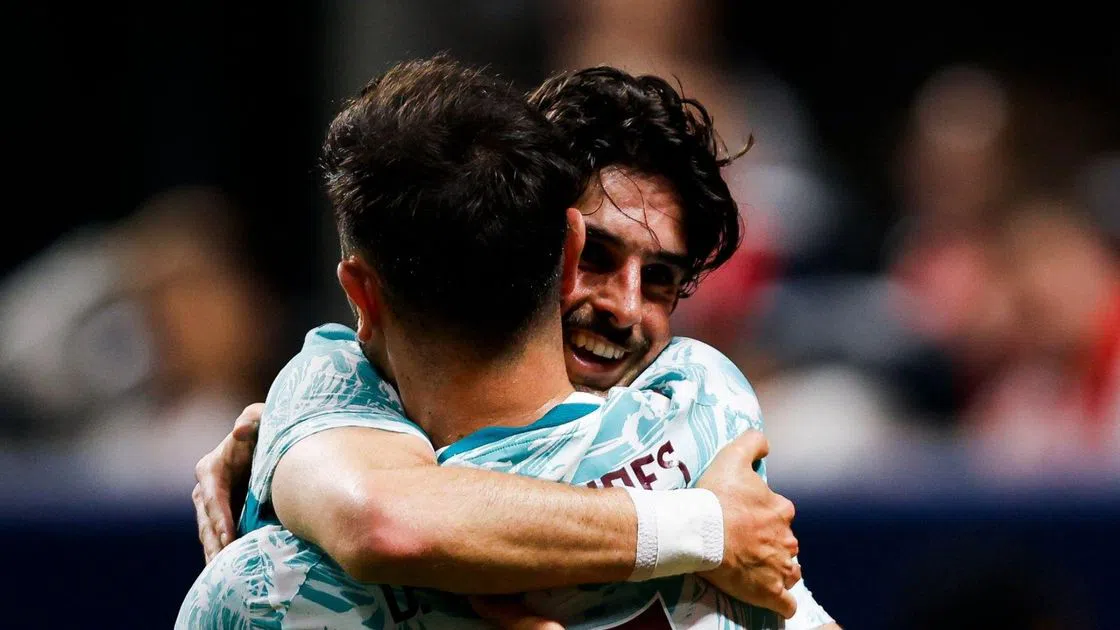
Francisco Trincao scored in the 37th minute, Joao Felix added a goal in the 59th and Portugal beat the United States 2-0 in a friendly on Tuesday night to deal the Americans their eighth consecutive defeat against European opponents.
U.S. star Christian Pulisic was moved from a wing to the top of the attack but failed to convert a pair of good scoring chances.
Pulisic, who played only the first half, is scoreless in eight national team games dating to November 2024 and in 12 games with AC Milan since Dec. 28.
Preparing to co-host the World Cup, the U.S. has been outscored 22-6 during its losing streak against Europe and is winless against the continent in 10 matches since 2021.
Advertisement
U.S. coach Mauricio Pochettino announces his World Cup roster on May 26, and the Americans play their last warmups against Senegal five days later and Germany on June 6. The Americans open the World Cup on June 12 against Australia, face Paraguay a week later and close the first round vs. Turkey on June 25.
Before a pro-US crowd of 72,297 at Mercedes-Benz Stadium, Portugal went ahead after American midfielder Weston McKennie knocked a hard-to-control pass from Alex Freeman to Vitinha, who played a through ball to Bruno Fernandes. As defenders Chris Richards and Auston Trusty converged on the midfielder, he dropped a backheel pass to Trincao, who took a touch and slotted it past Matt Freese and inside the far post for his third international goal.
Felix scored his 12th international goal following Fernandes’ corner kick. Left unmarked just outside the penalty area, Felix sent a half-volley in on two bounces off the far post.
Advertisement
Freese was back in goal after his streak of 12 straight starts ended when former No. 1 goalkeeper Matt Turner played in Saturday’s 5-2 loss to Belgium.
Preparing for a World Cup group with Congo, Uzbekistan and Colombia. Portugal was missing captain Cristiano Ronaldo (hamstring).
Moses Itauma, like many, does not see Derek Chisora vs Deontay Wilder going the distance.
Chisora has built a reputation on toughness and volume, often dragging opponents into uncomfortable territory, while Wilder’s game remains centred around his devastating right hand.
The clash, should it have happened with both men in their primes, would present an interesting dynamic between pressure and power.
Advertisement
However, with talk of retirement surrounding both fighters and fans dubious that they could currently compete at the top level, the stakes feel heightened. Add to that that at least one retirement has been promised, and it becomes a relatively high stakes affair outside of the title picture.
Itauma, when giving his thoughts to the BBC, gave the edge to his countryman by KO.
“I’m going for Chisora. He wins by mid-to-late stoppage.”
Chisora is favourite for the win given how the recent form stacks up. His latest victories against Otto Wallin and Joe Joyce were impressive at this stage of his career and have given him the benefit of activity.
Advertisement
Wilder, who years ago would have been considered a very dangerous opponent for the Brit, looked nothing like his former self in losses to Joseph Parker and Zhilei Zhang, and his comeback win against Tyrrell Herndon did not tell fans man.
There are just hours to wait to see what the veteran heavyweights bring to the table.
Over the years, as Masters coverage has expanded to capture every shot from every corner of Augusta National Golf Club, many fans have come to feel as if they know the course to its last blade of grass.
Paul Latshaw actually did.
From 1986 to 1989, Latshaw served as Augusta National’s superintendent, presiding over four Masters on a property renowned for its meticulous conditioning. It was a luminous stretch within a 40-year career that carried him across some of the game’s most exacting stages — from Oakmont to Congressional to Winged Foot, and beyond — and made him the only superintendent to oversee host courses for all three U.S.-based men’s major championships.
His influence, though, extended far beyond the grounds he tended. To peers and protégés, Latshaw was a tireless innovator and generous mentor who helped shape the careers of scores of industry professionals. By some estimates, more than 100 of his former employees and pupils went on to become superintendents, turfgrass scientists or leaders in the game, including his son, Paul Jr., who is now director of grounds at Merion near Philadelphia.
Advertisement
In recognition of those contributions, Latshaw was honored earlier this year with the USGA’s 2026 Green Section Award, presented annually for distinguished service to the game through turfgrass management. Latshaw, 85, whose health has been declining, was unable to attend the ceremony at the Golf Course Superintendents Association of America’s trade show in Orlando. His son accepted on his behalf.
“He was the Michael Jordan of superintendents,” the younger Latshaw told GOLF.com
The man recognized as one of the most influential figures in his field was not himself an avid golfer, nor did he grow up in the game. Raised in Red Cross, Pa., he served in the U.S. Navy after high school and planned to study poultry production at Penn State before answering a newspaper ad for a golf course maintenance job. He took it and was hooked.
He pivoted to Penn State’s two-year turfgrass program, graduating in 1964. But as his son put it, his education never stopped.
Advertisement
“He was constantly seeking information, attending seminars, eager to learn,” he said. “He always wanted to be on the cutting edge.”
Latshaw’s first superintendent job was at The Country Club of Jackson in Michigan, followed by Shaker Heights Country Club in Ohio. In 1976, he arrived at Oakmont Country Club in Pennsylvania, where he oversaw the 1978 PGA Championship and the 1983 U.S. Open. That proving ground — on a course with storied greens of its own — helped propel Latshaw to Augusta, where he arrived in time for Jack Nicklaus’ historic 1986 victory, 40 years ago this spring.
The move from Oakmont to Augusta plunged Latshaw into a different agronomic world, away from push-up greens and Poa annua and into warm-season turf and fall overseeding. He embraced the changes with curiosity and conviction, experimenting constantly, even when it meant unsettling convention.
One afternoon, his assistant, Matt Shaffer, came across Latshaw behind the 5th green, pumping air across the putting surface with a leaf blower.
Advertisement
“I said, you’re pushing 90-degree air across the green at 70 miles an hour and you think something good is going to happen,” Shaffer recalled. “What are you even doing?”
“Experimenting,” Latshaw replied.
With air movement, to be exact, in a tree-shaded setting that stifled it. The results were promising enough that Latshaw soon began jury-rigging fans in the maintenance shop and putting them to work on the course, an unconventional practice that became standard at Augusta and, eventually, elsewhere. He also tweaked the club’s green aerification schedule, shifting it into the fall (before Latshaw’s arrival, Shaffer said, the club punched only in summer, when the course was closed). It was a bold move, with professional (if not agronomic) risks, and it briefly disrupted play and ruffled feathers. But it improved turf health.
“That was his thing,” Shaffer said. “His first priority was always: what’s best for the grass.”
Advertisement
Working under Latshaw, Shaffer said, felt at times like a daily chemistry lesson. Where Shaffer and many of his peers focused largely on major nutrients — nitrogen, phosphorus, potassium — Latshaw worked deeper on the periodic chart, fine-tuning elements like boron, magnesium and calcium.
“He could push grass to points I never thought possible,” Shaffer said. “Right to the edge, where you’d swear it couldn’t come back. And then he’d bring it back.”
When the two first met, Latshaw was at Oakmont and Shaffer was working at a little-known Pennyslvania club, feeling stalled.
“I had a chip on my shoulder,” Shaffer said. “Like I wasn’t getting what I deserved.”
Advertisement
When Latshaw offered him a job as an assistant at Augusta National, just after the 1986 Masters, the pay wasn’t life-changing, the title (assistant) was a downgrade and the pressure exponentially higher. Shaffer accepted anyway, recognizing a rare chance to learn from a master.
“I thought I was a pretty good grass grower,” he said. “Then I stood next to him and realized how little I knew.”
If Latshaw’s expectations were exacting, so was his work ethic.
“He didn’t just delegate,” Shaffer said. “If we worked 150 days straight, he worked 160. He was smart, he was driven, and he was endlessly curious. He changed my life.”
Advertisement
After Augusta, Latshaw’s résumé continued to swell with the names of marquee clubs: Wilmington Country Club, Congressional Country Club — where he hosted his second U.S. Open, in 1997 — and a simultaneous consulting role at Riviera. He closed his on-course career at Winged Foot before retiring in 2001 to work as a consulting agronomist.
In total, he ran the agronomic show for four Masters, two U.S. Opens, a PGA Championship and two U.S. Senior Opens. His broader legacy was bolstered through the people he trained, and in the practices he helped normalize.
“Maintenance techniques he introduced that once seemed radical are now standard,” said Darin Bevard, the USGA’s senior director of championship agronomy. “He was always curious, always willing to learn from anyone, and that’s what kept him at the top for so long.”
Years after leaving Augusta, Latshaw was still mentoring Shaffer, who by then was superintendent at Merion, preparing for the 2005 U.S. Amateur under challenging weather conditions that had left the course in less-than-ideal condition. Latshaw arrived with underground soil sensors he believed could help. Shaffer resisted.
Advertisement
“It told him I didn’t have time to mess around with sensors,” Shaffer said. “I’ve got a course I need to get in shape.”
Latshaw persisted. The sensors went in. And worked.
In addition to this year’s Green Section honor, Latshaw also received the GCSAA’s Old Tom Morris Award in 2017. The following year, Penn State, established a turfgrass graduate fellowship in his name.
Over the years, Paul Jr. said, he and his father haven’t always watched the Masters together.
The Grand National is just days away and a racing expert has named his three picks for the big race
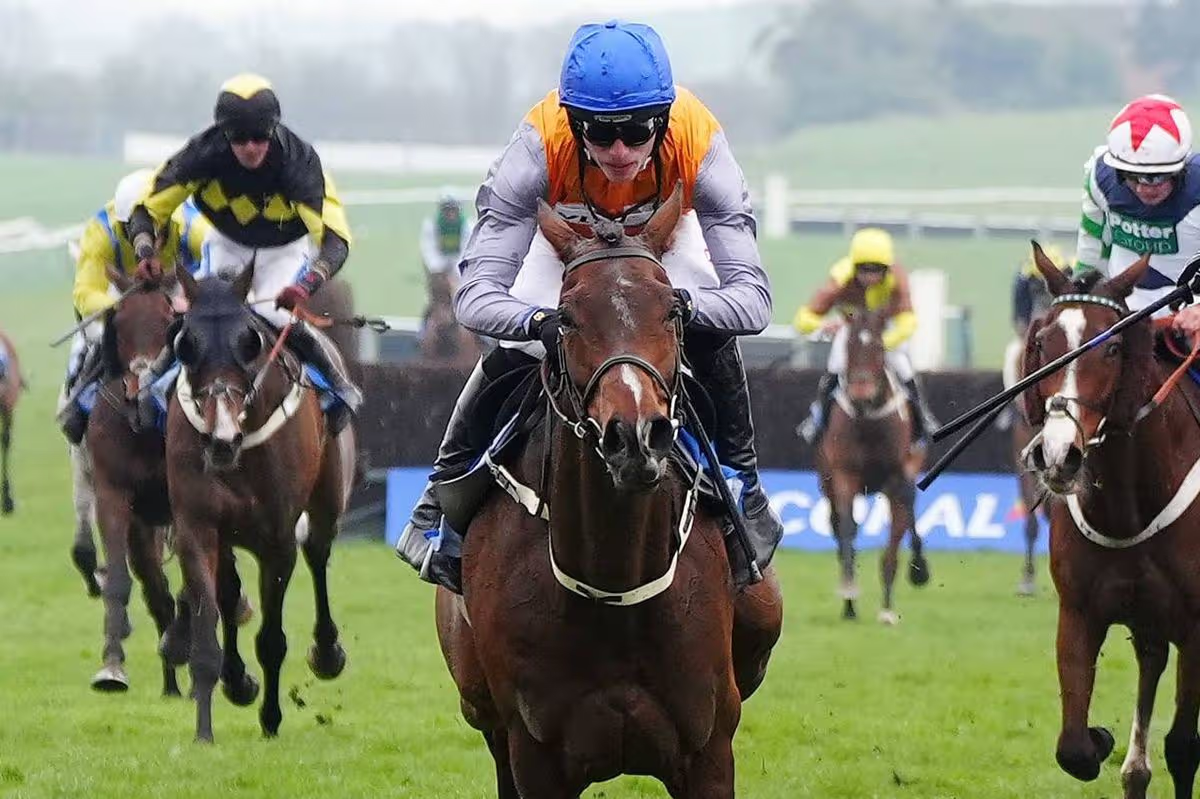
A racing expert has revealed his three picks for the 2026 Grand National.
With the festival at Aintree taking place over three days, all attention will be firmly fixed on horse racing’s most iconic event – the Grand National – which begins at 4pm on Saturday, April 11.
Advertisement
This year’s race looks particularly wide open, with the likes of 2024 winner I am Maximus and last year’s champion, Nick Rockett, both expected to feature. Picking the winner from 34 runners over the 30 famous fences is no easy task for any punter.
But Ladbrokes ambassador Josh Stacey has named three runners he believes could be set for a standout performance. Among them is the bold 25-1 selection Stellar Story for those looking for a bigger price.
Sharing his exclusive tips, Stacey said: “The modern National often favours classier, higher-weighted runners but if this turns into a proper stamina test, Stellar Story fits the bill perfectly. A thorough stayer, he’s a Grade 1-winning hurdler who keeps finding off the bridle. If it becomes attritional, he could outrun his odds.”
For those seeking a horse specifically trained for this very moment, Stacey points towards Willie Mullins’ camp. While Captain Cody hasn’t been at his best recently, Stacey is backing the 20-1 gelding to come good on the day.
Advertisement
The racing broadcaster said: “Not at his peak since landing last season’s Scottish National but this has clearly been the long-term target. Stamina is assured, he handles spring ground well, and if arriving in top form, he’s a major contender.”
Stacey also named 16-1 shot Panic Attack among his top selections. The mare arrives at Merseyside on the back of an impressive third-place finish at the Cheltenham Festival, with Stacey convinced that the longer distance will suit her perfectly.
He said: “A standout for Dan Skelton this season, landing both the Paddy Power and Coral Gold Cup. She arrives in great form after a strong Festival third against sharper rivals. Nicely weighted and travelling powerfully, she’ll have backers dreaming turning for home.”
Advertisement
Stacey’s backing of the Dan Skelton yard with Panic Attack comes as little surprise. Skelton has established himself as the master of target training for such handicap chases.
The fact Panic Attack has already claimed both a Paddy Power and a Coral Gold Cup this season suggests she is the most improved stayer currently in training. If she handles the unique Aintree fences, she could become the horse to finally bring end the 75-year wait for a female runner to win the famous race.
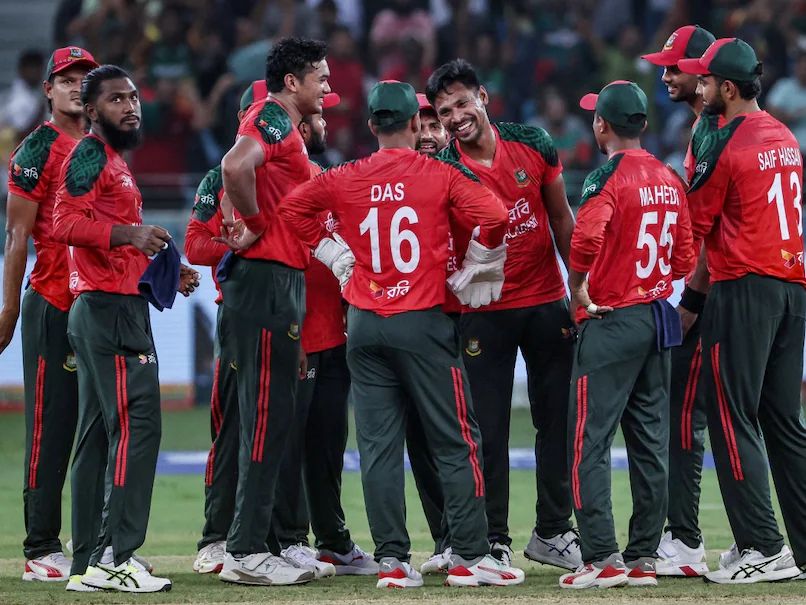
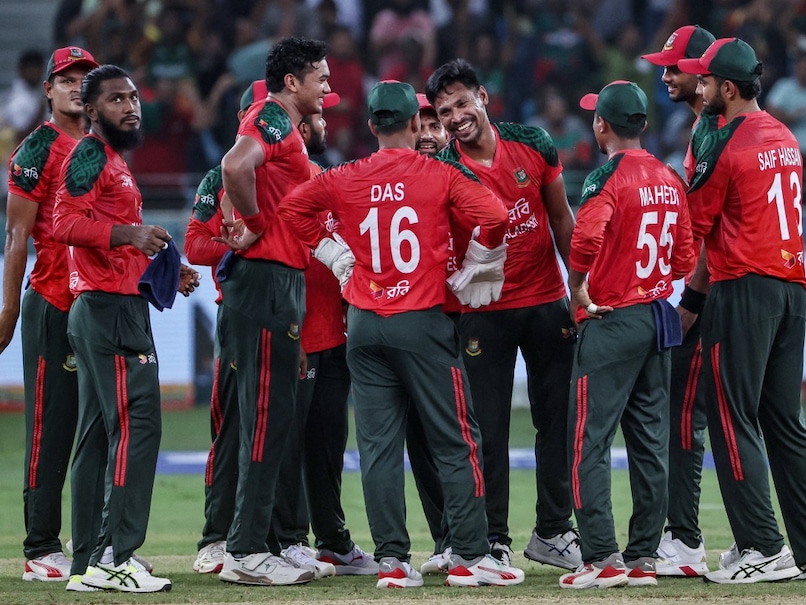
The Bangladesh Cricket Board (BCB) recently expressed their interest in existing and new areas of cooperation in cricket with the Board of Control for Cricket in India (BCCI) through a letter. “We maintain regular communication with various countries’ cricket boards. As part of that regular communication, we recently reached out to the Board of Control for Cricket in India via a letter, through an email, to communicate with them”, Nazmul Abedin Fahim, Director (Cricket Operations) of BCB, told ANI, over the phone.
“In the letter, we mentioned that the Indian national cricket team is scheduled to come to Bangladesh in September to play a series, and after that, our women’s team is supposed to go to India. We also included in the letter a request to explore any other possibilities for reciprocal cricket collaborations,” he added.
Earlier, the Kolkata Knight Riders, ahead of the Indian Premier League 2026 (IPL), had hired a Bangladeshi player, Mustafizur Rahman, to play in the tournament. However, due to political objections from local parties, the BCCI didn’t permit Mustafizur to play. And this created a bit of a rift between Bangladesh and India.
Advertisement
After the controversy, Bangladesh boycotted the T20 World Cup in India.
After the election on February 12, under the leadership of Prime Minister Tarique Rahman, the current government took power, and relations between Bangladesh and India have been improving.
On April 7 and 8, Bangladesh’s Foreign Minister, Dr. Khalilur Rahman, is visiting India. In the context of improving relations between the two countries, cooperation in cricket is also increasing.
(Except for the headline, this story has not been edited by NDTV staff and is published from a syndicated feed.)
Advertisement
Featured Video Of The Day
IPL 2026 | Rohit Sharma, Ryan Rickelton Hammer KKR, Carry MI To 1st IPL Opening Game Win In 14 Years


;)
;)
;)
;)







;)





































You must be logged in to post a comment Login