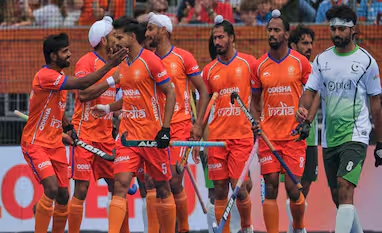
Indian hockey team during the 2026 World Cup (PIC: PTI)
2 min read Last Updated : Sep 09 2026 | 10:50 AM IST
The Indian hockey teams will revert to their traditional blue jerseys for the upcoming Asian Games following widespread backlash over a controversial shift to a saffron coloured kit.
Hockey India (HI) faced intense criticism earlier after switching its long-standing colour to saffron, which the teams sported during the FIH World Cups in the Netherlands and Belgium.
The decision triggered internal discord when HI president Dilip Tirkey publicly questioned the move, stating it was implemented without the knowledge or approval of the federation’s elected leadership and Executive Board.
Advertisement
“IOA asked us about our preference of colour for kit, we gave blue as primary and saffron as the second one. As I had already said before the World Cup that the colour change is not permanent,” Hockey India president Dilip Tirkey said on the sidelines of the Asian Games contingent send-off here on Tuesday.
Another top Hockey India official added, “The kits for Asian Games, Olympics and CWG are designed by IOA and they ask preference from every federation. So we gave our choice, it has nothing to do with the controversy surrounding jersey colour ahead of World Cup.” The Asian Games will be an important assignment for the Indian teams, with the tournament also offering a crucial opportunity to secure qualification to the 2028 Los Angeles Olympics and strengthen their position on the continental stage.
(Only the headline and picture of this report may have been reworked by the Business Standard staff; the rest of the content is auto-generated from a syndicated feed.)
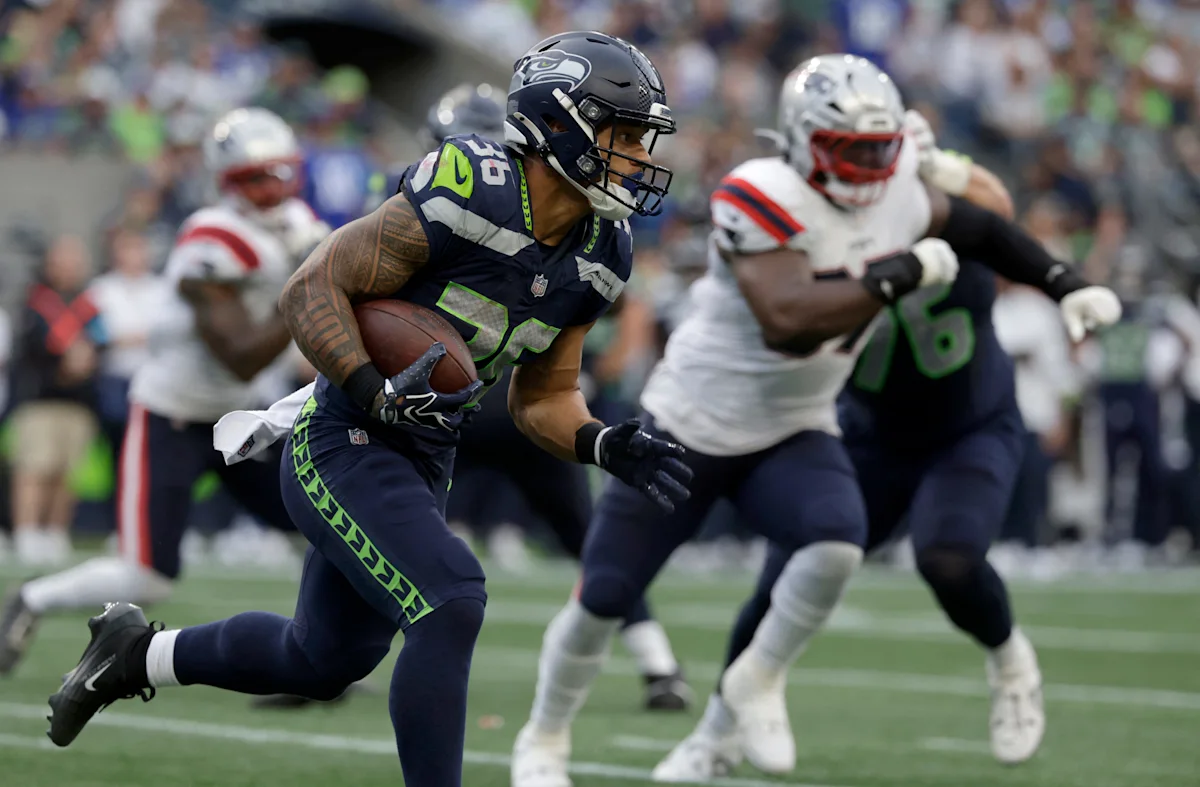
Seattle Seahawks RB Geoge Holani had eight carries for 29 yards in a Week 1 win over the New England Patriots. Holani was targeted once as a receiver but did not have a catch.
Why It Matters: Holani more or less split the backfield duties with Jadarian Price in Week 1, totaling eight carries to 10 for the rookie — free-agent signee Emanuel Wilson had two. Holani wasn’t nearly as effective, though, and it’ll be interesting to see how touches are divvied up in Week 2 and beyond given how explosive Price looked in limited burn. There’s also the eventual return of Zach Charbonnet (knee), who should supplant Holani as the No. 2 back at some point. For the moment, Holani holds marginal value as roster depth, but that could be short lived.
With 21 victories in 2026, Vokey again led the winning-wedge count — while also making up 52 percent of all gap, sand and lob wedges on the PGA Tour this past season.
Other brands had excellent years, too. TaylorMade recorded seven wins with its new MG5 platform, including three from a non-contracted player. Cleveland also had multiple non-contracted wins, in addition to recording a major (Ryan Fox, Open Championship) with its RTZ wedges.
Keep reading below for the list of the winningest wedge models of the 2026 FedEx Cup season.
Advertisement
The winningest wedges during the 2026 FedEx Cup season
No. 1 Titleist Vokey SM11 (11 wins)
Clockwise from top left: Cameron Young’s K*-, Russell Henley’s T-, Wyndham Clark’s L- and Aaron Rai’s L-Grind lob wedges.
Jack Hirsh/GOLF
Titleist’s new Vokey SM11 wedges hit the ground running just after their introduction on the PGA Tour in January. The new wedges got their first victory in the bag of Cameron Young, and it was a bit of a landslide after that.
Next came Ricky Castillo, Alex Fitzpatrick and Wyndham Clark, followed by Aaron Rai’s major validation. Russell Henley, Bud Cauley, Jackson Koivun and Michael Brennan all picked up victories over the summer.
Clark’s third win of the season, at the BMW, was the 11th for the new wedge platform, which saw victories with a variety of grinds from Clark and Rai’s L to Young’s K* and Henley’s Tour Kingpin T-Grind.
A Grind For Every Player For every player, there’s a set of grinds fit for clean contact. SM11 provides a leading combination of lofts, bounces, and grinds to promote solid contact (between grooves 2-5), predictable performance, and the confidence to take on whatever the shot demands. Grind Comparison Consistent CG Location For a given loft, SM11 features the same CG location in all grinds, resulting in a controlled, consistent launch angle. No matter which sole design fits your swing or course conditions, your launch window is locked in—leaving you free to choose the lofts and grinds that work for you. A Smarter Way To Spin The new Vokey Spin System combines an angled face texture, shot-specific groove shapes, and deeper spin milled grooves to deliver the right amount of spin from any lie, in all conditions
Clockwise from top left: Rory McIlroy’s LB, Chris Gotterup’s LB, Jacob Bridgeman’s LB and Michael Thorbjornsen’s SC lob wedges.
Jack Hirsh/GOLF
TaylorMade’s new MG5 had a banner coming-out party in 2026. Not only did the forged MG5 win the bags of TaylorMade staffers Rory McIlroy, Collin Morikawa, Jacob Bridgeman and Michael Thorbjornsen, but it also recorded three wins thanks to free agent Chris Gotterup.
The most popular lob wedge grind was the LB while Morikawa used the TW-grind and Thorbjornsen played the SC.
FORGED FEEL Incredible feel is a must for having a great wedge game. MG5 has been forged from soft carbon steel and designed with geometry to provide excellent feel with great feedback. MAXIMUM SPIN MG5 uses all-new, more aggressive grooves designed to maximize spin. Saw-milled grooves produce tighter tolerances allowing engineers to design steeper walls and sharper radii intended to maximize spin in both dry and damp conditions. PERFORMANCE IN ALL CONDITIONS RAW face with Spin Tread technology channels away moisture to help retain spin. The same way that tire treads help your car stay connected to the road, laser-etched channels redirect water at impact and creates more friction between the club face and golf ball to maintain spin in wet conditions. CRAFTSMANSHIP MEETS CONSISTENCY Crafted by hand and then milled to perfection. Each wedge and sole grind are precision-milled to eliminate the natural human error that comes with hand polishing. Our grinds deliver unmatched consistency and craftsmanship that players can count on every time. CHARCOAL FINISH MG5 debuts a sleek, sophisticated charcoal finish that reduces glare and enhances its aesthetic appeal in the bag.
Matt Fitzpatrick’s SM10 60M lob wedge (L) and Justin Rose’s 56M sand wedge.
Jack Hirsh/GOLF
Advertisement
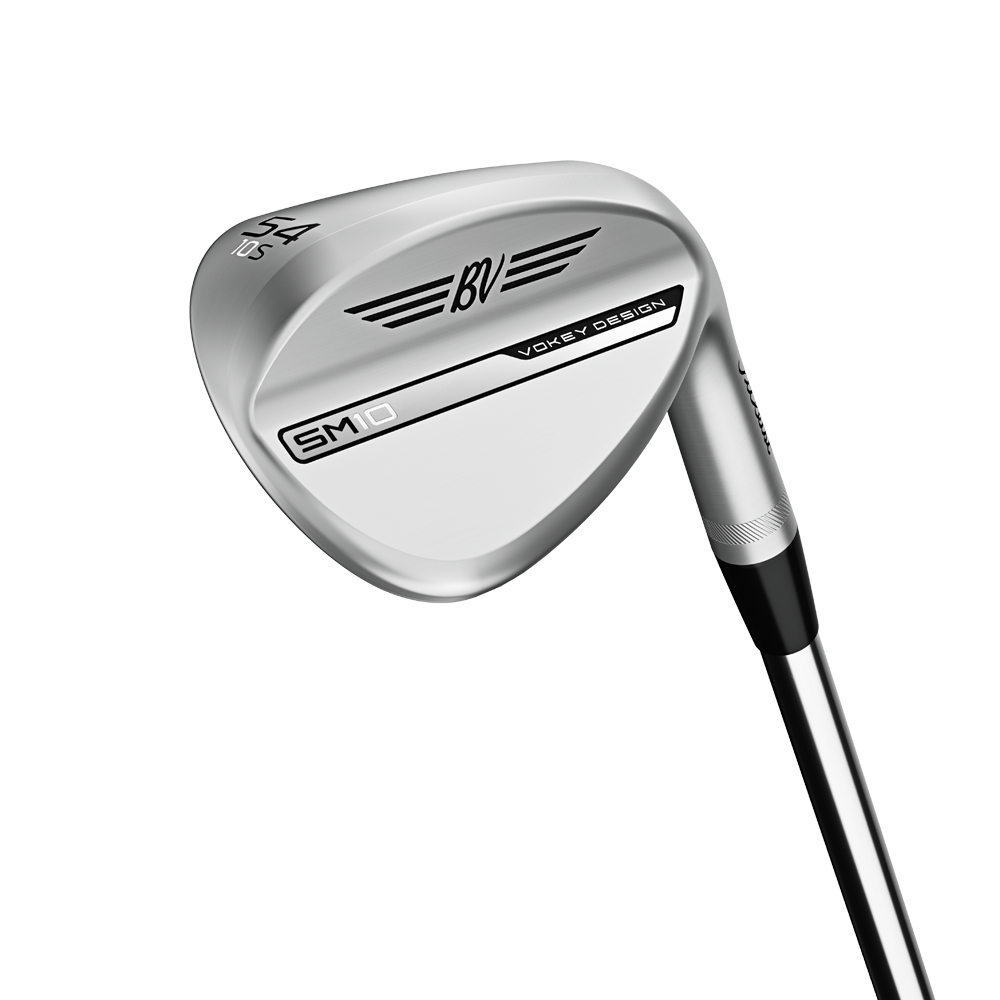
While no longer Vokey’s flagship wedge, the SM10 still recorded 7 wins in 2026 on the strength of Matt Fitzpatrick’s three victories and an early season win by Justin Rose, J.T. Poston and Tom Kim.
Fitzpatrick’s three wins contributed to the M-Grind tying the season lead for lob wedge grinds with the T.
Adding Vokey Design® SM10 Wedges to your bag opens a world of scoring opportunities. Between the crisp contact, optimal flighting, incredible spin – and those magical Bob Vokey grinds – they give you everything you need to grow your short game skill. From the simple to the sensational, SM10 are made to make great shots happen. Improved Flighting & Feel Get lower, more attacking flight in a wedge that feels amazingly solid at impact with SM10. A precise shift in the center of gravity gives you even more control and stability for greater confidence over every shot. Ultimate Shot Versatility Your swing is unique and requires the right tools. Finding your ideal mix of grinds will provide you with flawless contact and maximum versatility so you can be prepared for everything the course demands.
Cleveland’s RTZ platform recorded four full set wins in the bags of Nico Echavarria, Brandt Snedeker and Ryan Fox during his Open Championship run.
Advertisement
That doesn’t really tell the full story behind RTZ’s sucess as J.J. Spaun also carried it in his sand wedge, and Gary Woodland won with a prototype RTZ Offset lob wedge. Both Woodland and Snedeker played the wedges without a contract.
Scottie Scheffler continues to play Vokey’s SM8 from 2021 in both his sand and gap wedge. His lob wedge for his first victory of the season at the American Express was an SM10 K-Grind, but he switched at his next start back to an SM9 T-Grind with which he recorded his later two victories.
6. Callaway Opus SP (2 wins)
Akshay Bhatia’s Opus SP lob wedge.
Jack Hirsh/GOLF
Advertisement
Callaway’s Opus SP line recorded two victories with Akshay Bhatia and Stefano Mazzoli. Both players used the 08C-grind for their lob wedges.
SPIN POCKET™ CONSTRUCTION A re-engineered 2-piece construction head design strategically reshapes mass to optimize CG locations. The Spin Pocket redistributes weight higher, raising the CG, and promoting a lower, more penetrating launch. The result is more spin and enhanced control, especially when you need to flight shots or attack tight pins. NEW SPIN GEN 2.0 FACE™ The most advanced face in OPUS history. A new 17° groove angle with tighter pitch spacing delivers more groove edge contact for more consistent spin across a variety of lies. Combined with a deeper cross-hatch laser pattern across the face, Spin Gen 2.0 produces enhanced friction for more bite and stopping power on all types of approach shots. SHAPE 6 – TOUR-VALIDATED PROFILE Trusted by Tour players for its clean, confident look at address, Shape 6 offers precise leading edge shaping and refined sole geometry. Shape 6 is the 6th and final iteration in the Opus prototype shaping phase, validated by Tour players and major champions. OPUS SP introduces progressive shaping in gap wedges to seamlessly blend with modern iron sets—creating a more cohesive setup from top to bottom. X GRIND – VERSATILITY WITH BOUNCE Back by popular demand, the X Grind returns in OPUS SP. Designed for shotmakers who want added bounce for forgiveness, without giving up versatility, the X Grind is ideal for players who like to open the face around the greens or play in firmer turf conditions. It’s the perfect blend of playability and performance in a wide range of shots and conditions.
Well, the headlines have featured some twists and turns on this situation.
The Vikings pivoted off of the decision to sign Kenny Dyson to the practice squad. Minnesota is doing so not out of dissatisfaction with the young lad but, rather, due to the NFL nullifying the deal.
Alec Lewis of The Athletic with some details: “Edge rusher Kenny Dyson’s contract with the Vikings was disapproved, according to the NFL’s transaction wire. The team had attempted to sign him to the practice squad after waiving him with an injury settlement. He’s now a free agent.”
To account for the suddenly thin edge rusher spot, Nolan Teasley has snagged veteran Jihad Ward, as the team’s official social media shared: “The #Vikings have signed OLB Jihad Ward to the practice squad.” Keep in mind that Kyle Van Noy is still on the practice squad as another veteran option for Sunday.
Advertisement
Vikings Pivot Off Young in Favor of Old
In Mr. Ward, the Vikings are solidifying the team’s floor rather than raising the ceiling.
Indeed, the defender has been in the NFL for a long time. He originally turned pro after getting drafted by the Oakland Raiders in the 2nd Round of the 2016 NFL Draft. At that time, Case Keenum hadn’t yet tossed the pass that would be known as “The Minneapolis Miracle,” so we’re talking about a little while ago.
Since then, Ward has put in work for a pile of different teams. He was a Raider initially before then becoming a Cowboy, a Colt, a Raven, a Jaguar, a Giant, a Viking, and a Titan. Ward is now a Viking yet again.
Sep 8, 2024; East Rutherford, New Jersey, USA; Minnesota Vikings linebacker Jihad Ward (52) celebrates after the game against the New York Giants at MetLife Stadium. Mandatory Credit: Vincent Carchietta-Imagn Images
In 2024, Jihad Ward offered some sturdy but unspectacular football for the Minnesota Vikings.
Ward’s season in Minnesota involved playing in seventeen games, starting a pair as he climbed up to 467 snaps for Brian Flores. The final stat tally shows 10 tackles, 1 sack, 14 quarterback hits, and 1 tackle for loss. Among those numbers, the QB hits — almost 1 per game — is what really jumps off the page.
Advertisement
In Tennessee last season, Ward offered the Titans 5 sacks alongside 22 quarterback hits, so there’s still some ability inside of him.
Some may see the Ward addition as somewhat anticlimactic. Opting for a young lad like Dyson means welcoming considerably more upside due to the potential that’s seemingly inherent in youth. That’s a perspective with a pile of merit.
What Minnesota has done, though, is solidify the position with someone who can get leaned on for work as early as this Sunday. That’s not a foregone conclusion, but that’s not the point. Instead, the point is to have the option if there’s a need.
Aug 8, 2024; Foxborough, Massachusetts, USA; Carolina Panthers defensive end Derrick McLendon (40) and defensive end Kenny Dyson Jr. (55) high-five before a game against the New England Patriots at Gillette Stadium. Mandatory Credit: Brian Fluharty-USA TODAY Sports – Credit: USA TODAY Sports via Reuters Connect
Part of the appeal is that the newcomer can get moved up and down the line. Back in 2024, Brian Flores leaned on Ward for edge rusher snaps alongside snaps further inward. On passing downs, in particular, there’s merit in tasking Ward with playing at 3T or 5T.
Jihad Ward, 32, stands at 6’5″ and 285 pounds. Better yet, he arrives with built-in knowledge of the Flores defense, allowing him to get deployed early on if there’s a need.
Advertisement
The Vikings host the Packers on Sunday for a 3:25 p.m. CT game inside of U.S. Bank Stadium.
A report indicates the SEC is meeting on Thursday to determine whether to kick LSU out of the league.
Would Greg Sankey’s conference actually boot out the Tigers?
On today’s episode of Locked On College Football, Spencer McLaughlin and ‘Locked On BYU’ host Jake Hatch preview the game of the week in the Big 12.
Arizona’s trip to Provo has legitimate Playoff implications.
Alabama travels to Kentucky this week as a 10.5-point favorite against the Wildcats.
Is the upset potential as real as that line would indicate?
Advertisement
00:00 LSU roster changes and SEC decision 06:22 College football rule controversy 07:23 Western Michigan in Top 25 13:33 BYU’s defensive strategy against Fifita 15:24 Bachmeier’s pocket play evolution 22:30 Discussing Alabama’s road game odds 26:28 Doubts About Coach and Kentucky Game 30:15 Kentucky’s chance against Alabama 31:16 Predicting Alabama vs. Kentucky game
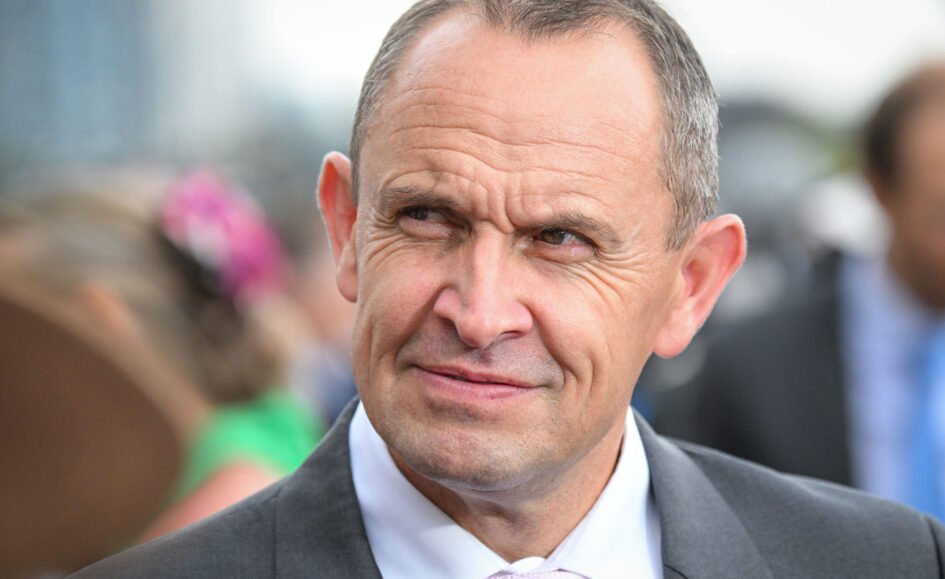
Trainer Chris Waller is anticipating that Steel Will will emulate his sibling’s success when the three-year-old colt makes his Melbourne debut at Flemington.
Victorious in his past two assignments, Steel Will is set to compete in the Group 3 Poseidon Stakes over 1100 metres on Saturday.
Steel Will’s older half-sister, September Run, also travelled to Melbourne as a three-year-old and demonstrated exceptional speed down the Flemington straight.
September Run claimed the Listed Cap D’Antibes Stakes (1100m) at Flemington, a race contested on Saturday, prior to winning the Poseidon Stakes and subsequently the Group 1 Coolmore Stud Stakes (1200m) during the Melbourne Cup Carnival.
Advertisement
A change in the racing schedule sees the Poseidon Stakes swapping dates with the Group 2 Danehill Stakes, also at Flemington, which will be held on October 3 this year.
September Run exhibited more precocity as a two-year-old, winning at Canterbury and Doomben, while Steel Will secured one placing from two starts in his juvenile career.
After finishing unplaced first-up to commence her three-year-old season, September Run arrived in Melbourne following that defeat to initiate her successful run.
Conversely, Steel Will has achieved wins at Wyong and Rosehill to commence his three-year-old campaign, and Waller is keen to determine his standing among the stable’s promising young sprinters.
Advertisement
“We’re not sure (where he lays) and that’s why we want to run him and see where he does fit in,” Waller commented.
“Sentimentally there is a little bit in our favour. He’s a half-brother to September Run and this is when she found he great form when she won in a similar type of race at the same time.
“He’s done everything right in Sydney and we just want to see how he performs down the straight and then he can maybe go on to a Danehill and hopefully the Coolmore.
“But they are big steps though.”
Advertisement
Steel Will is drawn barrier nine in the ten-runner field and will be ridden by Ben Melham.
With the Poseidon Stakes on the horizon, exploring the racing betting markets for value is a popular pursuit.
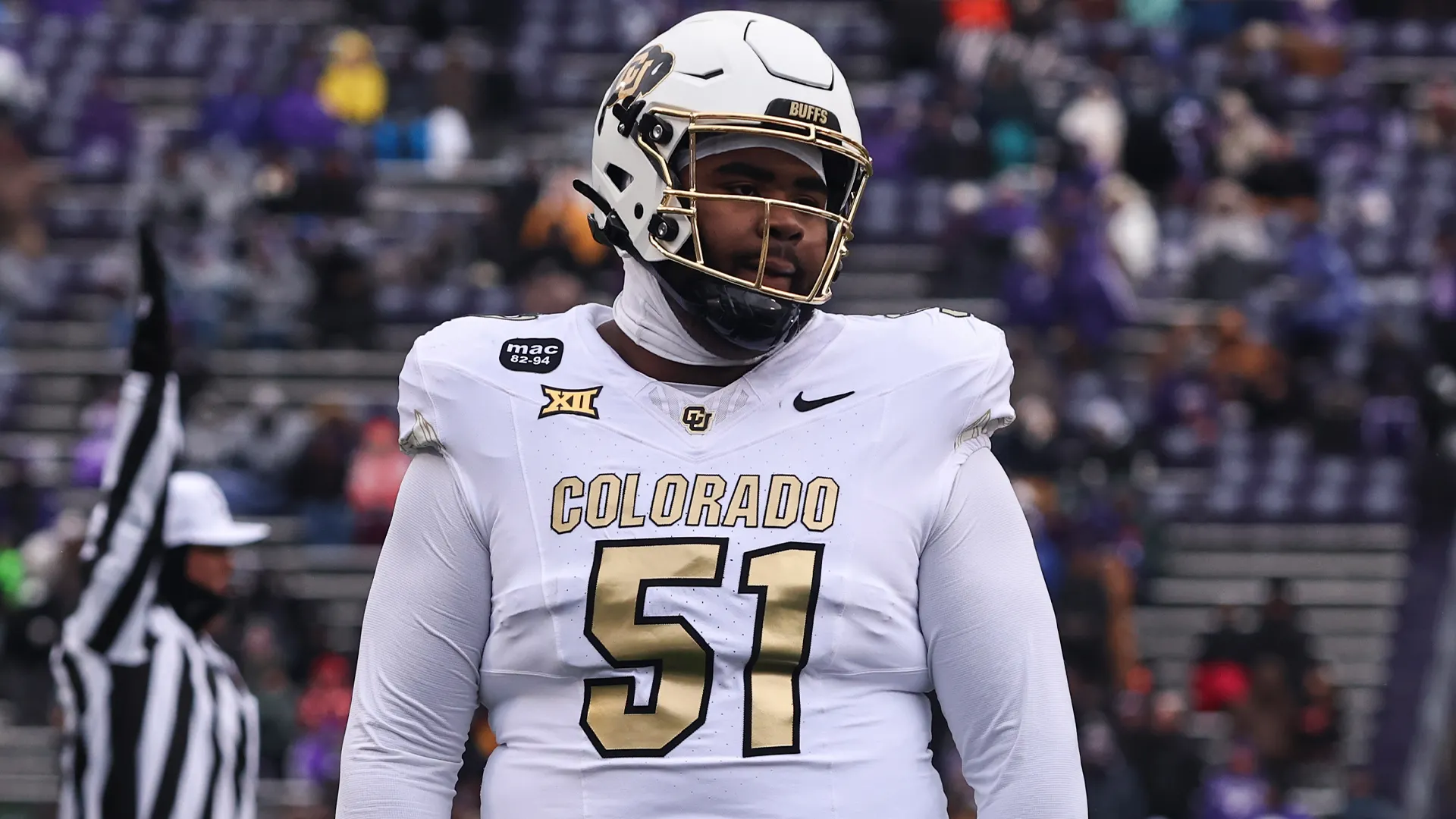
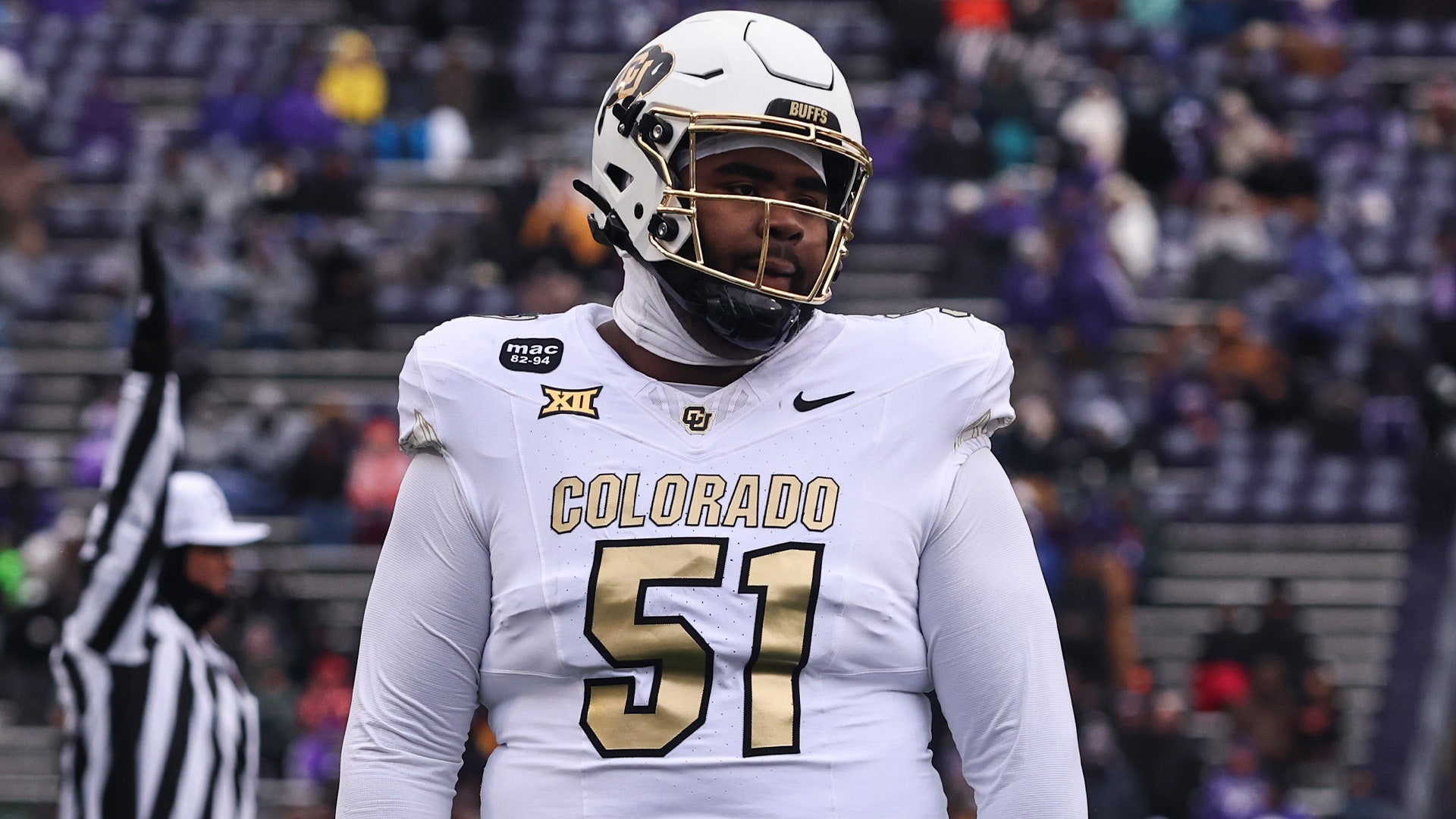
The newest two-way player for the Colorado Buffaloes is listed at 380 pounds and enjoys nothing more than throwing that weight around in the trenches.
Sophomore Chauncey Gooden has developed into the interior lineman version of former Colorado receiver and cornerback Travis Hunter. Gooden’s primary responsibilities are at left guard and keeping quarterback Julian Lewis well-protected. But in goal-line and short-yardage situations, the second-year player from Nashville, Tennessee, uses his 6-foot-3 frame to help clog up the middle.
In a season-opening 14-13 comeback win at Georgia Tech, Gooden played 65 offensive snaps and another seven on defense. He was the lone interior lineman in the Division I ranks last week to play both ways, according to research provided from the school.
Advertisement
Chauncey Gooden got the chance to show he could play on both lines, and earned player of the week honors for it. (Photo by Scott Winters/Icon Sportswire via Getty Images)
There was no real lobbying for the assignment, either. It was just showing coach Deion Sanders that he could excel at an elite level on the offensive line. Once he did that, more responsibility was heaped onto his plate.
“Coach Prime just gave me the opportunity, like, ‘Chauncey, what can you do on that D-line?’” said Gooden, who was named the Outland Trophy national player of the week on Wednesday for his work on the line of scrimmage. “I was like, ‘Coach, I can go over here and show you now.’ So I went over there. I was just causing havoc and being myself and things like that. Next thing you know, he just trusted me to throw me in there.”
The rules for playing both ways
Memo to any other Buffaloes who want to play both ways: No need to mention it to Sanders.
“You’d be a fool to just tell me ‘I want to play both ways’. I should know that coming in,” said Sanders, whose team hosts Weber State (1-1) on Saturday afternoon with a chance to improve to 2-0. “When I recruited you, I should have known that’s part of it. You can’t just approach me and say, ‘I want play both ways.’ Then I’m going to say, ‘I want to see you play one way really good. Let’s do that first.’ That’s mainly the criteria.”
Advertisement
Sanders pointed out that even Hunter had to prove himself. He was primarily a receiver during his first spring in Boulder before getting the chance to shine on defense.
“Once he dominated one side, it was easy to say, ‘OK, now let’s venture off to the other one,’” Sanders explained. “He earned his right to get on that other side and do his thing. Chauncey’s earned it.”
Other players to play both ways at Colorado under Sanders include cornerback and receiver Isaiah Hardge and lineman Tyler Brown.
Gooden considers it an honor to even draw the smallest comparison to Hunter, the 2024 Heisman Trophy winner now in his second season with the Jacksonville Jaguars. Hunter averaged roughly 120 snaps per game that season, which makes Gooden appreciate the feat even more.
Advertisement
“Best player to do that,” Gooden said. “The fact that I can do what he did even in the trenches, it’s just remarkable.”
The run game
Gooden played a part in helping a defensive front limit Georgia Tech to 51 yards rushing. On the offensive side, the Buffaloes ran it 49 times — the most in the Sanders era at Colorado — for 183 yards. The “Go-Go” offense, installed by new coordinator Brennan Marion, is certainly a hit with the offensive linemen.
“We can play free and physical,” Gooden said.
Gooden improved his stamina in preparation for playing both ways. He recalled an exchange with Sanders during camp, when the coach told his guard that if he went all-out at a certain portion of practice, extra conditioning would be canceled.
Advertisement
“So I go out there, and I pancake two people straight,” Gooden said of knocking his defensive teammates to the turf. “He was trying to get through my head.”
The ploy worked — even if it turned out to be a ruse.
College Football Related Stories
“We still ended up doing conditioning that day. We had a long conversation about that after practice,” cracked Gooden, who saw action in the final four games last season as the team finished 3-9. “I trust Coach Prime and what he’s got to do for me.”
Gooden arrived at Colorado after playing at Lipscomb Academy in Nashville, where he worked at times with NFL Hall of Fame offensive lineman Kevin Mawae and Super Bowl-winning quarterback Trent Dilfer.
It fostered discipline, which serves him well in Boulder.
Advertisement
“Coach Prime told me to just be me out there on that field. Be that dawg,” Gooden said. “He just brings me the confidence to be able to go out there and get the job done.”
LIV Golf has filed for Chapter 11 bankruptcy, which means much of its business operations — both in the past and in the future — have been forced into the public eye ahead of its various court hearings. In total, LIV’s representation filed hundreds of pages of documents Tuesday evening and Wednesday in advance of a Wednesday afternoon hearing in front of Judge Michael B. Kaplan in New Jersey.
We pored through those documents and picked out several findings that help tell the story of where LIV has been and where it hopes to go. Check them out below.
1. The ticking clock reads: 34 days
For LIV Golf to come back in a different form, it has secured an agreement with BC Partners’ credit division to fund its court-monitored bankruptcy interim as well as exit financing to support the league moving forward … so long as players commit by early October.
The trove of documents included a term sheet between LIV and BC Partners, which states that the transaction requires specific players and number of players to join the agreement within 35 days of the filing (which took place Tuesday, Sept. 8). Thirty-five days from Sept. 8 is Oct. 13.
Advertisement
According to the term sheet, 50% of players with “claims” are needed for the agreement to go through, and the collective value of the claims associated with committing players must equal or exceed two-thirds of the total player claims. In other words, LIV needs sign-on from some of its biggest fish.
LIV 2.0 will need specific player commitments, and soon.
2. The investment is significant (but pending)
If LIV 2.0 comes to fruition, it will happen via $300 million in total financing, much of which will come from BC Partners, and possibly from minority investors. As evidenced above, the term sheet is considered a “Restructuring Support Agreement” with various clauses that must be met, and met by a certain deadline.
While plenty needed to be straightened out in the last month since BC Partners was first reported as LIV’s “lead investor,” it all followed a flurry of pitches that Ducera Partners — an investment bank working on behalf of the PIF — was making to potential financiers.
Advertisement
Roughly 100 of those potential investors signed NDAs, and about 30 “engaged in detailed diligence,” documents say. Of those 30, two submitted bids by LIV’s July 22 deadline, after which BC Partners was declared the leading bid. All in, that’s about 80 days from May 3, when the search officially began, to the bid deadline. It’s a tight window, all while LIV itself visited four different countries for events.
And what did LIV bonus BC Partners, at least hypothetically? The right to own a LIV expansion team in the future, at virtually no initial cost.
A long-term future for LIV Golf would likely offer an expansion team to its main investor, BC Partnes.
3. April 13 really was D-Day
Bring yourself back to the 2026 Masters, where Rory McIlroy defended his title on Sunday, April 11. Just a few days later, on Wednesday evening, April 14, Ryan French of Monday Q Info posted about a forthcoming “bombshell announcement,” and alluded to a winding down of events.
Advertisement
As stated in various documents, the Saudi PIF already was down the path of restructuring LIV’s future, so much that investment bankers Gene Davis and Jon Zinman were added to the boards of various LIV entities as early as Tuesday, April 13.
To bring in advisors like Davis and Zinman, who specialize in restructuring, bankruptcy filings, etc., and officially add them as Independent Directors to LIV’s board, it’s increasingly likely that the PIF was considering these moves before the Masters even took place.
In the end, it led to an early-September reduction of staff, wherein LIV laid off 289 employees across its U.S. and U.K. companies, or roughly 90% of its total staff count.
4. Shockingly small TV revenue
Any number of explanations could explain why LIV Golf, in its five years of existence, couldn’t find sustainable business operations. But if there is one basic and glaring one: LIV struggled to create enough eyeballs to secure a significant TV deal.
Advertisement
According to filings, LIV’s annual revenue from broadcast rights came out to just 5% of its total revenue, a stunningly small amount. Little had been reported about LIV’s TV deals, which was with Fox in the United States and with other, localized broadcasters in international markets, but it pales in comparison to the money the PGA Tour pulls in for its broadcast rights. As GOLF reported earlier this year, the Tour’s broadcasting deals were aggregating to upward of 67% of core business revenues. That Tour number is much closer to the standard in modern, top-end pro sports.
As you can see in the chart below, sponsorship dollars had become roughly half of LIV’s revenue, and as of 2025, amounted to $102 million. That suggests LIV’s annual total revenue was in the range of $208 million, which means its broadcast rights revenue was about $10-$11 million.
The main reason LIV Golf was never financially sustainable: just 5% of revenue coming from TV money.
In recent years, the PGA Tour has seen as much as 67% of its core revenue come from TV money.
Plenty has happened in the background for both LIV Golf and the Saudi PIF since the latter announced it would cease funding LIV beyond the 2026 season. As a means to do so, the PIF decided to become a lender in early June, offering LIV a $495 million secured loan to proceed with the rest of its season “largely as planned.”
Ultimately, that was a target of which the league still fell short, considering its New Orleans event was canceled and its year-end Team Championship folded into the season-ending individual championship in Indiana.
While this lender relationship was established in U.K. documents in June, it suggests that LIV finishing its 2026 season meant it was taking on a significant amount of debt in the process, in the form of $495 million, plus interest.
Advertisement
6. LIV is down to $15 million in cash
When the Saudis decided to stop funding LIV, the end of the road started to take shape. Without a theoretical blank check and annual installments of hundreds of millions of dollars from the Middle East, LIV was forced to operate differently immediately. That’s how (very quietly) a golf league widely known as a music festival-adjacent sporting event only hosted one concert from May through August. That took place in Korea, and was the surest sign that, despite not acknowledging this trend, LIV’s late cancellation of its concerts in Indiana was a virtual certainty weeks if not months prior.
According to the filing, as of this week, LIV had just $15 million in spending cash remaining, further proof of how it was unable to pay vendors for services rendered throughout 2026. Despite that shortfall, the filing included this fascinating line from David Orlofsky, chief restructuring officer:
“LIV Golf firmly believes that, with appropriate funding and a level playing field with its competitors, its existing operating model would have reached profitability within five to seven years, primarily through continued revenue growth across both the League and teams, which had increased significantly in 2025 and 2026.”
This aligns, at least loosely, with Scott O’Neil’s now infamous quote toThe Financial Times in February, that LIV would not break even for five to 10 years.
Advertisement
7. Curious, single-player clauses
Among the many clauses and statements in the filing were multiple items that show individual players had struck personal deals with the league. First among them was a tiny slice of league equity (0.23%) granted to a current player, along with the same amount for Greg Norman. The player’s identity is unclear, but one can surmise it would be among the league’s biggest signings.
It is unclear which current player owns 0.23% in LIV Golf, but it’s clear they are the only one.
A different clause buried in the filing suggests that one player reached an “indemnification agreement” with LIV that would see the league provide up to $3 million in aggregate legal support pertaining to a specific claim from that player’s pre-existing sponsor agreement. In simpler terms, a LIV player reached a deal to have the league back him if an disgruntled sponsor took legal action against him.
Finally, Financial Times reporter Sujeet Indap found a clause that clarified how one player’s CIGNA health insurance plan was covered in full by the league.
Advertisement
8. Player NIL, ownership a significant factor moving forward
How does LIV 2.0 hope to make players whole for unpaid debts it owes them? That much is made clear by the BC Partners agreement, which clarifies that players will own a 52.5% majority of the league — a fact LIV’s new representatives were keen to state in court Wednesday.
It states that “in exchange for agreeing to play in LIV 2.0” players will receive amended contract with signing bonuses, aggregate ownership of roughly 30% in the teams they play for and, most important for some, a “return of certain NIL Rights.” What rights, exactly, have not yet been made clear, but for a widely marketable player like Bryson DeChambeau, this element could prove particularly enticing.
9. Request to reject player contracts
As part of its filing, LIV requested the bankruptcy court to allow it to reject various contracts and leases into which the league had entered. That includes things like the leases it had struck for offices in West Palm Beach, Fla., and Scottsdale, Ariz.; arrangements for team-specific trainers; but also player contracts.
Some of those “contracts” were “player participation agreements” — aka contracts that formally lock players into specific LIV events/seasons — as well as dated “Letter Agreements” that suggest the initial timelines on which various LIV commits took the league seriously.
Advertisement
For example, Henrik Stenson, Lee Westwood and Ian Poulter are all listed to have established “Letter Agreements” on May 10, 2022. While Poulter and Westwood played in LIV’s first event a month later, Stenson took an extra month and a half to commit to LIV, ultimately losing the European Ryder Cup captaincy in the process.
To show just how direct these Letter Agreements could represent player interest at a certain date, Joaquin Niemann’s Letter Agreement is listed as August 28, 2022, the same day James Corrigan reported in The Telegraph that Niemann had signed with the league. That same week, Niemann attended the Tiger Woods-led meeting of top Tour players that birthed the Tour’s Signature Events model.
Curiously, PGA Tour star Cameron Young’s name also is listed with a Letter Agreement dated July 24, 2022, one week following his solo second place finish at the 2022 Open. It serves as a reminder that during the summer of 2022, a lot of players were approached by LIV, and Young took it very seriously before ultimately committing to the PGA Tour, which he admitted a month later at the 2022 Tour Championship.
Cameron Young’s original interest in LIV Golf in the summer of 2022 was among the contracts LIV has requested a bankruptcy court reject.
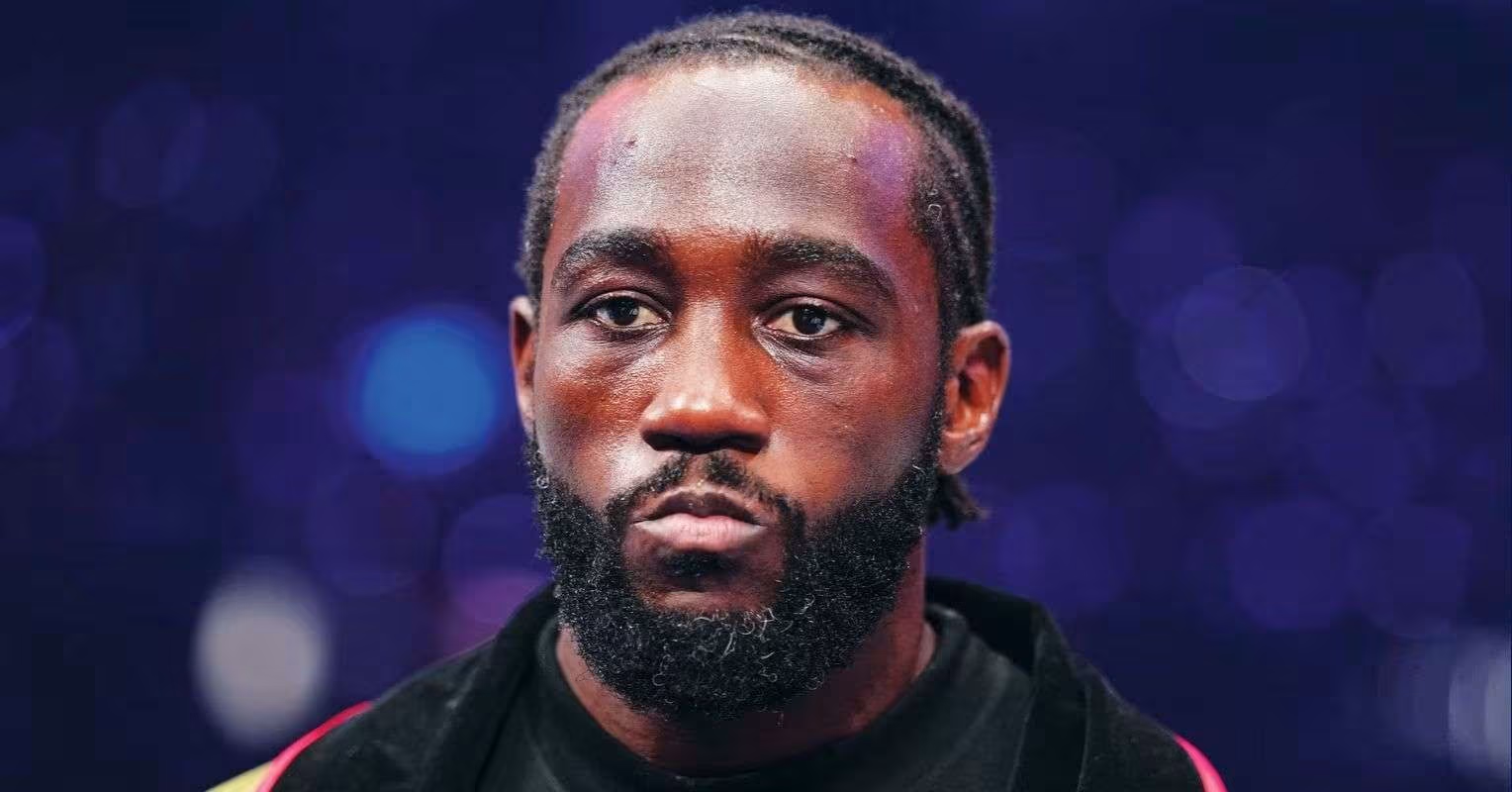
Crawford has been called out by several names since stepping away, with fans continuing to debate which opponent could provide enough incentive for him to put the gloves back on.
Advertisement
His latest social media post added fresh fuel to that speculation, as he asked Jaron Ennis directly if he would be interested in the fight.
“I wanna see something! Yall wanna see me come back and fight so bad don’t yall? @JaronEnnis would you fight me next if I come outta retirement?”
‘Boots’ wasted little time in accepting the challenge, which has gathered 22,000 likes at the time of writing.
“1000%!”
Crawford then quickly followed up with a second post which suggested he may have been testing the waters rather than confirming any serious comeback plans.
“😂😂😂 what I said I just wanted to see something! We all know what’s happening here.”
Crawford told Ennis he would “step” on him if they ever fought and argued that the 29-year-old still needs victories over names such as Vergil Ortiz Jr or Sebastian Fundora before receiving full credit.
Their rivalry has been bubbling for years, dating back to Crawford’s time at welterweight when Ennis was emerging as one of the division’s leading contenders.
For now, Crawford’s second post suggests a comeback is far from confirmed. But by publicly asking Ennis whether he wants the fight, he has ensured that one of boxing’s most intrugi hypothetical match-ups will remain firmly in the conversation.
‘Boots’ is expected to return later this year, looking to add to his two super-welterweight world titles bg facing IBF champion Josh Kelly.
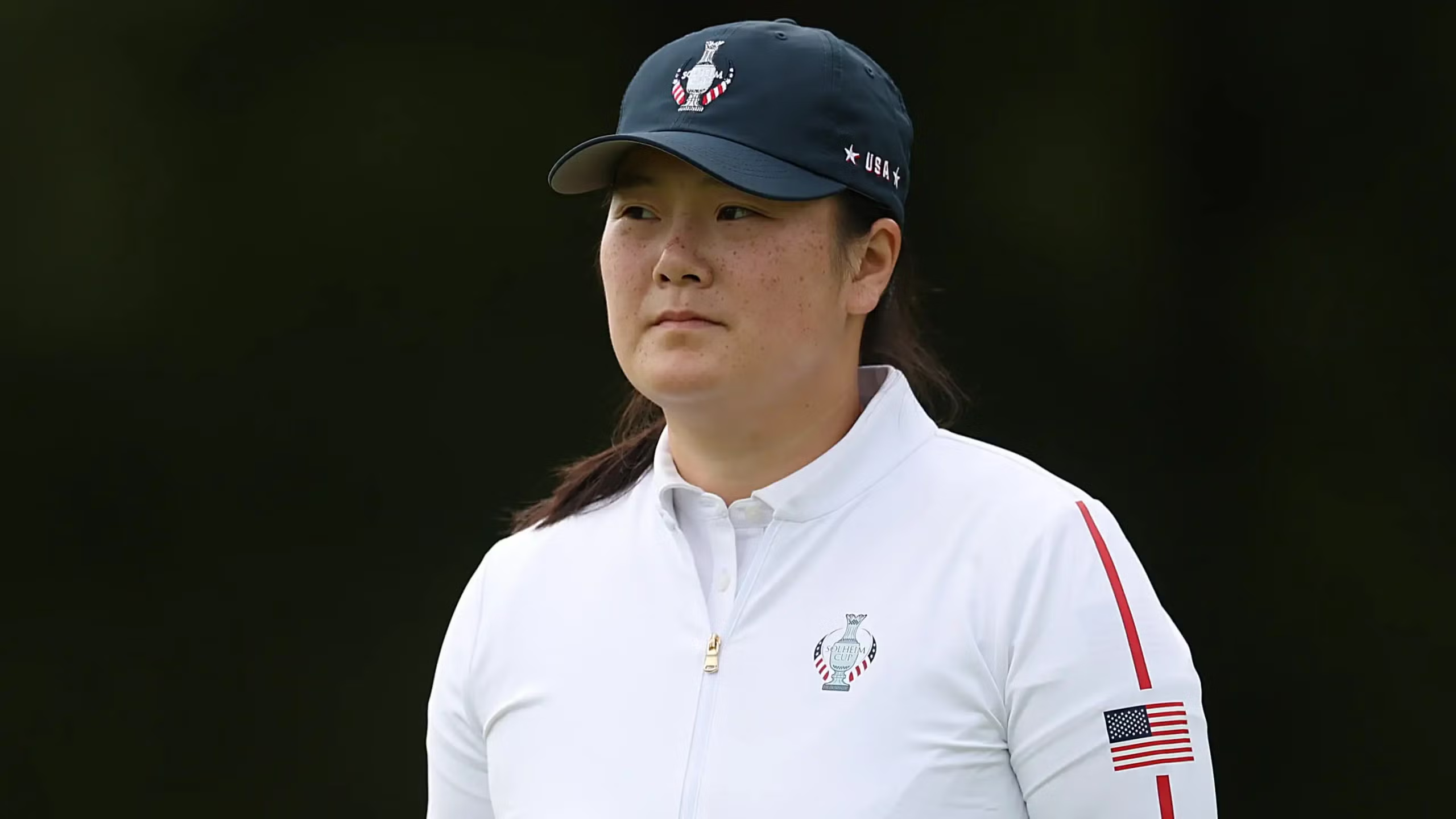
The first signs that Angel Yin was not well came at the KPMG Women’s PGA Championship in Minnesota in late June. Yin, who was then ranked 16th in the world, opened with a solid one-under 71 — then checked herself into a hospital, complaining of stomach pain. The next day, Yin was on the back on the course, at shin-kicking Hazeltine National, where she dug deep and posted another 71 to make the cut by two. But by Saturday morning, Yin, who is 27, was back in the hospital with no hope of playing the third round. She was hospitalized for another six days before flying home to Florida. She would have weeks more of gastrointestinal challenges ahead of her.
Over the next two months, Yin was unable to return to competition and limited her diet to the likes of rice, boiled chicken and cooked vegetables, she told Golfweek’s Beth Ann Nichols. Yin wasn’t trying to lose weight but she did: 35 pounds in all. In late August, she returned to the LPGA, at the FM Championship at TPC Boston. It did not go well, at least not in terms of the numbers on her scorecards: 81-76. More worrying still, the Solheim Cup, for which Yin had qualified months earlier, was less than two weeks away.
U.S. captain Angela Stanford had been keeping close tabs on Yin, and she had a back-up plan, in the form of alternate Lilia Vu. If Yin or Stanford determined that Yin was unfit for the physical and emotional grind of one of the game’s most pressurized events, Vu, the former world No. 1, was ready to step in.
But Yin felt she was ready — is ready — and has earned Stanford’s stamp of approval. Yin is at Bernadus Golf in the Netherlands this week with her 11 teammates (plus Vu), and on Wednesday said she was “feeling great.” Asked about the state of her game, the ever-colorful and expressive Yin said, “I guess everybody has different opinions. I personally think it’s not bad. Every day it’s getting better. So, yeah, I guess it’s like art, right? Everybody has a different opinion. But results just is the only thing that matters, right?”
Advertisement
Not always. But at this high-stakes event, most certainly. The U.S. won the most recent Solheim Cup, at Robert Trent Jones GC in Virginia two years ago, but before that went three straight editions without a win. Ask the U.S. women or men — winning these team events isn’t easy, and on the road it can feel almost impossible. For success, virtually every player needs to be dialed. Yin knows how her place on the roster might look from the outside looking in.
“I know it’s crazy that I’m here because I played a week before in Boston,” Yin said Wednesday. “Scores, obviously, I’ll just say it. 81, 76. … It’s not a score you really bring out and you go, wow, that’s the person that’s going to be — you know, helping America bring home the Cup.”
But if Yin can find some semblance of her normal form, she might be just the player Stanford wants and needs on her side. Yin, who has two LPGA wins, loves the big stage. She went a combined 4-2 in the last two Solheim Cups and has five top-10 finishes in the last nine majors. Still, Yin knows she’s put Stanford in a tricky spot, albeit unintentionally. Under Stanford’s captain’s agreement with European skipper Anna Nordqvist, every player must play at least once in the team sessions in the first two days. An exception can be made if, say, Yin were to take a turn for the worse and was unable to play, but all signs have been pointing toward Yin suiting up. That would come in the form of at least one team match and then a singles match on Sunday.
“It’s a tough decision because you don’t want to jeopardize the team,” Yin said. “I can say and be confident as much as I want, but ultimately it’s up to the captain because she needs to be responsible for the 11 of us.”
Advertisement
Stanford now is faced with the unenviable task of assessing Yin’s health, form and readiness. Stanford is well aware of what Yin can bring to the team — question is, can and will Yin bring it this week?
“Well, she’s here,” Stanford said Tuesday. “She’s playing — she’s played two practice rounds. She will play because that’s in the spirit of this competition.”
Stanford could still lean on Vu if it came to it — but that option won’t be available for much longer. Once the Opening Ceremony commences Thursday evening, no substitutes will be permitted. Any withdrawals after that point would force a team to play with 11 players and forfeit a point in Sunday singles.
Here’s the bright side for the U.S.: Yin says her game has been improving by the day, and Yin’s teammates don’t sound worried about her form, either. On Wednesday, Alison Lee said Yin has not looked fatigued or unfit. Yin has been grinding through practice rounds, and Lee called her “one of the hardest working girls here this week.”
Advertisement
For Yin, those voices in her corner have been fueling her.
“I have my team that trusts me,” Yin said. “They have been super supportive, assistant captains and the captains. With a team like that, I think we can do anything, like trying to win this week.”
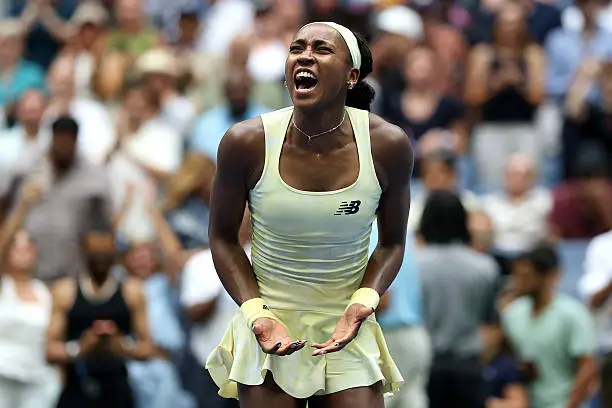
NEW YORK, NEW YORK – SEPTEMBER 09: Coco Gauff of the United States celebrates after defeating Mirra Andreeva in their Women’s Singles Quarterfinal match on Day Eleven of the 2026 US Open at USTA Billie Jean King National Tennis Center on September 09, 2026 in the Flushing neighborhood of the Queens borough of New York City. (Photo by Sarah Stier/Getty Images)
Coco Gauff has battled back from the brink to defeat Mirra Andreeva 2-6, 7-6(7), 6-2 and reach the US Open semifinals for the first time since winning the title in 2023.
Gauff looked in serious trouble after dropping the opening set and then facing two match points in the second-set tiebreak. But the 22-year-old American saved both, forced a deciding set and took control from there.
The victory is Gauff’s 11th consecutive win and her seventh Grand Slam semifinal. She also remains unbeaten against Andreeva, improving her head-to-head record to 6-0.
Advertisement
After completing the comeback, Gauff celebrated passionately before explaining what helped her turn the match around.
“I was thinking about Frances Tiafoe and how he came back yesterday.”
Now Gauff faces Elena Rybakina in the semifinals. Rybakina became the new world No. 1 earlier in the day after defeating Qinwen Zheng, setting up a huge clash between the American champion and the newly crowned No. 1.
Advertisement
Gauff has now reached 46 wins in 2026, while Rybakina leads their head-to-head 1-0 after beating her in Toronto last month.




;)

;)

;)
;)

;)


 Alabama travels to Kentucky this week as a 10.5-point favorite against the Wildcats.

;)
;)
;)
;)





































You must be logged in to post a comment Login