JOHANNESBURG — Bryson DeChambeau looked exhausted, leaning on the edge of a desk in the LIV Golf media center Thursday afternoon. His chin sagged as he exhaled, only raising for a sip from his grape-flavored Celsius energy drink.
“It’s been a long couple weeks,” he said, referring to LIV’s trio of consecutive March stops: Hong Kong to Singapore to South Africa. “But this is what LIV is supposed to be.”
DeChambeau looked out through the floor-to-ceiling windows of the media center at a golf course buzzing, spectators moving in every direction. The first round had just ended and he held a share of the lead.
“It might not work everywhere,” he said, “but in certain spots, it absolutely can.”
Advertisement
That sentiment is the theme of the moment for LIV Golf as it leaves behind its fifth event of the year, in South Africa. Fourteen months ago, when Scott O’Neil took the helm from Greg Norman, the league was not ready for the African continent. But shortly after O’Neil arrived, Louis Oosthuizen convinced South Africa’s minister of sports, art and culture, Gayton McKenzie, to attend LIV’s Korea event to better understand the league. McKenzie met DeChambeau that week and quickly became enamored with LIV’s offerings. He is a boisterous man, unshy about his desires to bring big sport to his country and so keen to do so that he did a handshake deal with O’Neil on that Korea trip. Ten months later, LIV South Africa became one of the most successful events in the league’s four-year history.
The reasons behind that success, as ever, require context. How LIV creates its events is, now more than ever, plainly obvious, as if spelled out on a chalkboard at LIV HQ, or in the application the league requires municipalities to fill out. If a location checks enough boxes, LIV is likely to bring an event there. If it doesn’t check enough boxes, like, for example, receiving government funding, LIV is likely to look elsewhere.
“>
Advertisement
“Adelaide is the template,” LIV pro Brendan Steele told me on the range last week. He was giddy. There was anticipation in the air, with digital clocks ticking down everywhere you looked ahead of the first round. By Adelaide, Steele means Australia, but more specifically, the state of South Australia, which welcomed LIV years ago and has been hosting its most successful event ever since. That it coincided this year with an out-of-nowhere win by Anthony Kim was gravy.
Steele and I chatted only briefly, but he said great LIV events don’t necessarily need to “check all those boxes.” That feels optimistic, especially when it comes to LIV’s desire for government funding.
South Australia has signed on as LIV’s Australian home through 2031. New Orleans is getting its first LIV event this year, but only after earmarking $7 million to make it happen, from the same budget that offers public funding to host the Super Bowl and other major sporting events. LIV went to Chicago in each of its first four seasons — no other city could say that — but is not this summer, because sufficient state funding never materialized. If the Chicago Bears are going to struggle to get Illinois state money, to the point of considering a move to northwest Indiana, LIV Golf likely will, too. (Perhaps unsurprisingly, LIV has found a new Midwest home in Indianapolis.)
For LIV South Africa to become a reality, getting McKenzie to pursue government aid was step 1 — and McKenzie, who was out and about at the Club at Steyn City all week long, was the right man for the job. He so badly wants F1 to reroute its globe-trotting schedule through his country that he spoke up when multiple races were canceled recently in the war-torn Middle East. In hopes of landing an F1 race in the future, he recently promised to make an offer the racing circuit couldn’t refuse. He’ll now have a golfy case study to include in his proposal.
Advertisement
It’s unclear what amount of public funding LIV Golf’s Joburg event landed, but it clearly led to a massive success. On Sunday morning, LIV announced it would return to South Africa next April, with McKenzie essentially opening the ticket window himself.
“LIV Golf is never leaving this continent again,” he said. “Which means we’re going to be here 2027, 2028, 2029, 20-forever. We’re going to be here.”
Branden Grace plays the final hole of LIV Golf South Africa Sunday.
Getty Images
——–
Advertisement
AFTER THE SECOND ROUND, DeChambeau is back in the media center, sipping another Celsius, panting less heavily this time.
“Be honest,” he starts, “how many PGA Tour events are like that?”
He’s referring to the sound, the fervor, the hanging-around-well-after-the-round element that happens when the golf is a lead-in to a performance by one of South Africa’s biggest DJs, Black Coffee. Between Friday and Saturday, event organizers had to replace the white picket fence surrounding the party hole with a metal one out of fear that the crowd would trample it.
“Not many,” I say. “But be honest, at how many places can this actually happen?”
Advertisement
“Five or six internationally,” DeChambeau says, indicating he’s given the idea thought. He rattles off Australia, South Africa, Spain and England, maybe one in Asia.
“And definitely one in Chile, for Torque [GC].”
The globalist mind wanders. Santiago … Buenos Aires … DeChambeau was not the only LIV contractor to suggest this number of roughly six locations worldwide that could host the raucousness of 100,000 people who want a festival concoction that pairs golf with music, arts, food, etc. That is the LIV product now more than ever. It’s impossible to know how many attendees are treating the golf as an opener for Calvin Harris, or how many view Harris as a dessert following DeChambeau, but LIV sees either scenario as a market advantage.
South Africa is not necessarily starved for pro golf. The DP World Tour has played host to four tournaments in the country in the last four months alone. But what the DPWT brings to South Africa is so different from LIV that it’s almost offensive to each league to compare the two. The DPWT isn’t trying to create festivals. LIV isn’t trying to do anything but make a massive, memorable splash. All of which made event organizers, in the planning stages, think far more about the 2003 Presidents Cup — held in South Africa — than any Nedbank Challenges. Last week’s event was endlessly hailed as the biggest golf event in South African history, just like the Adelaide event in February was similarly dubbed for Australia.
Advertisement
The architect of these events is Ross Hallett, who brings decades of golf-event experience from IMG. He wants every LIV event to be as big in scale as the Presidents Cup, but while feeling less like a traditional golf tournament. “Music works,” he says. “We know it. Easy. How do you incorporate art? We haven’t got it [figured out], but there’s [local] art on every TV tower.”
In Hong Kong, local celebrity chefs were cooking in the fan village all week, with mirrors placed above their heads so spectators could better see.
“They were mic’d up and I was like, This is awesome,” said O’Neil, LIV’s CEO. “Now, is it for everyone? No. Does it move the needle in selling more tickets? I don’t know. Maybe, maybe it doesn’t. But like the whole total experience. It’s like that fully cultural experience, which I love, and I think over time that wins because it’s right in the demo. It’s right in the demo: culture, food, art, music, golf.”
That O’Neil referenced golf last among those attractions might well have been unintentional but it does raise a question: Can the golf at LIV Golf matter significantly to hardcore, traditional golf fans? O’Neil obviously thinks so. And in person, the competition in South Africa was mostly riveting, even if the water-logged course lacked intrigue.
Advertisement
In a dream scenario, the league’s two best players — and two of its most expensive signees — landed in a playoff. Suddenly, two of the best pre-Masters storylines are a result of LIV Golf, which hasn’t happened before. Adding more juice, South Africa’s Southern Guards were one 18th-hole birdie putt away from a playoff of their own.
On the final hole in regulation, with rope lines dropped, DeChambeau needed to get up and down for par; as he went to work, an enormous crowd tried getting in his head with a rendition of their national anthem. On the first playoff hole, more drama, with DeChambeau hitting a stunning 3-wood from a mud-ball lie to set up his winning birdie. The setting was special; it moved DeChambeau to tears. All week he’d been treated like Elvis — sometimes signing autographs for an hour at a time — and even acted like a frontman on the championship stage, coming back out for an encore of applause, throwing his hat into the crowd and shouting, “I LOVE YOU GUYS.”
Bryson DeChambeau bows to the crowd following his win at LIV South Africa.
Getty Images
That this culmination happened at 8 a.m. on America’s East Coast matters because there tends to be this truism ringing through LIV’s best results: You kinda had to be there to appreciate them. Between time zones and lack of interest from the Golf Channel demo, there remains a disconnect between the action abroad and how it resonates at-large, particularly in the U.S.
Advertisement
On a year-over-year basis, LIV’s international television numbers are up. But throughout its four-plus seasons, the American TV numbers have not been good, and the American TV market is where a dominant amount of value is derived for sports leagues all over the globe. For the PGA Tour, for example, TV rights make up nearly two-thirds of its “core business” revenues.
TV can be less important for LIV Golf, but can it be unimportant? On LIV’s current TV deal, its events bounce among FS2, FS1 and FOX and have been out-rated by similarly scheduled PGA Tour events by a factor of 10x or 11x, according to Nielsen Big Data + Panel. LIV hopefuls believe in time the league will pull market share from the PGA Tour. But if LIV wants to put a dent into its American TV deficit this season, it’ll have to do so against five Signature Events on the PGA Tour. That’s not an uphill climb; it’s a vertical-face ascent.
——–
THERE IS A SENSE OF AMAZEMENT, for Johannesburg locals at least, at how quickly LIV erected its business in their backyard. One person who lives on property at the Steyn City Estate said the event buildout sprouted out of the ground like mushrooms.
Advertisement
When the Southern Guards approached McKenzie to get the government green-light, they thought it would probably happen in 2028, maybe by 2027 if they were lucky, but certainly not 2026. But McKenzie made it happen. O’Neil says local sponsors are almost just as important as local government support, and while they didn’t get a title sponsor this year — like LIV had in Hong Kong — he thinks they will next year.
Stroll the Steyn City property and you’ll see far more local and global brands leaning into LIV than it had during its first season. Coca-Cola’s suite of products — from Powerade to Monster Energy — were well placed throughout the fan village. The concert stage was sponsored by Castle Light, South Africa’s leading beer producer. Saudi Arabian companies such as Roshn, Riyadh Air, Maaden and Aramco, are also well repped, a vital reminder that the big money required to bring this tour to the African continent is still coming from the Middle East. The Saudi Public Investment Fund also has continued to inject investment into the league.
LIV has been able to lower costs over time, but O’Neil projected to the Finanical Timesthat it will take between five and 10 more years for the league to become profitable. All of which means Saudi money will continue to be a requirement to reach markets like South Africa. (One reason F1 might be taking its time with going to South Africa is that it may not generate the same amount of revenue — from tickets or sponsorship — as it could elsewhere.) LIV will obviously continue seeking other markets that could mimic its recent success. And when it does, is it filling a gap within the global golf ecosystem?
Early in the week, I was curious to discuss that idea of “gaps” in the pro game, as promises rained down about how special LIV South Africa would be. The notion of LIV satiating thirsty markets has caught hold enough that Rory McIlroy even praised LIV for finding its footing in Australia.
Advertisement
South African fans were out in full force at LIV Golf’s event in Johannesburg.
Getty Images
DeChambeau and his Crushers GC teammates were doing a pre-tournament press conference where, unsurprisingly, the captain received a majority of the questions. But sitting next to him was Paul Casey, a 48-year-old veteran who grew up traveling the DP World Tour, spent five straight years serving on the PGA Tour Player Advisory Council and now sits on the player advisory group at LIV. I asked him, as he looks at the pro-golf ecosystem, what gaps is LIV filling?
“That’s a good question,” Casey said. “It’s a complicated question and one I’d probably defer to answer some other time because it’s nuanced. Yeah, product-market fit is a real thing that we discuss. We talk about it a lot as players actually. I don’t think it ever gets talked about enough.”
Product-market fit is a mostly simple business idea where companies reach a specific audience with unique needs by offering a product that meets them. In Silicon Valley, it’s easier to point at. Applied to the complex (and competitive!) golf world — emphasis on world — it can be a tricky thing to analyze. LIV Golf will always stage an event in Saudi Arabia, for obvious reasons. It will probably always stage events in Australia, given its success there. Will it go to Chile, as DeChambeau wants?
Advertisement
A few minutes later, when the press conference had finished, Casey pulled me aside.
“I think it just comes back to, What do the fans want?” he told me. “I keep going back to the Charlie Munger quote: ‘You show me the incentives, and I’ll show you the outcome.’”
By that Casey meant executives from any tour tend to take their leagues in such obvious directions that it’s not hard to see their goals. And if you look at the golf world, it’s not surprising where certain tours end up, based on the incentives they’re in pursuit of. Casey thinks it would take a bottle of wine — maybe two — and a few hours of chatting to solve the schedule of global golf. He’s not wrong.
The next time I saw Casey was five days later behind the 18th green. He was standing next to me as the Rahm-DeChambeau playoff began.
Advertisement
“So,” I asked him. “Does this suffice for product-market fit?
“This is definitely product-market fit,” Casey said, pausing for a few beats. “There aren’t many tournaments in the world like this one.”
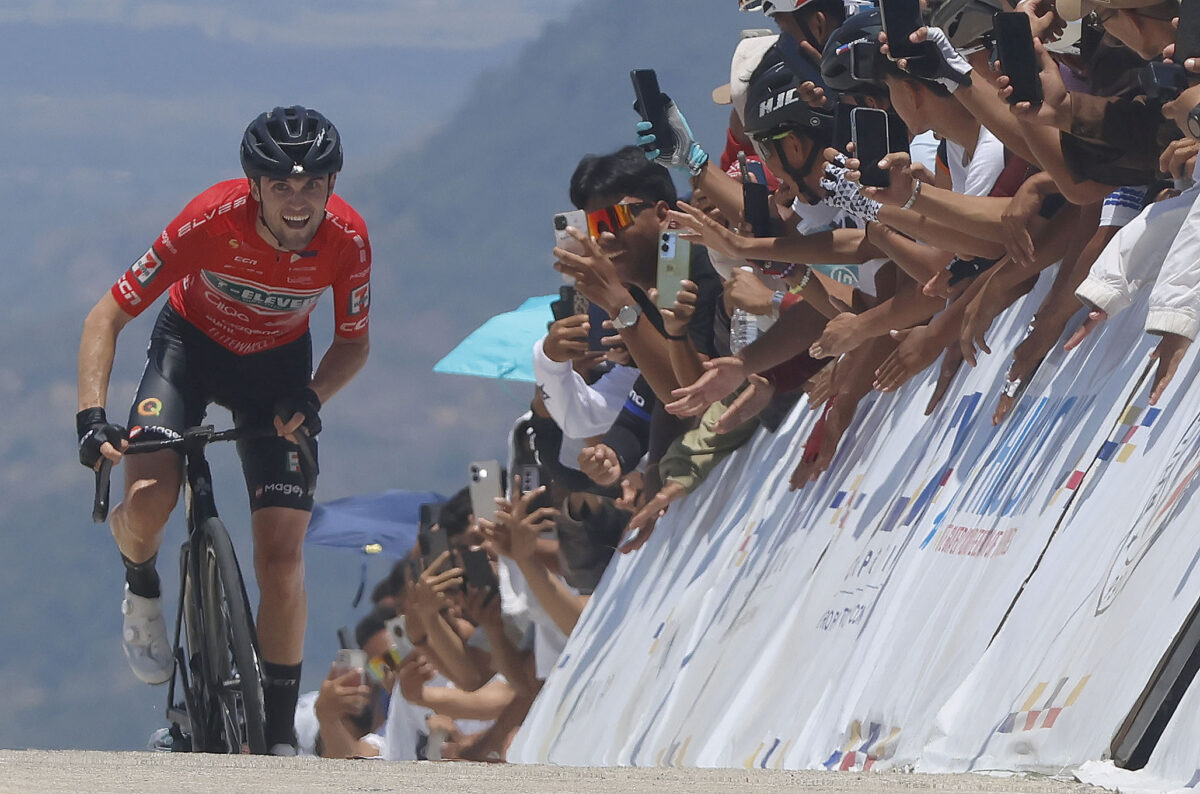
Spectators take out their phones as Antoine Huby of 7-Eleven Roadbike Philippines zooms past during Stage 12 of the MPTC Tour of Luzon.–CONTRIBUTED PHOTO
MANGATAREM, Pangasinan—Antoine Huby ruled Stage 12 of the MPTC Tour of Luzon at mountainous Daang Kalikasan here to move into second behind overall leader Nikita Shulchenko.
The French rider of local team 7-Eleven Roadbike Philippines crossed the finish line in three hours, 17 minutes and 37 seconds to register his second lap win after topping the punishing Stage 10 that ended at Bessang Pass in Cervantes, Ilocos Sur.
Article continues after this advertisement
Advertisement
Shulchenko of LCW UAE Cycle placed second by 1:20 while Dreyna’s Erickson delos Santos was third, 1:41 behind Huby.
Huby leapfrogged LCW’s Ibrahiem Alrefai, who finished by 2:02, to close in on Shulchenko with two stages remaining.
Shulchenko remains on top with an aggregate of 36:16:21, but Huby narrowed the gap to 2:30 following his victory that came after breaking away from six riders in the lead pack during the ascent to the mountainous area of the country’s cycling hotbed.
Alrefai dropped to third in the standings, trailing Shulchenko by 4:29 and Huby by 1:59.
Advertisement
Article continues after this advertisement
The last two stages will be an individual time trial in Lingayen before the Tour concludes on Wednesday with a decider from Lingayen to Baguio through Kennon Road.
Stage 12 began in Agoo, La Union, exactly at the landmark Eagle of the North, before entering Pangasinan, including twice in Urbiztondo, after also going to Tarlac.
Your subscription could not be saved. Please try again.
The reality is that there’s an alternative option here where Greenway sprints to get a new stick from the bench and, in the meantime, the Sabres have to deal with a 5-on-3 for a short period.
But maybe taking a brief 5-on-3 is worth it if the rest of the penalty kill can happen with everyone armed with a stick.
Obviously, there’s risk in taking another skater out of the play.
Advertisement
But there’s also clear risk in leaving the guy out there with no stick.
This isn’t Greenway’s fault. He just happens to be in the middle of this debate for Buffalo hockey fans at the moment.
Odds are, nothing will change about this approach. But it’d be fascinating to see a team try the alternative route here, because it probably has merit.
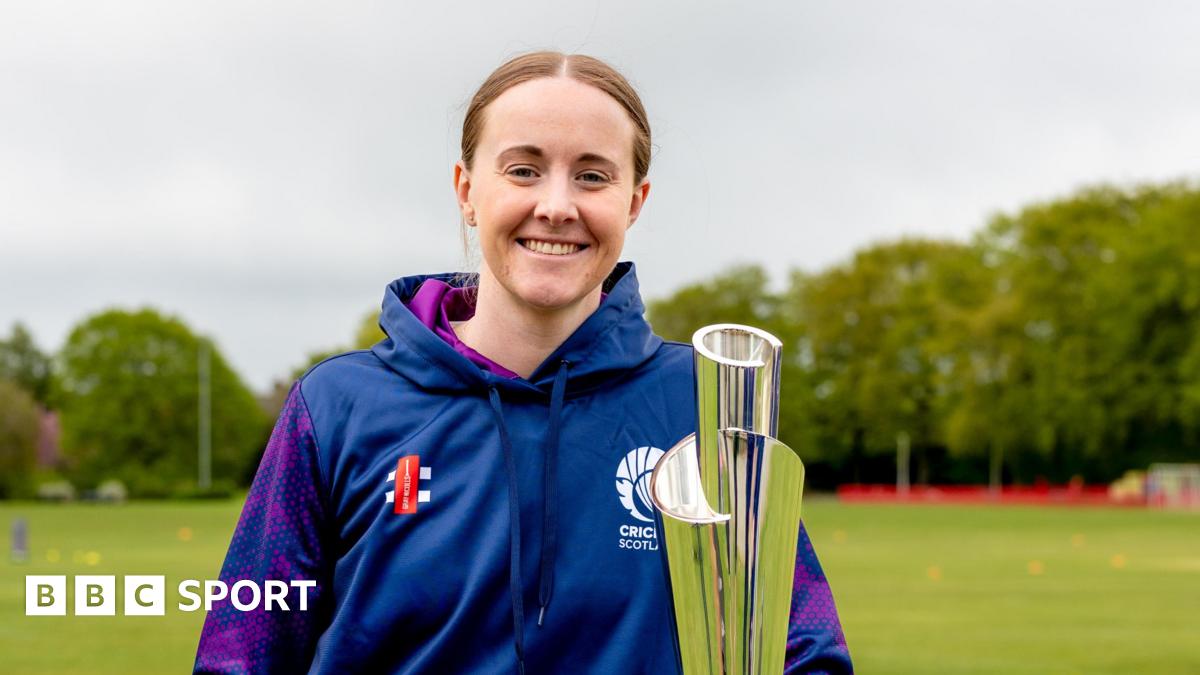
Former England spinner Kirsty Gordon is set to make her first Scotland appearance in almost nine years after being named in their squad for the T20 World Cup.
Gordon, 28, played 60 times for Scotland before pursuing a full-time career in the English professional system.
Born in Huntly, Aberdeenshire, she played in five matches at the 2018 Women’s T20 World Cup as England finished runners-up and also played a Test match against Australia in 2019.
She committed her future to Scotland last December, but has only recently recovered from a back injury.
Advertisement
Kathryn Bryce captains a group that has three changes from the World Cup qualifier in Nepal earlier this year.
Young seam duo Gabriella Fontenla and Maisie Maceira are both included, along with Gordon, as Niamh Robertson-Jack, Mollie Parker and Hannah Rainey – who left the squad in Nepal because of injury – miss out.
Robertson-Jack and Ellen Watson will join a wider squad for a pre-tournament tri-series against the Netherlands and Bangladesh, before the Scots travel to Manchester for their opening World Cup match against Ireland at Old Trafford on 13 June.
Scotland also play England, West Indies, New Zealand and Sri Lanka in Group B.
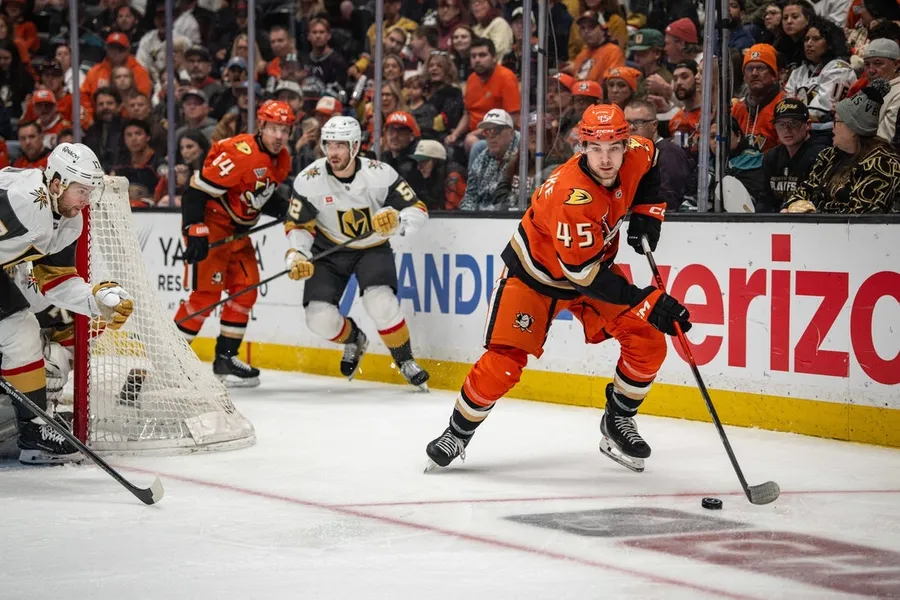
May 10, 2026; Anaheim, California, USA; Anaheim Ducks right wing Beckett Sennecke (45) skates with the puck against Vegas Golden Knights during the second period in game four of the second round of the 2026 Stanley Cup Playoffs at Honda Center. Mandatory Credit: Corinne Votaw-Imagn Images
Beckett Sennecke and Alex Killorn both netted one goal and one assist to pace the host Anaheim Ducks to a 4-3 victory over the Vegas Golden Knights on Sunday night and even their Stanley Cup playoff series.
Mikael Granlund and Ian Moore also scored for Anaheim, which tied the best-of-seven Western Conference semifinal at 2-2.
Goaltender Lukas Dostal made 18 saves and Cutter Gauthier collected three assists.
“We’ve got momentum and things are going good as long as you can keep it,” Ducks coach Joel Quenneville said. “That’s better than chasing it.”
Pavel Dorofeyev, Brett Howden and Tomas Hertl scored for the Golden Knights, who will host Game 5 on Tuesday.
Advertisement
Goalie Carter Hart stopped 19 shots, Mitch Marner collected three assists and Jack Eichel contributed two assists.
The score was tied 2-2 late in the second period when Killorn gave Anaheim its third lead with its second power-play tally of the tilt. Killorn gained the puck at the bottom of the right circle and squeezed a shot into the net with 2:02 remaining in the second period.
The Ducks failed to score on the power play in the first three games of the series, blanked during 11 opportunities.
Moore extended the Anaheim lead with his first career playoff goal. Shortly after Anaheim killed a penalty, Moore found the twine with a point shot at 3:43 of the third period.
Advertisement
“Going down a couple of goals is always tough to come back,” Vegas forward Colton Sissons said. “We’ve done a pretty good job throughout the year and playoffs, too. Yeah, it’s tough.”
Hertl snapped a 29-game goal drought dating back to early March by tucking into the cage a loose puck with 64 seconds remaining in regulation to make it a one-goal game, but the Golden Knights could not complete the comeback.
After losing the last game, the Ducks were looking to have a strong early pushback and were rewarded when Sennecke opened the scoring by unloading a shot from the top of the right circle for the power-play goal at the 8:43 mark.
Advertisement
“That was a big focus for us. … It was nice to see a couple of those go in and get our power play rolling again,” Sennecke said.
Dorofeyev responded with a power-play goal of his own just past the period’s midway point. Dostal could not catch the point shot and Dorofeyev pounced on the loose puck.
Granlund made it a 2-1 game five minutes later when a turnover resulted in him gaining the puck in the slot and his shot ricocheted off a defender’s stick and bounded past Hart.
Vegas tied the game again when William Karlsson slipped a nifty pass to the front of the net for Howden, and it was easily converted at 4:04 of the second period.
Advertisement
The Golden Knights were without captain Mark Stone, who suffered an undisclosed injury late in the first period of Game 3. Brandon Saad drew into the lineup.
“I have zero worry about this team, as far as how we’re going to go about the next few games here,” Vegas coach John Tortorella said. “Wherever it goes to, I have total trust.”
Newtown Square, a leafy community just west of Philadelphia, sits in a golf-rich region, within ready striking distance of several famous courses, including Merion, Pine Valley and Philadelphia Cricket Club. Then there’s the layout in Newtown Square itself: Aronimink, where practice rounds are underway in advance of the 2026 PGA Championship. While the pros do their homework, here’s a study guide for the viewing public, with 10 things about the club every fan should know.
1. What’s in a Name
Aronimink takes its name from a chief of the Lenape, the Indigenous people who inhabited this region long before golf arrived. Legend holds that the chief once resided in a farmhouse that later served as the club’s original clubhouse.
2. Third Time’s the Charm
Like many storied clubs, Aronimink didn’t always call its current address home. Founded in 1896 as the Belmont Golf Association — itself an offshoot of the Belmont Cricket Club — the membership eventually purchased 300 acres in Newtown Square, following two relocations, where the club remains today.
3. A Ross Original
Opened on Memorial Day, 1928, the course was designed by the most prolific architect of his era, Donald Ross, who brought his full toolkit to bear: bold, crowned greens that punish imprecision, reverse-cambered fairways, demanding and varied approaches, and a routing that makes the most of rolling former Pennsylvania farmland.
Advertisement
4. A Caddie Who Made History
John McDermott was an Aronimink caddie, but he is better remembered for what he accomplished on the other side of the bag. The Philadelphia native became the first American-born golfer to win the U.S. Open, claiming the title in back-to-back years, in 1911 and 1912. He was 19 when he won the first of them, the youngest player ever to claim the championship. More than a century later, that record still stands.
5. “Better Than I Knew”
Two decades after Aronimink opened, Ross offered a flattering appraisal of his own work. “I intended to make this my masterpiece,” he said, “but not until today did I realize I built it better than I knew.” Ross, it should be noted, could be liberal with such language. He bestowed the same “masterpiece” label on Dunedin, a municipal course he designed in Florida, and deemed his “crowning achievement” to be Pinehurst No. 2. At some point, somewhere, he was being hyperbolic. But no matter. By any label, Aronimink has proved itself a worthy stage.
6. A Championship Résumé
Aronimink has welcomed an impressive roster of elite events: the 1962 PGA Championship, the 1977 U.S. Amateur, the 2003 Senior PGA Championship, the 2010 and 2011 AT&T National, and the 2018 BMW Championship. When the 2020 KPMG Women’s PGA Championship was held here, the club became the first venue ever to host all three of the PGA of America’s rotating major championships.
7. Restored to Glory
Since its birth, Aronimink has been altered on multiple occasions, most notably in a 2017 restoration by Gil Hanse and Jim Wagner, who leaned on aerial photos of the original course. As part of their work, the architects revived upwards of 100 bunkers that ornamented the course on opening day.
Advertisement
8. The Hole Story
Ross gave each of Aronimink’s 18 holes an Indigenous name, connecting the routing to the land’s deeper past. The course measured 6,600 yards at opening — long by the standards of the time — and stretches to roughly 7,400 for this week’s championship, with 174 bunkers arranged in clusters that are as visually striking as they are strategically demanding. Every shot counts here, but certain holes figure to be pivot points in the competition, among them a par-4 1st hole that is more of a gut-punch than a friendly handshake; the par-3 5th, its green ringed island-like by bunkers; the short par-4 13th, which tempts players into aggression they may regret; and the bruising 18th, an uphill par 4 with a new back tee that stretches the hole to 490 yards.
9. Gary Player’s $13,000 Payday
When Gary Player won the 1962 PGA Championship at Aronimink, edging Bob Goalby by a single shot, he collected a winner’s check of $13,000, the largest purse in the tournament’s history at that point. The first-place prize in 2026 will exceed $3 million, which means the caddie on the winning bag stands to make some 20 times more than what Player pulled in.
10. A Major Championship Withdrawal
Aronimink was scheduled to host the 1993 PGA Championship, but the club opted to withdraw rather than become a flashpoint in the growing controversy over discriminatory membership practices at private clubs. At the time of that decision, in 1990, Aronimink did not have any Black members. The 1993 PGA Championship wound up being hosted at Inverness instead.
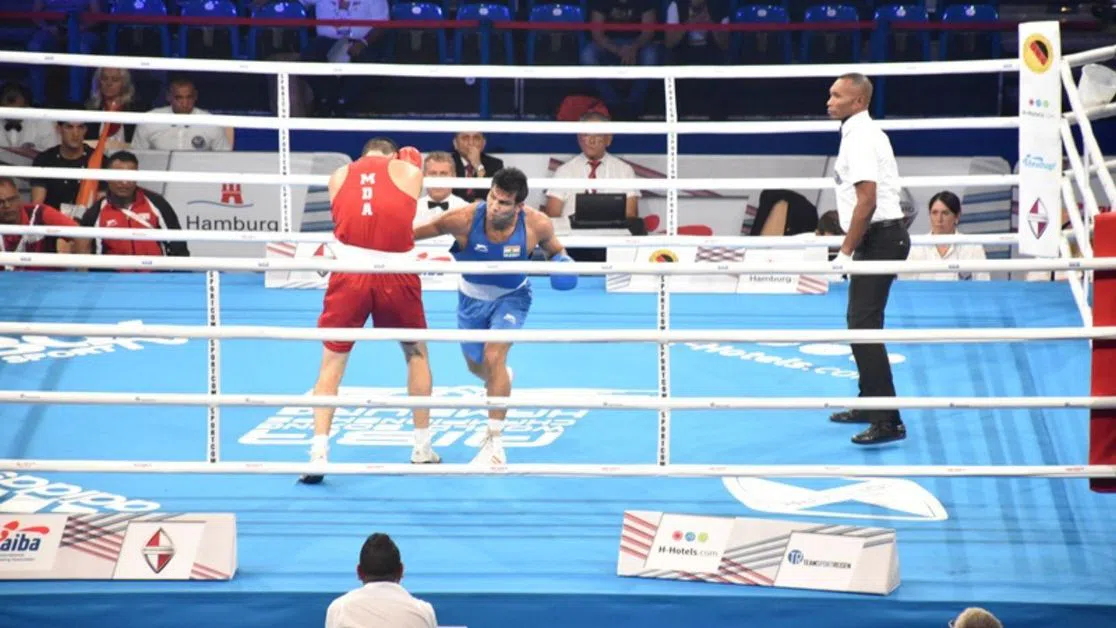
Indian boxing’s preparations for the 2026 Commonwealth Games and Asian Games have been thrown into uncertainty after the escalating conflict between the Sports Authority of India (SAI) and the Boxing Federation of India (BFI) forced the suspension of the final selection trials for the national squad.
With elite boxers awaiting clarity on selection procedures, evaluation standards and national camp participation, the dispute has created fresh instability in a crucial season for the sport.
SAI halts BFI’s selection trials
The latest confrontation between the two sports authorities emerged after SAI directed the BFI to halt the proposed assessment tests for the Commonwealth Games and Asian Games squads, citing concerns over transparency and fairness in the evaluation process.
Advertisement
The assessment trials, initially planned from May 11 to 15 and later revised to May 11-13 at the NS NIS, Patiala, now remain suspended until further notice.
SAI raises objections over evaluation framework
The latest communication from SAI to the BFI highlighted multiple concerns regarding the federation’s proposed assessment mechanism for the national camp and final team selection.
Advertisement
In a letter issued by the office of TOPS CEO NS Johal, SAI stated that the federation had failed to provide adequate details regarding the technical and tactical evaluation matrix that would be used during the assessments.
SAI accuses BFI coaches of favouritism
The authority also sought clarification on the composition of the High Performance Unit (HPU), including the qualifications and credentials of officials responsible for evaluating athletes during the camp. Apart from the evaluation framework, SAI questioned the proposed list of coaches and support staff and asked the BFI to explain the criteria adopted by the Coaches Commission while recommending appointments.
Another key issue flagged by SAI was the possibility of coaches associated with the national camp being directly involved in the selection process, something the authority had earlier advised against to prevent favouritism and conflicts of interest. SAI further informed the federation that all expenses related to the conduct of trials or assessments would have to be borne entirely by the BFI.
Advertisement
BFI defends process amid growing disagreement
The BFI has maintained that the proposed procedures and evaluation policies had already been discussed with SAI during the Annual Calendar for Training and Competition (ACTC) meetings. Federation officials believe the assessment process was designed to streamline selections and ensure a performance-based pathway for boxers ahead of the major international events.
However, the continuing disagreement between the two bodies over selection norms, trial structures and staffing appointments has delayed the start of preparations for the upcoming multi-sport competitions. The standoff has also left several boxers uncertain about their participation in the national camp and their chances of representing India.
COAS Cup controversy deepens selection dispute
The dispute has also revived controversy surrounding the 2nd Chief of Army Staff (COAS) Cup, conducted in Pune from March 30 to April 5. The BFI had recognised the event as an official qualification route to the national camp, with gold and silver medallists across 20 categories earning eligibility for the final trials.
Advertisement
SAI, however, refused to acknowledge the competition and termed it a “closed-door” tournament. The decision has effectively left nearly 40 medal-winning boxers outside the selection pathway despite their performances at the event.
Several affected athletes are now preparing to move the Delhi High Court seeking inclusion in the trials and a fair opportunity to compete for national selection.
Advertisement
Boxers seek clarity over national selection
The uncertainty has triggered frustration among several leading Indian boxers, including 2021 World Championships silver medallist Deepak Bhoria and reigning Asian champion Sanjeet, both of whom secured medals at the COAS Cup.
In a joint statement, the two boxers expressed disappointment over the absence of clarity regarding the status of COAS Cup medallists and the selection process for the national camp. They stated that the federation had earlier informed athletes that gold and silver medallists from the tournament would become part of the Commonwealth Games and Asian Games pathway, but no official confirmation has yet been provided.
Advertisement
The ongoing administrative deadlock has now stalled the selection process at a time when Indian boxing was expected to intensify preparations for two of the biggest sporting events of the cycle.
Commonwealth Games and Asian Games 2026 schedule
The 2026 Commonwealth Games are scheduled to be held in Glasgow, Scotland, from July 23 to August 2. The 2026 Asian Games will take place in Aichi-Nagoya, Japan, from September 19 to October 4.
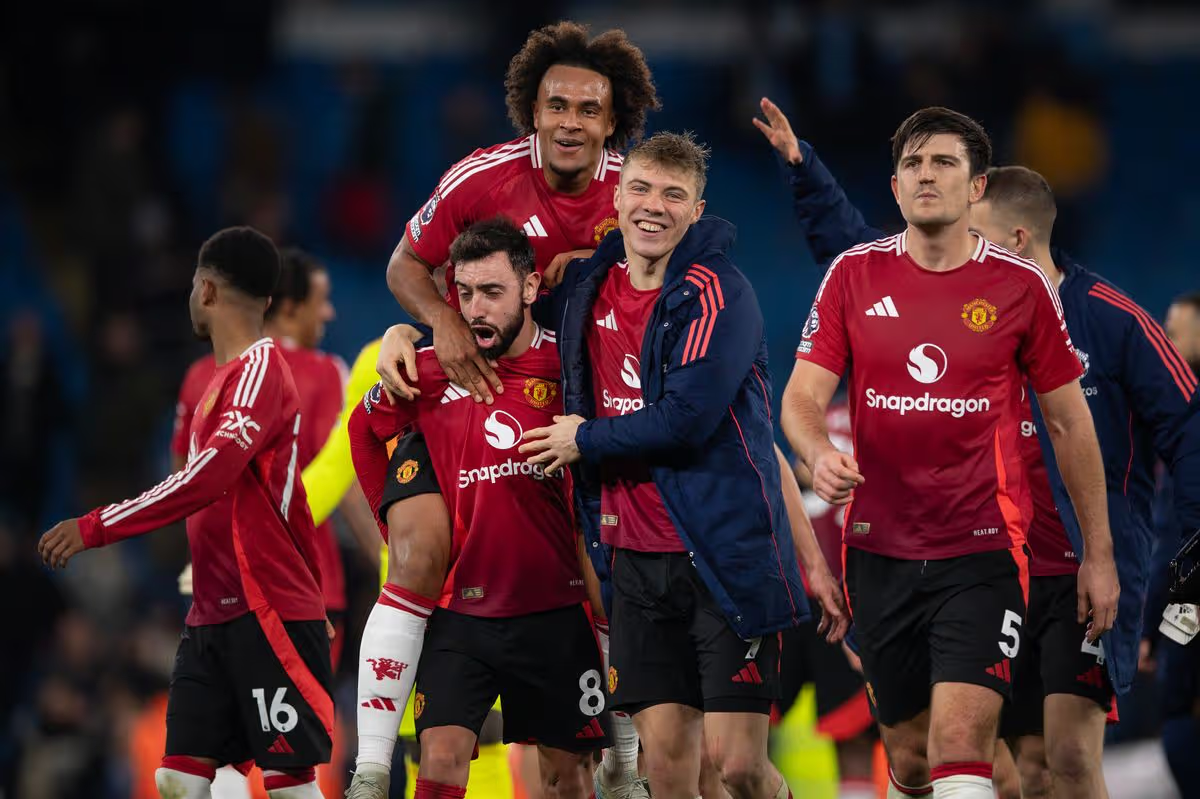
Joshua Zirkzee was handed his first start of 2026 on Saturday but the forward doesn’t look a good fit for Man Utd or the Premier League.
Manchester United will pay the final instalment owed to Bologna for Joshua Zirkzee this summer, but the forward’s time at Old Trafford looks to be coming to an end just as debts are settled.
Zirkzee was handed a first start under Michael Carrick at Sunderland on Saturday and did little to convince he had a future at the club. Despite his height and physical presence, he is a lightweight No.9 who looked ill-equipped to thrive in the Premier League at the Stadium of Light.
Advertisement
The Netherlands international was an opportunistic signing in 2024, when United were really feeling the pinch financially and needed more competition for Rasmus Hojlund, a £72million acquisition from Atalanta the year before.
Click here to find out the latest Manchester United news in our daily newsletter
Zirkzee had a release clause of just over £34million (€40million) in his Bologna contract, but United opted to pay £36.5million to spread the fee over three years, giving them more cash to play with in that window.
There is an argument that is financially prudent, but the bigger concern is what attracted them to Zirkzee in the first place. He had scored 12 goals in his final season in Serie A, spearheading Bologna’s surprise qualification for the Champions League, but he was a quirky forward who had thrived in a system that played to his strengths.
Advertisement
He had never been prolific and was clearly a technically skilled forward who might do well in a team built around him, but not exactly a line-leading striker ready for the muck and nettles of the Premier League.
That was a summer of chaos at United, as Sir Jim Ratcliffe pondered sacking Erik ten Hag only to take weeks to decide to keep the faith. Omar Berrada and Dan Ashworth both started work at the club midway through the summer and it was never clear who was pulling the strings, which led to signings like Zirkzee.
It’s hard to imagine that deal happening in 2026. United’s approach to recruitment seems more aligned now, and the greater emphasis on data would have surely red-flagged a signing like Zirkzee, who has never looked at home in England.
Nearly two years on, it’s still difficult to know what his best position is. He is often referred to as a nine-and-a-half, but what does that even mean? Perhaps he would be a good false nine, but United don’t play that system. His best performances came as one of two No.10s in Ruben Amorim’s 3-4-2-1, but his only route to games now is as a No.9.
Advertisement
His performance at the Stadium of Light proved he doesn’t have that in him. He has scored nine goals in 73 games for United, and 51 in 231 games throughout his career. Carrick said on Saturday that Zirkzee wouldn’t be judged on one game, but the file of evidence is much thicker than that. He is never going to be a prolific forward.
There will be a market for Zirkzee back in Italy. His technical skills can prosper in Serie A in a way they haven’t in the Premier League, especially in this iteration of the league, where forwards are barely given time to breathe.
An issue for United will be the lack of finance in Italy. Recouping the fee they paid will be impossible and they might end up with a loan and an option or obligation to buy.
They will at least bank £38million from Napoli for Hojlund this summer. That is money that can be reinvested in adding another forward to take the heat off Benjamin Sesko.
Advertisement
The Slovenian has looked more suited to life as Old Trafford’s No.9 than Hojlund or Zirkzee, but he needs support. Bryan Mbeumo and Matheus Cunha can play the role, but they are very different options, more likely to drop deep than stretch the play, and they might well be required elsewhere.
United might well look to sign a versatile forward to replace Zirkzee, someone who can play wide as well as through the middle. Or they might look for an older head.
Danny Welbeck is an obvious candidate, with a year left on his contract at Brighton. United have twice considered bringing him back to Old Trafford in recent years. He will turn 36 in November but has had another good season at the Amex and his experience could be valuable.
There will be other options out there. United spent around £108million on Hojlund and Zirkzee, and will be lucky to get half of that back. This summer, they should look for a much cheaper option and rely on the recruitment team to unearth the right kind of player.
Advertisement
Sky Sports, HBO Max, Netflix and Disney+ with Ultimate TV package
This article contains affiliate links, we will receive a commission on any sales we generate from it. Learn more
Sky has upgraded its Ultimate TV and Sky Sports bundle to now include HBO Max, Netflix, Disney+, discovery+ and Hayu, as well as 135 channels and full Sky coverage of the Premier League and EFL.
Sky broadcasts more than 1,400 live matches across the Premier League, EFL and more with at least 215 live from the top flight alongside Formula 1, darts and golf.
NFL Network reporter Tom Pelissero works during coverage of the NFL Combine at the Indiana Convention Center in Indianapolis on Mar. 2, 2022. Pelissero has become one of the league’s most recognizable insiders in recent years, regularly delivering breaking news, transaction updates, and behind-the-scenes reporting connected to the Vikings and the broader NFL landscape. Mandatory Credit: Kirby Lee-USA TODAY Sports.
The Minnesota Vikings signed quarterback Kyler Murray in March, but he will not be handed the QB1 job without a battle, according to NFL.com and Tom Pelissero.
Murray has the resume. McCarthy still has his opening.
The incumbent starter, J.J. McCarthy, has a puncher’s chance to keep his job, and folks should fully expect a legitimate competition at training camp.
Advertisement
Minnesota’s QB Competition Now Has National Confirmation
Get the popcorn ready because it’s a quarterback mano a mano.
Minnesota Vikings quarterback J.J. McCarthy and center Michael Jurgens work through pregame warmups before a preseason matchup against the Las Vegas Raiders at U.S. Bank Stadium in Minneapolis on Aug. 10, 2024. The quarterback-center pairing focused on timing, communication, and exchange mechanics as Minnesota prepared for its exhibition opener with teammates rotating through drills nearby. Mandatory Credit: Jeffrey Becker-USA TODAY Sports.
NFL.com: It’s a QB Battle in MIN
Training camp will have suspense. NFL.com’s Grant Gordon wrote Sunday, “If it was assumed that Kyler Murray was going to be handed the Minnesota Vikings’ starting quarterback reins following two ill-fated years for J.J. McCarthy, that won’t be the case. Minnesota will host a good, old fashioned quarterback battle between McCarthy and Murray this offseason, according to NFL Network Insider Tom Pelissero.”
“McCarthy’s struggled in his two years in the NFL since the Vikings chose him 10th overall in an already celebrated 2024 NFL Draft. Some of his struggles have been self-inflicted (12 interceptions in 10 games), while others have been the result of injuries, as he missed all of his rookie campaign with a knee injury and dealt with multiple injuries in his sophomore season.”
Advertisement
Pelissero personally said, “They envision it being a true competition: Kyler Murray versus J.J. McCarthy. And both these guys are going to go into this believing they’re gonna win this job.”
“I don’t know, frankly, how friendly that quarterback room is going to be. It’s going to be a very competitive quarterback room. From everything that I’ve understood, it is truly wide open; they’re keeping an open mind as a coaching staff.”
The Case for Murray
It should not be a hot take to announce this: Murray is a better quarterback than McCarthy. He’s faster, more accurate, has a stronger arm, and has more experience. The Cardinals merely soured on him because he was in the QB1 chair for seven seasons, and Arizona failed to win a playoff game.
Advertisement
McCarthy is taller than Murray by about five inches, and that matters, but other than height, Murray has McCarthy beat in almost every talent-related category.
Arizona Cardinals quarterback Kyler Murray throws a pass during second-quarter action against the Los Angeles Rams at SoFi Stadium in Inglewood, California, on Oct. 3, 2021. Murray directed Arizona’s offense throughout the NFC West divisional matchup, showcasing the mobility, arm talent, and playmaking ability that helped establish him among the NFL’s most dynamic young quarterbacks. Mandatory Credit: Kirby Lee-USA TODAY Sports.
There are also the numbers. Across 17 starts, on average, Murray produces about 4,000 passing yards, 30 total touchdowns, and roughly 600 rushing yards. He’s basically Lamar Jackson on a bad team without the marketing.
Murray will also have a chip on his shoulder later this summer; getting kicked out of Arizona is rather embarrassing, all things considered.
The Case for McCarthy
The Vikings drafted McCarthy in 2024 to unabashedly be the quarterback of the future. Hell, the franchise said “no thanks” last offseason to Sam Darnold, Daniel Jones, and Aaron Rodgers in favor of McCarthy.
Advertisement
McCarthy also showed flashes of brilliance in 2025, his first season as a starter. He made throws that many cannot make, and his attitude in the Vikings’ locker room was infectious. McCarthy knows how to lead and has the drive to become a franchise quarterback.
The third-year pro also has youth on his side. He’s 23. Murray will turn 29 this summer. Per the original plan, it would probably be “better” if McCarthy just showed up to training camp, suddenly showcasing improved mechanics, maturity, and moxie.
NBC Sports‘ Mike Florio on the battle: “For McCarthy to win it, he’ll need to step up. Ball out. Outplay the first overall pick in the 2019 draft. The player who was named offensive rookie of the year before making it to the Pro Bowl in 2020 and 2021.”
“Even if McCarthy wins the job, he’ll need to hold it. That means staying healthy. He has missed all of his rookie year due to a preseason knee injury. In 2025, he missed seven games. A ‘true competition’ will help both get ready to play. Chances are they both will.”
Advertisement
Prediction
There’s a world where McCarthy takes July and August by storm; fans would love it. It would also align with historical timelines — quarterbacks taking the next step in Year No. 3.
Arizona Cardinals quarterback Kyler Murray runs with the football during a preseason game against the Oakland Raiders at State Farm Stadium in Glendale, Arizona, on Aug. 15, 2019. Murray entered the NFL with massive expectations as the No. 1 overall pick, immediately displaying the speed, athleticism, and improvisational skills that defined his game at Oklahoma. Mandatory Credit: Matt Kartozian-USA TODAY Sports.
However, this battle is probably Murray’s to lose. Some have compared Murray’s arrival in Minnesota to the aforementioned Darnold’s two years ago or Baker Mayfield’s in Tampa Bay three years ago. It’s an understandable analogy, but Murray has played consistently well since 2019. Darnold and Mayfield were deemed busts before their career reclamations.
McCarthy has a shot, but Murray will likely win this thing. It’s important to note that Murray is susceptible to injury — he’s missed 26% of all career starts — so McCarthy might get a chance to strut his stuff sometime in 2026 if history repeats.
Dustin Baker is a novelist and political scientist. His second novel, The Invaders , is out now. So is … More about Dustin Baker
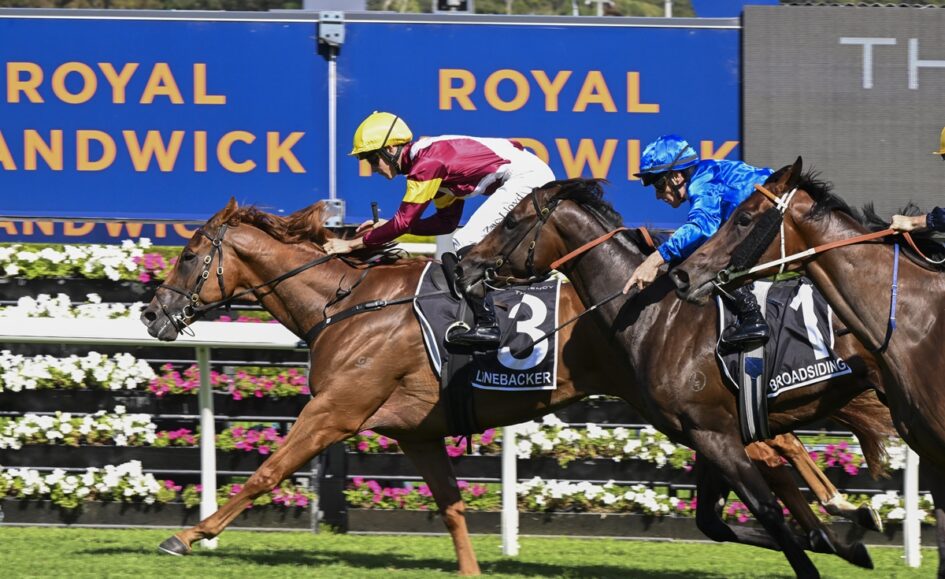
Trainer Tom Charlton will separate two key horses from his yard across state borders this coming weekend, positioning Linebacker for the Luskin Star Stakes at Scone as promising speedster Napoleonic takes on the Group 1 Doomben 10,000.
Linebacker features in entries for the pair of races, but Charlton is inclined to choose Scone where the Luskin Star Stakes (1300m) offers 100m more, fitting the horse’s optimal range.
“He is nominated for both, and we can think about it, but he will probably go to Scone and Napoleonic will go to Queensland,” Charlton said.
“With Linebacker, 1300 is a distance he’s very effective at. He will enjoy Scone and if we can get a bit of confidence in him, we can get him to the Stradbroke (Handicap).”
Advertisement
Winner of the 2025 Randwick Guineas, Linebacker competed at high levels during autumn.
He was beaten by a mere 1-1/2 lengths from Joliestar in his first-up Canterbury Stakes (1300m), held midfield in the George Ryder Stakes (1500m) won by Autumn Glow, and claimed sixth place solidly in the Doncaster Mile (1600m).
According to Charlton, the gelding should improve with a freshening and shorter distance as he aims to return to the winners’ list.
“His Canterbury Stakes run was great, and the George Ryder turned out to be a very good form race, and he wasn’t too bad in hindsight,” Charlton said.
Advertisement
“In the Doncaster, he put himself in a good position and they went very quick. He presented like he was going to be in the finish, but the pattern of that race probably played against him.
“He was the best on-speed horse, and he might appreciate a freshen up and coming back to that 1300 and 1400 metres.”
Napoleonic received a spell post his competitive Canterbury Stakes run and has dominated two recent barrier trials.
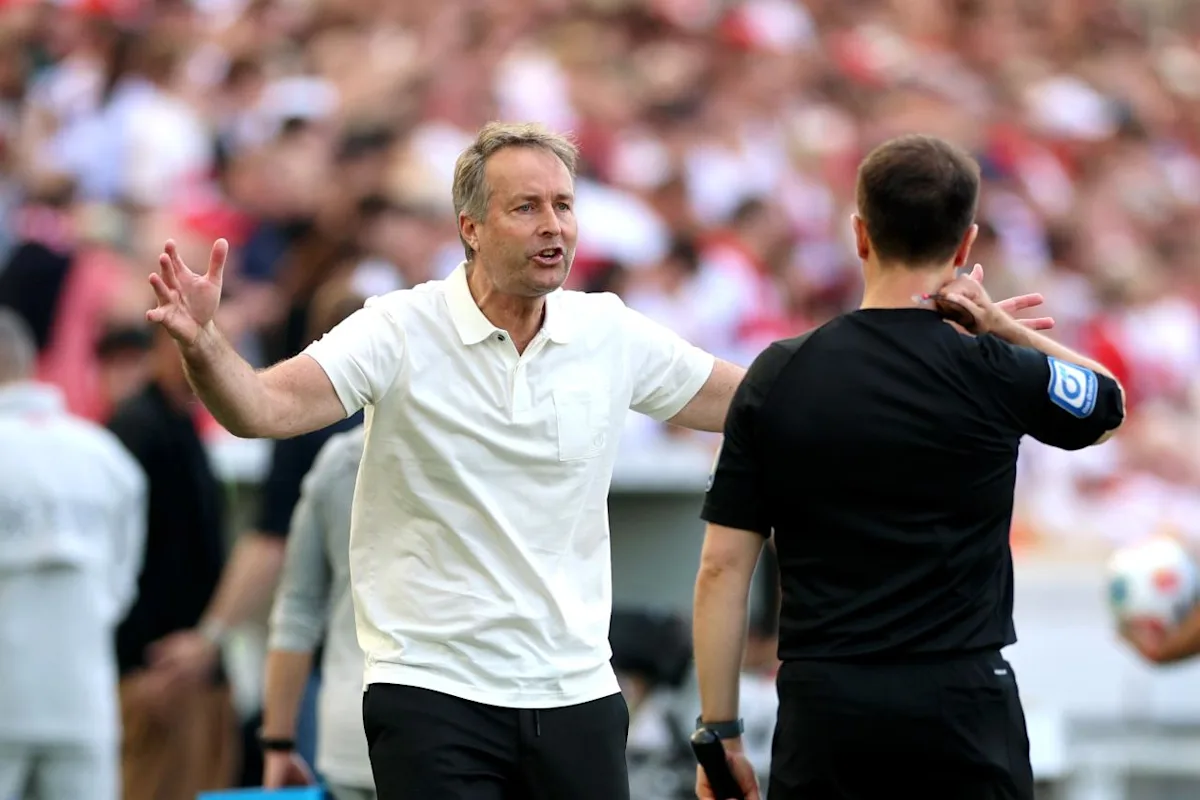
For a long time, it has been reported that Kasper Hjulmand is practically certain to leave Bayer Leverkusen this summer.
Now, Bild reports that Die Werkself have made a final decision on the Danish coach’s future.
Advertisement
The German tabloid claims that Hjulmand’s time at the club will be over at the end of the season, and that his final game in charge will be Saturday’s match against Hamburger SV.
Advertisement
Even though it is still mathematically possible for Leverkusen to qualify for the Champions League, Die Werkself almost certainly threw away their chance of reaching Europe’s premier club competition on Saturday with a 3-1 loss to VfB Stuttgart.
With just one game left to play, Leverkusen sit sixth, three points behind both Hoffenheim and VfB Stuttgart in fifth and fourth place respectively.



;)
;)
;)











































You must be logged in to post a comment Login