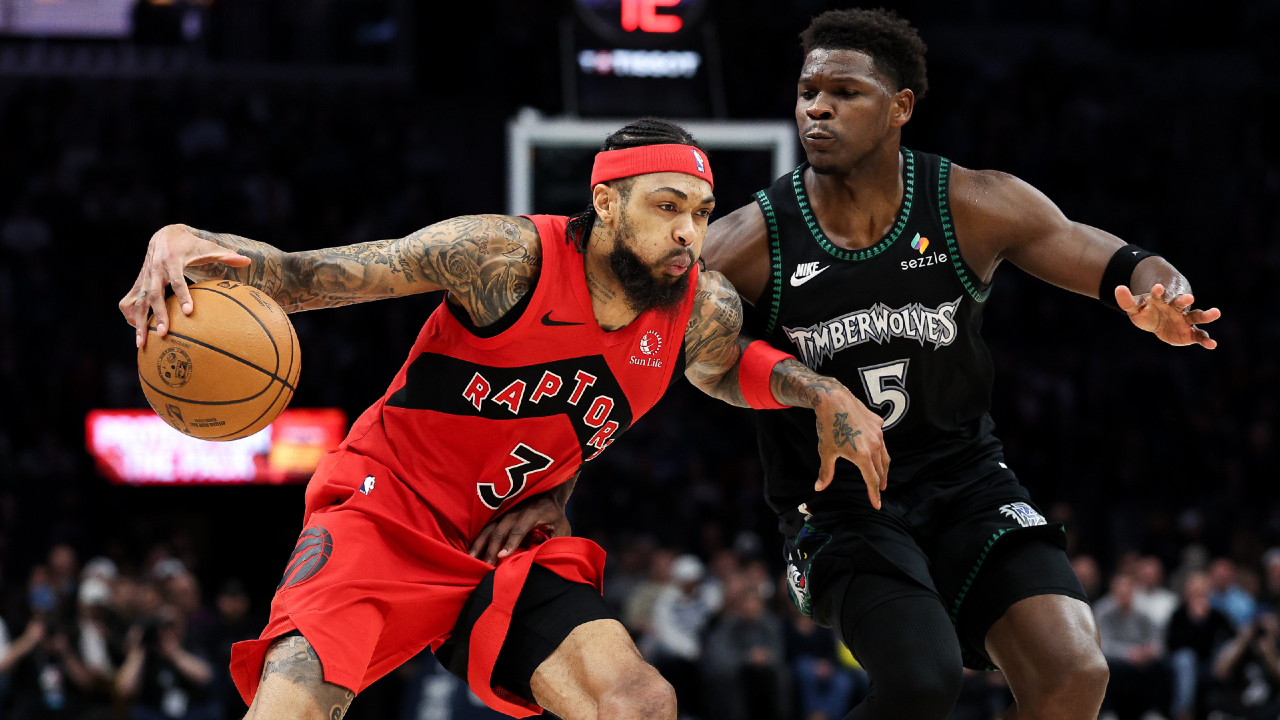
With 20 games remaining and three quarters of the marathon NBA season behind them, we can pretty conclusively conclude the Toronto Raptors are… kind of okay!
Heading into Thursday night’s game against the Minnesota Timberwolves, the Raptors could proudly point to their seventh-ranked defence as a clear indication of the pride, competitiveness and connectedness they play with most nights.
They also arrived in Minnesota tied for the seventh-most road wins and the fourth-best road winning percentage, which are normally a reliable sign of team quality. The teams with better road winning percentages than the Raptors were Oklahoma City, San Antonio and Detroit — the teams with the three best overall records in the league — so that tracks.
Scottie Barnes and Brandon Ingram were deserving all-stars, and Barnes should be in the mix for first-team all-defence.
Advertisement
But it’s becoming more and more clear that it’s not good enough. And neither are the Raptors.
The horse is dead at this point.
As fun and welcome and refreshing as this Raptors season has been compared to the last three seasons before — the frustrating, underachieving 41-41 year in 2022-23, 25 wins in 2023-23 as the rebuild began, the 30 wins last season as the Raptors tried to tank rather unsuccessfully (though there are worse consolation prizes than Collin Murray-Boyles at No. 9) — it’s looking more and more like Toronto could be simply taking the long way around to the same destination.
The middle of NBA nowhere.
Advertisement
With just under four minutes left against the Timberwolves, Darko Rajakovic emptied his bench, pulling his starters. It was an unusual move for the feisty Serbian head coach, given his team was down by 16. The Raptors’ odds of mounting a comeback weren’t great, but they weren’t zero. Hey, the Raptors gave up a 16-2 run to the New York Knicks in the final five minutes on Tuesday night, didn’t they?
But perhaps Rajakovic has seen this movie enough that he knew how it was going to end, so why bother having Scottie Barnes sprain an ankle or Brandon Ingram buckle a knee trying to beat a good team when the Raptors have shown over and over again they don’t have the horses for it?
The final result was a 115-107 loss to Minnesota.
It dropped the Raptors’ overall record to 35-27 and their record against the NBA’s top 10 teams to dispiriting 4-17, with just one of those wins coming since Nov. 24th.
Advertisement
It’s hard to pinpoint one thing that continues going wrong, other than the Raptors are one of the worst fourth-quarter offences in the NBA (26th, ahead of another overachiever, and tanking Brooklyn and Sacramento).
This latest loss was over before the fourth quarter, though.
It was a game with several momentum shifts. The Raptors led Minnesota by 12 midway through the first quarter, and after Minnesota stormed back with a 24-8 run to lead 31-27 after 12 minutes, Toronto used an 18-4 run to go back up by eight midway through the second. It was a one-possession game halfway through the third quarter.
And the Raptors were playing to win. For the second game in a row, Rajakovic stuck with a playoff-like eight-man rotation, save for a three-minute first-half cameo from Jonathan Mogbo, who — with Collin Murray-Boyles out with his thumb injured — provided some minutes as a small-ball five.
Advertisement
Any hopes of developing a deep rotation that Rajakovic trusts in key games seem to have vaporized, which is not a good sign for a relatively young team that believes it is still rebuilding.
In the second half, after a poor stint compounded an already poor outing from Jamal Shead (two points, one assist and three turnovers on 1-of-7 shooting had him at minus-19 in his 17 minutes), Rajakovic played without a point guard when starter Immanuel Quickley (18 points, seven assists on 6-of-10 shooting in 30 minutes) needed a breather rather than donate more minutes to Shead.
But trying hard can only take you so far in the NBA. Talent and team cohesion under pressure are tough to overcome, and the Timberwolves — like all the NBA’s better teams — have more of each than the Raptors do.
Anthony Edwards alone is an element the Raptors don’t have — an apex wing that can take over games at will. He scored 11 of his 22 points — and an epic dunk over Barrett — in the third quarter.
Advertisement
That’s when the game turned. Minnesota mounted an 11-0 run in the space of just under three minutes, where a sloppy Raptors foul, a Timberwolves offensive rebound and a pair of regrettable turnovers by Shead yielded a pair of open threes and a pair of transition buckets for Minnesota that put them up by 16.
It stayed mostly in double figures after that, but even when the Raptors showed some signs of life with a pair of threes from Barrett in the fourth quarter that cut the Minnesota lead to 10 with 4:40 to play, the Raptors handed the momentum right back as first Dante DiVincenzo and then Edwards shook loose from the Raptors’ pick-and-roll coverage for open looks from deep in the space of 30 seconds.
That’s when Rajakovic waved the towel and emptied his bench.
And here’s the thing: for most of the season, the Raptors struggles against the NBA’s best didn’t hurt them. They have been able to dominate the league’s middle and lower classes enough that they’ve been in the hunt for homecourt advantage in the first-round of the playoffs all season. But that margin is slipping.
Advertisement
The Raptors remain in fifth place in the East, but they are now just one game ahead of sixth-place Philadelphia and 1.5 games up on Orlando and Miami, which are in seventh and eighth place, respectively. Ninth-place Charlotte is 3.5 games behind Toronto, but the Hornets are 16-3 since Jan. 22 and have morphed into an offensive juggernaut that seems to keep rolling downhill.
For the Raptors, even standing still looks like it’s going to keep getting harder.
The Raptors should catch a breather against Dallas (21-41) at home on Sunday, though rookie sensation Cooper Flagg is back after an extended injury, so no guarantees.
If there is some good news, it’s that the Raptors only have four more games against teams that are among the NBA’s top 10. They have eight more against teams in the bottom 10. Chances are, their playoff hopes will hinge on holding their own against the eight games they have against teams that are in the mushy middle, just like them.
Advertisement
1. The ninth man: I spoke with Jamison Battle about playing back in Minneapolis for just the second time in his professional career and the first time since Oct. 26 of last season, which was just Battle’s third career game, and he was excited about it. He was up on some of the changes that the new ownership group, which includes MLB Hall-of-Famer Alex Rodriguez, have made: installing theatre stall lighting at Targe Centre, like they have at Madison Square Garden in New York, for example, or bringing back the ‘Black Tree’ classic jerseys that the Kevin Garnett-era Timberwolves made famous in the late 1990s and early 2000s.
He said that his only goal in playing at home was to: “Just to stay present, be in the moment and don’t try to do too much because you’re playing at home and just play within the flow of the game.” But last season, Battle played 18 minutes for a Raptors team missing a pair of starters due to injuries. This time around? Even though Battle has seemingly moved in front of Gradey Dick in the rotation, playing ahead of him the past three games, the Raptors’ ninth rotation spot is seemingly a treadmill to nowhere. Battle didn’t touch the floor until the fourth quarter, when — with his team down 14 — Rajakovic played him for the first six minutes of the period. Battle had a couple of rebounds but didn’t get a field goal attempt up until he hit a floater when Rajakovic subbed him back in after he pulled his starters.
2. The 15th man: Interestingly, the Raptors — I’m told — are exploring options to fill out the back end of their roster. One of the benefits of trading Ochai Agbaji and acquiring Trayce Jackson-Davis was that it opened up enough room under the luxury tax to add another player. Or at least they will after March 15, when enough days will have run off the NBA calendar that the Raptors will be able to sign someone to a minimum contract prorated over the rest of the season. My understanding is that their first preference is to sign a backcourt player with some NBA experience, although failing that, they could convert one of the players they have on two-way contracts — AJ Lawson, Alijah Martin or Chucky Hepburn — to a standard NBA deal.
3. But who?: That’s the question. I spoke about this on the pre-game show, and it’s pretty slim pickings, but a few names that make some sense include Lonzo Ball, who struggled with Cleveland this season after a nice comeback with Chicago last year following two years away due to knee issues that nearly cost him his career. I spoke with a couple of sources who indicated he’s healthy, but after shooting 42.3 per cent from three in 2021-22, before his injury troubles, he’s shot just 31.3 per cent since. He’s a disruptive defender and smart passer, and at six-foot-five, he has some size that the Raptors don’t have much of at guard right now.
Advertisement
There’s also Cole Anthony — waived recently by Milwaukee and Phoenix — who could be available. He was a productive third guard for the Magic over the past few seasons and has some paint-punching abilities that could help the Raptors in some situations, as well as two years of playoff experience. I don’t know if Georges Niang — who has missed the entire season with a foot injury — would be healthy or fit enough in the time frame the Raptors are looking at, but adding a career 40 per cent three-point shooter might be nice. One player I know the Raptors have kept tabs on is Lester Quinones, a six-foot-five combo guard who played two seasons with Golden State and had brief stints last season with Philadelphia and New Orleans. The 25-year-old is averaging 22.8 points, 5.5 rebounds and 3.0 assists and shooting 40.5 per cent from three for the Osceola Magic.
Minnesota Vikings fans erupt with energy in the stands, reacting to early-game action as noise and momentum build across the stadium Sep 15, 2024, at U.S. Bank Stadium in Minneapolis, Minnesota, during a matchup against the San Francisco 49ers with the home crowd creating a charged atmosphere throughout the first quarter. Mandatory Credit: Jeffrey Becker-Imagn Images.
The 2026 NFL Draft will arrive in about 2.5 weeks, and the Minnesota Vikings are anxious to know the outcome of the team’s first few picks, as interim general manager Rob Brzezinski has four selections in the Top 10. But what if he swerves? Always remember — the Atlanta Falcons drafted Michael Penix about six weeks after signing Kirk Cousins two years ago.
Minnesota has several sneaky draft paths that could catch fans and analysts off guard.
Here’s a look at the realistic curveballs Minnesota could throw at you in the draft.
Advertisement
A Few Unexpected Draft Moves Remain in Play for Minnesota
Ranked in no particular order, this is the sneaky stuff Minnesota might have up its sleeve.
Notre Dame running back Jeremiyah Love breaks free for a long touchdown run, sprinting downfield during fourth-quarter action Nov 1, 2025, at Alumni Stadium in Chestnut Hill, Massachusetts. Love showcased elite speed and burst on the 94-yard scoring play, helping the Fighting Irish pull away from Boston College late in the contest. Mandatory Credit: Edward Finan-Imagn Images
1. Trading Up for RB Jeremiyah Love
Love would make the Vikings’ offense unstoppable; let’s get that out there. With Kyler Murray in the house, the sky is the limit for Kevin O’Connell’s scheme, and landing Love would change everything about the franchise. It’s O’Connell’s ticket to changing a pass-happy offense into a balanced killer.
The trade, however, won’t be cheap. To get Love, whether at pick No. 4, No. 6, or No. 10, the Vikings will have to surrender their 18th pick, a 2nd-Rounder, and perhaps a 3rd-Rounder. If they love Love, it might be worth it.
Advertisement
2. Drafting TE Kenyon Sadiq at No. 18
At 6’3″ and 245 pounds, Sadiq is still 21, allowing him ample time to develop compared to other prospects. Across 42 games at Oregon, he logged 80 receptions for 892 yards and 11 touchdowns. Highlighting his athleticism, Oregon also used him as a kick returner in ’23 and ’24.
Sadiq’s versatility sets him apart as a potential first-round pick. His capacity to catch passes and block for both runners and quarterbacks is a rare combination for a tight end his age.
TE1 T.J. Hockenson will be a free agent next offseason. There’s absolutely no reason the Vikings or the team’s fans should say, “We have Hockenson; we don’t need a tight end.”
Advertisement
Embracing the best player available mindet, Minnesota could take the plunge with Sadiq at No. 18. The coaching staff won’t regret it.
3. Trading Jonathan Greenard, Jordan Addison, or J.J. McCarthy
A Greenard trade has been rumored for over a month. If he wants a contract over $30 million per season, Minnesota might have to trade him for budgetary purposes. After all, Micah Parsons earns $46 million per year in Green Bay. Greenard’s at $19 million. Quite the variance. The Indianapolis Colts and Philadelphia Eagles have evidently been side-eyeing Greenard’s trade price for weeks.
Then, an Addison trade is unlikely after exercising his fifth-year option this week. But what if a team dangled a 1st-Rounder, which Minnesota could parley into Jordyn Tyson or Omar Cooper? Would you do it?
Advertisement
Minnesota Vikings linebacker Jonathan Greenard celebrates after recording a sack, bringing energy to the defense during second-half action Sep 14, 2025, at U.S. Bank Stadium in Minneapolis, Minnesota. Greenard’s play helped disrupt Atlanta’s offense as Minnesota maintained pressure throughout the matchup against the Falcons. Mandatory Credit: Matt Krohn-Imagn Images
On McCarthy, teams like the New York Jets and Arizona Cardinals need long-term quarterback fixes, or at least plans in that direction. If Minnesota could pry loose a 2nd-Rounder or 3rd-Rounder for McCarthy, Brzezinski would have to listen.
4. Picking a WR at No. 18
Jalen Nailor now works for the Las Vegas Raiders. He was the Vikings’ WR3 in 2024 and 2025. On deck as his replacement? Tai Felton — who barely played at all on offense as a rookie last year.
On top of those factoids, Addison’s legal problems (the WR2) are troublesome. He could be arrested at any minute, sending the Vikings’ offensive planning into disarray. That’s just a fear the Vikings must live with by now.
Pretend Minnesota let Nailor walk because it planned to spend a 1st-Rounder on a new wide receiver. These players could be on the board at No. 18:
Advertisement
Makai Lemon (USC)
Jordyn Tyson (Arizona State)
Omar Cooper Jr. (Indiana)
KC Concepcion (Texas A&M)
Denzel Boston (Washington)
The Vikings do one single thing really, really well throughout the last four decades: draft fantastic wide receivers. Maybe they’ll shock the world and do it again. After all, O’Connell is an offensively minded head coach (and now the default Team CEO).
5. Choosing an EDGE in Round 1
The deepest spot on the Vikings’ roster, less than three weeks from the draft? Outside linebacker. These men headline the group:
Jonathan Greenard
Andrew Van Ginkel
Dallas Turner
Still, drafting an EDGE cannot be ruled out because Greenard is evidently on the trade block to some extent, and Van Ginkel will be a free agent next offseason.
Texas A&M defensive end Cashius Howell lines up along the defensive front, preparing for the snap during game action Dec 20, 2025, at Kyle Field in College Station, Texas. Howell focused on his assignment pre-snap as the Aggies battled Miami, contributing to the defensive effort in a late-season matchup. Mandatory Credit: Jerome Miron-Imagn Images
These are the names to keep in mind:
Keldric Faulk (Auburn)
Akheem Mesidor (Miami)
T.J. Parker (Clemson)
Cashius Howell (Texas A&M)
Zion Young (Missouri)
The Vikings have drafted one EDGE rusher in Round 1 in the last 20 years: the aforementioned Turner. Adding another isn’t the worst idea in the world; fans rarely complain about their favorite team having “too many good OLBs.”
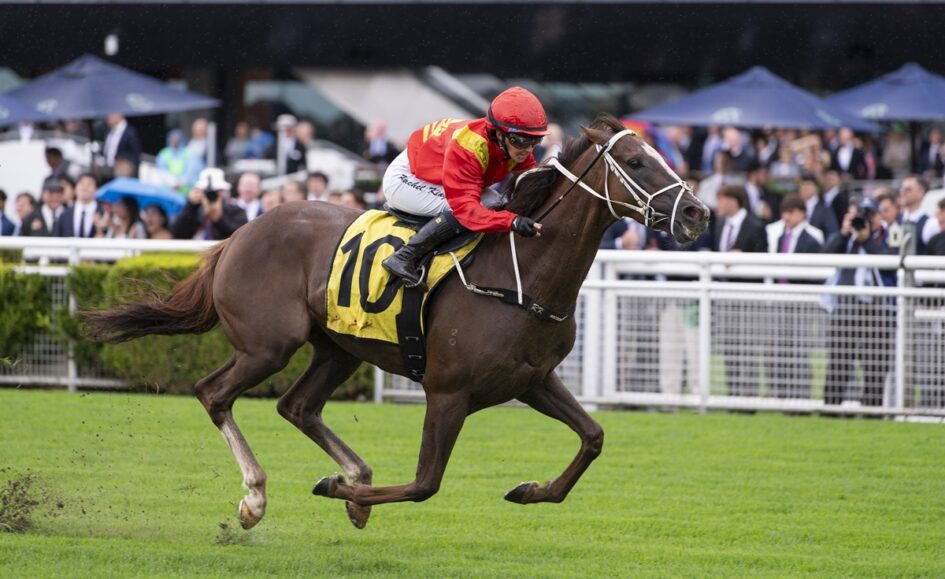
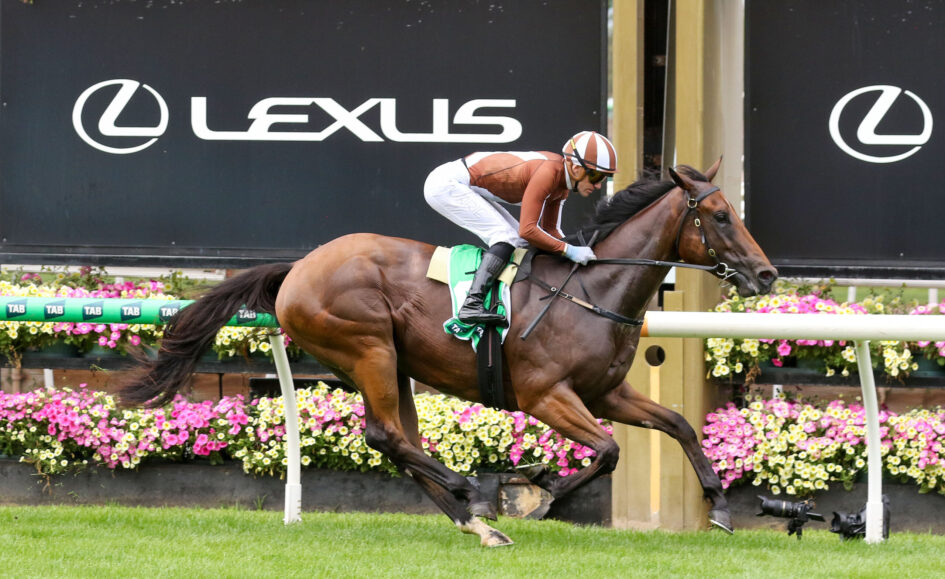
Trained by Trent Busuttin alongside Natalie Young, Newlook had posted no placings from five prior Australian appearances, but the soft track suited him to dominate.
The Chairman’s spoils include Sydney Cup ballot exemption and no penalty, so Newlook enters on a plum 50kg mark.
Advertisement
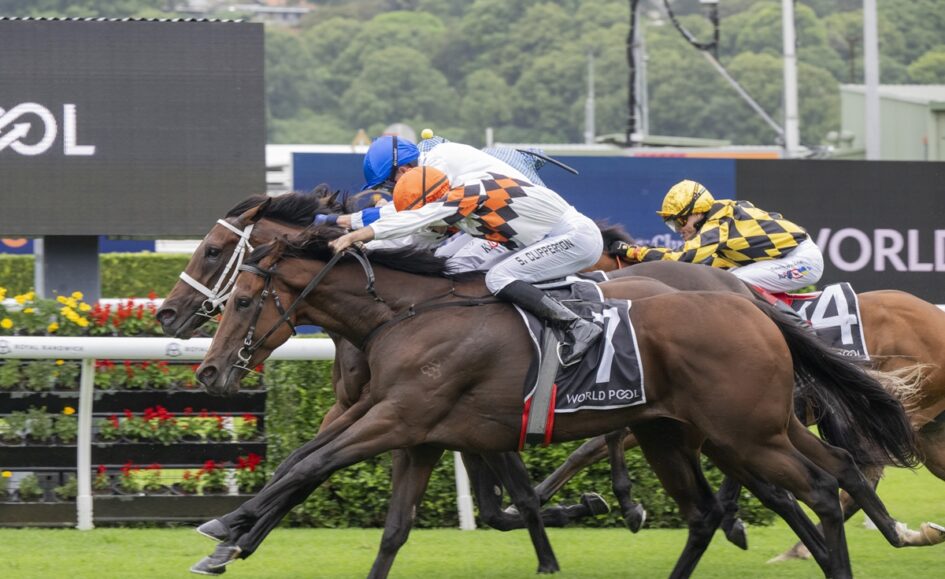
A $8.50 chance with Rachel King aboard, Newlook powered home down the track’s centre, scoring by 1¼ lengths ahead of Campaldino ($7) who was the same clear of Juja Kibo ($3.70 equal favourite), from Travolta ($3.70 equal favourite) in fourth spot close up. King took heart from Newlook’s late surge to fifth last time in the Manion Cup.
“I was confident he would take good improvement from his last start, he was only second up there,” King said.
“He still probably blew out at the 50m, I thought I was going to win easy at the furlong but he just got a little bit tired.’
“But he’ll take good improvement again, I galloped him during the week and was confident he would run well over this distance.”
Advertisement
A Chairman’s Quality-Sydney Cup double would make Newlook the 10th such achiever, after Circle Of Fire (2024), The Offer (2014), Jessicabeel (2010), No Wine No Song (2008), Henderson Bay (2002), Linesman (1997), King Aussie (1990), Major Drive (1987) and Marooned (1986).
Last June’s Brisbane Cup conqueror Campaldino proved on song for the Sydney Cup courtesy of his determined second.
Campaldino conveniently drops to 52.5kg from 59kg for the 3200m Randwick feature next week.
Rider Tim Clark admired Campaldino’s recent Sydney Cup pipe-opener.
Advertisement
“He bounced back to form today,” Clark said.”Then next Saturday with a few kilos less he is going to be hard to beat.”
Craig Williams on Ciaron Maher’s Juja Kibo expects sharpening for the 2026 Sydney Cup.
“He has run really well again and ahead of his ‘Grand Final’ next week,” Williams said. “It is all part of Ciaron’s preparation with today’s run into the Cup in seven days.’”
Chennai Super Kings’ captain Ruturaj Gaikwad (AP Photo/Aijaz Rahi)
Ruturaj Gaikwad admitted his own failure at the top hurt Chennai Super Kings as they slumped to a heavy loss against Royal Challengers Bengaluru, elaborating on key moments in the post-match press conference. CSK were rocked early in the chase of 250, collapsing to 30 for 3 after losing Ruturaj, Sanju Samson and Ayush Mhatre. That early damage proved decisive despite a spirited response later. Reflecting on the fightback, Ruturaj said in the post-match conference: “Well, even I was surprised, to be honest. Great fight by Sarfaraz, Prashant Veer, Jamie Overton, even to some extent Shivam Dube. So I think, maybe I would have, contributed more top of the order, you never know, we would have chased it down. So definitely it’s on me today.” He highlighted how the efforts of Sarfaraz Khan, Prashant Veer and Jamie Overton kept CSK in the contest briefly, but admitted the game had already slipped due to the poor start. Ruturaj also elaborated on a crucial moment in the field that could have shifted momentum. Virat Kohli was dropped early, and RCB capitalised fully. Speaking about that phase, he said: “We would have had, as you rightly said, if we would have taken early chance of Virat Kohli, I think that was, I mean, maybe we would have had momentum to ourselves. But I think, we still had the game in our hands till the 13th, 14th over, and that’s when the momentum really shifted.” That shift came dramatically at the death, when Tim David tore into the CSK attack. Ruturaj pointed out that they almost had an opportunity to dismiss him earlier. On that moment, he said in the press conference: “Well, you’re right, KP. I think, Anshul almost got a wicket of him. Unfortunate to be illegal delivery, but yeah, after that, he just smacked all around the park and, as you rightly said, hats off to him.” RCB’s late surge, powered by Devdutt Padikkal, Rajat Patidar and David, took the game away completely. For Ruturaj, the takeaway was clear. Missed chances, an underwhelming start with the bat, and a brutal finish from the opposition combined to seal CSK’s fate.
United, along with Manchester City, Chelsea and Arsenal, are among the clubs who have been contacted about the potential availability of Real Madrid forward Vinicius Junior, 25. (Teamtalk, external)
Tottenham defender Luka Vuskovic, 19, currently on loan at Hamburg, has suggested he could return to White Hart Lane despite interest from major clubs in Europe. (The Standard, external)
Bayer Leverkusen will try to retain star forward Yan Diomande, 19, with a deal for a further year, despite numerous clubs being interested in signing the Ivorian. (Fabrizio Romano, external)
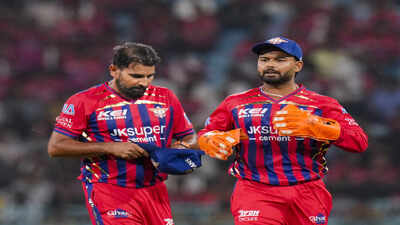
Lucknow Super Giants’ captain Rishabh Pant, right, with Mohammed Shami (PTI Photo)
Mohammed Shami delivered a clinical spell to guide Lucknow Super Giants to a five-wicket win over Sunrisers Hyderabad in Hyderabad, later explaining the tactical shift behind his success. The veteran pacer returned outstanding figures of 2 for 9 in his four overs, including a remarkable 18 dot balls, setting the tone early as LSG ripped through SRH’s top order. The hosts eventually recovered to 156 for 9, but the total never looked enough. Speaking after being named Player of the Match, Shami revealed that his decision to rely more on slower deliveries came from observing trends from the previous season. “Last year I was here, a lot of slower balls were bowled. That was in my mind, the bowlers and the opponents bowled a lot of slower balls, so I thought why not I try it too,” Shami said at the post-match presentation. His impact was immediate. Shami struck in the opening over to remove Abhishek Sharma for a duck and soon sent back Travis Head, leaving SRH rattled early. Ishan Kishan also fell cheaply, as the innings spiralled during the Powerplay. At 22 for 3 and then 26 for 4, SRH were staring at a collapse before Nitish Kumar Reddy and Heinrich Klaasen stitched together a crucial 116-run stand to revive the innings. Shami stressed that the victory was important after a setback in the previous game and spoke about the need to maintain rhythm and fitness through consistent cricket. “We are very happy because we had lost the previous match at home, so it was very important for us to win this match to build momentum. Once you get that start, the winning momentum continues. (on his preparation for this IPL) If you like cricket, and if you want to play at any level, then it is important to be in touch with the game,” Shami said. He also underlined the importance of preparation and adaptability, highlighting how staying match-ready helped him execute his plans effectively. “If you want to perform at a good level, it’s very important to maintain your fitness. First, you have to be fit then you can show your skill. Regarding domestic cricket, my plan was to be in touch with the game, so that I can be in the flow. That’s why I played all the matches. (on his changes to his bowling today) Without skill and without experience, nothing works. It’s about quickly adapting to the conditions and reading them is very important,” he added. Despite SRH’s late recovery, LSG stayed in control during the chase, with the skipper leading from the front with an unbeaten 68 to seal a comfortable win.
Kym Davison, the trainer from Albury, has savored his maiden city triumph on a premier occasion of the Sydney autumn carnival in 2026, accomplishing it almost accidentally.
He acted as a standby instead, and obligated to stay in Sydney for any possible withdrawals, Davison elected to pay the entry fee for the Group 3 Carbine Club Stakes (1600m) as a fallback option.
“First city winner, so not a bad one to crack the ice with,” Davison said.
Advertisement
“I was hoping to be in the next race, but great consolation.
“I saw this race and said, ‘well, we’re going up there anyway, so we’ll go and have a throw at the stumps’.”
Autumn Break ($8) duly obliged, prevailing by a nose over Kilman ($31) prepared by Chris Waller, who controlled the race until the final stride, as Matias ($6.50) trailed by a short head for third.
The result offered solace in a distressing phase for the Davison household, with Kym’s brother succumbing to his illness just a week prior.
Advertisement
“It’s been a hard week. We lost my brother a week ago,” he said.
“He had been unwell for a while. But you’ve got to pick yourself up.”
Davison, managing eight horses in his Albury stable, will now spell Autumn Break with intentions of targeting The Kosciuszko (1200m) early in his next campaign in October.
“The Kosciuszko, he’d go alright in that,” he said.
Advertisement
“His first start was over 1200, and he should have won that Highway (Handicap) here, that was 1200 first-up, so we’ll try to push onto that if we can.”
Discover leading betting sites offering racing odds for the Group 3 Carbine Club Stakes.
Even in a crushing 43-run loss to Royal Challengers Bengaluru, Chennai Super Kings quietly ticked off a major milestone that adds an interesting layer to the evolving scoring trends in the IPL.Most 200-plus totals in the IPL37 – CSK36 – RCB33 – PBKS32 – MI30 – KKRCSK’s 207 all out while chasing 250 at the Chinnaswamy took them to 37 totals of 200-plus in IPL history, the most by any team. They have now edged past RCB, who are on 36, with Punjab Kings (33), Mumbai Indians (32) and Kolkata Knight Riders (30) following behind.What makes the stat intriguing is the timing. In an era where 200-plus scores are becoming increasingly common and often not enough to guarantee wins, CSK’s record came in a match where they were comprehensively outplayed. Chasing a massive 250, they still managed to cross 200, but the gap in quality and execution was evident throughout the contest.The night belonged entirely to RCB’s power-packed batting unit. Devdutt Padikkal laid the platform with a well-paced 50, but it was the late assault that completely blew the game open. Rajat Patidar and Tim David dismantled the CSK bowling attack with a ruthless fourth-wicket stand. Patidar’s unbeaten 48 off 19 balls and David’s brutal 70 off 25 lifted RCB to a towering 250 for 3, with 97 runs coming in the last five overs.In response, CSK never really found stability. Early wickets left them struggling at 30 for 3, and the chase was effectively over in the powerplay itself. Sarfaraz Khan showed intent with a quick half-century, while useful contributions from the lower middle order helped them go past 200, but the target remained far out of reach. The match summed up the modern IPL perfectly. Big scores are frequent, momentum shifts quickly, and even crossing 200 does not carry the same weight it once did. On this occasion, CSK ended up on the wrong side of the result, but still moved to the top of a high-scoring chart that continues to grow with every season.
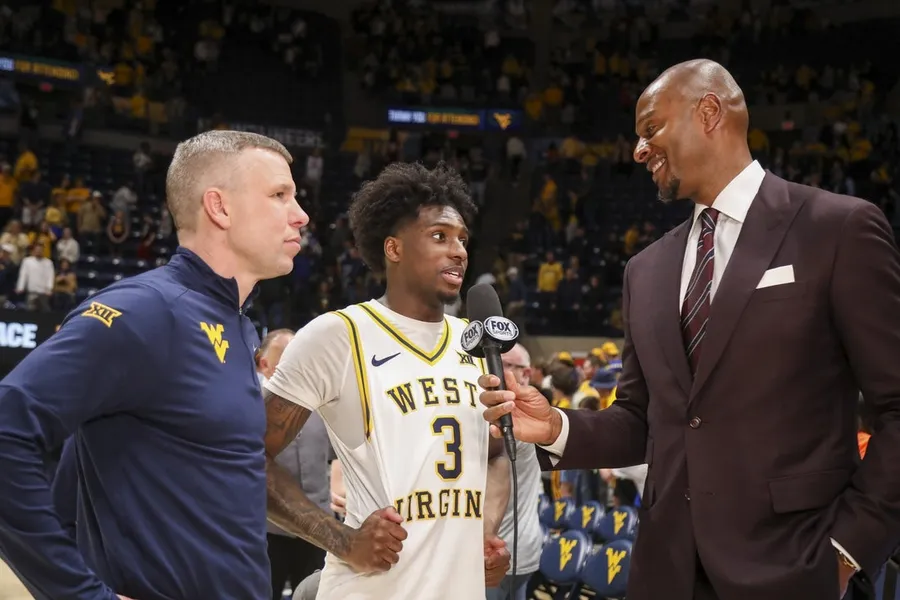
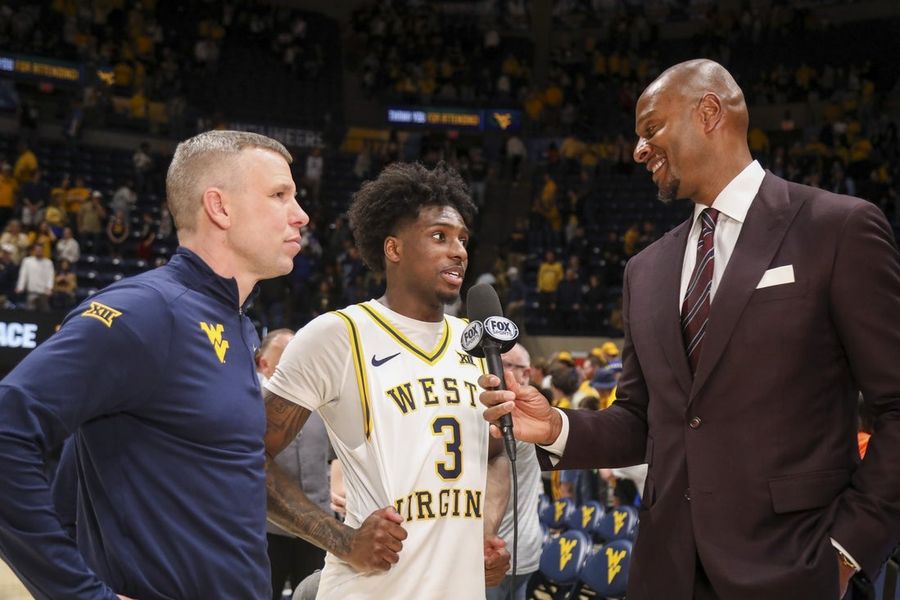
Feb 28, 2026; Morgantown, West Virginia, USA; West Virginia Mountaineers guard Honor Huff (3) is interviewed after the game after defeating the BYU Cougars at Hope Coliseum. Mandatory Credit: Ben Queen-Imagn Images
Honor Huff scored 38 points and made eight 3-pointers to help West Virginia rally for an 89-82 overtime victory over Oklahoma in the College Basketball Crown championship game on Sunday in Las Vegas.
Chance Moore added 19 points and 10 rebounds for the Mountaineers (21-14), who trailed by 13 points in the second half before rallying. Brenen Lorient scored 15 points in the program’s first postseason tournament title since winning the 2007 NIT.
Nijel Pack led Oklahoma (21-16) with 24 points and seven assists, followed by Tae Davis’ 19 points and Xzayvier Brown’s 13.
Oklahoma scored the first six points of overtime, taking an 82-76 lead on Pack’s layup.
Jasper Floyd then hit his first 3-pointer of the game, followed by Huff’s triple to tie the score with 2:14 remaining. After Pack missed a 3-pointer, Floyd hit another trey to give the Mountaineers an 85-82 lead.
Advertisement
West Virginia got stops on its next two possessions and Huff drilled four straight free throws to seal the championship win.
Oklahoma pushed its four-point halftime lead to 10 on Pack’s 3-pointer, forcing a West Virginia timeout less than four minutes into the second half.
Brown’s jumper extended the margin to 13, before Huff’s three-point play and Moore’s layup cut the deficit to 59-51.
Advertisement
Lorient’s basket at the 5:23 mark pulled West Virginia within three. Derrion Reid and Davis scored on Oklahoma’s next two possessions, giving the Sooners a 71-64 lead.
From there, Huff scored five straight points and Lorient made a layup to tie the score at 71 with 1:45 remaining.
After an Oklahoma timeout, Pack and Huff traded triples. Davis then turned the ball over and committed a foul on Huff, who drained two free throws with 33 seconds left.
Davis’ ensuing layup tied the score at 76. Huff missed a go-ahead 3-pointer on the other end, sending the game to overtime.
Advertisement
The Mountaineers connected on eight of their first 10 3-point attempts, including Huff’s three straight triples to build a 26-11 lead.
Oklahoma answered with a 16-2 run, cutting its deficit to a point on Pack’s mid-range jumper with 5:25 left in the first half.
After Moore’s layup snapped a four-plus minute West Virginia scoring drought, the Sooners scored nine straight points, taking a 36-30 advantage. Davis closed the first half with a three-point play to give Oklahoma a 41-37 halftime lead.
The decision on whether Gin Twist forges ahead to another start or enters a spell phase hinges on her performance in a track gallop.
Lindsay Park’s two-year-old filly is a potential runner in Saturday’s Listed Redoute’s Choice Stakes (1200m) at Caulfield, contingent on a satisfying showing in Monday’s gallop.
She was the hot favourite dispatched in the Group 3 Thoroughbred Breeders Stakes (1200m) at Flemington March 28, leading early before stopping to take third.
Ben, Will and J D Hayes prepare Gin Twist, who was accounted for by more than three lengths by the Sydney mare Satono Glow.
Advertisement
Ben Hayes mentioned optimism surrounds the filly’s readiness for Saturday, as she exhibits no adverse aftereffects from the race.
“We’ll make a decision on Monday whether she runs or not after she does some work,” Hayes said.
“We feel that one, she raced a bit fresh last week and two, she didn’t handle the heavy track, but she has pulled up fine.
“It is a good opportunity for her and if she doesn’t work well, we won’t run her, but if she works well, we’ll run her.”
Advertisement
The filly had previously claimed the Listed Festival Stakes (1000m) victory at Flemington on February 28, and was next in line as third emergency for Group 1 Golden Slipper (1200m) at Rosehill on March 21.
Lindsay Park refrained from interstate travel for her, aware a start was improbable.
Hayes is of the view that Gin Twist copes with 1200m and merits another attempt on a good track.
“I think she is a very fast horse, and 1200 metres is her limit,” Hayes said.
Advertisement
“But it is hard to judge her off that run over 1200 metres, which was down the straight, and on a heavy eight (track).
“We can find out if she can the trip and then we’ll know how to place her next prep.”
Secure the best value with betting sites offering markets for the Redoute’s Choice Stakes.
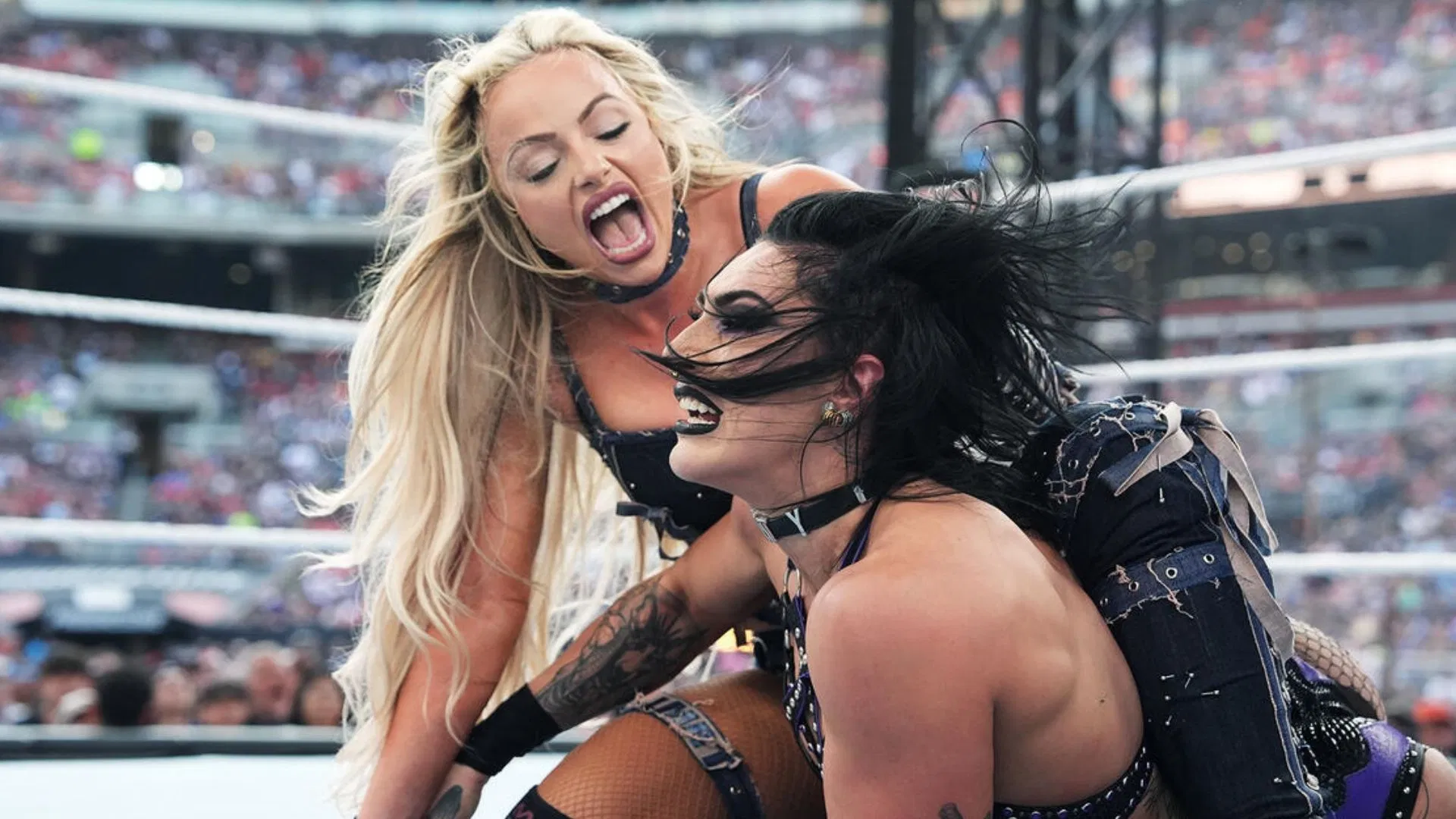
Liv Morgan broke character to comment on her relationship with WWE star Rhea Ripley. Both Ripley and Morgan will be challenging for major titles at WrestleMania 42.
In an interview with Esteban Ramirez, Liv Morgan broke character to comment on her relationship with Rhea Ripley. The Judgment Day star noted that she knew her former rival was going to be a star while they were in NXT together and left Ripley her locker when she got called up to the main roster.
Thanks for the submission!
Advertisement
“Rhea and I have quite a bit of lore. I remember back in the Performance Center when I saw her, I knew that she was gonna be a star. It was just very evident to me. So when I had gotten called up to the main roster, I had left Rhea my locker. I told her, ‘You can have my locker, you can move your stuff into my locker.’ She didn’t even have a locker yet,” said Morgan.
The Women’s Royal Rumble winner added that they will always be connected and compared their rivalry to Batman and The Joker.
Advertisement
“I came back on the Liv Morgan Revenge Tour and took everything that she loved including Dominik, the Judgment Day and the Women’s World Championship. So I feel like we are both the heroes and villains in each other’s stories. She is the Batman to my Joker, and I am the villain in her hero’s story, and she is the villain in my hero’s story,” she added. [H/T: WrestleTalk on X]
You can check out the interview in the video below:
Morgan will be challenging Stephanie Vaquer for the Women’s World Championship at WrestleMania 42.
Liv Morgan comments on recent WWE injury
WWE RAW star Liv Morgan recently discussed her injury last year that caused her to miss several months of WWE television.
In an interview with Brad Gilmore, the 31-year-old noted that the injury was devastating for her last year as she was on an upward trajectory. The WWE veteran added that she was upset about the situation during her hiatus last year.
Advertisement
“I do feel like in the moment that I got injured, I was on a very upward trajectory. And so the injury obviously devastated me. I was very, very angry the whole entire time I had off time,” she said.
Liv Morgan says she was “angry the whole time” when she was recovering from shoulder injury: “I was mad the whole entire time,” Morgan said. “I got injured in a moment [when] I had multiple things going on for me. I was really enjoying and loving what I was doing. So to have all
Only time will tell if Liv Morgan can defeat Stephanie Vaquer to become champion once again at WWE WrestleMania.
Why did you not like this content?
Advertisement
Was this article helpful?
Thank You for feedback
Read all the hottest WWE news from Sportskeeda by choosing us as your preferred source. Click HERE.












































You must be logged in to post a comment Login