The NFL preseason kicked off with the Hall of Fame Game on Aug. 6 as the Carolina Panthers knocked off the Arizona Cardinals in walk-off fashion, 33-30. The first full week of NFL action is here with 16 games slated for Week 1 of the 2026 preseason.
While these games don’t count against season records, they’re a crucial time for both teams and fans to see what their team will look like when it does count. There are active quarterback competitions, rookies getting their first reps and veterans looking to prove they’ve still got it.
With so many changes this offseason, from coaching hires, to trades, this is the time for squads to works toward their identity, shake off the dust and work on the new relationships.
Here is a reason to watch each game on Friday and Saturday:
Dolphins vs. Commanders
- Friday, Aug. 14 at 7 p.m. ET
The Commanders offensive line has become a major concern after Laremy Tunsil injured his biceps in practice and will miss a significant part of the season. The team says they don’t plan to find a left tackle from outside the team, so the remaining members of the offensive line room will need to fill the role. Brandon Coleman could step up in the absence, so he will be one to watch as the season approaches.
Broncos vs. Falcons
- Friday, Aug. 14 at 7 p.m. ET
First-year Falcons head coach Kevin Stefanski is still determining his QB for the 2026 season, with Tua Tagovailoa and Michael Penix Jr. competing. Tagovailoa was named the starter for this week and will make his Falcons debut on Friday.
Tagovailoa has been doing the 11-on-11 work while Penix, who is still recovering from an ACL injury, is doing 7-on-7 work. As Penix still waits for full clearance to participate in a game, it’s no surprise that Tagovailoa got the start, but that doesn’t necessarily mean he will keep that job for the regular season.
Buccaneers vs. Jets
- Friday, Aug. 14 at 7 p.m. ET
Geno Smith is in his second stint with the Jets, also playing for them from 2013 to 2016. Second-year head coach Aaron Glenn said the starters will see some action, meaning Smith will be throwing passes as the Jets QB for the first time in a decade. New offensive coordinator Frank Reich, one of many new coaches for this season, will be challenged to produce a more productive offense than the Jets have had over recent years.
A new quarterback and new offensive coordinator usually mean growing pains, and we could see some of the adjustments made during this first preseason game.
Browns vs. Bears
- Saturday, Aug. 15 at 1 p.m. ET
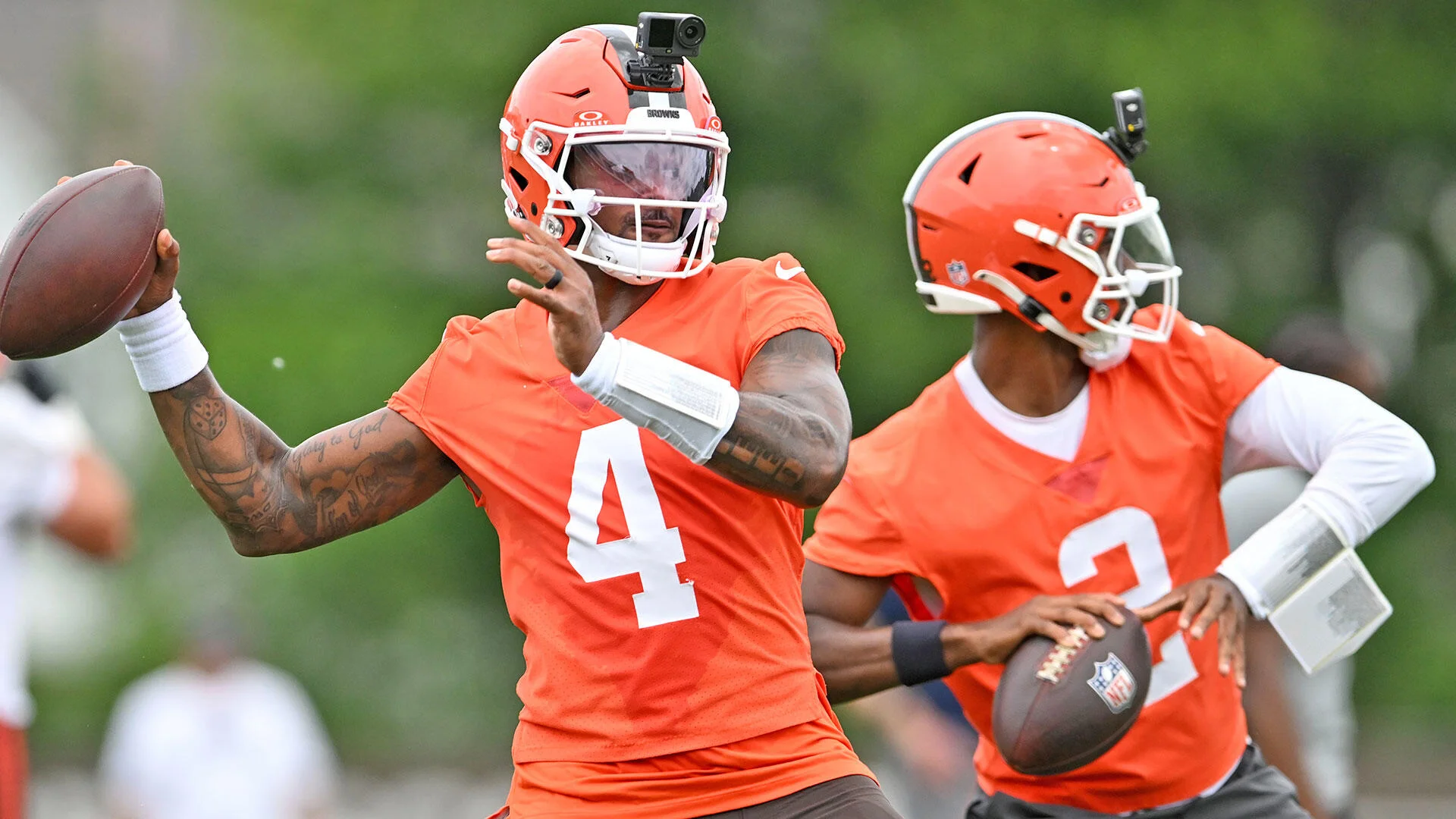
The Browns quarterback job is up for grabs, with Deshaun Watson and Shedeur Sanders fighting for the spot. Both have struggled during training camp with penalties and takeaways, leaving little excitement for either at the moment.
Watson hasn’t played in a game for almost two years, due to injury and suspensions, and wasn’t the clear answer to the Browns’ QB woes even when he was playing. Sanders comes in with less experience than Watson and was one of the biggest draft falls, going from a predicted first-rounder to a fifth-round pick. Watson is the early favorite for the job, but the preseason will be crucial in the determination.
Panthers vs. Bills
- Saturday, Aug. 15 at 1 p.m. ET
Jonathon Brooks is making his first game appearance since tearing his ACL for the second time in 2024. The running back has been limited to just three games in his NFL career, recording just nine carries and 22 yards in those contests. The second-rounder has a lot of potential in the league and while he’s done well in camp, an actual game is a different story.
Vikings vs. Giants
- Saturday, Aug. 15 at 1 p.m. ET
The Vikings concluded their quarterback competition, giving Kyler Murray the QB1 job. J.J. McCarthy, who the team drafted at No. 10 overall in 2024, lost the job after being named the starter ahead of the 2025 season. McCarthy suffered three injuries last season — a high-ankle sprain, a concussion and a hairline fracture in his throwing hand — causing him to miss six games total.
The preseason, and this game, will be the first test for the 23-year-old to see how he handles being the backup.
Rams vs. Chiefs
- Saturday, Aug. 15 at 4 p.m. ET
As Patrick Mahomes continues to rehab ACL and LCL injuries he suffered last year, he will be sitting as the Chiefs face the Rams. Former No. 11 overall pick Justin Fields will see the field, as well as Garrett Nussmeier. Los Angeles is also expected to rest its starters and rookie first-round pick Ty Simpson will get his first chance to gain some NFL experience at the helm.
These two teams are playoff contenders and getting a first look at how both their backups do, along with how their defenses can make adjustments to these backups, will be telling.
Jaguars vs. Saints
- Saturday, Aug. 15 at 4 p.m. ET
The Saints and Jaguars are expected to sit their starters, so this will be time for fans to see their much discussed rookie classes, respectively. It will also be a time for Spencer Rattler to see more playing time, as Saints starter Tyler Shough will not take the field. Rattler can improve his stock with a solid performance, as he remains strong on becoming a starter in the league at some point.
Eagles vs. Ravens
- Saturday, Aug. 15 at 7 p.m. ET
The Ravens come into 2026 as one of the teams with a new head coach. Jesse Minter will make his Ravens debut as HC on Saturday, marking the first time since 2007 that the team will be led by someone other than John Harbaugh. How he handles the preseason, from how competitive he gets, to whether he plays the starters, are questions that will be answered this weekend. There are many changes to Baltimore’s coaching staff, with Declan Doyle going into a play-calling role.
Cowboys vs. Seahawks
- Saturday, Aug. 15 at 8 p.m. ET
The Seahawks are coming off a Super Bowl win and have high expectations heading into 2026. This will be our first real opportunity to see how the defending champs will do with the changes made during the offseason, including losing Super Bowl MVP Kenneth Walker III.
Another aspect of this game to keep an eye on is the Cowboys backup quarterback role. Sam Howell, a former Seahawk, and Joe Milton III are in a tight race for QB2.


 Virginia surprised many in their run to the ACC Championship Game last year, on the cusp of the 12-team Playoff.

;)







































You must be logged in to post a comment Login