England spent much of the Fifa World Cup 2026 semifinal proving that Lionel Messi could be contained. They spent the closing minutes discovering that he did not need much time to decide the contest.
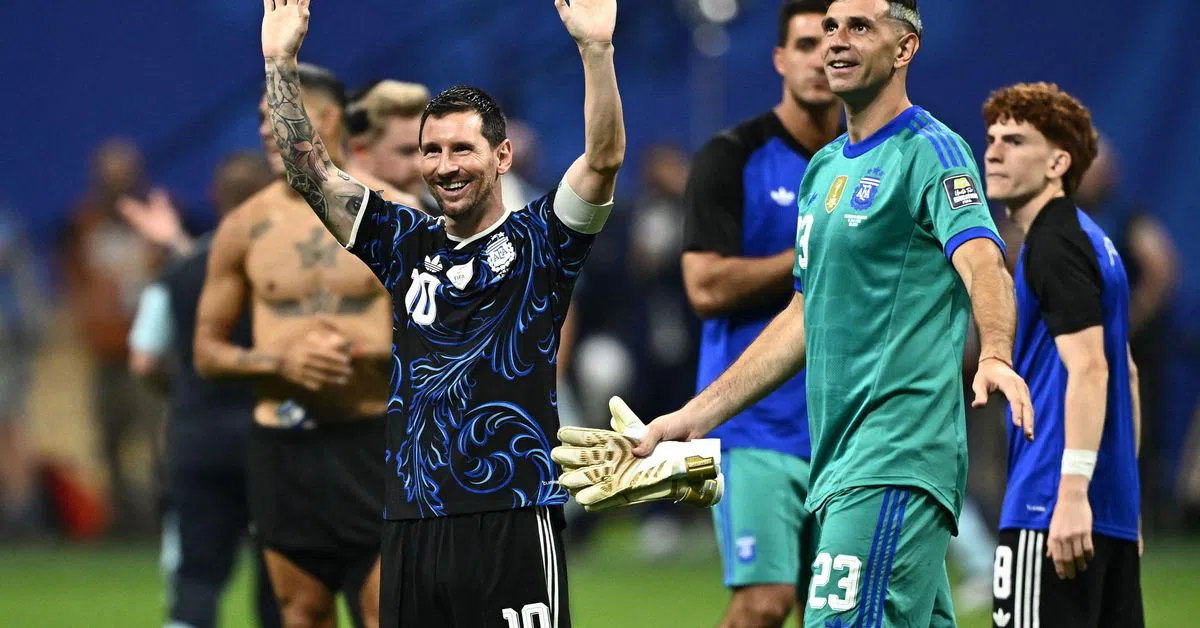
Argentina scored twice in six minutes and 24 seconds to overturn Anthony Gordon’s second-half goal and beat England 2-1 at Mercedes-Benz Stadium in Atlanta, sending the defending champions into Sunday’s final against Spain.
Advertisement
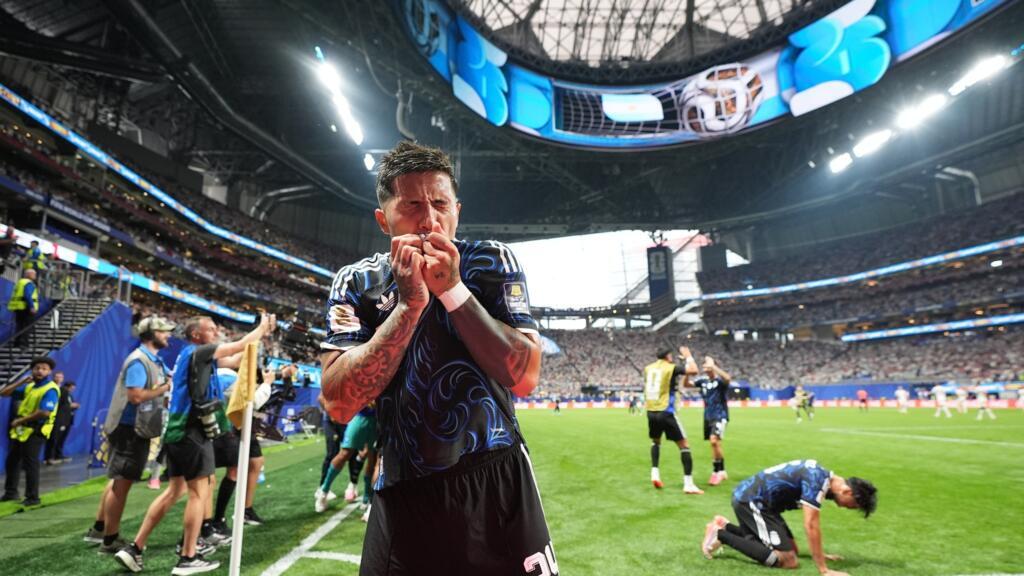
Enzo Fernandez equalised in the 85th minute after Messi drew England’s defenders towards him and released the midfielder outside the penalty area. Lautaro Martinez, introduced four minutes earlier, then headed in Messi’s right-footed cross in the second minute of stoppage time.
The result preserved Argentina’s chance of becoming the first team since Brazil in 1962 to successfully defend the World Cup. It also ended England’s hopes of reaching the final for the first time since winning the tournament in 1966.
Advertisement
England will now face France in the third-place match in Miami on Saturday (2:30 AM IST on Sunday), while Argentina will meet Spain at MetLife Stadium in New Jersey on Sunday (12:30 AM IST on Monday).
England matched Argentina physically and defended effectively for long periods, but the match data showed how heavily the second half tilted towards the defending champions.
Advertisement
Argentina finished with 64 per cent possession, completed almost twice as many accurate passes and generated an expected-goals figure more than three times England’s total.
England vs Argentina match statistics
Statistic
England
Argentina
Expected goals
0.53
1.84
Possession
36.00%
64.00%
Shots on target
2
5
Shot accuracy
40.00%
33.00%
Big chances created
1
3
Big chances missed
0
2
Accurate passes
273
537
Pass accuracy
84.00%
91.00%
Duels won
48
51
Saves
3
1
Fouls committed
11
15
Argentina’s 537 accurate passes, compared with England’s 273, illustrated the territorial pressure that intensified after Gordon’s goal.
Advertisement
Their 1.84 expected goals also suggested that the late comeback was not simply the product of two isolated moments. Argentina created three big chances, missed two and forced Jordan Pickford into three saves.
England, by contrast, created only one big chance and recorded two shots on target. Gordon converted their best opportunity, but the side generated little after moving ahead.
Advertisement
Old hostility returns from the opening whistle
Advertisement
England and Argentina had not played each other for 21 years, but the rivalry’s historic tension resurfaced before the match had properly begun.
The national anthems were met with jeers from sections of the opposing support, while the first exchanges featured more confrontation than football.
Advertisement
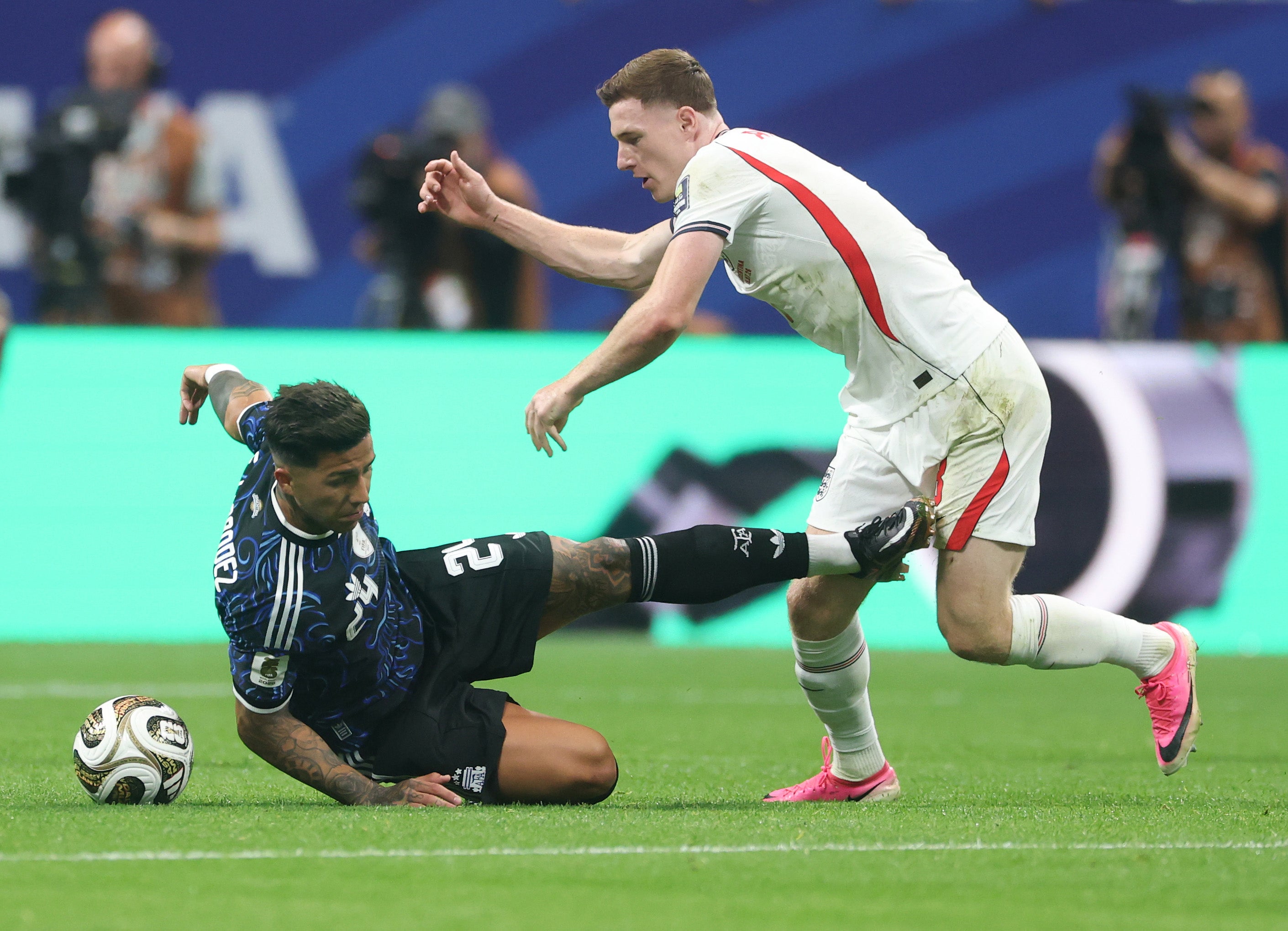
Jude Bellingham was knocked down by Leandro Paredes within seconds of kick-off. Soon afterwards, Fernandez caught Elliot Anderson from behind, prompting England’s players to appeal to referee Ismail Elfath.
Anderson later responded with a late challenge of his own.
Advertisement
According to Opta, the opening 30 minutes produced 12 fouls and no shots, the first such occurrence in a World Cup match since its records began in 1966.
England’s Jude Bellingham reacts after a challenge as Argentina’s Enzo Fernandez, Giuliano Simeone and Nahuel Molina look on. Photo: Reuters
Advertisement
The pattern suited England initially. Declan Rice and Anderson tracked Messi aggressively, Bellingham embraced the physical exchanges and Argentina struggled to establish their passing rhythm.
Messi was crowded whenever he moved between England’s midfield and defence. Argentina’s attempts to launch quick attacks were repeatedly interrupted before they could gather momentum.
Advertisement
Elfath kept his cards in his pocket during the most heated opening exchanges before booking Anderson for bringing down Messi and Lisandro Martinez for stopping Morgan Rogers.
The American official largely maintained control without allowing the match to become dominated by disciplinary decisions.
Advertisement
Gordon puts England within sight of history
After an attritional first half, England broke the deadlock in the 55th minute through one of their best attacking sequences of the tournament.
Advertisement
Harry Kane dropped towards midfield to provide an outlet and pull Argentina’s defenders out of position. Nicolas Tagliafico’s attempted clearance then fell to Rice, who quickly moved the ball towards Rogers on the right.
Rogers looked up and delivered a cross towards the back post, where Gordon arrived behind the defence and adjusted his body to guide the bouncing ball beyond Emiliano Martinez.
Advertisement
Argentina’s defensive errors contributed to the goal. Tagliafico failed to clear decisively, while the back line did not respond quickly enough to Gordon’s run.
For England, however, the move demonstrated what had made them dangerous throughout the tournament: Kane’s ability to link play, Rice’s forward movement, Rogers’ composure and Gordon’s pace from the flank.
Advertisement
Gordon’s first World Cup goal left England 35 minutes away from a first final in 60 years.
Spence produces a defining intervention
Advertisement
Argentina responded almost immediately.
Fernandez and Messi combined in midfield before releasing Giuliano Simeone behind England’s defence. The forward appeared to have a clear route towards goal as Pickford prepared for the shot.
Advertisement
Djed Spence recovered from several metres behind and launched into a perfectly timed sliding challenge, taking the ball away from Simeone and conceding only a corner.
The England defender celebrated with a roar towards the crowd before being surrounded by his team-mates.
Advertisement
Given the quality of the recovery, the position of the attacker and the stakes involved, it was one of the outstanding defensive moments of the tournament.
Pickford then made important saves as Argentina increased their pressure. England appeared to be defending with discipline while retaining the possibility of counter-attacking through Gordon and Rogers.
Advertisement
That balance did not last.
Tuchel’s substitutions change the character of the match
Advertisement
Thomas Tuchel responded to England’s lead by progressively replacing attacking players with defenders.
Gordon was withdrawn despite remaining England’s most effective outlet. Ezri Konsa, Dan Burn and Nico O’Reilly were introduced during the final 20 minutes as England retreated into a deep 5-4-1 formation.
Advertisement
The changes were designed to protect the penalty area and preserve the lead. Instead, they removed England’s ability to carry the ball away from danger.
Argentina no longer had to account for runners behind their defence. Their full-backs pushed higher, their midfielders occupied positions around England’s penalty area and Messi began receiving possession closer to goal.
Advertisement
England’s 36 per cent possession and 273 accurate passes reflected the overall imbalance, but their retreat after taking the lead made the gap more damaging.
Each clearance returned the ball to Argentina. Kane became isolated, England’s midfield moved closer to its own defensive line and the pressure became continuous.
Advertisement
How England’s approach shifted
Match phase
England’s approach
Effect
Before the goal
Contested midfield and attacked through Gordon and Rogers
Restricted Messi and threatened on transitions
Immediately after scoring
Defended deeper but retained counter-attacking options
Argentina increased pressure but remained exposed
Final 20 minutes
Added defenders and moved into a 5-4-1
England struggled to retain possession
Closing stages
Protected the box without pressing the ball
Messi found space to create both goals
Former England captain Wayne Rooney argued that the substitutions would have weakened the players’ belief.
“If you’re an attacking player on that pitch and you go 1-0 up and you see the changes which the manager’s making, you’re losing belief,” Rooney said during the BBC’s coverage.
Advertisement
Former goalkeeper Joe Hart compared the retreat with England’s approach under Gareth Southgate in previous major finals, while Alan Shearer said Tuchel had “played his hand” too early by placing six defenders on the pitch.
Their criticism centred not only on the substitutions but on the message they conveyed: England appeared to stop trying to win the match and began trying only to survive it.
Advertisement
Messi emerges when England stop attacking
For more than 80 minutes, England’s defensive plan against Messi had largely worked.
Advertisement
He was followed through midfield, denied time near the penalty area and pushed towards areas where his influence was less dangerous.
With seven minutes remaining, Messi even appeared exhausted after racing O’Reilly towards the halfway line for a loose ball.
Advertisement
Yet England’s deeper shape changed the space available to him.
Messi no longer needed to drop into midfield to find possession. Argentina recovered the ball quickly and returned it to him around the edge of England’s penalty area.
Advertisement
In the 85th minute, several defenders moved towards Messi as he received possession. He recognised that Fernandez had been left unmarked outside the box and released the midfielder.
Fernandez curled a powerful 20-metre shot beyond Pickford and into the corner.
Advertisement
The equaliser was the product of Argentina’s sustained pressure and England’s inability to close down the ball. It also altered the psychological balance immediately.
England had set up to protect a lead. Once the score was level, the attacking players capable of restoring it were no longer on the pitch.
Advertisement
Lautaro completes the turnaround
Argentina continued attacking after Fernandez’s equaliser rather than preparing for extra time.
Advertisement
Alexis Mac Allister struck the post, providing another warning that England’s defensive structure was beginning to break.
Messi recovered the loose ball and moved towards the right channel. Using his weaker right foot, he delivered a precise cross into the penalty area.
Advertisement
Lautaro Martinez attacked the space between England’s defenders and directed his header beyond Pickford in the 92nd minute.
The substitute had been on the field for only 11 minutes.
Advertisement
Argentina had transformed the match from probable elimination to a place in the final in little more than six minutes.
The comeback also extended a significant tournament trend. Argentina have scored 11 goals from the 75th minute onwards at this World Cup, underlining their ability to remain composed and decisive late in matches.
Advertisement
Argentina punish surrender of possession
Argentina’s victory was not built on a dramatic tactical reinvention. It came from maintaining their structure while England abandoned theirs.
Advertisement
Lionel Scaloni’s side continued circulating the ball patiently after falling behind. Fernandez and Mac Allister moved higher, the full-backs widened the pitch and Messi searched for spaces between England’s increasingly narrow lines.
The statistical contrast became more pronounced as the game progressed.
Advertisement
Argentina completed 91 per cent of their passes, compared with England’s 84 per cent, and held a narrow 51-48 advantage in duels won. Despite the physical nature of the match, they retained enough technical control to sustain attacks around England’s box.
Their five shots on target were produced from a lower shot-accuracy rate than England’s, but the greater volume eventually proved decisive.
Advertisement
Scaloni’s substitution also had a direct attacking effect. Lautaro entered and scored the winner.
Tuchel’s substitutions had the opposite consequence. They helped England defend in numbers but removed the players capable of relieving pressure.
Advertisement
A familiar form of English heartbreak
England have suffered painful World Cup semifinal defeats before.
Advertisement
They lost to West Germany on penalties in 1990 after recovering to force extra time. In 2018, they led Croatia before being beaten in extra time.
This defeat carried a different weight because England appeared to have control of both the score and the contest until the final stages.
Advertisement
They had absorbed Argentina’s physical approach, limited Messi and taken the lead through a well-constructed attack. Their defenders had also produced significant individual moments, most notably Spence’s recovery challenge and Pickford’s saves.
Yet England increasingly surrendered the areas of the pitch that had allowed them to compete.
Advertisement
England fans reacting during their team’s match against Argentina in Fifa World Cup 2026 semifinal. Photo: Reuters
Advertisement
The tactical retreat revived memories of the Euro 2020 final against Italy, when England scored early and gradually withdrew, and the Euro 2024 final against Spain, when another cautious approach attracted criticism.
Rooney described the decision to stop pursuing a second goal as a surrender of the team’s strengths.
Advertisement
“You can’t go a goal up and then surrender the strength of the ball and surrender any opportunity to try to get the second goal,” he said.
“If you let players of that quality have the ball around your penalty box, sooner or later they’re going to score.”
Advertisement
Referee avoids becoming part of the rivalry’s history
World Cup matches between England and Argentina have often been defined partly by refereeing controversy.
Advertisement
Antonio Rattin’s dismissal in 1966, Diego Maradona’s “Hand of God” goal in 1986 and David Beckham’s red card in 1998 became permanent chapters in the rivalry.
The Atlanta semifinal was physical and confrontational but did not produce a comparable dispute.
Advertisement
Elfath allowed the opening exchanges to remain robust without losing control. His reluctance to issue an immediate booking carried some risk, but the match became less volatile in the second half.
England vs Argentina: Referee Ismail Elfath and assistant referees Corey Parker and Kyle Atkins. Photo: Reuters
Advertisement
Neither side could credibly argue that a major refereeing decision determined the result.
The semifinal was decided by England’s retreat, Argentina’s pressure and Messi’s ability to exploit the spaces that emerged.
Advertisement
Argentina’s late goals reflect deeper superiority
The timing of Argentina’s goals made the comeback feel sudden, but the numbers indicate that pressure had been building.
Advertisement
Their expected-goals figure of 1.84 was significantly higher than England’s 0.53. Argentina created three big chances to England’s one and forced Pickford into three saves.
They also missed two big chances before eventually scoring.
Advertisement
England were more efficient with their limited opportunities, placing 40 per cent of their attempts on target compared with Argentina’s 33 per cent. But efficiency could not compensate for the lack of attacking volume once Tuchel’s side withdrew.
Argentina’s 64 per cent possession was not sterile. It pushed England deeper, created repeated entries into the final third and eventually placed Messi close enough to goal to decide the match.
Advertisement
Messi earns another chance to defend the crown
Messi did not dominate the semifinal from the beginning. For much of it, England’s midfield and defence reduced his influence.
Advertisement
His decisive contribution came through timing and awareness rather than constant involvement.
For the equaliser, he attracted defenders and recognised Fernandez’s space. For the winner, he moved wide and delivered a precise cross with his weaker foot.
Advertisement
At 39, the physical demands of the tournament were visible. His ability to determine the outcome nevertheless remained undiminished.
Argentina will now attempt to retain the World Cup against a Spain side that controlled France comprehensively in the first semifinal.
Advertisement
The final will present a clash between Spain’s collective possession game and Argentina’s experience, adaptability and late-match resilience.
It will also place Messi opposite Lamine Yamal, bringing together one of football’s defining figures and the leading talent of its emerging generation.
Advertisement
England left to confront tactical questions
England must now prepare for a third-place match neither they nor France wanted to play.
Advertisement
The more important contest for Tuchel will be the debate surrounding his decisions.
England reached the semifinal unbeaten and showed for long periods that they possessed the quality to compete with the defending champions. Gordon troubled Argentina, Rice and Anderson restricted Messi, and the back line held firm under pressure.
Advertisement
The defeat was therefore not simply evidence of Argentina’s superior talent.
It also raised the question of whether England abandoned the approach that had put them ahead.
Advertisement
Argentina finished with more possession, more passes, more chances and a substantially higher expected-goals figure. But the decisive shift came only after England chose to defend increasingly close to their own goal.
For 80 minutes, Messi was controlled.
Advertisement
Once England stopped trying to push Argentina away from their penalty area, he needed only two passes to end their World Cup dream.
Save for an odd name here or there, recent iterations of The Open have produced leaderboards filled with the who’s who of golf. Scottie Scheffler and Xander Schauffele both won their second major titles of the season by raising the Claret Jug these last two years, as the first three major championships of the season provide breadcrumbs for what to expect at the fourth.
While the courses may rotate and the weather may change, quality remains the throughline in major championships, and even more so at an Open, where physical and (more importantly) mental limitations are tested.
Royal Birkdale has crowned 10 worthy champions in its history as an Open venue. The list is hitter after hitter, those golfers where only one name is required to remember them: Palmer, Watson, Trevino. An 11th will be added to it this week from a field of 156 men, finalized on Monday, when Joe Dean advanced through last-chance qualifying.
While Birkdale has crowned titans, it has also left room for Cinderella stories to fill in the rest. Chris Wood in 2008 and Justin Rose a decade prior both come to mind. And both ends of the spectrum are likely to rise to the forefront as only four days of major championship golf remain out in front of us before the clock resets, and everyone starts the countdown for April to roll around.
1. Scottie Scheffler (Won 2025): Just overwhelmed the field and Royal Portrush en route to his Claret Jug last season. Not quite the same form as he was 365 days ago, but Scheffler is still the world’s best. He has been on the first page of the leaderboard at some point in all three majors this season, though he has yet to cross the finish line. Royal Birkdale will be an execution test, and that may play into the world No. 1’s hands even with the missed cut last week.
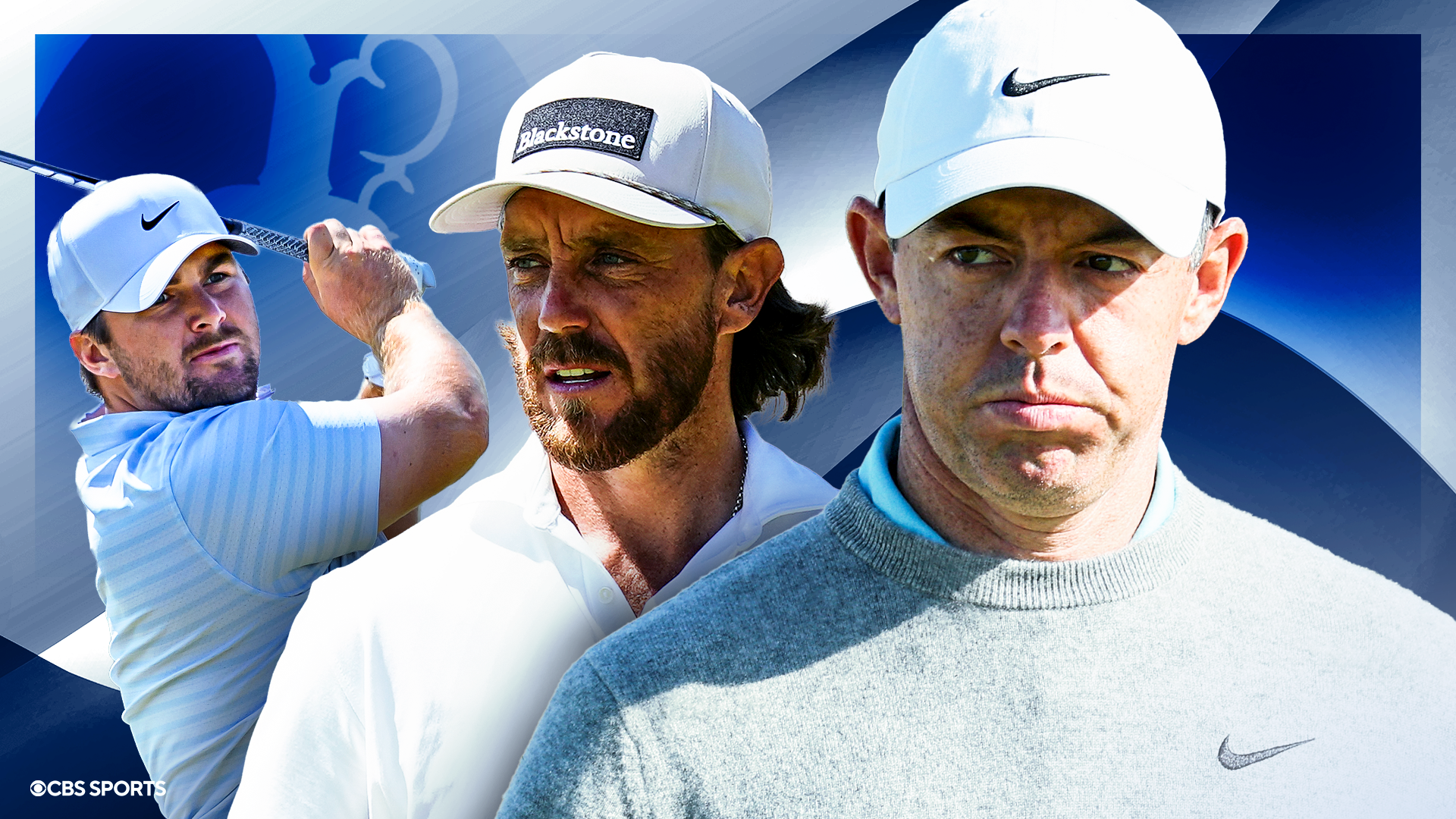
2. Rory McIlroy (Won 2014): He has been in form during early rounds these last few months but seems to stumble once the weekend rolls around. That was the case at the U.S. Open and in the third round of the off-and-on Scottish Open, but there is enough good to suggest he will be a factor. McIlroy has a win and five other top-10 finishes in his last 10 Open appearances and drove it well at The Renaissance Club.
3. Matt Fitzpatrick (T4 in 2025): Fell short at the Scottish Open with a disappointing weekend, but the consistency and ceiling leave no doubt that he is at least the third-best player in the world at the moment. Iron play has been exceptional, and although the short game left a little to be desired, Fitzpatrick is firmly in form. He sniffed contention at the U.S. Open last month and is on the cusp of grabbing major No. 2.
Advertisement
4. Tommy Fleetwood (2nd in 2019): Quietly has five top-15 finishes in a row since missing the cut at the PGA Championship. Fleetwood’s floor continues to put him in elite company, but he will be tested in more ways than one this week as he receives the hometown treatment in Southport. In his last seven Opens, he has five top-20 results, but this time should only improve on that mark as he improves throughout the bag and arrives with a much sharper short game than years past.
5. Jon Rahm (T2 in 2023): Battled to make the cut at the Scottish Open but failed to play himself into another tournament. He has been a factor in one of the three majors to date, which is light given his talent level and affinity for the moment. The driver was a bright spot in Scotland, and his links golf pedigree is among the best in the game.
6. Chris Gotterup (3rd in 2025): When Gotterup gallops, he runs fast and hard. The three-time winner this season was in with a chance in his defense at the Scottish Open a week after a Sunday 62 put his name atop the leaderboard at the John Deere Classic. He has creativity and shot-making in spades to go along with his timeliness on the greens while in the heat of the battle. Gotterup has made all three major cuts this season and is rounding into form at the exact right time for the second straight year at The Open.
7. Wyndham Clark (T4 in 2025): The most recent major champion who finished inside the top five in last year’s Open and inside the top 15 in his last start. For anyone else, that sentence would make them an auto-bet, but for whatever reason, Clark continues to lack the recognition some of his peers are garnering. If this becomes a chipping-and-putting contest, there is no one doing it like the two-time U.S. Open champion.
Advertisement
8. Viktor Hovland (T4 in 2022): Driver is much improved over the last month, and the results back it up. The ability to club down and pick and choose spots off the tee should help a thinker like Hovland, who remains one of the top iron players in the world. For all the grief his short game has received, it is no longer dragging him down. He opened the week at 45-1, which was downright disrespectful.
9. Justin Rose (T2 in 2018, 2024): There is no doubting Rose’s ability to peak at the perfect time as he has three top-11 finishes in the three major championships this season. Combine that with a good run at The Players Championship, and the Englishman has been present at each and every event one would want on the calendar. Came onto the scene here back in 1998 and would make for one hell of a full circle story.
10. Xander Schauffele (Won 2024): Must be thrown in the top 10 given his north of 50% hit rate on that mark in major championships in his career. Still has the top-15 streak going at the U.S. Open, but the ceiling remains absent while the floor gets tested. Schauffele has never missed the cut and rides a run of four straight top-20 finishes in this championship into this week, but he also doesn’t have a top-10 finish since the PGA Championship.
11. Collin Morikawa (Won 2021): Getting whispers of Morikawa given the execution heavy style test Royal Birkdale is combined with the firm, fast, fiery conditions. Reminded folks of his quality with a final-round 61 at the Travelers Championship as he continues to look healthier by the week. More than comfortable using the putter around the greens.
Advertisement
12. Robert MacIntyre (T6 in 2019): The big left-hander is rounding the corner. MacIntyre was amiss for most of the spring, but once summer rolled around, so did his game with three top-15 finishes in his last four starts, including a T3 last week at The Renaissance Club, where his approach play was sublime. He has three top 10s in six Opens.
13. Sam Burns (T31 in 2024): Burns’ baby has arrived, and his watch has ended. He has secured his Thursday tee time, and with Burns in the field, he is immediately a top contender. The U.S. Open runner-up is playing at a level he has not yet reached in his career, meaning a result in The Open he has not yet achieved could be in his future. This year’s Augusta National and Shinnecock Hills were the firmest and fastest tests thus far.
14. Cameron Young (2nd in 2022): It has been a couple of months to forget for Young, who was flying sky high with his second win of the season at the Cadillac Championship, only to come back down to Earth. The three-time PGA Tour winner has struggled mightily on the greens over that span.
15. Ludvig Åberg (T23 in 2025): Åberg has taken his foot off the gas ever since the PGA Championship, where he was paired with Aaron Rai on the final day. A new putter in his bag has sured up some play on the greens for the most part, although he comes in with finishes of T55 and MC in his last two tournaments.
Advertisement
16. Tom Kim (2nd in 2023): You could see the gears turning. A nice start in Myrtle Beach and a close call at the U.S. Open, where he rose to the occasion, both led to his impressive victory at the Scottish Open last week. Kim has put the blade back in the bag and is back to the player who was winning in bunches out of the gates. He regularly elevates his game on this side of the pond in his career, and there is no doubt that he can contend at Royal Birkdale.
17. J.J. Spaun (T23 in 2025): Supremely accurate, elite iron player with a short game that has had its moments this year. Spaun once again comes into a major championship flying under the radar. He has only one Open championship under his belt, but he proved last year that his game can translate. Even if this year is on the firmer and faster side, Spaun should be ready. Give me all of those 100-1 price tags.
18. Patrick Reed (10th in 2019): These conditions scream Reed’s name. As crafty as they come, the former Masters champion got back into the groove of things last week with a solid showing at the Scottish Open as he plays himself into a major championship for the first time since the Masters. The competitive reps should help the Race to Dubai leader.
19. Russell Henley (5th in 2024): Don’t need much convincing to love Russ Bus’ chances. He thrives when the ground game is required, as he can run in between the dunes and pick up chunk yardages in bunches. The chipping and pitching have held him back this last month, but he is largely one of the best in that category.
Advertisement
20. Tyrrell Hatton (T5 in 2016): Unbelievable putting over the last month led to a win at Valderrama, a top 10 at the U.S. Open and top 20 last weekend at the Scottish Open. Fantastic player on links golf courses and getting more consistent in major championships. The Englishman has four top 20s and two missed cuts in his last six Open starts.
21. Si Woo Kim (T15 in 2022): Ranks top 30 in strokes gained off the tee, approach and around the green the last three months while being one of the most accurate drivers in the world. Would be higher if Open record was better, but don’t be shocked if he plays himself onto the first page of the leaderboard following a T9 finish in North Berwick.
22. Justin Thomas (T11 in 2019): Have always been surprised by his lack of success in this championship. Thomas has no top-10 finishes in nine starts and only one top-30 finish in that span. His run of seven straight top 25s came to an end last week as his iron play continues to be checkered.
23. Alex Fitzpatrick (T17 in 2023): Only making his second start in The Open amid a life-changing season. Fitzpatrick has made the cut in both of his major appearances this year and was running hot before a missed cut at the Scottish Open. The Englishman could not buy a putt, but if that turns around, so will his chances.
Advertisement
24. Shane Lowry (Won 2019): Starting to look a lot more like the Lowry we know. The 2019 champion has been red-hot with his scoring clubs while continuing to struggle with putting consistently. He is without a top-20 finish since his collapse at PGA National, but something in the gut says that could change.
25. Min Woo Lee (T21 in 2022): Might only be comfortable at The Renaissance Club, where Lee has a win and now a runner-up result in his career when it comes to links golf. The key to his performance, however, was that he finally started to make some putts. As simple as it sounds, that had been the difference between the beginning and the most recent stretch of play this year.
26. Patrick Cantlay (T8 in 2022): Short game has been incredible in past Opens, and while he went from first to worst at the Scottish Open, it was another tournament where it was another bright spot. He must be comfortable with the turf, and should the iron play mirror that of this season, he may be comfortably inside the top 20 by week’s end.
The 2026 ESPY’s generated some memorable moments as the event took place at the David H. Koch Theater at Lincoln Center in New York on Wednesday. One of the night’s biggest talking points, however, involved Knicks forward bridges” target=”_blank” rel=”noopener noreferrer” data-is-sponsored=”false”>Mikal Bridges, who was spotted with a mystery woman, prompting reactions from Knicks fans.
Bridges was seen with the unidentified woman during OG Anunoby‘s acceptance speech after winning the Best Play award for his buzzer-beating tip-in in Game 4 of the NBA Finals.
Thanks for the submission!
Advertisement
Marshall Green shared a clip of Anunoby’s speech on X (formerly Twitter).
•
Advertisement
“OG Anunoby is the funniest person ever,” Green captioned the tweet.
In the clip, Anunoby accepted the award and addressed the audience.
Advertisement
“It’s an honor to win an ESPY to cap off an amazing year and a great run for our team,” Anunoby said during the acceptance speech.
While Anunoby’s speech drew attention, it was Bridges who became the main talking point after he was seen sitting with an unidentified woman in the audience. Knicks fans quickly noticed the forward and reacted to him and his companion in the replies to Green’s post.
“Mikal Bridges I was unfamiliar with your game,” a fan wrote.
Mikal Bridges I was unfamiliar with your game
He’s such a cutie but who is that beautiful woman next to mikal omg… i wasn’t familiar with your game
Bridges gotta baddie on his arm hol on
Advertisement
Fans continued to speculate about the identity of the woman sitting with Bridges, with one account asking whether she was “Maria.”
Is that maria with mikal im gonna faint 💔
Although Bridges’ appearance at the ESPYs sparked speculation, the Knicks forward has been in a relationship with Grainer Rosati for several years. The pair have kept their relationship largely private and have reportedly been together since their days at Villanova.
However, because they have remained private about their relationship, it is unclear whether they have since split, as the woman seen alongside Bridges continues to draw attention.
Advertisement
Mikal Bridges once revealed why the New York Knicks should win the ESPY’s for Best Team
The New York Knicks ended a five-decade title drought by winning the NBA championship in 2026. The achievement earned them a nomination for the Best Team award at this year’s ESPYs, which they went on to win on Wednesday.
Ahead of the ceremony, Bridges explained why he believed the Knicks deserved the honor while appearing on the ESPYS Nomination Special in June.
“Honestly, when I was seeing every team, I was like, ‘Okay, there’s a lot of really good teams up here,’” Bridges said (Timestamp: 2:38). “I just think, for the city, it’s been a really long drought, about 50-some years.
“In a city like New York, it’s not easy, especially playing for this organization. So I’ll say that’s the reason why.”
The Knicks were nominated alongside the likes of the Las Vegas Aces and the LA Dodgers, but were ultimately named the best team on Wednesday.
With his voice still shaking after Argentina’s stunning comeback against England, Albiceleste striker Lautaro Martinez described his side’s journey as “incredible.” The reigning World Cup champions will now look to defend their crown against Spain on Sunday night. It sets up a mouthwatering clash between the timeless Lionel Messi and Spain’s sensational prodigy Lamine Yamal, as Argentina chase a historic fourth star for their jersey.
For England, it is a brutal pill to swallow. The Three Lions missed out on the final despite holding a one-goal lead until the 85th minute. “Everyone is devastated,” admitted England captain Harry Kane. Instead of the big stage, they will now face France in Saturday’s third-place play-off, a minor consolation for two heavyweights who had their eyes on the ultimate prize.
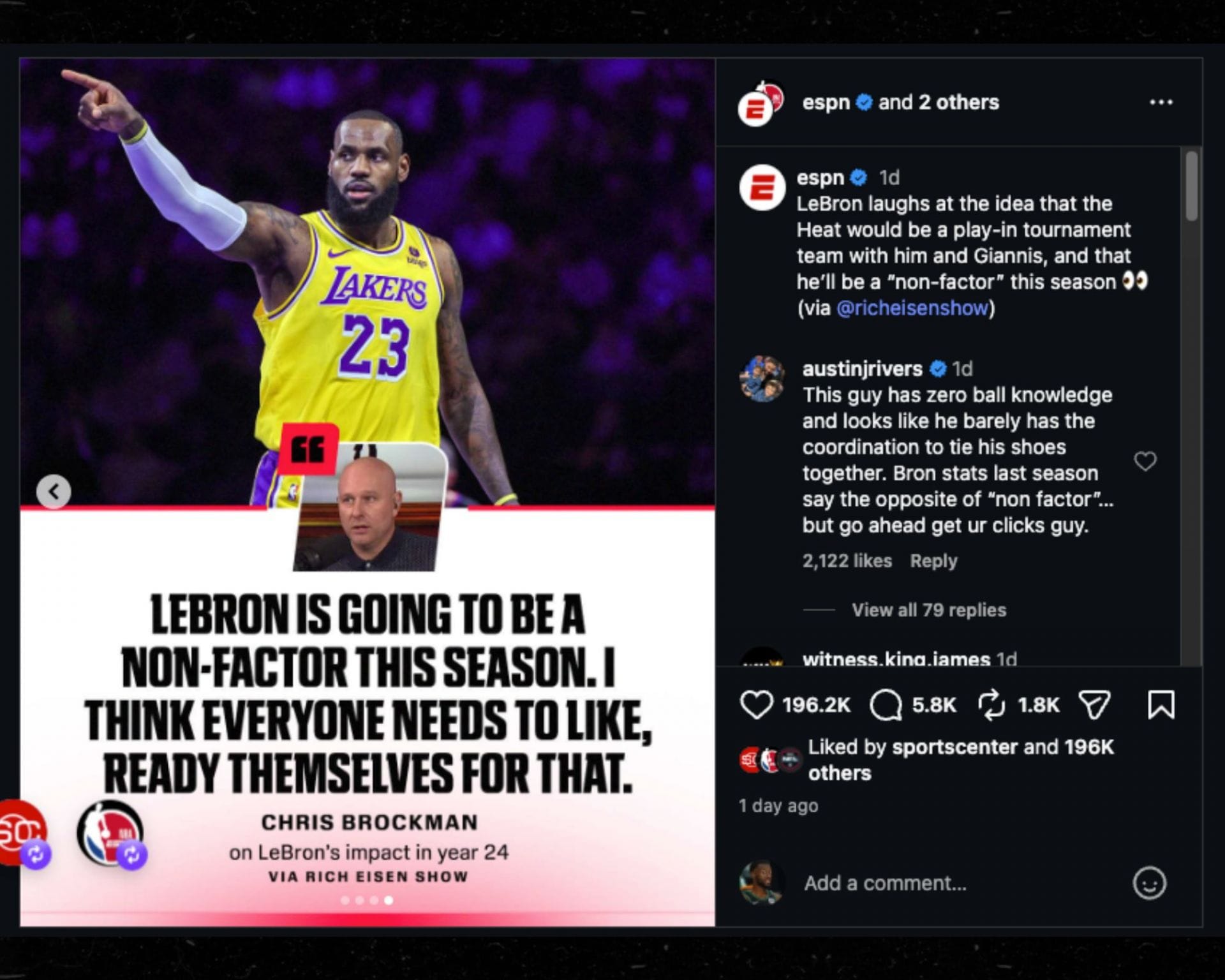
Former NBA guard Austin Rivers blasted Chris Brockman for claiming that LeBron James will be a “non-factor” in his league-record 24th season.
There has been an argument on social media that wherever James lands in free agency, they would instantly become legitimate championship contenders. Among the teams strongly linked to the four-time NBA champion are the Cleveland Cavaliers, the Miami Heat and the Philadelphia 76ers.
Thanks for the submission!
Advertisement
On Wednesday’s episode of “The Rich Eisen Show,” Chris Brockman said the Heat, which recently acquired Giannis Antetokounmpo, would be a play-in team.
•
Advertisement
“If he goes to Miami, enjoy the Play-In Tournament,” Brockman said. “LeBron is gonna be a non-factor this season. I think everybody needs to ready themselves for that.”
Rivers, who played 11 NBA seasons from 2012 until 2023, came to the defense of James and criticized Brockman for his comments. The 6-foot-4 guard wrote his comment under the Instagram post of ESPN, which shared Brockman’s remarks.
Advertisement
“This guy has zero ball knowledge and looks like he barely has the coordination to tie his shoes together,” Rivers commented. “Bron stats last season say the opposite of ‘non factor’…but go ahead get ur clicks guy.”
Austin Rivers’ comment under ESPN’s Instagram post on Wednesday (IG/@espn)
James also reacted to Brockman’s comments on Wednesday. He reshared ESPN’s post on his Instagram story and added a number of laughing emojis.
In his final season with the Lakers, James averaged 20.9 points, 6.1 rebounds and 7.2 assists per game as the third scoring option behind Luka Doncic and Austin Reaves.
How will the Miami Heat roster look with the addition of LeBron James?
The Miami Heat made a splash early in the offseason with the blockbuster trade for Giannis Antetokounmpo. They’ve also added forward Bobby Portis via the deal and sent Tyler Herro, Kel’el Ware, Jaime Jaquez Jr. and Kasparas Jakucionis to the Milwaukee Bucks.
The Heat still have three-time All-Star Bam Adebayo and one-time NBA champion Andrew Wiggins. Davion Mitchell would likely be Miami’s starting point guard, and recent acquisition Tim Hardaway Jr. will be the team’s sixth man.
While it can be argued that Miami needs to add more depth, James could be viewed as the missing piece in this already-solid starting lineup.
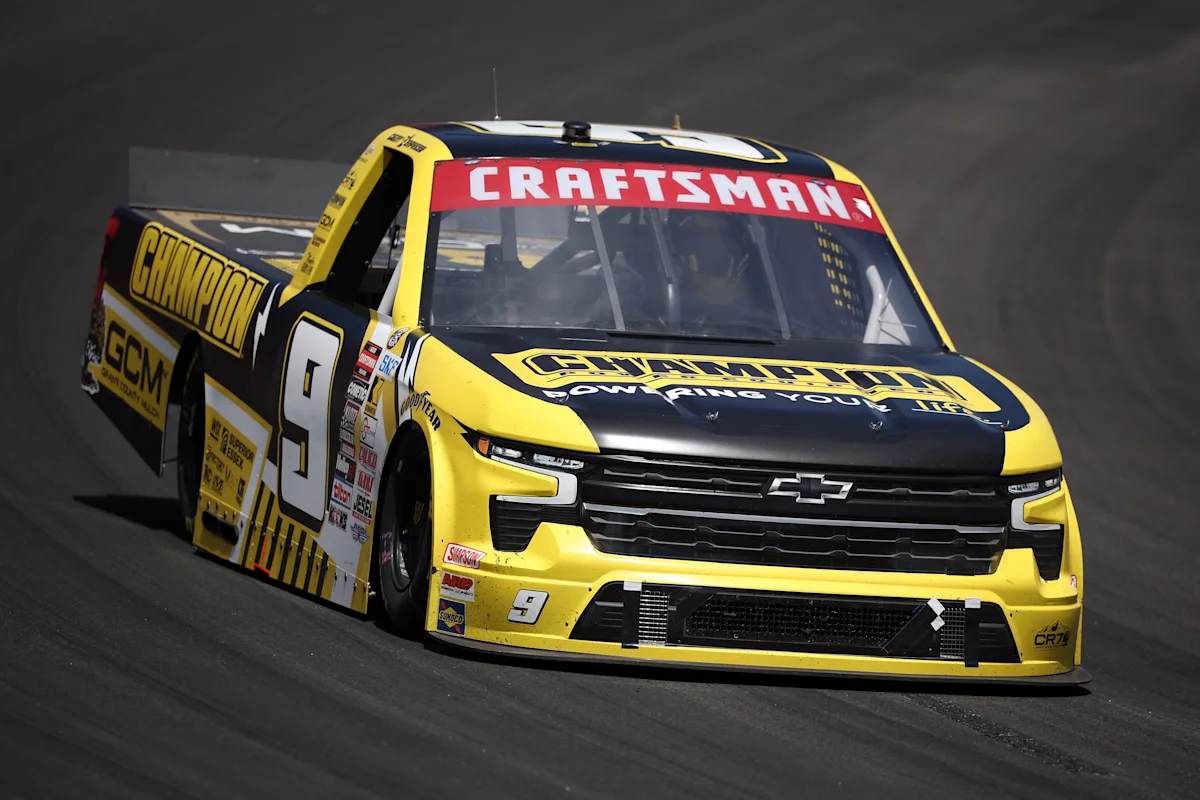
The NASCAR Truck Series is set to arrive at North Wilkesboro for its 15th race of the 2026 season. It is the only date at North Wilkesboro, as NASCAR visits the venue once per season. In 2025, Corey Heim won the pole for the Truck Series race at North Wilkesboro, as qualifying was canceled due to the weather.
First, the Truck Series needs to qualify for the event at North Wilkesboro, and the qualifying format is simple. Every driver will make a two-lap run, with the best overall lap times determining the starting lineup. The metric system determines the qualifying order.
Advertisement
Below, you can check out the NASCAR qualifying order and groups for the 2026 FaithFest 250 at North Wilkesboro this weekend!
Advertisement
NASCAR Truck Series qualifying order for North Wilkesboro (July 2026)
The ESPYS brought some of the biggest names in sports and entertainment to New York City on Wednesday night, a day that typically ranks among the slowest on the sports calendar.
But this year’s ceremony was preceded by a World Cup semifinal match in Atlanta that was already being described as an instant classic. Lionel Messi and Argentina punched their ticket to a second straight World Cup final with a win over England. The defending champions will meet Spain on Saturday in nearby New Jersey, just a short trip across the Hudson River from where comedian Marcello Hernández opened the ESPYS.
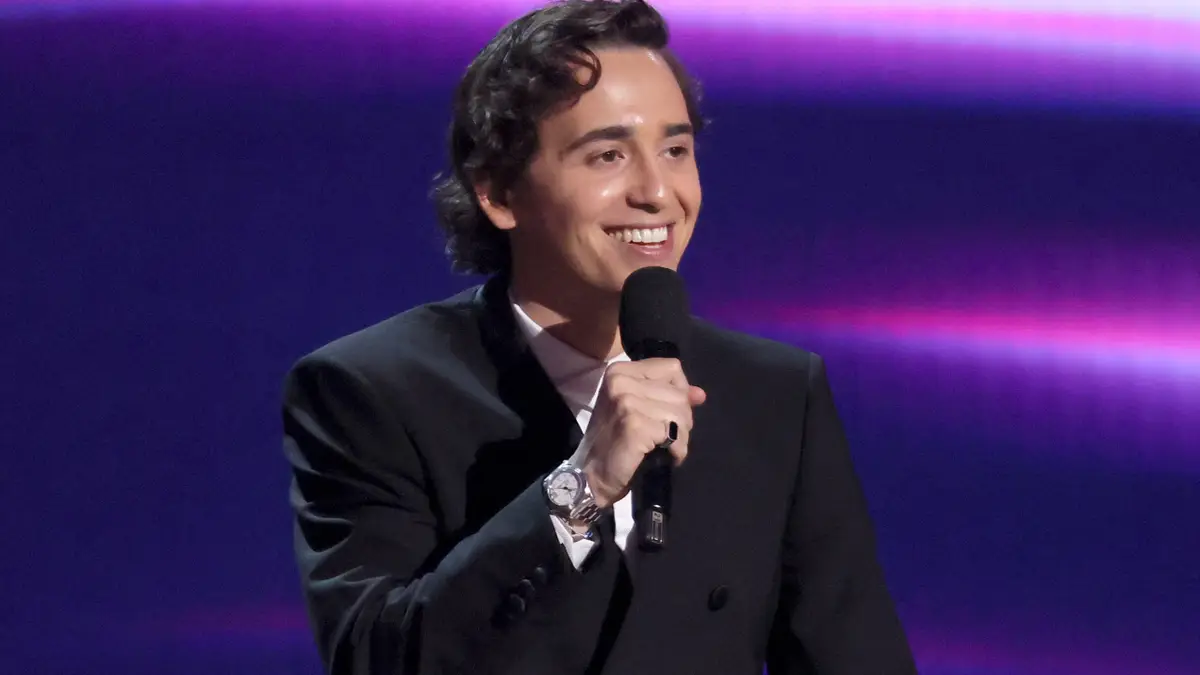
The “Saturday Night Live” star wasted little time taking a few jabs at Jake Paul, Tiger Woods and other sports figures.
Marcello Hernández speaks onstage during the 2026 ESPY Awards at David H. Koch Theater at Lincoln Center in New York City.(Mike Coppola/Getty Images)
“Mike Tyson ripped my watch off. Welcome to the ESPYS!” Hernández joked after making a boxing-style entrance in a robe with Tyson as part of his entourage.
“I must say, it’s an honor to be here among so many great athletes, and Jake Paul,” Hernández began in his roughly 10-minute monologue.
Paul appeared to take the joke in stride, laughing and applauding as cameras cut to him in the crowd. Hernández then stayed on the YouTube star-turned-boxer, needling him over his history of fighting older opponents.
Advertisement
“Jake, that’s just a joke. Don’t fight me,” Hernández continued. “My dad and my stepdad are both here. They’re over 50, and I know that’s how you like them. So, fight them instead.”
Paul kept laughing as Hernández’s bit played out, eventually closing with the comedian shifting attention to his father and stepfather, who were shown in the audience.
Atmosphere at the 2026 ESPYS at the David H. Koch Theater at Lincoln Square on July 15, 2026, in New York, New York.(Gilbert Flores/Variety via Getty Images)
Hernández later used Caleb Williams’ “Madden 27” cover as a lead into Woods.
“I want to congratulate Caleb Williams, the quarterback for the Chicago Bears, who will be on the cover of the new Madden video game. Congratulations to Caleb,” Hernández said, before adding, “And Tiger Woods will be on the cover of Grand Theft Auto.”
Woods was arrested in Florida in March on charges of DUI after a car crash. The arrest report said a deputy found pain pills in his pocket and observed signs of impairment at the scene. Woods later announced he would take time away from golf to seek treatment.
Hernández also worked North Carolina football coach Bill Belichick into the monologue, using the 74-year-old’s relationship with Jordon Hudson as part of a joke about the New York Knicks’ title drought.
“The Knicks won their first championship since 1973. And to put into perceptive how long ago that was, in 1973 hockey players didn’t wear helmets, basketball had no three point line. And in 1973, Bill Belichick was the age his girlfriend is now.”
Advertisement
The Knicks later took home the ESPY for Best Team.
Jalen Brunson, Karl-Anthony Towns, OG Anunoby and other members of the 2025-26 Knicks championship team took the stage to accept the award, but Josh Hart was noticeably absent. Brunson drew laughs when he joked, “I want to say thank you to the ESPYS for pulling Josh Hart’s invite.”
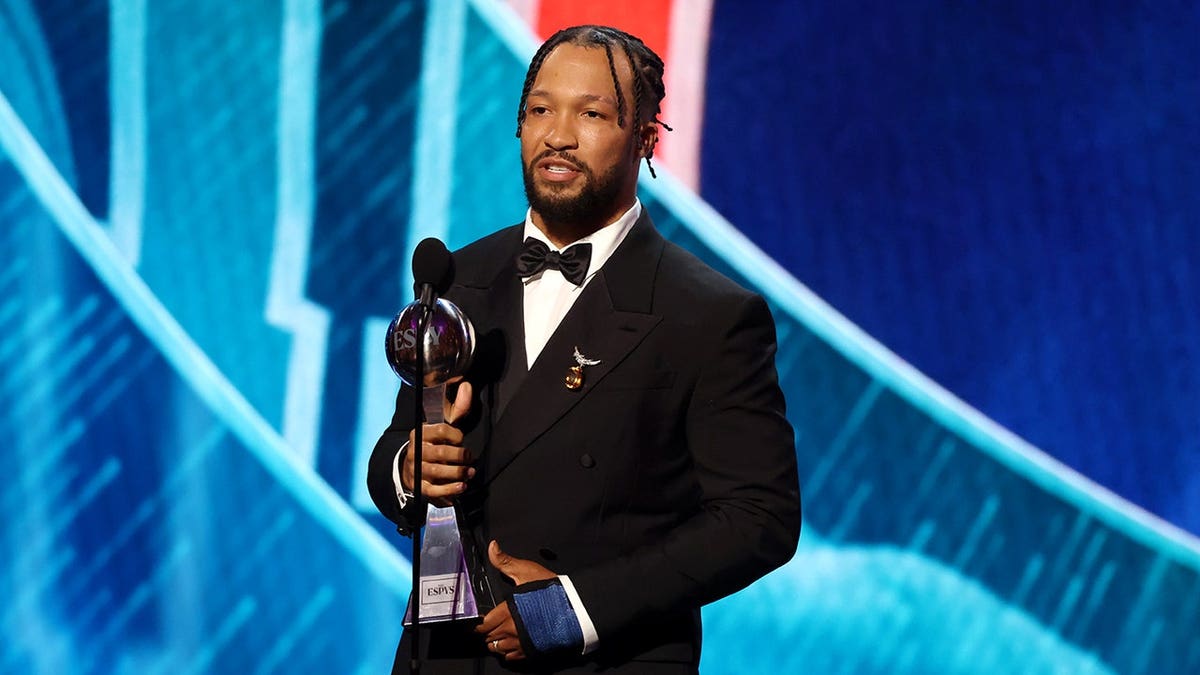
Earlier in the night Brunson also received the “Best Championship Performance” award.
Jalen Brunson accepts the Best Championship Performance award onstage during the 2026 ESPY Awards at David H. Koch Theater at Lincoln Center in New York City on July 15, 2026.(Kevin Mazur/Getty Images for W+P)
Former NBA player Jason Collins, who died in May at age 47 following a battle with Stage 4 glioblastoma, posthumously received the Arthur Ashe Award for Courage. Former MLB pitcher Jim Abbott received the Jimmy V Award for Perseverance, while Scott Ruskan was honored with the Pat Tillman Award for Service.
The ESPYS are held every summer, bringing together top athletes and other stars to celebrate the best moments from the past year in sports while honoring figures recognized for courage, service and impact. In past years, the ceremony has been held in Los Angeles, but shifted to New York this year.
Manchester United have completed the signing of Youri Tielemans from Aston Villa and he has become the club’s third addition in the space of a week
Manchester United are close to completing their midfield rebuild after signing Youri Tielemans and Andrey Santos. Michael Carrick also welcomed goalkeeper Karl Darlow to the club this week.
Get MEN Premium now for just £1 HERE – or get involved in our United WhatsApp group by clicking HERE. You can also join our United Facebook page by clicking HERE and don’t miss out on our brilliant selection of newsletters HERE.
Marcus Rashford exit blow
Rashford’s hopes of returning to Barcelona have taken a further hit, with reports from Spain indicating that Ferran Torres’ future won’t be resolved until September.
Barcelona have already wrapped up the £70m capture of Anthony Gordon from Newcastle and are poised to bring in Karim Adeyemi from Borussia Dortmund.
Given that both players occupy Rashford’s position, any prospect of Barcelona rekindling their interest appears remote. Torres’ departure might open a window for a transfer, but Spanish publication Mundo Deportivo now reports he could pen fresh terms in September.
The hold-up is down to FFP concerns, but either way, it means Torres either puts pen to paper on a new deal, leaving Rashford without a destination, or he departs after September, by which point the Englishman’s fate will in all likelihood already be sealed.
Youri Tielemans picks iconic squad number
United’s latest addition is set to strengthen Carrick’s midfield with his Premier League pedigree and deep-lying playmaking qualities. However, Tielemans has considerable expectations to meet after selecting the No. 18, famously worn by Paul Scholes.
Advertisement
Ashley Young also donned the No. 18, as did Bruno Fernandes during his first few seasons at the club. Casemiro was the most recent player to wear it.
Following the announcement of Tielemans’ arrival, he said: “It’s hard to describe just how proud I am to join Manchester United. Signing for such a special club feels incredible, it is the culmination of years of dedication since I first fell in love with football.
“I have had the privilege of experiencing success in the game and it has only increased my determination to achieve more. The ambition from everyone at the club is extremely clear; we are all determined to push for the biggest trophies over the coming years.”
Advertisement
Thousands of Man United fans upgraded their matchday last season. This is how they did it.
This article contains affiliate links, we will receive a commission on any sales we generate from it. Learn more
Official premium experiences at Old Trafford are available now for the 26/27 Premier League season. Make it easier than ever to turn a regular fixture into something genuinely unforgettable.
England’s long wait to win a World Cup or even reach the final goes on after a loss to holders Argentina on Wednesday, but manager Thomas Tuchel prefers to see it in football terms and not as a curse after a clash he described as two separate games.
“None of these players, none of the French players want to play this match. They want to play in the final. We gave everything to be in the final. Everyone plays to win the World Cup, but it is what it is.”
England have not reached the decider since lifting the World Cup for the only time in 1966, and they looked like getting that monkey off their back until Argentina netted two late goals for a 2-1 win in the semi-final.
Thomas Tuchel came in for criticism after England’s World Cup exit (PA Wire)
“I love to see these things in a football matter and not through football curses,” Tuchel told reporters.
“I don’t believe so much in an English thing and in a curse or whatever, history repeating itself in these moments.
“It’s just like it’s different coaches, different players, different situations, different opponents. So I think basically I believe in the football thing.”
Advertisement
England took the lead in the 55th minute through Anthony Gordon but Argentina then seized control and Tuchel’s side failed to withstand the pressure or find a way to gain some possession.
“I think at that point of the match, it was deserved, that we take our moment and go 1-0 up,” Tuchel said.
“Unfortunately, and strangely enough, it marked then a complete momentum switch in the game.”
Argentina played with more risk, played with more rhythm, played with a feeling maybe that they have nothing to lose anymore, which freed them up and held us back because we obviously played suddenly with a feeling that we have a lot to lose.
Advertisement
Enzo Fernandez #24 of Argentina and Elliot Anderson #8 of England during the FIFA World Cup 2026 Semi Final match between England and Argentina at Atlanta Stadium on 15 July 2026 in Atlanta, Georgia (Getty)
“I think it’s two completely different matches. It’s until the goal and then after the goal.”
Tuchel received great praise for getting England this far, coming through tough battles with DR Congo, Mexico and Norway, but is already under fire for the changes made against Argentina after taking the lead and setting up too defensively.
“That’s just the nature of the game. As soon as you lose, you get criticised,” the German said.
“That’s just what it is. You get criticised after. No one knows what would have happened if you made different decisions. So it makes no sense to engage in that and lose my head. I’m responsible for them. I took them, so I take the criticism.”
England now have the unwanted consolation prize of a match against France for third place on Saturday, and for Tuchel now is not the time to look back with pride on what they accomplished.
Advertisement
“A lot of big football nations are eliminated before the semi-final, so it is an achievement,” Tuchel said. “No one wants to hear that at the moment. Me neither, because we demand the most of ourselves.
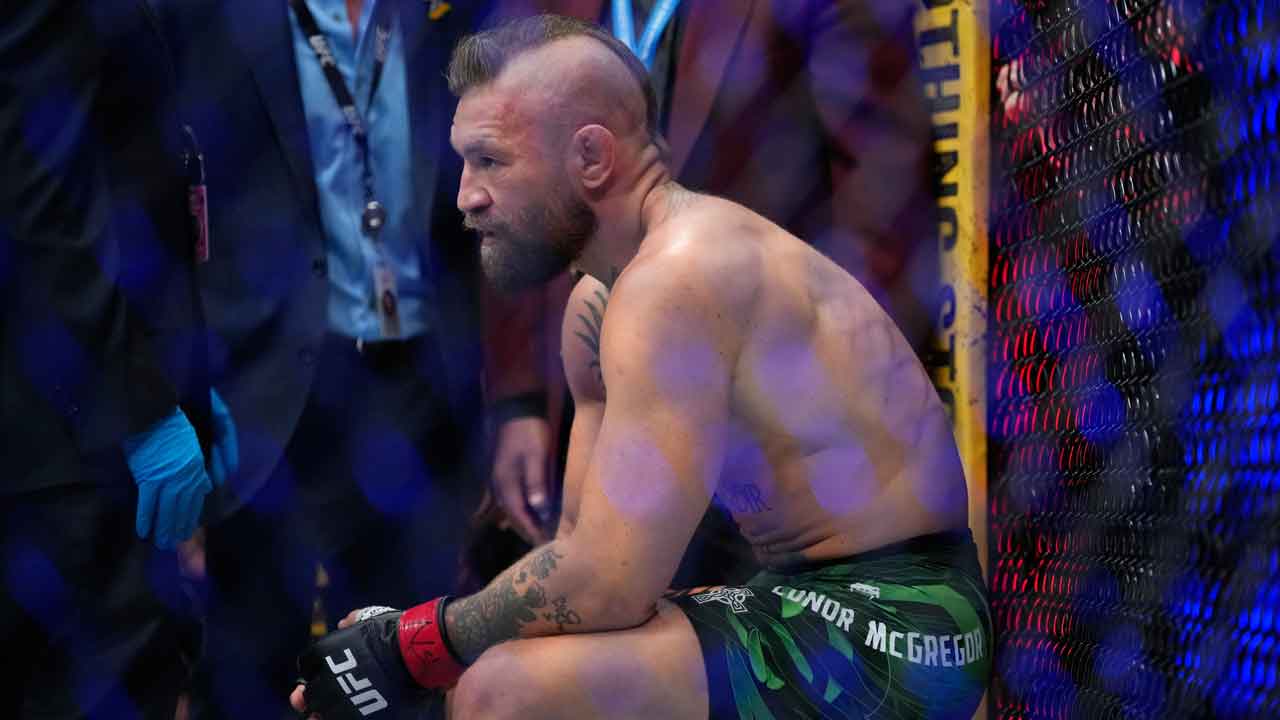
The “Notorious” took to Instagram on Wednesday to provide fans with an update on the heels of his TKO loss to Max Holloway at UFC 329 last Saturday.
McGregor revealed that the extent of the knee injury he suffered — moments into his main-event bout against Hollaway — would be revealed with scan results on Thursday.
The MMA star also made sure to express his disagreement with the fight being ruled a TKO loss for himself, which marked McGregor’s third consecutive defeat going back to 2021.
Advertisement
“The fight should be a no contest and all bets returned,” McGregor wrote.
The Irishman’s much-anticipated return to the octagon after a five-year hiatus was cut short when he appeared to injure his leg while attempting a flying kick — in the opening seconds of the fight — and landed awkwardly. McGregor was seen losing his footing during multiple exchanges with Holloway after that, and eventually, official Mike Beltran stopped the bout just 1:09 into the first round.
Despite McGregor’s claim that the bout should’ve been ruled a no-contest, there is no precedent to determine that outcome. The injury was sustained after the fight had officially begun, and with McGregor no longer able to continue, the ruling was deemed TKO (injury).
While there was some speculation that McGregor may have entered the bout with a pre-existing injury, he took to social media shortly after the loss to quell those rumours and express his disappointment with the outcome.
Advertisement
“My head gasket is gone. Destroyed. I had no injury/injuries going into the fight. I was throwing kicks, planted and jumping, all throughout camp as well as backstage before the fight. This came out of nowhere. I am beyond dark here. I can only describe it as hell,” McGregor wrote.
He has one fight remaining on his current UFC contract, and despite the loss and injury, he appears determined to finish the deal.
“Surgery. Prehab. Return to martial arts practice. Go again. Final fight of the contract. Please God!” McGregor wrote in an Instagram post. “The devil is literally staring at me right in front of my face here. I am not engaging … I will overcome this. I will not be deterred. I will return.”
England did what Algeria, Austria, Jordan, Cape Verde and Egypt all failed to do. Lionel Messi didn’t score. The greatest goalscorer in World Cup history took only one shot and it didn’t trouble Jordan Pickford. England harried him, frustrated him and badgered him out to the right wing. But there they discovered a truth: that goals are just one strand of his multifarious brilliance. Messi created one, then another, and sent England back across the Atlantic.
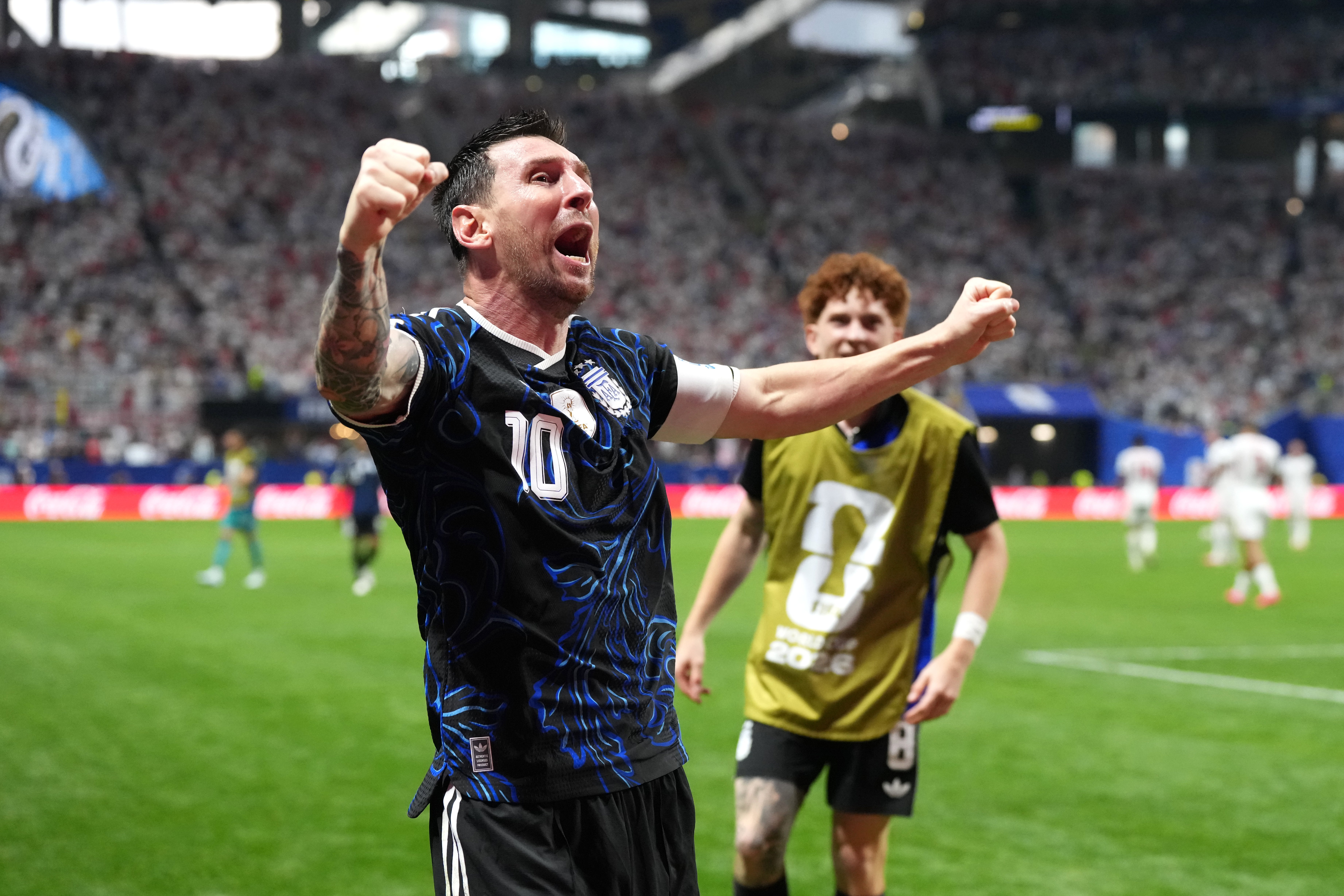
Messi’s assist for Argentina’s equaliser may have been a routine pass to Enzo Fernandez, but his sheer presence had already dragged England defenders across, out of shape, leaving holes to puncture. His assist for Argentina’s winner was a little piece of brilliance, driving down the right wing and floating a cross over John Stones’ desperate leap before dropping precisely onto the forehead of Lautaro Martinez.
Messi barely had a kick for an hour, and left Atlanta with the man of the match award. Now he marches – or perhaps walks – on to another World Cup final. Only one man, Cafu, has played in three finals and Messi will match that feat on Sunday.
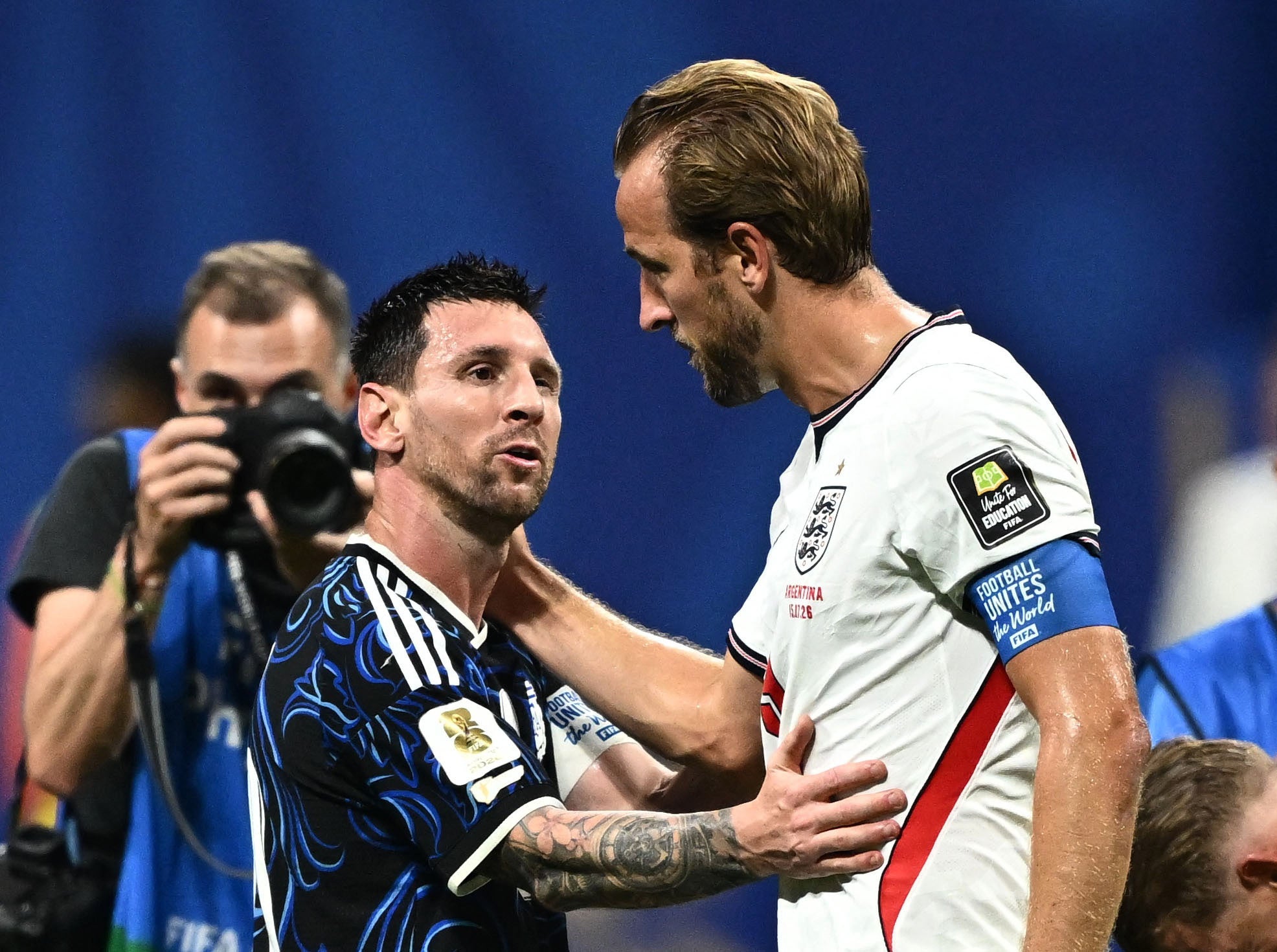
Lionel Messi consoles Harry Kane at the full-time whistle (Reuters)
Messi’s first, Rio de Janeiro in 2014, caused him nightmares for years afterwards. Messi missed a crucial one-on-one with Manuel Neuer, before Mario Gotze scored Germany’s winner in extra time. It would be eight years until he returned to the final, scoring twice in Doha and rolling home the most audacious penalty in the shootout to finally get his hands on the trophy he most prized, laying to rest the ghosts that haunted him.
Having spent so many frustrating years chasing international success, facing scrutiny and criticism at home in Argentina, he might now bow out with a second World Cup to go with those two late-career Copa America glories. Messi’s career can essentially be broken into two halves: a spell for Barcelona that altered how football is played, how it is understood; and a spell for Argentina to alter how history is written, how his story will be told.
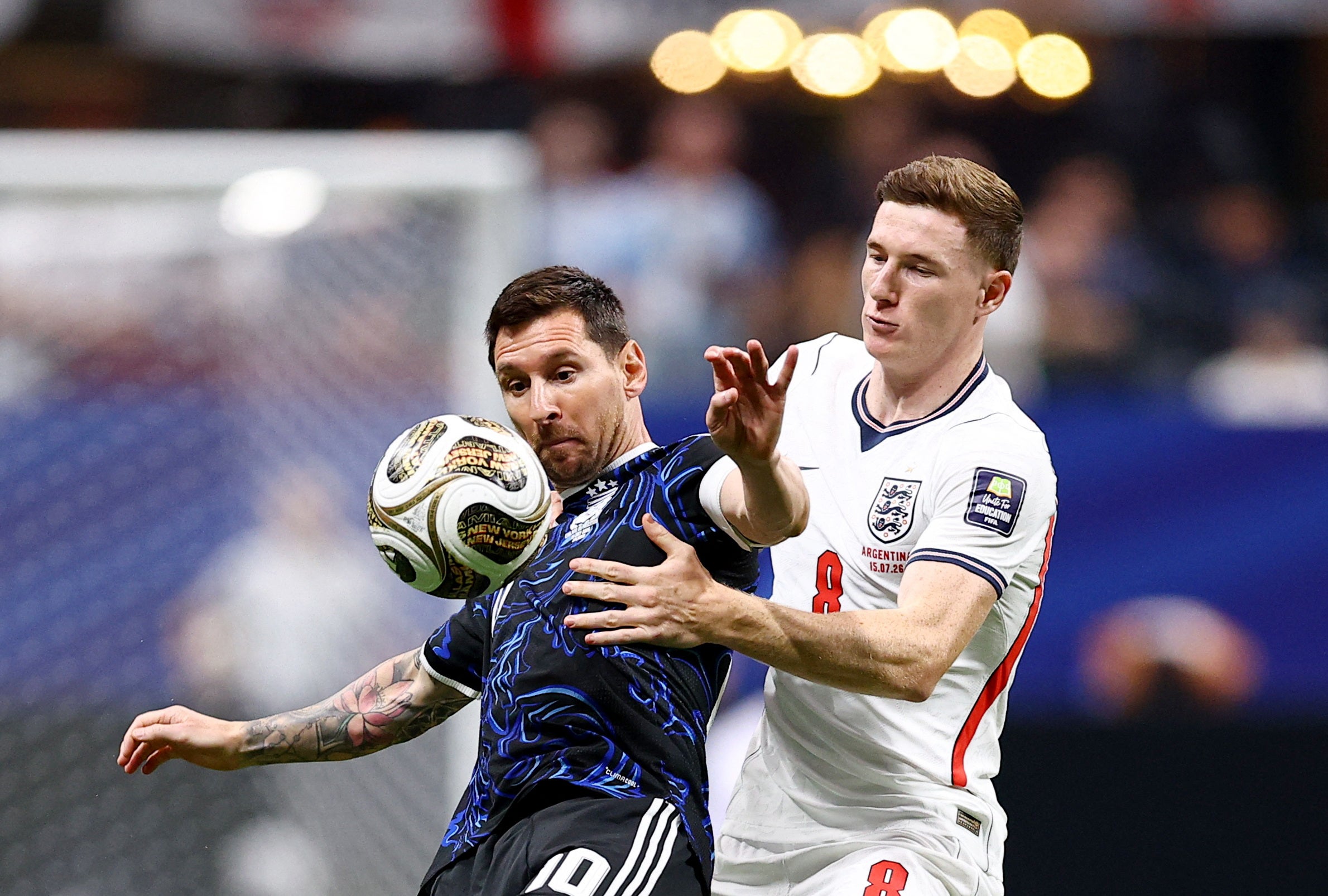
He was kicked to the fringes for much of this semi-final in Atlanta, squeezed out of the middle of the pitch. Within five minutes, Elliot Anderson and Harry Kane crunched him between their bodies. Djed Spence snapped in to poke the ball and when Messi didn’t get a free-kick, he gave referee Ismail Elfath a scowl. Anderson took a yellow card knocking him down in full flight, the briefest glimpse of Messi’s quick feet in a quiet first half.
Advertisement
Messi battles England’s Elliot Anderson in midfield (Reuters)
But in hindsight, perhaps England’s greatest mistake was to score a goal. They retreated back onto their own box – a tournament trait as English as eating fish and chips – and they stopped pressing, counter-attacking or playing much football at all. It was a tactic Tuchel had succeeded with in Mexico City a couple of weeks earlier, but there England were down to 10 men. Here there was no such pressure, and the strategy only emboldened Argentina.
England dropped dangerously deep and Messi emerged from the shadows. His greatest trait is often said to be finding space, understanding the geometries of a game, the moving pieces. Messi doesn’t watch the ball, he watches defenders, mapping his opponents in his mind and searching for soft spots. For a brief moment he became cartographer, taking mental notes, drawing in the enormous contours of Dan Burn’s head.
A study of Messi’s interpretation of space, conducted while he was at Barcelona by a professor of applied mathematics, David Sumpter, discovered that Messi was finding space several seconds before it appeared, anticipating gaps that didn’t yet exist. Messi, Sumpter concluded, is “one of those rare people who has something beautiful and unique in his head which allows him to do what he does … It’s the knowledge that you can’t explain … He finds solutions where mortal people aren’t able to do so.”
Lionel Messi inspired Argentina’s comeback in Atlanta (Nick Potts/PA) (PA Wire)
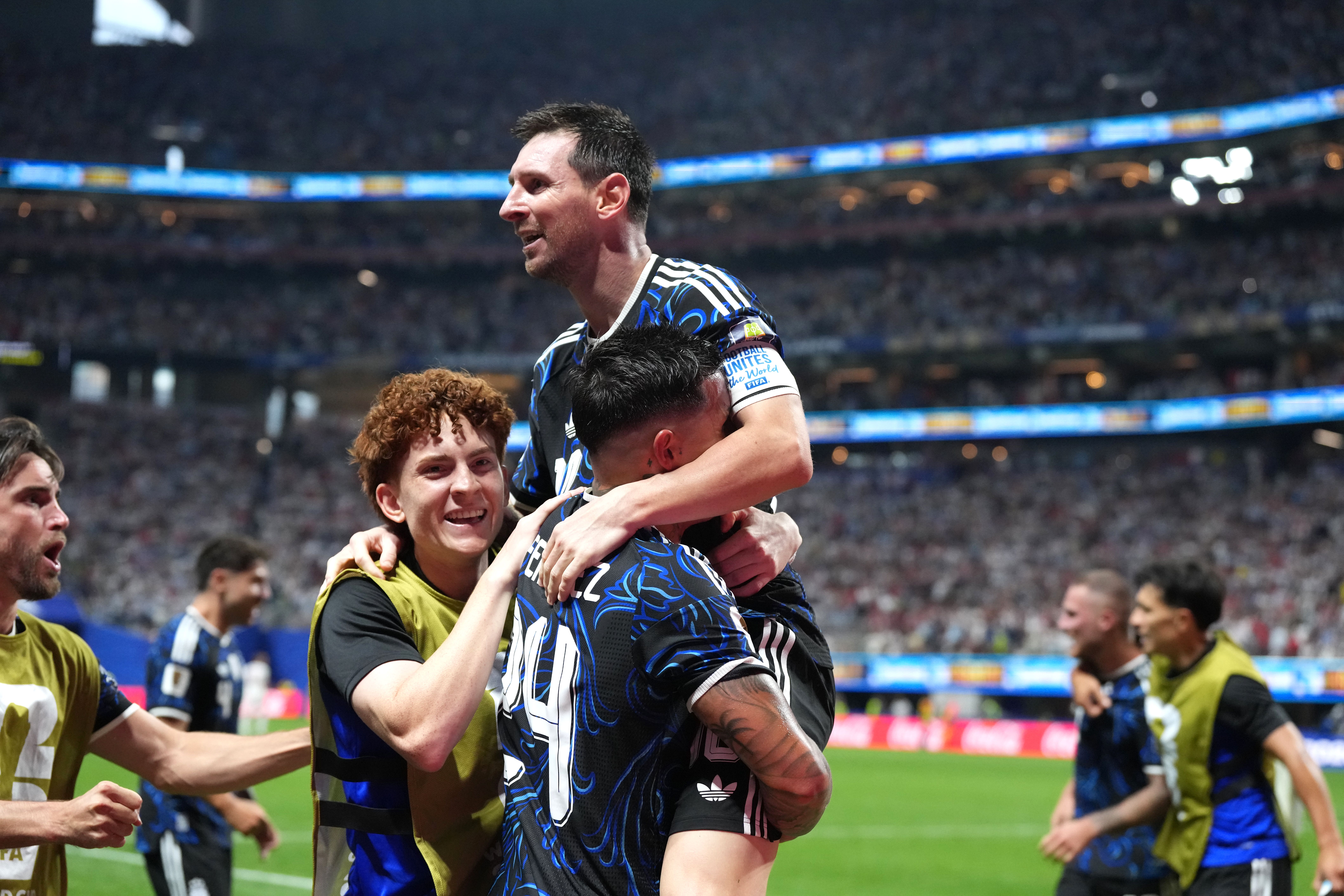
Messi celebrates their side’s second goal of the game with teammates at the Atlanta Stadium (Nick Potts/PA)
And so Messi drifted into a space on the right side, on the ragged edge of England’s midfield, and got to work. He began jinking away from tired legs, curling in pinpoint crosses onto the heads of arriving teammates. John Stones intervened, Jordan Pickford made a vital save. The woodwork spat out a couple more.
But England couldn’t get out, drowning in their own penalty area, and Messi seized the moment. He took a short corner and when he received it back to his feet, Kane, Spence and Anderson all became attracted to him. Messi slipped the pass to Fernandez for a free strike at goal, and Argentina were level.
Minutes later he was dancing towards the box and then driving to the byline, Spence and Nico O’Reilly a couple of strides too slow, and the cross was exquisite, a low arcing trajectory, fast in flight, dropping out of the sky at just the right moment. Messi hadn’t scored, but he had made it almost impossible for Martinez not to.
Advertisement
At the final whistle Messi sank to his knees, just as he did when Argentina won the World Cup four years earlier. He was physically spent, emotionally empty. There is still one almighty opponent ahead, a greater hurdle to overcome. But for Messi, the last dance is not over yet.









































You must be logged in to post a comment Login