Sports
My first Titleist Vokey Wedge Fitting

A few months ago, I got to live out every golf diehard’s dream: I got the opportunity to venture out to the Titleist Performance Institute to test out the new Titleist Vokey SM11 wedges and go through my first official Vokey wedge fitting.
With my fitter, Brandon, by my side, I ended up in a set of four new Vokeys, from pitching wedge through 60-degree. The final selections were wedges I probably wouldn’t have picked for myself, but I’m thrilled with the outcome. With that in mind, I want to break down exactly what went into that testing, and how you can repeat the process for your own game.
Starting with the full shot priorities
Before filming, Brandon and I hit a few shots with my 9-iron to establish carry distances and give him a baseline for what I needed from full swings with my pitching wedge. Vokey’s SM11 comes in 44-, 46- and 48-degree options in this range, and we settled on the 46-degree in a higher bounce to prevent the club from digging too aggressively at impact. The 46-degree gapped correctly off my 9-iron, while the 44-degree produced too much speed. Because I play a steep angle of attack — and the 46-degree loft comes in only one grind — the decision came down to bounce alone. The lower-bounce option dug sharply into the turf and was difficult to exit cleanly. The higher-bounce option accommodated my steep delivery consistently without getting stuck.
If you buy a linked product,
GOLF.COM may earn a fee. Pricing may vary.

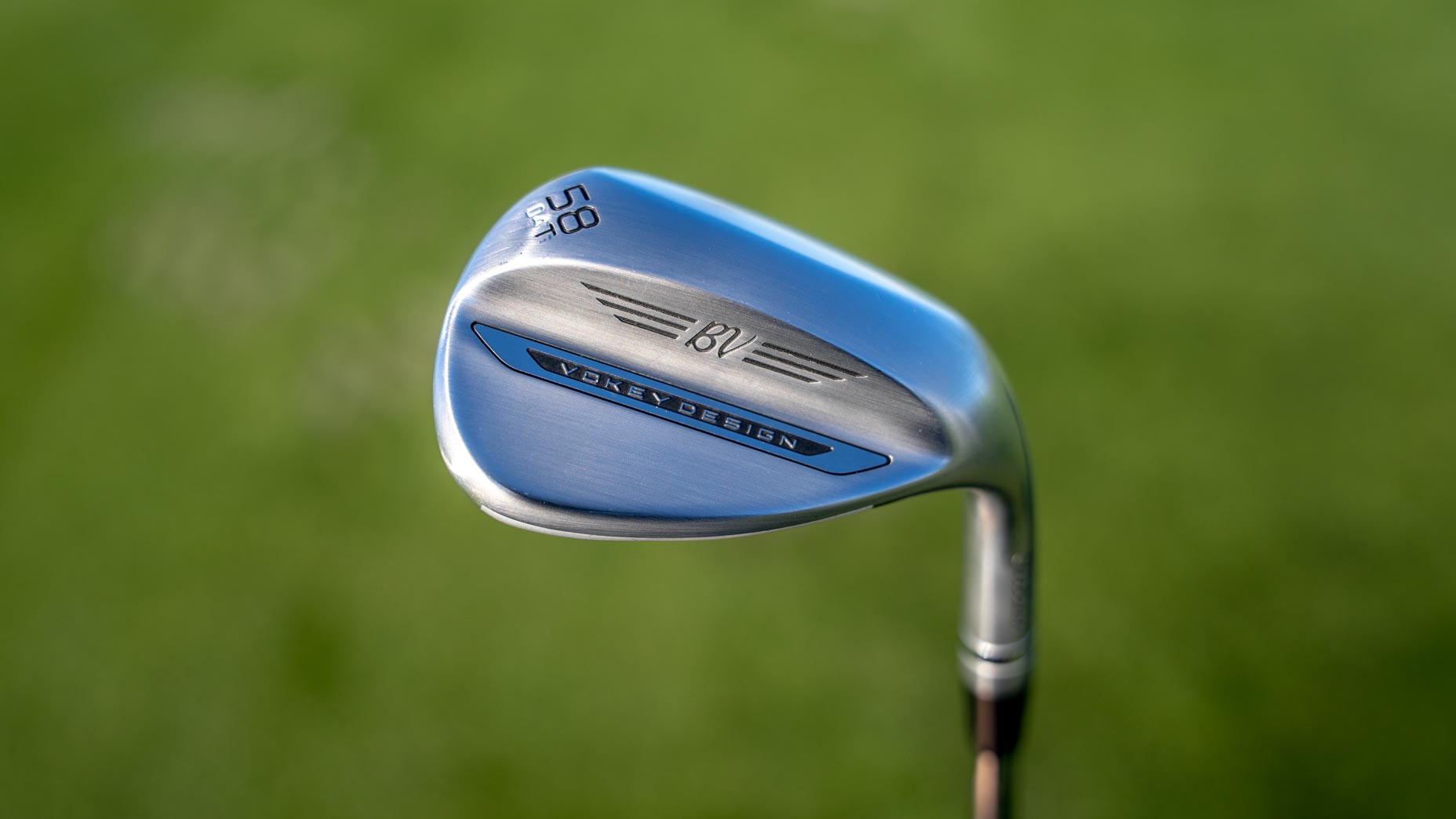
Titleist Vokey SM11 Tour Chrome Wedge
Titleist Vokey Design’s new SM11 wedges feature a new precise CG position across each grind in a loft, meaning every wedge will now perform the same way with the same strike.
We ran the same process with the 50-degree wedge until we found the right match. For my game, the 46-degree and 50-degree need to perform identically — both are full, square-faced shots with no real variation required. Matching the 50-degree to the 46-degree we had already dialed in made this segment quick, and that brings us to our first takeaway.


John Sodaro / GOLF
Sometimes it’s okay to let good be good. Walking into your local PGA Tour Superstore and testing every loft and grind combination sounds appealing — and I would be a hypocrite to say it isn’t — but you can spend your time more efficiently when building a set. If two clubs serve the same purpose in your bag, one fitting session covers both. Some players use their gap wedge for bump-and-run shots or specialty pitches that require keeping a few options around, but that isn’t my game. My 50-degree needs to do exactly what my 46-degree does, so we moved on to the sand wedge loft.
Be realistic about what your wedges need to do
As we moved into the 56-degree, we decided to stay in the full shot area of the compound, which was certainly unusual. Full swings aren’t necessarily the 56-degree’s intended use, but I take full swings with it all the time — whether my coach likes it or not. It’s also a pretty big differentiator in my grind selection. Which leads us to my first surprise of the fitting…

After the full shot segment, we’d settled upon the D grind … for good. No chips or pitch shots necessary. At the start of the fitting, I’d told Brandon I’d split my 56-degree wedge roughly 50-50 between bunker shots and full swings. Once it came down to a couple of options with the full shots off the grass, he ended up only bringing the D grind along with him.

John Sodaro / GOLF
In the bunker, we hit the D grind a handful of times and confirmed it was the right 56-degree choice for my game. Left to my own devices, I never would have selected the D grind. The lesson: understand the role each wedge plays in your set and test them accordingly. Even when demoing wedges at a PGA Tour Superstore or indoor facility, hit the shots you actually need on the course. You will be able to identify which options work for your delivery and which do not. Do not let a mat fool you into thinking you cannot learn something useful. If you cannot feel confidence in a bunker-style shot off a mat, you will not have it in an actual bunker either. That sounds counterintuitive, but experience has taught me the difference between feeling confident with a wedge and not — on any surface.

John Sodaro / GOLF
The lobber is everything
Last came the lob wedge, which took the most time by far, and I would encourage you to plan for the same. This is where you make your money back. Most players need more versatility from their lob wedge than any other club in the set, and for me, it anchors my entire short game. From about 100 yards and in, I play almost exclusively my 60-degree. My coach has feelings about that. The one caveat I gave Brandon was that the 40-yard pitch and in needed to be the priority, and I would figure out full swings from there — or, as my coach would prefer, stop hitting it full altogether. So we started on the green side and hit short chips to a flag about 30 feet away.
How to find the right Vokey SM11 wedge for you (with handy tips!)

Vokey places a strong emphasis on blind testing. They hand you a wedge before you can see it, removing any preconceived preference before you start hitting. If you can bring someone with you to manage the clubs during an in-store test, try to replicate that process. There is something freeing about not knowing what is in your hands — you simply try to hit shots. It also speeds up the session because you stop trying to force a result with a club you have already decided you want. I handed several options back to Brandon after one swing, because I could feel immediately that something else would be better. The key shot at this stage was a low runner with a toe-down setup. From the green-side chips, we advanced two options, and at that point it was genuinely close.
We moved back to about 40 yards, and things got interesting. One of the two remaining options started producing the kind of trajectory — high, soft, spinning — that you see on Tour and spend years chasing. I did not want to stop hitting it. Then the other option started doing it, too. For a moment, I thought I had found two legitimate choices. The difference came down to speed. One of the options came off the face hotter than I wanted, creating just enough hesitation in my swing that I felt less in control. The other let me swing freely with more speed.

John Sodaro / GOLF
We settled it in the bunker, and the M grind won out. It was also my preferred option from the green-side chips and the 40-yard pitch, which made the decision easy. I left confident in the 60-degree M grind. In the bunker, the M grind let me swing aggressively and pop the ball out without being precious about it — a big deal for how I play. One final note: pay attention to how your wedge looks in direct light. Take it outside or have someone shine a phone flashlight at the face as you open it up. You may find you strongly prefer one finish over another based on how it reflects at address. Personally, the nickel finish is the one for me.
Available right now at PGA Tour Superstore!
Vokey SM11 wedges are now available at PGA Tour Superstore. As I said above, don’t get frightened by people saying you can’t make a good purchase buying wedges in store. There’s plenty you can do with the resources available at PGA Tour Superstore and hopefully between this article and my last, you’re armed with the right information to get yourself into a brand new set and shoot some lower scores. If you haven’t read the pre-cursor to this article you can read that here.
Johnny Wunder also went through a Vokey fitting experience, which you can watch on the Fully Equipped YouTube channel!

“>