
Sports
Pirates legend Bill Mazeroski passes away at age 89

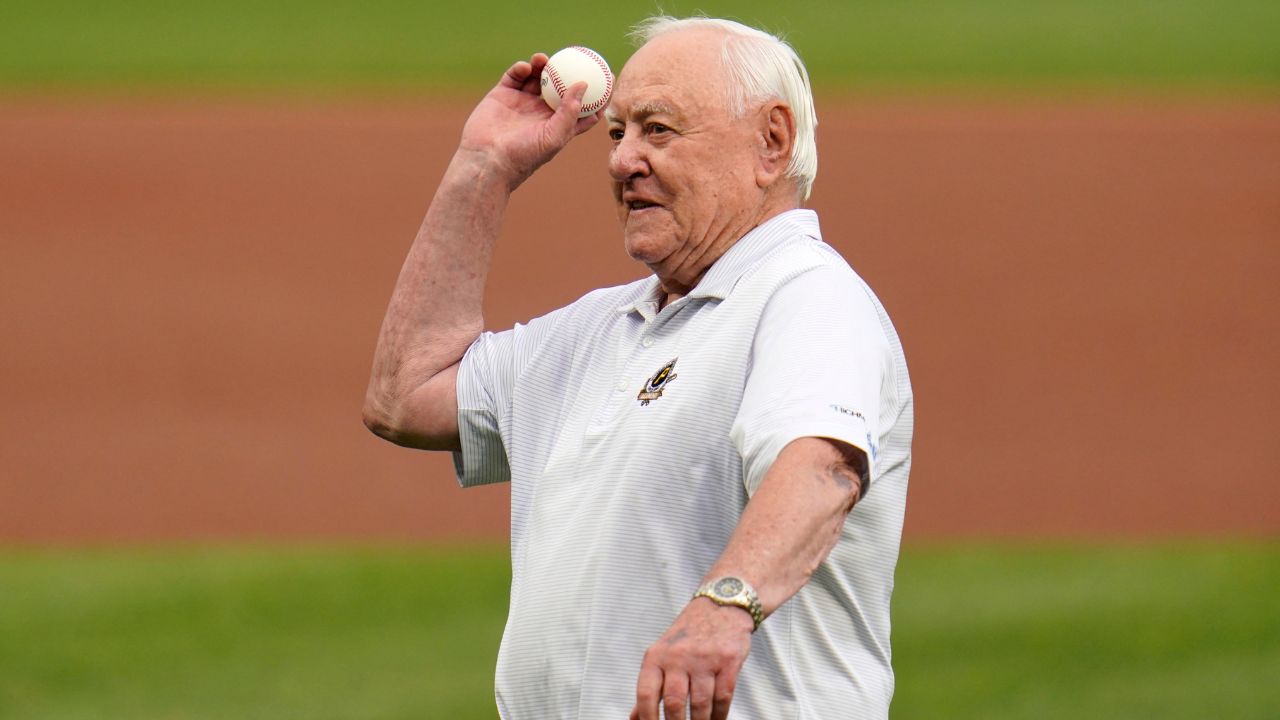
Bill Mazeroski, the Hall of Fame second baseman who won eight Gold Glove awards for his steady work in the field and the hearts of countless Pittsburgh Pirates fans for his historic walk-off home run in Game 7 of the 1960 World Series, has died at the age of 89.
Pirates chairman Bob Nutting said, “Maz was one of a kind, a true Pirates legend … His name will always be tied to the biggest home run in baseball history and the 1960 World Series championship, but I will remember him most for the person he was: humble, gracious and proud to be a pirate.”
Mazeroski died Friday, the Pirates said. No cause of death was given.
Elected to the Hall by the Veterans Committee in 2001, he was, by some measures, no superstar. Mazeroski had the lowest batting average, on-base percentage and stolen base total of any second baseman in Cooperstown. He hit just .260 lifetime, with 138 homers and 27 stolen bases in 17 years, and had an on-base percentage of .299. He never batted .300, never approached 100 runs batted or 100 runs scored and only once finished in the top 10 for Most Valuable Player.
His best qualities were both tangible and beyond the box score. His Hall of Fame plaque praises him as a “defensive wizard” with “hard-nosed hustle” and a “quiet work ethic.” A 10-time All-Star, he turned a major league record 1,706 double plays, earning the nickname “No Hands” for how quickly he fielded grounders and relayed them. He led the National League nine times in assists for second basemen and has been cited by statistician Bill James as the game’s greatest defensive player at his position — by far.
“I think defence belongs in the Hall of Fame,” Mazeroski said, defensively, during his Hall of Fame induction speech. “Defence deserves as much credit as pitching and I’m proud to be going in as a defensive player.”
But his career’s signature moment took place in the batter’s box, as the square-jawed, tobacco-chewing Mazeroski, a coal miner’s son from West Virginia, lived out the dream of so many kids who thought of playing professional ball.
The Pirates had not reached the World Series since 1927, when they were swept by the New York Yankees, and again faced the Yankees in 1960. While New York was led by Mickey Mantle and Roger Maris, Pittsburgh had few prominent names beyond a young Roberto Clemente. They relied on hitters ranging from shortstop Dick Groat to outfielder Bob Skinner, and the starting pitchers Vernon Law and Bob Friend. Mazeroski, who turned 24 that September, finished the season with a .273 average and usually batted eighth.
The series told one story in the runs column and another in wins and losses. The Yankees outscored the Pirates 55-27 and 38-3 in the three games they won. Mazeroski’s counterpart on New York, Bobby Richardson, drove in a record 12 runs and was named the series’ MVP — even though he was on the losing team. Whitey Ford shut out the Pirates twice, on his way to a then-record 33 2-3 straight scoreless World Series innings for the Yankees ace.
The Pirates’ first three wins weren’t nearly so spectacular, but they were wins — and Mazeroski helped. He hit a 2-run homer in the fourth inning off the Yankees’ Jim Coates in Game 1, a 6-4 Pirate victory, and a 2-run double in the second inning off Art Ditmar in Game 5, a 5-2 Pittsburgh win. In Game 7, he saved his big hit for the end.
Some 36,000 fans at Pittsburgh’s Forbes Field, and many more tuning in on radio and television, agonized through one of the fall classic’s wildest and most emotional conclusions. The lead changed back and forth as Pittsburgh scored the game’s first four runs, only to fall behind as the Yankees rallied in the middle innings and went ahead 7-4 in the top of the eighth. Pittsburgh retook the lead with five runs in the bottom of the eighth, helped in part by a seeming double play grounder that took a bad hop and struck Yankees shortstop Tony Kubek in the throat. But the Yankees came right back and tied the score at 9 in the top of the ninth.
The bottom of the ninth has been relived, not always by choice, by the two teams and by generations of fans. The New York pitcher was Ralph Terry, a right-hander whom manager Casey Stengel had brought in during the previous inning and would later acknowledge that he had a tired arm. The right-handed hitting Mazeroski, who had grounded into a double play in his previous appearance, was up first.
Terry started with a fastball, called high for a ball. After conferring briefly with catcher Johnny Blanchard, who reminded him to keep his pitches down, he threw what Mazeroski would call a slider that didn’t slide. Mazeroski got under it and belted it to left, the ball rising and rising as it cleared the high, ivy-covered brick wall, with Yankees left fielder Yogi Berra circling under it, then turning away in defeat. The whole city seemed to erupt, as if all had swung the bat with him, as if he were every underdog who longed to beat the hated Yankees. Mazeroski dashed around the bases, grinning and waving his cap, joined by celebrants from the stands who had rushed on to the field and followed him to home plate, where his teammates embraced him.
“I was just looking to get on base,″ he told The New York Times in 1985. ″Nothing fancy, just looking for a fastball until he got a strike on me. I thought it would be off the wall, and I wanted to make third if the ball ricocheted away from Berra. But when I got around first and was digging for second, I saw the umpire waving circles above his head and I knew it was over.”
ESPN has called it the greatest home run in major league history. It was the first time a World Series had ended on a homer, leading to enduring waves of celebration and despair. Pirates followers memorized the date, Saturday, Oct. 13, 1960, and the local time of Mazeroski’s hit, 3:36 p.m. Forbes Field was torn down in the 1970s, but a decade later fans began gathering every Oct. 13 at the park’s lone remnant, the center field wall, and listened to the original broadcast.
Meanwhile, Mantle would sob on the plane ride home in 1960, insisting the better team had lost. Ford would for years remain angry at Stengel — fired five days after the Series — for using him in Games 3 and 6 and making him unavailable to start a third time. Singer Bing Crosby, a co-owner of the Pirates, was so afraid he’d jinx his team that he listened to the game with friends across the Atlantic Ocean, in Paris.
“We were in this beautiful apartment, listening on shortwave, and when it got close Bing opened a bottle of Scotch and was tapping it against the mantel,” his widow, Kathryn Crosby, told the Times in 2010. “When Mazeroski hit the home run, he tapped it hard; the Scotch flew into the fireplace and started a conflagration.”
Mazeroski was a Pirate for his entire time in the majors and was a team man off the field. His wife, Milene Nicholson, was a front office employee whom he met through Pittsburgh manager Danny Murtaugh. They were married in 1958, had two sons and remained together until her death in 2024.
William Stanley Mazeroski was born in Wheeling, West Virginia, during the Great Depression, grew up in eastern Ohio, and lived for a time in a one-room house without electricity or indoor plumbing. His father, Louis Mazeroski, had hoped himself to be a ballplayer and encouraged his son’s love for sports, even practicing with him by having Bill field tennis balls thrown against a brick wall.
Although a star in basketball and football, he favoured baseball and was good enough to be drafted by the Pirates at age 17 in 1954. Mazeroski was a shortstop for a team with numerous prospects at that position, and had switched to second by his rookie year, 1956. Even as a part-time player at the end of his career, he was a leader and steady presence on the 1971 team that featured Clemente and Willie Stargell and defeated the Baltimore Orioles in the World Series.
After his final season, 1972, Mazeroski coached briefly for the Pirates and the Seattle Mariners and was an infield instructor for Pittsburgh during spring training. In 1987, the Pirates retired his uniform number, 9. The 50th anniversary of his Game 7 heroics was marked in 2010 by the unveiling — on Bill Mazeroski Way — of a 14-foot, 2,000-pound statue of one of Pittsburgh’s greatest everymen, rounding the bases, on top of the world.



Two-division world champion Tim Bradley has shared his opinion on how a fight between Moses Itauma and Oleksandr Usyk would play out.
Itauma extended his ongoing knockout streak to 10 consecutive bouts when he dismantled Jermaine Franklin Jr in Manchester, once again capturing the attention of global boxing fans with another highlight finish.
Consequently, there is growing interest in a showdown between exuberance and experience, with many believing that Itauma could be the only man capable of handing 39-year-old Usyk a first career defeat.
However, Hall of Fame inductee Bradley told his YouTube channel that he does not think the fight will happen and that he does not believe that the 21-year-old is ready for that kind of challenge, having never fought beyond the sixth round.
“I don’t think that Usyk is going to fight his a** right now. If Usyk is dancing with a damn kickboxer then you already know that he ain’t fighting this damn Itauma dude.
“Not that Itauma can beat him, because he doesn’t have the experience yet, he don’t.
“The thing that I worry about with him is the long haul, when you don’t knock a motherf***er out and he don’t fall or react like you are used to seeing ‘em.
“I want to know how you are at [round] 8, 9, 10, 11 and 12 – can you keep going?”
Although, Bradley remained impressed by the skill of the Kent-based prodigy, believing that he will continue to dominate against anybody other than the ageing heavyweight king.
“As long as you don’t give him no Usyk, he [Itauma] should be alright. Don’t give him no Usyk, he ain’t ready.
“Usyk will take him into deep waters and drown his a**, that is what I see.”
Itauma will return to action in July, as he prepares for a challenge for the heavyweight throne in the near future.


Cbus Super Stadium will play host to Saturday’s
Round 5 NRL game between Gold Coast Titans and
Brisbane Broncos. The game kicks off at 7:35 pm with Brisbane Broncos heading into the game as favourites with the bookmakers. Continue reading for our in-depth preview of the Gold Coast Titans vs.
Brisbane Broncos
game and give you our free tips and bets.
When: Saturday April 4, 2026 at 7:35 pm
Where: Cbus Super Stadium
Bet 💰: Bet On This Match HERE
Gold Coast Titans vs Brisbane Broncos Odds
Gold Coast Titans vs Brisbane Broncos Preview
Gold Coast remain at home as they look to build on recent performances. Their attacking potential is evident, but consistency and defensive resilience remain areas for improvement. Their opponents will aim to exploit any lapses while applying pressure through the middle. Expect an open contest, with both teams capable of scoring points. Execution and composure in key moments will be critical, making this an important test of the Titans’ development.
First Try Scorer
Gold Coast Titans vs Brisbane Broncos Teams
Titans team: 1. Keano Kini 2. Sialetili Faeamani 3. Jojo Fifita 4. AJ Brimson 5. Phillip Sami 6. Lachlan Ilias 7. Jayden Campbell 8. Klese Haas 9. Sam Verrills 10. Tino Fa’asuamaleaui 11. Arama Hau 12. Beau Fermor 13. Chris Randall 14. Kurtis Morrin 15. Cooper Bai 16. Moeaki Fotuaika 17. Oliver Pascoe 18. Max Feagai 19. Jett Liu 20. Jaylan De Groot 21. Adam Christensen 22. Jenson Taumoepeau
Broncos team: 1. Reece Walsh 2. Deine Mariner 3. Kotoni Staggs 4. Gehamat Shibasaki 5. Jesse Arthars 6. Ezra Mam 7. Adam Reynolds 8. Corey Jensen 9. Cory Paix 10. Payne Haas 11. Brendan Piakura 12. Jordan Riki 13. Patrick Carrigan 14. Ben Hunt 15. Xavier Willison 16. Ben Talty 17. Aublix Tawha 18. Jaiyden Hunt 19. Antonio Verhoeven 20. Blake Mozer 21. Thomas Duffy 22. Va’a Semu

The NFL follows a pretty straightforward, cyclical calendar after the Super Bowl ends in February. A few weeks later is the NFL combine. March is for free agency and trades, April is for the NFL Draft and in May we have the schedule release. It’s a bit quieter in June with OTAs and mandatory minicamp (and who does and doesn’t report) being the highlights. By the end of July, training camps are in full swing.
With the calendar flipping to April, the draft is the dominant story. Teams are neck deep in draft preparation, aiming to piece together all the information they’ve gathered on every prospect possible and assessing their best courses of action come April 23-25 in Pittsburgh.
NFL Draft’s top five storylines to watch: Ty Simpson, trades and first-round surprises
Jordan Dajani

But focusing solely on the draft would mean missing out on several other notable big questions that still must be answered — and often are answered — this month, too. Here are some of the biggest ones:
1. Does George Pickens get a long-term deal?
George Pickens is coming off a magnificent season (93 catches, 1,429 yards, nine touchdowns) and just turned 25 years old. That makes him a prime candidate to get a long-term deal done to remain a pillar of the Cowboys‘ offense alongside Dak Prescott and CeeDee Lamb.
But it hasn’t come to fruition yet. In early February, Pickens said he’d love to stay in Dallas but wanted the “ultimate best deal” that made sense for both sides. It didn’t happen, and he received the franchise tag.
The Cowboys and Pickens have until July 15 to try to work out a new deal, and given Jerry Jones’ lack of urgency, historically, to get big deals done, perhaps it’s wisest to assume Pickens will play on the tag, or the Cowboys will drag this out right up to the deadline.
But maybe, finally, Jones is a little bit more proactive. He’s 83 years old, and in December, he admitted his management “has played a big role” in the franchise’s 30-year Super Bowl drought. The Cowboys have two first-round picks. There’s a chance they could make a jump, but only if Pickens is along for the ride.
Brian Schottenheimer said he’s unsure if Pickens will attend offseason workouts absent a new deal. If Jones and the Cowboys really want to have their best shot at a Super Bowl this coming season, they’ll get a deal done.
2. Does Lamar Jackson get an extension and/or report to offseason workouts?
Speaking of offseason workouts, there’s quite a bit more short-term interest regarding Lamar Jackson’s attendance. Because they hired a new coach (Jesse Minter) this offseason, the Ravens can begin their offseason workout program April 6. Minter isn’t sure if Jackson will be part of it.
“I know Lamar’s excited. I think he is excited about some of the changes,” Minter said at NFL league meetings, per ESPN. “We’ve had a lot of good connection points, but the offseason program is voluntary. We’re excited to get a chance to work with all the guys, whoever wants to show up. We feel confident that a lot of guys will be there.”
The Ravens restructured Jackson’s deal to free up cap space this offseason, but really, he’s in the market for an extension; his current deal expires after the 2027 season. Jackson’s offseason participation has been inconsistent at best. With a new coach, new offensive coordinator (Declan Doyle) and new center after Tyler Linderbaum’s departure, the Ravens would love to have him.
3. Does Aaron Rodgers make a decision, and if so, what is it?
For a second straight offseason, Aaron Rodgers is keeping the Steelers in limbo. Last year, it took until June 5 for him to decide he’d keep playing and sign a one-year deal with Pittsburgh.
So far this offseason, the Steelers have brought in Mike McCarthy — who coached Rodgers in Green Bay — as coach. In his introductory press conference, McCarthy said he’d “definitely” want to coach Rodgers in 2026. Rodgers said in early March that the Steelers have stayed in contact. Pittsburgh also acquired Michael Pittman Jr., adding a much-needed wide receiver opposite DK Metcalf. At league meetings, Steelers president Art Rooney II said he expects an answer from Rodgers by the NFL Draft.

If Rodgers doesn’t return, the Steelers — who currently have Mason Rudolph and Will Howard as their quarterbacks — would have to make a major change in plans. Regardless, they’d love to at least know, one way or the other, in the coming weeks.
4. What are the Vikings’ plans at GM and with Jonathan Greenard?
The Vikings made some of the biggest headlines in January when they fired GM Kwesi Adofo-Mensah and in March, when they signed Kyler Murray. Could they again produce a major storyline in April?
First, they still haven’t found a full-time replacement for Adofo-Mensah. Executive vice president of football operations Rob Brzezinski is serving as interim GM, and he will continue to do so through the draft. Only then will a full search begin. But Brzezinski has made several big calls this offseason, including signing Murray and exercising Jordan Addison’s fifth-year option.
He also has big calls to make. Obviously the draft will be crucial, but there’s also the potential for a Jonathan Greenard deal. Minnesota has been open to trading the 28-year-old pass rusher. The Vikings are just barely salary cap-compliant right now, even after releasing Jonathan Allen and Javon Hargrave and bringing back Aaron Jones on a cheaper deal. Greenard carries a cap hit of over $22 million each of the next two seasons. Perhaps the Vikings, having not found a trade partner in March, hold steady. Or perhaps April — maybe during the draft — is when the 2024 Pro Bowler finds a new home.
5. What are the next free agent moves and/or trades?
The initial waves of free agency and blockbuster trades are in the rearview mirror, but there are still plenty of notable veterans who could change teams between now and the end of the month.
April of 2024 featured Stefon Diggs (Bills to Texans), L’Jarius Sneed (Chiefs to Titans). April of 2023 had the Rodgers trade from the Packers to the Jets. And that’s not to mention the handful of notable free agent signings that happen every April.
There are still difference-makers on the open market. Jauan Jennings is the most notable one. A physical wide receiver who helps keep the chains moving, Jennings is only 28. He has 132 catches for 1,618 yards and 15 touchdowns over the past two seasons. He helps in the blocking game as well as any player at his position. He’s likely disappointed he hasn’t received the offer he wants, but that could change soon. There are plenty of other notable names, too, including Diggs and Deebo Samuel at wide receiver.
Between now and the draft, teams will continue scouring the free agency landscape, and as their draft plans firm up, they may look to free agents to solidify their roster.

Sticker shock is still a thing for soccer fans wondering about the impact on ticket prices now that Canada finally knows its opponent for its FIFA World Cup opener on June 12 at Toronto.
Had Italy won a UEFA qualifier earlier this week, prices would have likely rocketed into a different stratosphere. But fans will still need pretty deep pockets with Bosnia and Herzegovina making the trip to BMO Field instead.
On Thursday, the FIFA ticket sales platform had 726 tickets available for Canada’s opener and all were listed at $3,125.
“This is a world-stage event,” said ticket broker Jagger Long, owner of Toronto-based Karma Tickets. “So offhand, it’s kind of an expected price.”
The FIFA resale queue has also opened, with a search Thursday afternoon showing 207 tickets were available. Most were going for over $3,000, but a single ticket was available for $2,300.
With kickoff still 10 weeks away, Long’s message to potential spectators was to bide their time.
“I tell fans to wait it out,” he said. “Wait it out to let the kind of madness happen and wait for prices to drop. And unfortunately, I don’t think they’re going to go from $3,000 to $1,000, but maybe $3,000 to $2,000 (or) $3,000 to $1,800, that’s possible.
“But it’s only possible if fans are patient and wait.”
There were no tickets available on the FIFA platform Thursday for any of the other 12 games to be played in Canada, which is co-hosting the tournament with the United States and Mexico.
Bosnia-Herzegovina booked its World Cup ticket last Tuesday by defeating Italy 1-1 (4-1 on penalties) in a final qualifier. The 65th-ranked side joined Group B with No. 30 Canada, No. 55 Qatar and No. 19 Switzerland.
Italy, a four-time World Cup champion, is ranked 12th but hasn’t qualified for the tournament since 2014.
Long compared the Canadian opener to some of the biggest high-profile events in the city’s recent history.
He said there was similar demand and pricing for the Toronto Raptors’ lone appearance in the 2019 NBA Finals, the six Taylor Swift “Eras Tour” shows in 2024, and the Toronto Blue Jays’ return to the World Series last fall for the first time since 1993.
“These events that are the big, spectacular, high-demand events unfortunately are not events for the average fan and the average person who only has a certain low budget to spend on tickets,” he said.
“That’s just the reality of the situation. It sucks, but it’s not like we can say, ‘Hey, we want 20 more World Cup games to host all the fans that can’t attend, right?’”
After its opener, Canada will head to Vancouver’s BC Place to play Qatar on June 18 and Switzerland on June 24.
The World Cup is being played in 16 cities across the continent, starting with games in Mexico City and Guadalajara on June 11. The final will be held in East Rutherford, N.J., on July 19.
FIFA has said the face value of tickets for group stage matches started at US$60 and climbed to $6,730 for the most expensive seats at the championship game.
Toronto will host six tournament games in all while Vancouver will host seven.
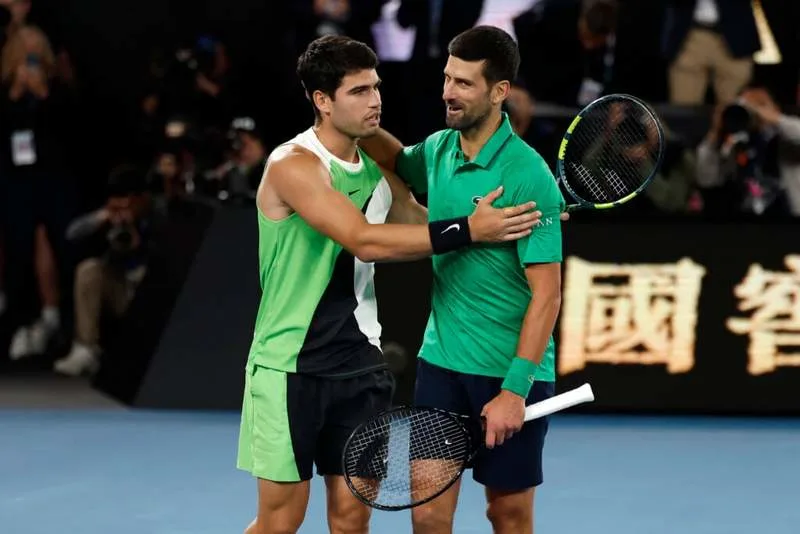
Carlos Alcaraz is looking to find his form again at the Monte Carlo Masters next week after an early exit in Miami.
The Spaniard started the season in dominant fashion, putting together a 16-match winning streak.
Advertisement
This run saw him complete the ‘Career Grand Slam’ at the Australian Open and later claim another title at the Qatar Open.
However, since then, he has lost back-to-back matches to Daniil Medvedev in Indian Wells and Sebastian Korda in Miami.
Despite these setbacks, Alcaraz is still seen as one of the top players on tour and is widely expected to have a historic career.
That opinion is shared by Rick Macci, who previously coached Serena Williams.
Rick Macci backs Carlos Alcaraz to rival Djokovic’s Grand Slam Haul

Photo by Darrian Traynor/Getty Images
Novak Djokovic stands as the most decorated male player in history. With 24 majors to his name, he shares the record for most Grand Slam singles titles with Margaret Court.
Advertisement
The former Andy Roddick and Maria Sharapova coach certainly thinks it’s possible.
Alcaraz has already picked up seven majors by the age of 22. In comparison, Djokovic had just one before turning 23.
Macci posted on X, saying: “Another major league reason the Spanish Magician is skyrocketing towards RARE AIR is his adaptability to play on every surface.”
“His best surface is the one he is playing on. This is RARE. This is why Carlos barring injury will someday be a double digit slam stroker and be right there with the Joker.”
Following his loss to Korda in Miami, Alcaraz headed back to Murcia to start training for clay season.
Advertisement
The Spaniard has been working alongside young Spanish talent Martin Landaluce as he gets ready for Monte Carlo, where he’ll be seeded first.
Looking back at Carlos Alcaraz’s history in Monte Carlo
Alcaraz has only played the event twice, with his first appearance coming back in 2022.
Alcaraz was seeded eighth and received a bye through to the second round.
Korda ended up winning the match 6-7, 7-6, 3-6. Stefanos Tsitsipas later went on to claim the title, defeating Alejandro Davidovich Fokina in the final.
Three years later, Alcaraz returned to Monaco. He went on to win his first Monte Carlo title last year, defeating Lorenzo Musetti 3-6, 6-1, 6-0 in the final.
Advertisement
Speaking after his victory over Musetti at the time, Alcaraz told reporters: “Well, I think today was about who is going to or who was going to deal with the nerves much better, the pressure. He played his first Masters 1000 final, a huge moment for him. For me as well because as I say it was a difficult month for me. And being in a final I just put pressure on myself. There were a lot of nerves.”
Read more:
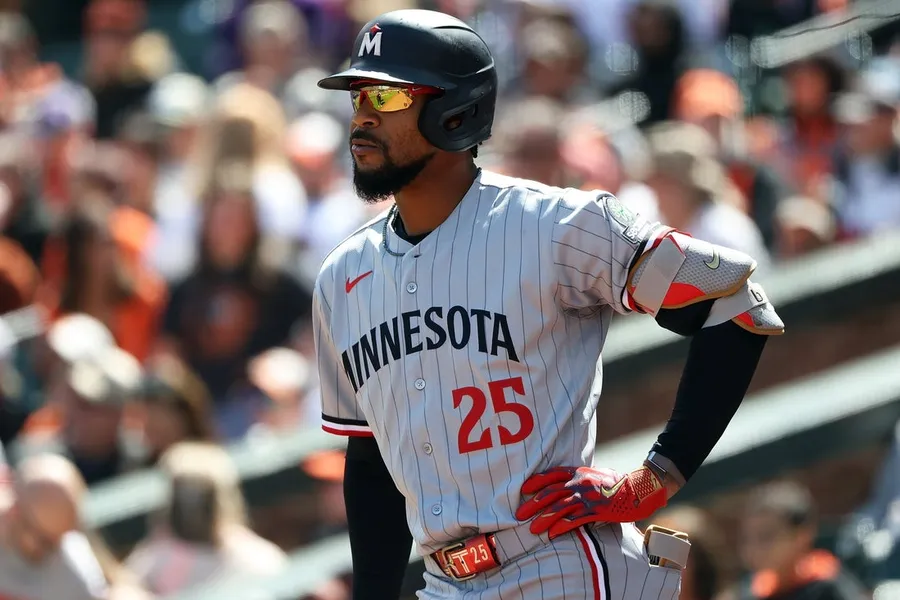
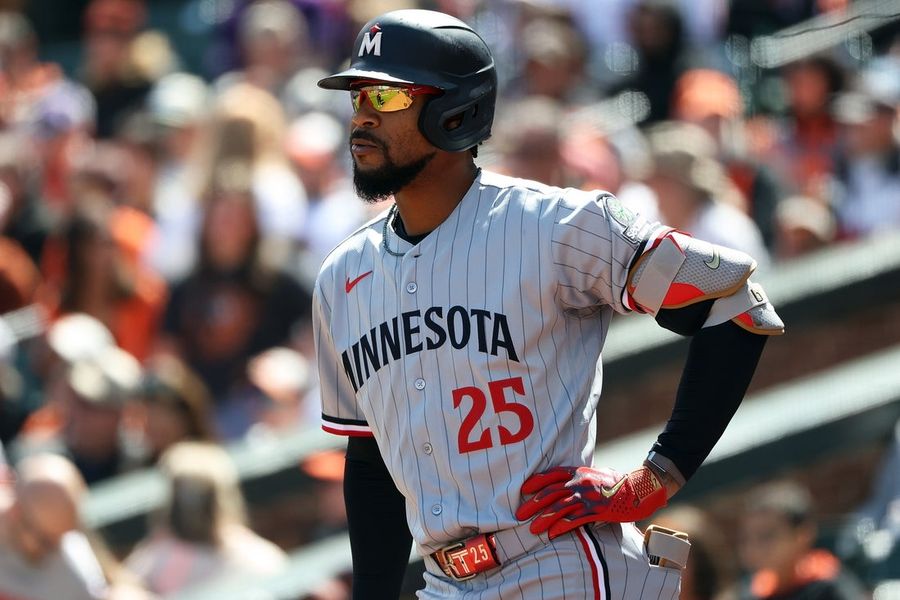 Mar 29, 2026; Baltimore, Maryland, USA; Minnesota Twins center fielder Byron Buxton (25) looks on during the first inning against the Baltimore Orioles at Oriole Park at Camden Yards. Mandatory Credit: Daniel Kucin Jr.-Imagn Images
 The start of the season has been far from perfect for the Minnesota Twins.
But manager Derek Shelton sees reason for optimism ahead of Friday’s home opener against the Tampa Bay Rays.
“The one thing we’re learning about this club,” Shelton said, “is they fight.”
After playing their first six games on the road, the Twins return home for a three-game weekend set. Minnesota dropped its first two series in Baltimore and Kansas City but is coming off a 5-1 win over the Royals on Thursday afternoon.
Tampa Bay, which is starting the season with a nine-game road trip, has an identical record as the Twins with two victories and four losses. The Rays dropped two of three games at the St. Louis Cardinals and Milwaukee Brewers.
The Rays are coming off an 8-2 loss in their series finale against the Brewers on Wednesday that featured uncharacteristically shoddy defense. Tampa Bay has committed nine errors through its first six games, which ranks among the worst in the league.
Rays manager Kevin Cash expressed confidence that his players would improve on defense.
“It’s going to be good,” Cash said. “We just haven’t been as good or as crisp as the standard so far.”
Star slugger Junior Caminero pinned the blame on himself for the defensive miscues. He committed three errors in the series finale against the Brewers.
“I want to make perfect throws, I want to get the out,” Caminero said through a team interpreter. “Just right now, it’s not working.”
The 22-year-old Caminero, who finished with 45 home runs and 110 RBIs last season, also is looking to get going at the plate. He is hitting .238 (5-for-21) with zero homers or RBIs, and he has six strikeouts to go along with six walks.
Yandy Diaz leads the Rays with 12 hits, including two homers, and eight RBIs in six games. Twins right-hander Bailey Ober (0-0, 6.75 ERA) will look to stymie Diaz, Caminero and the rest of the Rays.
Ober is coming off a no-decision in his season debut against Baltimore. He allowed three runs on four hits in four innings, and he walked one and struck out one.
The 6-foot-9 hurler should be fresh after making only 56 pitches in his first start.
Tampa Bay will counter with another tall starter. Right-hander Joe Boyle (0-0, 3.00), who stands 6-8, will make his second start of the season. In his season opener, Boyle allowed two runs on three hits in six innings against the Cardinals. He walked none and struck out four, and he threw 52 of 75 pitches for strikes.
Byron Buxton will look to get back on track for the Twins. He has been quiet at the plate, hitting .174 (4-for-23) with no homers and one RBI.
The early-season slump is uncharacteristic for the Twins’ fan favorite who bashed 35 homers and swiped 24 bases a season ago.
Minnesota and Tampa Bay played six times last season, with each side winning three games. The Rays outscored the Twins 29-21 in those six contests. –Field Level Media
NEWYou can now listen to Fox News articles!
Kansas City Royals veteran catcher Salvador Perez was expecting to DH for his squad in Thursday’s afternoon tilt against the Minnesota Twins.
Unfortunately for the 36-year-old, he had to get back behind the plate after rookie Carter Jensen was unavailable to play catcher for the Royals after sleeping through his alarm.
Jensen was scratched late as the Royals’ starting catcher for the game, but it’s usually an illness or injury that results in such a late change to the lineup. But when Jensen came in for the ninth inning, and was seen catching warmup pitches earlier in the game, reporters were curious.
CLICK HERE FOR MORE SPORTS COVERAGE ON FOXNEWS.COM
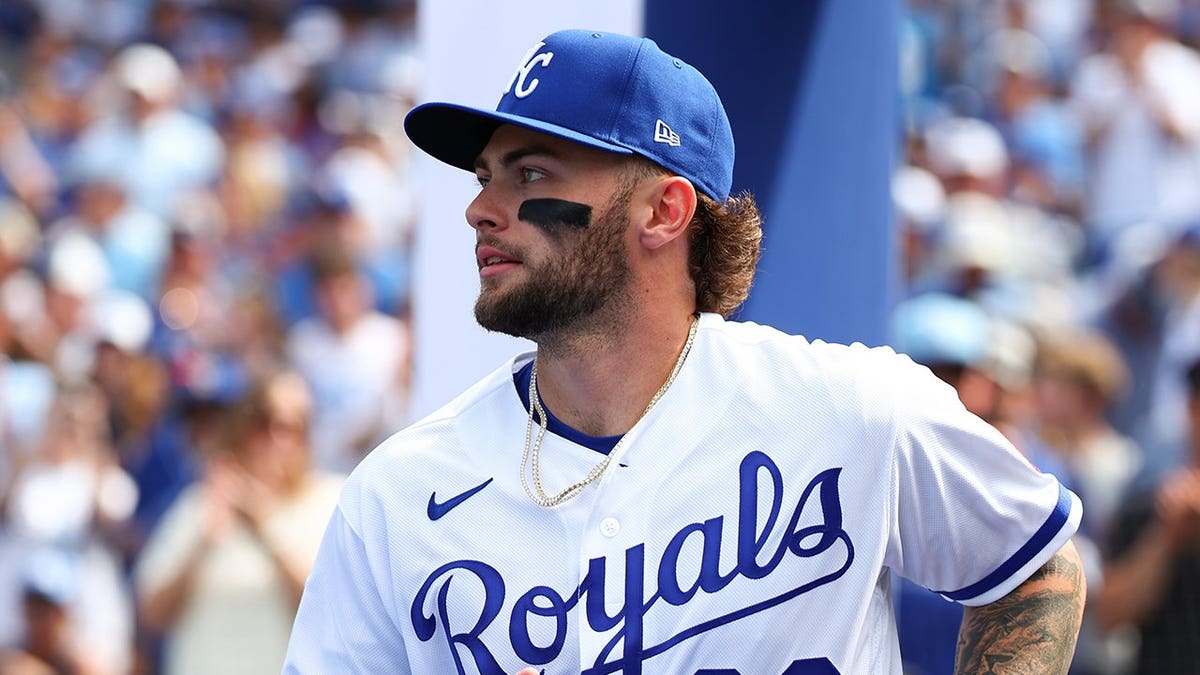
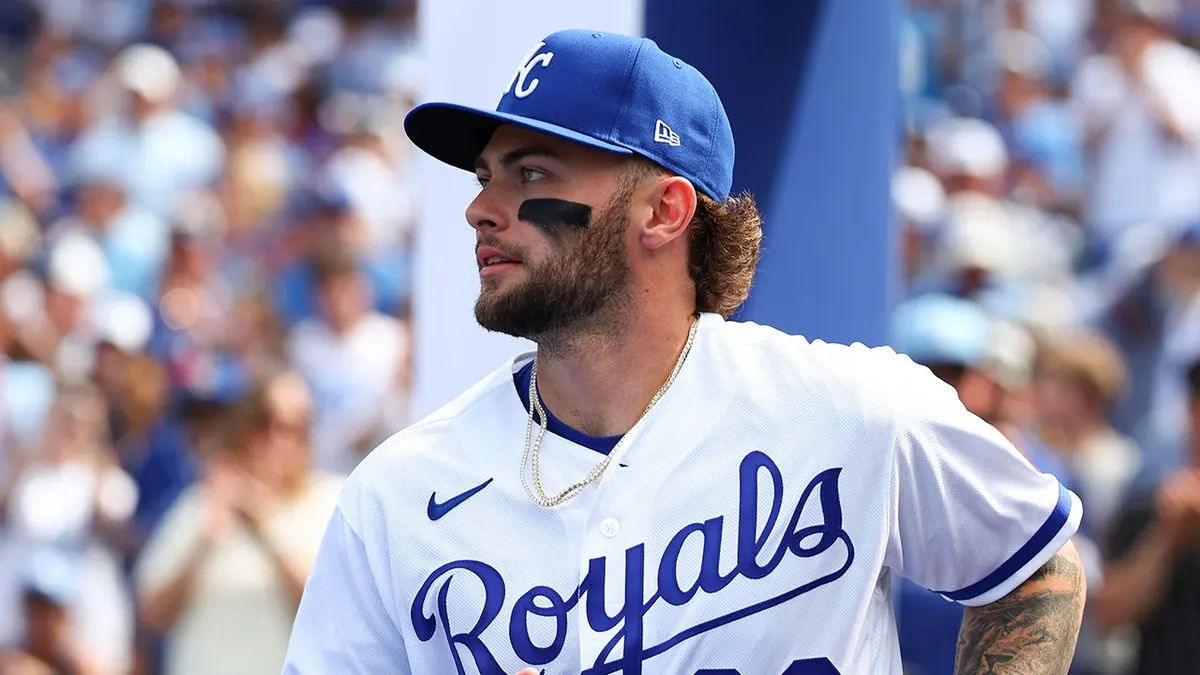
Carter Jensen of the Kansas City Royals takes the field before the game against the Minnesota Twins at Kauffman Stadium in Kansas City, Mo., on March 30, 2026. (Mikayla Schlosser/MLB Photos)
Jensen, the Royals’ top prospect, didn’t make up an elaborate lie. He slept through his alarm and wasn’t able to get to Kauffman Stadium in time to properly prepare for the game.
“No running from it,” Jensen told reporters, via MLB.com, after a 5-1 loss to the Twins. “Just didn’t wake up to my alarm. Slept through it. Don’t really have an excuse, nor should I. It sucks. Happens. I felt like I let my teammates down, coaches down. Just learn from it and know it won’t happen again.”
TIGERS TOP PROSPECT GOES VIRAL FOR UNFILTERED REACTION TO PIRATES’ SETH HERNANDEZ’S 102 MPH HEATER
Royals manager Matt Quatraro added: “He’s a stand-up guy, a really hard worker, a great kid. He feels terrible. He’s accountable to it. It’s not something that has been a pattern or any of that kind of stuff. Nobody feels worse than he does, and I think he’ll admit to that. And we’ll move on.”
While Quatraro took the high road when asked about Jensen, first baseman Vinnie Pasquantino laid into the rookie in big-brother fashion.
“You got a 36-year-old catcher preparing to DH today and then his world gets a little rocked an hour and a half before the game that he’s not going to be DH-ing,” he told reporters. “Credit to Salvy today for being ready, first and foremost. We’re glad Carter’s OK, right? That was kind of the initial thought when you’re trying to get a hold of his parents and everything like that. But once you find out he’s OK, it’s like, ‘All right, it’s a growing moment.’
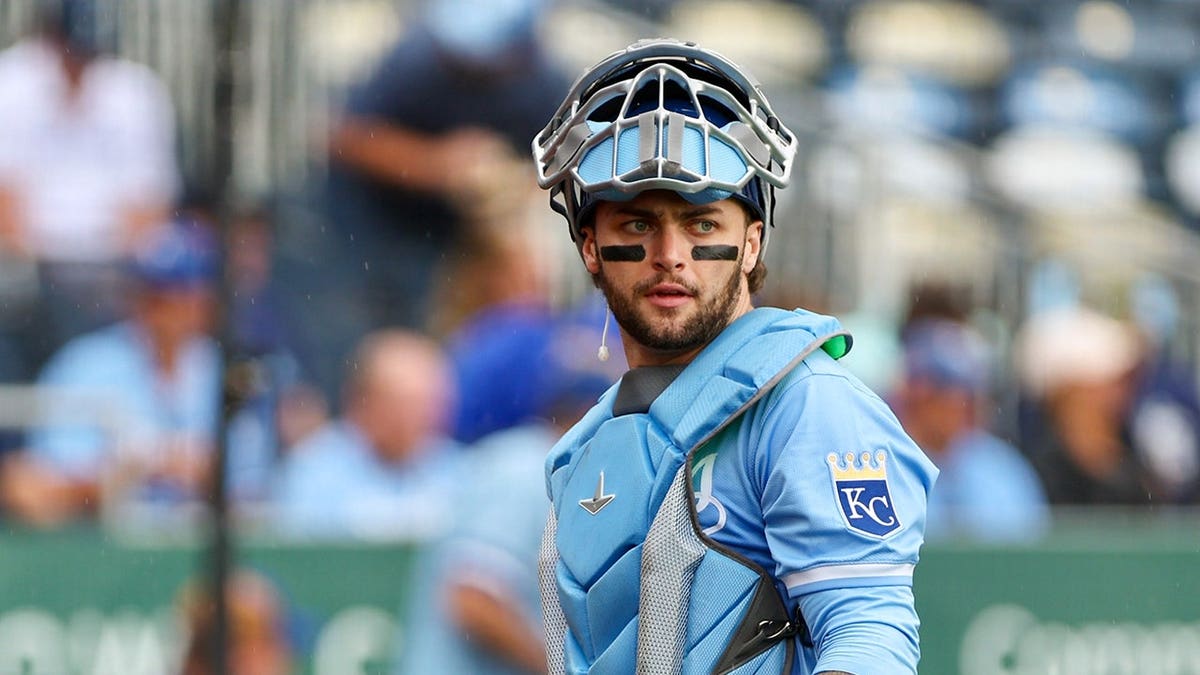
Carter Jensen of the Kansas City Royals looks on during a game against the Seattle Mariners at Kauffman Stadium in Kansas City, Mo., on Sept. 18, 2025. (Sydney Schneider/MLB Photos)
“He’s really young. There are some things that cannot happen, and that’s one of them. He’s going to have to wear it on the chin, same way anybody would have to. It can’t happen.”
Pasquantino added the team is “here for him,” but he also believes Jensen should likely invest in “another alarm clock or something.”
Jensen is already ahead of his teammate.
“There’s a lot to learn from it. Making sure if I don’t set one alarm, maybe set three, four, as many as possible. Moving forward, that’s what I’m going to do. Set a million alarms. Make sure I’m up. It stinks, though.”
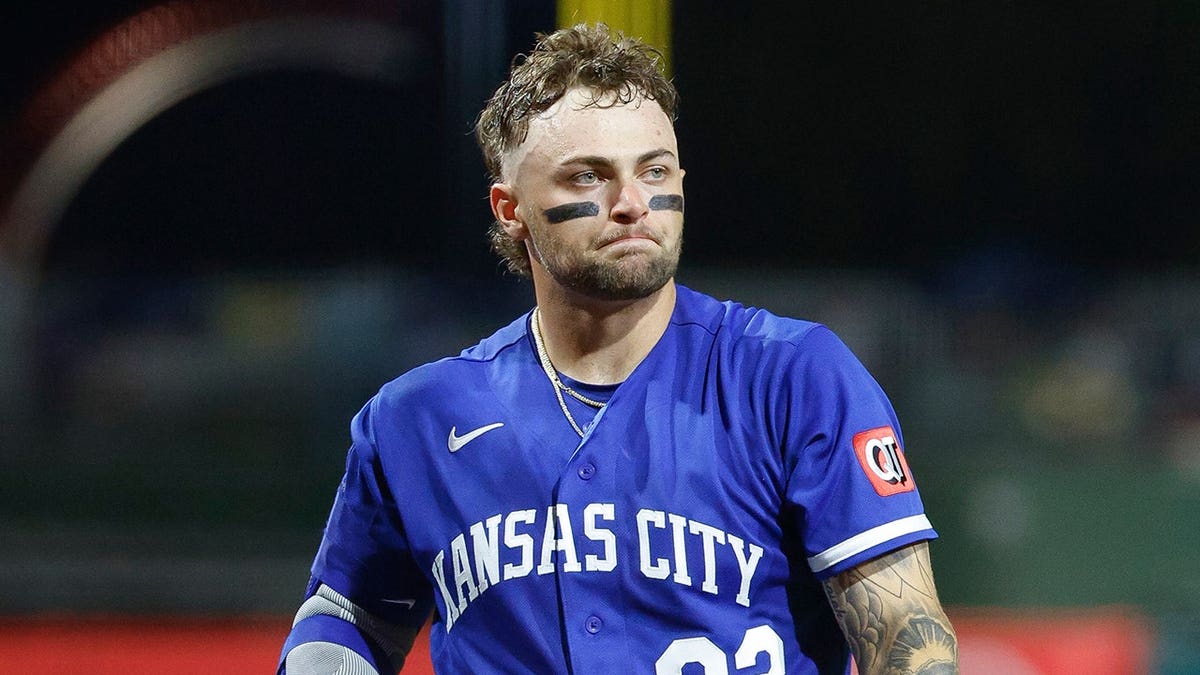
Carter Jensen of the Kansas City Royals walks to the on deck circle during a spring training game against the Texas Rangers at Surprise Stadium in Surprise, Ariz., on March 18, 2026. (Brandon Sloter/Getty Images)
CLICK HERE TO DOWNLOAD THE FOX NEWS APP
Jensen is not just the Royals’ top prospect, but the 6-foot, 210-pound catcher is ranked No. 16 overall by MLB Pipeline in 2026.
In his six games to start the 2026 season, Jensen has two hits in 16 at-bats, including one home run and two RBI.
Follow Fox News Digital’s sports coverage on X and subscribe to the Fox News Sports Huddle newsletter.
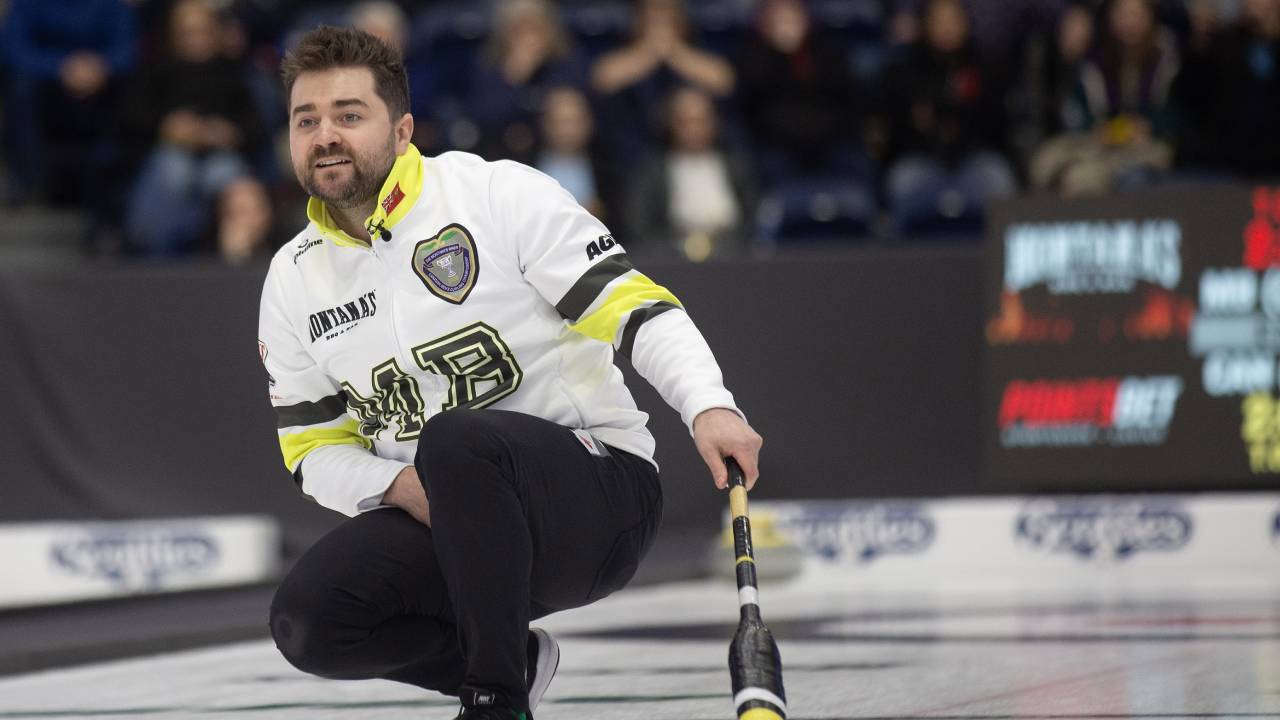
This lede was supposed to read: Canada’s Team Matt Dunstone is truly rounding into its best form heading into the playoffs at the men’s world championship in Ogden, Utah.
Instead, we now have to talk about the fact that the Canadians, specifically Dunstone, fell apart after the eighth end for the second straight day.
The Canadian rink did pull out the 6-5 extra-end victory over Norway, which finished 0-12, but there never should’ve been an extra end to begin with.
Up until the ninth end, the Canadian lineup of Dunstone, Colton Lott, E.J. Harnden and Geoff Walker, who was subbing for Ryan Harnden, were straight up dominating play against the Norwegians, and held a 5-2 lead.
But just like in the game against Switzerland on Wednesday, Dunstone couldn’t make a key shot in the ninth end, helping Norway score two to cut the lead to 5-4.
Even then, everything should’ve been fine. Canada was still in control, up 5-4 with the hammer and could finish the game in the 10th end.
Dunstone was facing a double takeout on his last, but stuffed it and gave up a steal of one to the Norwegians to tie the game 5-5. In both cases, Dunstone softened the release and threw lighter than he wanted, causing more curl, and for him to miss the shot.
The skipper did show poise, however, in the extra end as he was able to regather himself and make a nice hit to win the game.
There are still a lot of positives for this Canadian team, like the fact that it has looked amazing at times (all but two of the 16 ends played on Thursday) during this now eight-game winning streak, which it will take into the playoffs.
But with how the closing ends have gone in the last couple of games, there is reason to be concerned.
Surprisingly, the Canadians’ 10-2 record wasn’t good enough for a top-two spot at this year’s world championship, with Sweden and Scotland beating them on the draw to the button tiebreaker.
As a result, Dunstone’s Manitoba-based rink has to settle for third in the 13-team round-robin and will now face Italy, which finished sixth overall, in the qualification game. The winner will face Scotland in one semifinal, while Switzerland and the U.S. will battle in the other qualification game to match up against Sweden.
Even though Dunstone defeated the Italians 9-2 on day one, it will be a much different team the Canadians will go against on Friday.
20-year-old rookie skip Stefano Spiller shot 60 per cent for Italy in that opening game after replacing Joel Retornaz, who decided to pull himself from the event, just a couple weeks before the championship began.
That will most likely not be the case again. Spiller is playing with a lot more confidence and has a better understanding of how his teammates want to play now.
Need to force Whyte to miss
The favourite as we head to the playoffs has to be Scotland’s rookie team led by skip Ross Whyte. After starting 0-2, the Scots have won 10-straight games.
Sure, we can look at the whole team made up of Whyte, third Robin Brydone, second Craig Waddell and lead Euan Kyle and say all four have been a key part to its success this week — as a team they’re first overall at 89 per cent.
But when looking at the playoffs, the other top teams aren’t going to be as worried about them, as they will be with Whyte.
The Scottish skip has been a massive problem for every team he’s faced this week. He’s been the best skip in the field, shooting 89.4 per cent overall with no games below 81 per cent.
Most importantly, it’s been the clutch shots that Whyte has made to either get his team out of trouble without the hammer or just to score one. Just ask Switzerland’s Team Marco Hoesli.
In the 10th end on Thursday, the Scots were up 5-4 without hammer, and Hoesli had one sitting back button buried to score his one.
Somehow, Whyte came through an incredibly tight port of three stones for an in-off to hit the Swiss stone and sit two. Switzerland ended up losing 7-4.
If any team is going to beat Scotland in the playoffs, the focus has to be on forcing Whyte into the hardest shots possible each end to hopefully earn a miss. If he makes them, then you live with it.
We’re talking angled double runbacks, triple raises, forcing a draw to only the pin, because if not, he’s probably going to make whatever the shot is with ease on the way to a world championship as a rookie.
Edin’s shoot touch is back
Through seven games at this year’s world championship, Sweden’s Team Niklas Edin was perfect, rebounding from the disappointing 2026 Olympics, where his squad went 2-7.
Edin himself was shooting lights out, and looked like he had the magic touch back that helped him become a seven-time world champion — the most of all time.
However, Sweden then proceeded to drop two important games to Switzerland and Canada on the same day, when Edin shot 57 and 75 per cent, respectively.
Edin lost his shooting touch and wasn’t able to get a handle on his draw weight, costing him both games.
Well, it seems that lit a fire under Edin, because the Swedes finished on a three-game winning streak, outscoring their opponents 28-6. Sweden also finished 10-2 on the week, good for first overall and a bye to the semifinals.
In those three games, we saw the same Edin to start the week, or maybe even a better version, as he shot 100, 94 and 100 per cent.
Looking at the playoffs, Edin’s shot-making ability will be the driving force for Sweden to have success and help him find world championship No. 8. All season, when Edin has been on, the team goes, and when he doesn’t seem to have it, the team gets blown out.

EDMONTON — There are two things hockey players have always told us:
You can’t expect to just “flick a switch” when March rolls around and suddenly start playing the brand of game that can win in April and May. “This league’s too good,” we’ve heard at least 1,000 times.
And, home ice advantage means something. First place is everyone’s goal, every season.
Well, meet the Edmonton Oilers — a bunch of switch flickers who really don’t care much about where they finish. As long as it’s in the playoffs.
This is your captain speaking:
“Just putting the X beside our name is the main thing. Just getting in, that’s our main focus,” said Connor McDavid, after Edmonton’s season-high fifth straight win, a 3-1 cruise past Chicago. “Where we’re seeded, I’m not too concerned about it.
“We can start a series on the road, we can start a series at home. We’re pretty comfortable either way. We just have to get in.”
Edmonton floated through the first half of the season, and then kept it on cruise through the Olympic break before finally hunkering down and putting together some semblance of the game that took them to the past two Stanley Cup Finals.
They’ve gone 11-6-1 since the Olympics — that’s a .639 points percentage that is tops in the Pacific. Edmonton has reeled in its goals against with the help of a settled down D corps, which is centred on Connor Murphy-Darnel Nurse pairing that has been rock solid of late.
And here’s something you don’t hear every day: The goaltending has been excellent in Edmonton, with Tristan Jarry surrendering just a single rebound goal on 18 shots Thursday, while the Oilers rifled 38 shots at the Blackhawks net.
Suddenly, with the playoffs in sight, the Oilers are playing quality, competitive, defensive hockey.
“You want to be as consistent as you can and sometimes that’s hard in this league,” hemmed and hawed Adam Henrique, when asked about a team that found the light switch just in time. “As a group, we’ve found (their game)— and there’s no better time to do that than now.
“With the schedule you’re playing every other day. It’s a playoff mentality and we know what that takes.”
With the Anaheim Ducks idle on Thursday after coughing up two late goals to lose in regulation on Wednesday, the Oilers pulled even atop the Pacific with 87 points. The Ducks have seven games left, Edmonton six, but the Oilers have the edge in the first tie-breaker, with six more regulation wins.
The Oilers haven’t won a Division since 1987 — the longest drought in the NHL — but good luck finding anyone on this team willing to convince you that home-ice advantage really matters.
“I don’t know if it’s absolutely necessary,” said head coach Kris Knoblauch. “It would be nice to finish first and put a banner up next fall, but this team — whether at home or road — it responds well. If we get into a Game 7, maybe. But we’re just trying to play as well as possible.”
You’ll recall a year ago when the Oilers did not have home advantage in any of the first three rounds, and tore through the West with a 12-4 record. Then in the Final against Florida — a series that opened in Edmonton — they lost in six games.
So you’ll have to forgive the Oilers for not being fixated on first place. Honestly — and they’d never say it out loud — if Edmonton continue to build their game from where it’s at right now, they wouldn’t be overly concerned about whomever they get in Round 1 or 2.
“You want to give yourself the best opportunity and a lot of times that’s finishing first,” said Henrique, who banged home his first goal in 50 games on a breakaway, then breathed a huge sigh of relief. “We know in the past that it doesn’t matter.”
MCG will play host to Sunday’s
Round 4 AFL game between Melbourne Demons and
Gold Coast SUNS. The game kicks off at 3:15 pm with Gold Coast SUNS heading into the game as favourites with the bookmakers. Continue reading for our in-depth preview of the Melbourne Demons vs.
Gold Coast SUNS
game and give you our free tips and bets.
When: Sunday April 5, 2026 at 3:15 pm
Where: MCG
Bet 💰: Bet On This Match HERE
Melbourne Demons vs Gold Coast SUNS Odds
Melbourne Demons vs Gold Coast SUNS Preview
Melbourne will look to make a statement as it faces a quality opponent in what promises to be a high-intensity contest. The Demons’ strength around stoppages and defensive structure remains a key asset, while their ability to convert forward entries will be under scrutiny. Their opponents bring speed and attacking flair, setting up an intriguing tactical battle. Expect a physical contest, with territory and pressure likely to dictate the flow. This match offers a strong indicator of both teams’ readiness to contend and their capacity to execute under pressure.
First Goal Scorer
Tim Bradley sees only one winner in Moses Itauma vs Oleksandr Usyk

Let Us Text You the Very Best Deals Directly to Your Phone

Storm Dave – weather warning for York and North Yorkshire

Smart energy pays enters the US market, targeting scalable financial infrastructure

Why Israel is blocking foreign journalists from entering

Bitcoin: We’re Entering The Most Dangerous Phase

Banking & Financial Current Affairs MARCH 2026 | Monthly Current Affairs Series By Sheetal Mam

How Is Everything Outpacing Inflation At The Same Time?

April 1 Financial Rule Change: Cash Deposit & Withdrawal Rules | Public TV
-

 NewsBeat7 days ago
The Story hosts event on Durham’s historic registers
-

 NewsBeat19 hours ago
Steven Gerrard disagrees with Gary Neville over ‘shock’ Chelsea and Arsenal claim | Football
-

 Sports7 days ago
Sweet Sixteen Game Thread: Tide vs Michigan
-
Entertainment4 days ago
Fans slam 'heartbreaking' Barbie Dream Fest convention debacle with 'cardboard cutout' experience
-

 Crypto World2 days ago
Gold Price Prediction: Worst Month in 17 Years fo Save Haven Rock
-

 Business13 hours ago
No Jackpot Winner and $194 Million Prize Rolls Over
-
 Entertainment6 days ago
Lana Del Rey Celebrates Her Husband’s 51st Birthday In New Post
-

 Tech4 days ago
The Pixel 10a doesn’t have a camera bump, and it’s great
-
Crypto World3 days ago
Dems press CFTC, ethics board on prediction-market insider trades
-

 Sports3 days ago
Tallest college basketball player ever, standing at 7-foot-9, entering transfer portal
-

 Tech3 days ago
EE TV is using AI to help you find something to watch
-

 Fashion5 days ago
Amazon Sundays: Soft Spring Layers
-

 Tech4 days ago
Avatar Legends: The Fighting Game comes out in July and it looks pretty slick
-

 Business1 day ago
Login and Checkout Issues Spark Merchant Frustration
-

 Fashion6 days ago
When Evening Dressing Gets Colorful for Spring
-

 Tech3 days ago
How to back up your iPhone & iPad to your Mac before something goes wrong
-

 Tech5 days ago
Elon Musk’s last co-founder reportedly leaves xAI
-

 Tech4 days ago
Apple will hide your email address from apps and websites, but not cops
-

 Crypto World4 days ago
U.S. rule change may open trillions in 401(k) funds to crypto
-

 Politics4 days ago
Should Trump Be Scared Strait?
You must be logged in to post a comment Login