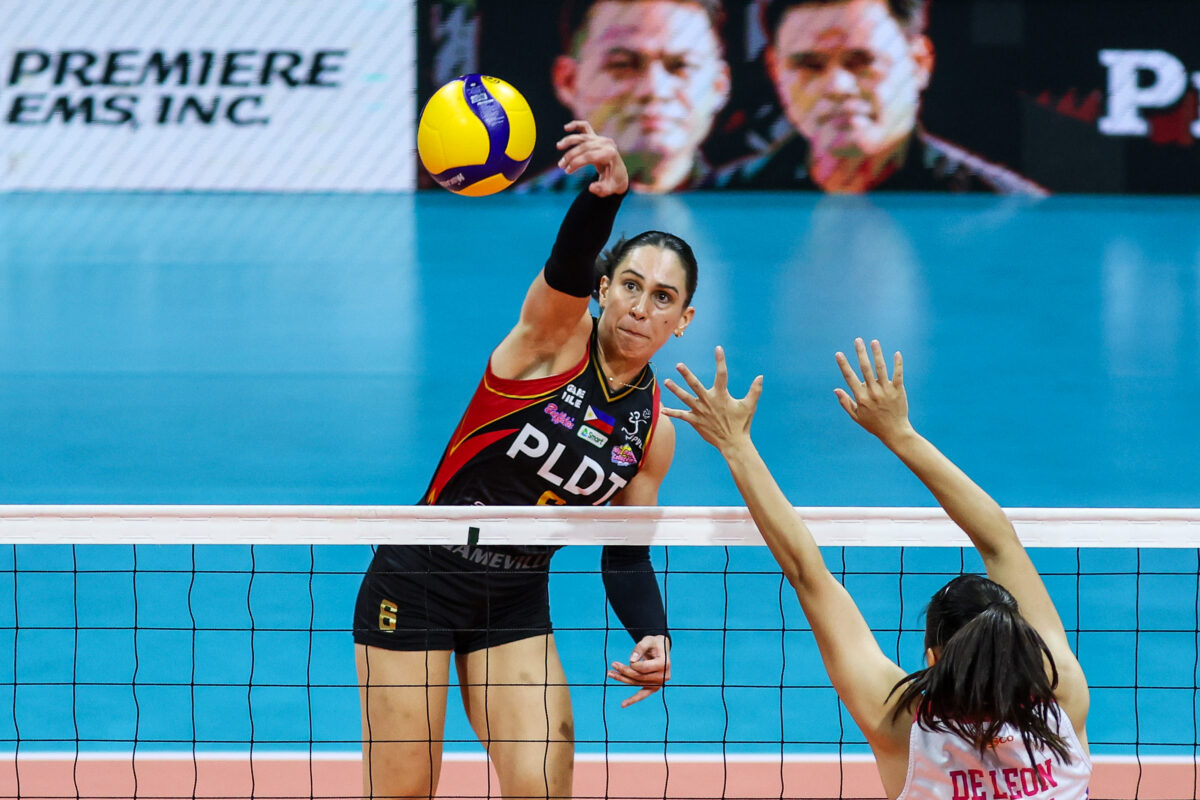
PLDT’s Savi Davison during a game against Creamline in the PVL Invitational Conference.–MARLO CUETO/INQUIRER.net
MANILA, Philippines — Nxled made its first-ever PVL Finals appearance thanks to dethroned champion PLDT.
Already out of title contention, the High Speed Hitters played spoiler and denied the Creamline Cool Smashers’ bid to claim the last ticket to the title match with a 25-17, 23-25, 21-25, 25-23, 15-12 win on Sunday night at Smart Araneta Coliseum.
Article continues after this advertisement
Advertisement
Nxled did its part in the first game by beating Farm Fresh before PLDT’s comeback victory sealed the Chameleons’ place in the final against Thai club EST Cola.
Nxled, PLDT, and Creamline actually finished the elimination round with similar 3-2 records, but the Chameleons held the tie-break with 10 points.
Nxled takes on top seed EST Cola in the winner-take-all final on Tuesday at 6:30 p.m.
Advertisement
Article continues after this advertisement
PLDT mounted a 13-9 lead in the fifth set after Kianna Dy’s clutch kill. With Jaja Santiago-Minowa entering the rotation, she made it a two-point game before Dy scored again off the block to reach match point, 14-11.
Minowa saved a point, but Savi Davison ended the match with a cross-court hit. Davison unleashed a new career-high 37 points on 35 attacks and two blocks. The reigning Invitational MVP also had stellar floor defense with 24 excellent receptions and 18 digs.
“Unfortunately, we weren’t able to get the result we wanted,” said PLDT coach Rald Ricafort in Filipino.
Advertisement
Article continues after this advertisement
“But the mindset of the players and the team is that we’re not going to pick and choose which games to fight for. Especially against Creamline, they’re a very challenging team to play against. They really bring out the best in each of us. So we’re going to take this win, keep fighting, and prepare for them again on Tuesday.”
Kianna Dy and Jovy Prado had 14 points each. Mika Reyes had 11 points, highlighted by five blocks.
Creamline missed the Invitational Finals for the second straight time despite adding Minowa, a former league MVP and resident Japan SV.League import.
Advertisement
Your subscription could not be saved. Please try again.
Your subscription has been successful.
Minowa tallied 25 points built on 15 kills, nine blocks, and an ace. Jema Galanza had 20 points, 16 digs, and 16 excellent receptions, while Michele Gumabao added 11.
Advertisement
PLDT and Creamline battle for bronze on Tuesday at 4 p.m.
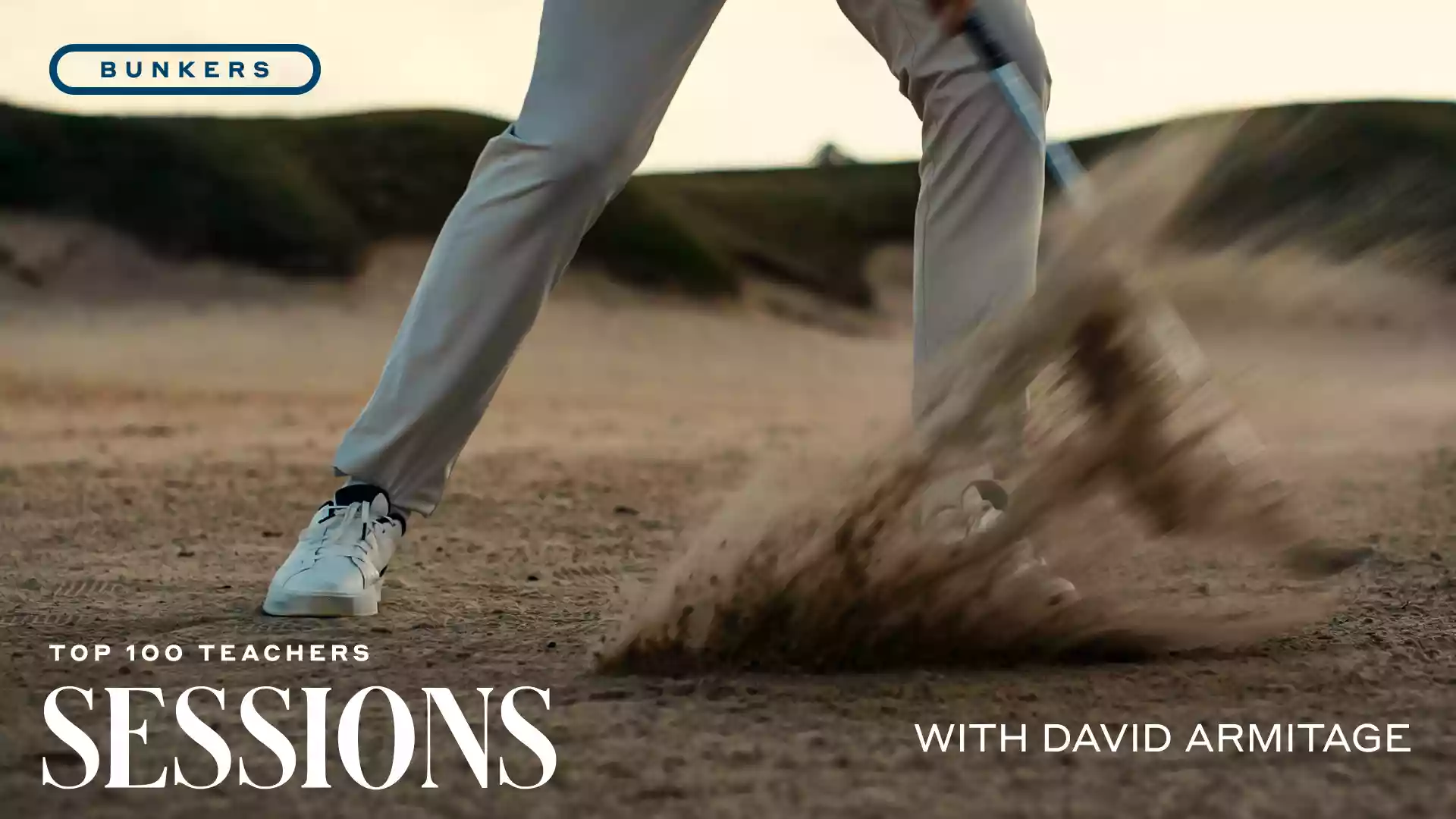
There are few people in golf who know the bunker game better than David Armitage. He coaches all aspects of the game, but the sand is his specialty.
“I am the only guy that is dumb enough to write 144 pages about how to get out of bunkers,” he says.
For most golfers, bunkers are a source of anxiety — a place to be avoided at all costs. For Armitage, the bunker is his happy place. And he wants it to be the same for his students.
That mission has led Armitage to dedicate himself to helping golfers of all skill levels understand the secrets to better bunker play. He has shared his expertise in his book, The Bunker Game: How to Play with Confidence from the Sand, and now in our latest Top 100 Teacher Sessions video, where he breaks down the techniques and adjustments that can turn any golfer into a more confident player from the sand.
Advertisement
Watch the video below or read on for a complete guide to mastering bunker play, courtesy of the man who — quite literally — wrote the book on it.
“>
Chapter 1: Why the bunker beats you
Just about every average recreational golfer is fearful of the sand. When they see a sand trap, they do everything they can to avoid them, because when they find one, it can lead to a big score.
Advertisement
“I think it all leads back to bad concepts [and] bad understanding of how to play the bunker shot,” Armitage says.
The “standard” technique for bunker play has long been to severely open your stance, open your clubface and then swing down your feet line. However, that technique doesn’t work for a majority of players. With that setup and strike, it requires tons of strength and clubhead speed to get the ball up on the green.
Another issue with this setup is that it makes it incredibly difficult to get the ball heading in the correct direction. With such an open setup, aim becomes quite difficult.
“It’s going to be unpredictable how the ball is going to start,” Armitage says. “Because I’ve got the face wide open, my feet left … I’m not going to be as predictable with my start line.”
Advertisement
Chapter 2: Seve Ballesteros’ influence on modern bunker play
For Armitage, the turning point in his bunker education came from one of golf’s greatest short-game artists: Seve Ballesteros.
Armitage spent most of the beginning of his golf life in St. Andrews, where the bunkers are small and difficult to escape. And although he had taken lessons from many coaches, he still struggled with his play from the sand.
“I obviously was a strong young kid and could generate a lot of speed,” Armitage says. “But I found it difficult to start the ball online. I found it difficult to generate distance.”
That changed when he spent time with Ballesteros, who was near the end of his career and visited St. Andrews for corporate outings from time to time. During those visits, Armitage got to watch him hit bunker shots and picked up on some of his techniques, such as the simplicity of the setup.
Advertisement
“He hit all the shots from a square stance,” Armitage says.
Armitage remembers watching Ballesteros demonstrate the shots and heading straight to a bunker to try them himself. The difference was immediate.
“I couldn’t believe how it changed my bunker game and how the start lines became better straight away, how my distance control became better, and how it felt just easier,” he says.
Chapter 3: Setup basics
Armitage’s approach to bunker play begins with nailing the setup. Rather than trying to create a complicated swing, he wants golfers to establish a position that makes the correct motion easier to produce.
Advertisement
“I’m looking at really square stance,” he says. “I’ve opened the face. I’m then taking my grip, and then I have a wide stance, low handle, moving my chin, my sternum, and my belt buckle onto the ball or just in front of the ball.”
The first key is getting into a wide stance. Armitage wants it wider than a golfer’s driver stance, which helps lower the body and the handle. That, in turn, helps the ball get up.
He also recommends digging the feet into the sand slightly. This helps golfers feel the sand beneath them and understand what kind of lie they are dealing with. But consistency is important. Armitage doesn’t want golfers digging in by a different amount every time they enter a bunker.
“You’ve gotta be consistent with your approach to that setup,” he says.
Advertisement
The next key is moving the body forward. Armitage wants the chin, sternum and belt buckle to shift toward the target. He sees too many golfers moving their lower body forward while leaving the upper body behind, which moves the low point backward.
“This is a big no-no,” he says.
Instead, the sternum should be forward, with a little more flex in the lead knee. Armitage says this was something he always noticed in Ballesteros’ setup.
For a standard greenside bunker shot, Armitage places the ball just in front of the middle of his stance. The strike point is in the middle, and the sternum is directly above or slightly in front of the ball. That position controls the low point of the swing.
Advertisement
“The club’s gonna enter on the sand, on the line. It gets to its lower point, lowest point where my sternum is, and then it exits out,” he says.
Chapter 4: How to orient the clubface
Once the setup is in place, Armitage turns his attention to the clubface. The face still needs to be open, but the reason is different from the traditional approach. He wants an open face so golfers can expose the bounce of the wedge, which helps the club glide through the sand instead of digging into it.
“This is a beautiful part of the club that Gene Sarazen developed,” Armitage says.
The bounce is the part of the sole that helps the club move through the sand. Opening the face exposes more of it, allowing the club to slide rather than dig.
Advertisement
Armitage also points out that golfers need to use the right club for the sand they are playing from. Different bunkers have different types of sand, and different wedges have different amounts of bounce.
“If you have a lot of bounce and you have a hard sand, that’s probably not a great combination,” he says.
For his standard greenside bunker shot, Armitage opens the face to about 2 o’clock. He uses a clock-face reference to explain the position: 12 o’clock is square, 1 o’clock is slightly open, and 2 o’clock is more open. (Left-handed golfers would use the opposite side of the clock, with 11 o’clock being slightly open, and 10 o’clock being more open.)
Armitage also recommends taking the grip after opening the face, which helps keep the face open through the shot.
Advertisement
He sometimes uses a slightly weaker left-hand grip, which helps prevent the face from closing too much. It’s not something every golfer has to do, but it’s a technique that can be useful and that is used by many tour players.
Chapter 5: The swing
Armitage’s standard bunker shot is 12-yards, which is what another short-game guru, Phil Mickelson, uses as his starting point. All other shots work from that standard 12-yard shot.
For the standard shot, the setup remains the same as described above. Then, the club needs to swing up and down into the sand.
“A lot of people talk about, like, do I pick the club up? Well, I think the club does have to go up,” Armitage says. “Because we do need a steeper angle of attack in the bunker.”
Advertisement
The key is that the setup should make this happen naturally. With the weight forward and the sternum in front of the ball, the club should swing more vertically without the golfer having to force it.
As you approach impact, Armitage wants the clubhead to enter the sand about two inches behind the ball and create a divot pattern that moves slightly left of the target line.If you can do that, the ball should pop nicely out of the sand.
As you make your swing, be sure you keep the weight forward throughout the motion. If you start with 70 to 75 percent of your weight on your lead foot, you wants that pressure to remain there through the backswing and increase into impact. The other important ingredient is speed. The sand slows the club down, so golfers need enough speed to get the ball out.
“Most amateurs, if they hit that shot, they’re out of trouble, they’ve got a putter in their hand, and they’re probably gonna make bogey and move on to the next hole with a smile.”
Advertisement
Chapter 6: Changing distances
Once golfers understand the basic bunker shot, you need to learn how to change distance without changing the swing speed. For that, Armitage suggests using different wedges and different face positions.
He has a gap wedge, a 54-degree wedge and a 60-degree wedge. With each club, he can use a square face, a 1 o’clock face, or a 2 o’clock face. That gives him nine different shots without changing the swing speed.
The type of sand, how much sand is taken, and how the club deflects through it can all affect the trajectory. Armitage points out that tour players don’t always create spin themselves. Sometimes the sand is responsible for the way the ball reacts.
“When they see a ball spinning, they think that the player’s making it spin, and sometimes it’s to do with the circumstances,” he says.
Advertisement
For everyday golfers, the lesson is to focus on the setup and the strike rather than trying to manufacture spin.
Chapter 7: Advanced bunker play
Armitage’s advanced bunker shot is designed for experienced golfers who need to hit a short-sided shot or get the ball to stop quickly.
“This is a shot that I wouldn’t teach the everyday golfer,” he says.
The shot begins by opening the face even more. Armitage moves from his normal 2 o’clock position to about 2:30, pushing the limits of how much loft he can create. The more open the face becomes, the more bounce is exposed. But it also means there is less of the clubface available to hit the ball with, making the margin for error even thinner.
Advertisement
For this shot, Armitage also weakens his left-hand grip, lowers the handle and widens his stance even more. Then, he makes the same swing he does for any other bunker shot. The result is a shot that launches higher and travels shorter. That allows him to swing with speed while keeping the ball from going too far.
“You can still have speed, and that ball’s gonna go higher and shorter,” he says.
For short-sided bunker shots, that speed is especially important. Armitage says golfers often become tentative when they are close to the hole, and that can lead to deceleration and leaving the ball in the bunker.
But Armitage also emphasizes that some bunker shots are simply not accessible. Even the best players in the world sometimes have to accept a difficult pin and give themselves a longer putt.
Advertisement
“Some shots are just not accessible,” he says. “You’ve gotta take your punishment sometimes.”
Chapter 8: How to practice on your own
Armitage’s practice philosophy is simple: start with the strike, not the ball.
One of his favorite drills uses a rake. He places it behind the ball so that if he sways or falls back during the swing, he will hit it. The drill helps golfers understand how vertical the swing needs to be for a proper bunker shot.
“If I drift off the ball on the backswing, I’m gonna hit the rake,” Armitage says.
Advertisement
The rake also helps golfers make sure the downswing is vertical and forward. Armitage recommends starting slowly and using the drill to build the feeling of the correct motion.
“Do it slowly,” he says. “Maybe just do it in very slow motion just to get the image and the feeling.”
Another drill comes from Ernie Els. Armitage says Els would draw two lines in the sand, set up wide, and make swings that focused on contacting the sand between those lines. He would then make two or three of those swings before hitting a ball.
“That’s what the pros do, and one of the best players in the world,” Armitage says.
Advertisement
The lesson for amateurs is to do the same. Rather than immediately hitting balls, start by practicing the setup and the strike.
“Do the line drills first, get that impact where you want it, and then take that to the ball,” he says.
After weeks of delays and behind-the-scenes attempts to cobble something meaningful together, UFC 332 in Salt Lake City, Utah finally has a championship main event: Natalia Silva vs. Wang Cong for the vacant women’s flyweight belt.
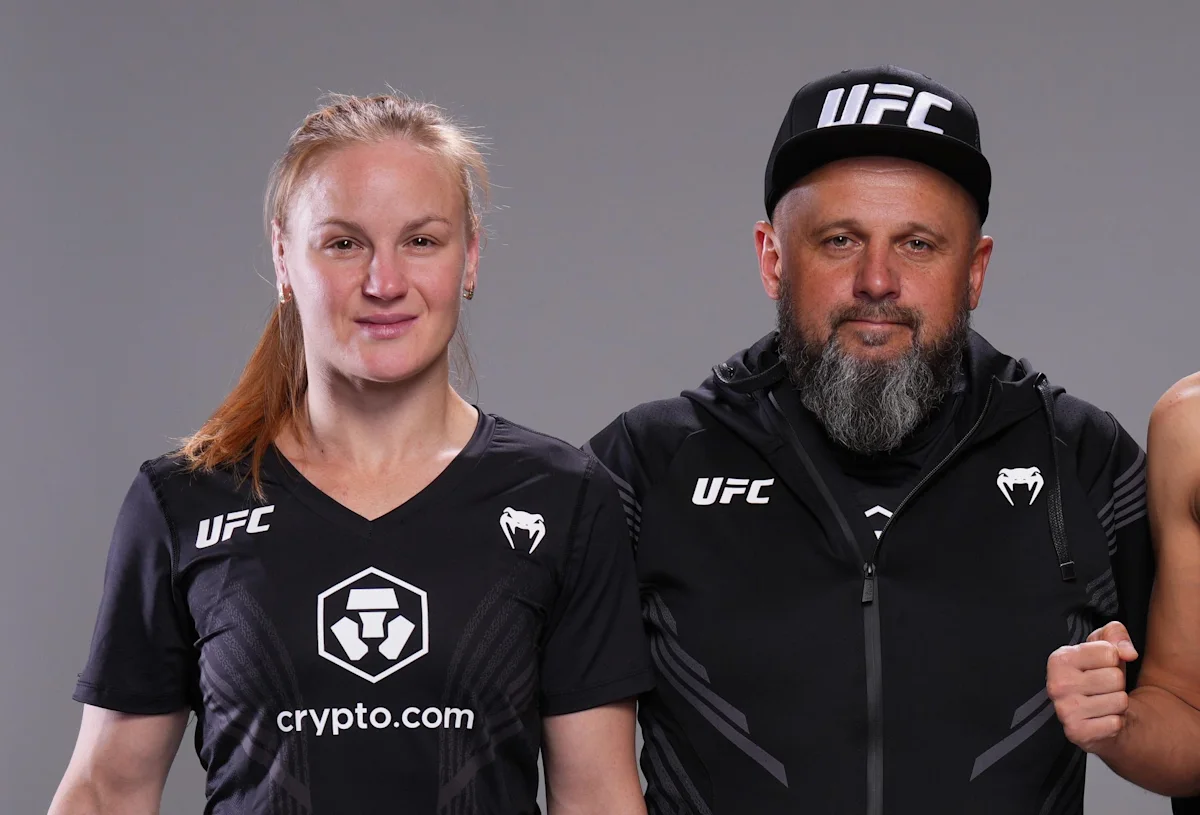
Wait, what? The flyweight belt that Valentina Shevchenko has defended a whopping nine times since 2018 across two title runs? That’s now vacant? When announcing Silva vs. Cong, they cited a “Bullet” injury but didn’t really get into details on how the belt was put back up for grabs. A statement from Shevchenko’s coach Pavel Fedotov gave a bit more info.
Advertisement
“We were supposed to fight on October 3 against Natalia Silva, but due to an injury to the ligaments in the shoulder and back, we decided not to push things and postpone the fight,” Fedotov wrote (via Ushatayka). “Given that the recovery will take a long time, we’ve made the decision to temporarily vacate the belt, and once she recovers, she will fight for it again.”
Advertisement
According to Fedotov, they’re expecting the injury to take eight months to recover from.
In the past, you might expect to see an interim title go up for grabs after similar injuries taking under a year to heal. But these days, the UFC has gotten into the habit of asking its injured champions to relinquish their belts. Jamahal Hill did it when he ruptured his Achilles tendon, and so did Jiri Prochazka when he injured his shoulder. Now we’ve got Valentina Shevchenko doing it.
Advertisement
Hopefully these fighters are getting compensated well for giving up their hard earned championship gold so the UFC can patch holes in their matchmaking schedule with undisputed title fights. Hill and Prochazka never won back their belts after relinquishing. Will Shevchenko suffer the same fate?
The Vikings will be looking to overcome some widespread doubt about their abilities (or lack thereof) in 2026. Doing so will largely come down to answering some questions.
In particular, onlookers will want to know how things get sorted out at quarterback. Kyler Murray is now the QB1, meaning he’s working into the best situation he’s ever been in within his NFL career. Minnesota does have a football team beyond just the modestly-paid passer who is looking to play well in the Twin Cities.
The Vikings Will Be Looking to Answer Some Questions
Question No. 1 — Can a Draft Class Finally Be Helpful?
Advertisement
Aug 22, 2026; Minneapolis, Minnesota, USA; Minnesota Vikings defensive tackle Caleb Banks (95) lines up against the Baltimore Ravens during the first quarter at U.S. Bank Stadium. Mandatory Credit: Jeffrey Becker-Imagn Images – Credit: IMAGN IMAGES via Reuters Connect
Caleb Banks doesn’t lack for potential. However, there’s some concern about his lack of polish, a possible problem that has commonly been described as a “pad level” issue.
All of LB Jake Golday, DT Domonique Orange, CB Chuck Demmings, and FB Max Bredeson have ignited optimism in training camp and the preseason. How that translates to the regular season is somewhat murky. Others, such as OT/OG Caleb Tiernan, S Jakobe Thomas, and RB Demond Claiborne, have struggled more.
Already, a draftee has been set free. 7th-Round Center Gavin Gerhardt has been cut and released from the practice squad. The Vikings are desperate for youth to shine, but they’re down to eight out of nine draftees.
Question No. 2 — Can Health Cooperate at Key Positions?
Advertisement
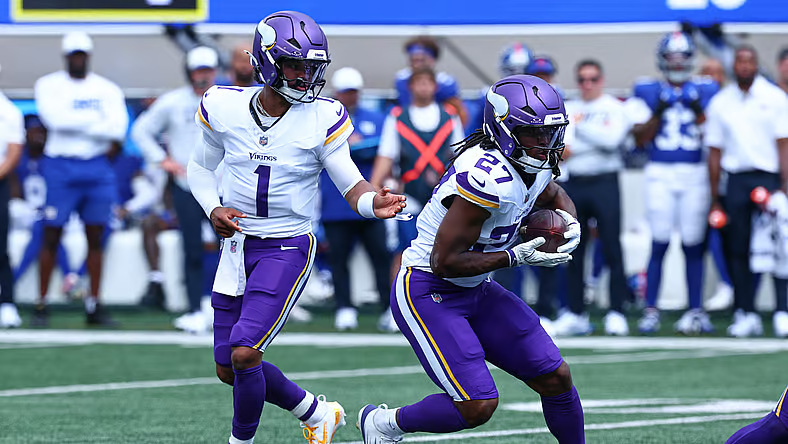
Aug 15, 2026; East Rutherford, New Jersey, USA; Minnesota Vikings quarterback Kyler Murray (1) and quarterback Carson Wentz (11) warms up before the game against the New York Giants at MetLife Stadium. Mandatory Credit: Vincent Carchietta-Imagn Images – Credit: IMAGN IMAGES via Reuters Connect
So much of last year’s problems could get worked back to health.
Consider, for instance, positions other than quarterback. Each of the top two edge rushers, Jonathan Greenard and Andrew Van Ginkel, missed time. So did the OT starters, LG1 Donovan Jackson, and C1 Ryan Kelly. Aaron Jones had injury issues and so did Josh Metellus. Blake Cashman played well but wasn’t out there the whole time. All of these absences added up.
And then, of course, there were the quarterback injuries. Needing to start a UDFA rookie in Max Brosmer was never in the plan. Can Kyler Murray start all seventeen games? He has never been mistaken for Cal Ripken out there.
Question No. 3 — Can the Vikings Achieve Playoff Success?
Jan 15, 2023; Minneapolis, Minnesota, USA; Minnesota Vikings head coach Kevin O’Connell looks on before a wild card game against the New York Giants at U.S. Bank Stadium. Mandatory Credit: Matt Krohn-USA TODAY Sports
There can be no playoff success unless a few issues get fixed. Most notable is the lack of balance on offense between the passing and ground game. At some point, the issue needs to get fixed.
Usually, the Vikings’ defense has been a stingy crew but that’s not always so. There have been times when runners have consistently found running lanes, creating a scenario where it’s tough for Brian Flores to get his guys off the field. Again, something to monitor.
Advertisement
Bringing things down to football basics might involve looking at the trenches in the final tournament. Losing to the Giants following the 2022 regular season and Rams following the 2024 season was largely the result of the Vikings getting walloped at the line of scrimmage. Fixing that reoccurring issue is a must.
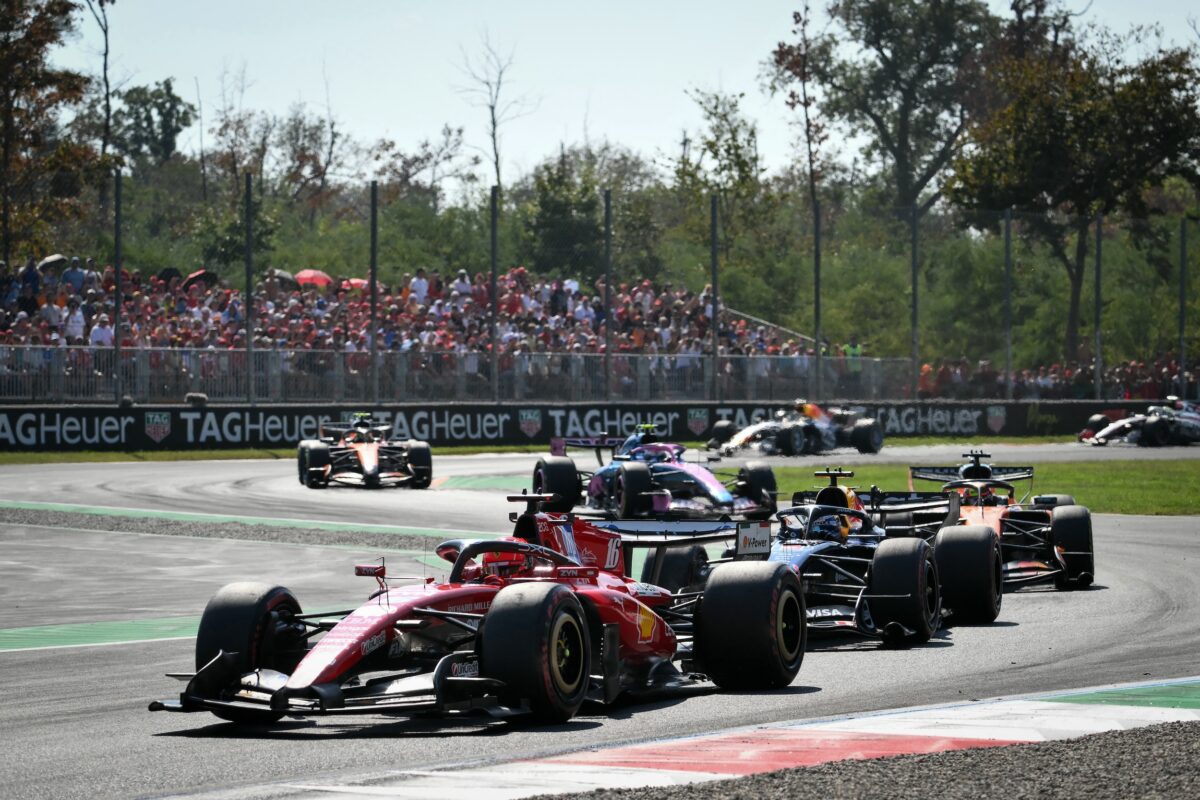
Ferrari’s Monegasque driver Charles Leclerc competes at the start of the race during the Italian Formula One Grand Prix at the Autodromo Nazionale Monza circuit in Monza, northern Italy on September 6, 2026. (Photo by Marco BERTORELLO / AFP)
The Italian Grand Prix at Monza was halted after just two laps on Sunday after Ferrari’s Charles Leclerc slid off the track and smashed into barriers.
The Monegasque, who is a two-time winner at Monza, lost control on the exit of the parabolica at the end of lap two, going straight into the gravel and flying sideways into the barriers.
Article continues after this advertisement
Leclerc stepped out of the car, looking winded but otherwise unhurt.
Championship leader Kimi Antonelli began at the back of the field after exceeding the permitted number of power unit changes but had already moved his way up to 12th in his Mercedes by the time the race was suspended.
The race will resume once the tire barrier has been repaired.
Advertisement
Your subscription could not be saved. Please try again.
On the same day that a college football game consisted of one second more than 60 minutes, another college football game had five minutes fewer than the usual amount.
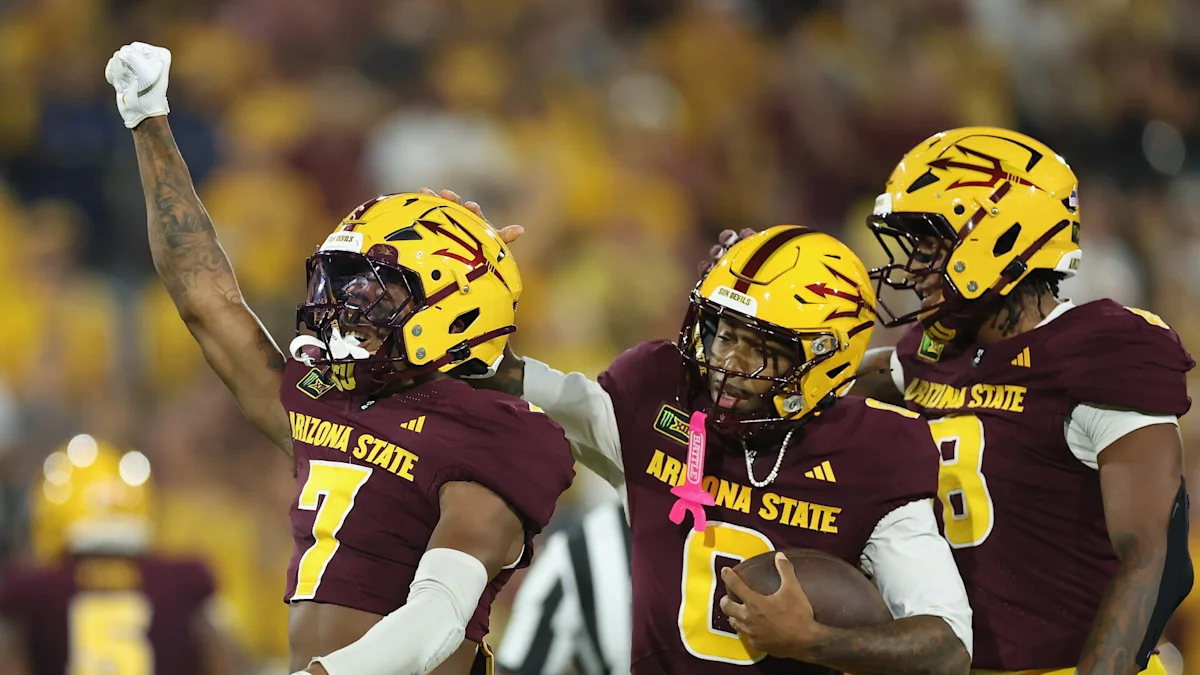
Like many early-season games featuring an established program against an FCS slappie, Saturday’s game between Arizona State and Morgan State turned into a blowout. Andwith the Sun Devils leading 70-7 after three quarters, the two teams agreed to shrink the fourth quarter to 10 minutes.
Advertisement
“I’ve never been a part of a game like that,” Arizona State coach Kenny Dilligham told reporters after the game, via Bailey Leasure of ArizonaSports.com. “I didn’t even know that was legal, but I learned something today. When he asked to shorten it. I said, ‘Whatever he wants, we’ll do.’”
Advertisement
Arizona State had scored 28 points, 21 points, and 21 points in the first three quarters, respectively. Neither team scored in the final 10 minutes, which consisted of 19 total plays.
It’s a strange outcome, to say the least. And it opens the door to a situation in which certain potential wagers would be undermined by a 60-minute game shrinking unexpectedly to 55 minutes.
But it also opens the door to a new universe of potential prediction markets: Will the game be shortened by the agreement of the teams for reasons other than the weather?
“It’s far too late for those decisions to come. It’s too late. All I can do is just try and turn up. I’ll get up tomorrow morning and I’ll give it my best.”
He added: “It’s never over until it’s over. I don’t know how many points it is now, but I’m sure it’s 60, 70. It’s an amount that, with the pace that they have, it’s a very, very difficult amount to close out.”
Ferrari were left answering similar questions about who should take priority following the team’s performance at the Dutch Grand Prix last month.
Hamilton, who is two places higher than Leclerc in the championship, was left frustrated in Zandvoort, as he felt the team took too long to move Leclerc – who was third and on a differernt strategy – out of the way so he could challenge for a podium, as he was on fresher tyres and quicker.
Advertisement
When they eventually did pit Leclerc, Hamilton responded over team radio: “Great way of wasting time, good job”. He later apologised for his comments.
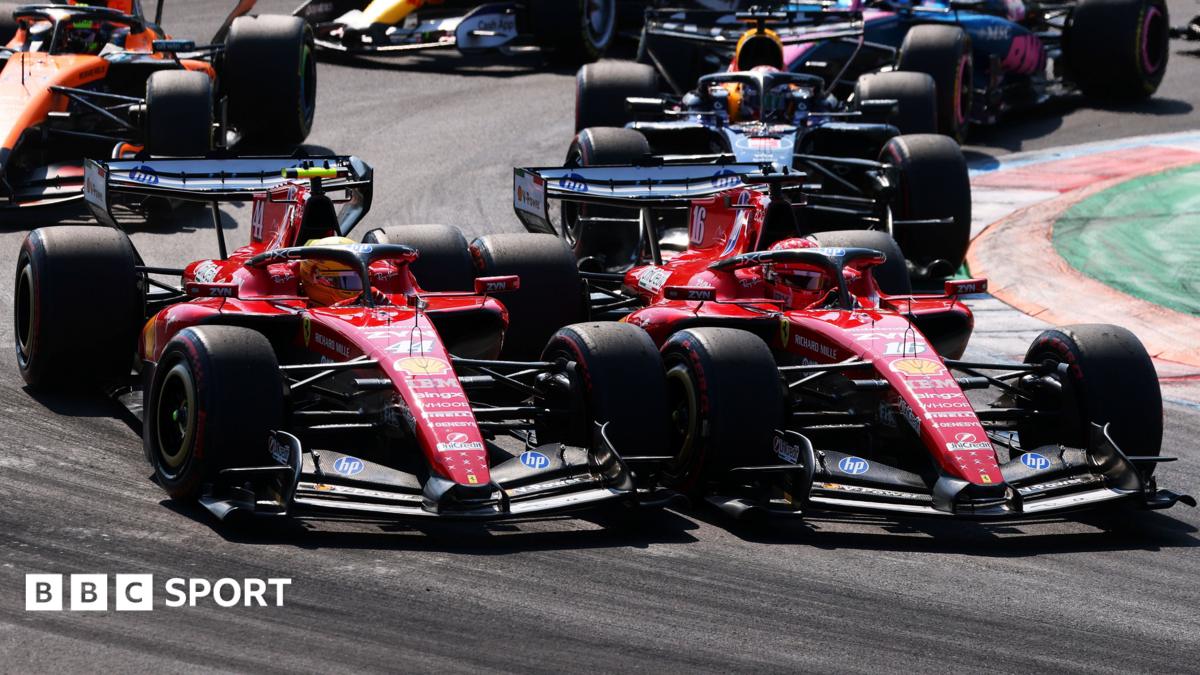
But the first-lap incident between the pair in Italy seems to have only intensified Hamilton’s concerns.
Speaking after his lap-two crash, Leclerc crash was “it was way too close into turn one” between himself and Hamilton. He added that he was unaware whether the pair had made contact.
“I was quite a lot on the inside kerb and tried to make the corner, which I didn’t do it tight enough,” said Leclerc.
Advertisement
“And then I only saw in the mirrors what happened, which is never what you want between two cars of the same team.”
However, Hamilton said: “I was ahead in turn two by the ethics, I was ahead. There was no ‘we’ in it.”
When asked if Ferrari fans should be worried the dynamics between himself and Leclerc may turn into a team-mate feud, he said: “Look, I don’t race dirty. I’ve always raced clean and fairly and always left space. So I don’t think they should be worried about me.
“I’ve come into the team and tried to be respectful of space and definitely not put the team in jeopardy. I stand by that and that’s all I can talk about.”
Advertisement
Team principal Frederic Vasseur said the incident between his two drivers was “not good”. But he also was keen to stress that every team on the grid has to manage intra-team tensions.
“Now, to see if we have a team order or whatever, I think that the comparison that I made was that last year, [Oscar] Piastri was leading McLaren at this stage of the season, and if McLaren put everything on Piastri, [Red Bull’s] Max Verstappen would have been champion.
“For sure, at one stage you have to make a decision, but I think it was too early to make a decision before Monza. Now we have time to discuss with the guys.”
Hamilton said Ferrari needed to look at how they communicate.
Advertisement
“If we continue to travel the same path, we get the same result,” he said. “And it’s like we keep getting the same result. We’ve got to change things because it’s not helping us to move forward. I think they’re receptive to it and we’ll take it offline.”
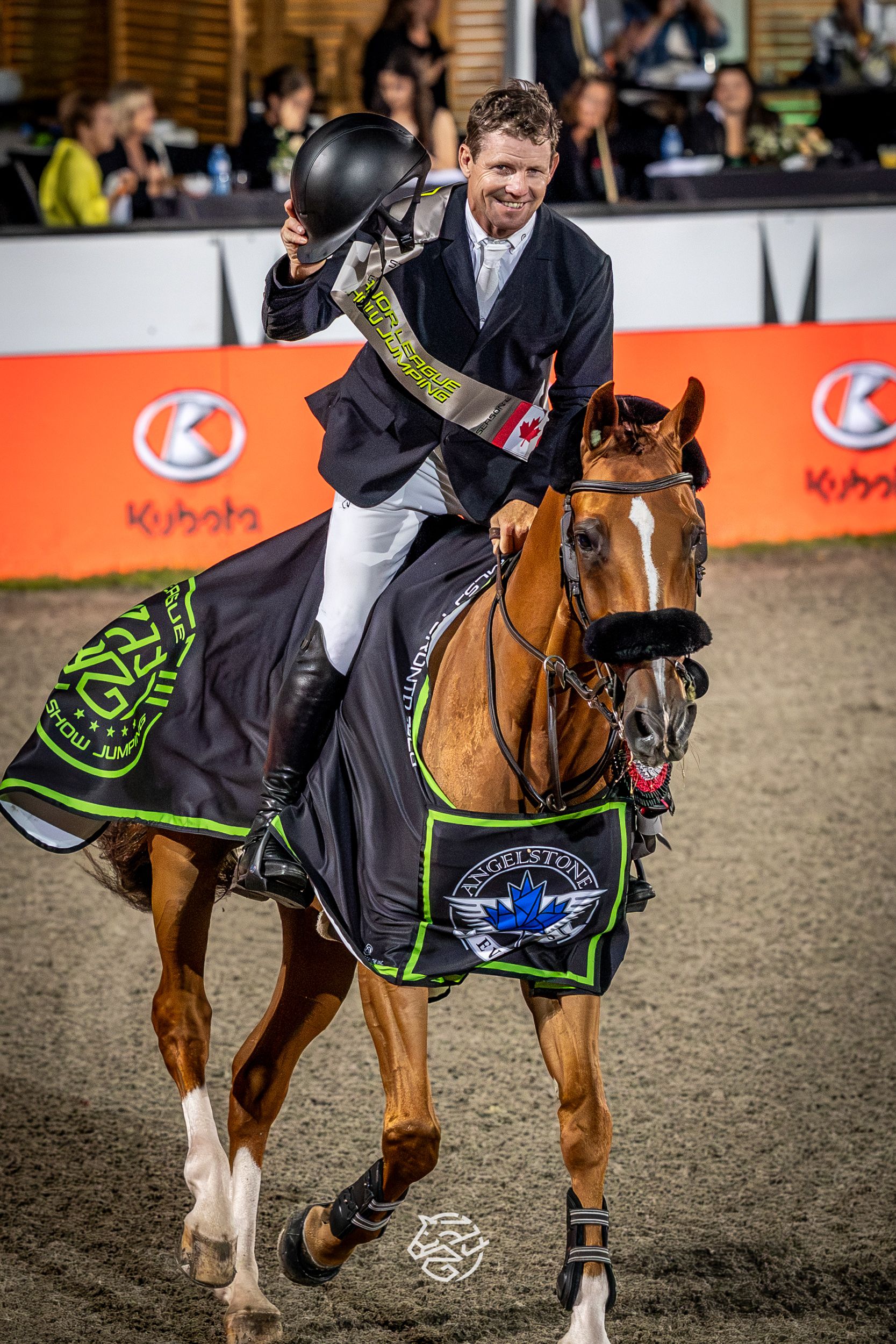
Cork’s Shane Sweetnam aboard Coriaan Van Klapscheut Z triumphed in the $500,000 first Grand Prix of Major League Show Jumping Season 6 in Toronto, Canada, last night.
With a total of 30 combinations taking on the Juilherme Jorge-designed 1.60m course in the 5* Kubota Grand Prix, the triple combination late in the track caused problems for a number of the competitors.
Colombia’s Ilan Bluman and Acajou set the standard when they produced the first clear round in 80.85 seconds. By midway in the class, they were the only combination qualified for the second round jump-off.
Shane Sweetnam and Coriaan Van Klapscheut Z were the next to leave every fence intact, with the Irish combination jumping clear, and stopping the clock in 78.66 seconds to force a jump-off.
Advertisement
American Kent Farrington and Descartes SR produced the third clear round, setting up a three-horse jump-off from the original field of 30 starters.
Jump-Off
Sweetnam and Coriaan Van Klapscheut Z stopped the clock in 39.08 seconds to take control of the class and put the pressure on Farrington.
With Farrington still to come as the final combination in the jump-off, Sweetnam knew there would be little room for error.
“It’s something I’m always trying to figure out, as I finish second to Kent a lot” recounted Sweetnam after winning the 5* competition.
Advertisement
The US rider returned with Toronto history on his side. A Grand Prix winner in Season 3, the World No. 2 entered the ring with a chance to add another title to his record.
Last to challenge Sweetnam’s time, Farrington and Descartes SR had the pace to take the lead, but the penultimate fence came down. Four faults left the pair in second, Farrington’s third consecutive runner-up finish in the Toronto Grand Prix.
Shane Sweetnam was delighted with Coriaan Van Klapscheut Z’s performance as he is still early in his 5* Grand Prix career.
“This is only his second 5* Grand Prix and the last one he did was in Monterrey (MLSJ Finals), which he was also clear in” said Sweetnam of his mount.
Advertisement
With Sweetnam and Coriaan Van Klapscheut Z securing the opening Grand Prix win of Season 6, the League will now move to Traverse City, Michigan, USA, for Leg 2, September 10- 12.
Marcus Freeman began his college football career as a player under Luke Fickell. Now he gets to coach against him.
No. 4 Notre Dame and Wisconsin open their season facing off on Sunday night at Lambeau Field in Green Bay, Wisconsin, bringing together two head coaches whose shared history spans more than two decades.
Freeman and Fickell enter the matchup with personal and professional ties that have helped shape both programs and the coaching staffs surrounding them.
Advertisement
A Foundational Relationship From Columbus To Cincinnati
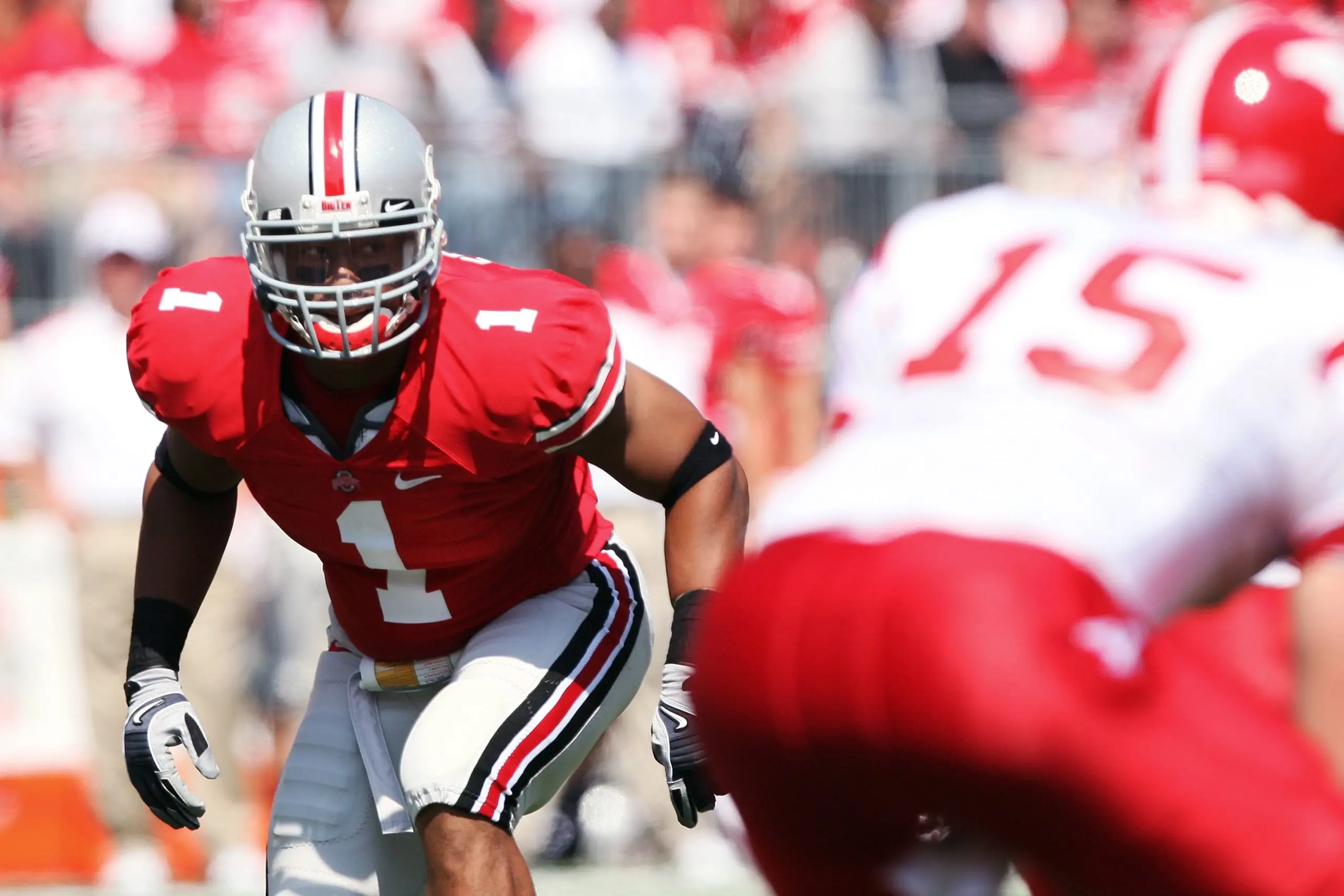
The connection between the two head coaches began when Freeman played linebacker at Ohio State from 2004 to 2008, where Fickell served as his position coach.
Marcus Freeman played linebacker at Ohio State, where Luke Fickell served as his position coach from 2004-08. (Photo by Jamie Sabau/Getty Images)
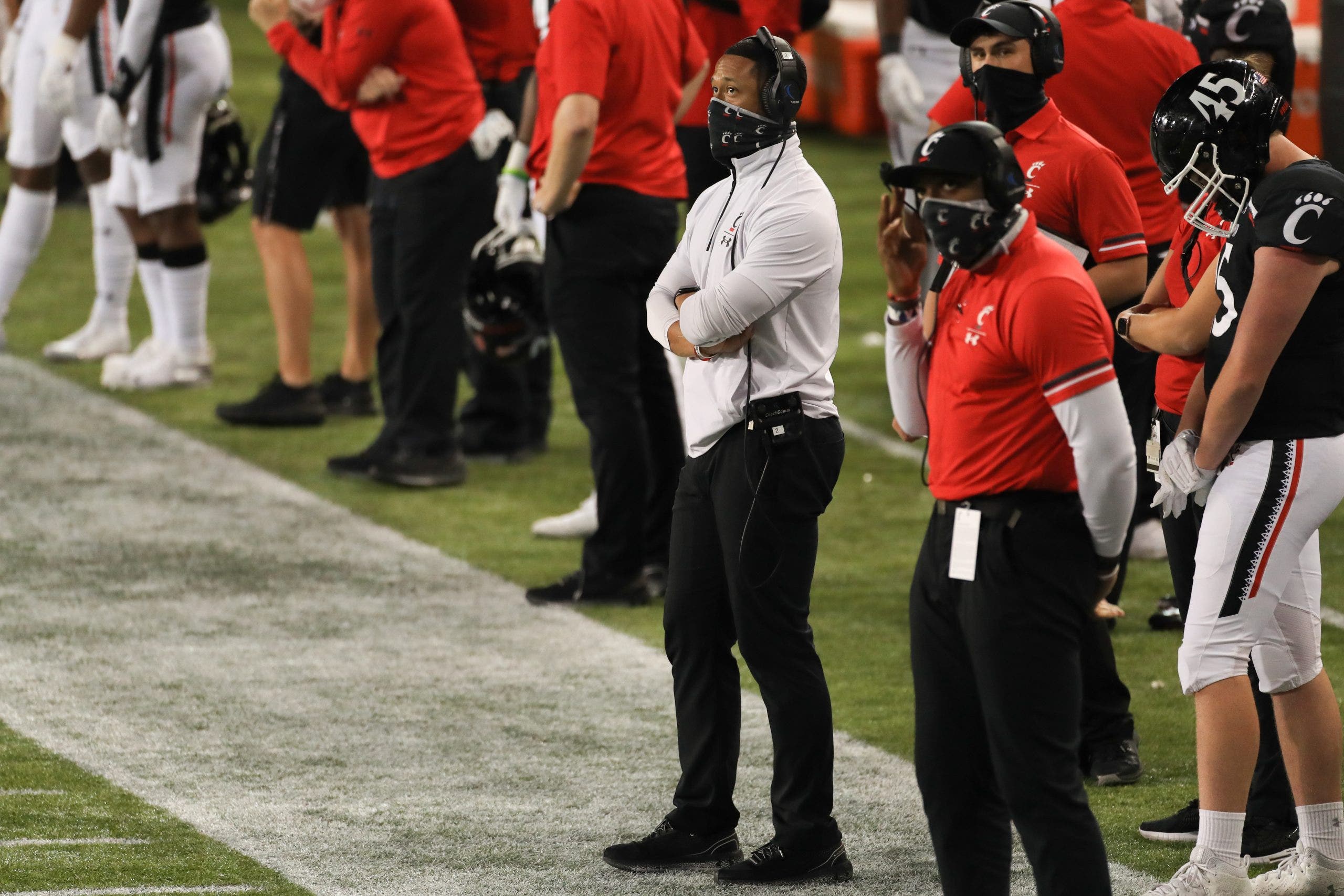
That player-coach relationship evolved nearly a decade later when Fickell hired Freeman as his linebackers coach and defensive coordinator at Cincinnati, a role Freeman held from 2017 through 2020.
Over those four seasons, Freeman helped build the Bearcats’ defense into a nationally-renowned unit, gaining his first extended experience leading a college defense before moving onto Notre Dame in 2021.
Mutual Respect And Shared Philosophies
Despite their shared past, both coaches established a distinctly different culture within their respective programs as head coach. Fickell noted that Freeman’s progression into one of college football’s top head coaches stems from his ability to chart his own course rather than strictly replicating the methods of his mentors.
Advertisement
“The ones who have the most success, like Marcus has, are ones who create an identity for themselves, not just where they’ve been, whether it’s his time with us at Cincinnati or his time at Ohio State or his time under Jim Tressel,” Fickell said.
Marcus Freeman on Cincinnati’s sideline, where he worked under Luke Fickell as linebackers coach and defensive coordinator from 2017-20. (Photo by Ian Johnson/Icon Sportswire via Getty Images)
Freeman has pointed to Fickell as a foundational figure in his coaching development, highlighting specific work habits and expectations that he carried forward into his head coaching career.
“I’ve got a lot of respect for him,” Freeman said. “I wouldn’t be in this position without the investment he made in me. There’s traits that every coach I’ve had a player, as a coach, that I have in me. When I think about Luke Fickell, I think about a tireless worker, I think about the demands that he has for his players, his coaches. And the mindset of, ‘This is the way we’re going to play. This is who we are. This is our identity, and we’re committed to it.’”
Prior Matchup And Staff Connections
Sunday will not mark the first time Freeman and Fickell have stood on opposite sidelines.
Advertisement
In 2021, Fickell led Cincinnati to a 24-13 victory at Notre Dame Stadium, a key win during the Bearcats’ run to the College Football Playoff. Freeman was Notre Dame’s defensive coordinator on Brian Kelly’s staff during that game before taking over the program as head coach when Kelly departed for LSU at the end of the regular season.
CFB Related Stories
The ties between the Badgers and Fighting Irish also extend beyond the two head coaches.
Notre Dame offensive line coach Joe Rudolph spent six seasons as Wisconsin’s offensive coordinator under former head coach Paul Chryst from 2015 to 2020, and remained on staff in 2021 as offensive line coach. Notre Dame offensive coordinator Mike Denbrock, quarterbacks coach Gino Guidugli, and wide receivers coach Mike Brown all served on Fickell’s Cincinnati staff during that 2021 playoff season.
“It’s not just Marcus that we’ve got a long history with,” Fickell said. “There’s a lot of guys over there that in particular we’ve got great relationships with, and had great relationships with. Like I’ve always said, I wouldn’t be sitting here today if it wasn’t for not just Freeman, but a lot of those guys over on that staff.”
Different Trajectories Heading Into Lambeau Field
While the personal connections run deep, the two programs enter Sunday in completely different situations.
Advertisement
Notre Dame are three-touchdown favorite following a 24-4 run over the past two seasons, which included an appearance in the College Football Playoff championship game in 2024.
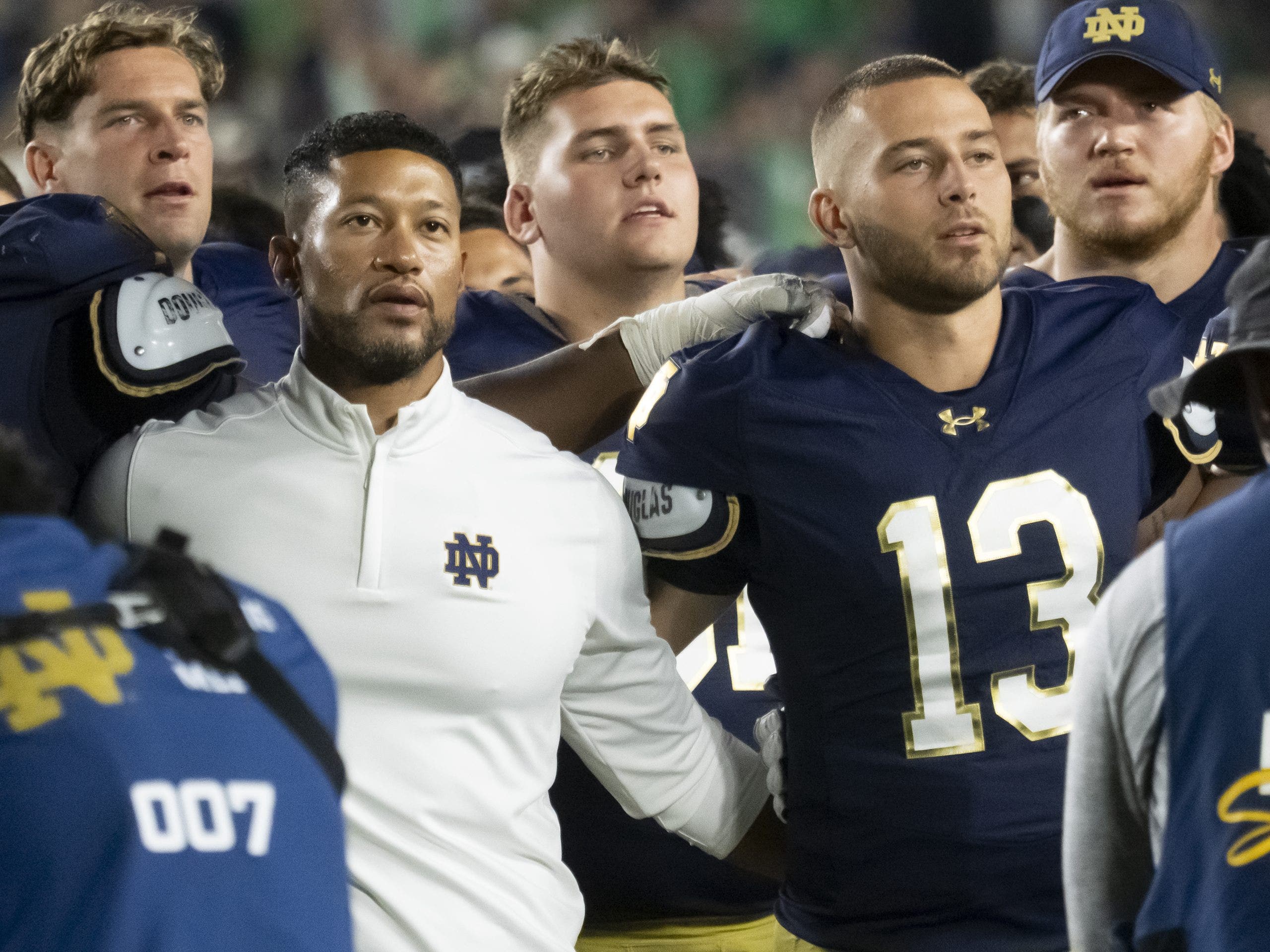
Notre Dame head coach Marcus Freeman and quarterback CJ Carr, who threw for 2,741 yards and 24 touchdowns in his first-year as a starter in 2025.(Photo by Joseph Weiser/Icon Sportswire via Getty Images)
The Fighting Irish will be led on the field by quarterback CJ Carr, alongside three preseason Associated Press All-America defensive selections in first-team cornerback Leonard Moore, second-team linebacker Kyngstonn Viliamu-Asa, and safety Brauntae Johnson.
Wisconsin enters Fickell’s fourth year seeking stability after back-to-back losing campaigns. The Badgers finished 4-8 in 2025 and 5-7 in 2024, snapping a 22-year streak of winning seasons.
Notre Dame vs. Wisconsin is slated to kickoff at 7:30 p.m. ET on Sunday.
The 2026 INDYCAR season comes to a close at WeatherTech Raceway Laguna Seca for the Mission Foods Grand Prix of Monterey. The season-finale race airs Sunday, Sept. 6 on FOX and FOX One, with practice and qualifying coverage beginning Friday on FS2.
Alex Palou already clinched his fifth NTT INDYCAR SERIES championship, and fourth in a row, at the Milwaukee Mile on Aug. 30, becoming the first driver in series history to win five titles in six years. The finale still carries stakes further down the standings, with Pato O’Ward surging into podium contention after sweeping the Milwaukee doubleheader. Here is how to watch the Mission Foods Grand Prix of Monterey, including the start time, TV channel, streaming information and complete weekend schedule.
How to Watch the 2026 INDYCAR Mission Foods Grand Prix of Monterey
Mission Foods Grand Prix of Monterey: 2:30 p.m. ET (FOX, FOX One)
Where Is the INDYCAR Grand Prix of Monterey?
The race takes place at WeatherTech Raceway Laguna Seca in Monterey, California. The 2.238-mile road course has 11 turns, including the famous Corkscrew, and has hosted racing since 1957.
How Long Is the Grand Prix of Monterey?
The race is scheduled for 95 laps and approximately 213 miles.
Advertisement
Is This the Last Race of the 2026 INDYCAR Season?
Yes. The Mission Foods Grand Prix of Monterey is Race 17 of 17 on the 2026 NTT INDYCAR SERIES schedule and closes out the season.
Who Won the INDYCAR Championship?
Palou clinched the 2026 championship, his fifth series title and fourth consecutive, at the Milwaukee Mile on Aug. 30. He is the first driver in INDYCAR history to win five championships in a six-year span and the youngest to reach five titles.
The finale still matters for the rest of the field. Pato O’Ward swept both Milwaukee races, becoming the first INDYCAR driver to win two races in one day since 1981, and enters Monterey with momentum in the fight for the remaining top championship positions.
Who Won the Most Recent INDYCAR Race at Laguna Seca?
Palou won the 2025 Java House Grand Prix of Monterey at Laguna Seca on July 27, 2025.
INDYCAR Related Stories
Who Won the Most Recent INDYCAR Race?
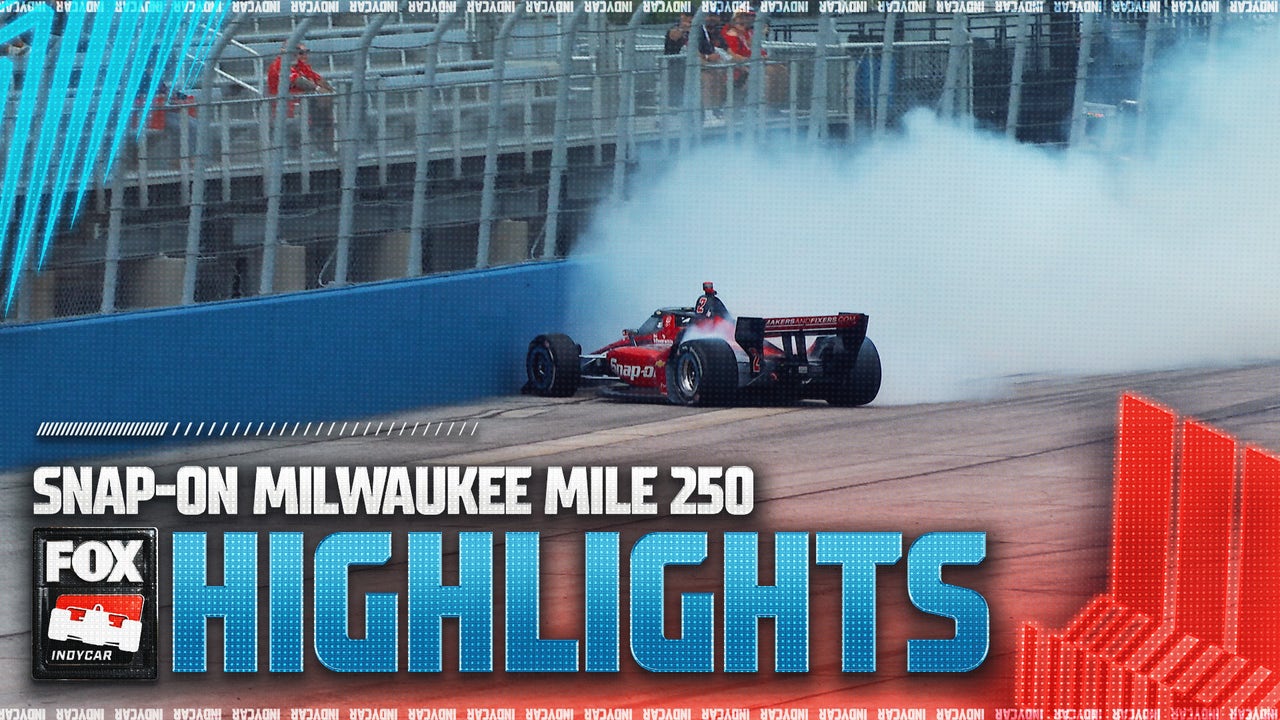
O’Ward won the Snap-on Milwaukee Mile 250 on Aug. 30, sweeping both Milwaukee Mile races that weekend. Watch the full highlights from the most recently completed NTT INDYCAR SERIES race below.
Who Are the Monterey Announcers?
Will Buxton calls the race on FOX alongside analysts Townsend Bell and James Hinchcliffe. Georgia Henneberry, Kevin Lee and Jack Harvey report from pit road.
Advertisement
How Can I Stream the 2026 INDYCAR Grand Prix of Monterey?
Fans can stream the race, practice and qualifying live and watch three days free on FOX One. Coverage is also available through FOXSports.com and the FOX Sports App.
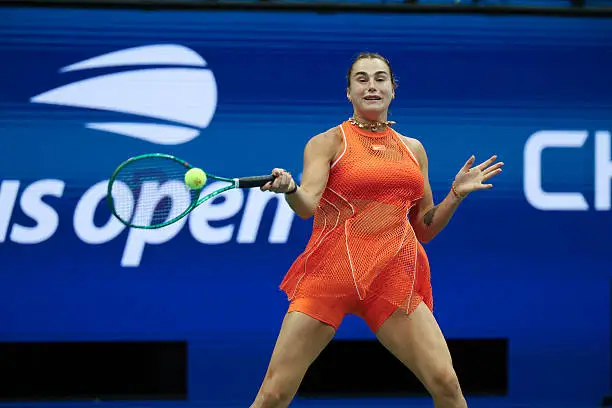
Belarus’s Aryna Sabalenka hits a return against US’s Taylor Townsend during their women’s singles round of 16 tennis match on day eight of the US Open tennis tournament at the USTA Billie Jean King National Tennis Center in New York City on September 6, 2026. (Photo by TIMOTHY A. CLARY / AFP via Getty Images)
Aryna Sabalenka continued her incredible US Open run on Sunday, beating Taylor Townsend 6-4, 6-3 to reach the quarterfinals.
The world No. 1 has now reached her sixth consecutive US Open quarterfinal and extended her winning streak at Flushing Meadows to 17 matches.
Sabalenka has been almost untouchable at this tournament, winning 23 of her last 24 US Open matches. Sunday’s victory was also her 44th win of 2026. What a remarkable consistency she has shown throughout the season.
Advertisement
The defending champion now moves into the final eight as she continues her bid for a third straight US Open title.


















































You must be logged in to post a comment Login