
Tech
Hikers rescued after using Google Gemini for planning


Three hikers were rescued from California’s Mount Shasta this week after using Google’s AI chatbot Gemini to plan their expedition, according to the Chicago Tribune.
A report from the Siskiyou County sheriff’s office said that three young men set off on their hike at 3am and — although hikers are told to turn around if they haven’t reached the summit by noon — they made it to the top at 7pm.
The trio then tried to descend in the dark, called the sheriff’s office to ask for directions, and spent the night in Mud Creek Canyon before being rescued the next morning by Forest Service rangers and volunteers.
While it’s not clear whether Gemini can take all the blame for these bad decisions, the sheriff’s office said the hikers “were advised by Gemini to bring far less food and water than their group required, especially when their planned 8-hour ascent became a multiday ordeal.”
“It is always advisable to call the local USFS Mount Shasta ranger station ahead of your trip to ensure you have the most accurate information, and to never rely solely on AI for your trip planning,” the sheriff’s office said.

Tech
Miami wants to turn parts of the city into a real-life GTA Vice City, but sheriff opposes the plan

WTF?! The very long history of Grand Theft Auto has been defined by protagonists who break the law, kill police officers, and act in a generally less-than-moral manner. So, it comes as little surprise to see Miami-Dade’s sheriff slamming plans to turn the city into a real-life version of GTA 6’s Vice City to promote the game.
A public records request last week revealed that Miami-Dade Mayor Daniella Levine Cava put forward the idea of a “GTA VI × MDC” marketing collaboration to Rockstar Games in June.
The plan, which was revealed by The Miamian, included transforming areas of Miami International Airport, PortMiami, Metrorail stations, Tropical Park and other county-owned buildings and public rights-of-ways using approved GTA VI characters or visual references.
Some of the ideas do sound pretty good, like the Vice City Motor Fest event, which would combine classic cars, customized vehicles, lowriders, motorcycles, tropical graphics, and local entertainment within a controlled, family-appropriate setting – so no stealing or blowing up anything.
Elsewhere, the airport’s centerpiece would be a display aircraft wrapped in Vice City logos, alongside a GTA 6-inspired baggage claim, customized baggage carousels or column wraps, themed luggage carts, limited-edition luggage tags, or coordinated airport signage. Arriving passengers would see “Welcome to Vice City” messages when disembarking their planes.
One proposal mentioned a dockyard visual installation, inspired by GTA 6’s Port Gellhorn, that would encompass cargo containers, cranes, and cruise ships.

There’s also “Vice City Radio Lab.” It would offer the community access to recording, editing, and digital media equipment, in a space that supports music production, podcasting, oral histories, neighborhood storytelling, sound engineering, video-game development, and other creative programming, while reflecting the central role that music and radio play in the GTA experience, according to the proposal.
Other ideas for the city included Metromover cars wrapped in Vice City colors and logos, signage at key locations, and custom sewer or stormwater manhole covers.
While the marketing deal has yet to be formally agreed, Miami-Dade Sheriff Rosie Cordero-Stutz has spoken out against the idea.
“Grand Theft Auto is a video game franchise built around criminal activity,” Cordero-Stutz said in a statement (via the Miami Herald). “Its fictional world includes murder, robbery, drug trafficking, carjacking, violence against law enforcement, and other conduct that the men and women of the Miami-Dade Sheriff’s Office work every single day to prevent.”

The publication writes that the comments were part of a news release issued by Miami-Dade Commissioner Juan Carlos Bermudez, a Republican considered a potential candidate to succeed Democrat Cava as mayor in 2028. Cordero-Stutz and Cava are currently “courting votes on the County Commission for competing funding proposals for the Sheriff’s Office in Miami-Dade’s 2027 budget.”
Cava has also been asked by the county’s judicial system to leave the courts out of any GTA 6 promotional crossovers.
“We do not believe our courthouses should be incorporated into a promotional campaign for a video game whose central themes include criminal activity, violence, law enforcement pursuits and other fictionalized depictions of crime,” wrote Chief Judge Ariana Fajardo and Clerk Juan Fernandez-Barquin in a letter to the mayor.
The letter did acknowledge, however, that a deal would offer “significant” economic opportunities that could financially benefit Miami-Dade County.

Thursday 404 Media reported that Flock taught America’s cops “how they could surveil the No Kings protests” against President Trump (as well as “small parades”) in a webinar last year that described “using a mix of Flock’s technology and law enforcement’s own databases.”
In the webinar, Flock’s director of market management Caity Peak explains how real time crime centers — which are police surveillance centers that utilize Flock cameras and other surveillance cameras — can be used for emergency response, but can also be used to surveil “established events” like 4th of July fireworks displays, parades, bike races, Mardi Gras, and protests. The webinar shows just how routine the idea of always-on surveillance has become, and how casually it is used during extremely innocuous events. Peak explains that police can use FlockOS, a software platform that combines Flock’s automatic license plate readers (ALPR), drones, gunshot detectors, 911 data, and other surveillance cameras (including ones Flock does not own) into a “single pane of glass” or single piece of software to look at various types of surveillance in one place during both emergencies and relatively mundane events in a city or town.
“Imagine that you’re an incident commander, and you’re working this No Kings Protest,” Peak explains while a dashboard shows a series of surveillance tools overlaying the city of Denver. “If I’m somebody assigned a traffic post that’s working this No Kings Protest, I really don’t have time to go in […] and look at all these places [for different intelligence]. This is an example of viewing all of that in one place….” The dashboard Peak shows includes traffic information, a “response plan” for the protest, the floor plans of nearby buildings, as well as a series of video feeds of both outdoor-mounted cameras and cameras inside businesses and government buildings.
404 Media and the Electronic Frontier Foundation previously showed that police have specifically used Flock cameras to monitor the No Kings protests and other First Amendment-protected activity… This webinar shows this type of surveillance is not anomalous, and is specifically taught by Flock. The webinar also shows that Flock’s latest public stance — that its ALPR cameras are noninvasive technology, that they take only static images at a single place and time, and that they are primarily used to solve the worst crimes — is wildly misleading. Flock has time and time again pitched itself to police as a sort of operating system to solve crime and do real-time surveillance and predictive policing. ALPRs are just one part of this broader surveillance apparatus that Flock has created, markets to police, and teaches them how to use.


Read more of this story at Slashdot.
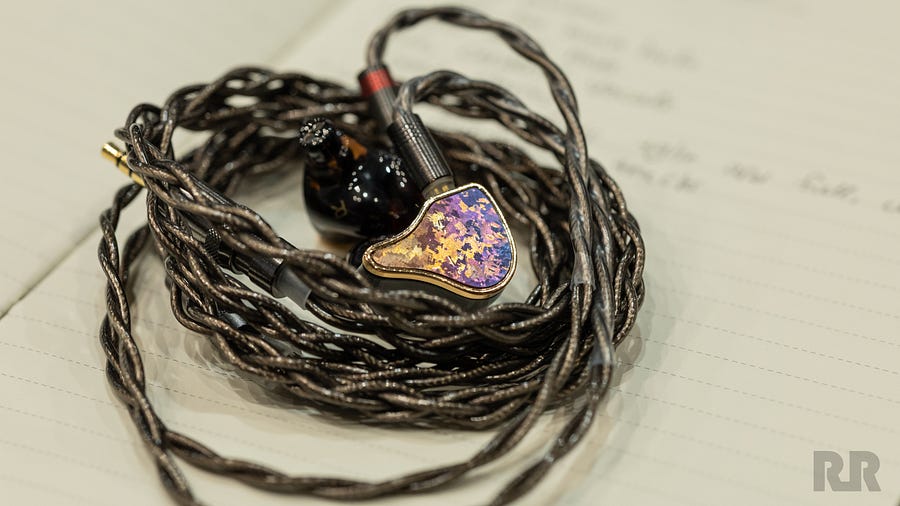
Back in March, eCoustics asked whether wired IEMs were having a moment after we counted roughly three dozen IEM brands showing new models at CanJam NYC 2026. CanJam SoCal did nothing to slow that momentum. Wireless earbuds may dominate everyday listening, but the wired side of personal audio keeps getting busier, more technically adventurous, and considerably more expensive at the top end.
We have followed that surge closely, building an extensive IEM archive of reviews, new product coverage, and show reports. The category now stretches from affordable single-driver models to increasingly elaborate combinations of dynamic, balanced-armature, planar, electrostatic, MEMS, and bone-conduction drivers.
For CanJam SoCal 2026, I listened to 35 IEMs across that entire spectrum. Rather than grouping them by booth, we’ve organized this roundup by current U.S. price so readers can more easily compare products occupying similar territory. Prices shown are current U.S. list or retail prices where they could be confirmed; unreleased models and prototypes without verified U.S. pricing are grouped at the end.
Keep in mind that these are initial show impressions, not full reviews, and they may not represent how each product performs in a more controlled environment or after I’ve had enough time to properly experiment with fit and eartips.
The CanJam SoCal venue has awful lighting. I’ve done my best with editing, but these beautiful products deserve proper photos in decent lighting.
IEMs Under $250
I didn’t get a chance to listen to the PRS5, but I did catch a few other models. I listened to the rest of the DUNU lineup in previous years of CanJam SoCal (2025), so you can check out those impressions for more info. For many of those models, I’ve also released full reviews.
DUNU PRS6 — $249
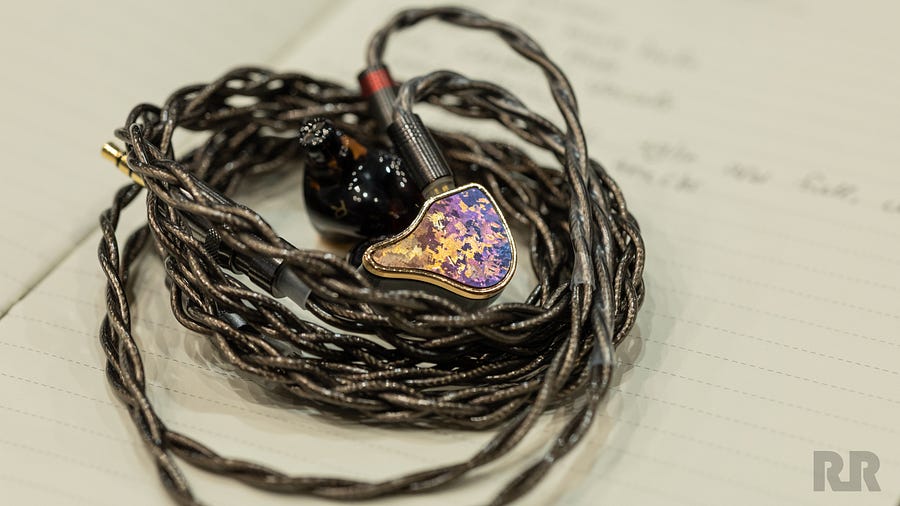
The PRS6’s mids are the star of the show, and they’re tuned extremely well. The PRS6’s bass is tight and punchy, but doesn’t command too much emphasis. It blends into a nice, warm lower-midrange before picking up steam in the upper-mids, ultimately tapering down into a linear but extended treble. DUNU’s signature energetic upper register is here, but not in as dramatic a fashion as IEMs like the DN142/DN242. In all, a pretty compelling IEM.
This brand kind of came out of nowhere for me. I’m sure I’ve seen “EPZ” in passing before, but I didn’t really have a grasp on what their lineup looked like. I’m glad they came to this year’s CanJam SoCal, as I really enjoyed what I heard.
EPZ P40 — $159
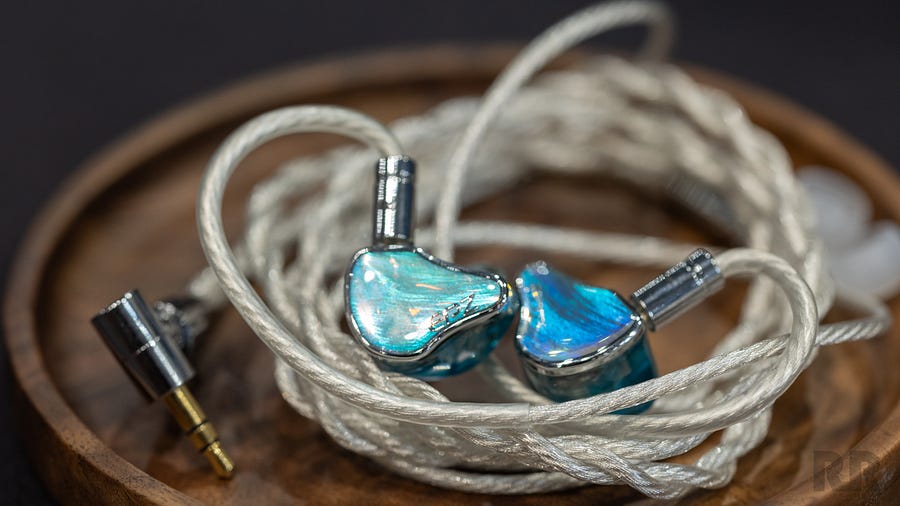
This is a sub-$200 IEM from EPZ featuring 2 dynamic drivers + 1 micro-planar driver + 1 PZT driver per side. It has resin shells and metal nozzles with a pretty decent stock cable. The L-shaped modular termination is something you don’t see every day, though I wish it used a proper locking mechanism rather than relying on friction to keep the parts together. Sound-wise, the P40 is classically V-shaped with a moderate brightness in the upper treble, mild lift in the lower treble, and a smooth, clean midrange. The P40 is slightly tilted towards cool midrange tone, but isn’t lacking in depth thanks to its prominent and well-extended bass. The P40’s bass is dynamic and energetic, rendering mid-bass and sub-bass textures nicely. I found the P40 to be one of the easiest, least-picky listening experiences at the show, which is precisely what I want from a lower-cost IEM. This is another one of the rare few IEMs that fits my wife’s tiny ears, so ergonomics are solid, to say the least.
I’ve written extensively about Linsoul’s IEMs over the years, so if there’s something missing from here, I encourage you to browse through my reviews for more info or to take a read through my CJ SoCal 2024 and CJ SoCal 2025 impressions.
Kiwi Ears Stardust — From $76.99
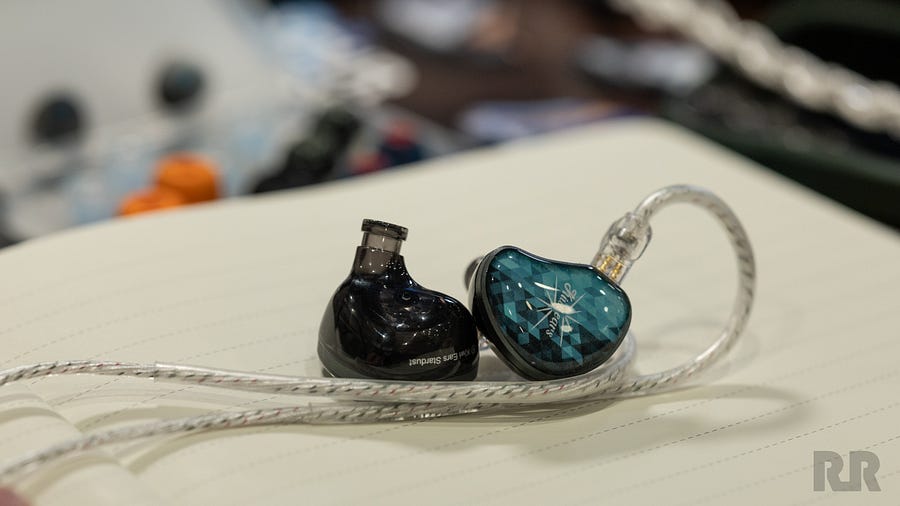
Among all the new Linsoul releases, the one I may be the most excited for is the Stardust. This $76.99 hybrid so competently balances performance, tone, and ergonomics that I think it will be a breakout IEM in the sub-$100 range. Like the KE4 Mk II, the Stardust has a relaxed, chill tuning. The Stardust is actually a little reminiscent of the KBear SR-08, just with a tighter bass response and a bit more treble energy. The Stardust sounds broadly V-shaped, but doesn’t lean too heavily on either extreme, instead relying on subtlety to make its points. Overall cohesion and timbre are excellent, rendering ranges of instrumentation consistently. I particularly enjoy the balance between precision and tone struck by the Stardust’s treble, as I found that it kept up with most complex/congested tracks while never sounding sharp or artificially boosted.
Oh yeah, and did I mention that it is small enough for my wife to wear comfortably with her tiny ears? That’s good stuff.
ZiiGaat Thunder — Reported Price: $150
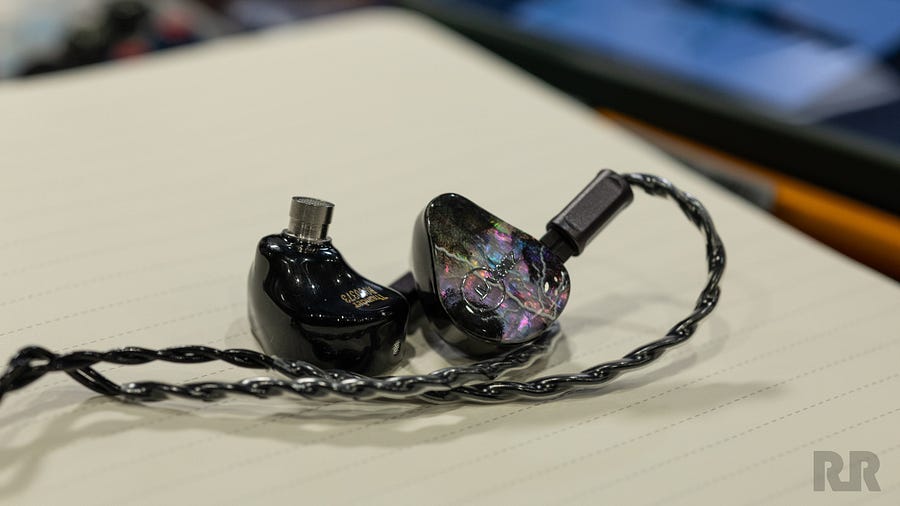
Is the Kiwi Ears Punch a basshead IEM? What about the Punch Audio Martilo? I’ve seen the debates and arguments, and there’s no real consensus. But that won’t be the case for the Thunder, as anyone without reverse-slope hearing loss will hear the obviously massive mid and sub-bass emphasis on this V-shaped IEM. I mean, I consider myself a basshead, but this actually may be a bit too much bass for me. It’s powerful, punchy, and capable of impressive degrees of rumble—FatFreq levels of rumble. Its midrange is cool and a bit recessed, and the treble has a little grain to it, which I imagine is a price many bassheads are willing to pay for this level of intensity. I’ll have to experiment a bit more with tip selection, and I’m interested to see how the community feels about this one.
IEMs From $250 to $499
How have I not tried FlipEars’ IEMs before? Their lineup is solid, with a number of evocative models stretching from “affordable” all the way to “ultra flagship.”
Linsoul Avant — $369
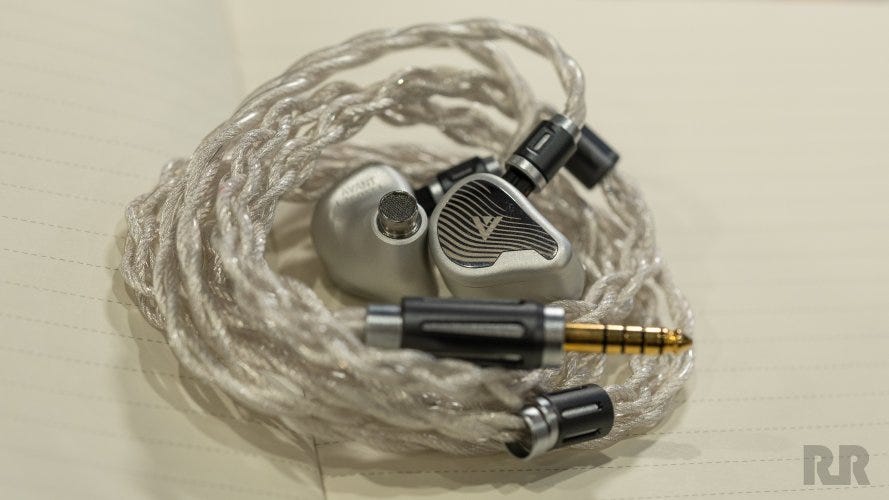
The Avant is the very first IEM sold under the actual “Linsoul” brand, and it appears that the folks in R&D wanted to make sure they came out swinging. This aluminum-shelled 2DD + 3BA + 1MEMS tribrid feels weighty and premium in the hand, more so than many far pricier IEMs in the Summit-Fi segment. I love the cable, and it looks to have borrowed bits from the Orchestra II and THIEAUDIO lineup. As you’ve likely noticed thus far, I’m a bit treble-sensitive, so the new wave of MEMS and EST IEMs has been tough on me, and the Avant falls into the same general camp of “pretty bright.” Its upper register sounds a bit crowded and dense, though it renders transients with precision and speed. Treble and vocals are just about the center of attention with the Avant, and its lower register is relaxed, though extended. There’s a small bass shelf that holds from the mid-bass down to the 20 Hz region, save for a very subtle bump in the 100 Hz region. While my initial impressions were that it was too bright, I didn’t get much of a chance to experiment with tips or insertion depth, so I’ll have to circle back around once units start shipping.
Hercules Audio Noah — $379

Noah, Noah, Noah. Lightning in a bottle, and a sub-$400 IEM that caught Head-Fi massively off guard. It isn’t getting much airtime these days, and that’s a darn shame as it still presents one of the most compelling “Mid-Fi” experiences to date. Beautiful build quality and a refined take on warmth that rivals the best Meze has released, there’s a lot worth appreciating. The Noah’s gentle, refined V-shaped tuning is flexible and broadly appealing, working well on dryly mastered tracks as well as warmer, more modern ones. The Noah’s sub-bass is well-extended and excellently controlled, possessing plentiful texture even at very low frequencies. And texture really is what the Noah has to offer, and at nearly every point in the sonic spectrum. The Noah also possesses some of the best comfort of any IEM I’ve tested at CanJam, though that is pretty dependent on my particular ear shape.
I’ve listened to some of the previous Ice Lab models at other CanJams, but I don’t think I’ve ever had a quiet space to do so, nor did I ever get a proper seal. This year I came prepared, loaded with a suite of pre-tested eartips to get the full, proper experience from the Prismatica in particular.
Ice Lab Lumira — $399
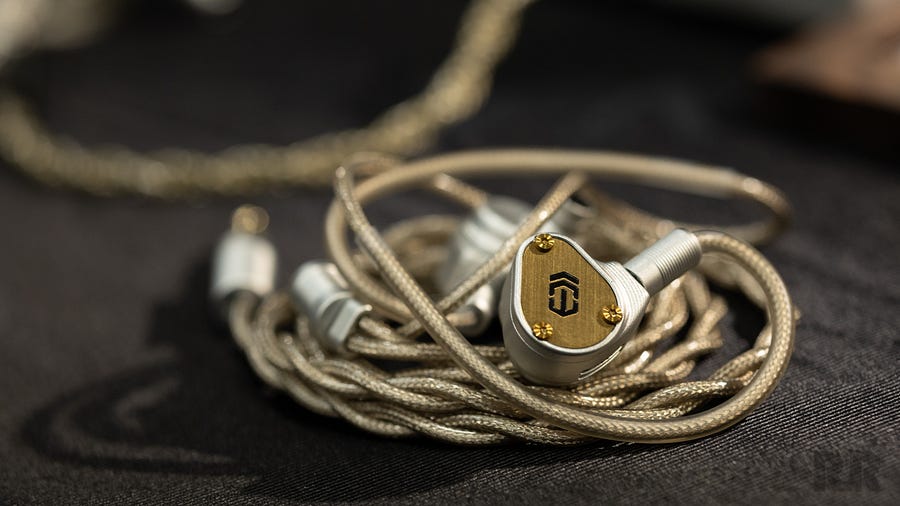
The Lumira is a new IEM from Ice Lab, featuring the brand’s signature quality metalwork. I took notice of the Lumira’s bespoke, matching cable, as the attention to detail here is top-notch. Sonically, the Lumira is gently V-shaped, capturing an excellent sense of balance. The Lumira toes the line between warmth and air excellently. Bass-wise, I think Ice Lab nailed it: nice weightiness in the Lumira’s mid-bass and plenty of extension in the sub-bass. Big bass drops render with substance and size, and the bass is sufficiently well controlled to get out of the way in tracks that aren’t as boisterous. The Lumira’s technical abilities are nothing to scoff at, and it offers full-spectrum texture and resolution, even during congested song passages. This is another IEM I’m keenly tracking, and I’d like to see how the greater community receives it once they have time to properly compare it.
FlipEars Aegis — $479
The Aegis is FlipEars’ entry-level IEM, coming in at $479. It features a single dynamic and a single bone-conduction driver per side. It has a thick, weighty bass region that renders deep-set sonic elements with body and presence. Its mids are warm and rich, lending vocals richness and substance. That said, it can sometimes come off as a bit too warm, rendering dense guitar passages without the requisite air. The Aegis’s treble is well-extended and delivers smooth, refined upper-register elements with a surprising level of competence. In all, an intriguing IEM, though one I’m not certain outdoes Mid-Fi staples like the Tea Pro SE .
I listened to the HA lineup at previous CanJams, but I still feel they’re good enough to revisit in 2026.
IEMs From $500 to $999
There might be too many IEMs in the Bloom Audio room. I could spend hours in there, but given how crowded it was this year, I opted to relinquish my seat after about 30 minutes. I listened to a few interesting IEMs in that time, which you can find below.
Effect Audio Perseus — $999 (Best in Show)
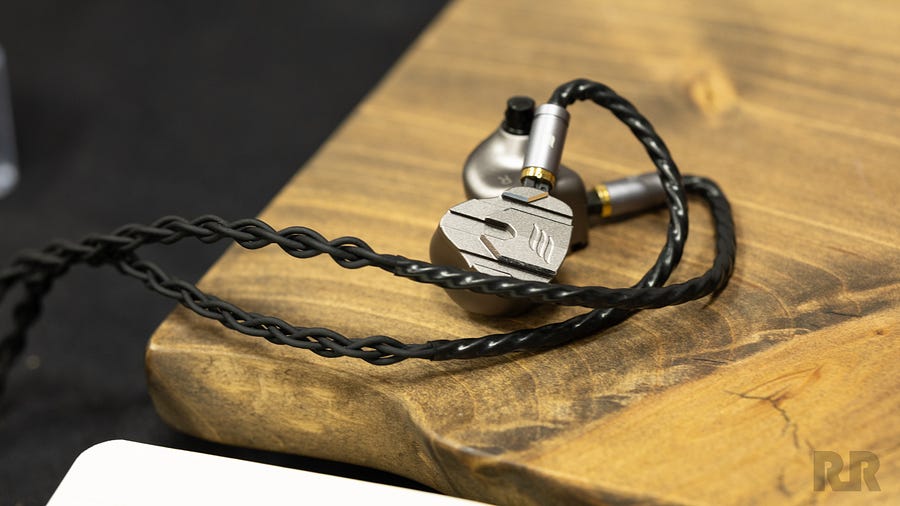
Effect Audio had their own booth (staffed by volunteers) this year with the Perseus, but I wanted a quieter listening environment, so I went to demo it at the Bloom Room. In short, why has this IEM not gotten more attention? I’ve seen a few grumblings here and there about it being “decent,” but lord, there are few IEMs out there that so quickly outdo staples in my collection like the Campfire Audio Alien Brain—an IEM I consider to be a penultimate example of what high-end audio should sound like.
The Perseus features beautiful, solid metal shells and a comfortable braided cable. Its sound signature is properly V-shaped with a nice, forward treble and full bass response. Its midrange is very slightly tilted towards the warm side of neutral and gifts vocals a wonderfully organic timbre. “Effortless” is a good word to use here, and the Perseus cruises through pretty much everything I throw at it. I’m particularly satisfied with its bass response, given its tight, punchy disposition. Electronic genres are well-served by the Perseus’s excellent sub-bass extension and control, and I found that even challenging tracks were nicely rendered. That said, some mastering styles with lighter bass levels can sound a bit dry, owing to the Perseus’s fairly linear intra-bass tuning.
Normally I’d say, “I hope I can spend more time with the Perseus,” but I’m actually going to make a concerted effort to get it in for a proper full-length review. It’s gonna happen, just you wait.
EPZ 550 — $519
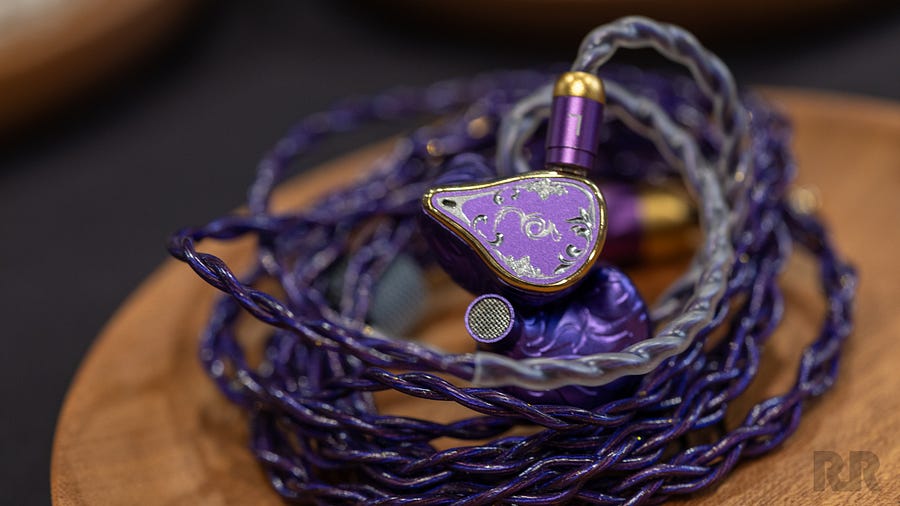
The 550 is an all-BA 5-driver metal IEM. It’s pricey, coming in at $519. It feels pretty nice in the hand, and aside from its bold color choices, is much less visually dramatic than many of the ornate designs coming out these days. The 550 was really comfortable for me, and I got an excellent passive seal. The 550 is an entirely different beast compared to the P40, owing to its all-BA driver setup and flagship-level aspirations. It sounds like a reference IEM with a subtle, linear bass shelf. It is extended nicely below 50 Hz, rolling off gently into the 10 Hz region. Its bass is forward but not dominant, and the 550 has no issue filling out electronic tracks at slightly elevated volumes. The 550’s mids are warm-ish and forward, placing vocals pretty forward. The 550’s treble is bright, but not dominant, generating a great sense of air without devolving into sharpness or sibilance. In all, a solid all-BA IEM, and one I can see myself listening to when craving a ref-style listening session.
FlipEars Aisha Electri — $699 (Best in Show)
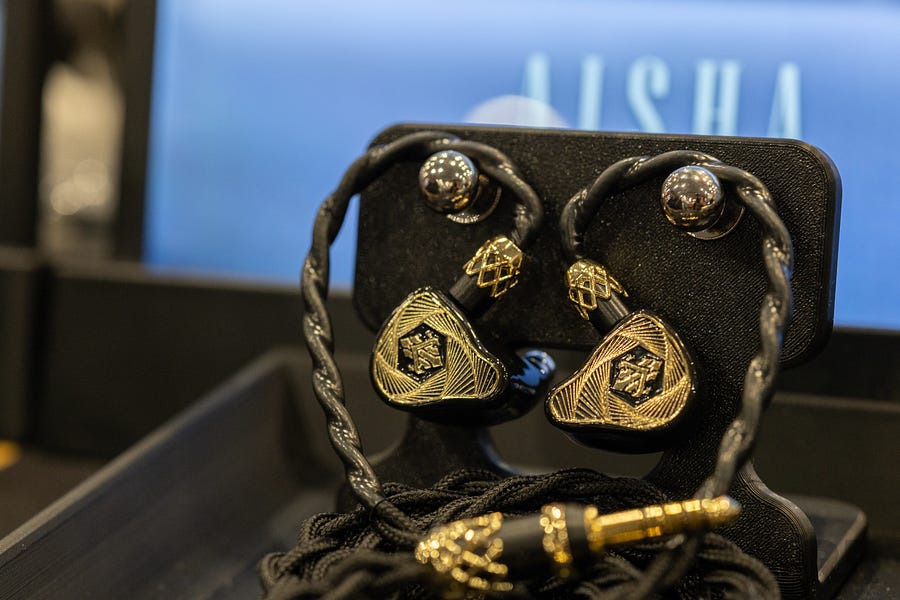
I sought out the Electri at the suggestion of a few friends on Head-Fi, and boy, they were on to something. The Electri has a beautiful V-shaped sound signature with clear, cohesive treble, a natural midrange, and a meaty bass region. It is free from sharpness or inorganic timbre, leaving you with a technical, engaging, and refined experience. I was particularly impressed by the Electri’s bass region: it is tight, deep, and authoritative without a hint of bloom or blur. This places it in a great spot when rendering a wide variety of genres, and I had a blast listening to rock, alternative, and EDM on the Electri. It has a lot of competition in the sub-$700 segment, but man, I think that it competes extremely well. FlipEars’s suite of proprietary drivers really shines in the Electri, and I hope I get to spend more time with it in the future.
FlipEars Legion — $849
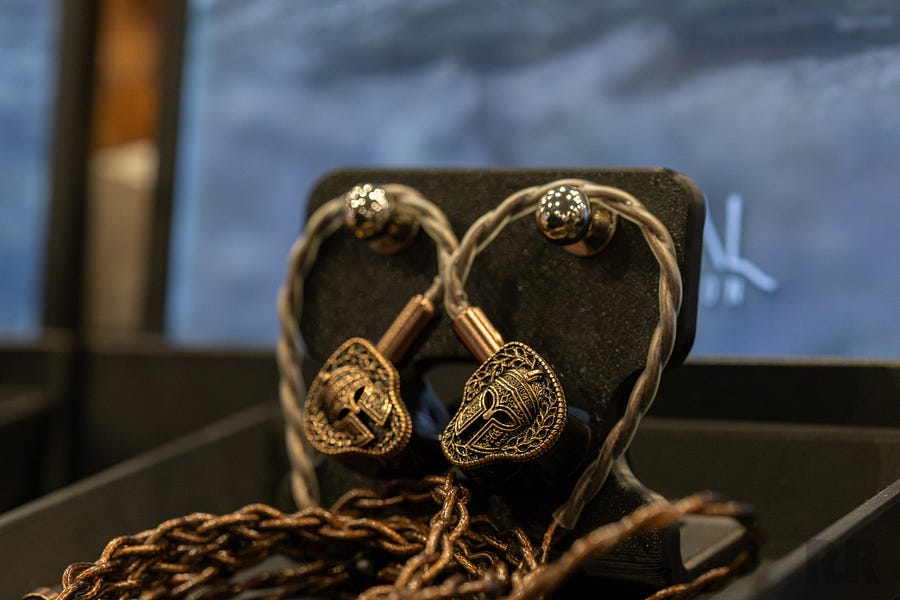
The Legion is an $849 tribrid IEM with a broad, weighty V-shaped sound signature. Its treble is fairly neutral in terms of emphasis, but remains very expressive and robust. It has a thicker, firmer bass region than the Electri, taking up more space on the soundstage. It is pretty warm, though, and this can weigh down vocals a bit. With a bit of brain burn-in and tip-rolling, the Legion seems like an excellent daily driver, especially for those partial to emphasized lower registers.
Hisenior Mega5-EST Bass+ — $589
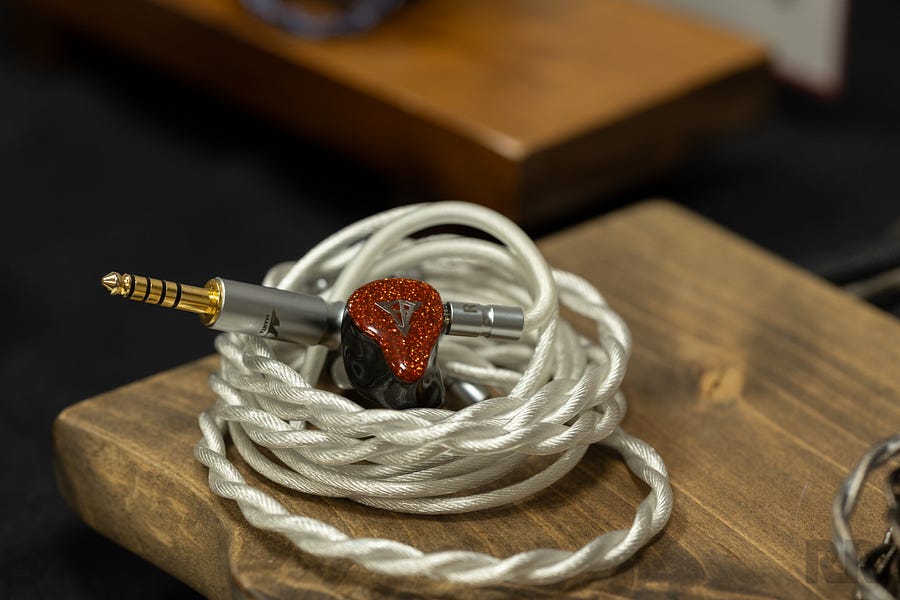
A veteran of the audiophile IEM market, the Mega5-EST Bass+ is an intriguing IEM that blends signature reference-grade mids with an irresponsibly fun dose of engaging bass. The Mega5-EST Bass+ captures the essence of neutrality while adding plentiful punch and rumble to the bottom end, giving you a unique mix of critical listening and casual engagement you’ll not find elsewhere. I tried to EQ my Mega7 to reproduce this type of tonal balance, but my efforts are thus far in vain.
I recently published my Artemis review and have a review for the Vanguard on the way, so those models aren’t covered here.
Noble Audio Iris — $699
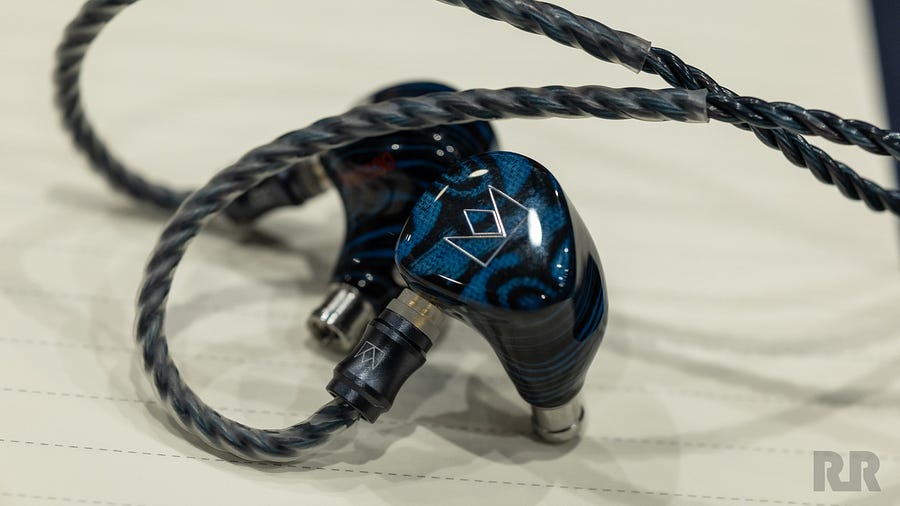
To be frank, I’m not sure if I understand the Iris. It’s pretty expensive, coming in at $699, but only offers a pretty pedestrian experience you can find in other 1x DD IEMs at much cheaper prices. It’s beautiful, don’t get me wrong, but I can think of a number of less costly IEMs I’d rather listen to, including Noble’s own Vanguard. I’m happy to give it a proper listen in a quiet environment and re-assess it — and who knows, maybe I’ll have to eat my words.
THIEAUDIO x Elise Audio Vera — $619
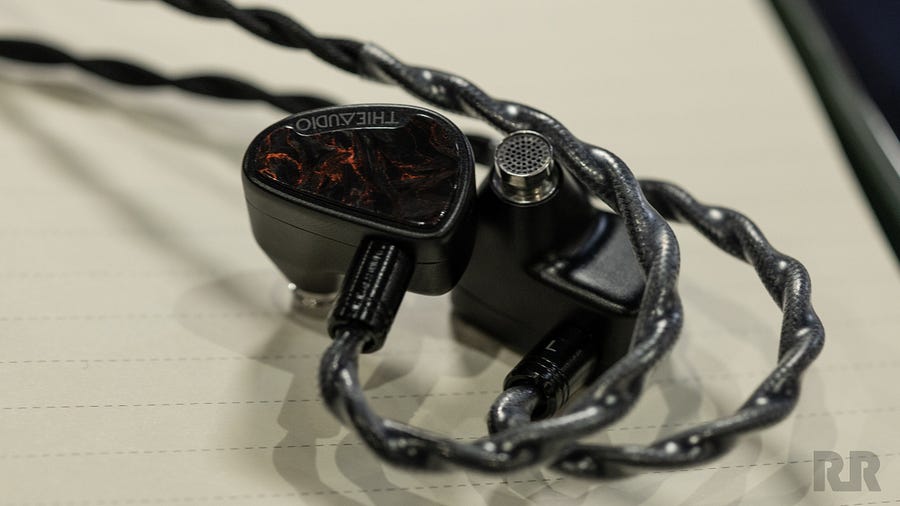
This 1 DD + 2 BA + 2 EST IEM is intriguing, not just because of its surprisingly “Mid-Fi” price point but also because it’s a rare THIEAUDIO collab IEM. THIE tuned this to be a very “Hi-Fi-esque” IEM, with a forward, breathy upper register that renders bright elements front and center. If you’ve heard the THIEAUDIO Hype 4 Mk II, that’s a good analog. The Vera’s mids are cool and clean, blending gently into a slightly lifted mid-bass. The Vera’s sub-bass is polite and unemphasized but extends very well below 50 Hz. Liquid-silicone eartips are a no-go for me on the Vera, as they amplify the already-aggressive EST-based treble, but Symbio foam eartips helped bring things back in line. Technical abilities are stellar, as one might imagine, and I have a great deal of respect for just how much resolution you can get from a fairly compact and ergonomic IEM these days. Of the high-end IEMs I tested at CanJam this year, the Vera is easily top 3 in terms of comfort.
IEMs From $1,000 to $1,999
Campfire Audio is a familiar name in my content, and I’ve spent a lot of time writing about their IEMs over the years. I’ve reviewed most of the 2024-2026 models they released, except the Axion and Chimera. Most of those impressions can be found in my previous CFA impressions posts, and my Chimera impressions can be found below.
Campfire Audio Clara — $1,999 (Best in Show)
When I first heard the Clara at CanJam SoCal 2024, I referred to it as my “hype IEM.” Since then, I’ve had many opportunities to listen to it and have come away equally impressed each time. Campfire Audio collaborated with renowned musician Alessandro Cortini, a member of Nine Inch Nails, to tune it and, wow, this IEM remains one of the classiest and most refined options in the TOTL segment. It contains 1 dynamic driver + 3 balanced-armature drivers and leverages each one to great effect. It is optimized for Alessandro’s favorite genres (which are all electronic), but it performs well across a ton of other genres. I played all manner of rock, alternative, punk, and electronic tracks through it and the Clara responded beautifully.
The Clara’s gentle V-shaped sound signature features a comfortable but well-extended treble. Its bass is, well, fantastic. It is cohesive, punchy, and often feels voluminous. The Clara is not the bassiest IEM in the Campfire lineup, but its bass is extremely textured and expressive, more so than the Cascara, Grand Luna, Iris, and perhaps even the Astrolith.
Ice Lab Spectrumica — $1,999
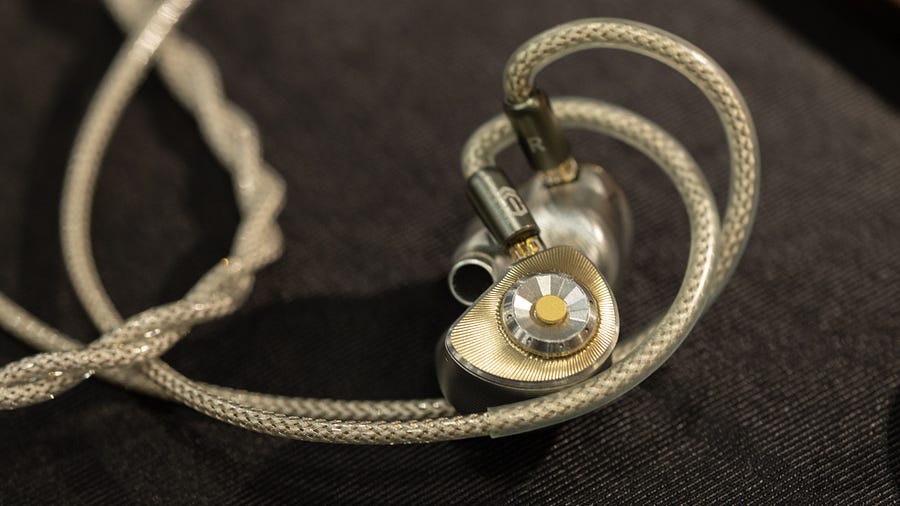
An 8-driver quadbrid (1 DD + 1 BCD + 4 BA + 2 EST) with large metal shells, the Spectrumica is a complex, imposing IEM. Those with small ears are totally out of luck, as you’re gonna need real estate to comfortably settle these into place. At $1,999, the Spectrumica also imposes on the wallet, placing itself in direct competition with a swathe of incredibly capable competitors.
Sonically, the Spectrumica has a warm, boisterous V-shaped sound signature with a nice and clean EST implementation. The overall presentation is fast, cohesive, and rich, with the Spectrumica rendering harmonically complex elements with depth and precision. Vocal timbre is on the heavier side, but it doesn’t sound claustrophobic or dense. The Spectrumica’s emphasis in the lower register allows it to communicate a sense of immense substance, but at the cost of vocal placement. Perhaps with some additional time I could address this with brain burn-in or tip-rolling, but that will have to wait for another day.
Noble Audio Agis II — $1,799
This is an IEM I’ve heard many good things about, and it replaces the Spartacus — an IEM I really liked at CanJam SoCal 2024. The Agis II is an 8-driver hybrid, combining a suite of balanced-armature and bone-conduction drivers, costing $1,799. BCD-based IEMs can be fickle, as their final perceived sound signature varies based on skin contact, so tip selection and positioning matter quite a bit. It’s possible that my impressions here are colored by that reality, so keep it in mind.
The Agis II is V-shaped, but has a few quirks that I don’t recall on the Spartacus. Its treble is peaky, especially above 8 kHz. The Agis II’s vocals are pretty well rendered, though, and they’re intelligible, clear, and nuanced even during busy passages. That said, something about the Agis II’s bass felt off to me. Odd tonality, combined with an unusual decay pattern, was distracting, and the Agis II’s bass didn’t have enough emphasis to fully stage big bass elements in EDM. Between the lack of overall contrast in the sound signature and the spicy, overheated treble, I found myself wishing for the Spartacus to make a comeback.
IEMs $2,000 and Up
I’m a big fan of 64 Audio’s lineup. These guys are legendary for a reason, with fans spanning from Beyoncé to average Joes listening to IEMs in the living room. Models like the Aspire 3 and Volur have long since caught my attention, and the new 64 Audio flagship, Ocean, was therefore a near must-listen for me.
64 Audio Ocean — $3,999
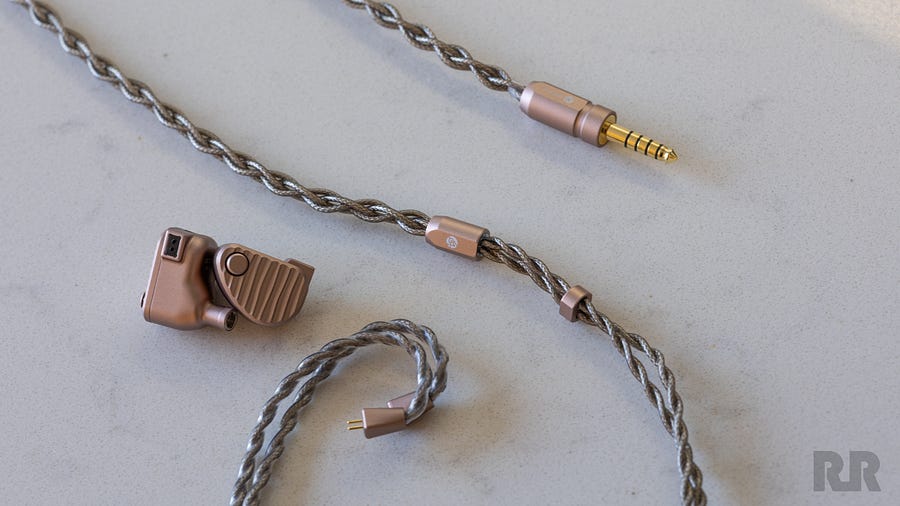
The Ocean has been hyped by 64 Audio as a true evolution of their flagship IEM, promising a new era of sophistication and refinement. As someone who has been chronically impressed with 64 Audio’s high-end models for a while now, I was skeptical of how much better things could realistically get, especially once you factor in the infinitely subjective and fickle reality of human perception. I got a chance to listen to the Ocean in a quiet room and take my time experimenting with the different tuning filters, but I’ll start with how it sounds “stock.”
Without any tweaks applied, the Ocean is a proper “reference-style” IEM. It has a neutral, uncolored midrange and forward treble region. The Ocean’s lower register is rich and complete, competently balancing warmth and transparency. The Ocean is clearly intended for those who prefer a more “pro” style of tuning.
After installing the “Bass+” rear-vent filter, the Ocean added some heft to its mid-bass and lower-midrange, warming up a bit and generating more substance when punching. This filter pulls vocals a bit more towards the middle of the mix but adds a little dynamism overall.
The Ocean can be further tweaked by installing apex modules, which change isolation and bass response. There’s also a set of interchangeable tia screens that adjust high-frequency damping, though I was not too interested in pulling out any top-end energy from the Ocean’s already-subtle presentation.
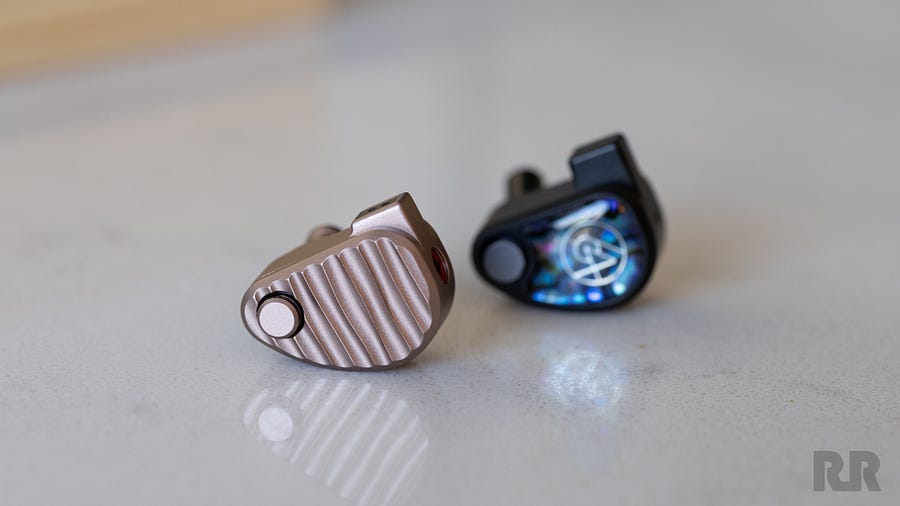
My favorite 64 Audio IEM is the Volur, so it was imperative for me to A/B it against the Ocean. The Volur is a bit smaller and slimmer, and I prefer it aesthetically over the Ocean. Sonically, the Volur has a tighter, more forward mid-bass region (compared to the Ocean with its Bass+ rear-vent filter installed), cooler and cleaner lower mids, and a more forward upper treble. The Ocean renders vocals with a slightly more organic timbre. The Ocean also produces a more convincing body for bass guitars, though it lacks the convincing substantive heft in drum slams that the Volur seems to nail effortlessly.
Between the two IEMs, I still find myself drawn to the Volur. The Ocean, while impressively technical and tunable, lacks the engagement and charisma of the Volur. The Volur also costs a good bit less than the Ocean which, to me, is the cherry on top.
Campfire Audio Chimera — $7,500
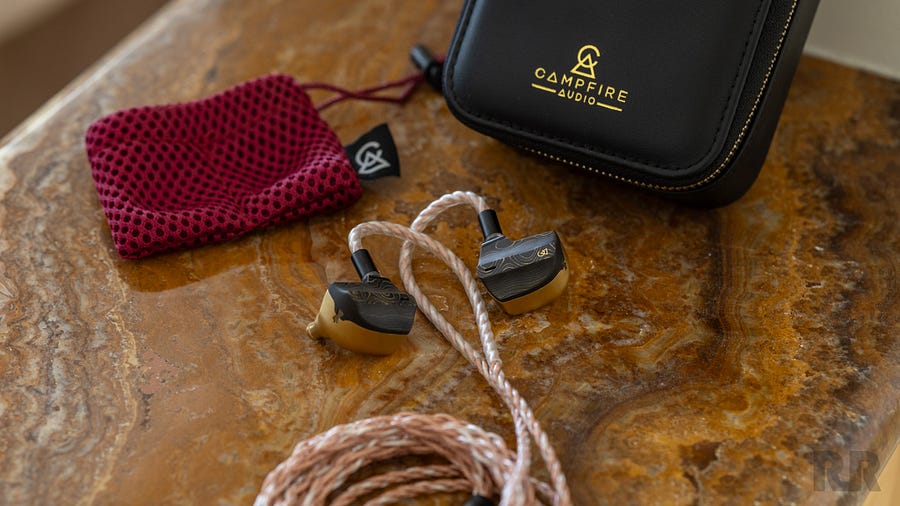
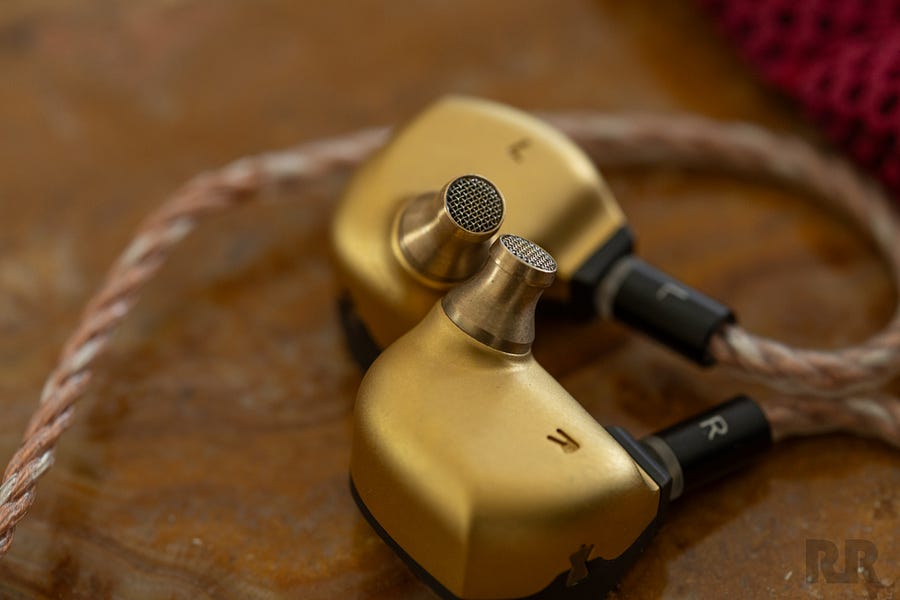
The Chimera is an evocative IEM; from its ornate faceplate design to its substantial price tag, there’s nothing generic about the Chimera. I was able to spend a good bit of time with it in a quiet space, thanks to the kind team at CFA allowing me to borrow it during off-hours.
Firstly, I’d like to talk about build quality. Campfire Audio has a history of building wild IEMs, from the Solaris variants to the titanium edition of the Clara, but the Chimera really ups the ante. I won’t dive too deep into the details, but needless to say, it feels as luxurious in the hand as it looks.
Sonically, the Chimera is enigmatic. For starters, it is shockingly tip-dependent, surfacing subtle, though very real, changes in tone and behavior depending on insertion depth and tip material. I tested Symbio foam tips, Campfire foam tips, and Campfire liquid-silicone eartips, though with more time I’d have experimented far more. I found the “best” eartip to be the Symbio foams, so that’s what my impressions use.
The very first thing I noticed about the Chimera was how… massive it feels. Not massive in the frequency response sense, or the physical sense, but just how truly spatial everything felt. In a way, it shifted my perspective on the entire concept of spatial rendering, and I’d have liked to see what it does in a truly 3D sound space in something like a video game. Alas, I was limited to music, but the effect remained — wide, deep, and dimensional. In terms of tone, the Chimera is very much a refined gentleman, keeping bass and treble in check.
Occasionally, the Chimera will exhibit subtle signs of treble bite, but nothing even close to the likes of the Astrolith or Iris. I mentioned in an earlier impression about how impressed I was with the Hercules Audio Moses’s EST implementation, but I have to say that the Chimera is just as good if not a bit better. It is integrated into the frequency response with such cohesion that you wouldn’t guess it was there without a spec sheet. Transparency is excellent, and I found myself simply forgetting about the Chimera and diving headfirst into my music, which is ultimately the best possible outcome for my personal pursuit of musical enjoyment.
That said, the Chimera is still a relaxed, subtle IEM. My desire for engagement remains, and the Chimera’s subdued bass response doesn’t fulfill it. EDM and bass-heavy genres lack some dynamism, simply because the Chimera is too dignified to punch, let alone rumble. As such, I’d label the Chimera squarely as a refined critical-listening IEM — unsuitable for bass-craving knaves like myself.
FlipEars Arion — $2,499
The Arion is a pricey quadbrid IEM, using a mix of DD, BCD, BA, and electret drivers. At $2,499, the Arion has many incredible peers, including greats like the CFA Clara, Vision Ears VE10, and 64 Audio Volur. That said, the Arion holds its own, presenting a balanced, easy-to-listen mild V frequency response to the listener. Texture and micro-detailing abound, with the Arion capturing tons of air and spatial nuance. Its BCD implementation is excellent, with the driver adding subtle hints of rumble to perfectly fill out even subtle bass-centered elements. While I’m usually more interested in IEMs with more forward bass regions, the Arion clearly has what it takes to stand in the TOTL segment.
Hercules Audio Moses — $3,799 (Best in Show)
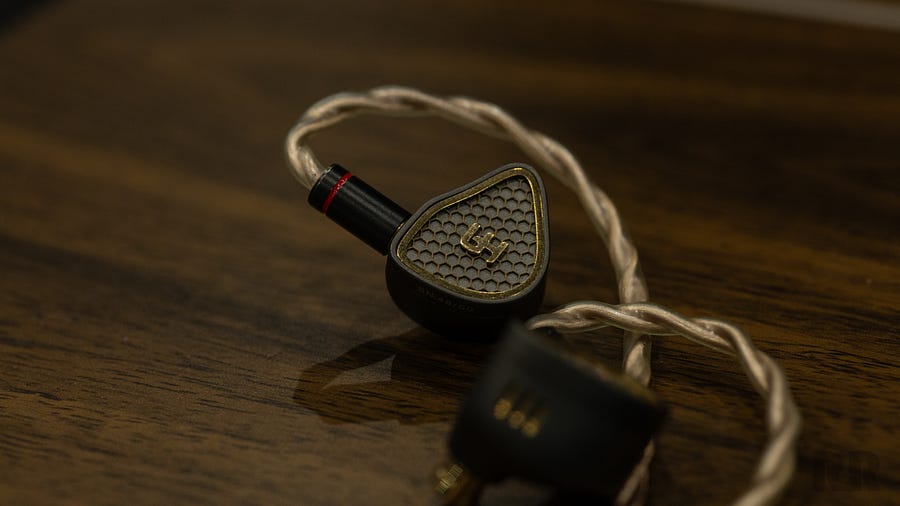
Ah, Moses, an IEM with biblical levels of balance. Between its beautiful shells and refined U-shaped sound, there’s very little you can complain about—and deservedly so, as the Moses carries a $4,200 MSRP and is currently listed at $3,799 in the U.S. Gentle, warm, and rich, the Moses’s tuning is decidedly TOTL-worthy, rendering diverse suites of instrumentation with precision and sophistication. This is one of the best EST implementations I’ve heard, taking full advantage of EST’s signature smoothness while sidestepping the sharp, overwound timbre many competitors suffer from. From smooth, atmospheric tracks to raw and emotional ones, I failed to find a single track that the Moses did not properly present. I could go on, but rambling any more than this would be more fitting for a proper review.
Hercules Audio Moses Legend — $8,000
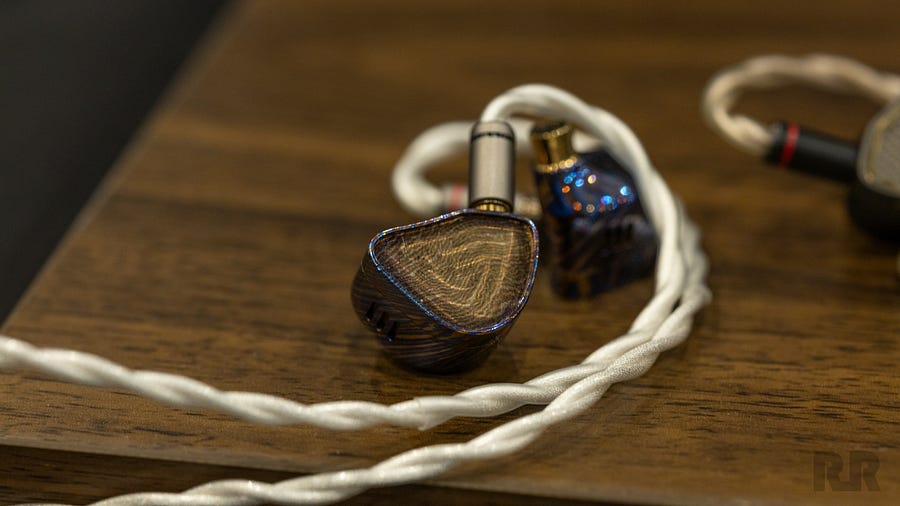
Hercules Audio Moses Legend, sans faceplate. Final design will feature a proper face design.
The Moses Legend is a so-called “ultra flagship,” with expected pricing around $8,000. If you think that price is crazy, you’re not alone. At the very least, Hercules Audio tries to justify this doubling in cost with truly exotic materials and experiences. The case that ML comes in alone is befitting of a $10,000 watch, so it appears that Hercules Audio really wants to drive home that this is intended to be a special experience.
Sonically, I have to say that the Moses Legend deviates pretty strongly from what I’ve grown to expect from HA — it replaces the original Moses’s subtlety and nuance with sheer energy and drama, running a much deeper V-shaped frequency response. The Moses Legend’s broader, warmer lower register is certainly punchier and juicier, but can sometimes distract from finer details in the mix. The same can be said for its more forward and brighter treble. My favorite part of Moses’s tuning has always been its refined and restrained use of its EST drivers, but it appears that the Moses Legend is more interested in flashiness than subtlety.
Noble Audio Kronos — $4,500
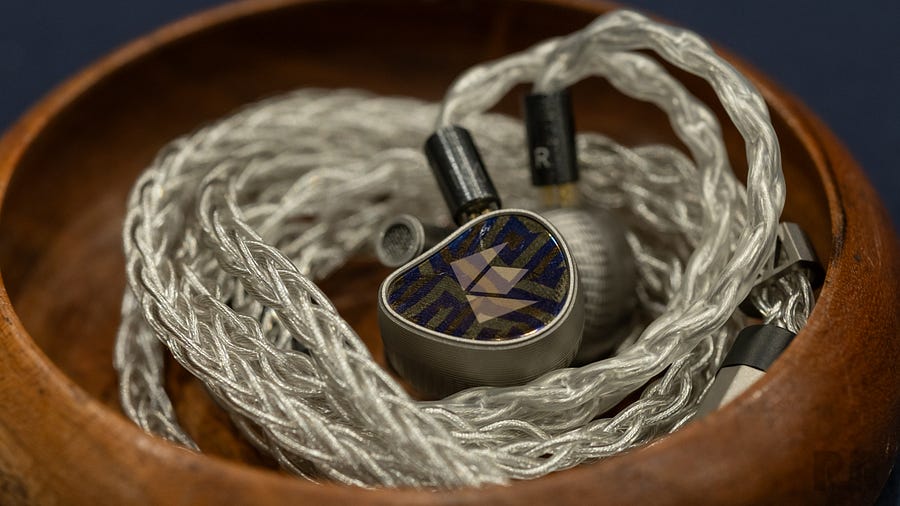
Kronos is an IEM I first heard at E-Earphone in Akihabara, and I fell in love with it. From its shells to its cable to its sonic performance, there’s not much you could even nitpick with it. The Kronos embodies the “we know what we are doing” vibe, projecting a wildly refined V-shaped sound with confidence and precision. Its treble is bright and breathy but only rarely steps over the line of comfort. Texture and transparency are fantastic on the Kronos’s upper register, and there are few IEMs that give you this much energy while retaining tonal cohesion. The Kronos’s mids are on the cool side, but they’re backed up by incredible resolution and a healthy bass response, lending it much-needed contrast. The Kronos cleanly earns a spot in my “TOTL hall of greatness” alongside other heavy-hitters like the VE10, Volur, and Moses.
Vision Ears PHöNIX Final Edition — $4,899

I’ve raved about the VE10 on multiple occasions. I still consider it to be one of the most engaging V-shaped IEMs I’ve heard to date, despite it recently being killed off. Vision Ears has shifted its focus to the PHöNIX Final Edition, putting the final garnish on a long and storied series of flagship IEMs. I didn’t much care for the previous iterations of the VE PHöNIX, owing to their sharp treble presentations, but the wicked-looking material Vision Ears used for the Final Edition’s shells convinced me to at least give it a listen. And yes, the PHöNIX Final Edition is an impressive IEM: big, broad V-shaped sound backed by incredible precision and technical acumen. But my issue, sharp treble, remains. That’s a deal-killer, as I cannot listen comfortably at reasonable volumes, defeating the purpose of listening at all. Maybe there’s some secret trick I can use to address this issue, but I’ve yet to discover it. Until then, my focus will lie elsewhere.
IEMs With Pricing Not Yet Announced
DUNU Noctua (Best in Show)
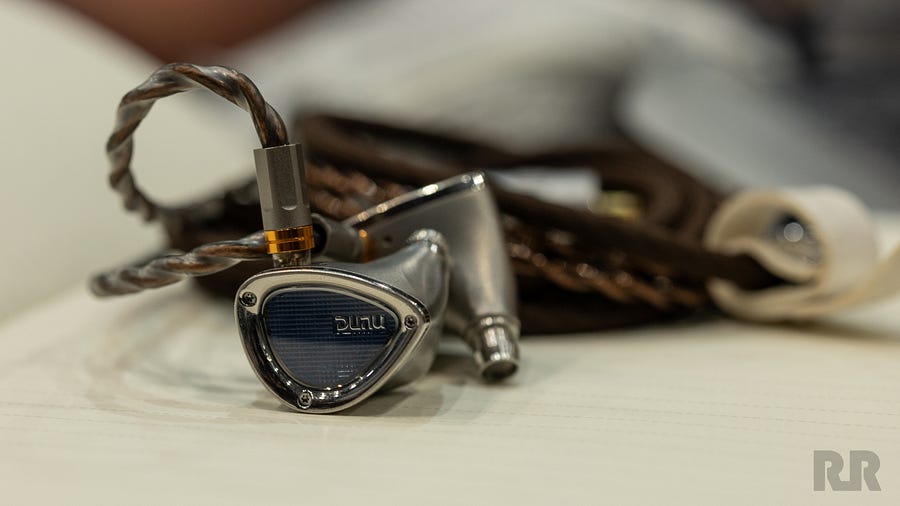
I’ve written about the Glacier twice now, and while I think it’s a pretty interesting IEM, I find its particular brand of V-shaped tuning to be on the tiring side. The Noctua feels much more up my alley, delivering a true “flagship” reference-inspired tuning. This is a very different style compared to the PRS6, as it feels much more mid-forward. The Noctua’s V-shaped, perhaps W-shaped, frequency response is addictive and gets better the longer you listen. Its bass is slightly lifted, delivering highly textured bass notes without being commandeering. Traditional V-shaped tuning has much more bass, but this tamer approach works well nonetheless. Everything from the top of the upper treble to the depths of the sub-bass is high-res on the Noctua, and it truly feels like you’re getting a special rendition of each track. This is one of the TOTL IEMs on my radar for the end of 2026, and I’m keenly watching DUNU’s social media for more launch details.
EPZ EST Prototype
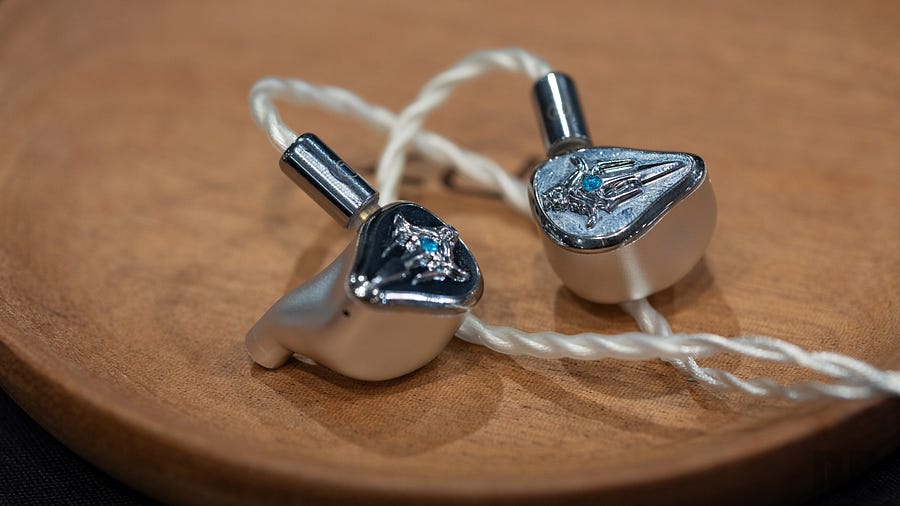
I don’t recall the name of this prototype, but its shells are sweet. Solid, unadorned aluminum with polished faceplates, this was the most comfortable IEM I tested at the EPZ table. I didn’t catch the full driver setup for it, but I did hear that it has an EST in it. Its sound signature is gently V-shaped, with plenty of lower treble emphasis and an inoffensive, careful upper treble lift. There’s zero sharpness or sibilance in this IEM’s upper register, which is a major plus for more-sensitive ears like mine. Treble resolution is crazy, and this IEM pulls details into the mix that I often only hear on very high-end IEMs. The mids are on the cooler side, and the bass region is pretty tame, but with a bit of EQ in the 10–150 Hz region, the drivers wake up. I added a pretty significant 3 dB in my music app’s 10-band EQ and it transformed the IEM’s presentation. Big, bold punches and tightly controlled rumble became the norm rather than the exception in EDM, and there was no hint of blur or messiness. This tells me that whatever drivers are in here have tons of available headroom, and that’s pretty exciting to say the least.
FlipEars Astra
The Astra is an interesting IEM, but one that doesn’t agree with me. It features a U-shaped frequency response that pushes treble elements too far forward, ultimately sounding tinny and overwound. Its mids are quite cool and sound somewhat unnatural, especially when listening to harmonically complex instrumentation. If you’re a fan of meta IEMs, you may like the Astra, but to me it seems like a much more expensive Kiwi Ears Astral, which isn’t something I’m too interested in.
Hidizs always has a bunch of stuff to show off, and this year is no exception. I recently covered the MP145 Pro, MyLin, AP80 Pro Max, and AP30, so take a look at those reviews for my thoughts on them.
Hidizs MK11
This is a pretty standard 1x DD IEM. It is cohesive, warm, expressive, and smooth. There’s a surprising amount of resolution in its treble, despite its upper register sounding fairly relaxed. That said, this is still ultimately a budget-friendly single DD IEM and it comes with the common performance constraints you’d imagine. Complex tracks can overwhelm the MK11, and it often smudges finer textures.
Hidizs MK12L
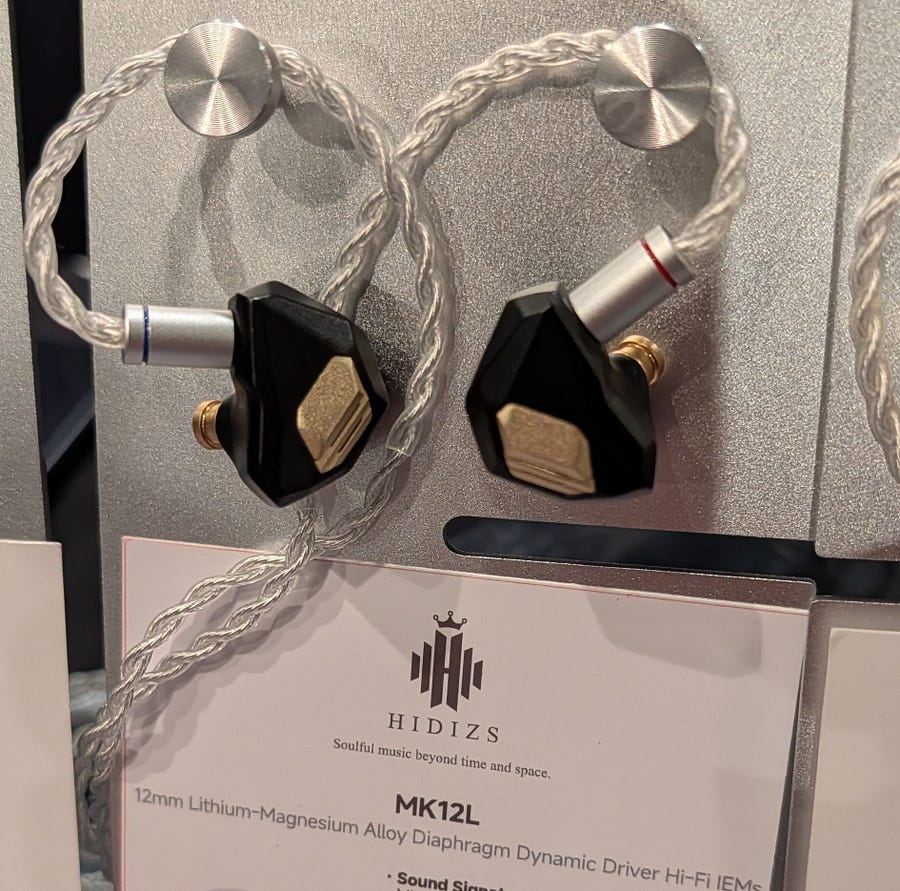
The MK12L is the final new 1x DD IEM from Hidizs, and is my least favorite of the bunch. It does feature metal shells, but isn’t particularly tuned to my preferences. It has a mild U-shaped frequency response, but features grain in the upper register and subtle bloom in the lower. The MK12L’s treble can also sound a bit stiff and overwound, giving it an artificial timbre. Not my favorite IEM, and in a market with lots of great 1x DD options, I’m not sure where the MK12L stands.
Hidizs MK15
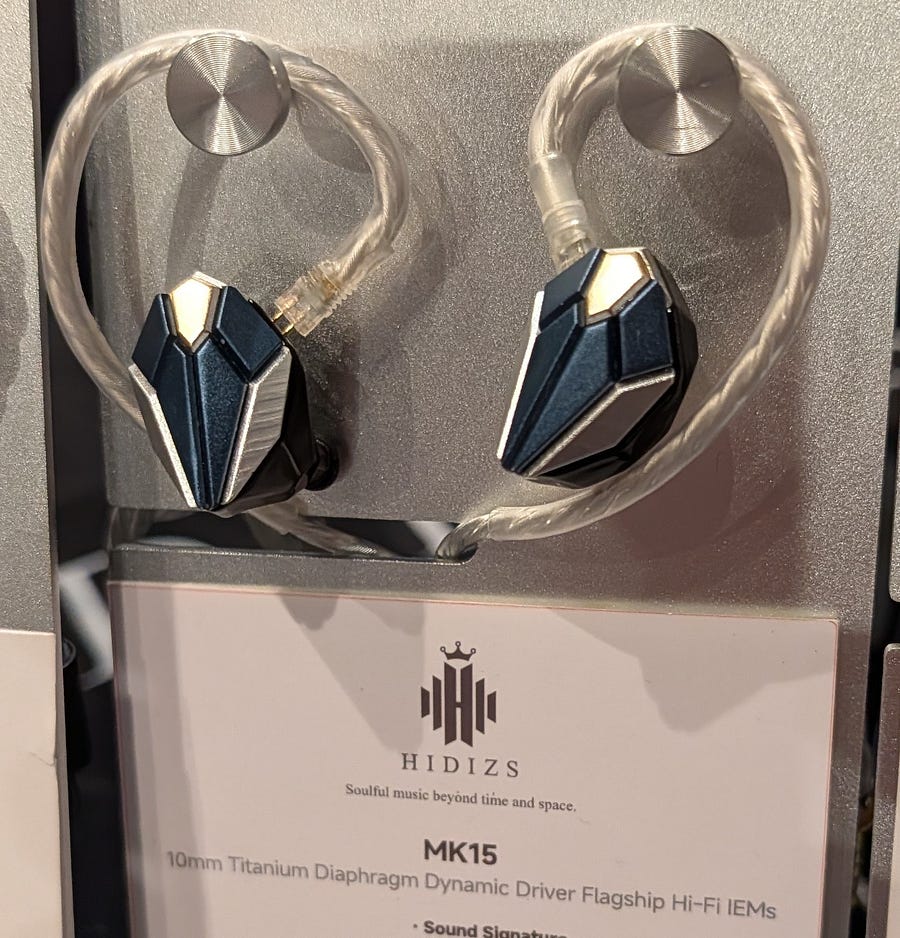
Like the MK11, the MK15 is a single DD IEM. It has an interesting metal faceplate, but has cheap-feeling plastic shells and nozzles. It follows a traditional V-shaped tuning. Forward bass, a recessed and cool midrange, and bright treble. The MK15’s upper treble has a subtle grain to it, but it still renders hi-hats and cymbals well. While I’m not thrilled with the MK15’s build, I’m sure its tuning will have a degree of broad appeal.
Hidizs MS10 Pro
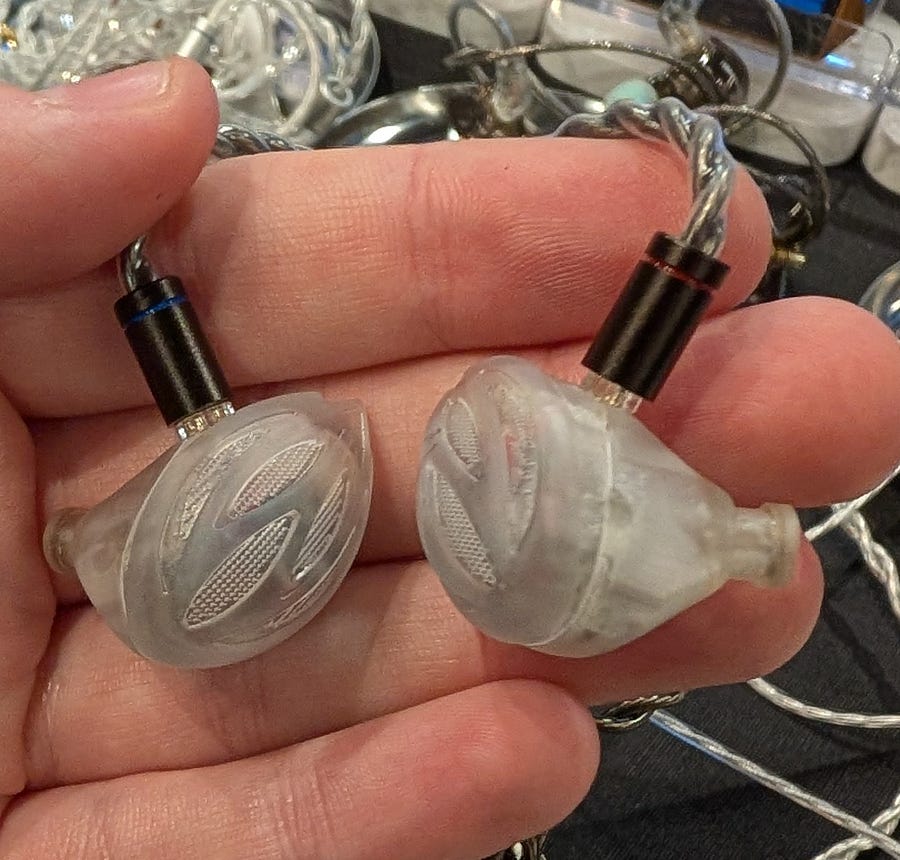
I was able to get a much better seal with the MS10 Pro. It features more drivers and a wider selection of driver types compared to the MS4 Pro but feels a little smaller in the hand. Sonically, the MS10 Pro is much more relaxed than the MS4 Pro, possessing a much greater degree of balance and tonal nuance. The MS10 Pro’s treble is lifted a little beyond its reference-style mids, giving it air, transparency, and excellent transients. The MS10 Pro feels like a true flagship, which Hidizs has historically lacked. If you’re looking for a point of reference for what might sound like the MS10 Pro, think NiceHCK Rockies with a moderate increase in bass emphasis.
Hidizs MS4 Pro
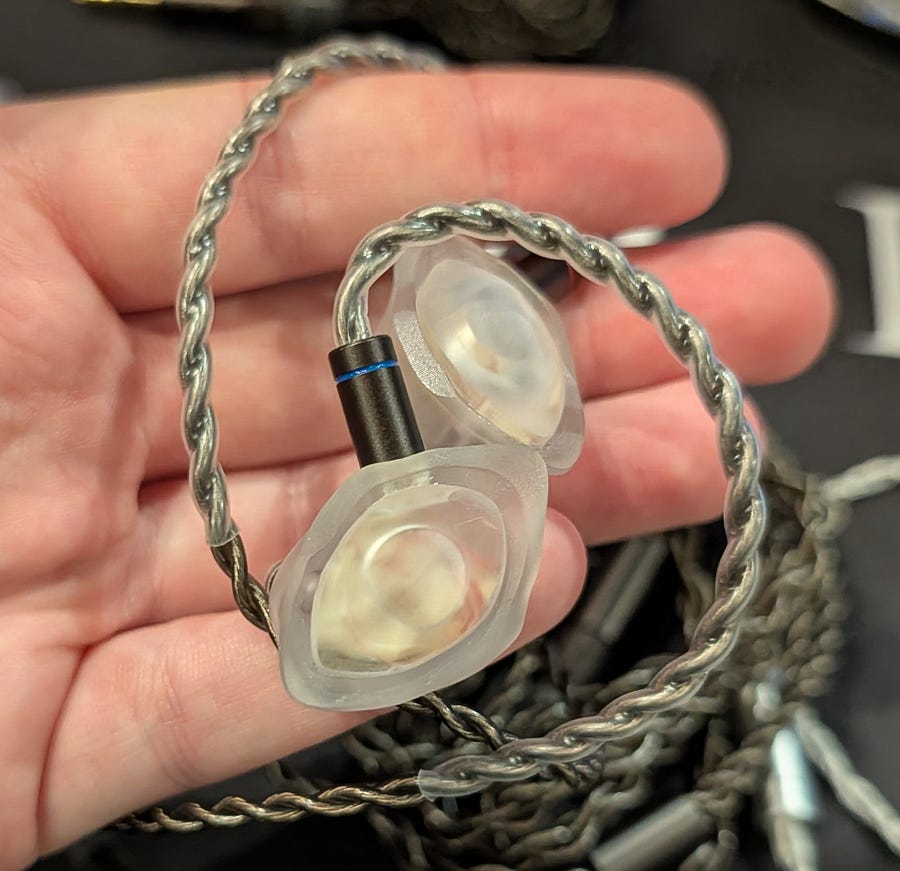
As a disclaimer, I struggled to get a good fit with these plastic test shells, and I ended up resorting to using undersized foam eartips to get some semblance of a seal. This almost certainly affected my perception of the sound, so take that into account.
The MS4 Pro is a tribrid IEM from Hidizs featuring a meaty, broad sound signature. It has smooth, lively vocals with moderate overall vocal clarity and rich timbre. It features an EST-based upper register that renders treble elements with precision and air, but it feels just a bit disjointed. The MS4 Pro’s bottom end is warm and forward but exhibits a small degree of bloom.
Kiwi Ears Ember
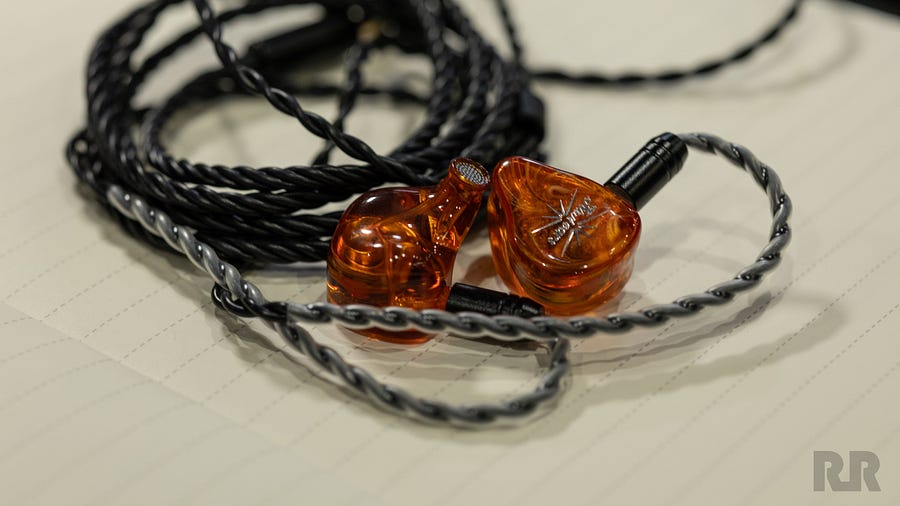
The Ember is V-shaped with a bright, though well-behaved, treble. It has a relaxed midrange and renders vocals more towards the middle of the mix. The Ember’s bass is likewise relaxed and unimposing. In all, I feel that the Ember lacks engagement, ultimately feeling like a cut-down KE4 Mk II rather than a proper “new” IEM. I’ll probably skip this one, as it doesn’t do anything particularly interesting.
Kiwi Ears KE4 Mk II

I’ve always liked the original KE4’s take on reference-style tuning, and the KE4 Mk II iterates on it nicely. While I’m not certain if this is the final shell design (and cable) for the KE4 Mk II, I was told that voicing is complete, and honestly, I think they did an outstanding job. A smooth, tonally neutral presentation with an emphasis on comfort and long-term listening, the KE4 Mk II is just engaging enough to keep me listening without fatigue. In a show filled with aggressive EST and MEMS tweeters, the KE4 Mk II’s more reasonable upper register was a nice refuge for my tired, sensitive eardrums. In short, the KE4 Mk II is resolving, organic, and cohesive without resorting to cheap tuning tricks or dramatic peaks. I’m a fan.
The Bottom Line
If there was one major takeaway from CanJam SoCal 2026, it’s that the wired IEM market has absolutely no intention of slowing down. The sheer variety of driver technologies, tuning philosophies, and prices on display was almost absurd, and the performance gap between affordable models and the established high-end continues to shrink.
Some of the biggest surprises were not the most expensive IEMs in the room. The Effect Audio Perseus was one of my favorite discoveries of the show, while the FlipEars Aisha Electri and Ice Lab Lumira delivered compelling performance without wandering into four-figure territory. DUNU’s Noctua was another standout and one of the high-end models I most want to hear again once the production version and final pricing are announced.
At the other end of the spectrum, spending several thousand dollars no longer guarantees that an IEM will be more engaging or even more convincing. The Hercules Audio Moses and Campfire Audio Clara remain examples of what can happen when expensive driver arrays and sophisticated tuning actually come together, while the Noble Audio Kronos also reinforced why it belongs among the better flagships I’ve heard. But there were disappointments. The Noble Iris did little for me at its price, the Agis II left me missing the Spartacus, and the Vision Ears PHöNIX Final Edition still has more treble energy than I can comfortably tolerate. The technically impressive 64 Audio Ocean also failed to displace the less expensive Volur as my favorite from the company.
That may be the most interesting thing happening in high-end wired IEMs right now. Manufacturers have access to increasingly exotic combinations of dynamic, balanced-armature, electrostatic, planar, MEMS, and bone-conduction drivers, but throwing more technology inside a shell does not automatically produce better sonic performance. Integration and tuning remain considerably more important than the number of drivers on the spec sheet.
And that is probably good news for everyone who doesn’t have $4,000 to $8,000 burning a hole in their pocket. The very top of the IEM market has become increasingly extravagant, but some of the most interesting products at CanJam SoCal 2026 were considerably more affordable. High-end wired IEMs have never offered more choices, but they have also never made it clearer that price and enjoyment are not the same thing.
Related Reading:
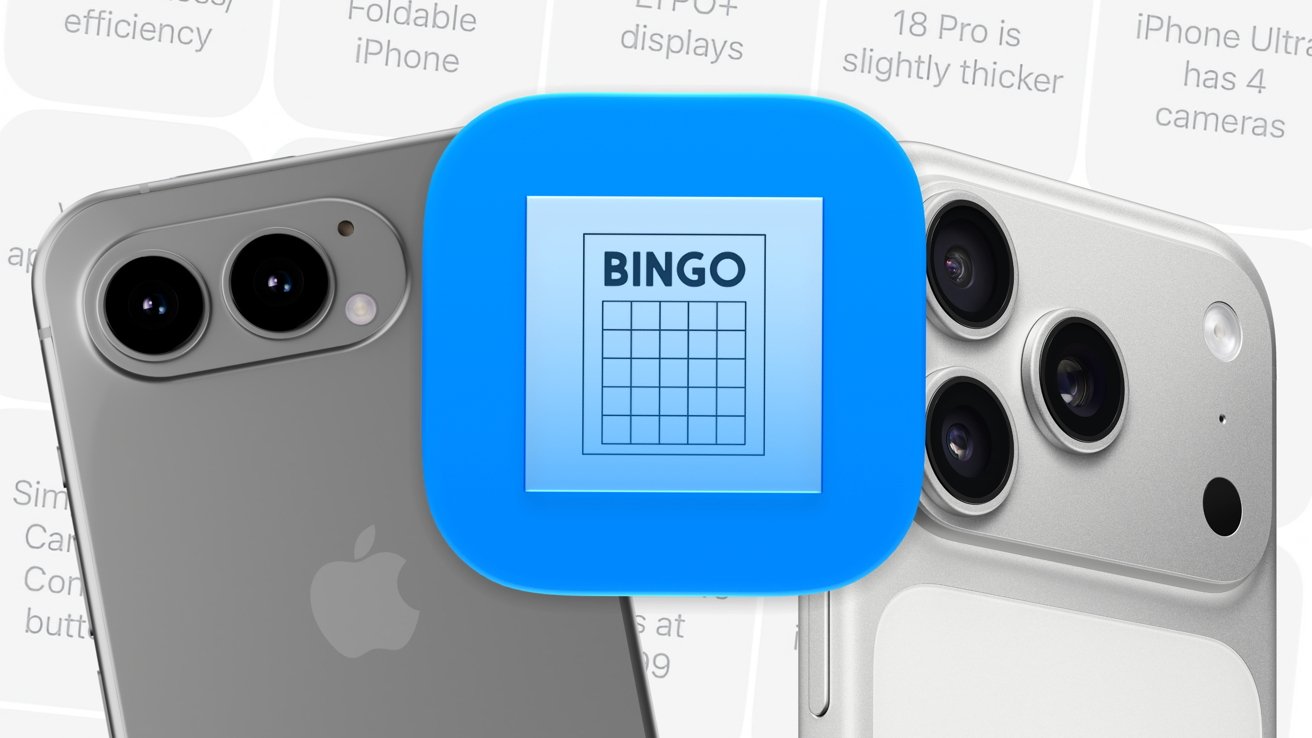
Use this Bingo Card Generator to play along with Apple’s September iPhone event. Drinking is entirely optional.

Make the Apple event more fun with the Bingo Card Generator
Apple is well known for the format of its special events. From the WWDC keynote to the usual September iPhone events, viewers are familiar with the usual tropes, such as Tim Cook‘s “Good morning” at the start, and the earlier famous “One more thing” at the end of some videos.
While it would be easy for people to turn it into something like a drinking game, there are other ways to play with the events.
Continue Reading on AppleInsider | Discuss on our Forums
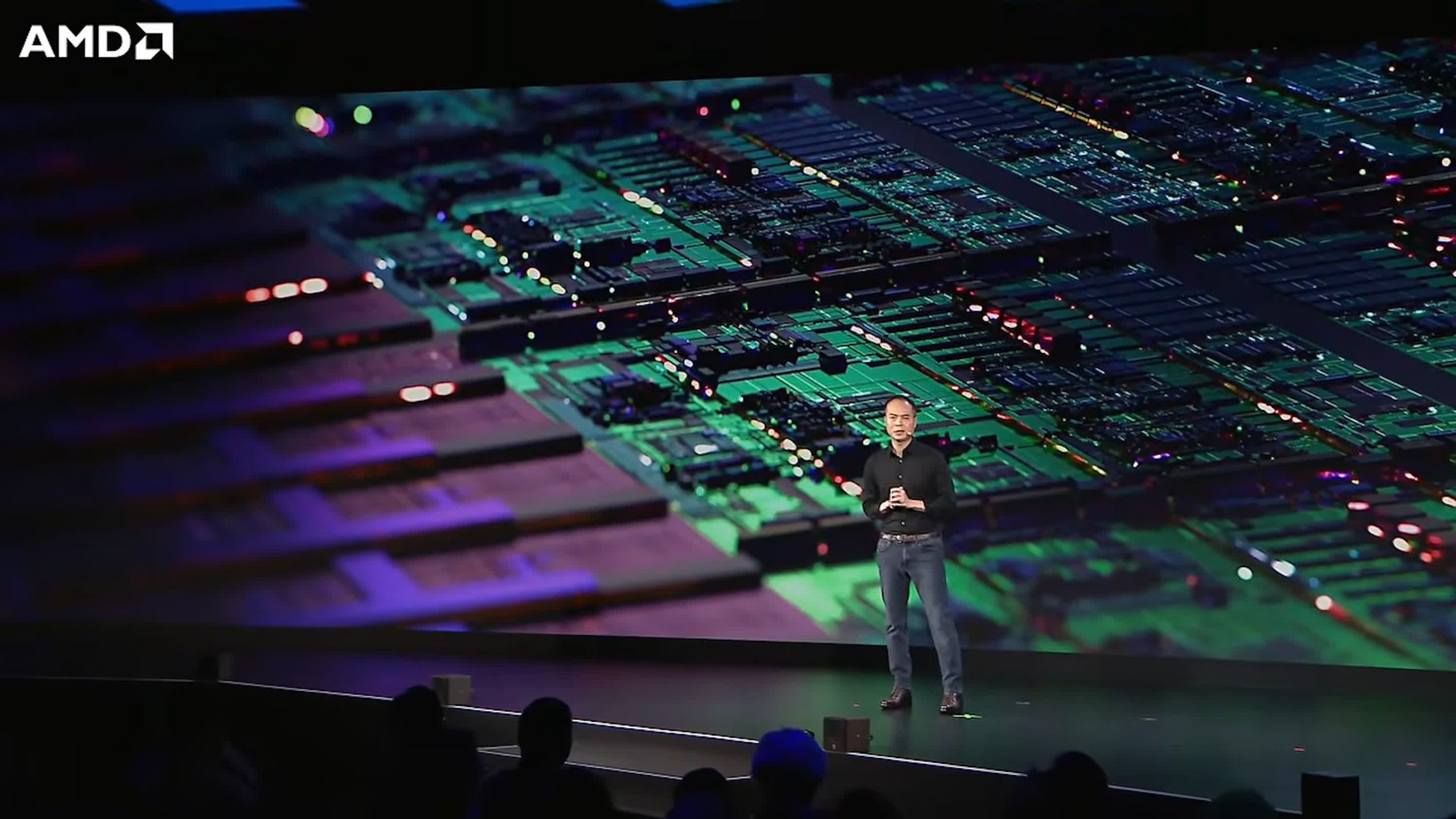
First look: AMD used its IFA 2026 keynote to introduce the Threadripper Halo Station, a liquid-cooled workstation designed for running AI models with more than one trillion parameters locally rather than through a cloud service. AMD has not said when the Halo Station will be available. But the system points to a growing market for workstation-class AI hardware that gives developers more direct control over large-model workloads, including where data is processed and how models are deployed.
The system pairs the 96-core Ryzen Threadripper PRO 9995WX processor with up to four Instinct MI350P accelerators. AMD demonstrated a two-card version at IFA, while a fully configured model with four accelerators would provide 576 GB of HBM3E memory – enough, the company said, to hold a trillion-parameter model on the machine itself.
AMD has not announced pricing, availability, or full system specifications. It also did not detail the Halo Station’s storage, networking, or chassis options, or whether it plans to sell the system directly or through workstation manufacturers and system integrators.
Each Instinct MI350P card includes 144 GB of HBM3E memory and delivers 4 TB/s of memory bandwidth. The two-card system demonstrated at IFA had 288 GB of HBM3E memory. A four-card version would provide 576 GB.
That memory capacity is central to the Halo Station’s purpose. Large models require substantial high-bandwidth memory to store weights and process data efficiently. AMD said the MI350P’s 4 TB/s of bandwidth is 14 times higher than that of any LPDDR5X variant.
The system also has significant power and cooling needs. Each MI350P accelerator can draw up to 600 watts of total board power. AMD said the cards are independently liquid-cooled, and the Threadripper processor has its own liquid-cooling setup.
The Threadripper PRO 9995WX, code-named Shimada Peak, is based on AMD’s Zen 5 architecture. It has 96 cores, 192 threads and a boost clock of up to 5.4 GHz. The processor supports up to 2 TB of DDR5 system memory.
Jack Huynh, AMD’s senior vice president and general manager of Computing and Graphics, described the product as a new workstation category intended to bring “supercomputer-class compute” to individual users and developers.
Gamescom has been a fever dream. Following a strong opening night, everything from gaming gear to cosplay and demos has kept us running around for hours. So after hitting 20,000 steps every day, it’s time for the Publisher Awards. Video games are definitely still the highlight, but there’s a lot more that deserves your attention here.
So here are our picks for the best of what we saw during Gamescom 2026, including everything that was worth waiting for in those hour-long queues.
Nvidia DLSS 5: Best graphics technology
Can’t have the gaming awards without mentioning one of the biggest supporting technologies behind it. The initial reveal of DLSS 5 might have been less than ideal, causing gamers to take up arms against the company for fear of AI slop ruining games — worse yet, ruining the artistic integrity of the original work from the developers and artists.
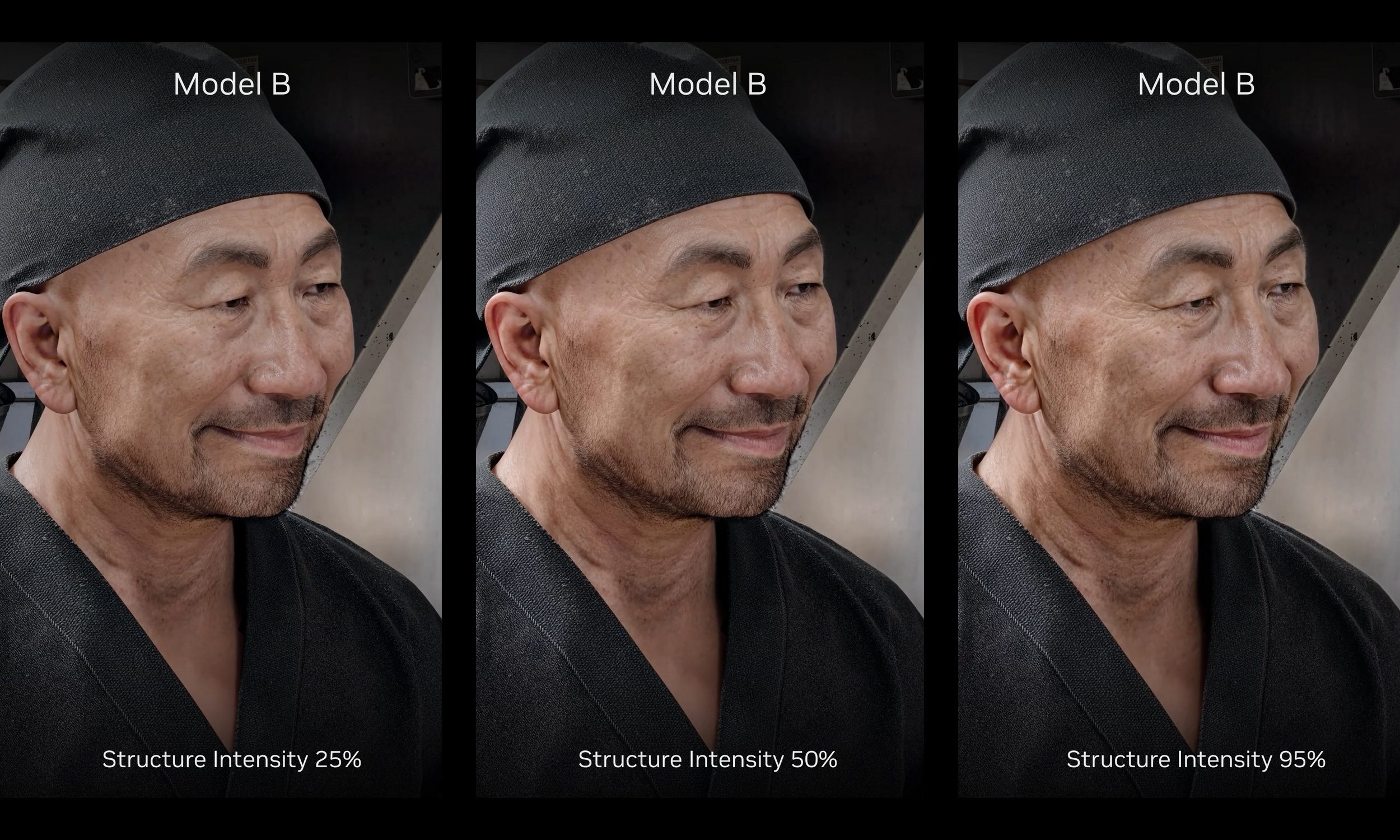
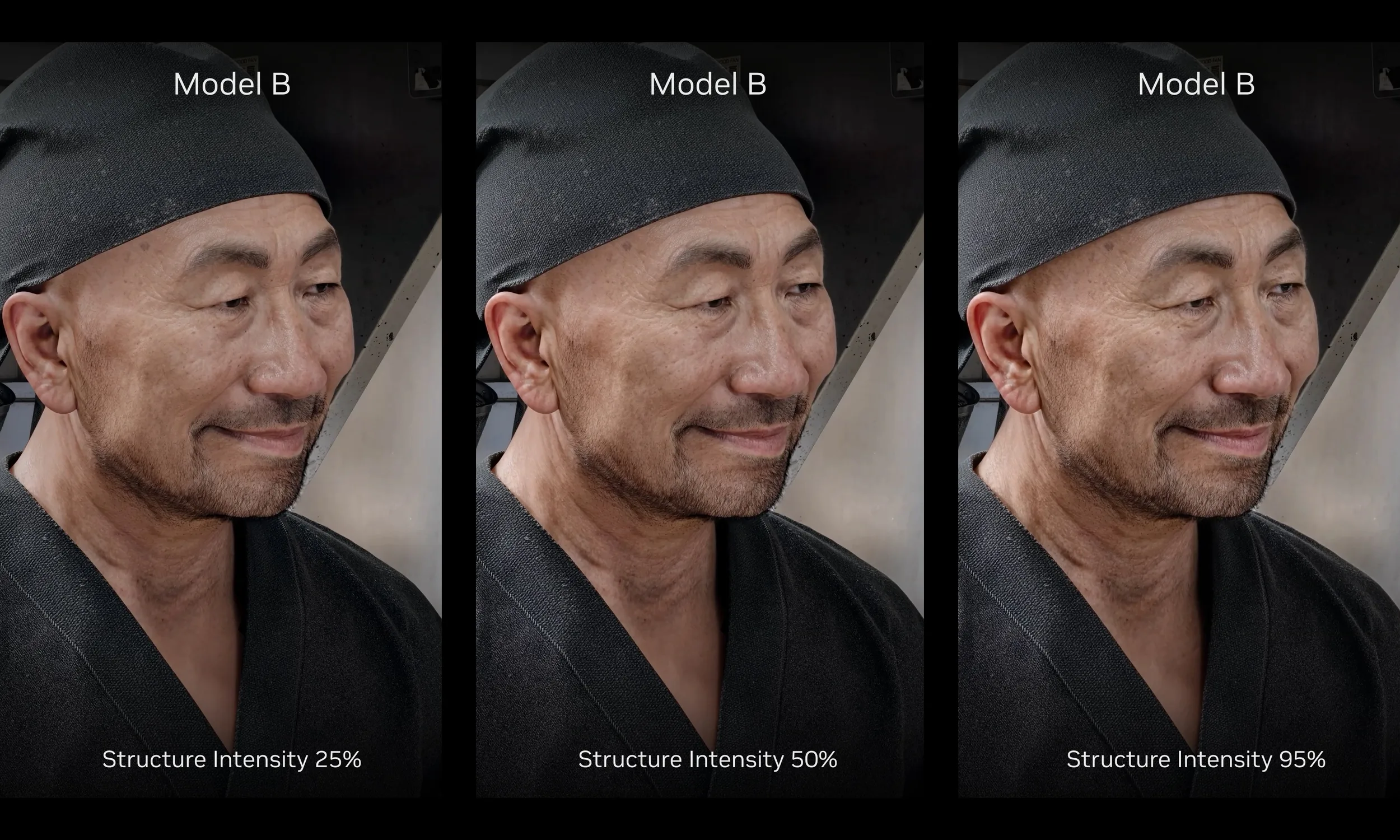
Even my first impressions weren’t great, and Nvidia definitely had an uphill battle ahead. During our time at Gamescom, we finally got to see the tech in action. It showed a lot more promise this time around and, more importantly, reaffirmed that control remains in the hands of the studio. So unless you or the developers actively want the image to be AI-yassified, you’re good on that front.
The technology can use geometry, textures, motion information, and other game-engine data while letting developers control things such as structure, tone, and semantic masks. Seeing those tools demonstrated helped address one of my biggest concerns from the original reveal.
DLSS 5 has since debuted with NBA 2K27 on RTX 50-series GPUs, and I can’t help thinking about its potential across the rest of the industry. It is still far too early to sing its praises, but after Gamescom, I’m considerably more interested in seeing where developers take it.
JBL Quantum 520X and QuantumENGINE: Best gaming audio
“Whether we are making a $400 headset or a $45 headset, we use the exact same driver — a 50mm carbon dynamic driver,” Gordon Tong, Senior Director of Product Strategy and Planning, Gaming at JBL, told us during a recent interaction. The point he wanted to establish was simple: getting into JBL’s gaming ecosystem shouldn’t mean accepting significantly weaker audio hardware.

JBL is committed to its gaming lineup, and the new Quantum 520 Wireless, Quantum 520X Wireless, and Quantum 120 carry that idea forward. Even the $49.95 Quantum 120 gets the same 50mm carbon dynamic-driver concept found farther up the range, alongside JBL Quantum Spatial Sound, Hi-Res support, QuantumENGINE customization, and a detachable 6mm cardioid microphone. The $129.95 Quantum 520X adds wireless connectivity, including 2.4GHz and Bluetooth, with up to 37 hours of battery life.
What makes them even cooler is the new QuantumENGINE technology and upcoming AI Footstep Booster. The feature continuously analyzes game audio to identify important sounds, including footsteps, voices, gunfire, and explosions, then works to make directional footstep information clearer. It arrives in Q4 2026.
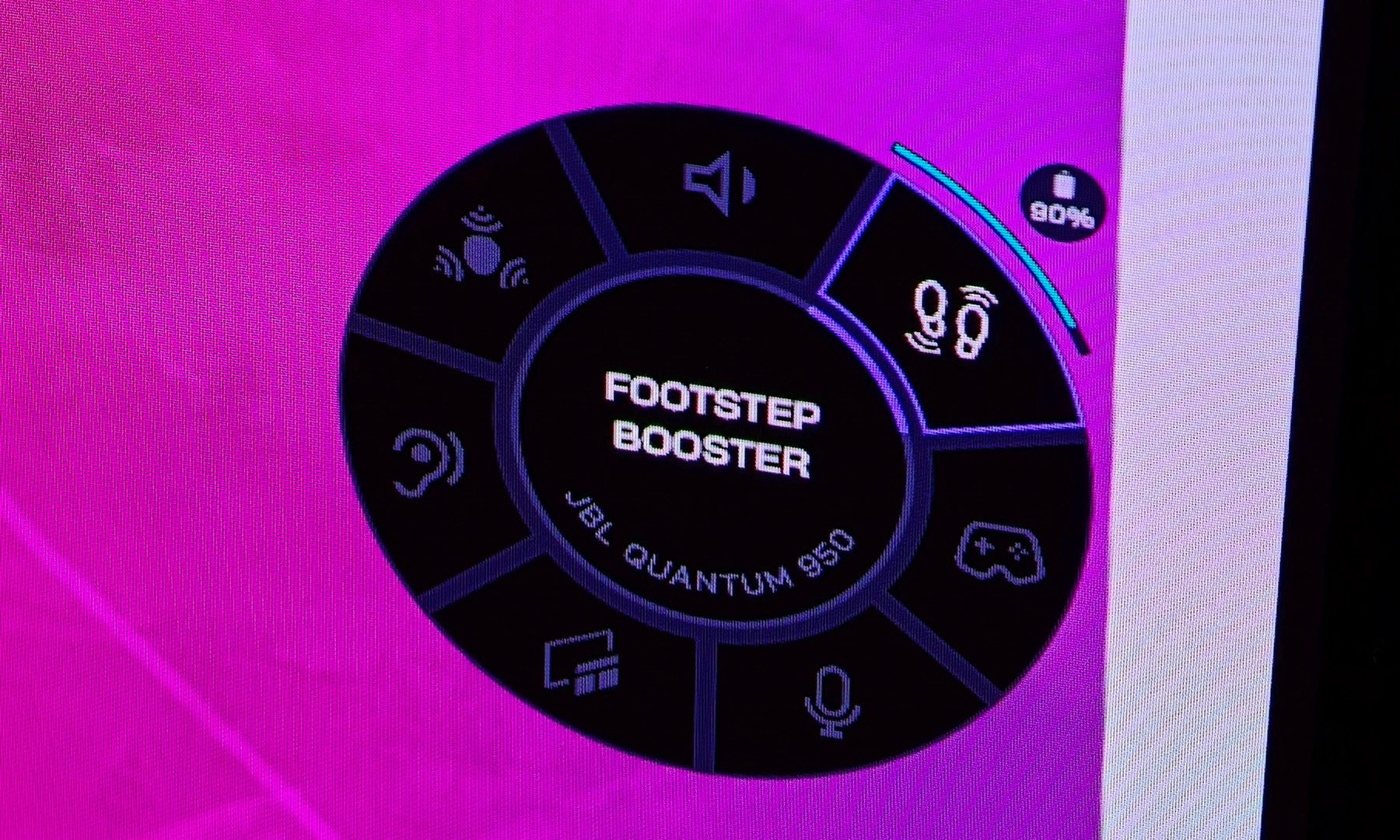
If you’ve played a fair amount of competitive shooters like Rainbow Six Siege, as I have, you already know sound can decide a round before you ever see the person shooting at you. QuantumENGINE can also be controlled from a phone on the same network, meaning you can change EQ, spatial sound, microphone levels, and game/chat balance without tabbing out of whatever you’re playing.
Tripo AI: Best AI creator tool
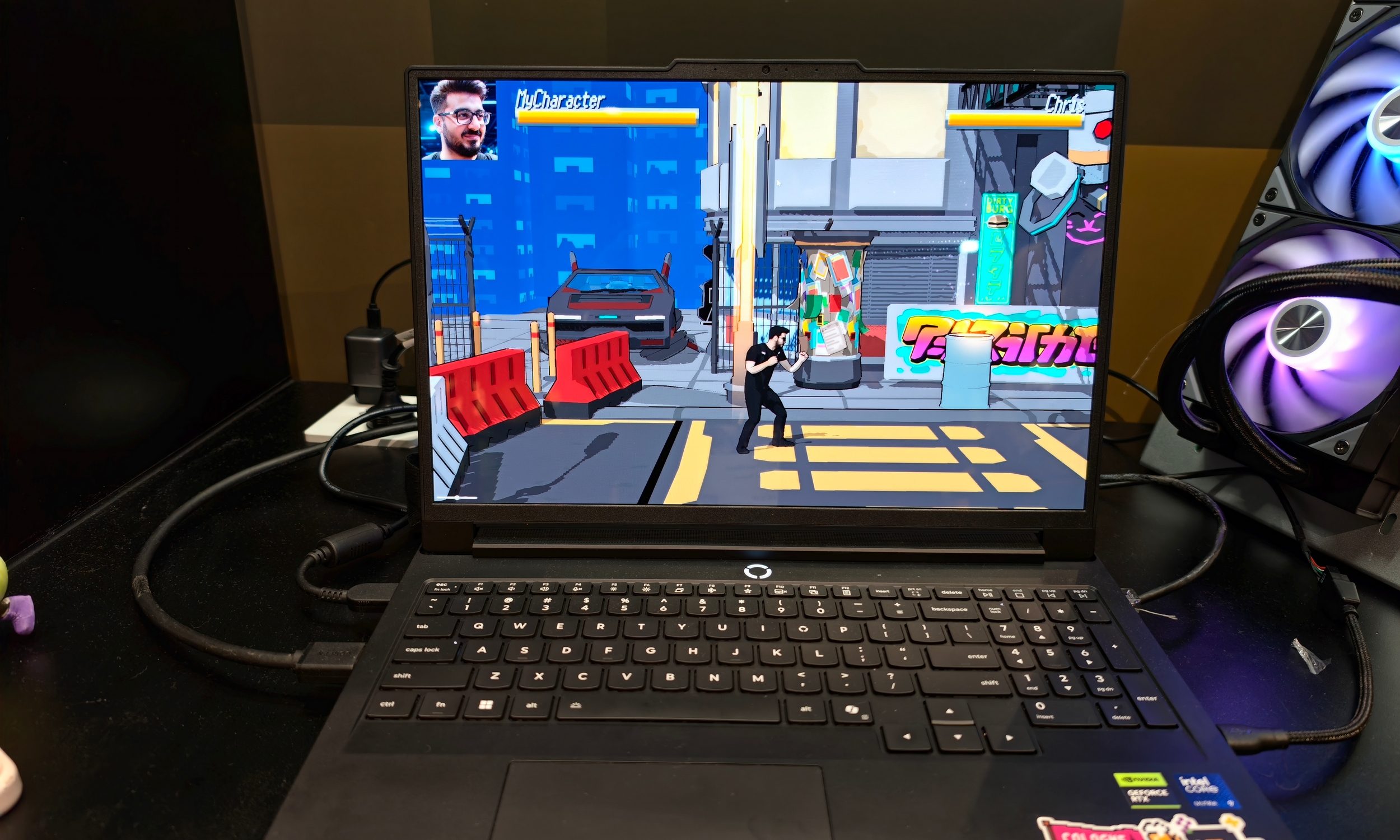
AI demos can become very vague very quickly. Tripo AI was the complete opposite because I could immediately understand where someone would actually use it. The basic workflow lets you take a text prompt or a flat 2D image and turn it into a 3D model. From there, the model can be edited and exported into workflows involving tools such as Unity, Unreal Engine, or Godot, while Tripo also offers different mesh options depending on whether you’re making game assets or something with much denser geometry.
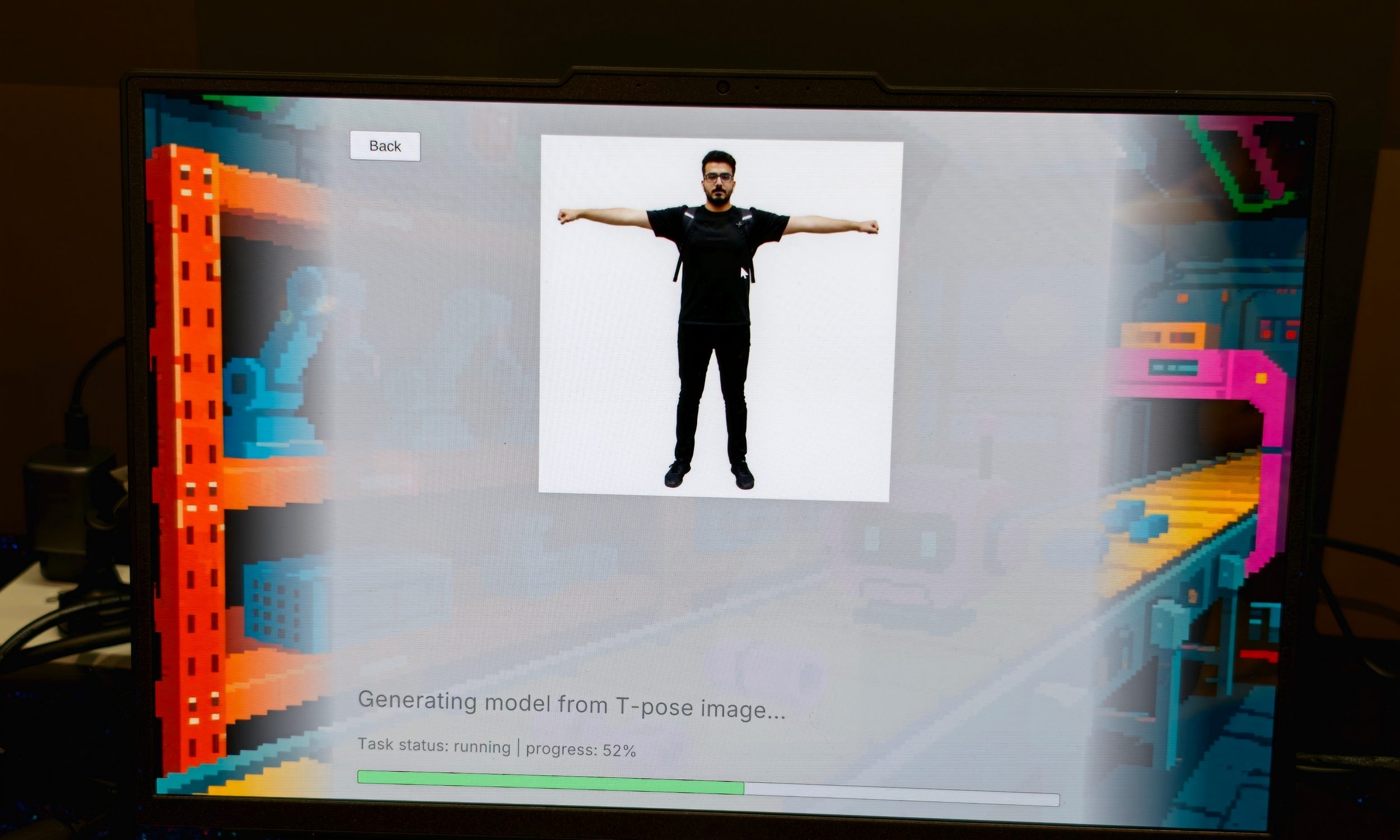
Its image-generation pipeline can also call models from Google and OpenAI before that image becomes the basis for the 3D stage. So a rough idea can become concept art and eventually a usable 3D object without requiring you to manually model every surface from scratch.
I’m sure you’re already seeing the obvious value it gives small game teams, prototyping, and 3D printing. If you ask me, it isn’t replacing real skilled artists anytime soon. Though the thing that impresses me is how it can shorten the distance between having an idea and visualizing it to build the groundwork.
Epomaker HE75 V2 TMR: Best keyboard
I’ve been enjoying’s products for a while now. The GX1 gaming headset is genuinely one of the best sub-$50 gaming audio gear that I’ve used. But that’s not the only thing the company has going for it. Outside of the headsets, there are also gaming mice and keyboards, and one of the new keyboards is what I’m looking forward to the most.
Epomaker’s HE75 V2 TMR was the highlight. The 75% board uses TMR magnetic sensing with adjustable actuation and Rapid Trigger precision down to 0.01mm, plus an 8,000Hz polling rate over wired or 2.4GHz connections. It also has a huge 8,000mAh battery and a gasket-mounted construction with multiple layers of acoustic dampening.
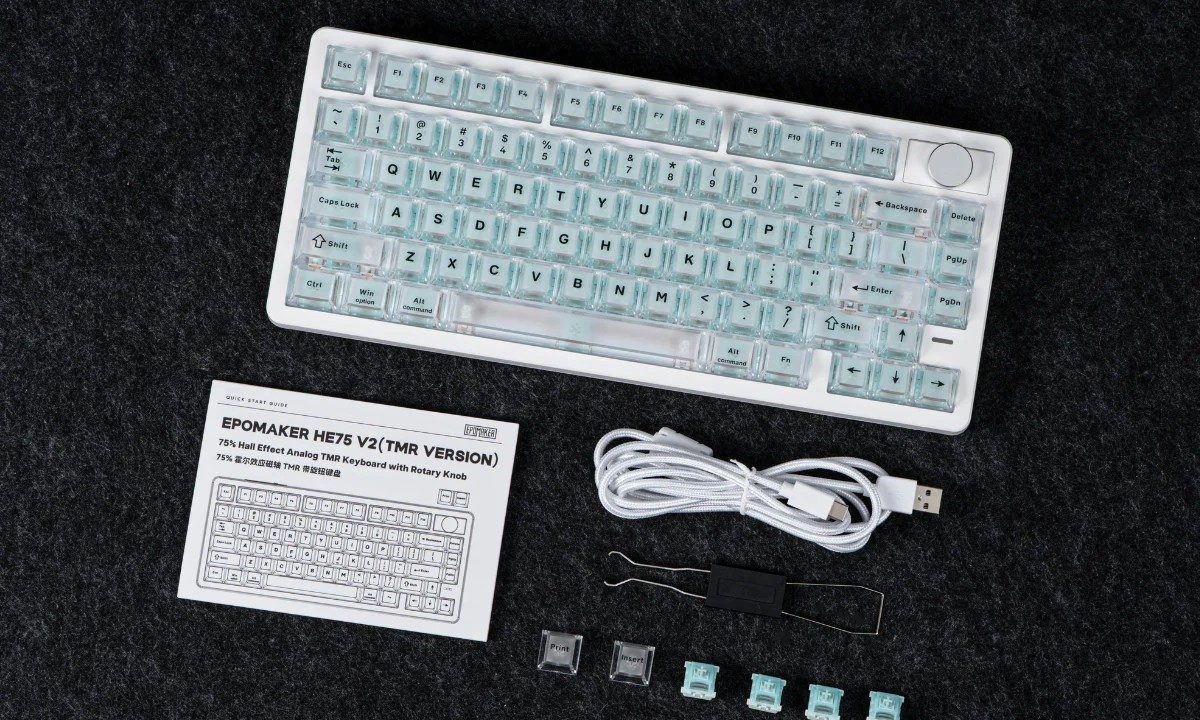
With a hybrid hot-swappable PCB and support for magnetic switches and regular 3- or 5-pin mechanical switches, it’s the dream nerdy keyboard, without locking you into one keyboard style.
Samsung Odyssey G6: Best monitor
I don’t know who asked for 1,100Hz, but Samsung decided more is good, and a lot more is what we got. The new 27-inch Odyssey G6 can hit 1,100Hz at HD resolution, while Dual Mode also lets it run QHD at up to 600Hz. Samsung had originally shown a 1,040Hz version earlier in the year, so apparently it found another 60Hz lying behind the sofa before Gamescom.
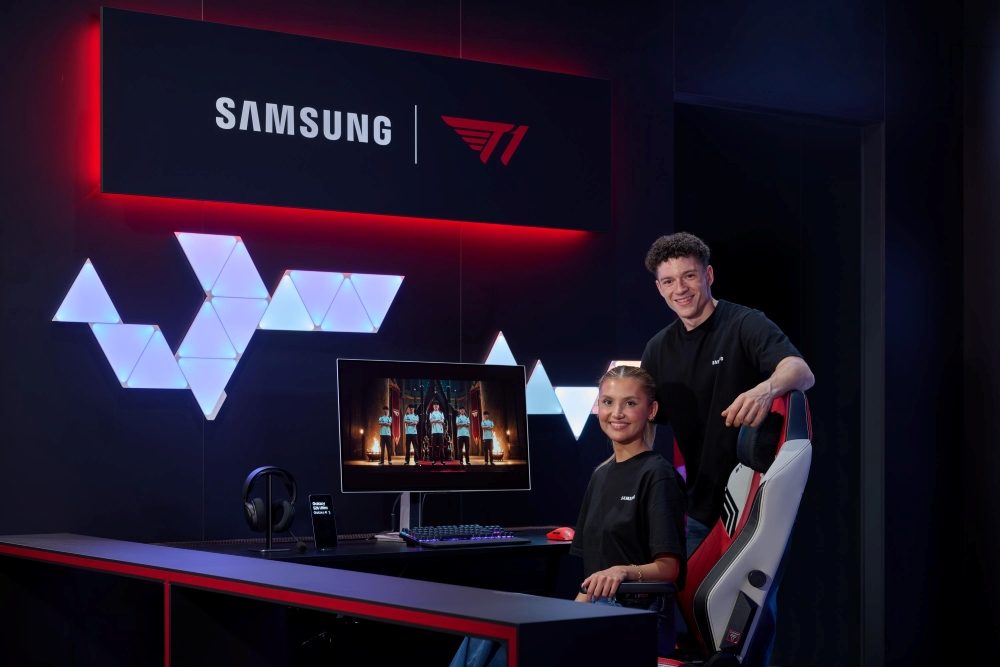
While it might look like overkill, there is an argument for its existence. Competitive shooters keep pushing farther into extremely high frame rates, and the ability to swap between sharper QHD and fast HD gives esports-focused players an actual choice depending on what they’re playing. At Gamescom, where practically everything is trying to get your attention, a four-digit refresh rate still managed it.
1001 Threads of Mizan: Best co-op fantasy
I saw plenty of fantasy games at Gamescom, and yet, 1001 Threads of Mizan immediately looked different. Its world draws from Arabic folklore and One Thousand and One Nights, and the setting gives it an identity you don’t often see in a large action RPG. The trailers show giant supernatural creatures, sprawling deserts, ornate cities, and magical carpets that aren’t simply there to get you from point A to point B.
The game is designed for one to three players, and those flying carpets can become part of combat as you move around larger enemies and attack from the air. The scale and a Middle Eastern fantasy world gave me shades of Prince of Persia without looking like a generic “inspiration”. Gamescom had no shortage of medieval castles and gloomy forests. Mizan was a very welcome change of scenery.
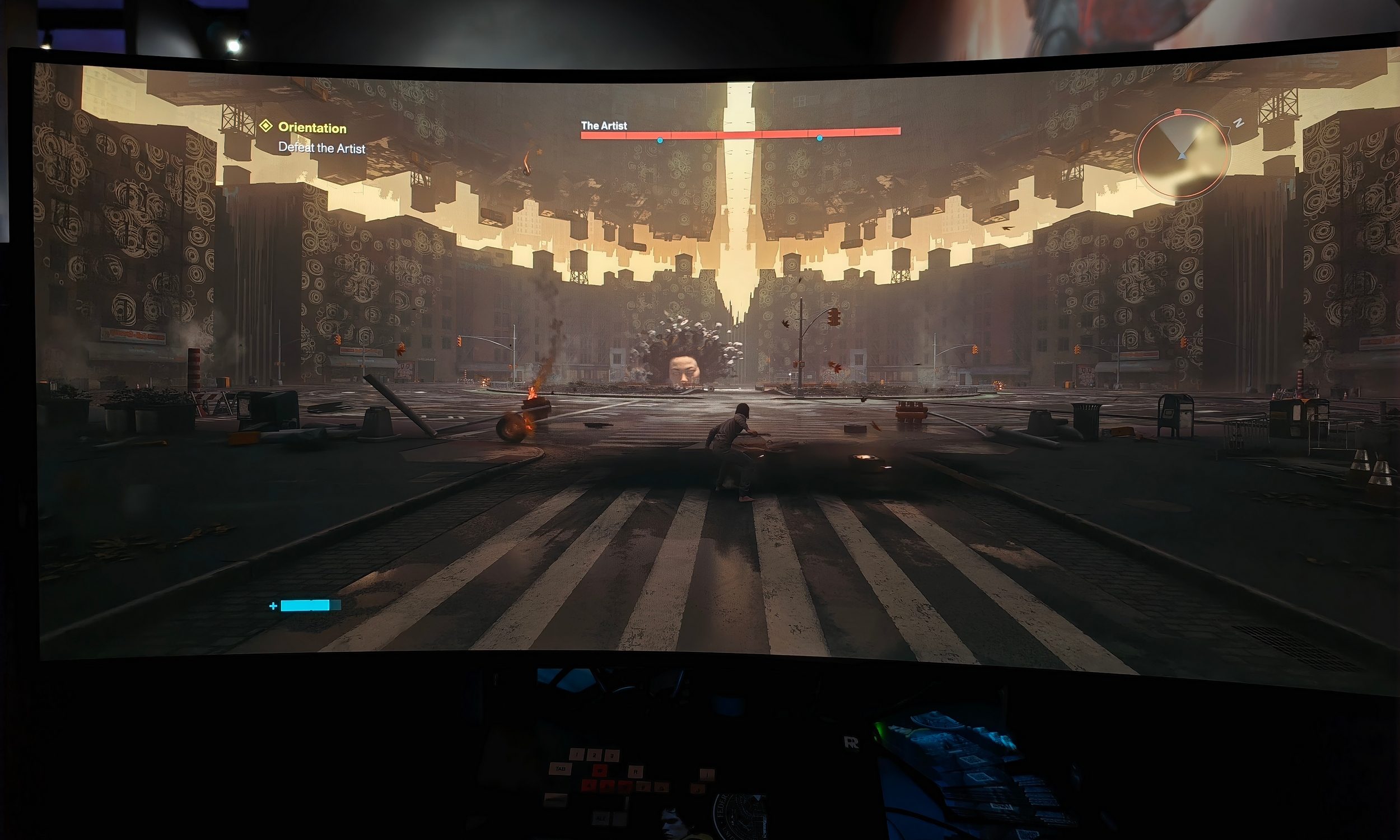
CONTROL Resonant: Best hands-on demo
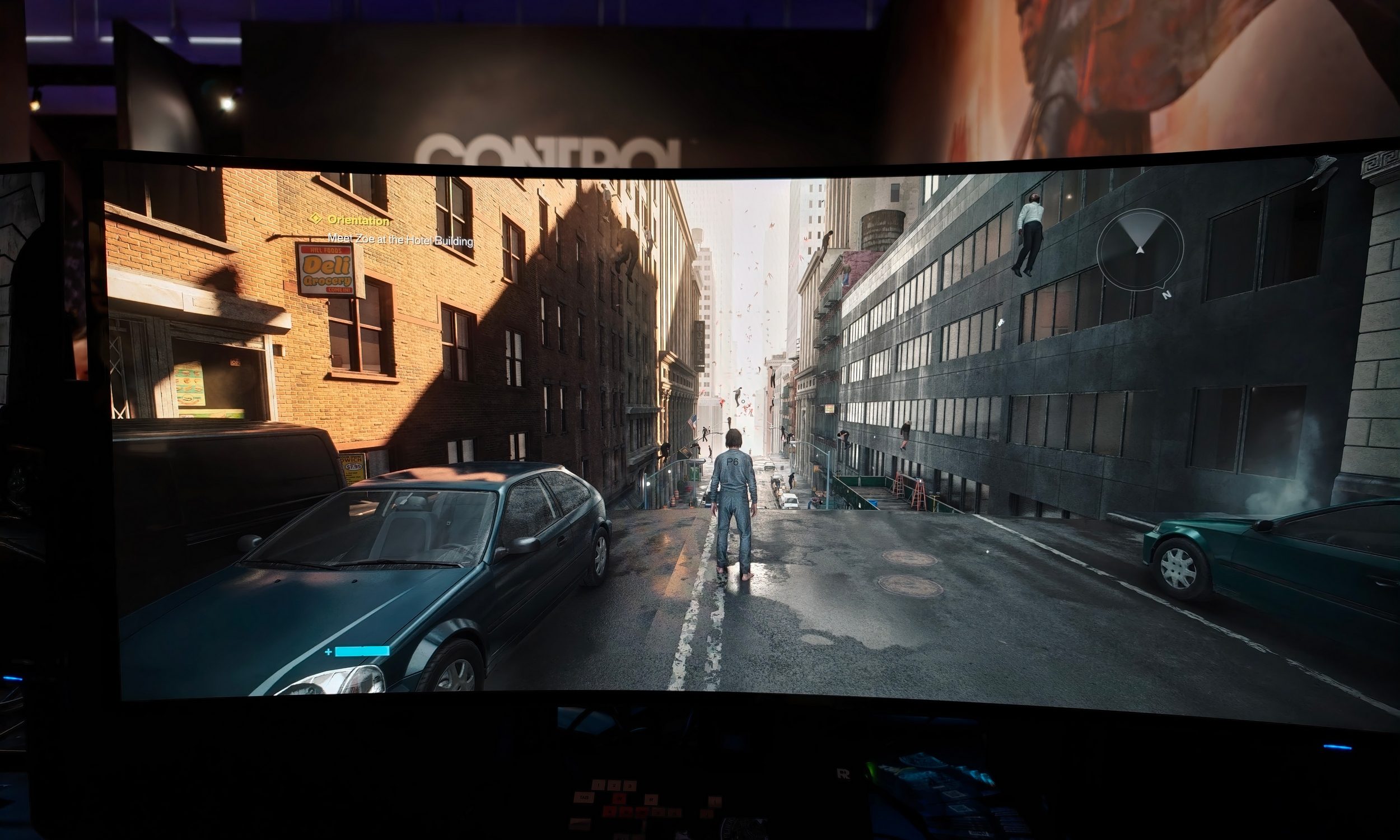
We spent roughly an hour with CONTROL Resonant, and that was just not enough. Remedy is putting Dylan Faden in the lead this time, moving the supernatural mess out into Manhattan while Jesse is missing and a new resonance begins warping reality. The change in protagonist also comes with a more aggressive style of combat, and controlling Dylan immediately made this feel different from simply replaying the first Control with prettier graphics.
The gameplay flows differently now, and that’s to be expected from what Remedy is calling its most expansive title yet. Launch is set for September 24, and the visual spectacle has me waiting impatiently for that date. Lighting remains a massive part of Remedy’s atmosphere, and the ray-traced reflections and effects looked impressive once the environments started getting stranger.
Rainbow Six Tactics: Best tactical spin-off
I’ve played Rainbow Six Siege for around nine years, so Ubisoft announcing a turn-based Rainbow Six game wasn’t exactly what I had in mind for the series. Still, Rainbow Six Tactics basically takes the planning mentality behind Siege and gives you as much time as you need to think through it. You’re playing as Six, managing missions from HQ before deploying squads of up to four Operators into turn-based encounters. Ubisoft has confirmed 15 Operators, more than 45 locations, and familiar objectives including Hostage Rescue, Bomb Disposal, and Target Elimination.
The immediate comparison with XCOM is pretty easy to draw, but the foundation of this title already has some solid tactical roots. Combining destructible environments with unique operator gadgets (and their interactions) and the big focus on info gathering makes this feel like a refreshing take of the same game I’ve played and loved for nearly a decade.
ANANTA: Best open-world wildcard
I’ve called ANANTA “anime GTA” before, but that’s dumbing it down a little too much. Sure, it has driving, web-busy cities and side activities, but you’re also web-swinging in a world that has a completely different tone from the get-go. The game is scheduled to hit the shelves early next year, and during Gamescom, the freedom given to players in-game is what helped it stand out.
Grand Theft Auto titles might have played quite linearly with their overarching plot, but the freedom in expression during gameplay was always top-notch. This seems to be a new take on the same formula. The big question is whether all these ideas can coexist once we’re actually playing for dozens of hours. That’s exactly why ANANTA deserves the wildcard award. I still don’t completely understand how NetEase is going to pull this off, and I really want to find out.
PUBG: DED.NET: Best new chaotic multiplayer
PUBG in a title painted a pretty distinct picture in my head about what DED.NET was going to be. But 10 seconds into the trailer, I saw more of XDefiant, and then even more of roguelites as the video went on. It’s a multiplayer FPS with roguelite progression set in a very strange version of 1990s Cascadia, with persistent progression encouraging different builds across runs. PUBG Studios describes it as a place to experiment, adapt, and build your own approach. So you’re not just dropping everyone into another battle royale.
Where the depth really starts playing a part is with the characters and their abilities. Recent details point to more than 70 abilities and a smaller, denser map designed to encourage aggressive fights. While gamers are getting tired of the constant influx of live-service games, PUBG has some experience in making games that have broken the charts before. So we might be in for a surprise with this one.
The Witcher 3 Remastered and Songs of the Past: Best comeback
I can’t believe that it would be possible, but an 11-year-old remastered game was somehow one of the more fun things revealed at Gamescom. CD Projekt Red is bringing The Witcher 3: Wild Hunt — Remastered out on September 29 with improvements across visuals, performance, and gameplay, and existing owners on qualifying platforms get the upgrade free.
And the part that really has gamers excited is that Geralt’s journey still has one more tale to tell. Songs of the Past brings him to Letten in 2027 for a new paid expansion filled with new characters, quests, monsters, and an entirely new region. CD Projekt describes it as Geralt’s final adventure, while all existing Witcher 3 owners have also been given Hearts of Stone and Blood and Wine for free.
SPINE: Best action showcase
When I first saw SIFU, I couldn’t believe that such a game took so long to be realized. It made perfect sense right from the start. A few years later, and I’m having that same feeling with SPINE. Gun fu is a term that has existed in media for decades, but only now am I seeing it used to its full potential in video games.
You play as Redline, a street artist with a sentient combat implant called Spine, fighting through a cyberpunk city controlled by an authoritarian AI regime (so basically just our immediate future). Camera work is doing a lot of heavy lifting here. Every dodge, gunshot, takedown, and hand-to-hand exchange is framed to make combat look choreographed rather than like two separate systems pulled together.
The Gamescom footage leaned hard into that spectacle, and it’s difficult to watch without immediately thinking about John Wick. There are plenty of cyberpunk games and plenty of third-person action games. SPINE has figured out a visual language that makes it instantly recognizable, and that’s worth an award by itself.

Get caught up on the latest technology and startup news from the past week. Here are the most popular stories on GeekWire for the week of Aug. 30, 2026.
Sign up to receive these updates every Sunday in your inbox by subscribing to our GeekWire Weekly email newsletter.
Most popular stories on GeekWire
UW pays $600K to settle lawsuit with computer science professor over parody land acknowledgment
Stuart Reges was disciplined by the University of Washington after including a parody land acknowledgment in a course syllabus. The U.S. Court of Appeals for the Ninth Circuit found university officials violated Reges’ academic freedom rights. Read More … Read More

Two familiar Seattle tech figures turn up on Seahawks co-owner list as sale is finalized
Nestled among a newly revealed co-owner lineup were a couple familiar names for the Pacific Northwest tech community: former Apptio CEO and longtime Seattle entrepreneur Sunny Gupta, and Nader Naini, managing partner at Seattle-based healthcare private equity firm Frazier Healthcare Partners. Read More … Read More

Rivian spinout Also lands in Seattle, with REI vet leading micromobility startup’s new office and retail hub
The 17,459-square-foot space at the north end of Lake Union is situated at the epicenter of the city’s bike culture along the busy Burke-Gilman Trail. Chief Commercial Officer Ben Steele is heading up the office. Read More … Read More

New Seahawks co-owner with deep Seattle tech roots says, ‘I’m the 12th man … I want to represent that’
“I would have never considered investing or being in ownership in sports other than the Seahawks,” Sunny Gupta told GeekWire. “This is a dream come true of something I love so much. The city I love so much, fan base, the team.” Read More … Read More

Amazon lays off 121 workers across corporate and fulfillment jobs in Washington state
The largest single concentration of cuts is at the SEA106 building in Bellevue, where 49 employees — ranging from entry-level software development engineers and applied scientists to a vice president of legal and senior software managers — were notified. Read More … Read More

AI wealth fuels San Francisco’s housing boom while tech layoffs weigh down Seattle
A new Redfin report reveals a sharp divide between the West Coast’s top tech hubs: as OpenAI and Anthropic fuel a housing resurgence in San Francisco, Seattle real estate stalls amid widespread job cuts across the regional tech ecosystem. Read More … Read More

What if Rivian spawned an e-bike? We test rode the new two-wheeler from the EV maker’s Also spinoff
From pedal-by-wire mechanics to regenerative braking, the micromobility startup’s TM-B treats hardware like software — and flattens Seattle’s steepest hills. Read More … Read More

Tech Moves: Microsoft names execs; DAT, Oracle and Hiya departures; new Zillow policy lead
Microsoft is shuffling leadership, naming Aneesh Raman chief economic opportunity officer and promoting Jenny Lay-Flurrie to CVP of the Trusted Technology Group. Zillow has a new policy lead while Oracle, Hiya and DAT Freight & Analytics see departures. Read More … Read More

Kids go from curious to frustrated playing with AI-stuffed toys, UW study finds
Today, plush toys aren’t just stuffed — they’re stuffed with artificial intelligence, and new research from the University of Washington reveals that when these “smart” toys start chatting, kids quickly go from curious to frustrated to outright hostile. Read More … Read More

Startup takes on AI hallucinations with $25M and an HQ rooted in a small Washington town
Resect AI, an artificial intelligence startup led by a team of scientists and engineers in Washougal, Wash., launched out of stealth Thursday. Read More … Read More

More than half of employers in Singapore do not plan to increase headcount and intend to freeze or moderate wages in 2027 despite a slight improvement in their business outlook for the year, according to a survey by the Singapore National Employers Federation (SNEF).
The survey was conducted between Jun and Aug 2026. It gathered responses from over 300 companies employing close to 160,000 workers across 20 industries, representing a diverse mix of small, medium-sized and large enterprises.
The proportion of employers expecting uncertain business prospects in 2027 fell to 63% from 72% in 2026, and slightly more companies expect to perform well in 2026 (65%) than in 2025 (63%).
This year’s survey also found that a slightly higher number of companies anticipate performing well in 2026 (65%), compared with 2025’s 63%.
“Nonetheless, the business outlook remains highly uneven,” SNEF added.
While some outward-oriented sectors benefit from stronger external and technology-driven demand, many domestically oriented sectors such as Retail Trade and Food and Beverage Services are grappling with weaker consumer demand and rising operating costs.
“This divergence underscores the increasingly K-shaped nature of Singapore’s economy, where sectors employing a larger share of lower-wage workers and relying more heavily on local demand face greater business and manpower cost pressures, despite improvements in the overall economy,” said SNEF.
“Small and medium-sized employers were more likely to report uncertain business prospects and poorer business performance, and were also more likely to implement wage moderation or wage freezes in 2027.”
Companies are proceeding with caution
SNEF highlighted the “measured approach” taken by companies to hiring and wages.
More than half (54%) of employers surveyed said that they do not plan to increase their headcount next year, down from 58% in the 2025 survey.
Nonetheless, 40% of companies plan to hire in 2027, up from the 33% that had a similar agenda for 2026. The percentage of respondents in this year’s survey planning to reduce headcount (6%) was also lower than last year’s (8%).
As for wages, 51% of employers surveyed said that they plan to carry out wage moderation or wage freezes in 2027, up from 48% in 2026.
The remaining 49% are planning to implement wage increases, down by 2% from the year before.
“This indicates continued caution in the wage outlook among employers, particularly among small and medium-sized employers,” noted SNEF.
For companies that employ lower-wage workers, the majority (86%) remain committed to giving built-in wage increases in 2027, down from nearly all (96%) in 2026.
The remaining 14% of respondents this year are planning a wage freeze for lower-wage workers, while none intend to cut wages for this group in 2027.
Rising manpower cost remains the biggest obstacle
Rising manpower cost remains the top manpower challenge for businesses in Singapore, with 83% in 2026 flagging this concern, compared to 79% in 2025.
More companies (30%), also reported worries over the rising cost of upskilling and reskilling their workforce as they prepare for evolving business and technology, up from 23% the year before.
However, labour-market tightness has eased from a year ago, SNEF added.
Over the 12 months to May 2027, fewer companies reported difficulties attracting and retaining professionals, managers, executives and technicians (41%, down from 47%), as well as a shortage of local high-skilled talent (35%, down from 42%).
Attracting suitable talent remains the top human resource priority for 59% of employers, lower than 61% in the previous period.
Employers are also prioritising the exploration, adoption and enhancement of artificial intelligence (48%), as well as upskilling and reskilling their workforce (46%).
SNEF Council vice-president Kuah Boon Wee said: “The survey findings suggest that while labour-market pressures have eased somewhat, most employers continue to face significant cost pressures and uncertainties in business outlook.”
Still, he noted it was “encouraging” that employers continue investing in workforce capabilities, job redesign and AI adoption to boost productivity and competitiveness, adding that it was also “heartening” that most remain committed to supporting lower-wage workers.
“To ensure that this is sustainable in the long term, we need to continue helping employers, especially SMEs, access practical support to transform their operations and workforce for greater productivity uplift.”
- Read other articles we’ve written on Singapore’s current affairs here.
- Read other articles we’ve written on Singaporean businesses here.
Featured Image Credit: Shadow_of_light/ depositphotos


DEVOPS
Fully backward-compatible upgrade promises zero-friction speedup for monorepo wranglers.
The popular JavaScript package manager pnpm, already known for its speedy downloads, has further cut installation times by up to 90 percent thanks to a complete rewrite in Rust.
Yet the freshly released version 12 of pnpm should not cause consternation while upgrading, its maintainer says.
“Upgrading should not feel like a migration. The commands, flags, settings, and lockfile format of pnpm 11 all carry over, and the documentation covers both versions,” wrote Zoltan Kochan, the current lead maintainer of pnpm.
In the project’s own benchmarks, pnpm 12 installed a sample uncached package in 5.19 seconds, compared to the 8.22 seconds pnpm 11 required and the 47.7 seconds npm itself required.
The project team also built a registry server in Rust, called pnpr, which improves performance even further. In the above test, the installation took only 3.37 seconds with pnpr on the backend.
A new Rust core binary, on which work started in April, eliminates a lot of the overhead that comes from routing filesystem work through Node.js. This new version is 65.9 percent Rust and 33.5 percent TypeScript, according to the GitHub stats.
“Package installation is dominated by fetching metadata and tarballs, unpacking files, resolving dependency graphs, and linking packages into node_modules, making it a natural target for native code and parallelism,” wrote Sarah Gooding, vice president of communications for security provider Socket, in a blog post.
Gooding also noted that the project benchmarked pnpm against Bun and Yarn, but the results were removed due to testing SNAFUs. Nonetheless, she noted the software cut install times by up to 90 percent in some cases.
A faster npm
Developer Rico Sta. Cruz originally created pnpm in 2016 as a faster alternative to npm (Node Package Manager), JavaScript’s de facto package manager, which devs used to find and download libraries and tools. GitHub acquired the open source npm software and repository in 2020.
Npm garnered a reputation for being both sluggish and hungry for disk space, thanks to its generous practice of downloading all needed dependencies onto users’ machines, regardless of whether they were duplicates.
Pnpm’s secret sauce is content-addressable storage. If you need a single library for 100 different applications, pnpm downloads it only once, and downloads another copy only if the developer specifies a different version.
Like npm, pnpm still draws from the official npm repository, but arguably works better than npm for many. Many devs also like that the lockfile describing the package’s dependency tree was more readable thanks to its use of YAML.
The 2025 State of JavaScript survey showed that pnpm was by far the most popular package manager for JavaScript monorepos, a party that also included Nx, Lerna, Yalc, Turborepo and even npm’s built-in Workspaces. About 38 percent (3,840) of 10,251 surveyed developers used the package manager.
Rust for JavaScript
Rewriting applications in Rust seems to be a favorite activity these days, as the language is known for speedy performance unhampered by garbage collection.
In the Web app ecosystem alone, the Bun framework just got an AI-fueled Rust makeover, Tailwind CSS version 4 got a new Rust engine called Oxide, and the Vite framework now speeds along thanks to a Rust-built JavaScript bundler called Rolldown.
“It is a bit of [an] indictment on Node for having poor dx” (developer experience), wrote Darcy Clarke, CEO of JavaScript package management platform provider vlt, in an X message, about the Rust rewrite of pnpm.
“It was faster to rewrite pnpm in rust than to migrate to esm” (ECMAScript modules), replied pnpm’s Kochan, agreeing with Clarke’s sentiment.
The software’s GitHub page still points at the last major release, pnpm 11.25, so existing users will have to update to the v12 branch specifically (“pnpm self-update next-12” will get you there). ®
The Asahi Linux project now officially supports Macs with an M3, M3 Pro, or M3 Max chip, bringing the operating system to more Apple Silicon desktops.
In late August, a blog post for the Asahi Linux project, which intends to bring Linux to Apple Silicon and run natively on Apple’s ARM chips, said M3 support was on the way. While it said that it was a matter of weeks, it seems to have arrived in a much quicker timeframe.
A blog post on September 6 declares support for Macs using an M3-series SoC. This now extends support beyond the previous M1 and M2 generations of Apple Silicon.
It’s not full support for M3, however. It’s warned that M3 Ultra is not yet supported by the operating system, leaving out some Mac Studio users from the Linux party.
Almost complete
Almost everything supported in the M1 and M2 releases now “just works” on M3, the developers claim. That includes webcam support, the internal microphones, USB up to the USB 3 10Gb/s limit, Wi-Fi, Bluetooth, and hardware-accelerated video decoding support.
When it comes to major exceptions, the short list includes full DCP support and the GPU. That said, updates to those are expected to arrive within the next few months.
Sleep is also not functional in the release, due to limitations with the firmware-provided framebuffer. This should be addressed once full DCP support is enabled.
DCP support will also help with video. Currently, the HDMI port on equipped MacBooks is disabled until that support arrives.
While M3 support is now here, the project still has more work to undertake. Development is ongoing to support M4 and M5 chips.

Joe Cole slams Chelsea for selling ‘world-class’ player to Arsenal | Football

Diamond Hill Short Duration Investment Grade Strategy Q2 2026 Commentary

Nikki Glaser Admits She Nearly Stole From Taylor Swift’s Wedding





-

 Fashion2 days ago
Weekend Open Thread: Beyond Yoga
-

 Crypto World2 days ago
Bitcoin price stalls near $82K as key resistance holds
-

 Politics2 days ago
Best Gaming Laptops, CPUs, TVs, And Keyboards To Upgrade Your Set Up For GTA VI
-

 Tech2 days ago
The Birds Outside, Drawn For You Automatically
-

 Crypto World2 days ago
IMF Says El Salvador’s Post-Review Bitcoin Purchases Used No Public Funds
-

 Crypto World2 days ago
U.S. added stronger than expected 162,000 jobs in August as labor market bounced back
-

 Sports2 days ago
Alexandre Pato consortium’s Northampton Town investment approved
-

 Sports2 days ago
Golden Eaglets Drawn in Group B for 2026 WAFU B U17 Championship
-

 Sports2 days ago
Commanders’ Chig Okonkwo is a top breakout fantasy football candidate
-

 Crypto World2 days ago
XRP price breaks falling channel as bulls target $1.53
-

 Politics3 days ago
A new European chapter for Gibraltar
-

 Politics2 days ago
The House | Bin the lectures, bring gossip and be ready to banter: how the new PM should prepare for his Trump encounter
-

 Politics2 days ago
How To Avoid Winter Colds: 4 Everyday Habits That Spread Germs, Says Pharmacist
-

 Crypto World2 days ago
From warning to listing: UK’s largest retail investment platform opens access to crypto ETNs
-

 Crypto World2 days ago
FinCEN flags $12.7B tied to Southeast Asia crypto investment scams
-

 Tech2 days ago
A Worthy Android Ereader, With Some Tradeoffs
-

 Tech2 days ago
How To Edit Claude’s Memory
-

 Crypto World2 days ago
Trezor Data Breach Impacts 67,000 More US Customers
-

 Politics2 days ago
33 Cosy Autumn Home Decor Ideas: Blankets, Pumpkin Decorations, And Candles
-
 Tech2 days ago
beyerdynamic AVENTHO Y Debuts at IFA 2026 and Makes Wireless Headphones Less Disposable
You must be logged in to post a comment Login