
Business
Expert Picks for Every Need


Foldable smartphones have matured dramatically by April 2026, shedding much of their early bulk and fragility to become practical daily drivers with improved durability, battery life and multitasking capabilities. Leading models from Samsung, Google, Motorola and others now compete closely with traditional flagships while offering the unique appeal of a compact device that unfolds into a mini-tablet or stylish flip form factor.
Industry analysts and reviewers from outlets including PCMag, PhoneArena, ZDNet and Wirecutter highlight a clear top tier based on hands-on testing, real-world performance and value. While availability varies by region — with some Chinese brands like Honor and Oppo offering exceptional hardware but limited U.S. support — the following five stand out as the best foldable phones currently on the market.

1. Samsung Galaxy Z Fold 7 — Best Overall Book-Style Foldable
Samsung’s Galaxy Z Fold 7 earns frequent nods as the top foldable for most users thanks to its ultra-slim profile, premium build and polished software experience. Measuring just over 8mm thick when closed and weighing around 215 grams, it feels remarkably close to a conventional flagship yet unfolds into an expansive 8-inch inner display ideal for productivity, media consumption and split-screen multitasking.
The device features a bright 6.5-inch cover screen with 120Hz refresh rate, allowing full app functionality without unfolding. Powered by the Snapdragon 8 Elite for Galaxy processor, it delivers smooth performance across demanding tasks. Cameras have seen meaningful upgrades, with a standout 200-megapixel main sensor producing sharp, vibrant photos that rival non-foldable competitors.
Reviewers praise the refined hinge, improved crease visibility and long software support extending years into the future. Drawbacks include a premium price tag often starting near $1,900 and average battery life that may require midday top-ups for heavy users. Still, its ecosystem integration with Galaxy Watch, Buds and DeX mode makes it a compelling choice for Samsung loyalists and power users alike.
2. Google Pixel 10 Pro Fold — Best for Durability and Cameras
Google’s Pixel 10 Pro Fold stands out for its rugged construction and photography prowess. It boasts a full IP68 dust and water resistance rating — a rarity among foldables — along with enhanced hinge durability and drop protection on the main display. At roughly 258 grams, it feels more substantial than Samsung’s offering but rewards owners with reliable all-day performance.
The Tensor G5 chipset powers intuitive AI features, including real-time call translation, audio magic eraser and Gemini Live integration. Cameras shine with computational photography that delivers natural colors and excellent low-light results, making it a favorite for content creators. The 6.3-inch cover screen and large inner display support seamless multitasking with clean Android 16 software.
Battery life impresses in testing, often outlasting slimmer rivals. Pricing starts around $1,800, positioning it as a strong value for those prioritizing longevity and photography over the absolute thinnest design. Limitations include slightly warmer performance under sustained loads compared to Snapdragon-equipped devices.
3. Motorola Razr Ultra (2025/60 Ultra) — Best Flip-Style Foldable
For users seeking pocketable convenience with flair, the Motorola Razr Ultra delivers one of the most stylish and functional clamshell experiences. Its vertical fold design snaps shut into a compact square, while the generous external display supports full apps, notifications and even quick camera previews.
Equipped with strong battery life that frequently tops competitor flip models, the Razr Ultra handles daily tasks efficiently on its Snapdragon processor. The inner 7-inch display offers smooth 120Hz visuals, and the overall build feels premium with thoughtful details like a titanium hinge option in select variants. Cameras perform adequately for casual use, though they trail book-style models in versatility.
Reviewers highlight its fun factor and practicality for one-handed operation. Starting prices often land in the mid-$1,000 range, making it more accessible than premium book-style foldables. Potential downsides include a smaller unfolded screen compared to tablet-style devices and occasional software quirks in the Motorola skin.
4. Samsung Galaxy Z Flip 7 — Best Compact Flip for Everyday Use
Samsung’s Galaxy Z Flip 7 refines the flip formula with a larger 4.1-inch edge-to-edge cover screen that finally enables meaningful interaction without unfolding. The 6.9-inch inner display provides ample space when needed, while the overall design remains slim and lightweight for easy pocket carry.
Battery improvements help it last through a full day for moderate users, and the Exynos 2500 or Snapdragon variant (depending on region) ensures snappy performance. New DeX support on the Flip adds desktop-like productivity when connected to external displays. Cameras remain solid for social media and quick shots, with the main 50-megapixel sensor delivering reliable results.
Priced starting around $1,100, it offers strong value within the Samsung ecosystem. Critics note it can overheat during intensive multitasking and that battery claims sometimes exceed real-world endurance. Its stylish appeal and improved cover screen functionality make it a top pick for fashion-conscious users or those transitioning from traditional bar phones.
5. Honor Magic V5 — Best Ultra-Thin Alternative for Multitasking
The Honor Magic V5 earns acclaim for its exceptionally slim design, measuring under 9mm folded and around 4.4mm unfolded in some configurations. It targets users who want a near-nonexistent crease and premium feel without Samsung’s ecosystem lock-in.
Featuring a large inner display and capable outer screen, it excels at multitasking with smooth software optimizations. The Snapdragon 8 Elite processor paired with generous RAM handles heavy workloads, while a sizable silicon-carbon battery supports fast charging and extended use. Cameras offer competitive performance, particularly in daylight scenarios.
Availability may require importing in some markets, and software updates could lag behind Google or Samsung. Still, its combination of thinness, battery capacity and vibrant displays positions it as a compelling choice for enthusiasts seeking cutting-edge hardware at potentially competitive pricing.
Buying Considerations in 2026
Foldable phones now address many early criticisms: creases are subtler, hinges more robust and repair programs more widespread. Most top models promise four to seven years of software support, reducing obsolescence concerns. Battery technology has advanced, though heavy multitasking or camera use still drains power faster than slab phones.
Prices remain elevated, with book-style models often exceeding $1,800 and flips starting above $1,000. Trade-in deals, carrier promotions and installment plans can ease the cost. Buyers should consider ecosystem preferences — Samsung for seamless integration, Google for pure Android and AI, Motorola for flip charm.
Durability has improved markedly, but users should invest in quality cases and screen protectors. Coverage for accidental damage varies by manufacturer and carrier.
Regional factors matter: U.S. buyers enjoy broad carrier support for Samsung, Google and Motorola models, while international shoppers may access superior specs from Honor, Oppo, Vivo or Huawei at lower prices, albeit with potential Google service limitations on some devices.
The Future of Foldables
As 2026 progresses, expectations include further refinements such as even lighter builds, under-display cameras that eliminate notches and possible trifold designs from Samsung and others reaching wider markets. Apple’s rumored foldable iPhone could reshape the segment later in the year or in 2027.
For now, the market offers something for nearly every preference: productivity powerhouses, stylish compacts and durable all-rounders. Early adopters who hesitated in previous years will find 2026 models far more refined and reliable.
Consumers weighing a purchase should evaluate their primary needs — screen size for work, portability for travel or camera quality for photography — and test devices in-store when possible. With rapid iteration, waiting for carrier deals or next-generation hints may also pay off.
Foldables represent more than a novelty in 2026; they deliver genuine utility that enhances how many people work, create and consume content on the go. Whether opting for the versatile Galaxy Z Fold 7, the rugged Pixel 10 Pro Fold or a fun flip like the Razr Ultra, buyers are investing in devices that continue to evolve the smartphone experience.

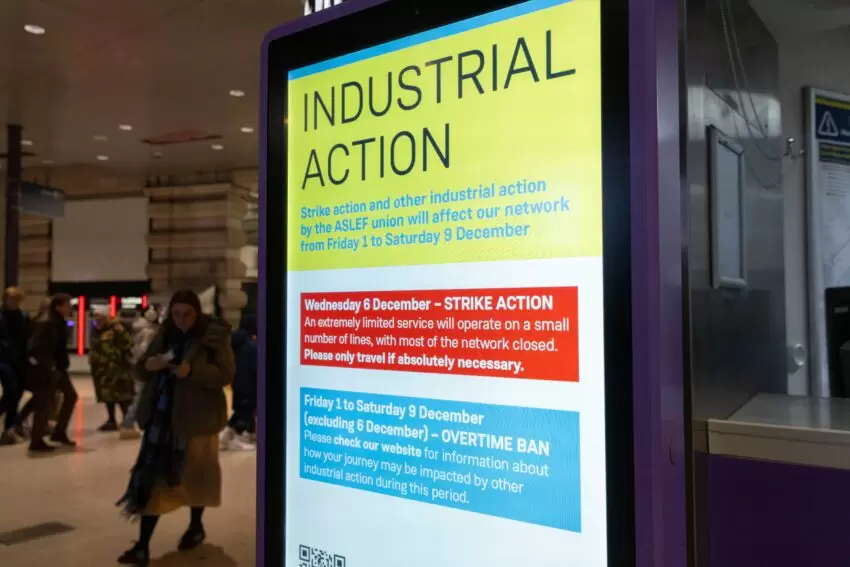
London’s small and medium-sized businesses are bracing for a punishing week of disruption as London Underground drivers prepare to stage two 24-hour walkouts, in a dispute over working patterns that threatens to drain millions of pounds from the capital’s already fragile hospitality and night-time economy.
Members of the Rail, Maritime and Transport (RMT) union will down tools from midday on Tuesday 21 April and again from midday on Thursday 23 April, with Transport for London (TfL) warning operators and passengers to expect “significant disruption” across the entire network. A separate walkout by 150 Unite members working as bus station and network traffic controllers, running from 23 to 25 April, is set to compound the misery.
For business owners across the capital, the timing could scarcely be worse. Operators in hospitality, retail and leisure are already contending with a fresh wave of energy price rises, persistent wage pressures and jittery consumer confidence. The loss of reliable late-night transport, industry leaders warn, risks tipping vulnerable SMEs over the edge.
TfL has published a day-by-day forecast of likely disruption. Normal services are expected to run on Tuesday 21 April until mid-morning, with availability tapering off ahead of the midday walkout. Any trains still running will wind down early, and TfL is advising those who must travel to complete their journeys by 8pm.
On Wednesday 22 April, services will start later than usual, with no trains expected before 7.30am. Significant disruption is forecast across all lines until midday, with a gradual recovery throughout the afternoon and evening.
The pattern repeats on Thursday 23 April, with normal services until mid-morning and a 12pm walkout triggering severe disruption into the evening. Friday 24 April will again see no service before 7.30am and continuing disruption across the network.
Although a reduced timetable will operate on some routes, TfL has confirmed there will be no service at all on the Piccadilly and Circle lines, no trains on the Metropolitan line between Baker Street and Aldgate, and no service on the Central line between White City and Liverpool Street. Trains that do run are likely to be sporadic, overcrowded and unable to pick up every waiting passenger.
The Elizabeth line, DLR, London Overground and tram services will operate as normal.
Adding to the disruption, seven bus routes operated by Stagecoach from Bow Bus Garage in East London will be affected by a 24-hour walkout from 5am on Friday 25 April. Routes 8, 25, 205, 425, N8, N25 and N205 are all in scope, although TfL expects the 25 and 425 to maintain a near-normal service for most of the day. The N8 will run a reduced route between Hainault and Liverpool Street at its usual frequency, while the remaining routes are likely to be severely delayed or cancelled.
The dispute centres on TfL’s proposal to introduce a four-day working week for train operators. The union has branded the plan “fake”, arguing it would simply condense existing hours into fewer days without delivering genuine improvements.
The RMT initially suspended strike action last month after TfL management agreed to negotiate, but accused the operator of reneging at the weekend.
RMT general secretary Eddie Dempsey said the union had “approached negotiations with TfL in good faith throughout this entire process”, adding: “despite our best efforts, TfL seem unwilling to make any concessions in a bid to avert strike action. This is extremely disappointing and has baffled our negotiators. The approach of TfL is not one which leads to industrial peace and will infuriate our members who want to see a negotiated settlement to this avoidable dispute.”
Claire Mann, TfL’s chief operating officer, countered that the proposals were fair and flexible. “We have set out proposals to the RMT for a four-day working week. This allows us to offer train operators an additional day off, whilst at the same time bringing London Underground in line with the working patterns of other train operating companies, improving reliability and flexibility at no additional cost. The changes would be voluntary, there would be no reduction in contractual hours and those who wish to continue a five-day working week pattern would be able to do so.”
For Michael Kill, chief executive of the Night Time Industries Association (NTIA), the latest walkout is another hammer blow to a sector running on empty.
“As the sector faces a fresh surge in energy and operating costs, this new wave of strike action creates yet more uncertainty that businesses simply cannot absorb,” he said. “Margins are being squeezed from every direction, and confidence is increasingly fragile.”
Mr Kill questioned the wider purpose of the industrial action. “The ongoing disruption to transport services begs the question, who does this actually benefit? Because right now, it’s businesses, workers and the wider public who are paying the price for the reckless actions of the few.”
He warned that the knock-on effects go well beyond lost footfall. “Without reliable late-night transport, staff struggle to get to work, customers stay away, and businesses lose critical trade. Many venues are already under intense financial pressure, continued disruption only compounds that risk.”
While acknowledging workers’ right to withdraw their labour, Mr Kill called for an urgent return to the negotiating table. “We respect the right to strike, but this situation cannot continue. All parties must get round the table and find a resolution, because sustained uncertainty at a time like this will have serious, lasting consequences for London’s night-time economy.”
TfL is urging travellers to use its journey planner to map their routes in advance and to check the status of lines in real time via its live status page. For SMEs, the message from industry is simpler: brace for a difficult week, and start demanding that both sides find a settlement before the damage to the capital’s economy becomes permanent.

Amy Ingham
Amy is a newly qualified journalist specialising in business journalism at Business Matters with responsibility for news content for what is now the UK’s largest print and online source of current business news.

Calamos Investments is a diversified global investment firm offering innovative investment strategies including U.S. growth equity, global equity, convertible, multi-asset and alternatives. The firm offers strategies through separately managed portfolios, mutual funds, closed-end funds, private funds, an exchange traded fund and UCITS funds. Clients include major corporations, pension funds, endowments, foundations and individuals, as well as the financial advisors and consultants who serve them. Headquartered in the Chicago metropolitan area, the firm also has offices in London, New York and San Francisco. For more information, please visit www.calamos.com.

Norway stocks higher at close of trade; Oslo OBX up 0.56%

UK petrol and diesel prices have started to fall after 46 consecutive days of rises at the pump.
Business
RBI draft for upper layer non-banks affects CICs disproportionately, raises compliances costs
India Ratings said mandatory listing requirements could prove onerous for several CICs, especially those structured primarily for promoter-level capital allocation rather than public-market access.
It can be noted that the RBI had come out with a draft on classifying NBFCs-ULs, amid intense speculation over the fate of the CIC Tata Sons on listing, and whether the revised directions continue to make a listing necessary for the salt to software conglomerate.
Under the draft revisions, the RBI is proposing a threshold of Rs 1 lakh of AUM over which every entity will become a NBFC-UL, and also include state-run companies in the list. Tata Sons had assets of over Rs 1.7 lakh crore as on March 2025.
“While the NBFC-UL framework is broadly benign for the sector at large, CICs emerge as the clear outliers. CICs with consolidated assets approaching or exceeding Rs 1 lakh crore will face disproportionate compliance costs under the new regime,” the rating agency said.

If the framework is applied on a consolidated rather than a standalone basis for assets under management calculation, its scope would extend to several corporate groups operating under the CIC structure, many of which are privately held and unlisted.
It added that several CICs have highly concentrated investments in step-down subsidiaries and the LEF (large exposures framework) application in such cases could prove operationally challenging. The final draft might provide greater regulatory clarity and resolve these concerns, it said.
“The revised draft framework for categorising NBFCs into NBFC-UL is unlikely to have any significant impact on existing NBFCs. However, CICs could face challenges with the AUM-based approach, especially in terms of listing equity and enhancing compliance and governance requirements,” its director for financial institutions Karan Gupta said.
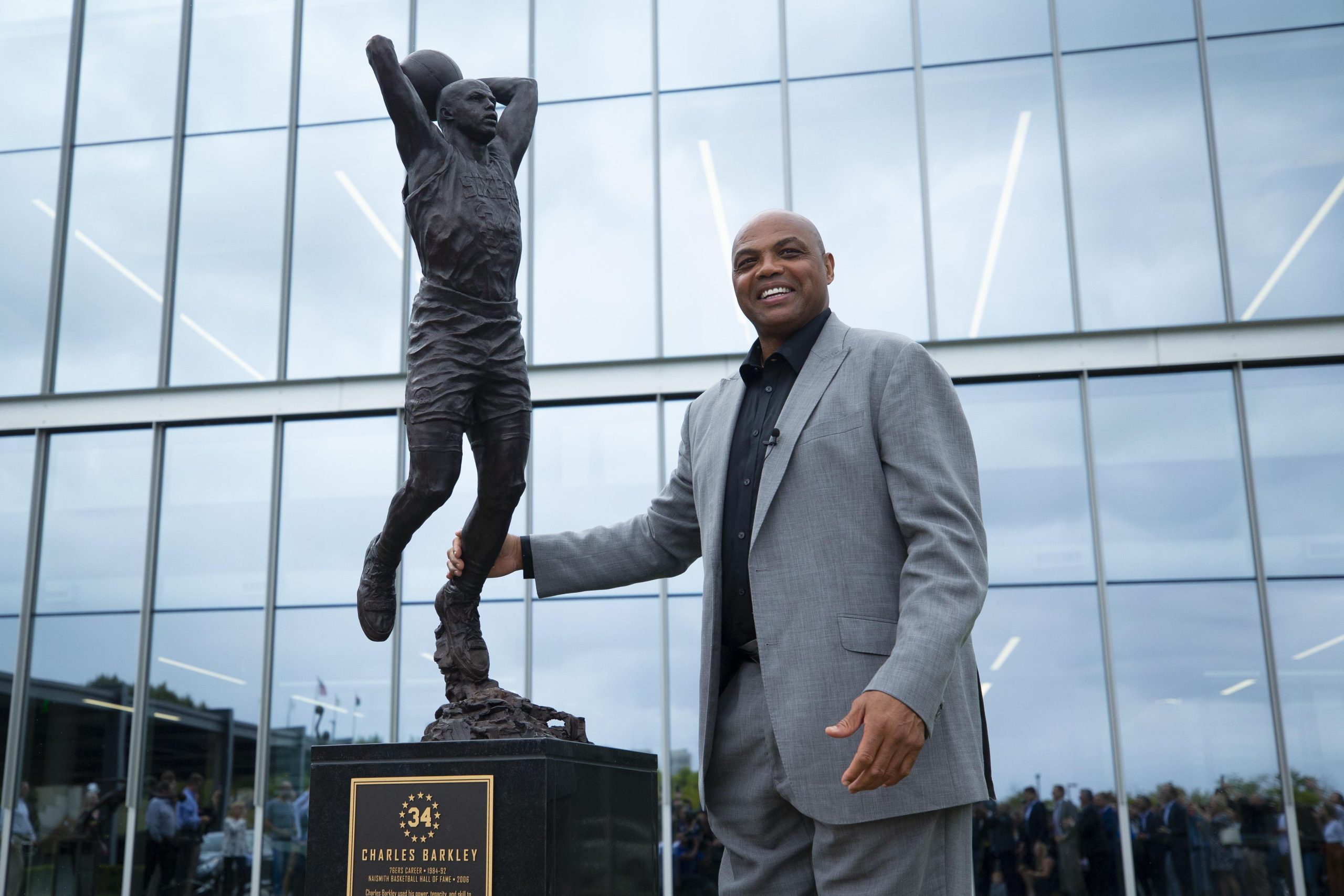
LOS ANGELES — Charles Barkley didn’t hold back on “Inside the NBA” after the Los Angeles Lakers stunned the Houston Rockets 107-98 in Game 1 of their Western Conference first-round playoff series on Saturday night.
The Hall of Famer, never one to mince words, declared that the short-handed Lakers now believe they can take the series, while pointing out that the Rockets have a glaring offensive problem that could derail their postseason hopes.
“The Lakers think they can win this series,” Barkley said on the TNT broadcast, drawing laughter from Shaquille O’Neal and the rest of the panel. “Houston has a problem.”

The comment came after the Rockets, missing star forward Kevin Durant with a right knee contusion, struggled mightily on offense in their playoff opener at Crypto.com Arena. Despite entering the series as the higher seed in some projections and boasting a young, athletic roster, Houston looked disjointed without its veteran scorer.
Durant, who averaged nearly 26 points per game during the regular season, was ruled out about 90 minutes before tipoff after bumping knees with a teammate in practice earlier in the week. Imaging showed no structural damage, but the contusion left the 37-year-old sidelined for Game 1. Rockets coach Ime Udoka expressed hope it would be a short-term issue, calling Durant day-to-day.
Without Durant, the Rockets started a lineup featuring Amen Thompson, Reed Sheppard, Josh Okogie, Jabari Smith Jr. and Alperen Sengun. The group managed just 98 points on inefficient shooting, with Barkley and fellow panelist Kenny Smith — a former Rockets champion — ripping the team’s offensive approach as “awful to watch.”
“Whoever gets it just jacks it up anywhere, anything,” Barkley said, criticizing the lack of structure and ball movement. Smith questioned whether Houston even had a coherent game plan, suggesting the absence of Durant exposed deeper issues in half-court execution.
The Lakers, already without injured stars Luka Doncic and Austin Reaves, seized the opportunity. LeBron James delivered a near triple-double with 19 points, 13 assists and eight rebounds, while veteran sharpshooter Luke Kennard exploded for a playoff career-high 27 points, going 5-for-5 from three-point range. Deandre Ayton added 19 points and 11 rebounds as Los Angeles built leads and held off a late Rockets push.
Lakers coach JJ Redick downplayed the impact of Houston’s missing star. “I don’t think it affected our mentality,” Redick said postgame. “This is all we talked about for two months — just our playoff mentality. You can’t worry about who’s in or out of the lineup. It’s our game plan. It’s our standards. It’s how we play.”
The victory gave the Lakers a 1-0 lead in the best-of-seven series, shifting momentum in a matchup many expected to favor Houston’s youth and depth. Pre-series, Barkley had predicted the Rockets would advance comfortably if Doncic and Reaves remained sidelined. Saturday’s result forced a reevaluation.
Barkley’s blunt assessment resonated because it highlighted a recurring critique of the Rockets: their reliance on iso-heavy offense and individual creation, particularly from Durant and Sengun, can break down against disciplined playoff defenses. Without Durant’s mid-range gravity and playmaking, Houston struggled to generate easy looks or consistent rhythm.
The Rockets’ offense ranked among the league’s more efficient during the regular season, but the playoffs often expose half-court limitations. Sengun showed flashes as a facilitator, and Thompson’s athleticism created some transition opportunities, yet the team shot poorly from the perimeter and turned the ball over at key moments.
For the Lakers, the win provided validation for a resilient group navigating significant injury absences. James, in his 23rd season, continues to defy expectations at age 41, orchestrating the offense and making timely defensive plays. Kennard’s hot shooting filled the scoring void left by Doncic and Reaves, while the frontcourt duo of Ayton and the supporting cast held their own against Houston’s size.
The series now shifts to Game 2 on Tuesday night in Los Angeles, with Durant’s status still uncertain. Udoka and the Rockets’ medical staff will monitor swelling and range of motion closely. Even if Durant returns, the Lakers’ confidence — and Barkley’s observation — suggests Houston must solve its offensive identity quickly to regain control.
Analysts noted that the Rockets’ youth, while an asset in the regular season, showed inexperience in the playoff environment. Turnovers and defensive lapses allowed the Lakers to build comfortable leads. Houston’s ability to adjust — tightening rotations, improving ball movement and finding ways to involve Sengun more effectively — will be critical.
Barkley’s history with the Rockets, where he played late in his career, adds color to his commentary, though he has been vocal about the franchise’s shortcomings in recent years. His “Houston has a problem” line quickly went viral on social media, sparking debates among fans about whether the Rockets are truly built for deep playoff runs or remain a work in progress despite adding Durant.
The broader narrative around the series has shifted. What was billed as a potential upset opportunity for a short-handed Lakers team now carries the weight of an early statement win. LeBron James and company have home-court advantage and momentum, while the Rockets must prove they can win without their veteran leader or elevate their collective play.
As the series progresses, all eyes will remain on Durant’s recovery timeline. A prolonged absence would test Houston’s depth and force even greater reliance on its young core. Conversely, his return could swing momentum back toward the Rockets, provided they address the offensive issues Barkley and Smith highlighted.
“Inside the NBA” delivered its signature blend of analysis and entertainment, with Barkley’s colorful take stealing the spotlight. The panel’s reaction underscored a larger truth in playoff basketball: execution and adaptability often matter more than regular-season pedigree, especially when star power is uneven.
For the Rockets, Game 1 served as a wake-up call. For the Lakers, it reinforced that belief — however improbable — can fuel success in the postseason. As Barkley put it, the Lakers now genuinely think they can win the series, placing the onus squarely on Houston to prove him wrong.
Game 2 offers the Rockets an immediate chance at redemption on the road. Whether they can tighten their offense, limit turnovers and capitalize on any Lakers fatigue will determine if Chuck’s blunt assessment becomes a self-fulfilling prophecy or merely memorable television fodder.
The 2026 NBA playoffs are just getting started, but the Lakers-Rockets series has already delivered drama, injury intrigue and vintage Charles Barkley candor. With the Lakers up 1-0 and believing in their chances, Houston indeed has a problem to solve — and little time to do it.

BofA raises Amazon stock price target to $298 on AWS growth outlook

The conflict in the Middle East has increased pressure on the cost of petrol, household energy bills and even food.
Business
TopBuild Stock Soars 16% on $17 Billion Takeover Deal by QXO in Building Products Mega-Merger

NEW YORK — TopBuild Corp. shares skyrocketed more than 16% in early Monday trading on April 20, 2026, surging $67.80 to $478.11 after the leading insulation and building products installer agreed to be acquired by QXO Inc. in a $17 billion cash-and-stock transaction that values the company at a substantial premium.

The deal, announced late Sunday, marks a major consolidation move in the fragmented building products distribution and installation sector. QXO will pay $505 per share for TopBuild, representing a 23.1% premium to Friday’s closing price of $410.31 and a 19.8% premium to the 60-day volume-weighted average price. The transaction is expected to close in the third quarter of 2026, subject to shareholder and regulatory approvals.
Under the terms, TopBuild shareholders can elect to receive $505 in cash or approximately 20.2 shares of QXO common stock for each TopBuild share, subject to proration to maintain an overall mix of roughly 45% cash and 55% stock. The structure gives investors a choice between immediate liquidity and participation in the combined company’s future growth.
TopBuild (NYSE: BLD), headquartered in Daytona Beach, Fla., is a dominant player in the installation of insulation and commercial roofing, as well as a specialty distributor of related building materials. The company operates across the United States and Canada with a network of more than 14,000 employees and hundreds of branches. It has grown aggressively through acquisitions, completing seven deals in 2025 alone that added about $1.2 billion in annual revenue, including the Progressive Roofing and Specialty Products and Insulation transactions.
The acquisition creates a powerhouse with combined annual revenue exceeding $18 billion and adjusted EBITDA above $2 billion. QXO, which has been rapidly expanding its building products platform, described the deal as immediately and substantially accretive to earnings while targeting $300 million in synergies by 2030 through operational efficiencies, procurement savings and cross-selling opportunities.
“TopBuild is an exceptional business with market-leading positions, strong free cash flow generation and a proven track record of growth through both organic execution and strategic acquisitions,” QXO executives said in a joint statement. “This combination accelerates our vision of building a scaled, diversified leader across the building products value chain.”
Analysts and investors reacted positively to the premium and strategic fit. The surge in TopBuild shares reflected the market’s quick pricing in of the deal value near $505, though some early profit-taking and uncertainty around the proration mechanics kept the stock below that level in morning trading. Volume was significantly elevated as traders rushed to position themselves.
The deal comes as TopBuild has delivered consistent strong performance. For the full year 2025, the company reported sales of approximately $5.4 billion and adjusted EBITDA exceeding $1 billion. In its February 2026 outlook, TopBuild projected 2026 sales between $5.925 billion and $6.225 billion with adjusted EBITDA in the range of $1.005 billion to $1.155 billion, driven by continued acquisition integration and healthy underlying demand in residential and commercial construction.
Recent operational highlights include the promotion of John Achille to president and chief operating officer in early April, signaling internal confidence in execution capabilities. The company is scheduled to report first-quarter 2026 results on May 5, with a conference call at 9 a.m. ET, though the takeover agreement now shifts focus to deal-related matters.
For QXO, the move significantly broadens its footprint in insulation, roofing and mechanical insulation distribution. The combined entity is expected to benefit from TopBuild’s specialized installation expertise and nationwide branch network, complementing QXO’s existing distribution operations.
Wall Street had generally viewed TopBuild favorably before the announcement, with a consensus “Moderate Buy” rating from 16 analysts and an average price target around $440. The takeover offer represents a clear step-up from those targets, potentially capping near-term upside unless the deal faces complications or a superior bid emerges.
Regulatory hurdles include Hart-Scott-Rodino antitrust clearance, though both companies expressed confidence in obtaining approvals given limited direct overlap in certain markets. The agreement includes a $600 million termination fee payable by TopBuild if it accepts a superior proposal under specified circumstances, along with customary “no-shop” provisions and matching rights for QXO.
Some shareholder advisory firms and law firms quickly signaled scrutiny. Ademi LLP announced an investigation into whether TopBuild’s board obtained a fair price and adequately considered alternatives, a common step in large M&A deals that often leads to additional disclosures but rarely derails transactions.
TopBuild has returned substantial capital to shareholders in recent years, repurchasing more than $434 million of its stock in 2025 and over $2 billion over the past decade. The company’s disciplined approach to capital allocation, combining tuck-in acquisitions with buybacks, has supported strong compound annual growth since its 2015 spin-off from Masco Corp. — nearly 13% in sales and more than 25% in adjusted EBITDA.
The building products sector has seen increased M&A activity amid favorable long-term demographics, including housing shortages and aging infrastructure needs. Insulation demand benefits from energy efficiency trends and stricter building codes, while commercial roofing and mechanical insulation provide diversification.
Industry observers noted that the premium reflects TopBuild’s high-quality assets, including its skilled installer workforce and relationships with major homebuilders and general contractors. The deal also comes against a backdrop of steady U.S. construction spending, even as interest rates and material costs have created periodic headwinds.
For TopBuild employees and customers, the companies pledged a smooth transition with no immediate changes expected to day-to-day operations. QXO plans to add one TopBuild nominee to its board upon closing.
The transaction values TopBuild at an enterprise value that underscores the strategic premium for scale in a consolidating industry. With QXO assuming the role of acquirer, the combined platform could pursue further bolt-on deals while realizing cost synergies from overlapping functions.
As trading continued Monday morning, TopBuild shares held most of their gains but traded with volatility typical of deal stocks. Some investors locked in profits near the $478 level while others bet on potential upside if the market fully prices in the $505 valuation or if QXO shares perform well.
QXO’s own stock reacted positively in premarket and early sessions, reflecting investor approval of the accretive nature of the deal and the expanded scale. The merger is structured as a two-step transaction, providing a clear path to completion once approvals are secured.
Looking ahead, both companies will focus on obtaining shareholder votes, regulatory clearances and preparation of a registration statement for the QXO shares to be issued. The expected Q3 2026 closing timeline gives time for integration planning while minimizing disruption to ongoing operations.
TopBuild’s transformation from a spin-off to a market leader highlights the value created through disciplined execution and opportunistic acquisitions. The pending sale to QXO caps a strong run for shareholders while positioning the business within a larger platform poised for continued growth in the North American building products market.
The announcement injects fresh momentum into an otherwise quiet start to the week for many construction-related stocks. With housing demand supported by demographic trends and commercial activity showing resilience, the combined QXO-TopBuild entity could emerge as a more formidable player capable of weathering cyclical fluctuations.
As details continue to emerge and the market digests the implications, TopBuild’s dramatic 16%+ jump on April 20 served as a vivid illustration of how transformative M&A can rapidly reshape shareholder value in the industrials sector. Investors will now monitor developments around approvals, any competing offers and the companies’ ability to articulate a compelling vision for the combined future.
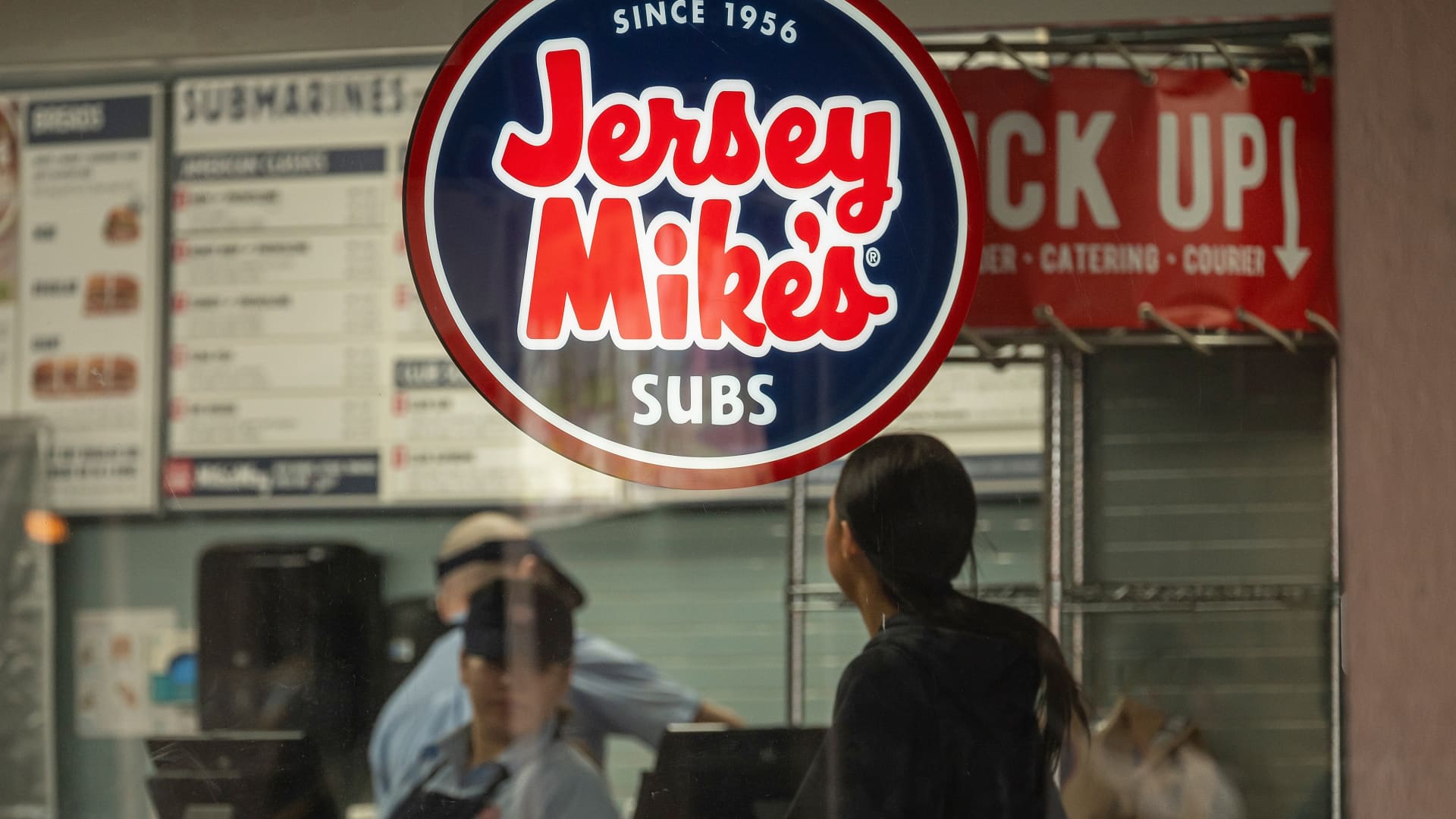
A Jersey Mike’s restaurant in Walnut Creek, California, Nov. 21, 2024.
David Paul Morris | Bloomberg | Getty Images
Jersey Mike’s has confidentially filed for an initial public offering, the company said on Monday.
The announcement comes more than a year after Blackstone bought a majority stake in the sandwich chain in a deal that reportedly valued Jersey Mike’s at roughly $8 billion.
After the Blackstone deal closed, Jersey Mike’s tapped former Wingstop CEO Charlie Morrison to helm the company. Morrison led the chicken wing chain for a decade, ushering it through its own IPO and a period of historic growth.
With more than 3,000 locations nationwide, Jersey Mike’s is the second-largest hoagie sandwich chain in the U.S., trailing only Subway.
Jersey Mike’s reported revenue of $309.8 billion in 2025, up 10.6% from the prior year, according to franchise disclosure documents. The chain also reported net income of $183.6 million in 2025, down from the prior year’s net income of $238.8 million.
Founder Peter Cancro began working at a Jersey Shore sandwich shop at age 14 in 1971; four years later, he pulled together enough money to buy Mike’s Subs. Cancro later changed the name and began franchising the chain. Until the sale to Blackstone, he was the outright owner of Jersey Mike’s.
The confidential filing is the first step for Jersey Mike’s to be publicly traded. If it goes public, it will mark the first restaurant IPO since Black Rock Coffee Bar’s offering in September.
The market for initial public offerings has been tepid, although that could change this year. Market volatility, economic uncertainty and recent poor performance among IPO stocks has led to a backlog of listings. However, several blockbuster IPOs, like the SpaceX offering that could value the company at $1 trillion, are anticipated in the coming months.

Researchers are using ultrasound to trigger smell directly in the brain for VR

Drink driver hit 142mph in police chase along A64 and A1(M)

London Tube Strikes April 2026: Dates, Lines Affected and the Impact on SMEs



-

 Crypto World7 days ago
The SEC Conditionalises DeFi Platforms to Be Avoided for Broker Registration
-

 NewsBeat6 days ago
Trump and Pope Leo: Behind their disagreement over Iran war
-

 Fashion3 days ago
Weekend Open Thread: Theodora Dress
-

 Crypto World7 days ago
SEC Signals Exemption for Crypto Interfaces From Broker Registration
-

 News Videos5 days ago
Secure crypto trading starts with an FIU-registered
-

 Sports3 days ago
NWFL Suspends Two Players Over Post-Match Clash in Ado-Ekiti
-

 Crypto World6 days ago
SEC Proposes Certain Crypto Interfaces Don’t Need to Register as Brokers
-

 Business1 day ago
Powerball Result April 18, 2026: No Jackpot Winner in Powerball Draw: $75 Million Rolls Over
-

 Crypto World3 days ago
Russia Pushes Bill to Criminalize Unregistered Crypto Services
-

 Politics3 days ago
Palestine barred from entering Canada for FIFA Congress
-
 Business4 days ago
Creo Medical agree sale of its manufacturing operation
-

 Politics1 day ago
Zack Polanski demands ‘council homes not luxury flats for foreign investors’
-
 Entertainment7 days ago
Brand New Day’ Footage Reveals the Devastating Impact of ‘Now Way Home’
-

 Crypto World3 days ago
Russia Introduces Bill To Criminalize Unregistered Crypto Services
-

 Tech6 days ago
Microsoft adds Windows protections for malicious Remote Desktop files
-
 Entertainment7 days ago
Karol G’s ‘Ultra Raunchy’ Coachella Set Gave ‘Satanic Vibes’
-
 Crypto World7 days ago
Senate Bill Faces Delay Over Stablecoin Yield Debate
-

 Entertainment7 days ago
How Babylon 5 Turned Brief Side Story Into Emotional Masterpiece
-

 Tech7 days ago
What was the first ransomware attack to demand payment in Bitcoin?
-

 Tech5 days ago
‘Avatar: Aang, The Last Airbender’ Leaked Online. Some Fans Say Paramount Deserves the Fallout
You must be logged in to post a comment Login