Connect with us

Sports

Sarina Wiegman: Lionesses given safety reassurances in Turkey

Published

on

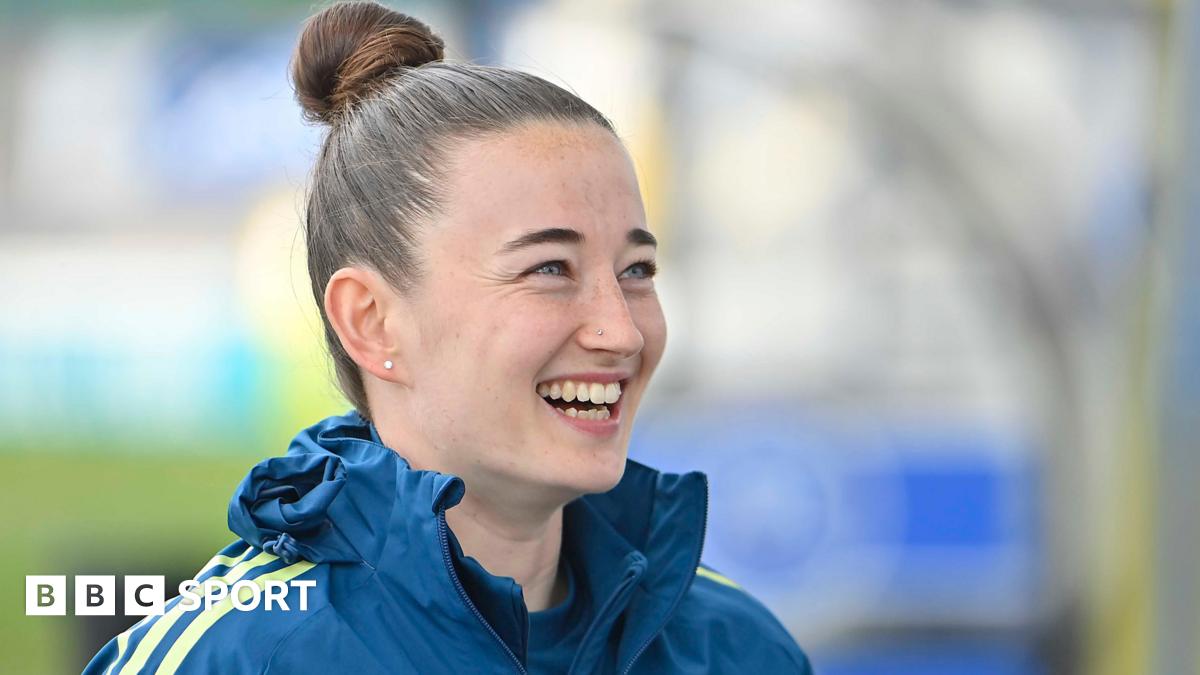
Manager Sarina Wiegman says England have been given reassurances there are no safety concerns about their Women’s World Cup qualifier against Ukraine being held in Turkey as the conflict in the Middle East widens.

The Lionesses play in Antalya at 17:00 GMT on Tuesday because Ukraine are unable to play in their home country as a result of the war with Russia, which is in its fifth year.

On Saturday the US attacked Iran as part of a joint operation with Israel, sparking retaliatory strikes across the Middle East.

The Iranian regime has responded with attacks on US assets and countries in the region with a US military presence, including Bahrain, Qatar, the United Arab Emirates, Kuwait and Iraq.

Advertisement

Turkey borders Iran and Iraq and is close to Cyprus, where an Iranian drone crashed into a British RAF base on Sunday. Israel and Hezbollah in Lebanon have also exchanged strikes.

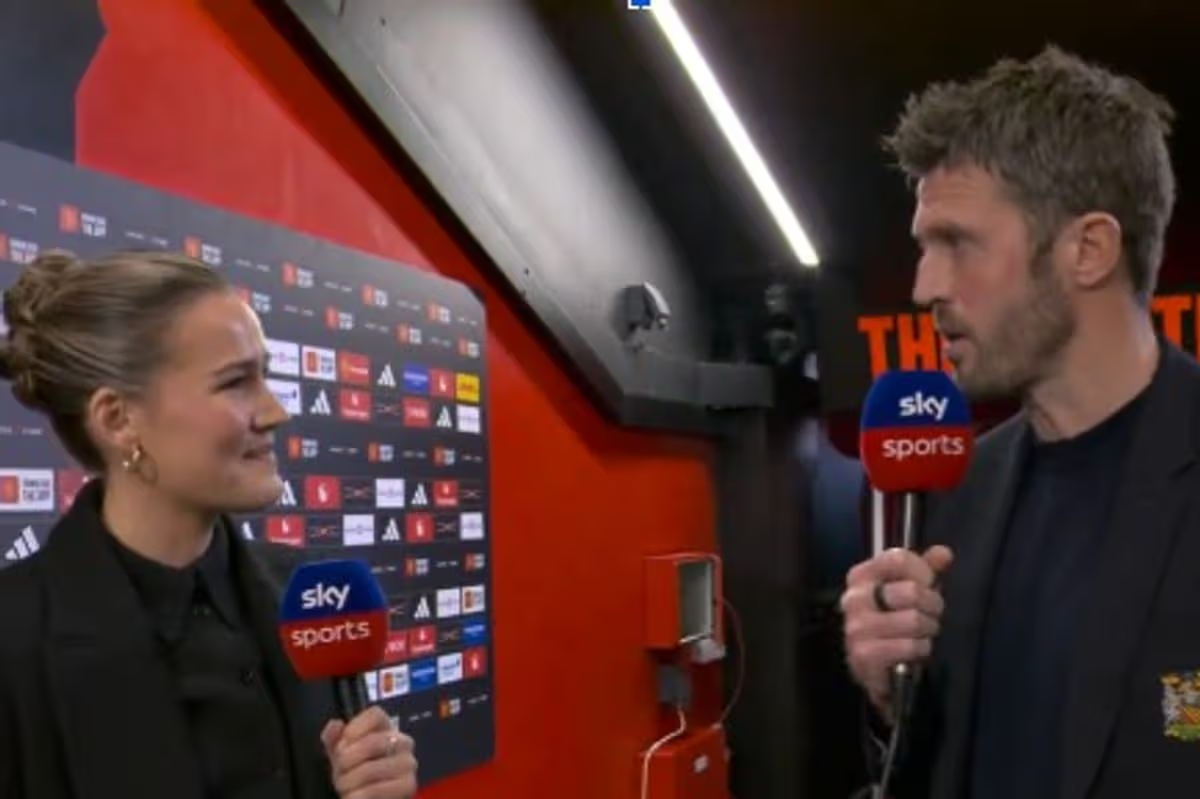
“Yes, we did have reassurances. We are in close contact with the government and the people here that are responsible,” said Wiegman.

“We’re fine here but we’re keeping an eye on it. We’re in contact all the time with the responsible authorities.

“Of course, you’re concerned about what’s happening in the world. When we think, or our government thinks it’s unsafe, we will go back. At this moment, we don’t have signals of that.”

Advertisement

England travelled to Turkey last Wednesday for a training camp but it is unclear how many fans will attend the match following the weekend’s developments, with some supporters and several media outlets already choosing to withdraw.

Wiegman says the fact Ukraine are having to host the match in Turkey because of conflict in their home country following Russia’s invasion is “really sad”.

“We have great facilities here and the climate is really good so we can prepare really well. But the reason we’re here is not nice,” she added.

“You want Ukraine to be able to play in their home country. They had to travel a lot themselves to get here. The things they have in front of them in their country is really horrible.

Advertisement

“We hope this game unites a bit. It’s a chance for Ukraine to show themselves to the world in another way where hopefully football unites and brings some joy.”

Source link

Continue Reading
Click to comment

Leave a Reply

Your email address will not be published. Required fields are marked *

Sports

Rohit Sharma’s 92 vs Sanju Samson’s 97*

Published

on

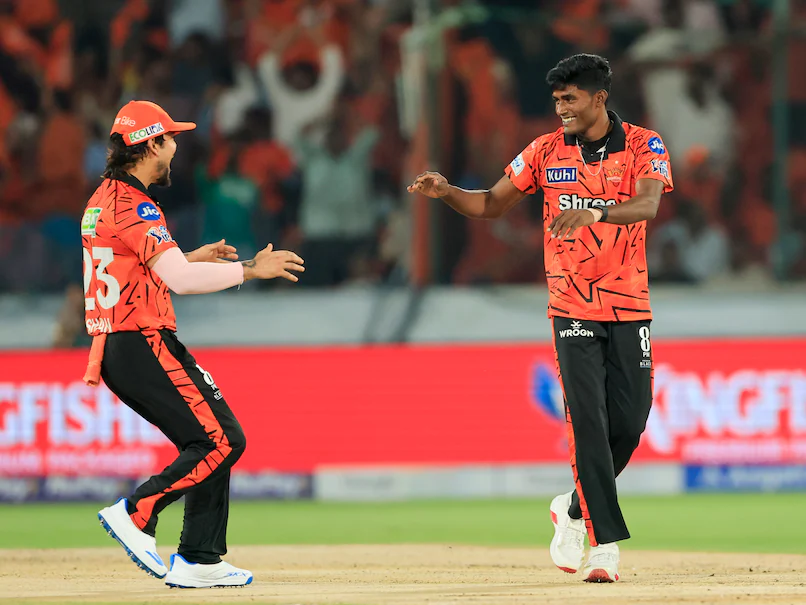
Indian batters have produced knocks of the highest order under pressure in T20 World Cups over the years. Whether it be Yuvraj Singh’s masterclass in the 2007 semi-final, or Virat Kohli’s numerous legendary knocks over the years. Opening batters have fallen behind in this aspect in the past, but they have also come to the fore now, with some legendary innings over the last few editions.

Sanju Samson’s match-winning 97 recently joined the list of some of the most iconic knocks ever produced by an Indian batter in the competition. He stepped up to help India overcome the West Indies in the last Super 8 match of the T20 World Cup 2026, at the Eden Gardens in Kolkata.

Similarly, in the previous edition, Rohit Sharma had also produced a classic for the ages. The Hitman obliterated Australia on a next level with his 41-ball 92 in the Super 8 stage of the T20 World Cup 2024 in St.Lucia.

Both match-winning knocks will be etched in the memory of fans forever as they led to memorable wins in the process. On that note, let us compare the two iconic knocks to determine which is the greatest knock by an Indian opener in T20 World Cup history.

#1 Situation

In the T20 World Cup 2024, India faced Australia on the back of an unbeaten group stage as well as two dominant wins in the Super 8 stage that more or less guaranteed them a spot in the semi-final. However, with the contest taking place a mere six months after the infamous 2023 ODI World Cup Final, and the fact that Australia could face elimination with another loss after their defeat to Afghanistan, that ended up being the focal point.

On the other hand, the narrative could not be more different in the T20 World Cup 2026 clash against the West Indies. The focus was solely on India, mostly about how the match is a virtual quarter-final after their loss to South Africa in the Super 8. Furthermore, they also had to deal with the scoreboard and home support pressure after being presented with a steep target of 196, something which has never been chased down by them in the competition’s history.

Advertisement

From solely a situation perspective, although both games had the World Cup pressure, the prospect of elimination and a mammoth target, makes Sanju Samson’s knock even more special when compared to Rohit Sharma’s cult classic.

#2 Opposition

The bowling attack that Rohit Sharma faced in his iconic knock in the T20 World Cup 2024 match against Australia included the formidable pace trio of Mitchell Starc, Josh Hazlewood, and Pat Cummins. The bowling attack also included the accomplished spinner, Adam Zampa.

So, to make a mockery of such a bowling unit takes something special and that is exactly what Rohit Sharma produced back then. Although Starc and Cummins were far from their best, and were punished accordingly by the Hitman, he had to deal with Hazlewood at the height of his prowess.

The right-arm pacer had dismissed Virat Kohli right at the start itself, and finished with stunning figures of 1-14 when India smashed over 200 runs. Rohit Sharma did well to negotiate him while taking on the others, who did have some serious reputations.

Advertisement

On the other hand, the bowling unit that Sanju Samson had to deal with pales in comparison. Jason Holder was the only threat in the pace bowling unit, since both Shamar Joseph and Matthew Forde were inexperienced. Sanju Samson did not face much trouble against them, especially with the ball not particularly moving around in the air or off the surface.

While the West Indies boasted a potent spin trio of Gudakesh Motie, Akeal Hosein, and Roston Chase, the conditions were not conducive to make them a serious threat. With minimal grip and turn, Sanju Samson smashed them for 37 runs off 17 deliveries with relative ease.

As a result, in terms of the opposition strength, Rohit Sharma faced a much bigger challenge when compared to Sanju Samson.

#3 Control

Control is arguably not an ideal parameter to judge the two knocks, since they came under completely opposite scenarios. In Rohit Sharma’s instance, while batting first, the aim was to put as much on the board as possible, and his flamboyant, ultra-aggressive approach meant that control was not a priority, destruction was.

Advertisement

In that aspect, although the control was only 71 percent, the gamble and trade-off to be at his destructive best worked as he smashed a 19-ball fifty and struck at over 200 throughout. His early onslaught put such pressure on the Australian bowlers that they were never really able to fully recover. Rohit Sharma’s intention was not have a controlled innings, but to make a massive statement, which he successfully did.

In Sanju Samson’s instance, he had to prioritise control since he could not afford to go all out, since India had already lost wickets in the powerplay. Another wicket at that stage would have landed them in serious trouble despite their batting depth. As such, having control of 88 percent and maintaining a strike rate of close to 200 takes something absolutely special. His fundamental formula of looking for a boundary early on and then focus on rotating the strike, was executed flawlessly, which is easier said than done.

There were no streaky edges or miscued hits in his innings, only pure, clean striking, which was exactly what India needed at that stage.

Conclusion: Personal preference plays a massive role in determining which knock is superior since they are at opposite ends of the spectrum. Some may find Rohit Sharma’s full-blooded bludgeoning appealing and make a case for it being superior because it is nearly impossible to recreate.

Advertisement

On the other hand, Sanju Samson’s composure under pressure, the way he constructed his innings with control without taking too many risks, will find its appeal for a large section as well.

Overall, while both knocks have their place in Indian cricketing history, it is hard to look beyond the fact that Sanju Samson had to deal with wickets falling at the other end, a challenging required run rate, and the prospect of early elimination from a home World Cup.

Given that he overcame all of those challenges to go on to finish the game for India as well, slightly gives him the edge over Rohit Sharma’s equally stellar 92 against Australia.