NEWYou can now listen to Fox News articles!
Dwight Freeney understands why the NFL has leaned further into streaming.
He also sees why many fans are frustrated.
The Pro Football Hall of Famer said he believes NFL games should remain broadly accessible, even as the league continues to place more games across subscription platforms. Freeney, who played 16 NFL seasons and finished his career with 125.5 sacks, was inducted into the Pro Football Hall of Fame as part of the Class of 2024.
“I don’t like it,” Freeney said when asked about the growing number of services fans may need to follow the league. “Just to be honest with you, I think it should be accessible to all fans, no matter what your economic bracket is.”
CLICK HERE FOR MORE SPORTS COVERAGE ON FOXNEWS.COM
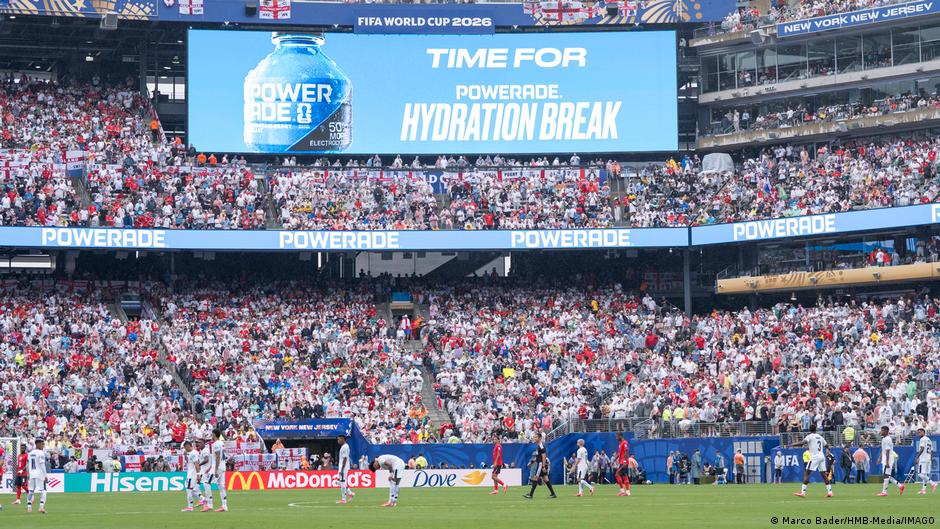
The issue has become a larger part of the NFL media conversation. The league’s 2026 schedule includes games across traditional broadcast networks, cable and multiple streaming platforms. According to the NFL, Prime Video will carry Thursday Night Football, Netflix will stream games in Week 1, on Thanksgiving Eve and on Christmas Day, and Peacock will exclusively stream a regular-season game in January.
Freeney said the local fan experience should remain central.
“If you can afford to get the local channels, you should be able to watch your favorite team on your local networks,” he said. “And it shouldn’t be blacked out based on streaming and all of that.”
The NFL has noted that its games remain available free over the air in local markets. In its 2026 schedule announcement, the league said it is the only sports league that presents all regular-season and postseason games on free over-the-air television in local markets.
But the broader access question has still drawn scrutiny in Washington. In June, the House Judiciary Committee released an interim staff report on the Sports Broadcasting Act and the NFL’s media model, saying fans increasingly need a combination of over-the-air, cable and streaming services to watch their favorite teams. The committee also said some fans must pay more than $600 per season to watch all of one team’s games.
NFL ANNOUNCES INAUGURAL THANKSGIVING EVE GAME BETWEEN PACKERS AND RAMS WILL BE STREAMED ON NETFLIX
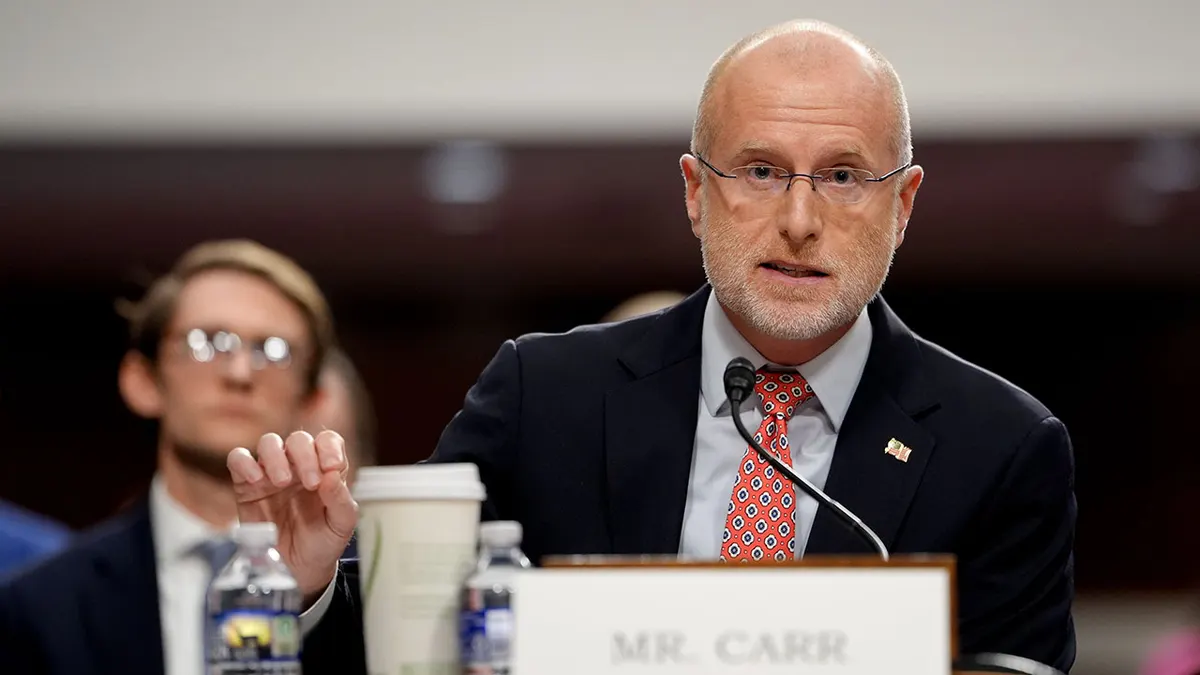
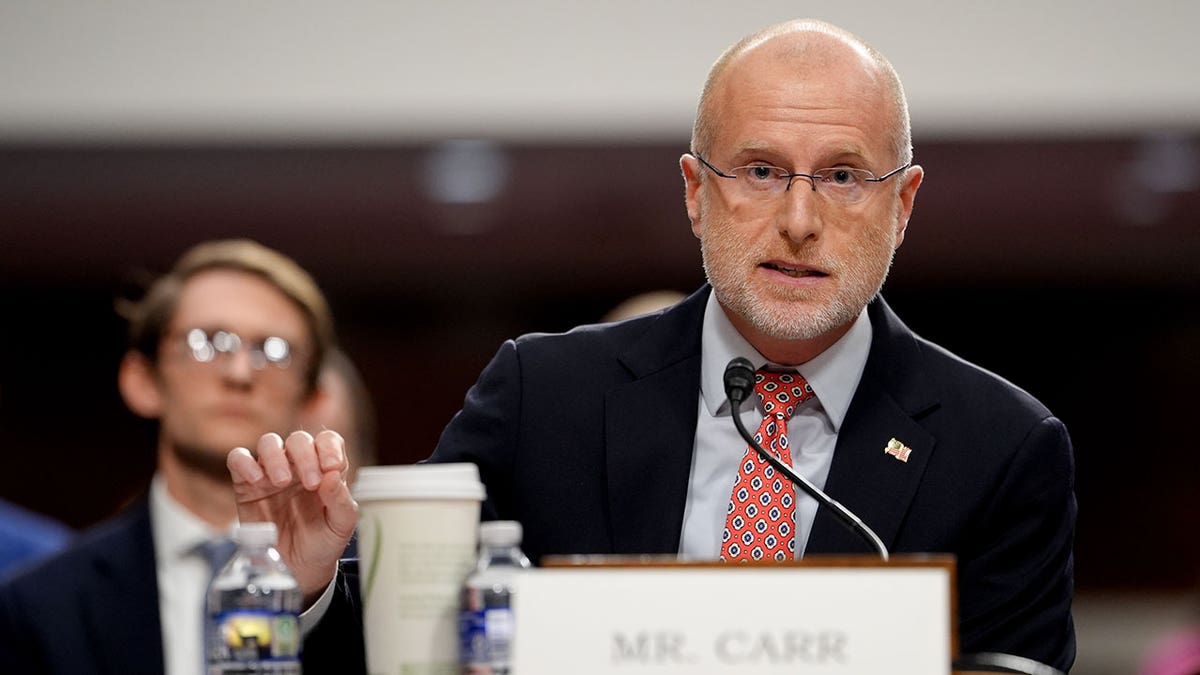
Federal Communications Commission FCC) Chairman Brendan Carr feels streaming has made following sports difficult on consumers. (Kent Nishimura/Bloomberg via Getty Images)
Sen. Mike Lee also asked the Department of Justice and Federal Trade Commission to examine whether the NFL’s current distribution practices still fit within the Sports Broadcasting Act’s limited antitrust protection. In that request, Lee said fans spent nearly $1,000 last season when cable, streaming and internet costs were combined.
Freeney did not dismiss the business side of the arrangement. He said the league’s streaming and television deals have financial benefits, including for players.
“I understand the money and the economics behind it,” Freeney said. “A lot of money goes into signing those contracts with the Amazons and, you know, and I don’t even know if it’s Netflix now… I know it helps the players obviously, because the more money that you, the deals that you do off the field and TV deals, the more money the players are gonna get. And so I know it’s good for the league.”
But he is still concerned for the consumers.
“The fans, I’m not so sure,” Freeney said.
That balance is where Freeney’s position sits. He recognizes that streaming gives some viewers more flexibility. Fans who have the right subscriptions can watch on tablets, phones and other devices, without being tied to a traditional television setup.
“If you can afford it, great,” Freeney said. “And then you have your iPad, you can bring it, you can stream everything, you don’t have to be at home, that’s great.”
But Freeney still believes the league should look for a model that keeps streaming available while preserving local access.
“Maybe there’s a combination of things to whereas though they can do to whereas though you have the ability to stream, but it also is on your local networks,” Freeney said. “I wish there was a way to figure that out.”
Freeney acknowledged that he is not personally shut out by the current system. He said he subscribes to the services he needs, and then some. But he knows that does not reflect the reality for every fan.
“I’m a junkie,” Freeney said. “I have all of them. I have every single streaming. Even if I don’t need it, I have it…
“I’m blessed enough to be able to have that ability to get all of those things,” Freeney said. “My cable bill or my streaming bill is probably one of the higher ones… Not everyone has that ability maybe,” Freeney said. “So, you know, I think they should have some way of changing certain things.”
Even with every service, Freeney said the modern setup can still be difficult to follow.
“Sometimes, you know, even me, I’m having a hard time finding games from time to time,” he said.
The NFL legend is also watching for surprise teams in the upcoming season
When asked what he is most interested in seeing during the upcoming NFL season, Freeney said he is looking for the team that exceeds expectations.
“I think it’s just seeing what team is gonna be the new team this year that no one’s talked about,” Freeney said.
He said preseason predictions often miss on at least a few teams, even when the league’s most established rosters remain near the top. Every season, he said, there are teams that enter the year with little attention before emerging as legitimate contenders.
“So I wanna see who those surprises are,” Freeney said.
As for Freeney’s longtime team, the Indianapolis Colts, he saidIndianapolis Colts, saying Daniel Jones’ health will be a major factor in how far the offense can go. He praised head coach Shane Steichen’s ability to work with quarterbacks and said Jones could benefit if he trusts the system.
“If Daniel can stay healthy, I mean, sky’s the limit,” Freeney said.
Defensively, Freeney said the Colts need to improve in key areas, particularly with the pass rush. As one of the best pass rushers of his generation, he said that will be one of the first things he watches.
“My question is, are we gonna get the pass rush that we need?” Freeney said. “If we can kind of mix the coverage with the rush, I think we’re gonna be good.”
Freeney was more cautious when asked about the Seahawks’ chances of repeating. He said winning back-to-back championships is one of the hardest things to do in the NFL, especially in a competitive division.
“I would bet against the fact that they’re gonna repeat,” Freeney said. “But that doesn’t mean they’re not gonna have a good year.”
Freeney is set to compete in the American Century Championship
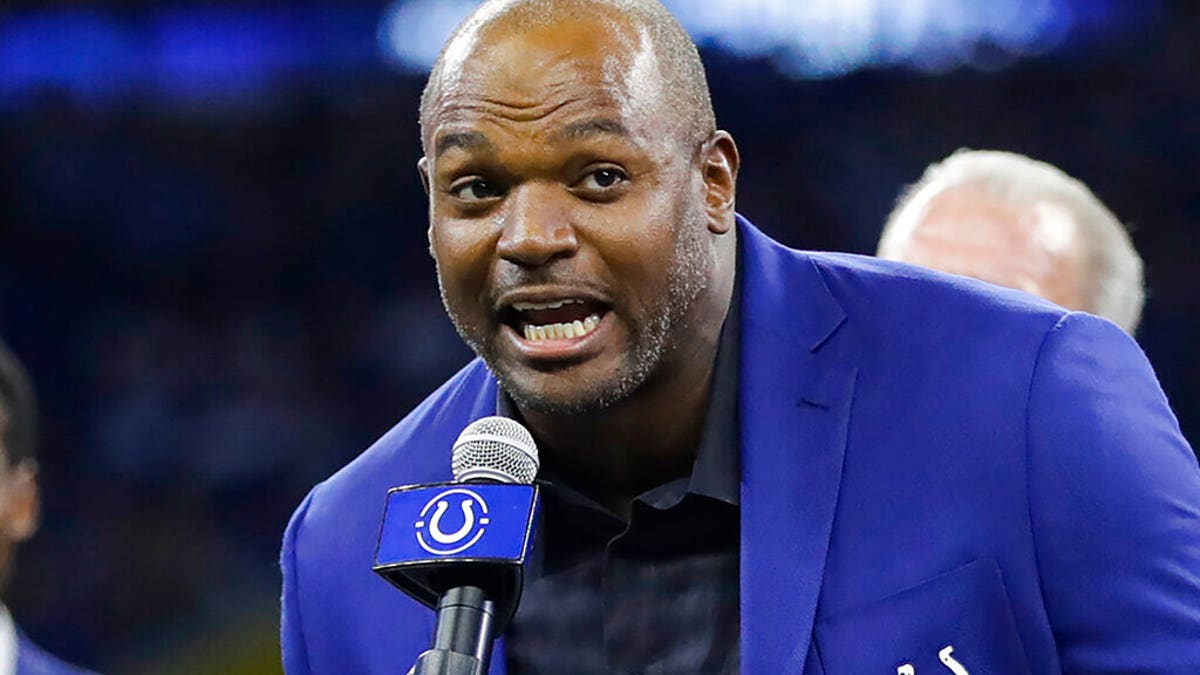
FILE – Former Indianapolis Colts defensive end Dwight Freeney speaks during his Ring of Honor induction ceremony during half time of an NFL football game against the Miami Dolphins in Indianapolis on Nov. 10, 2019. Joe Thomas, Darrelle Revis and Freeney are finalists in their first year of eligibility for the Pro Football Hall of Fame’s class of 2023. ((AP Photo/Darron Cummings, File))
Freeney is making his return to the American Century Championship this month, saying he is trying to measure how much progress he has made since last year.
“I’m trying to see if my golf game is up to par,” Freeney said, adding that he believes he has “an opportunity to be better this year than last year.”
He described his previous performance as uneven, saying his game was “really good until it’s not.” Freeney said the key for him is limiting the damage when a round starts to slip away.
“My whole goal right now is just to get to a point where I can be consistent, and my bad can’t be that bad,” he said.
SIGN UP TO GET THE LATEST SPORTS NEWS
Freeney said he is not focused on beating one particular competitor. Instead, he wants to manage the course, avoid letting one bad stretch turn into several bad holes, and put himself in position for a respectable finish.
CLICK HERE TO DOWNLOAD THE FOX NEWS APP
“I’m not playing any individual, I’m really playing the course,” Freeney said. “As long as I can stay steady, play golf the way that I know I can play, I’m gonna be in the top 15, hopefully.”
He said he does not believe his game is ready to win the event, but he thinks he can compete for a top-15 or top-10 finish.
Jackson Thompson is a sports reporter for Fox News Digital covering critical political and cultural issues in sports, with an investigative lens. Jackson’s reporting has been cited in federal government actions related to the enforcement of Title IX, and in legacy media outlets including The New York Times, The Los Angeles Times, The Philadelphia Inquirer, The Associated Press and ESPN.com.



















![BIS Just Gave XRP Holders Another Massive Clue! The XRP Connection Is Impossible To Ignore! [INSANE]](https://wordupnews.com/wp-content/uploads/2026/07/1782927079_maxresdefault-80x80.jpg)







































You must be logged in to post a comment Login