Sports
WNBA CBA negotiations: WNBPA’s Elizabeth Williams on need for ‘urgency’ and next steps after latest meeting

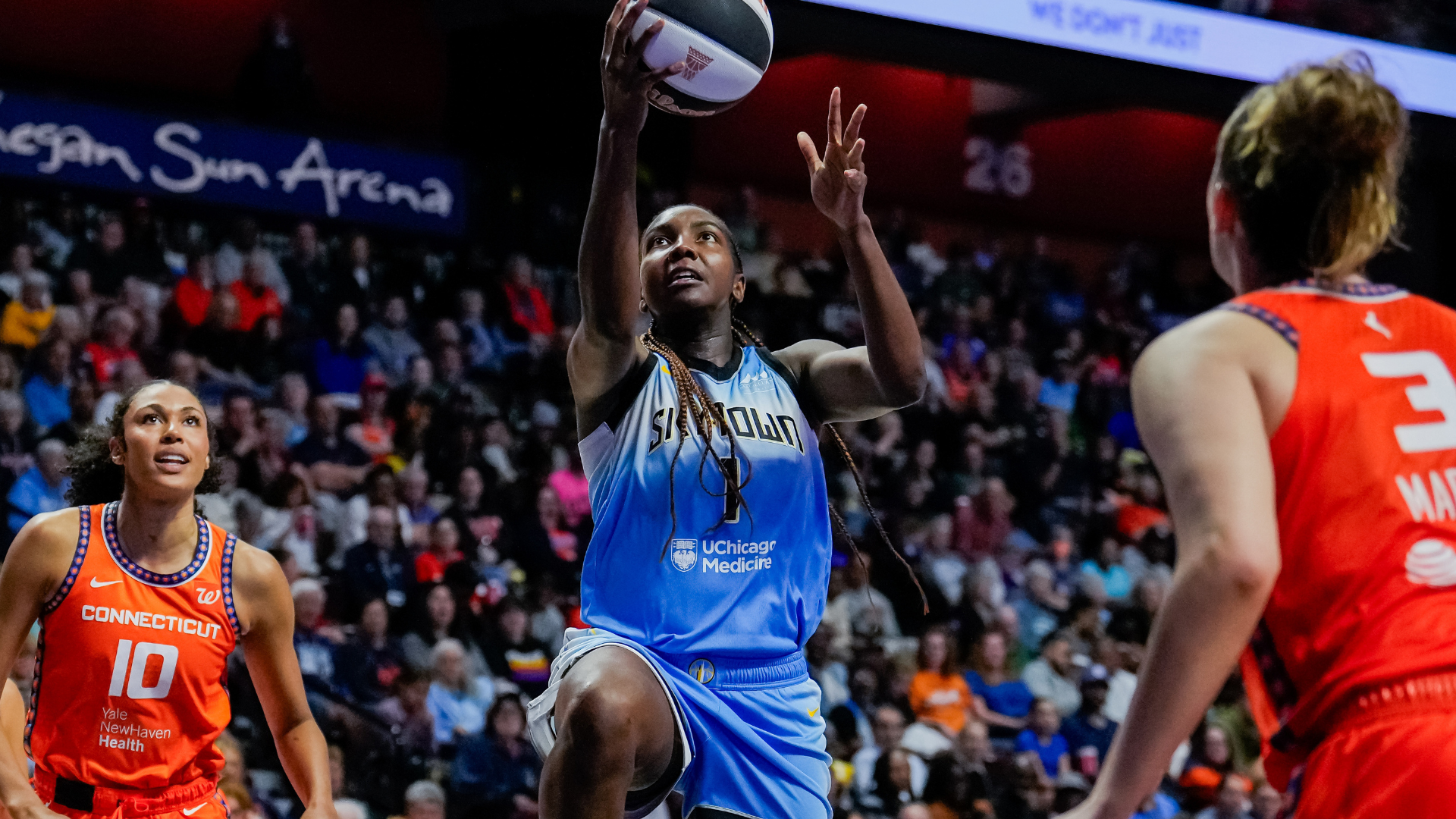

At the beginning of this week, the WNBA and WNBA Players Association had an in-person meeting to discuss the new collective bargaining agreement. It was the first in-person meeting between the two sides in months.
Per reporting by ESPN and Front Office Sports, about 40 players and more than a half dozen team owners and executives were present at the meeting. On Friday, CBS Sports spoke exclusively to one of the players who attended the meeting via Zoom: Elizabeth Williams, the secretary of the WNBPA.
Williams is currently in Europe, where she is playing for Galatasaray of the Turkish Women’s Basketball Super League during the WNBA offseason. The 32-year-old center was the fourth overall pick in the 2015 draft and has been a longtime member of the WNBPA executive committee. She most recently played for the Chicago Sky, but like all but two veterans in the WNBA, is currently a free agent.
The WNBPA opted out of the current CBA at the end of the 2024 season. While the CBA originally expired on Oct. 31, 2025, the league and union agreed to two extensions. But on Jan. 9, when the second extension expired, the two sides entered a period of status quo, meaning the conditions of the current CBA remain in place, but either side can enact a work stoppage at any time. In December, the union voted to authorize a strike “if necessary.”
Despite the ongoing stalemate, the WNBA released its 2026 schedule in late January. At the time, a WNBA spokesperson told CBS Sports that the schedule release was “a key step as we prepare for the WNBA’s 30th season and allows teams, partners, broadcasters and fans to begin the essential planning for the year ahead.” Training camps are supposed to open on April 19, and the first game is scheduled for May 8, just over three months away. The league still needs to hold free agency, the college draft and, perhaps most importantly, expansion drafts for the two newest WNBA franchises, the Portland Fire and Toronto Tempo.
The main point of contention between the league and players is the revenue-sharing model and salary structure. In the league’s most recent proposal, players would get about 70% of net revenue, which is the revenue remaining when league-specified operating expenses are removed from the pot. The union countered that offer with a proposal that would see the players get about 30% of gross revenue, which is all team and league revenue, before expenses.
The WNBPA sent its latest proposal to the league in late December. The league has yet to counter that proposal, and did not bring one to the meeting on Monday, which reportedly frustrated players. When the two sides left the meeting on Monday, the WNBA made it clear that the league understood it was its turn to respond and that a new proposal was coming soon. As of publication, the WNBPA has still not received a proposal from the league.
On Friday afternoon, Williams spoke to CBS Sports about what led to the meeting, how she felt the meeting went, reports of discord in the union’s executive committee, the possibility of a strike, her faith in leadership and whether she believes a deal will be done by the end of this month.
The following interview has been edited for length and clarity.
Gibbs: I know you were at the meeting on Monday via zoom. Some players have expressed frustration that the meeting didn’t start with a proposal from the league. Was that something that surprised you? And how did you feel the meeting went?
Williams: Yeah, I was a little surprised by that, especially knowing that players were going to be there in person. I think just having something would have been better than nothing. I do think as the conversation went on and the league side and ownership side could hear from people in person and hear the tone of why these issues matter, I think that helped the conversation, and I think it facilitated the level of urgency that’s needed.
Gibbs: You use the word “urgency.” And I think from the public, it’s felt like there’s been a lack of urgency on both sides. You know, we’re now in February, and getting so close to the season. Have you felt the sense of urgency on the player’s side, and is that escalating as the clock continues to tick?
Williams: Yeah. I mean, I think the urgency is there on our side. I don’t think we would have had that meeting in person if the urgency wasn’t there. I think that was an explicit moment of, “OK. I think you really need to see us to understand where we’re coming from and why we need to come up with this deal ASAP.” I think the league has kind of operated from a place of comfort and complacency in the sense that they released the season schedule without our CBA being negotiated, like, they’re just very confident in what they’ve put out. And I think that’s where the disconnect was. After that, I think players really were like, “OK, the urgency is there from our end. And they just seem to think everything is fine without us agreeing.”
Gibbs: So you felt that the schedule release was a tipping point for the players, maybe that you all felt disrespected by that?
Williams: I think that’s fair to say, because I think it’s bold to put out a schedule without having anything agreed on. You have teams putting out schedules, and these teams don’t have players on them. That’s kind of mind-boggling to me. And so it said a lot about where they stood in the negotiations and feeling like they weren’t really going to budge. And I think after this meeting on Monday, that’s not the case at all. I think there is room for movement, and I think on both sides, I mean, I think players are willing to move on certain things that maybe the league wasn’t at an understanding of before. So maybe that’s just a reminder, like, we’re still negotiating in good faith. And that’s going to help us move forward.
Gibbs: Do you feel like they took you all more seriously after this meeting on Monday?
Williams: Yeah, I would say so.
Gibbs: What misconceptions do you feel like people have about what the players are asking for?
Williams: I think there’s a misconception about how much the league is losing moving forward. Because when you talk about the investment that has gone into the league, when you talk about the valuations of teams, when you talk about expansion fees, all of these things that the league might not consider, like, traditional revenue, it’s still dollars that are coming in. I don’t think you would see the pace of expansion if the league wasn’t growing. And so I think there’s just a misconception of our understanding of that and how that is going to impact our salaries and everything moving forward.
Gibbs: There’s a narrative that is coming out that the players are asking for so much that it’s going to handicap the league, that it’s going to shut down the growth, and that maybe the players don’t understand how much owners are spending and how much it is costing to run the WNBA. How do you respond to that?
Williams: I don’t think we’re being irresponsible. I think that’s what that translates to — that players are being irresponsible, they’re asking for this amount of money, blah blah. I don’t think it’s that at all. I think there are plenty of areas of revenue opportunities for the league and for the teams. I think at the end of the day, the product is most important, and I think the product is continuing to grow. There’s a lot of young talent, and that’s what brings in fans and excites fans. And there’s also still the fact that this league has existed for 30 years, there’s a fandom that’s here that is going to continue to be built on. And so I think all of those things, all the opportunities for revenue to come in, I really don’t think that we’re being irresponsible in how we are presenting what we think we should be getting.
Gibbs: Caitlin Clark was on NBC this week, and she talked about how this isn’t just a big moment for the WNBA, it’s a big moment for all of women’s sports. And I wondered how much you think about this as not just a movement for your league, but a movement for women’s sports and maybe women’s labor rights in general?
Williams: I agree. I mean, it’s kind of wild, especially considering how transformational the last CBA was right for us, and now this moment is that times 100, you know? I think there’s that understanding, and I think that’s why our leadership is being so intentional in how we communicate in the meetings that we have with the league and the meetings that we have with players.
We’re just in this age where, like, you can see everything. And so there’s an understanding, if this labor is being put in, and you see these dollars coming from TV, see these dollars coming from investment, from expansion, everyone can see that. Why isn’t it reflected in salaries? I think this CBA is going to be that example for sports, of course, but just for women in general. If the work is being put in and the signs are there, then it needs to be reflected, period. And that’s the time that we’re that we’re living in.
Gibbs: You’ve been in the league for so long, you’ve played so many different roles – you’ve been the All-Star, you’ve been the veteran, you’ve been a starter, you’ve come off the bench, you’ve been on so many teams. How have you personally experienced the growth of the league, and what most surprises you about the growth you’ve seen in the past decade?
Williams: Oh, man, there’s so many changes. We joke about it in the locker room with [Maddy Westbeld and Hailey Van Lith] sometimes, sharing rooms on the road, right? Like, that’s something that a lot of people just seem to forget that you had to do that until you were in your sixth year. And then going from that to selling out 20,000 seats for arenas for a regular-season game. For the travel, obviously, the charters, and just overall, the growth from the fans, too. I think it’s just been huge. So all of those things are big. I think people just care more. People are watching more. They’re paying attention. People are inspired about 2020 and the impact that we had with Say Her Name, with Black Lives Matter and Senator Warnock. All of that comes from, yes, the product on the floor, but the type of impact that we have off the floor. And so I think all of that is kind-of reflected in how we’ve been approaching this negotiation, too. We do things together. We’re committed to doing things the right way and doing what we believe is right. So, yeah, it’s been nuts to see how much the league has grown, and deservedly so.
Gibbs: Caitlin Clark also said she thought that in the next few weeks there would be a deal done. I know [Breanna Stewart] had previously said she thought one could get done by Feb. 1. Obviously, that didn’t happen. It can be hard to answer, because it’s not in your control. But how, how confident are you that a deal will get done this month?
Williams: I mean, I would hope so, given that free agency was supposed to start on the first, but again, I think the fact that as of now another proposal hasn’t been sent, that’s not ideal. So I don’t know, I’ve been using the phrase “cautiously optimistic” for a very long time, but I still remain that way because I’m still confident that in in our staff and in our advisors, that we’re still in a position that a deal will get done. So as of now, yeah, I’ll continue to use “cautiously optimistic” as my phrase.
Gibbs: Are the players still ready to strike if necessary?
Williams: I’ll say we didn’t have the strike authorization vote for nothing. So we’re in a position, obviously, if we need to strike, we will. But as far as actually voting on it, we’re relying on our staff and our advisors. If they’re like, “Hey, I think this is time to have that, that vote or that conversation.” And as of now, they haven’t advised us to do so. So that’s where we stand as far as a strike is concerned. I think if the conversation changes with leadership and with legal counsel, and they say, “Hey, this is where I think the conversation should shift,” okay, then we can talk about the vote. But ultimately, we have the strike authorization vote in our back pocket if we need it, and then the [Executive Committee] can talk about striking if necessary.
Gibbs: But you know from talking with other players — the players want to play. You all know this is a big season, and you want to keep the momentum going. Is that fair to say?
Williams: Definitely fair to say. People want to play. There’s not a question. We just want to make sure we get it right.
Gibbs: I’ll let you have the final word. If there’s anything I didn’t ask or anything you want to communicate?
Williams: I mean, to the fans, we see them. We see them supporting us, and we appreciate their patience with us and with this process, and their patience with the league, too. It matters to us, and they matter to us. As much as we all want to play, we also want to play for the fans. That’s a big part of the WNBA, the fandom and the people that have been with us from the beginning. So we’re doing what we can. We’re not sitting here resting. There are things that we can move on, and we’ve communicated that, just like the league has things that they can move on. We want to play, but we also want to put current players and future players in a position where they’ve gotten the best deal that they could possibly get.
You must be logged in to post a comment Login