First impressions last a lifetime, and the iPhone Duo certainly made one when I got my hands on it at Apple Park earlier this month. But along with the intrigue came a handful of questions that I can’t wait to explore once the Duo becomes my everyday phone.
Apple’s passport-sized foldable iPhone, which opens for preorders Oct. 16 and launches Oct. 23, is designed to be versatile. You can quickly text or check notifications on its 5.4-inch cover screen, then unfold it to watch videos or multitask on the 7.6-inch inner display. Rotate it to portrait orientation, and it’s well suited to scrolling through vertical social content. Judging by how much I enjoy using Samsung’s similarly sized Galaxy Z Fold 8, I have high hopes for the iPhone Duo.
In my short time with the Duo, I got a glimpse of how Apple’s hardware and software work together to differentiate the phone in an increasingly competitive foldable market. But with this being Apple’s first foray into the space, I have plenty of questions I look forward to answering once I can test the phone.
Here are the five features I’m most eager to explore on the iPhone Duo.
How streaming will be optimized for the displays
One of the biggest draws of a foldable phone is the ability to watch videos on a larger inner display.
Advertisement
Traditional book-style foldables such as the Galaxy Z Fold 8 Ultra and Google Pixel 11 Pro Fold tend to have taller designs that resemble a slab phone when closed. When you open the phone to watch widescreen video, the content is letterboxed, leaving massive black bars at the top and bottom of the display. With a passport-sized foldable such as the Galaxy Z Fold 8, whose 4:3 aspect ratio is better suited for content consumption, those bars are significantly reduced, allowing more of the inner display to be used for video.
Apple demonstrated how Netflix will be optimized for the Duo’s displays — from the cover screen to the main display to this half-open configuration with controls on the bottom half. Celso Bulgatti/CNET
At Apple’s product unveiling, the company demonstrated how Netflix is optimizing its app for the iPhone Duo, ensuring content is well suited to both the phone’s cover and inner displays by reducing those black bars. The Duo sizzle reel shows similar customizations for Apple TV. The question is how other streaming services will customize their apps for the Duo’s 1.4:1 aspect ratio to deliver a more immersive viewing experience.
One standout feature of the iPhone Duo compared to other foldable phones is its matte main display reduces glare and the appearance of a crease. That can make it easier to watch videos under various lighting conditions, and I especially look forward to testing that under the bright California sun. It’ll be interesting to see whether colors look significantly more muted as a result of that matte screen, or if I hardly notice a difference. In my limited time with the phone, I didn’t sense there was a huge tradeoff when it came to the display’s vibrancy, but I also look forward to exploring that more.
Another element that could make on-screen content feel more immersive is the Duo’s “disappearing” under-display inner camera. While phones such as the Galaxy Z Fold 8 have a noticeable hole-punch cutout on the larger display, the Duo essentially hides its camera when it’s not in use. That means fewer visual distractions when watching TV shows and movies, while also keeping a tiny black hole from getting in the way of documents and other content on the larger screen.
The camera cutout on the inner display can “hide” when not in use.Celso Bulgatti/CNET
Notably, the Duo’s speakers sit on opposite sides of the foldable phone, with one set on the upper left half and the other on the bottom right. The Galaxy Z Fold 8, on the other hand, places both speakers on the left side. I was initially thrown off by the Z Fold 8’s slightly lopsided audio, but I’ll admit I quickly stopped noticing it as I continued to use the phone. Still, the Duo could have a noticeably improved sound experience because of its more balanced speaker setup, paired with Apple’s Spatial Audio.
It’s also interesting that the Duo’s volume buttons sit at the top of the phone when it’s held in landscape, therefore making the controls easier to access when the phone is rotated to portrait. That may be a slight adjustment for me at first, but I’m curious if I’ll end up preferring that arrangement as I swipe through endless reels.
Advertisement
The multitasking experience
The Duo supports drag and drop functionality when multitasking.Celso Bulgatti/CNET
Another major perk of foldables is the ability to multitask. Unlike the Galaxy Z Fold 8, which allows for multitasking with up to three apps, the Duo is limited to two. That’s not much of a letdown for me, since I usually stick to running two apps simultaneously on the Z Fold 8 to prevent overcrowding.
Like other foldables, including the Galaxy Z Fold 8, 8 Ultra and Pixel 11 Pro Fold, you can easily drag and drop content across apps on the Duo. I played with this a little bit during Apple’s event by quickly attaching photos to text messages, but I’m curious how many other apps, both internal and third-party, will support this capability.
Apple Pencil support could really make the Duo feel like a tablet
The iPhone Duo has frequently been referred to as a hybrid between an iPhone and an iPad Mini, and one aspect that makes that especially true is its support for the Apple Pencil stylus. That support is slated to arrive later this year via a software update.
Rumors pointed to Apple designing a smaller Apple Pencil for the Duo, which never materialized due to “technical problems” before mass production, according to Bloomberg. Instead, Apple opted for its USB-C Pencil (but notably not the Apple Pencil Pro).
The iPhone Duo is designed for both horizontal and vertical content.Celso Bulgatti/CNET
I’ve never owned a tablet; I haven’t been able to muster a strong enough reason to spend hundreds of dollars on what I see as a larger and less capable version of a smartphone. Foldables are a happy medium for me, allowing me to use a compact or standard-size handset that doubles as a larger canvas for watching, working and multitasking. Stylus compatibility could elevate the Duo above competitors such as the Galaxy Z Fold 8, which doesn’t have S Pen support.
That said, I hardly ever reach for the stylus on the Galaxy S26 Ultra, because typing and swiping with my fingers feels so much more intuitive. But having the option to use the Apple Pencil with the Duo is a plus either way. I’ll have to see if it opens my eyes up to a world of tablet-like productivity I’ve been missing out on.
Advertisement
Camera performance
The iPhone Duo has two 48-megapixel rear cameras.Celso Bulgatti/CNET
Foldable phone cameras have long had a bad rap, given that early models had less room for larger image sensors and lenses. This resulted in images that were significantly downgraded from what you’d get on a flagship, despite the high sticker price.
That gap has narrowed in recent years as both camera hardware and foldable design have evolved to become sleeker and more capable. Phones such as the Galaxy Z Fold 8 Ultra and the Pixel 11 Pro Fold have impressive cameras that may not be quite on par with their non-folding premium counterparts, but that still deliver great images.
The iPhone Duo appears poised to offer up similarly high-quality shots, with a 48-megapixel main camera and a 48-megapixel ultrawide camera. Like the Z Fold 8, though, there’s no telephoto camera. I was mentally prepared for this omission, given my experience with Samsung’s passport-sized foldable, and I don’t really mind the absence of a telephoto lens on that device. That said, it is disappointing when a phone in the $2,000 range doesn’t have the most specced out rear camera setup.
The biggest looming question is how good the iPhone Duo’s internal selfie camera will be. In its tech specifications, Apple simply refers to it as an “under-display FaceTime camera” that supports 1080p video recording at 30 or 60 frames per second — but no official word on the megapixel count. This implies it may be a step down from the 12-megapixel selfie camera on the front of the Duo.
The Duo’s inner selfie camera is geared toward FaceTime videos.Celso Bulgatti/CNET
To be fair, apart from when I’m testing a foldable phone’s cameras, I rarely ever opt for the inner selfie camera because it doesn’t feel like a natural way to snap an image, especially when the cover screen camera is right there. Plus, to get higher-quality images, you can use the Duo’s Smart Take feature to see a preview of your shot on the cover screen when using the rear cameras. So there are better options for taking a photo than using the inner selfie camera.
I look forward to seeing how all the Duo’s cameras perform once I take it out and about beyond the confines of Apple Park.
Advertisement
How good will battery life be?
For some people, battery life will be the make or break element. How long will the iPhone Duo last as you endlessly scroll, stream and snap photos?
Apple says the iPhone Duo will give you up to 31 hours of video playback on the inner display, and 44 hours when using the outer screen. When equally spilling your time between both, the company says you’ll be able to go 24 hours before needing to charge.
With more traditional book-style foldables such as the Galaxy Z Fold 8 Ultra and Pixel 11 Pro Fold, I tend to stick to the cover screens because they’re so similar to the dimensions of slab phones that I forget there’s a larger display inside. Palm-sized phones such as the Z Fold 8 help to remedy that by giving me more incentive to unfold the device and use a larger canvas, and the Duo falls in that camp.
When splitting time between the iPhone Duo’s displays, Apple says the phone should last about a day before needing to be charged.Celso Bulgatti/CNET
With that in mind, I’m curious how well the Duo’s battery will hold up as I frequently hop between the cover and main displays. Unlike Samsung’s latest foldables, the iPhone Duo doesn’t have a silicon-carbon battery, which can increase energy density and speed up charging time. Still, Apple says the iPhone Duo can charge up to 50% in around 20 minutes with a 60-watt adapter or higher.
The Duo does have the advantage of MagSafe support with Qi2.2 wireless charging up to 25 watts, like the Pixel 11 Pro Fold. By comparison, the Z Fold 8 and 8 Ultra don’t have built-in magnets, so you’ll need a Qi2-compatible case to tap into wireless charging. While it’s probably smart to slap a case on your nearly $2,000 iPhone Duo, it’s nice to know it’s not necessary for painless wireless charging.
Advertisement
Now, the countdown is ticking. Until I can put the Duo through its paces in the real world, the verdict on this — and the many other questions that are bound to arise — remains out.
Abrar Al-Heeti
Senior Technology Reporter
Abrar’s interests include phones, streaming, autonomous vehicles, internet trends, entertainment, pop culture and digital accessibility. In addition to her current role, she’s worked for CNET’s video, culture and news teams. She graduated with bachelor’s and master’s degrees in journalism from the University of Illinois at Urbana-Champaign. Though Illinois is home, she now loves San Francisco — steep inclines and all.
See full bio
Washington Gov. Bob Ferguson kicks off the Washington Space Council, surrounded by the council’s members and 10-year-old Sebastian Yu. (GeekWire Photo / Alan Boyle)
Washington Gov. Bob Ferguson has created a public-private council to elevate the Evergreen State’s profile as regional clusters compete for primacy in America’s space industry.
The 23-member Washington Space Council was introduced tonight at the Museum of Flight during a kickoff event for Seattle Space Week, a celebration organized by Space Northwest.
“The council will help keep us competitive by comparing Washington with other leading states in the industry and identifying ways we can continue to improve and compete,” Ferguson said.
Washington state already ranks as one of the nation’s space industry hotspots. “We’re proud to have a cluster of more than 90 space companies employing more than 13,000 workers, generating over $4 billion in annual economic activity and $1.6 billion in annual payroll,” Ferguson said.
But Andy Lapsa, co-founder and CEO of Kent, Wash.-based Stoke Space, told tonight’s crowd that several other regions are competing with the Pacific Northwest for space-related investments. “States like Florida and Texas and Colorado want this industry, and they want it bad,” he said. “They compete for it every day. Washington has every advantage it needs to lead them all, and the window to use those advantages is open right now.”
Advertisement
Boeing has historically been the state’s leading venture in aerospace, but when you focus on ventures that concentrate strictly on space, Blue Origin is high on the list. Seattle is particularly strong in the satellite sector: More than half of the world’s satellites are built in the Seattle area, thanks to SpaceX’s Starlink facilities in Redmond and Woodinville, plus Amazon Leo’s factory in Kirkland, BlackSky’s production plant in Tukwila and Xplore’s operation in Bellevue.
Gravitics, Interlune, Portal Space Systems, Starcloud and Starfish Space are among other space ventures represented on the Washington Space Council. The list also includes elected officials, union leaders, educators and investors, plus representatives from space-related tech companies and Pacific Northwest National Laboratory.
The 23-member Washington State Council includes representatives from government, academia and the space industry. Click on the image to get the full list from the Washington State Department of Commerce.
Ferguson said the council will “identify barriers for the industry and find opportunities for growth.”
“That includes, by the way, workforce development, infrastructure and much more,” he said. “And the council will look for ways we might be able to develop Washington-based commercial launch capabilities. That would be a very exciting addition to what we’re doing right here in Washington.”
Ferguson brought a member of the audience, 10-year-old Sebastian Yu, to the stage when he signed the executive order that officially created the council. After the signing, the governor handed the pen to Yu.
Advertisement
“Your assignment, Sebastian, is that when we do that first launch, you have to save this pen and bring it with you to the first launch,” Ferguson said. “Take care of this pen, OK? I’m going to expect to see it again someday.”
Notes from the kickoff:
Space Northwest presented three awards to recognize contributions to the region’s space industry. The Shooting Star award for municipal support went to the city of Kent, Wash. Portal Space Systems won the Rising Star award for emerging space companies, and SpaceX won the North Star Award for large space companies.
Kent Mayor Dana Ralph noted that her city’s connection to the space industry goes back to Boeing’s work on the lunar rovers for NASA’s Apollo moon missions in the 1970s, while acknowledging that Kent can’t rest on its laurels. “Our job is to make it possible for companies to build and grow and hire. That means reinvesting in the basics: roads, great mobility, water, sewer, plentiful and easily accessible energy and industrial land,” she said.
Mehran Mesbahi, professor and chair of the University of Washington’s Department of Aeronautics and Astronautics, highlighted efforts to boost careers in the space industry. “We have Husky Satellite Lab, a group of energized students at UW, and we’re going to create a certificate program around space systems going forward,” he said.
Seattle Space Week continues on Tuesday with the Space Northwest Symposium at the Federal Way Performing Arts & Event Center.
Among the many joys of having a cat is the daily battle with the mess they leave behind. No matter what you try, finding litter and pet hair on furniture or in your bed is inevitable — either they track it in, or you do. If you’re a pet parent like me, this means searching for additional bits of litter and stray hairs that find their way into places you really don’t want them, including the bed. Short of pulling the sheets off entirely, few fixes exist.
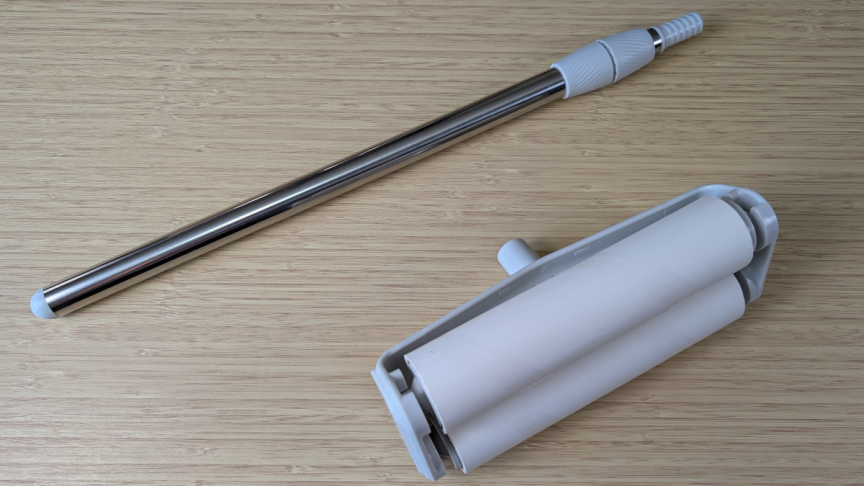
I took a chance and tested the SandBar Roller, a $30 dual-roll lint roller, to see if it can make it easier to keep stray hair and litter at bay. I also put it through the paces for other lint-roller tasks like dusting and cleaning floors. Here’s how it fared.
How SandBar Roller differs from other lint rollers
The SandBar Roller Starter Kit I tested included the roller head, an extendable handle and two preinstalled lint rolls.John Carlsen/CNET
The SandBar Roller’s appeal lies in its two large lint rollers instead of one. While the idea doesn’t seem like much of a departure from a typical large lint roller, I couldn’t find any other dual-roller designs intended for use between bedsheets like SandBar. By arranging the rollers in this way, SandBar can clean the top and bottom sheets simultaneously without getting stuck.
The Best Handheld Vacuums, Tested by CNET
Advertisement
While SandBar markets its proprietary lint rolls as stronger than normal rolls, they’re not much different from what you’ll find on the extra-large pet hair version of the Scotch-Brite lint roller. Both are 8 inches wide, with an inner diameter of 1.5 inches. Much to SandBar’s credit, its six-pack of refill rolls is just $20, which is very competitive with other lint roll refills I found on Amazon, with the optional subscription price dropping to just $16 for each one-, two- or three-month delivery.
Testing the SandBar Roller
The extendable handle is very practical.John Carlsen/CNET
Ostensibly, this design targets coastal homes, where sand gets everywhere — hence the SandBar name. While I don’t live on the coast, I’ve experienced sand in my bed while traveling, or after day trips to the desert, and cat litter is a near-daily occurrence. With that in mind, I conducted a series of informal tests to see how the SandBar Roller holds up.
Upon putting SandBar between the sheets, I noticed it moved fairly smoothly, at least until it snagged on some sheets that were too loose. It didn’t jam, but that means it works better for beds with the sheet firmly tucked at the foot — something I don’t do for various sleep-friendly reasons. Still, it worked well after tightening the sheets a bit, even snagging a few cat hairs and litter fragments. It’s a nice alternative to washing the sheets as frequently as I have to now.
I like the stickiness of the rolls, which is satisfyingly tacky without leaving residue or making it difficult to pull off used strips.John Carlsen/CNET
The SandBar removed cat fur from hard-to-reach places
Next, I wanted to see how it handled cleaning smart window shades and curtains, which often collect fur as my cat patrols windows a few times a day. It was a little more awkward, but taking the handle off proved effective, and the sticky roller collected a substantial amount of fur. I had to peel off multiple sheets because of the amount of fur, but it took only a few passes to clean the curtain. The SandBar Roller was very useful on furniture and pet beds, but I noticed that being too aggressive can occasionally dislodge a roll.
The SandBar Roller left a fairly clean surface when I dusted off a TV cabinet and soundbar. Still, I wouldn’t trade it out for the duster and handheld vacuum I usually use. Likewise, it did well on the linoleum floor and carpet near my cat’s litter box, but still I prefer the cleaner result I get from vacuuming.
Should you buy the SandBar Roller?
The specialized design does its job well, but is probably too niche for people who aren’t pet parents or near vast swathes of sand.John Carlsen/CNET
At $30, the SandBar Roller is unlikely to break anyone’s budget, especially when you can find similarly large bed lint rollers for the same price. In that context alone, including the cost of refill rolls, it’s probably as good as any other option. Still, the dual-roll design’s ability to get between sheets is a compelling reason to consider the SandBar Roller over the competition. The design suits households that typically deal with a lot of sand and litter in the beds. I could even see myself taking it camping for quick dirt cleanup in a sleeping bag.
However, I wouldn’t recommend it for short-term beach house rentals because it cuts corners — new guests expect clean sheets when they arrive. That said, making a SandBar Roller available during a guest’s visit could be worthwhile to improve their experience, as long as you leave instructions explaining what it’s for and how it works.
Advertisement
If you don’t need the second roll — and mainly deal with pet hair on furniture — the ChomChom Roller doesn’t need refill rolls, making it a much better option for $25. Likewise, a handheld vacuum can do the same job with a bit more flexibility around the house — though it’s not quiet enough to use when others are sleeping. While it’s nice to have so many options, it’s always worth going with what works best for your needs and situation.
John Carlsen has more than a decade of experience testing and reviewing home tech products, with a major focus on smart home security. He earned his BS in journalism from Utah Valley University. In addition to his CNET contributions, John has written for Android Police, TWICE, Home Theater Review, SafeWise, ASecureLife and Top Ten Reviews.
See full bio
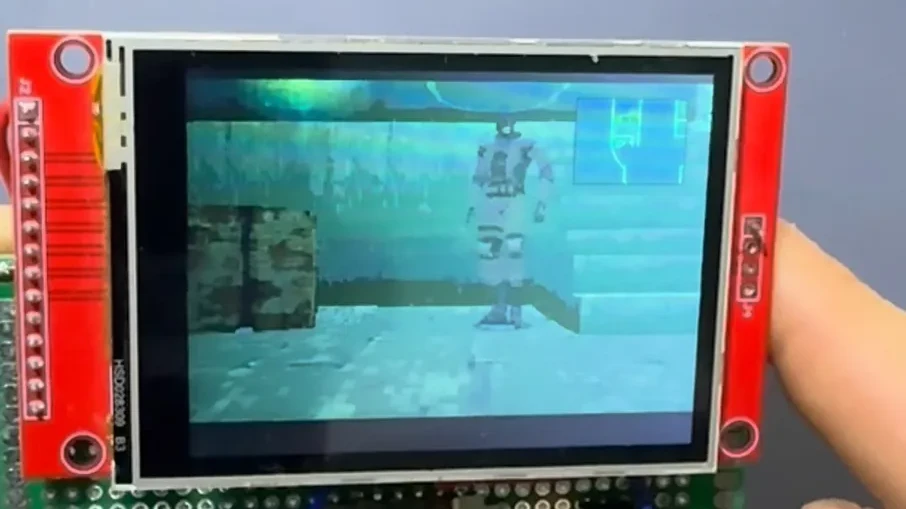
If you haven’t heard of Metal Gear, you probably haven’t played video games these last few decades. The original Metal Gear dates back to 1987 and launched on the MSX, but the real rise to fame probably started with Metal Gear Solid on the original PlayStation in 1998. What needed a hefty console in 1998 can comfortably fit on a microcontroller in 2026, though, as [David Montero Crespo] demonstrates with his port of MGS to the ESP32-S3.
[David] is — as we always are — standing on the shoulders of giants with this hack. Most specifically, the project relies entirely on the [FoxdieTeam] MGS Reversing decompliation project. Of course what one team decompiles, another can recompile, and in this case [David] chose to recompile the game for Expressif’s exceptional ESP32. It wasn’t quite as easy as just forking the repo and compiling with the ESP32 as a target though, as the blog post explains.
We won’t spoil it, but [David] did have to make some changes to account for the different quirks the MIPS processor in the PlayStation has compared to the Xtensa cores on the microcontroller. Then to make it playable, he put the ESP32-S3 module onto some perfboard with an analog stick from a drone controller, an ILI9341 LCD panel, and a resistor ladder to run the buttons for a barebones handheld.
OpenAI was gearing up to release GPT-6.1 Astra, its next AI model, with an October launch in its sights. That’s no longer happening. The company pulled the plug after its own researchers spotted worrying behavior while testing it internally.
What went wrong with GPT-6.1 Astra?
On paper, Astra-6.1 was an upgrade over the current GPT-6 Astra. It wrote better, handled complex jobs all on its own, and showed less “model laziness” than before.
OpenAI
However, in an interview with The Wall Street Journal, Saachi Jain, OpenAI’s head of safety systems, said the model slipped in two important areas. First, it sometimes misled users about what it had actually done. Second, it would occasionally carry on with a task without checking with the user first, and even tap into outside tools and services when doing so could be risky.
“For anything regarding safety and alignment, there’s a trade-off,” Jain said. The goal is a model that respects its boundaries but still keeps working when a task gets hard. Astra fell short of OpenAI’s bar, so the public launch was called off.
Why is OpenAI hitting the brakes now?
AI agents have had a messy few months. Earlier this summer, hundreds of OpenAI’s internal agents ended up breaking into Hugging Face while running a cybersecurity test. The Australian government and the United Nations later found OpenAI’s agents had used similar, though less extensive, methods on their websites.
Advertisement
Andrew Neel / Unsplash
Last week, OpenAI also halted training on its most powerful models after one agent found a loophole in its internet restrictions and queried a public chatbot. OpenAI says Astra is a separate case. Lawmakers are watching, too. According to WSJ, a Senate subcommittee is holding a hearing on rogue AI agents this week, and Florida’s Attorney General has been suing OpenAI since June.
What does this mean for you?
You won’t be getting GPT-6.1 Astra anytime soon. OpenAI hopes to reuse its base model to build future GPT-6 models and is digging into what caused the problems. Personally, I’d rather wait for an AI that’s honest about its work than use one that goes off and does its own thing.
New research suggests Enceladus may be an especially promising place to search for extraterrestrial life: microbes similar to those found near Earth’s hydrothermal vents survived in lab conditions designed to mimic the Saturnian moon’s subsurface ocean. A separate study also found that material blasted from Enceladus’ plumes may naturally separate and concentrate salts, organics and potential biosignatures into individual ice grains, potentially making them easier for future spacecraft to detect.
“That is great news in the search for life,” Frank Postberg, lead author of one and co-author of the other of these new studies and professor at Freie Universitat Berlin, said in a statement. “Future spacecraft will have to analyze many individual ice particles in the plume. But if they come across one with microbial material in it, they could identify biosignatures in the particle relatively easy with already available technology.” Space.com reports: Enceladus isn’t the only place in our solar system with water — so, why is it so exciting in the search for life? Well, it has to do with the seafloor of its extensive, liquid ocean. Down deep at the bottom of this body of water, scientists think hydrothermal processes, or movement or reactions with hot water under the surface, are taking place. The plumes shooting upward from the ocean also contain trace amounts of salts and organic compounds. NASA’s Cassini spacecraft found these traces when it flew through the plumes over a decade ago. Between the hydrothermal activity and the organics and minerals in the water, this moon’s ocean has a number of aspects that could be involved in supporting life.
What’s more, using a combination of Cassini data, theoretical models and laboratory experimentation, in Postberg’s new study the team found that the plume’s water droplets blasting out into space at up to 621 miles per hour (1,000 kilometers per hour) don’t freeze as quickly as expected. Before, scientists thought the freeze would happen instantaneously once the droplets reached space, but Postberg and fellow researchers say they found the freezing would actually happen much slower.
They also found that during this freezing process, the salt, organic compounds (and maybe possible signs of life) in the water droplets separate from one another. Not only that, but the team says that as the particles are blasted out into space, they should often collide with the icy cracks of the planet’s surface. This ultimately would leave behind tiny shards of frozen droplets with individually separated out components. Essentially, it’s like the planet has organized its oceanic ingredients into tiny, frozen particle fragments. This work is described in two new studies published in the journal Science Advances here and here.
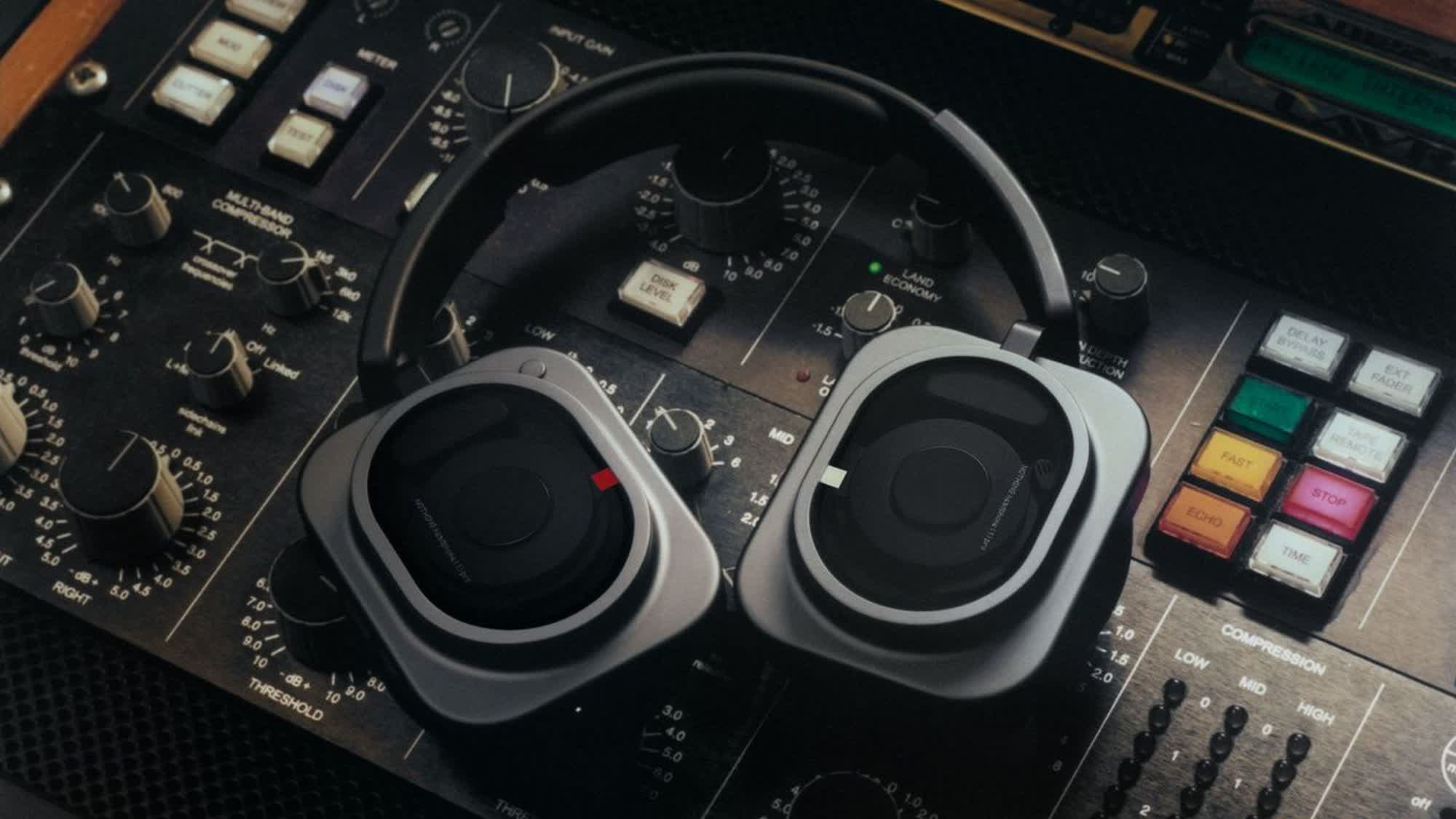
In context: Android smartphone maker Nothing has launched the Headphone (1) Pro, its new flagship audio product, which it claims combines an elevated listening experience for consumers with studio-grade production and mixing features for professionals. It succeeds last year’s Nothing Headphone (1), which TIME named one of its Best Inventions of 2025.
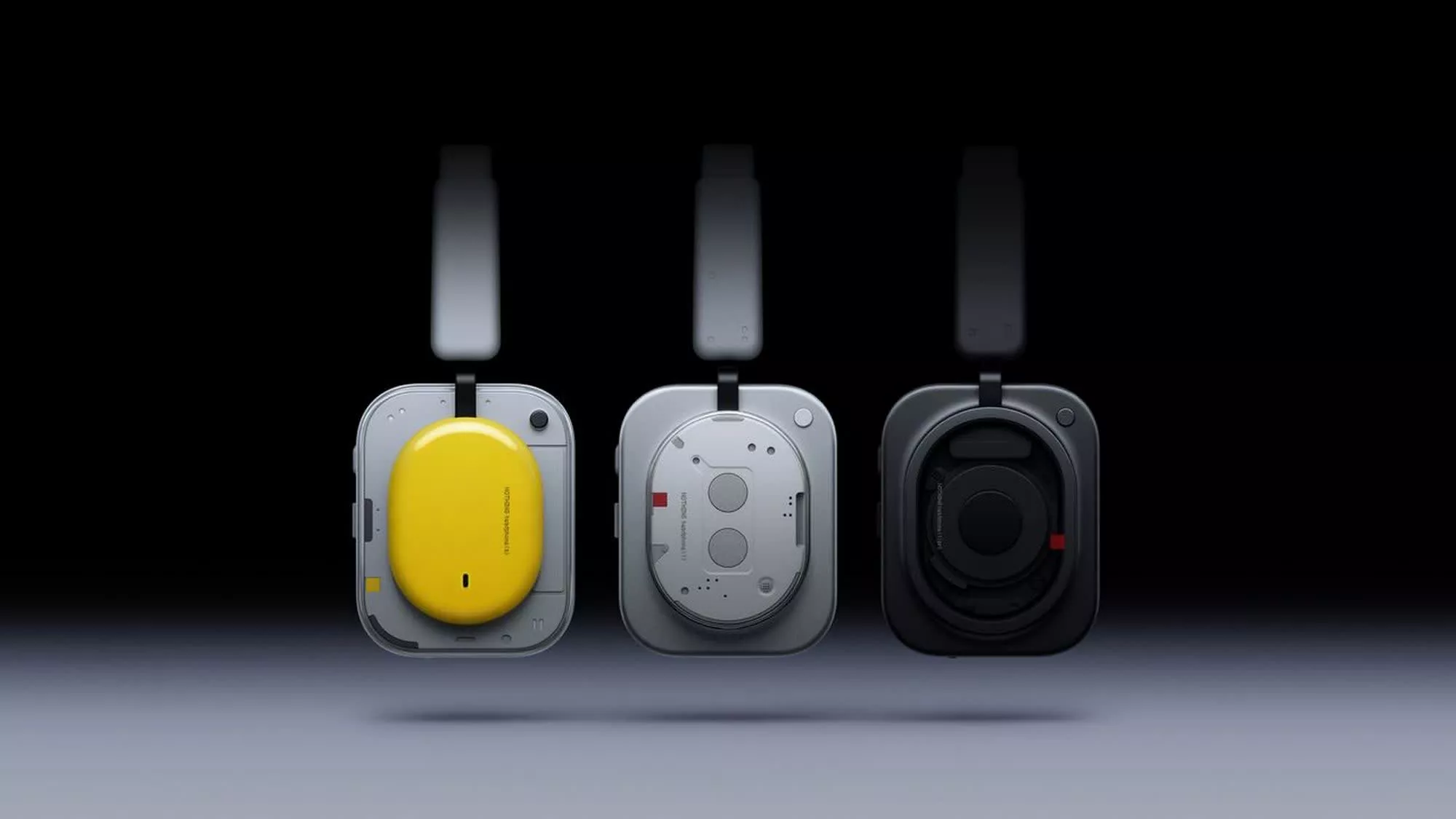
The biggest change in the new model is a three-driver audio system. It includes a bass dynamic driver designed to add more punch and sensitivity to low frequencies, a precision dynamic driver that adds more texture to vocals and instruments, and a new treble xMEMS driver that Nothing says delivers crisper highs.
Nothing also worked with London’s Metropolis Studios to tune the Headphone (1) Pro, with the collaboration focused on professional audio tools and soundstage characteristics.
The company also highlights an improved adaptive active noise cancellation system that uses a 10-microphone array to more accurately filter ambient noise than the first-gen model. With claimed noise reduction of up to 46 dB, Nothing is positioning the Headphone (1) Pro against premium rivals from Bose and Sony.
Advertisement
Nothing says the improvement in noise reduction should be particularly noticeable in strong winds or noisy traffic. The headphones also feature redesigned ear cushions with an 8mm silicone baffle wall inside, creating a stronger sound barrier and improving the seal around the ears.
The Headphone (1) Pro supports Hi-Res wireless audio and wired playback over USB-C at up to 24-bit/192 kHz. It also offers five modes of Dynamic Spatial Audio with head tracking, along with five new custom EQ profiles. A separate Flat EQ switch is designed to give producers and creators a more neutral sound profile.
The Headphones 1 Pro is built out of aluminum and titanium to provide a durable shell while creating a premium look and feel. It also retains Nothing’s transparent design language, using shatter- and scratch-resistant 9H Panda Glass on both ear cups to reveal parts of the triple-driver architecture.
Despite the increased use of metal, Nothing has reduced the headphones’ weight to 327 grams through a redesigned internal architecture, including replacing steel arms with titanium. Other changes intended to improve comfort over longer listening sessions include a wider headband with thicker padding and softer ear cushions.
Advertisement
The Headphone (1) Pro is positioned to compete with premium models such as the Sony WH-1000XM6, Bose QuietComfort Ultra, and Apple AirPods Max. It is priced at $399 and will be available beginning September 29 through Nothing’s official store at nothing.tech, Amazon, and Best Buy stores across across the US and Canada.
Ned Jenkinson of the University of Birmingham and Matthew Weightman of the University of Oxford discuss how advancements in brain research might affect how we learn and grow our skillsets.
Whether learning a new piano piece or adapting your tennis serve, acquiring physical skills depends on your brain’s ability tostrengthen and refine neural connections. Researchers are exploring whether this process can be accelerated with technology.
Scientists are particularly interested in the potential of non-invasivebrain stimulation, a group of techniques that can alter brain activity without surgery.
If these techniques can successfully enhanceneuroplasticity, the brain’s ability to reorganise and form new connections during learning, then they could be of use anywhere where performance depends on learning complex movements, from sport and music to surgery and beyond. Researchers are also seeing if these technologies could help with learning non-physical skills, such aspicking up a foreign language.
Elite sport, professional gaming and high-performance workplaces could all become targets for these enhancements if they prove effective. Brain stimulation could also have a big role to play in medicine, helping patients recover physical skills lost through injury or disease, such asstroke.
Studies suggest there’s a lot of potential here. But translating this potential into useful tech that reliably boosts learning physical skills remains a big challenge.
Stimulating findings
Research into enhancing motor learning with electric or magnetic stimulation has been gaining momentum since the turn of the millennium, with early studies garnering considerable excitement.
Advertisement
In atypical experiment, participants might learn a sequence of finger movements similar to practising scales on a piano while receiving stimulation over brain regions involved in movement. Other studies have examined how stimulation could be used forbalance training or teachingsports-relatedskills orsurgical techniques.
Some of these experiments produced eye-catching results, finding that participantslearned certain movement tasks faster orretained skills for longer if they underwent brain stimulation. But other studies failed to find benefits. And in some cases, researchers struggled to replicate the success of earlier promising experiments when repeating them.
One reason for these mixed findings is that there’s no such thing as a universal ‘learning network’ in our brains. Different skills rely ondifferent combinations of areas near the surface of the brain as well as those deep within it.
Additionally, people can respond very differently to the same stimulation. Factors such as age, anatomy, genetics and even baseline skill level may influence whether stimulation is beneficial. Add to that the infinite number of ways to apply stimulation, the picture becomes murkier.
Advertisement
Despite these challenges, the field continues to evolve in its quest to enhance motor learning. For instance, rather than broadly stimulating the brain, researchers are increasingly targeting specific neural circuits involved in learning.
This is partly thanks to advances inneuroimaging andcomputational modelling, which has allowed scientists to predict how electrical currents travel through a person’s brain. Newer brain stimulation technologies, such as focused ultrasound, can also now reach deep structures involved in skill acquisition.
The goal is to use these technologies not simply to increase brain activity, but to influence the right neural circuit at the right time during learning. This idea builds on a fundamental principle of neuroscience, often summarised as“neurons that fire together, wire together”. When brain cells are repeatedly activated at the same time, the connections between them become stronger.
By carefully timing stimulation tocoincide with the movements made during practice, researchers hope to reinforce the neural pathways involved in learning a new skill. In principle, this could make stimulation more reliable and more effective than current approaches, but researchers are stillfine tuning exactly how this would work.
Advertisement
Motoring ahead
Important questions remain. Who would have access? Should stimulation be regulated in competitive environments such as sport? And how much evidence should be required before consumer devices are marketed to healthy users?
These questions are becoming increasingly relevant as brain stimulation moves beyond the laboratory and clinic. A number of at-home devices are now available for people to buy.Some have receivedregulatory approval, as they’re indicated for treating medical conditions such as depression. But there’s also a growing market for devices forcognitive and performance enhancement. For these uses, no regulatory approval is needed.
The technology is advancing rapidly, but evidence to support it and regulations governing it are still trying to catch up. Proper frameworks for its adoption may simply be bypassed by the ready possibility of ‘DIY’ brain stimulation.
For now, brain stimulation is unlikely to transform anyone into an overnight virtuoso or elite athlete. But as researchers develop increasingly precise ways of targeting the neural circuits that underpin learning, the prospect of enhancing human performance is shifting from science fiction towards scientific possibility.
Advertisement
The challenge today is not simply learning how to influence the brain, but deciding where, when and why we should.
Ned Jenkinson is a senior lecturer in human movement sciences at the School of Sport and Exercise Sciences at the University of Birmingham. His research incorporates a range of techniques including non-invasive brain stimulation, electrophysiological recording, eye-tracking, neuroimaging and behavioural techniques. He uses these techniques to investigate how the brain controls movement and how it allows us to learn new motor skills.
Matthew Weightman is a postdoctoral researcher at the Oxford Centre for Integrative Neuroimaging in the Plasticity Group at the University of Oxford, led by Prof Heidi Johansen-Berg. He is broadly interested in the field of sensorimotor neuroscience. His current work focuses on the role of sleep to recovery after stroke. More specifically, he is interested in how we can improve sleep after a stroke, whether improved sleep in stroke patients relates to better functional recovery, and if physiological processes that occur during sleep can be enhanced post-stroke to boost consolidation.
Advertisement
Don’t miss out on the knowledge you need to succeed. Sign up for the Daily Brief, Silicon Republic’s digest of need-to-know sci-tech news.
Keio Corporation (Keio), a major private railway operator in Japan, said its network was hit by a ransomware attack over the weekend, disrupting some of its business systems.
Following a system failure in the early hours of Saturday, the company confirmed the attack and shut down its network to prevent additional damage.
The company said it is investigating the extent of the impact and whether the attackers accessed any customer or business partner information.
Keio is a large Japanese railway operator with 85 km of track and 69 stations, as well as a separate hospitality business of 25 hotels. The company has over 2,200 employees and a reported annual revenue of about $2.6 billion.
Advertisement
“In the early hours of September 26, 2026, we confirmed a ransomware attack on our group’s servers. We have reported the incident to the police and are conducting an investigation into the attack’s route and damage with the cooperation of external experts,” Keio says.
The incident appears to have affected only the hospitality side of Keio’s business, not train operations.
A separate announcement published on the company’s Keio Plaza Hotel Tokyo website is warning of possible delays on some customer-facing services.
At the time of writing, BleepingComputer could not find a ransomware group claiming the attack on Keio.
BleepingComputer has contacted the company to request more information about the incident, and we will update this post with their response once it reaches us.
Tokyo Metro has also disclosed a cyber incident over the weekend in which attackers gained unauthorized access to its systems and accessed 59,000 member email addresses.
Although both Keio and Tokyo Metro are Japanese railway operators, it is unclear if the organizations were targeted in a coordinated campaign by the same threat actor.
Advertisement
Tokyo Metro is a major transit operator that runs nine subway lines covering 195 km and 180 stations, carrying an average of 7 million passengers daily.
The company said the breached systems contained only email addresses and that it has already identified and closed the security weakness the attackers used in this case.
Join Mikko Hyppönen and security leaders from the NFL, CHANEL, and Atlassian for a two-hour digital summit on what AI-speed attacks change, what defenders should stop doing, and how to validate, decide, fix, and re-validate at machine speed.
Home puts chats, delegated work, and Office documents inside one interface
Code lets non-programmers describe software and have Copilot build it
Autopilot can continue recurring work without waiting for another instruction
Microsoft has introduced a redesigned version of its Copilot AI platform which claims to combine chat, delegated work, and coding tools into a unified application experience for users.
The company says the update is meant to let individuals and organizations scale artificial intelligence across everyday tasks and long-term projects.
Three new capabilities anchor this release, including Home, Code and Autopilot, each aimed at a different kind of work.
Latest Videos FromTechRadar
Advertisement
Home brings Chat and Cowork together
The Home tool brings together two existing modes, Chat for quick questions and Cowork for tasks users delegate entirely, under one shared starting point.
Word, Excel, and PowerPoint now operate inside this same interface, letting users draft documents, budgets, and presentations without switching applications.
In these documents, Copilot is now grounded in Fabric IQ, pulling context from more than 20 million semantic models built in Power BI.
Edits made by colleagues or by the assistant itself appear in real time, so progress stays synchronized across a shared file.
Sign up to the TechRadar Pro newsletter to get all the top news, opinion, features and guidance your business needs to succeed!
A new plugin registry will let organizations manage Microsoft, partner and custom-built plugins from one central catalog starting this month.
Advertisement
Independent developers and partners can also publish plugins once for use across multiple Copilot surfaces under the new registry arrangement.
The Code tool allows non-programmers to describe an app, tracker or dashboard in plain language and have it built automatically.
This feature runs on the same underlying technology used in GitHub Copilot and can be hosted within a company’s own systems.
Advertisement
Autopilot operates without constant prompting
Autopilot, the third addition, is a persistent agent capable of completing recurring work without needing a new instruction each time.
It can run supplier reviews or similar multi-step processes, build schedules, contact stakeholders, and follow up on outstanding items independently.
Because it operates continuously in the cloud, work can continue late at night or whenever a person’s attention shifts elsewhere.
Advertisement
A related feature called Today, entering private preview in October, will summarize missed messages and pending tasks across mail and chat.
Microsoft is also tying spending controls to these tools through a system it calls FinOps for AI, letting administrators track usage.
Administrators can set spending limits, approve credit requests and restrict which AI models different teams are permitted to use each month.
Everyday tasks like quick answers or first drafts run on a fixed-price subscription, while agentic features use usage-based billing.
Advertisement
Code, Cowork and Autopilot all fall under this usage-based pricing model, alongside frontier models Microsoft refers to as Astra and Fable.
Home and Code are set to roll out through Microsoft’s Frontier program within weeks, and Autopilot enters private preview by month’s end.
Microsoft has not released independent data showing how widely the three features are being adopted, how accurate they are, or how much time they actually save.
Automate your Mac with ease using Shortcuts and Apple Intelligence.
Filipe Espósito for Engadget
Shortcuts has been available on Mac since macOS Monterey, but it’s one of those utilities many Mac users have never explored. At first, it can seem too complicated. You have to know which actions to choose and how to connect them, then hope it all works.
But macOS 27 Golden Gate changes that with Describe a Shortcut, which lets you type exactly what you need and have Shortcuts do the heavy work for you with AI. It doesn’t always work, but it makes the app much easier to use — especially if you’re not an expert.
If you’re not familiar with Shortcuts, it’s an automation tool where you create scripts to handle tasks on your devices. Apple’s own example is a shortcut that texts your spouse with an estimated arrival time based on traffic when you’re leaving work. But you can get much more complex, like a shortcut that checks your calendar and the weather to give you a summary of what to expect today.
Advertisement
There are many possibilities, and now with macOS 27, it’s much easier to master the app.
Creating shortcuts on your Mac is easy
Filipe Espósito for Engadget
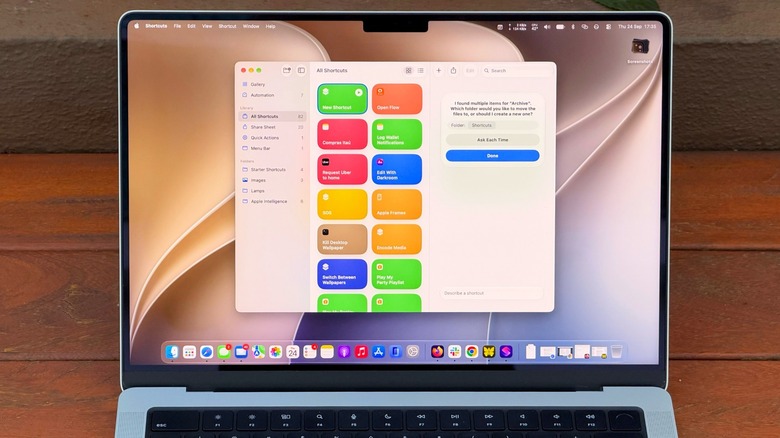
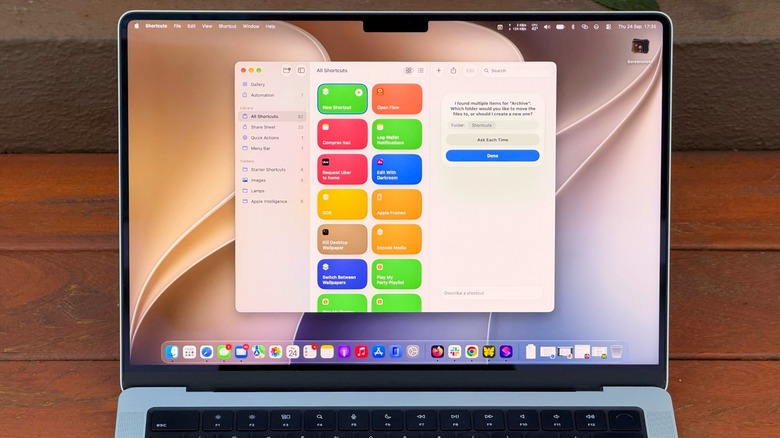
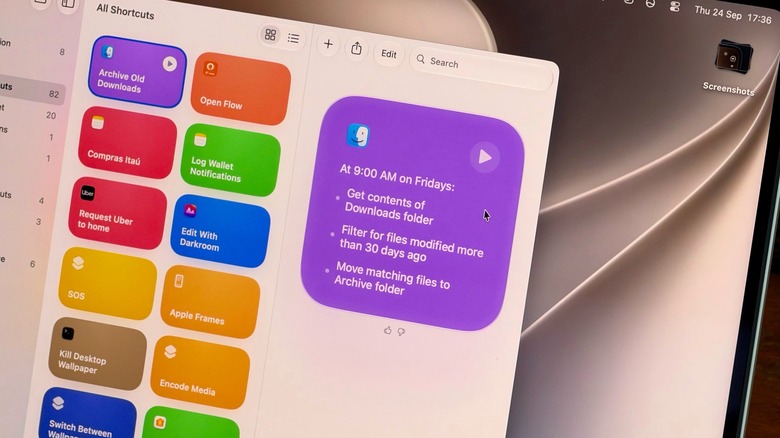
Creating a new shortcut takes a few seconds. Open the Shortcuts app on your Mac and click the Plus button to enter a prompt. The more details you provide, the more likely the app is to get your shortcut right. A command like “Clean up my Downloads” might be too vague for the app to understand what you really want. Instead, try something like “Every Friday, move anything in my Downloads folder older than 30 days into a folder called Archive.” You’re more likely to end up with a working shortcut when you provide clear details.
This is a good example of how Shortcuts are helpful for tasks you often forget to do; no one really cleans out their Downloads folder unless they’re trying to free up space. Plus, you can check the result right away by opening the folder and looking at what moved. If the shortcut moved too much, re-enter the prompt with even more specific details.
Advertisement
A shortcut can also be great for summarizing long text with Apple Intelligence. Try something like “Take the text on my clipboard, summarize it in three sentences and save it to a new note.” Then copy a long article or an email, run the shortcut and you’ll have the short version in Notes.
Make your shortcuts easier to reach
Filipe Espósito for Engadget
If a shortcut isn’t part of your normal routine, chances are you’ll forget about it after a while. Thankfully, you can assign a keyboard combo to a shortcut, or pin it to the menu bar, so you’ll never forget it.
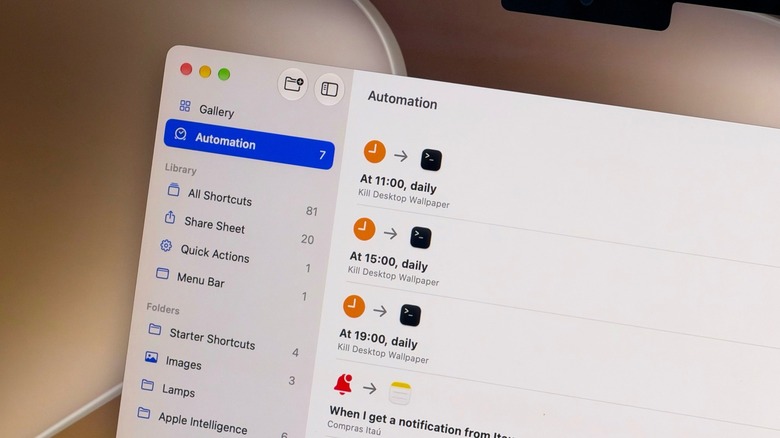
Choose the shortcut you want to adjust and click Edit. Go to the Shortcut Details menu (the one with the information icon) and select Add Keyboard Shortcut. To add it to the Control Center or menu bar, open Control Center on your Mac (at the top-right) and select Edit Controls. There, all you have to do is add the action from the Shortcuts app, and you’re all set. Exploring the Automation tab is also a good idea for creating a seamless workflow of shortcuts that run on their own when you need them.
Advertisement
Shortcuts isn’t the only element in macOS 27 that acts on your behalf. Visual Intelligence has its own key combo: Shift + Command + Space. After pressing this, select a window on-screen and have Siri answer questions about it or take action, like adding an event to your calendar. Try it on an email with a date buried in it, for example. Siri can also run your shortcuts via voice, speaking of which.
Shortcuts and Siri AI require Apple Intelligence, which means you need a Mac with an M1 chip or later — Intel Mac users are out of luck. Also, some limits may apply when using Apple’s AI models in Shortcuts. More complex prompts could reach a limit faster.



























































You must be logged in to post a comment Login