Researchers remotely disabled a vulnerable updater in the abandoned Time4Popcorn app, a fork of the Popcorn Time BitTorrent client, closing a security flaw that could have allowed attackers to execute malicious code with elevated privileges on millions of computers.
The vulnerability, tracked as CVE-2026-30612, affects Windows and macOS updaters that contacted the app’s abandoned domain (popcorntimeupd.xyz) over unencrypted HTTP and accepted executables without verifying digital signatures.
Anyone controlling the update domain could manipulate HTTP traffic and execute code as SYSTEM on Windows and as root on macOS.
The Popcorn Time app featured a Netflix-style interface that integrated BitTorrent downloads, allowing users to consume illegal content right directly inside the app.
Advertisement
The project was abandoned for legal reasons but later relaunched as a legitimate content-streaming app. However, forks such as Time4Popcorn emerged under the Popcorn Time name, quickly attracting millions of users.
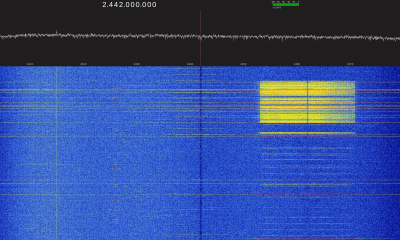
Researchers at Eye Security discovered the security risk after registering the popcorntimeupd.xyz domain and observed up to 3 million Windows and 350,000 macOS client connections to Time4Popcorn.
Location of Time4Popcorn users
Source: Eye Security
Connections came from residential ISPs and corporate, government, and military networks. However, none of the users appeared to be actively using the app, suggesting it had been installed and forgotten.
“If we were able to send an update, we could potentially get code execution on millions of systems,” Eye Securit notes, adding that “the impact would be severe if this were to fall into the wrong hands.”
Following this discovery, the researchers registered 14 more domains associated with the service.
Advertisement
Securing the systems
Between November 2025 and March 2026, Eye used the vulnerable update mechanism to deliver remediation code that stopped and disabled the updater.
Their payload collected no host data or telemetry, and deleted no files on the users’ computers, keeping their actions within a fully legal context.
Eye explains that it had to modify its payload during testing to evade antivirus products that flagged it for disabling a service.
After deploying the remediation, Eye recorded 2 million update downloads, and by March 1 this year, requests to its update domain dropped by 98%.
Advertisement
Following the successful completion of the remediation operation, domain ownership was passed to the non-profit security organization The Shadowserver Foundation.
Despite this success, the researchers warned that the risk is not fully eliminated for users of the app.
First, Android users remain exposed as installing an update would require user interaction, and researchers could not disable the updater remotely for the mobile platform.
Second, the Time4Popcorn app uses a severely outdated Chrome engine from 2014, with no sandbox protections, which could be exploited in attacks.
Advertisement
The best course of action would be for users to remove the software entirely from their systems.
Overall prevention scores can hide what happens after initial access. Once attackers are using valid credentials, prevention drops sharply.
The Blue Report 2026 measures defenses technique by technique across 338 million simulations run in customer production environments.
It’s true that money makes the world go around, but it’s oil that lubricates it. We use oil for just about every sort of industry today, from construction to pharmaceuticals, home appliances to travel, and everything in between. There simply is no one-size fits all oil type for all of this stuff despite it all coming from the same source, which is why you can’t use petroleum jelly in place of motor oil. That’d be like comparing a poodle to a grizzly bear because they’re both caniforms.
But that doesn’t apply to every type of oil. Sure, some of them are obviously extremely different, but then you have two with apparently similar functions on paper, like gear oil and hydraulic oil. They’re both lubricants and noncompressible fluids, so they’re interchangeable, right? Not at all, and the reason why is additives and chemical composition.
When you’re creating something for a specific purpose, you want to emphasize traits that are favorable for that purpose. If you know your oil needs to function in high-pressure environments, you use additives that work well for that. If you need to lubricate fast-moving gears, you want something different. The viscosities, protective qualities, tolerances, and operating temperatures of each fluid are vastly different from one another.
Advertisement
Think of it this way: No mechanic would ever recommend pouring brake fluid — no matter what type it is — into a manual transmission or gear oil into your brake system. But why, exactly? It’s because these fluids were designed to move and react to pressure in different ways. What are those ways though, and what’ll happen if you mess them up? Let’s discuss.
Advertisement
The function of gear oil
Kastaprav/Shutterstock
Gear oil goes by several different names depending on how it’s used, its viscosity, additives, and so on. You have manual transmission fluid (MTF), differential oil (simply diff oil), hypoid gear oil, synchromesh oil, helical, worm, bevel — all common names for specific types of gears or gearboxes. Put simply, different gears have different needs. Some of them build up a lot of friction and heat like hypoid gears, which is why it has its own unique hypoid gear oil typically used in differentials. Others spin really quickly, like those found in manual transmissions.
In general, gear oil is designed to act as a barrier between each set of teeth so that the metal itself isn’t in contact. Metal-on-metal friction creates wear and heat. Moreover, the fluid pulls that heat away from the working area, so it too gets hot, which is why transmission coolers are a thing. However, the gears in a manual transmission are generating a ton of sliding friction, so you need a fluid that’s sticky. Likewise, those gears place tremendous pressure upon the fluid itself. That leads us back to additives — different pressure ratings for gear oil have different designations, and thus different additives to fulfill those purposes.
All that is a long-winded way of saying that gear oil is an umbrella term, the same as hydraulic oil, and the two don’t mix — literally and figuratively. Hydraulic oil lacks the fundamental properties that gear oil possesses, and vice versa. Using hydraulic oil in a gearbox will break teeth faster than chomping down on a lump of granite.
Advertisement
How hydraulic oil differs
Nafadh/Shutterstock
The purpose of hydraulic oil is to act as a power transfer medium. You fill a hydraulic line with this fluid, apply pressure, and the incompressible fluid will transfer that pressure from Point A to B. There are numerous benefits to using a fluid as opposed to a solid arm — fluids are flexible, so you don’t need complicated joints; they’re cheap and easily produced, and there are lots of different types that specialize in different applications. Pro-tip: A motor oil substitute isn’t one of those applications.
That said, hydraulic oil’s main benefit is its incompressibility, but it also serves numerous other functions such as lubrication, heat transfer, anti-corrosion and oxidation, and so on. Much like gear oil, it’s about minimizing friction and protecting the working surfaces. However, hydraulic oil operates in a high-speed, high-pressure environment. It’s got a wide operating temperature range, it’s far less viscous than gear oil, and it’s extremely good at transferring energy.
Functionally speaking, gear oil in hydraulic lines is basically what would happen if you put in hydraulic oil that was incredibly thick and offered little of its secondary or tertiary benefits. So what happens if you use hydraulic oil that’s too viscous? You risk damaging the equipment because the pressure isn’t enough to move the fluid as efficiently, so you end up with sluggish performance and horrible lubrication.
It’s like a bicycle gearbox. If you try and pedal in first gear down a hill, your legs won’t be able to keep up — that’s hydraulic fluid in a transmission. If you try and take off uphill in top gear, that’s like using gear oil in hydraulic lines.
An experimental vaccine offers new hope to patients with melanoma, one of the most aggressive forms of skin cancer. The pharmaceutical companies Merck and Moderna released the results of a Phase 3 clinical trial that evaluated the efficacy of a personalized mRNA-based vaccine that, when combined with immunotherapy, reduced the risk of disease recurrence or death by 42 percent compared to treatment with the immunotherapy drug alone.
Georgina Long, medical director of the Australian Melanoma Institute and the study’s principal investigator, said in a statement that these results are “transformative” and “have the potential to make a foundational shift in how we treat patients with earlier-stage melanoma.”
The trial, known as INTerpath-001, included 1,137 people with high-risk melanoma who had undergone surgery to completely remove their tumors. The participants were divided into two groups. Those in the first group received only Pembrolizumab, a drug that helps the immune system detect and fight cancer cells, while those in the second group were treated with the same drug in combination with the mRNA vaccine, called Intismeran Autogene.
After monitoring the participants for an average of 24.6 months, the researchers determined that addition of the vaccine reduced the risk of cancer recurrence or death by 42 percent compared to Pembrolizumab alone.
Advertisement
The results also showed that the experimental treatment reduced the risk of the disease spreading to other parts of the body by 38 percent. At the end of the follow-up period, 82.2 percent of patients who received both treatments remained recurrence-free, compared with 70 percent of those who received Pembrolizumab alone.
“The results of the INTerpath-001 study represent a major breakthrough in the treatment of melanoma and, in particular, in the development of personalized medicine,” Eva Muñoz Couselo—who leads a melanoma research group at the Vall d’Hebron Institute of Oncology, in Barcelona and who was not involved in the study—told SMC Spain. “For the first time, a Phase III trial has demonstrated that an individualized therapeutic vaccine, designed on the basis of the molecular characteristics of each patient’s tumor, can significantly improve the outcomes of conventional immunotherapy.”
The laboratories explained that the vaccine was developed from a tumor sample taken from each patient, which was used to identify specific mutations that would create distinct proteins the immune system could learn to recognize in order to attack cancer cells. The scientists selected up to three of these molecular signatures per patient.
Spending $1,999 on a foldable and then squinting at a crammed web page isn’t something that anyone wants.
Apple’s Safari team said Friday it is exploring a way for websites to use more of the iPhone Duo’s outer display. Right now, a column of Safari controls swallows a chunk of the screen.
Apple
Why does Safari feel so cramped on the outer screen?
The answer is simple: Safari controls sit on the right, and web pages can’t draw behind them. Apple moved them there to save vertical space, but it costs width.
That leaves pages about 382 CSS pixels wide in portrait, for anyone well-versed in the units web designers use. Safari tints the leftover strip to match the web page, but that looks like wasted space to me.
You might wonder why Apple doesn’t let pages stretch underneath. Developers can technically do it with a setting called viewport-fit=cover, which makes a page fill the whole screen.
What is Apple asking for, and what can you do today?
Instead of flipping that switch, Apple wants something sturdier and simpler for developers. For now, it is asking for ideas and promising to keep us posted. I appreciate the honesty, but there’s no official date or timeline yet.
Until then, I’d read long pages on the inner screen, where scrolling feels better.
The silver lining, however, is how the browser treats PDFs. Open a PDF in Safari and fold the phone partway (like a paperback), and you’ll see two pages at once. The interface switches back to one when the phone lies flat or closes.
The term lasers is actually an acronym that stands for Light Amplification by Stimulated Emission of Radiation. The use of lasers has certainly grown since the technology arose in the 1960s, with lasers now commonly found in everything from consumer electronics like Blu-ray players and cat toys to military weapons. Lasers have different power capabilities, apertures, and wavelengths. In a vacuum, a laser pointer’s beam is technically infinite, regardless of its power. However, its aperture and wavelength will influence its divergence, which is the measurement of how fast a beam expands over distance.
For example, a 0.005 W laser pointer would produce a light spot measuring 8 miles in diameter on the Moon’s surface, assuming there was no interference from clouds. Meanwhile, a 500,000 W military laser would produce a 1.5-mile diameter light spot in this setting. While it might seem that the military laser, which is 100 million times more powerful than the laser pointer, should expand across a larger diameter, the reason the less-powerful laser spreads across a larger diameter is because it has a much smaller aperture. Military and more powerful lasers are generally designed with larger apertures to concentrate light and create a more focused beam.
Advertisement
Outside of hypothetical scenarios, a laser’s distance traveled depends on atmospheric conditions and interference. An average laser pointer might be able to extend to around one mile with little atmospheric influence, though that distance could be expanded significantly to over six miles, depending on which type of device it is. The fact that lasers can travel such far distances is why it is a felony to point them at airplanes, as it can incapacitate pilots.
Advertisement
Lasers can also pose a threat at certain distances
Because laser pointers can be hazardous, research into the technology has found that there is a certain distance at which they should be operated to stay safe. The lowest-power lasers that use less than 1 mW of energy have the potential to injure a person’s eyes at between 23 and 46 feet. They remain visible and potentially dangerous as far as 9,759 feet, when planes enter the conversation. While they can’t burn a person’s skin, they’re powerful enough to warrant warning stickers.
Higher-power lasers are significantly more dangerous. For example, a 5 W green laser can harm a person’s eyes up to 820 feet away. It can burn the skin at 54.3 feet and can potentially start a fire as far away as 36.2 feet. Because the human eye is more sensitive to green light, a green laser pointer is more dangerous further away than a red laser pointer, and some types of strong green lasers can also damage certain kinds of cameras.
It might seem counterintuitive that a more powerful laser becomes harmful at a greater distance. However, that is because divergence affects a laser’s distance in that a small divergence ensures a more powerful beam at a greater distance, while a larger one does the opposite; essentially, the tighter the beam, the more dangerous it is the further it travels. Power is the most important aspect of a laser pointer’s beam when determining potential hazards. Increasing the power increases the danger, though the affected distance is proportional to the square root of the total power increase.
Revival Rugs is turning 9 this month, and evidently, the birthday girl is feeling generous. The rug retailer is taking 20 percent off everything sitewide (exclusions may apply, as always). But don’t dillydally—the party ends Sunday, October 25.
Sure, Black Friday is around the corner, and there will be deals aplenty. But will they be sitewide and stackable? Revival’s 20 percent stacks, meaning it also applies to marked-down and clearance items. Will the rug you’ve been eyeing for months still be available in November? Are you willing to risk it? I wouldn’t.
Why We Love Revival Rugs
Revival is a retailer we love here at WIRED, mainly because of its lovely selection of hand-knotted and handwoven wool rugs at reasonable prices. The company imports rugs from Turkey, Morocco, and India, and also works with its own supplier in Oakland, California. Revival also offers a variety of washable rugs, à la Ruggable (which, by the way, is having its own October Hosting Sale). Not every Revival rug is machine washable, but many are easy to maintain with spot cleaning and a low-suction vacuum.
WIRED reviewer Nena Farrell has the Bronto Hand-Tufted Rug in her toddler’s bedroom, and they are both fans. Farrell appreciates how soft it is and how it makes the room feel playful without looking tacky. Meanwhile, her son is mostly here for the giant dinosaur, which, honestly, is fair. WIRED operations coordinator Molly Higgins has the Garland Washable Area Rug in her living room, where its Turkish-inspired folk-art pattern adds plenty of color and disguises everyday stains. WIRED commerce director Cooper Fleishman just bought a vibrant marmalade wool rug for his new office from the Birthday Sale; sadly, it’s sold out, but this tonal design is a close cousin.
Advertisement
As with any sale, there are a few exclusions. Swatches and gift cards aren’t included, and be sure to read the terms and conditions for more information.
Padua’s Palazzo Moroni hosted the reveal of the Michelotto Gruppo 4 Tributo on October 10, 2026, fifty years after the Ferrari 308 received its Group 4 homologation. AC Motorsport, started by Padua entrepreneur Francesco Calzavara following his years at Michelotto, promoted the effort while Michelotto Group carried out the design, development, and construction.
Giuliano Michelotto established his workshop in 1969 and worked on almost 700 competition cars, winning an astounding 1,495 races, including 44 world championships. Ferrari later approached Michelotto’s business to acquire the Pininfarina-designed 308 GTB for Group 4 rallying. This essentially involved grafting on tubular frame sections, some seriously advanced composite bodywork, and a seriously tweaked 2 valve V8, and the results were nothing short of stunning: a 1981 Tour de France Automobile win with Jean-Claude Andruet and a close second place at the 1982 Tour de Corse, Ferrari’s only ever top level World Rally Championship podium finish.
LEGO FERRARI MODEL CAR KIT – Builders ages 10+ can create the legendary Technic Ferrari FXX K with authentic details and working mechanical features
AUTHENTIC RACE CAR DETAILS – This supercar building set features working butterfly doors, opening hood, and an engine cover that reveals the…
CAR MODEL KIT – Young engineers explore real automotive concepts with this educational learning toy as they build the working differential and watch…
Under the hood is a transversal 3.4-liter naturally aspirated 90-degree V8, producing 380 horsepower at 8,250 rpm and 363 Nm of torque on 98 RON fuel. The aluminum block and heads, four camshafts driving two valves per cylinder (which provides more torque on mixed surfaces than a four valve system), and electronic injection all add up to a very powerful package. The power is sent to the rear wheels via a five-speed manual with a gated shifter, dog-ring engagement, and an impressive eight different gear ratios to choose from, so whether you’re tackling tight roads or quicker circuits, you can get the car set up to fit.
The tubular frame is comprised of elliptical tubes that hold composite body panels and an integrated roll bar. This all adds up to a relatively light 950 kilos (with fluids but no gasoline), giving you a power-to-weight ratio of around 2.5 kilograms per horsepower. That’s rather similar to the original 308 footprint, however it should be noted that this is a two-seater berlinetta.
So, how is the ride? The car comes with double wishbones machined from solid, adjustable dampers, and stabilizer bars, which allow you to configure the entire chassis to your liking. Four piston calipers clamp down on the front and rear ventilated disks (which measure 345 and 328 millimeters, respectively), and the brake balance may be adjusted from the cockpit. You’ll be seated on eighteen-inch wheels with Pirelli P Zero Trofeo RS tires.
The composite bodywork is based on the classic wedge shape, but with a much more modern twist. You get a low nose, pop-up headlights, various vents and gills on the hood and fenders, flared arches, a seriously enormous rear clamshell, four circular taillights, and, of course, dual exhausts. On the inside? To keep things basic, you get composite-shell seats wrapped in Alcantara, a three-spoke wheel, and a gated shifter, all linked with a digital display and a plethora of physical switches.
Michelotto expects to build fewer than fifty of them, primarily in Padua, and hopes to confirm the final number by the end of 2027. What about price? They’re keeping that under wraps for now, but comparable restomod projects would suggest it’ll cost at least 450,000 euros. As for road registration (street legality), that is still up in the air, but the car clearly continues the work of the workshop that first took the 308 and transformed it into a true rally winner. [Source]
Getting initial customers as a startup can be one of the most grueling challenges in business. Even when companies manage to snag some early interest, there’s no guarantee those customers will stick around.
At TechCrunch Disrupt last week, Elia Wallen, founder and CEO of travel startup Engine, Gamma founder and CEO Grant Lee, and Crystal Huang, general partner at Google Ventures, shared tips on how to attract and retain customers.
In the current era — when young AI companies like Cluely and Instinct are building big audiences not just through their products but also through their founders’ colorful online presences — social media can seem like a magic bullet for reaching early customers. But founders who want heighten their business strategy with modern marketing, have to be strategic, according to Lee.
Gamma, which sells AI-powered presentation software, managed to scale its business exponentially with a social media strategy that deployed influencers through its Ambassadors (or “Gambassador”) program. The company adopted the plan before influencer-based marketing was a tried-and-true strategy for smaller companies, eventually reaching a multi-billion dollar valuation.
Advertisement
But simply giving influencers a platform and telling them to promote your brand online doesn’t automatically translate to sales, said Lee. There’s more to it than that.
“If you have a product that can serve many different segments or use cases, then you want to basically have creators that can target each one of those,” Lee said. “If you have folks that are in consulting versus people that do all their marketing and create all the decks for their CMO, there’s all these different segments you might want to go after.”
Lee said sometimes founders seem to treat creator marketing or influencer marketing as a sort of set it and forget it thing.
“I think you’re better served by really spending a lot of time with these creators, because if they’re not able to understand how to articulate the value of your product, it doesn’t matter how much money you spend, it’s just going to fall flat,” Lee added.
Advertisement
The effectiveness of social media depends largely on the type of business. Other ways of reaching customers can be just (if not more) effective.
Wallen would know. His company Engine, which manages lodging and travel bookings for midsize businesses, bootstrapped its way to $150 million in bookings before taking on any outside funding. They also had no visible social media strategy at all. For Wallen, traditional sales tactics can be far more useful than a positive TikTok video.
“We did events and we smiled and dialed,” said Wallen. “We still have a lot of people picking up the phone. A lot of people who didn’t grow up with that or don’t understand it think that it’s outdated or it doesn’t work but it does. It’s a hard thing. There are a lot of companies that just refuse to do it or don’t know how to do it well. But they’re missing out on a very big offline client base.” He added: “The phone still works.”
Wallen also shared an in-person tactic that his company deployed during its scrappy early days: hiring a magician named David to perform tricks for prospective clients at events and encourage them to visit the Engine’s booth. In short, old-fashioned personal engagement can work just as well, if not better, than the latest social media tricks.
Advertisement
Huang, who has managed droves of startups and shepherded them to success, said that once you have a customer, a lot of value can be derived from looking at how they use the product.
“Can you look into usage data and figure out if it’s recurring, if it’s increasing, if they are referring their friends?” Huang said. “It can come across in early usage and retention information as well. And then also, do you see some super fans, right, who even want to work at the company, promote the company, be attached to the brand?” She added: “You need to have ways to create evangelists who are really passionate about the product.”
When you purchase through links in our articles, we may earn a small commission. This doesn’t affect our editorial independence.
The Call of Duty series needed a win this year. Last year’s Black Ops 7 was a clown car of bad decisions, featuring an always-online campaign mode with ridiculous zombie bosses and open-world Warzone. Worse still, the multiplayer mode (the only reason that many people buy the game) was entirely forgettable. Developer Treyarch was tasked with putting out Call of Duty games two years in a row — that crunch was a recipe for disaster.
On the other hand, that means Modern Warfare developer Infinity Ward had plenty of time to cook up the fourth and final entry in its own series. Thankfully, the studio used that extra runway to its advantage. Modern Warfare 4 may not have returned Call of Duty to the highest highs of the original trilogy that ended in 2009 (and which Infinity Ward rebooted over the last decade), but this is a leap in the right direction for a series that has become increasingly sloppy in recent years.
Players will find plenty of cinematic action in the single-player campaign, and the multiplayer mode has slowed down just a touch, which I think the game largely benefits from.
More importantly, Modern Warfare Zombies has been completely dropped in favor of DMZ, an accessible player-versus-player-versus-AI extraction shooter experience. The experimental swing feels like a lifeline for the series, and DMZ is the standout mode for the game.
At the same time, it has a complicated campaign to crack open (and not because the plot is hard to follow). Players flit back and forth between the perspective of Captain John Price, longtime protagonist of the series, and South Korean soldier Park Hyun-Jun, a newcomer whose squad is fighting for his homeland. A battle rages against a united coalition of Russian and North Korean ultranationalists, who are blazing a path into other territories.
Russian bad actors have been the primary antagonists of every Modern Warfare game, and it’s actually really cool to see South Korea’s positive representation in a Call of Duty title. But the propaganda is laid on thick — Russia and North Korea are presented as sneering colonialist powers, while the Western world’s soldiers are a shield on every front.
Americans spearhead the fight against imperialism; forget about the Strait of Hormuz and gun down these unambiguously bad guys. The whole plot hinges on a somehow less-subtle Red Dawn-type of scenario, and the gung-ho military politics are absolutely nauseating this time around. Sure, Price is framed as morally gray — he’s working with a cartel to achieve his goals, and there’s boring melodrama where he comes to blows with his former allies — but he’s vindicated in the end because he is the type of Call of Duty leader that prevents global conflict.
Advertisement
Captain Price’s arc feels like a vague indictment of Western military overreach, but it ultimately amounts to nothing.Activision-Blizzard
Modern Warfare 4 also features an obligatory shockingly graphic mission, which is something of a tradition for the series. In it, you play as a North Korean soldier rounding up and executing the occupants of a small village for hiding a defector. During my playthrough, I earned an achievement for successfully interrogating a villager without beating them down. The whole affair is gratuitous, gross and gamified in a problematic way, exacerbated by the bizarre decision to continue making this kind of mission a mainstay in each game.
It’s a shame that the story is so trite and icky because the tentpole action is really good. The best mission takes place early in the campaign, when Price infiltrates a New York nightclub to search for a Russian oligarch. Bright lights and pulsing music contrast with brutal fistfights and gunplay — it’s like playing through the climax of a John Wick film. From there, the highlights keep coming: There’s a fight in a train yard where the cover moves on rails, a chase scene across Mumbai rooftops, a high-stakes nighttime penthouse raid and a full-out assault on a dictator’s compound.
But the worst mission in the campaign repeats the mistakes of other modern Call of Duty games. When the player’s squad initially counterattacks North Korean airspace, they’re shot down and have to survive behind enemy lines with scavenged gear. It’s an interesting setup that is completely wasted on a Warzone-like, open-world mission with a checklist of more than 50 optional collectibles to seek out.
The few puzzles that exist are mind-numbingly easy — despite my best efforts, I checked out after completing around half of the activities. I focused on the main objective to end the mission as soon as possible, which is just about the worst feeling to have while playing a game.
I don’t know if there’s an edict from up top to put one of these open-world missions in each new game to funnel players into Warzone, but they don’t work at all and are the worst part of any campaign.
Advertisement
Still, the folks that play the campaign will probably have a good time here. Players can explore tons of cool locales, and the enemies are surprisingly difficult this time around. Still, if you care about the loose narrative implications of a Call of Duty campaign, it’s tough to wash the bad taste out of your mouth.
DMZ is full of the same thrills as other extraction shooters, but it’s much easier to jump into.Activision-Blizzard
DMZ is better than Warzone and a welcome reprieve from Zombies
DMZ, a fairly accessible extraction shooter game mode, returns with new content for the first time since its “beta” ended in 2023. Players have been mourning what could have been for years, but it seems like the developers at Infinity Ward have been tinkering with it in the background for quite some time.
And their hard work has paid off because I’m confident that DMZ is the standout mode for Modern Warfare 4.
This extraction shooter is perhaps simpler than even ARC Raiders, but that’s part of the appeal. Players drop into North Korea to loot, fight each other and take down key targets throughout the map.
Everything is streamlined and easy to understand, including the loot. During play, you will come across several types of scrap, an assortment of healing items and tons of weapons, so you don’t have to think too hard about what to grab. Just move, shoot and pull out high-value items, then run the loop again.
Advertisement
The enemy AI is surprisingly aggressive and fun to battle against, especially when you run into an overwhelming number of troops. Armored vehicles and helicopters will try to smear you into the dirt. It’s an adrenaline rush, and as far as I’m concerned, Infinity Ward nailed the really important part of DMZ. It’s tough to get the player-versus-AI balance right, but these enemies feel like a real threat.
Other players might also come for your loot, which is what sometimes puts folks off of the extraction genre altogether. But DMZ’s in-depth bounty system provides a foil to player-versus-player gameplay.
Folks who hunt down other players rack up a bounty and appear on the map, so pacifists have a better chance to steer clear while bounty hunters stalk them down. It’s a pretty genius compromise that encourages the player-versus-player enjoyers to butt heads while the player-versus-environment crowd hides away because the tension of a potential run-in with aggressors is never truly alleviated.
I’m concerned that the pared-down simplicity of the gameplay loop could hurt DMZ’s long-term success, but Infinity Ward seems committed to adding new world bosses. That could really shake up how matches play out, even if there’s nothing as over-the-top as Marathon’s Cryo Archive boss.
Advertisement
DMZ isn’t perfect, but I see the groundwork laid for one of the better extraction shooters I’ve played. Depending on how the development team builds on this game mode, I can see it becoming something special (and maybe even a Call of Duty mainstay for years to come).
New traversal options are available in Modern Warfare 4, but they’re tame compared to other modern Call of Duty games.Activision-Blizzard
Multiplayer remains quick, but it’s heavier and grounded
Call me an oldhead, I don’t care: Black Ops 7’s omnimovement system, which allowed players to run, jump and slide around while looking in any direction, was disastrous for Call of Duty game balance.
Treyarch’s update to the formula might work for massive Warzone maps where there’s plenty of open space and a higher time-to-kill for other players, but the smaller multiplayer maps become impossible to breathe on. Call of Duty is, first and foremost, an arcade shooter, but the multiplayer formula still works best when there’s time to recoup and recover, make tactical flanks and call in your scorestreaks.
Infinity Ward’s Modern Warfare 4 removes the omnimovement system, but it still allows players to sprint, slide and dolphin dive around at appreciably high speeds. The new mantling mechanic adds some traversal options, but everyone feels a little heavier.
The slightly slower six-versus-six matches feel great, and the larger modes are a bit less chaotic. The Modern Warfare games have always skewed closer to classic boots-on-the-ground Call of Duty, and the latest entry doesn’t disappoint in that regard.
Advertisement
Still, the fatal flaws of the modern Call of Duty formula have gone untouched. There remain more than 70 attachments for many weapons. Many modes have maps cut out of larger Warzone areas. The seemingly mandatory 24/7 Shipment playlist is being added soon to prey upon your nostalgia. Progression needs to synergize across a complete Modern Warfare 4 product, so unnecessary bloat exists everywhere you look.
This is a solid modern Call of Duty game, but the overall quality is still a far cry from the series’ heyday. In a post-Warzone world, this is about as good as it gets — but if that formula doesn’t work for you, it might be worth steering clear of Modern Warfare 4.
Tyler is a writer for CNET covering laptops and video games. He’s previously covered mobile devices, home energy products and broadband. He came to CNET straight out of college, where he graduated from Seton Hall with a bachelor’s degree in journalism. When Tyler’s not asking questions or doing research for his next assignment, you can find him in his home state of New Jersey, kicking back with a bagel and watching an action flick or playing a new video game.
We buy fitness bands and activity trackers to keep tabs on our exercise, but it is easy to forget to start tracking or switch modes when moving between different activities. For Fitbit and Pixel Watch users, that could soon become a lot less annoying, as Google is rolling out a major upgrade to automatic activity tracking that can recognize more than 100 types of exercise, up from just 10 before.
Google first showed off the improved tracking earlier this month alongside the Fitbit Edge. It is now coming to Fitbit Air and the Pixel Watch 3, 4, and 5, and Google claims the added context behind the system makes workout detection nearly twice as accurate while cutting missed activities by more than half. Fitbit Edge will support it too.
Google
It looks at more than just your movement
Google Health can consider your usual exercise routines, activity history, previous manual corrections, and, if you allow it, your location when figuring out what you are doing. The expanded list includes strength training, swimming, racket and team sports, cardio machines, golf, and high-intensity workouts. Sessions that meet your minimum duration, set to 15 minutes by default, and maintain an elevated heart rate can be logged automatically. A summary should arrive in Google Health within about 30 minutes. Correcting a wrongly detected activity also helps the system learn your patterns for future sessions.
Google
According to 9to5Google, the feature is arriving through Google Health 5.11, which is already widely available on iOS and still rolling out on Android. Users receiving the upgrade are also seeing a new setup screen for expanded activity detection.
Fitbit Air is getting another health upgrade
Google is also bringing Health Guardian to Fitbit Air later this month for Google Health Premium subscribers. It can track blood pressure and insulin resistance trends and provide a report at the beginning of each month for users who meet the required wear time. Google Health Coach can then use those patterns to adjust fitness and wellness guidance.
What HomeView does, it does very well, yet there are compromises and so many use cases where an old iPad would do much better. Here’s what you can do to get most of the HomeView experience.
With just two mounting brackets, I can have my iPad Pro on the wall and also readily take it out again when I need.
Apple got it exactly right when it determined that a device that would control your smart home could also be a simple focal point in the kitchen or the den. But Apple is wrong thinking that a static 6-inch square screen is enough for this. That’s especially obvious to me since I already cook using my 13-inch iPad Pro to display recipes. It’s true that this is far too powerful an iPad to just have sitting there on the counter, but it is exceptionally good at the job. Continue Reading on AppleInsider | Discuss on our Forums











































































You must be logged in to post a comment Login