Audio-Technica has no intention of surrendering the high-end headphone market to Audeze, HiFiMAN, Meze Audio, Dan Clark Audio, or ZMF. With the introduction of the ATH-AWX7000 ($3,799), its new flagship closed-back headphones, the Japanese manufacturer is making another aggressive move into the increasingly competitive luxury headphone category, where distinctive designs, premium materials, and four-figure price tags have become the price of admission. Audio-Technica has been building serious headphones for decades, and anyone who thinks the company is content to watch its rivals dominate the summit-fi conversation hasn’t been paying attention.
The ATH-AWX7000 arrives just one year after Audio-Technica introduced its $3,500 ATH-ADX7000 open-back flagship in October 2025, which we subsequently auditioned at CanJam NYC 2026. That model demonstrated just how seriously Audio-Technica takes the reference headphone category, but the new ATH-AWX7000 takes a different approach, expanding the company’s longstanding tradition of premium wooden headphones with a decidedly Japanese emphasis on craftsmanship and materials.
Related Reading:
ATH-AWX7000 Style and Engineering
The Audio-Technica ATH-AWX7000 combines traditional Japanese craftsmanship with newly developed driver technology, bringing together premium wooden housings and sophisticated acoustic engineering in a flagship closed-back design. The visual appeal is unmistakable, but Audio-Technica is betting that there’s considerably more to these headphones than beautiful woodwork and an ambitious price tag.
At the heart of the ATH-AWX7000 is the company’s new HMD (Hybrid Matrix Diaphragm) technology, which Audio-Technica claims represents a significant advancement in dynamic headphone performance. The manufacturer believes this combination of carefully selected materials, precision craftsmanship, and acoustic innovation establishes a new benchmark for high-end dynamic headphones.
Wood Craft
The ATH-AWX7000’s earcup housings are crafted from Kiso Cypress, a prized Japanese wood traditionally used in the construction of Shinto shrines and Buddhist temples. Each housing is hand-finished using traditional Echizen lacquer techniques, highlighting the wood’s natural grain and warm coloration, which gradually darkens with age to develop an even richer character. Audio-Technica extends that attention to Japanese heritage to the headphones’ frame and other components, which feature kachi-iro, a deep navy hue historically associated with samurai culture and good fortune.
Advertisement
Wearing Comfort
The ATH-AWX7000 features a lightweight magnesium frame and aluminum sliders, designed to provide durability without adding unnecessary weight, while allowing for precise fit adjustments. Audio-Technica also uses premium deerskin leather for the earpads and headband, providing a soft, comfortable fit for extended listening sessions, with the earpads helping maintain the acoustic seal essential to closed-back headphone performance. Like the company’s other premium wooden headphones, the ATH-AWX7000 is manufactured in Tokyo, Japan, where traditional craftsmanship and meticulous attention to detail remain central to the production process.
The Drivers
The luxurious wooden housings and premium comfort features are certainly appealing, but none of that matters if the headphones don’t deliver where it counts: sound quality. At $3,800, Audio-Technica has some serious expectations to meet, and beautiful Japanese craftsmanship alone won’t be enough to justify the asking price. To that end, the company has incorporated its newly developed HMD (Hybrid Matrix Diaphragm) technology into the ATH-AWX7000.
The technology employs a composite diaphragm constructed from polymer film and a metal dome, manufactured using Audio-Technica’s proprietary HXDT molding process, first introduced in the ATH-ADX7000 discussed earlier. This process produces a precisely shaped, large-diameter 58mm diaphragm designed to work in conjunction with the driver’s high-efficiency magnetic structure, voice coil, and other components. According to Audio-Technica, the result is improved accuracy, faster transient response, and greater dynamic performance.
The HMD design also allows the composite diaphragm to maintain its shape under high air pressure, supporting more precise pistonic motion even at frequencies below the audible range. Audio-Technica claims this results in deeper, more authoritative bass and greater musical accuracy than conventional closed-back designs, while maintaining a warm, lush sonic character. Those are ambitious promises, particularly in a category where controlling unwanted resonance and delivering convincing low-frequency performance remain significant engineering challenges.
Connection Cables
The ATH-AWX7000 comes with two detachable 8-braid cables with Audio-Technica’s A2DC (Audio Designed Detachable Coaxial) connectors:
A balanced 8-foot 2-inch (2.5 m) cable with a 4-pin Neutrik connector
A 9-foot 8-inch (3.0 m) unbalanced cable with a 0.25-inch (6.3mm) plug.
Carrying Case
Rounding out the package, the ATH-AWX7000 includes a compact, protective hard carrying case designed to keep the headphones and supplied connection cables neatly organized. It’s a practical addition that makes storage and transportation easier, although these are clearly headphones designed for serious listening sessions rather than the daily commute.
Cable (3.0 m (9.8′)/6.3 mm (1/4″) gold-plated stereo plug)
Balanced cable (2.5 m (8.2′)/XLR-M connector (4-pin)
Hard shell carry case
Cable pouch
Cable (3.0 m (9.8′)/6.3 mm (1/4″) gold-plated stereo plug)
Advertisement
Balanced cable (2.5 m (8.2′)/XLR-M connector (4-pin)
Hard shell carry case
Cable pouch
Earpads
Advertisement
Replacements/Separately Sold Items
Cable
Balanced cable
Extra Earpads
Cable
Advertisement
Balanced cable
Extra Earpads
The Bottom Line
The Audio-Technica ATH-AWX7000 makes a compelling case for luxury closed-back headphones that combine traditional Japanese craftsmanship with serious acoustic innovation. Its hand-finished Kiso Cypress housings, premium deerskin appointments, and newly developed 58mm Hybrid Matrix Diaphragm distinguish it from competitors like the Dan Clark Audio Stealth ($3,999) and Focal Stellia ($2,999), both of which take different approaches to reference-level closed-back performance. Audio-Technica has made a convincing statement with the design and engineering, but craftsmanship alone doesn’t guarantee exceptional sound. Whether its new driver technology delivers a meaningful advantage over these established rivals is something we’ll need to determine through listening.
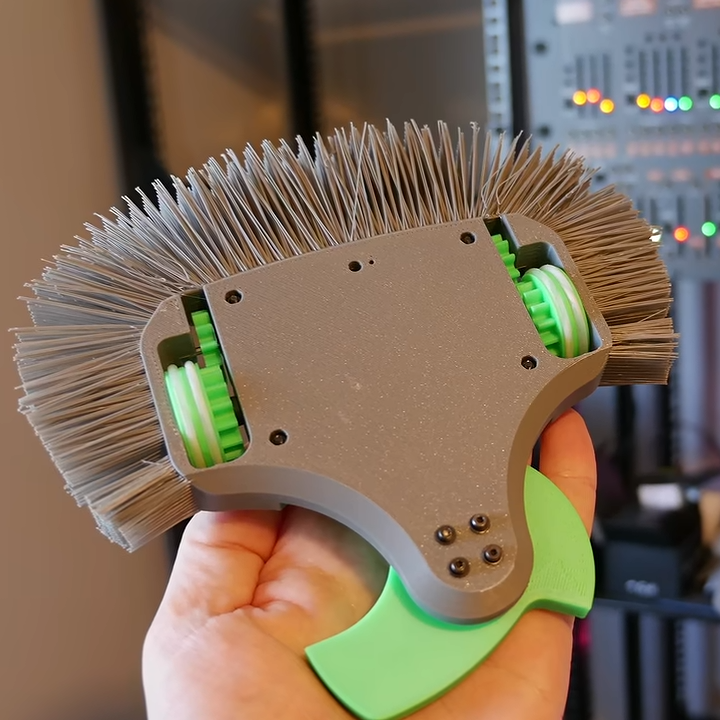
Just to set the stage, [Angus]’s new robot competes in the plastic antweight (or “plant”) division, in which robots are limited to 150 grams with both chassis and weapons made of plastic. In such circumstances, one can see how a mane of thick, rigid “hairs” might actually punch above its weight, so to speak.
The green shape at the bottom is a spinning weapon. The bristles cover the sides and rear.
Nothing settles a question like a good experiment, so [Angus] sat down and redesigned his latest robot to replace its outer shell with a thick wad of bristles, in the style of a 3D printed lion’s mane. Filament is bridged between the model and an outer support structure, which is cut away afterwards to expose the “hairs”.
How well did it perform? Well enough to merit further study! Where past robots got their outer shells broken up, the hairy robot seems to have come through quite intact. It seems the idea might not be as silly as it first seemed, at least in the plastic antweight division.
3D printers have been fantastic in the field of combat robotics. First they were great because they made custom parts easier and more accessible to hobbyists, but things have evolved more since then. Now folks compete by putting motors and electronics inside almost entirely 3D printed robots. There’s never been a better time to get into combat robotics, and experiment with unorthodox designs.
Big quote: Cloudflare CEO Matthew Prince says the PHP flaws that forced websites offline last week are only the beginning. His company already knows of other severe vulnerabilities in critical software, and he expects AI tools to keep turning up new ones for years. Because these models have sharply cut the time and skill needed to find and exploit serious bugs, defenders and everyday users face a long stretch of disruption before the internet’s core software ends up safer.
Prince told Reuters that Cloudflare is aware of “a bunch of additional severe vulnerabilities that are present in other pieces of critical software,” though he did not name the affected programs. He compared them to the PHP bugs that recently forced government websites, the game store GOG, and many smaller websites offline while their operators rushed to patch.
By some estimates, PHP runs on about 70% of the world’s websites, a reach that made the flaws a potential entry point into some of the internet’s most visited destinations. TechSpot has always run on PHP, for example, and we had to update our servers that same morning out of caution. We imagine something similar happened to Wikipedia, Microsoft.com and the countless sites based on WordPress, that were all affected.
Prince expects this to keep happening. “I think we’re going to have a couple years where every single week it’s going to feel like the sky is falling,” he said.
Advertisement
He blames large language models. Security researchers and criminals alike are using them to comb through the internet’s core software for weaknesses no one has found before. Until recently, the pace of that work depended on how many skilled people had the time and patience to read through complex code. Attackers faced the same limit when trying to turn a flaw into a working exploit.
That limit matters much less now. A single person can point a fleet of LLM agents at a codebase, and those agents can produce in hours what used to take specialists weeks.
Wiz Research, one of the teams that found the PHP flaws with help from LLM tools, described the change in its technical write-up. “Frontier models were critical to making this process practical, enabling us to develop and adapt working exploits across multiple applications in hours,” the firm wrote. “As the time and expertise required for this work decrease, complexity may no longer provide a meaningful barrier, changing how we define what is vulnerable in practice.”
That runs counter to a long-held assumption in security: code that was hard to understand was partly protected because few people could take it apart. When models do that work, obscure, complicated code becomes as accessible as simple code.
Advertisement
The Electronic Frontier Foundation has put numbers on how fast this is moving. It says 3% of all software vulnerabilities ever recorded were found in October alone, and that nearly a quarter of all known security issues were discovered this year. The EFF credits frontier AI models from OpenAI, Anthropic and others with making zero-day discovery cheap in both open-source and proprietary code.
According to the EFF, several vulnerabilities serious enough to potentially break large parts of the internet were reported and patched in the last two weeks of October, many of them in the open-source software that most of the internet runs on.
According to the EFF, several vulnerabilities serious enough to potentially break large parts of the internet were reported and patched in the last two weeks of October, many of them in the open-source software that most of the internet runs on. Engineers have long accepted that widely used programs have bugs, and that more complex programs have more. What kept things manageable was the cost of finding them. Major flaws capable of disrupting the whole internet used to surface every few years, while smaller fixes happened steadily in the background.
Both Prince and the EFF expect conditions to get worse before they improve. The EFF says more systems will be breached more often, data breaches will become more likely, and some services may go down as attacks increase.
Advertisement
Some timely humor from our weekly newsletter’s gallery (reposted on FB/IG):
The group’s advice mostly comes down to basic security habits: it recommends keeping browsers and all applications fully updated, using a password manager with a different password for every site so one breach doesn’t expose other accounts, installing a tracker blocker such as its Privacy Badger extension, and watching out for phishing. Anyone running a blog or website should confirm that they or their hosting provider has applied the PHP fix.
The EFF is also encouraging a wider discussion of the underlying problems, including how companies that rely on open-source code should help maintain it and how large technology firms should be regulated.
Prince expects the problem to ease eventually. Every flaw that models find and developers fix leaves the software safer than before. “The reality is, we’re going to get a lot of this stuff cleaned up,” he said. The open question is how much damage happens before then.
Cutting corners: Plenty of people keep a big chunk of their lives stored in Gmail and Google Photos, from flight bookings and receipts to years of family pictures. For years, Google has said none of that content would be used to pick the ads they see. That promise now comes with an exception – and it applies to anyone who lets the company’s AI dig through those apps.
The change sits in Google’s updated privacy policy, which took effect on October 16 and was first spotted by Android Authority. The policy has long said, “We don’t show you personalized ads based on your content from Drive, Gmail, or Photos.” That line is still there, but it now ends with a qualifier: “unless you choose to make data from these services available to other Google services that support personalized ads.”
A separate new passage says Search may process the data people let it access to personalize content, including ads.
The exception mostly concerns Personal Intelligence, an opt-in feature that lets Gemini and AI Mode in Search pull context from apps like Gmail and Photos. It launched for paying subscribers in January before reaching all US users in March. So if someone asks AI Mode for things to do on an upcoming trip, it can check their hotel confirmation in Gmail and old vacation pictures before answering.
Advertisement
While the search giant says ads won’t be based directly on someone’s Gmail inbox or Photos library, its support page explains that AI Mode may draw on summaries, excerpts, and inferences from connected apps, and that this same information may be used to show ads. Advertisers still can’t access those apps, though, and sensitive categories like health, religion, and sexual orientation remain off-limits for ad targeting.
The company has also started testing ads in AI Mode for people with Personal Intelligence switched on. Back in March, it said that experience would stay ad-free for now, though it expected ads to work similarly for connected users down the line.
Gmail ads once worked quite differently. Google scanned free accounts to target them – a practice that drew lawsuits and steady criticism from privacy advocates. The company only stopped scanning inboxes for ad personalization in 2017, and Gmail kept showing ads targeted with other data like search and YouTube activity.
The new wording appears to be the first time since then that Google’s own policy has allowed inbox content to play a part in ads, even if only indirectly.
Advertisement
Thankfully, there’s still a way out. If you’d rather keep your inbox out of it, you can disconnect Gmail and Google Photos under Connected Content Apps, which can be found in your Google Account’s Search Services Personalization settings.
Another option is turning off ad personalization in My Ad Center, though it doesn’t necessarily stop connected apps from feeding the AI features.
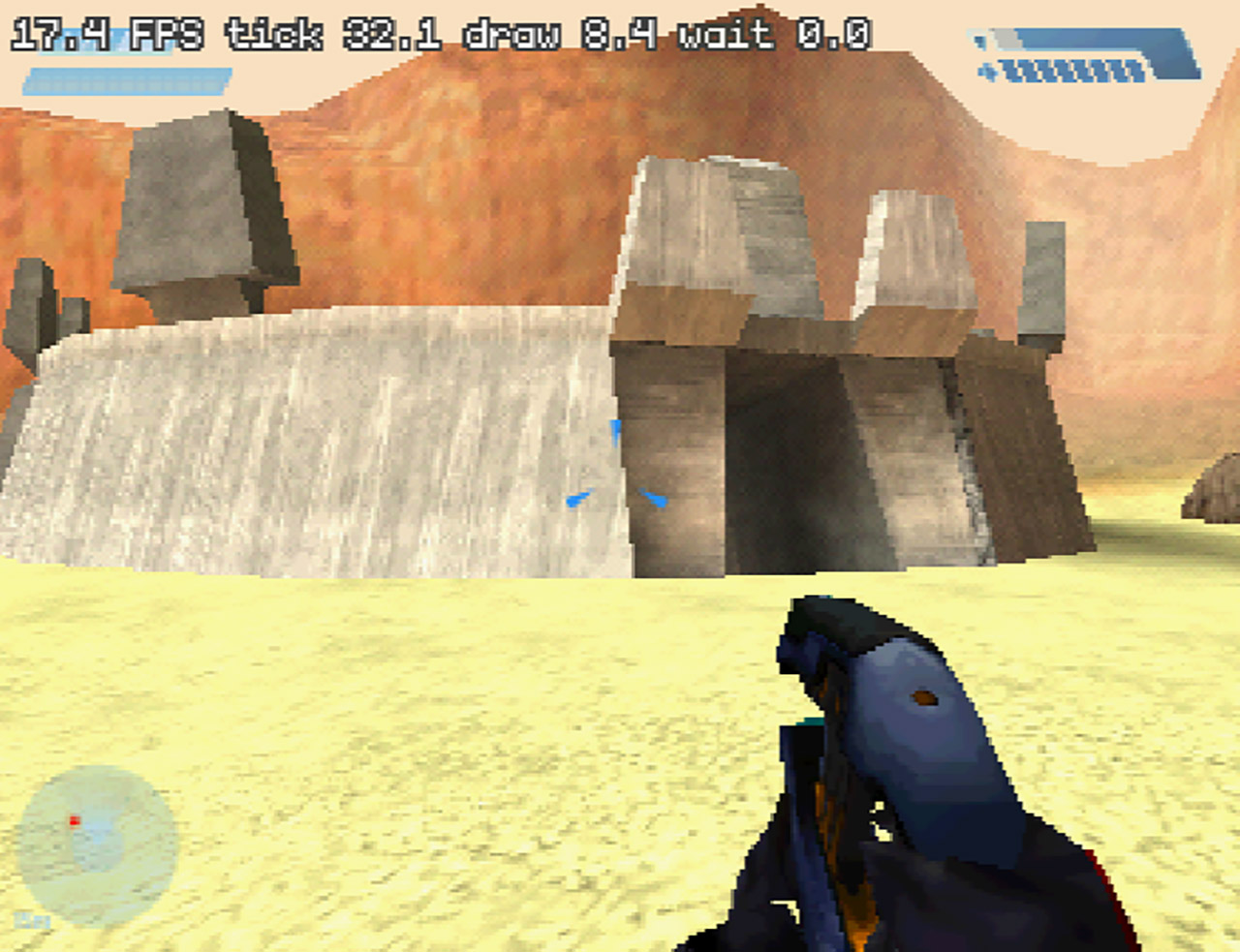
Twenty five years after Halo Combat Evolved redefined console shooters on the original Xbox, a fan project has moved its multiplayer suite onto the Nintendo 64. Halo 64, created by Jack Tulli and available on GitHub, runs the original game’s objects, physics, collision detection, weapons, game types, HUD and pathfinding on the N64’s VR4300 processor. Maps come from a player’s own Xbox disc image. A new renderer, menu system, HUD drawing and sound layer sit on top of libdragon and tiny3d.
The end result is a local multiplayer extravaganza in which you can compete with pals in split screen mode, one to four players at a time. You’ll be able to play on all thirteen of the original multiplayer maps, including Prisoner, Hang ’em High, Chill Out, Derelict, Boarding Action, Blood Gulch, Wizard, Chiron TL-34, Longest, and the thrilling Damnation and frenetic Rat Race. Don’t worry about the game modes; vehicles, guns, teleporters, and water features all accompany the journey. You can play Slayer, Team Slayer, Slayer Pro, Capture the Flag, King of the Hill, Oddball, and even Race, with each accessible in free-for-all or team modes.
A bunch of bots will fill the empty spaces, and up to fifteen AI opponents can join in on the fun, as long as Halo does not reach its sixteen-player limit. You can select the difficulty level, ranging from lovely and easy to super-hard legendary. Get this: the bots employ the same pathfinding as the original game. They focus on the more powerful weapons and fight in groups. Each match, they select a random character name from a list of roughly three hundred very unusual names selected from Mario, Zelda, GoldenEye, and Rare’s N64 libraries. After eight bots, it becomes a little unwieldy, and the menu cautions you that your console may suffer slightly.
The Firefight mode now allows you and a few friends (up to four players) to take on waves of Grunts, Jackals, and Elites on multiplayer maps while sharing lives and selecting from four distinct difficulty settings. A pause menu allows you to stop the action, view the scoreboard for everyone (including the AI), and even access the original Halo HUD, which includes shields, health, ammunition, a motion sensor, messages, and scores. The traditional sounds from the original game have returned, including weapon and vehicle noises. Yeah, the main menu looks a little rough with its interlaced 640×480 image on that familiar ring-in-space backdrop, but it now proudly displays a Halo 64 logo.
When it comes to controller layouts, you’re in luck, as there are six to pick from, including regular, GoldenEye, D-pad movement, and even bumper jumper. Want to crouch? You can either turn it on or keep it held down. Other customization options include changing the look inversion, swapping the fire and grenade buttons, and even enabling independent look speeds for the analog stick and C buttons. Oh, there’s also rumble feedback. You may enable it for shots, hits, explosions, and vehicles, with a toggle to turn it off or on for each player. Picture quality and performance settings are saved directly to the cartridge’s EEPROM.
The game’s graphics use a color map method to load neighboring tiles from the cartridge, giving the ground textures far more clarity than a simple low-poly approach. Plus, Blood Gulch retains its beautiful blue sky. If you’re concerned about performance, don’t be, because the game allows you to trade off graphic detail for frame rate when more players or bots join in the fun.
From discovering new books and organizing your reading list to tracking your reading goal and sharing recommendations, book apps make it easier to maintain reading as a hobby. There are numerous apps on the market that promise to do just that, so we’ve compiled a list of some of the best ones to help you pick the right one for you. Whether you’re an occasional reader or a dedicated bookworm, these apps can help you make the most of your reading journey.
Some of the apps on this list are somewhat new, while others have been around for a few years. Amazon-owned Goodreads, which is arguably the most popular book-related app, isn’t included in this list because we’re focusing on newer, lesser-known platforms.
Fable
Image Credits:Fable /
Fable is a reading app that combines book tracking with a social platform. It lets you organize reading lists, set reading goals, track streaks, write reviews, and join virtual book clubs. You also get personalized book recommendations and the chance to discuss what you’re reading with other readers.
The app differs from others on this list because it puts reading and community at the forefront of the platform, which makes it a great option for people who like staying motivated to read by being part of a community and discussing their reads.
Fable is free to download on iOS and Android, but also offers a Fable Plus subscription tier that unlocks additional features like custom goals and advanced analytics for a monthly fee of $5.99.
Advertisement
Bookshelf
Image Credits:Bookshelf /
Bookshelf is a reading app designed to help people organize their libraries, discover new books, and remember more of what they read. The app positions itself as an alternative to Goodreads, and combines traditional reading logs with AI-powered recommendations and tools.
You can create custom shelves, set reading goals, receive reminders, save favorite quotes, and access AI-generated book summaries, key insights, and thematic analyses to recall the books you’ve read and get a deeper understanding of them.
Bookshelf is free to download on iOS, but offers a $6.99 monthly fee to unlock premium features like unlimited collections and enhanced analytics.
Pagebound
Image Credits:Pagebound /
Pagebound is a book app that lets readers track their books, create lists, set goals, and discuss individual titles in dedicated forums. Instead of having to join an actual book club group, users can post reactions and thoughts to connect with others reading the same title.
You don’t have to worry about spoilers for the end of the book, as conversations are organized based on reading progress, allowing readers to share theories and thoughts as they read. The app is a great option for people who want to discuss their reads with others without having to commit to a scheduled book club.
Pagebound is free to download on iOS and Android and offers a $9.99 monthly subscription for added features like profile customization.
Advertisement
StoryGraph
Image Credits:Storygraph /
StoryGraph is a reading app that lets users track their reading, discover new books, and access detailed reading statistics and personalized recommendations. Users can set reading goals, join reading challenges, and find new titles based on their preferred moods, themes, genres, and pacing.
The app is ideal for readers who want to better understand their reading habits and discover books that match their current interests. Its recommendation system doesn’t solely rely on what’s popular or trending, and instead caters to exactly what readers are looking for.
StoryGraph is free to use on iOS and Android, but also offers a paid subscription called StoryGraph Plus that costs $4.99 per month and unlocks custom charts, additional statistics, and more.
Margins
Image Credits:Margins /
Margins is a great option for mood readers, as it offers mood-based discovery alongside a more focused reading experience. It helps users find their next read based on how they feel in the moment by searching for specific vibes, such as “books like 1920s Paris.” Users can also track their reading goals.
The app also lets users customize their virtual library by choosing book covers that match their aesthetic and organizing their shelves in different ways, including by color. For users who enjoy a more immersive experience, Margins offers a built-in “Reading Time” meditation timer that blocks social media apps.
A new Quordle puzzle appears at midnight each day for your time zone – which means that some people are always playing ‘today’s game’ while others are playing ‘yesterday’s’. If you’re looking for Sunday’s puzzle instead then click here: Quordle hints and answers for Sunday, October 25 (game #1735).
Quordle was one of the original Wordle alternatives and is still going strong now more than 1,500 games later. It offers a genuine challenge, though, so read on if you need some Quordle hints today — or scroll down further for the answers.
Enjoy playing word games? You can also check out my NYT Connections today and NYT Strands today pages for hints and answers for those puzzles, while Marc’s Wordle today column covers the original viral word game.
Advertisement
SPOILER WARNING: Information about Quordle today is below, so don’t read on if you don’t want to know the answers.
Latest Videos FromTechRadar
Advertisement
Quordle today (game #1736) — hint #1 — Vowels
How many different vowels are in Quordle today?
• The number of different vowels in Quordle today is 4*.
* Note that by vowel we mean the five standard vowels (A, E, I, O, U), not Y (which is sometimes counted as a vowel too).
Quordle today (game #1736) — hint #2 — repeated letters
Do any of today’s Quordle answers contain repeated letters?
• The number of Quordle answers containing a repeated letter today is 2.
Advertisement
Quordle today (game #1736) — hint #3 — uncommon letters
Do the letters Q, Z, X or J appear in Quordle today?
• No. None of Q, Z, X or J appear among today’s Quordle answers.
What letters do today’s Quordle answers start with?
• A
• G
Advertisement
• M
• W
Right, the answers are below, so DO NOT SCROLL ANY FURTHER IF YOU DON’T WANT TO SEE THEM.
Advertisement
Quordle today (game #1736) — the answers
(Image credit: Merriam-Webster)
The answers to today’s Quordle, game #1736, are…
Sign up for breaking news, reviews, opinion, top tech deals, and more.
Advertisement
I was pretty sure that my final word today ended S-A-Y, but it took me a while to get to ASSAY, a period which mainly involved me entering random letters.
Initially, I thought it was a variation of essay (the word I really wanted to enter) but I have since learned that assay means “an investigative laboratory procedure used to qualitatively or quantitatively measure the presence, amount, or functional activity of a target substance”.
Advertisement
Daily Sequence today (game #1736) — the answers
(Image credit: Merriam-Webster)
The answers to today’s Quordle Daily Sequence, game #1736, are…
Unknown hackers hijacked more than 300 Tor exit nodes and reconfigured them to favor unencrypted email traffic and redirect SSH connections through servers they controlled, a researcher reported Tuesday.
The hijacking began in late August, when, according to Tor volunteers, the attacker used a valid password that had been reused to gain access to a Tor management server. The attacker then installed Ebury, a backdoor written for Linux that was discovered 12 years ago.
Mysteries remain
Then the attacker connected from the management server to a second Tor server, called Switzerland2, through SSH, using an RSA key that, for unknown reasons, investigators couldn’t find among Switzerland2’s authorized keys. With administrative control of Switzerland2, the attackers installed Ebury there as well. Finally, the attacker reconfigured settings on two exit nodes that Switzerland2 hosted.
Ultimately, 333 exit relays were involved in the SSH and email interception campaign, although investigators haven’t established how the attackers gained control of all the underlying servers. The attackers then reconfigured the servers. One set of changes redirected SSH traffic traversing Tor to one of 12 attacker-controlled interceptor servers. Tor users who ignored warnings that the SSH host key had changed would then enter their SSH passwords.
Advertisement
A second set of changes caused the exit nodes to block ports 25, 465, 587, 993, and 995—used to accept various forms of encrypted email—while continuing to allow ports for receiving unencrypted email. If email services downgraded the connections, the attackers used their access to the exit nodes to obtain unencrypted messages. It’s unclear whether any such downgrade attempts succeeded. The hijacking occurred from October 2 to October 5.
Tor volunteers partially outlined the initial compromise of the management server and Switzerland2 and the attempt to intercept unencrypted email. Tuesday’s report revealed many new details, including how many exit nodes were compromised and how the attackers used them to redirect SSH traffic.
“If you happen to get a circuit that exits over one of those 333 infected exit nodes, you won’t notice anything at first,” Kaba, the name of the Tor volunteer who authored the post, wrote. “Encrypted web traffic is forwarded as usual, but if you attempt an SSH connection over Port 22, you’re unknowingly redirected to one of 12 SSH interception servers. That’s exactly what happened to me on Friday morning.” Kaba then received the following warning:
The kit adapts Apple’s 2019 Mac Pro case for standard PC parts
Buyers must source the motherboard, processor, graphics card, memory, and power supply
The original fans and front controls can remain in service
An enthusiast is seeking crowdfunding support for a conversion system that would let owners reuse Apple‘s 2019 Mac Pro enclosure with conventional desktop PC components.
The proposed kit accommodates standard motherboards, power supplies and graphics cards while retaining the aluminium chassis, original cooling fans and front controls.
However, the campaign on Kickstarter has attracted just $7 from one backer against its $10,686 funding goal, with 28 days remaining.
Latest Videos FromTechRadar
Advertisement
Replacing Apple’s internal hardware without sacrificing its design
Known as the Cheesegrater because of its perforated aluminium exterior, the Mac Pro 7,1 has a case that owners can reuse for a new PC
The kit replaces Apple’s original internal hardware with parts that allow users to install standard PC components inside the existing case. It supports ATX motherboards, standard power supplies, and graphics cards up to 308 mm long and 140 mm tall.
Users can install air coolers up to 140 mm tall or liquid cooling systems with radiators up to 240 mm long.
The kit also provides space for two SATA storage drives, each measuring 2.5 or 3.5 inches, and is designed to retain Apple’s three original front fans through three custom adapter circuit boards and associated wiring.
Sign up to the TechRadar Pro newsletter to get all the top news, opinion, features and guidance your business needs to succeed!
A dedicated interface also connects the original power button, indicator light, and two USB-C ports supporting USB 3.1 Gen 1.
Advertisement
The planned package includes a motherboard and power supply mounting plate, two drive sleds, two drive cables, custom circuit boards, fasteners, and an internal power cable.
It will also include a bracket for the motherboard’s rear connections and expansion slots, while an optional processor cooling cover costs extra.
Advertisement
$500 kit needs experienced builders
The conversion kit is expected to cost around $500, but buyers must pay separately for the Mac Pro case and the PC components installed inside it.
These include the motherboard, processor, graphics card, memory, power supply, storage drives and cooling system, which could raise the total cost considerably.
The kit is designed to retain the Mac Pro’s original three front fans, power button, indicator light and two USB-C ports.
Special adapters help connect the original fans, while another electronic component keeps the front controls and ports working with the replacement PC hardware.
Advertisement
Installing the kit requires removing the Mac Pro’s original internal components, fitting the replacement parts and connecting wires.
The installation can only be done properly by experienced PC builders, though the kit includes a guide for fitting the new components into the Mac Pro case.
After conversion, the original chassis remains the same, allowing owners to reverse the conversion if they later want to reinstall Apple’s hardware.
However, buyers must check their graphics card’s dimensions, available cooling space, and compatibility with the motherboard before purchasing the kit.
Advertisement
Disclaimer: We do not recommend or endorse any crowdfunding project. All crowdfunding campaigns carry inherent risks, including the possibility of delays, changes, or non-delivery of products. Potential backers should carefully evaluate the details and proceed at their own discretion.
Apple has found an unusual way to celebrate the iPod’s 25th anniversary: make people visit a broken webpage. Steve Jobs introduced the original $399, 5GB player on October 23, 2001, promising 1,000 songs in your pocket. Twenty-five years later, Cupertino’s tribute to one of its most influential products is a virtual iPod tucked inside an Apple Music “Page Not Found” screen. Do the folks at Apple have nothing better to do? Perhaps, but I hate to admit that this is rather clever.
Related Reading:
A Working iPod, Hidden Where Nothing Should Work
Visit music.apple.com/404 in a web browser and a first-generation iPod appears with the invitation, “Give this a spin instead.” The monochrome display, menus, separate playback buttons, and scroll wheel have been recreated, right down to the familiar scrolling behavior. To be precise, the 2001 original had a physically rotating scroll wheel; the integrated Click Wheel didn’t arrive until the fourth generation in 2004.
There are 1,029 songs to explore, with selections from the iPod era, including Daft Punk, Coldplay, and U2. You can navigate playlists, adjust shuffle and repeat settings, and listen to previews lasting roughly 30 or 90 seconds, but you cannot play complete albums or load your own music. No Apple Music subscription is required. The other surprise is Brick, the classic Breakout-style game, hidden under Settings → About. Then hold the center button to unlock it. Somebody in Cupertino clearly had fun building this.
Cute Easter Egg. But Why Not Build a Real Music Player?
What makes this special isn’t sound quality or functionality; it’s the obsessive recreation of an interface that made a massive digital music library feel manageable. The iPod didn’t invent portable audio, but its combination of storage, navigation, and music management helped transform listening habits. This little browser toy recalls a period when choosing an album felt more deliberate than surrendering to whatever an algorithm decided you’d tolerate during lunch.
Apple retired the iPod line in 2022, but the dedicated digital audio player certainly didn’t die with it. Astell&Kern, FiiO, Sony, Cayin, iBasso, and HiBy sell actual portable music players with modern DACs, headphone amplification, local-file playback, and, on many models, hi-res streaming support. Some cost a small fortune; others don’t. We’ve even covered the Fosi Audio DAP Neo, an $80 player that embraces the original iPod’s simplicity while letting you listen to entire songs. Imagine that.
Bring Back the iMod Instead
My nostalgia runs a little deeper. About twenty years ago, I reviewed Vinnie Rossi’s Red Wine Audio iMod, a $200 modification that bypassed parts of the iPod’s analog output circuitry so it could serve as a more serious source for a headphone amplifier or hi-fi system. Rossi understood something Apple never made a priority: the iPod was a terrific interface attached to a music player whose analog output could be improved.
Advertisement
I’d rather see Vinnie bring back the iMod than watch Apple congratulate itself for turning a dead link into a museum exhibit. Still, credit where it’s due: the virtual iPod is free, charming, and worth five minutes of your Sunday. Just don’t call it a comeback. The real music players are being made by everyone else.
New research discovered that just more than one in four girls surveyed attending single-sex schools have access to computer science at a Leaving Cert level.
New research from the 2026 I Wish Survey of Female Students’ Attitudes to STEM has shed light on how young girls risk being forgotten on the march towards Ireland’s AI future, if barriers to subject access continue.
The 11th annual report gathered data from 662 primary school students and 1,660 female secondary school students, aiming to create a broader picture of how girls engage with and perceive the STEM space – as well as how they fit into it, both currently and with reference to the future.
The research discovered that, in a landscape where the demand for digital specialists in Ireland is expected to increase by around 27pc in four years, just more than one in four girls surveyed attending single-sex schools have access to computer science at a Leaving Cert level.
Advertisement
While a lack of subject availability creates a significant barrier to continuing education in STEM, it can also prevent girls from envisioning themselves in STEM roles in the future, blocking them from industries such as AI, cybersecurity, data analytics and cloud technologies.
60pc of contributors said a lack of confidence in STEM subject ability is a barrier to pursuing STEM careers; this figure has risen annually, from 55pc in 2025 and 50pc the year prior to that.
Commenting on the report, the co-founder of I Wish, Caroline O’Driscoll, said, “We ask girls to be ambitious, but ambition needs assistance. A girl may discover an interest in technology, engineering or construction, only to find her school does not offer the technical and applied STEM subjects that would help her explore it.
“Even when her school does offer these subjects, she may struggle to see a future for herself without encouragement, clear career information or women she can relate to in those roles. The growing confidence barrier we are seeing in our surveys is worrying and raises questions about whether girls are getting the support they need.”
Advertisement
Greater visibility
More than 60pc of contributors said that a lack of school visits by accomplished women in STEM roles can have a harmful impact. Two-thirds of contributors said the same of gender inequality and of insufficient career information.
Taoiseach Micheál Martin, TD, who was present at the launch of the survey, said, “Ireland’s future competitiveness depends on developing the skills our economy needs. Strong growth in demand is projected over the coming four years for digital specialist jobs, yet women make up only one-fifth of this workforce. Addressing that imbalance is essential to building the talent our economy needs.”
“I commend I Wish for giving girls a voice through its annual surveys and using those insights to shape its year-round programmes and inform the work of Government, schools and industry.
“By identifying barriers and helping girls see what is possible, I Wish is creating opportunities for the next generation. We must work together to ensure girls have the access, encouragement and support to fulfil their potential.”
Advertisement
I Wish is calling on those in the education space to make access to STEM subjects, strong career guidance and exposure to relatable role models more equitable.
The organisation also highlighted the advantages of engaging in activities outside of STEM that can improve soft skills, such as sports, which often build confidence, teamwork and resilience. Social media was identified as a vehicle through which STEM careers can be made more visible.
I Wish co-founder Gillian Keating said, “We cannot afford to carry today’s gender inequalities into tomorrow’s technologies. Girls must have the opportunity to shape STEM, not simply use it. Starting early, with practical experiences and female role models, helps girls discover their abilities and imagine where they could take them.”
In February of next year, 4,000 secondary school girls from across Ireland will attend the 13th annual I Wish Festival at the RDS in Dublin to meet women working in STEM and explore potential career pathways.
Advertisement
Don’t miss out on the knowledge you need to succeed. Sign up for the Daily Brief, Silicon Republic’s digest of need-to-know sci-tech news.





































































You must be logged in to post a comment Login