Tech & AI
CMF Speaker S Review: Nothing Put Auracast in a $59 Milk Carton But Please Don’t Squeeze It

If you grew up in the 1980s, milk cartons meant three things: questionable cafeteria milk, photographs of missing children, and a lingering suspicion that Ogden Edsl’s “Kinko the Kid-Loving Clown,” made famous on the Dr. Demento Show, belonged on a police watch list rather than anywhere near a school playground. Forty years later, Nothing’s budget-friendly CMF brand has decided to give the humble milk carton a considerably less disturbing second career.
The result is the $59 CMF Speaker S, one of the more unusual portable Bluetooth speakers to arrive on my desk this year. Fortunately, it comes with Bluetooth 6.0 and Auracast rather than a missing-person photograph, and there’s considerably more technology inside than its playful appearance suggests.
We covered the launch of the CMF Speaker S and Speaker M earlier this month, and I was intrigued enough by their industrial design and extensive feature lists to request a review sample. CMF sent the smaller Speaker S in white, which I’ve been listening to for the past few days.
My initial reaction? It’s surprisingly well made, considerably more substantial than its dimensions suggest, and rather clever in ways that aren’t immediately obvious.
Related Reading:
Design and Build Quality: Got Milk? Don’t Squeeze the Carton
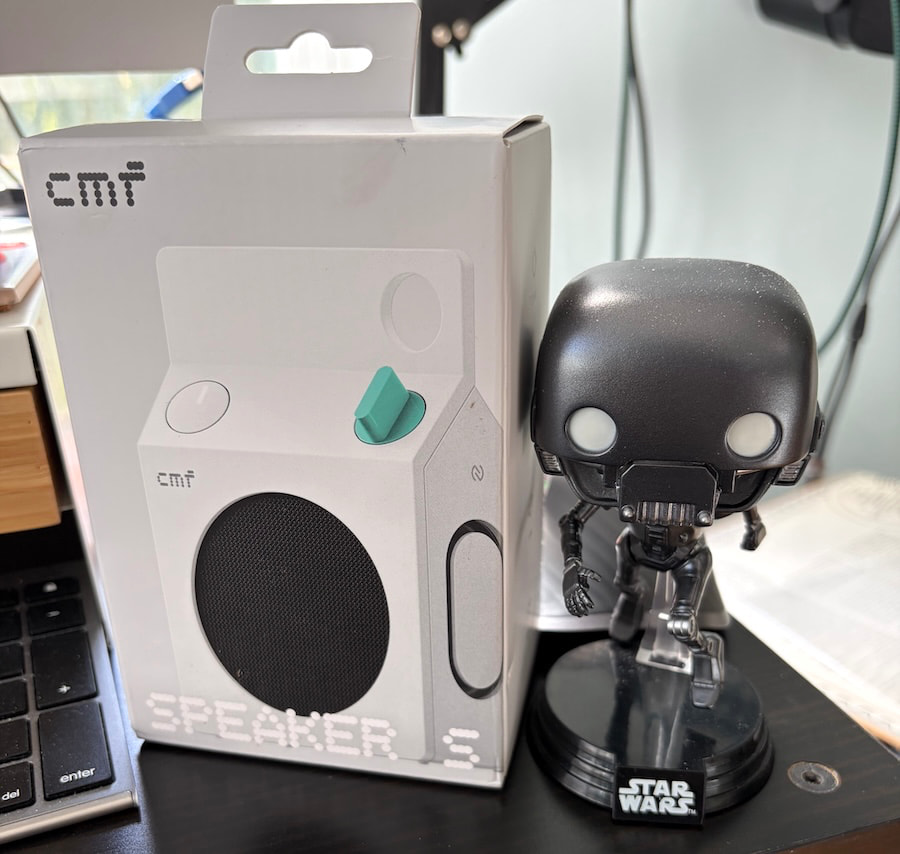
The white Speaker S looks like something Dieter Rams might have designed for a futuristic school cafeteria. Its geometric cabinet is clean, understated, and refreshingly different from the endless parade of cylindrical Bluetooth speakers wrapped in fabric.
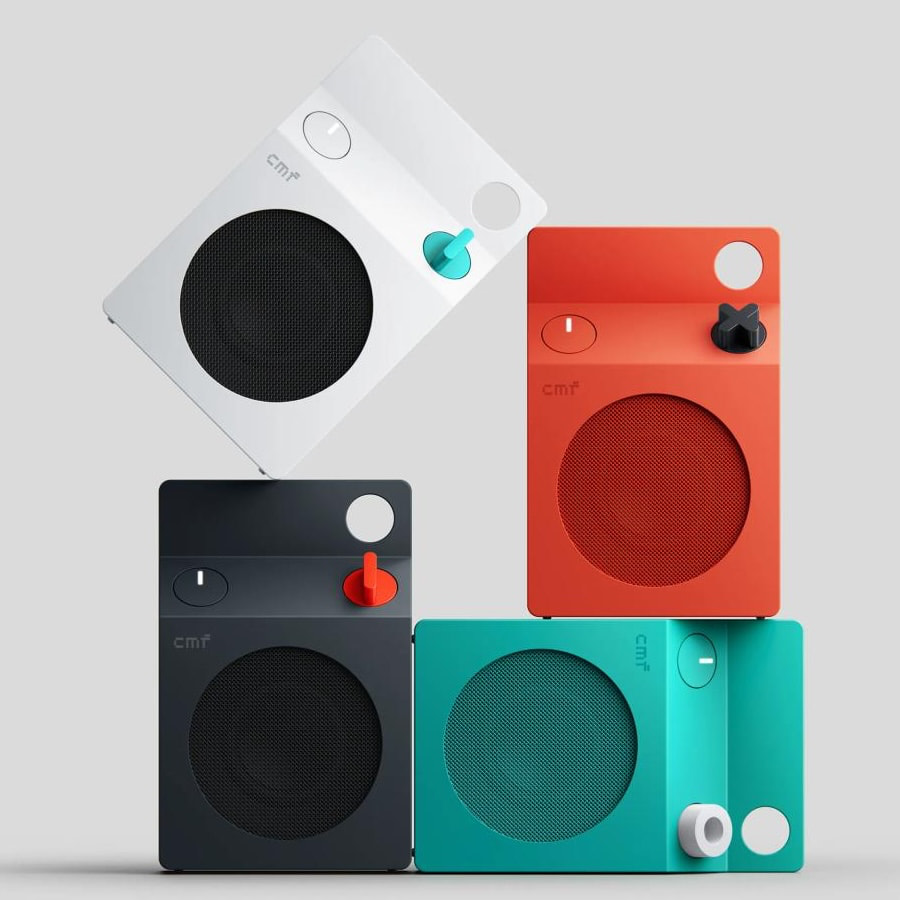

CMF offers the speaker in White, Dark Grey, Orange, and Turquoise, although I’m rather partial to the white version. It’s modern without being aggressively futuristic and looks perfectly at home on a desk, kitchen counter, or bookshelf.
More importantly, the construction feels considerably better than I expected for $59. The cabinet feels solid, the controls have a purposeful layout, and nothing about the overall presentation suggests CMF was simply trying to produce the cheapest possible speaker with an interesting shape.
There is, however, one important design detail worth mentioning.
The Speaker S incorporates two passive bass radiators that contribute to its low-frequency reproduction. At first glance, these elements look like part of the industrial design, and the temptation to pick up the speaker and squeeze them with your fingers is understandable.
Don’t do that.
Passive radiators are moving acoustic components, not decorative buttons or stress-relief toys. Pressing them unnecessarily risks damaging their diaphragms or suspensions, and the last thing your inexpensive Bluetooth speaker needs is an avoidable trip to the repair department.
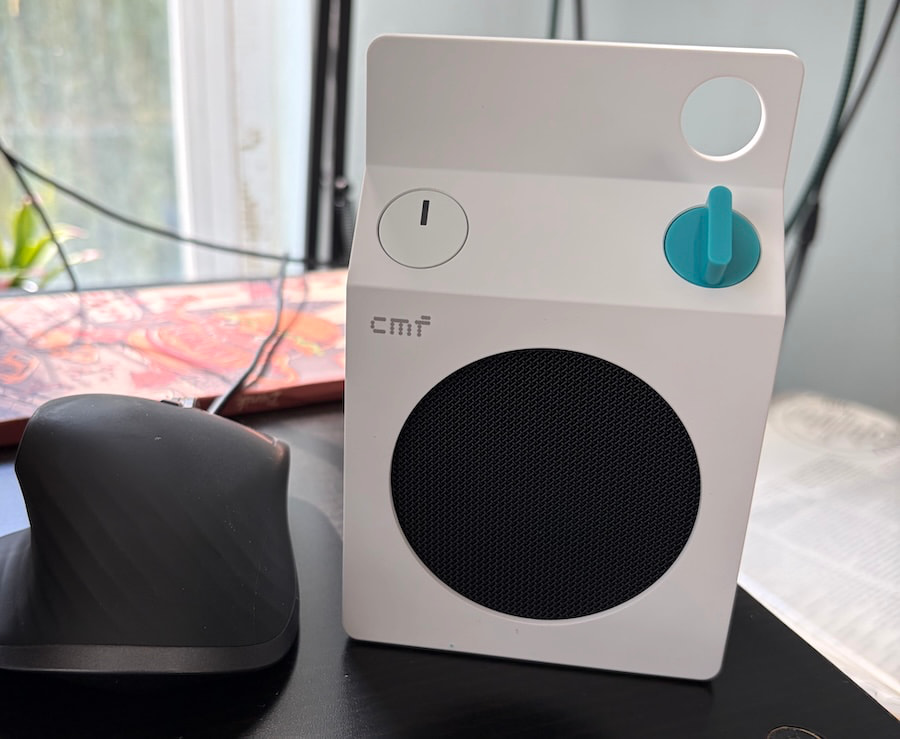
CMF also allows owners to customize the appearance through removable panels and a replaceable control knob. The company is supporting further personalization through 3D-printable design resources, an interesting approach for a product at this price.
Portable, Yes. Pocket-Sized? Not Exactly.
One surprise was the weight. The Speaker S measures 130.5 x 85 x 44mm (5.14 x 3.35 x 1.73 inches) and weighs 334 grams (11.8 ounces).
That doesn’t sound particularly heavy on paper, but there’s noticeable density to the speaker when you pick it up. It feels reassuringly substantial, although anyone expecting something practically weightless may be surprised.
I tried slipping it into the pocket of my Taylor Stitch Ojai chore coat, which normally accommodates a rather impressive collection of things I probably don’t need to carry around. No luck. The Speaker S simply didn’t fit comfortably.
It does, however, disappear into my knapsack without any difficulty, and the integrated utility hook makes attaching it to a bag considerably more convenient.
CMF rates the enclosure IP68 for dust and water resistance, making it a practical option for the beach, poolside, or a camping trip. That doesn’t mean I’d recommend tossing it into the ocean or leaving it underwater, particularly after exposure to salt, sand, or other contaminants.

Actual Buttons. What a Concept.
CMF deserves credit for resisting the temptation to control everything through a smartphone application.
The Speaker S has a physical rotary knob that adjusts volume and handles playback. Pressing it pauses or resumes music, while additional presses handle track navigation. Holding it activates or deactivates the Ultra Bass feature.
Dedicated controls for power, Bluetooth pairing, and Auracast are also included, along with a mechanism for removing the customizable components.
There’s something refreshing about being able to reach over and adjust the music without unlocking a phone, opening an app, and navigating through menus. We’ve somehow reached a point where physical controls qualify as a premium feature, which tells you quite a lot about contemporary consumer electronics.
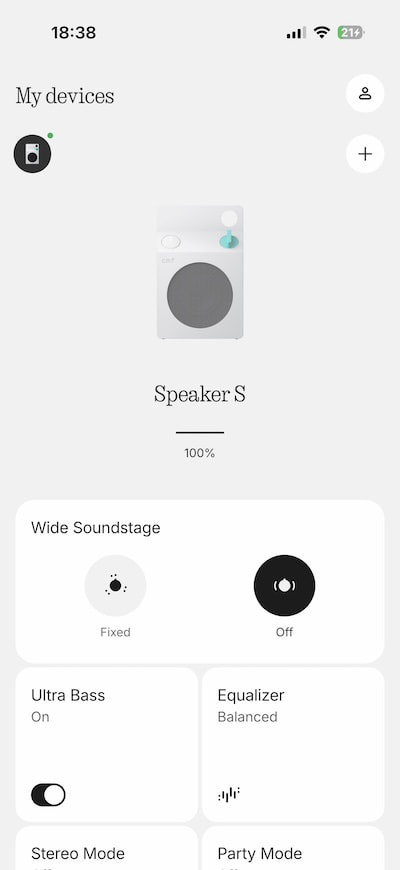
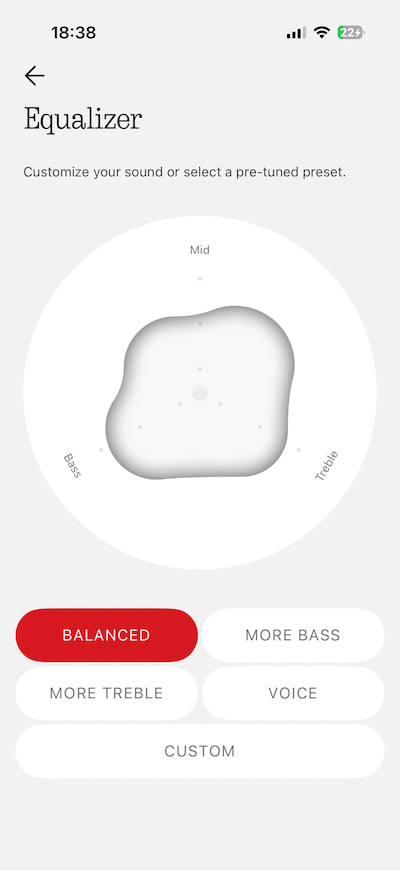
The Nothing X app adds more detailed adjustments, including four EQ presets: Balanced, More Bass, More Treble, and Voice. There’s also a custom equalizer for listeners who prefer to make their own adjustments.
The combination makes sense because essential controls remain on the speaker while the app handles more specific preferences. Whether the EQ options make a meaningful difference will be addressed in the listening section.
Auracast Might Be the Most Useful Feature
The Speaker S supports Bluetooth 6.0, but the more interesting addition is Auracast, which allows compatible Bluetooth devices to share audio with multiple nearby receivers.
With CMF’s Party Mode, users can link compatible Auracast speakers to reproduce the same music across a wider area. That opens up some appealing possibilities for dorm rooms, backyard gatherings, and impromptu parties where several friends bring their own speakers.
Two Speaker S units can also be paired in Stereo Mode, assigning separate left and right channels. That’s a different arrangement from Party Mode, which distributes audio across participating speakers rather than creating a dedicated stereo pair.
Think about a college dorm room where several people want to listen to the same playlist without dragging out a larger party speaker. Provided their devices support compatible Auracast functionality, the group can create a distributed playback setup without a complicated wired installation.
Auracast also has potentially valuable applications beyond entertainment.
The Bluetooth standard can support public audio broadcasts, including announcements within suitably equipped venues. In theory, a beach with compatible broadcast infrastructure could distribute local information or weather advisories to supported receiving devices.
There’s an important limitation. CMF documents Auracast Party Mode for shared music playback, not automatic reception of public emergency warnings. The Speaker S should not be treated as a weather-alert receiver without confirmed support for that function and a compatible local service.
Still, the broader technology is worth watching as public venues gradually adopt Auracast.
A Better Alternative to Blocking Out the World?
One place where I can see the Speaker S being genuinely useful is the playground or park.
Parents who want some background music, a podcast, or the news while supervising their children don’t necessarily need to wear noise-cancelling earbuds that isolate them from what’s happening nearby.
A compact speaker playing quietly from a bag or nearby table allows everyone to remain aware of their surroundings without sealing off their ears. That’s particularly relevant when young children, cyclists, and other people are sharing the same public space.
Of course, common courtesy matters. Nobody at the playground wants to hear your entire Spotify playlist, and a speaker doesn’t automatically make you more attentive.
The same principle applies to a picnic, a backyard gathering, or a quiet evening outdoors. Portable audio should add something to the experience rather than turn every public space into someone’s private nightclub.
Bluetooth, USB-C Audio and Battery Life
CMF has included several features that aren’t guaranteed at this price.
NFC pairing, Google Fast Pair, and Microsoft Swift Pair simplify connecting compatible devices, while dual-device connectivity allows the Speaker S to maintain connections with two sources.
USB-C also handles wired digital audio playback rather than serving exclusively as a charging port. CMF claims latency below 60 milliseconds when connected by USB-C, making the speaker potentially useful alongside a laptop for videos, casual gaming, or desktop listening.
A full charge is specified at approximately 2.5 hours with suitable USB-C power, while a 10-minute charge can provide up to one hour of playback under the company’s stated conditions.

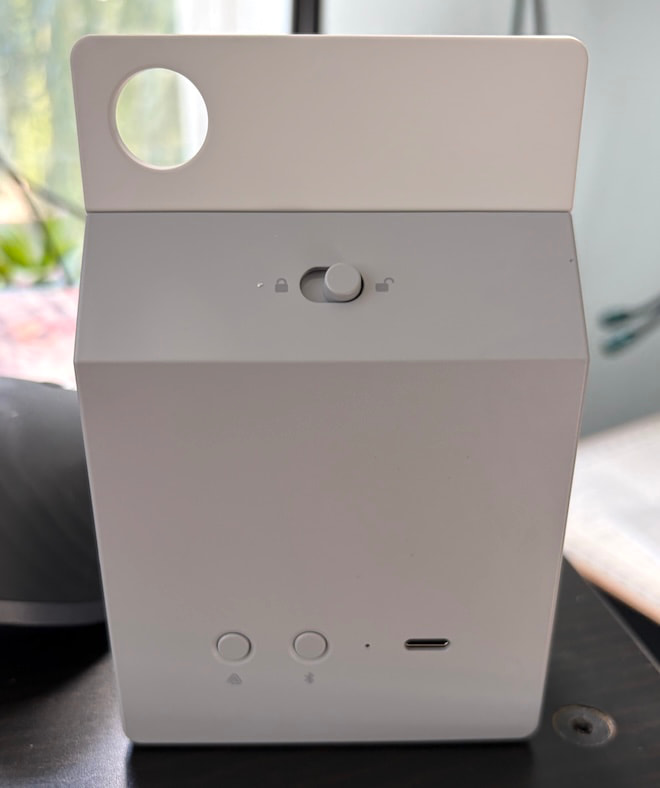
Battery life is rated at up to 18 hours, based on CMF’s stated testing conditions of AAC playback at 50% volume with Ultra Bass enabled. My experience has been encouraging so far. On a full charge, I’ve managed over 17 hours of playback with the volume set around the halfway point on my iPhone 17, putting CMF’s advertised endurance well within reach under everyday listening conditions.
One omission worth mentioning is the charging cable.
CMF includes the speaker and a quick-start guide, but no USB-C cable. At $59, I’m not particularly offended. If you’ve been purchasing electronic devices for the past decade, there’s a reasonable chance you have enough USB-C cables in a drawer to open a small electronics shop.
CMF Speaker S Specifications
- Price: $59 USD
- Available colors: White, Dark Grey, Orange, Turquoise
- Driver: 45mm (1.77-inch) full-range
- Passive radiators: Two
- Amplifier output: 10 watts RMS
- Frequency response: 70Hz to 20kHz (manufacturer specified)
- Sound features: Ultra Bass, Wide Soundstage, Night Mode, custom EQ
- Bluetooth: Version 6.0
- Bluetooth codecs: SBC, AAC; LC3 for Auracast audio
- Wireless range: Greater than 100 meters (328 feet) under free-space conditions (claimed)
- Wireless features: Auracast Party Mode, stereo pairing, multipoint connectivity
- Fast pairing: NFC, Google Fast Pair, Microsoft Swift Pair
- Wired audio: USB-C, claimed latency below 60ms
- Battery capacity: 2,600mAh, 3.8V
- Battery life: Up to 18 hours
- Charging: USB-C; approximately 2.5 hours for a full charge with suitable power
- Protection: IP68 dust and water resistance
- Dimensions (H × W × D): 130.5 x 85 x 44mm (5.14 x 3.35 x 1.73 inches)
- Weight: 334 grams (11.8 ounces)
- App: Nothing X
- Included accessories: Quick-start guide; no charging cable

What Makes the CMF Speaker S Different?
There are plenty of portable Bluetooth speakers available for less than $75, and many promise impressive bass, waterproof construction, and all-day battery life.
What makes the Speaker S interesting is the combination of industrial design, physical controls, user customization, digital connectivity, and Auracast support at a price that doesn’t require much financial deliberation.
But there’s one rather important question left unanswered.
Can this $59 milk carton actually reproduce music well enough to compete with established portable speaker brands, or has Nothing simply created the most interesting packaging in the dairy aisle?
Time to find out.
Listening
Right out of the box, I threw some Nick Cave at the CMF Speaker S and quickly discovered that selecting the Balanced EQ preset in the Nothing X app and enabling Ultra Bass made a rather significant difference. Suddenly, this little $59 speaker didn’t sound nearly as small, anemic, or constrained as its diminutive dimensions might suggest.
Nick Cave and the Bad Seeds’ “Into My Arms” had surprising tonal weight, particularly through the piano, which sounded fuller and more substantial than I expected. Cave’s distinctive baritone wasn’t reproduced with anything approaching reference-level accuracy, but it also didn’t suffer from the haziness or graininess that often makes inexpensive portable speakers difficult to listen to. For $59, that’s a pretty encouraging start.
“Bright Horses” from Ghosteen reinforced another observation: the Speaker S isn’t particularly bright or aggressive sounding, which isn’t always something you can say about a portable speaker built around such a small driver. CMF seems to have resisted the temptation to exaggerate the treble to create an artificial sense of clarity, and the result was more balanced than I anticipated.
Switching to Jimi Hendrix’s “Little Wing” from Axis: Bold as Love revealed a surprisingly detailed top end, along with bass reproduction that favored definition over slam or physical impact. At lower listening levels, Hendrix’s vocals sounded somewhat thin, while his guitar lost some of its familiar growl and presence. Turning up the volume helped fill in some of that missing midrange body, giving the performance greater substance without making the presentation excessively aggressive.
“Voodoo Child (Slight Return)” from Electric Ladyland actually made me sit up and pay attention, which isn’t something I necessarily expected from a $59 Bluetooth speaker shaped like a milk carton. There was something reminiscent of listening to my father’s old transistor radio, only with considerably greater midrange clarity, more convincing treble detail, and a much better sense of what Hendrix was doing with his guitar.
The CMF Speaker S isn’t going to recreate the scale, dynamic impact, or tonal richness of a proper stereo system, but that’s hardly a reasonable expectation at this price. What’s interesting so far is how much musical information it manages to communicate without resorting to the exaggerated brightness or bloated bass that can make inexpensive portable speakers sound impressive for five minutes and exhausting after twenty.

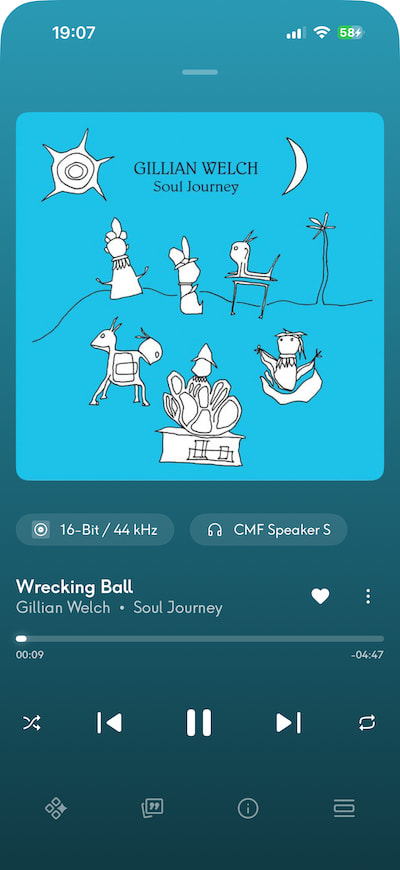
Gillian Welch’s “Wrecking Ball” and “Revelator” made me want to keep listening, which is probably the highest compliment I can pay a $59 portable speaker. The acoustic guitar had surprising clarity and tonal weight, while Welch’s distinctive twang and sultry vocals (at least to my ears) were reproduced with enough texture and presence that I found myself staring at the little CMF, wondering just how good a pair of these might sound in a proper 2.0 stereo configuration.
There’s not enough low-frequency impact or dynamic scale to fill a larger room convincingly, but for desktop listening, a guest bedroom, or an outdoor setting where you’re sitting reasonably close to the speaker, the CMF Speaker S makes a compelling case for itself. Two of these little milk cartons working together in stereo? Hell yes. That’s an experiment I’d genuinely like to try.
Switching over to deadmau5’s “Silent Picture” and The Police’s “Every Breath You Take” revealed something else rather unexpected: the CMF Speaker S actually sounded larger and more expansive with the Wide Soundstage setting turned off. Counterintuitive? Absolutely, but that’s how she blows. Enabling the feature seemed to push everything farther away, creating a more distant presentation that didn’t necessarily benefit the music.
With Wide Soundstage disabled, deadmau5’s atmospheric effects and synthesizers had noticeably greater weight and presence, projecting slightly in front of the speaker rather than sounding like they were playing somewhere down the block. The Police benefited from the same adjustment, with greater focus and substance to the instrumentation. Sting was almost bearable, which is saying something, and I could practically picture Stewart Copeland glaring at his former frontman from behind the drum kit, wondering how he’d managed to make a song about obsessive surveillance sound so romantic. Even a $59 milk carton can’t resolve that particular band dynamic.
The Bottom Line
The CMF Speaker S is a genuine surprise and one of the best values I’ve encountered in portable audio this year. With the Balanced EQ selected, Ultra Bass enabled, and Wide Soundstage switched off, this little speaker delivers considerably more musical substance than its dimensions or price might suggest. Give it some volume, and bass can be surprisingly solid across a wide range of music, with decent speed, definition, and percussion that’s occasionally tighter than it has any right to be. Vocals aren’t hiding behind a veil, and the top end is detailed, smooth, and eminently listenable without becoming aggressive or fatiguing.
There are limitations, of course. The Speaker S isn’t going to pressurize a large room, deliver convincing sub-bass, or reproduce the scale of a proper stereo system. At lower volumes, some recordings lose body and presence, but turn things up a little and the presentation becomes noticeably more engaging. I’ve found myself listening far longer than intended, which is not something I expected from a $59 Bluetooth speaker that resembles something from my elementary school cafeteria.
The JBL Clip 5 ($79 at Amazon) is a worthwhile alternative for outdoor use, with its integrated carabiner, IP67 protection, and Auracast support, while the Tribit StormBox Micro 3 ($64.99 at Amazon) offers a more rugged approach with magnetic mounting, a versatile carrying strap, and a claimed 24-hour battery life. Both deserve consideration, particularly if portability and outdoor practicality are priorities. The CMF counters with its distinctive industrial design, customizable controls, USB-C audio, and battery endurance that came remarkably close to its advertised 18 hours during my testing.
Would I buy the CMF Speaker S? Without question. It’s surprisingly well built, attracts more questions from curious bystanders than speakers costing four times as much, and sounds ridiculously good for $59. I’d happily buy a second just to hear what these little troublemakers can accomplish in stereo. Back in the 1980s, milk cartons came with sour milk, missing kids, and enough childhood trauma to keep a therapist in business for decades.
Nothing has finally delivered one worth taking home. No expiration date, no creepy clown, and no need to ask your mother for lunch money. Got milk? Screw that. Got stereo?
Pros:
- Surprisingly full, balanced, and engaging sound for $59
- Solid bass, clear vocals, and smooth, detailed treble
- Excellent build quality and distinctive industrial design
- Auracast support with stereo pairing and multi-speaker connectivity
- Physical controls, customizable EQ, and USB-C audio
- Excellent battery life; over 17 hours in testing
- IP68 dust and water resistance
Cons
- Limited bass impact and dynamic scale in larger spaces
- Vocals and instruments can sound thin at lower volumes
- Wide Soundstage mode sounds less convincing
- Heavier and less pocket-friendly than expected
- Exposed passive radiators require careful handling
- No USB-C charging cable included
Our Ratings:
★★★★★★★★★★ Sound Quality
★★★★★★★★★★ Build Quality
★★★★★★★★★★ Connectivity
★★★★★★★★★★ Design
★★★★★★★★★★ Value
You must be logged in to post a comment Login