Connect with us

Tech & AI

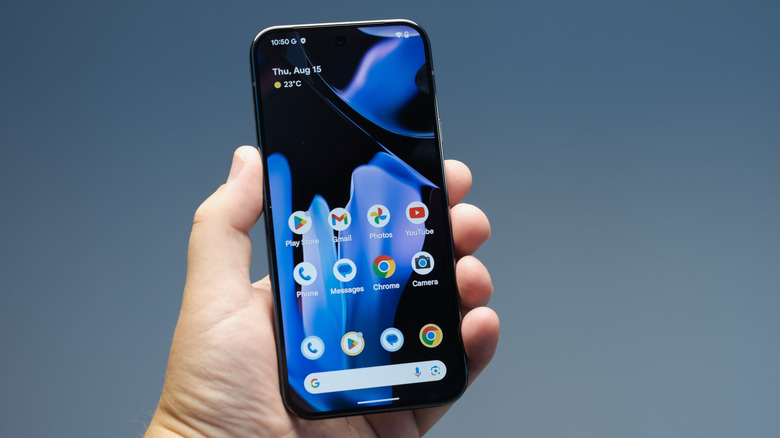
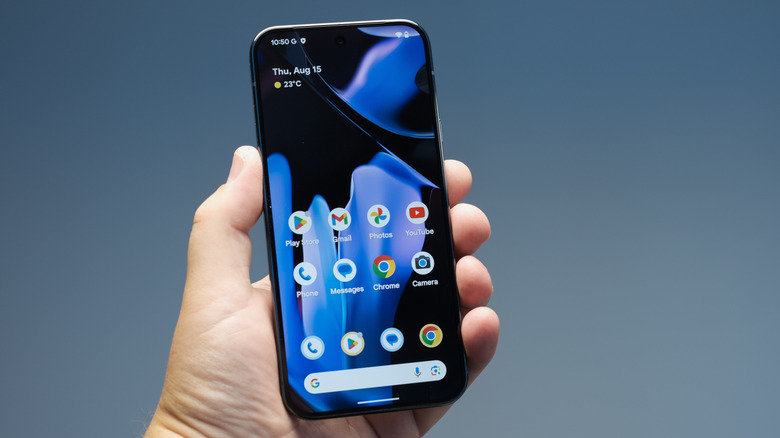
Don’t Buy A Cheap Android Phone Without These Non-Negotiable Features

Published

on

intro 1791485064

What good is a phone that can’t keep up with the average person’s day-to-day needs?

You don’t have to spend an arm and a leg on an Android phone, even if it’s brand-new. You can find plenty of great cheap Android phone options for $300 or less, if you know what to look for. And that’s the biggest thing to consider: knowing what features are crucial to have and where you can make concessions. Paying less for a phone that doesn’t have a sleek titanium frame, for example, is totally fine; you probably will (and should) put a case on it, anyway. But getting a phone with insufficient RAM, horrible battery life, poor cameras, a bad processor, or a small screen is where you want to draw the line.

In some cases, what you’re willing to sacrifice is an individual decision. If you’re a casual content creator, for example, the cameras need to be at least above average. But if you’re getting a secondary phone for basic messaging, you may be fine with just decent cameras. Nonetheless, there are some non-negotiable limits that anyone seeking out a cheap Android phone should focus on, no matter how you plan to use it.

Advertisement

Screen and RAM minimums

Remember when phones had tiny screens? The original iPhone’s 4.5-inch screen seemed groundbreaking at the time, but by today’s standards, that just doesn’t cut it. A phone should have at least a 5.6-inch screen, though most nowadays are at least 6.1 inches. This allows you to enjoy a comfortable experience when holding the phone and typing two-handed while still being able to clearly see the content on it. That screen should also be an AMOLED panel with HD resolution and a decent peak brightness of at least 1,000 nits, so it’s viewable in direct sunlight.

Memory is another factor to consider. You’ll want at least 6GB RAM; otherwise, multitasking, video streaming, and casual gaming could be slow or inconsistent, and the phone won’t respond quickly enough to your demands. If you play a lot of mobile games, consider even going up to 8GB. Also, if there’s no expandable storage (which is a rarity nowadays), 128GB is the minimum you should consider. For peace-of-mind, go with at least 256GB. Otherwise, you’ll end up with a “phone full” message before you know it, and you’ll be forced to clear out the device or sign up for cloud storage.

Finally, the processor matters. While you might not need the best, fastest, most up-to-date processor, you don’t want one that’s slow as molasses. Check the age of the processor, as well as reviews for its performance, and factor this into your decision. There’s no value in getting a cheap device if it’s slow and laggy when you want to stream a movie, and a great processor is vital for gaming on an Android phone.

Advertisement

Don’t skimp on the battery and cameras

Battery life and cameras are also important. A battery that’s at least 4,500mAh is sufficient, especially if the phone doesn’t handle heavy AI processing. But 5,000mAh is a better starting point nowadays to keep you going all day, even with moderate use. With cameras, you want a phone that can at least take photos that are good enough for sharing on social media and keeping for posterity. This means having at least a 32MP sensor for the rear camera, but also a large sensor that can capture more light and yield better photos overall, even if the megapixels are lower in one camera versus another. Don’t discount the front sensor and resolution as well, as this is what you’ll use to take selfies. Look for at least a 12MP front camera with, again, a good sensor size.

Consider other basics like NFC for tap-to-pay and more recent Bluetooth versions for reliable connectivity to headphones and speakers. For older models, confirm that there’s at least a few years left of software and security support. This sounds like a lot, but you’ll find plenty of devices that fit, like Samsung’s Galaxy A series phones (see our review of the Samsung Galaxy A17, for example) and phones from brands like Nothing and Motorola. 

Even older-model Google Pixel phones can fit the criteria. You can find a renewed Google Pixel 8a for just over $300 nowadays, and it comes with just about every vital feature mentioned previously. Ideally, wait for seasonal promotions to find a decked-out mid-range phone for the price of a budget one. You’ll have to make compromises to go cheap, but there are many phones in the $300 range that meet or exceed non-negotiable features and specs.

Advertisement

Source link

Continue Reading
Click to comment

You must be logged in to post a comment Login

Leave a Reply

Tech & AI

How To Boost Your GPU Performance Without Buying A New One

Published

on

intro 1791488993

Your old GPU might not be able to compete with a new card, but it can run better with some tweaks.

In this increasingly anti-consumer tech world that seems fixed on abandoning all else in favor of data centers, there’s rarely been a worse time to buy a new GPU. While many panic-bought PCs to avoid RAMaggedon, there’s an even bigger crowd of PC gamers who have been unable to pick up a new graphics card for years. 

Just because you’re unable to afford a shiny NVIDIA RTX 50-Series GPU doesn’t mean you can’t squeeze more performance out of your current card, though. Some graphics tweaks, supersampling advice and general GPU maintenance will help boost FPS performance in your favorite games.

Advertisement

Use supersampling and frame generation to boost FPS

In an era where graphical advancements are outpacing hardware evolution — hello, path tracing — it’s becoming vital to get the most out of your current GPU through any means necessary. As someone who is now smitten with high-end ray tracing (it looks incredible in the likes of Cyberpunk 2077 or Marvel’s Spider-Man 2), I’m all about embracing AI to help boost frame rates. And yes, I do need to give my soul a shower for admitting that.

Whether you’re interested in advanced ray tracing features or not, it’s clear that graphically demanding games now rely on various forms of supersampling to lock down buttery, console-beating frame rates. Be it AMD FSR, NVIDIA DLSS or Intel XeSS, making the most out of AI-driven, FPS-boosting tech can be crucial for maintaining stable performance at high resolutions. None of us can be snobs when it comes to supersampling or frame generation now.

Both NVIDIA DLSS 4.5 and AMD FSR 4 produce image quality that’s on par with playing games at native resolution, while drastically boosting performance. These technologies work by rendering a game at a lower internal resolution (thus producing fewer pixels) before using deep learning techniques to upscale the final image to a far higher pixel count. Since DLSS 2.0 launched back in 2020, I have leaned on supersampling. With the current iterations of the big three solutions, it basically means free frames with little downside.

Advertisement

The issue of NVIDIA’s DLSS 4.5 Multi Frame Generation tech is a little more complicated. While it’s capable of producing 200 fps-topping results in Hogwarts Legacy with the x6 modifier enabled in my experience, it adds serious input latency in games that support the fledgling technology. Earlier incarnations of Team Green’s tech that top out at x2 and x3 modifiers perform nicely on supported titles, with the added benefit of producing fewer distracting visual artifacts than MFG (like shimmering around in-game text). 

As a PC player of 30 years, I can recommend supersampling without hesitation. Regarding the pros and cons of frame gen, I suggest experimenting with it until you make up your own mind.

Advertisement

Lower settings and turn off ray tracing

This is an obvious one, but if your GPU is sputtering away and dropping frames in the best PC games, it’s best to lower graphical settings right away. Only the fastest graphics cards can cope with a modern AAA title’s Ultra preset, so unless you’re rocking a top-tier card, it’s wise to drop your settings to Balanced. If your GPU is a couple of generations old, selecting a game’s Performance preset should help you claw back even more frames at the cost of graphical fidelity.

Unless you’ve got an ultra-obsessive eye, it’s unlikely you’re going to miss features like ambient occlusion or screen space reflections. By all means, tinker with in-game sliders to see what you like the look of and whether you can stomach the resulting performance cost.

In high-octane first-person shooters or fast-paced racing games, fancy rendering techniques are wasted on most gamers. Do yourself a favor and disable any setting that doesn’t enhance your experience. An increasing number of PC titles (like Resident Evil Requiem) have excellent graphics menus that provide before and after shots of how effects alter a game. If you can’t appreciate the difference in these preview panes, shut the setting off to improve your chances of boosting fps.

Those on budget GPUs should never enable ray tracing. This ultra-advanced lighting technique uses multi-bounce illumination to create incredibly realistic in-game shadows and reflections, but it’s hugely punishing on performance. Unless you own a beastly graphics card, ray tracing should almost always be disabled, as it can often lower frame rates by some 20 to 40 percent.

Advertisement

Remember the basics, clean your GPU and consider overclocking

Though the above methods should help pump up your frame rate numbers, there’s a physical element to this as well. You must know how to clean and organize your PC properly to get the most out of it. Keeping the inside of your system tidy can be a surprising way to up its effectiveness.

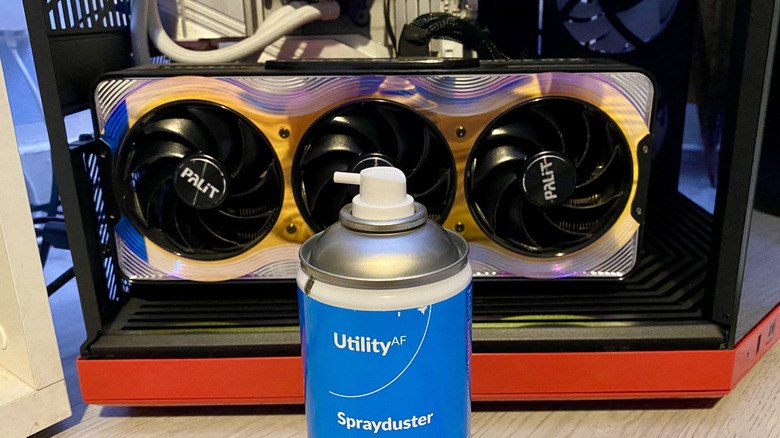
Thermal throttling is a potentially big issue for both your GPU and CPU. If you don’t regularly maintain your machine, dust can quickly build up, leading to a situation where the pride and joy of your gaming PC can’t maintain a regular airflow. Dust gathering around the fans of a GPU can lead to decreased performance as your card hits its temperature limit more quickly. Once it does, core clock speeds will reduce in order to lower temps, resulting in reduced frame rates.

To safely clean your graphics card, first switch off your PC and unplug it. Once you gain access to your GPU, you’ll want a can of compressed air and a soft microfiber cloth on hand. Use short spurts of air directed at the fans to disperse debris, then give the card a gentle wipe with the cloth. This isn’t a guaranteed FPS booster, but it will at least keep your GPU in good (hopefully optimal) shape going forward.

Don’t neglect the basics, either. Keep your GPU driver updated for the best performance, and close as many background apps as possible so your system isn’t devoting significant resources to anything outside your game. If you want to get advanced, overclocking your GPU can wring out more performance by going beyond the manufacturer’s intended settings. MSI Afterburner is the recommended tool for the job, though you’ll need to research how to do so safely.

Advertisement

Source link

Advertisement
Continue Reading

Tech & AI

Fervo’s Cape Station Geothermal Plant Goes Live

Published

on

a tall thin scaffold surrounded by tanks protrudes from the desert

This article was originally published by Canary Media.

The geothermal startup Fervo Energy is now selling power to the grid from its Cape Station project in Utah — marking the first time a utility-scale, next-generation geothermal facility has achieved such a feat worldwide.

The Houston-based firm turned on an initial 33-megawatt unit late last week and has been testing and ramping up output since then. On Thursday, Fervo will officially begin commercial operations, supplying carbon-free electricity to Shell Energy, a retail power provider in California.

Cape Station, a $2 billion project that will eventually be 500 MW, is unique among the world’s commercial geothermal plants. While other facilities draw on naturally occurring hot water and steam, Fervo has engineered its own geothermal resource deep underground. The startup uses drilling techniques from the oil and gas industry to create reservoirs in hot, dry rocks that generate steam to produce electricity.

Advertisement

“Traditional geothermal would have never been done in southern Utah,” says Dawn Owens, Fervo’s senior vice president and head of development and commercial markets.

With the first unit online, Fervo says it is working to commission two more 33-MW power blocks by 1 January, 2027. The project’s remaining 400 MW — which is supported by a new agreement with Google — is under construction and slated to come online in 2028.

Fervo’s Next-Generation Geothermal Journey

Fervo already operates a 3.5-MW commercial pilot plant in Nevada, which went online in late 2023. Owens says the pilot, called Project Red, was important for demonstrating the technology itself. But firing up Cape Station proves that Fervo’s approach can achieve utility scale and export power to wider markets.

“This is massive for both Fervo and the geothermal industry at large,” she says.

Advertisement

Fervo, which went public in May, is leading the fast-growing movement to develop clean, always-on geothermal power to meet soaring demand from data centers and balance growing supplies of intermittent solar and wind energy. Next-generation geothermal firms have raised billions of dollars in private capital in recent years to develop and deploy technologies that can harness energy in harsh, deep environments.

A tall, thin scaffold surrounded by tanks protrudes from the desert  Drilling continues at Fervo Energy’s Cape Station geothermal plant in Beaver County, Utah, where the company plans to ramp up production to 500 MW. Fervo Energy

Today, geothermal represents just 0.4 percent of total U.S. electricity generation every year. Expanding geothermal’s share of the mix will require not just building more projects like Cape Station but also tackling high upfront drilling costs and other economic and regulatory barriers — all while working to limit potential impacts on communities and the environment, experts say.

“Fervo’s first power achievement shows investors the size and scale of the opportunity to fuel many more such milestones across developers and sites in the future,” says Mitchell Smith, who serves as grid lead for the Mountain West Geothermal Consortium. The bipartisan initiative is calling for increased public and private financing “to help bring more projects online responsibly and at the speed of demand,” he added.

Enhanced Geothermal Energy Gets Cheaper

Fervo has declined to disclose the terms of its power purchase agreements for in-progress and future development, which together represent about 1,000 MW, or enough to power roughly 1 million U.S. homes every year. Phase 1 of Cape Station is set to deliver power at $7,000 per kilowatt, while Phase 2 should come at $5,500 per kilowatt, the company previously told Canary Media. (By comparison, the average cost to build a natural gas–fired power plant was $2,157 per kilowatt in 2025.)

Advertisement

Along with slashing drilling costs, enhanced geothermal projects could improve their economics by delivering power when it’s most valuable to utilities, according to researchers. While geothermal plants traditionally provide around-the-clock, baseload power, next-generation facilities might operate flexibly during certain periods — like in the evening, when solar output declines — to reduce overall grid costs. Geothermal plants could also operate “behind the meter” to directly power data centers, so that the costs of adding new electricity capacity aren’t passed on to utility customers, Owens says.

“We’ve been saying all along that our technology makes geothermal more scalable and affordable in more places,” she says. On Cape Station’s powering-up, she adds, “That’s just something no next-generation geothermal company has ever been able to do before.”

From Your Site Articles

Related Articles Around the Web

Advertisement

Source link

Continue Reading

Tech & AI

Zimacube 2 review: A tinkerer's NAS, at a good price point

Published

on

69238 146209 zimacube2review2

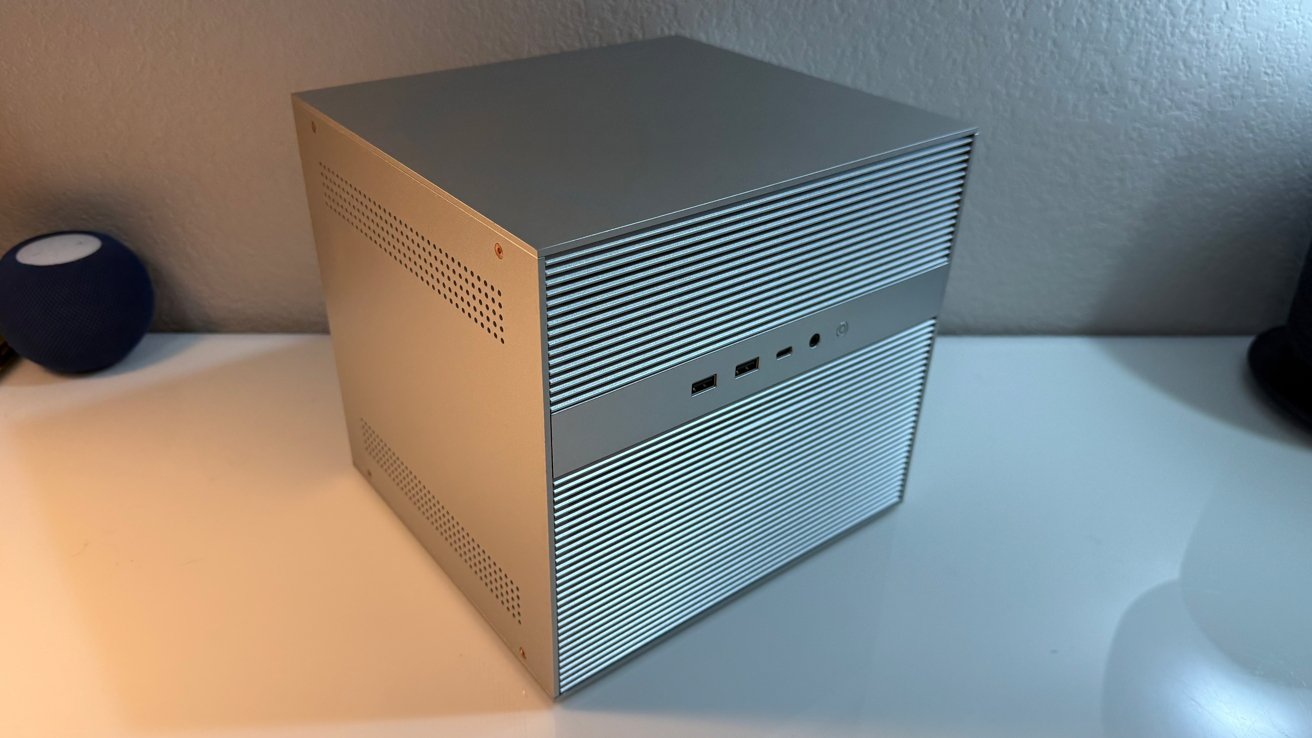
The ZimaCube 2 is a six-bay NAS with no software lock-in. At $799, the Standard model suits tinkerers, though the company’s Thunderbolt connection claims aren’t accurate.

Small silver cube-shaped computer case on a white desk, with front ventilation grilles and several ports including USB and audio jacks, against a plain wall background
ZimaCube 2 review

Once upon a time, I had a spare PowerMac 6500. Maybe it was a Performa — that specific is lost to me. This was just-pre MP3 explosion, but I still was generating a lot of data that I’d prefer not lurk constantly on my PowerBook 3400 first, then original PowerBook G3. What to do?
Then, in about the winter of 2002, hardware started aging less gracefully. The 6500 didn’t boot one day, so the project to move the home server to a Beige G3 accelerated. Then a series of G4 towers, and more hard drives than was thermally wise in a 1,1 Mac Pro.
Continue Reading on AppleInsider | Discuss on our Forums

Source link

Continue Reading

Tech & AI

This Anthropic Engineer Keeps Its AI Agent Trustworthy

Published

on

an indian man in a dress shirt smiling in front of the entrance to an office building

an indian man in a dress shirt smiling in front of the entrance to an office building

If you’ve ever wondered how Claude and similar AI agents can answer complex questions in seconds and where they get the information, you’re not alone.

Gurmeet Saran works to find that answer every day as an engineer at Anthropic in San Francisco, the AI research company behind Claude. The IEEE senior member is developing an infrastructure to understand the mechanics behind the chatbot’s behavior and to ensure its underlying architecture produces reliable outputs.

Gurmeet Saran

Employer

Advertisement

Anthropic in San Francisco

Title

Member of technical staff

Member grade

Advertisement

IEEE senior member

Alma maters

University of Kalyani, in India; Birla Institute of Technology and Science, in Pilani, India

“My job is to make sure the data is accurate, structured, and trustworthy, and that private data stays private,” he says. “As I learned earlier in my career, privacy can’t be a layer you bolt on—it has to be part of the architecture from the start.” If you can’t trust the logic, he adds, you can’t make reliable claims about the behavior, and that has real safety implications.

Advertisement

Safety is a priority for Anthropic, he says. According to Claude’s mission statement, the company wants the AI agent to be “genuinely helpful to the people it works with or on behalf of, as well as to society, while avoiding actions that are unsafe, unethical, or deceptive.” Crucial to the mission is ensuring that researchers can observe and understand how AI models behave, a challenge that is especially acute for large language models, Saran says.

“We have decent tools to monitor databases and web services,” he says, “but for LLMs, we’re still figuring it out.”

Solving data quality problems at Yahoo, Intuit, and Meta

Saran’s interest in computing systems dates back to his childhood in Kolkata, where he logged as much time as he could in the school computer lab.

“I remember the first time I used one of the computers,” he says. “What struck me was that you could write instructions, and the machine would follow them exactly. No ambiguity.

Advertisement

“That felt magical to me.”

After graduating from high school in 1999, he stayed in India to pursue advanced degrees. He earned a bachelor’s degree in electronics and telecommunication engineering in 2004 at the University of Kalyani. In 2010, he earned a master’s degree in software engineering from the Birla Institute of Technology and Science in Pilani.

While a graduate student, he began his career in 2007 at Yahoo as a technical lead of the data team in Bengaluru, India. While there, he encountered the project that shaped his career trajectory: working on web analytics and business intelligence reporting solutions.

“We kept running into a frustrating problem,” he recalls. “Different teams would calculate the same website metric—something like daily active site users—using slightly different logic, and end up with conflicting answers. It sounds like a small issue, but when leadership is making decisions about resource allocation and product development using that data, not knowing which number is correct becomes a problem.”

Advertisement

The team built a central data repository with defined metrics, essentially serving as a single source of truth. Saran created a model that defined what “daily active site users” means, breaking down which events counted, how to handle edge cases (or when standard code fails), and more.

With the new model, data teams across the company could rely on a standard method to determine the number of daily active users for the projects and sites they were responsible for and obtain comparable results using the same logic.

From there, Saran and his team built Yahoo! Digits, an internal web analytics tool used for all the company’s products.

Saran left Yahoo in 2010 to join Intuit as a staff engineer in Mountain View, Calif. He helped build the analytics infrastructure that unified data across the company’s products, including TurboTax and QuickBooks accounting software. During his tenure, Intuit developed a feature that detected fraudulent tax filings in real time. It required Saran and other engineers to build a system to protect taxpayer data while adhering to strict U.S. Internal Revenue Service policies.

Advertisement

“IEEE operates in a lot of countries where engineers don’t have easy pathways into the global professional community. That kind of connection matters as AI development spreads beyond a handful of organizations.”

“This taught me that privacy and governance can’t be layers you bolt onto software after the fact,” he says. “They have to be part of the architecture from the start.”

Saran joined Meta (known as Facebook at the time) in 2016 as a lead software engineer in Menlo Park, Calif. The company was facing controversy over its video metrics: Meta publicly acknowledged an error that caused it to overstate the number of views for posted videos.

“This wasn’t a coding bug; it was an architectural problem,” Saran says. He built a system that worked similarly to what he had developed at Intuit, whereby one single truth was defined to govern all video view metrics across the site.

Advertisement

That system, Metric360, eventually became part of the site’s architecture. By the time he left Meta in 2021, he says, Metric360 was being used across the company to calculate video metrics.

He left the company to become a principal software engineer at Wealthfront, a financial services company in Palo Alto, Calif. He helped build the company’s data infrastructure.

Building trustworthy AI systems at Anthropic

Saran joined Anthropic in 2025 as a member of the technical staff.

To describe the implications of his work, he uses a medical analogy: “Imagine a doctor is monitoring a patient’s vital signs and making treatment decisions based on those numbers. What if one or a few of the medical devices used were slightly miscalibrated? Even if most readings are fine, it’s a serious problem because the difficult decisions happen in the margins.

Advertisement

“It’s the same with AI systems. My job is essentially to make sure the instruments are giving accurate readings—that the data means what it says it means.”

His job comes with high stakes and complex problems to solve.

“AI agents are especially tricky to observe,” he says. “When a system is taking sequences of actions [generating conversational responses with different users], you need a way to capture what it did, what information it was working from, and whether outcomes matched what the end user expected. And you have to do all of that without exposing anyone’s private information—the systems are designed to recognize sensitive data and keep it protected as it flows through. It’s a much more demanding observability problem than anything I’ve worked on before.”

Solving for system reliability while AI is still in its early days of adoption is both Saran’s passion and the problem that keeps him up at night, he says.

Advertisement

“I think making AI systems genuinely auditable and transparent is one of the more important engineering problems of the next decade,” he says, “and it doesn’t get talked about as much as model capabilities do.”

IEEE can play a role in shaping AI development

Saran joined IEEE in March 2025.

“After more than 20 years of building data infrastructure across organizations like Yahoo, Intuit, Meta, and Wealthfront,” he says, “I wanted to contribute back to the technical community through peer review, publishing, and engaging with the broader engineering research ecosystem.”

He says he believes IEEE can play an essential role in shaping the future of AI through its standards work.

Advertisement

“We have standards for everything, from building codes to software testing,” he says. “AI infrastructure needs something similar, and IEEE has the credibility and the reach to do that.”

Another problem that IEEE can solve for, he says, is access: “IEEE operates in a lot of countries where engineers don’t have easy pathways into the global professional community. That kind of connection matters, especially as AI development spreads beyond a handful of organizations in a few cities.”

From Your Site Articles

Related Articles Around the Web

Advertisement

Source link

Continue Reading

Tech & AI

Best Gifts for Vinyl Lovers in 2026: 7 Ideas Record Listeners Will Actually Use

Published

on

technics sl 50c

Shopping for a vinyl lover should be easy. It rarely is.

Record collectors are notoriously particular about their turntables, cartridges, phono stages, cleaning gear, and even the accessories they swear make a difference. Buy the wrong thing and it can end up untouched in a drawer; get it right and you can genuinely improve how an entire record collection sounds.

Of course, a great vinyl system involves more than a spinning platter. Loudspeakers and amplifiers are just as important, and a little retro hi-fi styling never hurt anyone. We’ve included a few components that aren’t exclusively about vinyl playback but make perfect sense for someone who appreciates good sound and classic audio design.

Our picks cover newcomers, experienced collectors, and those who appreciate the equipment almost as much as the music. Some are practical, some are indulgent, and all deserve consideration beyond their appearance.

Advertisement

The goal is simple: avoid the novelty junk, skip the useless “vinyl lifestyle” clutter, and buy something that earns a permanent place in the listening room.

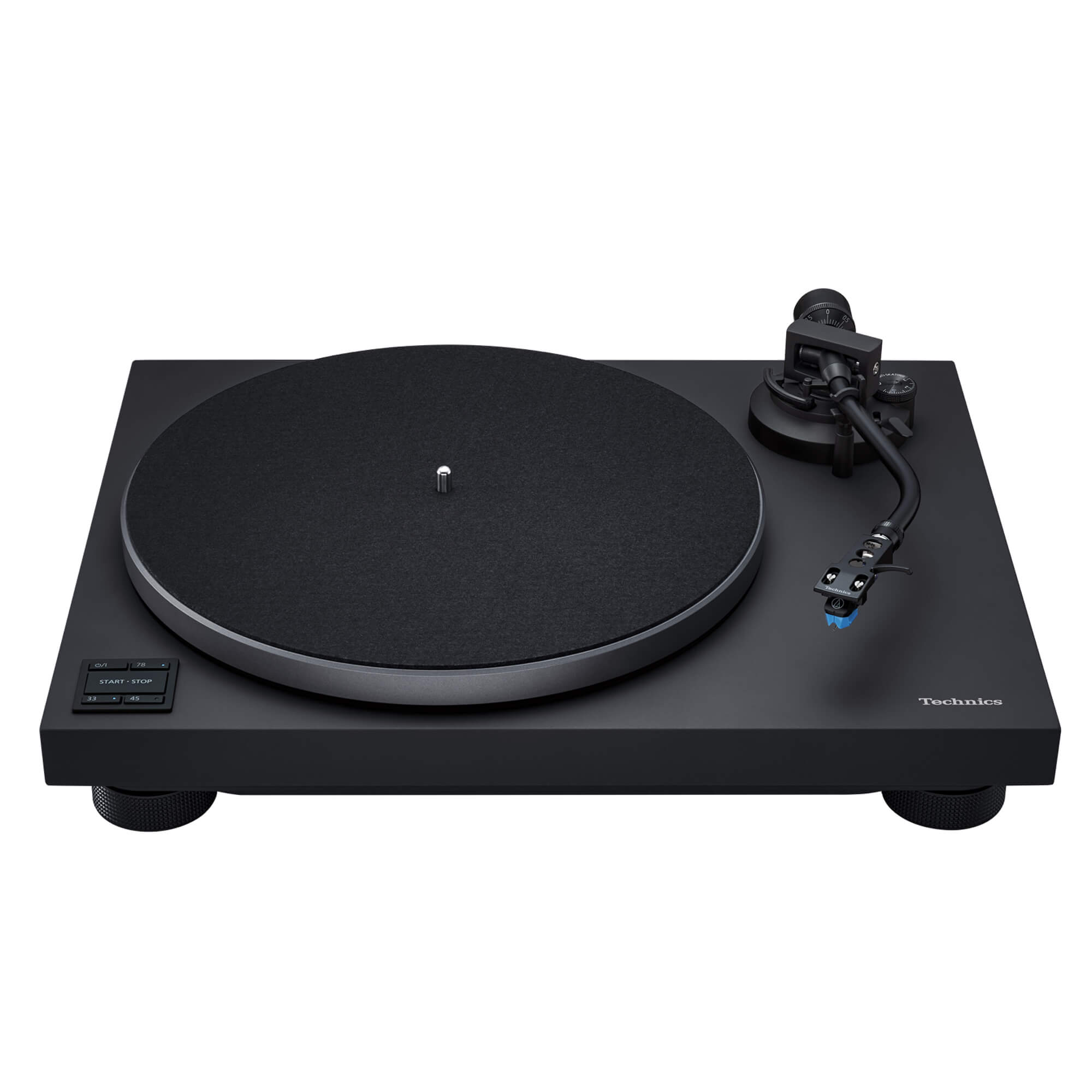
technics-sl-50c

Technics SL-50C

Experience vinyl the way it was meant to be heard. The Technics Direct Drive Turntable SL-50C delivers legendary precision, timeless design, and pure sound clarity. Whether rediscovering classics or starting your collection, the SL-50C brings every groove to life—unmatched performance from a trusted audio icon.

$899 at Sweetwater

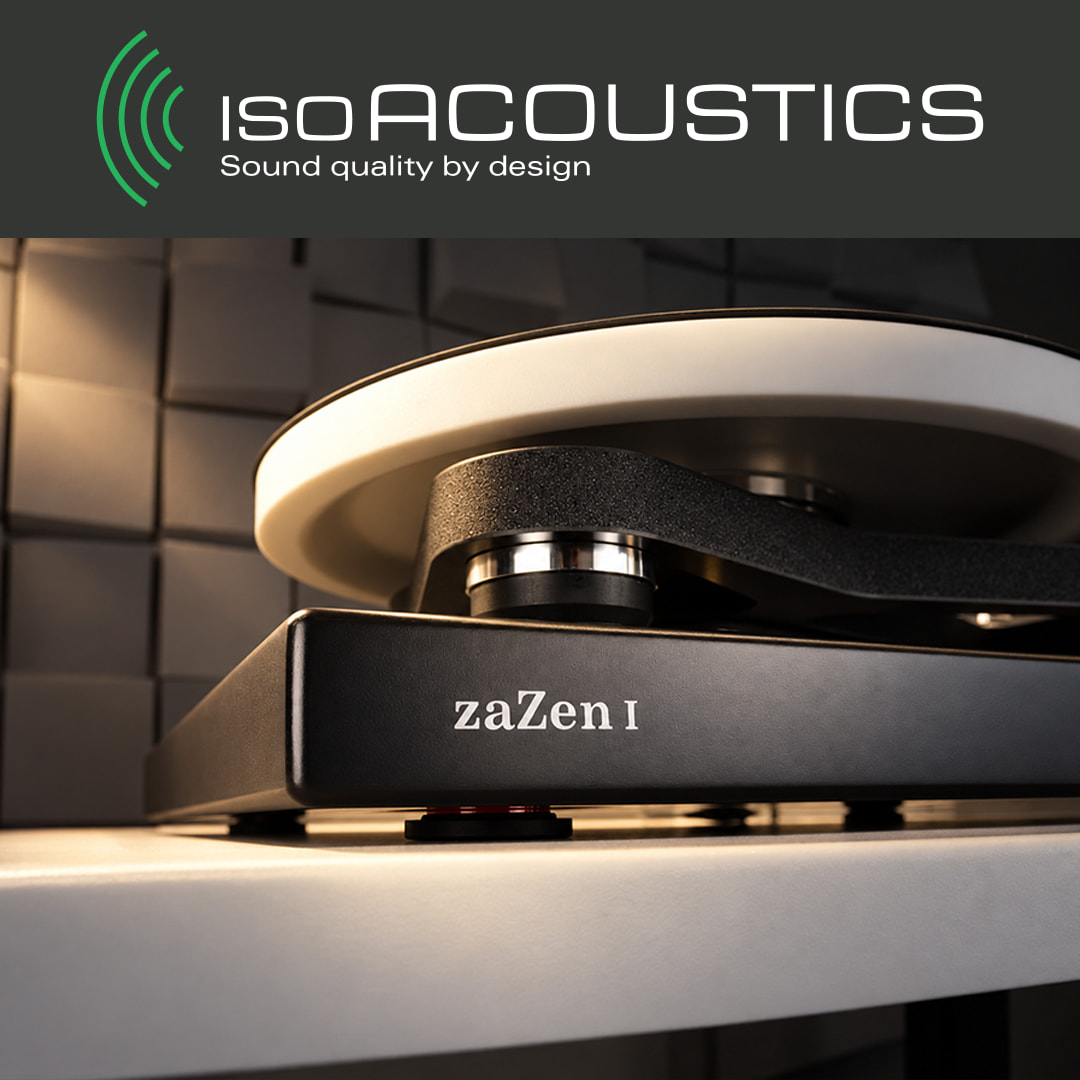
IsoAcoustics zaZen

Their record shelves may be full, but there’s still room for better sound. The zaZen isolation platform combines a dense base with integrated IsoAcoustics isolators to reduce vibration interference, helping vinyl enthusiasts hear more of the detail in the albums they already love.

$229 at IsoAcoustics

Advertisement
isoacoustics-zazen-1080×1080
nad-c-3030s-lifestyle

NAD C 3030S Integrated Amp

Give the gift of better listening with the NAD C 3030S. Vintage-inspired VU meters meet BluOS streaming, vinyl playback, and HDMI eARC in one thoughtfully designed amplifier. With 50 watts per channel of signature NAD sound, it brings warmth, clarity, and balance to the music you love.

$1,499 at NAD

Audio-Technica AT-LP70XBT Turntable + AT-SP3X Speakers

Give the gift of effortless vinyl listening! Pairing Audio-Technica’s fully automatic AT-LP70XBT turntable with compact AT-SP3X speakers, this setup can bring records to life through Bluetooth® or a wired connection. No separate receiver or amplifier required, just add records and enjoy the music!

$559 at Audio-Technica

audio-technica-lp70xbt-sp3x
emotiva-nostsala-lb12-loudspeakers-walnut-pair

Emotiva Nostala LB12 Loudspeakers

Emotiva’s Nostala LB12 speakers pair vintage-inspired style with modern three-way design. Each walnut-veneered cabinet houses a 12-inch woofer and HyperDome™ midrange, bringing room-filling sound and natural vocals to your listening room. With a 10-year warranty, they’re a thoughtful gift for music lovers who appreciate classic design and lasting enjoyment.

$3,299/pair at Emotiva

Advertisement

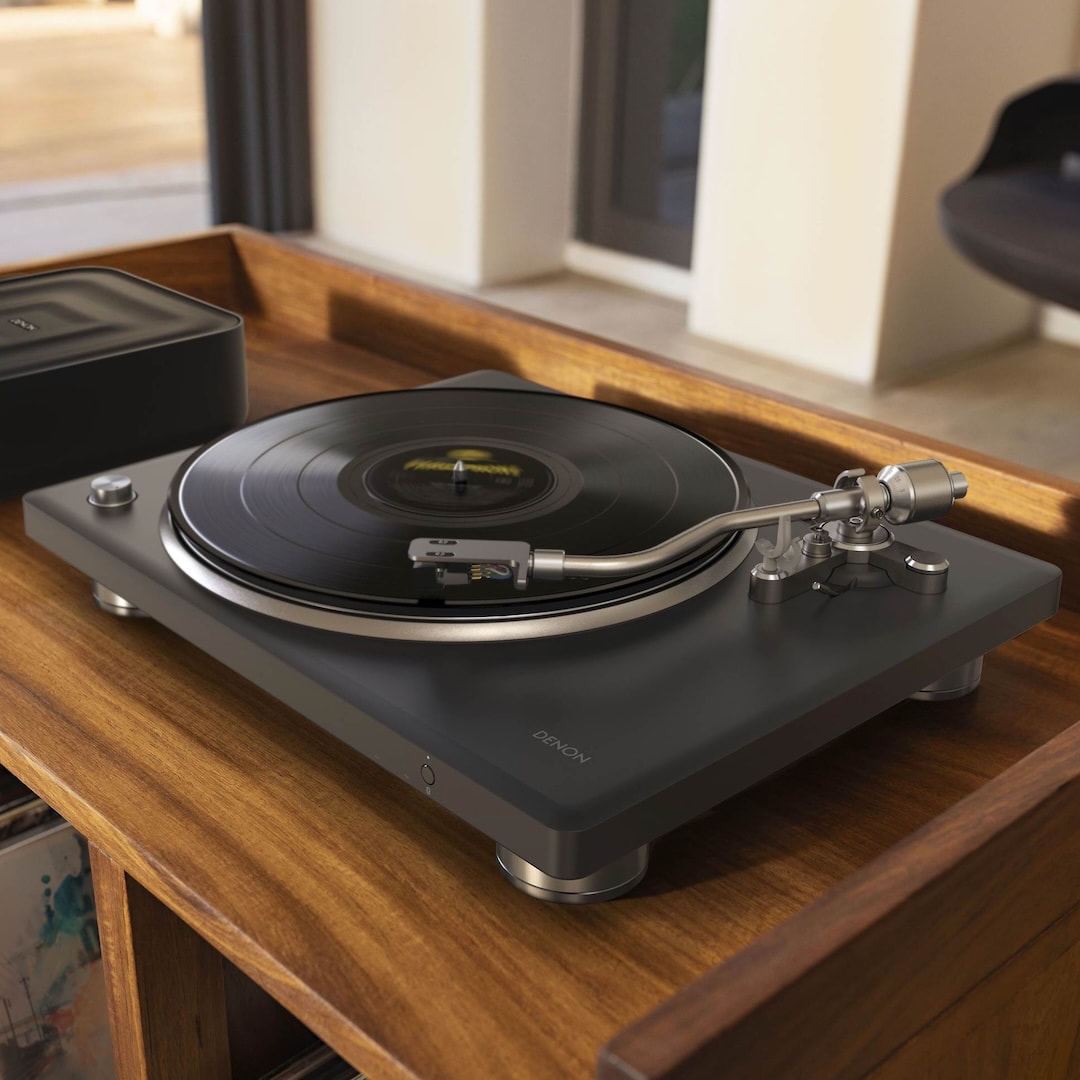
Denon DP-500BT Turntable

New for 2026, the Denon DP-500BT is a semi-automatic hi-fi turntable with Bluetooth and a built-in switchable phono preamp for versatile wired or wireless playback, which also offers the the assurance of auto tonearm lift and stop.

$899 at Amazon

denon-dp500bt-turntable-lifestyle-1080×1080
groovewasher-g2-kit-1080×1080

GrooveWasher Kit

GrooveWasher’s all-in-one vinyl record cleaning kit has everything you need to manually clean records. Includes microfiber brush, G2 cleaning solution, label protector, and cleaning mat.

$47.99 at Amazon


Need more gift giving ideas?

Disclosure: The products listed above are approved by our Editors, but may be requested by our sponsors. When links to buy are provided, we’ll direct you to the lowest price at time of publication. In doing so, eCoustics may earn a small commission from the associated retailer if purchased.

Advertisement

Source link

Continue Reading

Tech & AI

Video Views but No Qualified Enquiries: What to Check

Published

on

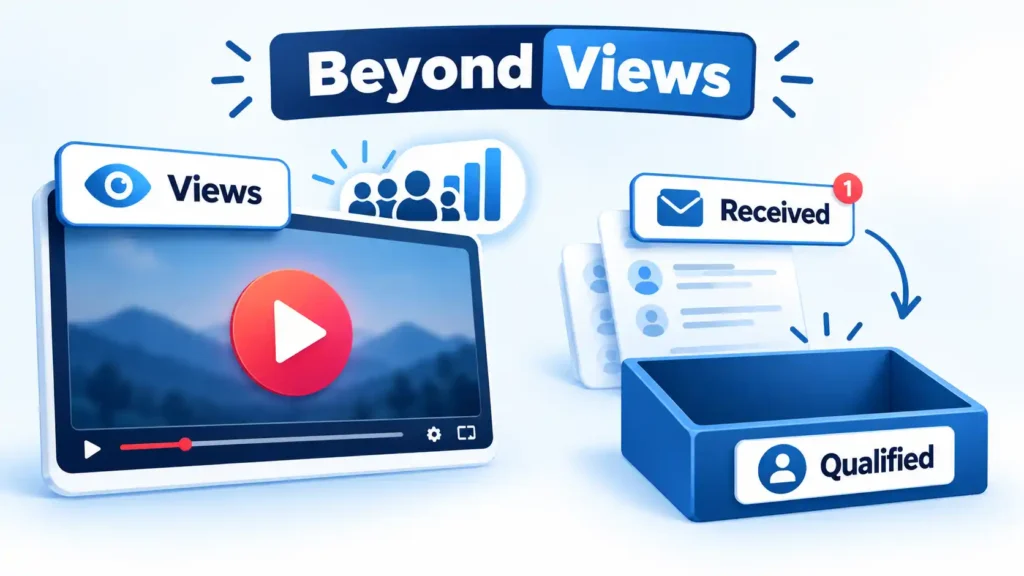
Beyond Views From Reach to Qualified Enquiries

A promotional video can get views without enquiries when it attracts people who are unlikely to buy, leaves the offer unclear or makes contacting you difficult. Before making another video, check what viewers are being offered, where they are sent and whether the campaign is designed to generate enquiries.

A qualified enquiry is a genuine request that fits your business: the person needs something you provide and meets relevant conditions, such as your service area. A popular video and a useful sales video are not necessarily the same thing.

Viewers don’t have a clear next step

A video that ends with a logo or a vague invitation to “learn more” leaves viewers to decide what to do. If your goal is enquiries, the call to action should explain how to make one and what the person is requesting.

Check: Watch the video and look at its accompanying caption or description. Is there a clear invitation to request a quote, book a consultation or ask about a specific service? Is the advertised contact route available from that placement?

Advertisement

Fix: Choose one main action and make it specific. “Request a quote for your repair” communicates more than “Get in touch.” Give viewers a usable route to that action instead of relying on a web address briefly displayed on screen. The invitation should also agree with the contact action offered on the landing page.

You’re reaching viewers who aren’t potential customers

Someone can enjoy your video without needing your service. An entertaining clip might attract attention from people outside your service area, people interested in the subject as a hobby or people who want advice rather than paid help.

Check: Look at the questions and requests the video produces. Are people asking about the service you sell? Do genuine enquiries repeatedly come from places you don’t serve or ask for work you don’t offer? Those patterns are more useful than the view total alone.

Fix: Make the intended customer easier to recognize. State the relevant service, location or use case early enough to shape what viewers expect. For a hypothetical local repair business, showing an impressive repair without naming the area served leaves a basic buying condition unanswered.

Advertisement

The aim is to make the video relevant to prospective customers rather than merely interesting. If you’re paying for distribution, check that the audience settings match the customers you can actually serve.

The video doesn’t make the offer clear

Viewers might understand what happens on screen but still not understand what they can buy. A process montage, customer interview or product demonstration needs enough context to connect the footage to an offer.

Check: Ask someone unfamiliar with your business to watch the video and explain what you sell, who it is for and what contacting you would achieve. If they can describe the visuals but not the offer, the message needs work.

Fix: Name the service or product plainly, connect it to a customer problem and show something relevant to that promise. Explain what the next step involves. A quote request, for example, should not leave people wondering whether they are committing to a purchase.

Advertisement

Keep the promise supportable. A demonstration shows what happened under the conditions filmed; a testimonial describes someone’s experience. Neither needs exaggerated claims to make the offer understandable.

The landing page changes the promise

A viewer who follows a service-specific invitation should arrive somewhere that continues that conversation. A general homepage, a different offer or an unclear contact button makes the person search for the reason they clicked.

Check: Open the video’s actual link on your phone. Compare the first visible page content with the video’s promise. Are the service, location, offer and next action consistent? Can you find the relevant contact option without hunting through the site?

Fix: Send people to the page that answers their immediate question. Keep the offer and contact action consistent, explain what happens after an enquiry and remove questions from the form that you do not need at this stage.

Advertisement

Google’s landing-page recommendations emphasize matching the page to the advertisement and making contact straightforward on mobile. A more polished video will not repair a confusing destination.

The campaign is buying views rather than enquiries

If you pay to promote the video, the campaign objective matters. Google Ads Video view campaigns optimize for TrueView views. A high view count can therefore reflect the outcome the campaign was designed to obtain.

Check: Look at the objective selected when the campaign was created, or ask whoever runs your ads to show you. Is it intended to generate video viewing, website visits or a defined enquiry action?

Fix: If enquiries are the goal, review whether the campaign is configured to pursue that outcome and whether the enquiry action is measured correctly. Do this before increasing the budget. Changing the objective alone will not fix an unclear offer or a broken form.

Advertisement

For an organic post, there is no paid campaign objective to change. Focus on whether the content reaches relevant people and gives them a credible reason to contact you.

Check that enquiries can actually reach you

Before paying for more traffic, test the contact route the video advertises. Tell anyone who receives enquiries that you are testing; a submission can trigger notifications or automated follow-up.

  1. Follow the advertised route. Open the exact link or contact option available beside the video, preferably on the device your customers use. Check whether the correct page, form or messaging account opens. If it opens the wrong destination or fails, record the problem before continuing.
  2. Make one agreed test enquiry. Use contact details you control and identify the request as a test. Note the time and any confirmation or error. If the form reports an error, stop rather than submitting repeatedly. For a telephone or messaging route, make the agreed test contact instead of testing an unrelated website form.
  3. Confirm receipt. Check the inbox, booking system or other place where the request should arrive, allowing its normal delivery time. A confirmation on screen is not a substitute for a received record. If the test is missing, give the tested route, time and error details to whoever maintains the website or contact system. Identify the test record so it is excluded from your business results.

If real enquiries arrive but your dashboard shows zero, investigate tracking rather than rewriting the video. In Google Analytics 4, form_start and form_submit measure form interactions; they do not tell you whether a request fits your business. Many standard Analytics reports also take 24–48 hours to process data. Compare the report with received enquiries before treating its zero as a business result.

Choose the fix that matches the problem

A broken contact route needs attention before more promotion. If the route works, start with the clearest mismatch you found: a missing invitation, unsuitable audience, unclear offer, inconsistent landing page or campaign objective that pursues views.

Make one focused change and judge it against genuine, suitable enquiries over a comparable period. Keep the audience and distribution reasonably consistent where possible, and note other changes that could affect the result. The useful question is whether more of the right people contact you, not whether the next video collects a larger view count.

Advertisement

Source link

Continue Reading

Tech & AI

Mistlabs Targets Apple Devices to Launch Ambi, Cross-Platform Ambient AI Acts in Real-Time

Published

on

mistlabs ambi

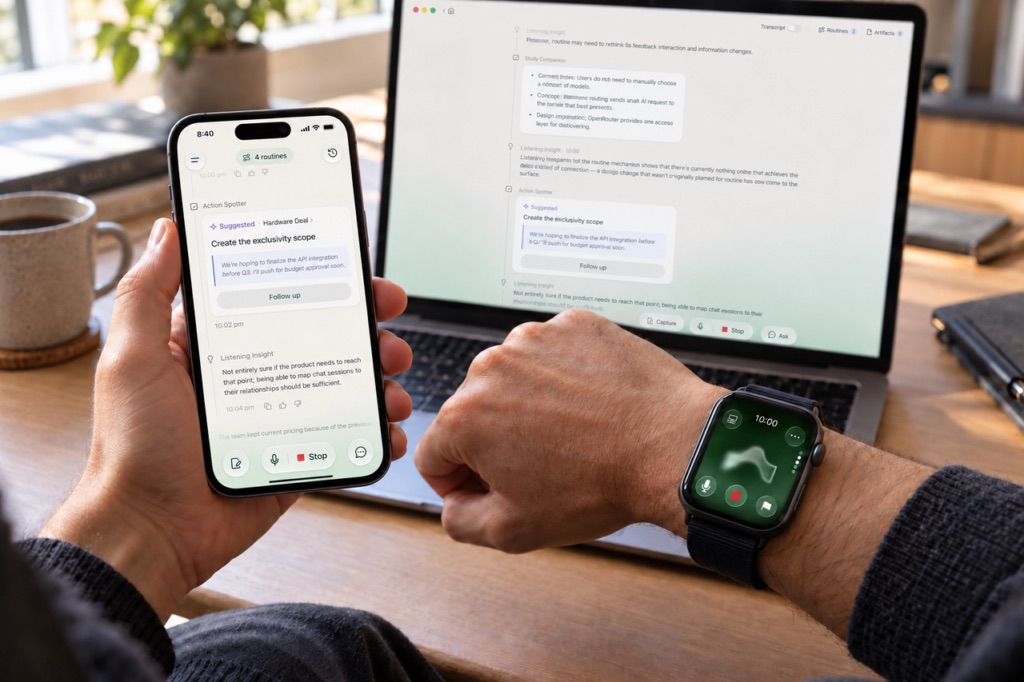
Muse and Instinct have a new competitor in town. While these AI agents are known for proactively tackling tasks like booking reservations, cancelling subscriptions, hunting down K-pop merch, Ambi is thinking about a different approach. It’s designed to tackle tasks or action items mid-conversation, before you’ve even asked.

Launching today from Mistlabs on Apple platforms including iOS 18 and above, alongside the Apple Watch and MacBook, Ambi isn’t necessarily vying to automate your grocery order upon command. Rather, it’s built for anticipation. The distinction matters. Muse and Instinct operate in a “give me a goal, I’ll go handle it” mode. Ambi operates in a “here’s what you’re about to need” mode.

Built on ambient AI, essentially AI that observes you assuming you’ve turned on listening on your devices, Ambi retains what it hears across devices, with memory and context persisting from screen to screen.

At the same time, it can act while you’re still in the middle of a meeting. Ambi’s Routines feature, which sets recurring tasks, can operate based on how you steer it by pointing Ambi at what it should generally be keeping track of. For instance, if it’s a presentation deck for a final report, Ambi can recognize a conversation related to that deck and start acting on whatever it thinks you need. This may be research, secondary sources, and fact-checking, all aimed at getting the deck finished. Or it could be insights that Ambi believes are inadequate or missing. And this can happen mid-conversation, in real-time, not after the fact. Even if you’re jumping from one device to another, everything you’ve done on one is available across your other Apple devices.

Advertisement

There’s a catch to being Apple-only, though. The context Ambi can gather is capped by whatever those devices can see and hear. That’s part of why Mistlabs’ CEO Peter Mo raised US$26 million in Pre-A funding from Luminous Ventures and Huaqin to build its own wearable AI device.

But the company has bigger ambitions. Mistlabs is touting a collaborative platform that would let one user’s Ambi agents communicate with another user’s agents. The idea is that Ambi could one day act as a mediator between users or even a tool for real-time negotiations during meetings, drawing on how well it understands the people it works for.

Now launching out of Beta, Ambi is available to download from their website.

Source link

Advertisement
Continue Reading

Tech & AI

In response to $3.3B in war losses, the US Army awards billions of dollars to 10 companies to intercept swarms of cheap drones

Published

on

diM9tpwF2Lz85R8q85CT78

  • US Army awarded $4.15 billion in counter-drone contracts to 10 companies
  • Seven of the ten winners each received a $500 million base award
  • The framework carries a maximum ceiling of $7 billion across all awards

The US Army has awarded contracts worth $4.15 billion to 10 companies developing technologies against cheap drones threatening military installations and critical infrastructure across the country.

The awards fall under Domestic Shield, a Department of Defense initiative intended to strengthen protection against unmanned aircraft without restricting procurement to individual suppliers.

Source link

Advertisement
Continue Reading

Tech & AI

More Indigenous Languages Come to iPhone and iPad Keyboards in New Apple Update

Published

on

cherokee keyboard

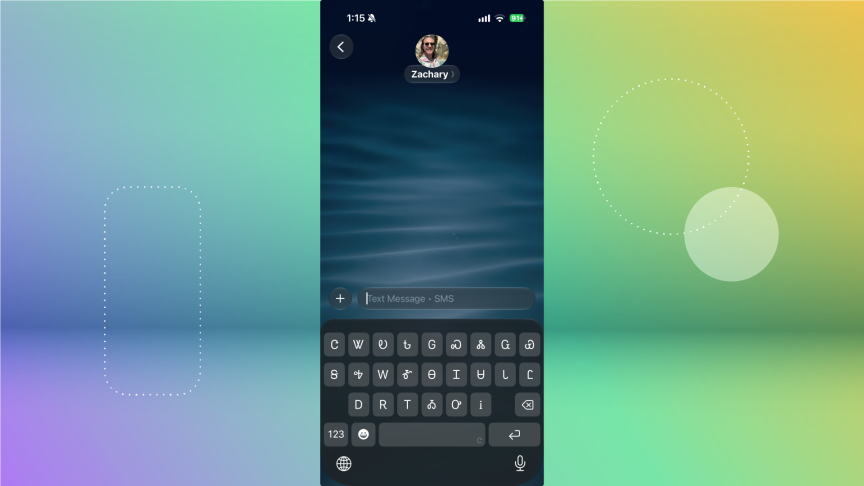
When Apple released iOS 27 and iPadOS 27 in September, much of the buzz centered on the update’s revamped Siri AI. However, the update also brought a handful of new indigenous languages to the device’s keyboard, allowing users to type and send messages in Blackfoot and other languages. In the US, Monday is Indigenous Peoples’ Day, a federally recognized holiday honoring Native American heritage, culture and sovereignty.

Some of the supported languages have only a couple of thousand speakers. Consider Cherokee, which has only about 1,500 fluent speakers in the entire world. Cherokee was the first Native American language Apple added to iOS back in 2010, and its inclusion has been seen by some as a welcome development.

“The technology that we utilize with Apple has allowed us to take everything that we really are trying to achieve here, which is the perpetuation and the revitalization of Cherokee language and culture, and use that same technology to make it relevant to the young people that are learning here,” Chuck Hoskin Jr., principal chief of the Cherokee Nation, said, according to Apple.

Teachers in Oklahoma are also using these tools in their classrooms to help more students engage with Native American languages. These tools can help students practice their pronunciation by allowing them to record themselves to revisit later.

Advertisement

“In Cherokee language, every sound is so important,” Erlinda “Daksi” Soap, a fifth-grade teacher at Oklahoma’s Cherokee Immersion School, told Apple. “One sound off, and you’re saying a completely different word.”

The Cherokee keyboard in Messages on an iPhone.
The Cherokee keyboard can be accessed and used across iOS devices.Apple/CNET

There are 85 characters, originally 86, in the written Cherokee language used to represent the sounds — or syllables — in the spoken language. Cherokee artist Roy Boney Jr. worked with Apple engineers to bring the Cherokee syllabary to Apple devices.

“A big part of being Cherokee is you ensuring things like language and culture survive and continue,” he told Apple.

High-schooler Olivia Daugherty graduated from the immersion school in 2024. She said she remembers her father teaching her to count and name animals in Cherokee as a child, and that she was nervous about losing her language and culture. Now, younger generations are helping to secure the language’s future.

“I was worried about my language and culture, and the way I might lose my community, and I might lose my language,” Daugherty told Apple. “My niece, she’s a first-language speaker in our language … She’s one of the first in a very long time.”

Advertisement

Source link

Advertisement
Continue Reading

Tech & AI

‘I am not an AI-friendly actor’: Nicolas Cage likely done with Amazon after ‘Spider-Noir’ stance

Published

on

spider noir
spider noir
“Spider-Noir” streamed for one season before being canceled. (Amazon Prime Video Image)

Nicolas Cage is drawing a hard line in the digital sand against artificial intelligence, revealing that he likely won’t work with Amazon again after refusing to sign an AI waiver for his now-canceled Prime Video series “Spider-Noir.”

Speaking during a panel at New York Comic Con over the weekend, the actor didn’t mince words about his clash with the studio.

“Amazon is a very AI-friendly company, to the tune of $50 billion invested in OpenAI,” Cage told the crowd, according to The Wrap. “I am not an AI-friendly actor, so it’s like, connect those dots! I’m not a member of their club. I didn’t sign the waiver to let them use AI on ‘Spider Noir.’ I’m probably not going to be working with that studio again, but that’s OK.”

Inspired by the Marvel Comics character, “Spider-Noir” starred Cage as Ben Reilly, an aging, down-on-his-luck private investigator in 1930s New York City who is forced to grapple with his past life as the city’s lone super-powered vigilante.

Despite garnering 11 Emmy Award nominations, Prime Video abruptly canceled the series after just a single eight-episode season.

Advertisement

Cage is famous for boundary-pushing roles in classics like “Leaving Las Vegas,” “Face/Off,” and “National Treasure.” The Oscar winner teased his next pivot to the small screen, hinting that he is set to star in Season 5 of HBO’s anthology crime drama “True Detective.”

And Cage’s anti-AI stance appears to be shaping his future creative ambitions, with Kotaku reporting that the actor expressed a desire to team up with younger, DIY-reared directors — specifically shouting out 21-year-old YouTube sensation Kane Parsons, creator of the viral “Backrooms” series — who honed their skills online and share his deep skepticism toward generative tech.

“They’re doing it from scratch and by hand,” Cage said. “I want to get with that.”

Source link

Advertisement
Continue Reading

Trending

Copyright © 2025