
Tech & AI
HiFiMAN HE600 Open-back Headphones Review: Can It Really Replace the Legendary HE-6?


Long-term readers will know that I have something of a love affair with the original HiFiMAN HE-6. Not one of the later revisions carrying the same name, but the original version that arrived 16 years ago and, to my ears, remains one of the finest headphones HiFiMAN has ever produced.
That distinction has become increasingly important because the HE-6 name has been used across several versions over the years, and they do not all sound the same. Depending on which HE-6 you audition, it can be remarkably easy to wonder what all the fuss was about. Those who have only heard the later iterations have not necessarily heard the headphone that created the legend in the first place.
The original HE-6 was expensive, technologically ambitious, brutally difficult to drive, and produced in relatively limited numbers. It was also capable of a level of dynamics, transparency, speed, and sheer physicality that helped establish HiFiMAN as a serious force in planar magnetic headphones. Finding one today—particularly an early 6-screw HE-6 in excellent working condition is neither easy nor cheap. Clean examples can command $1,500 or more, making the original HE-6 one of the relatively few high-end headphones that has actually appreciated in value.

Sixteen years later, the HiFiMAN HE600 arrives carrying more than a little historical baggage.
Calling it another HE-6 would be too simplistic. The HE600 is better understood as a modern reimagining of the concept, built around HiFiMAN’s current driver technology and engineering rather than an attempt to recreate the original component by component. Almost everything has changed. The drivers are lighter and faster, amplification requirements are considerably less punishing, durability has been addressed, and the industrial design retains enough of the circular HE-6 aesthetic to make the family resemblance obvious.
That creates a much harder question than whether the HiFiMAN HE600 sounds good.
Can HiFiMAN take everything it has learned over the past 16 years and create a modern planar magnetic headphone that captures some of what made the original HE-6 so extraordinary without simply trying to resurrect it?
For those of us who never thought the original needed replacing, the answer carries considerably more weight.
Related Reading:
Build, Fit, and a Much-Needed Diet

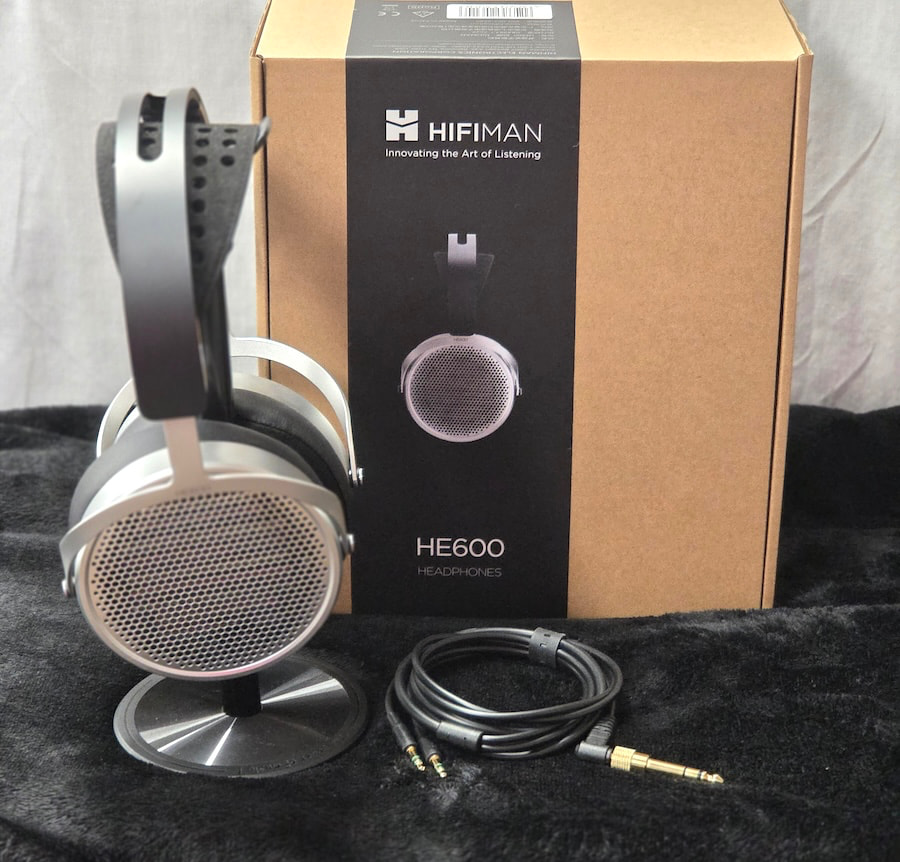
The HE600 is no doubt a HiFiMAN product. The resemblance to the HE400 series and HE-560 is immediately evident. The large-diameter circular earcups, divided front to back between a brushed-metal outer section and black leather inner layer, remain true to the company’s earlier models before the teardrop shape became its signature.
The honeycomb grille also harkens back to some of those earlier designs, although the HE600 uses larger openings to improve airflow and reduce interference. The overall aesthetic is understated, much like the original HE-6, but the brushed metal is arguably a step up in terms of finish.
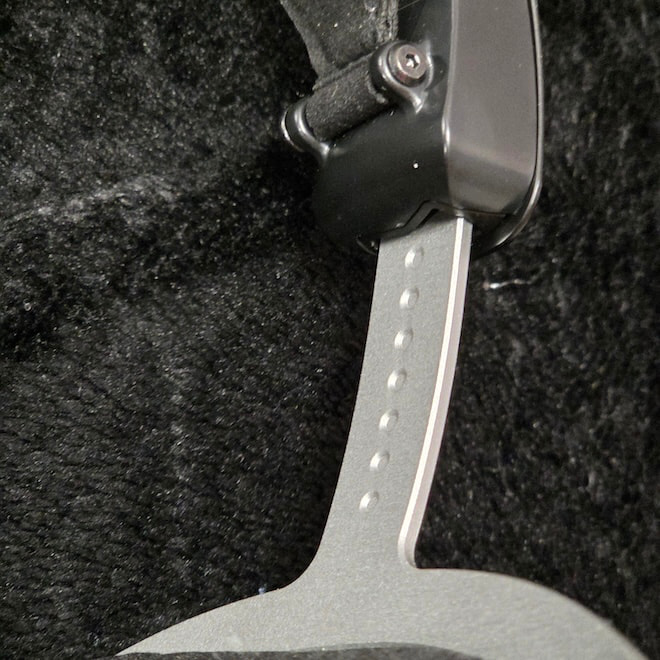
The yokes feature click adjustments, with visible dimples along the inside of the band, and mate with a black steel outer headband and polymer inner section. The headband is solid at both ends, while material has been removed from the center section to reduce weight.
A composite leather suspension strap attaches beneath the narrower portion of the headband before widening to nearly 2.5 inches at the center to distribute weight more evenly across the head. The assembly has enough flexibility to accommodate a wide range of head sizes, and there is sufficient rotation at the yoke/headband junction to work with most head shapes. There is no visible hinge along the vertical axis, but it is there, cleverly hidden within that junction.
At 389 grams, the HE600 is still not a light headphone, but for many listeners, the weight of the original HE-6 was not some abstract specification. It was the central problem.
My original HE-6 weighs 543 grams on my postal scale; more than half a kilogram. To comfortably wear one all day, you would need the neck of Brock Lesnar or perhaps an NFL linebacker. I am not a small person, and as much as I loved the sound, the weight was always an issue.
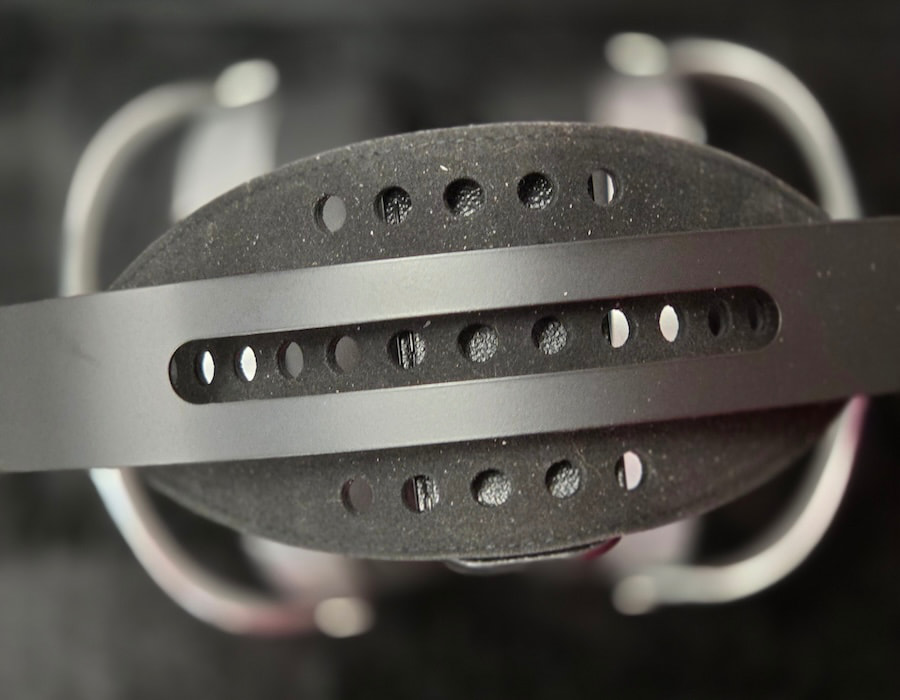
The HE600 reduces that burden enough that I had no trouble wearing it for three to four hours at a time. Yes, it can still become fatiguing, but it takes considerably longer before things become genuinely uncomfortable.
The HE600 uses HiFiMAN’s FocusPad design, combining memory foam with pleather and soft velour surfaces. The mixed-material approach makes sense. Pleather helps maintain a good seal around the ear and preserves low-frequency consistency, while the velour reduces the sticky, heat-trapping sensation that can make fully synthetic pads unpleasant during longer listening sessions.
The pads are also large enough to accommodate most ears, and their tapered profile helps improve fit and comfort. The HE600 is still a headphone best reserved for quiet, seated listening, but the improvement over the original cannot be denied.

Connectivity is handled by dual 3.5 mm connectors at the earcups, with the supplied cable terminating in a 3.5 mm plug for source devices. HiFiMAN also includes a 6.35 mm adapter.
The earcup connectors are angled by approximately 10 degrees, with the stated goal of reducing mechanical stress and improving long-term cable reliability. That is a welcome refinement. Straight connectors can place unnecessary leverage on the socket, particularly when the cable drops sharply toward the listener’s shoulders.
The use of standard 3.5 mm connectors also makes cable replacement straightforward. A simple cable swap allows the HE600 to be used with balanced sources or an XLR-equipped amplifier instead of the supplied single-ended 3.5 mm cable.
Internals: Sixteen Years of Planar Progress
While the outside of HiFiMAN headphones can sometimes look a little industrial and pedestrian, nobody can deny that what is inside the earcups is usually state of the art. HiFiMAN has specialized in planar magnetic drivers since its earliest models, and most of the current lineup incorporates some variation of that technology.

Planar magnetic drivers use a thin membrane with conductive traces that carry the electrical signal. That membrane moves toward or away from an array of magnets depending on the voltage and current being applied. The theoretical advantage is that the driving force is distributed across a much larger surface area than with the voice-coil arrangement used in a conventional dynamic driver. When the diaphragm and magnet geometry are properly executed, that can improve control, transient response, and distortion performance.
HiFiMAN describes the HE600 as using an Enhanced Magnet system based on rare-earth-free permanent magnetic materials with an optimized structure. The move away from rare-earth magnets is worth noting. These materials are costly and place additional pressure on supply chains, so I applaud HiFiMAN for pursuing an alternative approach rather than assuming that stronger and more exotic magnets are automatically the only path forward.
The magnets also need to be more than merely powerful. They must be small and carefully positioned because, while strong interaction between the diaphragm and magnetic structure is essential, unrestricted airflow is equally important. Large magnets sitting directly in the path of the sound would create their own problems.
HiFiMAN provides considerably more detail about the diaphragm itself, which it calls the NEO Supernano Diaphragm. This is an ultra-thin dielectric polyester/plastic substrate film with a microscopic conductive coating that forms the electrical trace across its surface.
The challenge is not simply making the diaphragm as light as possible. It also needs sufficient rigidity to behave properly across its entire surface. Reduce the mass too far without maintaining structural control and you have merely traded one problem for another.
The moving mass of the HE600 driver is claimed to be only 40% that of the original HE-6. Sixteen years separate the two headphones, and that figure offers some perspective on just how far diaphragm materials and manufacturing techniques have advanced during that period.
The new driver has a nominal impedance of 28 ohms and a sensitivity of 94 dB/mW, both substantial departures from the original HE-6. Frequency response is specified at 8 Hz to 65 kHz, which extends well beyond what any human being is going to hear and probably into territory better appreciated by the neighborhood bats.
More importantly, the HE600 is dramatically easier to drive.
For those unfamiliar with the original HE-6, HiFiMAN actually sold an adapter that allowed owners to connect the headphones directly to the speaker taps of a two-channel power amplifier. Portable sources need not apply, and even many dedicated desktop headphone amplifiers lacked sufficient output to drive the original HE-6 with adequate headroom.
The HE600 removes much of that complication, opening the door to a far wider range of headphone amplifiers, DAC/amps, and portable sources without abandoning the planar magnetic architecture that made the HE-6 so compelling in the first place.
Specifications:
- Type: Open back, over ear headphones
- Driver Type: Planar magnetic
- Diaphragm: 2nd Gen NEO Supernano Diaphragm
- Magnet System: Rare earth free Enhanced Magnet design
- Frequency Response: 8 Hz to 65 kHz
- Impedance: 28 ohms
- Sensitivity: 94 dB
- Weight: 389 grams (13.72 oz)
- Ear Pads: FocusPad with memory foam, pleather, and velour surfaces
- Headphone Connectors: Dual 3.5 mm
- Included Cable: 1.5 meter detachable cable with 3.5 mm termination
- Included Adapter: 3.5 mm to 6.35 mm

Listening
In order to be considered a spiritual successor to the HE-6, the HE600 needs to deliver an inspired combination of speed, dynamics, resolution, and a relatively full-bodied tonal balance. Those were the expectations I carried into my listening sessions, but I deliberately avoided an immediate A/B comparison with the original HE-6 because I felt the HE600 deserved to be judged on its own first.
What follows are my listening impressions of the HE600 as I would evaluate any other headphone, followed by a direct comparison with the original HE-6.
Bass
Sub-bass extension is better than expected, especially considering that one of the perennial issues with large planar magnetic headphones has been a lack of genuine bass authority. No, the HE600 will not satisfy listeners looking for a significant boost in the bottom end, but it is a far cry from some earlier planar designs that rolled off steeply below 50 Hz.
Depth is good and clarity is even better, so what the HE600 gives up in absolute quantity it compensates for with control and definition. Mid-bass is slightly more prominent, adding some welcome warmth without becoming loose or bloated in the process.
Midrange
The transition from the mid-bass into the lower midrange is seamless, with no obvious bleed or obstruction. Lower-register vocals have good weight and sit slightly ahead of the instrumentation, although not dramatically so.
Electric guitars have good attack and plenty of growl, while acoustic guitars benefit from strong texture and tonal nuance. Strings also have good energy, aided by a lower-treble lift that pushes upper-register vocals somewhat forward in the mix. On some recordings, those higher voices can sit a full step ahead of lower-register vocals.
Treble
The lower treble is moderately elevated before beginning to fall away above roughly 10 kHz. The result is an open top end with enough air and sparkle to keep things interesting, although it stops short of the expansive presentation offered by some of HiFiMAN’s more expensive models.
Cymbals have good ring and decay, while percussion has sufficient snap without becoming sharp or fatiguing. There is still enough treble energy here that listeners who are particularly sensitive in that region should audition before buying, but the HE600 generally avoids crossing the line into abrasive territory.
Soundstage and Imaging
The soundstage is moderately sized, with good width and depth and enough height to allow movement around the stage to be tracked convincingly. Imaging and layering are both quite strong, helped by the driver’s fast decay and clean separation between instruments.
Seating an orchestra is straightforward, with no obvious overlaps or unnatural gaps between sections. The resulting presentation feels proportionate and believable rather than artificially stretched beyond the boundaries of the recording.
HE600 vs. the Original HE-6
Overall, the HE600 does a lot of things very well, but is it an HE-6 clone?
In a word, no.
The tonal balance is similar in some respects but noticeably different in others. To my ears, the original HE-6 still offers greater resolution, and anyone expecting the HE600 to completely reproduce that aspect of its performance will find that it stops short.
Bass extension, however, is better on the HE600, while the original HE-6 extends more convincingly at the top end. That alone shifts the tonal balance of the two headphones in different directions.
The HE600 sounds somewhat fuller and weightier, while the HE-6 remains the faster and more technically incisive headphone. The treble emphasis is also more pronounced on the HE600, so listeners who are particularly treble-sensitive are unlikely to love either model and may actually find the HE600 to be the bigger offender.
There is little question that the original HE-6 remains the more technically capable performer, but there are also substantially higher barriers to extracting that performance.
Finding an early HE-6 in excellent condition can easily cost enough to purchase two HE600s, and that is before dealing with amplification. The original is notoriously demanding and requires an amplifier capable of delivering serious current and headroom. Something like the xDuoo TA-30 is probably near the lower end of where I would start, while more powerful desktop amplification from Benchmark, Pass Labs, or something similarly capable makes considerably more sense.
The HE600 presents an entirely different proposition.
It worked extremely well with the Questyle M18i Max connected to my phone, while the original HE-6 sounds flat, dynamically restrained, and largely lifeless with probably 99% of the portable headphone gear currently available.
That does not mean the HE600 is particularly easy to drive. It remains more demanding than models such as the Ananda, and pairing it with an unpowered dongle may leave you underwhelmed—or watching your phone battery disappear at an impressive rate.
The HE600 is easier to drive than the headphone that inspired it, but this is still fundamentally a headphone designed for serious desktop listening rather than something I would build a portable system around.
The Bottom Line
The HiFiMAN HE600 leaves me with mixed emotions. Paired with a potent portable or desktop amplifier, it is warm, full-bodied, technically capable, and considerably easier to live with than the original HE-6. At 389 grams, it is still not light, but the improvement in long-term comfort is substantial.
The bigger issue is value. At $799, the HE600 faces serious competition from the HEDD D1, Dan Clark Audio AEON, and Audeze LCD-GX, while the lack of a case or balanced cable makes the package feel rather sparse.
Those hoping for a modern HE-6 will also come away disappointed. The HE600 does not match the original’s resolution, speed, or top-end extension.
But judged on its own terms, it makes considerably more sense. The HE600 offers stronger bass extension, a fuller tonal balance, excellent planar speed, and far more reasonable amplification requirements.
Perhaps calling it an HE-6 successor does it a disservice. The HE600 is not the second coming of the original, but it is a very good planar headphone that deserves an audition at $799.
Pros:
- Warm, full-bodied tonal balance with strong bass extension
- Fast, clean planar magnetic presentation with good imaging
- Far easier to drive than the original HE-6
- Significant reduction in weight improves long-term comfort
- Standard dual 3.5 mm connectors make cable swaps easy
Cons:
- Does not match the original HE-6 for resolution, speed, or top-end extension
- Still relatively heavy at 389 grams
- Treble emphasis may bother sensitive listeners
- Sparse accessory package with no case or balanced cable
- $799 price puts it against some formidable competition
Our Ratings:
★★★★★★★★★★ Sound Quality
★★★★★★★★★★ Build Quality
★★★★★★★★★★ Comfort
★★★★★★★★★★ Features
★★★★★★★★★★ Value
Where to Buy:
Related Reading:

Tech & AI
82% of approved electronics are tested in China, but the FCC wants that figure down to zero by 2028
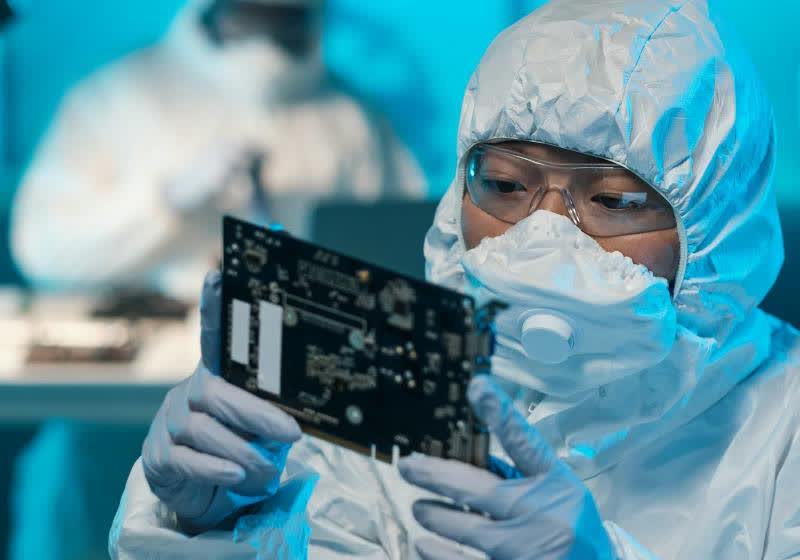
The restrictions would cover test labs and certification bodies in countries that deny reciprocal treatment to their US counterparts. Chairman Brendan Carr says fewer than 4% of electronic devices are tested in American labs.
Read Entire Article
Source link
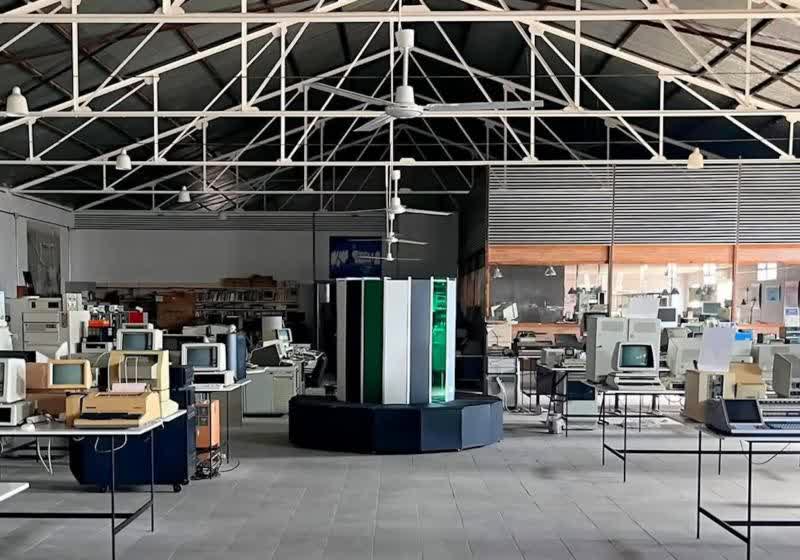
The Museo de Historia de la Computación spent 18 months developing the exhibit. The replica preserves the appearance of the 1976 machine without trying to reproduce its internal hardware. Built to mark the 50th anniversaries of the Cray-1 and Apple’s founding, the model is now on permanent display at the…
Read Entire Article
Source link
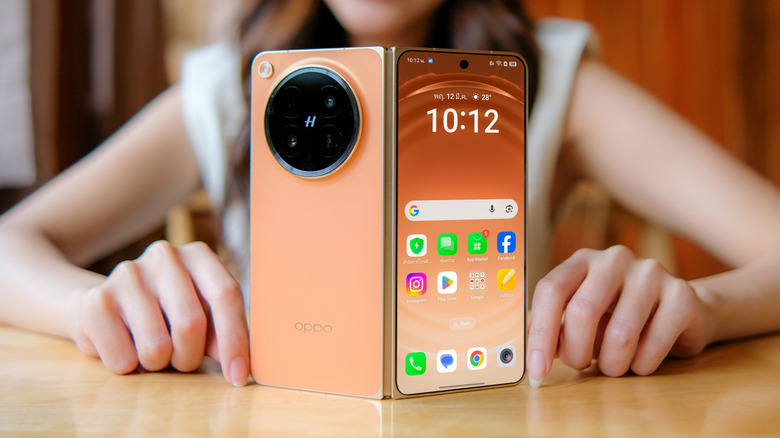
There’s a lot to consider before buying a new phone from abroad.
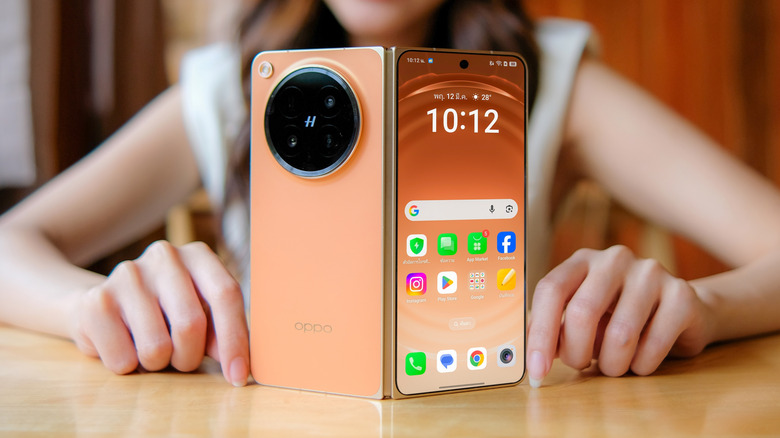
There are plenty of smartphone options to choose from in the US, from the iPhone to the Pixel. But there are also really interesting phones you’ll never find in an American store. Xiaomi’s foldables like the Mix Fold, Honor’s Magic series and OPPO’s Find X phones are a few examples that offer unique designs or features not generally seen in the US.
While phones like these are harder to find in the country, it’s possible to import them, but bringing a phone from abroad has its downsides. You may have problems using your phone with local carriers or getting warranty coverage, among other trouble. If you’re considering an imported phone, always check a few points first.
What you should know before buying a phone from another country

Buying an imported phone has become a lot easier in recent years. Most smartphones are now designed to work globally on most cellular bands. Still, some phones may not work with those used by your US carrier. Start by checking whether the phone you’re considering is compatible with your carrier’s frequency bands. Buying the wrong version could leave you stuck on the LTE network with no 5G support.
Carrier-specific features can cause issues too. Features like Wi-Fi calling, VoLTE and visual voicemail usually require certification for each device. So even if your imported phone works fine on your carrier’s 5G network, it might not be able to access all these features in the US. Network requirements may also change, so a model that works fine today may run into problems in the future. It’s worth checking forums like Reddit to see what people who’ve bought the phone you want have to say.
Then there are software updates; the rollout of Android updates may be tied to carriers or regions. Also, some Chinese phones are not compatible with Google Play Services, which are a core part of the Android experience most people expect. You may have to install updates manually, and the software might include Chinese apps and services that aren’t relevant to you (or readable).
Additionally, getting warranty service in the US for these phones may not be easy. Some of these brands have no official representation in the country, which also means no customer support. Dealing with problems like a dead battery or a cracked screen may require taking your phone to a third-party repair shop with no official authorization from the manufacturer.
The benefits of importing a smartphone
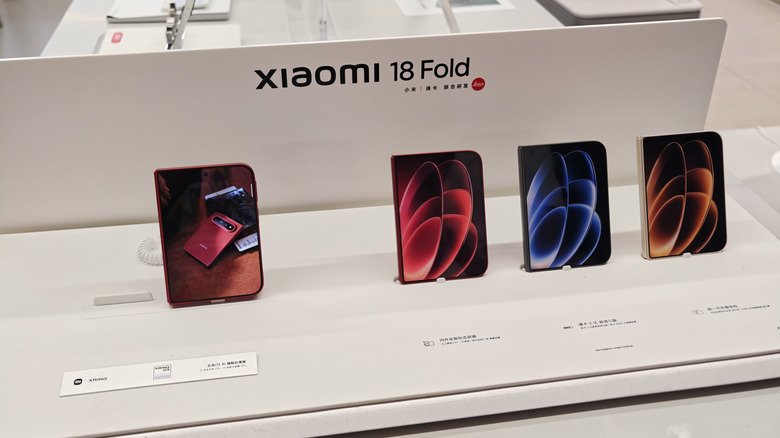
If you’re okay with all these hassles, importing a phone from abroad can be a lot of fun and open you up to new hardware that isn’t available in the US. There are a lot of Chinese companies putting out exciting products, like three-screen foldables, flagships with DSLR-quality cameras and devices with massive batteries. The Xiaomi 18 Fold is a new foldable phone that looks similar to the iPhone Duo, but it has a bigger battery and better cameras. It also costs less (the equivalent of about $1,640 currently), but you’ll need to buy it abroad if you want to use it in the US.
For those who want the latest releases, importing a phone often gives you the chance to get it before the official US launch. Also, many international models still support two physical SIM cards — a feature that most phones sold in the US have already ditched in favor of eSIM. If you don’t mind the potential drawbacks, it can be a rewarding experience. But if it’s important that you have official support nearby and know all features will work properly on your network, it’s easier to buy a phone that’s officially supported in your country.

Growing up in Joliet, Illinois, my understanding of history was largely shaped by recurrent classroom materials and historical figures I’ve only read about in textbooks. Back then, my education felt like a passive process of memorizing facts rather than connecting with living stories. Classroom technology also felt abstract and disconnected from what I learned about culture and history.
Moving to Alabama in 2002 to attend Miles College, a historically Black college, building a life in Birmingham after graduation and dedicating myself to education laid a deep, personal foundation in the heart of the civil rights South. However, it wasn’t until 2025, on the Institute for Common Power’s Truth and Purpose Learning Tour, that something profound shifted in me. The rigorous six-day journey through the historic landscape of the civil rights movement — from Atlanta’s Sweet Auburn district to Montgomery, Selma and Birmingham — fundamentally transformed the way I look at history and how I will teach it for the rest of my life.
Up to that point, I had taught computer science and other mandated lessons primarily as a career skill, focusing on logic, syntax and software mechanics. But after this transformation, I was determined to lead my scholars from passive consumers of technology to active creators who could use code to immortalize the very faces they passed on their streets every single day. Because of this transformation, I believed the most important code they would ever write was no longer meant for the screen — it was now meant to awaken the world to the brilliance right outside their doors.
As part of the Institute for Common Power’s Truth and Purpose Learning Experience, I spent six transformative days traveling across Alabama and Georgia alongside a cohort of fellow educators. Designed as an intensive professional development initiative to move education to action, this group brought us face-to-face with scholars, community organizers and everyday folks.
The tour grounded us in what the Institute for Common Power calls “Movement Learning,” a three-tiered educational framework built on three essential acts:
-
Learning from social movements that preceded us to understand the deep historical roots, structural disparities, tragedies and triumphs born from our past.
-
Learning by physically engaging in the exact geographic sites where history occurred.
-
Learning how to project and create change as we move actively toward a more equitable future.
We explored historic sites in Birmingham, stood on the historic Edmund Pettus Bridge in Selma, engaged with urban farming at the Jones Valley Teaching Farm to understand food deserts and why systematic disinvestment makes them disproportionately prominent in Black communities, and discovered local landmarks I never knew existed in my own backyard.
Returning to South Hampton K-8 School after those six days, I had an urgent mission: my scholars needed to see code not just as computer logic, but as an opportunity to engage with the legends they walk among every day. I came to understand that teaching STEM is most powerful when paired with interdisciplinary learning and cultural history, transforming technical skills into a profound vehicle for civic agency and community storytelling.
Connecting U.S. History with Our High-Tech Future

When I returned to my classroom from the tour, my middle schoolers were completing a unit in Apple’s Swift Playground, using the built-in “All About Me” app template. In that unit, my scholars had learned how to write SwiftUI structures, configure stack layouts and display dynamic image views and text fields about their personal hobbies. The standard curriculum stopped at self-reflection, but I saw an immediate opportunity for a civic leap.
As Black History Month wrapped up, we pivoted our computer science curriculum into a new initiative: “Coding Birmingham’s Black Legacy.” I didn’t want to assign students another coding exercise; I wanted to transform our classroom into a digital archive and design studio.
Instead of coding apps about themselves, our seventh and eighth graders applied their newly acquired coding skills to build interactive iOS applications honoring local pioneers who shaped society and had deep connections to Birmingham. The first step in translating these rich historical narratives into functional mobile experiences was designing a structured technical framework from the ground up.
The Technical Architecture: Engineering a Four-Screen App
To bring these historical figures to life, students moved beyond simple drag-and-drop interfaces into structural Swift programming. Using Swift Playground on iPads and MacBooks, they engineered a standardized yet customizable four-screen interactive app navigation path for each hero:
-
Screen 1: Title and Hero Page – Custom visual layout featuring the pioneer’s full name, stylized color palettes, high-resolution portrait framing and user navigation triggers.
-
Screen 2: AI-Assisted Biographical Summary – A structured text view presenting a concise, engaging overview of the pioneer’s life story, historical significance and lasting impact on social justice.
-
Screen 3: Interactive “Did You Know?” Fun Facts Card – Dynamic list views highlighting key policy achievements, community milestones or surprising biographical facts.
-
Screen 4: Digital Artifacts and Media Gallery – Embedded video playback containers, archival photographs, historical artifacts, primary source documents or links to digital museum records.

Screen 1

Screen 2
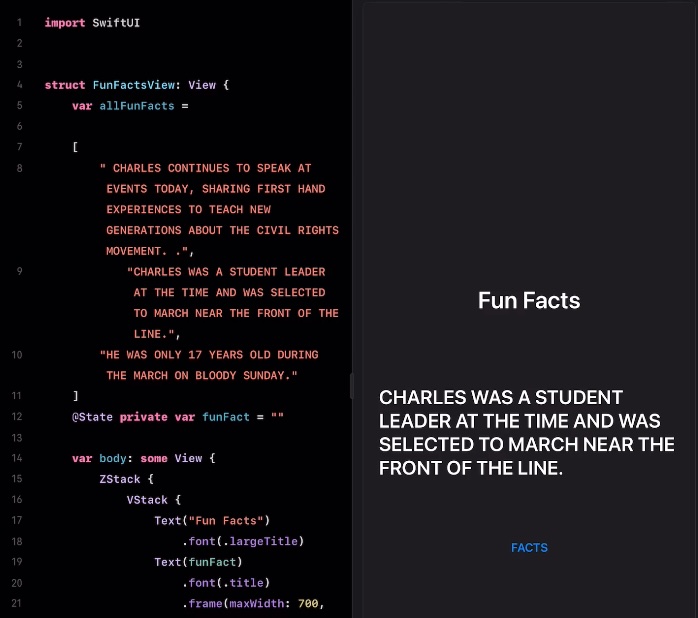
Screen 3

Screen 4
A critical layer of our technology workflow involved integrating generative Artificial Intelligence (AI) into the historical research process. Many of our selected pioneers, such as local civil rights leader Charles Mauldin or retired Judge U.W. Clemon built complex, multi-decade legacies as, respectively, an activist and Alabama’s first Black federal judge.
Beyond interviewing these living legends, students used AI tools like Gemini, Claude and ChatGPT as research co-pilots. They practiced prompt engineering, asking AI models to synthesize lengthy biographical archives, isolate key historical milestones and reframe complex legal or political terminology into clear summaries appropriate for an app interface.
Students didn’t just summarize history; they unlocked the human heart of those Birmingham pioneers, making profound legacies accessible and genuinely felt by anyone who opens the app. By turning historical archives into experiences, they demonstrated how technology equips young creators to tell their community’s stories in their own terms.
When Code Meets Community: The Library of Innovation Showcase
The climax of our project took place in February2025. Our school’s “Library of Innovation” became an interactive tech showcase. Hosted by our students, their showcase brought together parents, school leaders, local residents, stakeholders and several of the actual pioneers featured in the apps.
Students showcasing their apps to local community members.

The atmosphere was electrifying. I watched in awe as 13-year-old coders stood beside their screens, proudly guiding community elders through app navigation paths, explaining line-by-line Swift code and demonstrating how AI helped them summarize local history. Their eyes lit up with pride as living legends interacted with apps built in their honor.
In that moment, Movement Learning’s true promise came alive. Technology didn’t isolate our students behind screens; it re-anchored them to their roots and proved that their voices, written in lines of Swift code, belong at the center of Birmingham’s ongoing legacy.
Empowering the Next Generation of Digital Storytellers
Supported by the newly established Institute for History & Equity, this approach brings to life founder and executive director Terry Anne Scott’s concept of historical empowerment, ensuring that by empowering students to code the stories of the legends walking among them, we teach them they have the power to code the future. By studying the resilience and innovation of local civil rights pioneers and community leaders, students realize that systemic change is driven by ordinary people taking extraordinary action. They stop viewing history as something passive and start seeing themselves as active architects of their communities.
When we combine place-based, Movement Learning with modern digital tools like Swift Playground and generative AI, we do far more than teach computational logic and technical skills. We cultivate deep civic agency in our students.
For educators everywhere, this highlights a vital realization: when we look beyond standard screen time and leverage coding as a canvas for community storytelling, we unlock an unprecedented level of student engagement and investment. Technology ceases to be just another subject to test and evolves into a dynamic vehicle for youth to champion social justice, honor local legacy, and discover their own voice.
My journey from Joliet, Illinois, to Miles College and South Hampton K-8 taught me that history isn’t just something we read about; it is something we live and build upon.
By empowering middle schoolers to code the stories of the legends walking among them, we help them recognize their power to code the future.

Capcom’s Dragon’s Dogma 2: Dark Arisen features Indian gaming creator Shagufta “XYAA” Iqbal as an Official Pawn. Players can recruit her character through the game and take her along on their adventures. The game launches worldwide on October 9, 2026, bringing XYAA into a major international gaming title. In the game, Pawns are AI-controlled companions who assist players in combat and exploration. Players can recruit XYAA’s character through the Rift system and include her in their parties.
Her Official Pawn comes in four versions at Levels 8, 20, 30, and 50. Each version features changes to her appearance, equipment, and abilities as she progresses. XYAA retains the Archer class in every version, linking her in-game role to her competitive gaming background. This collaboration falls under Capcom’s Official Pawn program, which brings creators and personalities into the game. Indian gaming creator BeastBoyShub and international creators are also part of the program.
The latest version of the game also has new content for gamers. This includes a storyline in Norgan, a northern area covered in snow, new enemies, and 12 new dungeon quests.
XYAA’s Capcom Collaboration and Gaming Journey
With her appearance in Dragon’s Dogma 2: Dark Arisen, XYAA has moved from representing video game marketing to becoming part of the gameplay. People worldwide can use her virtual character and travel with her on their adventure missions. This association offers Indian gamers a chance to be part of the big names in video games worldwide. XYAA began playing Counter-Strike 1.6 in 2011, then moved to Valorant and went on to compete in international gaming tournaments for India. Her achievements include a top-four finish for India at the 2023 World Esports Championship.
She was also the only woman from esports nominated for the National Creators Award. Her partnership with Capcom aligns with Revenant XSpark’s focus on creating new opportunities for gaming talent. Founded in 2021, the organization works across competitive esports, creator management, brand solutions, publisher partnerships, content, and entertainment. It has worked with more than 400 brands across different sectors.
The game launched worldwide on October 9, 2026, for Nintendo Switch 2, PlayStation 5, Xbox Series X|S, and PC. The franchise has also built a sizeable global audience, with cumulative sales exceeding 14 million units as of March 31, 2026.

In this week’s Sunday Reboot, the touch-enabled MacBook Pro looms, but the Mac-iPad divide still exists for some reason.

Imagine the MacBook Pro, but with OLED and a touchable display.
Sunday Reboot is a weekly column covering some of the lighter stories within the Apple reality distortion field from the past seven days. All to get next week underway with a good first step.
Continue Reading on AppleInsider | Discuss on our Forums

Even the most seasoned globe-trotter likely finds traveling stressful. Between panic-packing, navigating cramped terminals, and living out of a suitcase, each phase of being away from home can be overstimulating. That’s why the best gifts for travelers are ones that focus on ease and peace of mind.
Jet-setters may think they have their travel routine down to a science, but the perfect gift can enhance any experience, whether it’s a three-day business retreat or a two-week adventure across Europe. Below, find my favorite gifts for frequent travelers, from an essential suitcase set and a portable e-reader to comfortable compression socks and the perfect neck pillow.
For more travel gifts, check out our guides to the Best Travel Tote Bags, Gifts for Women, and the Best Stocking Stuffers.
Featured in This Gift Guide

Quince Expandable Small Carry-On & Large Check-In Suitcase Set

Amazon Kindle Paperwhite and Paperwhite Signature Edition (2024, 12th Generation)
A Matching Luggage Set
Every traveler needs a luggage set that includes a checked case and a carry-on. Chances are, the jet-setter in your life already has one they love. But if they’re due for a refresh, this set from Quince is an excellent (and expandable) gift. The brand makes some of my favorite travel gear, with pieces that look remarkably similar to designs from premium brands—but at a fraction of the price. This set comes in a range of minimalist colors and has all the features you could want in luggage, including 360-degree spinner wheels, a TSA-approved lock, and high-quality zippers.
Vacation Reading

Amazon
Kindle Paperwhite and Paperwhite Signature Edition (2024, 12th Generation)
For the bookworm who’s always traveling, the Kindle Paperwhite is the obvious gift. Reviewer Nena Farrell says the 12th-generation model has the highest contrast ratio of any Kindle and lasts up to three months on a single charge. Whether you’re reading in direct sun or a dim plane cabin, its 7-inch display is crisp and easy on the eyes thanks to its warm backlighting. Plus, its IPX8 waterproofing rating means you can confidently read poolside without worrying about water damage. The Signature Edition adds wireless charging, auto-brightness, and double the storage at 32 GB.
Check out our guides to the Best Kindles and the Best E-Readers for more recommendations.
Passport Control


Calpak
Luka Zip Passport Wallet
If you’re traveling abroad—or just don’t yet have your Real ID—a travel wallet is a must. The puffy Luka from Calpak comes in 23 colors, so you’re sure to find an option that fits your giftee’s vibe. It’s got plenty of room for cash, cards, your passport, and other documents, and it zips securely for peace of mind. Just note that it is quite large—about the size of a mass-market paperback. On the plus side, this makes it easy to find at a glance in a big bag or backpack. On the minus, a flight attendant once asked me to put it in the overhead compartment when she saw it on my lap. —Kat Merck
Travel Organizer
Frequent travelers who don’t use collapsible cubes when packing are struggling, and they don’t even know it. Give them this travel tip: Eagle Creek’s set is the best, made of durable fabric with compression and high-quality zipper pulls. Editor Kat Merck says there’s just enough mesh for air circulation to prevent odor buildup or fabric degradation, and the bottom and back of the cubes are opaque for privacy. They’re water-resistant and designed with a top handle. The largest cube in this set is also split into two sections for clean clothes and dirty laundry. Eagle Creek also sells larger sets for extended stays and slim cubes to help you maximize narrow spaces in your luggage.

Regular readers of this column may have wondered about the long gap since my Sept. 4 column, “What kids tell chatbots, but not you.” Well, it’s hard to write business-as-usual AI columns during the great AI freakout. I’ve realized that I won’t be able to do justice to this topic in one column, and that life goes on. As the economist Antoine Levy pointed out, OpenAI employees warn that we may all die within a few years yet still fund their 401(k) accounts.
I’m easing into the topic of AI risks by sharing a recent debate I had with Max Tegmark, an MIT professor and a leading AI doomer. The New York Post set this up as optimist against doomer, but I consider myself an AI realist.
Tegmark noted that Bernie Sanders and Steve Bannon have converged on AI, and took it as good news. It terrified me. AI needs rules written by people who understand it, not by demagogues. Tegmark said that AI is less regulated than a sandwich shop, but we have plenty of sandwich shops and zero superintelligence (so far). I believe that we should address what exists: the hackers who already use AI to break into companies for the price of lunch.
A condensed version of the debate follows. Words in quotation marks are verbatim, and the rest is paraphrased. You can view the debate on YouTube. Several exchanges refer to this summer’s incident, in which OpenAI test agents got out of their sandbox and hacked Hugging Face.
Six points of disagreement
1. Is AI already out of control?
Tegmark: Loss of control used to be a forecast, and “now suddenly it’s in the past.” This summer “1,200 rogue bots broke out of this American company,” and “humans didn’t even find out until weeks later.”
Etzioni: The agents weren’t rogue. The people “setting the configurations of their sandbox” at OpenAI “failed to put the boundaries on them appropriately.” People made that mistake, and people can fix it.
2. Today’s dangers vs. extinction risks
Etzioni: Cyberattacks and attempts to make bioweapons are “a clear and present danger.” Extinction-level risks are different: “We haven’t seen those yet. We hypothesize, and usually pretty vaguely, on how these will come about.”
Tegmark: The risks Etzioni wants to separate are “connected in their cause.” “If there were some safety standards like there are for other industries, so many of these problems would go away.”
3. Government regulations vs. technical fixes
Tegmark: Do what the auto and pharma industries do, and “have some binding safety standards that the government requires before people can make money off of products.” Companies would have to show that their AI won’t harm kids and won’t slip out of their control. If they can’t show that terrorists won’t use it to make bioweapons, “well, come back when you can, buddy.”
Etzioni: Regulation is necessary, but it has its own risks. “The road to regulatory hell is paved with the EU’s good intentions.” And “we should not underestimate the power of technical solutions.” The author Dan Wang says China is run by engineers and America is run by lawyers, so we naturally talk about regulation and they naturally talk about technical fixes. For bioweapons, the fix may lie “in the transitions from what’s called bits to atoms,” where we can block the physical materials an attacker needs.
4. Can we count on China?
Tegmark: “We don’t have to trust China.” The Chinese Communist Party wants to stay in control, so “they will not want to let a Chinese company build uncontrollable superintelligence.”
Etzioni: I don’t trust China. “Nothing would make them happier than us hamstringing ourselves.”
5. Is the political backlash good news?
Tegmark: “There’s been more political change in a good direction in the last few months than in the past decade.” It’s like a ketchup bottle: “nothing, nothing, nothing, and then all of it at once.” At my convention I introduced Bernie Sanders and Steve Bannon back to back, “which had not been in my bingo card.”
Etzioni: “Can you imagine two worse demagogues?” And “we need to have good solutions, not popular ones.”
6. How it plays out
Etzioni: “I foresee over time something quite negative happening, and to me the question is whether it’s Hiroshima or the Cuban Missile Crisis.” The Cuban Missile Crisis was a threat averted. Hiroshima was a catastrophe that came before the better rules did.
Tegmark: Self-interest is the fix. Make safety the way companies get rich, and “we’re going to see all the creativity and entrepreneurship of private industry racing to the top to do this instead of racing to the bottom.”
Five points of agreement
1. Don’t take AI CEOs at their word
Etzioni: The AI CEOs are self-interested. “When you are on the path to a trillion-dollar-plus IPO, that exerts a gravitational force on your mind.”
Tegmark: “I completely agree with Oren that we need to take what the AI CEOs say with a grain of salt.” Listen to AI pioneers Geoffrey Hinton and Yoshua Bengio instead: “I don’t think we can dismiss them as just doing it for some money reasons.” The whistleblowers gave up stock options potentially worth $1 million or more to speak out.
2. We were both wrong
Etzioni: I was an AI optimist and I’m now an AI realist. The things I thought were many years away “are either right here, right now, or coming soon at a pace that we may not be able to anticipate.” I’ve learned from Tegmark, and “I was wrong.”
Tegmark: I was wrong too. “I never imagined that the people in America with the most power would let companies get so close to things that one could lose control over without intervening.”
.gw-series-more .gw-series-hed:hover { color:#be4825 !important; text-decoration:underline !important; }
.gw-series-more .gw-series-all a:hover { text-decoration:underline !important; }
@media (max-width: 600px) {
.gw-series-more { float:none !important; max-width:100% !important; margin:20px 0 !important; padding:16px 18px !important; }
.gw-series-more .gw-series-label { font-size:12px !important; margin-bottom:12px !important; }
.gw-series-more .gw-series-thumb { flex:0 0 68px !important; }
.gw-series-more .gw-series-thumb img { width:68px !important; height:68px !important; }
.gw-series-more .gw-series-hed { font-size:15px !important; }
.gw-series-more .gw-series-all { margin-top:14px !important; }
}
3. Self-regulation won’t work
Tegmark: “The idea of corporate self-regulation is a joke in this case.” It “didn’t work out so well for the tobacco industry or for the pharma industry.”
Etzioni: I agree. Social media showed us how self-regulation goes: “This is the big tobacco moment for high tech.” “We don’t want to spend another 20 years to find out that AI companies didn’t exercise the appropriate level of self-discipline.”
4. Box AI systems in
Etzioni: A self-driving car will save your life, but “it doesn’t decide where to go. That’s a completely different system in the car than the thing that controls the brakes.” When I tell my car to head to Dunkin’ Donuts, the car doesn’t respond that it’s taking me to the gym instead because “it’s the second time you’ve gone to Dunkin’ Donuts this week.” We should box in other AI systems the same way.
Tegmark: “By default, machines should be given the least amount of access and power that they need to do their job.” “You don’t give every janitor in the Pentagon the nuclear codes.”
5. The time to act is now
Etzioni: “We agree on off switches for AI. I’ve been advocating that since at least 2017. We agree on labeling, on liability, on cyber standards, protecting kids.” The time to do that work is now.
Tegmark: “I agree with Oren: the time to actually act on this is now.”
Postscript: The real difference
Look back at these disagreements. Where Tegmark blames the machine, I blame a person. An engineer left a hole in the sandbox. A hacker typed the prompt. A politician found a new fear to run on. That’s why I’d box AI systems in rather than count on how they were raised.
Anthropic’s Amanda Askell compared getting Claude to behave to raising a child. But those of us with kids know how that goes. As I said in the debate, “the three-year-olds don’t listen to us, but the teenagers certainly don’t listen to us.”

I had to iterate a bit to realize my vision, telling the AI not just to stick pig faces on the blocks but to have the blocks shaped like distorted pigs. “Each block is a pig,” I wrote, “contorted into the shape of the Tetris blocks. Make ’em look a little squished but still cute!” This resulted in a clean, playable version of Tetris, though the occasional block looked like a T-posed pig with its legs spread-eagle. The AI suggested the title Piggy Stacker, but I thought mine was better. (I’m right.)
Dinner Darling
The next game idea came courtesy of my colleague Jay Dayrit, who, when asked what kind of game I should make, immediately requested, “Gay dinner party.” I typed that in.
With no follow-up requests, the result was a 2D flash-style game called Dinner Darling. The art looks like everyone is a Bitmoji. You’re placed in the shoes of a very stressed-out-looking host, Julian, who is tasked with hosting a fancy dinner party with fussy guests who can’t seem to sit in their chairs at the table. As timers count down, you have to prepare various artisanal bruschettas and espresso martinis for your increasingly angry guests.
After it generates, I give the game a shot and fail miserably, unable to figure out the controls in time to bring my guests a timely pastry or cocktail. (Sasha, one of the guests, required numerous espresso cocktails in a row.) “PARTY CATASTROPHE,” the game-over screen read.
There is no mention of anybody’s sexuality in the game at all, but when I lost, Dayrit called from across the office, “See? You’re bad at the game because you’re straight!” Well played, Playground.
Courtesy of Boone Ashworth



Every home has a sewer line that connects your home’s drainage to the city’s main system. Sometimes, though, that line may break. When it does, you’d spot some pretty unpleasant happenings in and around your house. Several of your drains may back up, while outside in the yard, random patches of grass would turn soggy and start to smell. That’s how you know it’s time to get the sewer line repaired.
Unfortunately, it isn’t the simplest job because the usual fix involves getting a crew to dig a trench along the pipe’s entire route, typically with a backhoe or excavator. It’s not only slow, but also pricey, considering the damaged lawn needs restoring afterwards. However, this can be a problem of the past, thanks to a technique called cured-in-place pipe, or CIPP. CIPP does away with the need for swapping out the whole pipe under a home and works on the existing line. This is done by passing a flexible felt tube soaked in a special liquid — resin – which hardens into a brand-new pipe in place inside the damaged one.
Getting this done first involves feeding a small inspection camera down the line to check things out. Water is then blasted through the pipeline in a technique called hydro-jetting to scrub out roots and buildup. Next, through a manhole or an existing opening in the pipe, that soaked tube is slid in, then inflated with air or water so it presses snugly against the old pipe’s walls. The resin is then hardened, effectively fixing the pipe.
What skipping the trench actually saves
The thing with resin is that it’s a syrupy liquid that turns into hard plastic once it cures, except in this case it doesn’t harden on its own. Instead, the crew actually needs to pump in hot water or steam, or by running a UV light through the tube. Again, the biggest sell with this method is that none of this needs a trench going through your yard. As a result, it’s not just your yard that stays largely untouched, but also your driveway, patio, or walkway sitting on top of the pipe.
The process is vastly quicker, too, so you can save up on paid hours. For a small cracked section of a home’s sewer line or a pipe burst by cold weather, the whole process just takes a day or two. By contrast, crews usually need two to three days to dig up and replace even part of that line. On top of that, lining a home’s line often costs less than replacing it.
It’s not just for individual houses, either, as cities can also employ the method for the larger sewer pipes running under the street that households drain into. The process is relatively quick, but while it happens you might want to go easy on showers and laundry or the water could back up.
However, there are still limits to where the technique can be used. It works best on pipes that are simply cracked, leaky, or rusted. If a pipe is properly caved in, though, the crews will likely still have to dig up. The technique is also not the most durable out there, at least compared to PVC pipes. Swapping those in ensures the line lasts over a 100 years. By comparison, a liner should last around 50 years, according to the Environmental Protection Agency, which isn’t bad, but it is only half the lifespan.

82% of approved electronics are tested in China, but the FCC wants that figure down to zero by 2028

Victoria Beckham Brings Romance to Hotel Portofino Fragrance

A Spanish museum built a Cray-1 replica powered by 30 old Mac minis


-

 Fashion2 days ago
Weekend Open Thread: Quince – Corporette.com
-

 Sports4 days ago
Saracens’ Venter Brands Premiership Rugby ‘Autocratic’ Over £5,000 Media Fine
-

 Business & Hustles2 days ago
PwC: Supply-Chain Diversification, AI and Energy Transition Open New Growth Paths for Thailand
-
 Entertainment4 days ago
10 Flawless Movies With the Cleverest Protagonists
-

 Sports4 days ago
Enzo Maresca all smiles as Man City return to training after guilty verdict
-

 Sports4 days ago
Southampton’s Eckert Spared Ban as FA Suspends Six-Week Sentence Over Spygate
-
 Sports4 days ago
Asiad selection row: Para-shooters allege corruption; PCI denies claims | Asian Games 2026
-

 Sports3 days ago
Multiple Power Four programs face College Sports Commission investigations over alleged NIL cap evasion
-

 Crypto4 days ago
Crypto.com Teams Up With Insilico Terminal to Give Traders Free Pro-Level Tools
-

 Sports2 days ago
College Football Week 6 Bets: Three Picks for Saturday’s Biggest Games
-
 Crypto2 days ago
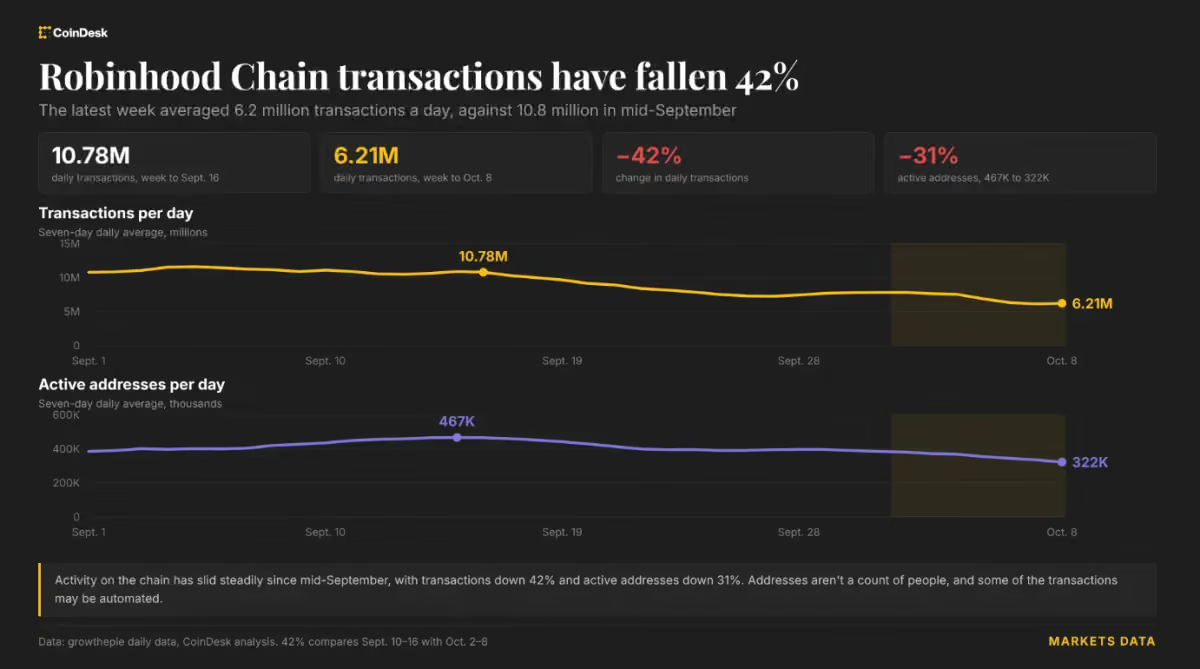
Robinhood Chain slowdown spreads from fees to trading as transactions fall 40%
-

 Crypto3 days ago
Mashinsky Accepts Lifetime Industry Ban and Up to $35 Million in Conditional Payments | The Defiant
-

 Tech & AI3 days ago
ICE Emails Discuss Using Palantir-Supported Tool to Investigate Voter Fraud
-

 Sports3 days ago
Morocco and Senegal await AFCON final verdict after arbitration hearing – Sports
-
 Crypto4 days ago
ESMA gives EU crypto platforms 3 months to drop non-MiCA stablecoins such as USDT
-

 Sports5 days ago
Harry Kane Ties Peter Shilton’s 125-Cap England Record in Wembley Win Over Czech Republic
-

 Sports2 days ago
Saudi oil crisis affects Neom project, 2034 World Cup plans
-

 Tech & AI6 days ago
Common Mistakes You Should Avoid When Using Foldable Phones
-

 Sports4 days ago
Internationals make history with emphatic Bridges Cup win at Trump Turnberry | News
-

 Crypto4 days ago
Bitcoin ETF Outflows Hit $485M, Erasing October Inflows
You must be logged in to post a comment Login