Connect with us

Tech & AI

iPhone Duo vs Samsung Galaxy Z Fold8 Ultra: compared

Published

on

Apple has finally entered the foldable market with the iPhone Duo, its first folding iPhone. Here’s how it compares against Samsung’s latest foldable, the Galaxy Z Fold8 Ultra.

After more than a decade of rumors, Apple’s first foldable arrived at its fall event as the iPhone Duo. A hyper-premium smartphone that has dual displays and folds in half.

It lands in a market Samsung has led for years, thanks to its Z Fold line.

The Galaxy Z Fold8 Ultra is Samsung’s most advanced book-style foldable, which it launched in July 2026. It sets the benchmark that Apple’s debut foldable has to meet.

Advertisement

This is how the iPhone Duo compares against the Galaxy Z Fold8 Ultra, with the specifications side by side.

iPhone Duo vs Samsung Galaxy Z Fold8 Ultra – Specifications

Specifications iPhone Duo Galaxy Z Fold8 Ultra
Starting price (launch) $1,999 $2,099.99
Inner display 7.6-inch Super Retina XDR, 1,878 x 2,670, 430 ppi, ProMotion, always-on, 3,000 nits, nano-texture 8.0-inch Dynamic AMOLED 2X, 2,504 x 2,256, 422 ppi, 1-120Hz
Outer display 5.4-inch Super Retina XDR, 1,398 x 2,034, 460 ppi, ProMotion, always-on, 3,000 nits 6.5-inch Dynamic AMOLED 2X, 1,080 x 2,520, 422 ppi, 1-120Hz
Dimensions – unfolded 6.48 x 4.64 in, 5.2mm thick 5.64 x 6.24 in, 4.1mm thick
Dimensions – folded 3.31 x 4.64 in, 11.3mm thick 2.87 x 6.24 in, 8.9mm thick
Weight (ounces) 8.96 7.58
Processor A20 Pro Snapdragon 8 Elite Gen 5
Storage 256GB, 512GB, 1TB, 2TB 256GB, 512GB, 1TB
Rear cameras 48MP Fusion Main (2x optical-quality telephoto), 48MP Fusion Ultra Wide, 4x optical-quality zoom range 200MP wide, 50MP ultrawide, 10MP 3x telephoto
Inner camera Under-display FaceTime camera 10MP
Outer camera 12MP Center Stage front camera 10MP
Battery (video playback) Up to 31 hours (inner), up to 44 hours (outer) Up to 27 hours
Wired charging 50% in around 20 minutes (60W) 45W (67% in about 30 minutes)
Biometrics Touch ID in side button Fingerprint, Face recognition
Water resistance IP68 IP48
Operating system iOS 27 Android 17, One UI 9
Connectivity 5G, Wi-Fi 7, Bluetooth 6, Thread, USB-C, eSIM only 5G, Wi-Fi 7, Bluetooth 6, USB-C
Colors Star White, Night Sky Graphite, Cream, Violet Shadow, Green Shadow

iPhone Duo vs Samsung Galaxy Z Fold8 Ultra – Design

From the outset, the two foldables are constructed in the same broad manner. Both are book-style foldables, opening to reveal a tablet-sized inner screen.

To save users from having to open the devices every time they want to use it, there’s a smaller secondary screen on the outside. This gives users the best of both smartphone and tablet worlds.

In terms of size, the iPhone Duo is a little shorter but wider overall, at 6.48 by 4.64 inches when unfolded, and 3.31 by 4.64 when folded up. The Fold8 Ultra is taller at 6.24 inches, but the width varies between 5.64 inches when opened to 2.87 inches when folded.

Advertisement
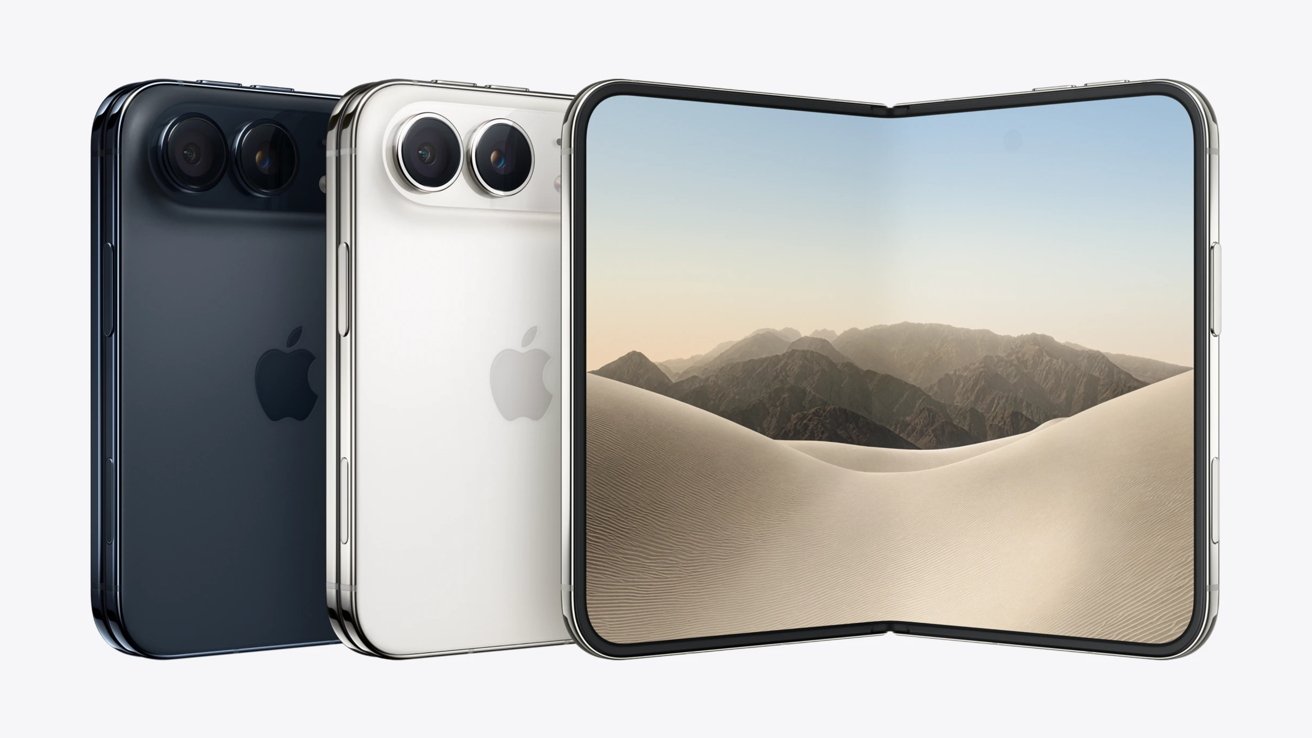
Three modern Apple smartphones in dark and light colors stand beside an unfolded foldable iPhone displaying a serene desert landscape with sand dunes and distant mountains.

iPhone Duo vs Samsung Galaxy Z Fold8 Ultra: iPhone Duo colors

There’s also a difference in thickness, too, with Samsung’s device managing to be 8.9mm thick when folded, or 4.1mm when laid flat. The iPhone Duo is thicker at 11.3mm when folded up, and 5.2mm when open.

When it comes to weight, Samsung takes the lead here, at 7.58 ounces to the iPhone’s 8.96 ounces.

Just on these specs, the iPhone seems to be the chunkier device, with the weight not helping that comparison at all.

Advertisement

A clue at the weight disparity may be in the choice of materials each company used, beyond physical size.

Apple uses a lot of grade 5 titanium in its construction, which makes sense for a thin device that needs to be as strong as possible.

Foldable white smartphone partially open, showing front display with pastel number 8 wallpaper and centered selfie camera, and back with three vertically aligned rear cameras in black circles

iPhone Duo vs Samsung Galaxy Z Fold8 Ultra: Samsung’s smartphone from the rear.

Samsung, however, went for a mixed-metals approach. It uses a “Flex Titanium” technology with the display to strengthen it, while the outer frame and chassis is made from aluminum.

Advertisement

Continuing the external tour, both have side buttons, which are also used to unlock the devices. Samsung has fingerprint and face recognition, while the iPhone Duo integrates Touch ID into the side button.

Each also has a sizable camera bump on one side, with Apple going for two cameras while Samsung opts for three.

In both cases, there’s a robust hinge on one side, while magnets help keep the internal screens protected by holding the smartphones shut.

iPhone Duo vs Samsung Galaxy Z Fold8 Ultra – Displays

The displays are the heart of any foldable, and here the two take slightly different approaches.

Advertisement

The Galaxy Z Fold8 Ultra has an 8.0-inch main display at 2,504 by 2,256, with a 422 pixels-per-inch density. Its 6.5-inch cover screen runs at 1,080 by 2,520, and both panels use a 1 to 120Hz adaptive refresh rate.

The iPhone Duo has a 7.6-inch inner Super Retina XDR display, which Apple says is 50 percent larger than the iPhone 18 Pro Max screen. Its 5.4-inch outer display delivers 90 percent of the screen area of the iPhone 18 Pro.

Both iPhone Duo displays share a fairly similar aspect ratio, so content scales proportionally between them. Each panel also has ProMotion, an always-on mode, and 3,000 nits of peak outdoor brightness.

Samsung’s screens do not have the same aspect ratio. The external display is 10:16 versus 4:3 for the internal one.

Advertisement
Hand holding a small tablet with thin black bezel, displaying a 9:41 lock screen over a desert sand dune and mountain landscape against a plain light background

iPhone Duo vs Samsung Galaxy Z Fold8 Ultra: The iPhone Duot’s internal display.

There is a notable difference in the outer screen. The Galaxy Z Fold8 Ultra’s 6.5-inch cover screen is larger, while the iPhone Duo’s 5.4-inch outer screen is smaller.

When it comes to the inner display, both companies have worked to make sure there’s as little crease visibility as possible. Over time, and with repeated openings, the center fold line will eventually crease, with the construction of the display and its support determining when that will happen.

Samsung uses Flex Titanium, which combines a titanium plate and titanium alloy film as a backing for the display. On top of that is the OLED panel, a thin layer of glass, and a protective layer.

Advertisement

Apple, meanwhile, uses a scratch-resistant coating and a nano-textured cover layer made from a custom polymer for its display. That stiff polymer is joined by high-strength glass above and below the folding display panel, glued in a way that allows the layers to glide over each other, like pages in a book.

On top of this stress relief work, Apple added a titanium plate underneath for added durability.

With all of this screen estate, you may be tempted to use a stylus, but Samsung doesn’t include S Pen support with its smartphone. However, Apple says the iPhone Duo will eventually support the Apple Pencil with USB-C, but not the Apple Pencil Pro.

Sure, you’re going to have to carry the Apple Pencil separately, but at least you’ll have the option to use it. Cases will arrive eventually, we’re sure.

Advertisement

iPhone Duo vs Samsung Galaxy Z Fold8 Ultra – Cameras

Samsung has given the Galaxy Z Fold8 Ultra a flagship-grade camera system. Apple’s setup is more restrained on paper, but adds foldable-specific tricks.

The Galaxy Z Fold8 Ultra leads with a 200MP wide main camera. It adds a 50MP ultrawide and a 10MP telephoto with 3x optical zoom, plus HDR capture in the full 200MP mode.

The iPhone Duo uses a dual 48MP camera system on the rear. There’s the 48MP Fusion Main with an “optical-quality” 2x telephoto crop shot, paired with a 48MP Fusion Ultra Wide.

Foldable silver smartphone partially open, showing dual rear cameras and a large inner display with a woman in a silver outfit against a bright blue sky with clouds

iPhone Duo vs Samsung Galaxy Z Fold8 Ultra: Only two rear cameras on the Duo

Advertisement

There’s no telephoto on the iPhone Duo, which is a shame for such a premium device.

Where Apple tries to catch up is with foldable-specific camera features.

Naturally, a folding smartphone can be partially folded, acting as its own stand so you can take photos of yourself from further distances.

For the iPhone, Smart Take automatically captures photos when subjects pose via AI detection.

Advertisement

You can do similar things with the Fold8 Ultra. A 90-degree bend starts “Flex Mode,” which can be used with gestures or a timer to trigger the shot.

When used conventionally, both models have an option to show a live preview on the outer display, so the subjects can frame themselves in the shot. Apple also includes animations, so that you can tempt a small child to look at the camera by watching Snoopy.

Folding designs also enable rear-camera selfies. While the normal user-facing cameras are pretty good for this, the nature of the external live preview means you can take advantage of those bigger sensors.

When it comes to the in-display cameras, Samsung uses a pair of 10MP cameras, far from the massive resolutions of the rear versions.

Advertisement

Apple uses its 12MP Center Stage camera for the outer display, which is a punch-hole version in the corner. The one for the inner display is described as a “FaceTime camera” capable of 1080p video, but crucially it is an under-display type.

On video, both are strong. Samsung offers 8K recording through its APV codec, and it has a Cine LUT for color and tone control.

The iPhone Duo only goes up to 4K, but with Dolby Vision support at up to 120fps. It also has a lot of modes to play with, as well as tricks like a 2.8K Action Mode, 1080p 240fps Slo-Mo, and macro shooting.

Both devices also have the capability to capture video from both shooter and subject sides at the same time.

Advertisement

iPhone Duo vs Samsung Galaxy Z Fold8 Ultra – Processing and performance

Each device runs its chip maker’s latest flagship chip. The platforms are very different in design and strengths.

The Galaxy Z Fold8 Ultra uses the Qualcomm Snapdragon 8 Elite Gen 5, paired with up to 16GB of RAM. It’s a combo that includes an 8-core CPU with two performance cores and six efficiency cores, an Adreno 840 GPU, and a Neural Processing Unit.

The iPhone Duo uses the A20 Pro, the same chip as the iPhone 18 Pro. Apple pairs it with a custom vapor chamber that’s got three times the surface area of the iPhone 17 Pro’s version, which helps improve sustained performance.

This time, Apple uses a six-core CPU with a seven-core GPU, as well as an enhanced Dual 16-core Neural Engine for AI workloads. Both the CPU and GPU cores also have Neural Accelerators, which bolster Apple’s AI credentials even more.

Advertisement

While there are performance scores for the Snapdragon 8 Elite Gen 5, no independent benchmarks exist for the iPhone Duo yet. We will update this section with confirmed figures once the device is tested.

But suffice it to say, both models are certainly going to provide a lot of processing power and performance to whoever picks them up.

iPhone Duo vs Samsung Galaxy Z Fold8 Ultra – Battery and connectivity

Battery design differs between the two, though both use a dual-cell layout to take advantage of the two-piece design.

The Galaxy Z Fold8 Ultra uses a 5,000mAh dual battery, rated at 4,854mAh. The iPhone Duo places one high-energy battery on each side, operating as one, though it doesn’t disclose the actual capacity.

Advertisement

When it comes to usage, Apple quotes that its device can handle up to 31 hours of local video playback on the inner display, and up to 44 hours on the outer display.

Streamed video figures are lower, with the iPhone Duo managing up to 26 hours streamed on the inner display. For the outer display, that’s about 37 hours.

Samsung, meanwhile, claims up to 27 hours of video playback for its smartphone.

Square tablet or smartphone screen with very thin black bezel, centered front camera hole at top, and soft pastel abstract wallpaper in pink, blue, and white tones

iPhone Duo vs Samsung Galaxy Z Fold8 Ultra: The open display of the Fold8 Ultra.

Advertisement

On charging, the iPhone Duo has the edge on stated speed. It reaches 50 percent in around 20 minutes with a 60W adapter and wired charging.

Samsung says the Galaxy’s 45W reaches 67 percent in about 30 minutes.

For wireless charging, the iPhone Duo hits 50 percent in around 30 minutes with a MagSafe or Qi2 charger. The Galaxy also supports 20W wireless charging, though it also has its Wireless PowerShare feature.

On connectivity, both support 5G, Wi-Fi 7, and Bluetooth 6.

Advertisement

The iPhone Duo is eSIM-only worldwide, with no physical SIM tray. Apple uses the freed-up internal space to maximize battery capacity.

Samsung, however, includes both eSIM and a nano-SIM card.

iPhone Duo vs Samsung Galaxy Z Fold8 Ultra – Durability and water resistance

Both foldables are built to survive daily folding. We’re not yet sure how many folds Apple considers acceptable for the device without failure. We’ll be talking about that more on September 10.

Intrusion protection ratings differ. The iPhone Duo carries an IP68 rating, the same as the standard iPhone line. That covers submersion up to 6 meters for 30 minutes, along with full dust resistance.

Advertisement

The Galaxy Z Fold8 Ultra is rated IP48. It handles submersion in fresh water, but its dust protection only guards against larger particles, not fine dust.

The iPhone Duo also uses Ceramic Shield 2 on the front and Ceramic Shield on the back. Apple says the front is three times more scratch-resistant than the previous generation.

iPhone Duo vs Samsung Galaxy Z Fold8 Ultra – Price

As a still relatively new technology in the smartphone space, foldables are very expensive.

The Galaxy Z Fold8 Ultra starts at $2,099.99 for 256GB. It rises through 512GB and 1TB storage tiers from there to a maximum of $2,699.99.

Advertisement
Foldable smartphone with large home screen showing app icons, calendar notification at top, rounded edges, and front-facing camera cutout in the upper-right corner on a light background

iPhone Duo vs Samsung Galaxy Z Fold8 Ultra: Using the iPhone Duo’s external display.

The iPhone Duo starts at $1,999 for 256GB, rising to $2,599 for 1TB and $3,199 for an even higher 2TB tier.

That pricing is a surprise, given rumors had suggested Apple’s foldable could reach $2,500 at the lower end. Instead, the iPhone Duo lands right alongside its main rival.

At these prices, both are aimed at early adopters and enthusiasts. Neither is a mainstream purchase.

Advertisement

iPhone Duo vs Samsung Galaxy Z Fold8 Ultra – Which to buy

When it comes to the folding device market, the Galaxy Z Fold8 Ultra is the more proven device. After multiple generations of refinement, including a flagship 200MP camera with a dedicated telephoto option,, it’s a strong foldable pick.

Apple, meanwhile, is completely new to this niche part of the market. It’s late to the party, but it’s got a very experienced design team and had the advantage of watching the market make years of mistakes.

It’s fashionably late, but Apple knows what not to do.

As it stands, Apple has come up with a very strong first device. It’s a model with a decent camera setup, though lacking true telephoto capabilities, with the same A20 Pro chip as the iPhone 18 Pro.

Advertisement

It also manages to be cheaper than the Samsung while still having strengths like faster wired charging and a higher IP68 rating. You can add in the iOS ecosystem support to that, too.

For an iPhone user yearning for a foldable over the years, the iPhone Duo is now the obvious choice, and at a more competitive price than expected.

Apple’s arrival changes the foldable market at a stroke. We would normally expect the first-gen release to be issue-prone or to have a design flaw, but Apple may have escaped that trap this time.

As it stands, what was once Samsung’s domain is now a genuine two-horse race for customers prepared to pay high prices.

Advertisement

Where to buy the iPhone Duo vs Samsung Galaxy Z Fold8 Ultra

Preorders for Apple’s iPhone Duo begin on October 16, 2026.

Samsung’s Galaxy Z Fold8 Ultra, meanwhile, is on sale from $1,799.99 at Amazon at press time, reflecting up to a 14% discount off retail.

Those looking for a more affordable option can pick up the Z Fold8 for as low as $1,649.99, also 13% off MSRP at Amazon.

You can also take advantage of incentives at the following wireless carriers:

Advertisement
  • T-Mobile: Get a Galaxy Z Fold8 Ultra for as low as $5.56/mo for 36 months*
  • AT&T: Get a Galaxy Z Fold8 Ultra for as low as $5.56/mo with a qualifying trade and eligible plan*
  • Verizon: Get a Galaxy Z Fold8 Ultra for as low as $34.99/mo for 48 months*

  • *Terms and conditions apply, and offers are subject to change. Please see the carrier’s site for details.

Source link

Continue Reading
Click to comment

You must be logged in to post a comment Login

Leave a Reply

Tech & AI

Microsoft may have just pushed Copilot into a completely different phase of its AI ambitions

Published

on


  • Home puts chats, delegated work, and Office documents inside one interface
  • Code lets non-programmers describe software and have Copilot build it
  • Autopilot can continue recurring work without waiting for another instruction

Microsoft has introduced a redesigned version of its Copilot AI platform which claims to combine chat, delegated work, and coding tools into a unified application experience for users.

The company says the update is meant to let individuals and organizations scale artificial intelligence across everyday tasks and long-term projects.

Source link

Continue Reading

Tech & AI

How To Get Started With Shortcuts On Your MacBook

Published

on

Automate your Mac with ease using Shortcuts and Apple Intelligence.

Shortcuts has been available on Mac since macOS Monterey, but it’s one of those utilities many Mac users have never explored. At first, it can seem too complicated. You have to know which actions to choose and how to connect them, then hope it all works. 

But macOS 27 Golden Gate changes that with Describe a Shortcut, which lets you type exactly what you need and have Shortcuts do the heavy work for you with AI. It doesn’t always work, but it makes the app much easier to use — especially if you’re not an expert.

If you’re not familiar with Shortcuts, it’s an automation tool where you create scripts to handle tasks on your devices. Apple’s own example is a shortcut that texts your spouse with an estimated arrival time based on traffic when you’re leaving work. But you can get much more complex, like a shortcut that checks your calendar and the weather to give you a summary of what to expect today. 

Advertisement

There are many possibilities, and now with macOS 27, it’s much easier to master the app.

Creating shortcuts on your Mac is easy

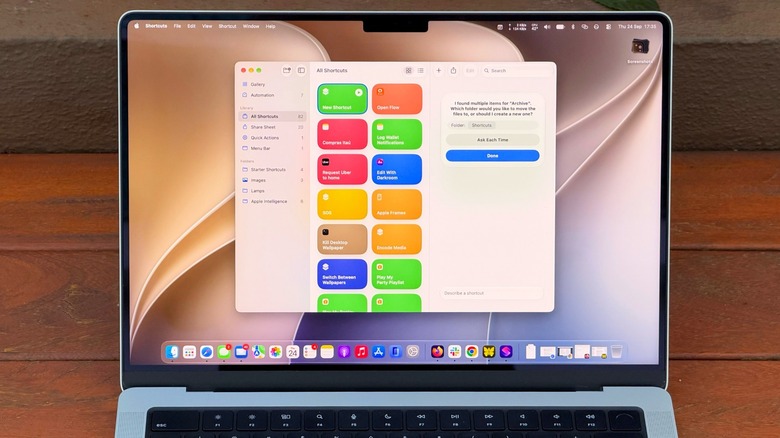
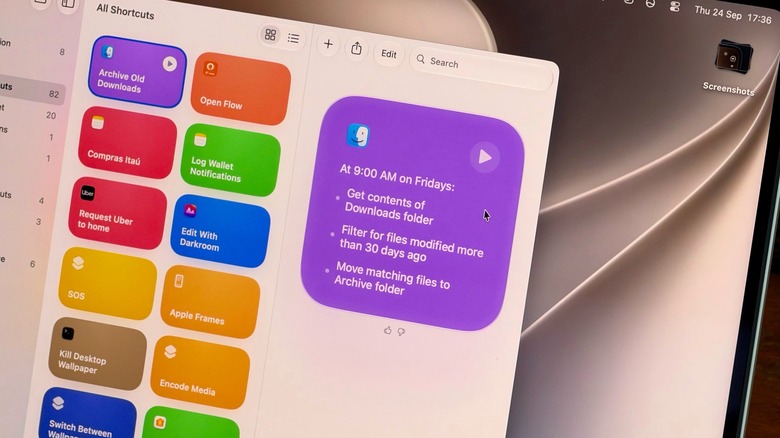
Creating a new shortcut takes a few seconds. Open the Shortcuts app on your Mac and click the Plus button to enter a prompt. The more details you provide, the more likely the app is to get your shortcut right. A command like “Clean up my Downloads” might be too vague for the app to understand what you really want. Instead, try something like “Every Friday, move anything in my Downloads folder older than 30 days into a folder called Archive.” You’re more likely to end up with a working shortcut when you provide clear details.

This is a good example of how Shortcuts are helpful for tasks you often forget to do; no one really cleans out their Downloads folder unless they’re trying to free up space. Plus, you can check the result right away by opening the folder and looking at what moved. If the shortcut moved too much, re-enter the prompt with even more specific details. 

Advertisement

A shortcut can also be great for summarizing long text with Apple Intelligence. Try something like “Take the text on my clipboard, summarize it in three sentences and save it to a new note.” Then copy a long article or an email, run the shortcut and you’ll have the short version in Notes.

Make your shortcuts easier to reach

If a shortcut isn’t part of your normal routine, chances are you’ll forget about it after a while. Thankfully, you can assign a keyboard combo to a shortcut, or pin it to the menu bar, so you’ll never forget it. 

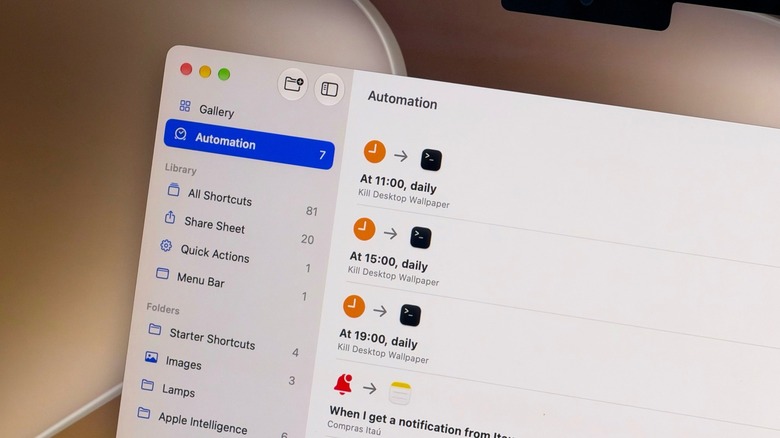
Choose the shortcut you want to adjust and click Edit. Go to the Shortcut Details menu (the one with the information icon) and select Add Keyboard Shortcut. To add it to the Control Center or menu bar, open Control Center on your Mac (at the top-right) and select Edit Controls. There, all you have to do is add the action from the Shortcuts app, and you’re all set. Exploring the Automation tab is also a good idea for creating a seamless workflow of shortcuts that run on their own when you need them.

Advertisement

Shortcuts isn’t the only element in macOS 27 that acts on your behalf. Visual Intelligence has its own key combo: Shift + Command + Space. After pressing this, select a window on-screen and have Siri answer questions about it or take action, like adding an event to your calendar. Try it on an email with a date buried in it, for example. Siri can also run your shortcuts via voice, speaking of which.

Shortcuts and Siri AI require Apple Intelligence, which means you need a Mac with an M1 chip or later — Intel Mac users are out of luck. Also, some limits may apply when using Apple’s AI models in Shortcuts. More complex prompts could reach a limit faster.

Advertisement

Source link

Continue Reading

Tech & AI

Peak XV ups Surge seed investment ceiling to $5M, unveils 18-startup cohort

Published

on

Peak XV Partners, one of the largest venture capital firms investing in markets including India and Southeast Asia with more than $10 billion in assets under management, has increased how much it invests per startup through Surge, its seed-stage investing platform, as it unveils a new cohort of 18 companies.

At least three of the companies in this cohort had already raised outside funding, in some cases from Peak XV itself, before joining Surge.

The new batch, called Surge 12, is the first to operate under Peak XV’s higher investment ceiling of up to $5 million per company, up from $3 million previously. The venture firm invested more than $50 million across the cohort, which has collectively raised over $90 million in seed funding, according to Peak XV. Its median investment per company has also increased, though the firm declined to disclose the figure.

“The bar to raise a Series A has gone up pretty significantly,” Rajan Anandan (pictured above), managing director at Peak XV, said in an interview. He added that the firm is also seeing more capital-intensive companies, particularly in deeptech, that are raising larger rounds at the seed stage.

Advertisement

Surge has become more global with each cohort, Anandan told TechCrunch, with its latest group spanning founders and companies from San Francisco to Sydney. Just five of the 18 startups in Surge 12 are focused on the Indian market, while more than half of the companies are based in India. The remaining 13 target global markets, highlighting the difference between where the companies are built and where they expect to find customers.

Since its launch in 2019, when Peak XV operated as Sequoia Capital India and Southeast Asia, Surge has backed more than 180 startups founded by entrepreneurs representing more than 18 nationalities. Peak XV says the 10 largest companies to emerge from those cohorts now generate more than $1 billion in combined annual revenue.

Peak XV Surge 2026 cohort
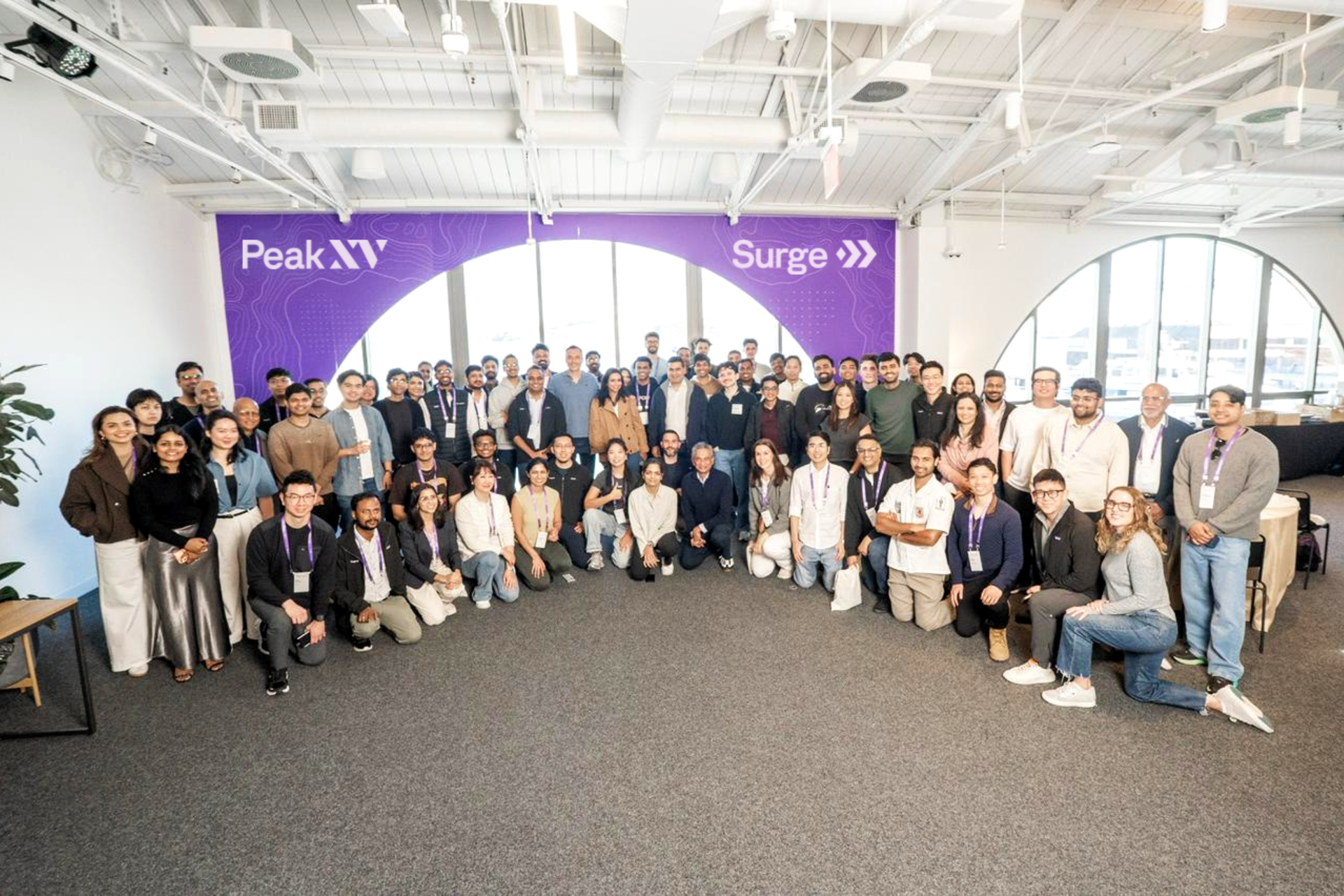
Surge founders at the Peak XV U.S. Immersion 2026Image Credits:Peak XV Partners

Anandan described Surge as one way Peak XV invests at the seed stage, alongside its standard seed investing, while the firm still remains an investor as companies progress through later funding rounds. The founders it backs typically include repeat entrepreneurs, experienced operators, and highly specialized technical founders, he said, with about 50% to 60% of a typical cohort made up of people coming from operating roles at established technology companies.

This cohort’s startups span AI, robotics, space, consumer products, healthcare, music, and fintech, ranging from AI safety and personal computing to autonomous robots built for underground pipes and satellites designed to detect radio-frequency signals from orbit.

The Surge 12 cohort

Alma — founded by Nischith Shadagopan M N and Vinod Ganesan — is building a personal computing platform focused on making computer use faster and more affordable. Its founders previously worked at Microsoft Research and were founding engineers at Sarvam AI, a Bengaluru-based startup building AI models for Indian languages.

Advertisement

August AI — founded by Anuruddh Mishra, an IIT-BHU alumnus who started the company in 2022 after a personal medical misdiagnosis — provides a healthcare platform that combines AI with physician-led care, reaching over 9 million users across 160 countries.

Ditto — founded by UC Berkeley dropouts Allen Wang and Eric Liu — works as an AI dating matchmaker inside iMessage, aimed at helping college students turn digital introductions into in-person connections. (TechCrunch wrote more about this one last month.) The company had already raised $9.2 million in a Peak XV-led seed round announced earlier this year.

GameStock — founded by Antoine Mistico, Easton Dana, and Vivek Indlebele Narasimha Prasad — brings competition mechanics to financial markets, turning investing and trading into a more competitive experience. Mistico is a two-time founder and former professional baseball player.

HiLoop — founded by Jad Ghalayini, Karan Brar, and Thomas Boser — helps AI companies adapt general-purpose open-weight models for specific applications using its post-training platform. Its founding team includes former Reducto engineers and a Cambridge computer science PhD who completed his doctorate at 24.

Advertisement

Hoola Health — founded by Deeksha Senguttuva — focuses on care for children and their families, providing consultations, vaccinations, medicines, diagnostics, developmental therapy, and dental services on a single platform. Senguttuvan grew up around healthcare, as her family built and operated a hospital group.

Kello — founded by Mona Gandhi and Subramanya Jingade — is building an AI-powered talent-discovery platform focused on identifying a candidate’s potential and trajectory rather than relying primarily on conventional credentials. Gandhi says she was Airbnb’s first female engineer and she previously founded Upraised, while Jingade previously co-founded AmbitionBox.

Kindling — founded by Adam Miller and Sachin Shah — is building what it calls a “storytelling operating system” for technology startups, using AI to help companies develop and produce their communications and content.

Puralink — founded by Harrison Crowe-Maxwell, Shyeon Delnawaz, and Thien “Long” Tran — is developing autonomous robots that can navigate underground pipe networks. Crowe-Maxwell has been building robots since childhood and turned university research into the patented drive technology behind the startup.

Advertisement

Reinforce Labs — founded by Anish Das Sarma — is developing tools to evaluate, red-team, and remediate enterprise AI systems. Sarma previously founded a company acquired by Airbnb and later served as a director at Google, where he led AI and machine-learning teams.

Riffle — founded by Anurag Choudhary and deo — is building a browser-based platform where musicians can create, collaborate on, and share music, reducing the need to move between separate tools during the creative process.

Rosella — founded by Chris Dwyer and Sean Stuart — is building an AI-native commercial insurance brokerage for U.S. businesses, using AI to automate parts of the traditionally manual process of finding and placing business insurance. Rosella raised a roughly $2.5 million pre-seed round led by Peak XV and Intact Private Capital earlier this year.

Tribe Money — founded by Himanshu Arora and Nikhil Shanker — gives an AI-powered personal finance platform that helps users track their money, research investments and make investing decisions.

Advertisement

ULOOK — founded by Adheesh Boratkar and Siddhesh Ravindra Naik — is building autonomous satellite systems for radio-frequency sensing and spectrum intelligence, targeting customers globally. Its founders have worked on more than 12 satellite missions. The company had already raised roughly $2.3 million in seed funding from growX Ventures and InfoEdge Ventures before joining Surge.

Wingit — founded by Nikunj Kothari and Saksham Khandelwal — is building a beauty platform aimed at India’s growing premium-consumer market. It is focused on how consumers discover and shop for higher-end beauty products.

Three other startups in the cohort have yet to publicly reveal their names or products. Peak XV said they are working in education, applied AI, and medical products.

When you purchase through links in our articles, we may earn a small commission. This doesn’t affect our editorial independence.

Advertisement

Source link

Continue Reading

Tech & AI

The Metric Is Not The Mission: When The Maps Became The Territory

Published

on

The Metric Is Not the Mission is a ten-part examination of how Big Tech moved from building and expanding the open internet to increasingly shaping it around its own metrics, incentives and assumptions. Across the series, the argument follows the evolution of the platform economy—from the optimism of the early internet to the growing tensions around power, prediction, geopolitics, accountability and the future of digital life.

The series will be published in two parts each week over five weeks, with each installment building on the one before it. At the end of the series, the complete essay will be brought together in a single PDF edition, providing the full argument in one place.

Part III: When the Maps Became the Territory

In Part II, the story turned on a crucial distinction: measuring behavior is not the same as understanding people. Part III takes that idea further, examining what happens when the platforms’ representations of the world begin to substitute for the world itself.

There is a curious tendency among successful technologies to disappear. Not physically, of course, but cognitively. Once they become sufficiently embedded in everyday life, they cease to be experienced as technologies at all. Electricity is no longer a marvel of engineering but an expectation. We do not admire the plumbing each time we turn on a tap, nor do we reflect on the extraordinary complexity of global logistics every time fresh fruit appears on supermarket shelves in the middle of winter. The greatest infrastructures become invisible because they succeed so completely that we mistake them for part of the natural order.

Advertisement

The internet reached that point sometime during the second decade of the twenty-first century. Yet something else happened along the way that proved far more consequential. As the network itself faded into the background, the platforms through which most people experienced it moved decisively into the foreground. Increasingly, users no longer spoke about “going online.” They spoke about opening an app.

That linguistic shift deserves more attention than it usually receives. Language often reveals structural change before statistics do. To “browse the web” implied movement across an open landscape whose boundaries were undefined. One followed links, discovered obscure websites, stumbled upon ideas that had not been recommended by anyone, and occasionally became gloriously lost. The experience resembled wandering through an unfamiliar city with no particular destination in mind. Serendipity was not a flaw in the architecture; it was one of its defining virtues.

Applications altered that relationship almost without anyone noticing. They replaced geography with destination. Instead of entering a network whose possibilities remained unknown, we entered environments that had already been organized on our behalf. The internet did not disappear, but it became increasingly hidden beneath layers of interface, recommendation and curation. Like passengers traveling through an airport without ever seeing the city beyond the terminal, we continued moving through digital space while encountering only the carefully managed environments that had been prepared for us.

This transformation is often described as an inevitable consequence of convenience. While accurate in its own right, this explanation offers an incomplete narrative. Convenience was certainly the language through which the platforms justified many of their design choices. Friction was treated as the great enemy of the digital age. Every additional click became an obstacle to be eliminated. Every decision that users might otherwise make for themselves could instead be anticipated by software. Recommendation replaced search. Autoplay replaced choice. Infinite scrolling replaced endings. The future, we were told, belonged to experiences so seamless that they would feel almost effortless. And they did.

Advertisement

It is difficult to criticize convenience because convenience is genuinely valuable. Few people wish to return to an internet in which finding information required memorizing obscure web addresses or navigating labyrinthine directories. The platforms did not succeed by forcing people into inferior experiences. They succeeded because, for many years, they built better ones.

Yet convenience has always carried an intellectual cost. Every technology that removes friction also removes moments of deliberation. The elevator spares us the staircase but also the awareness of distance. Satellite navigation ensures that we rarely become lost, while quietly diminishing our ability to construct mental maps of the places through which we travel. Streaming services relieve us of searching for entertainment, but in doing so they also shape the boundaries of what we are likely to discover. Every act of technological simplification transfers a small measure of agency from the individual to the system.

The internet had originally been built on a different assumption. Its underlying protocols did remarkably little. They did not decide which website deserved prominence, which ideas should travel furthest, or which communities ought to flourish. Their genius lay precisely in their restraint. They created conditions under which others could innovate without first requesting permission. The web itself functioned less like a product than like a constitutional order: a simple framework within which extraordinary diversity could emerge.

Platforms gradually adopted the opposite philosophy. They did not merely provide the rules of the game; increasingly, they became active participants in every interaction taking place within it. They selected what deserved attention, inferred what users might prefer before users themselves knew it, prioritized certain relationships over others and determined, through millions of microscopic computational decisions, the contours of everyday experience. The architecture became less constitutional than managerial.

Advertisement

There is an illuminating parallel here with the history of cities. The most enduring cities are rarely the ones that have been planned in every detail. They are those that accumulated layer upon layer of human activity over centuries, adapting continuously to changing needs without ever fully surrendering their unpredictability. One finds unexpected bookshops beside cafés, workshops hidden behind apartment blocks, public squares appropriated for demonstrations one week and festivals the next. Their vitality emerges not from perfect organization but from the freedom they grant people to appropriate space in ways that planners never anticipated.

Shopping malls operate according to an altogether different logic. They are meticulously designed environments in which every entrance, corridor, sightline, and seating area has been carefully considered. Music, lighting, and architecture work together to produce an experience that feels spontaneous while being anything but. There is comfort in their orderliness. They are clean, efficient, and reassuringly predictable. Yet no one mistakes a shopping mall for a city. Its purpose is not to cultivate civic life but to optimize a particular set of behaviors within a privately governed space.

The analogy is imperfect, as all analogies are, but it captures something essential about the transformation of the internet. The early web invited participation because it remained fundamentally unfinished. It assumed that users would contribute to shaping it. Today’s dominant platforms present themselves as complete worlds. Participation still exists, but it takes place within boundaries established elsewhere. Users generate the content while the architecture remains firmly in corporate hands.

Perhaps this is why the language of “community” has begun to feel strangely hollow. Communities, in the classical sense, are rarely designed. They emerge through shared experience, mutual obligation, and a degree of unpredictability that no algorithm can fully reproduce. Platforms, by contrast, increasingly treat community as an engineering problem to be optimized. They recommend friendships, suggest conversations, rank relevance, suppress friction, and amplify interaction according to models whose objectives are necessarily commercial because the organizations that develop them are commercial enterprises.

Advertisement

None of this should be understood as an accusation of bad faith. Many of the engineers responsible for these systems genuinely believed they were improving people’s lives. The difficulty lies elsewhere. Every large institution eventually begins to confuse the optimization of its own internal metrics with the fulfillment of its original purpose. Universities sometimes mistake publication counts for scholarship. Hospitals occasionally confuse efficiency with care. Governments become preoccupied with administrative process rather than public service. Technology companies are no different. The indicators that make sense within an organization slowly become proxies for the world outside it. The metric is not the mission. This is the point at which the maps begin to replace the territory.

The extraordinary quantities of behavioral data collected by digital platforms produce an understandable confidence. When one can observe billions of interactions each day, it becomes tempting to believe that society itself has become legible. Human behavior appears measurable, predictable and, increasingly, governable. The platform begins to resemble reality because so much of reality passes through the platform.

Yet the map is never the territory. It captures what can be measured, not everything that matters. A map records roads but not the reasons people travel. It identifies cities without conveying the lives unfolding within them. Likewise, recommendation systems observe behavior with astonishing precision while remaining largely indifferent to experience itself. They recognize patterns without necessarily understanding meaning.

That distinction mattered little while the platforms continued solving the problems that had made them indispensable. It becomes far more consequential once they begin confronting a world that no longer resembles the one for which they were originally designed. Because societies have changed; politics has changed; and, the internet has changed. The question is whether the companies that grew powerful by interpreting one era have noticed that another has already begun.

Advertisement

Konstantinos Komaitis, PhD, is a veteran of developing and analysing Internet policy to ensure an open and global Internet.

Filed Under: behavior, big tech, metric not mission, open internet, optimization, platforms, understanding

Source link

Advertisement
Continue Reading

Tech & AI

Boox Announces the Picco, Its Smallest E-Reader Ever (2026)

Published

on

While smartphones won’t stop getting bigger, e-readers seem to be getting smaller. Boox has been at the forefront with one of the most popular small e-readers, the Boox Palma, and now it is adding an even smaller model.

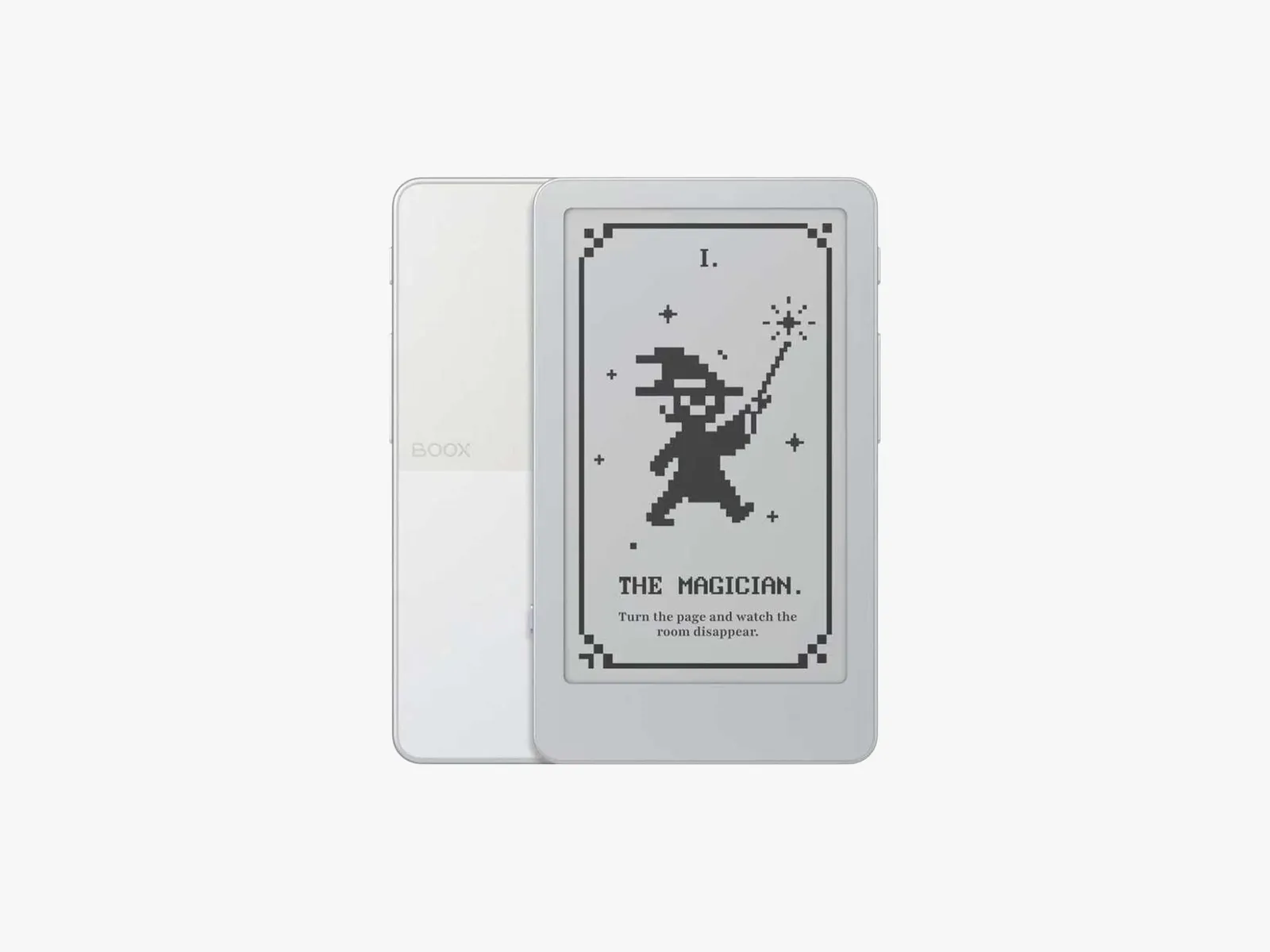
Boox announced the Picco, with preorders opening today. Its screen is just under 4 inches (3.97 to be exact), making it about the size of a playing card. It’s even smaller than the Xteink X4 Pro I tested earlier this year, which has a 4.3-inch screen (but just slightly larger than the 3.7-inch Xteink X3), and considerably smaller than the upcoming Boox Palma 3’s 6.19-inch screen. I liked the size of the Xteink in my hand, but navigating the interface and getting books were challenging, so I’m excited to see another option in that smaller size from a maker with more accessible ebooks (though still not as convenient as a Kindle or Kobo with their built-in stores).

The Picco will cost $100 and is expected to ship in November. I’ll be testing it soon, but in the meantime, here are the details if you’ve been eyeing a tiny e-reader.

An E-Reader for Productivity

Boox Announces the Picco Its Smallest EReader Ever

Courtesy of Boox

The Boox Picco has a monochrome screen with a resolution of 235 pixels per inch and an adjustable front light that switches between warm- and cool-toned lighting. The microSD card slot supports up to 2 TB of flash memory storage (a 16 GB card is included). There are both a touchscreen and physical page-turning controls, thanks to the buttons on the side of the device. The case has a magnetic ring so you can attach it to the back of a smartphone, though I’ll have to see how well it fits when I test it, as I had mixed results attaching an Xteink to my phone due to both fit and magnet strength.

Advertisement
Image may contain Electronics and Remote Control

Courtesy of Boox

Boox says the Picco will have a streamlined operating system focused on reading and digital utility tools. It’s also the first in what Boox calls its Tiles lineup, which is how you’ll access ebooks on this device. You can also use web and USB-C file transfers (the Picco has Wi-Fi and Bluetooth connectivity) to get ebooks onto the Picco. The Picco also has the Pomodoro, Todo, and Countdown apps, so you can use it as both an e-reader and a productivity gadget—handy, and a bigger motivation to keep it attached to the back of your phone even when you aren’t reading.

I’m intrigued to see it in action. Boox’s most popular e-reader could become the Picco over the Palma 3, but we’ll have to wait for both devices to become available to see which is the better buy. Stay tuned for my reviews of both when they come out.


Power up with unlimited access to WIRED. Get best-in-class reporting and exclusive subscriber content that’s too important to ignore. Subscribe Today.

Source link

Advertisement
Continue Reading

Tech & AI

Discord Is Testing A Lightweight Mode To Free Up Resources While Gaming

Published

on

But a Chromium-based design means it can only be so efficient.

Discord is working on a new mode for its social platform that it says might be less resource-intensive. Screenshots of an option called Game Mode began circulating on social media over the weekend. The description shown for the Game Mode toggle states that it will “Reduce Discord’s CPU and GPU usage while a game is running.” By making the chat platform less resource-intensive, concurrently running software should be able to run more smoothly.

Today, the company confirmed on X that this experimental mode will begin rolling out to its users next week. The brief official announcement about Game Mode added that Discord is “aiming to add more resource-saving features over time.”

Discord is based on the Electron web app framework, which uses Javascript and Chromium for creating software. The open-source Chromium, which is the basis for Google’s Chrome and several other browsers, is not known as the most efficient tool for web development. A feature like Game Mode could offer some performance improvements, especially while also running a beefy AAA game on the same machine, but there may only be so far that Discord will be able to streamline on its current architecture.

Advertisement

Source link

Advertisement
Continue Reading

Tech & AI

Meta-Led Anti-Terrorism Group Faces Mass Resignation of Expert Advisers

Published

on

Six of the nine independent experts on the advisory board of the Global Internet Forum to Counter Terrorism—a consortium run by several of the biggest US tech companies—resigned on Monday, according to a letter seen by WIRED and interviews with three of the people.

The tensions between the independent advisory committee and the GIFCT date back to an email the counterterrorism and free speech experts received in July from Meta’s Nell McCarthy, a vice president overseeing content policy. For years, the group had advised the GIFCT on how to prevent platforms from becoming havens for the radical organizations and individuals blamed for some of the world’s worst mass violence.

But McCarthy wrote that while the consortium welcomed the experts’ insights on violent trends, it no longer desired their scrutiny on the effectiveness of Big Tech’s efforts to curtail violence. Meta and other leaders wanted to “refresh” the 6-year-old independent advisory committee the experts sat on, she wrote. Meta currently serves as chair of GIFCT’s operating board, giving it outsized influence over policy changes, though other companies on the panel must ultimately approve.

New additions to the rotating advisory committee had previously been elected by current members; under the plan laid out in July, they would instead be picked by tech companies. The committee would be barred from weighing in on key topics such as the consortium’s performance and making recommendations together as a group. Its role as a watchdog would be neutered, advisers believed.

Advertisement

In their resignation letter, the departing members of the committee wrote that their appeals against the plan had been “ignored” and that, in turn, they had “lost confidence in the GIFCT’s ability to deliver effectively on its founding mission” to prevent terrorists from exploiting online services. “We all know that a body that cannot scrutinise, take a position, or evaluate is not an advisory body at all,” the letter stated. “It is decoration and accountability theatre.”

Meta deferred comment on the resignations to the GIFCT. An unsigned statement sent to WIRED by a GIFCT spokesperson on behalf of the consortium’s leadership and the Meta-chaired operating board says the proposed changes have been “informed by several rounds of feedback” and are not yet final. They came out of discussions on “how to more effectively engage civil society and governments for substantive input” as “multi-stakeholderism is a core principle” for the GIFCT.

The consortium has about 35 members; other long-time board members include Microsoft and YouTube. A small staff alerts members to violent content, helps them exchange threat intelligence, and commissions research on countering extremism. While the coordination has helped some platforms combat problematic content, critics believe the group isn’t living up to its potential.

A WIRED investigation in 2024 uncovered several issues with GIFCT, including Meta delaying TikTok’s membership bid and poor relations between the companies at the helm and the unpaid independent advisory body. It also revealed failures in the tip-sharing database the consortium oversees to coordinate takedowns of problematic content.

Advertisement

The dismantling of the advisory group threatens to deteriorate the organization’s work further at a time when balancing free expression and online safety has become more challenging. Generative AI tools have simplified content creation but imposed limited guardrails.

Extremist content, including some that is now AI-generated, that promotes organizations such as Islamic State remains a persistent issue. Newer nihilistic collectives have turned to AI-supported scams such as sexploitation to coerce young victims into carrying out violence and abuse. Several AI chatbots have been accused of facilitating violence.

“A Shame”

The experts who resigned include university researchers and representatives of civil society organizations. They had agreed with McCarthy on the need for changes to improve the results of the decade-old anti-terrorism consortium. But they believe the proposal, which could be finalized soon, amounts to a step backward.

“There won’t be critical voices raising concerns about what GIFCT is doing or is not doing,” one of the departing experts says. “It may seem politically convenient for them to abolish the independent advisory committee, but they are going to regret it in the longer term.”

Advertisement

Source link

Continue Reading

Tech & AI

SpaceX’s Latest Starship Mission Reached Low-Earth Orbit

Published

on

The successful mission also deployed 26 of SpaceX’s latest Starlink satellites.

For its 14th flight, SpaceX’s Starship powered by its Super Heavy megarocket has entered low-Earth orbit for the first time. SpaceX kicked off this major undertaking early Monday morning but had to deal with some hiccups on the way, including losing one of its six Raptor engines. Ultimately, SpaceX decided to push on with the mission and successfully reached orbit albeit with some compromise.

SpaceX originally planned to have Starship orbit Earth six times over a span of nearly 10 hours for the Flight 14 mission. With one of the engines offline, the plan changed to only spend approximately three hours in orbit before reentering the Earth’s atmosphere and landing in the Pacific Ocean. As part of the same mission, SpaceX managed to deploy 26 of its Starlink V3 satellites into orbit. SpaceX said that its Starlink team has made contact with all newly-deployed 26 satellites in orbit, which will eventually be used to improve Internet speeds for customers. While previous Starship missions also carried several V3 satellites, they only remained in suborbital space and served as test flights to see if the new satellites would connect to the existing Starlink constellation.

While Starship’s flight 14 marked a major milestone of reaching orbit, the mission also served as a test of the reusability of its Super Heavy rocket. After providing the necessary boost to Starship, Super Heavy landed in the Gulf of Mexico, where it will eventually be retrieved, but not by a launch tower‘s “chopsticks” as previously demonstrated.

Advertisement

Source link

Advertisement
Continue Reading

Tech & AI

Jet Megatextures Demo For ESP32-S3

Published

on

Mipmapping is a good way to add a lot more detail to a 3D scene without overburdening the rendering hardware with detail that won’t be seen by the user. This level-of-detail rendering technique was demonstrated on the N64 console hardware a few years ago by [James Lambert] with [Michael Biggins], also known as [PhonicUK], now demonstrating it on the ESP32-S3 using his own Jet rendering engine.

Although level-of-detail rendering really speeds things up, it does also require far larger texture sizes, with [James]’s N64 demo taking up 40 MB of a 64 MB cartridge. To fit it on an ESP32-S3 with 16 MB of PSRAM and no SD card expansion or such the textures were further compressed to use 8-bit indexing, resulting in a mere 5.01 MB of textures.

There’s a demonstration video over on the associated Reddit thread, which shows the camera moving through the scene. Even if not as exciting as the Wipeout port by [Michael] that we previously covered, it does make clear that even without a proper 3D GPU the ESP32-S3 is already a pretty capable gaming machine that can go toe-to-toe with some 1990s consoles.

Advertisement

Source link

Advertisement
Continue Reading

Tech & AI

These Extremists Are Running for Election in November

Published

on

There are five weeks left until the midterm elections, and extremism is on the ballot in much of the US. A WIRED review of candidates running for statewide and federal positions in November, along with exclusive data on candidates running for state-level positions, reveals hundreds of Republican candidates who openly express virulently hateful ideologies, share racist content online, have close ties to white supremacist and antisemitic figures, and are members of far-right groups online. President Donald Trump and his administration have openly embraced, endorsed and defended many of these candidates.

At a local level, over 500 candidates running for state legislator positions in November are members of far-right groups on Facebook that promote militias, gun rights, and Christian nationalism, according to data collected by the Institute for Research and Education on Human Rights and shared with WIRED.

While many extremist candidates—such as groyper James Fishback and antisemitic influencer Dan Bilzerian— didn’t make it through GOP primaries, many made it to the general election, and a number of them are expected to win.

“The candidates are taking a page out of the Trump administration’s playbook,” Luke Baumgartner, a former research fellow at George Washington University’s Program on Extremism, tells WIRED. Baumgartner claims that many of the candidates running in November have been inspired by those in the White House. “In essence, the executive branch has handed them a permission slip to say and do what would have been unthinkable during the George W. Bush, McCain, or [Mitt] Romney eras of the GOP,” he says.

Advertisement

Extremist rhetoric has led to real world political threats. In 2025, terrorism and targeted violence incidents rose 19 percent compared to 2024, according to researchers at the University of Maryland; the US Capitol Police reported an increase in “threat assessment cases” against members of Congress for the third year in a row, with a 58 percent increase from 2024; and the US Marshals Service documented threats against almost 400 judges, a roughly 5 percent increase from the previous year.

Here are five races involving candidates who have shared extremist ideologies or have close ties to extremist figures, that WIRED is watching ahead of the November midterms.

The Texas Railroad Commissioner Race

MANSFIELD TEXAS  APRIL 15 Tarrant County Republican Party Chair Bo French speaks during a rally on Tuesday April 15 2025...

Photo-Illustration: WIRED Staff; Getty Images

Bo French, the GOP candidate for Texas Railroad Commissioner, is so extreme that Republican strategist Karl Rove has said he would vote for a Democrat rather than supporting a “bigot.”

Source link

Advertisement
Continue Reading

Trending

Copyright © 2025