Tech & AI
Jackie McLean Vertigo Tone Poet Review: Hard Bop at the Edge of Something New

Jackie McLean was never the easiest alto saxophonist to mistake for someone else. His tone could be tart, urgent, occasionally abrasive, and almost always emotionally direct; where other players polished the edges, McLean often seemed more interested in seeing what happened if he leaned into them.
That made him one of the most distinctive alto voices to emerge from the hard-bop era and, eventually, one of the musicians who helped Blue Note push beyond it. The new Tone Poet edition of Vertigo revisits one of the more fascinating entries in McLean’s catalog, a record that sits squarely between the blues-driven language of his earlier work and the more angular, exploratory direction he would pursue during the 1960s.
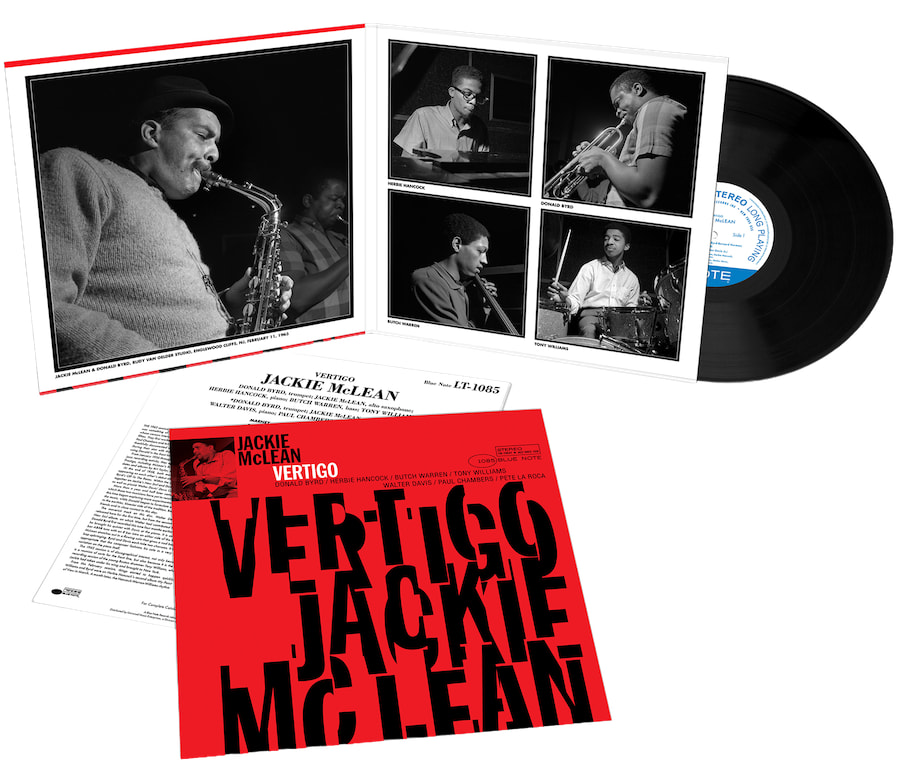
Produced by Joe Harley, mastered from the original analog tapes by Kevin Gray at Cohearent Audio, and pressed on 180-gram vinyl at RTI, the 2026 Tone Poet edition receives the usual deluxe treatment, including a Stoughton Printing tip-on gatefold jacket with Francis Wolff photography. The bigger question, however, is whether Vertigo itself deserves the attention.
It does.
Related Reading:
Jackie McLean Was Already Looking Beyond Hard Bop
Born in New York City in 1931, John Lenwood “Jackie” McLean came up around musicians who were helping reshape modern jazz in real time. Bud Powell was an early mentor, and McLean was still young when he began working with Miles Davis; later came important associations with Charles Mingus, Art Blakey, and others before McLean established himself as a leader.
His long relationship with Blue Note became especially important because it documented his evolution in unusually clear fashion. Albums such as Bluesnik, A Fickle Sonance, Let Freedom Ring, One Step Beyond, and Destination… Out! show a player gradually moving beyond conventional hard bop without discarding the blues, swing, or rhythmic drive that gave his music its backbone.
McLean did not suddenly wake up one morning and decide that harmony was optional. He stretched the language piece by piece until the seams started showing.
Vertigo captures that process in motion.

Two Sessions and One Serious Band
The album draws from two Rudy Van Gelder sessions recorded in 1962 and 1963, and the personnel explains a great deal about why the music feels so alive. McLean is joined by Donald Byrd on trumpet, Herbie Hancock on piano, Butch Warren and Paul Chambers on bass, and Tony Williams and Billy Higgins on drums, depending on the session.
That is not exactly the supporting cast from a regional dinner-theater production.
Hancock was rapidly emerging as one of the defining pianists of his generation, while the teenage Tony Williams was already demonstrating the rhythmic imagination that would soon make him essential to Miles Davis’ Second Great Quintet. Byrd brought both precision and lyricism, while Chambers, Warren, Higgins, and Williams gave McLean a rhythm section capable of moving comfortably between hard bop and something considerably less settled.
That flexibility is central to Vertigo. The compositions still swing and still retain the structural logic of hard bop, but the harmonic tension is greater, the phrasing less predictable, and the ensemble sounds increasingly comfortable leaving familiar ground behind.
Nobody has thrown the rulebook out yet, but it has definitely been moved closer to the edge of the table.
Why Vertigo Matters
For listeners new to Jackie McLean, I would not necessarily start here. Bluesnik is a more straightforward introduction to his hard-bop side, while Let Freedom Ring makes the transition toward his more exploratory work easier to hear.
Vertigo is compelling because it lives between those two worlds. McLean still plays with the rhythmic urgency and directness that defined his earlier recordings, but the writing and ensemble interaction point toward the more adventurous Blue Note sessions that followed.
That makes the record more than a curiosity from the vaults. It is a snapshot of one of jazz’s most distinctive alto players in the middle of changing his language, surrounded by musicians who were doing exactly the same thing.
Why Consider This Edition?
The choice to include Vertigo in the Tone Poet series also makes sense because the album has never enjoyed the same visibility as McLean’s better-known Blue Note titles. For collectors who want the music on vinyl without chasing older pressings of uncertain condition and provenance, this edition offers a considerably simpler route.
I paid $45 CAD plus 13% HST for my copy at Rotate This on Ossington Avenue in Toronto two weeks ago. With the Canadian dollar sitting around $1.42 to the U.S. dollar, that worked out favorably enough that I never felt like I was paying an audiophile penalty for the privilege. After listening to it, I would happily pay it again.
The presentation is bold, full, and wonderfully physical. The horns are front and center without becoming aggressive, and there is not an ounce of thinness anywhere in the recording. Hancock’s piano has weight and texture, the bass is substantial and easy to follow, and the drums have real power without crowding the rest of the ensemble. The cymbals have excellent air and decay, giving the upper register plenty of openness without introducing glare.
McLean is absolutely on fire here. His alto has body, bite, and urgency, but the overall presentation remains remarkably composed—far more so than the Woody Shaw Song of Songs reissue I reviewed recently, which is more restless and volatile by design. Vertigo still has plenty of energy, but everything feels locked into place rather than fighting for space.
The pressing itself was essentially flawless: clean, centered, and quiet from beginning to end. More importantly, the sound quality serves the music rather than turning the session into an audiophile demonstration record.
Worth every cent.
Our Ratings
★★★★★★★★★★ Music
★★★★★★★★★★ Sound
★★★★★★★★★★ Pressing
You must be logged in to post a comment Login