




Connect with us

Tech & AI

Smart brings back its original two-seater as an all-electric car with up to 290 km of range

Published

on

smart 2 World Premiere scaled

Smart unveiled the all-electric smart #2 at the Paris Motor Show – the same stage where it revealed its first two-seater concept 30 years ago. This new model keeps the tiny footprint that made the original Fortwo a city darling, but it fixes the one thing that held that car back. You’re now looking at nearly double the range and a proper fast-charging setup to match.

What makes the Smart #2 better than its predecessor?

The smart #2 runs on a 35.8 kWh LFP battery that targets up to 290 km of combined WLTP range, more than double what the old EQ Fortwo managed with its 17.6 kWh pack. DC fast charging tops out at 65 kW, letting you go from 10% to 80% in about 20 minutes.

AC charging reaches 11 kW, although the base Pure trim sticks with a 7.4 kW onboard charger. You also get vehicle-to-load support through a separately purchased adapter, letting the car power external devices when needed. Other safety features include the Tridion Cell Evo structure, smart Pilot Assist, and adaptive cruise control with Stop & Go and Highway Assist.

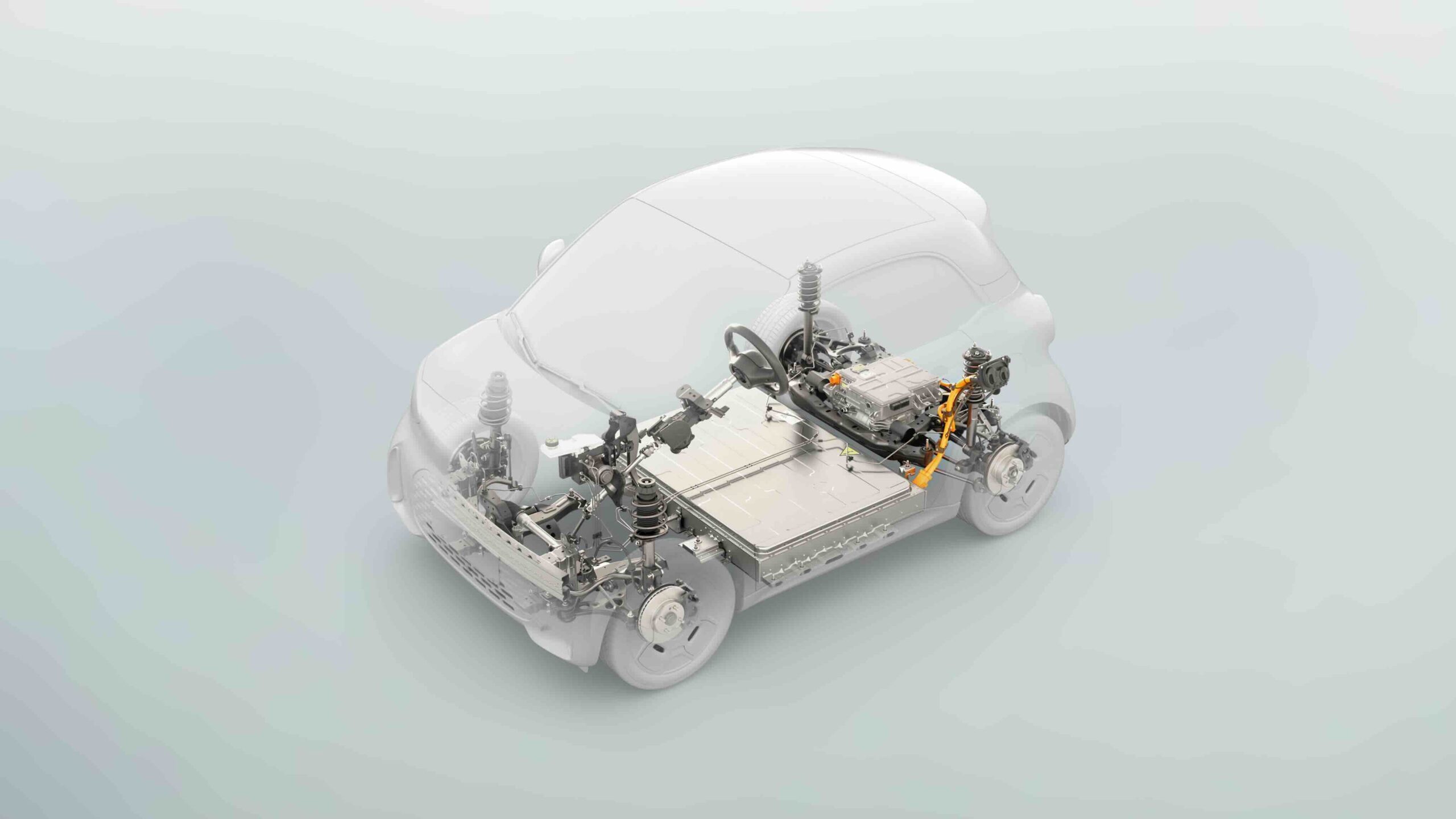
smart #2 comes with the same tiny footprint and new underlying platform

Measuring 2.746 meters long, the #2 is just slightly longer than its predecessor and keeps the familiar wheels-at-each-corner design. A tight 6.95-meter turning circle should help you navigate crowded streets and squeeze into smaller parking spaces.

It rides on Smart’s new Electric Compact Architecture, with a rear-mounted 60 kW motor producing 130 Nm of torque. Smart says it’s the first in its class to use a five-link rear suspension to improve handling and comfort.

Inside, you’ll find a 10.1 inch center touchscreen, an 8.8 inch driver display, and a bench-style seat layout. Its Smart Pillar accommodates small accessories, while 4G connectivity, Wi-Fi, Bluetooth, and an eight-year connectivity package support connected services.

What about pricing and availability of smart #2 EV?

Here’s the pricing across four trims in Germany, France, and Italy.

  • Pure: €19,990 (approx. $22,310)
  • Pure+: €20,990 (approx. $23,425) – comes with 11 kW AC charging, heated driver seat
  • Premium: €24,490 (approx. $27,331) – comes with glass roof, heated faux-leather seats, 7-speaker Sennheiser system
  • Couture Edition: €25,690 (approx. $28,670) – limited to 999 units in Europe

Early orders open tomorrow, and deliveries begin in 2027. The Smart #2 still offers just two seats, while similarly priced rivals can accommodate four. Its appeal ultimately depends on whether you value easy parking and tight-turn handling more than extra passenger space.

RELATED COVERAGE:

Advertisement

Source link

Continue Reading
Click to comment

You must be logged in to post a comment Login

Leave a Reply

Tech & AI

AI Coding Agents Generate More Code, But Not More Software

Published

on

twitter icon large

A study of more than 700 software firms found that AI coding agents significantly increase the amount of code developers produce, but not the amount of software companies actually ship. Ars Technica reports: A recent study (PDF) of actual coding practices across hundreds of firms finds that human code review forms a significant “bottleneck” for the overall efficiency of AI coding tools, resulting in “little evidence that firms increase software output or reduce employment” by using them. Any efficiency increased during the actual coding phase, the study authors find, is “absorbed by downstream constraints in the production process”; as “the code review process significantly increases in length, pull requests are more likely to require revisions, and reviewers leave more comments.”

[…] In terms of raw code being produced, the results are clear and stark. The introduction of AI coding agents at a firm leads to a 30 percent increase in total lines of code generated, a 20 percent rise in the number of total commits, and a 23 percent increase in pull requests on average, the researchers write. But all that extra code doesn’t translate directly into improved software output on the firm level. On the contrary, the resolution rate for Issues and Epics (i.e. wholesale software features) tracked by tools like Jira did not change in a statistically significant way after AI tools were introduced (the researchers also found no “compositional shift” in the size or complexity of those Jira-tracked issues across the AI introduction).

The reason for that discrepancy can be found directly in the code review process, which takes markedly longer on average after the introduction of AI coding agents. Overall, the average “review process” time between a pull request getting submitted and it being merged into the codebase balloons 49 percent on average after AI agents are introduced. That effect can be seen in more granular data, too, with “the share of pull requests with changes requested nearly doubl[ing], and the number of comments per pull request increas[ing] by 35%” following the AI agent shift, the researchers write.

In response to this change, the researchers found a 14 percent increase in the share of workers performing code reviews after AI agents’ introduction. They also write that they “cannot attribute significant employment changes to AI” after looking at total active workers across Jellyfish and cross-referencing with LinkedIn data at those firms. While AI could also theoretically help with this review process, the researchers found that, so far, that impact has been marginal. Although 80 percent of measured firms used some form of AI code review by March 2026, AI agents were only responsible for 23.3 percent of all review comments and 10.8 percent of all pull requests, suggesting humans were still responsible for the vast majority of this work.

Advertisement

Read more of this story at Slashdot.

Source link

Advertisement
Continue Reading

Tech & AI

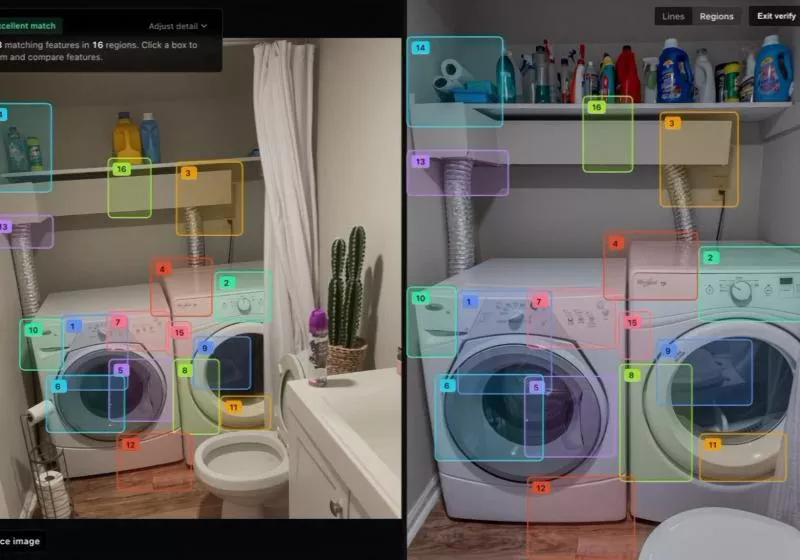
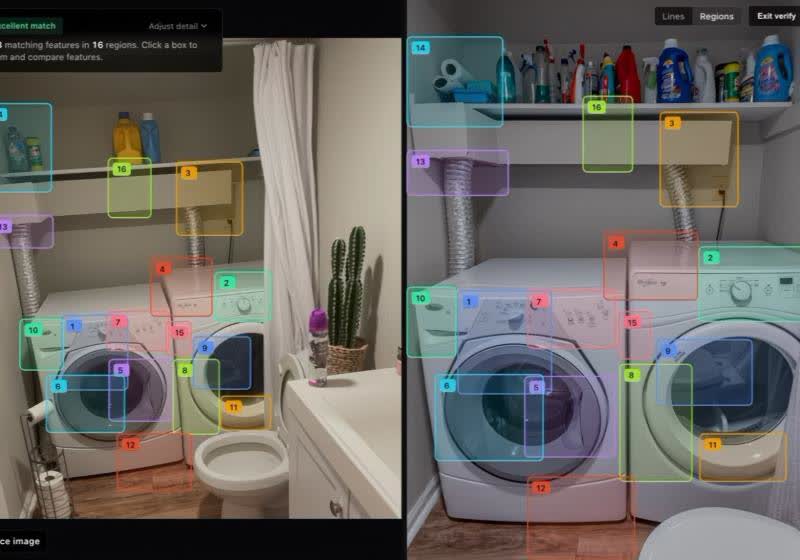
Police are using AI to locate homes from a single interior photo, and even a picture of a washing machine can be enough

Published

on

2026 10 12 ts3 thumbs b13

2026 10 12 ts3 thumbs b13
The tool, which is called Raven, is being used by the Los Angeles Police Department and Miami-Dade Sheriff’s Office (MDSO), reports 404 Media. Made by a company called Graylark Technologies, Raven had been called GeoSpy before its new home-identification features were added.
Read Entire Article
Source link

Continue Reading

Tech & AI

Grab AirPods Max 2 for $429 ($120 off)

Published

on

69334 146187 airpods max 2

Save $120 on Apple’s over-ear AirPods Max 2 headphones at Amazon today, with every color marked down to $429.

Continue Reading

Tech & AI

Polling: Americans Uncertain On RFK Jr.’s Vaccine Stance, Very Certain That They Hate Him

Published

on

from the we’re-done-with-you dept

In my many, many posts about RFK Jr. and his disastrous tenure as Secretary of HHS, there are two themes that have hopefully broken through all the noise.

The first is that Kennedy is a miserable communicator, in a way that is totally purposeful. He talks out of both sides of his mouth all the time, such that he’s able to claim to both sides of the vaccine “debate” that he’s said what they want him to say. “Go get the MMR vaccine” he’ll say when confronted by a measles crisis that is spinning out of control. Then he’ll get in front of anti-vaxxer groups and brag about how he is changing the childhood MMR vaccine schedule, while claiming it is untested and dangerous. This leaves the public confused. It’s how you get outbreaks of once-defeated diseases.

The second is that the public generally understands that Kennedy is a problem and doesn’t like what he’s doing. We saw that trend begin in polling going back to the middle of 2025, as well as when the White House briefly flirted with understanding that Kennedy’s bullshit was becoming a massive liability for the now-approaching midterms.

Well, more recent polling demonstrates both of these things together in one poll. The public is generally confused about what Kennedy’s stance on the MMR vaccine is, but they are not at all confused about the fact that they hate him. Let’s start with the MMR vaccine.

Advertisement

Americans’ uncertainty of where Kennedy stands on the MMR vaccine might in large part be traced back to Kennedy himself. He has rarely provided unflinching support for the highly effective vaccine.

More than 1,900 adults responded to the poll, conducted from August 4 to 17. Of all participants, 31% correctly stated that Kennedy recommends the MMR vaccine, up from 23% in August 2025. But most indicated that Kennedy either doesn’t recommend the vaccine (29%) or are unclear about his position (40%).

I will quibble slightly with the wording in the post, specifically the word “correctly.” This is putting way, way too much weight on Kennedy’s statements that people should in fact get the vaccine. While he’s done that, I’ve already described how Kennedy talks out of both sides of his mouth on the subject. Kennedy has spent his entire career claiming that vaccines are dangerous in part because they aren’t tested. He’s made other claims about the ingredients in the MMR vaccine being deadly or causing other afflictions like autism, even long after those ingredients were removed. To view his statement that he wants people to get a vaccine that he claims is dangerous and untested as though it came with a wink and a pair of crossed-fingers isn’t in any way unreasonable. To claim the only correct answer to the polling question is that Kennedy recommends the MMR vaccine is simplifying things in the extreme.

Later in the post, CIDRAP even acknowledges much of this when talking about the current measles outbreak.

On August 2, after years of unproven claims about the MMR vaccine and an assertion that childhood vaccines cause autism, Kennedy denied responsibility for the measles outbreaks. “I’ve never questioned the efficacy of the MMR vaccine,” he said on CNN. “A measles vaccine is effective. It stops measles in about 97% of the cases.”

But the overall point here is that Kennedy’s purposeful waffling is the direct cause of a public that is confused on what Kennedy actually wants them to do to combat the measles outbreak and plays a huge part in the outbreak existing to begin with. This resurgence absolutely is his fault. It’s his life’s work, in fact.

Advertisement

And the public appears to be very aware of that in his favorability polling and the negative side of the respondents is getting more extreme.

A total of 23% of respondents said that their opinion of Kennedy is favorable, unchanged from August 2025. Half report an unfavorable view of him, with 42% saying they see him very unfavorably and 8% somewhat unfavorably. While the public’s overall unfavorable rating of Kennedy has not changed since August 2025, significantly more participants said their opinion is very unfavorable in 2026 than in 2025 (42% vs 37%).

That the White House hitched its wagon to this absolute turd of a cabinet secretary is strategic political suicide. It makes no sense. Trump could raise his favorability ratings full points almost immediately by firing this clown and committing to actually sound healthcare policy. That may sound like a small thing overall, but in the current climate of political inertia, it really isn’t.

I can’t explain why Kennedy has such as grip on Trump. I don’t know why it is that the White House is so enamored with this kind of political weight as it swims towards a midterm election that sure looks like it’s going to be a GOP ass-kicking.

But I do know we’re all worse off for it.

Advertisement

Filed Under: anti-vaxxers, hhs, measles, mmr vaccine, rfk jr., vaccines

Source link

Advertisement
Continue Reading

Tech & AI

Top tips for double checking AI info in your academic research

Published

on

count

Allison Faix and Samantha Duncan of Coastal Carolina University discuss the easy steps researchers can take to ensure that their work is accurate.

Almost 25pc of adults in the United States are using artificial intelligence chatbots on a daily basis, a 2026 Pew Research Centre study found.

At the same time, another recent study found that 48pc of the information that popular free chatbots gave in response to questions about the news contained errors.

As librarians, we know that if students are using AI chatbots to help with their academic research, they shouldn’t assume that the information they’re given is accurate.

Advertisement

Not all AI is the same. Here are four steps we recommend to question information AI generates, including by checking the original source and considering issues that aren’t always easy to spot.

Find the best fit

First, we think it makes sense to spend time choosing the right AI tool for the task at hand.

AI tools, be it ExLibris’ Primo Research Assistant, Research Solutions’ Scite, Anthropic’s Claude or OpenAI’s ChatGPT, are trained with various datasets and use different algorithms to generate results. They should not be used interchangeably.

Advertisement

Some tools might be better or worse at answering specific kinds of questions, and the types of answers they generate can vary.

People might choose ChatGPT, for example, at the beginning of their research process, because it can provide overviews and summaries to help with understanding concepts.

In subsequent stages, they might choose a tool such as Primo Research Assistant or Scopus AI, which can help find and examine peer-reviewed research that has been vetted by academics.

Students conducting academic research could also see whether their library subscribes to an artificial intelligence tool like LeapSpace or Consensus, which draw their data from peer-reviewed, scholarly research.

Advertisement

Using these specific AI tools doesn’t eliminate the need to evaluate their answers, but it provides more certainty that the data has gone through a review process.

Tools such as Anthropic’s Claude, meanwhile, may also draw from academic research, but to what extent is unclear. According to Anthropic, Claude states that it is trained on a proprietary mix of publicly available information from online sources, public and private datasets, user data and synthetic data generated by other models.

Finally, it can be helpful to read librarians’ reviews about AI tools to help select the best fit. People can also take a simple online test such as ROBOT to help them consider which tool to use.

Ask more questions

Advertisement

Second, asking follow-up questions is an important part of evaluating the answers AI tools generate. Even if the answer an AI tool gives sounds good, it is useful to take time to learn more about it.

Checking one’s own emotions is also important, because AI chatbots have been known to flatter users by giving answers based on the user’s own biases, or what the user wants to hear, rather than just facts.

Ask the AI to tell you where it got the information, how confident it is that the answer is correct and what might be missing. Ask the AI why it believes the answer is correct, or ask it to explain how it came up with an answer.

It’s helpful to also make sure your prompt is phrased in a neutral way. For example, asking “What does psychological research say about social media and anxiety?” rather than “Tell me why social media causes anxiety” may produce different responses.

Advertisement

Check the source

Third, it is useful to trace any claims the AI chatbot makes to their original sources.

Students may be familiar with using the SIFT process to evaluate websites. This process asks people to stop, investigate the source, find better coverage and trace claims to their original source.

Start by asking the chatbot to cite its sources, if it did not do that already.

Advertisement

Then, go to each source and read enough to figure out whether the AI is using the information in the right context. Also, look into who authored the source and whether they have expertise in the topic. If the AI won’t cite the sources it used, or if the sources it cites don’t include the information it said they did, pull out any claims it is making and do further research.

Can you find other, credible sources that back up what the AI is saying, using Google or a library database? Can you figure out where the AI may have gotten the information and whether that source is credible?

If this seems like a lot of work, you could always go directly to library databases instead of using AI tools.

Not all issues are easy to spot

Advertisement

Fourth, there are other, less visible issues that can play out when using AI tools.

For example, it might not always be easy to tell whether an AI tool is missing important perspectives or is giving biased information.

Remember that you, not the AI tool, are the researcher. It might be easy to rely on an AI tool to generate a summary of important sources, but deciding for yourself what sources to use helps you learn about a topic more deeply.

Research shows that most AI tools focus on sources such as websites, internet forums and other online content that is freely available and written in English. Consider what expert knowledge might be missing from AI datasets and seek out those viewpoints when needed.

Advertisement

Last, remember that you need to cite the AI tool you used if you are quoting or paraphrasing text generated by it in your work, just as you would cite any other source.

Artificial intelligence is changing fast. As librarians, we think it is important to continually evaluate whether the tools you are using are still working for you.

These tips are a good place to start to help sharpen your evaluation skills.

The Conversation

By Allison Faix and Samantha Duncan

Advertisement

Allison Faix is the instruction coordinator at Kimbel Library at Coastal Carolina University. Her work focuses on information literacy, source evaluation, misinformation and teaching students how to assess online information. She has published and presented on approaches to evaluating sources, including the SIFT method and the ACRL information-literacy framework, and more recently on evaluating generative AI output. She has also been active professionally in academic librarianship and has contributed to research and teaching initiatives at Coastal Carolina.

Samantha Duncan is an instructional design librarian at Coastal Carolina University’s University Libraries. Her work focuses on instructional design, digital learning and the use of emerging technologies in higher education. Before joining Coastal Carolina, she worked at McMaster University, where she contributed to Beyond the Exam, a project exploring more flexible and authentic approaches to online assessment.

Don’t miss out on the knowledge you need to succeed. Sign up for the Daily Brief, Silicon Republic’s digest of need-to-know sci-tech news.


Advertisement

Source link

Continue Reading

Tech & AI

82% of approved electronics are tested in China, but the FCC wants that figure down to zero by 2028

Published

on

2026 10 12 ts3 thumbs f86

2026 10 12 ts3 thumbs f86
The restrictions would cover test labs and certification bodies in countries that deny reciprocal treatment to their US counterparts. Chairman Brendan Carr says fewer than 4% of electronic devices are tested in American labs.

Read Entire Article
Source link

Continue Reading

Tech & AI

A Spanish museum built a Cray-1 replica powered by 30 old Mac minis

Published

on

2026 10 11 ts3 thumbs 5d2

2026 10 11 ts3 thumbs 5d2
The Museo de Historia de la Computación spent 18 months developing the exhibit. The replica preserves the appearance of the 1976 machine without trying to reproduce its internal hardware. Built to mark the 50th anniversaries of the Cray-1 and Apple’s founding, the model is now on permanent display at the…
Read Entire Article
Source link

Continue Reading

Tech & AI

The Pros And Cons Of Importing Foreign Phones To The US

Published

on

intro 1791478375

There’s a lot to consider before buying a new phone from abroad.

There are plenty of smartphone options to choose from in the US, from the iPhone to the Pixel. But there are also really interesting phones you’ll never find in an American store. Xiaomi’s foldables like the Mix Fold, Honor’s Magic series and OPPO’s Find X phones are a few examples that offer unique designs or features not generally seen in the US. 

While phones like these are harder to find in the country, it’s possible to import them, but bringing a phone from abroad has its downsides. You may have problems using your phone with local carriers or getting warranty coverage, among other trouble. If you’re considering an imported phone, always check a few points first.

Advertisement

What you should know before buying a phone from another country

Buying an imported phone has become a lot easier in recent years. Most smartphones are now designed to work globally on most cellular bands. Still, some phones may not work with those used by your US carrier. Start by checking whether the phone you’re considering is compatible with your carrier’s frequency bands. Buying the wrong version could leave you stuck on the LTE network with no 5G support.

Carrier-specific features can cause issues too. Features like Wi-Fi calling, VoLTE and visual voicemail usually require certification for each device. So even if your imported phone works fine on your carrier’s 5G network, it might not be able to access all these features in the US. Network requirements may also change, so a model that works fine today may run into problems in the future. It’s worth checking forums like Reddit to see what people who’ve bought the phone you want have to say. 

Then there are software updates; the rollout of Android updates may be tied to carriers or regions. Also, some Chinese phones are not compatible with Google Play Services, which are a core part of the Android experience most people expect. You may have to install updates manually, and the software might include Chinese apps and services that aren’t relevant to you (or readable).

Additionally, getting warranty service in the US for these phones may not be easy. Some of these brands have no official representation in the country, which also means no customer support. Dealing with problems like a dead battery or a cracked screen may require taking your phone to a third-party repair shop with no official authorization from the manufacturer. 

Advertisement

The benefits of importing a smartphone

If you’re okay with all these hassles, importing a phone from abroad can be a lot of fun and open you up to new hardware that isn’t available in the US. There are a lot of Chinese companies putting out exciting products, like three-screen foldables, flagships with DSLR-quality cameras and devices with massive batteries. The Xiaomi 18 Fold is a new foldable phone that looks similar to the iPhone Duo, but it has a bigger battery and better cameras. It also costs less (the equivalent of about $1,640 currently), but you’ll need to buy it abroad if you want to use it in the US.

For those who want the latest releases, importing a phone often gives you the chance to get it before the official US launch. Also, many international models still support two physical SIM cards — a feature that most phones sold in the US have already ditched in favor of eSIM. If you don’t mind the potential drawbacks, it can be a rewarding experience. But if it’s important that you have official support nearby and know all features will work properly on your network, it’s easier to buy a phone that’s officially supported in your country.

Advertisement

Source link

Continue Reading

Tech & AI

How Coding Can Cultivate Deep Civic Engagement

Published

on

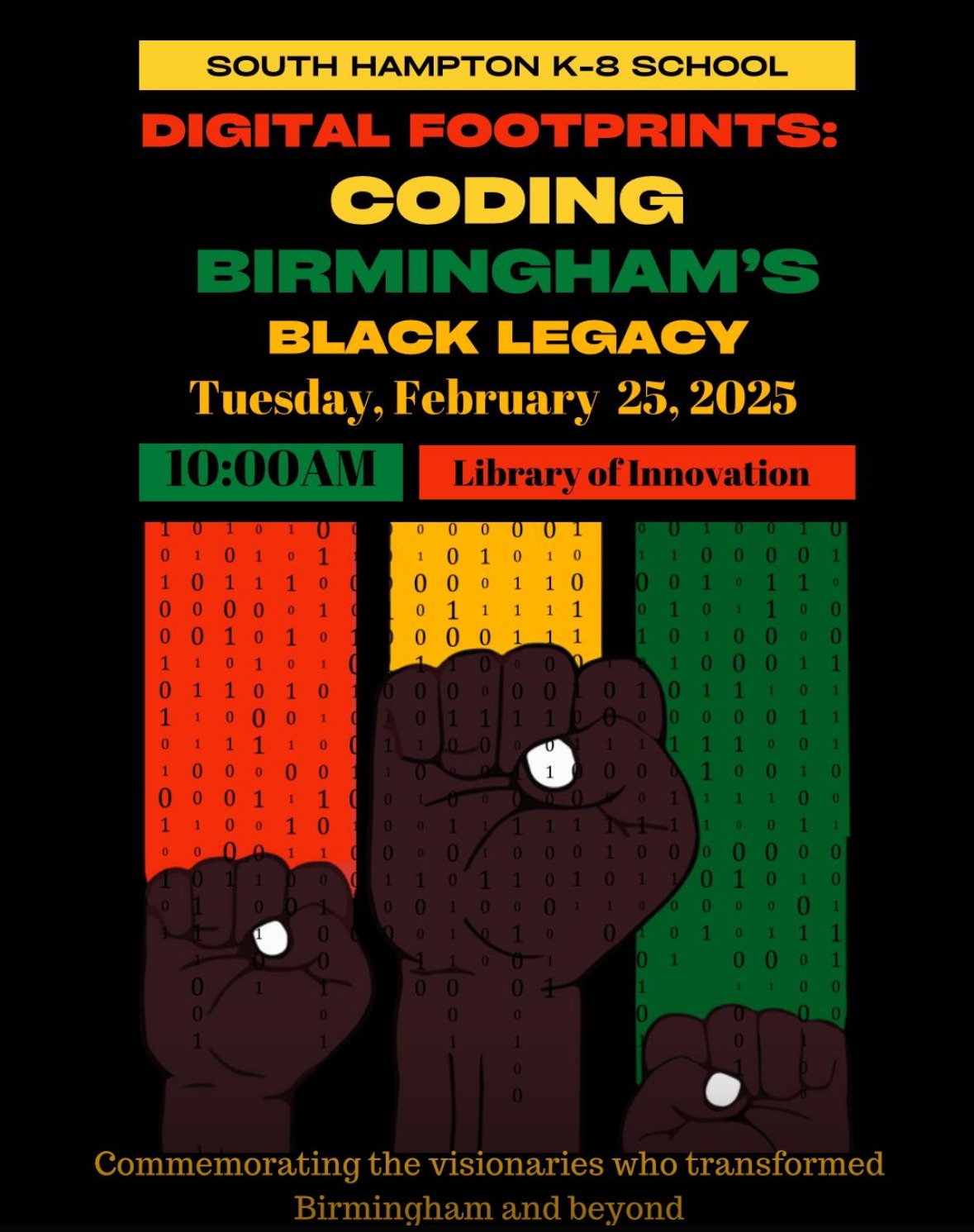
Digital Footprints Event

Growing up in Joliet, Illinois, my understanding of history was largely shaped by recurrent classroom materials and historical figures I’ve only read about in textbooks. Back then, my education felt like a passive process of memorizing facts rather than connecting with living stories. Classroom technology also felt abstract and disconnected from what I learned about culture and history.

Moving to Alabama in 2002 to attend Miles College, a historically Black college, building a life in Birmingham after graduation and dedicating myself to education laid a deep, personal foundation in the heart of the civil rights South. However, it wasn’t until 2025, on the Institute for Common Power’s Truth and Purpose Learning Tour, that something profound shifted in me. The rigorous six-day journey through the historic landscape of the civil rights movement — from Atlanta’s Sweet Auburn district to Montgomery, Selma and Birmingham — fundamentally transformed the way I look at history and how I will teach it for the rest of my life.

Up to that point, I had taught computer science and other mandated lessons primarily as a career skill, focusing on logic, syntax and software mechanics. But after this transformation, I was determined to lead my scholars from passive consumers of technology to active creators who could use code to immortalize the very faces they passed on their streets every single day. Because of this transformation, I believed the most important code they would ever write was no longer meant for the screen — it was now meant to awaken the world to the brilliance right outside their doors.

As part of the Institute for Common Power’s Truth and Purpose Learning Experience, I spent six transformative days traveling across Alabama and Georgia alongside a cohort of fellow educators. Designed as an intensive professional development initiative to move education to action, this group brought us face-to-face with scholars, community organizers and everyday folks. 

Advertisement

The tour grounded us in what the Institute for Common Power calls “Movement Learning,” a three-tiered educational framework built on three essential acts:

  1. Learning from social movements that preceded us to understand the deep historical roots, structural disparities, tragedies and triumphs born from our past.

  2. Learning by physically engaging in the exact geographic sites where history occurred.

  3. Learning how to project and create change as we move actively toward a more equitable future.

We explored historic sites in Birmingham, stood on the historic Edmund Pettus Bridge in Selma, engaged with urban farming at the Jones Valley Teaching Farm to understand food deserts and why systematic disinvestment makes them disproportionately prominent in Black communities, and discovered local landmarks I never knew existed in my own backyard.

Returning to South Hampton K-8 School after those six days, I had an urgent mission: my scholars needed to see code not just as computer logic, but as an opportunity to engage with the legends they walk among every day. I came to understand that teaching STEM is most powerful when paired with interdisciplinary learning and cultural history, transforming technical skills into a profound vehicle for civic agency and community storytelling. 

Connecting U.S. History with Our High-Tech Future

Digital Footprints Event

When I returned to my classroom from the tour, my middle schoolers were completing a unit in Apple’s Swift Playground, using the built-in “All About Me” app template. In that unit, my scholars had learned how to write SwiftUI structures, configure stack layouts and display dynamic image views and text fields about their personal hobbies. The standard curriculum stopped at self-reflection, but I saw an immediate opportunity for a civic leap.

As Black History Month wrapped up, we pivoted our computer science curriculum into a new initiative: “Coding Birmingham’s Black Legacy.” I didn’t want to assign students another coding exercise; I wanted to transform our classroom into a digital archive and design studio. 

Advertisement

Instead of coding apps about themselves, our seventh and eighth graders applied their newly acquired coding skills to build interactive iOS applications honoring local pioneers who shaped society and had deep connections to Birmingham. The first step in translating these rich historical narratives into functional mobile experiences was designing a structured technical framework from the ground up.

The Technical Architecture: Engineering a Four-Screen App

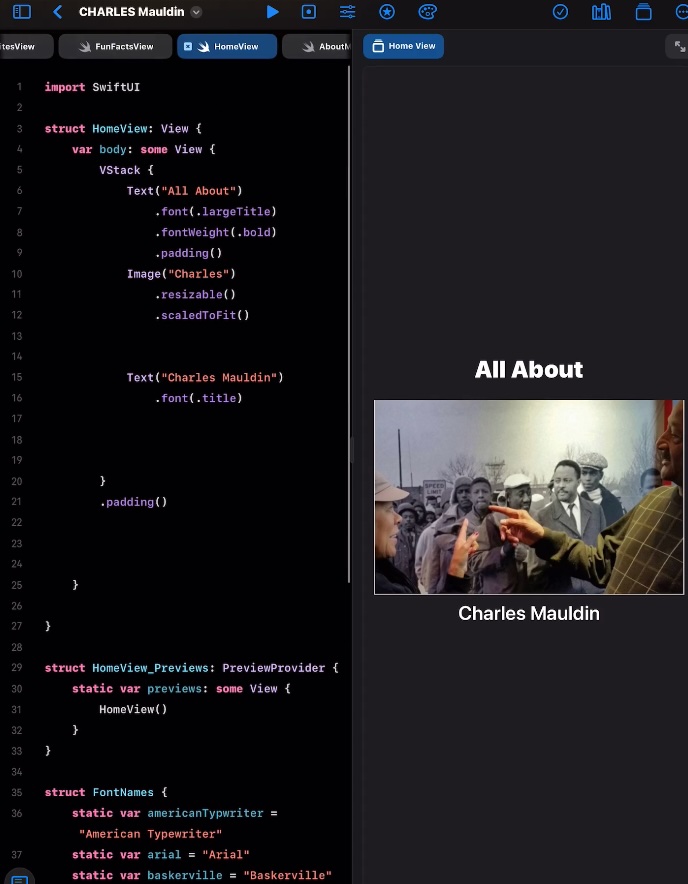
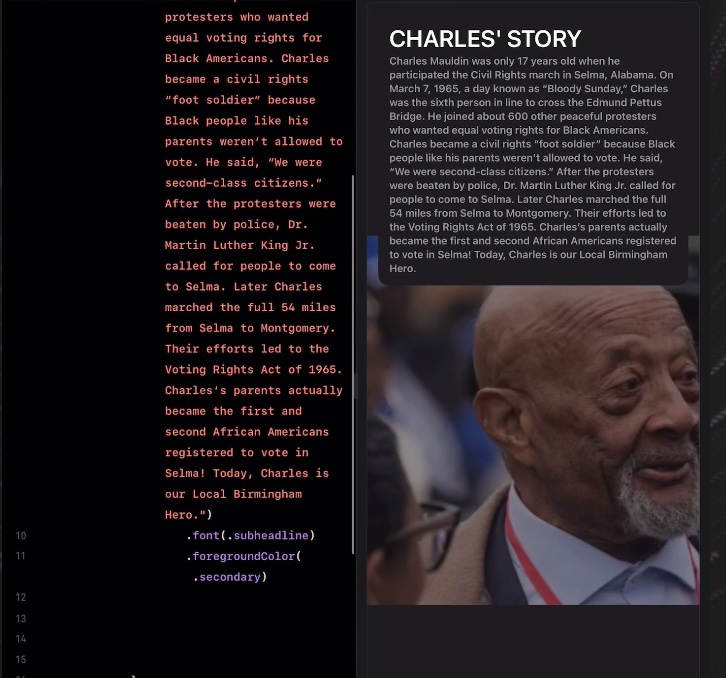
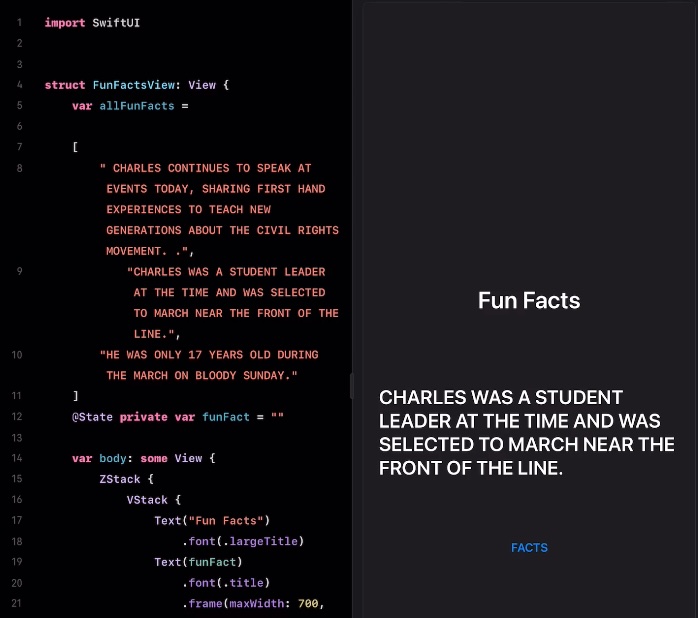
To bring these historical figures to life, students moved beyond simple drag-and-drop interfaces into structural Swift programming. Using Swift Playground on iPads and MacBooks, they engineered a standardized yet customizable four-screen interactive app navigation path for each hero:

  • Screen 1: Title and Hero Page – Custom visual layout featuring the pioneer’s full name, stylized color palettes, high-resolution portrait framing and user navigation triggers.

  • Screen 2: AI-Assisted Biographical Summary – A structured text view presenting a concise, engaging overview of the pioneer’s life story, historical significance and lasting impact on social justice.

  • Screen 3: Interactive “Did You Know?” Fun Facts Card – Dynamic list views highlighting key policy achievements, community milestones or surprising biographical facts.

  • Screen 4: Digital Artifacts and Media Gallery – Embedded video playback containers, archival photographs, historical artifacts, primary source documents or links to digital museum records.

Screen 1

Screen 1

Screen 2

Screen 2

Screen 3

Screen 3

Screen 4

Screen 4

A critical layer of our technology workflow involved integrating generative Artificial Intelligence (AI) into the historical research process. Many of our selected pioneers, such as local civil rights leader Charles Mauldin or retired Judge U.W. Clemon built complex, multi-decade legacies as, respectively, an activist and Alabama’s first Black federal judge.

Beyond interviewing these living legends, students used AI tools like Gemini, Claude and ChatGPT as research co-pilots. They practiced prompt engineering, asking AI models to synthesize lengthy biographical archives, isolate key historical milestones and reframe complex legal or political terminology into clear summaries appropriate for an app interface. 

Advertisement

Students didn’t just summarize history; they unlocked the human heart of those Birmingham pioneers, making profound legacies accessible and genuinely felt by anyone who opens the app. By turning historical archives into experiences, they demonstrated how technology equips young creators to tell their community’s stories in their own terms. 

When Code Meets Community: The Library of Innovation Showcase

The climax of our project took place in February2025. Our school’s “Library of Innovation” became an interactive tech showcase. Hosted by our students, their showcase brought together parents, school leaders, local residents, stakeholders and several of the actual pioneers featured in the apps.

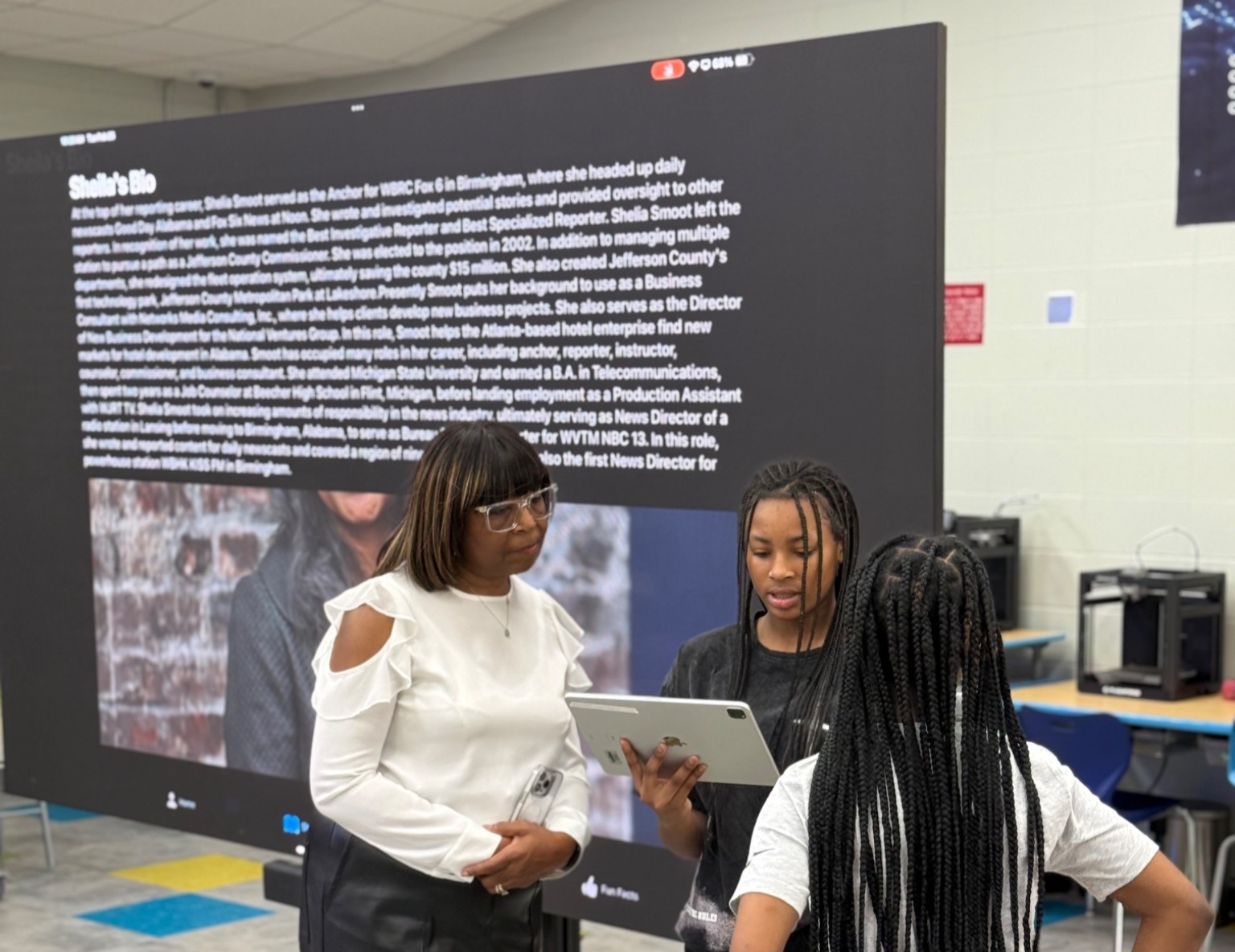
Students showcasing their apps to local community members.

Students showcasing their apps to local community members.

The atmosphere was electrifying. I watched in awe as 13-year-old coders stood beside their screens, proudly guiding community elders through app navigation paths, explaining line-by-line Swift code and demonstrating how AI helped them summarize local history. Their eyes lit up with pride as living legends interacted with apps built in their honor. 

In that moment, Movement Learning’s true promise came alive. Technology didn’t isolate our students behind screens; it re-anchored them to their roots and proved that their voices, written in lines of Swift code, belong at the center of Birmingham’s ongoing legacy.

Advertisement

Empowering the Next Generation of Digital Storytellers

Supported by the newly established Institute for History & Equity, this approach brings to life founder and executive director Terry Anne Scott’s concept of historical empowerment, ensuring that by empowering students to code the stories of the legends walking among them, we teach them they have the power to code the future. By studying the resilience and innovation of local civil rights pioneers and community leaders, students realize that systemic change is driven by ordinary people taking extraordinary action. They stop viewing history as something passive and start seeing themselves as active architects of their communities.

When we combine place-based, Movement Learning with modern digital tools like Swift Playground and generative AI, we do far more than teach computational logic and technical skills. We cultivate deep civic agency in our students. 

For educators everywhere, this highlights a vital realization: when we look beyond standard screen time and leverage coding as a canvas for community storytelling, we unlock an unprecedented level of student engagement and investment. Technology ceases to be just another subject to test and evolves into a dynamic vehicle for youth to champion social justice, honor local legacy, and discover their own voice.

My journey from Joliet, Illinois, to Miles College and South Hampton K-8 taught me that history isn’t just something we read about; it is something we live and build upon. 

Advertisement

By empowering middle schoolers to code the stories of the legends walking among them, we help them recognize their power to code the future.

Source link

Advertisement
Continue Reading

Tech & AI

Revenant XSpark’s XYAA Makes Its Gaming Debut in Capcom’s Dragon’s Dogma 2

Published

on

Xyaa x Dragon Dogma 2 1

Capcom’s Dragon’s Dogma 2: Dark Arisen features Indian gaming creator Shagufta “XYAA” Iqbal as an Official Pawn. Players can recruit her character through the game and take her along on their adventures. The game launches worldwide on October 9, 2026, bringing XYAA into a major international gaming title. In the game, Pawns are AI-controlled companions who assist players in combat and exploration. Players can recruit XYAA’s character through the Rift system and include her in their parties.

Her Official Pawn comes in four versions at Levels 8, 20, 30, and 50. Each version features changes to her appearance, equipment, and abilities as she progresses. XYAA retains the Archer class in every version, linking her in-game role to her competitive gaming background. This collaboration falls under Capcom’s Official Pawn program, which brings creators and personalities into the game. Indian gaming creator BeastBoyShub and international creators are also part of the program.

The latest version of the game also has new content for gamers. This includes a storyline in Norgan, a northern area covered in snow, new enemies, and 12 new dungeon quests.

XYAA’s Capcom Collaboration and Gaming Journey

With her appearance in Dragon’s Dogma 2: Dark Arisen, XYAA has moved from representing video game marketing to becoming part of the gameplay. People worldwide can use her virtual character and travel with her on their adventure missions. This association offers Indian gamers a chance to be part of the big names in video games worldwide. XYAA began playing Counter-Strike 1.6 in 2011, then moved to Valorant and went on to compete in international gaming tournaments for India. Her achievements include a top-four finish for India at the 2023 World Esports Championship.

Advertisement

She was also the only woman from esports nominated for the National Creators Award. Her partnership with Capcom aligns with Revenant XSpark’s focus on creating new opportunities for gaming talent. Founded in 2021, the organization works across competitive esports, creator management, brand solutions, publisher partnerships, content, and entertainment. It has worked with more than 400 brands across different sectors.

The game launched worldwide on October 9, 2026, for Nintendo Switch 2, PlayStation 5, Xbox Series X|S, and PC. The franchise has also built a sizeable global audience, with cumulative sales exceeding 14 million units as of March 31, 2026.

Source link

Advertisement
Continue Reading

Trending

Copyright © 2025