Tech & AI
T+A Solitaire T Pro Adds Dolby Atmos and aptX Lossless But Is It Worth the Premium?

When we first encountered the original T+A Solitaire T noise cancelling wireless headphones at CanJam SoCal in 2022, it was obvious that the German manufacturer had little interest in competing with Sony, Bose, or Apple on price. The industrial design, substantial aluminum construction, and combination of passive and wireless operation suggested something closer to a luxury wired headphone that happened to have Bluetooth. We joked at the time that wearing them was like upgrading from first class to flying private. The price wasn’t particularly amusing — $1800 then, $2,495 now.
Four years later, T+A has introduced the Solitaire T Pro, adding Dolby Atmos, head tracking, Bluetooth 6.0, expanded high-resolution codec support, and a dedicated Studio Pro listening mode. The new model promises to combine serious audiophile performance with the features increasingly expected from premium wireless headphones, but the competition has changed dramatically since 2022.
With the Focal Bathys MG, DALI IO-12, and a growing collection of excellent wireless alternatives available for substantially less money, T+A needs to demonstrate that the Pro designation represents meaningful progress rather than another opportunity to charge audiophiles for engineering they may never fully exploit.
Related Reading:

What’s Actually New About the T+A Solitaire T Pro?
The original Solitaire T was already a highly sophisticated design built around 42 mm dynamic drivers with cellulose diaphragms, passive balanced connectivity, hybrid active noise cancellation, and a dedicated ESS Sabre DAC listening mode. It could operate without battery power, which remains a meaningful advantage over many wireless headphones that become expensive paperweights when their electronics stop working.
The Solitaire T Pro retains that fundamental acoustic philosophy, but the biggest changes are in connectivity and entertainment features. T+A has replaced the original Qualcomm QCC5127 Bluetooth chipset with the newer QCC5181, expanding support from Bluetooth 5.1 to Bluetooth 6.0 and introducing LDAC, aptX Adaptive, aptX Lossless, LC3, and Auracast support.
The addition of Dolby Atmos and dynamic head tracking is equally significant. T+A is no longer positioning the Solitaire exclusively as a serious music-listening headphone; the Pro is also intended for immersive movies and spatial audio content, although the actual experience will depend on the source device, software, and compatible content.
For listeners using iPhones, there is an important qualification. Apple does not natively support aptX Lossless or LDAC over Bluetooth, so buying a more expensive headphone does not magically enable those formats. AAC remains the practical wireless option for most iPhone users, while USB-C provides an alternative digital connection.

Audiophile Engineering Without the Usual Digital Crutches
T+A has retained its commitment to designing a transducer that can reproduce music without relying on digital equalization to correct its basic acoustic behavior. The 42 mm cellulose diaphragm incorporates carefully controlled edge damping intended to minimize unwanted resonances, with the company emphasizing low distortion and a linear frequency response.
That doesn’t mean the Solitaire T Pro is entirely free of digital processing. Its wireless operation, noise cancellation, and spatial audio features necessarily involve electronics and signal processing. The distinction is that T+A wants the driver and its acoustic enclosure to perform properly before those systems enter the equation.
Studio Pro Mode routes digital audio through a dedicated ESS Sabre DAC and analog amplification stage, with analog volume control rather than relying entirely on digital attenuation. The principle isn’t new to T+A, which offered a similar high-quality listening approach in the original Solitaire T. The Pro refines the platform rather than inventing a category that didn’t previously exist.
The Active Analog concept also deserves attention, allowing a wired analog source to benefit from powered features such as volume control and ANC. Combined with fully passive operation through conventional or balanced connections, it gives owners considerably more flexibility than headphones designed primarily around Bluetooth.
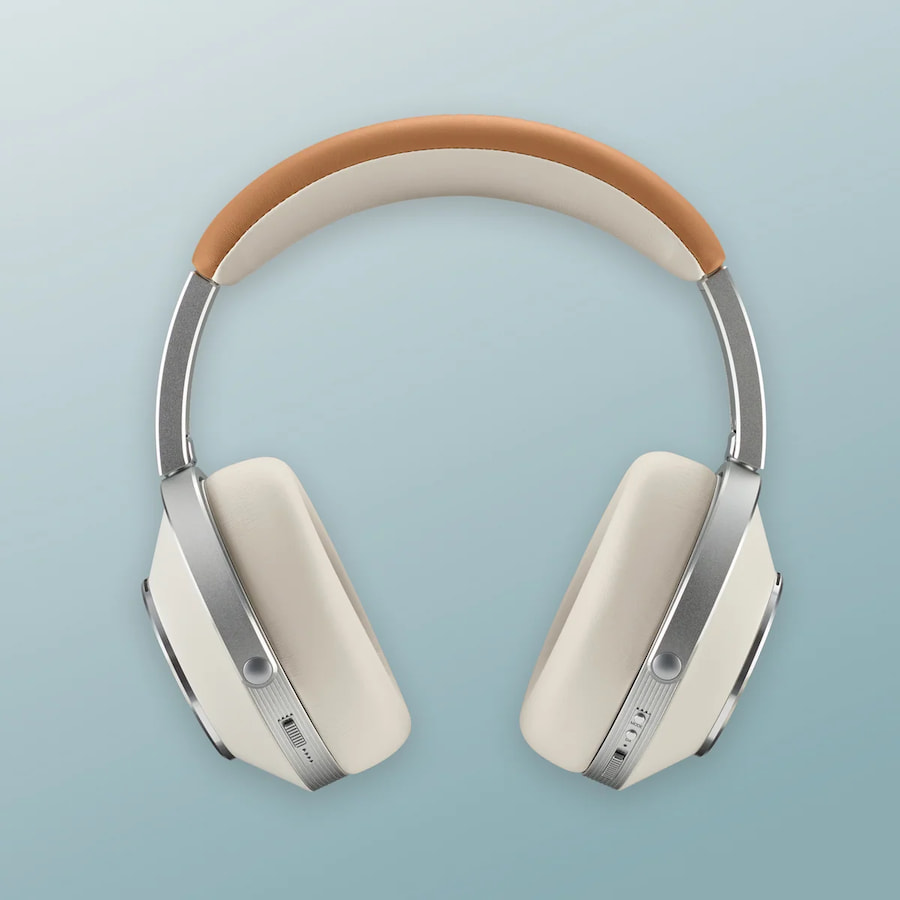
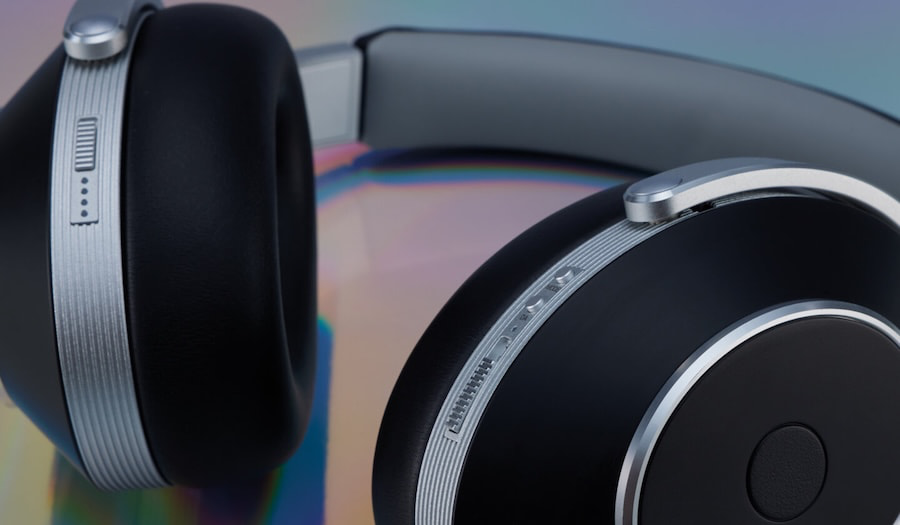
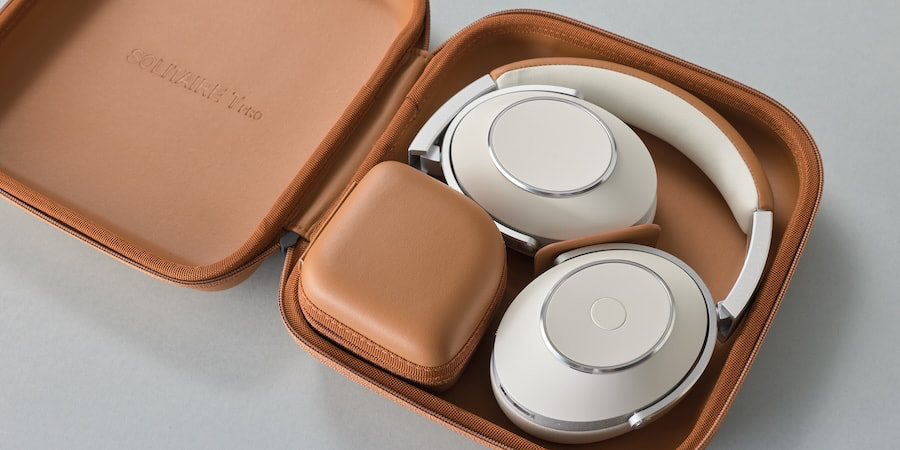
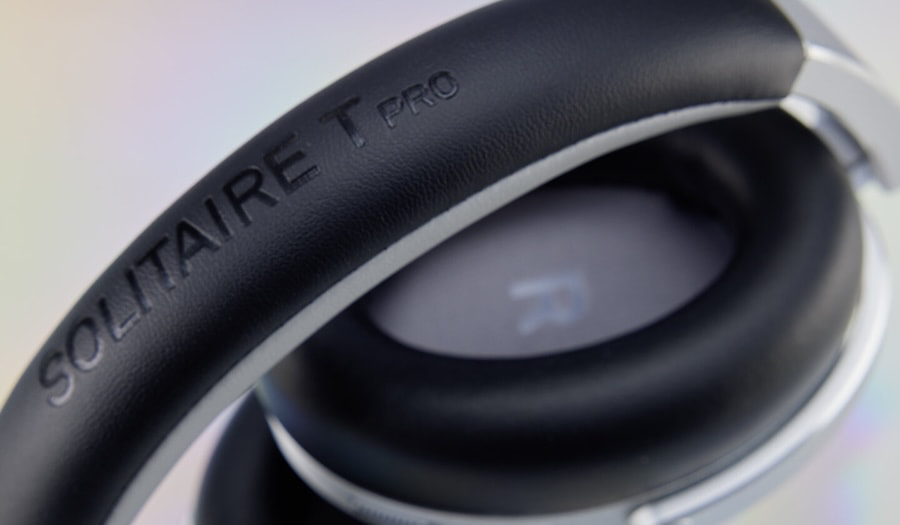
The new Solitaire T Pro comes in two finishes: Nightflight, which combines black, gray, and silver, and Riviera, which pairs cream white with cognac brown accents. Both retain the machined aluminum construction and folding design that distinguish the Solitaire family from the increasingly plastic competition.

More Features But Less Battery Life?
Here’s where the upgrade becomes more complicated.
The original Solitaire T was rated for up to 70 hours of battery life, dropping to 35 hours in its high-quality listening mode. The new Solitaire T Pro manages up to 50 hours in standard operation and 25 hours in Studio Pro Mode, despite retaining the same stated 1,200 mAh battery capacity.
That is a meaningful reduction in endurance, even if 50 hours remains plenty for most travelers. The Pro also weighs 336 grams, compared with 326 grams for its predecessor, although an additional 10 grams is hardly going to require a visit to the chiropractor.
T+A has clearly prioritized increased processing capability and wireless functionality over maximum operating time. Whether that’s the right trade-off depends on how frequently owners use the more demanding listening modes, but paying for the Pro designation while losing 20 hours of advertised battery life deserves more than a passing mention.
T+A Solitaire T Pro Specifications
- Type: Closed-back, circumaural wireless headphones
- Drivers: 42 mm dynamic transducers with cellulose diaphragms
- Frequency response: 4 Hz to 22 kHz active; 4 Hz to 45 kHz passive
- THD: Less than 0.05% at 1 kHz / 94 dB
- Passive impedance: 64 ohms
- Passive sensitivity: 106 dB at 1V / 1 kHz
- Bluetooth: Version 6.0, Qualcomm QCC5181 chipset
- Bluetooth audio codecs: SBC, AAC, aptX, aptX HD, aptX Adaptive, aptX Lossless, LDAC, LC3
- Broadcast audio: Auracast support
- Spatial audio: Dolby Atmos with dynamic head tracking
- DAC: Dedicated ESS Sabre converter in Studio Pro Mode
- Noise cancellation: Hybrid ANC with transparency mode
- Microphones: Two communication microphones on the right earcup and two ANC microphones per side
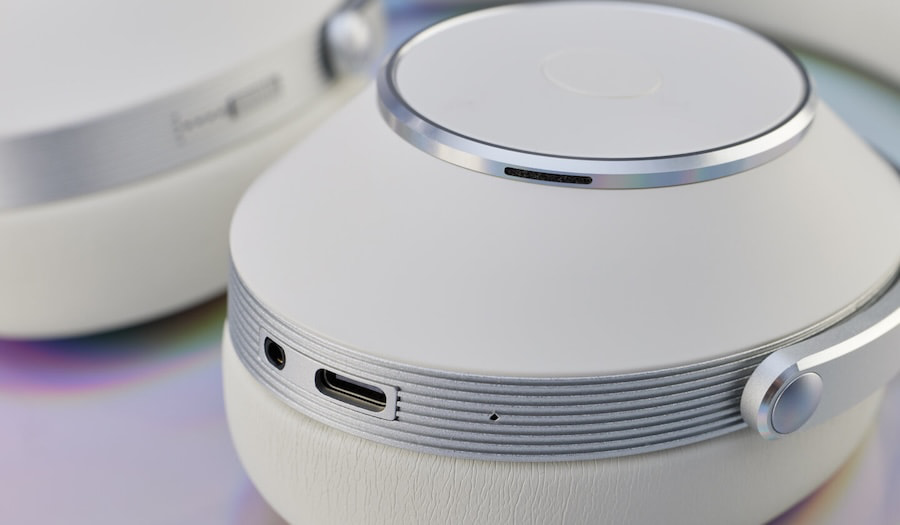
- Wired connectivity: USB-C digital audio; 4.4 mm balanced Pentaconn, 3.5 mm and 6.3 mm analog connection options
- Battery: 1,200 mAh lithium-ion
- Battery life: Up to 50 hours standard; 25 hours Studio Pro Mode
- Charging: USB-C, approximately 2 hours; 5W maximum charging power
- Weight: 336 grams
- App: T+A Solitaire Companion for iOS and Android
- Finishes: Nightflight and Riviera
The Competition Is Getting Uncomfortably Good
Focal Bathys MG ($1,499)
The Focal Bathys MG is one of the strongest options in this category, which uses 40 mm magnesium drivers developed from Focal’s established headphone engineering expertise. Its USB DAC mode supports up to 24-bit/192 kHz audio, while ANC, multipoint Bluetooth, and up to 30 hours of wireless battery life make it a credible travel companion.
The T+A offers broader wireless codec support, fully passive listening, and Dolby Atmos functionality, but the Focal has already demonstrated excellent sonic performance in our testing. That’s a substantial advantage when consumers are being asked to spend this much money without knowing whether the more expensive engineering translates into a worthwhile audible improvement.
DALI IO-12 ($1,750)
DALI’s IO-12 uses larger 50 mm drivers incorporating proprietary Soft Magnetic Compound technology. Our review praised its natural presentation, imaging, bass control, and ability to approach the performance of serious wired headphones, although its wireless connectivity options are less extensive than those offered by the new T+A.
DALI has already demonstrated that loudspeaker engineering can translate extremely well into a premium wireless headphone. The IO-12 is not inexpensive, but its emphasis on acoustic performance rather than collecting every available wireless feature gives it a different appeal.

Are Flagship Wireless Headphones Getting Too Expensive?
There was a time when spending $1,500 or more on wireless headphones bought a genuinely different level of engineering and sound quality. That argument has become harder to defend as manufacturers have introduced better drivers, more effective ANC, improved amplification, and advanced codecs in products costing considerably less.
We’ve already reviewed the Bowers & Wilkins Px8 S2 at $799 and the Sennheiser HDB 630 at $499. Neither is inexpensive, but both deliver convincing high-fidelity performance, useful features, and build quality that would have been difficult to imagine at those prices only a few years ago.
The Sennheiser even includes a USB-C Bluetooth transmitter to expand high-resolution wireless compatibility with devices that otherwise lack it. Bowers & Wilkins offers excellent materials, a sophisticated driver design, and aptX Lossless support for roughly half the price of some European luxury competitors.
No, they don’t necessarily sound identical to the Focal, DALI, or T+A models, and the most expensive headphones can still deliver advantages in tonal accuracy, resolution, imaging, and long-term listening satisfaction. But diminishing returns are becoming harder to ignore, especially when a $500 headphone can handle so much of what most listeners actually need.
Luxury manufacturers can charge whatever they believe their customers will pay. Audiophiles, however, might want to reconsider whether the final few percentage points of performance are really worth another thousand dollars, or whether they’re simply paying to occupy a more exclusive section of the departure lounge.
The Bottom Line
The T+A Solitaire T Pro looks like a thoughtful evolution of an already ambitious headphone, with stronger wireless connectivity, immersive audio support, and the flexibility to function as a serious passive wired design. Its underlying acoustic approach remains compelling, and the company deserves credit for not abandoning traditional high-fidelity principles in pursuit of every fashionable software feature.
But the original Solitaire T already did many of the difficult things exceptionally well, and the latest version enters a market where less expensive rivals have become dramatically more capable. T+A will need to demonstrate an audible improvement over its predecessor, not merely a longer list of supported formats.
The more interesting question isn’t whether the Solitaire T Pro will be a good headphone. It’s whether the luxury wireless category can continue justifying its increasingly ambitious prices when the competition has figured out how to deliver so much for less.
Pricing & Availability:
The T+A Solitaire T Pro are available now pre-order for $2,495 at Audio46 in Nightflight (black/silver) or Riviera (white/silver) finishes.
For more information: ta-hifi.de
You must be logged in to post a comment Login