Arm debuted its new CSS for Mobile 2 technology for chipmakers to include on future silicon powering smartphones. The primary upgrade is around the GPU, which has been redesigned to allow AI to upscale graphics and improve the framerate for a better mobile gaming experience on premium Android phones coming next year. Arm has also improved its CPU clusters for AI agent processing.
Every smartphone needs a CPU and GPU, but more processing power is needed at the top end of the phone market. Phones using MediaTek chips often have Arm CPU cores and GPUs, with last year’s Oppo Find X9 Pro packing a MediaTek Dimensity 9500 chip that uses a Mali G1-Ultra GPU to render graphics.
Now, Arm is announcing the Mali G2-Ultra NX, which the company says is its first AI-native GPU, using AI to improve rendered visuals directly in the graphics pipeline, lowering latency and improving power efficiency. Typically, graphics data is ported to and from other AI-dedicated areas, such as the neural processing unit, to enable AI acceleration, but integrating this directly into the GPU reduces travel time and energy used.
The Mali G2-Ultra uses a trio of AI methods to perform this. Neural super sampling turns low-resolution renders into higher-resolution images with Arm, suggesting a jump from 540p to 1080p, while neural frame rate upscaling generates frames between rendered ones — for example, to jump from 30 frames per second to 60. Neural super sampling and denoising takes the former technology and scrubs out “noise” (dot artifacts in an image) for graphically demanding scenes like ray-traced reflections and complex lighting.
Advertisement
By having the phone render graphics in lower resolution and fewer frames that can be boosted with AI, smartphones can be made smaller and potentially cheaper, said Chris Bergey, executive vice president of Arm’s Edge AI Business unit.
“If we can provide an amazing 540p, 30 frames per second experience, and it allows you to use a smaller battery, that allows for a smaller form factor and potentially allows for a lower-cost handheld,” Bergey said.
During a briefing ahead of the announcement, Arm showed off a game it co-developed with Sumo Digital to showcase those AI methods. Amid scenes of a fantasy character descending into a cave system illuminated by neon-bright giant mushrooms, Arm explained that the game was a proof of concept for how developers could use the AI methods to deliver 4x higher performance efficiency and up to 70% lower external memory traffic (e.g. data transferring out from and back to the GPU) compared with conventional graphics rendering.
All these improvements lead to a 24% improvement in benchmark performance along with a 14% improvement in ray tracing.
Advertisement
CPU core upgrades for AI agent tasks
Arm announced new C2 CPU cores designed for AI agent workflows on devices. Compared to last year’s C1 cores, the new C2 cores have up to 15% higher single-thread and 12% higher multi-thread performance and 1.7x performance across AI models while using 38% less power. They also launch apps and browse the web faster.
Higher single-thread performance reduces latency, while multi-thread performance helps multiple tasks progress concurrently, Arm explained in a press release. Across a sample agentic workflow combining several tasks — speech processing, memory retrieval, reasoning, application execution and web browsing — C2-ultra cores completed the workflow 24% faster than last year’s cores.
Each chipmaker decides the type and number of cores to include in their system-on-chip, balancing performance, efficiency and cost. The aforementioned MediaTek Dimensity 9500, released last year, has an eight-core CPU: one C1-Ultra, three C1-Premium and four C1-Pro.
David Lumb
Managing Editor, Mobile
Advertisement
David Lumb is a managing editor for the mobile team, covering mobile and gaming spaces. Before CNET, he covered tech, gaming, and culture for TechRadar, Engadget, Popular Mechanics, NBC Asian America, Increment, Fast Company and others. As a true Californian, he lives for coffee, beaches and burritos.
See full bio
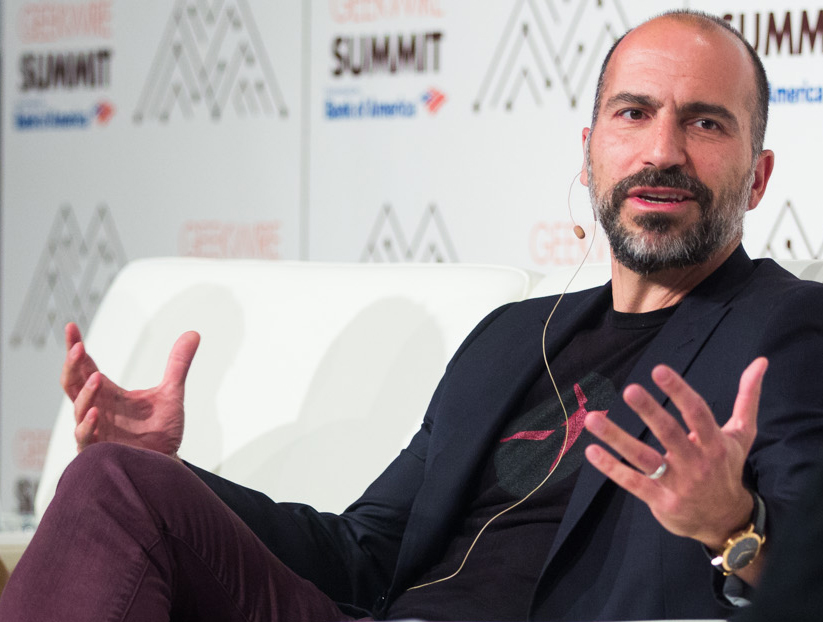
Dara Khosrowshahi, now CEO of Uber, speaks at the 2016 GeekWire Summit. (GeekWire File Photo)
Uber is laying off 93 Washington state-based employees as part of a sweeping global restructuring that will eliminate roughly 10% of the company’s workforce.
The cuts heavily impact the transportation giant’s Seattle hub, targeting those assigned to the downtown engineering center as well as regional remote workers.
The job losses are detailed in a new Worker Adjustment and Retraining Notification (WARN) notice filed by the company with the state’s Employment Security Department, which lists impacted positions ranging from software engineers to senior managers.
Affected staff were notified Wednesday and will receive full pay and benefits through a 60-day notice period ending Nov. 2. The cuts hit technical roles particularly hard, with position titles including software engineers, product managers, data scientists, and a Seattle-based director of engineering.
Nationally, the cuts eliminate about 3,300 corporate jobs — roughly 10% of Uber’s global workforce — in the company’s largest round of layoffs since 2020. In a memo to staff, CEO Dara Khosrowshahi framed the restructuring as a move to eliminate middle-management bureaucracy, flattening reporting structures by reducing management layers and cutting “micro-teams” by nearly half.
Advertisement
As part of the overhaul, Uber is also clamping down on remote work, capping fully remote positions at less than 1% of its total workforce and requiring most employees to move near core office hubs like San Francisco and New York. Khosrowshahi noted that savings from the cuts will help free up capital to invest in core operations, including autonomous vehicle partnerships.
Uber first established its engineering outpost in Seattle in March 2015 to tap into the region’s pool of tech talent. The company expanded significantly in 2018 when it signed a 10-year lease for 115,000 square feet at downtown’s Second & Seneca building at 1191 Second Ave.
Chassis 136069 left Maranello in October 2004 in a color Ferrari almost never allowed. A member of the Royal Family of Brunei ordered this 2004 Enzo in Matte Nero Opaco, factory matte black applied to no other car in the 400-example run built from 2002 to 2004. Work began on June 8. Four months later the finished car went to the family’s London house with matching Nero leather, Nero carpets, Rosso gauges, and the larger seats. Occasional sightings in Hampstead, Mayfair, and Knightsbridge were as close as most people ever got to it.
Ferrari retained a short list of Enzo buyers: Rosso Corsa first, followed by Giallo Modena, glossy Nero, and a few more special colors thrown in to keep things fresh. They didn’t want anyone to get their hands on a multi-stage matte finish that looked nothing like a typical paint job. That was how they intended to present their limited-edition halo car, and only Brunei’s lengthy history of one-off Ferraris had previously opened that style door. Nobody at Maranello attempted to paint another Enzo in similar manner again. Ken Okuyama’s sleek Pininfarina bodywork, which was already a radical departure from the Enzo’s forebears, looked even more striking with a gloss that absorbed light rather than reflected it.
LEGO FERRARI MODEL CAR KIT – Builders ages 10+ can create the legendary Technic Ferrari FXX K with authentic details and working mechanical features
AUTHENTIC RACE CAR DETAILS – This supercar building set features working butterfly doors, opening hood, and an engine cover that reveals the…
CAR MODEL KIT – Young engineers explore real automotive concepts with this educational learning toy as they build the working differential and watch…
The Enzo’s power game was standard Ferrari fare. A 6.0-liter Tipo F140B V12 produced 651 horsepower and 485 lb-ft of torque, propelling the 3,009-pound beast to 60 in 3.3 seconds and on to a top speed of 218 mph via a six-speed F1 semi-automatic. Carbon-ceramic brakes, the first time this technology had been used on a road-going Ferrari, came from the racing program, courtesy of Brembo, but what really mattered to anyone lucky enough to get their hands on this Enzo was the paperwork, which included a confirmed original chassis number, engine #84730, gearbox #455, and body #291, all certified by Ferrari Classiche in 2022.
After a stint in London, the vehicle traveled to Asia-Pacific and was eventually registered in New Zealand. It appears that one of its previous owners attempted to buff up the fine matte finish, but instead succeeded to ruin the luster. However, two years ago, the Enzo returned to Europe and entered Carrozzeria Zanasi, Ferrari’s shop that works on hypercars, Icona cars, and Tailor Made projects. Zanasi gave it a thorough tune-up, replacing sticky switches, front and back lamps, and rear bonnet glass before applying the original matte Nero Opaco finish once more. All of that work had to be paid for, of course, and the invoices totaled €110,000. Zanasi eventually sold the Enzo to RM. Sotheby’s sold it in December via their Sealed platform, but the price was not disclosed. At the time, concours Enzos were worth roughly $4 million. The buyer brought it to Canada, where it has remained in Blenheim, Ontario, ever since.
Since then, the Enzo has been cared for by Ron Tonkin Gran Turismo and Ferrari of Vancouver, who have kept it within the factory network. Tonkin performed a comprehensive service in August at 5,742 km, replacing the clutch, fuel pumps, and left-side valve gasket before giving it a thorough inspection, bringing its mileage to 5,763 kilometers from new, or around 3,580 miles. It’s a true find, having seen little use since then. Now it is again on sale with RM Sotheby’s as lot R0005 in Sealed, but you’ll need to request a sales estimate.
It appeared at the Portola Hotel in Monterey during Car Week in mid-August before being relisted for private bids. The sealed bidding platform will most likely keep the hammer price out of the public eye for the second time in a row. Any buyer wishing to export this Enzo to the United States should be advised that the car is over 21 but less than 25 years old, which implies a federalization job is on the horizon, as well as duties on a temporary Canadian import with New Zealand papers.
Laptops are at their most convenient when not plugged in — where their portable nature can really shine. To maximize that convenience, you’ll want to make sure your laptop is lasting as long as it should. While there are many different types of laptops, each specialising in its own niche, there are still ways to figure out whether your laptop is receiving the proper mileage.
You shouldn’t need one of the best laptops on the market to see a decent battery duration. By knowing how long a given laptop’s battery should last on a single charge, you can avoid having to replace a battery early in your laptop’s life. While most laptop batteries can be replaced without being brought into a repair shop, and warranties can sometimes cover premature battery death, generally replacing batteries is an expensive process that can often require niche tools (such as niche, specialized screwdriver heads). It’s best to know ahead of time if you’re getting your money’s worth, as well as how to optimize battery life by changing settings and knowing which activities will drain power the fastest.
Advertisement
How to tell how long your laptop should last
Igor Suka/Getty Images
To start, it’s important to look at the type of laptop you have. The general range for modern laptops will lie somewhere between four and 12 hours from a single charge, but that’s a pretty wide net. Premium-thin and Ultrabook laptops will last near the upper end of that tier (at eight to 12 hours, with some even reaching 15 under optimal conditions), whereas more standard laptops will last about six to 10 hours — or four to seven hours if it’s a budget-friendly machine. Gaming laptops will drain significantly faster, and you should only expect about two to four hours from them.
A laptop’s niche is only part of the equation, though, as the type of charger you’re using can also subtly affect battery life. Aftermarket chargers in particular may not deliver the precise voltage you need and could end up stressing your battery. Though an aftermarket charger isn’t a complete recipe for disaster, it’s ill-advised if you want your battery to reach its full potential.
To reach that full potential for each of these bounds, you’ll need to optimize things. There are some key settings to change for extended laptop battery life, such as turning down display brightness, closing background apps and tabs, and lowering your display’s refresh rate. You could also switch to a power-saving mode in your laptop’s power management settings, though you may need to switch out of this mode to carry out a demanding task.
Advertisement
How to keep your laptop battery healthy
nampix/Shutterstock
On the subject of demanding tasks, it’s not only important to keep an eye on your laptop battery through settings, but also through how you use your laptop. Gaming’s the obvious one, as even laptops explicitly designed for it run out of power quickly — but video editing, video streaming and 3D rendering are all quite intensive. If you know you’ll need to engage with one of these activities, it’s important to plan ahead — whether that’s by getting a solid power bank or by making sure you can reach a socket.
You’ll also want to keep your laptop in the right conditions. Chiefly, you’ll want to maintain an ideal moderate temperature of 68 to 77 degrees Fahrenheit. Extreme heat (temperatures of 95 degrees Fahrenheit and above) could cause permanent damage to lithium-ion batteries, while cooler temperatures (about 32 degrees Fahrenheit and below) will make those batteries temporarily less efficient.
Furthermore, you should avoid using all of that battery up at once. Letting your battery run out multiple times could cause permanent damage to your laptop battery due to continued cell drain. Similarly, try not to keep your laptop plugged in too long when fully charged, as this could also lead to degradation of the battery. For this reason, it can be good practice to follow the 40-80 rule, where you start charging at 40% battery and stop at 80%, thereby avoiding either extreme — though this is certainly not strictly necessary and not always achievable.
Do you consider yourself fit and healthy? I strength train, run, hike, climb and swim — albeit not according to any kind of training plan or schedule — and yet there are so many ways my body struggles on a daily basis.
Even people who consider themselves to have a high level of cardiovascular fitness might lack strength, balance or flexibility. It’s almost impossible for one person to adhere to a truly holistic training plan. We all have weaknesses. We all know what it’s like to feel fatigued.
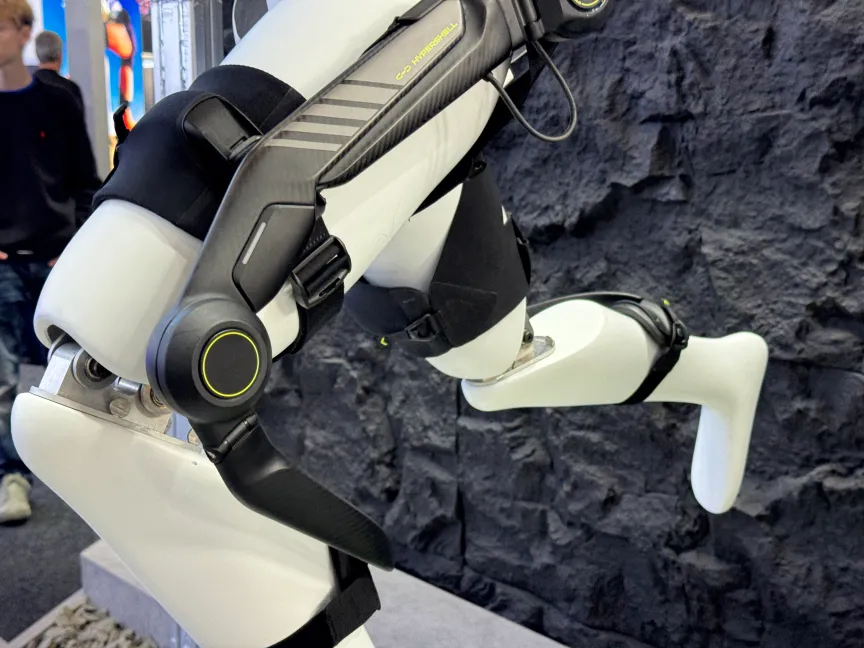
What if technology could pick up the slack? That’s the premise behind the Hypershell Halo, a full-leg exoskeleton unveiled at IFA in Berlin last week. This is far from the first Hypershell exoskeleton, but unlike previous models, the Halo extends further down the leg to provide support through the knee and calf, as well as through the thigh and hip.
The Hypershell Halo is flexible enough to allow a full range of movement.Katie Collins/CNET
The Hypershell unified architecture is one carbon-fiber, load-bearing structure with what the company is calling a “fish-spine adaptive joint” to allow for flexibility through the hip and into the leg. Its four-motor system is designed to power you through a whole range of movements while reducing knee-muscle fatigue by up to 40% across all types of terrain.
As someone with chronically creaky knees, I was excited to try the Hypershell Halo over the weekend at IFA. The target audience for an exoskeleton may be older adults and people with limited mobility, but Hypershell seems to be hoping the Halo will have broader appeal. Someone like me, who is active and enthusiastic about exploring the outdoors, but who sometimes reaches their physical limits earlier than they’d like, is also a contender.
Advertisement
I quickly discovered that putting the Hypershell Halo on is all part of the adventure. One belt attaches around the waist, and two flexible straps feed around the thighs. It takes a good few minutes and help from two people to adjust the exoskeleton to fit my proportions, but once the settings are right, it’s very quick to take on and off. (In an on-stage demonstration during the Halo launch event, I watched as the presenter put the exoskeleton on in just 16 seconds.)
My first impression is that I feel a little stiff and restricted, but that sensation immediately evaporates once I start moving. The kit weighs 2.6kg in total, with the majority of that distributed around my waist. I thought the Halo would take some getting used to and might disrupt my natural gait, but it doesn’t at all. Instead, I instantly feel lighter in my natural movements. Squatting and standing from a low seated position without using my hands for support and thrust is totally effortless.
Most of the weight is distributed around your waist.Katie Collins/CNET
As I trample cheerfully all over Hypershell’s multistory booth, I find that that the only pressure anywhere in my legs is in my ankle joints. Going downstairs, I feel none of the usual pressure in my knees, thanks to the cushioning effect. The exoskeleton isn’t doing the work of walking for me, but it feels as though I could keep going for much longer.
This is one of the main use cases Hypershell is putting forward. Avid runners and hikers could potentially do far more than they’re used to without tiring. The Halo supports speeds of up to 17km per hour, which is a 2.5-hour marathon pace. Given that that’s the same as my half-marathon pace, I’d be interested to see what I could achieve while running in the Halo.
As I descend the stairs, thinking about how difficult it usually is walking down the side of a mountain — just one long exercise in trying not to fall — I wonder whether the Halo could allow me to attempt some of the more challenging and vertiginous hikes I’m drawn to, but currently find too intimidating. I have my eye on a multiday Iceland trek, some steep summits in Lofoten and a whole bunch of routes in Patagonia. It also occurs to me that the Halo could be useful for groups with uneven levels of fitness or walking speeds. Could it be responsible for helping couples dodge the infamous alpine divorce? Or is that just delaying the inevitable?
Advertisement
For longer hikes, the battery supports up to 20 hours of use and can be easily swapped out. It only 370g, meaning it shouldn’t be too much of a burden to carry a spare or two.
I briefly switch the Halo to fitness mode, which increases the resistance for people who enjoy the feeling of physically working harder. I get the logic behind it, but I’m not one of these people I ask for it to be turned off again almost immediately. I guess it’s good that it exists for those who want it, but it’s not what I need after multiple days at a trade show.
One of the most interesting aspects of the Halo is how it uses AI. Over 30 sensors continuously capture lower-body movement, feeding data into the on-board AI chip, which can predict how you’re going to move 200ms before you actually do. This predictive technology means the Halo is adapting in real time to your activity, supporting your every move as you make it.
It can’t tell that this is happening while I’m wearing the exoskeleton, but I also suspect that that means it’s working as it should. After all, AI is the kind of technology that’s largely invisible when it’s at its most effective.
Advertisement
Perhaps the only drawback of wearing the Hypershell Halo is that it’s not subtle, and exoskeletons are still rare enough that it will likely attract attention if you wear one in public. If that doesn’t deter you and you’re ready to embrace life as cyborg in the here and now, the Hypershell Halo is available for preorder immediately, priced at $2,299.
Katie is a UK-based news reporter and features writer. Officially, she is CNET’s European correspondent, covering tech policy and Big Tech in the EU and UK. Unofficially, she serves as CNET’s Taylor Swift correspondent. You can also find her writing about tech for good, ethics and human rights, the climate crisis, robots, travel and digital culture. She was once described a “living synth” by London’s Evening Standard for having a microchip injected into her hand.
See full bio
The Brave web browser published a new round of benchmarks claiming its desktop browser uses less system resources than Chrome, Microsoft Edge, and Firefox — and also loads pages faster.
The blog Linuxiac reports:
According to Brave’s testing, the browser used 44% less CPU, 28% less memory, and 10% less energy on average compared with the three competing browsers. It also completed page loads 20% faster while transferring 26% less inbound data and 39% less outbound data…
– Brave averaged about 33% CPU usage, while Chrome used 47%, Edge 53%, and Firefox 78%.
– For memory, Brave used about 1.2 GB, compared to 1.75 GB for Chrome, 1.62 GB for Edge, and 1.65 GB for Firefox.
By stopping ads, analytics scripts, tracking pixels, and other third-party requests from loading, the browser has less network traffic and less work to do. In page-loading tests, Brave took about 4.4 seconds to fully load a page. Chrome took 5.1 seconds, Firefox 5.3 seconds, and Edge 6 seconds. However, when measuring Largest Contentful Paint, which is when the main content appears, Brave and Chrome both averaged about 2.4 seconds, with Edge and Firefox just behind at 2.5 seconds. This means Brave’s main advantage comes after the main content is visible, since there are fewer background ads, trackers, analytics requests, and delayed scripts to process.
A zero-day vulnerability dubbed “StyleSmuggler” affecting all versions of Magento and Adobe Commerce is being exploited in attacks to deploy a backdoor.
The first exploitation incident was recorded on September 4 on a target running the latest security updates.
E-commerce security company Sansec says that Adobe Enterprise Support confirmed earlier today that it was working on a fix but did not provide a timeline for its release.
Magento is a popular open-source e-commerce platform by Adobe installed on more than 160,000 websites, including 14,000 of the top 1 million sites.
Advertisement
Linux backdoor
The exploit Sansec observed in the wild abuses Magento’s template system through PHP code injection to generate a fake “failed-payment” email, which triggers code execution.
Successful exploitation installs a small Rust-based backdoor as a background process, disguised as [kworker/u:8:0]. Newer versions disguise the process as fc-cache and copy it to ~/.cache/fontconfig/fc-cache.
According to Sansec researchers, the attacker also adds a cron job configured to repeat every 30 minutes for persistence.
Although Sansec did not observe any follow-on activity, the malware can communicate with remote infrastructure and receive commands.
Advertisement
The researchers note that earlier samples of the backdoor used TLS/WebSockets to communicate with the command-and-control (C2) address, while newer versions disguise their traffic as Network Time Protocol (NTP).
They send UDP packets to port 123 and use hostnames that resemble time-syncing infrastructure, helping to mask malicious traffic as NTP and get through firewalls.
The malware also determines the server’s public IP using services including ipify, icanhazip, ident.me, and ipinfo.io, and checks Linux’s TracerPid value to detect tracing. If tracing is active, the malware still installs, but does not beacon.
Sansec says an unexpected surge of Magento “Payment Transaction Failed Reminder” emails may indicate exploitation, and also recommends monitoring for ‘kworker’ or ‘fc-cache’ processes, suspicious cron entries, and temporary files.
Advertisement
If there is suspicion of compromise, it is recommended to rotate Magento credentials.
At the time of writing, Adobe has not released fixes for StyleSmuggler, but the firm’s next scheduled security release is tomorrow, September 8.
Until fixes are made available, Sansec recommends that website administrators disable GraphQL as a mitigation measure.
BleepingComputer has contacted Adobe to ask if a fix for StyleSmuggler is planned for rollout tomorrow, but the company has not yet responded.
Advertisement
Overall prevention scores can hide what happens after initial access. Once attackers are using valid credentials, prevention drops sharply.
The Blue Report 2026 measures defenses technique by technique across 338 million simulations run in customer production environments.
Huawei has launched a new processor it claims is free of US technology and is using it to drive a new three-screen folding phone.
Advertisement
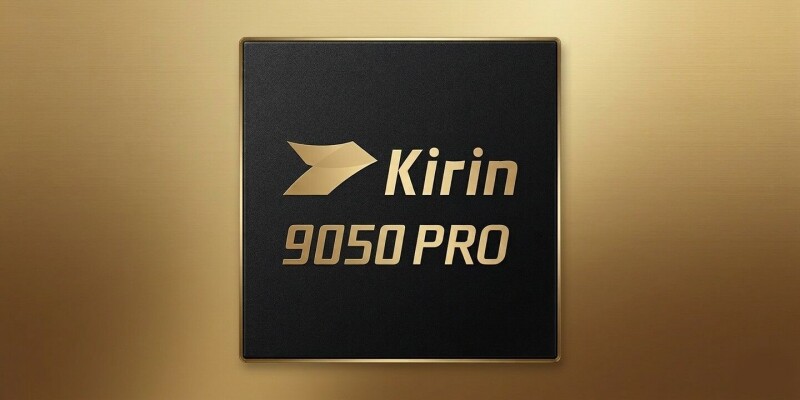
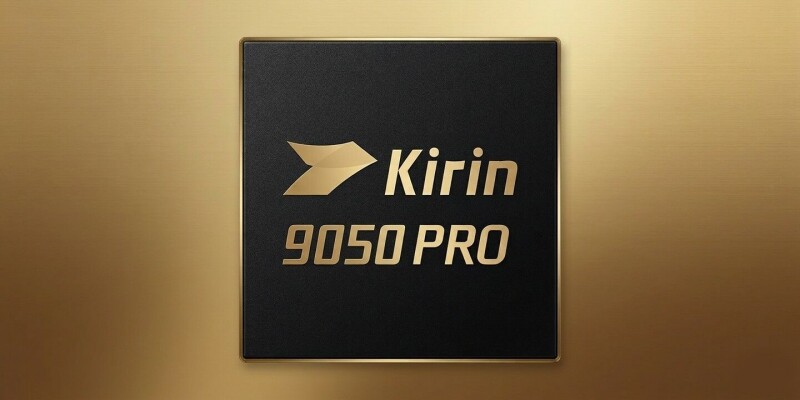
The Chinese giant dubbed the new processor the Kirin 950 Pro and says its LinxiCore processor cores, GPU, and neural processing unit all feature its own designs.
The SoC into which Huawei added them uses the “Tau Scaling” architecture that Huawei says arranges components closer to each other to reduce die size and improve performance without needing the kind of advanced chipmaking processes practiced by TSMC and Intel.
As The Registerwrote when Huawei announced Tau Scaling last May, analysts think Huawei has done interesting things with its silicon but don’t think the company has made any breakthroughs.
Huawei begs to differ and says its new silicon offers 42 percent higher performance than the chip it used in the three-screen phone it delivered last year.
Advertisement
The Chinese company uses the Kirin 950 Pro in its new three-screen phone, the $2,979 Mate XT2.
Analyst firm Counterpoint thinks Huawei will exit 2026 with 24 percent of the total folding phone market, which it believes accounted for 1.6 percent of smartphone sales last year.
Huawei therefore has itself a chip that targets the high end of a market niche – and announced it a couple of days before pundits believe Apple will debut a folding iPhone that Counterpoint predicts will win 25 percent of the folding phone market by the end of the year.
Huawei’s Kirin 950 Pro will therefore hardly make a dent in the smartphone market.
Advertisement
At its launch event, Huawei execs pointed to its totally-not-Android versions of HarmonyOS now running on 85 million devices. That’s strong uptake since Huawei delivered the OS in October 2024. Again, however, it is a fraction of the overall smartphone and smart device market.
If Huawei can use the tech it created for the Kirin 950 Pro in other roles that would allow mean Chinese to avoid comparable products from AMD, Intel, or Nvidia, its new chip will show that Chinese firms can create tech that reduces the nation’s reliance on imports.
But amid all the hoopla of a phone launch, Huawei hasn’t said anything about its intentions to adapt its new chip for different roles.
The Tau Scaling architecture is therefore not going to upset Huawei’s rivals for some time, although western chipmakers do know that Beijing is steering local buyers away from their products and encouraging adoption of local alternatives.
Advertisement
Whether any of those Chinese chipmakers succeed beyond the Middle Kingdom is the wider question. China emphasizes export of consumer products as a tactic to fuel domestic growth, and its smartphone makers Xiaomi, Oppo, and Honor have delivered on that mission by winning solid sales across Europe, Africa, and Latin America – with phones running Android and tied to Google services.
Huawei’s hardware and HarmonyOS ecosystem, by contrast, have not racked up notable success outside China. ®
The recommendations ‘do not introduce new obligations, but support institutions in understanding and implementing relevant existing responsibilities in a proportionate manner’.
Ireland’s research ecosystem will be subject to new national guidelines on research security to safeguard the sector against intellectual property theft and misuse, foreign interference, and emerging security threats.
‘Research Security Guidelines for Ireland’, created by the Irish Government and published today (7 September), is aiming for alignment with international best practice while protecting innovation and strengthening global research partnerships.
The guidelines outline Ireland’s national approach to research security, and how the risks associated with international research and innovation collaboration are identified, assessed and managed in a proportionate and context-sensitive manner, according to the Department of Further and Higher Education, Research, Innovation and Science.
Advertisement
The framework is intended as enabling guidance – rather than a regulatory or enforcement document – for Ireland’s research performing organisation (RPOs), funders of research and other stakeholders in the country’s research ecosystem.
The guidelines “do not introduce new obligations, but support institutions in understanding and implementing relevant existing responsibilities in a proportionate manner”, according to the document, and are based on key principles of: risk management rather than risk avoidance; proportionate responses based on institutional autonomy; clarity of roles and responsibilities; and avoidance of bureaucratic complexity that stifles innovation.
Minister for Further and Higher Education, Research, Innovation and Science James Lawless, TD said: “Ireland’s research system is among the most internationally connected in the world. That openness is one of our greatest strengths but it must be matched by an ability to identify and manage emerging security risks.
“These guidelines represent a significant step forward in ensuring that Ireland remains both open and secure as a global leader in research and innovation.
Advertisement
“This is about protecting valuable knowledge, supporting our researchers and making sure our research system remains open and trusted.
“Many institutions are already doing good work in this area. What these guidelines do is provide a common framework so that research organisations across the country can build on that experience and take a consistent approach.”
The guidelines are the product of collaboration between Government departments, research funders and RPOs, and originate from a May 2024 EU recommendation that member states develop national research frameworks with clear roles and responsibilities.
RPOs retain autonomy and decision-making on how to implement the new guidelines, according to the Government, which said it will act as a coordinator and support mechanism during the implementation phase of the initiative that is now underway.
The data center backlash has entered the midterms conversation.
Politicians from across the spectrum have changed their minds — or at least their policy positions — about data centers in the past few months as public resistance to their construction has skyrocketed. A major example is Texas, where just about one year ago, Republican Gov. Greg Abbott was proclaiming that his state was the “epicenter of AI development.”
Now, after months of grassroots organizing and community outcry, Abbott is pushing to slow the roll of new data centers in Texas. He’s imposed a statewide moratorium on new construction pending an audit over the new connections to Texas’s power grid. While he hasn’t explicitly said the change is tied to his reelection campaign this November, the pause is expected to last through the election.
As dramatic as Abbott’s about-face has been, he’s not alone: Democrats and Republicans alike are following suit.
Advertisement
Jeremy Merrill, a data reporter at the Washington Post, analyzed thousands of social media posts and newsletters to see what elected officials on both sides of the aisle are saying about data centers. He spoke with Today, Explained co-host Noel King about his findings, what they say going into midterm elections, and how the backlash might change the way we think about what politicians owe to their constituents.
Below is an excerpt of their conversation, edited for length and clarity. There’s much more in the full podcast, so listen to Today, Explained wherever you get podcasts, including Apple Podcasts, Pandora, and Spotify.
Data centers didn’t used to be a big deal. And now, almost all of a sudden, they’re a big issue. Candidates are falling over themselves to sound tough about data centers. And data centers are overwhelmingly portrayed as a problem rather than an opportunity or a benefit.
A great example is Sen. Jon Husted, who’s a Republican senator from Ohio, who’s up for election this November. He used to praise data center projects that were coming to Ohio when he was lieutenant governor because it would help establish Ohio as “an important tech hub in America.”
Advertisement
He said that data centers are essential to our digital lives. And now he’s saying he’s trying to “protect Americans from having to foot the bill for data centers.”
He’s really emblematic of a shift that happened all across the Republican Party in about February of this year. That’s when the bulk of messages from Republicans about data centers flipped from focusing on them as bringing benefits to their states and communities, to talking about their downsides.
This is really a case of the anger and unhappiness bubbling up from everyday people up to political elites. And that grassroots anger was all across the political spectrum over a whole range of issues: power bills, claims about how much water data centers may use, air pollution, eminent domain, taxes, subsidies, and a generalized, physical manifestation of the anxiety that people feel about what AI is going to do to our society, to our brains, to our kids and to our jobs.
We know that it’s not just one single candidate, maybe even not just a handful, because you reported that the National Republican Senatorial Committee warned that, “Data centers are the anchor hanging around Husted’s neck.”
Advertisement
That’s pretty strong language. Is the National Republican Senatorial Committee admitting that the wrong position on data centers is enough to lose a candidate a race at this point?
I think it’s something that they’re certainly worried about. He’s in a tough race. It’s a tossup. And presumably you’re looking for an edge, or to prevent your opponent from getting an edge over you.
What about President Donald Trump’s messaging on data centers? He, initially at least, was very bullish on AI investment in the US. What has Trump been saying?
This is a story in two or three parts. As President Trump took office again last year, he was overall trying to portray his second term as president as “inaugurating a golden age for American manufacturing and technological dominance.”
Advertisement
As part of that, he issued an executive order trying to make it easier to build data centers in the United States. And I think that’s probably why last year most Republicans across the board were talking about data centers as a benefit to the country and to the communities where they were being built — talking about jobs, talking about investment.
But like I said, the tide turned. And so on the one hand, you have President Trump promoting this bill that would protect people from having data centers cause their power bills to go up. But on the other hand, he just wrote earlier this week on Truth Social, “If [communities] want to be successful and rich, with far lower taxes and jobs all over the place, let Data Reign.”
He’s saying if they don’t want data centers, they’re going to “end up being backwards and poor.” So he’s still very pro-data center, which is fascinating.
Let’s talk about the Democrats. Which Democrats in particular are we seeing change their minds?
Advertisement
There are a lot of governors who used to be very positive on data centers in their states because these bring jobs. These bring construction investments, some amount of permanent jobs, some amount of construction jobs. Examples of folks who are now limiting data centers in their states include Gov. Josh Shapiro of Pennsylvania and [Gov.] J.B. Pritzker of Illinois.
The most striking case of a Democrat whose rhetoric has shifted so much is Rep. Ro Khanna of California, whose district actually includes Silicon Valley. In 2025, he was calling for building more data centers in the United States versus overseas. When the Trump administration did an AI deal with the United Arab Emirates, he said, “Why are we putting data centers and research hubs in Dubai?”
But now he’s more critical, calling for an end to data center extraction, taking communities’ water and jacking up their bills, sucking all the money into the hands of a few tech billionaires.
Is anyone in either party still coming out strong for data centers?
Advertisement
My favorite example of this is Rep. Eric Burlison, who’s a Republican from Missouri. He’s really focused on the need to build data centers in order to compete with China. In June, he wrote, “Ask yourself who benefits when Americans turn against data centers? China does.”
He’s making the point that I think a lot of people in tech are making, which is, “This is coming whether you like it or not.” And part of politics is dealing with reality.
In this day and age, it seems constituents don’t want to deal with that reality, but clearly there are people who hold office, or who hope to hold office, who are going to maintain the line that this is something we’ve just got to do.
This is a classic political science dispute about what a politician’s job is supposed to be. If you accept the premise that we need data centers to build a wonderful technological future or keep pace with China or whatever the argument is, is the job of a politician to just do what their constituents want, to be their tribune in Washington? Or is it to be the wise, thoughtful leader who’s willing to push back when constituents are missing something important?
Advertisement
This is one thing I keep in mind when analyzing — particularly some of these governors who shifted more recently — is that they’re talking about the downsides of data centers. They’re talking about mitigating those downsides. They’re saying, “Oh, we need to get data centers to pay their fair share. We need to make sure that data centers don’t screw up our water. We need to make sure they don’t raise your power bills. We need to make sure they give back.”
But then it’s so that we can build them and still reap the benefits while mitigating the costs.
What is it about this issue, do you think, that has got us to this place? We’re polarized, but we’re not polarized in the same way that we’re often polarized.
One possibility is that this is coming from the grassroots so much and bubbling up to politicians and political elites, that everybody got the signal at the same time that this was something that they ought to oppose.
Advertisement
The other possibility is people have for a while been saying, “Are we living through a generational political realignment in the United States where a lot of things are up for grabs?”
You don’t see a lot of the libertarian-adjacent pro-business, free markets, free trade Republican Party. And so when all these issues are up for grabs, politicians see opportunity in being innovative rather than sticking with the same traditional views of their party.
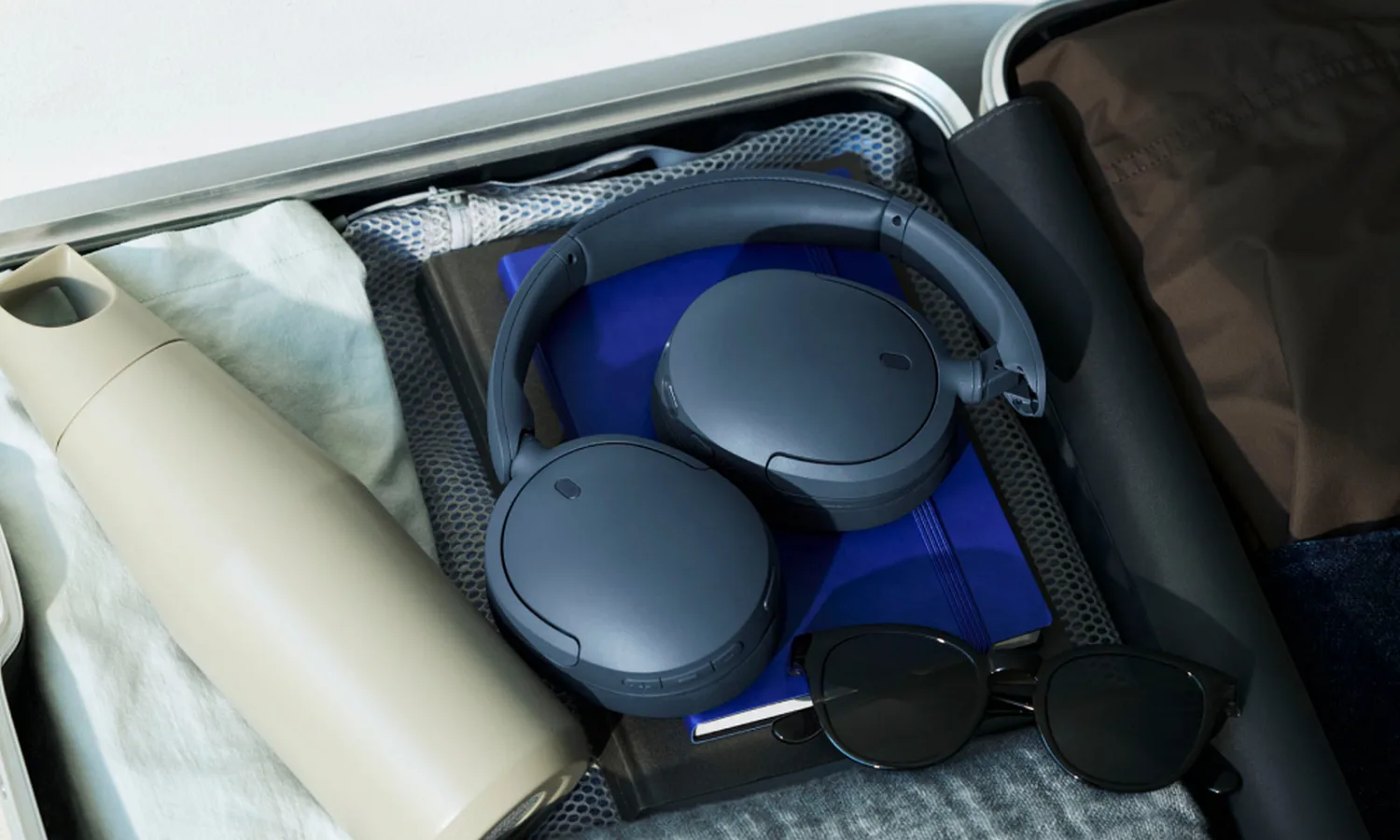
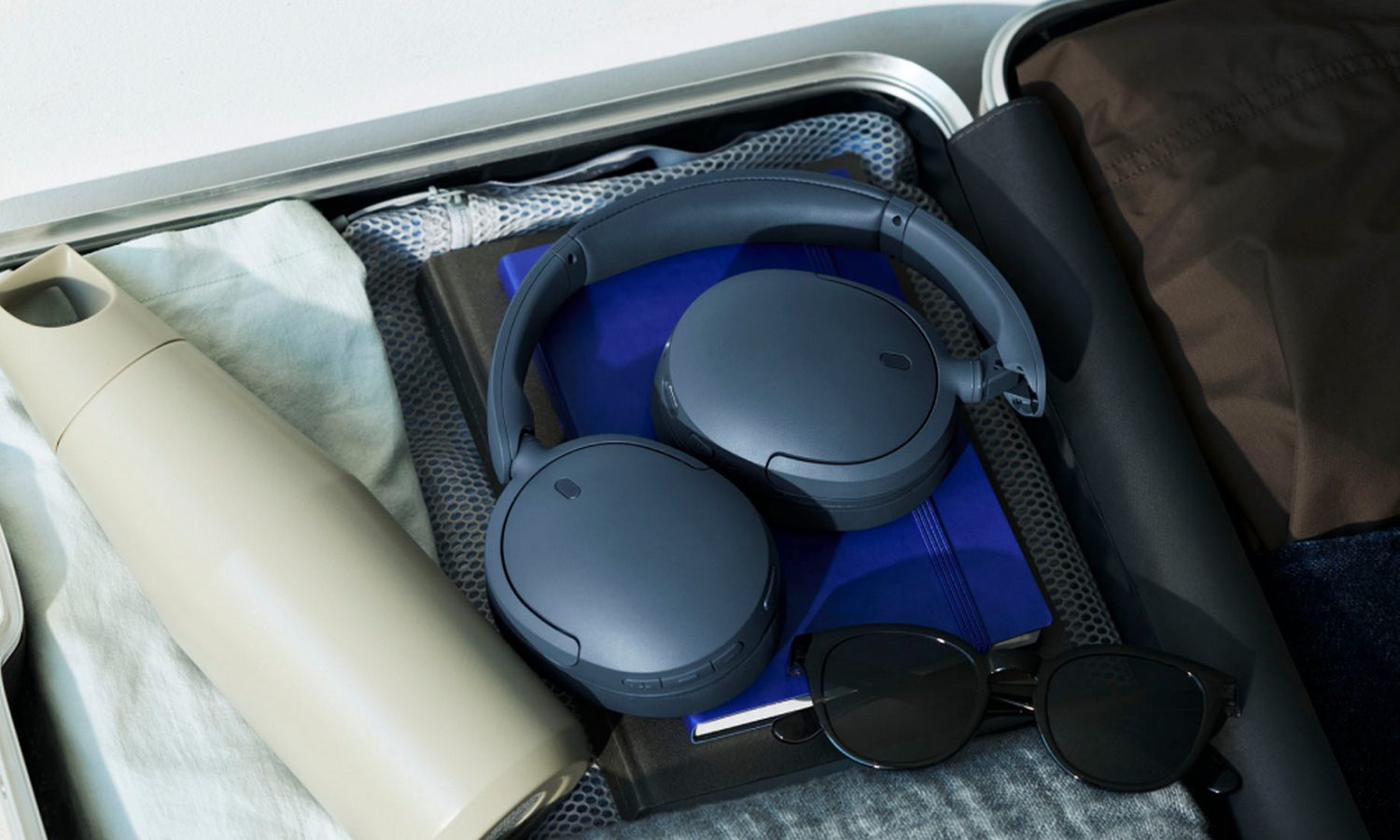
Sony is refreshing the more affordable end of its wireless headphone lineup. The company has launched the WH-CH730N and WH-CH530, successors to the WH-CH720N and WH-CH520 respectively.
We first heard about both headphones in July, when import documents revealed their model numbers and several expected colors. At the time, there was no information about battery life, audio upgrades, or connectivity changes. Now Sony has filled in those blanks.
The WH-CH730N gets a big battery upgrade
The WH-CH730N offers up to 50 hours of battery life with noise cancellation switched on and as much as 75 hours without it. Its predecessor topped out at 35 hours, so Sony has made a sizeable improvement here.
Sony
Sony has also added a foldable design while keeping the weight at about 207 grams. Dual Noise Sensor technology handles ANC, while Ambient Sound, which is what Sony calls its transparency mode, can be adjusted across 20 levels. Adaptive Sound Control can also change those settings based on where the headphones are being used.
Sound customization includes DSEE, a 10-band equalizer, Game EQ presets, and 360 Reality Audio. Bluetooth 6.0, LE Audio, Auracast, multipoint, Fast Pair, and Swift Pair are also supported. Call quality gets some attention too. Precise Voice Pickup uses beamforming microphones and AI processing to isolate the wearer’s voice, while a redesigned microphone structure helps cut wind noise.
Advertisement
The WH-CH530 keeps things simple
Sony
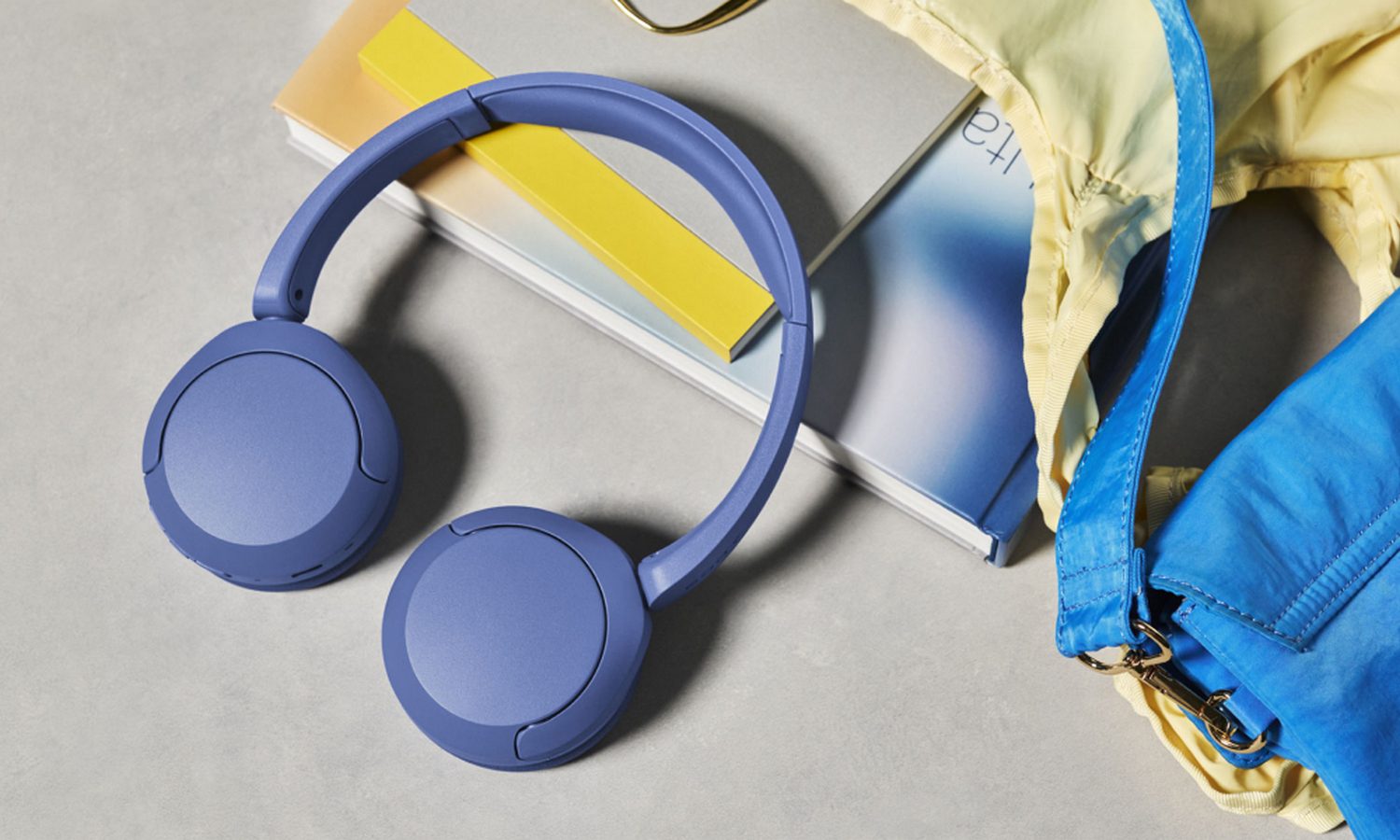
The WH-CH530 remains an on-ear pair without active noise cancellation. Battery life rises from 50 hours on the WH-CH520 to 55 hours, while a three-minute charge provides up to 1.5 hours of playback. The older model already offered multipoint, EQ controls, DSEE, and the same quick-charge figure.
Sony
Sony has added Bluetooth 6.0, LE Audio, Auracast, a 10-band EQ, Game EQ, and AI-based noise reduction for calls. The headphones weigh about 150 grams and come in Black, Cobalt, Mint, White, Pink, and Coral.
The WH-CH730N costs $179.99, while the WH-CH530 comes in at $69.99. Both are available from September through Sony, Amazon, Best Buy, and other retailers. Oat for the WH-CH730N and Coral and Mint for the WH-CH530 are limited to Sony and Amazon.







































































You must be logged in to post a comment Login