If you’re looking for somewhere soft to land at the end of each day, a Tempur-Pedic mattress is a safe bet. Tempur-Pedic is known for its super-soft memory foam mattresses, and has a huge range of products for you to end your day on. I’ve slept on everything from a Tempur-Pedic mattress to sheet sets and even pillows from the brand—truly, if there’s new bedding you need, particularly anything with a soft, sinking sensation to cradle you as you sleep, you can find it from Tempur-Pedic.
You can get the ultra-soft goods for a little cheaper thanks to WIRED’s Tempur-Pedic coupon codes, no matter what kind of super-soft bedding you’re hoping to find with Tempur-Pedic’s famous feel. Explore our Tempur-Pedic discount codes to get deals on mattresses, toppers, pillows, and more.
Save With the Tempur-Pedic Sale
Shopping the Tempur-Pedic sale is one of the best ways to score huge discounts on usually pricey buy-it-for-life items like mattresses. Tempur-Pedic offers and discounts rotate (but usually hover around 30% off), but I’d recommend checking back often to see what new items are on sale and what new seasonal discounts have sprung up. Some of the best Tempur-Pedic discounts we’ve seen are huge price reductions on pillow bundles, buy two and save 30% on sheet sets, and 25% off pillows and bedding.
Get a 30% Tempur-Pedic Promo Code When You Sign Up
This isn’t the “forward this email or be cursed” email chain you got as a kid. Sign up for Tempur-Pedic’s email updates, and get a solid 30% off discount on pillows and sheets. Plus, you’ll be the first to know about new launches, sales, and everything Tempur-Pedic is up to in the sleep realm. Why wait on savings and better sleep?
Advertisement
Tempur-Pedic
Tempur-Adapt ProAdjust Pillow
Tempur-Pedic
Tempur-Breeze ProHi Pillow
Advertisement
Save $300 and up to 50% Off With Today’s Tempur-Pedic Coupons
If you’re looking to stay cool and comfortable, Tempur-Pedic has got your back (literally). Right now, you get $300 off when you bundle a (qualifying) mattress with Tempur-Ergo power bases and ProSmart bases. Just as breezy as they sound, each of these mattress lines really emphasize cooling and aim to dial down the temperature—and from my prior testing experience, they are very cool to the touch. Speaking ofl, you can also get 50% off a TEMPUR-ProAir Sheet Set, which features a moisture-wicking design to keep you cool and comfortable while you sleep. On top of that, be sure to take advantage of more bedding deals, like 25% off pillows and bedding, pillow bundles starting at 2 for $69, and 30% off any 2 Tempur-Pedic sheet sets.
Purchase a Tempur-Pedic Mattress Set, Get $300 Off Bases
You’re one of those “all in” kind of people when it comes to big decisions—respect. Game recognizes game, and Tempur-Pedic’s giving you a deal that’s hard to pass up. When you get a select Tempur-Pedic mattress and a Tempur-Ergo adjustable power base, you can get $300 off the base. Plus, you can get 25% off select bedding and pillows to really go for the full package.
Tempur-Pedic
Tempur-ActiveBreeze
Advertisement
Enjoy $39 Off Bundle Discounts on Tempur-Pedic Pillows
Tempur-Pedic doesn’t just create high-quality mattresses that exemplify awesome pressure relief and spine alignment. It also has a variety of pillows to carry out this mission, because there’s no lack of support happening on their watch. You can bundle pillows and get a nice discount while you’re at it: Get two Tempur-Cloud Pillows for $119; two dual-sided Tempur-Symphony Pillows for $169, two Tempur-Cloud Dual Cooling Pillows for $259; or two Tempur-Neck Pillows for $179 and save $39. When one pillow already has a higher price tag, this is a really good deal to double up on.
Tempur-Pedic
Tempur-Adapt ProHi Pillow
Get Two Tempur-Pedic Sheet Sets and Save 30%
A nice pair of sheets can really make or break your sleep experience. Plus, you’ll need a few pairs depending on the season: something cooling like the ProAir for summer, rayon bamboo if you want a silky feel, or cottonflannel for a cozier vibe. You’ll want to invest in a few pairs for every season (not to mention for extra clean ones if you want to avoid laundry). When you buy 2 Tempur-Pedic sheet sets, you’ll save 30%.
from the it’s-always-conspiracy-tuesday-in-this-white-house dept
We’ll see how long US Attorney (and, of course, former Fox News personality) Jeanine Pirro gets to keep her job. I would guess the exit door is only inches away from hitting her ass since she refused to carry out Donald Trump’s plan to punish Reflecting Pool visitors for highlighting the failures of his no-bid contract buddies.
Former Olympian David Hearn got rung up first on federal vandalism charges. Then he got un-rung, once the DOJ told the court Doug Burgum’s Interior Department had basically lied to it about the most likely causes of the peeling sealant and algae swarms that embarrassed the president into pressing criminal charges and threatening journalists.
[I]t was not until after the return of the indictment, that the DOI provided additional documents to the USAO-DC indicating that damage to the Lincoln Memorial Reflecting Pool in June 2026 was the result of flawed installation by the contractor, Atlantic Industrial Coatings (“AIC”), and the rush to complete the project prior to events associated with the America 250 celebration in the weeks surrounding Independence Day 2026. It was not until after these documents were produced that USAO-DC first became aware of information showing that the damage was the result of a botched installation and not vandalism as initially represented by DOI. Indeed, USAO DC could only rely (on the information provided by DOI that the damage was entirely caused by vandals, including the defendant in this case, David Hearn…
Despite the insult of being lied to by a fellow member of the federal government, the DOJ could only bring itself to move for a dismissal without prejudice, which means the administration can always take another swing at Hearn and the other Reflecting Pool defendants.
Court records now show that prosecutors are dropping the charges against the three other defendants – Justin Carreno, Cameron Thiers and Sophie Dennison-Gibby – who were all accused of destruction of property with a value of less than $1,000.
The bad news is everything else. Ever since the first dismissal, both Donald Trump and DOI Secretary have done little more than bash Pirro for actually doing her damn job and claiming (again, without evidence) that the Reflecting Pool was vandalized, rather than just mishandled by a.) one of Trump’s donors/pool guys and b.) a company that had never been awarded a federal contract before.
For what it’s worth, it seems Pirro did confront Trump and Burgum about their wild antifa-vandalism-whatever-the-fuck assertions. Pirro did the right thing and — according to this report — did it well.
Mr. Trump raged against Ms. Pirro in private on Monday. Then he raged a little to reporters. Rumors she would be fired burbled through West Wing. Then he raged a little bit more before hosting a high-drama, face-to-face meeting with Ms. Pirro at the White House worthy of two decorated veterans of confrontational reality TV.
Mr. Burgum had been invited too, so Ms. Pirro came prepared. She entered the White House from the West Executive driveway in a bright red blazer that matched her fight-back mood, schlepping a white box containing evidence, plus a black box with documents, on wheels.
Advertisement
This confrontation seemed to have gone as well as it possibly could. According to NYT sources, Pirro made a solid case that Burgum had concocted a vandalism cover story to conceal his contribution to the Reflecting Pool embarrassment. This is as good as it gets when it comes to Trump:
Mr. Trump seemed considerably less angry by day’s end, the person said.
It didn’t last long. In addition to the insults he handed out immediately following the Hearn dismissal, Trump had this to say in the days following the White House meeting with Pirro:
“U.S. Attorney Jeanine Pirro should re-visit her hastily made decision,” Trump wrote in a post on Truth Social.
[…]
Trump, who has repeatedly alleged that vandals damaged the pool, has sharply criticized Pirro for dropping the case, saying this week that she had “choked” under pressure from a judge and “folded like an umbrella.”
Advertisement
And, as is par for the course for Trump, he’s also attacked the judge handling the case (who did nothing more than respect the government’s dismissal motion) and disparage the work done by the pool crews he so recently defended as so far above reproach that any issues with the pool whatsoever could only be due to malicious acts of vandalism.
If this were a normal presidency and a normal timeline, I’d say something pithy like “it’s all over but the desperate flailing.” But it isn’t, so any pithiness is immediately undercut by the realization that “desperate flailing” is MAGA GOP SOP, and with this party in power, it can always be converted into actual punishment of Trump’s perceived enemies.
President Trump on Saturday posted photos of alleged vandalism to the Lincoln Memorial Reflecting Pool amid a push for Jeanine Pirro, the U.S. Attorney for the District of Columbia, to revisit a recent decision to drop charges related to the pool.
Just imagine the dumbest, weakest, vaguest, conspiracy theory-ist shit you’ve ever seen. Now, lower your expectations.
These are pictures taken of something somewhere. One is labeled “RIP,” which is hardly instructive since we can’t tell what this is or what relevance this peeling has to do with anything. Even if we are to immediately believe (or even recognize) these to be photos of the Reflecting Pool and its lining, there’s nothing in here that immediately suggests malicious damage, rather than what’s already on the record: a hasty application job done by under-qualified people working under severe time constraints and somehow still managing to go millions of dollars over budget.
These are the sort of things you bring to the attention of the contractor performing the work, not the sort of thing you use to support criminal charges. It’s one thing to see a shattered window and a heavy object nearby. It’s quite another to see some peeling weather stripping around the sill and claiming your house has been vandalized.
This government is nearly as dangerous as it is stupid. But that’s only because its stupidity is unparalleled. The most venal president in history is seeing the end results of his willingness to allow his loyalty to be purchased. It’s the worst form of kleptocracy: one that’s fully bought into the Sunk Cost Fallacy.
The organisation plans to expand its manufacturing and testing footprint across Ireland and the North West.
US tech firm Vertiv, which specialises in data centre and IT services, has submitted an application to Donegal County Council. The request involves adding an additional 7,000 square metres of space to the Letterkenny facility, which will generate up to 300 new jobs.
The organisation has plans to further develop its presence across the country, in particular the North West and will focus on recruiting for the Letterkenny, Donegal, Derry and Dublin sites.
According to Vertiv, the organisation has onboarded more than 500 across its local facilities since the beginning of 2026. The new opportunities are set to include multiple engineering and operational roles across the business, which will expand manufacturing capacity and deepen Vertiv’s technical expertise in power, cooling and industrialised infrastructure.
Advertisement
Commenting on the announcement, Taoiseach Micheál Martin, TD said, “Vertiv’s decision to expand in Donegal and create hundreds of new skilled jobs is very welcome news for the region and for Ireland.
“Investments of this scale support balanced regional development, strengthen our enterprise base, and demonstrate the confidence international companies continue to place in Ireland as a location for long-term growth.”
Paul Ryan, the president of Vertiv in Europe, the Middle East and Africa, said, “This planned investment reflects the strategic importance of our operations across Ireland and the North West. As demand for critical digital infrastructure continues to accelerate, we are helping customers to deploy AI and data centre capacity worldwide.
“The expected extension, together with continued recruitment across our facilities, is part of our ongoing actions to support continued growth, while creating opportunities for skills development and career growth across the region.”
Advertisement
Don’t miss out on the knowledge you need to succeed. Sign up for the Daily Brief, Silicon Republic’s digest of need-to-know sci-tech news.
Tor unveils Snowflake Volunteer as a standalone Android app
The app lets users share their open internet connection
It is the result of a collaboration between Tor and Bloco
The team behind the censorship-resistant Tor Browser has unveiled Snowflake Volunteer — a standalone Android app that lets you help people living in restricted countries bypass internet censorship.
Developed in collaboration with Portuguese Android studio Bloco, the app expands on Snowflake‘s capabilities. That’s Tor’s pluggable transport, which allows people on censored networks to connect to the Tor network via volunteer-operated proxies, making their connection appear as normal traffic.
Since its official launch in April, Tor reported that the app saw an increase from about 1,300 unique proxy IP addresses per day in May to 1,700 per day in June, marking a 29% increase in one month. That represents a win for raising public awareness and expanding its volunteer-led community.
Advertisement
Altruistic digital privacy
Tor Browser is a free-to-use, privacy-focused network that routes Internet traffic through a series of secure computers run by volunteers in different countries — the “layers of an onion” —to prevent snoopers from identifying you personally as the one visiting sensitive sites.
Just like the best VPNs, Tor is all about protecting your privacy online. However, its system only works if people around the world volunteer to run the access points.
Tor bridges, like Snowflake, allow digital users living in safer countries to make their private connections available by turning their phones and computers into proxies, making it appear that they are making video or audio calls. A system that has been widely used as an alternative to VPNs in countries under censorship, including Iran.
Advertisement
It uses the “domain fronting” technique to establish a connection with one of the thousands of Snowflake proxies managed by volunteers. For users subject to censorship, if their Snowflake proxy is blocked, the broker will automatically find a new one.
🚨 New app alert! Android app called Snowflake Volunteer for those willing to help people reach the Tor network and circumvent censorship from their mobile devices. It was built open-source by Bloco, an Android app studio from Portugal. ❄️👉https://t.co/Ueltb49AqwAugust 3, 2026
What Snowflake actually needs is more volunteers’ proxies that can serve as disguised access points to the Tor network. Perfectly addressing this need, the Snowflake Volunteer app was created specifically to allow people with less technical experience to easily become these proxies and contribute to the network’s continued expansion.
Indeed, until now, the option was available for Android on Orbot, Tor’s main Android app, or via browser extensions, a desktop command-line tool, and manual access to Tor’s Kindness mode to facilitate the process.
The new app widely simplifies the experience. Users can simply install the app from F-Droid and Google Play (or build it from the source code) and let it run in the background to have their device become part of the Tor bridge. They can also restrict its use to networks with unlimited data, and set a limit on the number of people who can connect at the same time.
Advertisement
Once enabled, the app automatically connects with users seeking a Snowflake proxy and helps route their connection through the Tor network, making it easier and more rewarding to help others online, as people can see the impact of their actions.
Tor’s official stance for most users is not to use a virtual private network (VPN) to avoid the risk of exposing identifying information. However, if you’re an experienced user who understands the technical aspects of VPNs and Tor routing, you could safely opt for more complex configurations.
Others, however, argue we should all use VPNs: particularly in countries with high levels of censorship, some believe it’s better to use VPNs, as they mix better into normal traffic and arouse less suspicion.
Unfortunately, though, this approach fails where VPNs are subject to restrictions or made illegal — further proof that, when it’s about digital security, there might be no one-size-fits-all solution.
OpenAI has developed a new model called “GPT 5.6 Cyber,” designed for vulnerability research, penetration testing, and incident response.
OpenAI says GPT 5.6 Cyber is only available to select companies, including Accenture, IBM, Capgemini, Cognizant, EY, KPMG, PwC, NCC Group, and SpecterOps.
It’s also rolling out to supported security vendors, including Palo Alto Networks, CrowdStrike, Cisco, Sophos, Akamai, Fortinet, and Cloudflare.
OpenAI says it won’t give regular users access to the underlying models, citing security risks, and it makes sense because models have been abused to launch security attacks.
Instead, OpenAI says approved partners will use them inside existing security products, managed services, and customer engagements.
Advertisement
“By bringing our frontier cyber models into their services, we can help more defenders find serious vulnerabilities, validate which ones matter, and fix them faster,” OpenAI wrote in a blog post.
OpenAI offers Daybreak Blue and Daybreak Red for different security work
OpenAI says partners can access two versions of ChatGPT’s cyber capabilities through what the company calls Daybreak Access.
Daybreak Blue is designed for a broad range of defensive security workloads, while Daybreak Red is intended for more specialized and closely governed work.
OpenAI says the models can help security teams by:
Advertisement
identifying vulnerabilities
determining whether a weakness can actually be exploited
identifying affected systems
developing fixes
helping move those fixes into production.
Depending on the engagement, partners may use the models for vulnerability discovery and validation, red teaming, penetration testing, incident response, and remediation across enterprise environments.
OpenAI says safeguards may include identity verification, clearly defined testing scopes, logging, monitoring, and human oversight.
“Access to the underlying models remains with the approved partner and is not transferred directly to the customer,” OpenAI explained. “Partners work with organizations to define the boundaries of each engagement, review findings, and apply their expertise before action is taken.”
The approach gives enterprises access to more advanced AI security capabilities without requiring them to build their own specialized cyber AI infrastructure.
OpenAI says cybersecurity providers and consultancies can also apply to join the Daybreak Cyber Partner program, while organizations interested in using the technology can access it through participating security providers.
Advertisement
Security teams log 54% of successful attacks and alert on just 14%. The rest move through your environment unseen.
The Picus whitepaper shows how breach and attack simulation tests your SIEM and EDR rules so threats stop slipping by detection.
Roblox is home to thousands of games across different genres, and many of them go beyond action and simulation. Some of these games offer players the opportunity to learn about ancient civilizations, geography, and other cultures. These four Roblox games would be perfect for you if you are an adventurer who learns while having fun.
1. Click the Flag!
Click the Flag! is a geography-based game that tests your ability to recognize the flags of various nations and states around the world. The game includes different modes that make gameplay entertaining and interesting. Click the Flag! will help you develop your memory skills and increase your knowledge of geography in a fun way. It is the right game for those who like quizzes.
2. Queen Zenobia
Queen Zenobia is a game that is based on the life of Zenobia, who was the queen of the ancient civilization of Palmyra. In this game, you remain seated on the throne and make various decisions as various characters such as citizens, generals, merchants, and envoys ask for your advice. These decisions determine the fate of the kingdom in terms of wealth, military, and popularity.
The game further enhances the historical aspect by comparing your decisions with those of Queen Zenobia. The combination of strategy, history, and decision-making makes this game very interesting to play for people who like decision games.
3. 1867 Historical Role Play
1867 Historical Role Play recreates the experience of living during the Victorian Era through a virtual village that accurately reflects 1867. The environment in the game is developed based on photographs and other documents from the past. It includes numerous tasks such as performing jobs, rowing a boat, rat hunting, gathering coins, etc.
The experience gives players a look at everyday life in the 19th century. It keeps the gameplay engaging through role-playing and exploration. It is a great pick for history enthusiasts and players who enjoy immersive gameplay.
4. Where Am I?
In the “Where Am I” game, the process of geographical experience becomes interactive by placing the player into different sites around the world. To do it correctly, you have to take hints from elements such as road signs, architecture, landscapes, and popular landmarks. To play the game successfully, you need to observe your environment and make reasonable assumptions. It will be fun to explore places around the world and learn more about different regions and their cultures through this game. This Roblox game will be ideal for people who like traveling and geography.
A year ago, Armour Home told eCoustics that appointing American Audio & Video as the exclusive North American distributor for Q Acoustics, QED and Goldring would help accelerate growth and increase the visibility of all three brands. It made sense. These were hardly unknown quantities: Q Acoustics had built an enviable reputation for affordable loudspeakers that routinely punched above their price, Goldring had more than a century of analog credibility behind it, and QED had been connecting systems since most of us were still trying to figure out which end of a DIN plug went where.
And then things got strangely quiet.
That observation comes from someone who actually uses the products. I own five pairs of Q Acoustics loudspeakers that rotate through different systems and rooms, and QED cables are part of several of them. Our contributors have reviewed and recommended products from all three brands for years. The issue was never whether Armour Home could build good products. The problem was that while competitors including KEF, ELAC, Klipsch, Monitor Audio, Cambridge Audio, Audio-Technica, Ortofon and Grado kept fighting aggressively for dealer floors, reviews, social feeds and consumer attention, Armour Home’s North American presence became much harder to see.
Charlie Henderson apparently sees the problem as well. The former Cambridge Audio CMO and Naim Audio Managing Director took over Armour Home in May 2026, and when we asked whether Q Acoustics,QED and Goldring currently receive enough dealer support and visibility in the United States, his answer was refreshingly concise: “Not yet.” That matters, because Henderson has not been hired merely to polish three logos and issue press releases about another pair of loudspeakers. Armour wants him to rethink how these brands work together, how they reach consumers and how they move beyond the increasingly small hi-fi bubble. And if younger consumers have never walked into a specialty audio retailer outside of Best Buy, how exactly does Armour Home expect them to hear any of it?
Good products are no longer enough. Armour Home already has those. We wanted to know what comes next.
Advertisement
Related Reviews:
Armour Home Wants an Ecosystem, Not Three Islands
Henderson does not describe his mandate as tearing Armour Home apart and starting over. His word is “evolve,” specifically evolving the brands while defining a clearer mission for where the company goes next.
That mission involves moving “beyond the HiFi bubble into music culture,” with Armour spending more time listening to artists, producers and fans rather than focusing primarily on trade shows and industry meetings. There is a marketing component to that, obviously, but Henderson also sees a structural opportunity that Armour has not fully exploited.
“The link between our three-brand portfolios” is what he considers the company’s largest missed opportunity. Q Acoustics, Goldring and QED have largely existed as recognizable individual brands, but Henderson sees an opportunity for them to share engineering, R&D and creative resources without turning them into variations of the same thing.
By the end of 2027, he wants consumers to see “bolder and more confident design and personality,” greater alignment of technologies across the ranges and much closer engagement with music.
Advertisement
Goldring brings 120 years of analog experience. QED has been designing cables and connectivity products since 1973. Q Acoustics has spent two decades playing the challenger, often delivering loudspeakers that compete rather effectively with more expensive alternatives. Henderson believes technologies can move between those worlds, even suggesting that Armour could explore using Q Acoustics’ Gelcore technology beyond loudspeaker cabinet design and fine tune QED products specifically around its turntable and loudspeaker portfolios.
Q Acoustics M40 Micro Tower Wireless Speakers in Walnut
Q Acoustics Has to Move Beyond Bluetooth
Q Acoustics has done very well with conventional passive loudspeakers, and products like the M40 have demonstrated that there is also a market for compact powered models. But Bluetooth alone is no longer enough if the company intends to compete seriously for consumers who increasingly expect their loudspeakers to connect directly to televisions, streaming services, smartphones and multiroom systems.
Advertisement. Scroll to continue reading.
We asked Henderson directly whether Q Acoustics needs a fully networked active loudspeaker platform rather than simply another Bluetooth powered speaker.
Advertisement
“We’re watching with interest the ongoing shift to convenience solutions in audio and see a place for both Bluetooth and Wi-Fi solutions,” Henderson said.
That distinction matters. Wi-Fi opens the door to higher resolution streaming, app control, network integration and potentially multiroom playback in ways that Bluetooth alone cannot. It also puts Q Acoustics into a much tougher fight against companies that have spent years developing their connected ecosystems.
Henderson considers HDMI eARC particularly important because of the growing intersection between music and television audio. Room correction, however, is something he views as having more specific use cases rather than being universally essential. What he does consider universal is something the hi-fi industry still manages to screw up with surprising regularity: ease of use and reliability, particularly when an app sits in the middle of the experience.
Armour Home is not announcing its own software platform, nor did Henderson disclose a partnership with WiiM, BluOS, Google or another specific technology provider. He said the company already works with multiple partners across its brands and “regularly evaluate[s] our software strategy to keep up to date with tech developments and innovation.”
Advertisement
Could an Armour Home Amplifier Be Next?
There is another rather obvious hole in the ecosystem.
If Armour Home wants consumers thinking about Q Acoustics, Goldring and QED as pieces of a complete music system, somebody still has to provide the electronics that sit between the source and loudspeakers.
Would Armour consider building its own integrated amplifier or network amplifier?
“Never say never,” Henderson replied, before adding that the current focus remains Q Acoustics’ family of traditional and connected loudspeakers.
Advertisement
Then came the more interesting part.
“I would be lying though if I said I hadn’t been thinking about opportunities.”
An Armour Home network amplifier connected to a Goldring turntable through QED cables and driving Q Acoustics loudspeakers would suddenly make the word “ecosystem” considerably more meaningful.
Advertisement. Scroll to continue reading.
Advertisement
Q Acoustics Is Not Content Being the Affordable Alternative
There is also a larger positioning question for Q Acoustics.
The company built much of its reputation by embarrassing more expensive loudspeakers. That is a fantastic way to get noticed, but eventually a successful value brand has to decide whether it wants to remain the less expensive alternative forever.
Henderson’s answer to whether Q Acoustics can move further into premium products without abandoning the value proposition was unequivocal: “100%.”
“Our reputation has been built as a challenger to the established speaker brands,” he said. “But built up over 20 years, we are no longer the new kids on the block, no longer teenagers. We have proven our design and acoustic capabilities time and time again, and now have a reputation based on performance not price.”
Q Acoustics does not want its identity permanently defined by being cheaper than KEF, Bowers & Wilkins, Monitor Audio, ELAC or anybody else. The company believes it has accumulated enough engineering credibility to compete on performance first.
Advertisement
Goldring May Have the Largest Room to Grow
If Q Acoustics already has the broadest consumer visibility of Armour Home’s three principal brands, Goldring may offer the greatest opportunity for expansion.
Goldring GR3 Turntable with Q Acoustics M20
The company is best known for phono cartridges, but the GR3 turntable changed the conversation. We asked Henderson whether it was the beginning of a broader Goldring turntable range.
He did not exactly slam that door shut.
“Goldring is central to our portfolio and mission to move beyond the HiFi bubble into music culture. Vinyl sits at the heart of this. So, more to come…”
Advertisement
Goldring currently spans a substantial cartridge price range, with the E Series beginning at $119 and the Ethos SE reaching $1,999. The GR3 turntable with an E3 cartridge sells for $1,299. Henderson clearly believes the Goldring name has permission to travel beyond cartridges and a single turntable.
When we asked whether that could include phono stages, electronics, record cleaning products or even complete analog systems, Henderson responded that he would “find it hard to think of another brand with more permission.”
The wider Armour family also includes Milty, known for its anti-static gun, cleaning products and Exstatic record sleeves. Put those pieces together and the analog ecosystem begins to look considerably more developed than it first appears.
Advertisement. Scroll to continue reading.
Advertisement
Goldring at 120 Is Not Just About Looking Back
Goldring’s 120th anniversary creates another opportunity, and Henderson strongly suggested that whatever Armour has planned will be about more than putting a commemorative badge on an existing product.
“Whatever we reveal in due course will reflect this and will underpin the importance of Goldring not just in the Armour Home family, but for the audio community as a whole, as well as informing the direction of Goldring for the next chapter of its history.”
What Henderson does make clear is that the anniversary will help define Goldring’s future direction.
He is also willing to use outside expertise where appropriate. Henderson says Goldring remains fiercely protective of its design heritage, but does not view authenticity as requiring every component of every future product to be created internally.
The company will partner where it believes doing so brings the right technologies together. The non-negotiable part, according to Henderson, is maintaining the integrity of Goldring’s design philosophy and balancing its heritage with contemporary materials and technology.
Advertisement
Is QED Ready to Cut the Cable?
Perhaps the most unexpected part of Armour’s future strategy involves the company whose entire identity is built around connecting things with wire.
QED is thinking about wireless.
Henderson would not disclose which specific wireless product categories Armour is considering, saying the company is “keeping things close to our chest for now.” But when we asked whether QED could develop products that make passive loudspeakers wireless or network compatible, his answer was considerably more interesting.
“Quite possibly. QED has always been about making the connections, and wireless tech has got us thinking for sure.”
There is a certain irony in a cable company helping consumers eliminate cables, but Henderson does not see a credibility problem.
“Demand for convenience (and wireless) is clear,” he explained, adding that QED intends to support those customers with the same enthusiasm it applies to listeners who continue to prefer traditional wired systems.
The bigger opportunity might be obvious. Millions of passive loudspeakers are already sitting in homes, and consumers increasingly want streaming convenience without replacing everything they own. A QED product designed to bridge those two worlds would make considerably more strategic sense than introducing another slightly different cable and hoping consumers can work out where it sits in the range.
Advertisement. Scroll to continue reading.
Which brings us to another issue.
Advertisement
We asked Henderson whether QED’s lineup needs simplification so consumers can understand the differences without carrying a spreadsheet into the dealer.
He acknowledged the problem.
“It is true that it can sometimes be hard to navigate through a portfolio in this industry, and we are by no means exempt from that. News to come soon on this as we refresh and update our approach to the category.”
Armour Home Knows It Has a U.S. Visibility Problem
All of these product ideas become academic if consumers never see them.
Advertisement
When asked what Armour Home needs to change to grow more aggressively in the United States, Henderson did not blame tariffs, competitors or consumers suddenly losing interest in hi-fi.
His answer was two words: “Brand awareness.”
Henderson acknowledged that Armour’s recent U.S. strategy has been primarily direct to consumer with limited in-store presence. He also described the American specialist audio retail environment as “world class” and said he intends to rekindle relationships with former retail partners.
We pushed further. Are Q Acoustics, Goldring and QED receiving enough dealer support and visibility in the United States today?
Advertisement
“Not yet.”
The U.S. specialist dealer network may be excellent, but it is not 1987 anymore. Consumers can walk into an Apple Store, Best Buy or phone retailer almost anywhere and experience the latest personal technology. Finding a store where someone can demonstrate the difference between two pairs of passive loudspeakers, explain cartridge setup or show why one cable product exists alongside six others requires considerably more effort.
Armour needs dealers, but dealers cannot be the entire strategy.
Advertisement. Scroll to continue reading.
Advertisement
Forget the Weekend Pop-Up. Henderson Wants Permanent Listening Spaces
One of the more intriguing pieces of the plan involves putting Armour Home products into spaces where people are already engaging with music rather than expecting consumers to discover hi-fi through the traditional retail funnel.
Conversations are already underway about potential listening spaces in Brooklyn, including discussions involving Grado, which Armour distributes in the U.K. Henderson says conversations are also taking place elsewhere in the United States.
He is particularly interested in Japanese Kissa listening bar culture, and notably does not believe Armour should restrict the idea to New York, Los Angeles or the other predictable major markets.
“The solution is not necessarily the biggest cities or obvious choices for city locations,” he explained.
Advertisement
That could prove far more interesting than another hotel room demonstration at an audio show.
Henderson is also skeptical of temporary promotional installations. When asked how much Armour was prepared to commit beyond short-term events, he replied that he is “not a fan of temporary promotional events.”
“Our mission is clear, when we talk about being a part of music culture it means that we are physically embedded in these spaces. Not for a weekend, but for everyday.”
Armour says it is open to requests from venues that share that perspective and will evaluate opportunities individually.
Advertisement
There are no announced locations, budgets or opening dates yet, so this remains an ambition rather than an established U.S. network. But the premise makes sense.
If younger consumers are not walking into hi-fi stores, putting good audio systems into places where they already listen to records, drink coffee, socialize and discover music might be a more productive introduction than waiting for them to spontaneously develop an interest in two-channel retail.
Younger Listeners Are Coming to Hi-Fi From a Different Direction
Henderson also rejects the idea that younger listeners are interested only in headphones, Bluetooth speakers and soundbars.
His reasoning comes partly from his time at Skullcandy, when portable listening dominated the younger market, and partly from what he sees happening around vinyl now.
Advertisement
Advertisement. Scroll to continue reading.
“Younger listeners want access to their music full stop,” Henderson said.
He points specifically to what he calls the “inheritance community”: younger listeners who are handed down a turntable, amplifier or pair of loudspeakers and subsequently begin exploring more traditional audio systems themselves. Henderson says that trend has also contributed to increased interest in older electronics.
That is a consumer the traditional hi-fi industry should be paying considerably more attention to.
Advertisement
Someone inheriting Dad’s amplifier and a pair of 30-year-old loudspeakers is not necessarily looking for a $20,000 system. They may need a turntable, cartridge, cable, compact pair of loudspeakers or an easy way to stream Spotify or Qobuz through equipment built before Wi-Fi existed.
Smaller Rooms Are Changing the Products Too
Q Acoustics M20 HD Powered Wireless Speakers
Armour is also paying attention to where younger customers actually live.
Smaller homes, apartments and desktop systems are increasingly important, and Henderson points to the ongoing demand for the Q Acoustics M20 powered loudspeakers as evidence that customers want compact products as they move beyond headphones and portable Bluetooth speakers.
He says Q Acoustics will continue expanding in that direction alongside its traditional passive loudspeaker range.
Modern interiors are influencing the conversation as well. Henderson says Armour sees opportunities to use more contemporary materials while paying closer attention to color and fashion trends.
Advertisement
Before anyone reaches for the audiophile smelling salts, this is not an admission that engineering suddenly matters less than whether the loudspeaker matches the sofa.
It is recognition that products live in rooms.
For decades, the audio industry has occasionally behaved as if normal consumers should simply accept a pair of enormous black boxes in the living room because somebody produced an impressive waterfall plot. That argument becomes more difficult when buyers have dozens of visually sophisticated consumer electronics alternatives competing for the same space.
Competing With China Requires More Than a Spec Sheet
The value equation is becoming harder as well.
Advertisement
Advertisement. Scroll to continue reading.
Chinese manufacturers have demonstrated that enormous feature lists, excellent measured performance and aggressive pricing can coexist. That puts pressure on established British, European, Japanese and American audio manufacturers that can no longer assume heritage alone will justify the difference.
Henderson says Armour does not intend to compete solely on price.
“We pride ourselves on our design, engineering excellence and product quality,” he said. “We strive to develop and support products that are defined through understanding our audience, not just responding to tech opportunities.”
Advertisement
He also believes British design and brand heritage still matter when consumers compare products online, but his reasoning goes beyond sticking a Union Jack on the carton.
In a market increasingly influenced by AI recommendations, Henderson believes reviews, customer feedback, reputation and experience will become even more important. That places an even greater burden on Armour to make products people actually use, recommend and understand.
Entry Level Still Matters
Material and component costs are also creating pressure, particularly at QED, where Henderson says volatility in raw materials and metal prices has created challenges. Armour says it is using forecasting and future product planning to manage those costs while maintaining performance and quality.
More importantly, Henderson says the company remains committed to entry-level products.
“We see our role as ensuring that we offer systems and components that enable the widest possible audience to fall in love with music.”
That does not mean cramming every possible feature into the cheapest product.
Henderson argues that fewer features at lower price points can sometimes be an advantage because reduced complexity can make a product more desirable and easier to use.
He has a point.
Advertisement
The affordable audio market does not necessarily need another app with 14 menus, three firmware updates during setup and a privacy agreement longer than the Torah. Sometimes a good pair of loudspeakers, an amplifier with the connections people actually use and a product that works every morning is the stronger value proposition.
Advertisement. Scroll to continue reading.
And There Are Parts of High-End Audio Armour Wants No Part Of
Our final question may have produced Henderson’s most revealing answer.
We asked which product category Armour Home would deliberately avoid regardless of market demand.
Advertisement
Rather than naming a specific category, Henderson took aim at “some of the more controversial extremes of high-end audio,” particularly products supported by what he called “‘lightweight’ technical evidence.”
“For me, our role and responsibility is to deliver the best music experience, and not simply to try and maximise the $$$ from a customer.”
Henderson would rather customers have money left for concerts, listening bars and artist merchandise.
Armour Home wants Q Acoustics, Goldring and QED to become more connected without losing their identities. It wants more technology, but not technology merely because another manufacturer put it on a spec sheet. It wants premium products without abandoning entry level customers, stronger U.S. retail relationships without relying exclusively on traditional dealers, and more involvement in music culture without treating every interaction as a weekend marketing activation.
Advertisement
The Hard Part Starts Now
There is a lot to like in Henderson’s vision, and there are also plenty of unanswered questions.
We still do not know what a true Armour Home ecosystem will ultimately include. There is no confirmed Q Acoustics Wi-Fi platform, Armour amplifier, expanded Goldring electronics range or QED wireless product to put on a calendar. The proposed American listening spaces are still in the conversation stage, and Henderson openly acknowledges that dealer support and visibility in the United States are not where they need to be.
That makes the next 18 months considerably more important than another round of awards.
Q Acoustics, Goldring and QED do not need to prove that they can make excellent products. They have already done that. They need to make themselves easier to discover, easier to experience and easier to understand as parts of something larger.
Advertisement
Charlie Henderson clearly has ideas about how to make that happen.
Conspiracy theories do not simply explain events, they identify villains – and Fauci has become one of the most popular in this particular story.
In the years since the pandemic, U.S. Sen. Rand Paul and others have accused Fauci of many things, but the central conspiracy accusation is that Fauci helped enable the COVID-19 pandemic through U.S.-funded research at a lab in Wuhan, China, and then participated in a coordinated government-scientific cover-up, misleading Congress to conceal that connection and suppress the laboratory-leak explanation. Paul, a Republican, has repeatedly called for Fauci’s prosecution.
That investigation ultimately endorsed a central claim of the conspiracy narrative: the House GOP’s COVID-19 investigation concluded the virus most likely leaked from a Wuhan lab, that Fauci helped shape a scientific paper dismissing that theory, and that he privately testified the “six feet apart” guidance “sort of just appeared” – though these are the conclusions of a partisan committee, not an independent inquiry, and Fauci and Democratic members have disputed them.
I’m an associate professor of sociology and criminology, and my scholarship focuses on far-right networks and digital radicalization – the exact ecosystem where these conspiracy theories have taken root and spread. My research on how these movements evolve online and intersect with political activists and extremist networks was directly relevant to tracing how COVID-origin claims moved from fringe communities into mainstream political discourse.
Fauci’s decision to invoke the Fifth Amendment, which he and his lawyer explained not only as a basic constitutional right but also a strategy to avoid the possibility that Paul might try to prosecute him for lying to Congress based on anything he might say, may be politically explosive and provide his opponents with another talking point. But, in my assessment, the spectacle says more about what happens when conspiracy theories become embedded in political institutions than it does about the origins of COVID-19.
From uncertainty to conspiracy
COVID-19 created the conditions in which conspiracy theories flourish: enormous uncertainty, frightening consequences, rapidly changing information and distrust of institutions.
These questions were legitimate. Problems emerged when those questions became connected to a predetermined conclusion: Powerful people either created the pandemic or concealed the connection to the lab in Wuhan.
A 2021 survey by the Public Religion Research Institute illustrates how widespread one version of this thinking was. About 4 in 10 Americans – 39% – agreed that the coronavirus had been intentionally developed by scientists in a laboratory. Among QAnon believers – a sprawling conspiracy theory claiming that a cabal of powerful elites, often portrayed as child-trafficking Satanists, controls government and society and that Donald Trump was secretly fighting it – the figure was dramatically higher, at 85%. The same survey found that people who embraced anti-elite and anti-expert attitudes were more likely to accept coronavirus conspiracy theories.
Conspiracy thinking is rarely isolated. For example, a person who comes to believe that public health officials are secretly manipulating information may be more receptive to claims that vaccines contain hidden dangers. Someone who distrusts pharmaceutical companies may be more receptive to claims that the pandemic was engineered for profit. Someone who believes powerful elites routinely operate in secret may be more receptive to broader conspiracy narratives such as QAnon.
Advertisement
These beliefs can reinforce one another, creating a broader worldview in which institutions, experts and government officials are presumed to be acting deceptively.
The Fauci conspiracy
Because Fauci was highly visible during the pandemic, advising presidents and appearing on television, he quickly became associated with government efforts to control the spread of the virus.
Anti-vaccine activists incorporated him into broader narratives about pharmaceutical companies and public health agencies. Conspiracists took the story further, portraying Fauci as part of a secret effort to conceal the origins of COVID-19. Extremists connected these claims to older ideas about government tyranny, social control and corrupt elites.
The lab-leak question is not the same as a conspiracy theory
Asking whether SARS-CoV-2 emerged through either zoonotic spillover, which is when a virus jumps from animals to people, or through a laboratory-related incident is not inherently a conspiracy theory. Scientists and governments have legitimate reasons to investigate the origins of a pandemic.
The World Health Organization’s independent scientific advisory group reported in 2025 that much of the information needed to fully evaluate the competing hypotheses had not been provided by China. It concluded that the available evidence suggests spillover but maintained that the laboratory-leak hypothesis could not be ruled out.
Advertisement
There is, however, a distinction between investigating whether a laboratory accident might have occurred and claiming that scientists created a virus and intentionally released it. That distinction is important in returning to Fauci and the claims raised at the July 29 hearing: Were lawmakers investigating the possibility of an accidental laboratory release, or were they advancing the more conspiratorial idea that scientists deliberately created and released the virus?
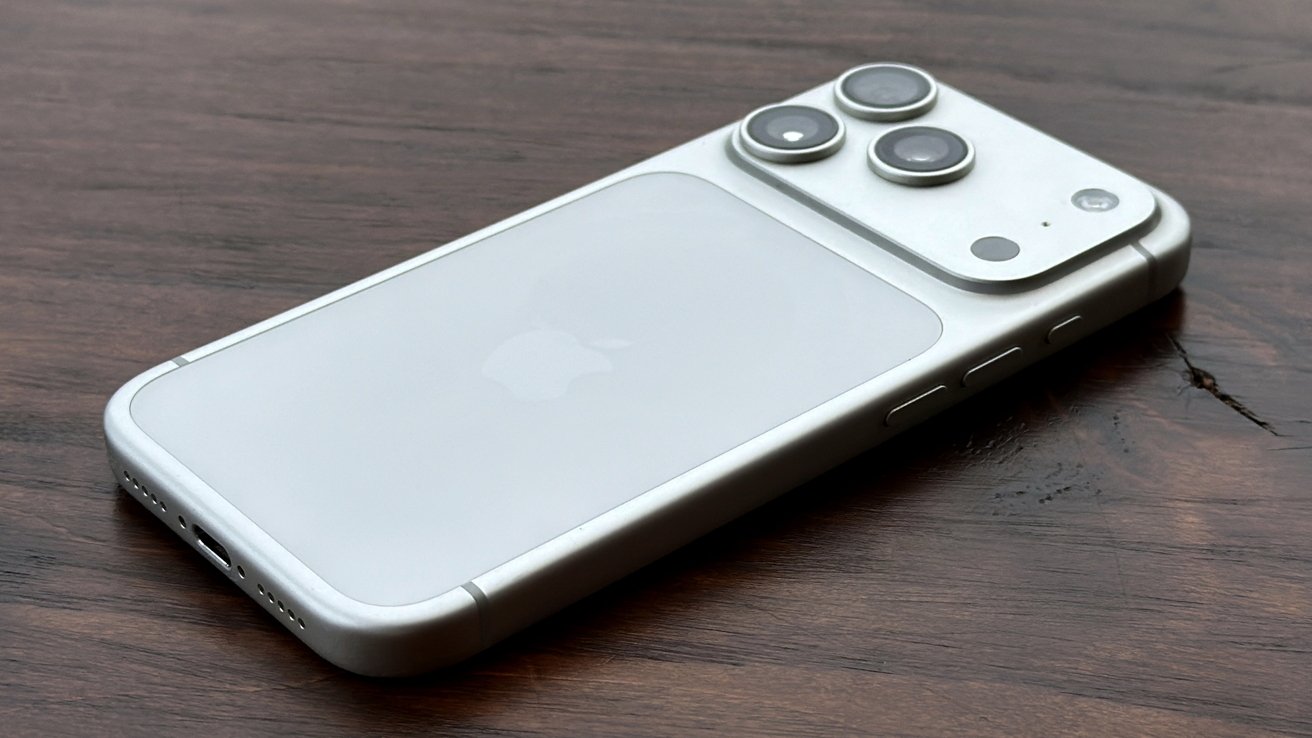
The all-glass iPhone Pro model expected in 2027 was rumored to have been canceled, but another report now suggests it is proceeding as planned.
A financial analyst firm, Jefferies, suggested the 2027 iPhone would no longer get an all-glass model. Another analyst has stepped in to suggest otherwise.
According to a report from Bloomberg Apple’s all-glass iPhone Pro expected in 2027 was still moving forward. The Jefferies report suggested that there was a low yield, and the new report counters that.
Apple is expected to reveal an all-glass iPhone 20 or iPhone 19, depending on the naming convention chosen, in September 2027. The iPhone 18 lineup hasn’t been revealed yet, but that won’t stop the rumor mill from looking ahead.
Advertisement
The all-glass iPhone 20 Pro
Okay, it won’t be “all” glass, as there still has to be a frame, motherboard, and other components, but you get the idea. The glass-focused model will have glass that curves around the edges and be supported only by a metal band in the middle.
Rumors have suggested the glass design is meant to be a physical representation of the software’s move to Liquid Glass. The latest report suggests that Apple wanted to use even more glass, but scrapped that concept early on.
Perhaps the Jefferies report had a half-truth: the 20th-anniversary iPhone with maximized glass usage was canned. However, the redesign itself wasn’t, it was just toned down.
When the iPhone X debuted in 2017, it was a significant design departure from the previous long iPhones with a Home Button. The design hasn’t shifted significantly since with the exception of moving to the Dynamic Island and going from camera bump to camera plateau.
Advertisement
The 2027 iPhone Pro models wouldn’t see such significant schedule changes this late into development, the report suggests. As Apple generally locks in a design a year out from the September reveal.
What just happened? Bill Swearingen’s noRecognition project is testing whether computer-generated patterns can interfere with software used to identify people, vehicles, and other objects on surveillance cameras. The project received its first public test Friday at the Def Con cybersecurity conference in Las Vegas. Swearingen worked with Donut Media to cover a 2009 Toyota Yaris with one of his patterns and drive it past a Flock camera. “We proved it was effective,” Swearingen, a cybersecurity professional and founder of SIXCYBER, told TechCrunch.
Donut Media plans to release video of the test in the coming weeks.
The pattern does not stop a camera from recording. Instead, it is designed to prevent the software connected to the camera from recognizing what it sees. A person or car wearing the pattern would still appear in the footage, but the detection system may not flag it as a person or vehicle.
That is the central idea behind noRecognition. Swearingen wants to make it harder for automated camera systems to track people in public spaces. He said the project is intended to give people a way to “opt out of being tracked.”
Advertisement
“Privacy is a fundamental right,” Swearingen said.
Swearingen has spent the past year building and testing the system from his home in Kansas City. He said he has run about 31 million tests so far. The work began as a small test lab aimed at defeating individual open-source object-detection algorithms. It later evolved into a reinforcement learning model that can generate and improve patterns on its own.
He described the process as teaching the model “how to paint.”
The model tests a pattern against camera-detection software. If the software can still identify the object covered by the pattern, the system adjusts it and tries again. Over time, it learns which visual elements are more likely to confuse the algorithms.
Advertisement
Swearingen said the model has produced patterns that can defeat all 11 open-source detection algorithms he tested. Those include software used in systems associated with Flock license plate readers, Axon body cameras, and Clearview AI. He said the model now produces new patterns every minute, adding that each unsuccessful test gives it more data and allows it to generate more effective patterns over time.
The technology falls into a category often called adversarial machine learning. It relies on the fact that computer-vision systems do not interpret images the same way people do. A pattern that looks like an unusual design to a person may cause a detection model to misclassify an object or fail to identify it altogether.
The approach differs from efforts to physically block cameras. noRecognition is not designed to hide someone from view or interfere with the camera itself. Instead, it targets the software layer that processes video, reads license plates, and identifies faces or objects.
That software has become a standard feature of many camera networks. Law enforcement agencies use it to search footage and identify vehicles or people of interest. Private companies and local governments also use automated detection tools across parking lots, streets, and other public places.
Advertisement
These systems can process far more video than a person could review manually. But they have also drawn scrutiny over errors and the consequences of inaccurate matches. Swearingen said his concerns about the spread of surveillance cameras helped motivate the project.
He said he noticed the density of cameras in his hometown of Kansas City and began thinking about how difficult it would be to avoid automated tracking. He also said he felt uneasy about attending a protest last year because of the possibility that cameras could track participants.
Artists and clothing makers have previously tried to develop designs that confuse facial-recognition systems. Swearingen said that work helped demonstrate that such methods were possible. His project focuses on using a model to create and refine patterns at a much larger scale.
noRecognition is also running a crowdfunding campaign for clothing printed with the patterns, including T-shirts and hoodies. Swearingen said vehicle skins could follow. He said the goal is to make the patterns large and clear enough to work at a distance without making the clothing impractical to wear or the skins impractical to use.
Advertisement
He is keeping his strongest patterns private for now, saying he does not want camera companies to quickly develop defenses against them.
Facepalm: Microsoft has confirmed that it jumped the gun by rolling out a new OneDrive Photos app to millions of Windows 11 PCs earlier than intended. The app was automatically installed on client and enterprise computers without user permission, prompting complaints from users who don’t use OneDrive to store their photos.
In an X post, Microsoft’s EVP of Apps and Agents, Jeff Teper, noted that OneDrive Photos is an incubation project that was meant to be tested with select users but was mistakenly pushed to more devices than intended. He confirmed that the issue will be resolved in a future update, suggesting that the app will be removed from devices that were not originally supposed to be included in the test.
Teper added that Microsoft will “always” offer users the option to use local storage instead of OneDrive for storing their photos and videos.
Despite Teper’s assurance, some users are livid that the unwanted app cannot even be uninstalled without removing the main OneDrive app. Some social media users have also questioned the rationale behind creating a web-based app instead of a native Windows application, arguing that it makes the software unnecessarily resource-intensive.
Advertisement
A report from Windows Central appears to confirm that the OneDrive Photos app is extremely memory-intensive and not very responsive, souring the experience even for OneDrive users.
It is worth noting that OneDrive Photos is designed exclusively for consumer PCs and is meant to be installed through the OneDrive background sync client without user intervention. However, it was also rolled out to enterprise devices, upsetting IT admins.
Windows Latest adds that the new app has system-wide access to all media files, even when users are not signed into a Microsoft account. It also reportedly asks for permission to scan faces in photos, although Microsoft says that the data will not be shared with third parties. Users can configure the settings to prevent the app from scanning specific files and folders.
Despite the controversy surrounding the OneDrive Photos app, Microsoft is working on the Windows 11 26H2 update, which is scheduled for release this October. It will ship as an enablement package on the same “Germanium” platform that underpins 24H2 and 25H2, with most of the new features aimed at power users and IT admins rather than mainstream consumers.



-SOURCE-Kat-Merck.jpg)



































































You must be logged in to post a comment Login