Connect with us
DAPA Banner

Tech

5 Cars That Looked Totally Different Just One Generation Ago

Published

on


There’s something to be said about brand recognition — being able to tell what one car is from another at a glance. Companies have their trademark “looks” befitting certain models, sure — Jeep Wranglers are always boxy 4x4s with the seven-slotted grille and Ford Mustangs have the triple-taillight and a fastback coupe body shape. And these trends generally carry on from one generation to the next — a modern Wrangler still bears a superficial resemblance to the old TJ Wrangler from the 1990s, for instance. But every now and then, you get manufacturers trying something new. Whether it’s reusing a name on a brand-new platform or just a total ground-up redesign, sometimes you’re simply baffled to see the same logo on two seemingly completely different cars.

This is actually way more common than one might think. Take the Dodge Challenger, for instance, which went from a pony car in the early 1970s to a rebadged Mitsubishi Galant of all things. There are a few instances of this practice rearing its head, generally when automakers are chasing trends or undergoing large platform changes. An example of the latter is the Dodge Ram, which went from a Spartan, functional pickup in the 1980s to arguably the first modern production pickup truck in 1994.

Advertisement

We don’t see it as often today, with designs focusing more on minimalism and safety. But there are a few newer cars out there that will make you go, “Wait, it looked like that just one generation ago?” Let’s dive in and have a look.

Advertisement

Chrysler 300

What’s the first thought that comes to your mind when you think of the name “Chrysler 300?” Because the answer is generally all over the place; these cars (sadly now discontinued) once began life as midsize 1950s luxury sedans. Then they evolved into 1960s luxury sedans, then 1970s luxury sedans, and so on — the trend ran right up to their ultimate demise. But while these cars never changed their intended purpose, they most certainly changed their looks. Because the modern 2005-2023 Chrysler 300’s father is actually just a fancier Sebring — identical body shape and all, to the point where you’d be forgiven for mistaking the two without the presence of the badge.

Okay, granted, that badge reads “300M,” but it’s a Chrysler 300 — a car which, like its predecessors, prides itself on being refined and luxurious. Although you won’t find a Hemi anywhere near this car (unless you’re a lunatic who swapped in a remarkably inexpensive Hemi crate engine). Instead, you’ll find that classic Pentastar V6 in 3.5L form married to a front-wheel drive setup, all housed underneath a remarkably well-rounded body shell. It was Chrysler’s thing at the time; we all know that look from the Town and Country minivans.

The mid-2000s marked a pivotal period for Chrysler (and Mopar as a whole), with the entire range undergoing massive redesigns. These included the debuts of the new Jeep Wrangler JK in 2007, the Dodge Magnum in 2005, and many others. For the 300, it meant going from FWD budget luxury to intimidating, Hemi-powered RWD aspiration piece, a move that became so iconic that the car remained nearly unchanged right up until it was discontinued.

Advertisement

Chevrolet Corvette

This one is also fairly obvious when you look at it, especially considering this was the first time we’ve ever seen a mid-engine Corvette in dealerships. It’s a car that has arguably marred a silhouette that was well over 50 years old, with the classic front-engine, rear-drive grand tourer coupe layout solidifying in 1963 with the Stingray fastback. Those classic lines of the long hood and sweeping rear end met their demise with Chevrolet’s modern rendition, for better or worse, marking a shift in design philosophy never before seen in the lineup — going from a grand touring sports car to supercar.

Typically the Corvette filled the niche of the former: a sports car. It was less money, less hassle, more practical, and generally more common than a lot of other high-performance vehicles of its era. Even today, you’re more likely to see a Corvette cruising down the highway than, for instance, a Lamborghini that’s more than double the cost (depending on where you live). But modern “fast cars” have a new image attached to them; think of modern Ferraris, the Audi R8, and so on. These are cars which typically command six-figure sums and hit 60 in three seconds or less. But not the Corvette (at least the base model).

The original design was revolutionary for the time, being marketed as “America’s First Sports Car.” And it’s a classic template, one which could easily continue into the future. But GM chose to depart from the “sports car” label, leaving us with what is ostensibly America’s budget supercar. Recognizable in name and performance, but hardly a trace when it comes to aesthetic presentation.

Advertisement

Dodge Charger

This was probably one of the most startling and controversial redesigns of the past couple years, with the Charger going from a pure-bred modern muscle car to a two-door EV (with the Hurricane turbocharged straight six available in model year 2026 onwards). Some might call it blasphemous to release a muscle car with no V8 option available for the masses, but whatever you think about the powertrain, it still wears the Charger badge — and looks almost nothing like its predecessor, with only a passing resemblance in four-door form.

Advertisement

Granted, the Charger was never exactly a svelte sports car in terms of its looks (as you can see in each generation). It was more of a brick on wheels than anything. The original Charger was a full-size sleeper coupe, looking more like a salesman’s car from the outside but potentially hiding a massive engine under the hood. The second-gen is what we generally think of when we hear of a classic Charger, but they both share certain key traits like that iconic, stone-faced grille and fastback roof. The modern Charger takes these elements and reimagines them in a 2020s context, returning the two-door configuration, flat nose, and vintage roof line. It’s a retro-flavored design, for sure, arguably returning the Charger name to a more traditional aesthetic.

Redesigns rarely hit without backlash, as we see fairly often in website facelifts for instance. And the new Charger was met with tons of it, though that generally revolved around its powertrain, not its aesthetics. The actual look of the car is, in fact, far more in-line with vintage Charger design philosophy, which may not be to everyone’s taste. But it’s certainly more faithful than the 2000s-era four-door sedan look, which is arguably its own unique thing.

Advertisement

Toyota Supra

We have yet another sports car entering the chat, this time a Japanese-German chimera born from a BMW — and yes, the Supra has a BMW engine. The B58, to be specific, the same engine as the BMW Z4. Of course, the body is quite different from the Z4, though that doesn’t stop people from calling the MK5 Toyota Supra a BMW. It’s yet another controversial car in this regard, but aside from the question of whether or not it’s a “real” Toyota, one fact still remains consistent: This thing looks nothing like the MK4 A80 Supra, from just about any angle.

One might suggest that such a design departure is obvious enough. After all, the A80 itself looks almost nothing like its predecessor either, trading the boxy pop-up headlights look for that timeless rounded shape. Regardless of what you think about the car (it’s arguably seriously overrated for what it provides), that body shape is instantly recognizable and looks correct even in modern traffic. By contrast, the MK5 is certainly not a bad-looking car in its own right, with exceptionally sporty design language. That said, good luck finding commonality, aside from the 2-door fastback styling.

By contrast, the MK5 Supra is a car with a contemporary aggressive fascia, plenty of vents, a svelte body with bold accents, and a long nose hiding that straight six. The FT-1 concept it was based on was well-received for its looks, with the production Supra basically being a watered-down version. Is it bad? Absolutely not — neither it nor its ancestor were. But you really have to stretch the definition of “similar” to marry this car’s aesthetic language to the MK4’s.

Advertisement

Chevrolet Blazer

Typically when a car totally jumps from one segment to another, you get some sort of differentiation in the name — Ford Mustang Mach-E or Mitsubishi Eclipse Cross, for example. Other times it’s a revival of a far older nameplate banking on recognition, such as the Ford Capri or Maverick. And then there’s this thing. The Chevrolet Blazer at a glance looks like it fills a similar role to the previous S-10 Blazer. That car was produced until the mid-2000s in North America, supplanted by the TrailBlazer in the midsize segment. Neither model bear even a passing resemblance to the modern crossover, however, either in form or function.

Advertisement

The S-10 and TrailBlazer alike were both unquestionably SUVs, with the S-10 in particular being more off-road oriented with its traditional high ground clearance, optional full-time 4WD, and features on-par with competitors like the Jeep Grand Cherokee. Additionally, Chevrolet even offered it in performance truck trim, with street-oriented option packages like the Blazer Xtreme. Its versatile SUV platform suited many roles well for its day, but its design is certainly dated on modern roads.

Chevrolet’s answer wasn’t to remake it as an SUV but rather as a crossover, debuting in 2019 to mixed reception (putting it mildly). The design proved controversial with the Blazer crowd, expecting a plucky, utilitarian 4×4 to rival the Bronco and getting a decidedly road-oriented unibody instead. It is almost nothing like the Blazers of old, only sharing the rough physical footprint they take up on the road. The Blazer is essentially the reverse of the Chrysler 300, going from a RWD or 4×4 truck to a FWD or AWD midsize that blazes rental fleets nationwide.

Advertisement


Source link

Continue Reading
Click to comment

You must be logged in to post a comment Login

Leave a Reply

Tech

NUR Headphones Debut at AXPONA 2026: Italian Craft Meets High-End Sound in Mimic Audio Showcase

Published

on

Among the global brands at AXPONA 2026, Mimic Audio did not have the biggest booth or the loudest presence, but it ended up being one of the more worthwhile stops in the EarGear section. The Chicago dealer, owned by TJ Cook, was positioned between Campfire Audio and Austrian Audio and only a few steps from the always swamped ZMF booth, which made it easy to overlook in the rush. That would have been a mistake. Mimic first caught my attention before the show when it supplied the AudioByte components for the Von Schweikert pre-event, paired with NUR Audio’s Harmonia.

My initial listen there was promising, but with the Von Schweikert VR.thrity or Ultra 7 commanding the room and the Harmonia’s open-back design letting all of that noise pour in, it was impossible to draw more than a few early conclusions. That made a return visit at AXPONA essential, where I sat down with all three NUR models on display for a longer listen and a better sense of what this Italian headphone brand is actually bringing to the table.

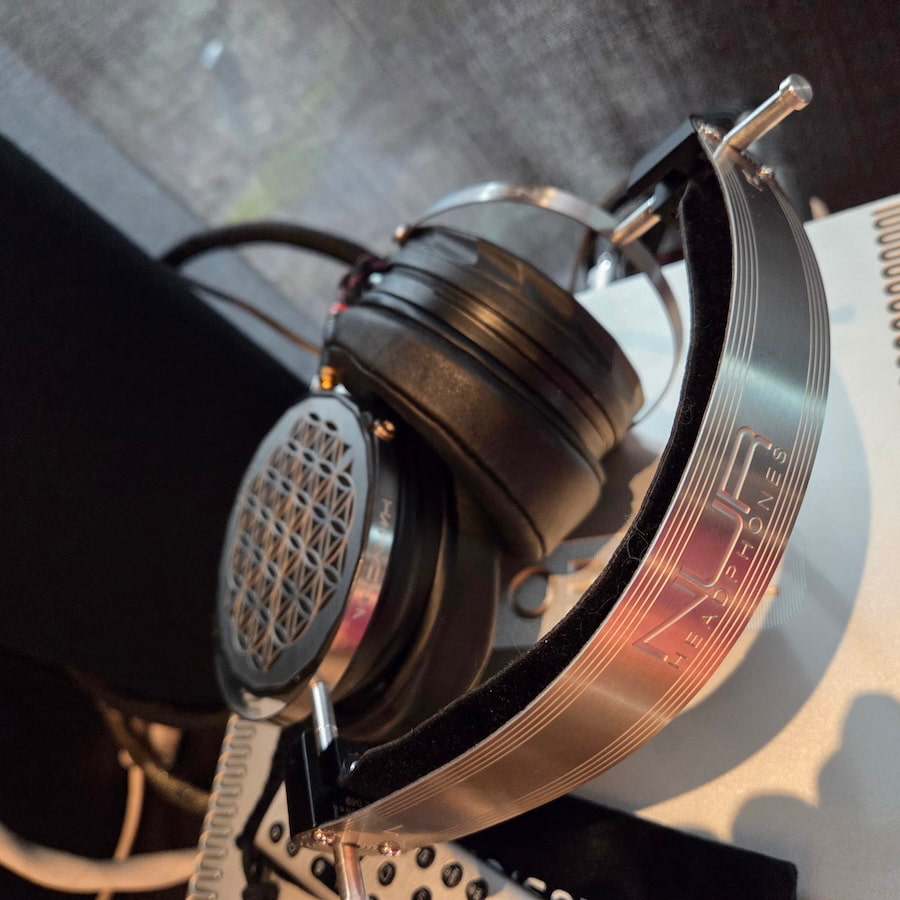
nur-harmonia-headphones-side

NUR Audio Headphones: Italian Design, Planar Magnetic Ambitions

NUR Audio is not some legacy brand trading on decades of goodwill. It was founded just northeast of Rome by Angelo De Mattia and feels very much like a passion project finding its footing in a crowded category. Right now, the Harmonia open back is the only model you can actually buy, priced at $3,750, while the Shanti open-back reference and Miah closed back are still listed as coming soon with pricing to be determined. That split matters because NUR is already drawing a line between audiences. The Harmonia is built for listening at home, while the Shanti and Miah mark the start of a professional series aimed at engineers who need precision more than romance.

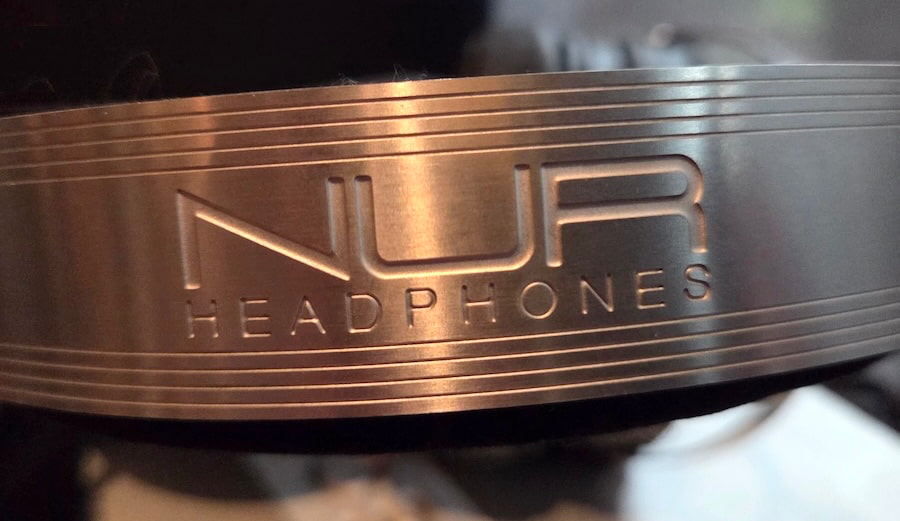
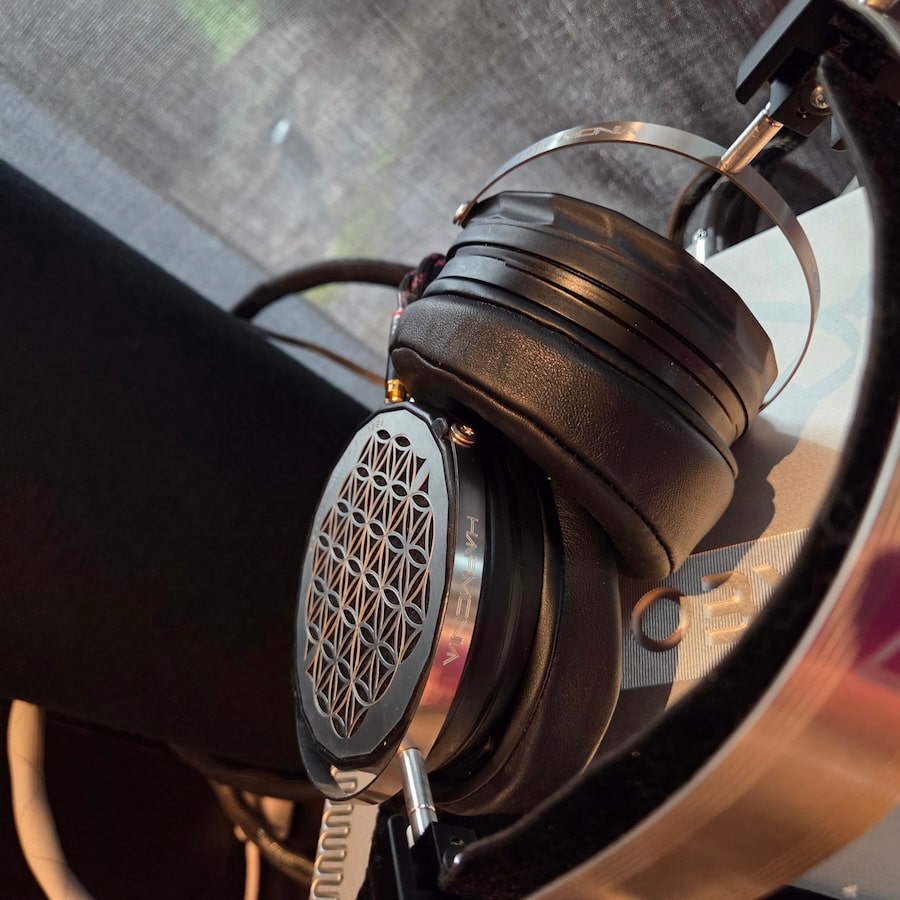
The two open-back designs share a lot of DNA. Similar materials, similar construction, and very similar planar magnetic drivers. The Miah goes a different route with a dynamic driver inside a closed back design, which should make it the more practical option for studio work or less than ideal environments. All three, however, are physically imposing. Think Audeze LCD-4 sized ear cups and the kind of weight that can turn a long session into a short one if the ergonomics are off. Early impressions suggest NUR understands the problem. The suspension system is well padded, the clamp feels reasonable, and the weight distribution does not immediately raise red flags.

Advertisement
nur-harmonia-headphones-angle-headband

The real test, as always, will be whether that comfort holds up after a few hours rather than a few tracks.

Using the AudioByte stack (more on that soon), I was able to spend time with all three NUR models and come away with a clearer sense of how each is voiced. With both the Shanti and Miah still in prototype form, nothing here should be considered final, but the direction is already apparent.

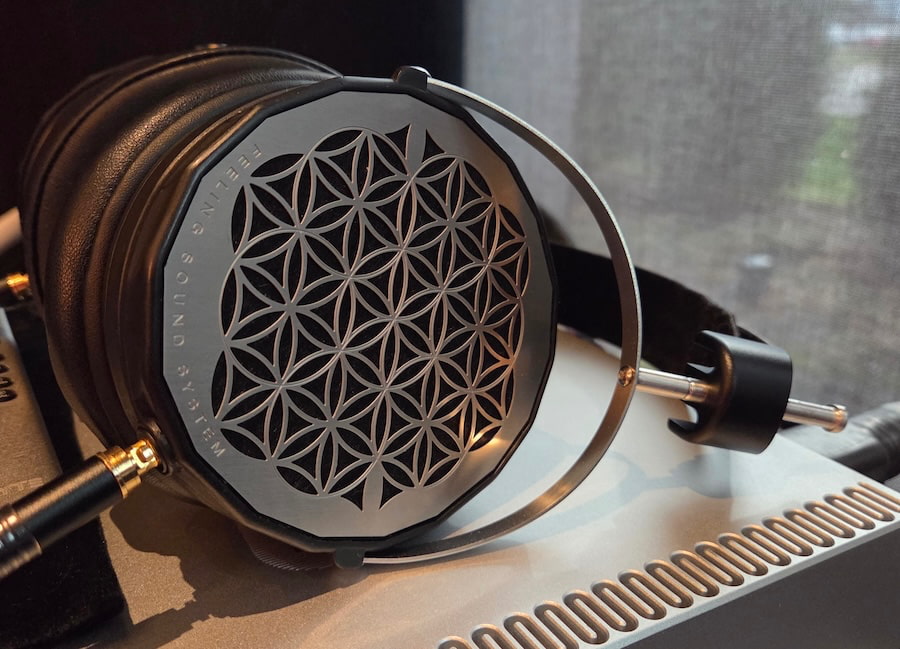
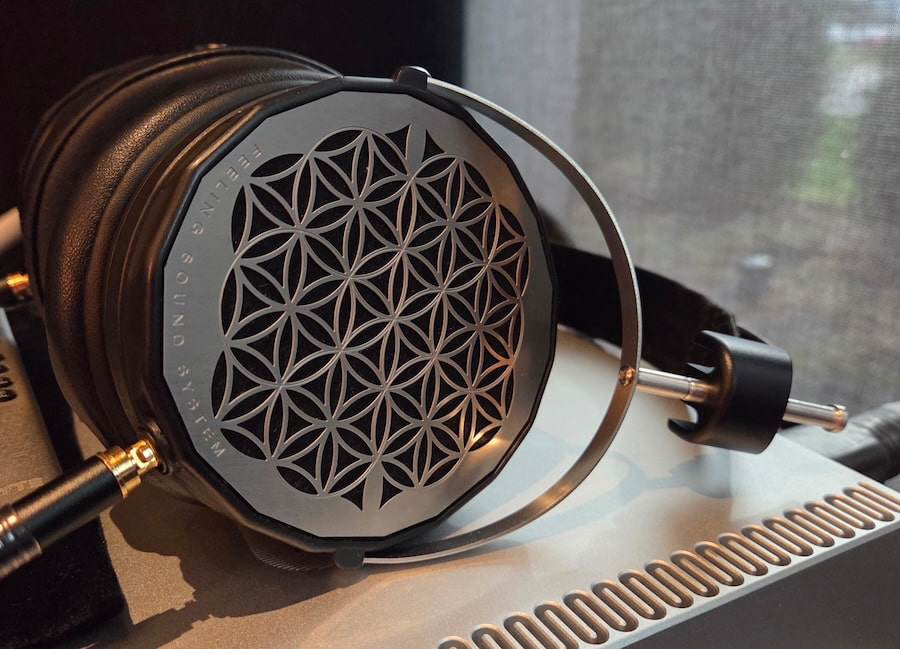
The NUR Harmonia is a large-format open-back planar magnetic headphone built around a 105mm PEEK diaphragm and a double-sided toroidal magnet system using high-grade N52 neodymium magnets. That combination is designed to deliver fast transient response, low distortion, and wide bandwidth, which is reflected in the rated 8Hz to 55kHz frequency response.

nur-harmonia-headband

With a 48 ohm impedance and 107 dB/mW sensitivity, it should be relatively easy to drive for a planar of this size, though it will still benefit from a capable amplifier. The dual 3.5mm cup connections allow for balanced operation out of the box, with either 4.4mm or XLR cables included, along with a 6.35mm adapter for single-ended use. At 630 grams, it is firmly in the heavyweight category, making the suspension system and overall ergonomics critical for longer listening sessions.

Advertisement

The Harmonia leans toward a clean, controlled presentation with a touch of warmth that you don’t always get from planar magnetic designs. Bass has solid presence without sounding pushed, the midrange comes across as slightly lush with very good detail retrieval, and the treble extends well past what my ears are willing to admit at this point. It strikes a balance that feels intentional rather than trying to impress on first listen.

The Shanti prototype shifts gears toward a more analytical presentation. It is crisper, more forward in its detail, and less forgiving overall. The name was a bit of a clue, but the tuning confirms it. This feels like the model aimed squarely at those who want to dissect recordings rather than relax into them.

The Miah, as the closed-back option, moves in a different direction. It is warmer and a bit thicker sounding than the two open-back models, which is not surprising given the design. Detail is still present across most of the range, but the top end has slightly less extension and sparkle. That trade-off is typical for closed-back headphones, especially ones that appear to be targeting studio use rather than chasing an artificially boosted sense of air.

Advertisement. Scroll to continue reading.
Advertisement
nur-harmonia-headphones-angle

The Bottom Line

I came away impressed enough to spend a good amount of time talking with TJ Cook about getting all three NUR models in for proper review once they hit the market. That says more than any quick show impression. AXPONA has no shortage of big names pulling crowds, and it is easy to fall into the trap of chasing logos instead of sound. The problem is that you end up walking right past booths like Mimic Audio and missing some of the more interesting listens of the weekend.

The NUR lineup, paired with the AudioByte components, proved to be far more than a curiosity. It was one of those setups that rewarded anyone willing to sit down, block out the noise, and actually listen. Not perfect, not finished in two cases, but clearly headed somewhere worth paying attention to.

Expect a deeper dive once review samples land. In the meantime, NUR Audio is a brand to keep on your radar, and if you happen to be in the Chicago area, Mimic Audio is absolutely worth a visit.

Where to buy: $3,750 at Mimic Audio

Source link

Advertisement
Continue Reading

Tech

Head(amame) Debuts 3D Printed Sustainable Headphones at AXPONA 2026 You Can Build Yourself

Published

on

Most audio brands guard their designs like trade secrets, but Head(amame) showed up at AXPONA 2026 and did the exact opposite. The Vancouver-based company is handing over schematics, specs, and build plans for its 3D printed headphones, inviting users to print and assemble their own at home with a parts kit for what cannot be fabricated on a desktop printer. While 3D printed speakers have been circulating in DIY circles for years, this is the first time I have seen the concept executed this openly and completely in the headphone space.

Morgan Andreychuk explained that Head(amame) gives away the files to 3D print the cups, yoke, and headband whether you buy the finished headphone or build it yourself. The price difference is a big part of the appeal: the completed Head(amame) Pro starts at $369 for Kickstarter backers, while the Head(amame) parts kit sells for $130 through the company’s site. That means buyers can pay more for a finished product with QC and warranty coverage, or spend a lot less on the kit and print most of the structure themselves.

Either way, the open design is the real hook. Owners have the files needed to recreate most of the structural parts if something breaks, wears out, or if they want to tweak the design later. The tradeoff is straightforward: choose the DIY route and you give up the company’s finished-product QC process and warranty, but not its support. Andreychuk and the team were clearly willing to discuss materials, printing options, and possible improvements, which makes this feel less like a sealed consumer product and more like a headphone platform built for people who actually want to tinker.

Head(amame) Pro 3D Printed Headphones

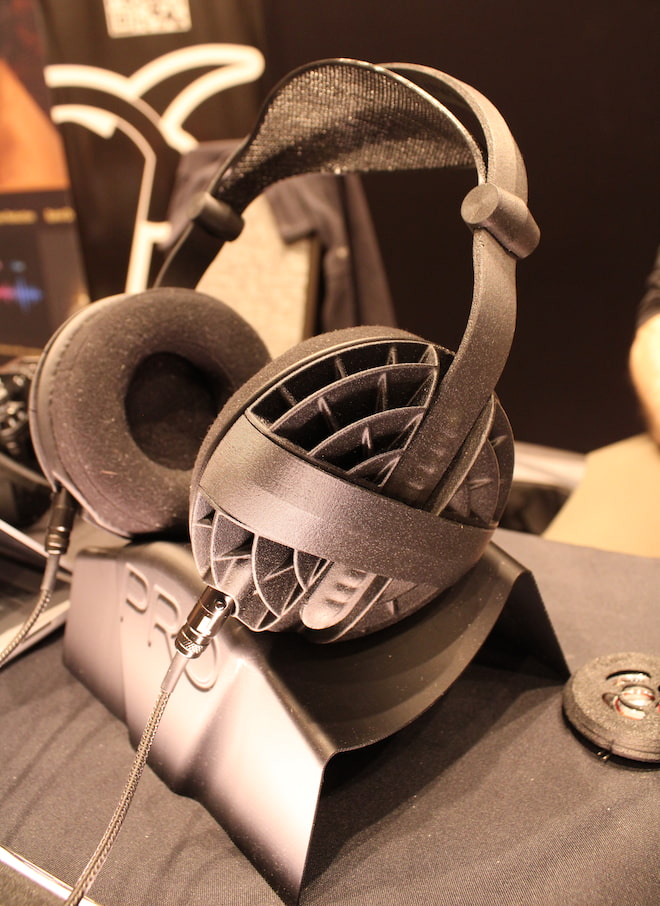
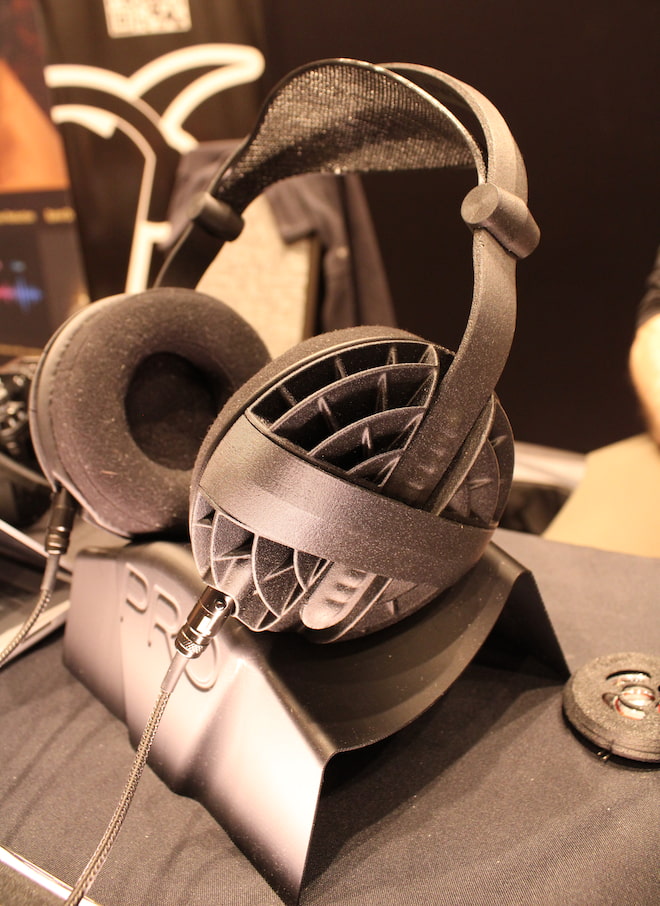
The Head(amame) Pro uses a semi closed back design that will feel familiar in concept to the Fostex T50RP, even if it looks nothing like it. The structure is unmistakably its own. The headband and yoke form a plus shaped frame that dominates the face of the cup, while a series of radial baffles wrap around the perimeter, giving it an almost floral appearance. You do not see the driver from the rear, but each “petal” hides a vent that becomes visible from the side.

Advertisement
Head(amame) Pro Headphones at AXPONA 2026

Even the cable placement refuses to follow convention, mounted vertically on the rear face but closer to the front. My first instinct was that I had them on backwards. Morgan acknowledged that clearer left and right markings are still a work in progress.

The first real surprise comes when you pick them up. For something this large, the Head(amame) Pro is extremely light. That is not by accident. The goal is to go even further, with plans to swap a brass pin for aluminum and replace another internal component with carbon fiber. It is already more than 100 grams lighter than the AirPods Max and still trending downward.

That kind of weight reduction changes the equation. A non padded headband might raise eyebrows on paper, but here it is not the liability you would expect because there simply is not enough mass to make it one.

The Head(amame) Pro uses dynamic drivers with a glass diaphragm intended to improve speed and clarity, but the platform is not locked down. Builders can experiment with a range of 40 mm dynamic drivers as long as the specifications line up, which reinforces the open, modular nature of the design. Head(amame) shared a booth with Capra Audio, who assisted with tuning the Pro.

That collaboration came after some disagreement over the voicing of an earlier model, prompting Morgan to bring Capra into the process for this revision. Given Capra Audio’s presence in the DIY space with aftermarket parts and headbands, the partnership makes sense and will likely resonate with the community this product is aimed at.

Advertisement

Sound, at least in that environment, leaned close to reference with a slight roll off in the lowest octaves and a bit of lift up top. It is an easy signature to listen to and, more importantly, one that invites experimentation. That matters here because the entire premise is that you are not stuck with a fixed outcome. The reality of a busy show floor limits how far I am willing to go with sonic conclusions, but the early impression was positive enough to warrant a deeper look. If I can get a set printed for review, there is clearly more to unpack.

As a concept, Head(amame) is doing something few others are willing to try. It is a more sustainable approach than most full size headphones, and at roughly 280 grams with plans to go even lighter, it is also one of the more comfortable options for listeners who usually tap out early because of weight.

Advertisement. Scroll to continue reading.

Where to order: $589 $399 at Head(amame)

Advertisement

Source link

Continue Reading

Tech

Nvidia could bring back the 12GB RTX 3060 as supply issues disrupt GPU roadmap

Published

on


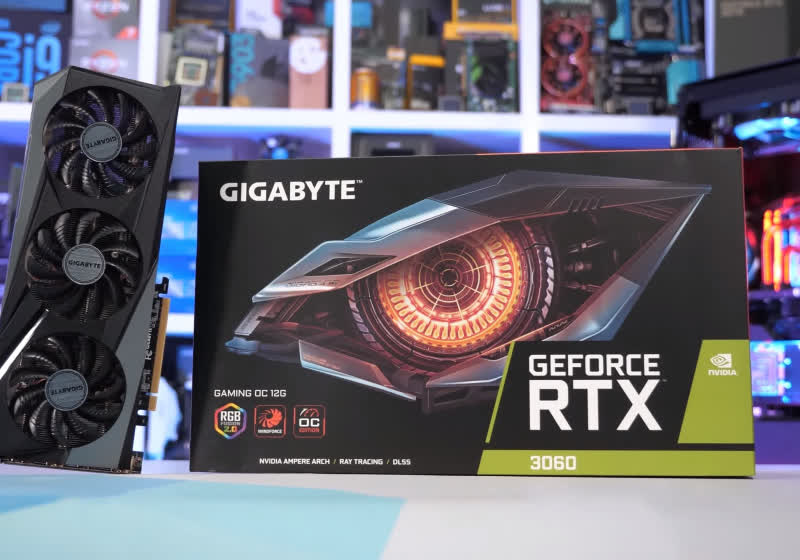
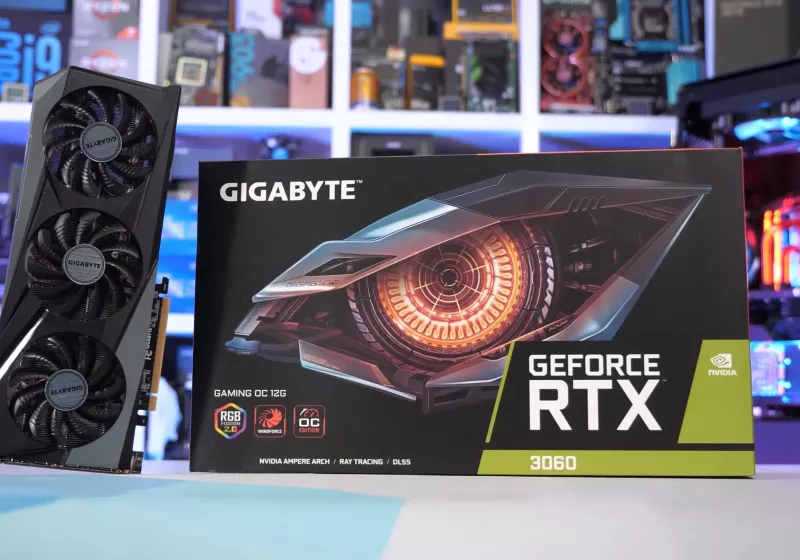
Prominent leaker MEGAsizeGPU recently claimed that a long-rumored version of Nvidia’s RTX 5050 with increased memory capacity has been delayed and might never see release. Meanwhile, the still-popular RTX 3060, originally expected to have returned to the market by now, could instead fill the gap in the release schedule in June.
Read Entire Article
Source link

Continue Reading

Tech

Brave Browser Introduces ‘Origin’, a Pay-Once ‘Minimalist’ Browser

Published

on

The Brave browser “has introduced Brave Origin, a stripped-down version of its browser that removes built-in monetization features like Rewards and other extras tied to its business model,” writes Slashdot reader BrianFagioli

The stripped-down browser is available either as a separate browser download or as an upgrade to the existing Brave install, unlocked through a one-time purchase that can be activated across multiple devices. The idea is simple on paper: pay once, and you get a cleaner, more minimal browsing experience without the add-ons that fund Brave’s ecosystem. What makes the move unusual is the pricing model itself. While paying to support a browser is not controversial, charging users specifically to remove features raises questions about whether those additions are seen as value or clutter.

The situation gets even stranger on Linux, where Brave Origin is reportedly available at no cost, creating an uneven experience across platforms and leaving some users wondering why they are being asked to pay for something others get for free.

Source link

Advertisement
Continue Reading

Tech

Quordle hints and answers for Monday, April 20 (game #1547)

Published

on

Looking for a different day?

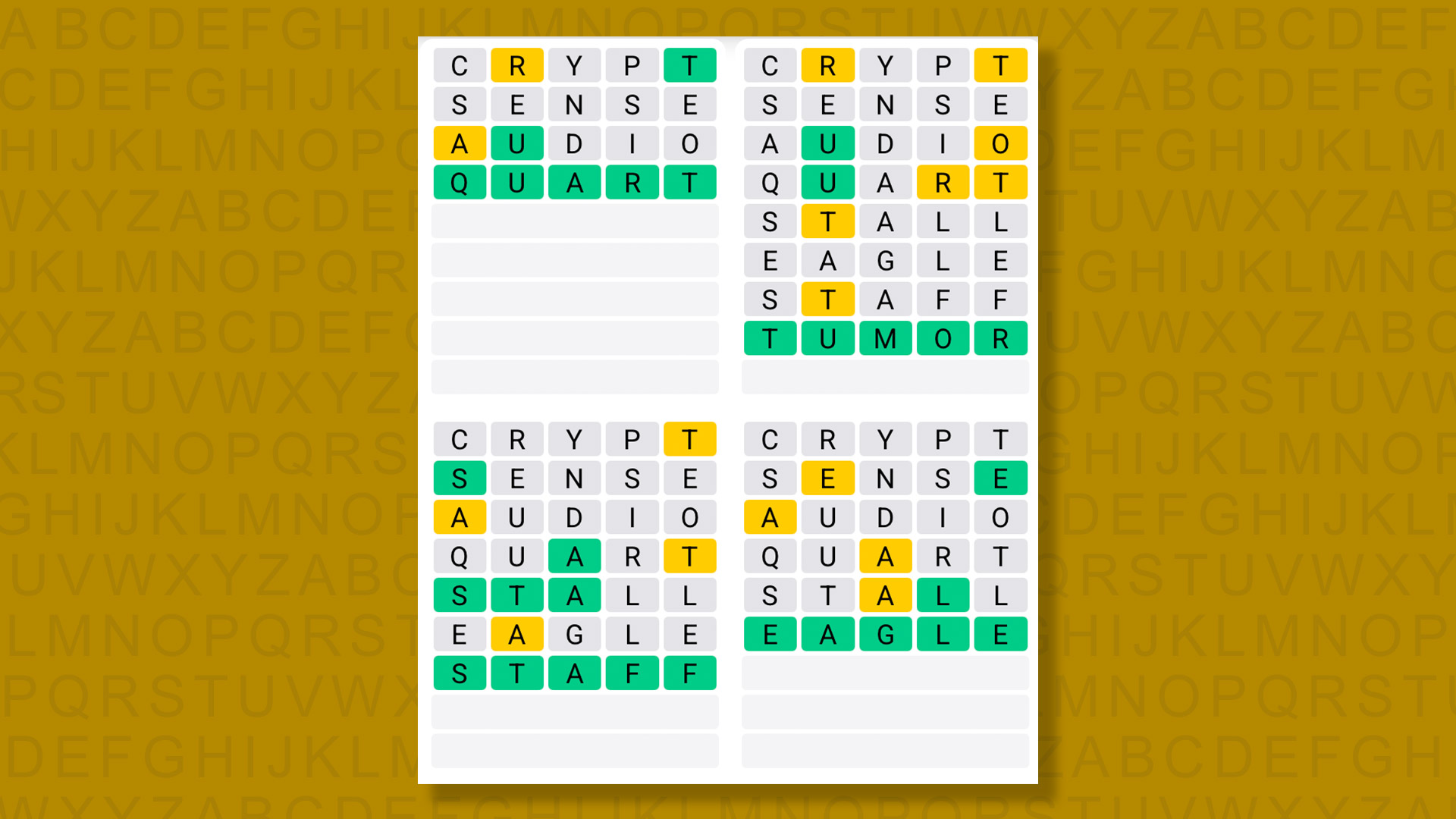
A new Quordle puzzle appears at midnight each day for your time zone – which means that some people are always playing ‘today’s game’ while others are playing ‘yesterday’s’. If you’re looking for Sunday’s puzzle instead then click here: Quordle hints and answers for Sunday, April 19 (game #1546).

Quordle was one of the original Wordle alternatives and is still going strong now more than 1,400 games later. It offers a genuine challenge, though, so read on if you need some Quordle hints today – or scroll down further for the answers.

Advertisement

Source link

Advertisement
Continue Reading

Tech

NYT Strands hints and answers for Monday, April 20 (game #778)

Published

on

Looking for a different day?

A new NYT Strands puzzle appears at midnight each day for your time zone – which means that some people are always playing ‘today’s game’ while others are playing ‘yesterday’s’. If you’re looking for Sunday’s puzzle instead then click here: NYT Strands hints and answers for Sunday, April 19 (game #777).

Strands is the NYT’s latest word game after the likes of Wordle, Spelling Bee and Connections – and it’s great fun. It can be difficult, though, so read on for my Strands hints.

Advertisement

Source link

Advertisement
Continue Reading

Tech

‘No more excuses’ as EU launches free age verification app

Published

on

European Commission President Ursula von der Leyen says the app is technically ready and will be available to citizens soon.

The European Commission yesterday (15 April) unveiled a digital age verification app aimed at shielding children from harmful content online, with European Commission president Ursula von der Leyen declaring there are “no more excuses” for platforms that fail to act.

Announcing the tool in Brussels on Wednesday (15 April), von der Leyen painted a stark picture of the risks children face in the digital world. “One child in six is bullied online. One child in eight is bullying another child online,” she said, warning that social media platforms use “highly addictive designs” that damage young minds and leave children vulnerable to predators.

Users set up the app using a passport or ID card, after which they can confirm their age anonymously. The free app, which the Commission says is technically ready and will soon be available to citizens, allows users to verify their age when accessing online platforms “without revealing any other personal data”, according to von der Leyen. “Users cannot be tracked,” von der Leyen stressed, adding that the app is fully open source and compatible with any device.

Advertisement

Drawing a comparison with the EU’s Covid certificate – adopted in record time and used across 78 countries – von der Leyen said the age verification tool follows “the same principles, the same model.” Seven member states, including France, Italy, Spain and Ireland, are already planning to integrate the app into their national digital wallets.

The announcement comes ahead of the second meeting of the Commission’s Special Panel on Children’s Safety Online, which is due to deliver its recommendations by summer. Von der Leyen was unambiguous about the Commission’s direction of travel on enforcement. “Children’s rights in the European Union come before commercial interest. And we will make sure they do.”

Platforms were put on notice that voluntary compliance alone will not suffice. “We will have zero tolerance for companies that do not respect our children’s rights,” she said, adding that the Commission is “moving ahead with full speed and determination on the enforcement of our European rules”.

Don’t miss out on the knowledge you need to succeed. Sign up for the Daily Brief, Silicon Republic’s digest of need-to-know sci-tech news.

Advertisement

Source link

Continue Reading

Tech

The Mac Mini is no longer a niche product, it's local AI infrastructure

Published

on


Consumer Intelligence Research Partners estimates the Mac Mini accounted for roughly 3% of Apple’s US Mac unit sales last year. That position has shifted quickly.
Read Entire Article
Source link

Continue Reading

Tech

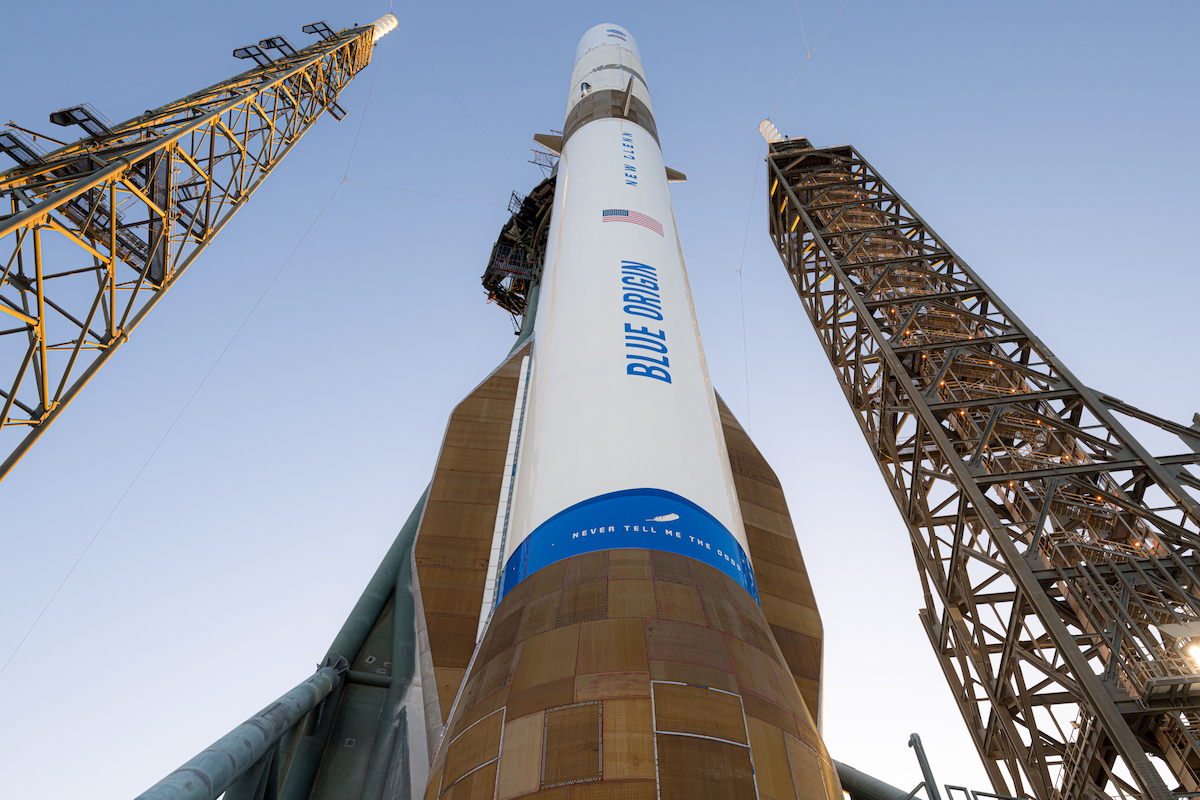
Blue Origin’s New Glenn put a customer satellite in the wrong orbit during its third launch

Published

on

Jeff Bezos’ space company Blue Origin successfully re-used one of its New Glenn rockets for the first time ever on Sunday, but the company failed at its primary mission: delivering a communications satellite to orbit for customer AST SpaceMobile.

AST SpaceMobile issued a statement Sunday afternoon that the upper stage of the New Glenn rocket placed BlueBird 7 satellite into an orbit that was “lower than planned.” The satellite successfully separated from the rocket and powered on, the company said, but the altitude is too low “to sustain operations” and will now have to be de-orbited — left to burn up in the atmosphere of Earth.

The cost of the loss of the satellite is covered by AST SpaceMobile’s insurance policy, according the company, and there are successive BlueBird satellites that will be completed in around a month. AST SpaceMobile has contracts with more than just Blue Origin, and the company said it expects to be able to launch 45 more to space by the end of 2026.

But this represents the first major failure for Blue Origin’s New Glenn program, which only made its first flight in January 2025 after more than a decade in development. This was the second mission where New Glenn carried a customer payload to space, after launching twin spacecraft bound for Mars on behalf of NASA last November. The company did not immediately respond to a request for comment.

Advertisement

The apparent failure of New Glenn’s second stage could have wider implications beyond Blue Origin’s near-term commercial ambitions. The company is pushing hard to become one of the main launch providers for NASA’s Artemis missions to the moon and beyond. The space agency — and the Trump administration — has put pressure on Blue Origin and SpaceX to be able to put landers on the moon by the end of President Donald Trump’s second term, before advancing to returning humans to the lunar surface.

Blue Origin CEO Dave Limp has even said his company “will move heaven and Earth” to help NASA get back to the moon faster.

Blue Origin recently completed testing its first version of its own lunar lander, which the company is expected to try and launch at some point this year (without any crew). Blue Origin had suggested last year that it was considering launching this lander on New Glenn’s third mission, but ultimately decided to launch the AST SpaceMobile satellite instead.

Techcrunch event

Advertisement

San Francisco, CA
|
October 13-15, 2026

The third New Glenn launch seemed to start just fine on Sunday, with the the mega-rocket lifting off at 7:35 a.m. local time from Cape Canaveral, Florida. It was the first time Blue Origin re-used a previously-flown New Glenn booster — the same one that flew during New Glenn’s second mission. Roughly 10 minutes after liftoff, the booster came back down and landed on a drone ship in the ocean, just like it had last November. Jeff Bezos even shared drone footage of the booster’s landing on X, the social media site owned by his rival Elon Musk. (Musk offered congratulations.)

Advertisement

Roughly two hours after the launch, though, Blue Origin announced in its own post that the New Glenn upper stage placed AST SpaceMobile satellite in an “off-nominal orbit.” The company has not released any more information since that post.

Blue Origin spent a long time developing New Glenn, and it has been taken as a sign of confidence in that process that the company decided to start launching commercial payloads during these early missions. By comparison, SpaceX has spent the last few years flying test versions of its massive Starship, but has stuck with using dummy payloads as it works out the rocket’s kinks.

SpaceX did lose payloads deeper into its Falcon 9 program. In 2015, on the 19th Falcon 9 mission, the rocket blew up mid-flight and lost an entire International Space Station cargo spacecraft. In 2016, a Falcon 9 exploded on the launch pad during testing, causing the loss of an internet satellite for Meta.

Source link

Advertisement
Continue Reading

Tech

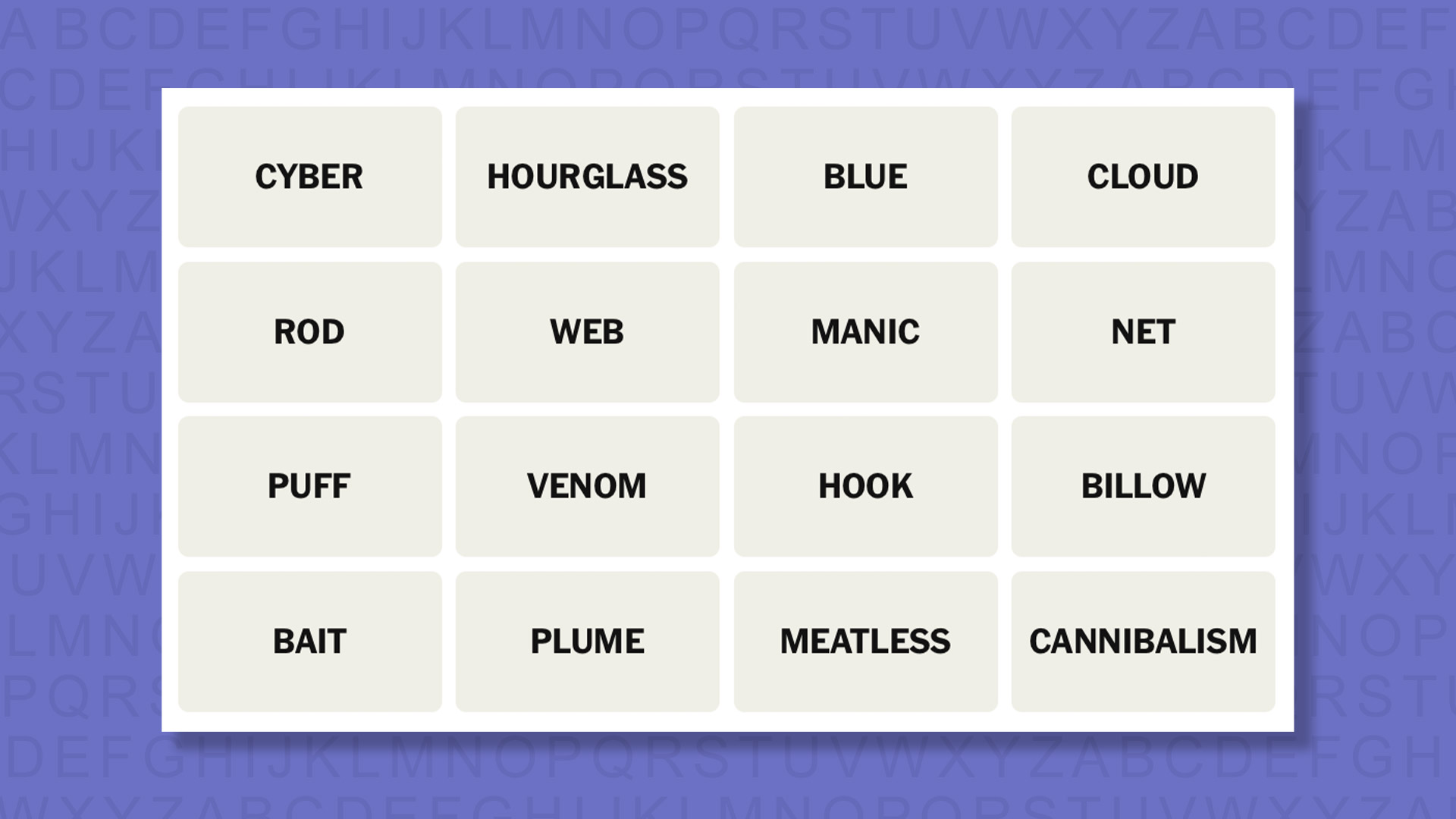
NYT Connections hints and answers for Monday, April 20 (game #1044)

Published

on

Looking for a different day?

A new NYT Connections puzzle appears at midnight each day for your time zone – which means that some people are always playing ‘today’s game’ while others are playing ‘yesterday’s’. If you’re looking for Sunday’s puzzle instead then click here: NYT Connections hints and answers for Sunday, April 19 (game #1043).

Good morning! Let’s play Connections, the NYT’s clever word game that challenges you to group answers in various categories. It can be tough, so read on if you need Connections hints.

Advertisement

Source link

Advertisement
Continue Reading

Trending

Copyright © 2025