
Connect with us
DAPA Banner
DAPA Coin
DAPA
COIN PAYMENT ASSET
PRIVACY · BLOCKDAG · HOMOMORPHIC ENCRYPTION · RUST
ElGamal Encrypted MINE DAPA
🚫 GENESIS SOLD OUT
DAPAPAY COMING

Tech

5 Discontinued Leatherman Tools That Deserve To Make A Comeback

Published

on


Leatherman is one of the biggest multi-tool brands. Fans will have their own specific preferences from the range, but Leatherman itself notes that some of its best sellers include the Wave Plus and the Arc, which boast a total of 18 and 20 different tools, respectively. Unfortunately, certain models in their lineup sometimes have to be discontinued.

This isn’t always simply about sales failure. Sometimes the market shifts or technology advances. Other times, a product was only meant to have a limited run. In fact, quite a lot of multi-tools from across the Leatherman range have been discontinued. Some of them, including the Charge Plus, the leather-sheathed Crunch, and the Juice, are immortalized by the Retired Products showcase on the Leatherman website, from which the items on this list have been chosen. 

Advertisement

There’s still a chance that certain models could make a comeback at some point in the future. Deciding which ones are worthy of that is a difficult matter, but we’d be very glad to see a new run of these Leatherman classics. Some models were chosen because they had features that wouldn’t really be offered elsewhere in Leatherman’s lineup. Others had a unique idea that didn’t quite pay off at the time, but which could make a real splash if given another chance to.

Advertisement

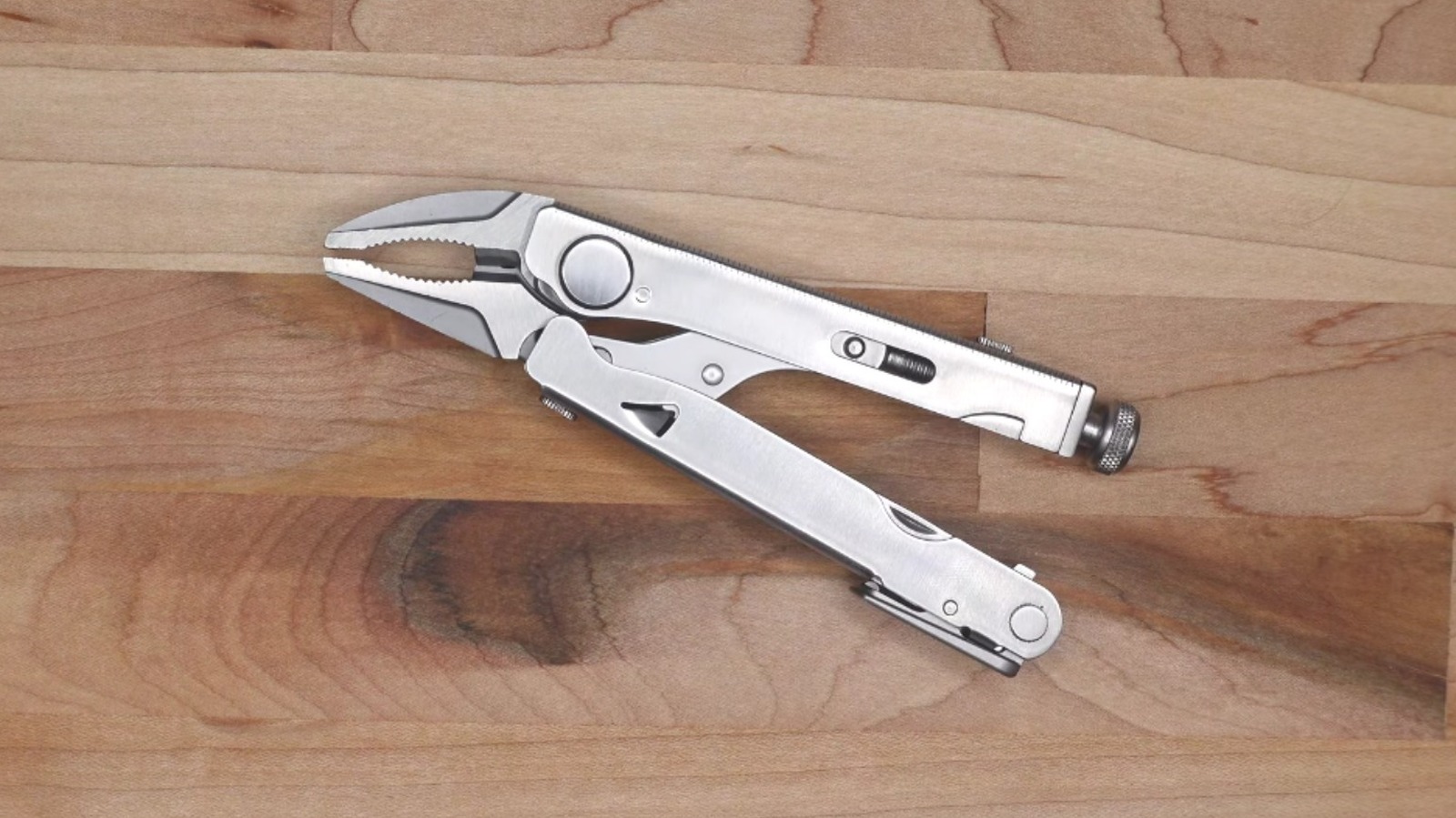
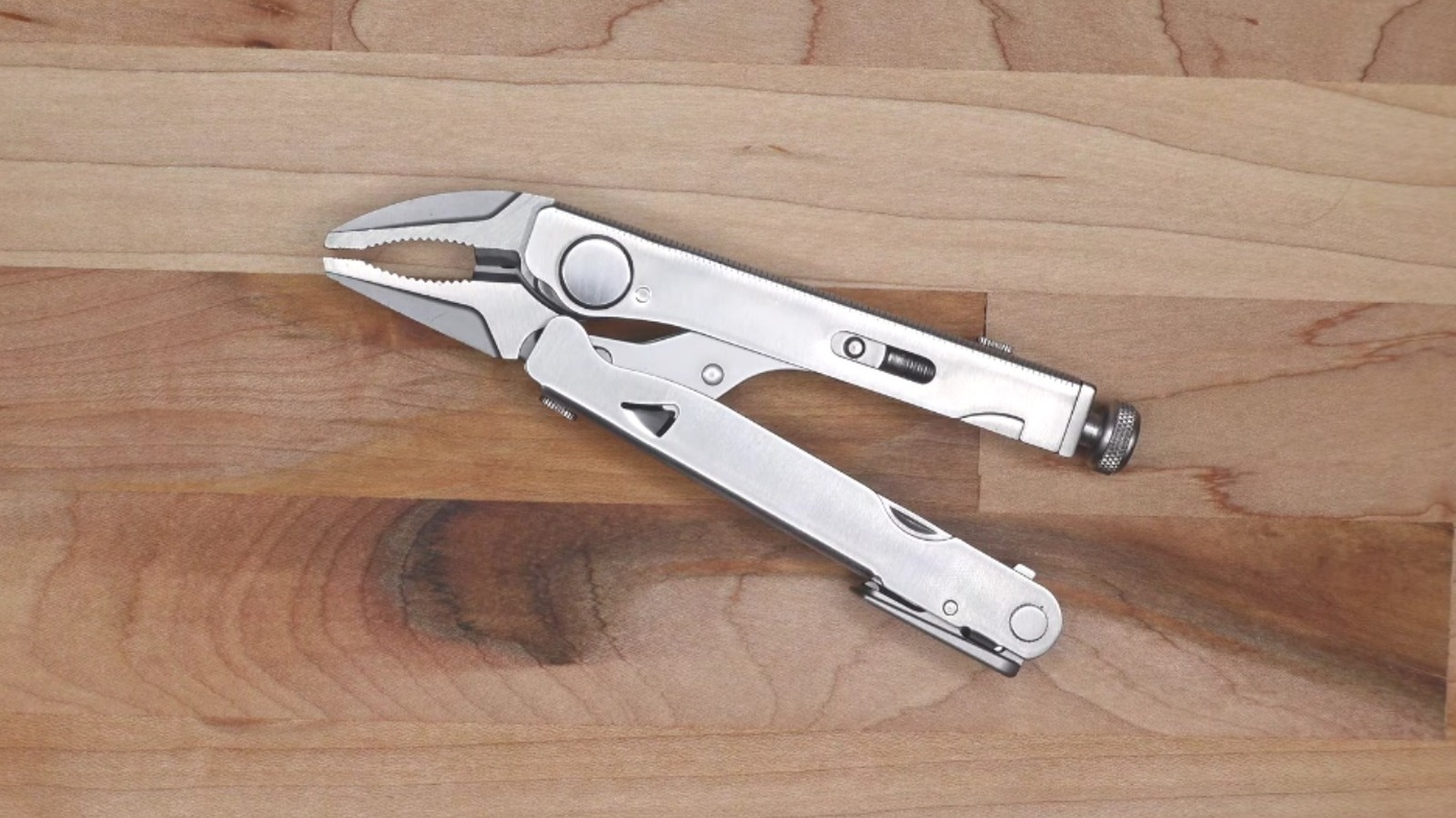
Leatherman Crunch

The Leatherman Crunch has some unique traits that weren’t quite fulfilled by other items in the brand’s catalogue, including the standout pliers that can both lock safely and fold away. In a Facebook discussion about the Crunch, users acknowledged the creativity and versatility of its design, though noted that some of its more interesting applications were quite niche. They also mentioned that its unusual shape could potentially make it a bit awkward to work with. 

A revised Crunch 2.0 without some of these design limitations could have promise, and would surely be embraced by those who are nostalgic for the model but unwilling to pay the hefty prices second-hand ones can command. With the Crunch, the locking pliers were the centerpiece, and something that can be very difficult to find in a multi-tool. Those who made frequent use of this feature may have found themselves without a suitable alternative. 

Actually, Leatherman did temporarily revive this feature in June 2026 as part of its Garage series. These are very limited edition, more experimental takes on Leatherman tools, which are highly sought after. If you were lucky, though, you may have been able to get your hands on a so-called Captain’s Crunch from the revival. It’s not a direct replication of the original, but it is a model that boasts some of its greatest strengths and a sharp Machined Stainless Steel makeover. At a hefty $250, it was quickly snapped up and is now sold out. As with other models on this list, there’s a used multi-tool program that may be able to help if you’re looking for the original. 

Advertisement

Leatherman Squirt P4

A common concern with multi-tools is that a single, more heavy-duty item can sometimes be better equipped for a given job. This is based on the fact that multi-tools by their very nature house a dozen or more tools in their slimline cases. This isn’t to say that there aren’t multi-tools that are rugged and hard-wearing, but these words wouldn’t necessarily come to mind on first glance of the Leatherman Squirt. 

The P4 variant, in particular, weighs a meager 56.4 grams and is just 2.3 inches long when closed. Perfectly pocket-sized it may be, but the company also emphasizes that it took quite some time to devize a model small and effective enough. According to Leatherman, the P4 stands as “the first miniature pliers multi-tool tough enough to be a Leatherman.” As tiny as it is, it features a generous suite of tools, including a standard Phillips-head screwdriver, an awl, needlenose pliers that work via spring action, and a 420HC Blade. 

Advertisement

The Squirt was made from stainless steel and anodized aluminum, meaning that, with care from its owner, it can last for a long time. A popular choice to pack for camping and such, its light weight build and considerable utility make it quite difficult to replace. It left a bit of a hole in the brand’s range (although just a small one), and there’s certainly potential for this little Squirt to be embraced again if it made a return.  

Advertisement

Leatherman Free P2 and P4

Another potential multi-tool problem is that the individual tools themselves can be fiddly to access and use. The Leatherman Free family was one creative answer to this long-held issue, as it introducing Leatherman’s Free technology. Leatherman explains that the idea behind Free is to allow operators to smoothly pick out individual tools from the body of the device, which is magnetic. This allows users to click their devices open and shut easily, even with one hand.

The Leatherman ARC, the company’s $249.95 premium multi-tool, fully incorporates this feature, allowing tools to lock in place and be accessed without the need to fully open the device. This was also implemented in the Free P2 and P4 multi-tools, which were also discontinued. The family also includes the Free K2X and K4X, as well as the Free T2. Each has its own specific niche to fulfill, with the latter being a budget option advertised as Leatherman’s smallest multi-tool with Free Technology. The K4X, on the other hand, is a slightly upgraded version of the KX2 with the addition of a pair of spring-loaded scissors. 

Meanwhile, the P2 and P4 boasted about twice as many tools with 19 and 21, respectively. Exchanging a knife and serrated knife for a saw in the case of the P4 made one device rather lighter than the other, but left the more fully-featured model with a comparable amount of features to the Arc. A potential return of the P2 and/or P4, then, could fit well in the current Leatherman line-up. As some users discussed in one Reddit thread, such models could offer Free technology at a price point more attractive than the more costly ARC.

Advertisement

Leatherman Blast

Some multi-tools are particularly small and compact, such as the Squirt, while others are considerably larger and more heavy-duty. Manufacturers often want to include as many different functions as possible in one tool in order to emphasize their versatility. The difficult part, though, is ensuring that each part is practical and sturdy enough for its intended use. To help with that, Leatherman tools are often defined by their composition of high-quality metals like stainless steel, titanium, and hard-anodized aluminum. 

However, it’s not just about having the sturdiest materials. It’s also important to make sure the tools are designed in a way that makes it comfortable to get the grip you need. The Leatherman Blast had zytel inserts included to ensure users could achieve a tight grip. Essentially, these inserts rounded off the handles and helped to prevent the tools stored inside those handles from hurting the hands of the user. This was not a feature that was exclusive to the Blast, and it is still one that Leatherman fans think fondly of and continue to use today. 

Advertisement

Beyond the inserts, the Blast was “loaded with our most requested features,” according to Leatherman. It was also equipped with a 3-inch blade within its 4-inch chassis, pliers capable of doubling the squeezing load over the PST, wire strippers, those spring-loaded scissors seen on some models of the Free, and more. The Blast ticked a lot of boxes for consumers. It’s a real shame that it isn’t manufactured any more. 

Advertisement

Leatherman Leap

The Leatherman Leap was designed to help younger users develop their confidence with multi-tools. The user guide for the Leap underscores that it is not intended for children 8 and below, and that children using it should always be supervised by an adult. It’s far from a toy, after all, but a 14-function multi-tool that includes a screwdriver, a Phillips head screwdriver, pliers, and a plain edge 420HC knife. The blade, Leatherman adds, was created to be attached separately by a parent or guardian “when the user is ready for more responsibility.”

The tool was designed to be easier to operate than the standard version, with glass and nylon handles to make it more comfortable to hold. Safety locks incorporated in the handle also give the user more freedom to handle it with less risk. It’s a valuable first multi-tool for users of any age, even if they’re simply not confident with a blade or pliers. Unfortunately, the Leatherman Leap had a defect that made it potentially very dangerous. 

As the United States Consumer Product Safety Commission reports, a November 2014 recall concerning the knife affected approximately 8,400 models sold across North America. When added to the device, the lock that held the knife in place was potentially faulty, meaning that when the tool was opened, the blade could release on its own accord. It’s not the most common problem with a Leatherman multi-tool, but one that would be essential to resolve if the Leap concept ever did see a re-release. If Leatherman were to return to the drawing board with it, though, the more accessible and safety-friendly Leap could find a new audience.

Advertisement


Source link

Advertisement
Continue Reading
Click to comment

You must be logged in to post a comment Login

Leave a Reply

Tech

Runway launches AI model router as generative media gets crowded

Published

on

Runway no longer wants to be just another AI model company. It wants to become the infrastructure layer for generative media.

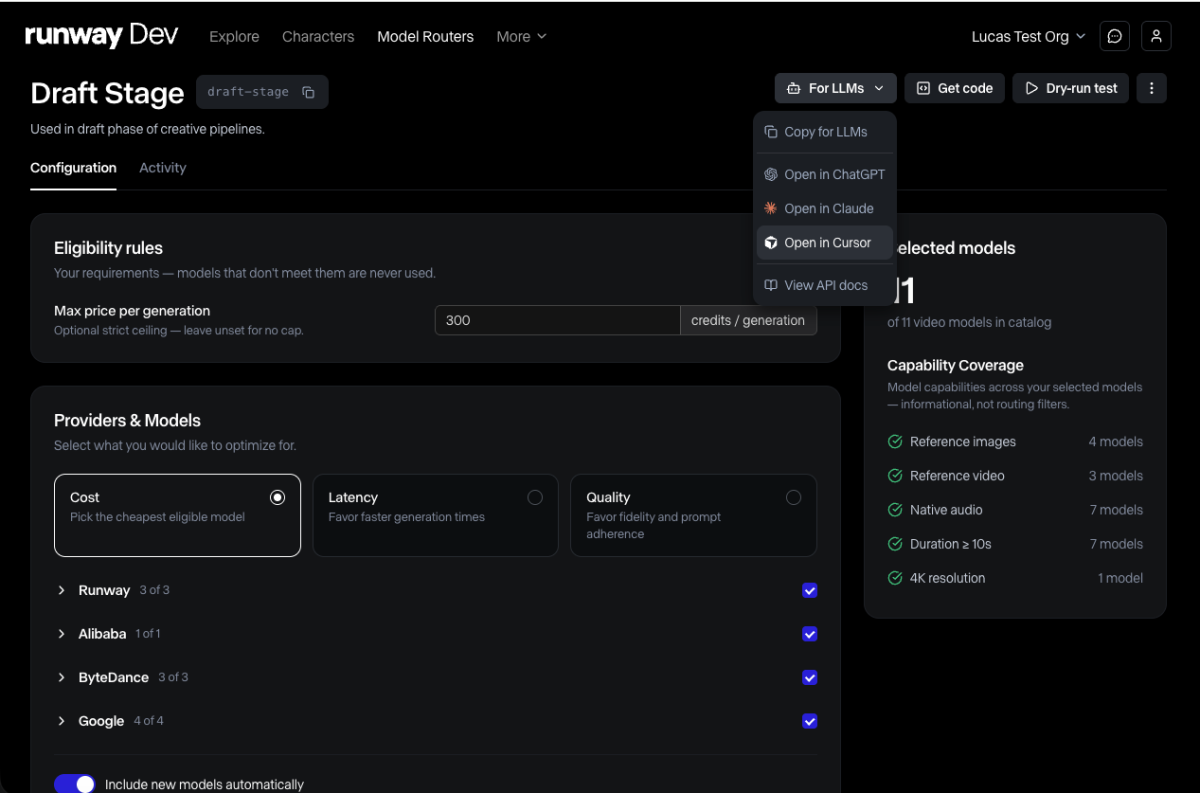
On Thursday, the startup launched Runway Media Router through Runway Dev, its developer platform, released earlier this month, that provides API access to a growing roster of third-party image, video and audio models alongside Runway’s own. 

The Media Router is a tool that automatically selects the best image, video, or audio generation model for a request based on whether a developer prioritizes quality, speed or cost. While model routers have become increasingly common in the world of large language models, Runway says this is the first built specifically for generative media. 

“The routing really fits into that overall promise of being the easiest one-stop shop for developers to integrate with any type of generative media model,” Anthony Maggio, Runway’s chief product officer, told TechCrunch.

Advertisement

The launch, shared exclusively with TechCrunch, marks another step in Runway’s evolution from an AI video startup into infrastructure for companies building with generative media. Through Runway Dev, customers including Adobe, Cloudflare, ElevenLabs, Expedia, Shutterstock, and Quora can build media generation directly into their own products using Runway’s API rather than sending their users to Runway’s own app or site.

The launch of the router comes as the number of generative media models has exploded, making it increasingly difficult and time-consuming for developers to evaluate new releases. Through the Runway Dev platform, developers can access the latest media models when they’re released. 

“Most developers are not spending the time to really understand the capabilities of each of these models and where they excel or differ based on various types of outputs across video, image, and audio,” Maggio said. “The unique proposition we’re bringing to the table is all of that intelligence around what the best model is for each different use case, and meshing that with preference you apply around the context of your business.”

Maggio noted that Chinese generative media models are becoming increasingly popular. However, many businesses building their own products might not be comfortable working with models that come out of China, so they could, he said, potentially set a preference for American model providers — a preference that may become more common as the Trump administration explores bans and sanctions against Chinese open AI models

Advertisement

That’s just one example of preferences that developers can set, though. Maggio says customers are mainly interested in routing the model to account for token pricing and quality. Token pricing has become a hot topic in 2026 as enterprises that went all-in on agentic AI felt the sting of high token bills. In the world of LLMs, model routing for token pricing has become common, so it only makes sense that routing for generative media would follow. The Media Router launch also comes weeks after Runway replaced its unlimited subscription plans with token-based pricing, a move that drew criticism from some users. 

On the quality front, deciding what models provide the best quality for any given task isn’t as easy for generative media as it is with language models, Maggio says. That’s where the router’s intelligence layer kicks in. It’s based on the expertise Runway’s in-house creative team has developed in evaluating output across every media type — things like how video models handle motion, how image models handle composition, or how voice models handle lip syncing. 

Runway had already done a lot of the work building that intelligence layer for its agent product, a conversational AI creative partner that Runway launched in May to help turn text prompts into fully edited multi-shot videos and marketing campaigns. 

The Runway Media Router, Maggio says, takes the same routing technology Runway built for its own products and packages it for outside developers to use.

Advertisement

Runway’s strategy today reflects how fragmented and competitive the current generative media landscape is, and how much the startup needs to expand and pivot to stay competitive. Runway’s last AI video model release — Gen 4.5 — was in December. At the time, the model topped leaderboards, outperforming similar models from incumbents like Google. In the same month, Runway released its first world model

Aside from an upgrade to its video editing model, Aleph 2.0, in May, Runway hasn’t dropped a new dedicated frontier video model in months. (TechCrunch has asked when the startup plans to release Gen-5.) Today, while Aleph 2.0 ranks among the leading video editing models according to Artificial Analysis, the company’s text-to-video and image-to-video models no longer lead the rankings. In the top 20 spots are models from heavy hitters like Google and China’s ByteDance and Alibaba. 

Rather than asking developers to bet on a single model staying ahead, Media Router assumes that the best model will continue to change — and it keeps Runway in the game so that it can continue to build on the frontier. If not as the best new AI model, then as the best orchestration layer. 

Anastasis Germanidis, Runway’s co-founder and co-CEO, acknowledged that the startup has been known for a long time primarily for “that end user piece,” but it had to build a full stack to get there, one that includes a developer platform, a creative tool suite, and an inference layer underneath it all. He says the company has seen increasing interest from companies for Runway to live across every part of that stack. 

Advertisement

“You need great models underneath, but the orchestration increasingly matters a lot because people are building entire campaigns with those models, or they’re building entire finished multi-scene generations out of those models,” Germanidis told TechCrunch. “It’s something that we increasingly had to build — that intelligence layer that comes on top of the pure pixel models. The router is one way in which the benefits of that come to users.”

Or as Maggio put it more broadly: “If you zoom out at the one thing Runway has been doing since 2018, it’s that we’re deeply focused on research, while building for where we think the space is going at the same time.”

Got a sensitive tip or confidential documents? Rebecca Bellan is reporting on the inner workings of the AI industry, from the companies shaping its future to the people impacted by their decisions. Contact her securely, and off the record, on Signal at rebeccabellan.491 or via email at rebecca.bellan@techcrunch.com from a non-work device.

When you purchase through links in our articles, we may earn a small commission. This doesn’t affect our editorial independence.

Advertisement

Source link

Continue Reading

Tech

‘The Morning Show’ gets a fifth and final season

Published

on

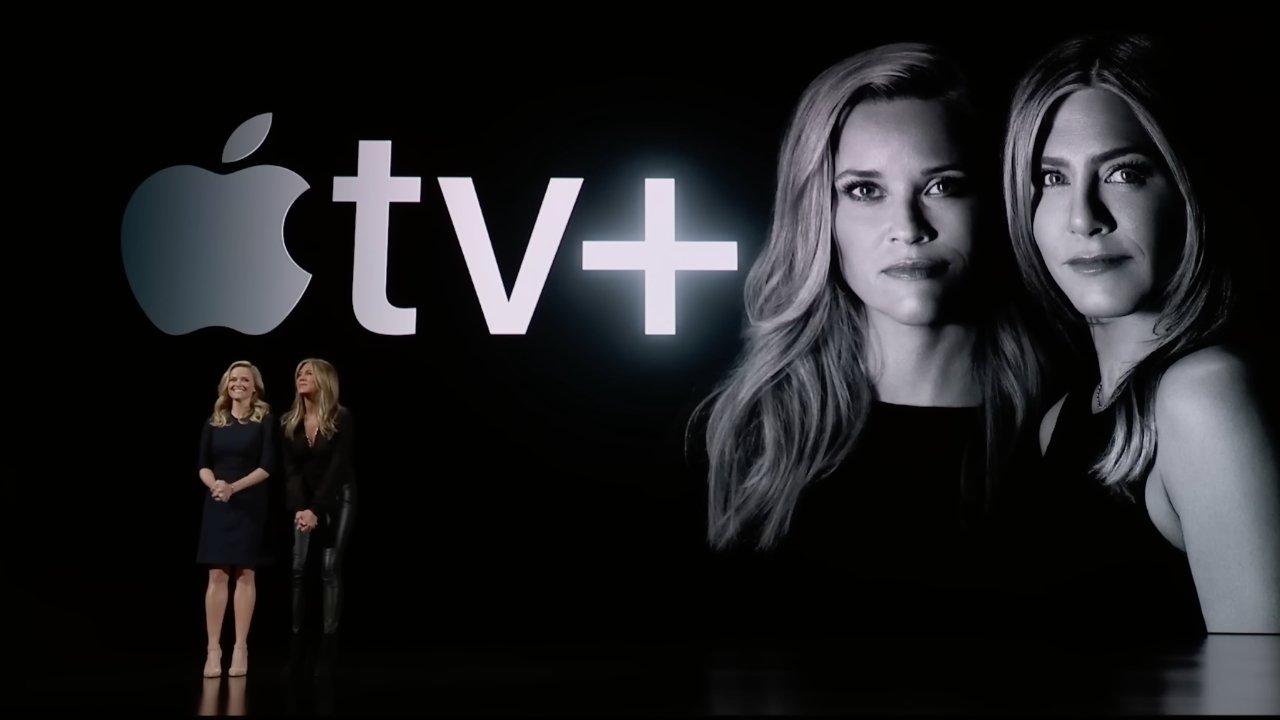
Jennifer Aniston and Reese Witherspoon helped bolster fledging Apple TV with “The Morning Show” in 2019. The final season of the award-winning drama has been announced, bringing an era to a close.

Eddy Cue wanted “The Morning Show.” Long before the service was announced in March 2019, or debuted in November that year, Cue was looking for shows that would bring the streamer attention, and “The Morning Show” was being shopped around.

Created by Jay Carson and developed by Kerry Ehrin, the drama was being executive produced by its stars, Jennifer Aniston and Reese Witherspoon. “I thought the show was amazing,” Cue later told Variety, “but… I came down to the realization that we weren’t going to get it, because somebody would always offer more.”

“But I thought we were special, and so I asked for a meeting with [Aniston and Witherspoon],” he continued. He says he asked “whether they thought they were going to make one of the best shows ever in television,” and they said yes.

Advertisement

“So do I,” he told them. “That means you need to do it with us, and the reason you have to do it with us is because we don’t have any other shows. So we believe 100% in what you’re doing, and we’re going to launch our service on that.”

Launching Apple TV+

The first star on stage at the launch of Apple TV+, as it was originally known, was Steve Spielberg. Then the lights went down, there was a long pause, and the spotlight came up on Reese Witherspoon and Jennifer Aniston.

“Reese and I are so proud to be a part of this exciting launch with Apple, officially announcing our new project, ‘The Morning Show,’” said Aniston.

“So in ‘The Morning Show,’ said Witherspoon, “we pull back the curtain on the power dynamics between men and women in the high-stakes world of morning news shows.”

Advertisement

“It’s a real insider’s view into the lives of the people who help America wake up every day,” she continued before handing back to Aniston.

“And through the prism of those under-slept, over-adrenalized people behind and in front of the camera, we take an honest look at the complex relationships between women and men in the workplace, and we engage in the conversation people are a little too afraid to have unless they are behind closed doors.”

That’s “The Morning Show,” and that’s exactly where the show went over what we now know will be its eight-year run.

As with many Apple TV series, “The Morning Show” was given a two-season order right at the start. But it has not aired as consistently as later hits such as “Slow Horses,” which runs annually.

Advertisement

Instead, “The Morning Show” has aired only four seasons so far, with its fifth and final one now in production to air in 2027. It’s worked out as a new season every second September, and perhaps because of that, each run has been a critically-acclaimed event event.

The show didn’t ignore how comparatively slowly it was being released, either as the story moved on two years between seasons three and four. It’s not known yet when the final season’s storylines will pick up, but it is known that it will feature new characters played by Jeff Daniels, Jesse Williams, and more.

Those new faces will join the regulars including Aniston, Witherspoon, and Billy Crudup. Crudup is just one of the actors to have won awards for the series, but he holds the distinction of having won the very first Emmy that Apple TV ever received.

If the new season keeps to the existing format, it will bring the total number of episodes up to 50. It’s a small number compared to network TV shows of the past. Over the same time frame, for example, Aniston’s “Friends” cranked out 194 half-hour episodes.

Advertisement

But maybe this what has made “The Morning Show” so consistently strong. Seasons are released when they’re ready, more or less, instead of having to hit specific air dates.

The seasons are long enough, at 10 episodes each, to tell a meaty story. But they’re not so long as to need those tales being stretched out unnaturally.

Back when hour dramas ran for upwards of 22 episodes per season, there used to be a reluctant belief on the part of producers. One third of your season’s episodes could be great, they would say, one third might be okay, but try as you might, one third would be terrible.

So far “The Morning Show” has avoided that trap. Here’s looking forward to seeing if it can get to the finishing line as strongly as it has run so far.

Advertisement

Apple has not announced any details of the last season yet, but if it follows form, the season will run in September 2027. And we’ll have to wait until August 2027 to even see the first trailer.

Source link

Advertisement
Continue Reading

Tech

Hackaday Europe 2026: Half Quad, Half Blimp: Test. Fly. Survive.

Published

on

A great many drones out there, whether homebuilt or store-bought, follow the same basic format. Four motors, some kind of controller, and a lithium-polymer battery supplying the juice to keep everything in the air. It’s a format that produces a remarkably capable air vehicle, suitable for everything from high-speed camera work to urban search and rescue.

With that said, the format does have its limitations. [Suryansh Sharma] has been working on alternative designs for fancy and interesting drones that are half quadcopter and half blimp, and he came to Hackaday Europe 2026 to tell us all about it.
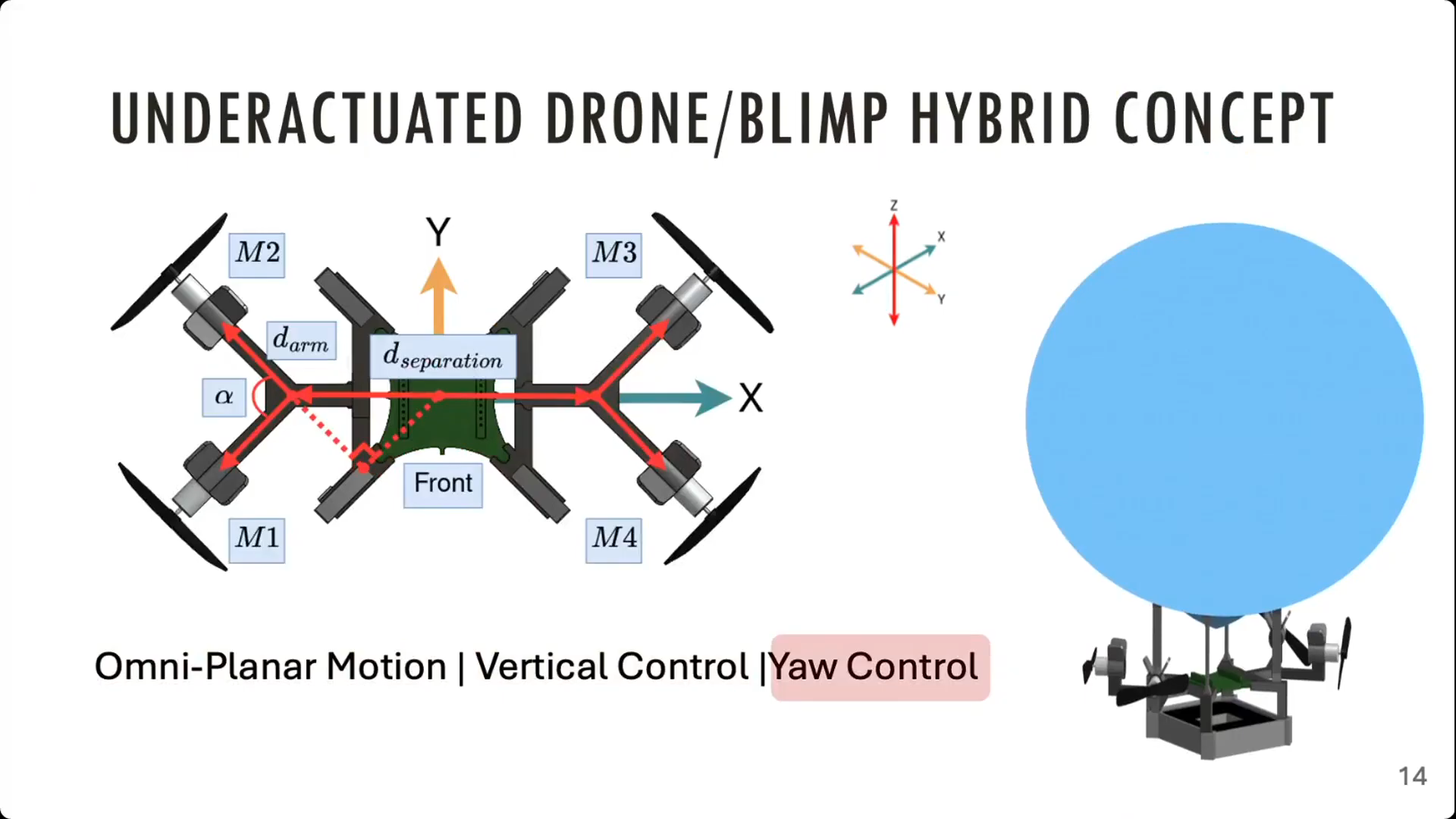
Combining a multirotor design with a balloon for additional lift proved useful for certain applications. Despite the motors all being mounted in the horizontal plane, vertical translation is possible by firing the right combination of motors, due to convenient aerodynamic effects.  Credit: slides

[Suryansh]’s talk took in a number of drone projects which he has been involved with. The first was the creatively-named BEAVIS, or Balloon Enabled Aerial Vehicle for IoT and Sensing. This was a project that aimed to tackle one of the greatest limitations of the common multirotor drone. Namely, as [Suryansh] so elegantly puts it, they “suck when it comes to staying in the air.” This is for a very simple reason—much like the helicopter, a multirotor drone must expend energy continuously to generate lift by spinning its propellers. Conventional multirotors don’t have wings that generate lift from forward motion, and any sort of gliding or similar behavior is basically impossible. Continual energy expenditure is the only thing keeping a multirotor aloft.

The point of BEAVIS was to fix this by combining drone tech with a simple lighter-than-air balloon. It’s an interesting combination, because a multirotor drone has excellent maneuverability and agility, but terrible endurance. A lighter-than-air balloon is quite the opposite, which has excellent endurance while suffering in all other respects. The BEAVIS concept outfits a small balloon with four motors in a split-cross configuration, which allows for planar translation as well as the ability to control yaw of the craft. With all four motors mounted horizontally in the same plane, it may seem like vertical control is not possible. However, by turning on two opposing props, it’s possible to create a low-pressure region beneath the craft which tends to push it downwards. Meanwhile, if you turn all four props on in the right directions, you create a high pressure region underneath the balloon which pushes the craft up. With the balloon, it has the benefit of being able to just hang in the air without continually burning through battery power. Endurance times of well over an hour were possible with this build, compared to maybe less than ten minutes for a comparable pure multirotor.
Advertisement
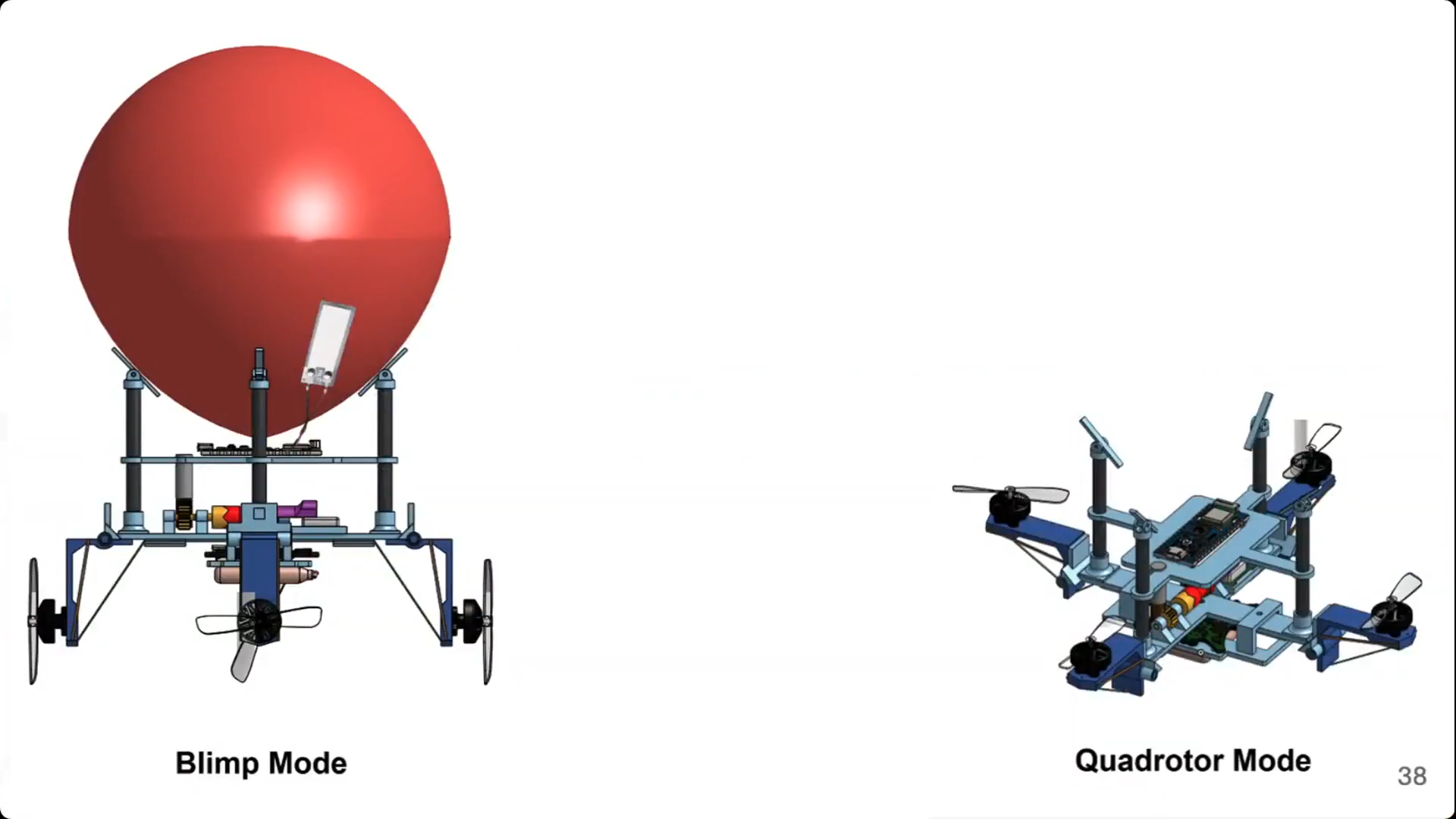
BEAVIS was developed into JANUS, a drone with an actuator system that pivots the motors so that it can fly in a pure quadcopter mode in the event of balloon failure. Credit: slides

BEAVIS was eventually developed into Janus— described as a “morphing quadrotor blimp with balloon failure resilience.” The goal was to build a craft that was viable for deployment in the real world, and that could undertake mobile ecological sensing work. The main difference to the previous design was that it would no longer solely fly as a balloon with horizontally-mounted props. Instead, Janus would feature a mechanism to allow the rotors to be positioned in the vertical axis to allow for conventional multirotor flight. This was key to allowing the craft to fly both as a lighter-than-air craft, and to survive and keep flying in the event the balloon burst or was otherwise damaged. The build was eventually deployed in Kenya to aid in ecological data collection for conservation efforts.
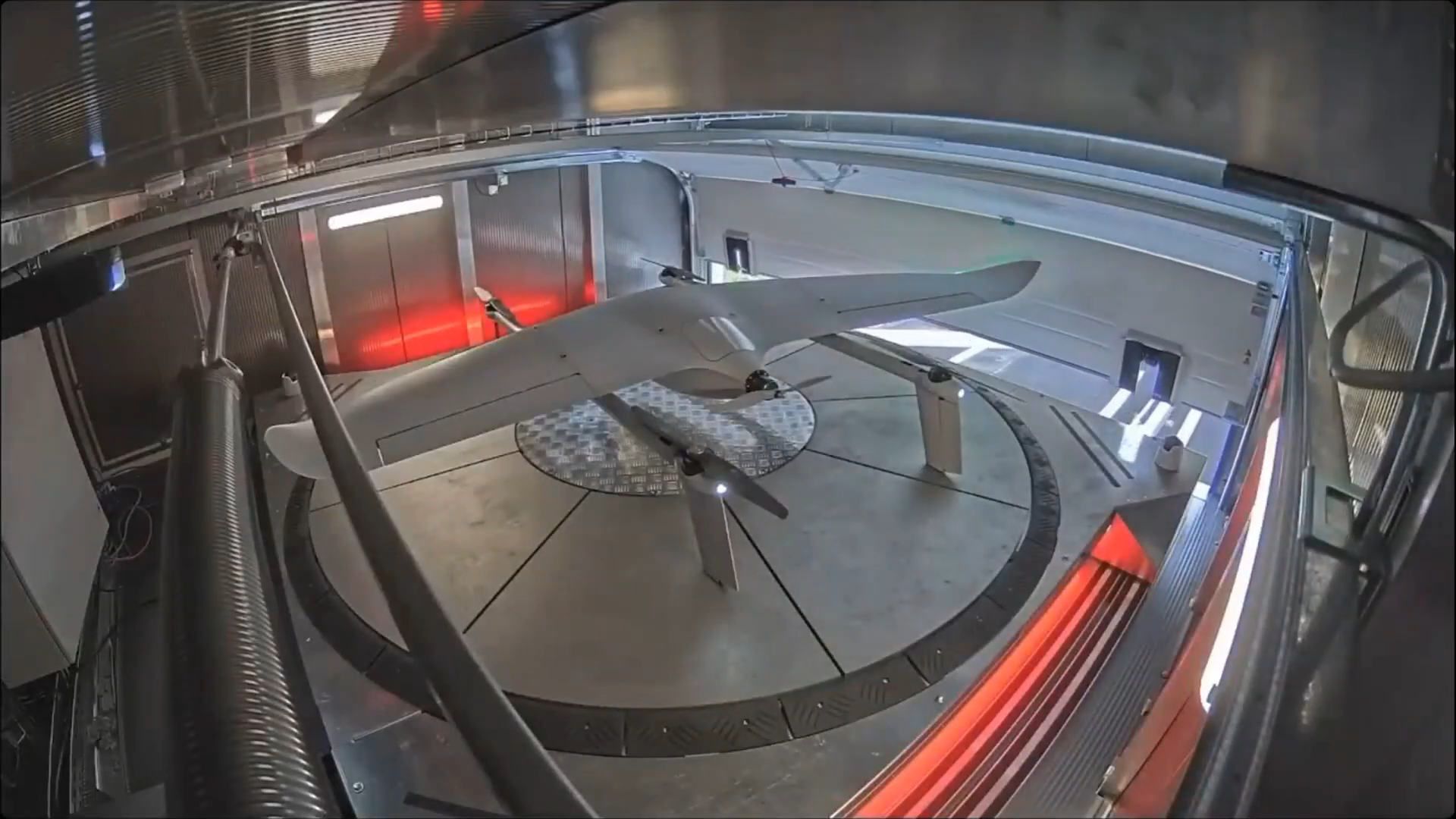
The Avy emergency response drone uses a metal launchpad and pogo pins to provide electrical power to keep the batteries topped off at all times. Credit: slides

[Suryansh] has been involved in other drone-related projects, too. Open Gimbal was a particularly interesting effort, involving the construction of a bench-testing rig for developing small multirotor drone craft. The 3-DoF platform offered unrestricted rotational freedom, allowing for a craft to be put through its paces in a controlled way without requiring a large open  space for free flight. [Suryansh] also discusses his work with a company called Avy, which specializes in VTOL drones with a focus on emergency response roles. The company has deployed drones that use multirotor technology to launch vertically, while relying on fixed wing aerodynamic elements to extend range and improve efficiency for longer flight times. The drones feature a neat charging setup, wherein pogo pins on the fins pick up power from the metal launchpad to ensure that batteries are fully charged and the drone is ready to go at all times.

Ultimately, multirotor drones have taken on their basic form for good reason. With that said, as [Suryansh]’s talk explains, modifications to the form can have great utility when made to suit a particularly specific mission or application. If you’re developing a drone for a certain purpose, and you’re running into hard limitations, you might try thinking outside the box to make something more fitting for your goals.


Source link

Advertisement
Continue Reading

Tech

Four Young Mathematicians Awarded the 2026 Fields Medals

Published

on

Scientific American reports that the 2026 Fields Medals went to four mathematicians for work ranging from the theory of knots to the motion of fluid: The Fields Medals went to Hong Wang of New York University and France’s Institute of Advanced Scientific Studies (IHES), Yu Deng of the University of Chicago, John Pardon of Stony Brook University and Jacob Tsimerman of the University of Toronto. In the awards’ 90-year history, Wang is only the third woman to win one, after mathematicians Maryam Mirzakhani and Maryna Viazovska in 2014 and 2022, respectively. Wang and Deng represent the prizes’ only Chinese-born recipients besides mathematician Shing-Tung Yau, who won a Fields Medal in 1982.
Hong Wang co-proved the three-dimensional Kakeya conjecture, establishing a fundamental limit on how little space is needed to rotate a line through every possible direction. Mathematician Nets Katz called it the field’s “holy grail” problem and said the achievement made her “a central figure” in the area.

Yu Deng and his collaborators reconciled the microscopic and macroscopic mathematics of fluid motion, proving that equations describing chaotic molecular interactions and large-scale fluid behavior are fundamentally connected. N.Y.U. mathematician Scott Armstrong called it “a truly spectacular, singular result.”

John Pardon made an early breakthrough in knot theory by proving that certain sequences of knots can have arbitrarily large “distortion,” a measure of how difficult they are to traverse. Princeton mathematician David Gabai said the problem had “attracted much interest among mathematicians during the previous 25 years.”

Jacob Tsimerman and two collaborators proved the Andre-Oort conjecture, giving mathematicians a stronger way to understand special points on complex geometric objects known as Shimura varieties. Collaborator Jonathan Pila described him as “a brilliant mathematician” known for his “brilliance and resourcefulness.” Tsimerman has also advanced Hodge theory and hopes pure mathematics can help researchers better understand AI.

Advertisement

Source link

Continue Reading

Tech

US government says Iran-linked hackers are disrupting American water and energy providers

Published

on

The U.S. government is warning that Iranian state-backed hackers are actively breaking in and disrupting industrial control systems at American water and energy providers. This new alert comes months after federal agencies warned of an escalation in hacking from Iranian actors amid the ongoing war.

In an advisory updated Wednesday, the FBI, the NSA, the Department of Energy, and CISA said Iranian hackers were targeting programmable logic controllers on internet-connected operational networks, allowing them to manipulate data on their displays, causing outages and disruption.

The Iranian hackers were initially discovered earlier this year to be targeting controllers made by Rockwell, but the advisory has now expanded the types of industrial control systems under attack to include products from Schneider Electric and Siemens.

The agencies warn that “potentially all internet exposed” industrial control systems may be affected, and urged critical infrastructure owners to take action. Per the advisory, the Iranian-backed hackers were “conducting this activity to cause disruptive effects within the United States,” likely in response to the ongoing war between Iran, and the U.S. and Israel.

Advertisement

According to the FBI, the hackers broke into one critical infrastructure provider and changed the controllers’ programming logic to disabled processes that handled critical shutdowns and alarms. The feds said this allowed “systems to enter unsafe conditions without notifying operators of the anomalies.”

This is the latest in a series of cyberattacks launched by Iranian government hackers and their proxies across the region since the start of the war in February. 

The hacks have ranged from the country’s typical espionage and hack-and-leak operations, such as leaking the contents of the FBI director Kash Patel’s personal email account, to more atypical destructive hacks that have caused large-scale damage or disruption. Among the more notable incidents was a hack on the U.S. medical tech giant Stryker, which allowed the Iranian hacking group “Handala” to remotely wipe tens of thousands of employee devices.

Handala also took credit for a data breach affecting California water provider Cal Water in June, and claimed it could have disrupted the water supply (without providing evidence). The water provider said that it saw no evidence of unauthorized access to its operational networks, which control the water supplies.

Advertisement

When you purchase through links in our articles, we may earn a small commission. This doesn’t affect our editorial independence.

Source link

Continue Reading

Tech

The new Geekbench 7 benchmark raises the bar for CPU testing

Published

on

Primate Labs released Geekbench 7 for macOS, iOS, Android, Windows, and Linux, redesigning its cross-platform benchmark to better reflect how current software uses CPUs and GPUs.

The update changes Geekbench’s multi-core methodology and adds workloads for artificial intelligence, media processing, gaming, and content creation. Primate Labs says the revisions account for increasingly demanding computing tasks and the larger data sets handled by modern devices.

Geekbench 7 remains free for personal use.

Geekbench 7 scores aren’t compatible with Geekbench 6

Geekbench scores can look like a universal measurement of processor performance, but the numbers only have meaning within the version of the benchmark that produced them. A score from Geekbench 7 can be compared with another Geekbench 7 result, but not directly with a result from Geekbench 6.

Advertisement

Because Geekbench 7 changes its workloads, data sets, and multi-core methodology, its results shouldn’t be treated as directly comparable with Geekbench 6 scores.

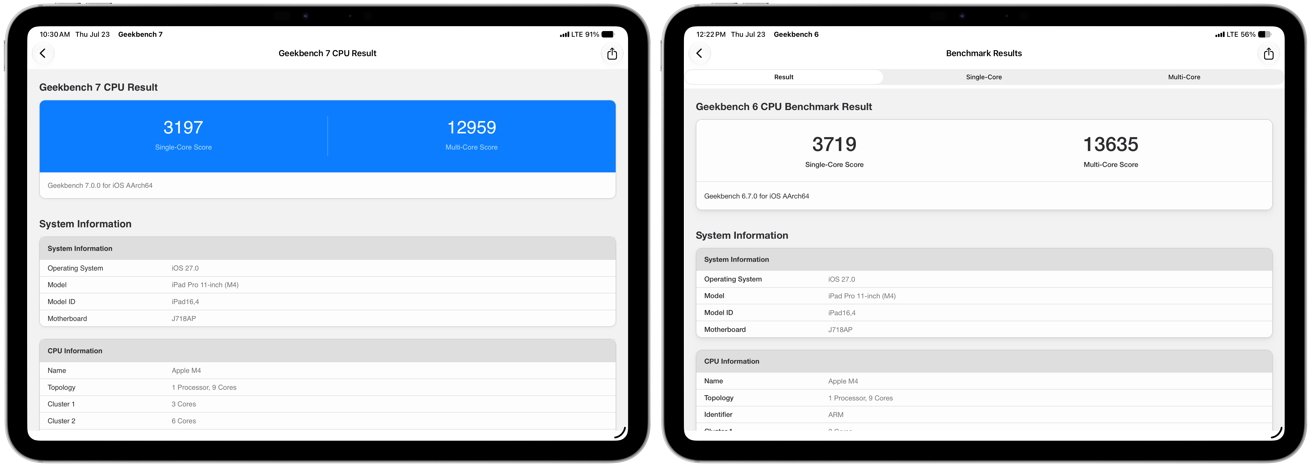
We ran both versions on the same 11-inch M4 iPad Pro using iPadOS 27. Geekbench 6 reported a 3,719 single-core score and a 13,635 multi-core score, while Geekbench 7 returned 3,197 and 12,959, respectively.

Those results make the same iPad appear about 14% slower in single-core performance and 5% slower in multi-core performance. The hardware didn’t lose performance between tests. Geekbench 7 changed what it measures and how it calculates its scores, demonstrating why results from the two versions can’t be placed on the same performance chart.

Two tablet screens side by side displaying Geekbench CPU benchmark results with large single-core and multi-core scores at the top and detailed system information sections listed belowComparing results between Geekbench 6 and Geekbench 7

A device’s Geekbench 6 result should therefore remain in charts and comparisons built around Geekbench 6. New Geekbench 7 scores will need their own baseline as results accumulate across different processors and devices.

Geekbench 7 changes how it measures multi-core performance

The difference between Geekbench 6 and Geekbench 7 results reflects more than a recalibrated scoring scale. Geekbench 7 also changes which workloads contribute to its multi-core score.

Advertisement

Geekbench 7 only runs a workload in multithreaded mode when the task it represents is also multithreaded in real software. Primate Labs says treating every workload as multithreaded can inflate benchmark results without accurately showing how a device handles everyday apps.

Not every real-world task benefits from being divided across all available processor cores. The HTML5 Browser test, for example, isn’t included in the multithreaded suite because Primate Labs says browsers are generally single-threaded or lightly threaded.

The revised approach should make Geekbench 7’s multi-core score more representative of how software uses a processor. It also makes the methodology behind the score more important when comparing devices instead of relying on the number alone.

A new video workload encodes screen-sharing footage with AV1, modeling the technology behind screen-sharing features in videoconferencing apps. Another compresses music and spoken audio with the Opus codec, reflecting work performed by voice-recording and podcast apps.

Advertisement

Geekbench 7 also decodes video and audio while generating live captions with the Whisper speech-recognition model. The workload represents video playback with automatic subtitles enabled rather than testing speech recognition by itself.

Tablet screen showing Geekbench 5 single core performance results list with blue horizontal bar graphs for tasks like file compression, HTML5 browser, photo library, and other CPU benchmarksRecognizable tasks give Geekbench scores a clearer relationship to common software features.

A new Game Physics workload uses the Jolt Physics engine found in popular video games. Primate Labs has also expanded its Photo Editor test and updated the Photo Library workload to import and process JPEG XL and DNG images.

The recognizable tasks give Geekbench scores a clearer relationship to common software features, although no benchmark can reproduce the performance of every app or workflow.

GPU testing adds AI and content-creation workloads

Geekbench 7 shifts its GPU benchmark toward machine learning, video, and content-creation tasks. New GPU workloads track faces and apply live video effects, upscale images with machine learning, and blur backgrounds in videoconferencing streams.

Each workload reflects a feature commonly used in social media, photo-editing, or communication apps. The benchmark also adds RAW image processing, LUT-based video color grading, path tracing, and fluid simulation.

Advertisement

CUDA joins Metal, OpenCL, and Vulkan as a supported GPU API. The addition allows Geekbench 7 to test Nvidia GPUs through CUDA, while Apple devices continue to use Metal.

Larger data sets make Geekbench 7 more demanding

Primate Labs says computing workloads and data sets have grown more demanding since it released Geekbench 6, prompting the company to increase the amount and variety of data processed by Geekbench 7.

The File Compression test now handles a larger and more varied collection of source code, object code, and text documents. Its PDF Viewer workload includes files ranging from park maps to technical documents and academic papers.

Developer and image-processing workloads also use more assets and additional image formats. The changes are intended to better reflect the files and projects handled by current phones, tablets, and computers.

Advertisement

Geekbench 7 pricing and availability

Geekbench 7 is available now for macOS, iOS, Android, Windows, and Linux. The benchmark is free for personal use across supported platforms.

Primate Labs is also offering 20% off Geekbench 7 Pro through August 6. The paid version adds features intended for professional and commercial use, including command-line tools and automated benchmark deployment.

Source link

Advertisement
Continue Reading

Tech

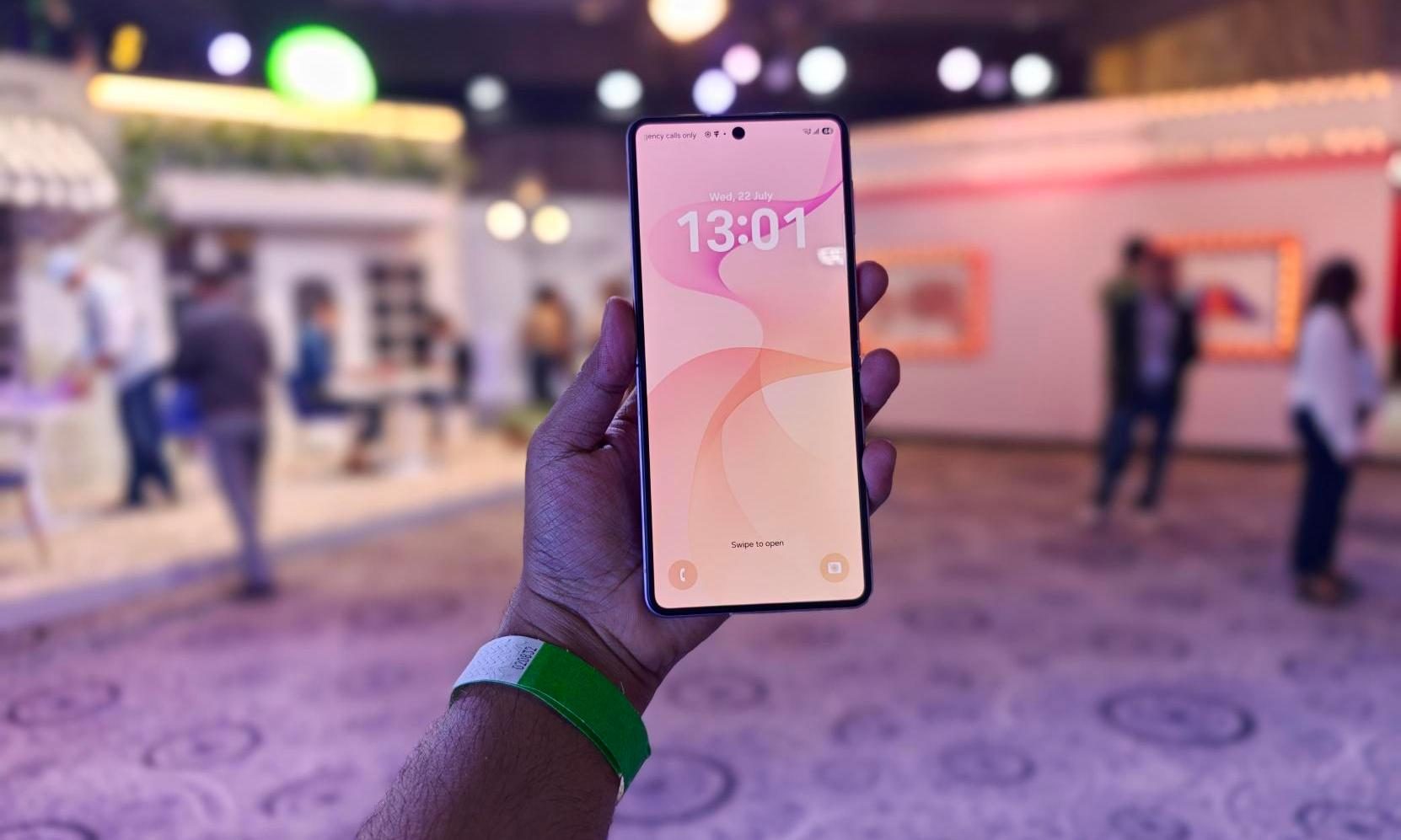
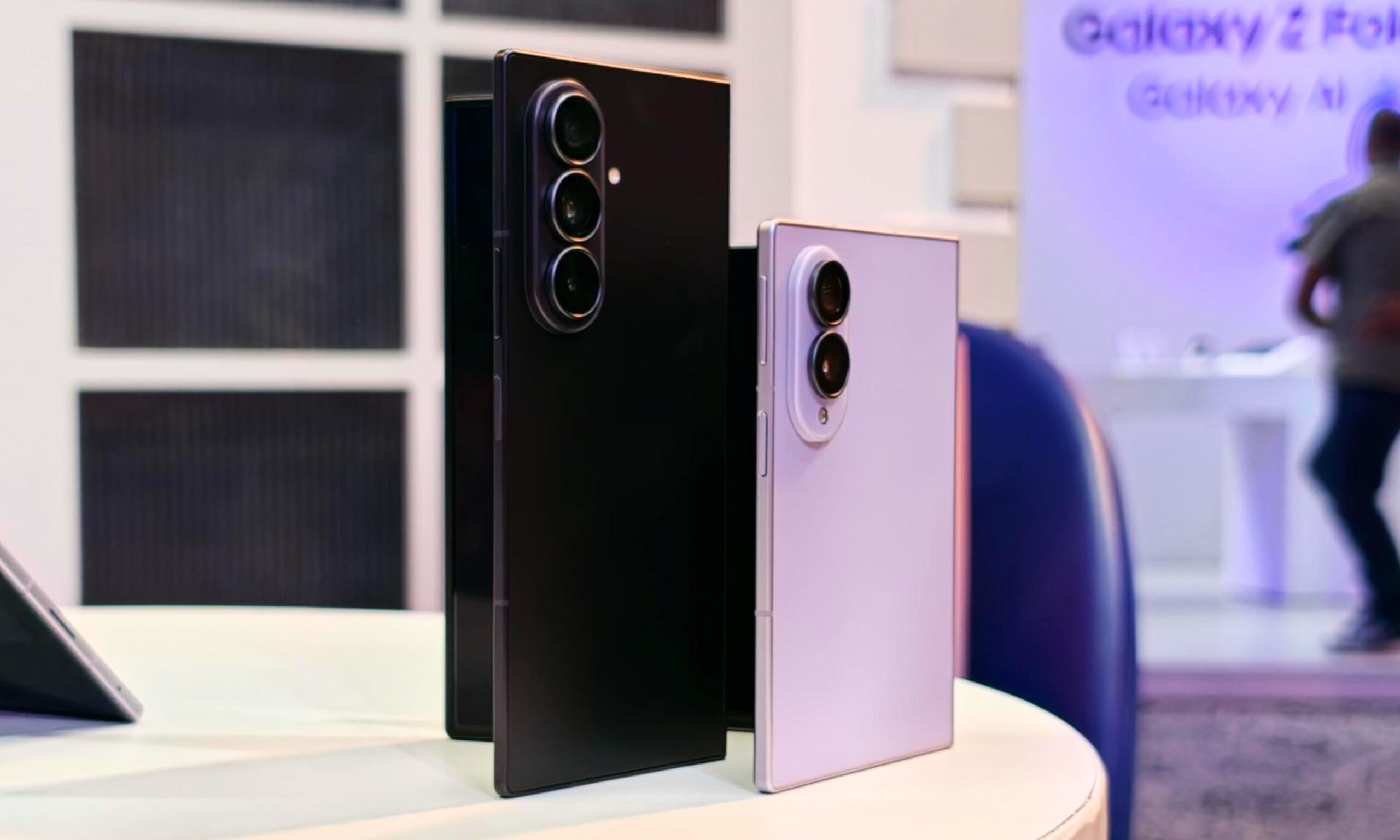
I’ve used foldable phones for years. Here’s how to pick the right one between the Galaxy Z Fold 8 and Flip 8

Published

on

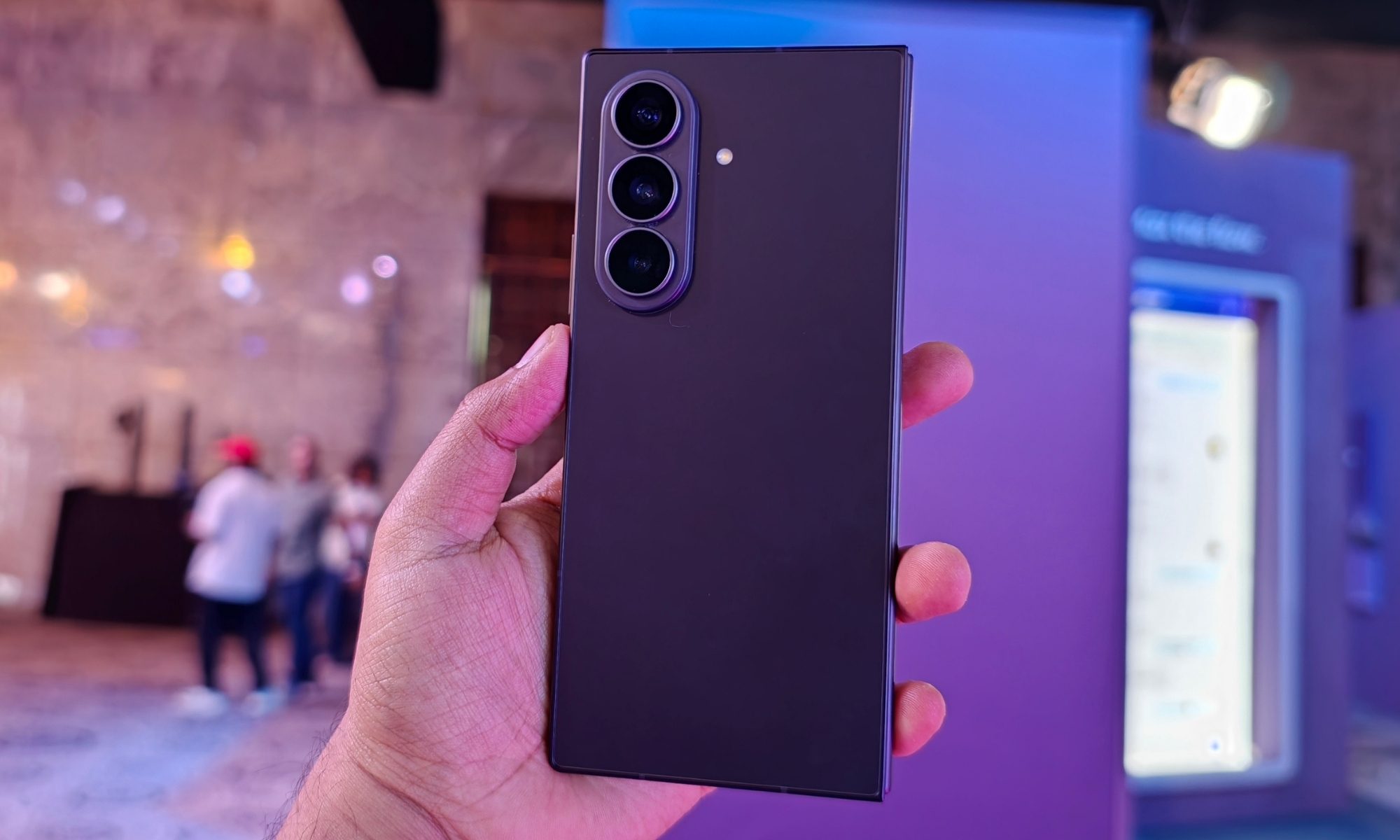
After years of reviewing foldable smartphones, I have learned that choosing one involves much more than what looks pretty or how large you want. Book-style foldables are usually sold as productivity machines, while flip phones cater to people who value portability. Samsung’s latest lineup complicates that choice by introducing two very different book-style models alongside its familiar clamshell.

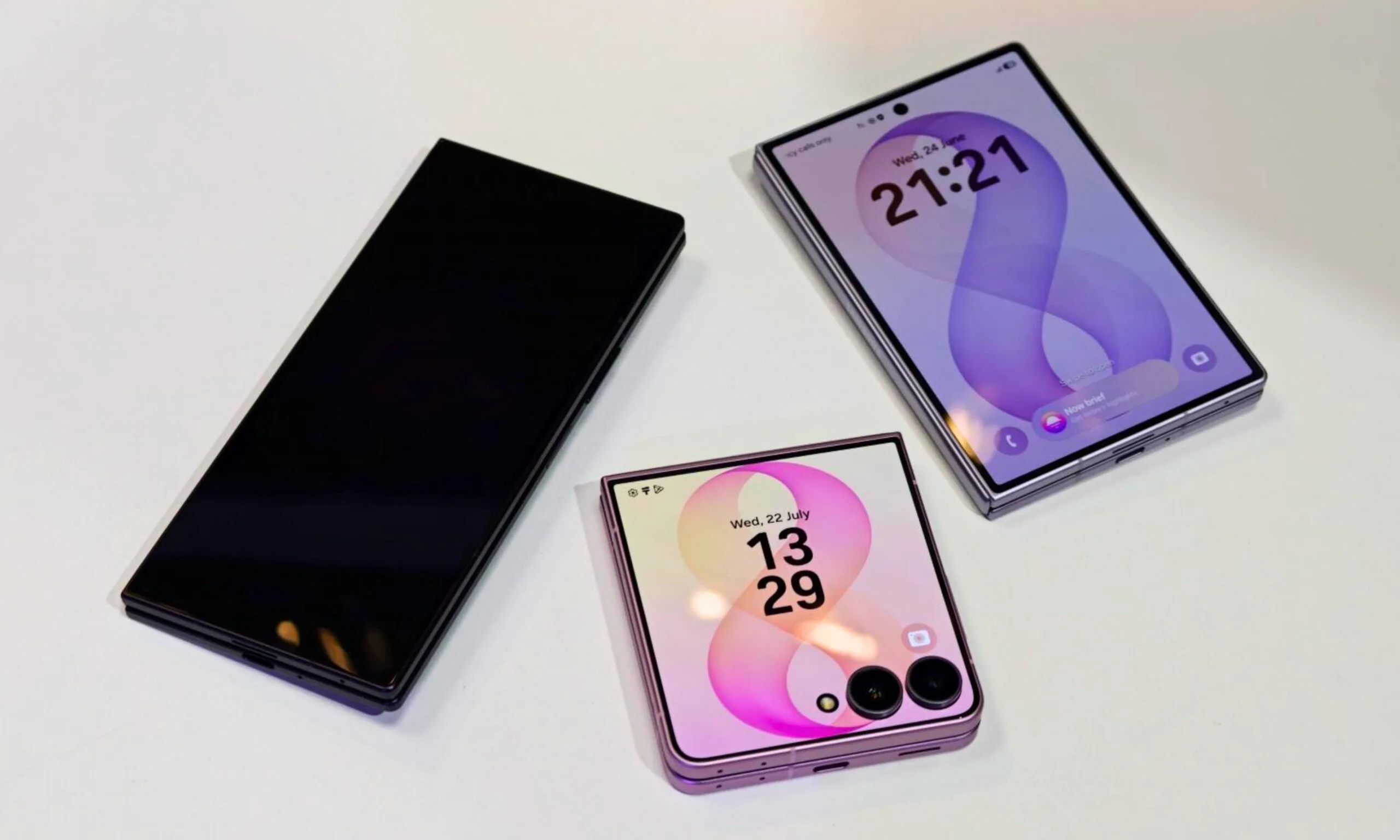
Most of their shared specifications fade into the background once you start using them. Their shapes and screens have a much greater impact on daily life. So here’s how I’d make a decision when choosing between the new Galaxy Z Fold 8 Ultra, Galaxy Z Fold 8, and Galaxy Z Flip 8.

Samsung Galaxy Z Fold 8 Ultra vs Galaxy Z Fold 8 vs Galaxy Z Flip 8: Specs

Specs Galaxy Z Fold 8 Ultra Galaxy Z Fold 8 Galaxy Z Flip 8
Display Main: 8-inch, 120Hz, AMOLED
Cover: 6.5-inch, 120Hz, AMOLED
Main: 7.6-inch, 120Hz, AMOLED
Cover: 5.5-inch, 120Hz, AMOLED
Main: 6.9-inch, 120Hz, AMOLED
Cover: 4.1-inch, 60/120Hz, AMOLED
Processor, RAM, and Storage Snapdragon 8 Elite Gen 5 for Galaxy, 12GB or 16GB RAM, 256GB, 512GB, or 1TB storage Snapdragon 8 Elite Gen 5 for Galaxy, 12GB or 16GB RAM, 256GB, 512GB, or 1TB storage Snapdragon 8 Elite Gen 5 for Galaxy, 12GB RAM, 256GB or 512GB storage
Cameras Rear: 200MP main camera, 50MP ultrawide, 10MP telephoto
Front: 10MP and 10MP
Rear: 50MP main camera, 50MP ultrawide
Front: 10MP and 10MP
Rear: 50MP main camera, 12MP ultrawide
Front: 10MP
Battery and Charging 5,000mAh, 45W wired, 20W wireless 4,800mAh, 45W wired, 20W wireless 4,300mAh, 25W wired, 15W wireless
Size and Weight Unfolded: 158.4 x 143.2 x 4.1mm
Folded: 158.4 x 72.8 x 8.9mm
215 grams
Unfolded: 123.9 x 161.4 x 4.5mm
Folded: 123.9 x 81.9 x 9.7mm
201 grams
Unfolded: 166.9 x 75.4 x 6.1mm
Folded: 85.7 x 75.4 x 13.1mm
180 grams
Price $2,099 $1,899 $1,199

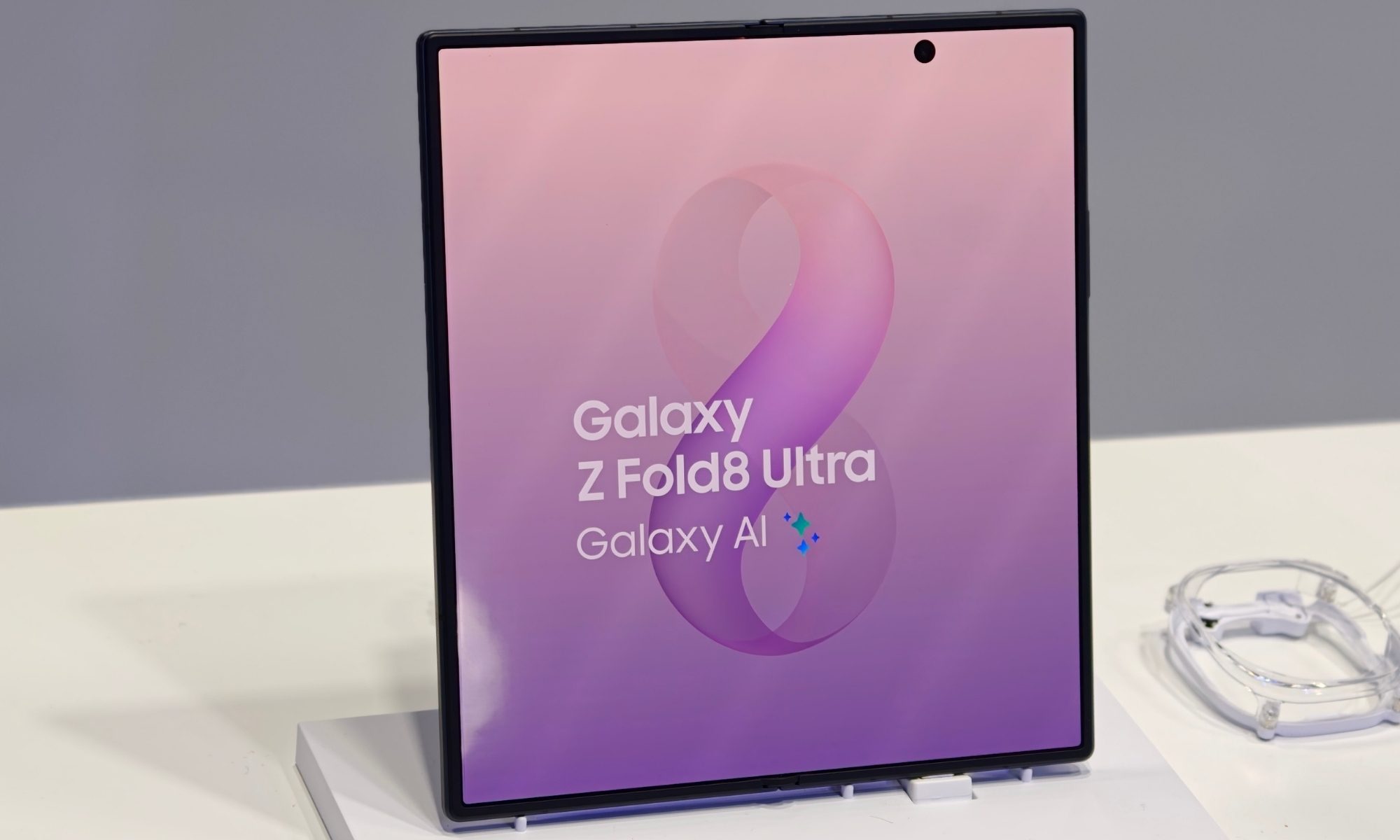
Galaxy Z Fold 8 Ultra: The power-user choice

The Galaxy Z Fold 8 Ultra is the easiest model to recommend to someone who wants everything Samsung can put into a foldable. Its overall experience represents another measured step beyond its predecessor. Samsung has refined the design and improved the hinge that also reduced the crease.

None of these changes completely reinvent the device, but they polish an already mature formula–and this familiarity works in its favor. The tall cover display operates much like a conventional smartphone, and opening the device gives you a large canvas for running several apps together.

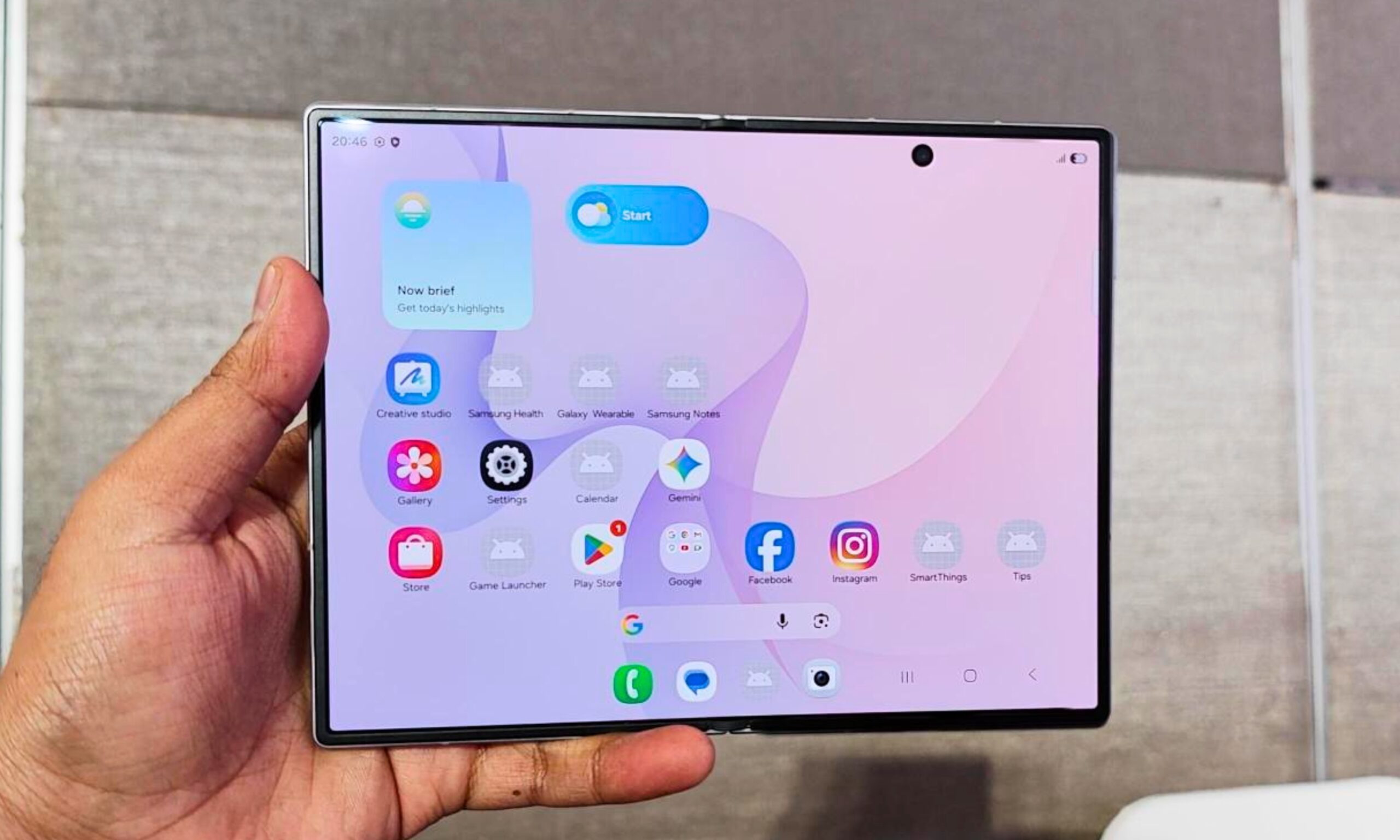
This is the model I would pick for serious multitasking. You can keep a document beside a browser, respond to messages while watching a video, or move information between apps without constantly switching windows. The 8-inch inner screen provides enough screen real estate to never feel cramped.

It also has the strongest camera system of the three. The 200MP main camera, 50MP ultrawide, and 3x telephoto give it the versatility expected from an expensive flagship. Foldable cameras often trail their slab-phone counterparts, so having strong main and ultrawide cameras makes the Ultra more reliable as your daily driver. The 5,000mAh battery is Samsung’s largest in a foldable, while 45W charging finally reduces some of the frustration around topping one up.

Galaxy Z Fold 8: The new multimedia pick

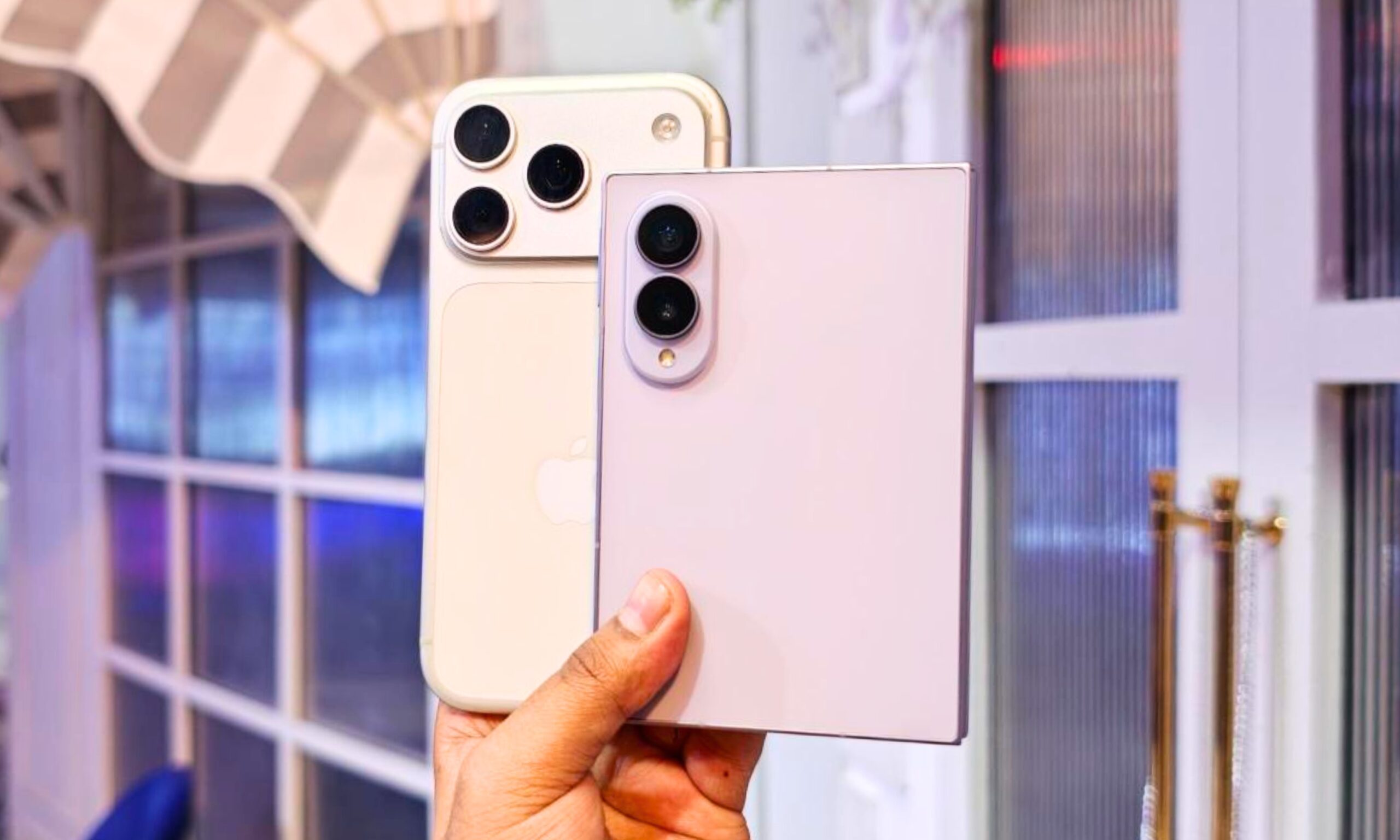
The standard Galaxy Z Fold 8 has the most unusual design of the lineup. Its short, wide body resembles a passport more than a traditional smartphone. The 5.5-inch cover screen comes closer to a compact device. Though its squat proportions require a little adjustment. Opening it reveals the reason Samsung chose this shape.

Advertisement

The 7.6-inch inner screen has a 4:3 aspect ratio, making it especially well suited to photos, videos, websites, and social content. Pictures fill the display more naturally, while movies and videos gain a wider viewing area than they would on the taller Ultra.

So this is easily my main choice if I just consider the multimedia advantages. Its inner screen provides an excellent space for a number of different tasks. Watching pictures and videos finally feels natural on Samsung’s foldable. I can even picture reading e-books, browsing, or playing games fitting in naturally as well. At 201 grams, it is also considerably easier to carry than many large foldables. For context, the Motorola Razr Fold I’m currently using measures over 40 grams heavier. This even makes it lighter than the iPhone 17 Pro.

Multitasking remains part of the experience. Two apps can still sit beside each other, and the device has the same flagship processor as the Ultra. Except the different aspect ratio gives each window less vertical room. So complex multi-app layouts may not flow as naturally. Photography is another compromise. The Fold 8 has capable 50MP main and ultrawide cameras, but the telephoto is dropped entirely. Choose this one when the idea of a wider, more portable foldable matters more than maximum productivity or camera versatility.

Galaxy Z Flip 8: The compact-phone alternative

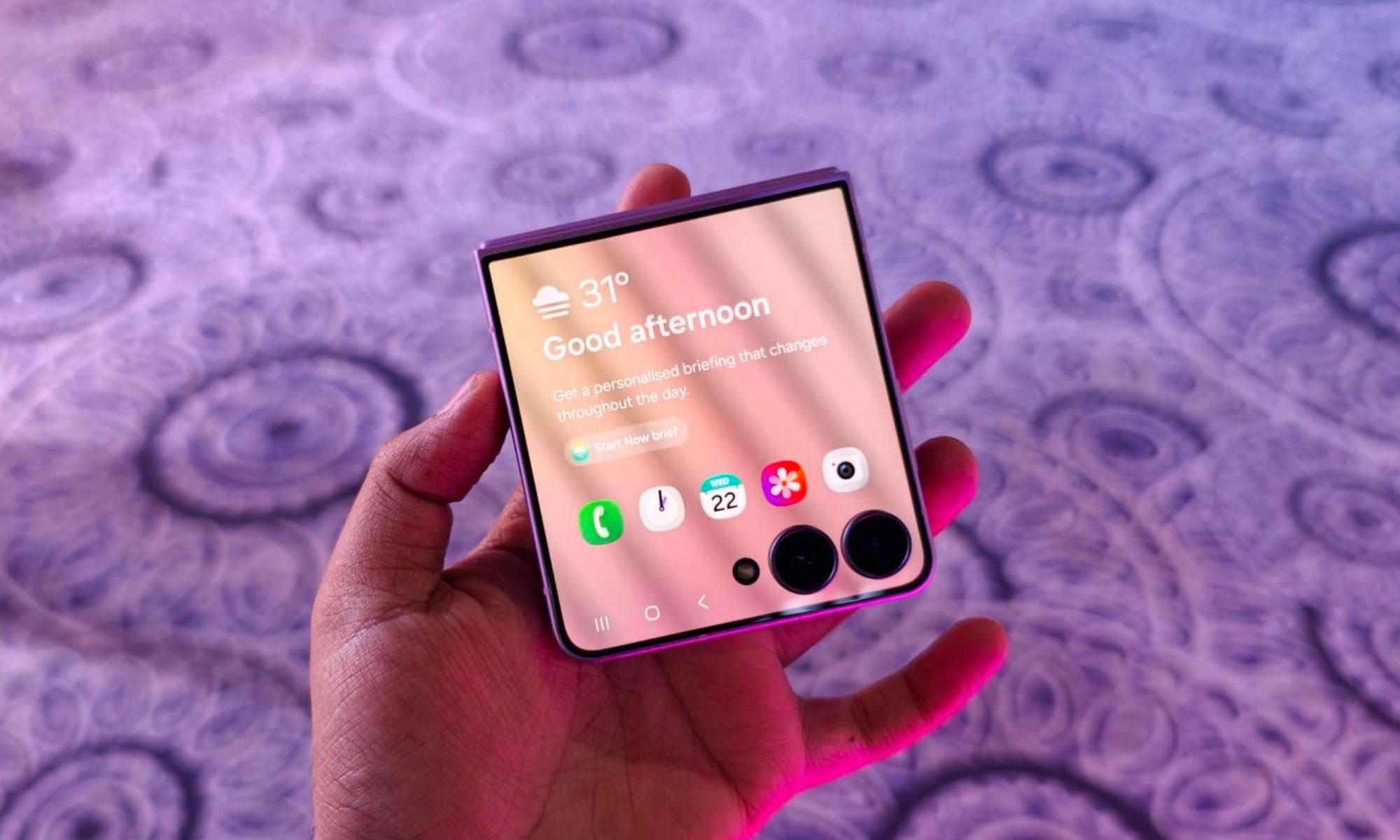
The Galaxy Z Flip 8 is the easiest choice for someone who has little interest in carrying a book-style foldable. I have always preferred compact phones, and a clamshell remains one of the best ways to put a large display into a small pocket. The Flip 8 opens into a conventional 6.9-inch smartphone, then folds into a much smaller square when you are finished.

Samsung has also made the 4.1-inch FlexWindow more useful. One UI 9 brings a proper app tray, recent apps, improved widgets, and access to more everyday functions without opening the phone. While there are limitations, Samsung’s most complete attempt at making the cover screen useful beyond notifications and camera previews.

A flip phone should take advantage of its clamshell design, and the Z Flip 8 is finally the complete package now. The Flip 8 also suits people who enjoy taking selfies and group pictures. Flex Mode can prop the phone up without a tripod, while the cover display lets you frame shots with the superior rear camera.

Its battery, charging speeds, and camera selection sit below the two Fold models. But coming in at hundreds of dollars cheaper, it is a worthwhile trade for someone whose priorities begin with portability.

Three foldables for three very different people

The Galaxy Z Fold 8 Ultra is the easy choice for power users. Its larger displays, stronger camera system, bigger battery, and familiar proportions make it the most complete device of the three.

Advertisement

Samsung’s regular Fold 8 serves a more specific audience. Its wider screen is excellent for media, photos, reading, and anyone drawn to its unusual compact shape.

The Galaxy Z Flip 8 remains my pick for compact-phone fans. It slips into smaller pockets, works like a conventional phone when open, and finally gives the cover screen a more meaningful role.

Samsung has given each foldable a reason to exist. Your choice comes down to the experience you value most: maximum capability, better media viewing, or true pocketability.

Source link

Advertisement
Continue Reading

Tech

Model Context Protocol prepares to break with its stateful past

Published

on

AI seemed simpler in 2024 when Anthropic released the first version of the Model Context Protocol (MCP), an open standard for connecting AI applications to external systems.

Back then, developers primarily used the protocol on their personal computers. As those laptop-bound demos were adapted for multi-client enterprise use, MCP servers moved into the cloud, where the original design quickly created scalability problems.

On July 28, MCP’s maintainers plan to finalize the protocol’s 2026-07-28 revision, bringing many changes – including some that aren’t backward compatible – that reflect some “hard lessons” the core MCP team learned over the past two years, said Anthropic technical staff member David Soria Parra in a livestream Tuesday.

The 2026-07-28 revision will come with the “most substantial changes we have made to the specification, probably since adding authorization,” Parra said. “A lot of things that made MCP are gone.”

Advertisement

Parra claims the new MCP will be easier to deploy and use. If users have been updating their SDKs, they shouldn’t have much problem upgrading.

But he also warned that the underlying data transfer mechanism has totally been rebuilt, which “makes things on the wire a bit more complicated than they used to be.” Protocol-level session tracking will no longer be required.

For those who rolled their own MCP engine, some long days of reconfiguration may be ahead. “If you built your own implementation, it’s going to be a lot of uplift to make this correct,” Parra admitted.

Anthropic donated MCP in 2025 to the AAIF, a Linux Foundation fund co-founded by Anthropic, Block, and OpenAI. By that time, the SDK was being downloaded over 97 million times a month and at least 10,000 MCP servers had been set up.

Advertisement

MCP is now stateless like the rest of the internet

The chief change is that the new revision removes protocol-level sessions, allowing each request to be handled independently. This “stateless” approach, common in the cloud-native world, is used to scale web services behind a fleet of load balancers.

Anthropic originally built MCP so that servers could be built to expose resources, tools, and prompts. An LLM-connected application can host clients to communicate with these servers via JSON-RPC 2.0. 

However, this approach came with excessive complexity and operational difficulties, especially creating and supervising protocol sessions for every individual action. As Parra acknowledged, the original specification failed to properly define how session details should be preserved, leading to complications. Furthermore, routing grew overly intricate when extra resources were required.

The solution was simple. Under the new revision, information about the protocol version, client identity, and capabilities travels in the _meta parameter with each request, eliminating the need for protocol session tracking.

Advertisement

MCP now operates very much like the Claude Messages API, also stateless, which provides the interface for sending and receiving messages with Anthropic’s models.

“I think that it’s a very smart and nice way to just move… state away from the server onto the wire protocol and hope that bandwidth is for free,” Parra said.

MCP’s routing mechanism was also totally gutted. The original messages were sent over JSON-RPC HTTP POST payloads, with the actual operation buried in the JSON body. The new revision also mirrors routing information in HTTP headers, allowing networking gear to route requests without tracking session status or inspecting the JSON-RPC body.

MCP can now be extended however you desire

A number of features in the original MCP have also been deprecated. One is sampling, which seemed useful at the time but turned out to be used rarely. It allowed an MCP server to ask the client’s model to generate a completion, but the semantics were confusing and hard to implement, Parra said. 

Advertisement

Roots was also deprecated. It allows clients to tell servers which file system locations are relevant to a session. It was “a very niche thing,” Parra said. Logging also got its notice for being excessively chatty, and developers were advised to just use stderr, stdio, or OpenTelemetry. 

“We are widening the surface to the things we thought were useful, but we are also realistic about narrowing [MCP] down to the good pieces that everybody is actively using,” Parra said. 

MCP also has been enhanced with extensibility. “I think the extensions are a model for us to really test out things in the protocol before we bake them into the protocol,” said Den Delimarsky, an Anthropic technical staff member who also joined the conversation.

There are many use cases that are domain specific where an extension would be helpful, but the potential user base is not big enough to warrant rolling that feature out to everyone. And experimental features will be tested through extensions. 

Advertisement

Extensions can be bundled with the protocol, but have their own release schedule. One official extension is MCP Apps, which allows the MCP to present the user with an interactive app, built in JavaScript, instead of just text or an image. 

MCP’s Tasks feature, used for managing long-running operations, has been moved out of the core protocol and into an extension.

In addition to officially recognized extensions, users can build their own, following the instructions and suggestions in the specification, Parra said. 

Features formally marked as deprecated will remain functional for at least 12 months, according to Stacklok’s “Enterprise Readiness Guide for the July 2026 MCP Spec Update.” Stacklok, which offers an MCP platform, warns that this is not a blanket guarantee of interoperability with legacy implementations. Servers using the 2026-07-28 revision may not work with older clients, and vice versa.

Advertisement

“Compatibility requires both sides to share a supported protocol era, or for one side to implement deliberate fallback or translation,” the report noted.  

MCP’s move to statelessness was a necessary one, in the view of Stacklok CEO (and co-creator of the very stateless Kubernetes), Craig McLuckie.

“The stateful nature of MCP was really a by-product of its origin as a way to support developers using coding tools (that tend to run locally) to access things. The broader AI community is now embracing MCP as a mechanism to allow enterprises to intermediate access to production systems,” McLuckie told the Register.

“This gives cyber teams a unified control point to apply agent aware policy and is delivered in a form factor that platform teams are comfortable with running.” ®

Advertisement

Source link

Continue Reading

Tech

Irish employers prioritising finding the right long-term hire in 2026

Published

on

Matrix Recruitment’s latest Workforce Trends Report found that multiple factors, such as pay transparency and workplace flexibility, are impacting the recruitment landscape.

Hiring platform Matrix Recruitment has published its hiring data for the first half of 2026 and what it found is that so far this year, employers are placing far greater emphasis on sourcing the ‘right kind’ of long-term talent. This involves a more structured recruitment process with more efficient hiring decision-making, the company said. 

The Workforce Trends Report also found that recent recruitment activity has been resilient, as the number of job advertisements is  consistent with the same period last year,  particularly across sectors experiencing ongoing skills shortages, such as manufacturing, engineering and financial services.

In line with the figures showing a change in employer hiring behaviour, there was a decline in the number of roles being filled after a single interview. Matrix’s report said that the proportion of positions filled after just one interview fell from 31pc in the first half of 2025 to 21pc during the same period in 2026.

Advertisement

Despite the more rigorous recruitment processes, however, Matrix also found that the average time to fill a permanent role has fallen from roughly 59 days to around 54, year-on-year. 

Commenting on the findings, Breda Dooley, the head of recruitment at Matrix, said, “Employers are taking a more strategic approach to recruitment. They’re looking beyond immediate skills and experience to find candidates who will add long-term value to their organisations.

“As a result, we’re seeing more structured, multi-stage interview processes, particularly for permanent roles.”

She added: “Although interview processes have become more thorough, employers are moving faster once they identify the right candidate. Better workforce planning and greater clarity around hiring needs are helping organisations reduce the hiring process without compromising on the quality of their recruitment decisions.”

Advertisement

So far in 2026, a number of reports and experts have explored the growing demand for contract and temporary employees. Matrix’s research continues that trend, recording a 12pc increase in temporary vacancies during the first six months of 2026, while temporary payroll placements increased by almost 10pc.

“While permanent hiring decisions are becoming more deliberate, many organisations are simultaneously using temporary and contract talent to maintain agility in an uncertain economic environment,” said Dooley. 

A tempting offer

Prospective employees, too, are becoming more selective about their work-based decision-making. Workplace flexibility, for example, was found to be a key priority for applicants. 

Candidates are now raising salary concerns much sooner in the hiring process, which Matrix found to be reflective of a greater demand for pay transparency and the opportunity to fully assess a role’s potential early on. 

Advertisement

Dooley said, “Candidates are evaluating employers just as carefully as employers are evaluating them. This is why clear communication, transparency around job responsibilities, salaries and benefits, and an efficient recruitment process have become critical to securing top talent.”

The demand for hybrid working is also continuing to shape recruitment outcomes. According to Matrix’s data, full-time, office-based roles are receiving up to 40pc fewer applications than comparable positions offering hybrid working arrangements.

“Hybrid working is no longer considered a perk – it has become a core component of a competitive employment offering. Employers that fail to recognise this shift in candidate expectations are likely to face increasing challenges in attracting and retaining skilled professionals,” said Dooley. 

Don’t miss out on the knowledge you need to succeed. Sign up for the Daily Brief, Silicon Republic’s digest of need-to-know sci-tech news.

Advertisement

Source link

Continue Reading

Tech

Motorola’s Moto G Play 2024 is a Budget-Priced Smartphone Built for the Long Haul

Published

on

Moto G Play 2024 Smartphone
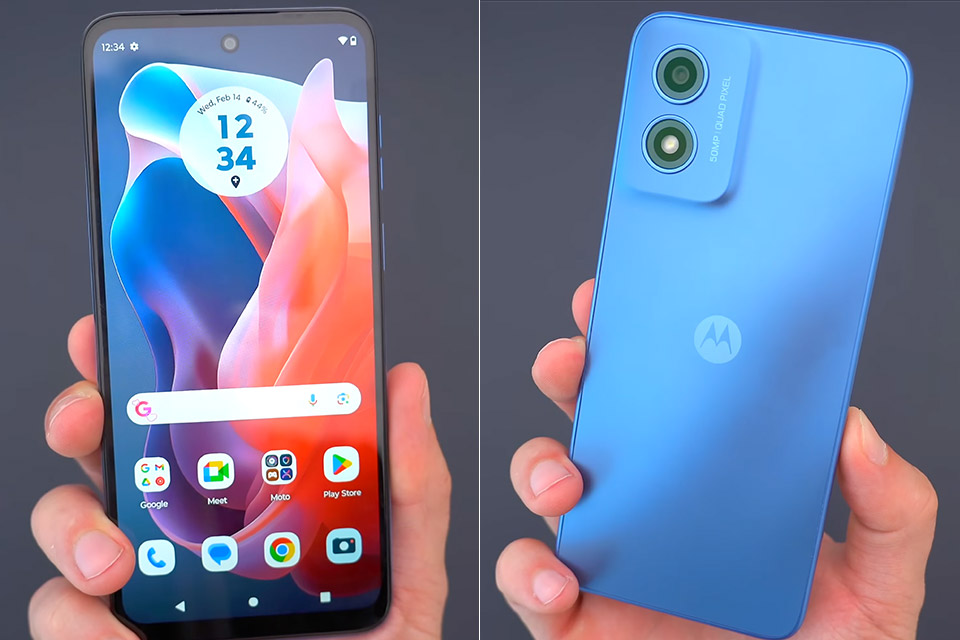
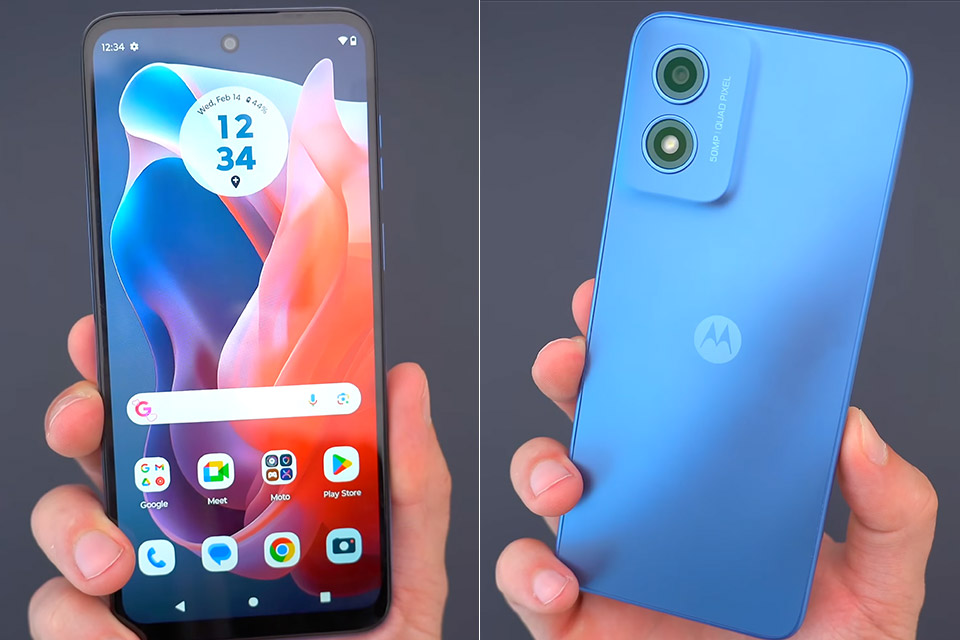
Most people do not need a phone that can render complex games at max settings or shoot cinematic video. They need something that answers calls without lag, holds a charge through a full day of texts and maps, and costs little enough that losing or breaking it does not ruin the month. The Moto G Play 2024, priced at $99.99 (was $150), aims squarely at that reality.


The frame and back are entirely made of plastic, finished in a stunning Sapphire Blue with a smooth matte surface that resists fingerprints far better than a glossy finish. The phone weighs 185 grams and is roughly 8 millimeters thick, so it feels sturdy in the hand but isn’t too heavy to carry in your pocket. The rounded edges and modest curvature to the sides make it fit comfortably even after scrolling for a while. The water-repellent coating provides some protection against light rain or accidental spills, while the Corning Gorilla Glass 3 on the front protects it from scratches.

Sale


Motorola Moto G Play LTE | Unlocked | Made for US 4/64GB | 50MP Camera | Sapphire Blue
  • Blazing-fast Qualcomm performance. Get the speed you need for great entertainment with a Snapdragon 680 processor and 4GB**** of RAM.
  • Fluid display + immersive stereo sound. Bring your entertainment to life with an ultrawide 6.5″ 90Hz* HD+ display plus stereo speakers, Dolby Atmos…
  • 50MP*** Quad Pixel camera. Capture sharper, more vibrant photos day or night with 4x the light sensitivity.

A 6.5-inch IPS LCD display makes up the most of the front. It has a resolution of 1600 by 720 pixels, which is sufficient to make text readable for messages, online pages, and navigation apps without using up all of the processing power. The 90 Hz refresh rate makes everyday swipes and scrolling feel silky smooth when compared to 60 Hz panels commonly seen at this price tier. It gets nice and bright at around 500 nits in normal settings, making it suitable for most everyday use and even most days while you’re out and about. There are two stereo speakers on the ends, which are Dolby Atmos compatible, giving the music and movie that extra bit of presence that most inexpensive gadgets with a single speaker lack.

Advertisement


The phone is powered by a Qualcomm Snapdragon 680 CPU developed on a 6-nanometer technology. So it has four high-performance cores at 2.4 GHz and four efficiency cores at 1.9 GHz. It comes with 4 GB of RAM, but it also includes a software capability that can extract extra RAM from storage as needed, which is useful if you’re running many apps at the same time. You get 64 GB of internal storage for programs and media, as well as a dedicated microSD slot that can accept a 1 TB card. It easily handles regular operations including as messaging, surfing, and video streaming, as well as light photo editing. Of course, if you start pushing it with heavy multitasking or demanding games, it will exhibit some limitations, but the phone does not struggle with regular use.

Moto G Play 2024 Smartphone
The camera is quite minimalist, with a single 50-megapixel rear sensor, an f/1.8 aperture, and phase-detection autofocus. They also employ Quad Pixel technology, which combines data from four pixels into one to improve low-light performance. When there is a lot of natural light, the camera takes good clear photographs with firm detail and natural-looking colours. Nighttime photos are fine for sharing with friends or documenting something, but they lack the clarity of a more expensive camera. The 8-megapixel front camera is adequate for video calls and selfies. Both cameras can record video at 1080p and 30 frames per second.

Battery life has increased dramatically compared to its predecessor, reaching 5000 milliamp hours. Motorola claims you can get up to 46 hours of mixed use out of it, provided you utilize it in ideal settings. In truth, if you’re fairly active during the day, this device will last till the end of the day without requiring a recharge, and then some. If you use it sparingly, you might be able to get away with a second day. You may charge it via USB-C, but keep in mind that it only has a maximum power output of 15 watts, so the recharge period will be lengthier than with some other systems. However, because of the phone’s capacity, you will need to charge it less frequently.

Moto G Play 2024 Smartphone
The phone ships with Android 13 pre-installed, with the normal Motorola interface that adds a few good features like gesture controls and family space without cluttering it up. Motorola promises one big OS update to Android 14 and a restricted security patch update after that, but I’m guessing they’ll still keep it patched enough to keep you secure. This phone lacks 5G and NFC because they kept costs down and simplified the hardware, which fits well with what this phone is all about: being a dependable everyday runner or a solid backup phone.

Source link

Advertisement
Continue Reading

Trending

Copyright © 2025