Connect with us
DAPA Banner

Tech

5 Things You Need To Do ASAP After Hitting A Pothole

Published

on


There’s a reason almost every driver you know has a story of pothole frustration. It’s because it’s largely inevitable that you’ll fall victim to one somewhere at some point. What’s important, though, is what you do next. When our cars bump a curb or take a small jolt from a pothole, sometimes it seems so minor that we just grit our teeth and go about our day. Bear in mind, though, that you may not have gotten off as easily as you first thought. 

The fact that you felt only a minor impact doesn’t necessarily mean that your vehicle hasn’t sustained damage. If it has, it’s vital to determine what’s happened and what needs to be done next. This can prevent worse harm being done to the vehicle, as well as keep you and other drivers safe. There are also potential ways to secure compensation for the damage done by a pothole, if you know the avenues you can try to take and the time frame you have to do so. 

There are some things you can do in the immediate aftermath of hitting the pothole, while there are others that are jobs to be done in the days and weeks ahead. In either instance, though, as they’re such a ubiquitous threat on the roads, all drivers should know what to do after striking a pothole.

Advertisement

Pull over and check your vehicle

Of course, any time your vehicle takes a bump or a ding, all kinds of things immediately run through your mind. The first step is to pull over as soon as possible to determine what you’re dealing with. After all, it may be dangerous to drive any further. Even if that’s not the case, your vehicle may require prompt service. 

There are some immediate signs of major damage, such as buckling of the wheel arches, that will tell you that you need to see a mechanic ASAP after the pothole encounter. It’s also important to keep in mind that you may have been driving when visibility was poor, such as in the dark, so it definitely pays to have a flashlight in your vehicle as part of your emergency kit for these sorts of situations.

Advertisement

You should take your time to thoroughly inspect your vehicle. If you’re not a mechanic who’s experienced with all the subtle yet important signs, the first thing to ascertain is that there hasn’t been catastrophic damage to the underside of your vehicle. 

It may not even be something visible. Have a careful listen for escaping gas or any sounds that your vehicle wasn’t making before, which could indicate suspension damage or similar. It may well be a case for a mechanic, and the more information you can give them about any changes to your vehicle afterward, the better they’ll be able to diagnose and resolve problems.

Advertisement

Report the offending pothole

After you’ve determined that your vehicle hasn’t been damaged (or arranged proper care if it unfortunately has), your next priority should be reporting the troublesome pothole in question. To do so, you’ll first need to find out which body is responsible for that particular road.

State highways, etc., are typically administered by the state’s Department of Transportation. If on a California highway, for instance, you can use the Caltrans Division of Maintenance Customer Service Request form, which allows users to identify a pothole using a drag-and-drop pin-on-a-map graphic. As Texas’s own Department of Transportation notes, though, other roads, such as those within a city’s boundaries, are that city’s responsibility, not the state’s. Of course, these authorities usually have huge areas to maintain and significant backlogs of other repairs and improvements to make, so there’s no telling how long it may take for the repair to ultimately be made.

Still, you’re raising critical awareness about the issue, and that could save many tires and suspensions from needless extra strain or damage. On top of that, such reports can also serve as important evidence should a motorist seek compensation from the relevant authority for damage caused to their vehicle. This is because, as CNN Legal Analyst and Atlanta attorney Cody Randall put it in an Instagram post on the matter, “the city or the county, whoever’s maintaining that road, has to have knowledge that the defect exists and an opportunity to remediate it” for them to be found liable for damage caused by a pothole. 

Advertisement

Consider making a claim for the damage your vehicle has sustained

As the Los Angeles Times reported in 2024, 44 million drivers in the United States had their vehicles damaged by potholes in 2023. Looking a little further back, the American Automobile Association reported that pothole damage had cost the country’s drivers approximately $26.5 billion in total in 2021.

Compensation claims can be made if you act quickly. The time limit is up to 90 days after the collision in New York City, for instance, potentially differing a lot by location, though successfully receiving compensation for it is another matter. The onus is on the driver to demonstrate irrefutably that the responsible body was not taking care of the road as they should. This is why those who hit potholes should take the time to take photographs of the section of road, the pothole itself, their vehicle, and any damage. 

Be prepared to have little success with your claim. In fact, the Michigan Department of Transportation notes that “the majority of damage claims are denied under governmental immunity laws.” While Michigan law says that government agencies must “maintain the highway in reasonable repair,” defining a failure to do so is a tricky matter. As CNN Legal Analyst and Atlanta attorney Cody Randall explained on Instagram, counties and states often have “sovereign or qualified immunity,” which means, in effect, “you actually have to ask them for permission to sue them,” and they must choose to allow it. 

Advertisement

Determine whether your existing insurance coverage will help you

If you determine that your chance of receiving compensation from the local authorities is low, there’s another course of action that could help: Your existing car insurance. As State Farm reports, “pothole damage is usually covered with collision coverage, minus the deductible,” the latter typically being up to around $1,000. After a quote for the price of a repair, you might find that you’d end up parting with more money in the long run by taking this route. 

The Insurance Information Institute clarifies that adding collision coverage to a standard policy can cover the driver against impacts from potholes or other similar road hazards, though “it does not cover wear and tear to a car or its tires due to bad road conditions.” Such conditions often come hand in hand with potholes because of the way they form (rain freezing in existing cracks in the road expands and causes them to become larger), which also contributes to spring being the absolute worst time for potholes. A driver must prove that it was a collision with a pothole that caused the damage to get their insurance to pay out.

Advertisement

An additional complication to keep in mind is that your no-claims status may also be at stake from using it. All in all, as is so often the case with auto insurance, there’s a lot that needs to be considered prior to any claim. It can be important to avoid cheap car insurance to ensure your coverage is comprehensive, should it be needed for reasons like this. 

Advertisement

Check your tire warranty

Claims, whether through your personal vehicle insurance or for compensation from the relevant body, may be a non-starter. They may also result in lots of paperwork and evidence-gathering that adds up to much more time and/or money spent than the payout would ultimately be worth. There’s something much less time-consuming that you can consider first, though: Check the warranty on your tires. 

According to Edmunds, road hazard coverage can be added to a typical tire warranty to cover dangerous objects that could be on the road and potentially puncture a tire. Without this addition, the warranty will typically only be applicable for manufacturing defects, not accidental damage. This is why the road hazard add-on could be valuable, but it certainly doesn’t simply mean a free tire in every case. Additional fees, such as those for road hazard coverage on an additional tire, may also be added to the bill you end up receiving. The circumstances, the type of tire, and the damage it sustained are important to consider. 

Ultimately, a driver has several options available to them if they hit a pothole, and while each incident will be different and have different effects, the immediate priority is damage control. Often, the aim is to recoup as much of the expense as possible in the circumstances, which is a result in itself and better than not getting anything back at all. 

Advertisement


Source link

Advertisement
Continue Reading
Click to comment

You must be logged in to post a comment Login

Leave a Reply

Tech

What to expect from Google I/O 2026

Published

on

We’re sliding into developer conference season and one of the biggest events on the upcoming calendar is Google I/O. This year’s edition is taking place on May 19 and 20. As usual, the in-person element will happen in Mountain View, California, though many of the keynotes and sessions will be livestreamed. Google will surely make its biggest announcements during the opening keynote, which will start at 1PM ET on May 19. A developer keynote will take place later the same day.

As ever, the rumor mill will pick up speed in the leadup to Google I/O. We do have some ideas about what Google will discuss at the event. So let’s take a look at what to expect at Google I/O 2026 (we’ll update this story as we hear more credible rumors).

What’s officially on deck

Google I/O logo

Google I/O logo (Google)

When it confirmed the dates for this year’s I/O, Google revealed a little bit about what it has in store for us. As you might imagine, AI will be a major focus of the event. Google plans to share its “AI breakthroughs and updates in products across the company, from Gemini to Android, Chrome, Cloud and more,” it wrote in a blog post in February.

There will be news on Gemini model updates as well as agentic coding. Google will have some product demos too.

Advertisement

The company has released its initial schedule of keynotes and sessions, but it doesn’t provide us with a lot of specifics as yet. It has lined up discussions on what’s new in the likes of Google Play, Firebase (a mobile and web app development platform), the Gemma open model family and the open-source app development framework Flutter. Interestingly, there isn’t a dedicated session for Android XR on the schedule just yet.

What to expect

Leaked image of Google's Aluminium OS

Leaked image of Google’s Aluminium OS (9to5Google)

There haven’t been many credible leaks ahead of Google I/O as yet, but we can make some educated guesses about what to expect from the event. It’s all but certain that we’ll get more details about Android 17 at I/O. Developers need time to tweak their apps ahead of the next major version of the operating system rolling out to everyone if they want to take advantage of new features as soon as possible, and they invariably get a heads up about those at I/O every year. (That said, Google has been moving away from a big annual release approach in favor of juicier Pixel Drops/Android updates, so we may not see some of the new features it unveils at I/O for some time.)

As for other operating systems, Google is planning to meld ChromeOS and Android into a unified platform. This seems to be the project that’s being referred to as Aluminium OS, which we got a first glimpse of earlier this year thanks to some leaks. I/O seems like the perfect venue for Google to start showing that off to the public.

On the AI front, a reveal of Gemini 4 could be on the docket, along with details of the latest Veo text-to-video model. Maybe we’ll hear more about Project Astra, Google’s pitch for a universal AI assistant.

Advertisement

If Google has some consumer hardware to show off at this year’s event, I suspect it’ll be an Android XR device or devices, rather than a Pixel phone or watch. There is a chance that we’ll get a tease of the Google Pixel 11 lineup. But don’t be surprised if we don’t see that or the Pixel Watch 5 until Google’s dedicated hardware event, which has taken place in August or October in recent years (Google will want to stay well away from Apple’s iPhone event, which will likely take place in September as usual).

Here’s hoping for a big surprise or two

A banner image with the Google Beam logo on the left and a person sitting in front of the Beam screen talking to another person, who appears to pop slightly out of the screen.

Google

Sure, Android updates are all well and good. If Google insists on cramming Gemini and other AI tools into all of its tools and services, we’ll at least listen to what they have to say about all that.

But I have my fingers crossed for some cool surprises. Give us something new from Google X (Alphabet’s moonshot factory, not the thing that was once Twitter), an idea that could be a net benefit for humanity and boost the company’s bottom line at the same time. These events are always more fun when there’s something for us to get genuinely excited about, even if it’s something relatively niche but out there, like the Google Beam 3D video conferencing tech.

Source link

Advertisement
Continue Reading

Tech

How this master’s programme is building tech leadership talent

Published

on

Susan Kelly discusses Technology Ireland ICT Skillnet’s tech leadership master’s programme, which is celebrating 20 years in operation.

Last week, Technology Ireland ICT Skillnet announced its plans to award four fully funded places on its MSc in Leadership, Innovation and Technology programme to celebrate 20 years since the programme’s inception.

The funding – called the ‘Big 20 Giveaway’ – is valued at €20,000 per annum per place and will cover all tuition fees of the two-year programme for four candidates.

“The Big 20 Giveaway is a celebration of the programme’s 20-year impact, but also a very practical initiative to support future talent,” says Susan Kelly, network director at Technology Ireland ICT Skillnet.

Advertisement

“What we’re really celebrating is the impact the programme has had with over 300 graduates who have gone on to lead teams, functions and transformation initiatives across Ireland’s technology landscape and beyond.

“For us it is not just about looking back, it’s about investing in what comes next.”

The programme

But what is the course actually about?

The programme, which is delivered at Technological University Dublin, is a part-time, applied master’s designed specifically for experienced professionals working in technology and innovation-led environments.

Advertisement

“Its core objective is to help people move beyond technical expertise and develop the capability to lead, whether that is leading teams, driving innovation or shaping strategy at an organisational level,” says Kelly.

She tells SiliconRepublic.com that the programme focuses on three key areas: leadership capability, innovation and transformation, and business and strategic thinking.

“What really differentiates it is that it is applied, not theoretical,” she says. “Participants work on real challenges from their own organisations, so the learning is immediately relevant and delivers tangible value both to the individual and their employer.”

The programme has been in operation since 2006, and in the 20 years since then, technology has advanced considerably.

Advertisement

Kelly explains that a course such as this is more important than ever today because “the challenge right now isn’t access to technology, it is the ability to lead with it effectively”.

“Organisations are dealing with rapid change driven by AI, digital transformation and global competition,” she says. “The professionals who will stand out are those who can connect technology, strategy and people.”

She adds that the biggest benefit of the programme is that it enables participants to make the shift “from being the person who delivers technology to the person who shapes how and why it’s used”.

“It gives them the language of business and strategy, the confidence to operate at senior levels, and the ability to lead transformation and not just contribute to it.

Advertisement

“For many, it’s the difference between continuing to grow technically and actually stepping into leadership roles with broader organisational impact.”

Who it’s for

With four fully funded places on the programme up for grabs, what constitutes an ideal candidate for the course?

Kelly says the programme is designed for what she calls the “strategic technologist”, which she explains refers to someone who is already established in their career but is ready to take the next step.

“Typically, participants are mid- to senior-level professionals working in roles like software engineering, architecture, product, project management, cybersecurity or IT leadership,” she says. “They are already technically credible but looking to expand into broader leadership or strategic roles.”

Advertisement

She says course participants are often “at a career inflection point”, where they may be leading teams or projects already but “they recognise that technical expertise alone won’t get them to the next level”.

“Many are experiencing a technical ceiling, where they are highly capable but they don’t yet have the strategic, commercial or leadership toolkit to move into senior decision-making roles. This programme is designed specifically to help them break through that barrier.”

For anyone considering applying for one of the funded positions, Kelly says the organisation is looking for motivated, ambitious people who have strong technical or functional expertise and are already operating at a high level in their organisation, and who want to have a greater impact, “not just within their team but across their organisation”.

An important criteria that she emphasises is that they’re not looking for people at the start of their careers or those looking for purely academic study.

Advertisement

“This is for professionals who are already doing significant work and want to elevate their influence and capability,” she clarifies. “We’re also looking for people who will apply what they learn in real time by bringing challenges from their workplace into the programme and using it as a platform to drive meaningful change.

“Ultimately, the strongest candidates will be those who recognise that they’ve outgrown a purely technical role and are ready to take on the responsibilities and opportunities of leadership.”

Don’t miss out on the knowledge you need to succeed. Sign up for the Daily Brief, Silicon Republic’s digest of need-to-know sci-tech news.

Advertisement

Source link

Continue Reading

Tech

AI is speeding up and improving production, driving millions of creators to invest in better cameras and accessories

Published

on


  • Smartphone limits drive creators toward microphones, lenses, gimbals, and dedicated cameras
  • Accessory spending rises as creators invest hundreds and thousands into gear upgrades
  • AI-driven production growth exposes capture weaknesses and boosts hardware demand worldwide

Smartphones still dominate video creation, but growing evidence suggests their physical limits are driving a new spending wave on dedicated gear among millions of creators, experts have said.

A new report from Futuresource Consulting estimates the global population of online video creators reached 246 million in 2025 and could grow to 267 million by 2030. That growth is only part of the story, however, as spending patterns and equipment upgrades appear to be the real commercial driver behind the next phase.

Source link

Advertisement
Continue Reading

Tech

Google app just launched on Windows, and it wants to pull a Spotlight trick from Macs

Published

on

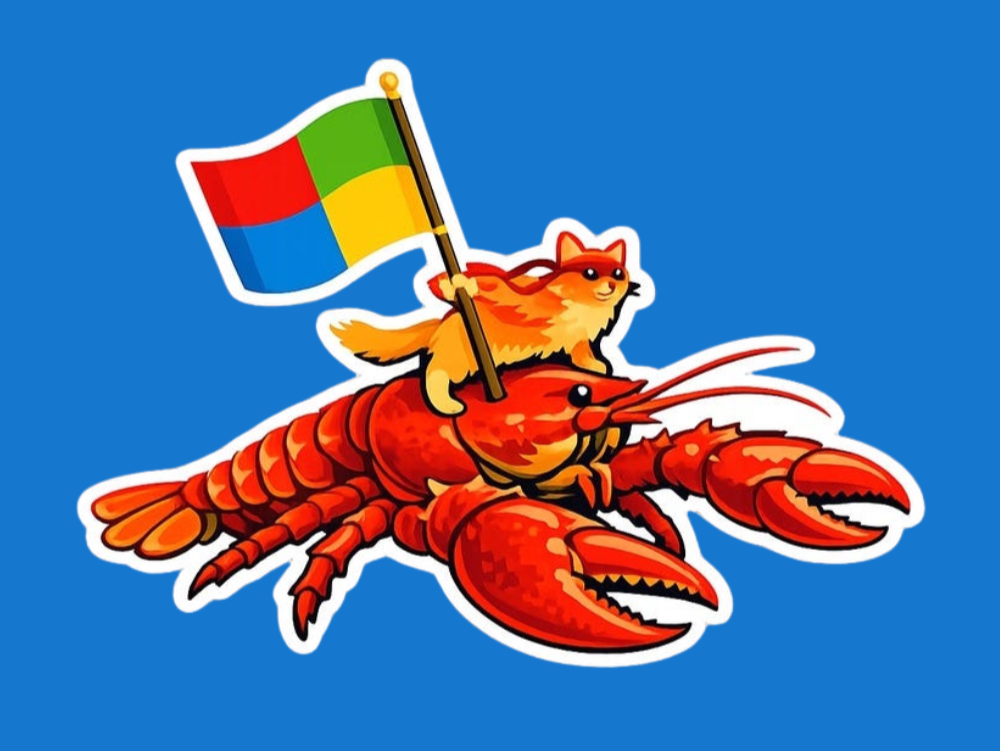
Google has planted its flag on Windows territory. The Google app for desktop is now globally available in English for Windows users, graduating from its experimental phase on Search Labs

The browser tab we reflexively open to use Google every five minutes now has a faster, more efficient replacement sitting on the desktop. 

What Does The App Actually Do?

The centerpiece, mind you, is a keyboard shortcut: Alt + Space. It summons a floating search bar over whatever is on the screen, similar to how Cmd + Space summons the Spotlight search on Macs.

Once you summon the search bar, you can search across local computer files, installed apps, Google Drive documents, and the internet in general, all from one place. 

If I were a Windows user (which I was until about three years ago), I would have installed the Google app for the Spotlight-like search experience alone, but my Mac’s Spotlight has been working fine for the same amount of time.

Advertisement

What else can it do?

Quite a bit, actually. Google Lens, the company’s native image-based search tool, is built directly into the new Google app for Windows. It lets users click and search for anything that’s visible on their screen. 

From translating on-screen text to solving a maths problem, you can do such things without copying anything. The app also supports screen sharing within a search session, so users can keep a document or webpage open while asking follow-up questions. 

Of course, the new Google apps come with AI Mode embedded. So, answers go beyond blue links, responses are conversational, contextual, and connected to the internet with accurate information, along with appropriate citations. 

Google’s global Windows app rollout signals something bigger than convenience; it’s a direct challenge to Microsoft’s dominance over your desktop search experience. Copilot is already embedded in Windows, so Google’s presence is also making itself felt. In the future, we might get to see a dedicated Gemini app for Windows. 

Advertisement

Source link

Continue Reading

Tech

Apple is testing four smart glasses designs as it prepares to challenge Meta Ray-Bans

Published

on


While Meta partnered with Ray-Ban to position its smart glasses as more lifestyle-oriented than experimental, Apple’s design philosophy remains distinctly in-house. In his Power On newsletter, Gurman notes that Apple is taking an independent approach, choosing to develop the product internally rather than collaborate with an established eyewear brand. Each…
Read Entire Article
Source link

Continue Reading

Tech

GeekWire Awards: The machines of the future, from self-driving earthmovers to space robots

Published

on

The finalists for Hardware/Robotics/Physical AI of the Year at the 2026 GeekWire Awards. Clockwise from top left: AIM Intelligent Machines; Brinc’s Guardian drone; Starfish Space’s Otter spacecraft; Orbital Robotics; and Augmodo’s Smartbadge. (Company Photos)

An emerging class of startups is pushing the boundaries of what machines can do in the physical world — retrofitting bulldozers to dig on their own, launching drones that beat police cars to 911 calls, outfitting retail workers with spatial computing badges, building robotic arms for spacecraft, and servicing satellites in orbit.

Those are the innovations represented by the finalists for Hardware/Robotics/Physical AI of the Year at the 2026 GeekWire Awards. 

The finalists are: AIM, Augmodo, Brinc, Orbital Robotics, and Starfish Space.

Now in its 18th year, the GeekWire Awards is the premier event recognizing the top leaders, companies and breakthroughs in Pacific Northwest tech, bringing together hundreds of people to celebrate innovation and the entrepreneurial spirit. It takes place May 7 at the Showbox SoDo in Seattle.

Continue reading for information on the Hardware/Robotics/Physical AI of the Year finalists, who were chosen by a panel of independent judges from community nominations.

You can help pick the winner: Cast your ballot here or in the embedded form at the bottom. Voting runs through April 16.

Advertisement

AIM Intelligent Machines retrofits heavy earthmoving equipment such as bulldozers and excavators to operate autonomously, using sensors and an edge computing system to build real-time 3D maps of a machine’s surroundings and navigate without a human driver.

Originally focused on mining and construction, the company recently expanded into defense, winning $4.9 million in U.S. Air Force contracts to build and repair military bases and airfields.

The Seattle-area startup announced $50 million in funding in 2025 and was founded in 2021 by engineers with experience at Waymo, SpaceX, Google, Stripe, Tesla and Apple. CEO Adam Sadilek leads the company.

Augmodo makes wearable “Smartbadge” devices for retail store employees that use computer vision and 3D mapping to collect real-time inventory data as workers move through aisles, tracking empty shelves, overstocking and product availability. The approach is designed as a cheaper and more efficient alternative to robot scanners.

Advertisement

The Seattle startup, founded in 2023, raised $37.5 million in a Series A round on top of a previously announced $5.4 million seed round. CEO Ross Finman previously co-founded Escher Reality, which was acquired by Niantic Labs, and spent more than four years at the “Pokémon Go” maker. The company recently hired a new CTO from Microsoft HoloLens and Amazon Alexa and has grown its team nearly fivefold.

Brinc builds drones for police, fire and emergency response agencies, recently unveiling Guardian, the world’s first Starlink-connected drone. Guardian can auto-launch on a 911 call, fly up to eight miles at 60 mph for more than an hour, and deliver payloads such as defibrillators and emergency medication. 

The company’s products are used by more than 900 public safety agencies and more than 20% of SWAT teams in the U.S.

Founded in 2019 by CEO Blake Resnick, the Seattle-based company raised $75 million in a round that included a strategic alliance with Motorola Solutions, bringing total funding to $157.2 million. The company now employs 160 people and is moving to a new 35,000-square-foot headquarters and factory in Seattle’s Queen Anne neighborhood.

Advertisement

Orbital Robotics is developing AI-powered robotic arms for spacecraft, tackling the challenge of manipulating objects in orbit where every movement of an arm causes the spacecraft itself to move in response. 

The Puyallup, Wash.-based startup is also working to assemble a consortium to save NASA’s aging Hubble Space Telescope by building a robotic spacecraft to boost it to a more stable orbit.

Founded in late 2024, the company has raised about $310,000 and is working with a stealthy space venture on an orbital rendezvous project for the U.S. Space Force. Co-founders Aaron Borger, Doug Kohl, Riley Mark and Sohil Pokharna are former Blue Origin engineers.

Starfish Space builds satellite servicing spacecraft designed to autonomously inspect, dock with and reposition satellites in orbit — including satellites that weren’t originally built for on-orbit servicing. Its Otter spacecraft can extend satellite lifespans by boosting them to higher orbits or move them to lower orbits for safe disposal.

Advertisement

The Tukwila, Wash.-based company, founded in 2019 by former Blue Origin engineers Austin Link and Trevor Bennett, recently raised more than $110 million in a Series B round, pushing total funding past $150 million. 

Starfish has completed three demonstration missions in orbit and has Otter missions under contract with the U.S. Space Force, NASA, SES and others, with its first operational mission expected to launch this year.

Astound Business Solutions is the presenting sponsor of the 2026 GeekWire Awards. Thanks also to gold sponsors Amazon Sustainability, BairdBECU, JLLFirst Tech and Wilson Sonsini, and silver sponsors Prime Team Partners.

The event will feature a VIP reception, sit-down dinner and fun entertainment mixed in. Tickets go fast. A limited number of half-table and full-table sponsorships are available. Contact events@geekwire.com to reserve a spot for your team today.

Advertisement

(function(t,e,s,n){var o,a,c;t.SMCX=t.SMCX||[],e.getElementById(n)||(o=e.getElementsByTagName(s),a=o[o.length-1],c=e.createElement(s),c.type=”text/javascript”,c.async=!0,c.id=n,c.src=”https://widget.surveymonkey.com/collect/website/js/tRaiETqnLgj758hTBazgd5M58tggxeII7bOlSeQcq8A_2FgMSV6oauwlPEL4WBj_2Fnb.js”,a.parentNode.insertBefore(c,a))})(window,document,”script”,”smcx-sdk”); Create your own user feedback survey

Source link

Continue Reading

Tech

Kia’s New Pickup Has Something Under The Hood You Can’t Get From Toyota Or Ford

Published

on


As evidenced by the Hyundai Boulder Concept and some statements in Kia’s 2026 Investor Day announcements, Kia is getting serious about building a truck. Kia already has a body-on-frame truck, the Tasman, which launched in global markets in 2025, but this potential new offering seems to be different from that particular mid-sized truck.

The new truck, as yet unnamed, will ride on a body-on-frame platform like other American-market trucks from the likes of Toyota, Ford, and General Motors. Whether Kia’s new pickup offering will be able to compete with those well-entrenched models is a question only the future can answer: Kia’s truck isn’t even scheduled to hit the market until 2030.

However, Kia is at least giving the truck a pair of drivetrains that might edge out a win, or at least help it stand out from the competition. More specifically, Kia is aiming to offer two hybrid drivetrains, one of which will be an extended-range model.

Advertisement

An electrified boost

Two giants in the truck industry, Toyota and Ford, already offer hybrid versions of their trucks: Toyota has the newest-generation Tacoma and Tundra, while Ford has the F-150 PowerBoost. However, an extended-range electric vehicle pickup, as the new Kia is supposed to be, would be unique, at least in the North American market.

Advertisement

BYD, the Chinese automaker well known for its electric cars, produces the BYD Shark, a body-on-frame plug-in hybrid pickup, but that truck probably isn’t showing up on American streets anytime soon. As far as American automakers go, Stellantis has teased the Ram Ramcharger — which would have a gas motor to charge its onboard batteries — for years, but it has yet to materialize. Ford has, admittedly, announced a range-extending gas engine for the second-gen F-150 Lightning, but it hasn’t revealed a release date yet.

The new Kia model has the potential to shake up the market, providing American drivers with something unique at a price point that will likely be very competitive. While Kia hasn’t even announced what the truck will look like or what it will be called, it’s certainly a truck to look forward to.

Advertisement


Source link

Continue Reading

Tech

Traeger Just Launched Its Most Affordable Full-Sized Pellet Grill

Published

on

Pellet grill converts aren’t shy about their love for these versatile outdoor cookers, and many, including CNET, regard Traeger as the best in the booming alternative-grill category. Traeger’s pellet grills allow for precise temperature control via convection heat, easy low-and-slow cooking with minimal oversight and wood-fired flavor you won’t get from gas or charcoal setups. But they aren’t cheap.

A full-sized Traeger typically costs the would-be pellet griller about $1,000, but the brand just launched its most budget-friendly line, the Westwood series, ahead of summer 2026. That means you can haul in one of Traeger’s cult-favorite pellet grills with most of its signature bells and whistles for less than $700.

Advertisement
An open Traeger Westwood grill open with food cooking

Pellet grills are praised for delivering woodfire flavor and precise temperature control.

Traeger

The new standard Westwood has 653 square inches of grilling space and sells for $699. The XL sports 823 square inches and will cost you $799 — still cheaper than any other large grill in the Traeger lineup. Until now, the cheapest full-sized Traegers, the Ridgewood series, started at $899.

The Westwood series builds on the advanced engineering and flavor-forward technology that Traeger has refined across its top-of-the-line grills, according to a press release shared with CNET, and fuses them into a grill designed for everyday cooking.

Key Features of the Traeger Westwood series:

  • Woodfire flavor with minimal fuss: Natural hardwood pellets and convection airflow work together to deliver richer wood‑fired flavor and consistent results.
  • Easy use: WiFIRE with Bluetooth compatibility lets users monitor and control their grill from the Traeger App for effortless, precise cooking.
  • More cooking options than most grills: Grill, slow cook, smoke or bake with Traeger’s precise temperature control and convection technology.
  • Generous cooking space: Dual‑tier grilling area provides room to cook multiple dishes at once.
  • Space to prep: Integrated shelves and storage create a streamlined workspace, keeping tools, ingredients and pellets within easy reach.
An arm holds down a Traeger grill hood

With the launch of its Westwood Series, Trager’s pellet grills are more affordable than ever.

Advertisement

Traeger

The Westwood Series is now available online and in stores through Traeger retailers

Source link

Advertisement
Continue Reading

Tech

Amazon purchases Globalstar for $11.6B to expand its low Earth orbit satellite network

Published

on


Per the agreement, Amazon will take ownership of Globalstar’s existing operations including its low Earth orbit satellite network and supporting infrastructure, as well as related assets like mobile satellite service spectrum licenses. Amazon is paying $90 per Globalstar share – available either as cash or in Amazon stock – which…
Read Entire Article
Source link

Continue Reading

Tech

The Google Pixel 10 Pro is at its lowest price on Amazon right now

Published

on

512GB of fast, well-organised storage changes how you actually use a phone, especially when you are shooting 8K video and saving high-resolution 50MP images without a second thought.

Right now, that headroom costs considerably less than it should, with the Google Pixel 10 Pro down from $1,219 to $969 on Amazon, saving you $250 on one of 2025’s most capable Android handsets.

Google Pixel 10 Pro on an orange backgroundGoogle Pixel 10 Pro on an orange background

The Google Pixel 10 Pro 512GB is at its lowest price on Amazon right now, giving you more storage for less

256GB of fast, well-organised storage changes how you actually use a phone, especially when you are getting it with a $250 discount.

Advertisement

View Deal

The camera is the obvious starting point, and on the Pixel 10 Pro it earns genuine attention rather than just marketing language, because the triple rear system pairs a 50MP main sensor with 100x Pro Res Zoom for the kind of detail you would normally need a much bigger camera to capture.

Advertisement

That reach is backed by Google’s Tensor G5 chip, which has been purpose-built with an improved TPU and CPU to run Google’s AI processing on-device, meaning tasks like computational photography and Gemini Live happen faster and with less reliance on a network connection.

Gemini Live itself is worth dwelling on, because it turns the phone into something closer to an always-available visual assistant, letting you point the camera at your surroundings and have a natural back-and-forth conversation about what it sees, which feels meaningfully different from tapping through menus.

Advertisement

The Whatsapp LogoThe Whatsapp Logo

Get Updates Straight to Your WhatsApp

Advertisement

Join Now

The 6.3-inch Super Actua OLED display hits 3,300 nits of peak brightness, so reading the screen outdoors in direct sunlight stops being a frustrating experience, and the 120Hz refresh rate keeps scrolling and transitions feeling fluid regardless of what you are doing.

Advertisement

Build quality matches the ambition, with durable aluminium framing and Corning Gorilla Glass Victus 2 on the back meaning the phone can survive the kind of daily contact that would leave cheaper handsets visibly worse for wear.

The Pixel 10 Pro is a strong fit for anyone who wants Google’s best camera and AI experience without paying the full flagship price, and at $969 this is the most accessible that combination has been since launch.

SQUIRREL_13890777

Advertisement

Advertisement

Source link

Continue Reading

Trending

Copyright © 2025