Tech
8 New Products We Want to Review Most from T.H.E. Show SoCal 2026

T.H.E. Show SoCal 2026 was not overflowing with affordable hi-fi or easy, impulse-buy review candidates. The strongest rooms were largely dealer and distributor showcases built around each brand’s newest, most ambitious, and usually rather expensive gear. That made for some excellent demonstrations, but also raised the obvious question: which component was actually responsible for making each system sound so special?
The ATC EL50 Anniversary Edition certainly made an impression again, but it is not on this list because a pair is already planned for review later this summer; the Costa Mesa system was also more of a continuation of the excellent AXPONA demonstration than a new reveal. We are also covered with the Atlantis Lab AT 23 PRO and Neoson Evolution, both of which Will Jennings is already reviewing. No need to have three people circling the same runway.
Every product on this list came from one of the show’s best sounding rooms. That does not automatically mean each was the star of the system. Great rooms are the result of careful matching, setup, source material, and enough expensive supporting gear to make a small nation nervous. These are the eight products we most want to get into a proper listening room to determine whether they were truly the reason those systems stood apart, or simply fortunate passengers in a very good hotel-room ride.
Audio Note OTO Phono SE 35 Silver Signature (U.S. pricing on request)

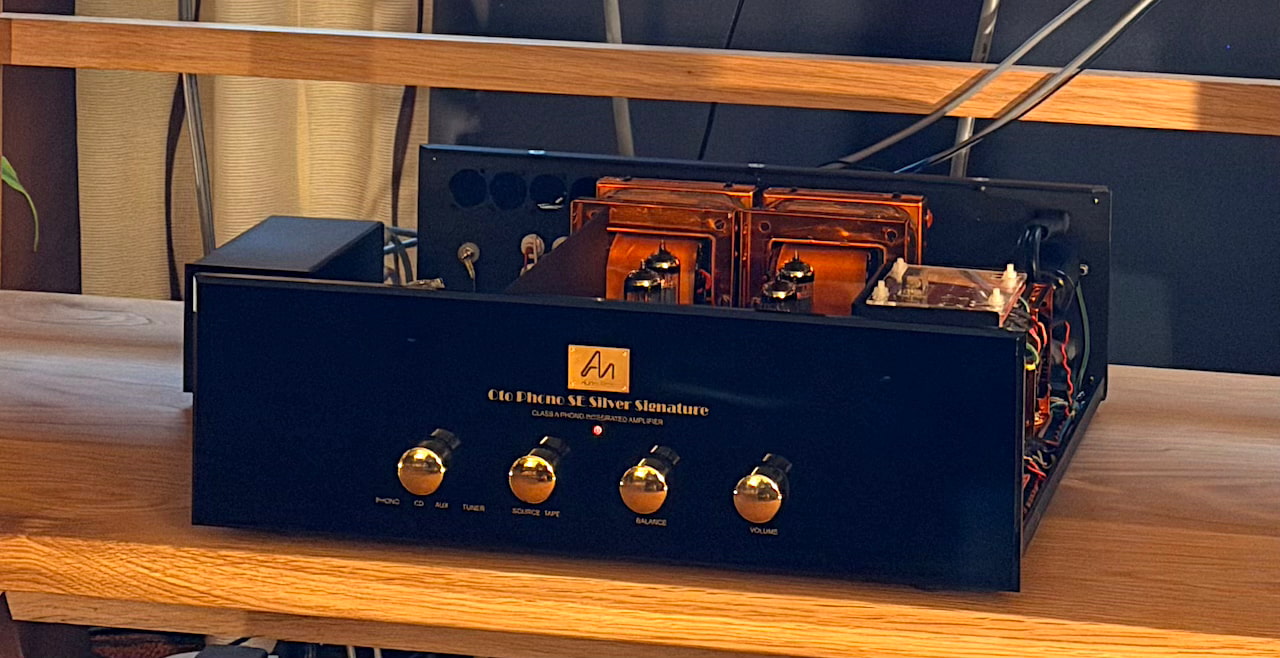
The Audio Note OTO Phono SE 35 Silver Signature was the amplifier that stood out in the Audio Note room at T.H.E. Show SoCal 2026, driving the AN E SPe HE loudspeakers. It is not the base OTO SE 35 covered in our March launch report, and it should not be priced as one. The $5,950 figure applies to the entry-level OTO SE 35 range, while the standard OTO Phono SE 35 begins at $6,790. The Silver Signature shown in Costa Mesa sits at the top of the phono-equipped OTO hierarchy, with U.S. pricing available through authorized dealers.
Like every OTO SE 35, it is an 8-watt-per-channel, Pure Class A, parallel single-ended EL84 integrated amplifier with an onboard MM phono stage. The 35th Anniversary update adds a redesigned in-house output transformer, revised choke-regulated power supply, new mains transformer, updated power amplifier board, and improved internal wiring and shielding. The phono stage was also reworked so Audio Note could remove the additional line stage used in earlier phono versions, reducing noise and preserving phase integrity.
The Silver Signature version goes considerably further than the standard amplifier. It adds upgraded selector switches and internal cabling, copper-foil signal capacitors, Standard, Seiryu, and Kaisei electrolytic capacitors, non-magnetic Tantalum and Silver Niobium resistors, an I HiB-core mains transformer and choke, and S HiB-core output transformers. That is not a cosmetic anniversary package. It is the fully developed version of the new OTO platform, and the obvious review question is whether those upgrades make it meaningfully more compelling than the standard and Signature versions once it leaves the carefully matched Audio Note room.
E.A.R. 88PB Phono Preamplifier ($6,295)


The E.A.R. 88PB was part of the PranaFidelity room, feeding the company’s purna/ma amplifier from a Merrill-Williams R.E.A.L. 101.3 turntable fitted with a Breuer Dynamics tonearm and OTTA Theorbo moving-coil cartridge. The Satmata loudspeaker itself remains a prototype, which removes it from review consideration for now. The 88PB does not have that problem. It is a real product, available now, and one of the more interesting phono stages at the show because it offers enough flexibility to serve as the centerpiece of a very high-end analog system rather than another expensive box chained to a preamp.
For $6,295, the E.A.R. provides two RCA inputs: one MM-only input and one switchable MM/MC input with internally adjustable moving-coil gain and loading. It also includes a volume control, a buffered output stage, transformer-coupled balanced and single-ended outputs, and a mono switch. That means it can run directly into a power amplifier in a one-source vinyl system. The E.A.R. name still carries weight because Tim de Paravicini designs were never about turning vinyl playback into a laboratory experiment. The 88PB deserves a review because it could be both an exceptional phono stage and a genuinely useful control center for analog-first listeners.
Prodigio Audio WR2 Electrostatic Loudspeakers ($38,000/pair)

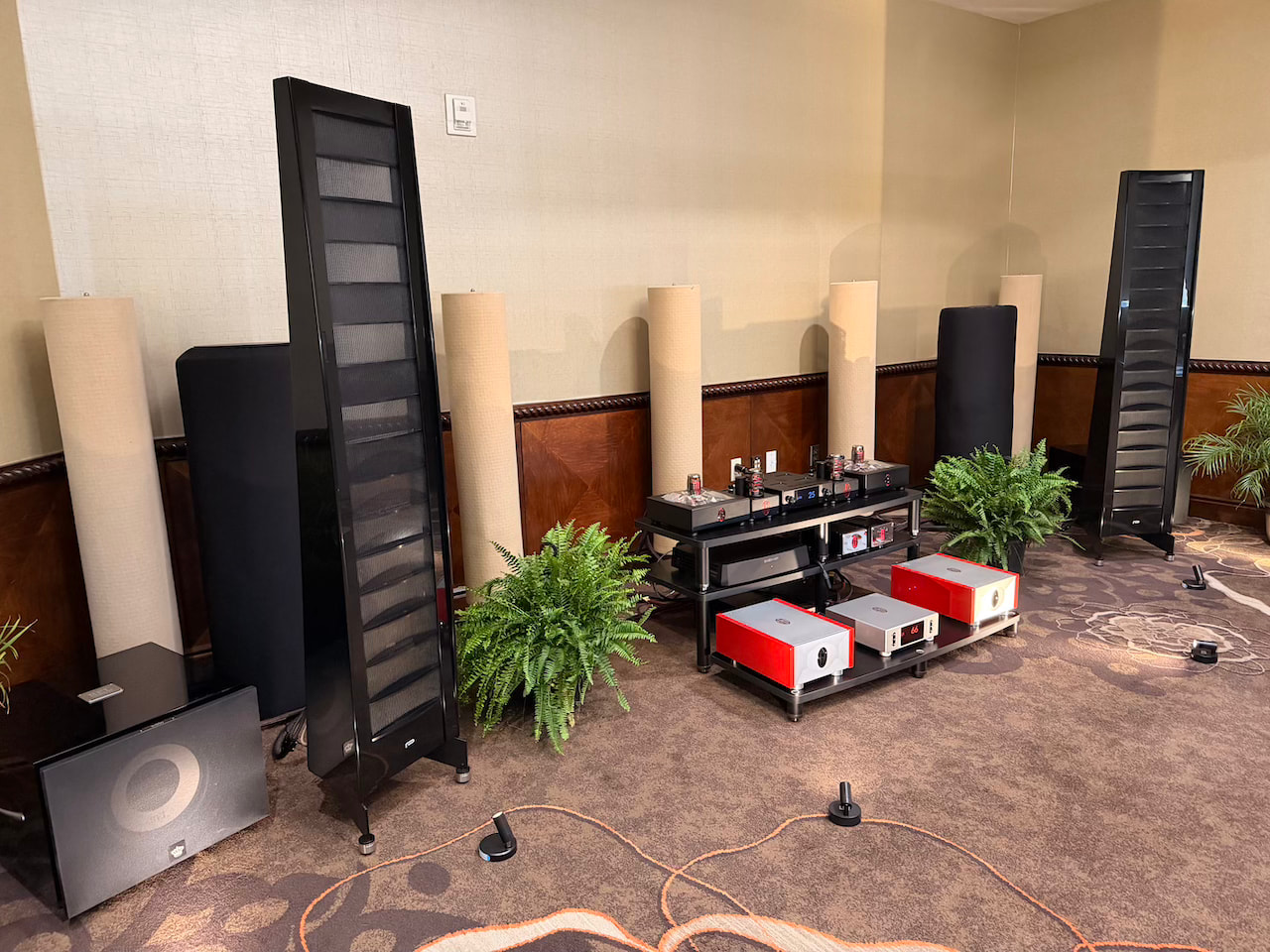
Formerly known as Popori Acoustics, Prodigio Audio’s WR2 Arrabona electrostatic loudspeakers were among the most visually and sonically memorable products at the show. The Hungarian-made panels were demonstrated with AGD electronics, REL S/850 subwoofers, and Theoretica’s BACCH-SP adio processing. That is not a casual supporting cast. It was one of the show’s more carefully assembled systems, and the point of a proper review would be determining how much of that stunning transparency and spatial scale came from the WR2 itself rather than the processing, amplification, and very effective bass reinforcement.
The WR2 is specified at 91dB sensitivity, with a minimum impedance of 2.5 ohms, a claimed 35Hz to 22kHz frequency response, and a substantial 0.45-square-meter electrostatic panel. At almost six feet tall and 37 kilograms per speaker, these are not small-room ornaments, although Prodigio positions them for small to medium-sized rooms. Electrostatics can produce startlingly clean midrange and transient speed, but they can also expose weak amplifier matching, room placement, and limitations at the frequency extremes. At $38,000 per pair, the WR2 needs to prove that its appeal extends beyond the calibrated center seat and a very expensive hotel-room ecosystem.
Zesto Athena DAC ($15,000)

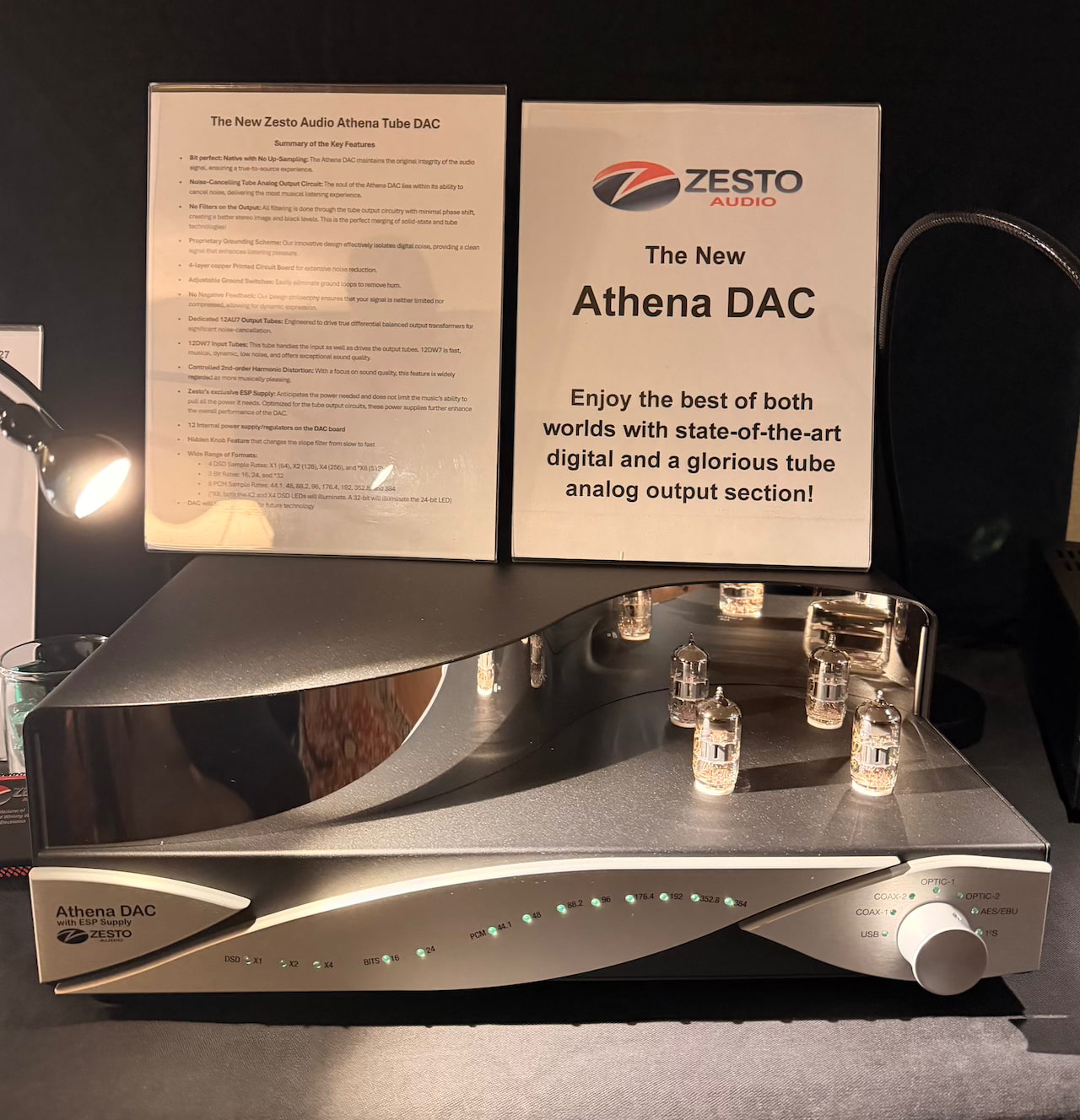
The Athena DAC was the newest and most obvious review candidate in the Zesto and YG Acoustics room. It was joined by the Leto Ultra II preamplifier, Eros 500 Select monoblocks, and YG Sonja 3.2 loudspeakers, a chain that had more than enough resolution to reveal whether the DAC was pulling its weight. The sound was not the usual tube-system caricature of softened transients and overripe warmth. It was focused, controlled, detailed, and tonally composed, which made the Athena more interesting than another component sold on the promise of “analog-like” digital playback.
At $15,000, the Athena uses a ROHM conversion chip with a Class A dual-mono tube output stage, transformer-balanced XLR outputs, RCA outputs, and Zesto’s external ESP power-supply architecture. It accepts PCM to 32-bit/384kHz and DSD512 through seven digital inputs, including USB, AES/EBU, coaxial, optical, and I2S. The design operates without upsampling, uses no negative feedback in its output stage, and offers selectable filter behavior. The show demonstration also made an interesting case for restraint: the move from DSD128 to DSD256 was less dramatic than the step from DSD64 to DSD128. That is precisely the sort of claim worth testing in a real system rather than accepting because the rack costs more than a decent home.
Odyssey Meilenstein Monoblocks ($12,900/pair)

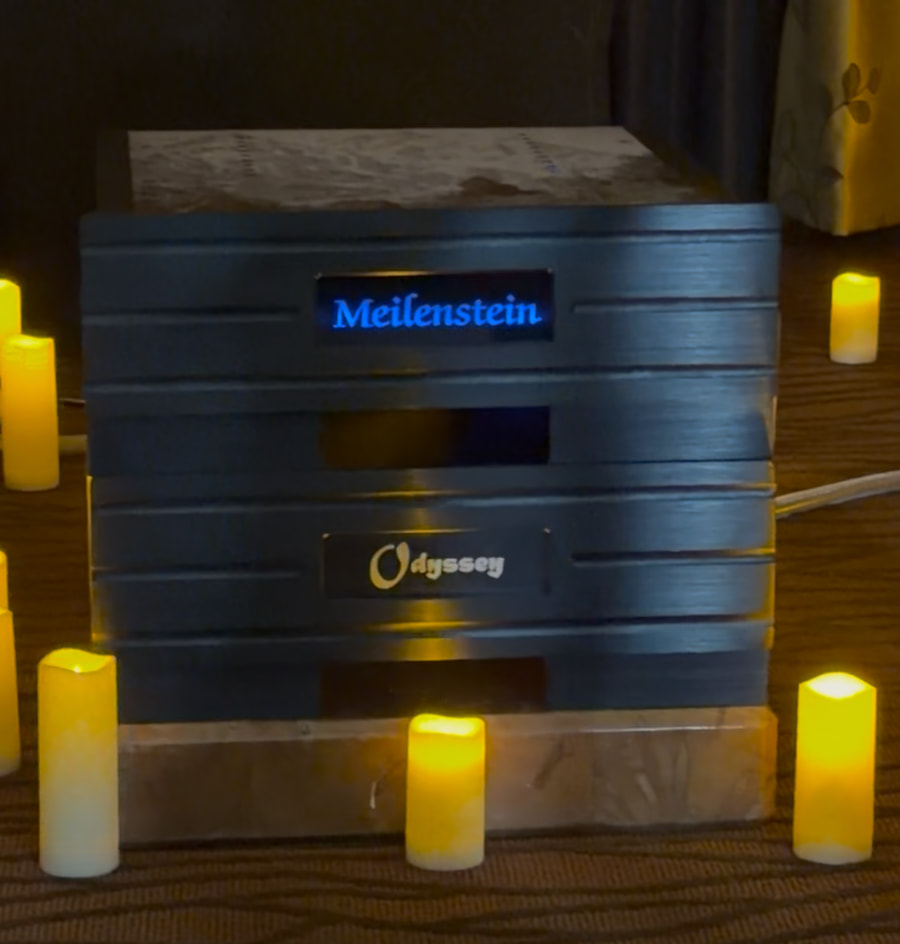
Odyssey Audio’s new Meilenstein monoblocks were central to one of the show’s most memorable rooms, driving Odyssey Lorelei loudspeakers in a setup that ignored almost every conventional hotel-room placement rule. The speakers were positioned close to the side walls and well into the room, yet the system produced unusually convincing depth, image focus, and scale. The room treatment clearly mattered, and the loudspeakers were not innocent bystanders, but the Meilensteins were the obvious component to investigate because they appeared to bring a different level of control and dimensionality to the system.
The published information is still limited because these are genuinely new products, which is all the more reason to review them properly. Pricing has been listed at $12,900 per pair, with output reported at roughly 160 to 180 watts per channel in monoblock form. Odyssey has positioned Meilenstein as a more ambitious line above its established Stratos and Kismet products, with revised power-supply regulation, new boards, different transistors, upgraded German transformers and capacitors, and a more luxurious build approach. That all sounds promising, but it also means the review has to look beyond a good show result: noise floor, thermal behavior, long-term reliability, speaker compatibility, and whether the performance justifies a serious jump in price.
REL Carbon Special Black Label Subwoofers ($4,999 each)

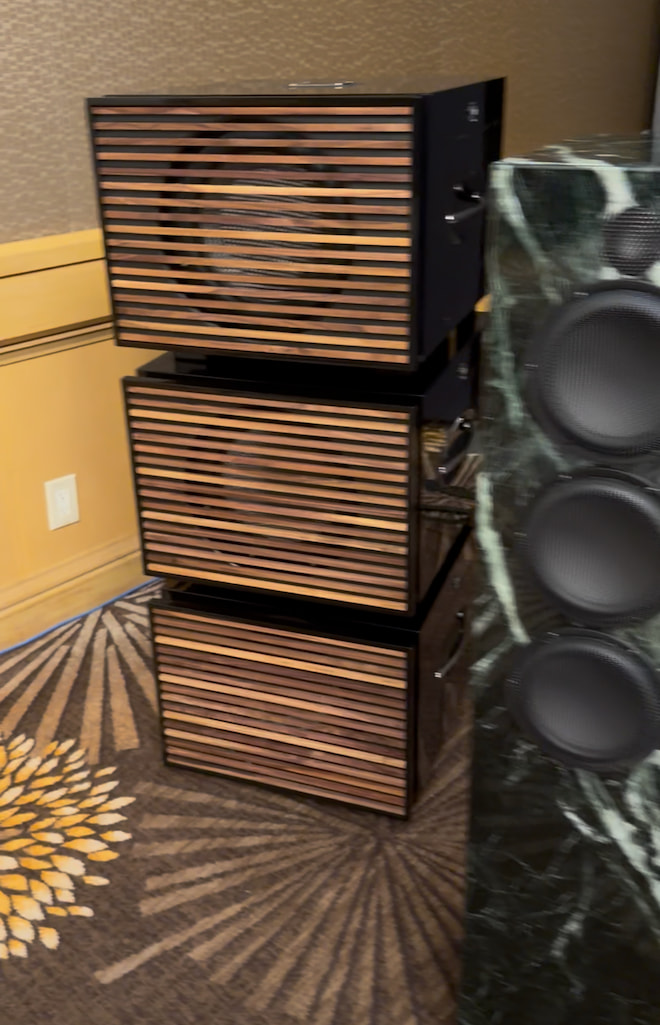
The REL Carbon Special Black Label six-pack was the surprise of the Acora and VAC room because it did not behave like a six-subwoofer bass demonstration. Three units were stacked behind each Acora MRC-3 loudspeaker, creating a $29,994 low-frequency array that added scale, weight, and authority without turning the system into a self-parody. The subs did not call attention to themselves. They expanded the apparent size of the system, increased the solidity of images, and allowed the Acoras to sound more like genuine full-range loudspeakers without sacrificing speed or clarity.
Each Carbon Special Black Label uses a 12-inch carbon-fiber active driver, a 12-inch down-firing passive radiator, and a 900-watt Linear Class D amplifier. REL rates low-frequency extension to 19Hz at minus 6dB, and the subwoofer supports high-level Speakon connection, low-level RCA, LFE RCA, and XLR. More importantly, it is designed for stereo pairs and vertical line arrays. Most listeners will not be stacking six $5,000 subwoofers behind their speakers unless the accountant has left the building, but the show demonstrated why REL’s multi-sub approach matters. A review should determine how much of that scale and coherence remains with one subwoofer, a stereo pair, or a more realistic system built around normal human finances.
Wolf von Langa WVL 11620 ORGANIC Loudspeakers ($39,995/pair)

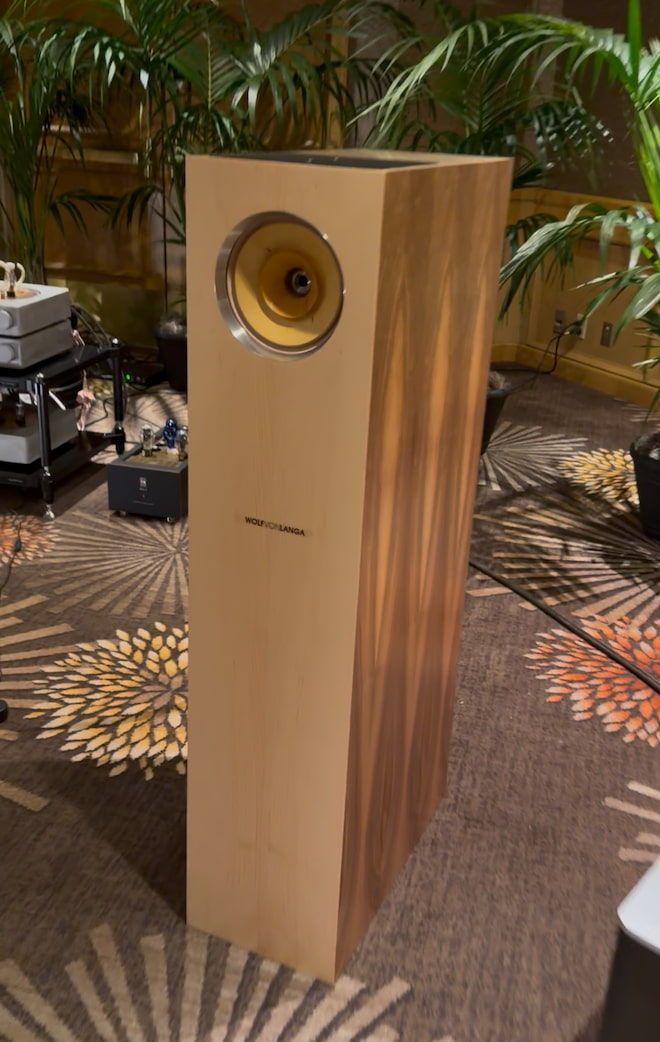
The Wolf von Langa WVL 11620 ORGANIC loudspeakers arrived in one of the show’s most elegant rooms. Paired with Cinnamon’s Malabar VLF bass system, SW1X electronics, and a formidable analog front end, the German field-coil loudspeakers delivered natural vocal presence, tonal color, low-level detail, and an almost disarming sense of musical flow. It was not a room trying to bludgeon listeners with dynamics or treble extension. The system had finesse, which was refreshing after too many rooms that confused volume with authority.
The ORGANIC is unusual because Wolf von Langa’s energized field-coil transducer is designed to operate in a mechanically decoupled or suspended arrangement within a purpose-built acoustic labyrinth. The company’s goal is to reduce unwanted energy transfer into the cabinet and preserve a more natural sense of depth and detail. That is an ambitious claim, and the nearly $250,000 show system makes it impossible to declare the speakers solely responsible for the result. Still, the ORGANIC is a serious candidate for review because field-coil loudspeakers are rare, low-power tube compatibility remains a major attraction, and the show suggested that Wolf von Langa may have created something more than another expensive statement piece for people with German sports-car money.
Tonian Labs Oriaco D6 Loudspeakers ($6,300/pair)

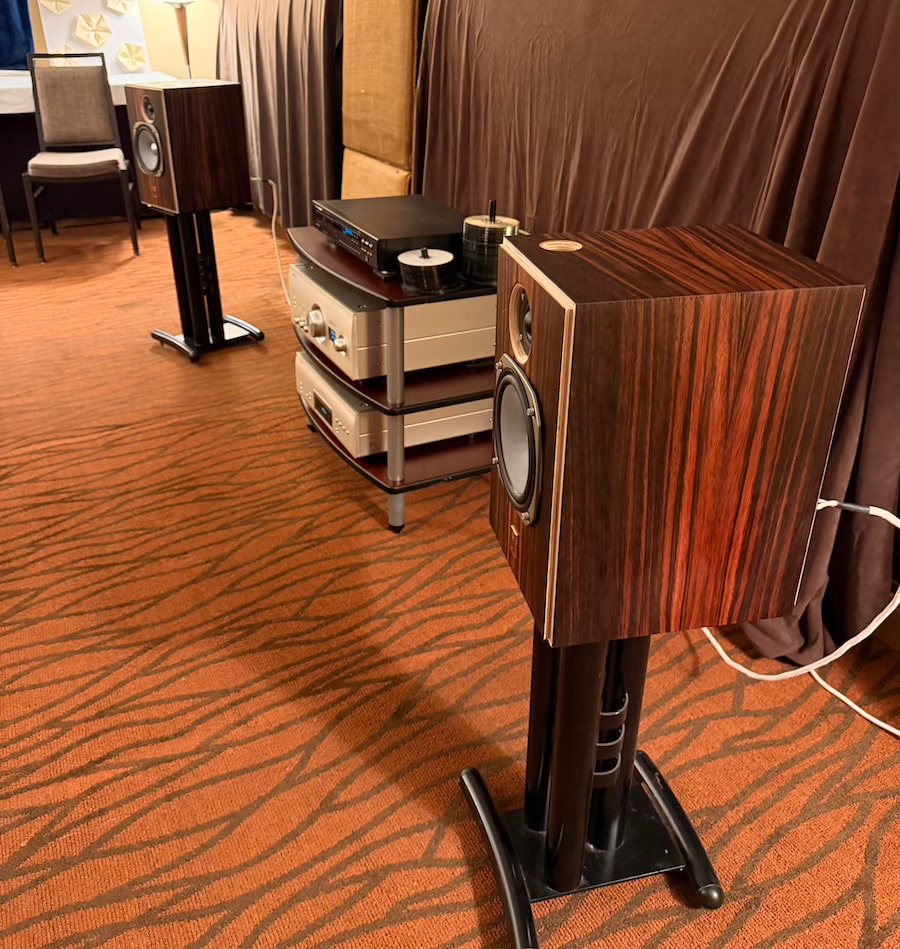
The Tonian Labs Oriaco D6 loudspeakers were the outlier on this list in the best possible way. At $6,300 per pair, they were one of the few products from a Best in Show room that did not require a trust fund, a hedge fund, or a spouse with very poor eyesight. Tony Minasian paired them with Denon’s PMA-3000NE integrated amplifier and a vintage Marantz CD player, creating a system that still reached five figures once stands, cables, and source components were included, but that was comparatively sane at an event dominated by six-figure stacks.
The D6 is a bass-reflex stand-mount with a 6-inch Fostex full-range driver, a front-mounted 1-inch Lavoce soft-dome tweeter, and a top-mounted 1-inch SB Acoustics soft-dome ambient tweeter in a shallow horn. It is specified at 91dB sensitivity, 8-ohm nominal impedance, and 57Hz to 30kHz. The combination is unconventional, but the appeal is easy to understand: the D6 delivered fast transients, natural decay, convincing vocal placement, and a sense of ease that made it sound larger than its compact cabinet should permit. The review question is straightforward: can the Oriaco D6 retain that balance of speed, tone, and image specificity in a normal room with normal recordings, or was Tony’s room simply one of those rare show setups where every piece landed exactly right?
You must be logged in to post a comment Login