T.H.E. Show SoCal 2026 was not overflowing with affordable hi-fi or easy, impulse-buy review candidates. The strongest rooms were largely dealer and distributor showcases built around each brand’s newest, most ambitious, and usually rather expensive gear. That made for some excellent demonstrations, but also raised the obvious question: which component was actually responsible for making each system sound so special?
The ATC EL50 Anniversary Edition certainly made an impression again, but it is not on this list because a pair is already planned for review later this summer; the Costa Mesa system was also more of a continuation of the excellent AXPONA demonstration than a new reveal. We are also covered with the Atlantis Lab AT 23 PRO and Neoson Evolution, both of which Will Jennings is already reviewing. No need to have three people circling the same runway.
Every product on this list came from one of the show’s best sounding rooms. That does not automatically mean each was the star of the system. Great rooms are the result of careful matching, setup, source material, and enough expensive supporting gear to make a small nation nervous. These are the eight products we most want to get into a proper listening room to determine whether they were truly the reason those systems stood apart, or simply fortunate passengers in a very good hotel-room ride.
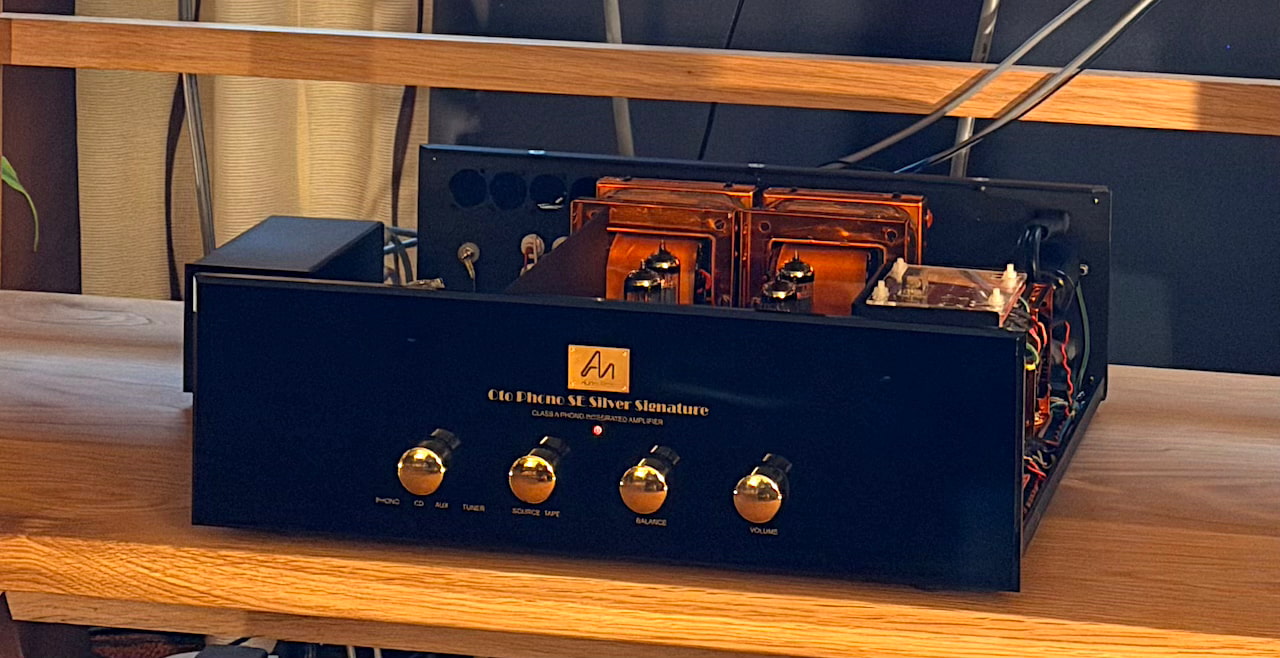
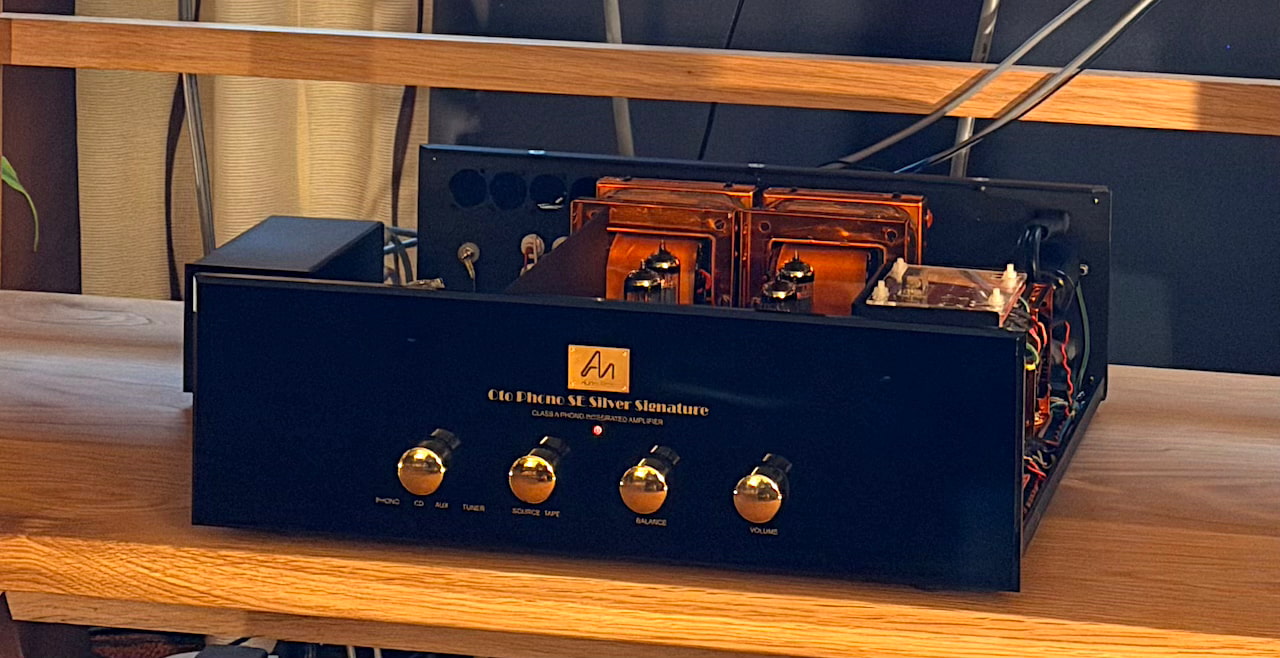
Audio Note OTO Phono SE 35 Silver Signature (U.S. pricing on request)
The Audio Note OTO Phono SE 35 Silver Signature was the amplifier that stood out in the Audio Note room at T.H.E. Show SoCal 2026, driving the AN E SPe HE loudspeakers. It is not the base OTO SE 35 covered in our March launch report, and it should not be priced as one. The $5,950 figure applies to the entry-level OTO SE 35 range, while the standard OTO Phono SE 35 begins at $6,790. The Silver Signature shown in Costa Mesa sits at the top of the phono-equipped OTO hierarchy, with U.S. pricing available through authorized dealers.
Like every OTO SE 35, it is an 8-watt-per-channel, Pure Class A, parallel single-ended EL84 integrated amplifier with an onboard MM phono stage. The 35th Anniversary update adds a redesigned in-house output transformer, revised choke-regulated power supply, new mains transformer, updated power amplifier board, and improved internal wiring and shielding. The phono stage was also reworked so Audio Note could remove the additional line stage used in earlier phono versions, reducing noise and preserving phase integrity.
Advertisement
The Silver Signature version goes considerably further than the standard amplifier. It adds upgraded selector switches and internal cabling, copper-foil signal capacitors, Standard, Seiryu, and Kaisei electrolytic capacitors, non-magnetic Tantalum and Silver Niobium resistors, an I HiB-core mains transformer and choke, and S HiB-core output transformers. That is not a cosmetic anniversary package. It is the fully developed version of the new OTO platform, and the obvious review question is whether those upgrades make it meaningfully more compelling than the standard and Signature versions once it leaves the carefully matched Audio Note room.
E.A.R. 88PB Phono Preamplifier ($6,295)
The E.A.R. 88PB was part of the PranaFidelity room, feeding the company’s purna/ma amplifier from a Merrill-Williams R.E.A.L. 101.3 turntable fitted with a Breuer Dynamics tonearm and OTTA Theorbo moving-coil cartridge. The Satmata loudspeaker itself remains a prototype, which removes it from review consideration for now. The 88PB does not have that problem. It is a real product, available now, and one of the more interesting phono stages at the show because it offers enough flexibility to serve as the centerpiece of a very high-end analog system rather than another expensive box chained to a preamp.
For $6,295, the E.A.R. provides two RCA inputs: one MM-only input and one switchable MM/MC input with internally adjustable moving-coil gain and loading. It also includes a volume control, a buffered output stage, transformer-coupled balanced and single-ended outputs, and a mono switch. That means it can run directly into a power amplifier in a one-source vinyl system. The E.A.R. name still carries weight because Tim de Paravicini designs were never about turning vinyl playback into a laboratory experiment. The 88PB deserves a review because it could be both an exceptional phono stage and a genuinely useful control center for analog-first listeners.
Formerly known as Popori Acoustics, Prodigio Audio’s WR2 Arrabona electrostatic loudspeakers were among the most visually and sonically memorable products at the show. The Hungarian-made panels were demonstrated with AGD electronics, REL S/850 subwoofers, and Theoretica’s BACCH-SP adio processing. That is not a casual supporting cast. It was one of the show’s more carefully assembled systems, and the point of a proper review would be determining how much of that stunning transparency and spatial scale came from the WR2 itself rather than the processing, amplification, and very effective bass reinforcement.
The WR2 is specified at 91dB sensitivity, with a minimum impedance of 2.5 ohms, a claimed 35Hz to 22kHz frequency response, and a substantial 0.45-square-meter electrostatic panel. At almost six feet tall and 37 kilograms per speaker, these are not small-room ornaments, although Prodigio positions them for small to medium-sized rooms. Electrostatics can produce startlingly clean midrange and transient speed, but they can also expose weak amplifier matching, room placement, and limitations at the frequency extremes. At $38,000 per pair, the WR2 needs to prove that its appeal extends beyond the calibrated center seat and a very expensive hotel-room ecosystem.
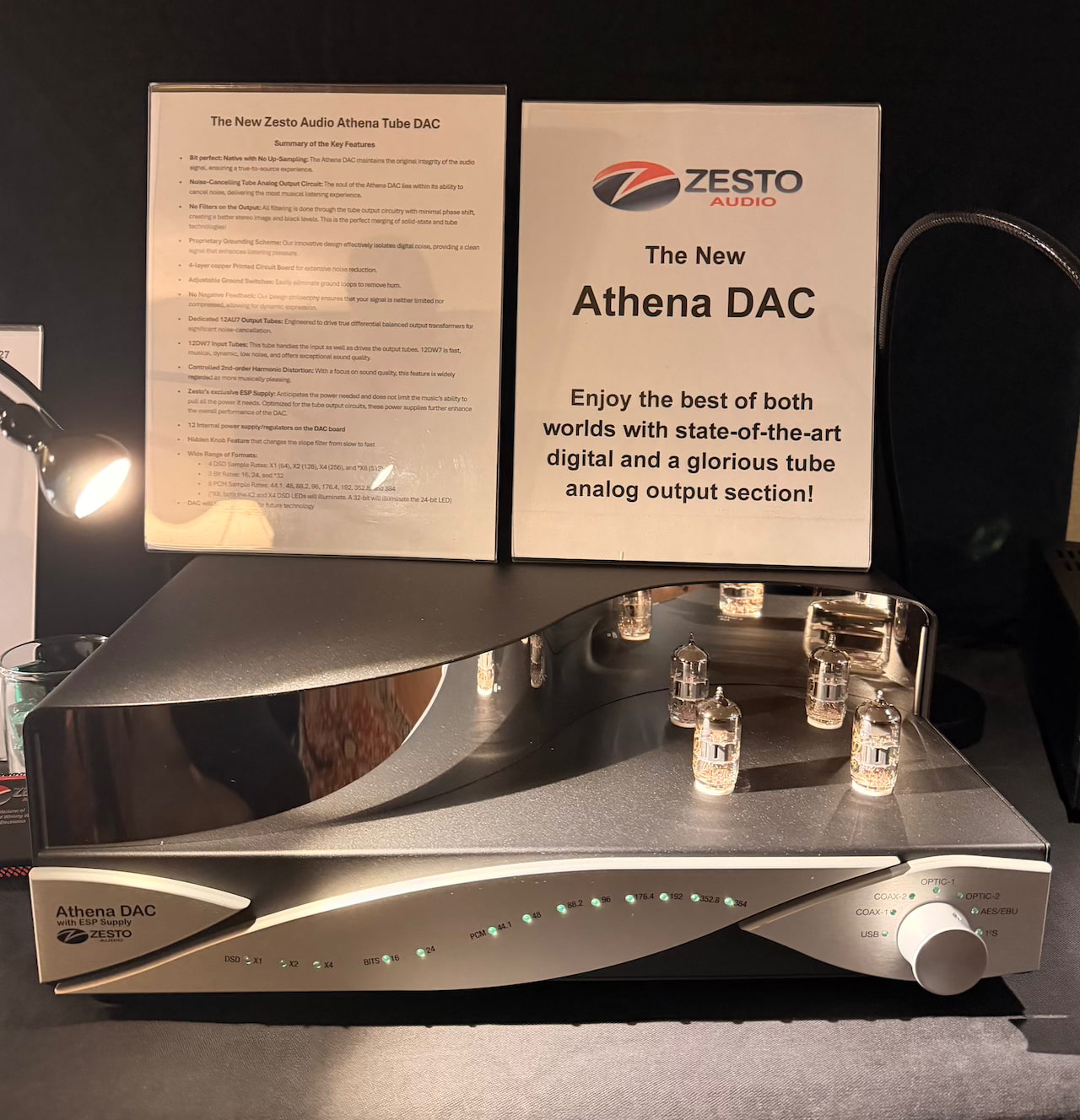
Zesto Athena DAC ($15,000)
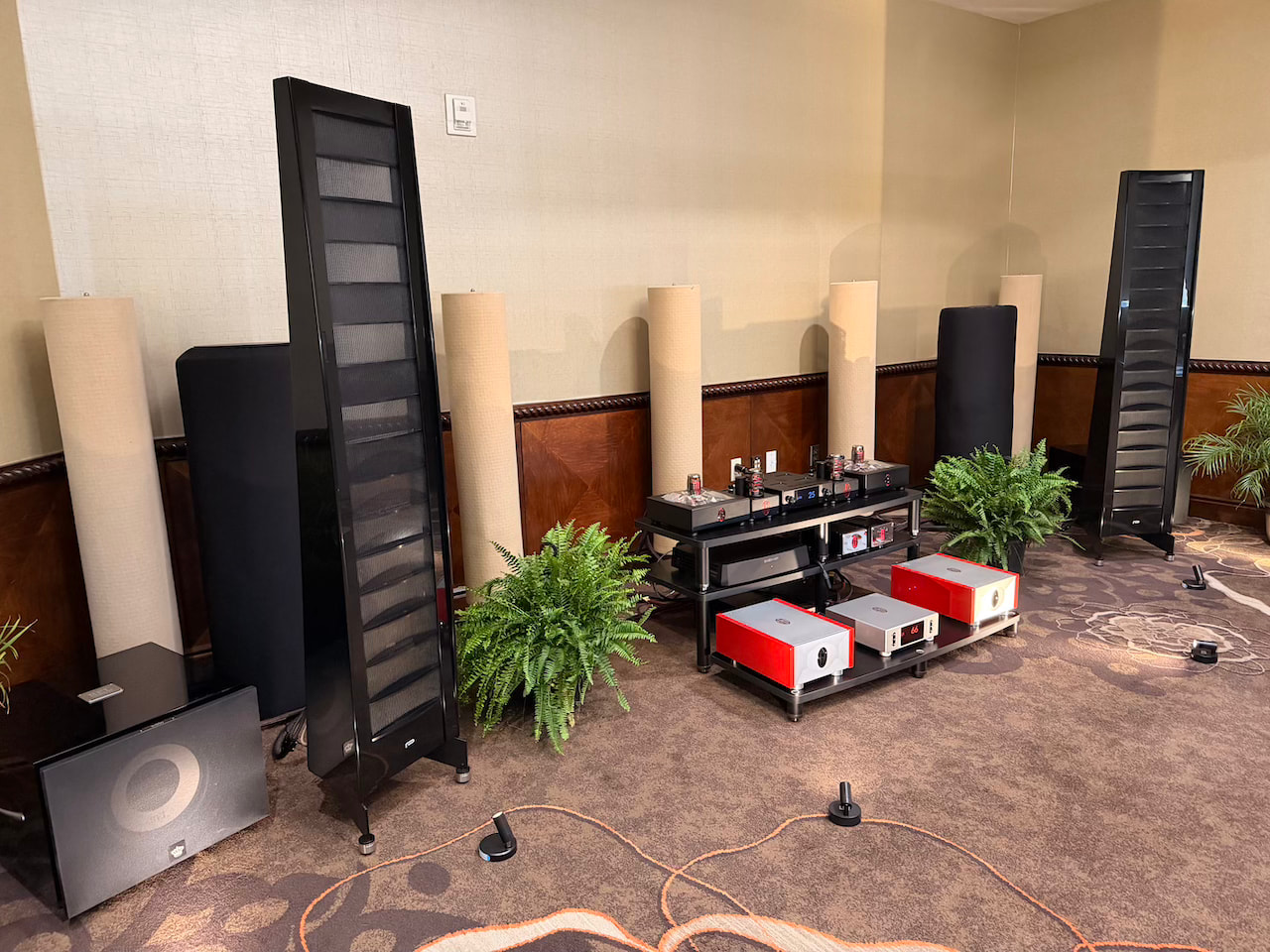
The Athena DAC was the newest and most obvious review candidate in the Zesto and YG Acoustics room. It was joined by the Leto Ultra II preamplifier, Eros 500 Select monoblocks, and YG Sonja 3.2 loudspeakers, a chain that had more than enough resolution to reveal whether the DAC was pulling its weight. The sound was not the usual tube-system caricature of softened transients and overripe warmth. It was focused, controlled, detailed, and tonally composed, which made the Athena more interesting than another component sold on the promise of “analog-like” digital playback.
Advertisement. Scroll to continue reading.
Advertisement
At $15,000, the Athena uses a ROHM conversion chip with a Class A dual-mono tube output stage, transformer-balanced XLR outputs, RCA outputs, and Zesto’s external ESP power-supply architecture. It accepts PCM to 32-bit/384kHz and DSD512 through seven digital inputs, including USB, AES/EBU, coaxial, optical, and I2S. The design operates without upsampling, uses no negative feedback in its output stage, and offers selectable filter behavior. The show demonstration also made an interesting case for restraint: the move from DSD128 to DSD256 was less dramatic than the step from DSD64 to DSD128. That is precisely the sort of claim worth testing in a real system rather than accepting because the rack costs more than a decent home.
Odyssey Meilenstein Monoblocks ($12,900/pair)
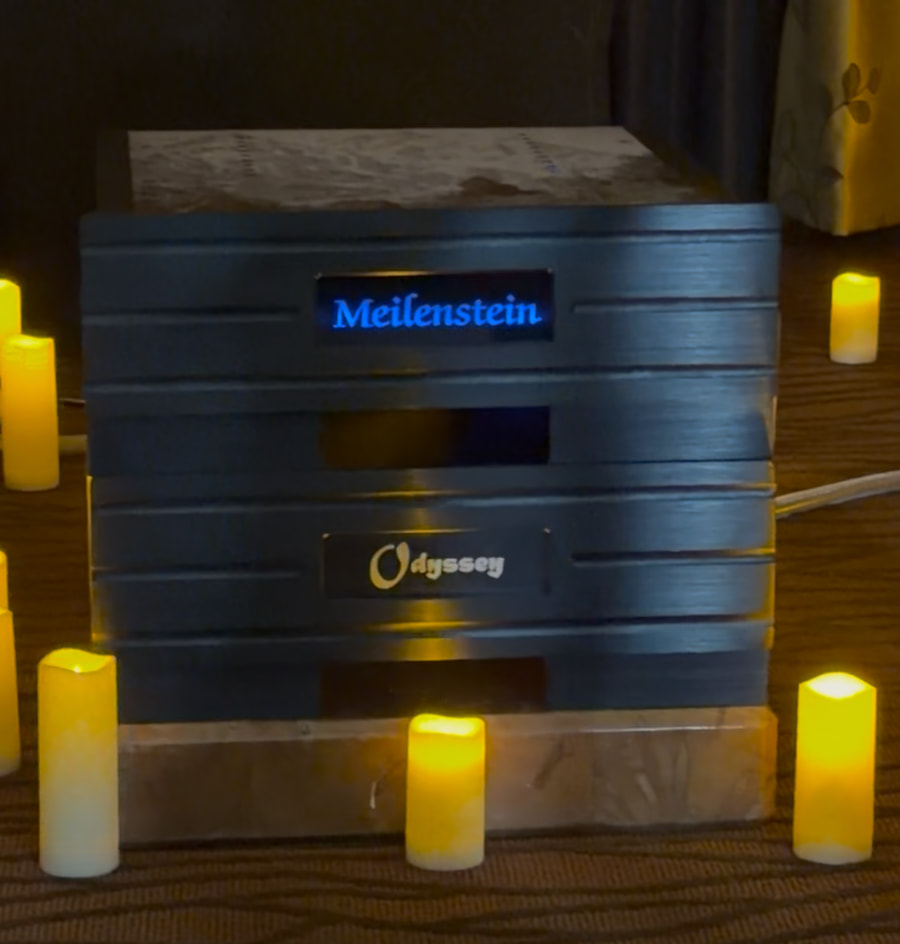
Odyssey Audio’s new Meilenstein monoblocks were central to one of the show’s most memorable rooms, driving Odyssey Lorelei loudspeakers in a setup that ignored almost every conventional hotel-room placement rule. The speakers were positioned close to the side walls and well into the room, yet the system produced unusually convincing depth, image focus, and scale. The room treatment clearly mattered, and the loudspeakers were not innocent bystanders, but the Meilensteins were the obvious component to investigate because they appeared to bring a different level of control and dimensionality to the system.
The published information is still limited because these are genuinely new products, which is all the more reason to review them properly. Pricing has been listed at $12,900 per pair, with output reported at roughly 160 to 180 watts per channel in monoblock form. Odyssey has positioned Meilenstein as a more ambitious line above its established Stratos and Kismet products, with revised power-supply regulation, new boards, different transistors, upgraded German transformers and capacitors, and a more luxurious build approach. That all sounds promising, but it also means the review has to look beyond a good show result: noise floor, thermal behavior, long-term reliability, speaker compatibility, and whether the performance justifies a serious jump in price.
REL Carbon Special Black Label Subwoofers ($4,999 each)
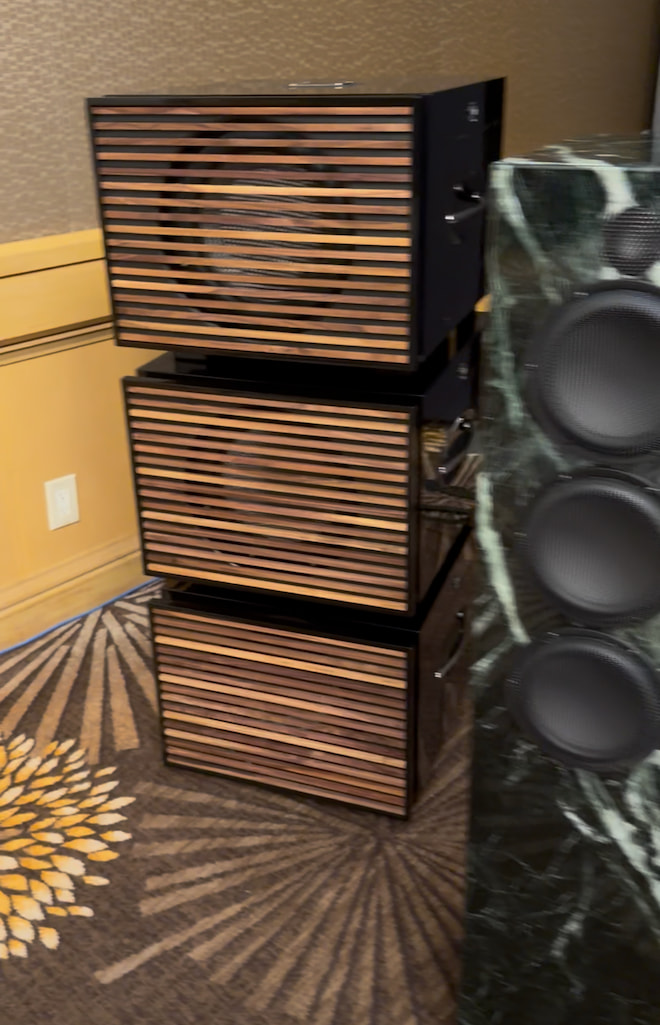
The REL Carbon Special Black Label six-pack was the surprise of the Acora and VAC room because it did not behave like a six-subwoofer bass demonstration. Three units were stacked behind each Acora MRC-3 loudspeaker, creating a $29,994 low-frequency array that added scale, weight, and authority without turning the system into a self-parody. The subs did not call attention to themselves. They expanded the apparent size of the system, increased the solidity of images, and allowed the Acoras to sound more like genuine full-range loudspeakers without sacrificing speed or clarity.
Each Carbon Special Black Label uses a 12-inch carbon-fiber active driver, a 12-inch down-firing passive radiator, and a 900-watt Linear Class D amplifier. REL rates low-frequency extension to 19Hz at minus 6dB, and the subwoofer supports high-level Speakon connection, low-level RCA, LFE RCA, and XLR. More importantly, it is designed for stereo pairs and vertical line arrays. Most listeners will not be stacking six $5,000 subwoofers behind their speakers unless the accountant has left the building, but the show demonstrated why REL’s multi-sub approach matters. A review should determine how much of that scale and coherence remains with one subwoofer, a stereo pair, or a more realistic system built around normal human finances.
Wolf von Langa WVL 11620 ORGANIC Loudspeakers ($39,995/pair)
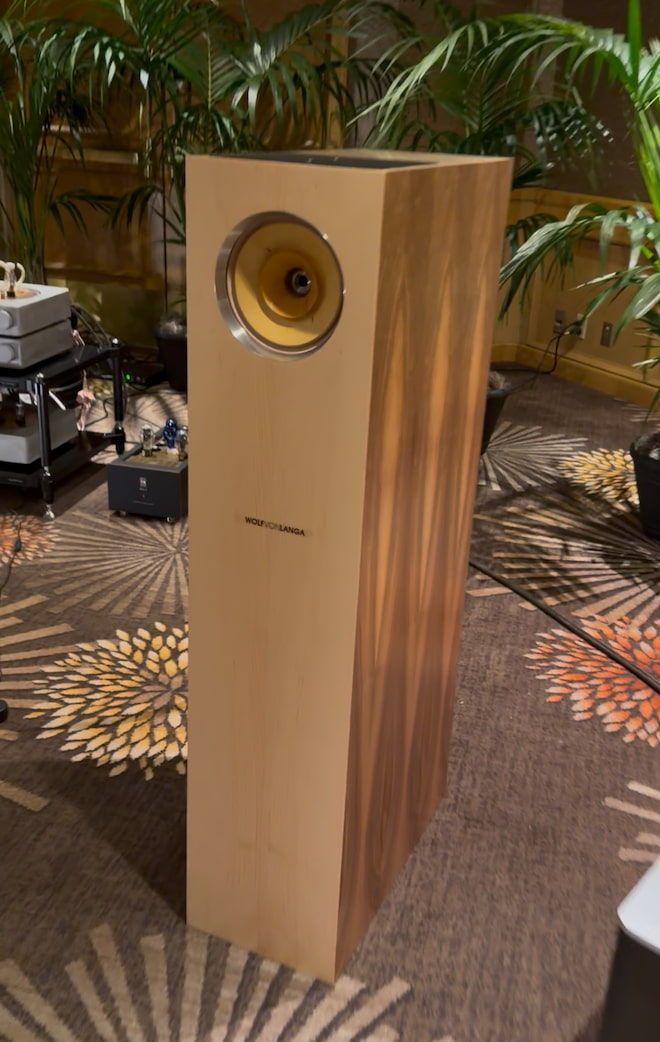
The Wolf von Langa WVL 11620 ORGANIC loudspeakers arrived in one of the show’s most elegant rooms. Paired with Cinnamon’s Malabar VLF bass system, SW1X electronics, and a formidable analog front end, the German field-coil loudspeakers delivered natural vocal presence, tonal color, low-level detail, and an almost disarming sense of musical flow. It was not a room trying to bludgeon listeners with dynamics or treble extension. The system had finesse, which was refreshing after too many rooms that confused volume with authority.
The ORGANIC is unusual because Wolf von Langa’s energized field-coil transducer is designed to operate in a mechanically decoupled or suspended arrangement within a purpose-built acoustic labyrinth. The company’s goal is to reduce unwanted energy transfer into the cabinet and preserve a more natural sense of depth and detail. That is an ambitious claim, and the nearly $250,000 show system makes it impossible to declare the speakers solely responsible for the result. Still, the ORGANIC is a serious candidate for review because field-coil loudspeakers are rare, low-power tube compatibility remains a major attraction, and the show suggested that Wolf von Langa may have created something more than another expensive statement piece for people with German sports-car money.
Advertisement
Tonian Labs Oriaco D6 Loudspeakers ($6,300/pair)
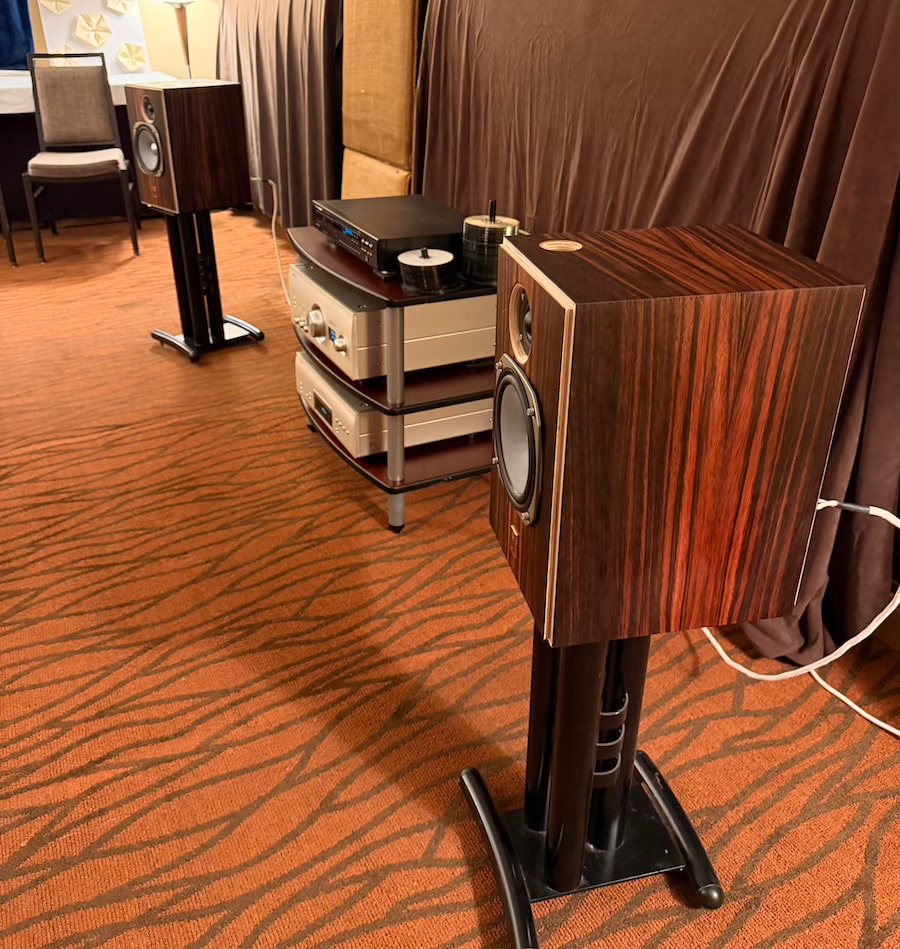
The Tonian Labs Oriaco D6 loudspeakers were the outlier on this list in the best possible way. At $6,300 per pair, they were one of the few products from a Best in Show room that did not require a trust fund, a hedge fund, or a spouse with very poor eyesight. Tony Minasian paired them with Denon’s PMA-3000NE integrated amplifier and a vintage Marantz CD player, creating a system that still reached five figures once stands, cables, and source components were included, but that was comparatively sane at an event dominated by six-figure stacks.
The D6 is a bass-reflex stand-mount with a 6-inch Fostex full-range driver, a front-mounted 1-inch Lavoce soft-dome tweeter, and a top-mounted 1-inch SB Acoustics soft-dome ambient tweeter in a shallow horn. It is specified at 91dB sensitivity, 8-ohm nominal impedance, and 57Hz to 30kHz. The combination is unconventional, but the appeal is easy to understand: the D6 delivered fast transients, natural decay, convincing vocal placement, and a sense of ease that made it sound larger than its compact cabinet should permit. The review question is straightforward: can the Oriaco D6 retain that balance of speed, tone, and image specificity in a normal room with normal recordings, or was Tony’s room simply one of those rare show setups where every piece landed exactly right?
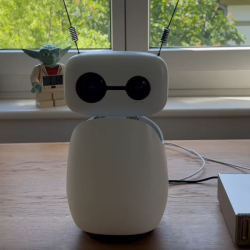
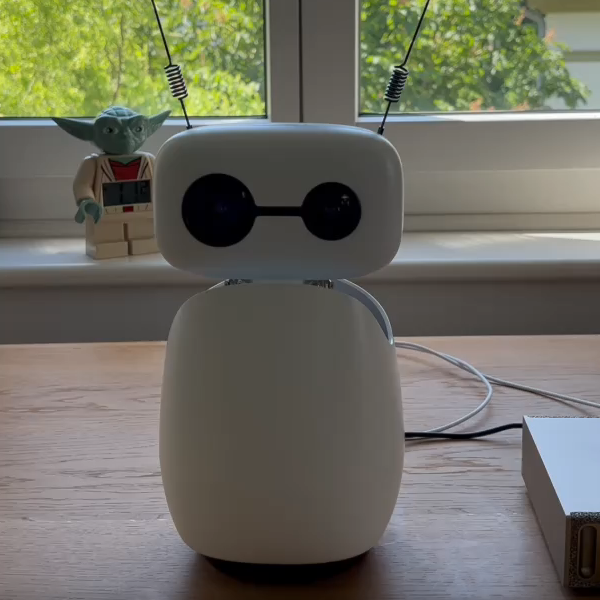
Reachy Mini is a limbless desktop robot from Hugging Face made for human interaction experiments, and to give you an idea of what it’s like is a guide on how to implement expressive, local conversational AI complete with head movements and antenna wiggles. It’s conversational in the sense that it aims to feel natural, with low-latency responses and the ability to interrupt, with everything running on local hardware if one so wishes.
Reachy Mini can use remote services, or work in tandem with a desktop machine or laptop.
The software stack is essentially VAD (voice activity detection) → STT (speech-to-text) → LLM (large language model) → TTS (text-to-speech) which allows users to tweak things to their liking, or independently swap or modify pieces as things evolve.
This also allows users to tailor the services to match whatever their hardware is capable of. For example, one could easily use a frontier AI model via remote API for the LLM while keeping everything else local.
The local models in the example configuration are effective and relatively modest (Qwen3-4B-Instruct for the LLM, and even smaller models for the rest) but it’s nice to have the option to offload parts to remote providers if necessary.
Advertisement
Reachy Mini looked very interesting when it was launched as a kit last year, and since then Hugging Face has built up an impressive software suite and infrastructure through which users can easily share their applications. If you’re curious, there’s a simulator for Reachy Mini which should give you an idea of what it can do.
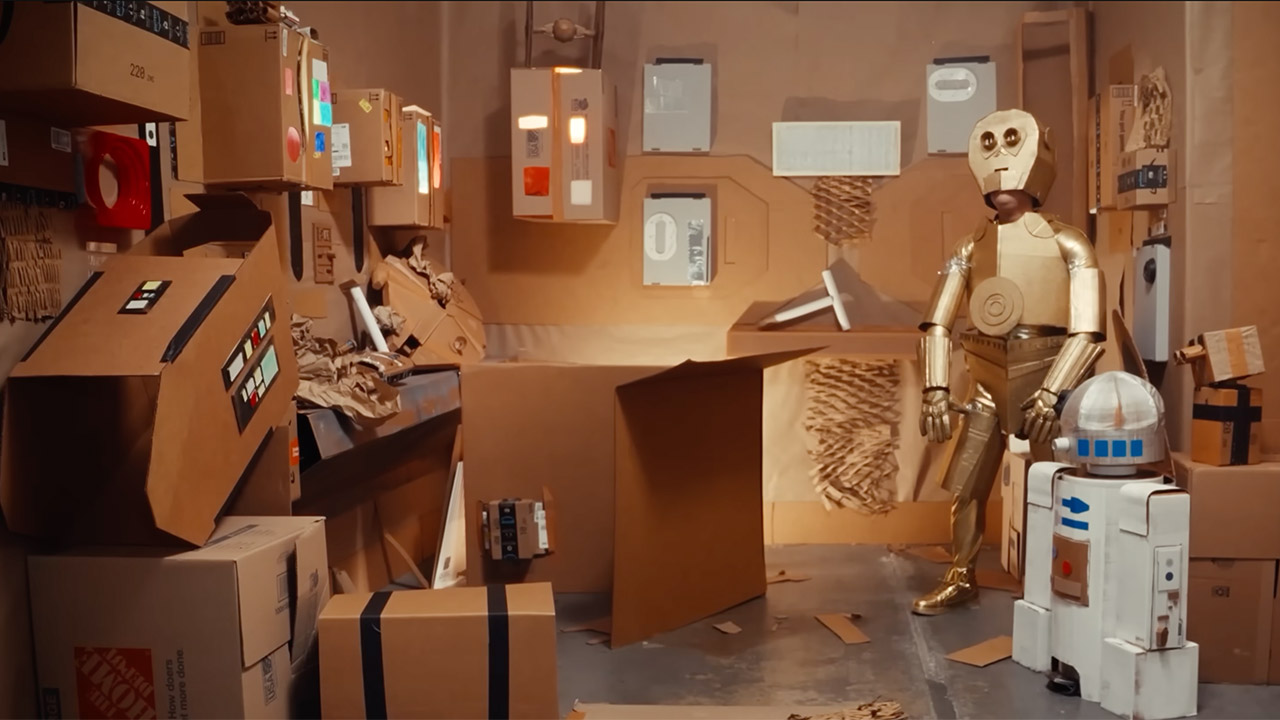
A fresh new fan film by Secondhand Movie Co takes Star Wars back to its roots and reworks them with absolutely no production value. The original 1977 film had a budget of little under eleven million dollars, which is roughly equivalent to sixty million today. However, this version must make do with microscopic fraction of that, or ten dollars. As a result, the sets, costumes, and the majority of the props are built out of cardboard.
Instead of attempting to hide the limited budget, the people behind Secondhand Movie Co simply went with it and made the most of it. Every aspect on screen, from C-3PO’s cardboard shell with a hasty gold paint job to R2-D2’s endearingly silly googly eyes, has a low-cost heart on its sleeve. The market stalls exhibiting the droids are as rudimentary as a pole with a piece of cardboard put on top, and some of them even wobble when knocked.
Star Wars Collectible Millennium Falcon build-and-display model – Spark memories of classic scenes as you build a mid-scale LEGO brick recreation of…
Authentically detailed Star Wars vehicle – Recreate iconic features of the Millennium Falcon, as seen in Star Wars: A New Hope, in LEGO style…
Made for display – The buildable stand has a nameplate and LEGO Star Wars 25th Anniversary brick, it’s also designed to display the Millennium…
The market stalls segment defines the tone from the start; as Luke and his uncle tour the various stalls and C-3PO complains to R2 that he finally found a new family only for his companion to steal their affection. The cardboard walls behind them feature an Amazon box as improvised wallpaper.
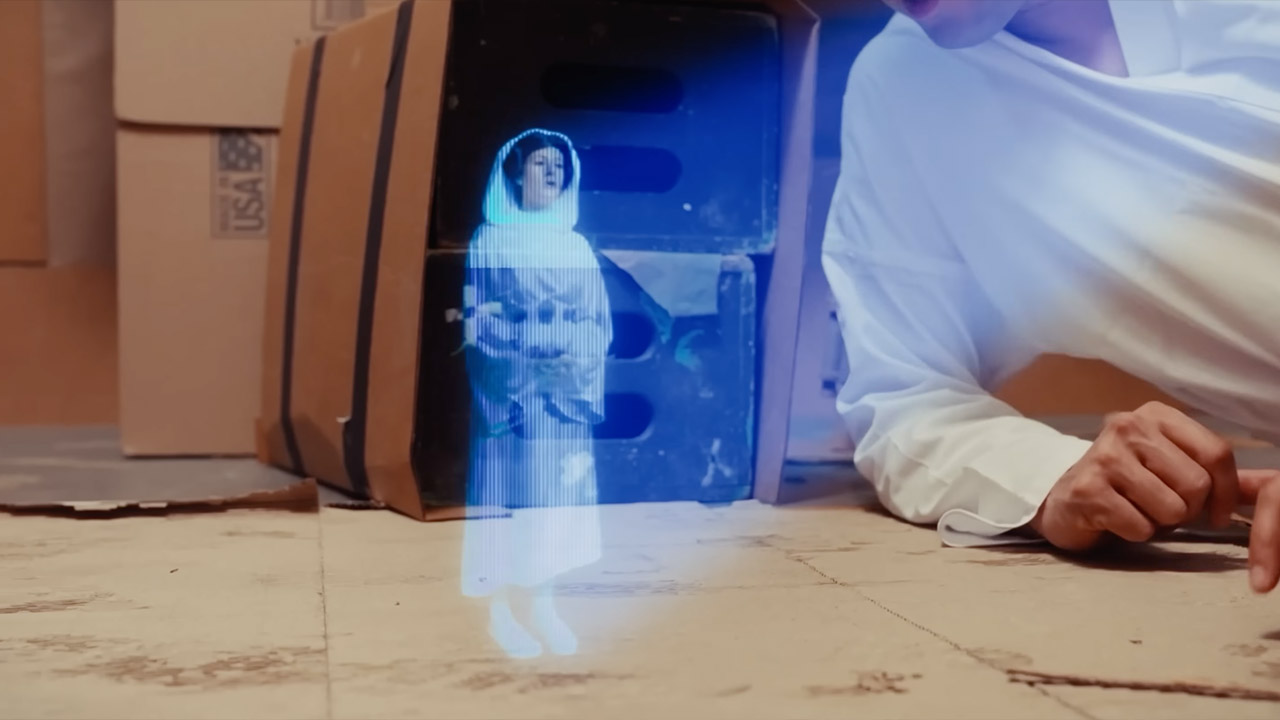
A little while later, the holographic message appears, and R2-D2 projects Princess Leia’s call for aid onto a cardboard cutout illuminated by a flashlight shining through from behind. The famous statement is also somewhat changed: she screams out for Obi-Wan since she has no other options. The projection flickers and cuts out thanks to parental locks and screen-time limits. Aunt Beru mistakes the floating image for a girl trapped inside a rolling dumpster. Each addition stays close to the spirit of the original moment. The interruptions simply acknowledge that even a princess’s call for help must compete with everyday household rules in this version.
Tonal constancy is what makes the whole thing function. The actors are completely serious, and they deliver their modified lines with the same enthusiasm as the original ensemble. So, in the end, the cardboard and terrible makeup appear to be creative solutions rather than budget hacks. [Source]
Firmus will access up to 170,000 Nvidia AI accelerator chips through 2027 and 2028 via a revenue-sharing and credit-support agreement. The company expects $25 billion to $30 billion in committed offtake agreements during the first six years of the partnership, according to Bloomberg.
The Batam project will be a multi-tenant facility for AI-native customers, unlike Firmus’s Australian projects, which focus on hyperscaler clients. Co-CEO Tim Rosenfield told Bloomberg that market volatility around AI stocks is “largely irrelevant” to how the company is building its business. “We’re building our business based on demand that we’re seeing from customers and contracts that we’re closing,” he said.
Firmus began as a Bitcoin mining operation in Tasmania in 2019. It raised $505 million in April at a $5.5 billion valuation in a round led by Coatue Management and backed by Nvidia. The company has a pipeline of data centre projects across Australia and Singapore, including a deal with CDC Data Centers to develop up to 1.6 gigawatts across Australia by 2028. Asia-Pacific data centre investment has been accelerating sharply, with Blackstone-backed AirTrunk committing $30 billion to India alone.
Advertisement
Rosenfield declined to comment on IPO plans, though the company is widely expected to list this year. The deal adds to Nvidia’s expanding DSX programme, which partners with data centre operators to deploy GPU infrastructure on a revenue-sharing basis rather than requiring upfront purchase. For Indonesia, the campus positions Batam as a regional AI compute hub, leveraging its proximity to Singapore’s financial and tech ecosystem. Demand for AI compute across the region is so intense that even Google has resorted to renting GPUs from SpaceX.
Chinese AI systems “have matched the performance of Anthropic’s powerful model Mythos in some cybersecurity scenarios,” reports the Wall Street Journal.
They call it “a development poised to reset the global tech race and pressure the White House in its overhaul of U.S. AI policy.”
Security researchers said that a new AI model, released this month by China’s Zhipu AI, also known as Z.ai, can match the latest U.S. models when it comes to finding security bugs, although it still lags behind Anthropic’s and OpenAI’s products in other tasks. Overall, the capability gap between top U.S. models and those built by Chinese companies has narrowed significantly, and use of Chinese AI systems has surged as businesses seek to rein in runaway costs. A host of companies, including Microsoft, are weighing how they can offer Chinese models on their platforms, a development that is set to alter the balance of power among tech companies…
Unlike models from Anthropic or OpenAI, Zhipu’s GLM-5.2 is open-weight. That means it can be downloaded and run on hardware operated by anybody and can be modified and used without supervision. Open-weight models are ideal for users who want unfettered access to systems they control, but they are also ideal for hackers, who can run them in the shadows. GLM-5.2 has ranked as one of the 10 most-used AI models, according to data from OpenRouter, a company that provides access to more than 400 AI models. In some benchmarking tests, according to the cybersecurity company Semgrep, GLM-5.2 bested Anthropic’s Claude Opus 4.8 model, which was released in May. When given further instructions, Opus 4.8 and GLM-5.2 can match Mythos in bug-finding ability, according to researchers…
Advertisement
“Banning Fable while selling chips China needs to develop its own version is a gift to China,” said Saif Khan, a distinguished technology fellow at the Institute for Progress think tank who worked on export restrictions in the Biden administration. The U.S. needs to maximize the use of Mythos and comparable models to harden its cyber defenses while it can, he added. Among the Mythos 5 and Fable 5 users that had lost access before Friday’s decision to restore Mythos 5 access for some trusted entities: the National Security Agency, which had been testing the tools and found them impressive in trials, according to people familiar with the matter… “It is incentivizing companies across the globe to use cheaper but very capable Chinese open-weight models, while at the same time undermining the U.S. AI industry,” said Niels Provos, a researcher who led security teams at Google and Stripe. “I don’t understand it.” Thanks to long-time Slashdot reader schwit1 for sharing the article.
We have all had an Instagram feed go off track. A random Reel catches your attention for a moment, and before long, the app starts serving up the same kind of content again and again.
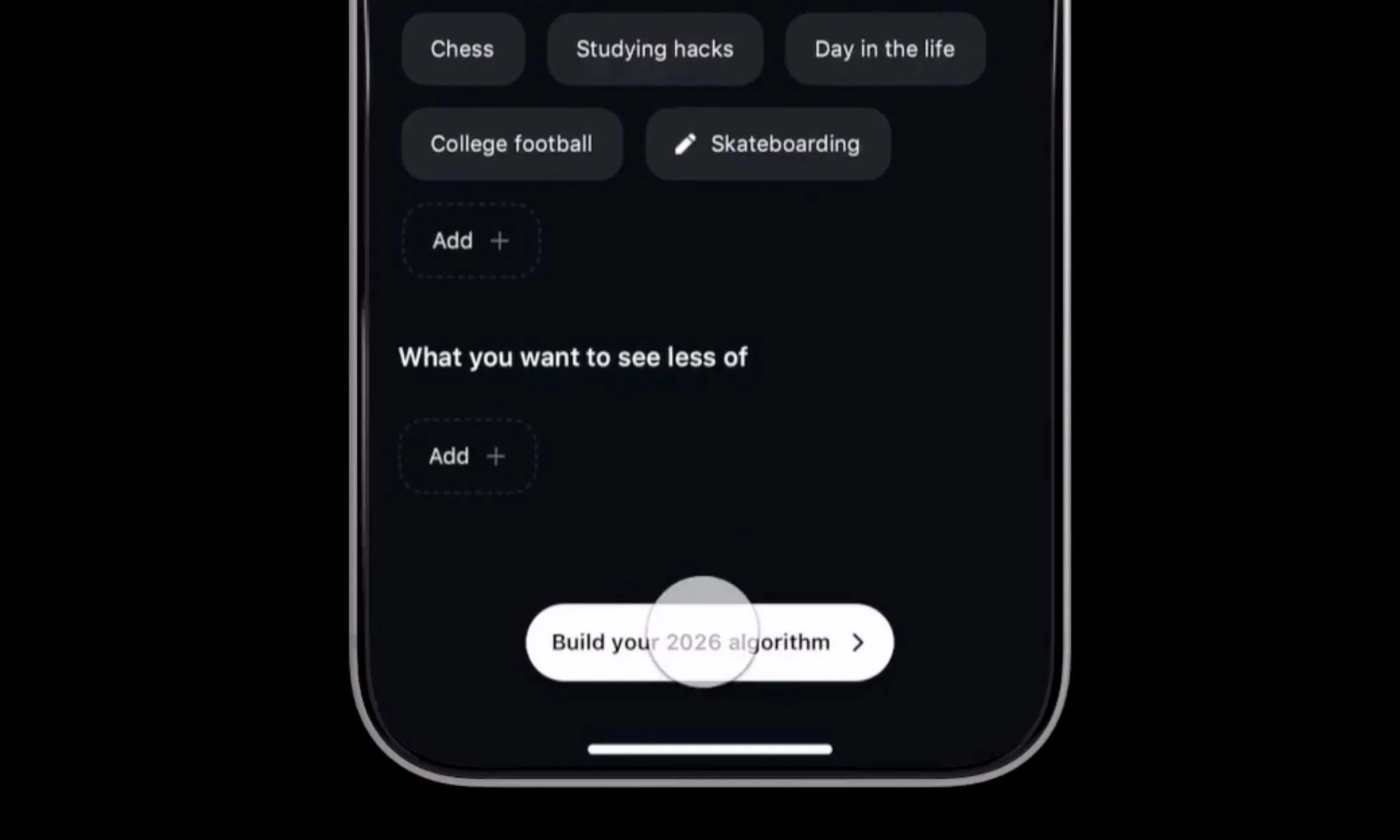
Instagram already has a way to fix some of that through Your Algorithm, a feature that lets users adjust the topics shaping their recommendations. Now, the company wants to make that tool easier to reach while people are actually using the app.
Instagram head Adam Mosseri has previewed new shortcut-like features that could bring Your Algorithm closer to the main feed and Reels. The changes could make it faster to correct repetitive recommendations, add fresh topics, or reshape a feed without digging through settings.
Instagram wants algorithm controls closer to the feed
Instagram has been working on improving users’ algorithms and giving them more control over recommendations since last year. It recently expanded those controls to the main feed, allowing users to view and edit the topics Instagram thinks they are interested in.
Advertisement
Instagram
Mosseri’s preview shows how Instagram may bring those controls closer to the places where recommendations actually appear. One version lets users pull down on the main feed to open Your Algorithm. Another shows the same control appearing after a swipe up from a Reel.
Instagram is also testing buttons under Reels that let users tell the app whether they want to see more videos like the one they are watching. In practice, recommendation tuning could become more immediate, since users would be able to correct the algorithm while browsing instead of opening settings later.
A chatbot-like way to reshape your feed
Your Algorithm could also become a more active tool for changing what appears in the feed. Users would not have to rely only on likes, pauses, searches, and watch time to steer recommendations over time.
Instagram
Mosseri’s preview suggests users may be able to type what they want to see more often, such as positive content, fitness clips, travel videos, or recipe ideas. Instagram would then recommend related topics that users can choose from and add to their feed.
The feature could help users fix recommendations thrown off by accidental clicks on the fly, add new interests, and refresh a feed that has become too repetitive.
The new models will launch with the M5 Pro and M5 Max, according to Mark Gurman.
Apple
Apple may be skipping over the M6 generation of its Pro and Max chips, but that doesn’t necessarily mean it’s pushing back the release of its rumored touchscreen laptop. According to Bloomberg‘s Mark Gurman, the new MacBook will launch with the high-end M5 chips that came out earlier this year. The 14-inch and 16-inch models are still expected to be released between the end of 2026 and early 2027, as Gurman has previously reported. The next iteration of the touch MacBook will get the M7 chips not too far down the line.
According to Gurman, who spoke to sources with knowledge of the plans, the M7 versions are already in the advanced testing stage and could arrive by the end of 2027. The touchscreen MacBook will reportedly usher in a slew of changes on top of the touch display. That includes bringing over the Dynamic Island interface from the iPhone, an OLED screen and “an updated industrial design,” Gurman reports.
Apple is expected to introduce its M7 chip in early 2027, followed a few months later by the M7 Pro and Max. Gurman has also reported that we may see the M7 Ultra in 2028.
Yuri Zaporozhets of QRV Systems is a busy chap. He’s built a new RISC-V-based personal computer, a mainframe on an FPGA, and rewritten QNX – twice.
Seemingly every month or two, The Reg FOSS desk gets an email telling us about some astonishing project that he has just got working. We’re delighted to see that his most recent one, a new OS called QSOE, is winning some attention in the FOSS world at present.
But first, we thought we could tell a more complete story of how he got here by describing some of his previous projects.
(By way of a disclaimer, we feel that we should say up front that he does use Anthropic’s Claude LLM to help. To his credit, he does clearly state this.)
Advertisement
GateMate Personal Computer
At the end of 2025, Zaporozhets wrote to tell us about his GateMate Personal Computer. The GateMate PC is something similar to a fairly high-end late-1980s IBM PC-compatible, but instead of a 286 or 386 CPU, it has a 25 MHz RISC-V core.
He told us the main inspiration for the GateMate PC: “The very first computer I saw in my life: an IBM PS/2 Model 30, in 1992. It also started in text mode.” We worked on a few of those, and they were not great machines. The GateMate machine should easily outperform the later, faster Model 30-286. He also acknowledges another project: “the NeoRV32 softCPU by Stefan Nolting is great.”
It has a VGA port that can output 80×30-character text in what back then we used to call Hi-Color, 8 KB of ROM containing a BIOS, and – although it’s still in the early stages – its own OS, which he calls GMDOS. The characters are double-byte ones using UCS-2 Unicode.
Advertisement
The GateMate gets its name from the host hardware because the design is mostly software: it’s implemented on an inexpensive FPGA board, the €50 Olimex GateMate A1-EVB (that’s about £42 or $57). Its video controller is an original design, and he has added extra RAM: the machine has 8 MB of additional PSRAM on two chips, via a QSPI interface.
The Olimex GateMate board can do a lot more, though – which leads us to his next project.
GateMate System/359
Also implemented on the same FPGA board is Zaporozhets’ miniature mainframe, the System/359. This isn’t a clone of the IBM System/360 mainframe series, the machines that introduced the idea of different computers being software compatible – it’s more of a tribute to it. For starters, the S/359 is a little-endian machine, while the S/390 is big-endian.
So it’s not binary-compatible with the mainframe architecture, but it’s similar. He started the project in January, and later that month, writing about its assembler, said: “GMS/359 keeps what’s beautiful about S/360 – the channel I/O model, the clean instruction formats, the PSW concept – while quietly modernizing the rest. Little-endian bytes. Opcode-first encoding. PC-relative addressing. No more base register juggling. The ‘/359’ isn’t a typo. It’s a declaration: inspired by, not compatible with.”
Zaporozhets told The Register: “There is a working assembler with the POWERFUL macroprocessor – from NASM. I was a NASM contributor from 1999 to 2004 and maintained its RDOFF2 part. Now RDOFF2 is removed from NASM 3.0, but it continues to live in my asm359 project.
Advertisement
“Currently the processor can execute the simple IPL; channel I/O controller works (PS/2 kbd, UART, SYSINFO, even crypto processor (!)). Once I finish the PSRAM module, I will start working with SYS1.NUCLEUS.”
So we can take it that as well as RISC-V and FPGAs, he has some familiarity with low-level systems design. His next project was with an OS that a lot of folks admire: QNX.
QNX has an on-again-off-again relationship with FOSS. QNX has been around since the 1980s, as we reported when the company made QNX 8 non-commercial freeware in 2024. In that article, we mentioned that QNX published the source code of an earlier version back in 2007. Back then, QNX was self-hosting and had its own desktop environment – we showed a screenshot of its Neutrino GUI in our roundup of non-Linux PC OSes back in 2013, and GUIdebook has a whole screenshot gallery.
Advertisement
The next year, that QNX 6.4 source code was mirrored from SourceForge over to GitHub, and it’s still there. Zaporozhets took this long-obsolete codebase and ported it to RISC-V, targeting his own FU740 “workstation.” It’s not the whole OS, just “the kernel, the process manager, the C library, the runtime linker.” And the license is very restrictive: you can study it and compile it, but not redistribute it.
He started this effort over Christmas 2020. “The timing made sense in a particular way. RISC-V had matured. The toolchains were stable. The original QNX sources were 32-bit ILP32, targeting x86, ARM, MIPS, SH, and PPC – no 64-bit port existed, let alone RISC-V. Doing the LP64 transition and the architecture port in a single effort seemed like exactly the kind of large, difficult, satisfying project that a long holiday lockdown invites.”
But after the initial effort, it languished for five years. When he came back to it, he ended up with a substantial rewrite. He calls the result QRV.
In March, he described this in a blog post, QRV Operating System: First Publication. As he puts it: “For clarity: QRV is not a patch on the original QNX sources. It is a ground-up reworking of the 32-bit ILP32 codebase into a 64-bit LP64 system for RISC-V, with deliberate simplifications.”
Advertisement
By the end of April, QRV v0.27 could boot to multi-user login. A month later, he declared the project finished with version 0.43: “This is the last development post for QRV. The project set out to port QNX Neutrino 6.4 to RISC-V 64-bit, run it on real hardware, and explore what it would take to bring a clean microkernel architecture to a modern open ISA. Those goals are met. v0.43 is the final release.”
Advertisement
Where next? Well, as the QNX kernel is not truly open source, then the only path forward is to switch to another kernel, one that is truly FOSS. Well, we say “one”… ¿Por qué no los dos?
QSOE – Quick and Secure Operating Environment
The result is QSOE: “QSOE ships in two variants that share one userspace and one build system. QSOE/N runs on Skimmer, a microkernel written from scratch for this project (SMP by design); QSOE/L runs on seL4 as its kernel.”
As The Register covered back in 2014, Secure Embedded L4 is a formally verified microkernel OS. We have written about other OSes that use it before: in 2022, we described the new Neptune OS project, which is a combination of seL4, ReactOS, and Wine. Then, in 2025, we looked at Ironclad, which combines seL4 with the C-based Gloire and an Ada layer.
There are some very serious precedents for building around seL4, but QSOE doesn’t stop there: it also has its own homegrown kernel, called Skimmer, that’s designed for multiprocessor machines. Zaporozhets has been working in this area for a long time. On the QSOE site, he mentions his effort to build a free QNX-like operating system back in 2003. It’s still online – it is called RadiOS.
Advertisement
In How QSOE started, he describes the inspiration: as a fallback option, a Plan B, if his petition to BlackBerry did not succeed. We sympathize. When we wrote about QNX 8, we got nothing useful back from the company either.
A new Quordle puzzle appears at midnight each day for your time zone – which means that some people are always playing ‘today’s game’ while others are playing ‘yesterday’s’. If you’re looking for Sunday’s puzzle instead then click here: Quordle hints and answers for Sunday, June 28 (game #1616).
Quordle was one of the original Wordle alternatives and is still going strong now more than 1,400 games later. It offers a genuine challenge, though, so read on if you need some Quordle hints today – or scroll down further for the answers.
Enjoy playing word games? You can also check out my NYT Connections today and NYT Strands today pages for hints and answers for those puzzles, while Marc’s Wordle today column covers the original viral word game.
Advertisement
SPOILER WARNING: Information about Quordle today is below, so don’t read on if you don’t want to know the answers.
Latest Videos From
Quordle today (game #1617) – hint #1 – Vowels
How many different vowels are in Quordle today?
• The number of different vowels in Quordle today is 3*.
* Note that by vowel we mean the five standard vowels (A, E, I, O, U), not Y (which is sometimes counted as a vowel too).
Advertisement
Quordle today (game #1617) – hint #2 – repeated letters
Do any of today’s Quordle answers contain repeated letters?
• The number of Quordle answers containing a repeated letter today is 1.
Quordle today (game #1617) – hint #3 – uncommon letters
Do the letters Q, Z, X or J appear in Quordle today?
• No. None of Q, Z, X or J appear among today’s Quordle answers.
When my wife and I bought our first ebike—a Radwagon 4 by the Seattle-based Rad Power Bikes—four years ago, we did so to replace one of our two family cars. For in-town trips of 5 miles or less, we figured we could (and should!) use the bicycle. At the time, our kids were very young, so we needed a bike capable of safely carting them around and also handling whatever we were hauling on a given day.
The Radwagon answered those needs; the direct-to-consumer company allowed me to configure the bike to suit my exact needs during the ordering process. I selected a front basket, a rear pad seat for my son, and a Thule Yepp 2 Maxi seat to secure my then-toddler daughter. I also bought a few safety lights and a bell from my local bike shop (more on those accessories below).
Once the bike arrived and was assembled, my wife and I used it to tote our kids all over town. We rode to and from school and daycare, playdates, and doctor’s appointments; made quick grocery runs; and went anywhere else we needed to go that was relatively close to home.
On any given day, the front basket continues to function as a cornucopia holding whatever we might need for the task or errand at hand. On a recent trip to a nearby playground, my ebike’s basket held the following: a small soccer ball, my wife’s small shoulder bag, my bike lock and cable, two bottles of water (in addition to a third bottle of water in the bike’s bottle cage), three baseball caps, two baseball gloves, one baseball, a small tin lunch box full of snacks, and two binders full of Pokémon trading cards. The basket has also successfully transported two large grocery bags or three smaller ones, and, on one occasion, a small guitar amp I found at our local thrift store.
Advertisement
The bike is still useful and functional, but my family’s needs have changed since we bought it. My now-4-year-old daughter is too big to fit in her Yepp seat, and my now-8-year-old son is a bit too self-conscious to be seen on the back of his dad’s big ebike. (Not to mention, he’s now strong enough to ride all over town on his own bike.)
With my kids outgrowing the beloved family ebike, I’ve been thinking about its next iteration as a serious cargo schlepper—a Grocery Getter, if you will—and how I can set it up to haul as much stuff as possible. Ebikes now make up a huge category, serving mountain bikers and commuters, folding and cruising to fit various needs. There are strategic ways to maximize your ebike’s capabilities for each of those purposes, but here I’m going to stick to outlining the two I know best: carting a family (the Family Wagon) and hauling lots of stuff (the Grocery Getter).
The Family Wagon
Photograph: Michael Venutolo-Mantovani
If you use your ebike to transport your kids, you’ll want comfortable, safe, and age-appropriate seating for them.
Sometimes, it’s hard to stop picking up your phone every few minutes to check on notifications and scroll endlessly through the slop of the day. [PushpendraC2] has been working on a solution to this problem that would ideally discourage such behavior — a nifty little smartphone stand!
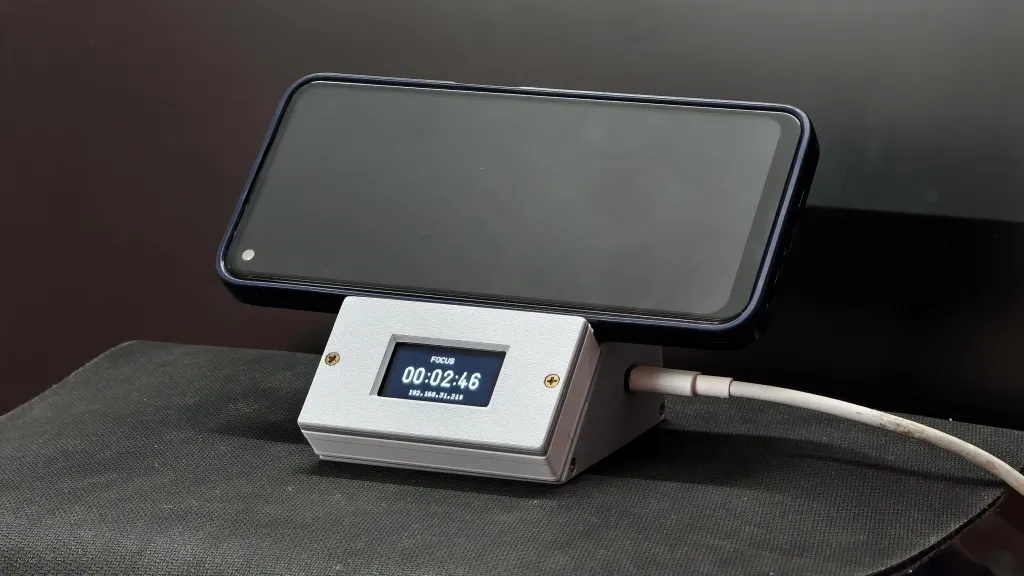
The concept is straightforward enough—the smartphone stand uses a simple tactile button to determine if your smartphone is sitting on the little 3D printed shelf, or not. However, the smarts inside do a bit more than that, too. An ESP32-S3 is charged with monitoring whether the smartphone is sitting in place, and starts counting “focus time” while it’s there. If the phone is picked up, the OLED display on the shelf starts ticking down a 5-second timer to encourage you to put it back. If you don’t, the focus time is reset and you lose your streak.
It’s also possible to tap a touch sensor on the device which sets a reminder timer, prompting you to put your phone back after a set period of time, between 2 to 30 minutes. A buzzer will then start going off to prompt you to put the phone down. If you want to track the devices impact, you merely need to log in to the web server hosted by the ESP32, which shows your current focus session time, along with a heatmap of your daily productivity.
Advertisement
It’s a simple idea, but one that uses a few neat psychological hooks to encourage compliance and behavioral change. We’ve featured similar projects in this vein before, No surprise, as phone addiction is a problem experienced by many.



























































You must be logged in to post a comment Login