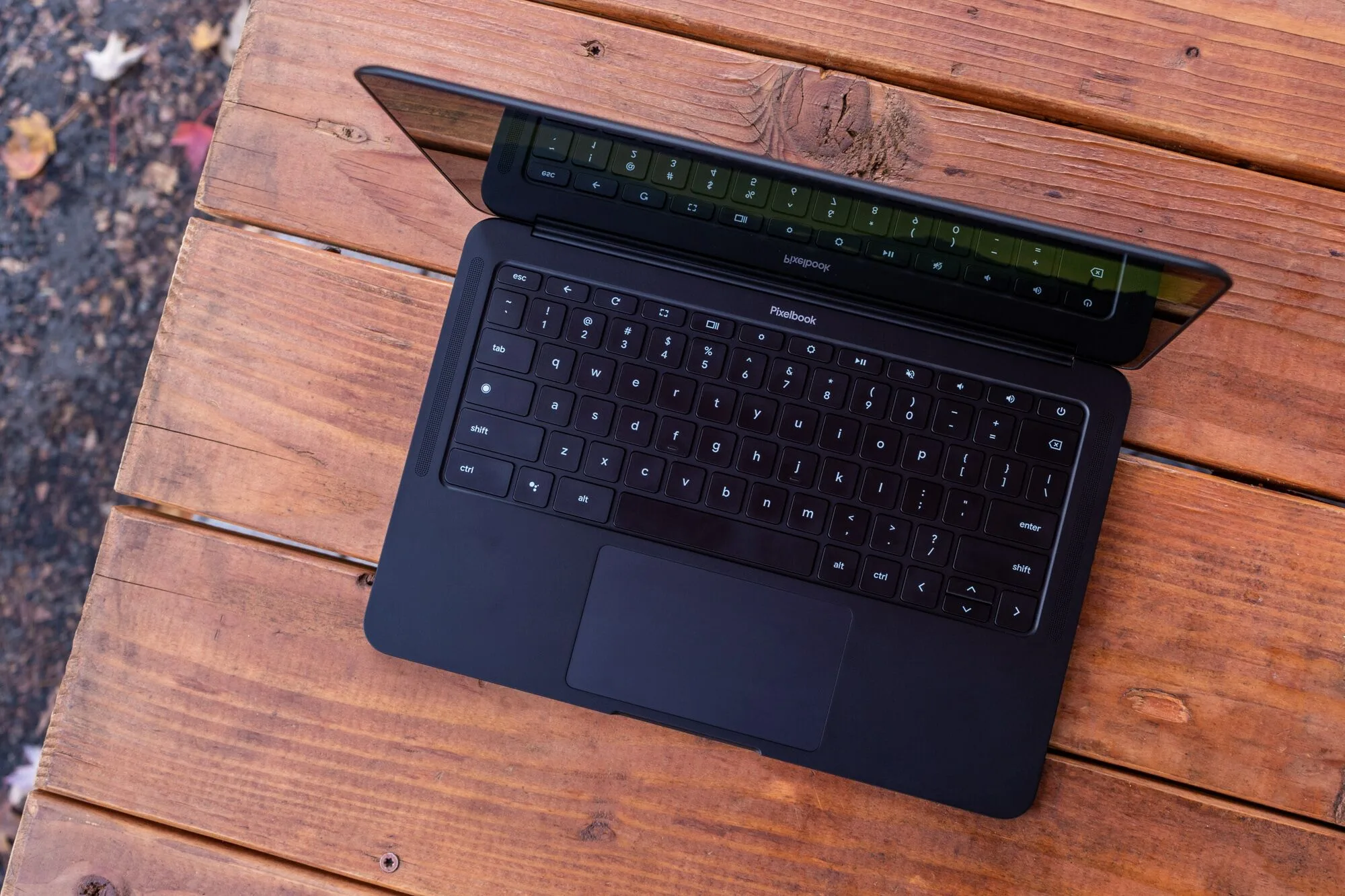
It looks like a new member is joining the Pixel family, adding to its resurgent smartphone lineup. Code analysis of the latest Android beta points toward a new Pixel laptop that Google might be planning to launch in the near future. Google last launched a laptop, the Pixelbook Go, in 2019, an affordable version of the Pixelbook it put on the shelves back in 2017.
Both the Pixelbook and Pixelbook Go, along with the earlier Chromebook Pixel models, were not what you would call a smash hit with the audience or a runaway commercial success. Ultimately, they triggered Big G’s departure from the laptop segment and a shift in focus toward Pixel smartphones.
The tides are shifting, and it seems ChromeOS is on its sunset ride.
Snippets spotted in Google’s software suggest we might finally see Google’s latest attempt at a laptop, but without the expected Chromebook foundations. Instead, it could be the showcase ride for an entirely new class of machines running Aluminium OS. That said, a Google Pixel laptop does not make much sense right now, as several factors work against it. As one charismatic wrestling star would go, “let me talk to ya” on this!.
Google’s history of failure with past laptop launches
Let’s be fair (read: historically accurate) here. Google doesn’t have a particularly enviable track record with making laptops. The company took several stabs at making a laptop in the past decade, starting with the Chromebook Pixel in 2013, an upgraded Chromebook Pixel in 2015, the Google Pixelbook in 2017, and the Pixelbook Go in 2019.
Advertisement
Digital Trends
None of these laptops could set the computing segment on fire or set any long-lasting industry trends, owing to two main factors: pricing and the underlying operating system.
A history of bad pricing at Google
Device model
Price starting at
Chromebook Pixel (2013)
$1,299
Chromebook Pixel (2015)
$999
Pixelbook
$999
Pixelbook Go
$649
As you can see from the table, all Google laptops commanded a premium, with launch prices around the $1,000 mark. At that price, you could get a powerful Windows laptop or even a MacBook Air. Why would anyone want to pay that much for a laptop running ChromeOS?
I plonked $1,649 on the top-end variant with the Core i7 variant, and it’s now eating dust in my drawer. Not because I don’t want to keep it running. The laptop is just utterly slow, and despite numerous hard resets, it won’t even handle Chrome smoothly without stuttering, running utterly hot, and the screen has lost its touch-sensitivity, too.
The state of ChromeOS in 2026
Well, that was nearly a decade ago, but what about now? Maybe ChromeOS has improved enough to go toe to toe with other desktop operating systems? Sadly, the answer is no. If anything, Google seems to have left the operating system in limbo with no drastic improvements.
Advertisement
Google
Yes, there have been pockets of updates here and there, but nothing substantial that makes it a viable competitor. It’s still a browser-based operating system with minimal support for popular creativity and productivity apps. With the scrapping of Google Stadia, gaming is also now almost defunct on ChromeOS.
On the other hand, Linux has improved by leaps and bounds, can run on similar low-powered hardware, and supports gaming and the most popular creative and productivity apps. In fact, Linux is at an all-time high among Steam gaming die-hards. Yes, ChromeOS has simplicity of use in its favor, but that’s about it.
What about the upcoming Aluminium OS?
There is, however, a glimmer of hope on the horizon. Google is working on a new operating system called Aluminium OS, with an expected launch window of 2026. It aims to merge Android and ChromeOS into a single unified platform.
Built on Android from the ground up, it promises native support for all Play Store apps with proper keyboard and mouse support, alongside desktop-grade window management features. It will even support multiple desktops.
The highlight feature of the OS will be Gemini AI, which will supposedly be baked into the core of the OS, which is a significant step up from ChromeOS. That said, Aluminium OS could push forward with its own set of problems, if ChromeOS is anything to go by.
Advertisement
Rachit Agarwal / Digital Trends
First, it would require more powerful hardware to power the AI features. Ideally, it would need a silicon with a powerful AI accelerator chip (aka NPU) to handle AI-driven tasks, especially those that are executed on-device. Imagine translation, photo editing with generative AI, scam detection, and more, without an internet connection.
Second, since it is based on Android, you will still not get support for full-fledged desktop apps. You might be able to run them using a translation layer, something Apple did with Rosetta when it switched to its own ARM-based processors for Macs, but how well it will work is a big question mark. Windows on ARM has been a mess and only recently started becoming a real possibility.
I can’t imagine Aluminium OS will fare any better in its first swing at serious computing.
Built-in Gemini AI will be the highlight of this new operating system, and hopefully, it will be better than the Windows implementation of Copilot AI and the lackluster Apple Intelligence execution in macOS. This could give Aluminium OS a leg up over the competition, but the fundamental issue, which is a lack of desktop app support, is a problem Google will have to figure out soon, or the new OS will suffer the same fate as ChromeOS.
Rising RAM and SSD prices
By now, it should be clear that the only way a next-generation Google laptop can succeed is by lowering its price. But that might be harder to achieve in today’s market, thanks in no small part to the RAMmageddon that has wreaked havoc in the PC industry and spilled over into the smartphone and gaming segments as well.
Sergei Starostin / Pexels
And these are just a few examples. Every other laptop manufacturer has climbed the price ladder, much to the obvious displeasure of buyers and even triggering a panic purchase spell, according to Counterpoint Research. Unfortunately, industry trends suggest it will only get worse before it gets better. And we’re not just talking about new products here.
Unsplash
It might be the first time in history that a gaming console, phone, or laptop costs more in 2026 than it did at launch. In such an unprecedented market, I do not see a way for Google to cut prices on its new laptops, especially with the powerful system requirements for running Aluminium OS, without significantly jeopardizing other aspects of its hardware, which was the only good thing about the older Google laptops.
The MacBook Neo exists at $599
Google’s Aluminium OS foundations sound promising, but they just got a pre-emptive reality check from Apple, in the form of MacBook Neo. If the reportedly upcoming Google laptop existed in a vacuum, there might have been a chance it could succeed.
Now, let’s do a thought experiment. If you had to choose between a Pixelbook and a MacBook Neo at $599, a price point Google has never hit before, by the way, which one would you choose?
I would argue that nearly everyone would choose the MacBook Neo. The only thing going in favor of the Pixelbook over similarly priced Windows laptops was its hardware design, and it won’t have that same advantage over the MacBook Neo.
The MacBook Neo features a full metal body, a good display, a quality keyboard, and a best-in-class touchpad. Google will be hard-pressed to build a laptop that good, with that kind of performance, and still hit the $599 price point.
Nadeem Sarwar / Digital Trends
Not to mention, you get the full desktop experience with MacBook Neo because it runs macOS. Even if the new Google laptop is powered by the upcoming Aluminium OS, it will still lack support for desktop apps. Yes, the experience might be better than ChromeOS, but there’s no chance it can compete with a mature operating system like macOS.
Chromebooks sell so well largely because they hit a sub-$300 price point for the education market. But think a year or two ahead, when the current MacBook Neo is selling for $350 or $400 in the resale or refurbished market. Who would buy a Chromebook then?
Advertisement
Does a Chromebook, let alone a Pixelbook, make sense now?
The only reason ChromeOS holds a significant share of the market is due to its education programs and strong ties with schools across the US. If Apple can crack that code and partner with school boards to offer the MacBook Neo as a replacement, the days of ChromeOS are numbered.
Even if Apple doesn’t succeed in schools, MacBook Neo has ensured that the days of premium ChromeOS laptops are over. The upcoming Aluminium OS might be the answer Google is hoping for, but I am skeptical. And that’s why I do not think a new Google laptop makes sense right now. Or ever.
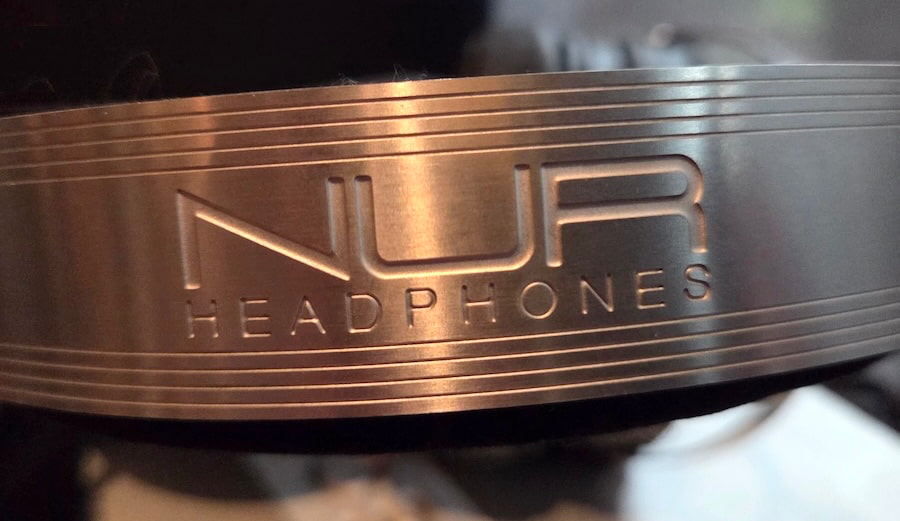
Among the global brands at AXPONA 2026, Mimic Audio did not have the biggest booth or the loudest presence, but it ended up being one of the more worthwhile stops in the EarGear section. The Chicago dealer, owned by TJ Cook, was positioned between Campfire Audio and Austrian Audio and only a few steps from the always swamped ZMF booth, which made it easy to overlook in the rush. That would have been a mistake. Mimic first caught my attention before the show when it supplied the AudioByte components for the Von Schweikert pre-event, paired with NUR Audio’s Harmonia.
My initial listen there was promising, but with the Von Schweikert VR.thrity or Ultra 7 commanding the room and the Harmonia’s open-back design letting all of that noise pour in, it was impossible to draw more than a few early conclusions. That made a return visit at AXPONA essential, where I sat down with all three NUR models on display for a longer listen and a better sense of what this Italian headphone brand is actually bringing to the table.
NUR Audio Headphones: Italian Design, Planar Magnetic Ambitions
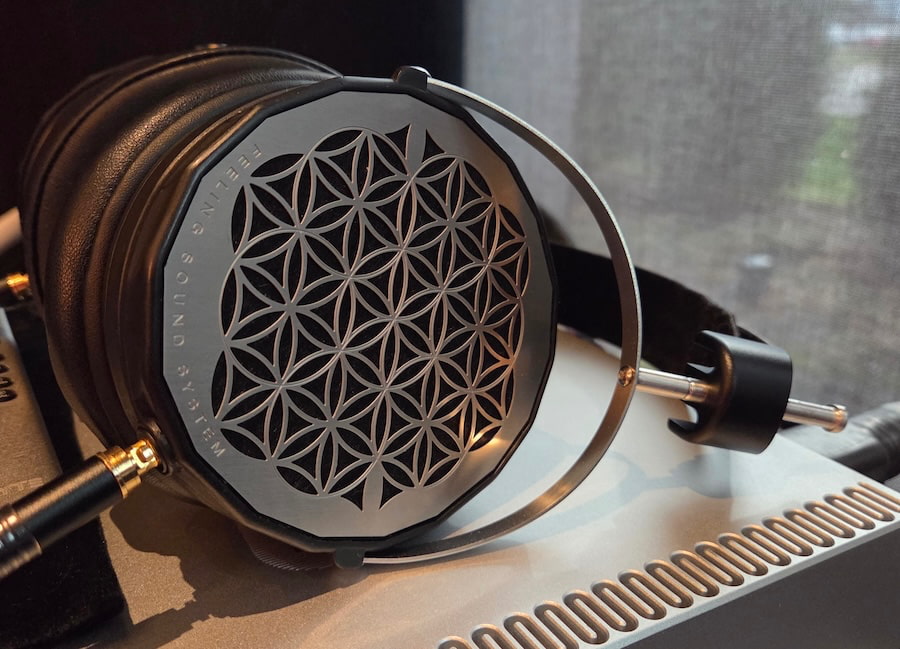
NUR Audio is not some legacy brand trading on decades of goodwill. It was founded just northeast of Rome by Angelo De Mattia and feels very much like a passion project finding its footing in a crowded category. Right now, the Harmonia open back is the only model you can actually buy, priced at $3,750, while the Shanti open-back reference and Miah closed back are still listed as coming soon with pricing to be determined. That split matters because NUR is already drawing a line between audiences. The Harmonia is built for listening at home, while the Shanti and Miah mark the start of a professional series aimed at engineers who need precision more than romance.
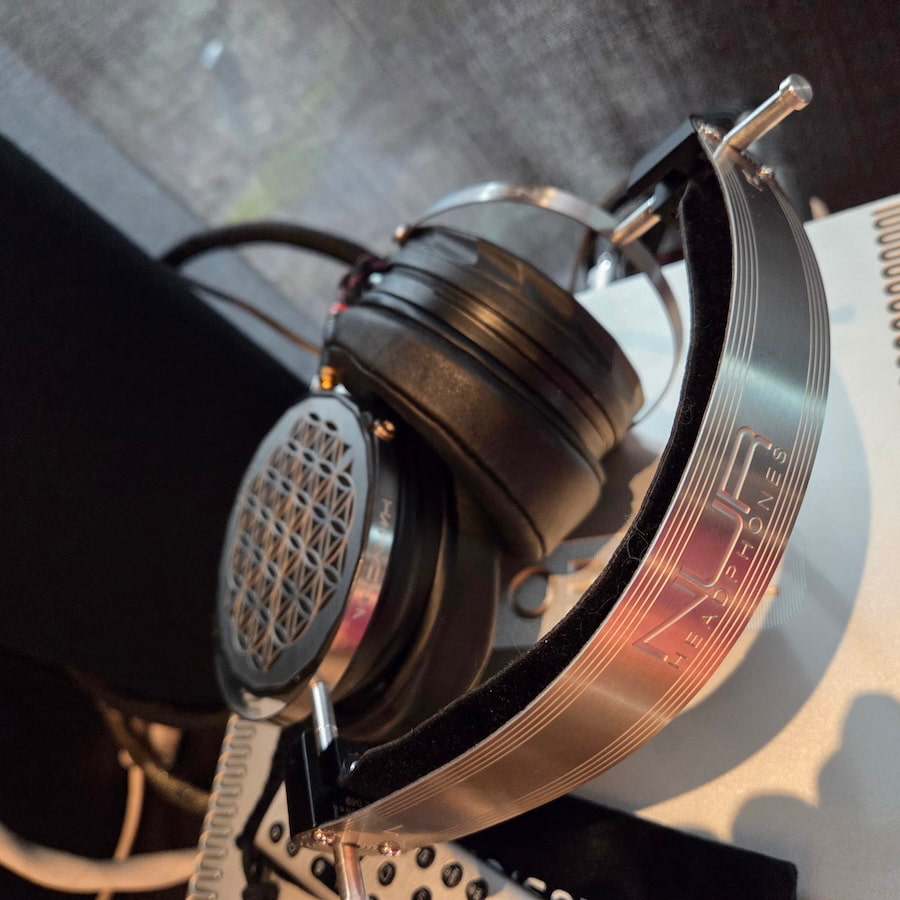
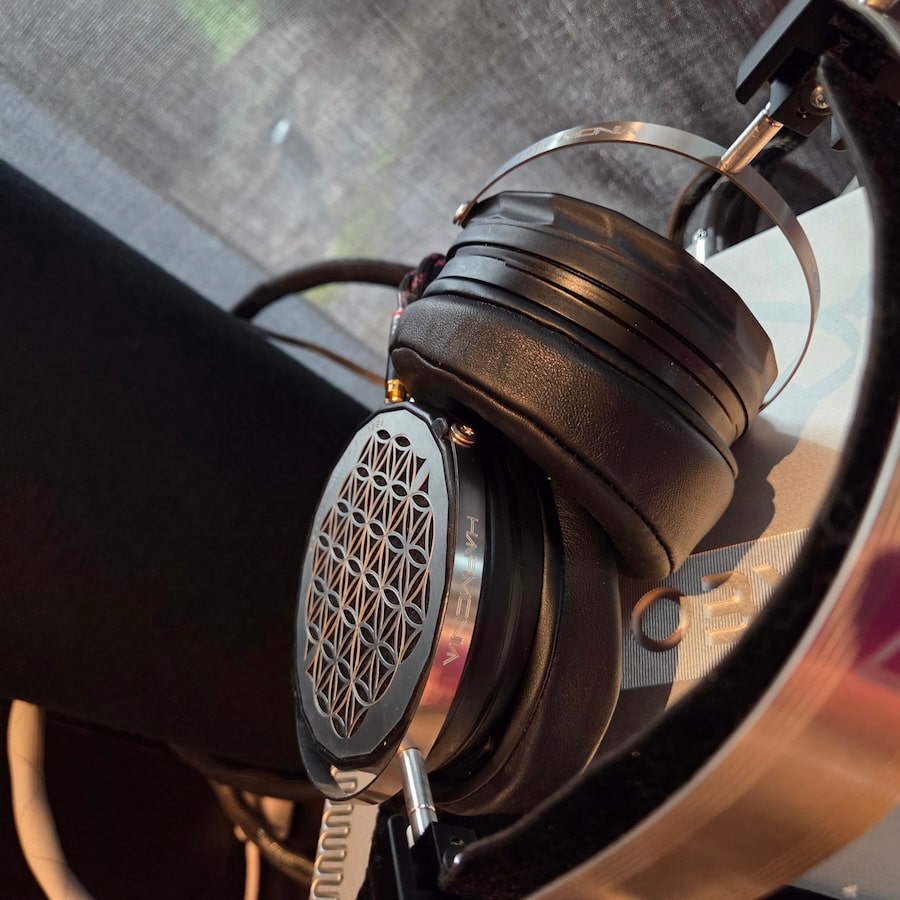
The two open-back designs share a lot of DNA. Similar materials, similar construction, and very similar planar magnetic drivers. The Miah goes a different route with a dynamic driver inside a closed back design, which should make it the more practical option for studio work or less than ideal environments. All three, however, are physically imposing. Think Audeze LCD-4 sized ear cups and the kind of weight that can turn a long session into a short one if the ergonomics are off. Early impressions suggest NUR understands the problem. The suspension system is well padded, the clamp feels reasonable, and the weight distribution does not immediately raise red flags.
Advertisement
The real test, as always, will be whether that comfort holds up after a few hours rather than a few tracks.
Using the AudioByte stack (more on that soon), I was able to spend time with all three NUR models and come away with a clearer sense of how each is voiced. With both the Shanti and Miah still in prototype form, nothing here should be considered final, but the direction is already apparent.
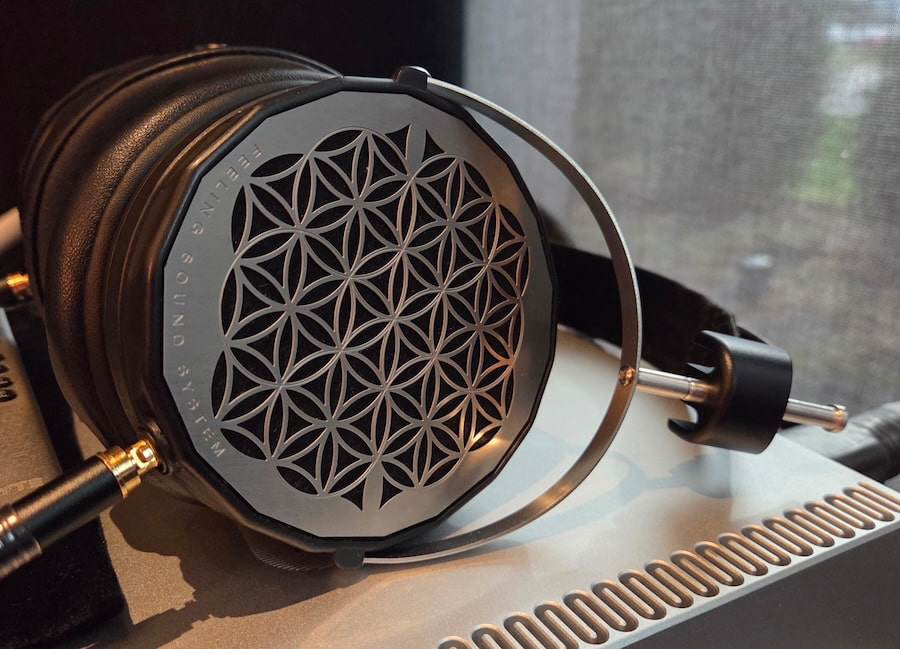
The NUR Harmonia is a large-format open-back planar magnetic headphone built around a 105mm PEEK diaphragm and a double-sided toroidal magnet system using high-grade N52 neodymium magnets. That combination is designed to deliver fast transient response, low distortion, and wide bandwidth, which is reflected in the rated 8Hz to 55kHz frequency response.
With a 48 ohm impedance and 107 dB/mW sensitivity, it should be relatively easy to drive for a planar of this size, though it will still benefit from a capable amplifier. The dual 3.5mm cup connections allow for balanced operation out of the box, with either 4.4mm or XLR cables included, along with a 6.35mm adapter for single-ended use. At 630 grams, it is firmly in the heavyweight category, making the suspension system and overall ergonomics critical for longer listening sessions.
Advertisement
The Harmonia leans toward a clean, controlled presentation with a touch of warmth that you don’t always get from planar magnetic designs. Bass has solid presence without sounding pushed, the midrange comes across as slightly lush with very good detail retrieval, and the treble extends well past what my ears are willing to admit at this point. It strikes a balance that feels intentional rather than trying to impress on first listen.
The Shanti prototype shifts gears toward a more analytical presentation. It is crisper, more forward in its detail, and less forgiving overall. The name was a bit of a clue, but the tuning confirms it. This feels like the model aimed squarely at those who want to dissect recordings rather than relax into them.
The Miah, as the closed-back option, moves in a different direction. It is warmer and a bit thicker sounding than the two open-back models, which is not surprising given the design. Detail is still present across most of the range, but the top end has slightly less extension and sparkle. That trade-off is typical for closed-back headphones, especially ones that appear to be targeting studio use rather than chasing an artificially boosted sense of air.
Advertisement. Scroll to continue reading.
Advertisement
The Bottom Line
I came away impressed enough to spend a good amount of time talking with TJ Cook about getting all three NUR models in for proper review once they hit the market. That says more than any quick show impression. AXPONA has no shortage of big names pulling crowds, and it is easy to fall into the trap of chasing logos instead of sound. The problem is that you end up walking right past booths like Mimic Audio and missing some of the more interesting listens of the weekend.
The NUR lineup, paired with the AudioByte components, proved to be far more than a curiosity. It was one of those setups that rewarded anyone willing to sit down, block out the noise, and actually listen. Not perfect, not finished in two cases, but clearly headed somewhere worth paying attention to.
Expect a deeper dive once review samples land. In the meantime, NUR Audio is a brand to keep on your radar, and if you happen to be in the Chicago area, Mimic Audio is absolutely worth a visit.
Most audio brands guard their designs like trade secrets, but Head(amame) showed up at AXPONA 2026 and did the exact opposite. The Vancouver-based company is handing over schematics, specs, and build plans for its 3D printed headphones, inviting users to print and assemble their own at home with a parts kit for what cannot be fabricated on a desktop printer. While 3D printed speakers have been circulating in DIY circles for years, this is the first time I have seen the concept executed this openly and completely in the headphone space.
Morgan Andreychuk explained that Head(amame) gives away the files to 3D print the cups, yoke, and headband whether you buy the finished headphone or build it yourself. The price difference is a big part of the appeal: the completed Head(amame) Pro starts at $369 for Kickstarter backers, while the Head(amame) parts kit sells for $130 through the company’s site. That means buyers can pay more for a finished product with QC and warranty coverage, or spend a lot less on the kit and print most of the structure themselves.
Either way, the open design is the real hook. Owners have the files needed to recreate most of the structural parts if something breaks, wears out, or if they want to tweak the design later. The tradeoff is straightforward: choose the DIY route and you give up the company’s finished-product QC process and warranty, but not its support. Andreychuk and the team were clearly willing to discuss materials, printing options, and possible improvements, which makes this feel less like a sealed consumer product and more like a headphone platform built for people who actually want to tinker.
Head(amame) Pro 3D Printed Headphones
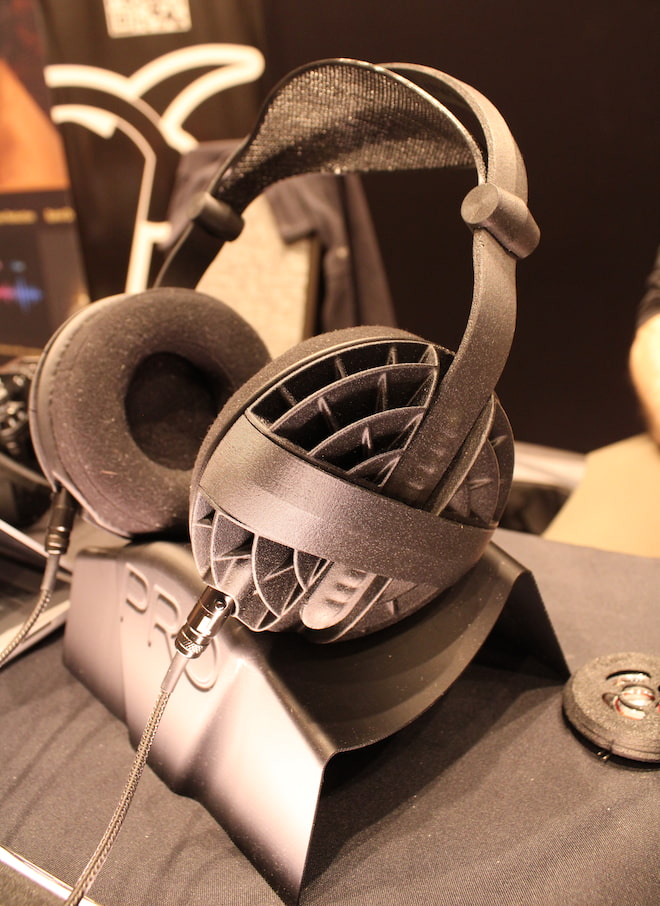
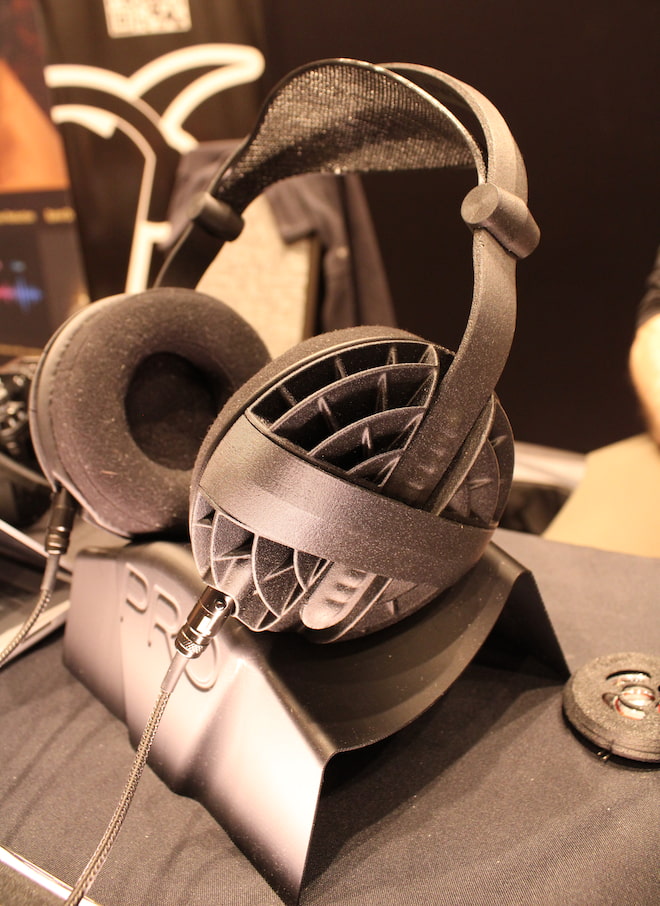
The Head(amame) Pro uses a semi closed back design that will feel familiar in concept to the Fostex T50RP, even if it looks nothing like it. The structure is unmistakably its own. The headband and yoke form a plus shaped frame that dominates the face of the cup, while a series of radial baffles wrap around the perimeter, giving it an almost floral appearance. You do not see the driver from the rear, but each “petal” hides a vent that becomes visible from the side.
Advertisement
Head(amame) Pro Headphones at AXPONA 2026
Even the cable placement refuses to follow convention, mounted vertically on the rear face but closer to the front. My first instinct was that I had them on backwards. Morgan acknowledged that clearer left and right markings are still a work in progress.
The first real surprise comes when you pick them up. For something this large, the Head(amame) Pro is extremely light. That is not by accident. The goal is to go even further, with plans to swap a brass pin for aluminum and replace another internal component with carbon fiber. It is already more than 100 grams lighter than the AirPods Max and still trending downward.
That kind of weight reduction changes the equation. A non padded headband might raise eyebrows on paper, but here it is not the liability you would expect because there simply is not enough mass to make it one.
The Head(amame) Pro uses dynamic drivers with a glass diaphragm intended to improve speed and clarity, but the platform is not locked down. Builders can experiment with a range of 40 mm dynamic drivers as long as the specifications line up, which reinforces the open, modular nature of the design. Head(amame) shared a booth with Capra Audio, who assisted with tuning the Pro.
That collaboration came after some disagreement over the voicing of an earlier model, prompting Morgan to bring Capra into the process for this revision. Given Capra Audio’s presence in the DIY space with aftermarket parts and headbands, the partnership makes sense and will likely resonate with the community this product is aimed at.
Advertisement
Sound, at least in that environment, leaned close to reference with a slight roll off in the lowest octaves and a bit of lift up top. It is an easy signature to listen to and, more importantly, one that invites experimentation. That matters here because the entire premise is that you are not stuck with a fixed outcome. The reality of a busy show floor limits how far I am willing to go with sonic conclusions, but the early impression was positive enough to warrant a deeper look. If I can get a set printed for review, there is clearly more to unpack.
As a concept, Head(amame) is doing something few others are willing to try. It is a more sustainable approach than most full size headphones, and at roughly 280 grams with plans to go even lighter, it is also one of the more comfortable options for listeners who usually tap out early because of weight.
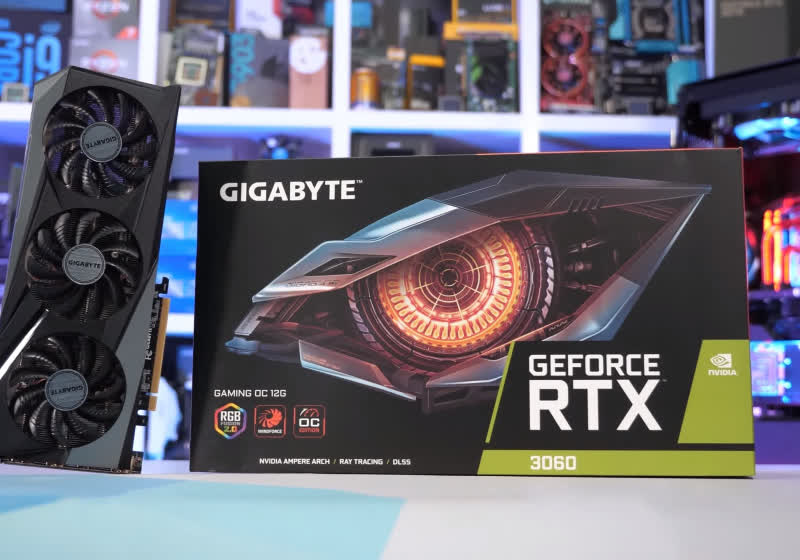
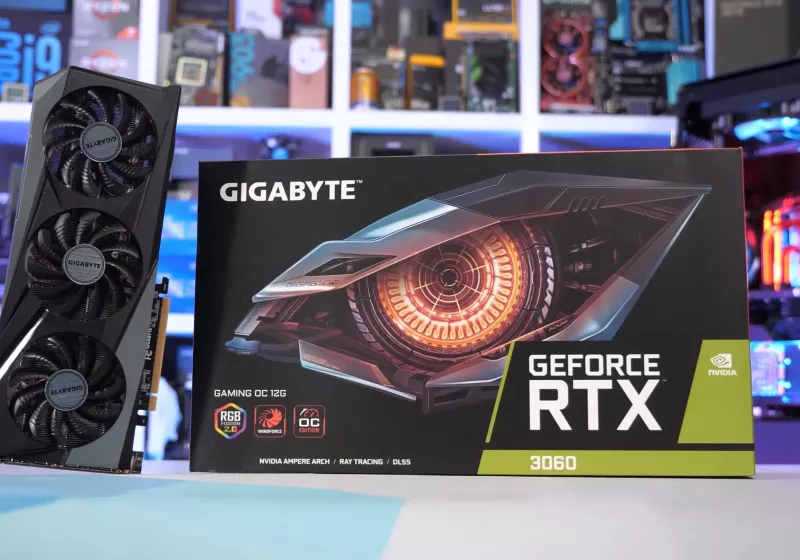
Prominent leaker MEGAsizeGPU recently claimed that a long-rumored version of Nvidia’s RTX 5050 with increased memory capacity has been delayed and might never see release. Meanwhile, the still-popular RTX 3060, originally expected to have returned to the market by now, could instead fill the gap in the release schedule in June. Read Entire Article Source link
The Brave browser “has introduced Brave Origin, a stripped-down version of its browser that removes built-in monetization features like Rewards and other extras tied to its business model,” writes Slashdot reader BrianFagioli”
The stripped-down browser is available either as a separate browser download or as an upgrade to the existing Brave install, unlocked through a one-time purchase that can be activated across multiple devices. The idea is simple on paper: pay once, and you get a cleaner, more minimal browsing experience without the add-ons that fund Brave’s ecosystem. What makes the move unusual is the pricing model itself. While paying to support a browser is not controversial, charging users specifically to remove features raises questions about whether those additions are seen as value or clutter.
The situation gets even stranger on Linux, where Brave Origin is reportedly available at no cost, creating an uneven experience across platforms and leaving some users wondering why they are being asked to pay for something others get for free.
A new Quordle puzzle appears at midnight each day for your time zone – which means that some people are always playing ‘today’s game’ while others are playing ‘yesterday’s’. If you’re looking for Sunday’s puzzle instead then click here: Quordle hints and answers for Sunday, April 19 (game #1546).
Quordle was one of the original Wordle alternatives and is still going strong now more than 1,400 games later. It offers a genuine challenge, though, so read on if you need some Quordle hints today – or scroll down further for the answers.
Enjoy playing word games? You can also check out my NYT Connections today and NYT Strands today pages for hints and answers for those puzzles, while Marc’s Wordle today column covers the original viral word game.
Advertisement
SPOILER WARNING: Information about Quordle today is below, so don’t read on if you don’t want to know the answers.
Article continues below
Quordle today (game #1547) – hint #1 – Vowels
How many different vowels are in Quordle today?
• The number of different vowels in Quordle today is 4*.
* Note that by vowel we mean the five standard vowels (A, E, I, O, U), not Y (which is sometimes counted as a vowel too).
Advertisement
Quordle today (game #1547) – hint #2 – repeated letters
Do any of today’s Quordle answers contain repeated letters?
• The number of Quordle answers containing a repeated letter today is 2.
Quordle today (game #1547) – hint #3 – uncommon letters
Do the letters Q, Z, X or J appear in Quordle today?
• Yes. One of Q, Z, X or J appears among today’s Quordle answers.
What letters do today’s Quordle answers start with?
• Q
Advertisement
• T
• S
• E
Right, the answers are below, so DO NOT SCROLL ANY FURTHER IF YOU DON’T WANT TO SEE THEM.
Advertisement
Quordle today (game #1547) – the answers
(Image credit: Merriam-Webster)
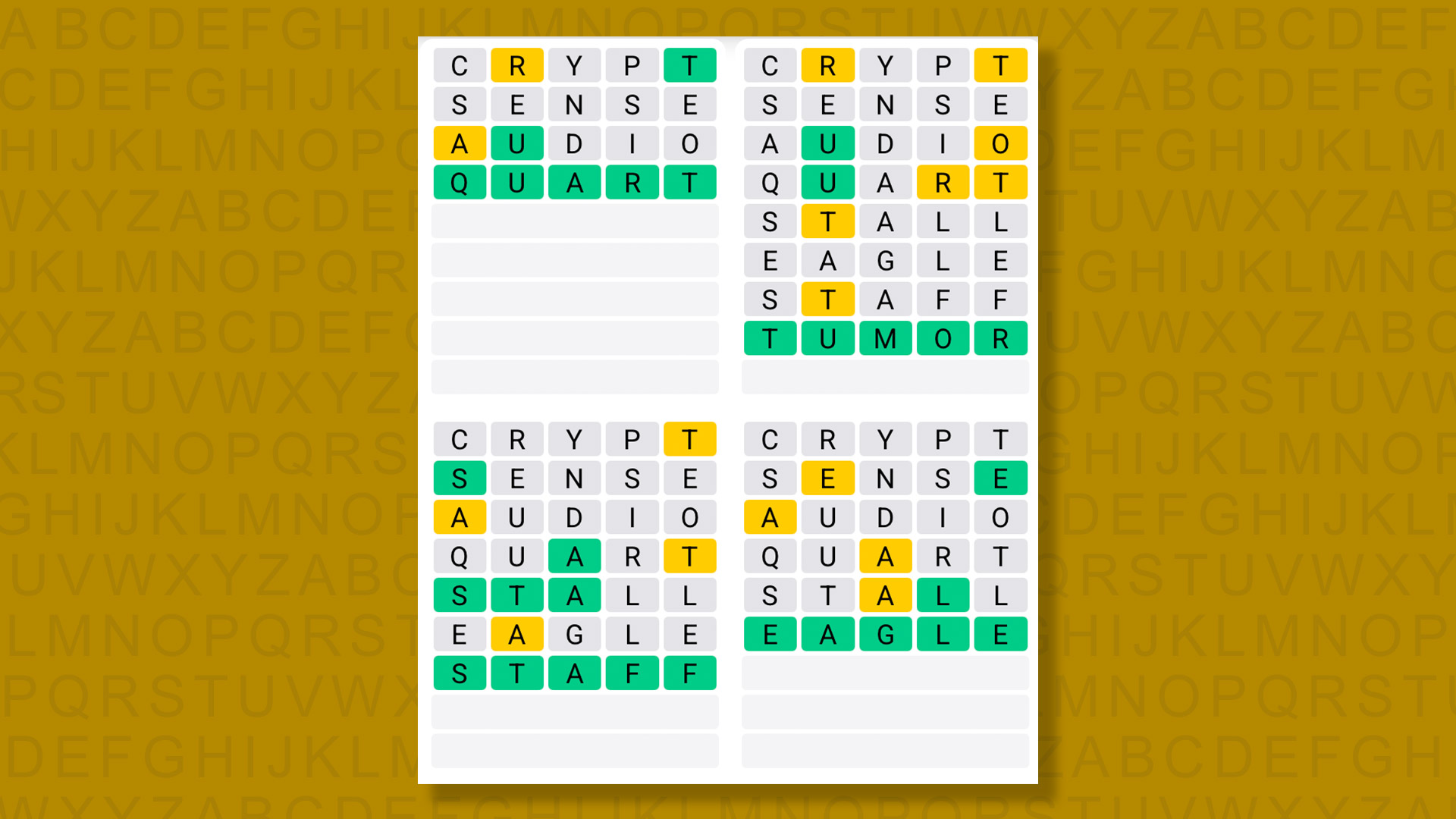
The answers to today’s Quordle, game #1547, are…
Advertisement
Sign up for breaking news, reviews, opinion, top tech deals, and more.
A really tough game this one, and it took me a good deal longer to complete than usual.
Getting the rare letter Q ended up being the easy part as the remaining words had a few possibilities. Fortunately I got away with it, making just one mistake — but it felt lucky.
Advertisement
Daily Sequence today (game #1547) – the answers
(Image credit: Merriam-Webster)
The answers to today’s Quordle Daily Sequence, game #1547, are…
A new NYT Strands puzzle appears at midnight each day for your time zone – which means that some people are always playing ‘today’s game’ while others are playing ‘yesterday’s’. If you’re looking for Sunday’s puzzle instead then click here: NYT Strands hints and answers for Sunday, April 19 (game #777).
Strands is the NYT’s latest word game after the likes of Wordle, Spelling Bee and Connections – and it’s great fun. It can be difficult, though, so read on for my Strands hints.
Want more word-based fun? Then check out my NYT Connections today and Quordle today pages for hints and answers for those games, and Marc’s Wordle today page for the original viral word game.
Advertisement
SPOILER WARNING: Information about NYT Strands today is below, so don’t read on if you don’t want to know the answers.
Article continues below
NYT Strands today (game #778) – hint #1 – today’s theme
What is the theme of today’s NYT Strands?
• Today’s NYT Strands theme is… Gloriously glaring!
NYT Strands today (game #778) – hint #2 – clue words
Play any of these words to unlock the in-game hints system.
Advertisement
SHEATH
CRAG
CHEAT
TOTAL
LINT
MILE
NYT Strands today (game #778) – hint #3 – spangram letters
How many letters are in today’s spangram?
• Spangram has 13 letters
NYT Strands today (game #778) – hint #4 – spangram position
What are two sides of the board that today’s spangram touches?
First side: bottom, 3rd column
Last side: top, 4th column
Advertisement
Right, the answers are below, so DO NOT SCROLL ANY FURTHER IF YOU DON’T WANT TO SEE THEM.
Advertisement
NYT Strands today (game #778) – the answers
(Image credit: New York Times)
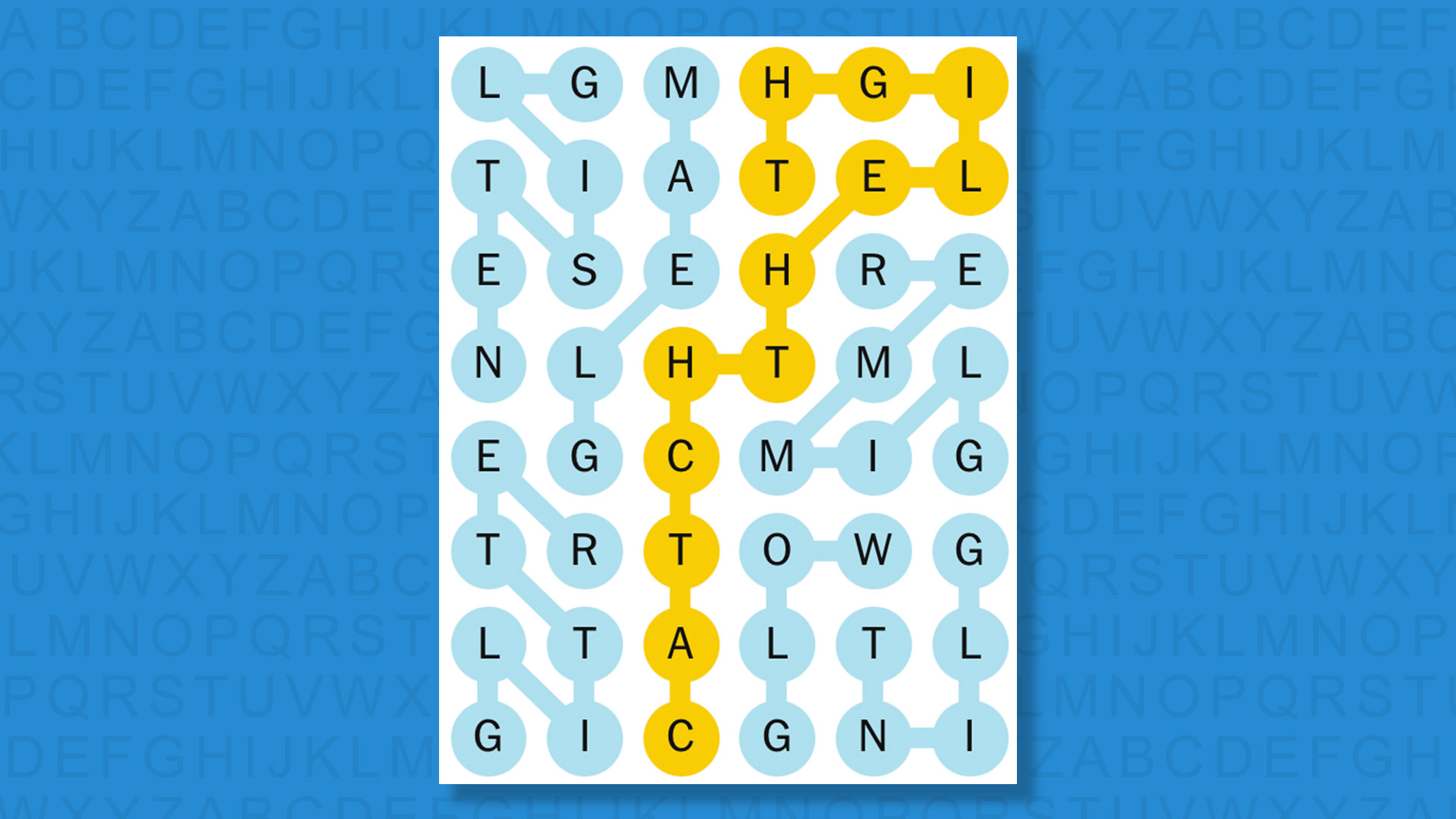
The answers to today’s Strands, game #778, are…
GLINT
GLITTER
GLISTEN
GLEAM
GLOW
GLIMMER
SPANGRAM: CATCHTHELIGHT
My rating: Easy
My score: Perfect
The theme was a little bit confusing initially, but after spotting GLINT and GLITTER I understood that every light-associated word we were searching for began with the letter G.
Sign up for breaking news, reviews, opinion, top tech deals, and more.
There was no place then for shimmer or sparkle in this gaggle of G words.
The spangram was harder to spot, but with “light” not featured among the game words I worked backwards to find “catch” and then CATCHTHELIGHT.
Advertisement
Yesterday’s NYT Strands answers (Sunday, April 19, game #777)
ADJUST
MODIFY
TWEAK
REFINE
IMPROVE
ALTER
SPANGRAM: THEREIFIXEDIT
What is NYT Strands?
Strands is the NYT’s not-so-new-any-more word game, following Wordle and Connections. It’s now a fully fledged member of the NYT’s games stable that has been running for a year and which can be played on the NYT Games site on desktop or mobile.
I’ve got a full guide to how to play NYT Strands, complete with tips for solving it, so check that out if you’re struggling to beat it each day.
European Commission President Ursula von der Leyen says the app is technically ready and will be available to citizens soon.
The European Commission yesterday (15 April) unveiled a digital age verification app aimed at shielding children from harmful content online, with European Commission president Ursula von der Leyen declaring there are “no more excuses” for platforms that fail to act.
Announcing the tool in Brussels on Wednesday (15 April), von der Leyen painted a stark picture of the risks children face in the digital world. “One child in six is bullied online. One child in eight is bullying another child online,” she said, warning that social media platforms use “highly addictive designs” that damage young minds and leave children vulnerable to predators.
Users set up the app using a passport or ID card, after which they can confirm their age anonymously. The free app, which the Commission says is technically ready and will soon be available to citizens, allows users to verify their age when accessing online platforms “without revealing any other personal data”, according to von der Leyen. “Users cannot be tracked,” von der Leyen stressed, adding that the app is fully open source and compatible with any device.
Advertisement
Drawing a comparison with the EU’s Covid certificate – adopted in record time and used across 78 countries – von der Leyen said the age verification tool follows “the same principles, the same model.” Seven member states, including France, Italy, Spain and Ireland, are already planning to integrate the app into their national digital wallets.
The announcement comes ahead of the second meeting of the Commission’s Special Panel on Children’s Safety Online, which is due to deliver its recommendations by summer. Von der Leyen was unambiguous about the Commission’s direction of travel on enforcement. “Children’s rights in the European Union come before commercial interest. And we will make sure they do.”
Platforms were put on notice that voluntary compliance alone will not suffice. “We will have zero tolerance for companies that do not respect our children’s rights,” she said, adding that the Commission is “moving ahead with full speed and determination on the enforcement of our European rules”.
Don’t miss out on the knowledge you need to succeed. Sign up for the Daily Brief, Silicon Republic’s digest of need-to-know sci-tech news.
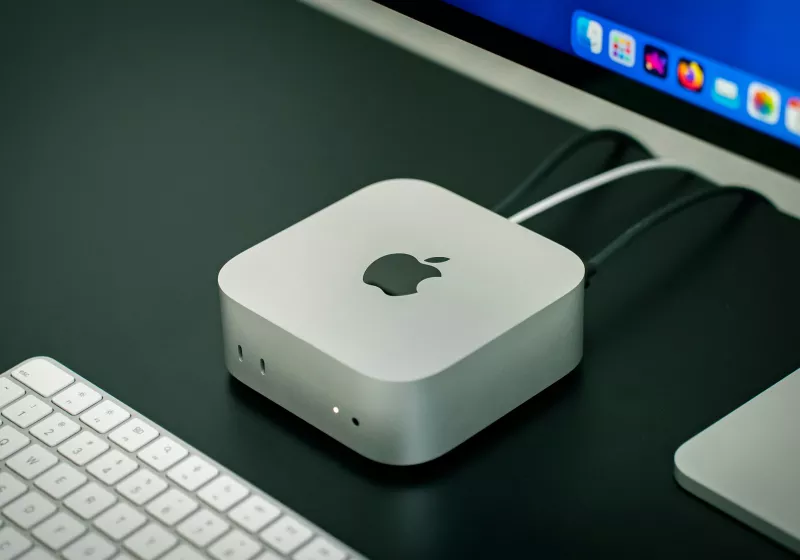
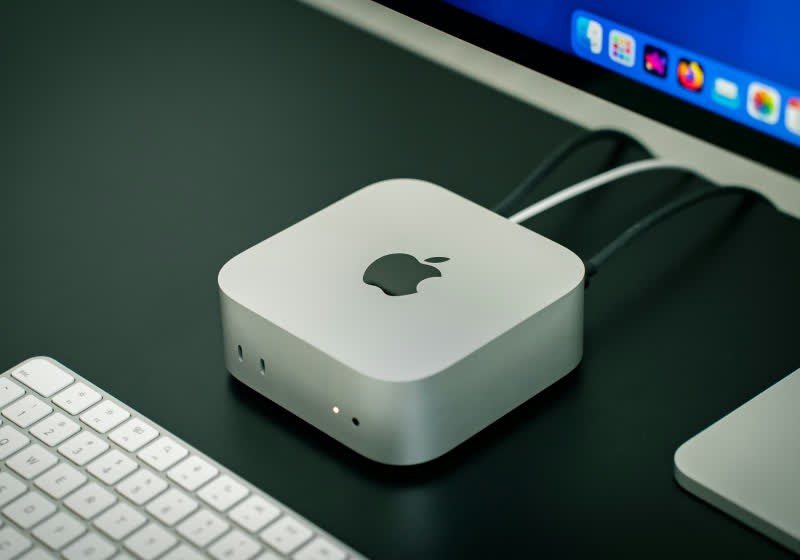
Consumer Intelligence Research Partners estimates the Mac Mini accounted for roughly 3% of Apple’s US Mac unit sales last year. That position has shifted quickly. Read Entire Article Source link
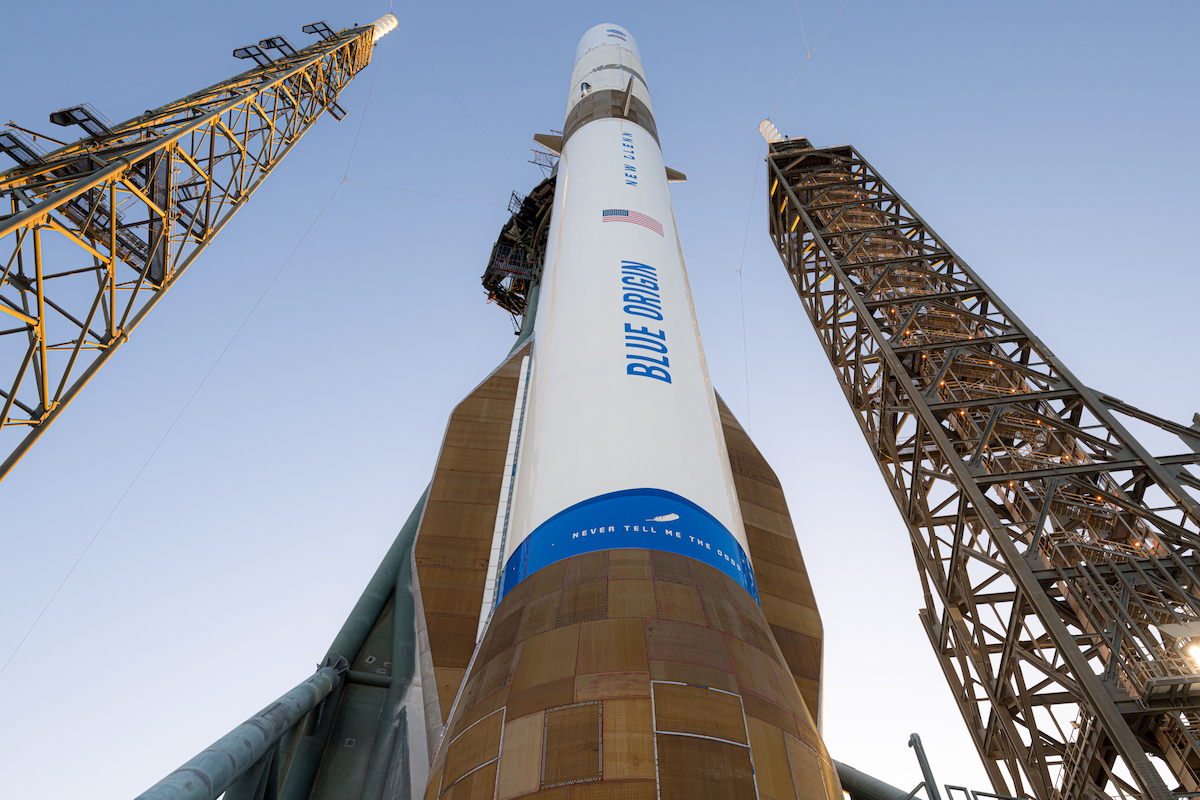
Jeff Bezos’ space company Blue Origin successfully re-used one of its New Glenn rockets for the first time ever on Sunday, but the company failed at its primary mission: delivering a communications satellite to orbit for customer AST SpaceMobile.
AST SpaceMobile issued a statement Sunday afternoon that the upper stage of the New Glenn rocket placed BlueBird 7 satellite into an orbit that was “lower than planned.” The satellite successfully separated from the rocket and powered on, the company said, but the altitude is too low “to sustain operations” and will now have to be de-orbited — left to burn up in the atmosphere of Earth.
The cost of the loss of the satellite is covered by AST SpaceMobile’s insurance policy, according the company, and there are successive BlueBird satellites that will be completed in around a month. AST SpaceMobile has contracts with more than just Blue Origin, and the company said it expects to be able to launch 45 more to space by the end of 2026.
But this represents the first major failure for Blue Origin’s New Glenn program, which only made its first flight in January 2025 after more than a decade in development. This was the second mission where New Glenn carried a customer payload to space, after launching twin spacecraft bound for Mars on behalf of NASA last November. The company did not immediately respond to a request for comment.
Advertisement
The apparent failure of New Glenn’s second stage could have wider implications beyond Blue Origin’s near-term commercial ambitions. The company is pushing hard to become one of the main launch providers for NASA’s Artemis missions to the moon and beyond. The space agency — and the Trump administration — has put pressure on Blue Origin and SpaceX to be able to put landers on the moon by the end of President Donald Trump’s second term, before advancing to returning humans to the lunar surface.
Blue Origin CEO Dave Limp has even said his company “will move heaven and Earth” to help NASA get back to the moon faster.
Blue Origin recently completed testing its first version of its own lunar lander, which the company is expected to try and launch at some point this year (without any crew). Blue Origin had suggested last year that it was considering launching this lander on New Glenn’s third mission, but ultimately decided to launch the AST SpaceMobile satellite instead.
Techcrunch event
Advertisement
San Francisco, CA | October 13-15, 2026
The third New Glenn launch seemed to start just fine on Sunday, with the the mega-rocket lifting off at 7:35 a.m. local time from Cape Canaveral, Florida. It was the first time Blue Origin re-used a previously-flown New Glenn booster — the same one that flew during New Glenn’s second mission. Roughly 10 minutes after liftoff, the booster came back down and landed on a drone ship in the ocean, just like it had last November. Jeff Bezos even shared drone footage of the booster’s landing on X, the social media site owned by his rival Elon Musk. (Musk offered congratulations.)
Advertisement
Roughly two hours after the launch, though, Blue Origin announced in its own post that the New Glenn upper stage placed AST SpaceMobile satellite in an “off-nominal orbit.” The company has not released any more information since that post.
Blue Origin spent a long time developing New Glenn, and it has been taken as a sign of confidence in that process that the company decided to start launching commercial payloads during these early missions. By comparison, SpaceX has spent the last few years flying test versions of its massive Starship, but has stuck with using dummy payloads as it works out the rocket’s kinks.
SpaceX did lose payloads deeper into its Falcon 9 program. In 2015, on the 19th Falcon 9 mission, the rocket blew up mid-flight and lost an entire International Space Station cargo spacecraft. In 2016, a Falcon 9 exploded on the launch pad during testing, causing the loss of an internet satellite for Meta.
A new NYT Connections puzzle appears at midnight each day for your time zone – which means that some people are always playing ‘today’s game’ while others are playing ‘yesterday’s’. If you’re looking for Sunday’s puzzle instead then click here: NYT Connections hints and answers for Sunday, April 19 (game #1043).
Good morning! Let’s play Connections, the NYT’s clever word game that challenges you to group answers in various categories. It can be tough, so read on if you need Connections hints.
What should you do once you’ve finished? Why, play some more word games of course. I’ve also got daily Strands hints and answers and Quordle hints and answers articles if you need help for those too, while Marc’s Wordle today page covers the original viral word game.
Advertisement
SPOILER WARNING: Information about NYT Connections today is below, so don’t read on if you don’t want to know the answers.
Article continues below
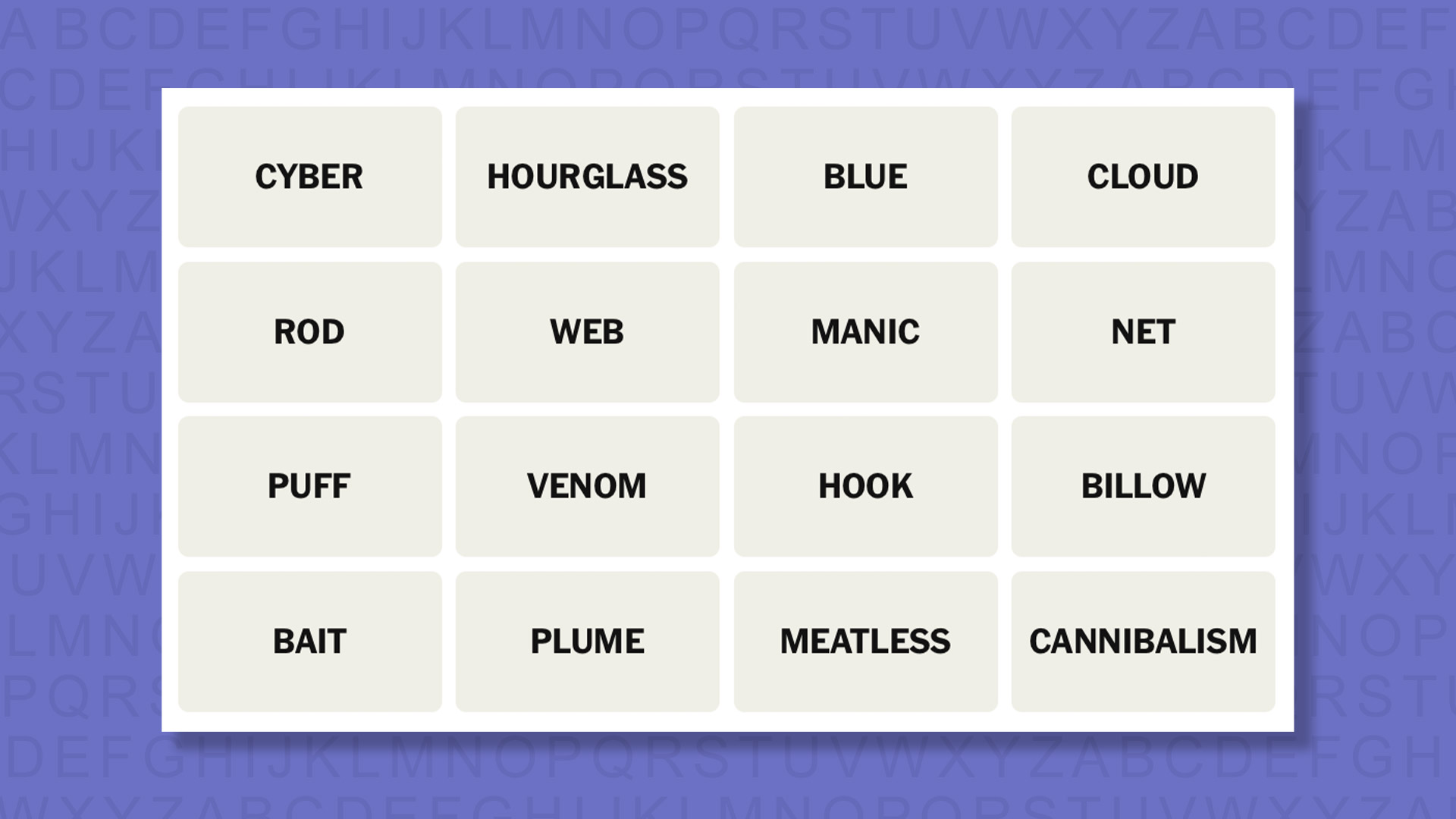
NYT Connections today (game #1044) – today’s words
(Image credit: New York Times)
Today’s NYT Connections words are…
CYBER
HOURGLASS
BLUE
CLOUD
ROD
WEB
MANIC
NET
PUFF
VENOM
HOOK
BILLOW
BAIT
PLUME
MEATLESS
CANNIBALISM
NYT Connections today (game #1044) – hint #1 – group hints
What are some clues for today’s NYT Connections groups?
YELLOW: A bunch of fumes
GREEN: Used for angling
BLUE: Linked to an infamous arachnid
PURPLE: Start the week
Need more clues?
We’re firmly in spoiler territory now, but read on if you want to know what the four theme answers are for today’s NYT Connections puzzles…
Advertisement
Sign up for breaking news, reviews, opinion, top tech deals, and more.
NYT Connections today (game #1044) – hint #2 – group answers
What are the answers for today’s NYT Connections groups?
YELLOW: MASS OF SMOKE
GREEN: FISHING GEAR
BLUE: ASSOCIATED WITH BLACK WIDOW SPIDERS
PURPLE: _____ MONDAY
Right, the answers are below, so DO NOT SCROLL ANY FURTHER IF YOU DON’T WANT TO SEE THEM.
Advertisement
NYT Connections today (game #1044) – the answers
(Image credit: New York Times)
The answers to today’s Connections, game #1044, are…
YELLOW: MASS OF SMOKE BILLOW, CLOUD, PLUME, PUFF
GREEN: FISHING GEAR BAIT, HOOK, NET, ROD
BLUE: ASSOCIATED WITH BLACK WIDOW SPIDERS CANNIBALISM, HOURGLASS, VENOM, WEB
PURPLE: _____ MONDAY BLUE, CYBER, MANIC, MEATLESS
My rating: Easy
My score: Perfect
A bit of music knowledge got me to my 33rd “Purple First” thanks to Blue Monday by New Order and Prince’s Manic Monday,made famous by The Bangles. CYBER I was confident about, but MEATLESS I went with purely because of the alliteration.
This actually seemed the easiest group, not that I’m complaining.
Advertisement
Elsewhere, nature knowledge may have helped me get ASSOCIATED WITH BLACK WIDOW SPIDERS, but I spotted the more obvious yellow and green groups first.
Yesterday’s NYT Connections answers (Sunday, April 19, game #1043)
BLUE: CARDS IN TEXAS HOLD ‘EM FLOP, HOLE, RIVER, TURN
PURPLE: LAST WORDS OF CANDY BRANDS IN THE SINGULAR CAP, DUD, KID, MINT
What is NYT Connections?
NYT Connections is one of several increasingly popular word games made by the New York Times. It challenges you to find groups of four items that share something in common, and each group has a different difficulty level: green is easy, yellow a little harder, blue often quite tough and purple usually very difficult.
On the plus side, you don’t technically need to solve the final one, as you’ll be able to answer that one by a process of elimination. What’s more, you can make up to four mistakes, which gives you a little bit of breathing room.
Advertisement
It’s a little more involved than something like Wordle, however, and there are plenty of opportunities for the game to trip you up with tricks. For instance, watch out for homophones and other word games that could disguise the answers.
It’s playable for free via the NYT Games site on desktop or mobile.














































You must be logged in to post a comment Login